Garden Blog - Top Tropicals

Date: 27 Jan 2026

Jackfruit golden hash: quick-n-fun exotic recipes
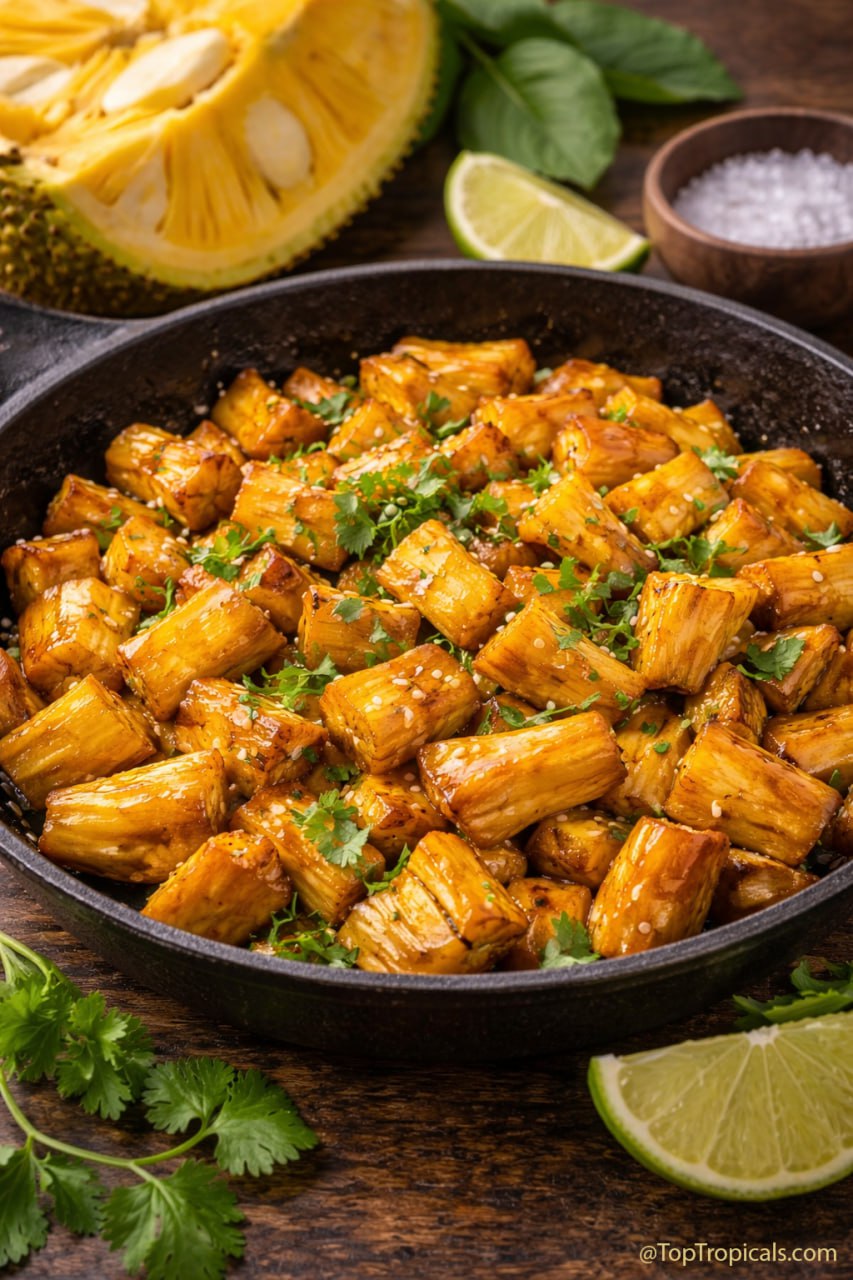
Jackfruit golden hash in frying pan
Jackfruit golden hash in frying pan

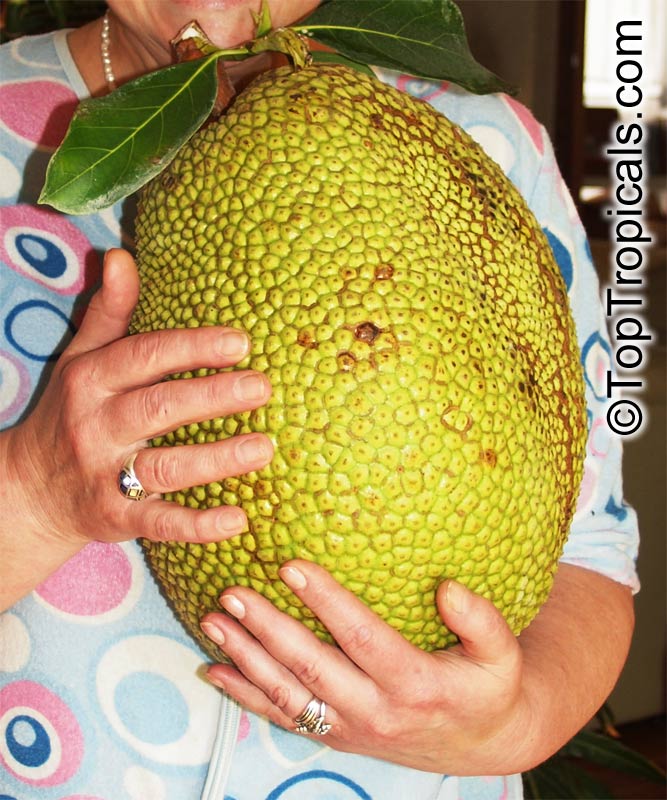
Jackfruit tree (Artocarpus heterophyllus) fruit

Jackfruit tree (Artocarpus heterophyllus) fruit

🍴 Jackfruit golden hash: quick-n-fun exotic recipes


Jackfruit Golden Hash

Ingredients

  • 1 cup ripe jackfruit pods, chopped
  • 1 teaspoon coconut oil or butter
  • 1 pinch salt
  • Fresh lime juice (optional)

Instructions

  1. Chop ripe jackfruit pods into small pieces.
  2. Heat coconut oil or butter in a frying pan over medium heat.
  3. Add the chopped jackfruit and pan-sear until the edges begin to caramelize.
  4. Toss with a tiny pinch of salt.
  5. Finish with a squeeze of lime juice and serve warm.


🌿 About the plant:


Jackfruit is the world’s largest tree-borne fruit, native to South and Southeast Asia. When ripe, its golden pods are sweet, fragrant, and naturally caramelize when cooked. It has been a staple food for centuries, used both ripe and unripe in desserts and savory dishes.

🌱 In the garden:


Jackfruit is a fast-growing tropical tree that thrives in warm climates with full sun and good drainage. It loves regular water and fertile soil, it's a heavy feeder. Best suited for USDA zones 9b-11, it can be grown in large containers when young and makes a bold, architectural fruit tree in the landscape. The fruit forms at the base of the tree, so trimming it under 7-8 ft makes it easier for cold protection.

🛒 Plant your own Jackfruit tree

📚 Learn more:

Plant Facts

Artocarpus heterophyllus, Artocarpus integrifolius
Jackfruit, Jakfruit, Langka, Nangka, Jaca
USDA Zone: 9-11
Large tree taller than 20 ftFull sunRegular waterEdible plantSubtropical plant. Mature plant cold hardy at least to 30s F for a short time


🎥 We Cut Open a 37 lb Jackfruit - You Won't Believe What's Inside!

#Food_Forest #Recipes

🟢 Join 👉 TopTropicals
Date: 10 Mar 2016

Do-It-Yourself Support Structure for Dragon Fruit

This interesting do-it yourself project was sent to us by our customer from South Florida. Many tropical gardeners want to grow fascinating Dragon Fruit, and their most common question is - what kind of support I should use for this amazing fruiting cactus? We hope you find this information very useful. Happy Gardening!

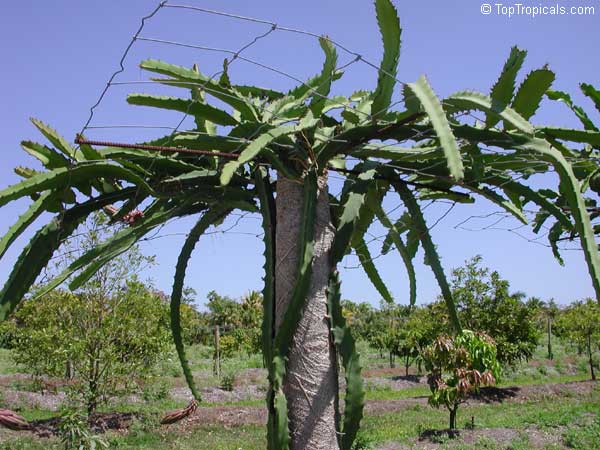
Dragon fruit is a terrestrial/epiphytic fruit baring cactus, which may grow fleshy stems up to 30 ft high, given sturdy support. However, downward hanging or horizontal branches stimulate production of flowers at the tips of the branches. Commercial groves in different parts of the world use different method to achieve this. The traditional Vietnamese way is to train the plant into a “fountain”, which consists of a vertical central trunk about 8ft tall and a horizontal structure, such as a wagon wheel on top of it to support the horizontal branches (see picture on the right).

This picture served as my inspiration to build my own structure. I used five 4”x4” 10ft wood beams as the trunk, shaped as a cross. I attached the beams to each other with 10” long screws.

I dug a 2 ft deep 12”x12” hole in the ground and positioned the trunk inside, such that about 8ft are above ground. I covered it with several layers of burlap top to bottom.

The horizontal structure on top is made of four 4ft long 2”x2” wood beams and two 12”x12” wood plates to hold them together. I attached this structure to the top of the trunk.

I used old watering pipe to form two rings around the trunk to support the branches. Here is the result!... See step-by-step full size pictures and the rest of the article...

Date: 4 Apr 2026

Rare Night-Blooming Cactus that Glows and Grows Large Edible Fruit

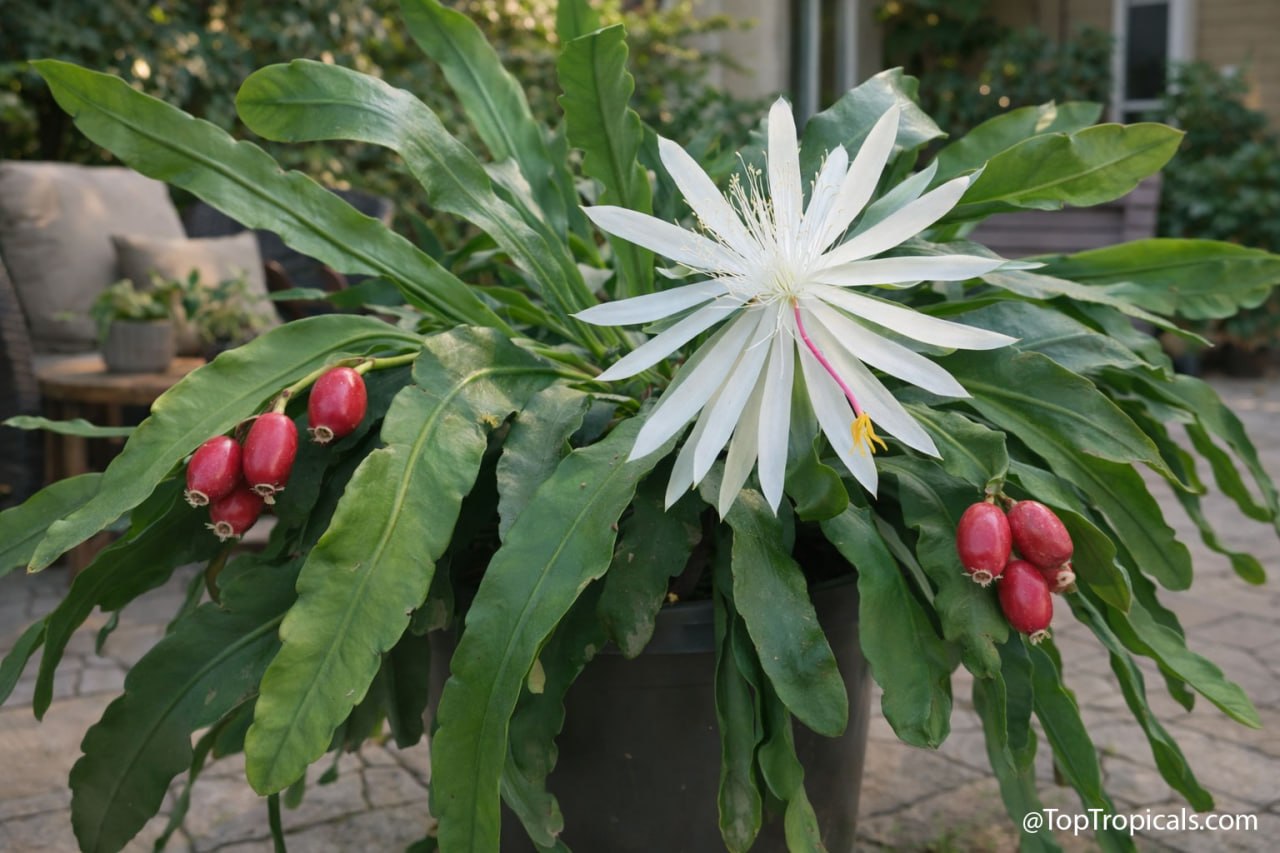
Epiphyllum hookeri - Rare Night-Blooming Cactus with fragrant flowers and large edible fruit

Epiphyllum hookeri - Rare Night-Blooming Cactus with fragrant flowers and large edible fruit

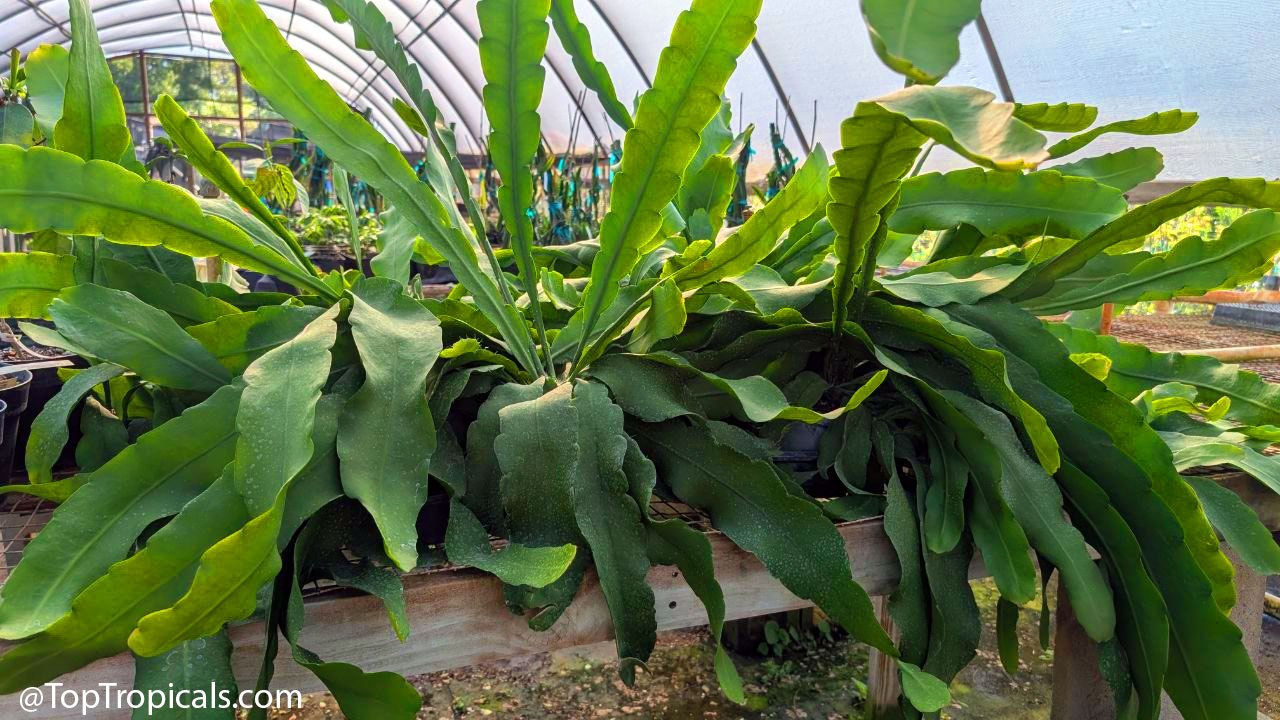
Epiphyllum hookeri - Night-Blooming Cactus with large leaves

Epiphyllum hookeri - Night-Blooming Cactus with large leaves

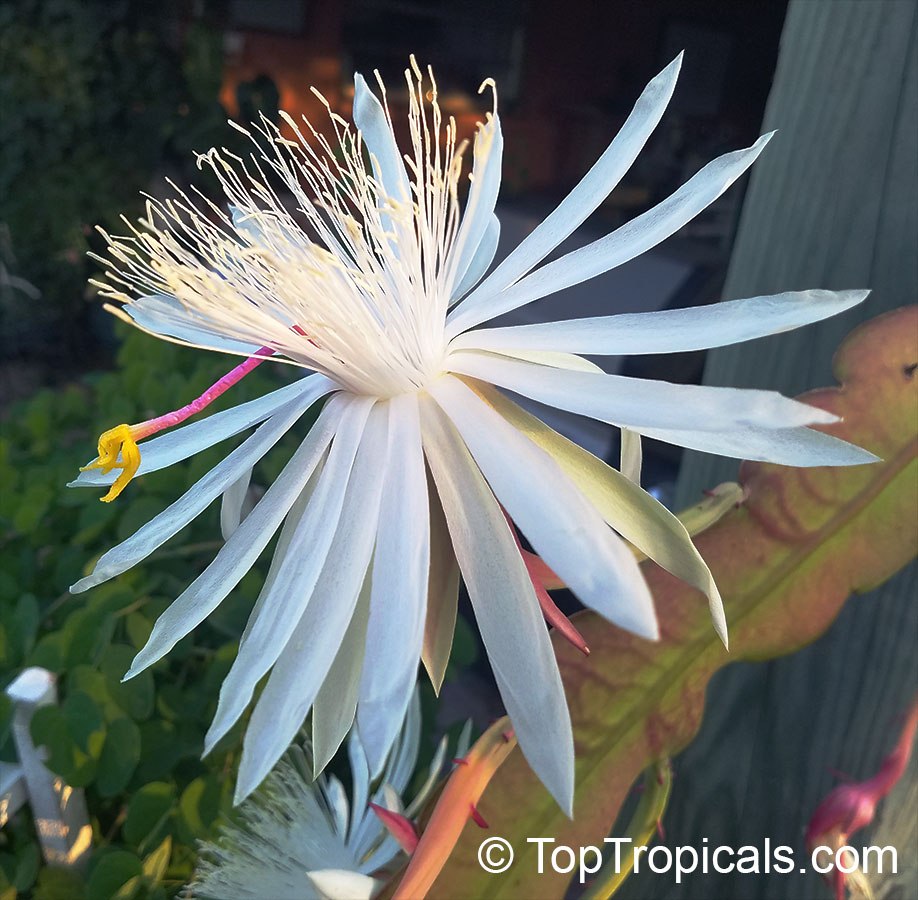
Epiphyllum hookeri - Night-Blooming Cactus large flowers

Epiphyllum hookeri - Night-Blooming Cactus large flowers

Rare Night-Blooming Cactus that Glows and Grows Large Edible Fruit 🍅

Did you know this nigh blooming beauty has large edible fruit? Why the Epiphyllum hookeri is the ultimate two-for-one plant for tropical garden lovers.
  • 🌠 The Midnight Spectacle


    Most gardeners grow the Epiphyllum hookeri for its "ghostly" white flowers. These massive, fragrant blooms wait until sunset to unfurl, reaching their peak beauty under the moonlight before fading at dawn.
  • 🌠 The Edible Bonus


    What many don’t realize is that this specific seed-grown type is a "fruiting" powerhouse. After the dramatic floral display, the plant sets smooth, elongated fruit. The flavor? Mild, sweet, and surprisingly refreshing -think of it as a garden-grown secret.
  • 🌠 How to Grow It


    Light: Filtered sun or bright shade (no harsh midday sun!).
    Hydration: Regular watering in well-drained soil.
    Display: It’s a natural climber/cascader—put it in a hanging basket and let it shine.


🛒 Claim your fruiting night-bloomer

Collect epiphytic jungle cacti:

📚 Learn more:

Plant Facts

Epiphyllum hookeri, Epiphyllum strictum, Epiphyllum stenopetalum, Epiphyllum phyllanthus
Climbing Cactus, Hooker's Orchid Cactus
USDA Zone: 9-11
Small plant 2-5 ftSemi-shadeModerate waterWhite, off-white flowers

#Container_Garden #Shade_Garden #Food_Forest

🟢 Join 👉 TopTropicals

Date: 9 Nov 2019

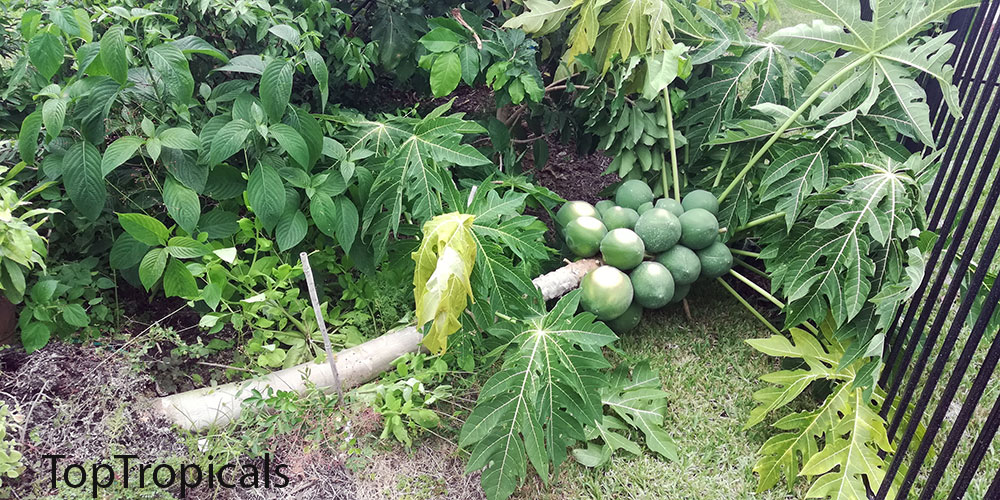
Saving Fallen Papaya Tree

Q: Hope there is help for my beautiful amazing papaya tree! There where a loooooooot of fruits on it, but it broke! First of all, it was leaning and friends tried to straight my beautiful tree. What can I do? Will it get fruits again?

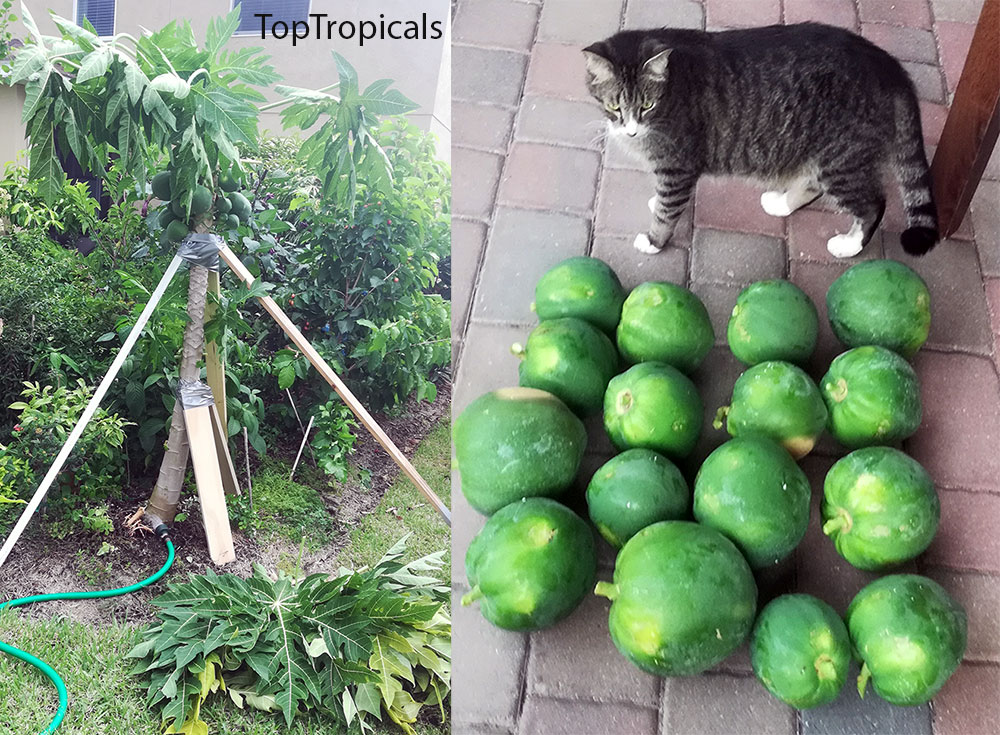
A: A couple months ago we also had a Papaya tree loaded with fruit that fell down (see photos). It was heart-breaking. We secured it and it continued growing for a couple of weeks but unfortunately, at the end the tree still died, leaving us a million fruit. The Papaya tree has a very sensitive root system and is hard to re-establish once the roots are damaged.
However, if it just has a broken top, it has a good chance to grow back from the side shoots.
Of course, remove all the fruit so they don't take energy from the recovering tree.
When a tree is loaded with fruit, it is important to provide support for heavy branches and for the trunk if needed. Always support the fruiting tree to prevent from possible falling BEFORE it starts leaning down and may become broken by even a light wind.
In the photo, you can see how we fixed boards around, but it was already after the tree fell. Unfortunately, it was too late since the roots got damaged. Always need to stake the tree up before the branches get too heavy!

RECOMMENDED FERTILIZERS:
Fruit Festival Plant Food - Super Crop Booster
Mango-Food - Smart Release Fruit Tree Booster
SUNSHINE-Honey - sugar booster

Maradol Papaya $10 Hot Sale

Only local pick up from our Garden Center
Hurry up, while supply lasts!

Date: 29 Jan 2020

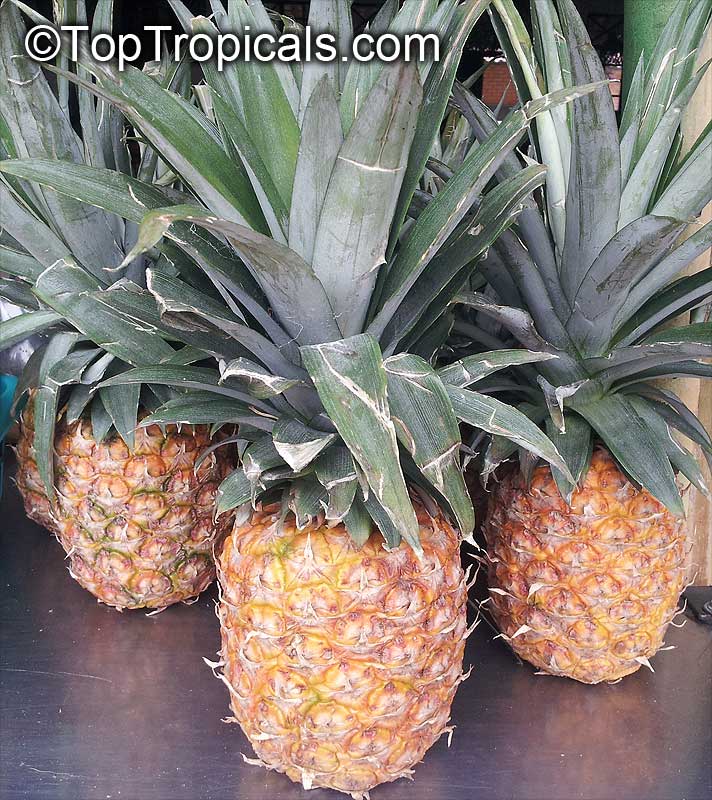
The most luscious Hospitality Fruit: Pineapple

by Mark Hooten, the Garden Doc

I wonder how many people know that the Pineapple (Ananas comosus) was actually the very first New World tropical fruit to have been sampled fresh by European royalty? It happened 527 years ago, when one made it to Spain, being personally delivered to King Ferdinand and Queen Isabella by Christopher Columbus... He had obtained a huge number of them, however only one actually survived intact and edible! That pineapple was instantly declared to be the most luscious wonderful fruit ever!..
...During the 1700s before the Revolutionary War, the overly monetarily intoxicated super-rich were actually paying a modern equivalent of⁠ - get this - 8000 dollars for a single fruit!..
...In conclusion, I will add the simple recipe for my personally favorite go-to comfort food...

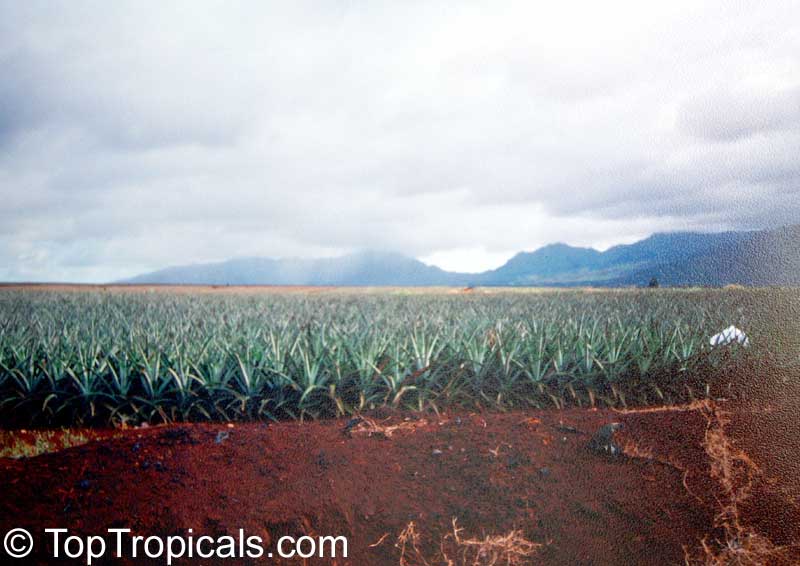
Pineapple plantation in Hawaii