Garden Blog - Top Tropicals

Date: 23 May 2026

Avocado Fantastic: the hidden world beyond green and black
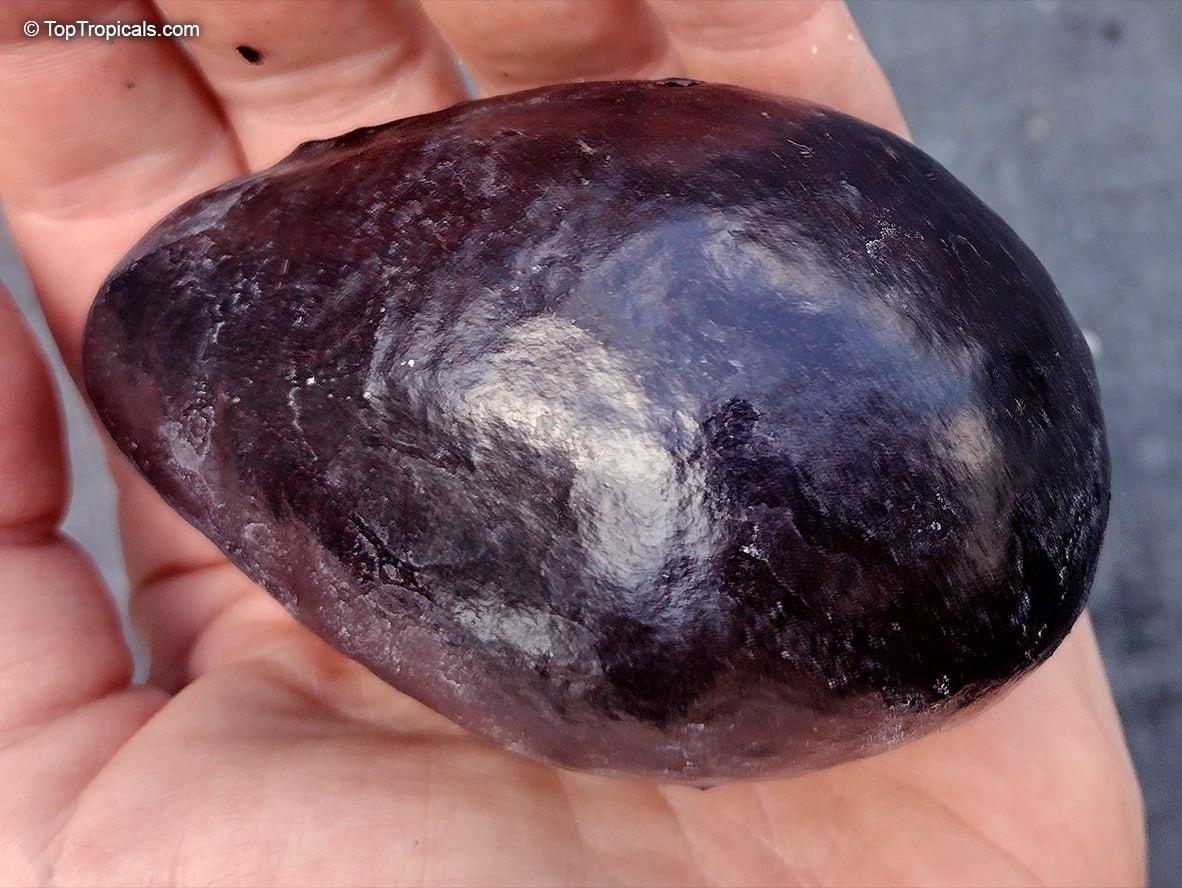
Avocado Fantastic fruit
Avocado Fantastic fruit

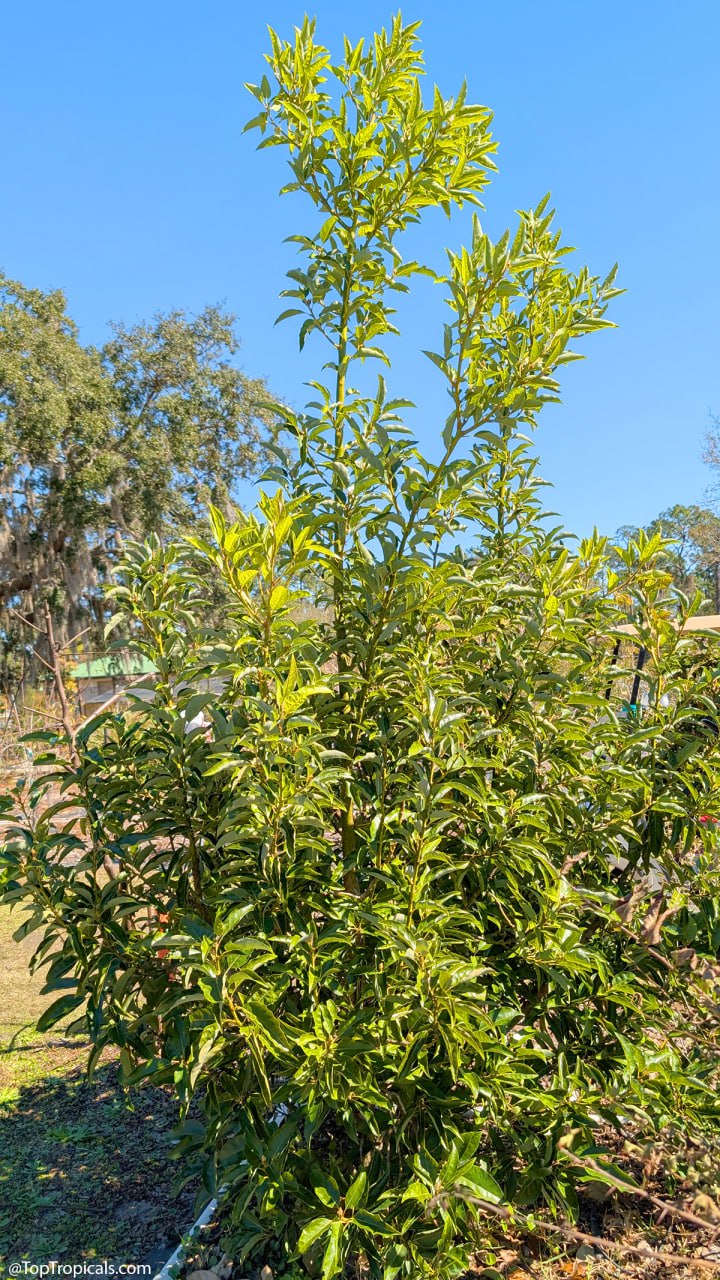
Avocado Fantastic tree

Avocado Fantastic tree

Avocado Fantastic: the hidden world beyond green and black


Most people think avocados come in two colors - green and black. Maybe they've heard of Hass. But the hidden world of avocados is far more diverse, filled with giant fruits, unusual shapes, red-skinned varieties, and even trees that can handle surprising cold.

One of the most remarkable is Fantastic.

💚 The avocado that wasn't supposed to survive


Avocados are often considered tropical and tender. Fantastic challenges that idea. This unusual variety gained a following in Texas, where it reportedly survived temperatures near 10F around San Antonio. Mature trees can tolerate temperatures around 15F for short periods, making it one of the most cold-hardy avocados available.
For gardeners in cooler regions, Fantastic has become something of a legend - proof that growing avocados is not limited to the tropics.

💚 A survivor of Florida's historic freeze


During Florida's historic February 2026 freeze, temperatures at our Sebring nursery dropped to 25F with several nights of prolonged freezing. While many tropical plants suffered damage, Fantastic came through without noticeable injury - remarkable performance for a tropical fruit tree.

💚 More than just a tough tree


Fantastic would not be worth growing if cold hardiness were its only claim to fame. Fortunately, it also produces excellent fruit.
The avocados are relatively small, typically weighing 6 to 8 ounces, with very thin green skin that darkens as the fruit matures. Inside is smooth, creamy flesh with a rich, buttery texture and pleasant nutty flavor.
The skin is so thin that many people simply cut the fruit in half and scoop it out with a spoon, or even it it with the skin. This is the kind of avocado often enjoyed fresh rather than turned into guacamole.

💚 A handsome, manageable tree


Fantastic is a Mexican-type avocado, and it shows many of the characteristics that make this race so appealing.
The tree has an attractive upright growth habit and tends to remain more compact than many large Florida avocado varieties. Rather than becoming an enormous shade tree, it often develops into a narrower, more manageable specimen that fits comfortably into a home landscape.
The foliage is elegant and refined, giving the tree a lighter appearance than many broad-leaved avocados. Like other Mexican-type varieties, the leaves release a pleasant anise-like fragrance when crushed - a surprising feature that many gardeners discover by accident.

💚 Why Fantastic deserves more attention


Many avocado collectors spend years searching for unusual varieties. Some are chasing flavor. Others want larger fruit or longer harvest seasons.
Fantastic offers something different: confidence.

It gives gardeners in cooler climates a chance to grow a fruit that many people assume is impossible outside the tropics. Even in warmer regions, its remarkable cold tolerance provides peace of mind when winter weather turns unpredictable.

In a world where most shoppers only see green avocados and black avocados at the grocery store, Fantastic is a reminder that the hidden world of avocados is far richer, more diverse, and far more interesting than most people realize.

And for many growers, that discovery is simply Fantastic. 👉 More

🛒 Explore cold hardy Avocado varieties

📚 Learn more:


· Avocado Variety Guide: Snack or Guacamole? Collector's inspiration
· Cold-hardy avocado survival groups - what the numbers really mean
· How to protect Avocado from cold and how hardy is it?
· Avocado that laughs at frost: Mexicola Grande for cooler climates
· Cold hardy Avocado Joey - you eat it with the skin

📖 Our Book: Avocado Variety Guide, Snack or Guacamole?
·
Hard copy · PDF File Download

#Food_Forest #Avocado #Discover

🟢 Join 👉 TopTropicals
Date: 20 May 2026

Why in Thailand Wrightia religiosa is near all temples and homes

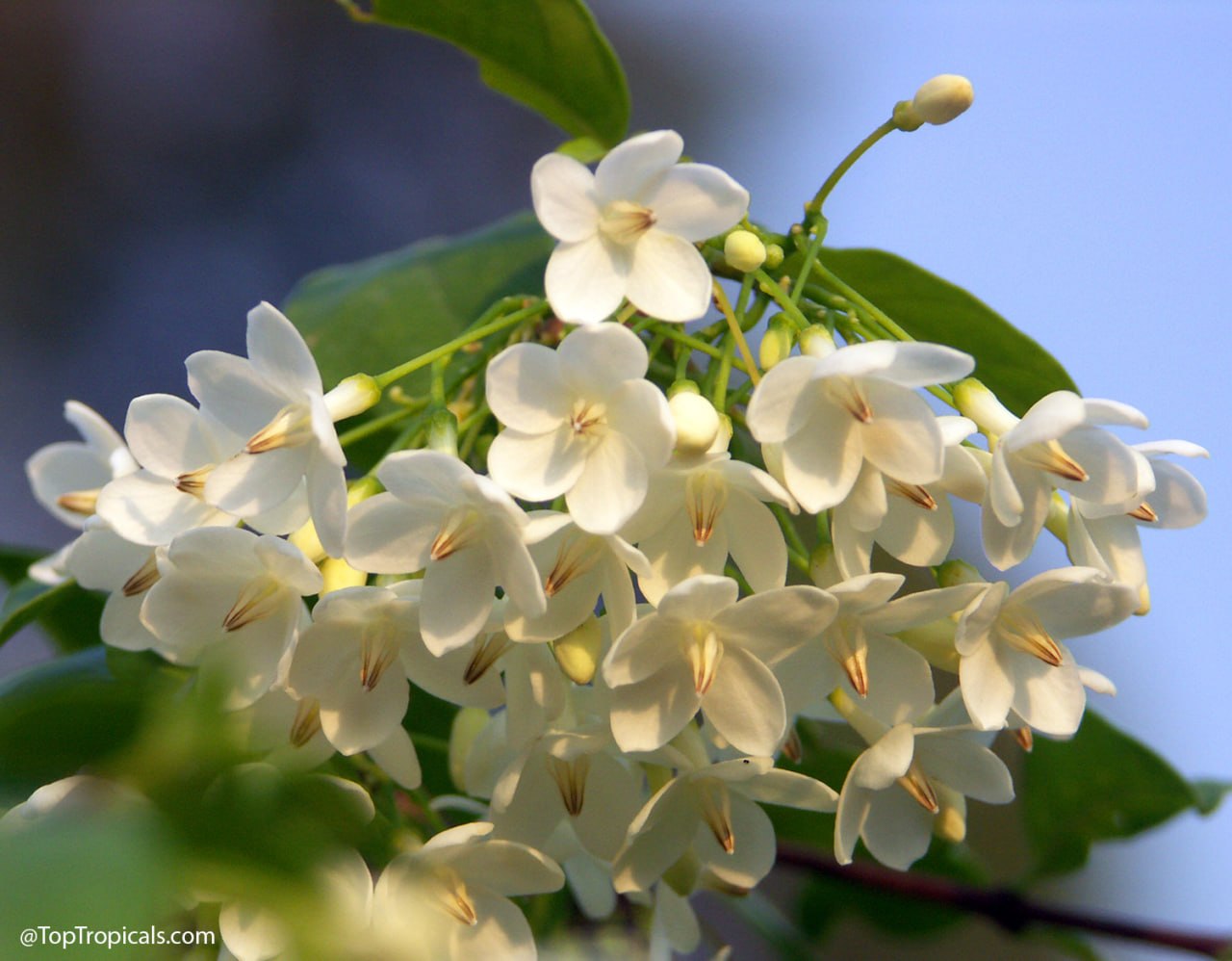
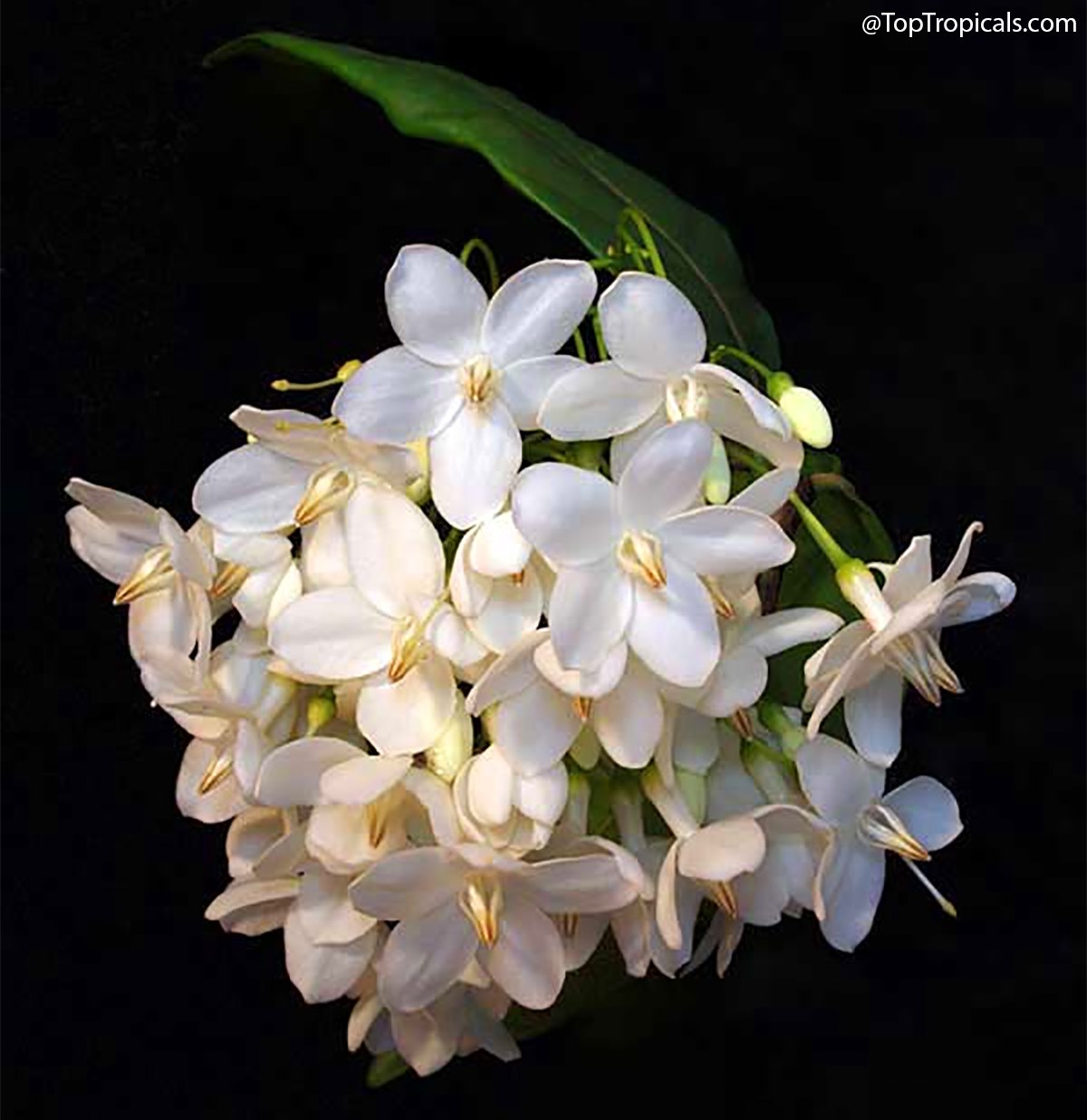
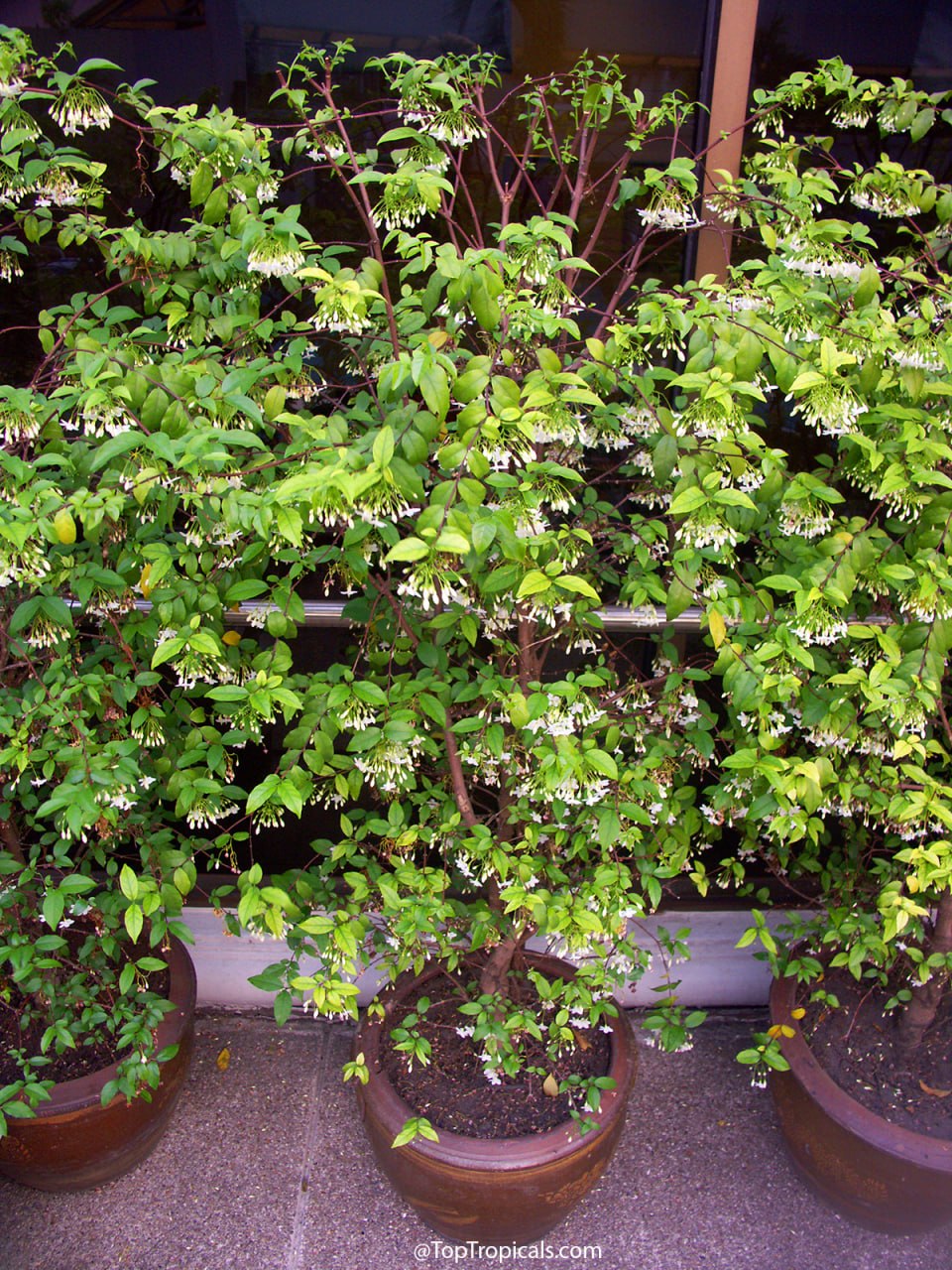
Wrightia religiosa - Sacred Buddhist, plant

Wrightia religiosa - Sacred Buddhist, plant

Wrightia religiosa - Sacred Buddhist, flowers

Wrightia religiosa - Sacred Buddhist, flowers

Wrightia religiosa - Sacred Buddhist, flower close up

Wrightia religiosa - Sacred Buddhist, flower close up

🏯 Why in Thailand Wrightia religiosa is near all temples and homes


In Thailand, you will smell the Water Jasmine before you see it. Trace that soft, fruity, jasmine-like fragrance and you'll find Wrightia religiosa - an unassuming tropical shrub with tiny white flowers hanging like pendants. Also called Sacred Buddhist, this beloved plant is everywhere in Southeast Asia, cherished for its rich cultural history and old-world charm rather than loud colors.

Sacred Buddhist Plant Facts

Botanical name: Wrightia religiosa, Echites religiosa
Also known as: Sacred Buddhist, Wondrous Wrightia, Wild Water Plum, Water Jasmine
USDA Zone: 9 - 10
Highligths Plant used for bonsaiLarge shrub 5-10 ft tallSmall tree 10-20 ftSmall plant 2-5 ftSemi-shadeFull sunWatering: Regular. Let topsoil dry slightlyWhite, off-white flowersPlant attracts butterflies, hummingbirdsEthnomedical plant.
Plants marked as ethnomedical and/or described as medicinal, are not offered as medicine but rather as ornamentals or plant collectibles.
Ethnomedical statements / products have not been evaluated by the FDA and are not intended to diagnose, treat, cure, or prevent any disease. We urge all customers to consult a physician before using any supplements, herbals or medicines advertised here or elsewhere.Fragrant plantSubtropical plant. Mature plant cold hardy at least to 30s F for a short timeFlood tolerant plantSeaside, salt tolerant plant
Get personalized tips for your region


💮 The Shrub of Buddhist Symbolism that Thai Temples Have Been Planting for Centuries

The species name religiosa is no accident. It literally refers to the plant’s long association with religious, spiritual, and cultural traditions across Thailand, Vietnam, Malaysia, and Singapore.

While the flowers themselves are visually simple, their unique growth habit has inspired generations of Buddhist symbolism. Unlike many flowers that point proudly toward the sky, the blooms of the Water Jasmine hang downward. In Thai culture, this downward-facing habit became a beautiful symbol of modesty and humility - a physical representation of bowing down rather than standing in pride.

Furthermore, many gardeners and monks associate the flower’s five distinct petals with foundational Buddhist virtues: wisdom, compassion, patience, kindness, and generosity. Whether ancient legend or folk interpretation, this cultural meaning has earned the plant a reputation as something sacred, making it a staple near homes and temple grounds.

💮 The Fragrance People Fall in Love With


Visually, Wrightia religiosa does not try to dazzle you with giant petals or wild, neon colors. Instead, its magic lies entirely in its scent.

The perfume it throws into the air is the real reason people become obsessed with it. It is a clean, intoxicating fragrance that drifts gracefully through the evening air. For anyone living in a warm climate, the best part is that the Water Jasmine is not a "one-and-done" bloomer. When the plant is happy, it flowers repeatedly and almost continuously throughout the year, meaning that incredible scent becomes a permanent fixture in your garden.

💮 From Temple Gardens to Bonsai Pots


Part of what makes Wrightia religiosa so widespread is its sheer versatility. It is an incredibly agreeable plant that adapts beautifully to whatever form a gardener desires. In Southeast Asia, you will see it styled as:
· A standalone specimen shrub
· A dense, fragrant privacy hedge
· A patio accent in containers
· A small, sculptural tree

It has also become an absolute classic in the tropical bonsai world. Because its branches are flexible, fast-growing, and highly responsive to pruning, even beginners can easily wire and shape young plants into twisted, artistic forms. Left to grow naturally, older plants develop a graceful, twiggy, and airy structure that looks naturally sculptural.

💮 The Fake-Dead Winter Quirk


Wrightia is easy to care for with standard sun and water, but it hates the cold (although survives it well). Below 65F, it abruptly drops all its leaves and looks completely dead. Many gardeners panic and throw it away - but it’s just resting. Simply bring container plants indoors for the winter. Once the warmth returns, it wakes up, flushes green, and resumes blooming.

💮 Subtle Beauty with Deep Roots


Some tropical plants impress with sheer size, but Wrightia religiosa does the opposite. Its beauty is quiet - thin branches, dangling white pendants, light green foliage, and a fragrance that gently fills a yard.

It is a plant with a few centuries of cultural history carried in its branches, and it is one of those rare garden gems you cannot truly appreciate until you experience its scent in person.

🛒 Plant the Sacred Buddhist and enjoy the magical aroma

📚 Learn more:


Wrightia religiosa and other wrightias in Plant Encyclopedia

#Discover #Perfume_Plants

🟢 Join 👉 TopTropicals
Date: 12 May 2026

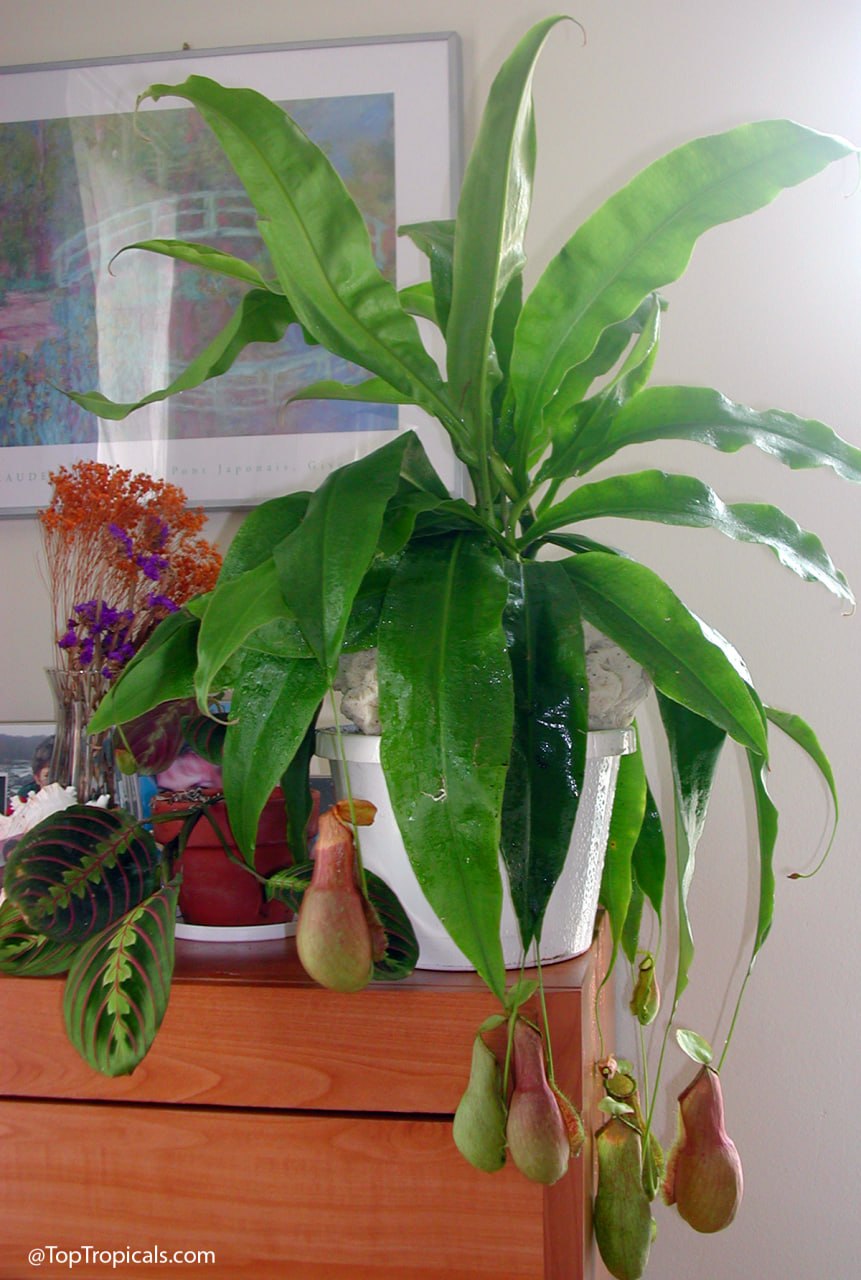
The strange tropical plant that eats bugs - and gardeners cant stop collecting

Nepenthes - Pitcher Plant

Nepenthes - Pitcher Plant

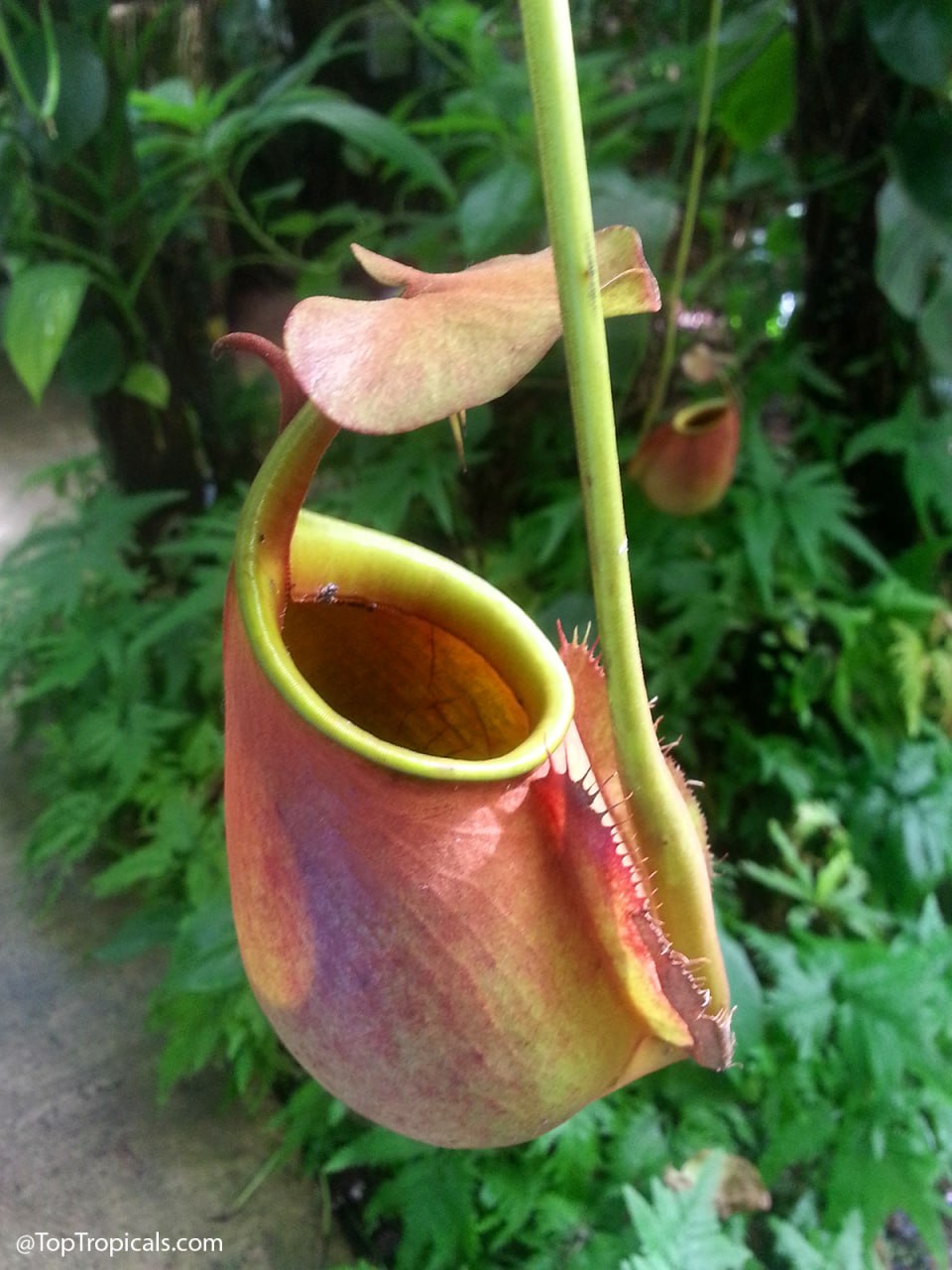
Nepenthes - Pitcher Plant close up

Nepenthes - Pitcher Plant close up

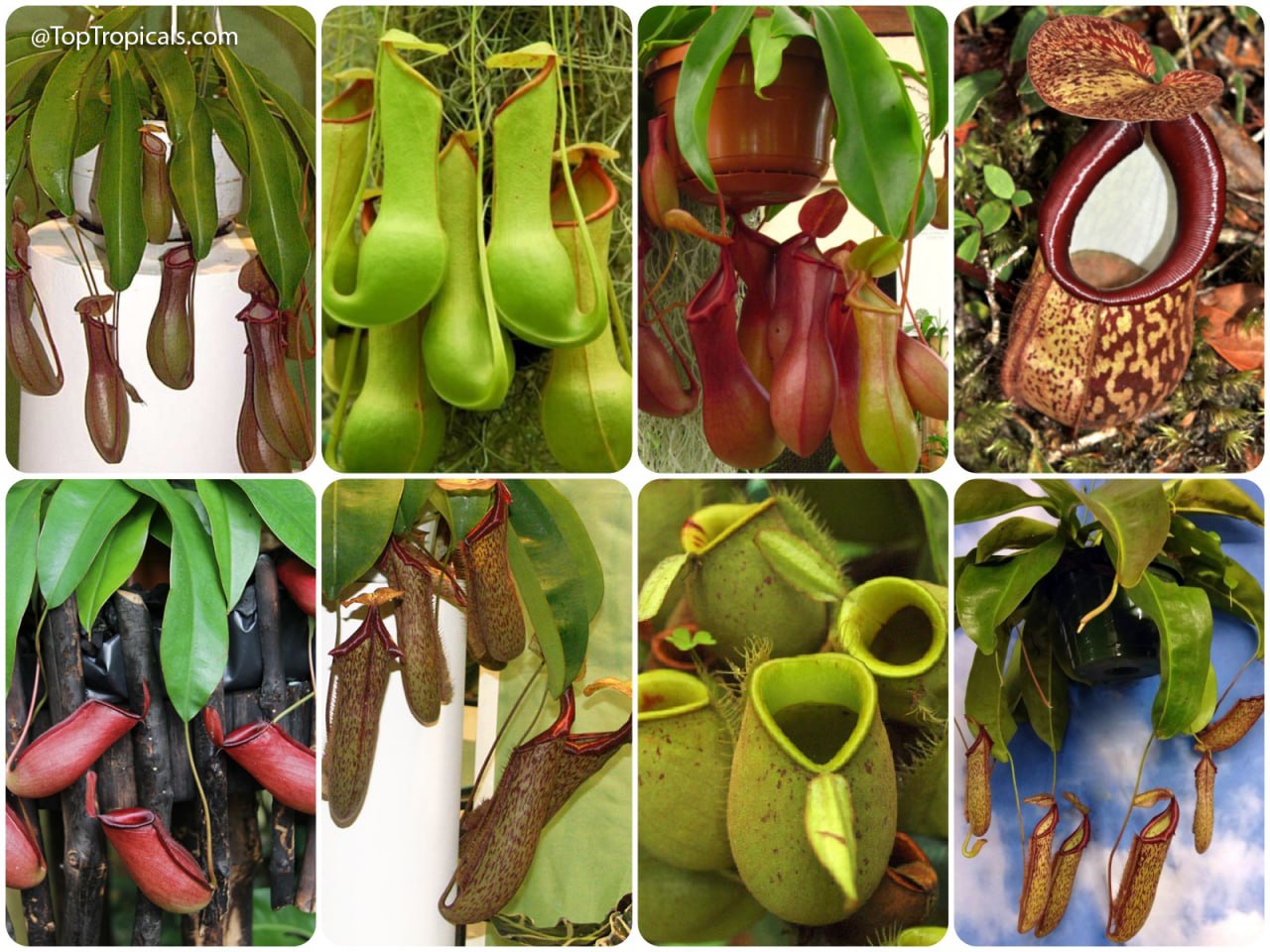
Nepenthes - Pitcher Plants collage

Nepenthes - Pitcher Plants collage

🐸 The strange tropical plant that eats bugs - and gardeners can't stop collecting


Nepenthes - tropical Pitcher Plants - look almost fake. Long vines and shiny leaves give way to colorful pitchers resembling exotic lanterns or sci-fi creatures. But these aren't flowers; they are sophisticated traps. Among the world's most fascinating carnivores, they lure insects into fluid-filled vessels to digest them for nutrients. Giant species can even trap small frogs or mice! 🐸🐭

🐱 Why pitcher plants look so unreal


Pitchers are modified leaves designed to attract prey with vibrant colors and nectar. Many feature dramatic stripes or flared, sculpted rims. The diversity is immense: compact species fit on windowsills, while jungle giants produce foot-long traps. Some thrive in steamy lowlands, others in misty mountains. Their digestive fluid can even become sticky and elastic, making escape impossible.

🐱 The plant that inspired engineering


These plants have inspired more than just gardeners. Their slippery surfaces led to "liquid-infused" materials used in anti-fogging and water-repelling tech. Engineers study them as nature’s original biological pitfall trap, a masterclass in biomimetic design.

🐱 Why collectors become obsessed with Pitcher plants


What starts as a curiosity often becomes an obsession. With hundreds of species and hybrids, pitchers can resemble cobra heads, wine goblets, or alien pods. Under bright light, they develop stunning hues of burgundy, orange, or candy-stripes. Because of their popularity, ethical hobbyists emphasize buying nursery-propagated plants to protect wild populations from poaching.

🐱 Surprisingly easier than people think


Despite their reputation, many hybrids thrive indoors with basic care. They need bright indirect light, high humidity, and excellent drainage. Crucially, they require mineral-free water (distilled or rainwater) and airy media like sphagnum moss. Regular potting soil or tap water can be fatal to these sensitive plants.

🐱 The pitchers are temporary - and that's normal


It is normal for old pitchers to dry up as the plant grows. Healthy Nepenthes constantly replace traps, often changing shape and color as they mature. This shape-shifting behavior makes them addictive to watch - one month it’s an ordinary vine, the next it’s a living rainforest documentary.

🛒 Ready to go carnivorous? Feed your curiosity - get one for your collection

📚 Learn more:

Winged Nepenthes Plant Facts

Botanical name: Nepenthes alata, Nepenthes graciliflora
Also known as: Winged Nepenthes, Pitcher Plant
USDA Zone: 9 - 10
Highligths Vine or creeper plantSmall plant 2-5 ftSemi-shadeWatering: Regular. Let topsoil dry slightlyEpiphyte plantUnusual color
Get personalized tips for your region

Nepenthes Pitcher plants in Plant Encyclopedia
Nepenthes: Deadly traps of Monkey Cups

#Container_Garden #Nature_Wonders

🟢 Join 👉 TopTropicals
Date: 22 Sep 2025

🐲 The taste you will never forget

Dragon  fruit  collage  -  yellow,  red,  purple,  white  varieties

If you only know dragon fruit from the grocery store, you probably think it looks pretty but tastes bland. That is because most commercial fruit is picked early, shipped far, and loses its sweetness. The truth? Homegrown dragon fruit is juicy, sweet, and full of flavor. The best of all is the yellow variety, Palora (Selenicereus megalanthus), a cactus fruit from Ecuador that bursts with tropical taste.

🌵 Pitaya or Dragon fruit – what is the difference?

Both names describe the same climbing cactus. In Latin America it is called Pitaya, while Asia and English speakers say Dragon fruit. There are three main kinds:

Some hybrids give purple or magenta flesh. All are beautiful, all are easy to grow at home.

⚡️ Do red, white, and yellow taste different?

Yes. White types are mild and refreshing. Reds are sweeter and juicier. Yellows are the sweetest of all.

⚡️ Flowers from a fairy tale

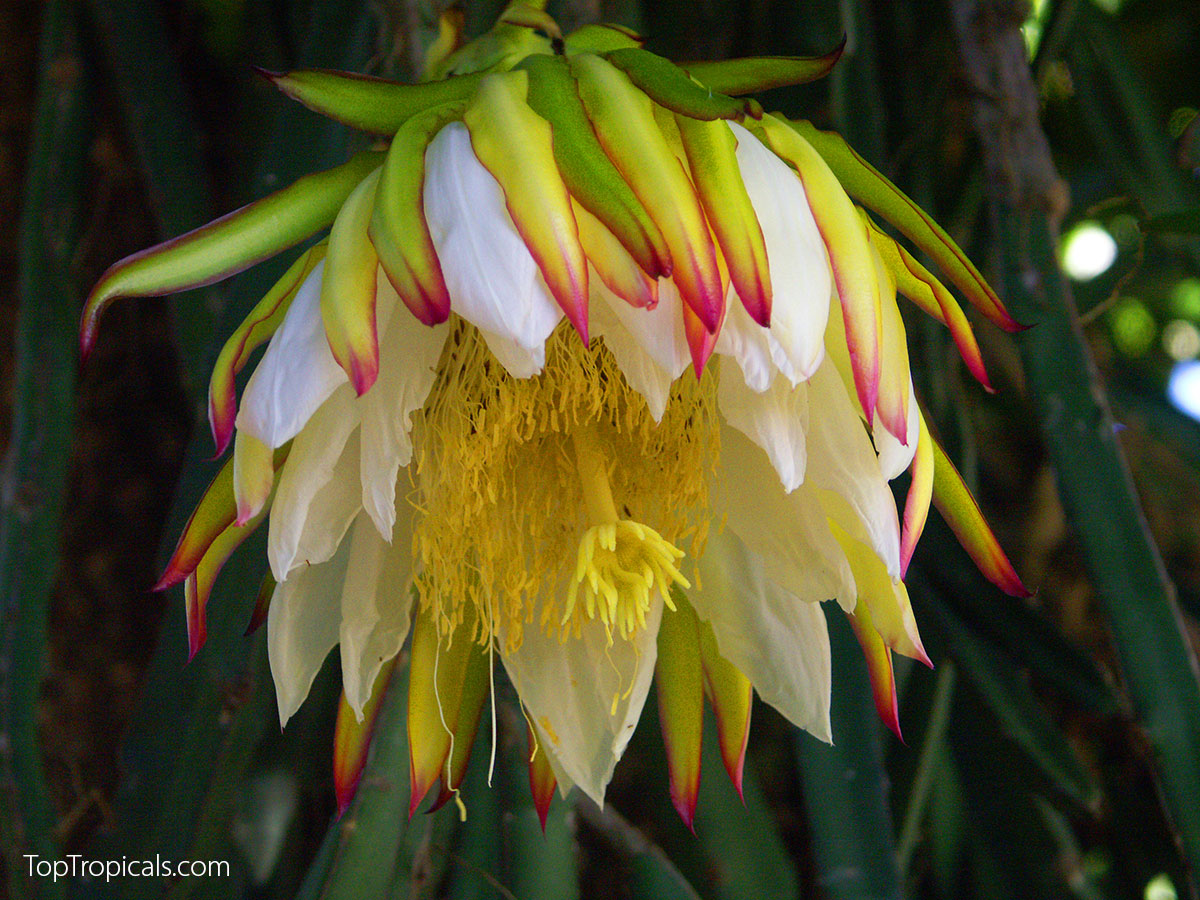
Close-up  of  a  blooming  dragon  fruit  pitaya  flower  with  white  petals  and
   yellow 
 center

Dragon fruit flowers are among the most spectacular in the plant world. They open at night, glowing under moonlight, with pale petals and a sweet fragrance. Each flower can be a foot wide. Seeing one bloom feels like stepping into another world.

⚡️ Top Dragon Fruit Health Benefits

  • High in fiber for digestion and gut health
  • Low in calories but full of vitamins
  • Great for weight management
  • Adds color and freshness to smoothies and salads

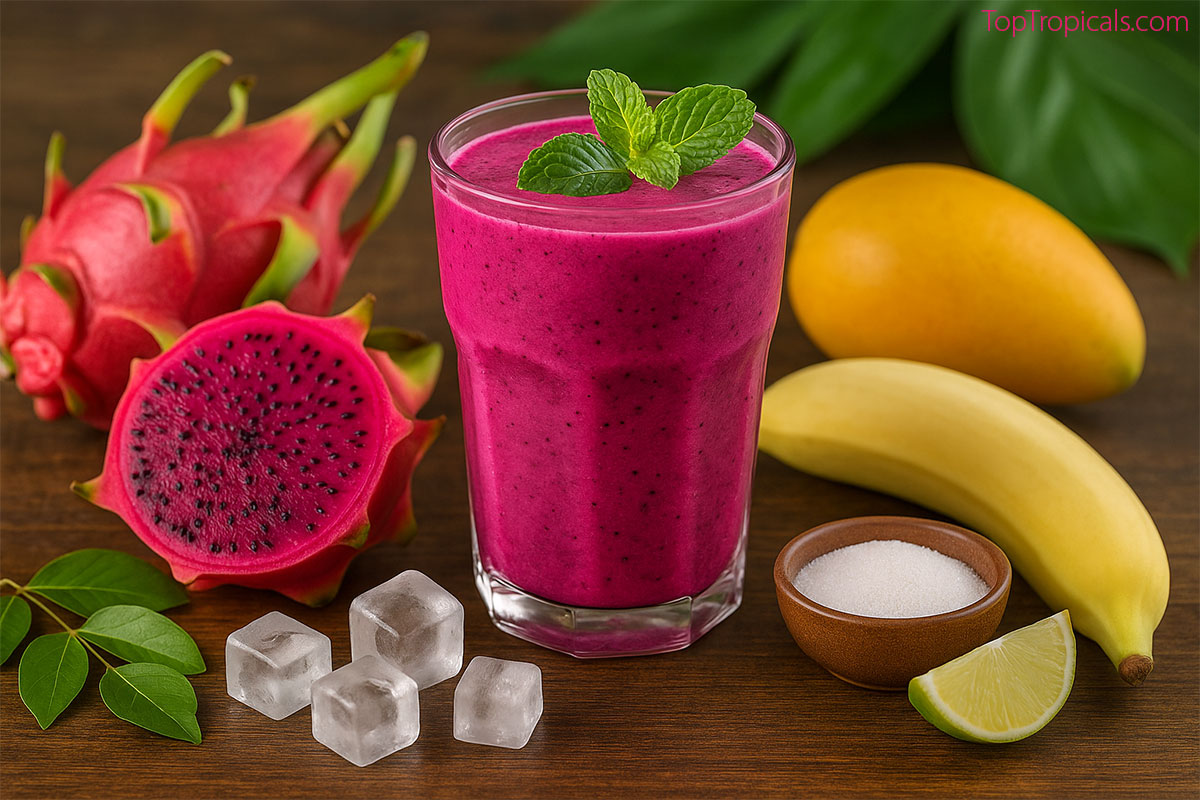
🍹 Dragon Fruit Smoothie recipe

Glass  of  dragon  fruit  pitaya  smoothie  with  fresh  dragon  fruit,  banana, 
 mango,  lime,  sugar,  and  ice 
 cubes

Blend together:

  • 2 dragon fruits, peeled
  • 1/2 cup mango pulp
  • 1 banana
  • 1 cup milk of your choice
  • 2 tbsp sugar
  • 1/2 tsp lime juice
  • Ice cubes to taste

Top with mint for a refreshing tropical treat.

Watch Dragon Fruit short videos:

Date: 17 Apr 2024

Just hanging out in Tropical Paradise

😺🍹🏝 Just hanging out in Tropical Paradise...

How is your Garden doing? Get some Tropicals from TopTropicals! 🥭🌺

📸 😺 👇 Share your cats in comments!

#PeopleCats

TopTropicals.com
We Grow Happiness