Garden Blog - Top Tropicals

Date: 15 Jan 2026

When the Black Bat Lily decides to bloom
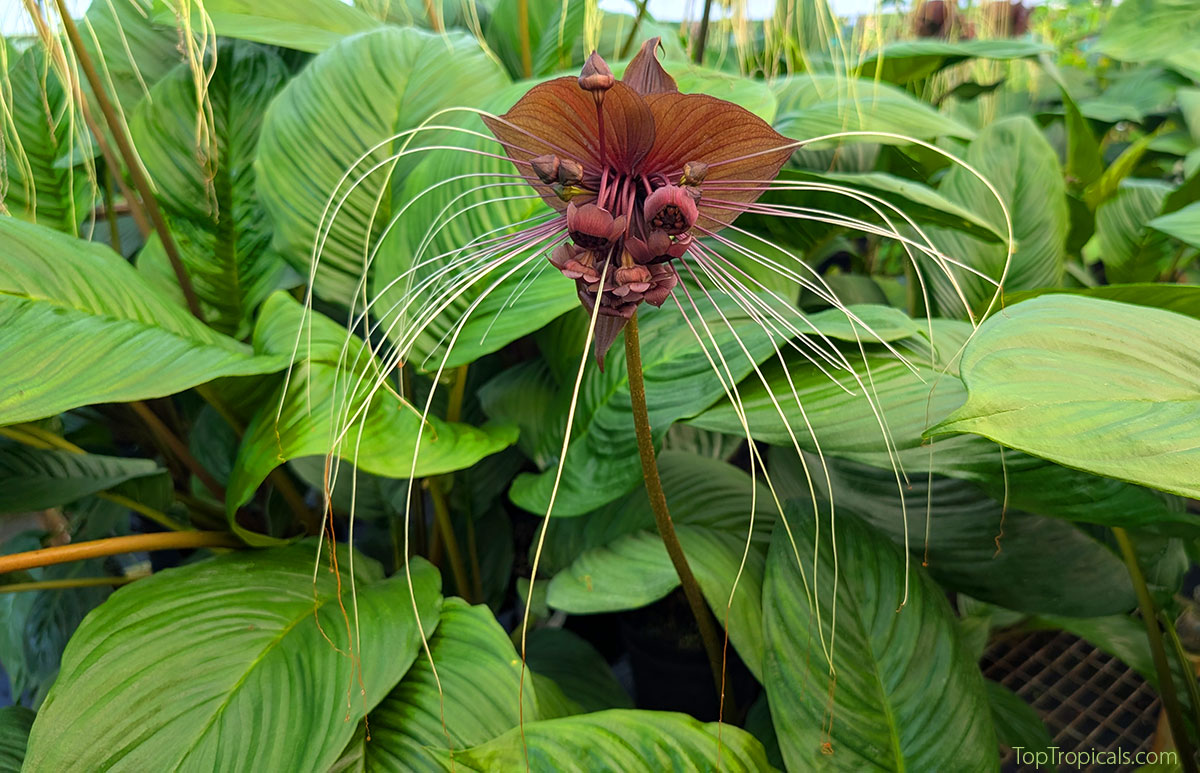
Blooming  Black  Bat  Lily  (Tacca  chantrieri)  with  dark  bat-shaped  flower 
 and  long  whisker-like  filaments  surrounded  by  green  leaves

Every so often a plant blooms and the whole greenhouse seems to slow down.

That is what happened this week with the Black Bat Lily, Tacca chantrieri. We have grown Taccas for years, but when the black ones open properly, it still feels special. The flowers are dark and quiet, almost unreal up close. They do not shout for attention. They make you lean in.

Bat Head Lily Plant Facts

Botanical name: Tacca chantrieri
Also known as: Bat Head Lily, Bat Flower, Devil Flower, Black Tacca
USDA Zone: 9 - 11
Highligths Small plant 2-5 ftShadeWatering: Regular. Let topsoil dry slightlyOrnamental foliageUnusual color
Get personalized tips for your region

Right now, we have a lot of them blooming at the same time. If you have never seen one in person, photos only get you part of the way there. The wings are darker than you expect, and the whiskers seem to go on forever. People walk into the greenhouse, stop, stare, and usually ask the same question: "Is that real?" - Yes. It is.
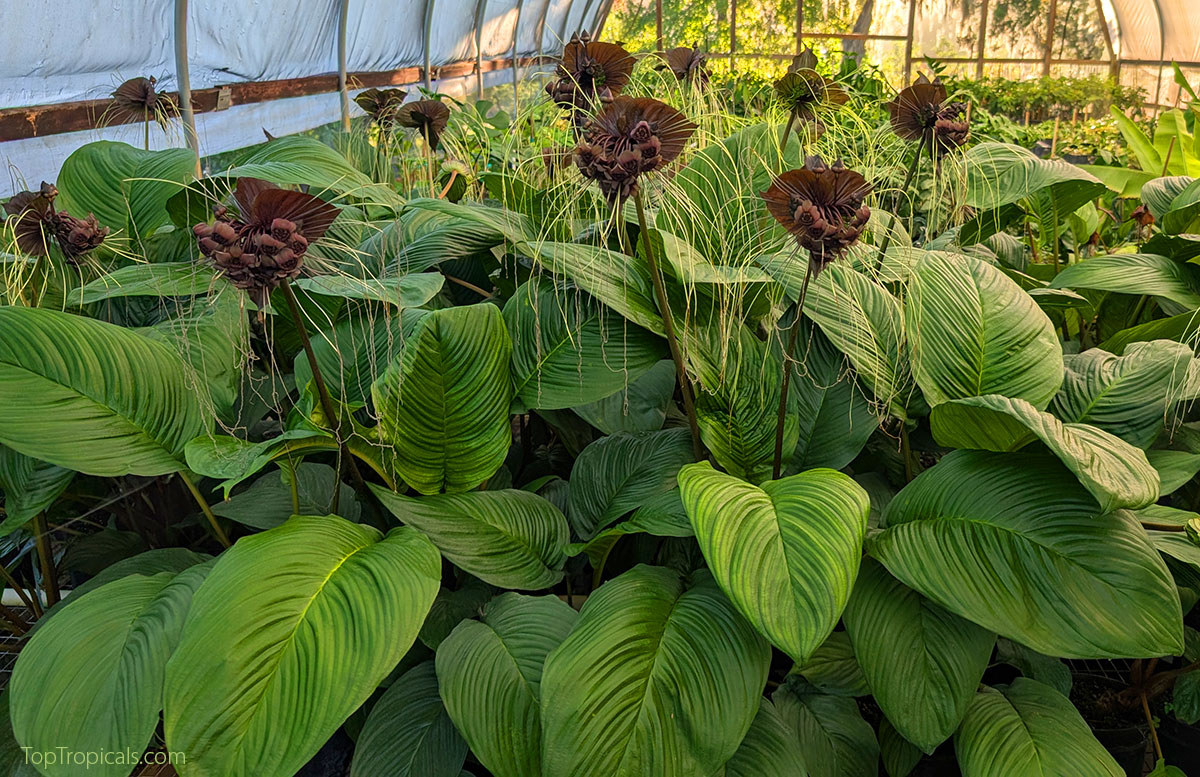
Group  of  blooming  Black  Bat  Lily  plants  (Tacca  chantrieri)  with  dark 
 bat-shaped  flowers  and  long  whisker-like  filaments  in  a  greenhouse

A quick honest note, because this matters. The blooms themselves are delicate and may not travel well. That is just the nature of this plant. The plants, however, are strong, well established. With the right conditions, they bloom again. This is not a one-time trick.

Black Tacca is not a beginner houseplant, but it is also not impossible. It likes filtered light, steady warmth, and humidity. It does especially well in a greenhouse or a bright indoor spot where you already keep plants that enjoy moisture. It is the kind of plant you keep close, not one you forget in the corner.

We are offering them now simply because they are ready and looking their best. If you have been waiting for one, this is a good moment.

You can see the Black Bat Lily here: https://toptropicals.com/store/item/2345.htm

Just wanted to share something we are enjoying in the greenhouse right now. Some plants come and go. Some stay with you.

Tacca (Bat Lily) FAQ

What is Tacca?

Tacca, also known as Bat Lily or Devil Flower, is a tropical plant grown for its unusual bat-shaped flowers with long whisker-like filaments. The most popular species is Tacca chantrieri, the Black Bat Lily.

Is Tacca hard to grow?

Tacca is not a beginner plant, but it is not impossible. It does best with warmth, humidity, and filtered light. Gardeners who already grow orchids, calatheas, or other humidity-loving plants usually do well with Tacca.

Does Tacca need a greenhouse?

A greenhouse is ideal, but not required. Tacca can be grown indoors in a bright spot with indirect light and good humidity, such as near a humidifier or in a bright bathroom with a window or skylight.

Will my Tacca arrive in bloom?

Plants may be blooming in the greenhouse, but flowers are often removed before shipping because they are delicate and do not travel well. The plants are well established and capable of blooming again with proper care.

How often does Tacca bloom?

Tacca does not bloom constantly. It may take time to establish before flowering, but once settled, it can bloom seasonally and may produce multiple flowers in warm, humid conditions.

Does Tacca grow from a bulb?

Tacca grows from a rhizome, not a bulb. The rhizome stores energy and allows the plant to regrow and bloom again.

Why does Tacca have long whiskers?

The long filaments are thought to help attract pollinators such as flies by mimicking the look of decaying organic matter. While unusual, this is part of the plant's natural pollination strategy.

✍️ More about growing Tacca
🛒 Get your own Tacca plant
🎥Watch our videos about Tacca

Date: 12 Jan 2026

Watch how to squeeze natural shampoo from the Ginger!

Shampoo Ginger, Zingiber zerumbet, Pine Cone Ginger

💄 Watch how to squeeze natural shampoo from the Ginger!


🎆 Shampoo ginger uses and fragrance


Shampoo Ginger, also known as Zingiber zerumbet or Pine Cone Ginger, is one of those plants that sounds too good to be true - but isn’t. This tropical ginger has been used for centuries not just as an ornamental plant, but as a practical, fragrant, everyday resource.

Pine Cone Ginger Plant Facts

Botanical name: Zingiber zerumbet
Also known as: Pine Cone Ginger, Shampoo Ginger
USDA Zone: 8 - 10
Highligths Small plant 2-5 ftSemi-shadeShadeWatering: Regular. Let topsoil dry slightlyRed, crimson, vinous flowersOrnamental foliage
Get personalized tips for your region


🎆 Natural shampoo from a flower cone


The most famous use of shampoo ginger comes from its bright red, pine cone-shaped flower bracts. When the cones mature, they fill with a milky, slippery liquid. Simply squeezing the cone releases this natural cleanser, traditionally used as shampoo in Asia and Hawaii. It gently cleans hair, leaves it soft, and adds a light, fresh scent. Even today, extracts of shampoo ginger are still used in commercial shampoos and hair products.

🎆 Fragrance throughout the entire plant


Shampoo ginger isn’t just useful - it smells amazing. The leaves, stems, and cones all carry a warm, spicy fragrance typical of true gingers. The scent is fresh and clean, with earthy and slightly citrusy notes. Because of this, the plant has also been used in traditional body rinses, hair treatments, and natural perfumes.

🎆 More than hair care


Beyond shampoo, the cones are popular as long-lasting cut flowers, often used in tropical floral arrangements. The plant itself grows into a lush, leafy clump that adds strong tropical character to gardens, especially in warm, humid climates.

🎆 A plant with a traveling history


Shampoo ginger is also known as a “canoe plant.” Ancient Polynesian voyagers intentionally carried it across the Pacific as they settled new islands. Its usefulness, fragrance, and beauty made it valuable enough to earn a place on long ocean journeys.

Shampoo ginger is a rare mix of beauty, history, fragrance, and function - a plant that proves some of the most interesting garden plants are also the most practical.

🛒 Get your own natural shampoo from Pine Cone Ginger

📚 Learn more:


🔴Zingiber zerumbet in Plant Encyclopedia
🔴Do you have Shampoo Ginger in your garden?
🔴Free natural shampoo: squeeze it and see what comes out!
🔴What Ginger makes a natural shampoo
🔴5 most spectacular Ginger species

#Shade_Garden #Container_Garden #Remedies #Discover #Food_Forest

🟢 Join 👉 TopTropicals

Date: 12 Jan 2026

Cherry of the Rio Grande quick compote: quick-n-fun exotic recipes

Cherry of the Rio Grande quick compote over pancakes

Cherry of the Rio Grande quick compote over pancakes

Eugenia aggregata - Cherry of the Rio Grande fruit

Eugenia aggregata - Cherry of the Rio Grande fruit

🍴 Cherry of the Rio Grande Quick Compote

This fast cherry compote is made from Cherry of the Rio Grande (Eugenia aggregata). It is tart, rich, and perfect over pancakes, waffles, toast, or warm bread.

Cherry of the Rio Grande Plant Facts

Botanical name: Eugenia involucrata, Eugenia aggregata
Also known as: Cherry of the Rio Grande, Cere Jodo Rio Grande
USDA Zone: 9 - 11
Highligths Small tree 10-20 ftSemi-shadeFull sunWatering: Moderate. Water when top soil feels dryWatering: Regular. Let topsoil dry slightlyEdible plantSubtropical plant. Mature plant cold hardy at least to 30s F for a short time
Get personalized tips for your region

Ingredients

  • 1 cup Cherry of the Rio Grande fruit, pitted
  • 2 to 4 tablespoons water

Instructions

  1. Place cherries and water in a small saucepan.
  2. Simmer over medium heat until the cherries soften and release juice.
  3. Mash lightly with a spoon for a chunky texture.
  4. Spoon warm compote over pancakes or bread and serve immediately.

🛒 Plant Cherry of the Rio Grande

📚 Learn more:


Eugenia aggregata - Cherry of the Rio Grande in Plant Encyclopedia
Don't plant cherries until you see this one!
Ten best fruit trees to grow in Florida and Southern landscapes. Tropical Cherries: Eugenias

#Food_Forest #Recipes

🟢 Join 👉 TopTropicals

Date: 25 May 2026

Why Gardeners Are Secretly Obsessed With This Rare Brazilian Giant Walking Iris

Iris Regina - Neomarica caerulea

🔤 Why Gardeners Are Secretly Obsessed With This Rare Brazilian Giant Walking Iris


Meet Iris Regina - Neomarica caerulea: the rare, salt-tolerant Brazilian walking iris that blooms in under a year and thrives in shady, sandy soil where other tropicals fail.

One look at Iris Regina - and it's easy to see why tropical plant collectors quietly become obsessed with it. It pairs elegant, hand-painted blue-violet flowers with arching, sword-like leaves that instantly give your garden a lush, structural look.
But the real magic of this unusual Brazilian species isn't just its beauty - it's the fact that it thrives exactly where other tropicals fail.

The Plant That Thrives on Neglect (and Salt Air)


Originally discovered growing near the ocean in Brazil, Iris Regina naturally adapted to conditions that would frustrate most gardeners. Thriving in sandy soil, deep shade, and coastal salt spray, this plant is remarkably easygoing. While most flowering tropicals demand rich soil and perfect drainage, Iris Regina handles difficult planting zones with absolute grace.

👉 Quick Care Tip: While it loves moist, well-drained soil, overfeeding is a mistake. Too much fertilizer will give you massive leaves but fewer flowers!

Blooms in Less Than a Year


One of the most surprising traits of Iris Regina is how quickly it matures. Many rare ornamental plants test a gardener's patience for years before ever showing a bud. Fresh seedlings of this species, however, can reach blooming size in less than a year - an absolute rarity for a tropical perennial with such exotic flowers.

The blooms look like a cross between a rare orchid and a delicate iris. While individual flowers are short-lived, mature clumps continuously push out new blooms throughout the warm season, especially when kept evenly moist.

Light and Cold Tolerance: What You Need to Know


· Light: For the best foliage color and maximum blooming power, give it morning sun and afternoon shade. It can handle more sun, but only if you keep up with watering.
· Cold Hardiness: Iris Regina is comfortable down to about 30F. In warmer parts of Florida (Zones 9b-11), it performs beautifully outdoors year-round.
· Cold Climates: If you live in a freeze-prone zone, it makes an exceptional container plant. Just wheel it to safety when a freeze threatens.
Propagation: It's incredibly easy to divide, or you can grow it reliably fast from fresh seed.

25 Years of History: The Top Tropicals Connection


For us at Top Tropicals, Iris Regina isn't just another botanical listing - it carries a piece of our history. This specific variety was introduced by the legendary tropical plant collector Sid Gardino, who named it after his wife, Regina.

Sid and Regina have been longtime friends of Top Tropicals for over a quarter of a century. In fact, some of the very first plants in our nursery’s collection came from them more than 25 years ago. Plants like Iris Regina represent the early, passionate era of Florida plant collecting - treasures shared between friends long before rare plants became viral internet trends.

Today, Iris Regina still feels like a hidden gem compared to flashy orchids or massive aroids. But if you are looking for something elegant, salt-tolerant, and surprisingly easy to grow, this Brazilian walking iris might just become your favorite plant in the garden.

🛒 Get Iris Regina for a low-maintenance, always-blooming showstopper

📚 Learn more:

Walking Iris Plant Facts

Botanical name: Neomarica caerulea
Also known as: Walking Iris, Twelve apostles, Apostle Plant, Iris Regina
USDA Zone: 8 - 11
Highligths Small plant 2-5 ftSemi-shadeShadeFull sunWatering: Regular. Let topsoil dry slightlyBlue, lavender, purple flowersSubtropical plant. Mature plant cold hardy at least to 30s F for a short timeFlood tolerant plantSeaside, salt tolerant plant
Get personalized tips for your region

· Neomarica caerulea - Iris Regina in Plant Encyclopedia
· What flower is perfect for coastal gardens
· What is the best plant for a carefree flower border

#Container_Garden #Shade_Garden #How_to #Discover


🟢 Join 👉 TopTropicals

Date: 23 May 2026

Avocado Fantastic: the hidden world beyond green and black

Avocado Fantastic fruit

Avocado Fantastic fruit

Avocado Fantastic tree

Avocado Fantastic tree

Avocado Fantastic: the hidden world beyond green and black


Most people think avocados come in two colors - green and black. Maybe they've heard of Hass. But the hidden world of avocados is far more diverse, filled with giant fruits, unusual shapes, red-skinned varieties, and even trees that can handle surprising cold.

One of the most remarkable is Fantastic.

💚 The avocado that wasn't supposed to survive


Avocados are often considered tropical and tender. Fantastic challenges that idea. This unusual variety gained a following in Texas, where it reportedly survived temperatures near 10F around San Antonio. Mature trees can tolerate temperatures around 15F for short periods, making it one of the most cold-hardy avocados available.
For gardeners in cooler regions, Fantastic has become something of a legend - proof that growing avocados is not limited to the tropics.

💚 A survivor of Florida's historic freeze


During Florida's historic February 2026 freeze, temperatures at our Sebring nursery dropped to 25F with several nights of prolonged freezing. While many tropical plants suffered damage, Fantastic came through without noticeable injury - remarkable performance for a tropical fruit tree.

💚 More than just a tough tree


Fantastic would not be worth growing if cold hardiness were its only claim to fame. Fortunately, it also produces excellent fruit.
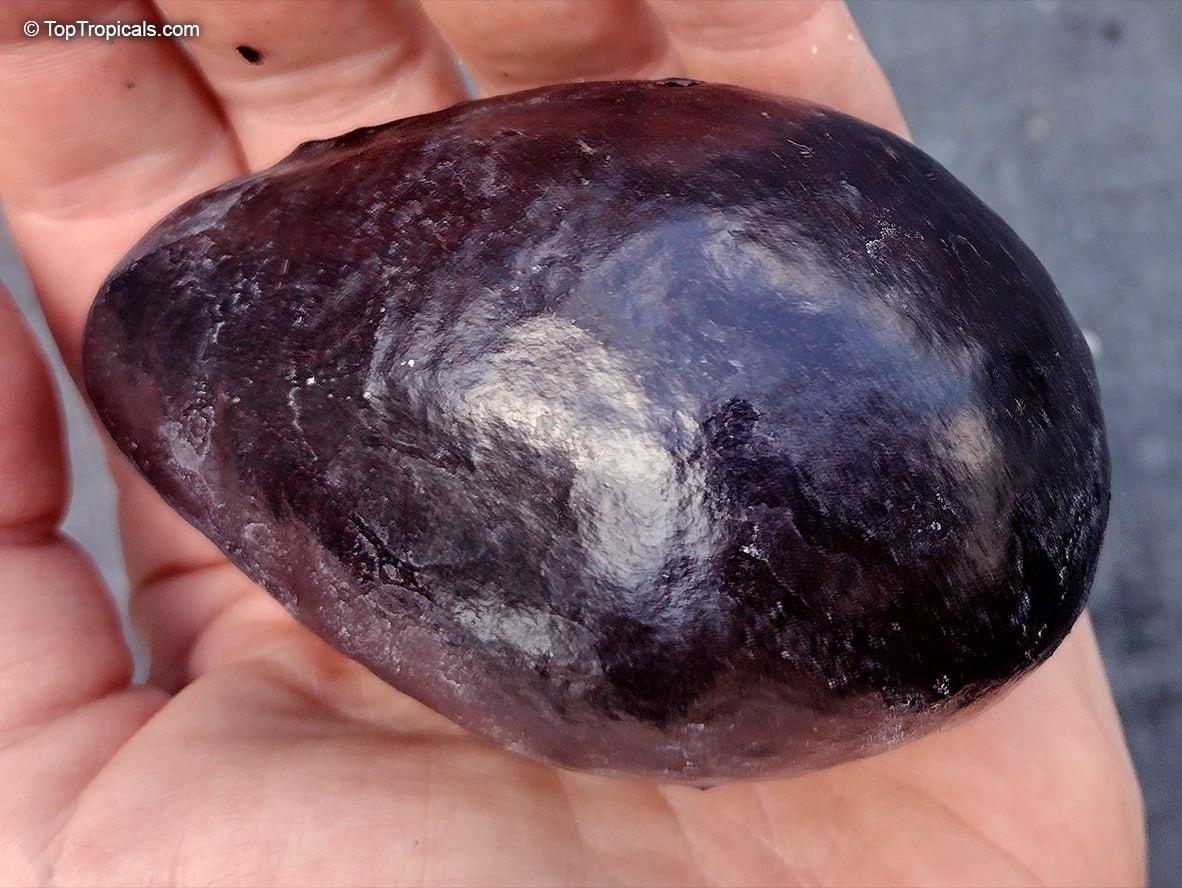
The avocados are relatively small, typically weighing 6 to 8 ounces, with very thin green skin that darkens as the fruit matures. Inside is smooth, creamy flesh with a rich, buttery texture and pleasant nutty flavor.
The skin is so thin that many people simply cut the fruit in half and scoop it out with a spoon, or even it it with the skin. This is the kind of avocado often enjoyed fresh rather than turned into guacamole.

💚 A handsome, manageable tree


Fantastic is a Mexican-type avocado, and it shows many of the characteristics that make this race so appealing.
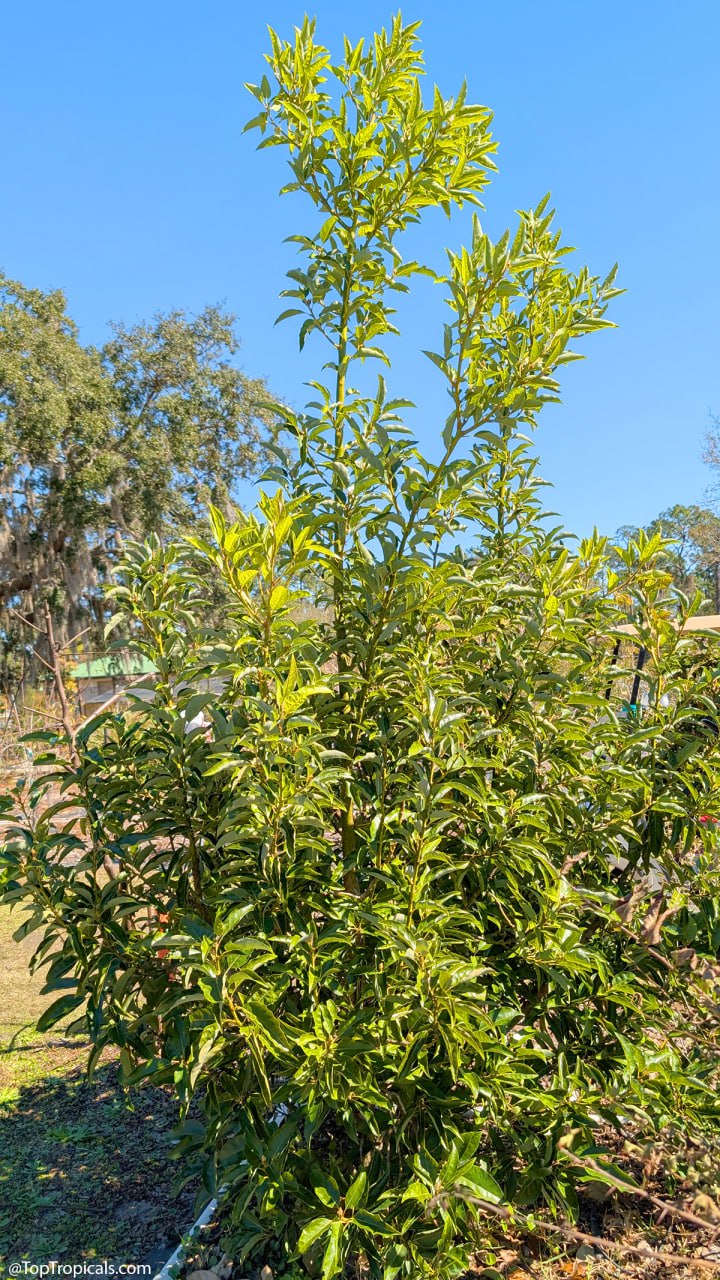
The tree has an attractive upright growth habit and tends to remain more compact than many large Florida avocado varieties. Rather than becoming an enormous shade tree, it often develops into a narrower, more manageable specimen that fits comfortably into a home landscape.
The foliage is elegant and refined, giving the tree a lighter appearance than many broad-leaved avocados. Like other Mexican-type varieties, the leaves release a pleasant anise-like fragrance when crushed - a surprising feature that many gardeners discover by accident.

💚 Why Fantastic deserves more attention


Many avocado collectors spend years searching for unusual varieties. Some are chasing flavor. Others want larger fruit or longer harvest seasons.
Fantastic offers something different: confidence.

It gives gardeners in cooler climates a chance to grow a fruit that many people assume is impossible outside the tropics. Even in warmer regions, its remarkable cold tolerance provides peace of mind when winter weather turns unpredictable.

In a world where most shoppers only see green avocados and black avocados at the grocery store, Fantastic is a reminder that the hidden world of avocados is far richer, more diverse, and far more interesting than most people realize.

And for many growers, that discovery is simply Fantastic. 👉 More

🛒 Explore cold hardy Avocado varieties

📚 Learn more:


· Avocado Variety Guide: Snack or Guacamole? Collector's inspiration
· Cold-hardy avocado survival groups - what the numbers really mean
· How to protect Avocado from cold and how hardy is it?
· Avocado that laughs at frost: Mexicola Grande for cooler climates
· Cold hardy Avocado Joey - you eat it with the skin

📖 Our Book: Avocado Variety Guide, Snack or Guacamole?
·
Hard copy · PDF File Download

#Food_Forest #Avocado #Discover

🟢 Join 👉 TopTropicals