Garden Blog - Top Tropicals

Date: 9 Mar 2026

Dont Wait Years: 8 Fruit Plants You Can Harvest the Same Season
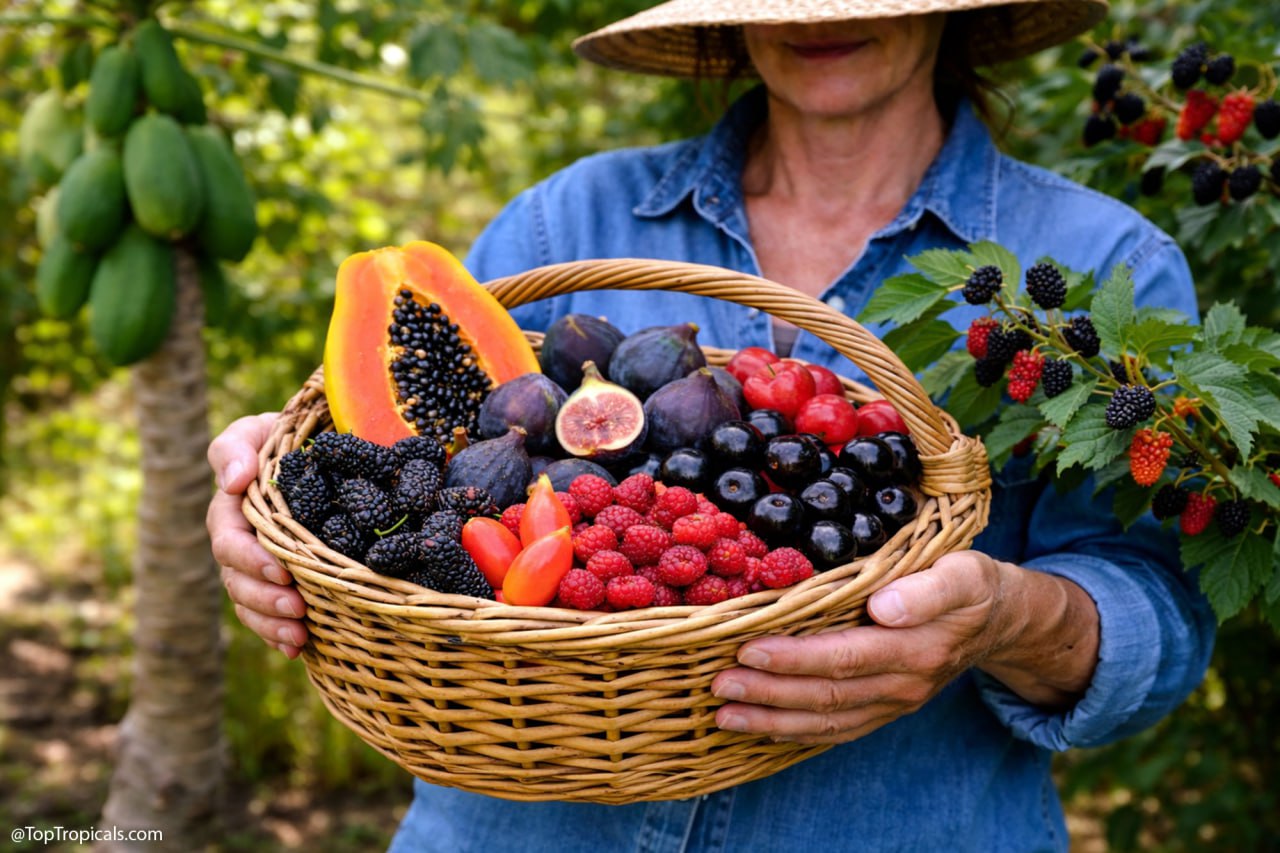
Don't wait years for fruit! Harvest papayas, berries, figs, and more in the very same season you plant them with these fast-growing varieties.

Don't wait years for fruit! Harvest papayas, berries, figs, and more in the very same season you plant them with these fast-growing varieties.

Don't Wait Years: 8 Fruit Plants You Can Harvest the Same Season 🍒

Growing fruit at home usually requires years of patience. Most gardeners view fruit trees as a long-term investment that may not pay off for a decade.
But you don't have to wait.
Certain tropical and subtropical plants are "fast-track" growers. In warm climates like Florida, choosing the right varieties means you can see flowers and fruit within months of planting - often in the very same season.
If you want a backyard harvest without the wait, here are the fastest-producing fruits you can plant today.
  • 🍓 1. Blackberry Jam Fruit (Randia formosa)


    A compact shrub perfect for containers. It produces star-shaped flowers and dark purple fruit that tastes exactly like blackberry preserves. Established plants often fruit in their first season.
  • 🍓 2. Peanut Butter Fruit (Bunchosia)


    This fast-growing large shrub produces orange pulp with the uncanny flavor and texture of peanut butter. Expect flowers and bright red berries within months of planting in warm conditions.
  • 🍓 3. Papaya (Carica papaya)


    The "giant herb" of the fruit world. Papayas are legendary for their speed, often flowering just months after planting and providing sweet, vitamin-rich fruit within the same year.
  • 🍓 4. Grumichama Cherry (Eugenia brasiliensis)


    A stunning Brazilian evergreen. Grafted plants can fruit the same season they are planted, offering glossy, dark cherries with a sweet, mild finish.
  • 🍓 5. Black Surinam Cherry (Eugenia uniflora var. Lolita)


    The 'Lolita' cultivar is a game-changer. It grows quickly as an edible hedge and produces nearly black, resin-free fruit that is significantly sweeter than the common red varieties.
  • 🍓 6. Mysore Raspberry and Tropical Blackberries (Rubus sp.)


    Unlike traditional berries that require chill hours, these Rubus species thrive in the heat. Their vigorous canes grow rapidly, often fruiting the same season they hit the soil.
  • 🍓 7. Everbearing Mulberry (Morus sp.)


    Mulberries are incredibly generous. Everbearing varieties produce sweet berries over an extended window and often begin fruiting the very first year they are planted.
  • 🍓 8. Fig Trees (Ficus carica)


    Figs are the champions of container gardening. They are highly drought-tolerant and famous for setting honey-sweet fruit even at a very young age—often just months after being established.


🏡 Where to plant them?
  • 👉 Tips for Faster Results


  • •  Start Large: Buy "nursery-established" plants rather than seeds.
  • •  Feed the Need: Use high-quality organic fertilizer to support rapid growth.
  • •  Sun is Fuel: Most of these varieties require at least 6-8 hours of direct sunlight to trigger flowering.


🛒 Plant these fruits now - some can produce within months

📷 Freshly picked tropical fruit bounty: don't wait years for fruit! Harvest papayas, berries, figs, and more in the very same season you plant them with these fast-growing varieties.

#Food_forest #How_to #Discover

🟢 Join 👉 TopTropicals
Date: 23 Feb 2026

Macadamia nut oven crisp

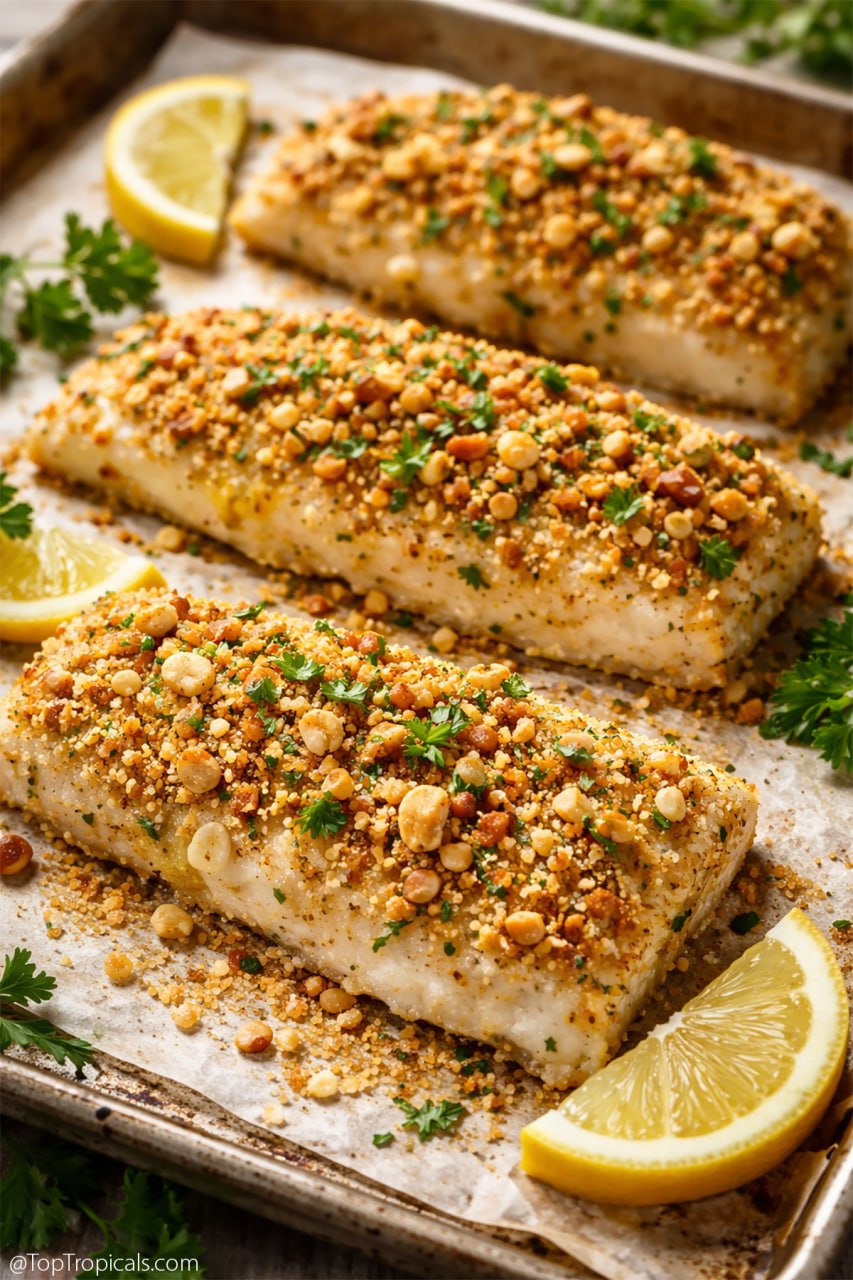
Golden macadamia-crusted fish fillet

Golden macadamia-crusted fish fillet

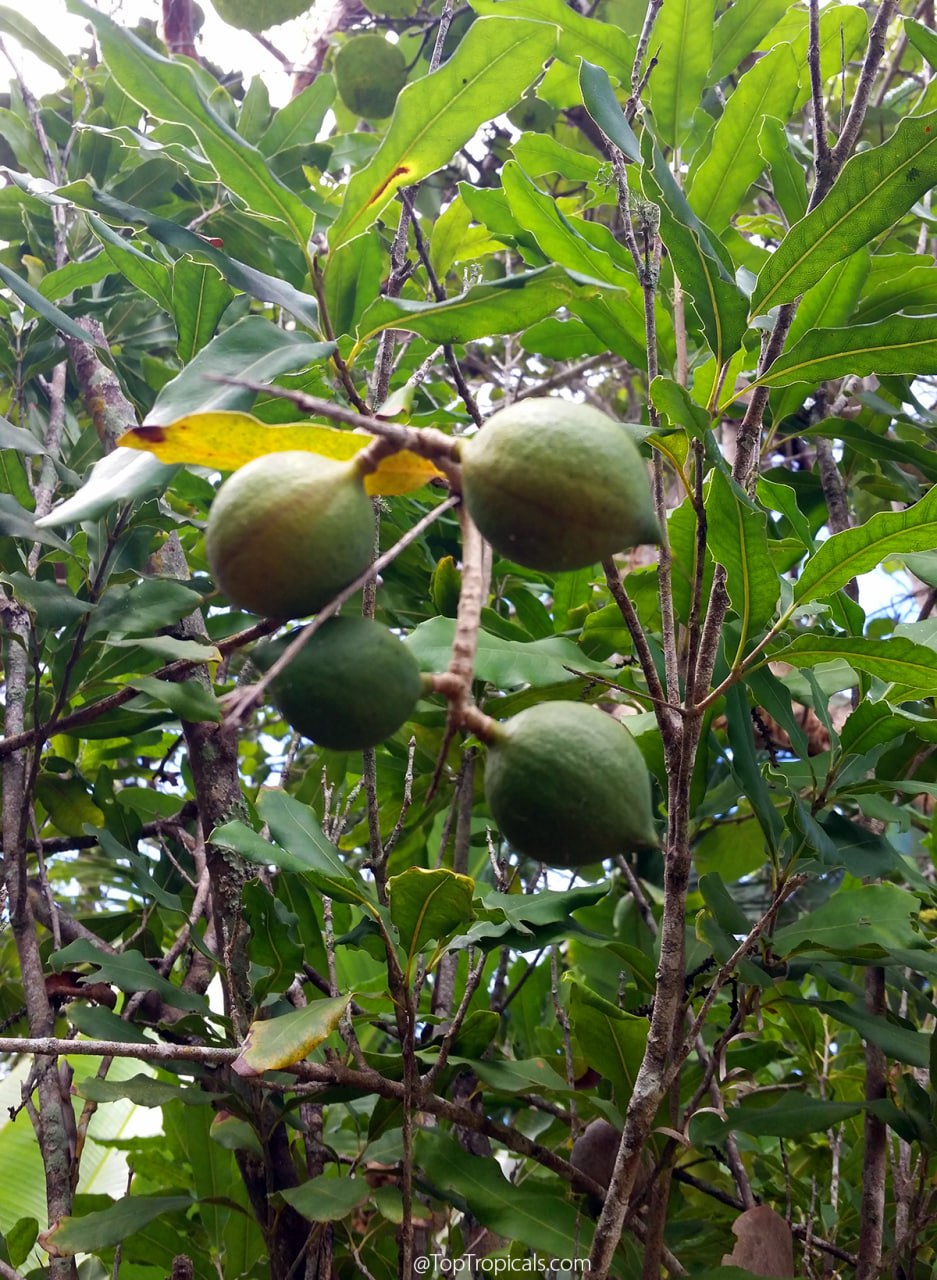
Macadamia integrifolia - Macadamia nuts and leaves on a tree

Macadamia integrifolia - Macadamia nuts and leaves on a tree

🍴 Macadamia nut oven crisp: quick-n-fun exotic recipes

Macadamia Nut Oven Crisp

Ingredients

  • 1 fish fillet (cod, tilapia, or snapper)
  • 1/3 cup crushed macadamia nuts
  • 1 teaspoon Dijon mustard
  • 1 teaspoon olive oil
  • Salt and pepper to taste

Instructions

  1. Preheat oven to 375°F.
  2. Spread a thin layer of mustard over the fish fillet.
  3. Press crushed macadamia nuts onto the top of the fillet.
  4. Drizzle lightly with olive oil.
  5. Bake until golden and crisp, about 12–15 minutes.


🌿About the plant:
Macadamia is an Australian rainforest tree that gives us one of the richest, creamiest nuts on earth. The shell is famously hard - you really earn that buttery crunch.

🏡 In the garden:


Best in warm climates, zones 9-11, cold hardy to light freeze. Needs full sun, good drainage, and patience - seedlings can take several years to start producing (grafted or air-layered trees start flowering right away). Once established, they are long-lived and productive.

🛒 Plant a hardy Macadamia tree to always have your nuts

📚 Learn more:

Plant Facts

Macadamia sp, Macadamia integrifolia, Macadamia tetraphylla
Macadamia nut
USDA Zone: 9-11
Large tree taller than 20 ftSmall tree 10-20 ftFull sunRegular waterYellow, orange flowersWhite, off-white flowersPink flowersEdible plantSubtropical plant. Mature plant cold hardy at least to 30s F for a short timeFlood tolerant plant
  • Macadamia integrifolia in Plant Encyclopedia
  • Macadamia nut crusted fish: quick-n-fun exotic recipes
  • Stop buying macadamias - plant this tree to enjoy your own nuts
  • Where do Macadamia nuts come from
  • What are the flowers of Macadamia nuts
  • Ten best fruit trees to grow in Florida and Southern landscapes. # 6: Macadamia Nut Tree.
  • How to grow your own Sweet Macadamia Nuts
  • Macadamia: Hard Sweet Nut and Hardy Tree
    🎥 Growing Macadamia trees

    #Food_Forest #Recipes

    🟢 Join 👉 TopTropicals
  • Date: 17 Feb 2017

    Our sales, news and updates

    Radio Top Tropicals Live Webcast upcoming event: Saturday February 18, at 11 am EST.
    Topic: WEED OR WONDER PLANT?
    We will explore plants considered invasive species, or weeds, here in Florida, and reveal interesting and not-so-well-known facts about them.
    1) Schinus terebinthifolius - Brazilian Pepper, or Florida Holly. This species is essential for migratory birds, bears, and other critters. Berries are used in China for medicine. Used as a spice in Italy, as well as here in the US.
    2) Phyllanthus amarus - Seed on the leaf. A scourge of nurseries, it may yet lead to the cure of Hepatitis B & C.
    3) Melaleuca leucophylla - Punk tree, Paper tree. One of the finest trees for raising of epiphytes. Tiger Balm brand ointment is made from these trees. An excellent timber source as well.
    Our Host Robert Riefer - Florida State Certified Crop Adviser, and Weed Specialist - answering all your gardening questions.

    Listen to Radio Top Tropicals, every Saturday, at 11 am EST! You may use our website radio player DURING AIR TIME and see the pictures of plants we are talking about. To ask questions using live chat, you need to log in at Mixlr.com or simply call our office 239-887-3323 during air time!
    If you missed a live webcast, you may listen to recording by following Showreel item link.

    Check out our upcoming radio shows and get your gardening questions ready!

    New Article: Aphrodisiacs of the plant world.
    Last Saturday, the topic of our Webcast was Plants of Love - Aphrodisiacs (click to listen to recording).
    Today, we are introducing an article by Kristi, our Meet the Gardener host - Aphrodisiacs of the plant world.

    Date: 18 Jan 2017

    10 plants that can make you happy.
    3D garden ideas.

    3D garden ideas.
    Q:
    Can you make my yard bigger and prevent it from freezing?

    A: Yes, we can make your backyard bigger by adding a 3rd dimension - trees as a upper level, shrubs as a second level, vines in between, low growing perennials below them. Add ground covers and potted plants as separate specimens in between in-ground planted trees and shrubs. One more separate dimension is orchids and other epiphytes that happily grow on the trees. This multi-level structure will allow you not only collect so many plants, but also maintain them in a natural environment, similar to how they grow in a wild.

    As far as preventing from freezing - it depends. You can use greenhouse, cover plants, create microclimate under large canopies, etc. Some tropical plants are tolerant to light frost, once established. If it gets below freezing in your area for more than a few hours, and especially if you have numerous nights with frost throughout winter, we recommend to keep plants in pots (BTW, this way you save space and can collect even more!). Pots can be moved to protected area during cold nights. The more established the tree, the more chances to survive colder temperatures. You may also use propane heaters during cold nights.
    We also use plant booster SUNSHINE boosters to increase plants cold tolerance.
    Cold protection is a lengthy subject. Here is some more information on cold protection. Also, we recommend to check out our magazine Tropical Treasures (about pushing the limits of tropical gardening) for a detailed article on cold protection.
    These are specific articles on Zone-Pushing in different issue #s regarding dealing with cold. See downloadable issues:
    (#1) Growing Tropicals in Nontropical Climate, Three Freezing Nights in Southwest Florida
    (#2) Temperature drops - an alert or a rehearsal?
    (#5) Dealing with cold snaps, Cold hardy beauties
    (#7) When winter is around the corner, Growing exotic Cordyline in colder climate
    (#8) When the weather outside is frightful
    (#9) Winter champions
    (#11) Ready-for-winter checklist for in-ground plants
    (#13) Winter checklist
    (#18) Dealing with cold damaged plants
    You may also order hard copies.
    If temperatures drop below freezing in your area, remember to add Heat Pack to your order!


    10 plants that will make you happy.

    Everyone wants to be happy. Did you know that growing plants is not only fun but can also make you happy? In our new series we will introduce to you 10 plants for your tropical collection that will make you happy.
    Visit our Facebook, YouTube Channel and stay happy!

    Check out this video: 10 plants that will make you happy. Plant # 1 - Rose Apple.

    Stay updated with TopTropicals Videos by subscribing to our channel at YouTube.com/TopTropicals

    Date: 23 Nov 2016

    Growing tropical fruit trees in containers in winter

    Q: Please give me your advice. The winter is here. I bought mango tree, jackfruit tree, sugar apple tree and planned them for spring. What can I do to keep them no frost bite? My home in Bonifay FL.

    A: In subtropical areas with occasional hard freeze in winter, we recommend you to keep tropical plants in pots. The plants you purchase are tender to frost. For cold protection, container growing has several advantages:
    1) easy to move into wind-protected and sun-exposed locations as needed: for example, on a different side of the house. In many areas, seasonal prevailing winds have opposite directions in Summer and Winter.
    2) easy to cover with frost cloth, sheets, or blankets in case of immediate cold spells. Container plants' growth is easier to control and trim, and those plants naturally stay more compact.
    3) easy to move indoors, inside garage, or in covered lanai/patio.
    We also recommend to keep these trees in their original pots until Spring, in containers size of the rootball. Step them up in Spring, when plants start active growth of root system. This will help you to avoid root rot due to possible overwatering in Winter. Reduce watering in any case, and keep your plants in bright, wind-protected spot. Do not fertilize until Spring. Protect from cold when night temperature drops below 35-40F.

    Use SUNSHINE plant boosters to provide additional cold tolerance.

    Cold protection is a lengthy subject. You may also use propane heaters during cold nights. Here is some more information on cold protection