These are not starter trees — they’re mature, fruiting
specimens that give you a head start in your garden or orchard. You’ll enjoy
faster harvests, fuller canopies, and a more immediate impact on your
landscape.
Top Reasons to Choose a Bigger Tree:
Already fruiting – enjoy your own mangos or avocados
right away
Pre-trained and shaped for strong structure and balanced
growth
Instant results in the yard – no years of waiting
Thicker trunks and stronger roots make transplanting easier
We make it easy for Florida gardeners:
Pickup available at two South Florida locations
Local delivery and installation services offered – just
ask!
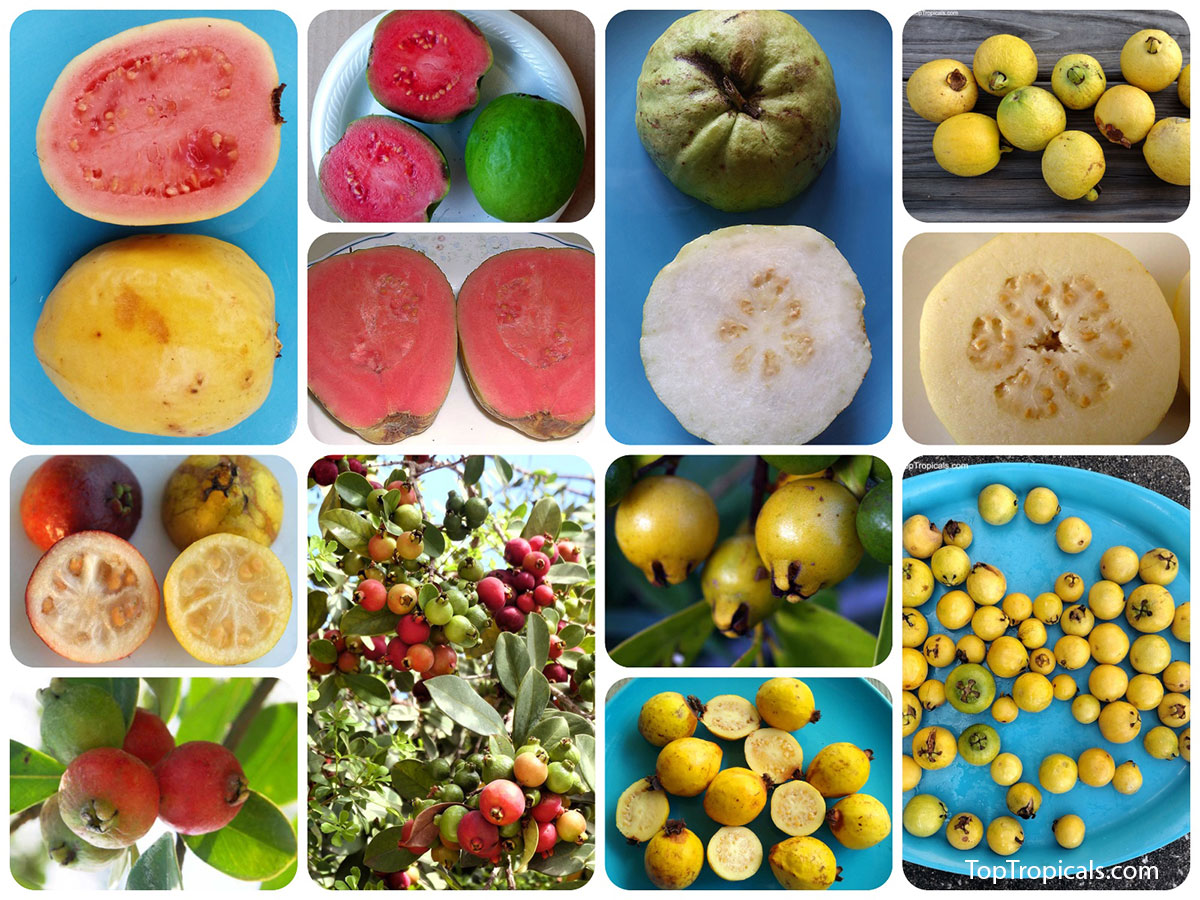
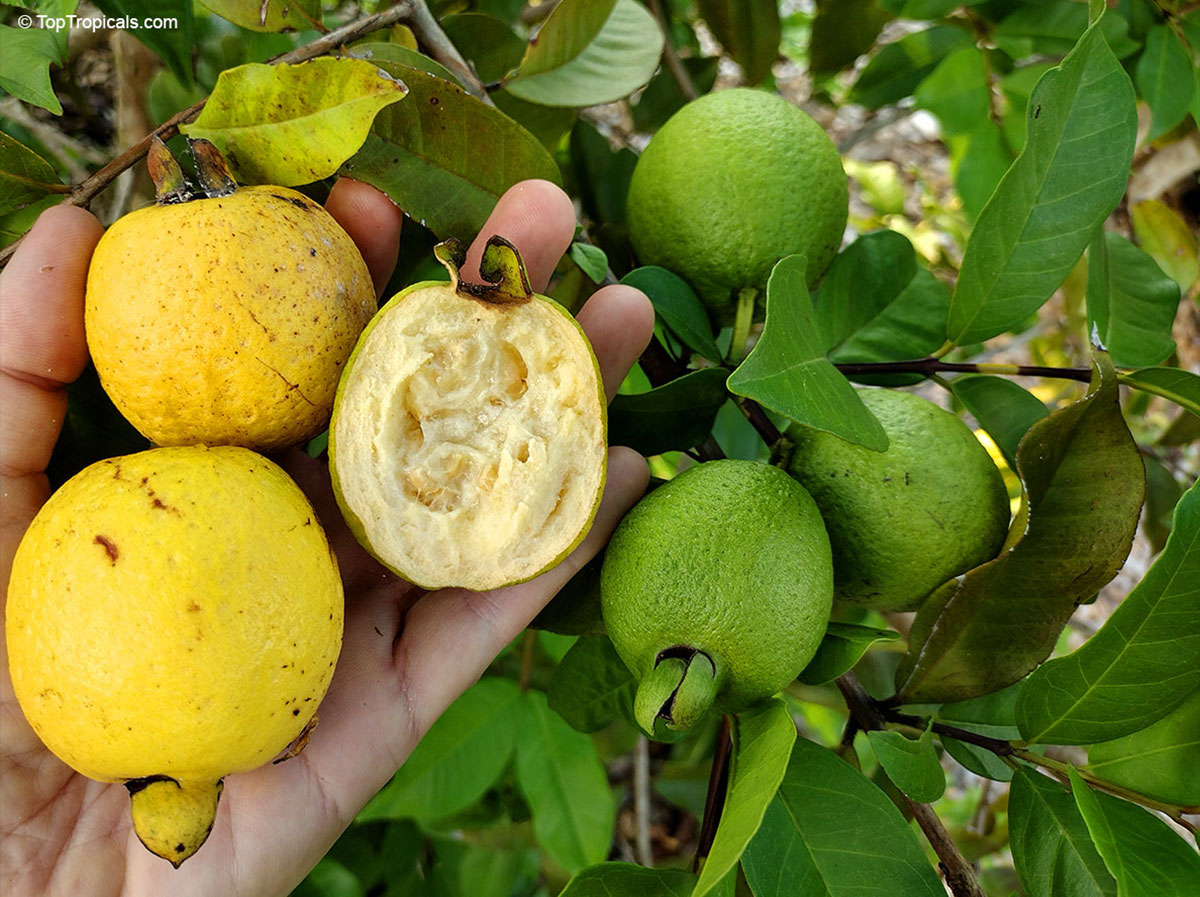
Guava varieties: Pink flesh (upper left quarter), White flesh and Cas
(upper right quarter), Red Cattley Guava (bottom left quarter) and Golden
Cattley (bottom right quarter).
Let’s talk Guava. Few fruits check as many boxes: flavor,
productivity, health, and adaptability. We’ve grown guava trees at Top
Tropicals for years here in Florida, and it never fails to surprise people
with how
easy it is — and how quickly it rewards you.
🌿 Health Benefits
We know the first question:"Why guava in addition to all the other
fruit trees I could plant?"Because guava is one of the healthiest tropical
fruits you can eat and grow — and it produces faster than almost
anything
else.
Vitamin C powerhouse — guava has four times more vitamin C than
oranges. One fruit covers your daily needs and then some.
Potassium and fiber — good for balancing blood pressure and
keeping your heart strong.
Antioxidants like lycopene and vitamin C — these keep your skin
glowing and help protect your cells from damage.
Dietary fiber — aids digestion and helps keep blood sugar
steady.
Guava is a true"food as medicine"tree you can plant right in your
backyard or in pot.
♥️ Our Favorite Varieties are Available Now
We currently have a DOZEN excellent guava varieties in stock selected by
our plant expert Tatiana Anderson — something special for every
garden. Our top picks are:
Pink Guavas
Barbie Pink
– Yellow pear-shaped fruit with thick pink flesh, sweet and juicy.
Cold
hardy for a tropical fruit. The best seller.
Hong Kong
– Large, round, smooth pink fruit. Sweet flavor, very few seeds, and
very
productive.
Tikal
– Our top pick. Fast-growing, disease-resistant, and produces the
sweetest
pink guavas with very few seeds.
White Guavas
Indonesian White
– Aromatic, classic white-fleshed guava with an excellent
tropical flavor.
Kilo White
– Giant fruit up to 2 lbs (1 kilo) each! Few seeds, creamy white
flesh,
and fruits even in containers.
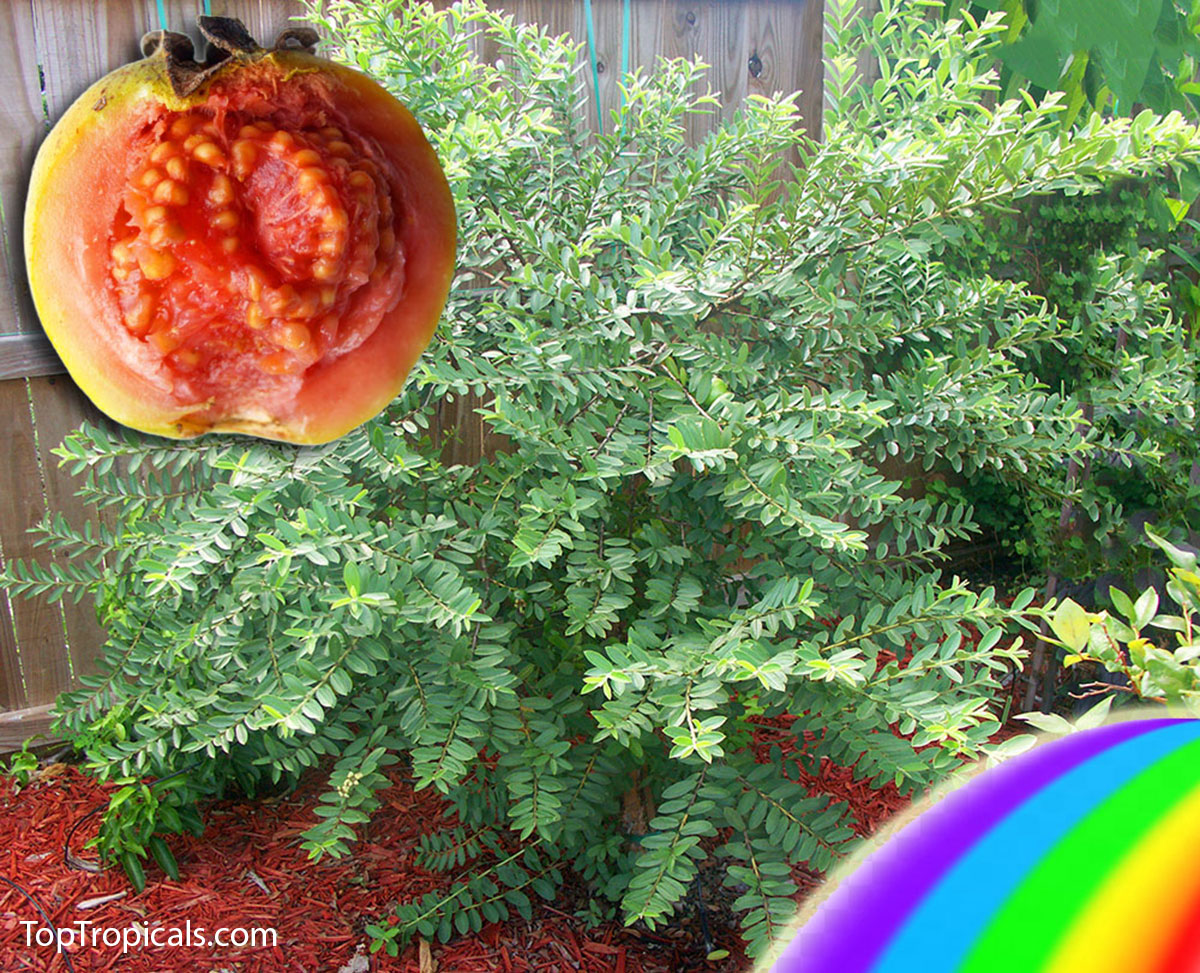
Brazilian Araca
Pera – Rare hybrid used for Guava Wine in Brazil. Tart,
concentrated juice makes excellent wine, sorbet, or jelly. Learn more...
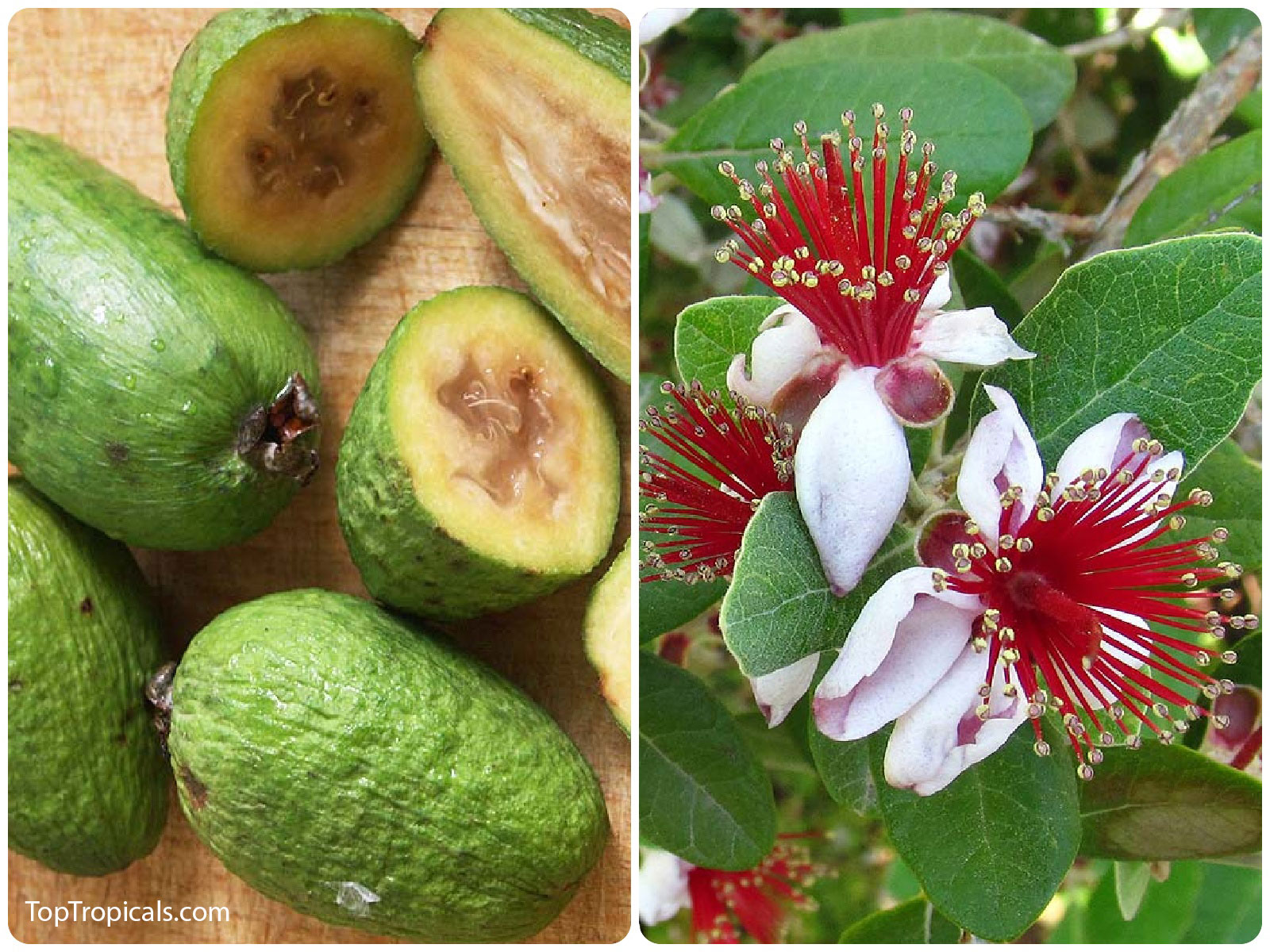
Pineapple Guava,
Guavasteen – Feijoa sellowiana. Strongly perfumed fruit, best
enjoyed when the pulp is mixed with sugar – like forest strawberries.
Cold-hardy, tolerates freeze, and doubles as a great windbreak. Learn more...
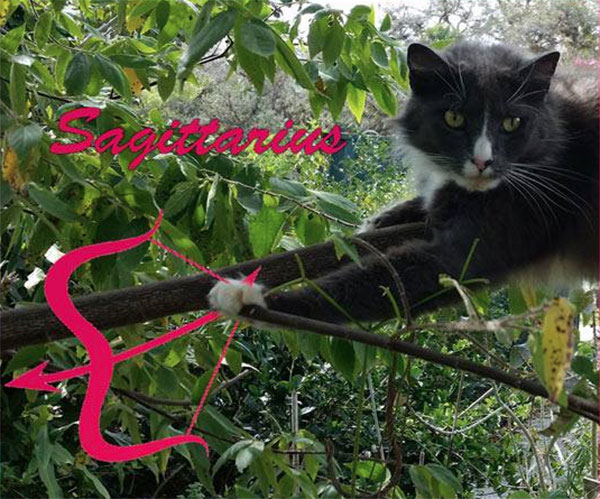
Plant Horoscope. Sagittarius Zodiac lucky plants: Fig and Baobab
Sagittarius
- 11/22 - 12/21. Sagittarius is a FIRE sign
that is ruled by the large and optimistic planet Jupiter.
Archer's plants tend to be large in size and fairly
conspicuous, with a pleasant odor. They may have large, or
elongated leathery leaves and showy flowers.
The best plants for Sagittarius will support the body's
largest glandular organ, the liver. The planet Jupiter
also rules the hips, thighs, lower spine, and the
autonomic nervous system, as well as the process of growth
and preservation. Herbs related to Jupiter have
traditionally been used to treat lower back problems
(including sciatica and lumbago), arthritis, and
rheumatism. Herbs with a high silica content are related
to Sagittarius (they promote a positive frame of mind), as
are plants with large taproots and trees that produce
fruit and nuts. Illnesses of Jupiter are said to arise
from immoderate consumption. Basil is an herb that's both
expansive and cheerful - just like Sagittarius - and its
reputation as a money attractor resonates with this sign's
generous nature as well. Use this happy herb when you want
to infuse your life with fun and prosperity!
Avocado, Lychee and Mango setting
fruit... give them some FOOD!
Q:
Do I need to fertilize tropical fruit when they set fruit?
A:
It is traditionally believed that mango and other tropical
fruit shouldn't be fertilized during fruiting period. It
is true to an extent: you don't want fruit to burst from
fast excessive growing. Instead, try to feed fruit trees
wisely, because they still need proper nutrition to
produce flowers and fruit.
Our spring specials of Lychee, Avocado and Mango are full of buds and
some already set tiny fruit (see examples on the photo).
Here is the feeding plan for these plants once you receive
your mail order:
1) Once received the plant, pot it into container size of
the root ball and let establish for couple weeks. Use SUNSHINE-E to help the plant
recover from shipping stress and establish root system.
2) Apply SUNSHINE-Honey right before
flowering, and next time at setting fruit, to provide
sweeter and bigger fruit, eliminate fruit cracks and help
resist fungus and other fruit diseases.
3) Use balanced granulated fertilizer,
1 tsp per each gallon of soil. Apply once a month during
Spring-Summer season. This gives the plant balanced
macro-elements (NPK) necessary for overall plant health.
Do not use on fruit trees fertilizers with high Nitrogen
content.
4) Apply SUNSHINE SuperFood
micro-element booster to keep fruit trees vigorous,
develop strong root system and avoid deficiencies.
5) In case of signs of chlorosis (yellowing leaves with
darker veins), give the tree SUNSHINE-GreenLeaf and watch
the leaves turning green quickly.
After harvesting, don't forget to make another treatment
of SUNSHINE-Honey as a
preparation for the next year flowering and fruiting
season.
Date: 26 Oct 2025
Plant a fruit tree - and breathe easier: fruit might be the surprising key to healthier lungs
🍒 Plant a fruit tree - and breathe easier: fruit might be the surprising key to healthier lungs
🥭 Fresh fruit doesn’t just taste good - it can literally help you breathe better!
🥭 A new study presented at the European Respiratory Society Congress found that women who ate at least four portions of fruit a day had slower declines in lung function compared to those who ate less. Researchers believe antioxidants in fruit may help protect the lungs from the damaging effects of air pollution.
🥭 Air pollution is everywhere, and more than 90% of people worldwide are exposed to levels above safe limits. But the good news is, your diet can make a difference. Fruits are packed with antioxidants and anti-inflammatory compounds that help your body fight off the oxidative stress caused by tiny airborne particles.
🥭 The study showed that women who ate plenty of fruit had stronger lungs despite being exposed to fine particulate pollution (PM2.5) from cars and industry. The difference wasn’t small either - their lung capacity dropped significantly less over time than in those with low fruit intake.
🥭 So planting fruit trees isn’t just about homegrown flavor or saving a trip to the store. It’s about protecting your health in a polluted world. Whether it’s mangoes, avocados, guavas, or starfruit, every harvest brings you cleaner nutrition and a cleaner breath of life.