Garden Blog - Top Tropicals

Date: 2 Jun 2026

The Holy Grail of Medinillas: Why Collectors are Chasing the Philippine Pink
The Holy Grail of Medinillas: Why Collectors are Chasing the Philippine Pink

🎀 The Holy Grail of Medinillas: Why Collectors are Chasing the Philippine Pink


Some tropical plants are impressive because of their massive size, others capture attention with the delicate beauty of their flowers; Medinilla apoensis - popularly known as the "Philippine Pink" - stands out because it somehow does both at the same time.

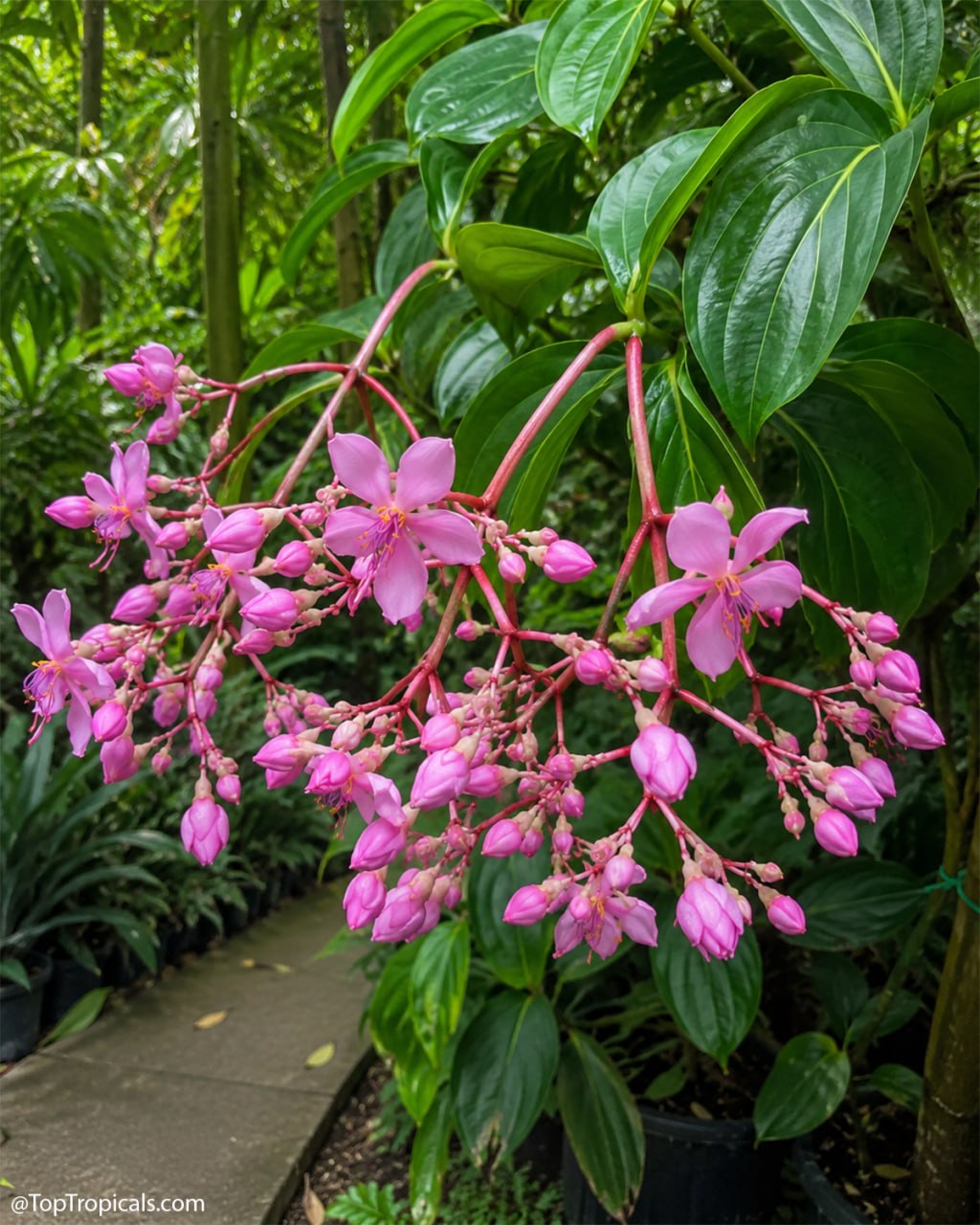
🎀This rare Philippine species produces vivid, bright pink flower clusters that rise and cascade above the foliage like glowing tropical chandeliers. Unlike many Medinillas that rely mostly on oversized pink bracts for their visual show, this species gets its dramatic appearance from the flowers themselves - large, intensely colored blooms arranged in elegant, pendant clusters.
The effect is so striking that many people assume the plant is artificial the first time they see it.

🎀 A Different Kind of Medinilla


Most indoor gardeners are familiar with the famous Medinilla magnifica, often called the "Rose Grape" plant. However, Medinilla apoensis has a completely different personality.

· Architectural Foliage: The leaves are heavily veined, lush, and deeply textured, giving the plant a rich rainforest appearance even when it isn't flowering.
· Floating Blooms: When it's time to bloom, the bright pink flowers emerge on branched, hanging stems, floating above and around the leaves instead of hiding beneath them.
· Oversized Flowers: The individual flowers can reach nearly 2 inches across—unusually large for the genus—creating a fuller and far more dramatic display than its relatives.

Its graceful, cascading growth habit only adds to the effect, making mature plants look almost sculptural.

🎀 A Rare Collectors Treasure from the Cloud Forests

As the name suggests, Medinilla apoensis originates from the Philippines, a tropical region famous for its extraordinary epiphytic plants and rich rainforest biodiversity. In the wild, these plants naturally grow perched on tree branches in humid mountain forests, where constant airflow, filtered light, and mist create the ideal microclimate.

Because it remains relatively uncommon in commercial cultivation, the "Philippine Pink" has that exact combination that plant enthusiasts love: it is rare, exotic-looking, and elegantly dramatic.

🏆 The Best Part? It is surprisingly manageable to grow indoors if you can mimic its native cloud-forest habitat.

🎀 How to Help It Thrive

Despite its finicky, ultra-tropical appearance, Medinilla apoensis isn't impossible to keep happy. Like many epiphytes, its success comes down to a few key elements:

· Light: Bright, filtered or dappled sunlight (avoid direct, scorching afternoon sun).
· Climate: Warm temperatures and consistently high humidity.
· Watering: Regular moisture, but never allow the roots to sit in stagnant water.
· The Golden Rule: Avoid dense, heavy soil. In nature, their roots are exposed to constant airflow. To prevent root rot, use a chunky, fast-draining tropical mix containing orchid bark, coco coir, and perlite.

🎀 The Ultimate Showstopper

Some plants blend seamlessly into the background of a collection. Medinilla apoensis is not one of them.

Between the heavily textured foliage, the sculptural cascading habit, and those glowing pink flowers suspended like fine jewelry, this is the kind of plant that instantly becomes the center of attention in a greenhouse, patio, or bright living room.

For the dedicated plant collector, finding one of these rare treasures in full bloom feels less like routine gardening and a lot more like discovering hidden tropical treasure.

🛒 Shop Medinilla plants

📚 Learn more:

Philippine Pink Medinilla Plant Facts

Botanical name: Medinilla apoensis
Also known as: Philippine Pink Medinilla
USDA Zone: 10
Highligths Small plant 2-5 ftSemi-shadeWatering: Moderate. Water when top soil feels dryWatering: Regular. Let topsoil dry slightlyPink flowers
Get personalized tips for your region

· Medinilla apoensis in Plant Encyclopedia
· What pot is good for Medinilla?
· Is this a Plant or a Coral?
· How to add a splash of tropical flair to your plant collection
· The Drama you want in your garden: dazzling Medinilla!
· Medinilla Gregori Hambali - an Exquisite Natural Wonder
· The Rolls Royce of House Plants: Medinilla

#Shade_Garden #Container_Garden #Discover

🟢 Join 👉 TopTropicals

Date: 1 Jun 2026

It takes a lot of balls

It takes a lot of balls It takes a lot of balls
⛳️ It takes a lot of balls

"It takes a lot of balls to golf the way I do." - Bob Hope

🐈📸 Cat Jim II has some balls at TopTropicals PeopleCats.Garden.

#PeopleCats #Quotes

🟢 Join 👉 TopTropicals

Date: 1 Jun 2026

Pitaya David Bowie: Dragon Fruit Beyond Pink and White - A Collectors Guide

Pitaya David Bowie: Dragon Fruit Beyond Pink and White - A Collectors Guide

🍉 Pitaya David Bowie: Dragon Fruit Beyond Pink and White - A Collector's Guide


Most people know dragon fruit as a bright pink fruit with white flesh from the grocery store. But that's only the beginning. The world of dragon fruits is surprisingly diverse, with varieties ranging from white to deep purple, giant fruit to compact producers, and flavors that can remind you of kiwi, pear, melon, berries, or even lemonade. In this series, we'll explore some of the most interesting dragon fruit varieties, highlighting their appearance, flavor, growth habits, and what makes each one special.

🔸 At first glance


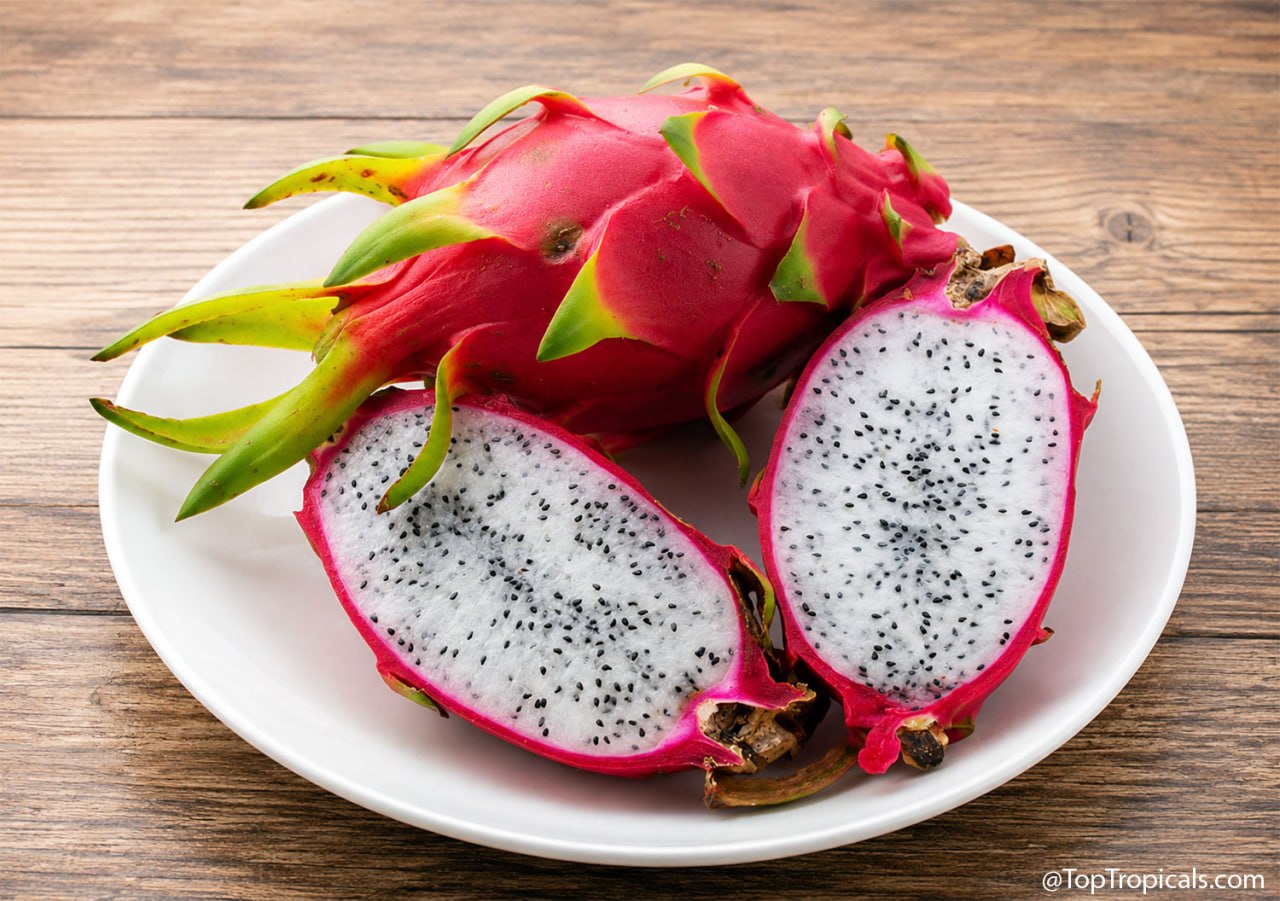
David Bowie (Hylocereus undatus x monacanthuis) looks like a classic dragon fruit - bright red skin, white flesh, and a familiar appearance. But spend a little time with this variety and you'll discover why collectors actively seek it out. David Bowie is one of the most popular white-fleshed dragon fruit varieties, prized for its large fruit, reliable production, and refreshing flavor.

🔸 A classic dragon fruit done right


This self-pollinating variety produces medium to large fruit, often approaching a pound in weight. The bright red skin is decorated with numerous green-tipped fins, giving the fruit an especially dramatic appearance.

Among white-fleshed dragon fruits, David Bowie is known for producing larger-than-average fruit while maintaining excellent eating quality.

🔸 Refreshing flavor with a citrus twist


Unlike some dragon fruits that are valued mainly for appearance, David Bowie delivers a flavor that keeps people coming back.

The flesh is mildly sweet and refreshing, often compared to a cross between kiwi and pear. What makes it memorable is a pleasant tangy character and subtle lemony finish that brightens the flavor and makes it especially enjoyable chilled.

The fruit is excellent eaten fresh and is also popular for smoothies, fruit salads, and garnishes.

🔸 Easy to grow and rewarding


David Bowie is self-pollinating, making it an excellent choice for home gardeners who want reliable fruit production from a single plant.

Like other dragon fruits, it is a vigorous climbing cactus that produces spectacular night-blooming white flowers before setting fruit. The blooms are large, fragrant, and beautiful enough to make the plant worth growing even before the harvest arrives.

🔸 Why collectors love it


Not every dragon fruit has to be purple, yellow, or unusually exotic to earn a place in a collection.

David Bowie remains popular because it combines everything growers want - attractive fruit, dependable production, large size, refreshing flavor, and self-pollinating flowers. Sometimes the classics become classics for a reason. 👉 More...

🛒 Explore and collect Dragon Fruit varieties

📚 Learn more:

Pitaya Plant Facts

Botanical name: Hylocereus sp.
Also known as: Pitaya, Pitahaya, Dragon Fruit, Strawberry Pear
USDA Zone: 9 - 11
Highligths Large shrub 5-10 ft tallVine or creeper plantSemi-shadeFull sunWatering: Moderate. Water when top soil feels dryWhite, off-white flowersThorny or spinyEdible plantSubtropical plant. Mature plant cold hardy at least to 30s F for a short timeSeaside, salt tolerant plant
Get personalized tips for your region

· Dragon fruit Hylocereus in Plant Encyclopedia
· Why white-flesh Dragon fruits deserve more attention
· A Quick Guide to Dragon fruit varieties: Red, White, Yellow, Purple and more...
· What is the best Dragon fruit with red flesh?
· Planting your own Dragon Fruit plantation
· Do-It-Yourself Support Structure for Dragon Fruit
· Why you need to grow your own dragon fruit
· Do red, white and yellow Dragon fruit taste differently?

#Food_Forest #Dragon_Fruit #Discover

🟢 Join 👉 TopTropicals

Date: 31 May 2026

📚 🍩 ❓❓❓ 😱 5000 plants. 60000 photos. 25 years of notes. Estimated pages: ??? OH NO.

After posting about our search for a mysterious fragrant Cerbera, this arrived in our inbox:

"Bless you all for finding this and sharing… Love those books your research cats are hunting through. Where do I get those, too?"

Smokey & Sunshine looked at each other. Then at the books. Then at the donuts.

Sunshine: I knew someone would ask about them.
Smokey: About the plants in the photo?
Sunshine: No. The books. People want to read them.
Smokey: Most of those books don't exist. We made them up for the photo.
Sunshine: "The Apocynaceae Family" sounded very convincing. Very distinguished. Like the Corleone family, but with more flowers and fewer offers you can't refuse.
Smokey: The Corleones were also toxic. So the comparison holds. Did you notice you spilled donut glaze on the cover and called it peer review.
Sunshine: That is simply how great botanical discoveries are made.
Smokey: That explains the investigation board. And the suspects list.
Sunshine: The point is — now people want to read the books. All of them.
Smokey: The books. Do. Not. Exist.
Sunshine: Exactly. Which is why we need to convince the Top Tropicals humans to write them. They have 5000 plants, 60000 photos, and 25 years of notes. The raw material is right there.
Smokey: That would be a very large book.
Sunshine: Excellent. We can call it The Encyclopedia of Plants That Smell Better Than Donuts.
Smokey: That narrows it down to exactly one chapter.
Sunshine: A very good chapter though. Jasmine alone would fill at least twenty pages.
Smokey: While we wait for the humans to write it, the actual Top Tropicals plant encyclopedia is at toptropicals.com. Over 5,000 plants. No donuts involved.
Sunshine: ...yet.

Date: 31 May 2026

Avocado Florida Hass: the hidden world beyond green and black

Avocado Florida Hass: the hidden world beyond green and black Avocado Florida Hass: the hidden world beyond green and black

Avocado Florida Hass: the hidden world beyond green and black


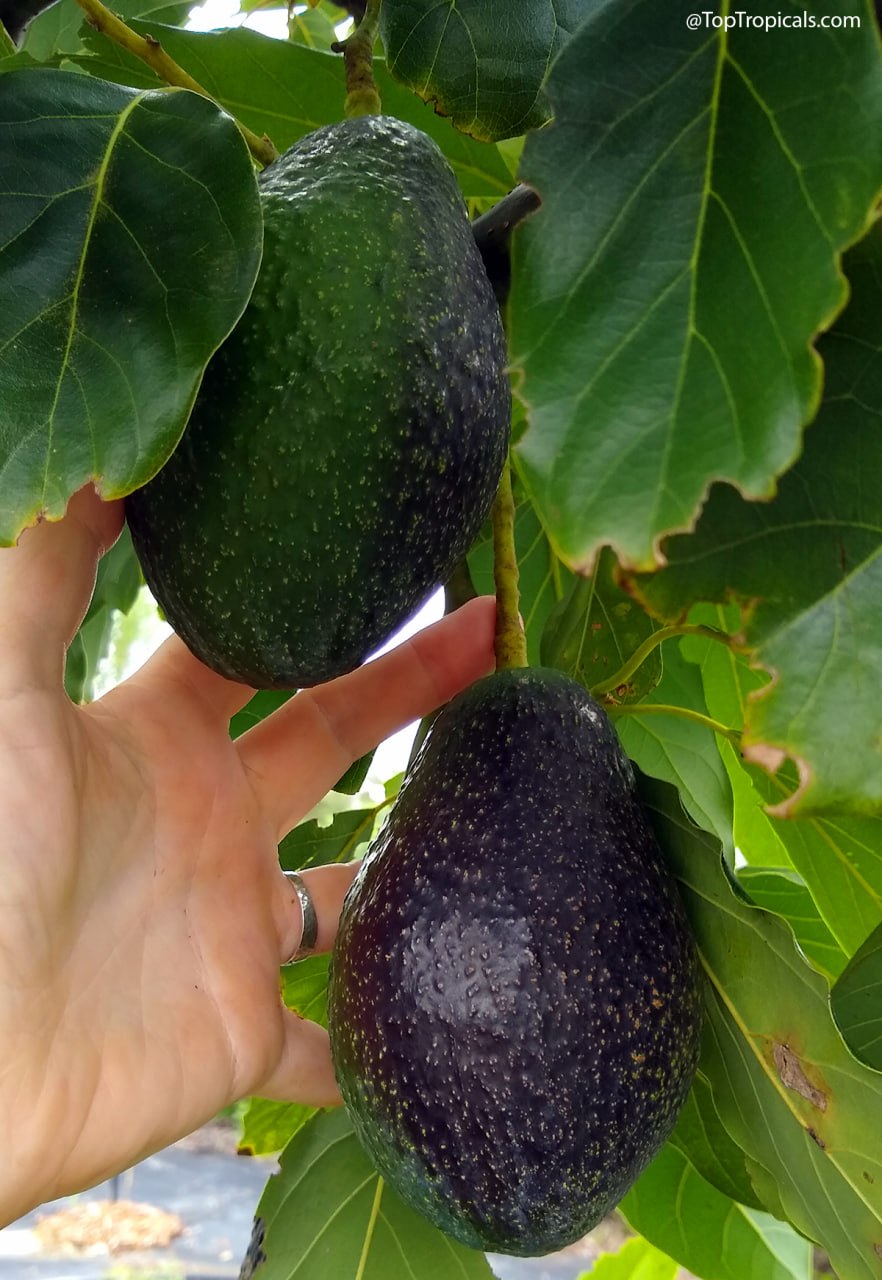
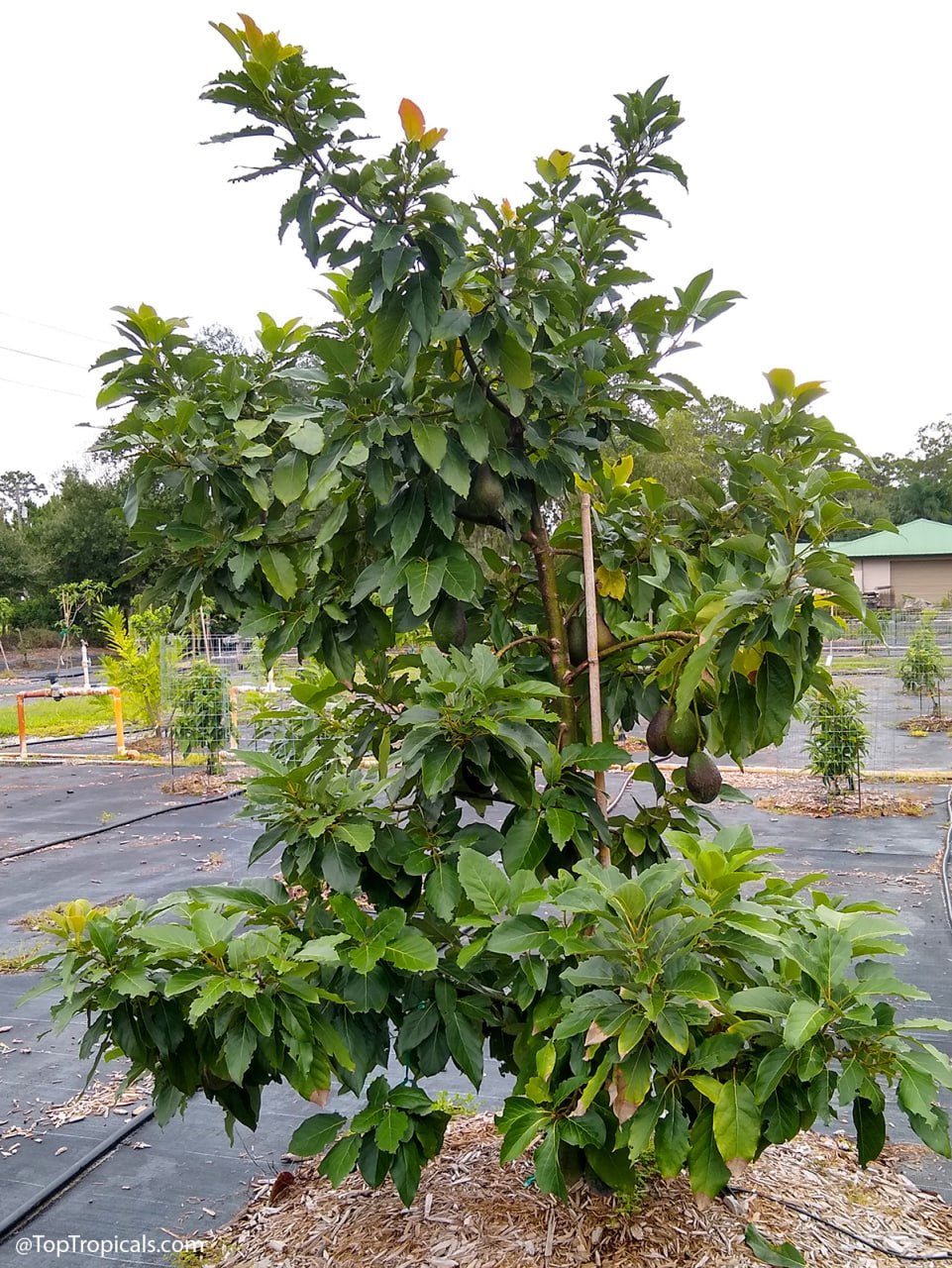
Florida Hass brings some of the flavor characteristics of traditional Hass to Florida gardens while offering better adaptation to humid conditions. The fruit is smaller than many Florida avocados but rich, creamy, and ideal for fresh eating. It is often recommended for gardeners seeking a Hass-like experience in the Southeast.

· Botanical name: Persea americana 'Florida Hass'
· Origin: Mexican (Florida selection)
· Cold hardiness: Tolerates temperatures around 30°F
· USDA zones: 9b-11
· Flower type: A
· Tree size: Approximately 30 ft x 20 ft
· Growth habit: Compact, upright, and well suited to home gardens
· Foliage: Dense, glossy green foliage that provides an attractive evergreen canopy
· Fruit size: 4-12 oz
· Fruit shape: Pear-shaped to oval
· Fruit color: Green when immature, turning dark purple-black at maturity
· Skin: Thick, pebbly, Hass-like skin
· Flesh: Creamy, smooth, and high in oil
· Flavor: Rich, buttery, and similar to Hass, with excellent eating quality
· Season: July-September
· Best use: Fresh eating, guacamole, sandwiches, salads, and gourmet dishes
· Special feature: Hass-like flavor and appearance combined with better adaptation to Florida's humid climate
· Why growers love it: Florida Hass offers the rich flavor and dark skin that avocado lovers associate with traditional Hass, but on a tree better adapted to the heat and humidity of the Southeast. Its compact size and excellent fruit quality make it a favorite for home gardens. 👉 More

💡 Avocado tip: Let the leaves stay
Fallen avocado leaves make excellent mulch. As they break down, they return nutrients to the soil and help create the natural forest-floor conditions avocados love.


🛒 Explore cold hardy Avocado varieties

📚 Learn more:


· Avocado Variety Guide: Snack or Guacamole? Collector's inspiration
· Avocado Brogdon: the hidden world beyond green and black
· Avocado Joey: the hidden world beyond green and black
· Avocado Fantastic: the hidden world beyond green and black
· Avocado Fantastic Quick Facts
· Cold-hardy avocado survival groups - what the numbers really mean
· How to protect Avocado from cold and how hardy is it?
· Avocado that laughs at frost: Mexicola Grande for cooler climates
· Cold hardy Avocado Joey - you eat it with the skin

📖 Our Book: Avocado Variety Guide, Snack or Guacamole?
·
Hard copy · PDF File Download

#Food_Forest #Avocado #Discover

🟢 Join 👉 TopTropicals