Garden Blog - Top Tropicals

Date: 14 Apr 2025

See the Difference: Grow Plants That Protect Your Vision
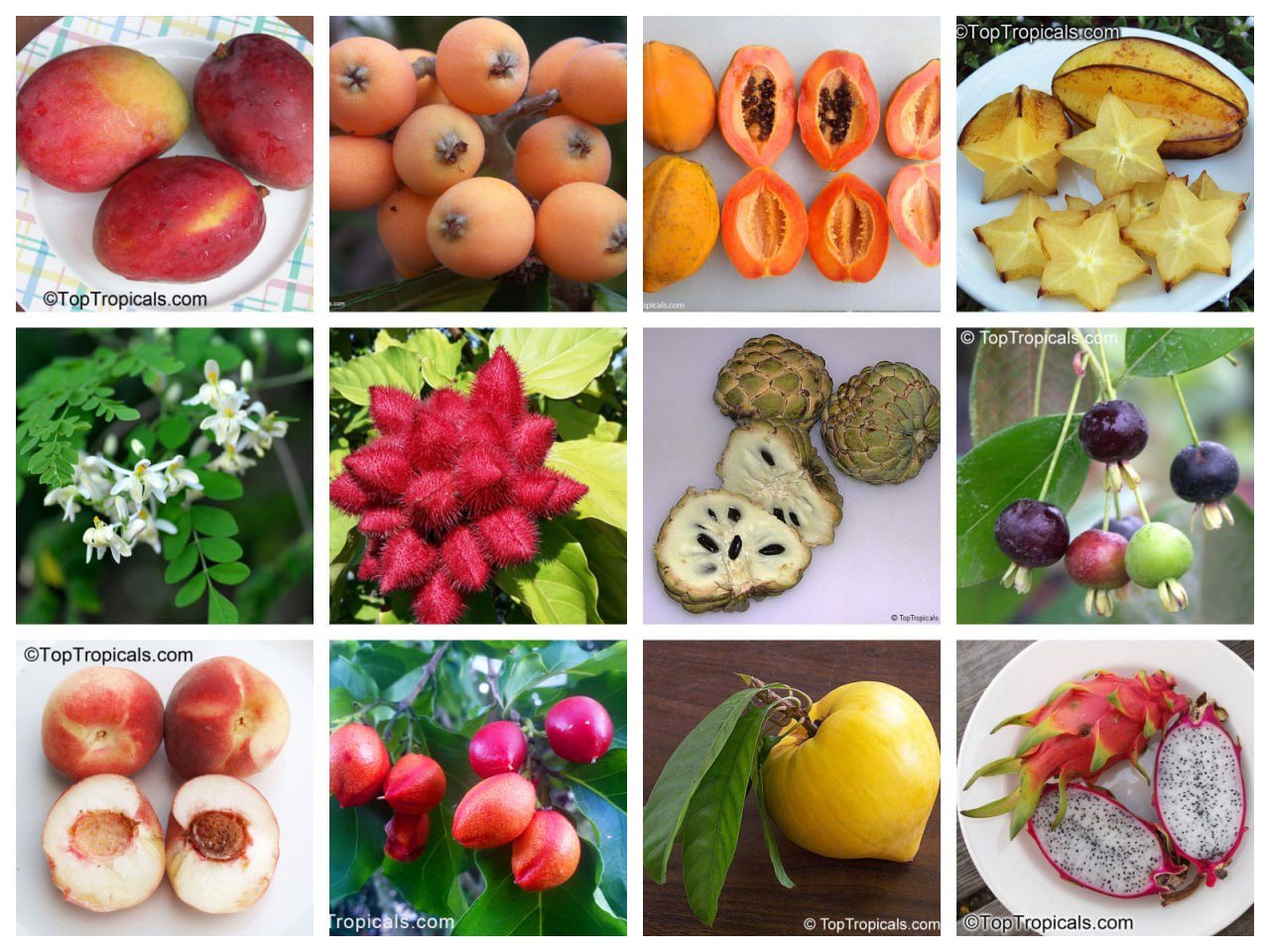
See the Difference: Grow Plants That Protect Your Vision

👁 See the Difference: Grow Plants That Protect Your Vision


Your eyes work hard every day - give them the nutrition they deserve!
These tropical fruits and plants are rich in Vitamin A and beta-carotene, known to support clear vision, retinal health, and even help prevent age-related eye decline. Grow them in your garden and harvest real, living eye care.


👁 Top 12 Eye-Supporting Fruit and Plants (Vitamin A - Retinol)

  • 🟡 Mango - Packed with beta-carotene, which your body converts into Vitamin A to support sharp, healthy vision.

  • 🟡 Loquat - Naturally rich in Vitamin A, known for supporting retina and eye tissue health.

  • 🟡 Papaya - A tasty source of beta-carotene, great for protecting your eyes and immune system.

  • 🟡 Carambola (Starfruit) - Offers a dose of Vitamin A, beneficial for maintaining clear eyesight.

  • 🟡 Moringa - A leafy powerhouse loaded with beta-carotene that helps support visual health.

  • 🟡 Annatto - High in carotenoids, especially bixin, which may support eye health and clarity.

  • 🟡 Annona - Contains antioxidants, including beta-carotene, to help nourish your eyes.

  • 🟡 Eugenia Cherry (Cherry of the Rio Grande, Brazilian Cherry, Surinam Cherry, Pitomba) – A sweet fruit rich in Vitamin A, promoting overall eye wellness.

  • 🟡 Peach - Supports both skin and eye health with its naturally high Vitamin A content.

  • 🟡 Peanut Butter Fruit - Contains beta-carotene, a powerful nutrient for eye and vision support.

  • 🟡 Canistel (Eggfruit) - Extremely high in beta-carotene, offering deep support for vision and skin.

  • 🟡 Dragon Fruit - Offers beta-carotene and antioxidants that may protect your retinas and night vision.


📚 Learn more about health benefits of tropical plants:


TROPICAL FRUIT HEALTH BENEFITS GUIDE - Part 1 and Part 2

🛒 Shop Vision-Boosting Plants - buy tropical fruit trees for your eye health

#Food_Forest #Discover #Remedies

🔴 Join 👉 TopTropicals
Date: 19 May 2025

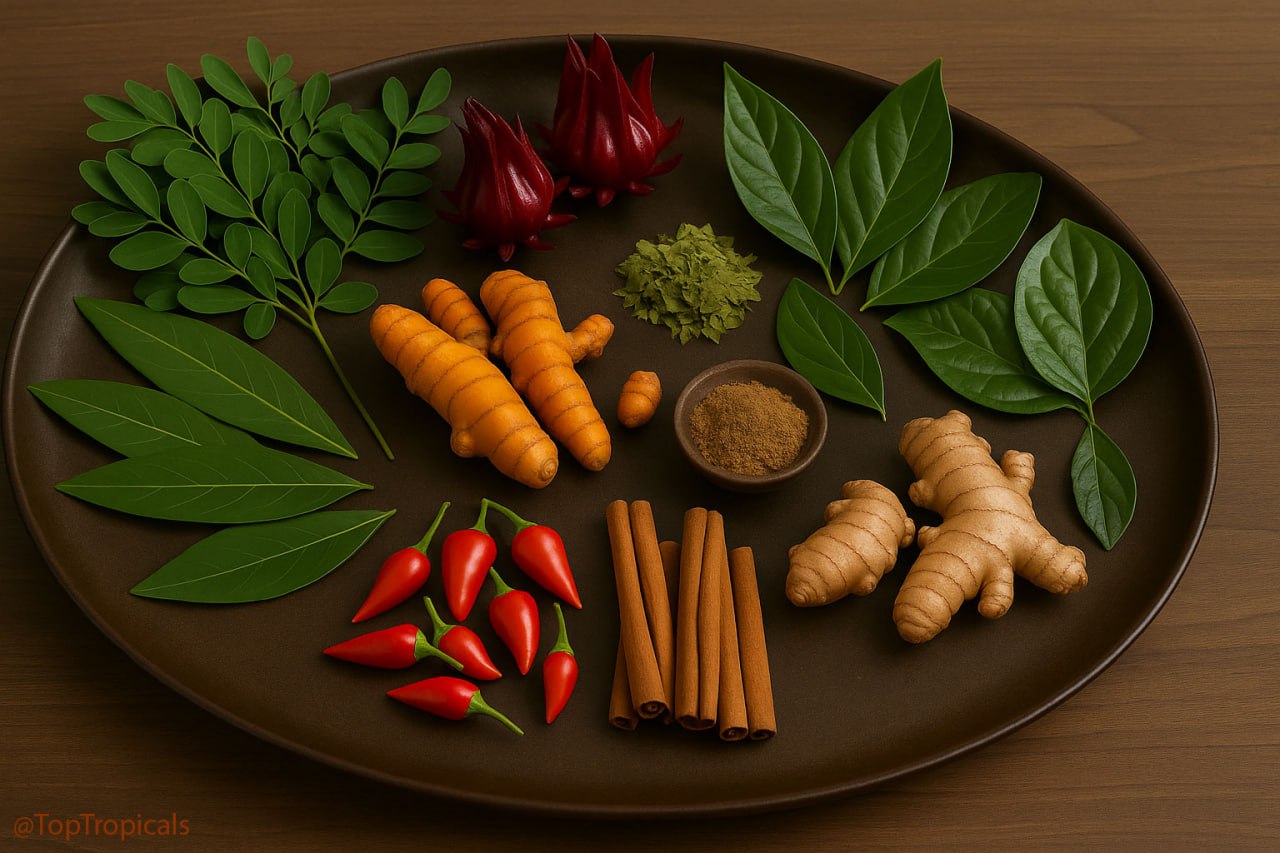
What edible plants and herbs can reduce your blood pressure. Tropical fruit and plants that help keep blood pressure in balance

Edible plants and herbs reducing blood pressure

Edible plants and herbs reducing blood pressure

💚 Tropical fruit and plants that help keep blood pressure in balance.
Part 2: What edible plants and herbs can reduce your blood pressure?


Continued from previous post ⤴️
  • 🌿 Moringa (Moringa oleifera, Horseradish tree) - Contains potassium and antioxidants, shown in studies to help reduce blood pressure.
  • 🌿 Curry Leaf (Murraya koenigii) - Traditionally used for blood sugar and blood pressure regulation; contains cardio-protective compounds.
  • 🌿 Hibiscus sabdariffa (Karkade) - Famous for hibiscus tea, clinically shown to lower blood pressure naturally.
  • 🌿 Camellia sinensis (Tea Plant) - Green and black tea can support vascular health and slightly reduce blood pressure over time.
  • 🌿 Turmeric (Curcuma) - Contains curcumin, which may support vascular relaxation and improve circulatory health.
  • 🌿 Yerba Mate (Ilex paraguariensis)- Contains antioxidants and vasodilating compounds that may support blood pressure regulation.
  • 🌿 Bay Leaf (Laurus nobilis) - Traditional uses include heart and circulatory support, with mild diuretic properties.
  • 🌿 Piper sarmentosum (Vietnamese Pepper Leaf) and Piper betel (Betel Leaf) - Used traditionally to help with hypertension and circulation.
  • 🌿 Cinnamon (Cinnamomum sp.) - May improve insulin sensitivity and support vascular relaxation, contributing to lower blood pressure.
  • 🌿 Allspice (Pimenta dioica) - Contains anti-inflammatory compounds that support heart and circulatory health.
  • 🌿 Ginger (Alpinia, Costus, Zingiber, etc.)- Known to help relax blood vessels and improve blood flow, which can reduce blood pressure.
  • 🌿 Wiriwiri and Biquinho Peppers (Capsicum sp.) - Their capsaicin content may support vasodilation and improve circulation.


🛒 Shop tropical herbs and spice plants that boost your health

📚 Learn more:


Tropical fruit health benefits guide
#Disover more #Remedies and #Fruit_Forest

🔴 Join 👉 TopTropicals

Date: 12 Jun 2025

How to make plants green quickly? Green Magic - the fertilizer that truly works like magic!

Green Magic controlled release fertilizer

🌳 How to make plants green quickly? Green Magic - the fertilizer that truly works like magic!

  • 💚 Watch your plants come back to life and thrive with this professional-grade, controlled-release fertilizer - Green Magic. Even struggling plants can turn lush and green again!
  • 💚 What makes it special? Green Magic uses poly-on technology to release nutrients slowly over 6 months - no root burn, no guesswork. Just steady, balanced feeding with all the essential macro and micro-elements your plants need.
  • 💚 Ideal for container-grown fruit trees and ornamentals. One dose lasts for six months!
  • 💚 How to use: Just mix 1 teaspoon per 1 gallon of soil every 6 months or during re-potting. That's it!
  • 💚 Give it a try - your plants will thank you!


🛒 Buy once, feed for 6 months!

#Fertilizers #How_to
🟢 Join 👉 TopTropicals

Date: 29 Sep 2025

How do we ship plants, Part 3: its Christmas - unwrapping is fun?

How do we ship plants, Part 3: it's Christmas - unwrapping is fun?

🚚 How do we ship plants, Part 3: it's Christmas - unwrapping is fun?


How to take care of your mail order plant (potted plant)


When your plant arrives, carefully remove it from the box and water it right away.
  • Place it in bright light but out of direct sun for the first few days so it can recover from shipping.
  • Keep the soil evenly moist, not soggy.
  • After about a week, gradually introduce it to more sun or move it to its permanent spot.
  • Read detailed instructions.


🌴 How to plant your mail order plant in the ground

  • Don't put a new plant straight from the box into the ground!
  • First, pot it up and let it recover and grow strong for a few weeks.
  • Once it's well established, choose a sunny, well-drained spot outdoors.
  • Dig a hole twice as wide as the pot, place the plant at the same depth, and backfill with good, rich soil.
  • Water thoroughly to settle the roots and add mulch around the base, keeping it away from the stem.
  • Keep watering regularly until the plant takes off.
  • Read detailed instructions.


🎥 Part 3 shows you how to unpack a plant. Happy Gardening!

🛒 Shop plants online

📚 Learn more:


#How_to

🟢 Join 👉 TopTropicals

Date: 26 Apr 2017

Plant Horoscope. Taurus Zodiac lucky plants: Apricot and Verbena

Taurus - 4/20-5/20. Taurus is an EARTH sign ruled by the planet Venus.
Venus is the planet that represents desire and beauty, regarded as the female embodiment of sexual love and human appetite, so Taurus plants often have gorgeous flowers and enticing fragrances and, occasionally, red fruit. It rules the internal sexual organs, the nose and sense of smell.
Because Taurus rules the throat and ears, the best plants for the Bull are often soothing to the throat, or may calm the digestive system after overindulging in the finest foods. Taurus is related to those things we want and value. It harmonizes various body systems, and influences the complexion and facial appearance. Also under Venus's dominion are the abdomen, kidney, thymus, and breasts. Venus-governed herbs are soothing and help to regulate the body's metabolism through the endocrine system (see Libra). Taurus herbs are traditionally used to attract money and resources. Earthy Taurus sign is all about building a stable and comfortable foundation and can help you generate greater abundance and prosperity in your life.

Taurus Zodiac lucky plants: Aglaia, Cananga odorata (Ylang-Ylang), Artabotrys (Climbing Ylang-Ylang), Cerbera, Night blooming jasmine, Chonemorpha, Erblichia, Euodia, Hiptage, Iboza (Musk Bush), Anise, Lavender, Lonchocarpus Lilac Tree, Nutmeg, Parijat, Camphor Basil, Osmanthus, Funeral tree, Quisqualis, Satureja (Kama Sutra Mint Tree), Viburnum, Carissa, Murraya, Curry Leaf, Bunchosia (Peanut butter fruit), Eucalyptus, Lily, Vitex agnus castus (Blue Chaste Tree), Alstonia scholaris (Sapthaparni), Papaya, Maple, Jasmine, Guaiacum, Camellia, Ephedra, Fuchsia, Geranium, Spider lily, Gardenia, Magnolia, Plumeria, Paeonia, Verbena, Clerodendrums, Apple, Pear, Apricot, Peach, Plantain, Olive, Grape, Pomegranate, Mango, Neem Tree, Cherry, Cypresses, all Berries, Raspberry, Asparagus, Mint, Clove, Roses, Stagshorn fern, Catnip.

For links to these plants and other signs information, see full Plant Horoscope.