Garden Blog - Top Tropicals

Date: 9 Mar 2026

Dont Wait Years: 8 Fruit Plants You Can Harvest the Same Season
Don't wait years for fruit! Harvest papayas, berries, figs, and more in the very same season you plant them with these fast-growing varieties.

Don't wait years for fruit! Harvest papayas, berries, figs, and more in the very same season you plant them with these fast-growing varieties.

Don't Wait Years: 8 Fruit Plants You Can Harvest the Same Season 🍒

Growing fruit at home usually requires years of patience. Most gardeners view fruit trees as a long-term investment that may not pay off for a decade.
But you don't have to wait.
Certain tropical and subtropical plants are "fast-track" growers. In warm climates like Florida, choosing the right varieties means you can see flowers and fruit within months of planting - often in the very same season.
If you want a backyard harvest without the wait, here are the fastest-producing fruits you can plant today.


🍓 1. Blackberry Jam Fruit (Randia formosa)


A compact shrub perfect for containers. It produces star-shaped flowers and dark purple fruit that tastes exactly like blackberry preserves. Established plants often fruit in their first season.

Blackberry Jam Fruit Plant Facts

Botanical name: Randia formosa, Mussaenda formosa, Randia mussaenda, Rosenbergiodendron formosum
Also known as: Blackberry Jam Fruit, Jasmin de rosa
USDA Zone: 9 - 11
Highligths Large shrub 5-10 ft tallSmall tree 10-20 ftSemi-shadeFull sunKeep soil moistWhite, off-white flowersEdible plantPlant attracts butterflies, hummingbirdsFragrant plantSubtropical plant. Mature plant cold hardy at least to 30s F for a short time
Get personalized tips for your region


🍓 2. Peanut Butter Fruit (Bunchosia)


This fast-growing large shrub produces orange pulp with the uncanny flavor and texture of peanut butter. Expect flowers and bright red berries within months of planting in warm conditions.

🍓 3. Papaya (Carica papaya)


The "giant herb" of the fruit world. Papayas are legendary for their speed, often flowering just months after planting and providing sweet, vitamin-rich fruit within the same year.

Papaya Plant Facts

Botanical name: Carica papaya
Also known as: Papaya
USDA Zone: 9 - 11
Highligths Small tree 10-20 ftFull sunWater Requirement: Low. Allow soil to dry out between wateringsWatering: Moderate. Water when top soil feels dryYellow, orange flowersWhite, off-white flowersEdible plantEthnomedical plant.
Plants marked as ethnomedical and/or described as medicinal, are not offered as medicine but rather as ornamentals or plant collectibles.
Ethnomedical statements / products have not been evaluated by the FDA and are not intended to diagnose, treat, cure, or prevent any disease. We urge all customers to consult a physician before using any supplements, herbals or medicines advertised here or elsewhere.Subtropical plant. Mature plant cold hardy at least to 30s F for a short time
Get personalized tips for your region


🍓 4. Grumichama Cherry (Eugenia brasiliensis)


A stunning Brazilian evergreen. Grafted plants can fruit the same season they are planted, offering glossy, dark cherries with a sweet, mild finish.

Grumichama Plant Facts

Botanical name: Eugenia brasiliensis, Eugenia dombeyi
Also known as: Grumichama, Brazilian Cherry
USDA Zone: 9 - 11
Highligths Small tree 10-20 ftSemi-shadeFull sunWatering: Moderate. Water when top soil feels dryEdible plantSubtropical plant. Mature plant cold hardy at least to 30s F for a short timeSeaside, salt tolerant plant
Get personalized tips for your region


🍓 5. Black Surinam Cherry (Eugenia uniflora var. Lolita)


The 'Lolita' cultivar is a game-changer. It grows quickly as an edible hedge and produces nearly black, resin-free fruit that is significantly sweeter than the common red varieties.

Surinam Cherry Plant Facts

Botanical name: Eugenia uniflora, Eugenia michelii
Also known as: Surinam Cherry, Pitanga, Brazilian Cherry
USDA Zone: 9 - 11
Highligths Plant used for bonsaiLarge shrub 5-10 ft tallSmall tree 10-20 ftSemi-shadeFull sunWatering: Moderate. Water when top soil feels dryWatering: Regular. Let topsoil dry slightlyWhite, off-white flowersEdible plantFragrant plantSubtropical plant. Mature plant cold hardy at least to 30s F for a short time
Get personalized tips for your region


🍓 6. Mysore Raspberry and Tropical Blackberries (Rubus sp.)


Unlike traditional berries that require chill hours, these Rubus species thrive in the heat. Their vigorous canes grow rapidly, often fruiting the same season they hit the soil.

Holy Bramble Plant Facts

Botanical name: Rubus sanctus, Rubus ulmifolius subsp. sanctus
Also known as: Holy Bramble, Burning Bush of the Bible
USDA Zone: 7 - 11
Highligths Large shrub 5-10 ft tallGroundcover and low-growing 2ft plantFull sunWatering: Moderate. Water when top soil feels dryPink flowersThorny or spinyEdible plantPlant attracts butterflies, hummingbirdsEthnomedical plant.
Plants marked as ethnomedical and/or described as medicinal, are not offered as medicine but rather as ornamentals or plant collectibles.
Ethnomedical statements / products have not been evaluated by the FDA and are not intended to diagnose, treat, cure, or prevent any disease. We urge all customers to consult a physician before using any supplements, herbals or medicines advertised here or elsewhere.Subtropical plant. Mature plant cold hardy at least to 30s F for a short time
Get personalized tips for your region


🍓 7. Everbearing Mulberry (Morus sp.)


Mulberries are incredibly generous. Everbearing varieties produce sweet berries over an extended window and often begin fruiting the very first year they are planted.

Mulberry Plant Facts

Botanical name: Morus sp.
Also known as: Mulberry
USDA Zone: 8 - 11
Highligths Large tree taller than 20 ftSmall tree 10-20 ftFull sunWatering: Regular. Let topsoil dry slightlyEdible plant
Get personalized tips for your region


🍓 8. Fig Trees (Ficus carica)


Figs are the champions of container gardening. They are highly drought-tolerant and famous for setting honey-sweet fruit even at a very young age—often just months after being established.

Fig Tree Plant Facts

Botanical name: Ficus carica
Also known as: Fig Tree, Brevo
USDA Zone: 7 - 10
Highligths Plant used for bonsaiSmall tree 10-20 ftFull sunWatering: Moderate. Water when top soil feels dryOrnamental foliageEdible plantDeciduous plantSubtropical plant. Mature plant cold hardy at least to 30s F for a short timeFlood tolerant plantSeaside, salt tolerant plant
Get personalized tips for your region


🏡 Where to plant them?

👉 Tips for Faster Results


•  Start Large: Buy "nursery-established" plants rather than seeds.
•  Feed the Need: Use high-quality organic fertilizer to support rapid growth.
•  Sun is Fuel: Most of these varieties require at least 6-8 hours of direct sunlight to trigger flowering.

🛒 Plant these fruits now - some can produce within months

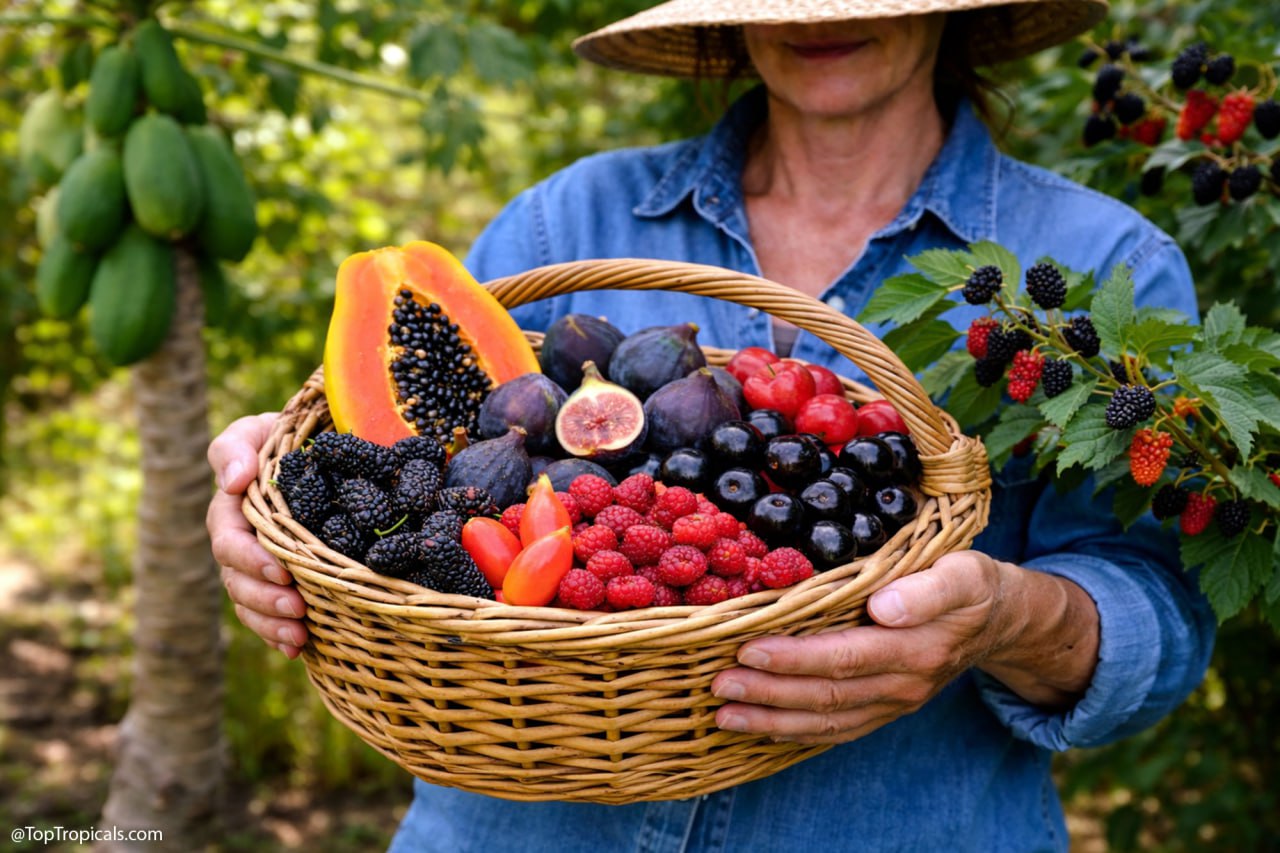
📷 Freshly picked tropical fruit bounty: don't wait years for fruit! Harvest papayas, berries, figs, and more in the very same season you plant them with these fast-growing varieties.

#Food_forest #How_to #Discover

🟢 Join 👉 TopTropicals

Date: 2 Jun 2022

Plant Horoscope - Gemini

What is your lucky Zodiac plant?

Plant  Horoscope  -  Gemini

By Alex Butova, the Witch of Herbs and Cats

... Gemini are very fond of plants, especially flowers. They are able to devote their lives to favorite plants, selecting new varieties, planting gardens, parks and arboretums. In addition, the planet-ruler Mercury gives them with business ability - Gemini are excellent flower merchants of any level: from flower growers who sell their plants to everyone, to wholesalers who supply their delicate fragrant goods around the world. In their house, Gemini do not keep too many plants, they have enough of those that grow outside in their nursery and garden. However, among those who nevertheless became piece of the family (exactly this way Gemini perceive their house plants), preference is given to graceful forms, pubescent and curly, like Farfugium, Monstrous epyphyllum, often carved leaves (Monstera) and plants with aroma. All these properties not only improve the physical well-being of Gemini, but also helps save the spiritual and mental balance of their contradictory but all while tender and romantic nature. Gemini don't care about common spices, they love unusual plants and especially those with a sweet scent. Their favorite aroma is rose and similar, like fragrances of Clerodendrums, Jasmines, Gardenias, Plumeria, and Brunfelsia. At critical moments sweet scents awaken them into the life!..

Date: 5 Jan 2022

Wake up to the smell of Coffee...
New Video:
Grow your own Coffee plant - Free Coffee Everyday!

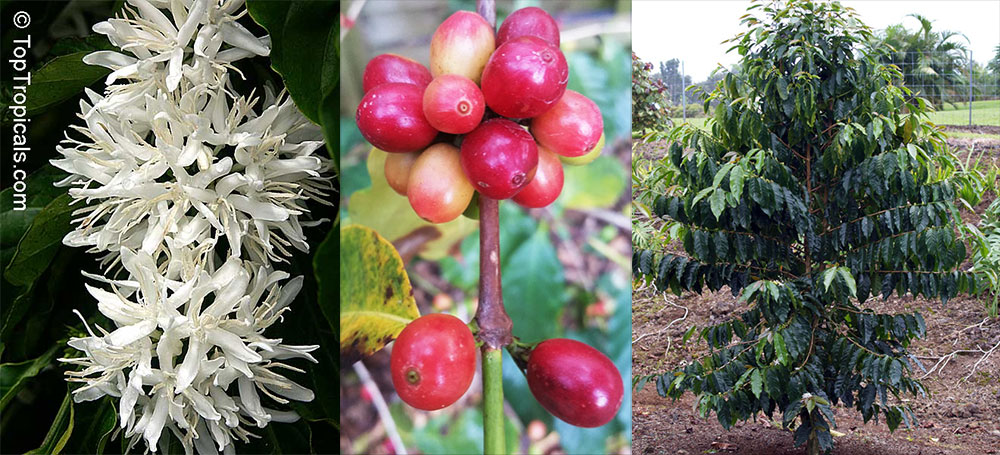
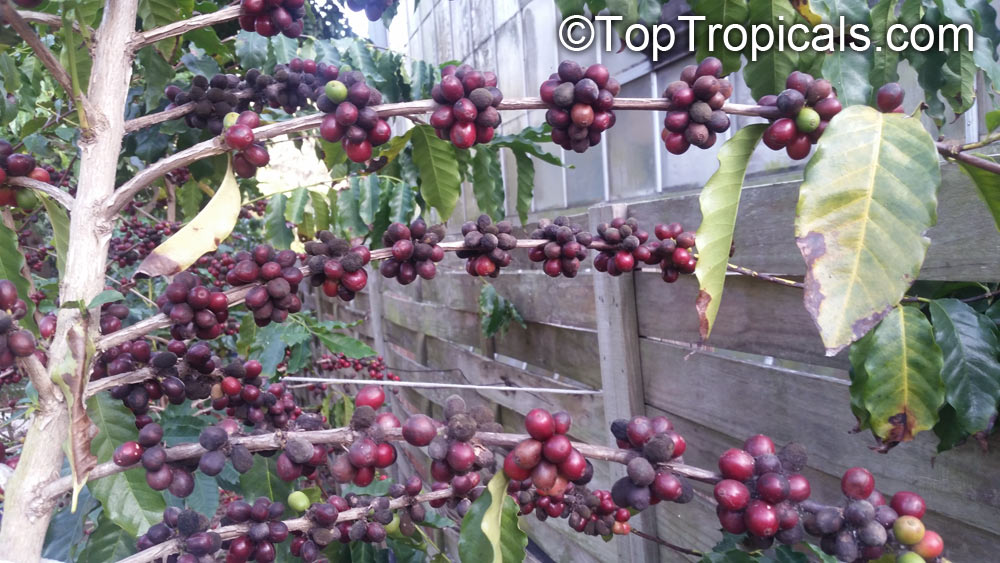
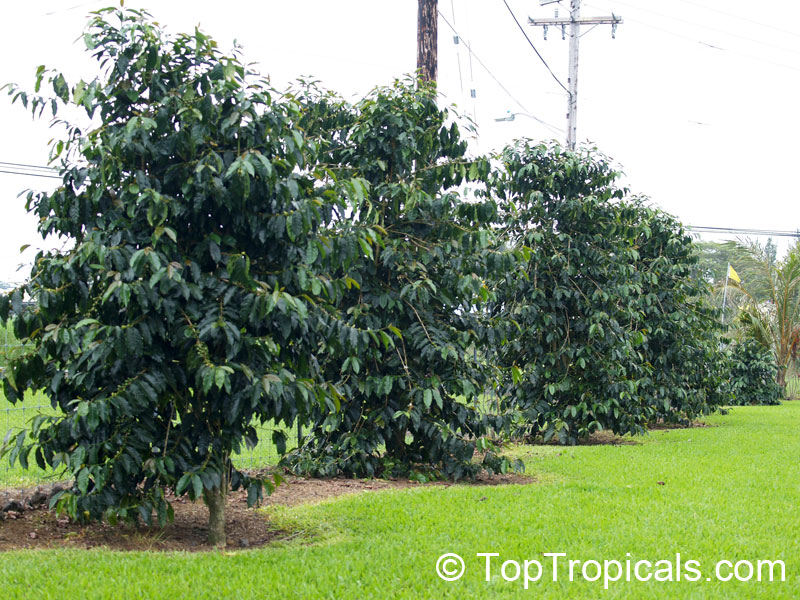
In this video we talk about growing Coffee easily in your own yard. Coffee is the best gift plant and perfect house plant or container fruit tree. The white, fragrant, star-shaped flowers are clustered and resemble gardenias to which they are related. The whole fruit is edible, it is a small fleshy berry changing in color from green to yellow to red. The seeds are the actual "coffee beans" as they called, they can easily be dried, roasted and ground at home. The most common coffee is Coffea arabica; other varieties include Coffea catura - Dwarf Coffee Nanico and Coffea Kona - Hawaiian Coffee Tree Mauna Loa.

WATCH NEW VIDEO >>

Stay updated with TopTropicals Videos by subscribing to our channel at YouTube.com/TopTropicals and get our latest video news of what is fruiting and blooming!

Date: 8 Sep 2021

Fertilizer and the Fall Garden

by Ed Jones, the Booster Guy

...Well Labor Day has come and gone. Summer is winding down and depending on where you live, thoughts are now turning to pumpkin spice, witches, fall decor and gardening. Wait, did I just say gardening? Yes, if you live in the deep south, and I do, it is time to think about fall gardening and fertilizer. Even those of you in the north can put in a few quick crops now for fall. Think onions, radishes, lettuce and other greens and of course, garlic...

Next month, we can start putting out our plants that do better in cooler weather. We will put out some beans and of course cabbage. We may do some potatoes too. What do you like to grow?
But what about fertilizer? Glad you asked. Now, most of us have our favorite brand of fertilizer. Some of us had some secret fertilzers that we used in the past. For me it was composted alpaca manure. Yes, we raised alpacas in the north, but that is another story for another day....

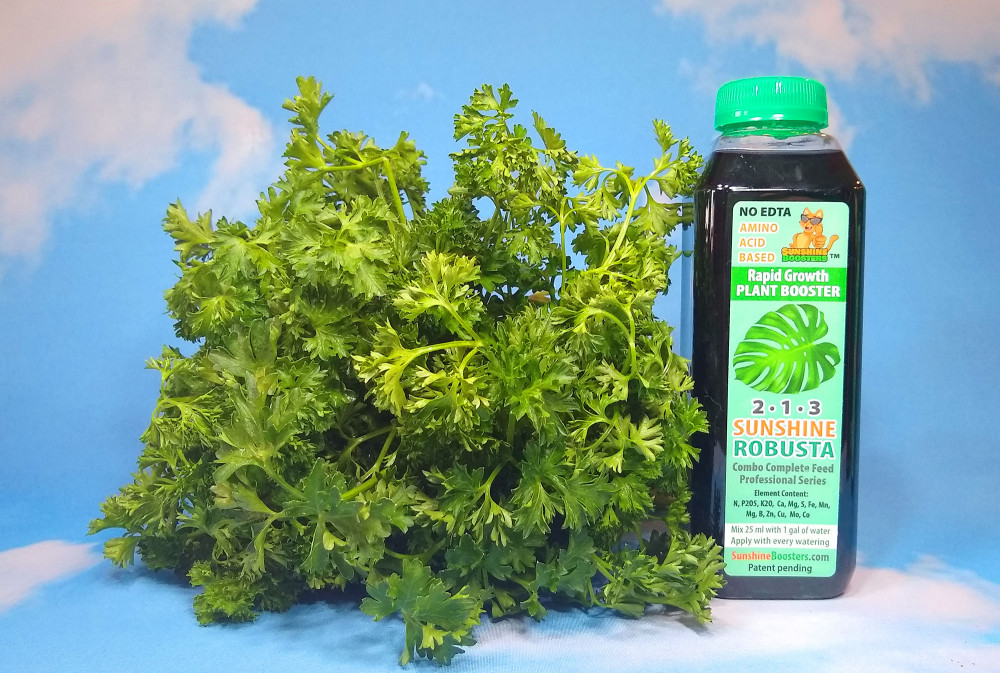
...Once the temperatures have begun to drop, it is better to use a good liquid fertilizer. The one I will be using this year is SUNSHINE Robusta. SUNSHINE Robusta is an organic amino acid based liquid fertilizer that is safe to use with every watering. It uses amino acids to chelate (bind) micro-nutrients and makes it easier for plants to take them up from the soil. Most fertilizers use EDTA to chelate their micro-nutrients and plants must use about 4 times more energy to break them down than they do with SUNSHINE Boosters. This means that your plants will have more energy to put into growth. And isn't that what we are after?
With Special Seasonal price for 16 oz bottle reduced to only $19 with FREE shipping, this is your best choice of organic, safe fertilizer for your vegetable garden!..

CONTINUE READING >>

Date: 18 Apr 2020

PeopleCats amid COVID-Cat-20

"It's not the size of the cat in the fight, it's the size of the fight in the cat"
- Mark Twain -

While the whole world is suffering the virus attack, cats are no exception. They do not get COVID-19, but they have their own coronavirus - a respiratory condition that may become very dangerous for them. And although cat coronavirus does not affect humans, we can transfer it to other cats through our hands/petting, shared bowls and bedding, etc.
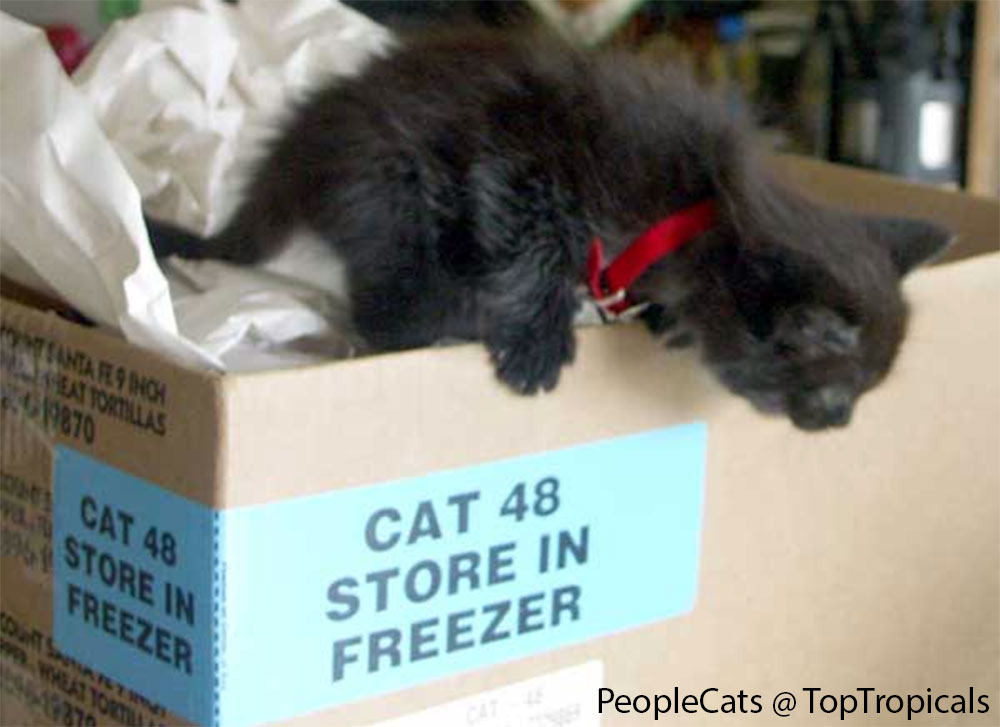
At TopTropicals, we had several cats sick with the flu and it took us a long time and long hospital bills to bring them back to health! Below we are sharing with you a few tips from our own experience that may help you fight and treat cat coronavirus, that we call "Covid-Cat-20".

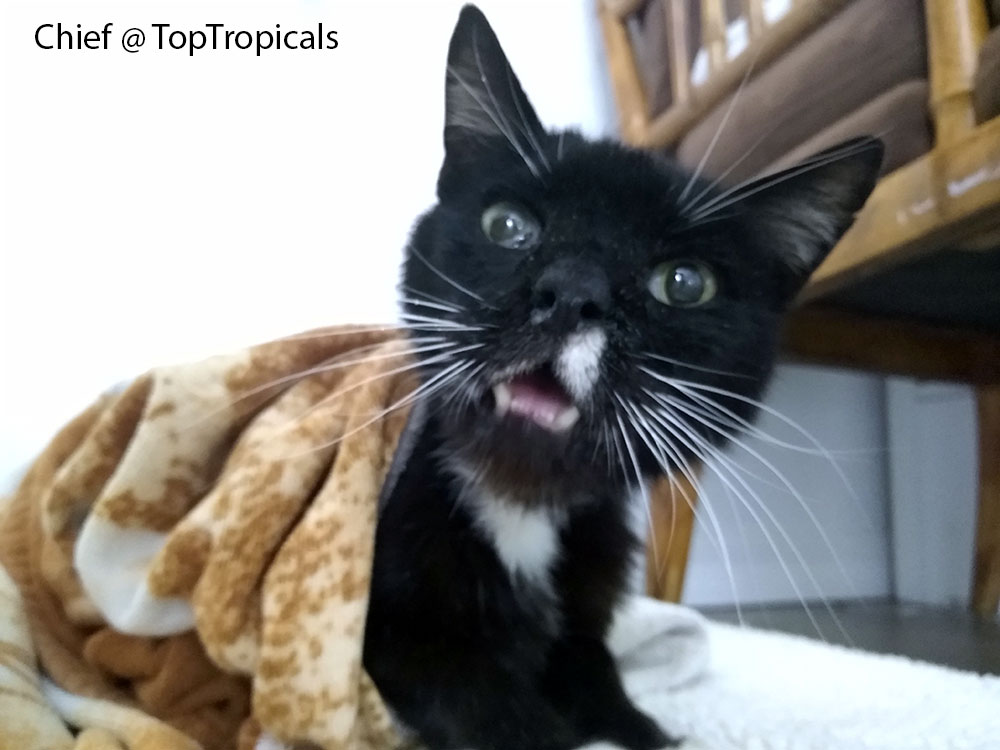
Chief is breathing through his mouth: "Stuffed nose sucks!"

How to treat Cat Coronavirus

When cats get a flu/virus/cold, they suffer congestion, sneeze and cough. Just like us humans. But for cats, stuffed nose is much worse trouble, because they can't smell food = they won't eat it! In tough cases, they won't even drink any water. Due to specifics of cat metabolism, if a cat doesn't eat and/or drink for more than a couple of days, it may become life-threatening. It is not the virus that kills a cat, it is dehydration, lack of nutrition, and possible secondary infections.

- Vet. During Covid-19 lockdown, many animal hospitals are closed, but if you are lucky to find a vet, it is wise to give the cat a long-lasting shot of antibiotic. You can't treat a virus with antibiotic, but it will prevent secondary infections (like pneumonia, etc.)
- Water is absolutely essential! Make sure your Cat drinks water. If he (she) doesn't want to drink on his own, you need to give him water with a syringe. As often as you can. Little by little. Or, ask a vet to put a "water pouch" under cat's skin. This will save the cat from dehydration.
- Food is the main key! Your cat must eat a normal size portion per day in order to fight the illness. Because he can't smell, it's possible he won't eat on his own. Offer him a smelly, soft/wet food of room temperature or slightly warmer: usually tuna works well. Get Salmon Oil and put on top of the food: it is smelly, plus a great vitamin supplement.
- Hand-feeding. If congestion is bad, even a smelly tuna may not help. Mix a spoonful of pate with some water and try to hand-feed this "soup" to the cat either using syringe, or a small spoon. Little by little. Remember, his nose is stuffed and he can't swallow and breath at the same time, so it must be tiny bites. (Wrap the entire cat tightly in a large thick towel to save yourself lots of scratching damage, leaving out just the face. Guaranteed, he won't like the procedure and you will be surprised how strong he is for a sick cat.)
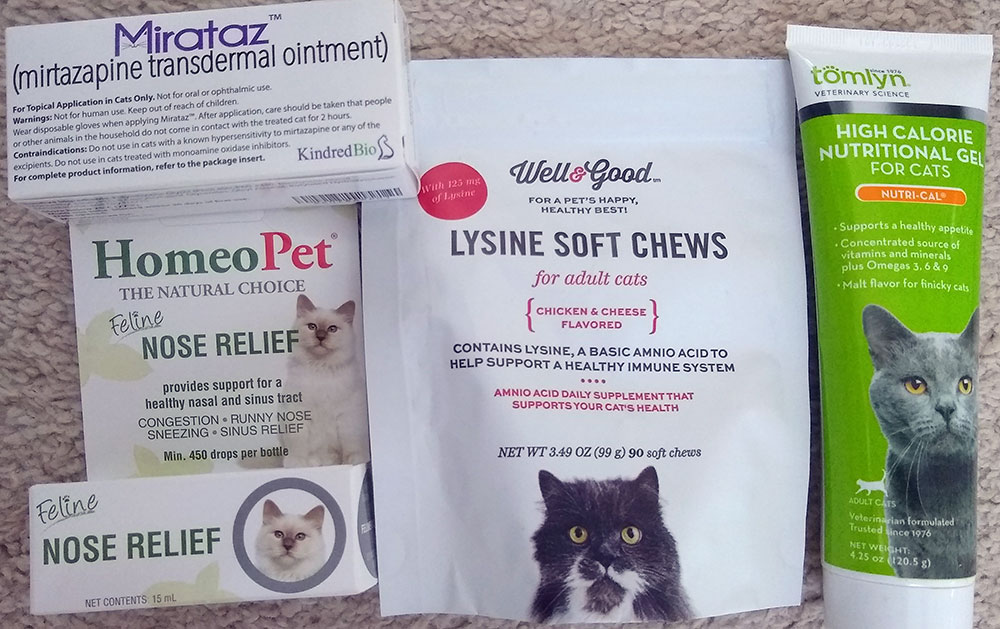
- Supplements. For an extra nutrition support, you may use Critical nutrition food and other protein supplements. Consult your vet and you may want to try the following aids: High Calorie Liquid or Gel (easier to administer), HomeoPet Nose Relief (for de-congestion), Lysine Soft Chews, and Mirataz ointment (to promote appetite).
- Rest. Keep the cat indoors, in a warm place, away from drafts. Cover with a towel to make comfy. Keep lights dimmed. Change bedding, towels, blankets at least daily to keep clean, get rid of germs and drooling accidents.
- Quarantine from other cats, the cat coronavirus is super catchy! Find that spare room. Bleach, soap, alcohol and Hand Sanitizer - are your friends now to maintain germ- and virus-free environment.
- Mild cases. Some cats have mild symptoms (we've noticed that black cats and tuxedo cats are more susceptible regardless of age). In this case, do not panic - just give them time to recover. Lots of rest, privacy, and be sure to monitor water/food intake!
- Tough cases. Most cats look lethargic when sick. At some point, if within 3-4 days you don't see improvement and the coughing continues, you need x-ray to rule out pneumonia.

Stay well and healthy, PeopleCats!

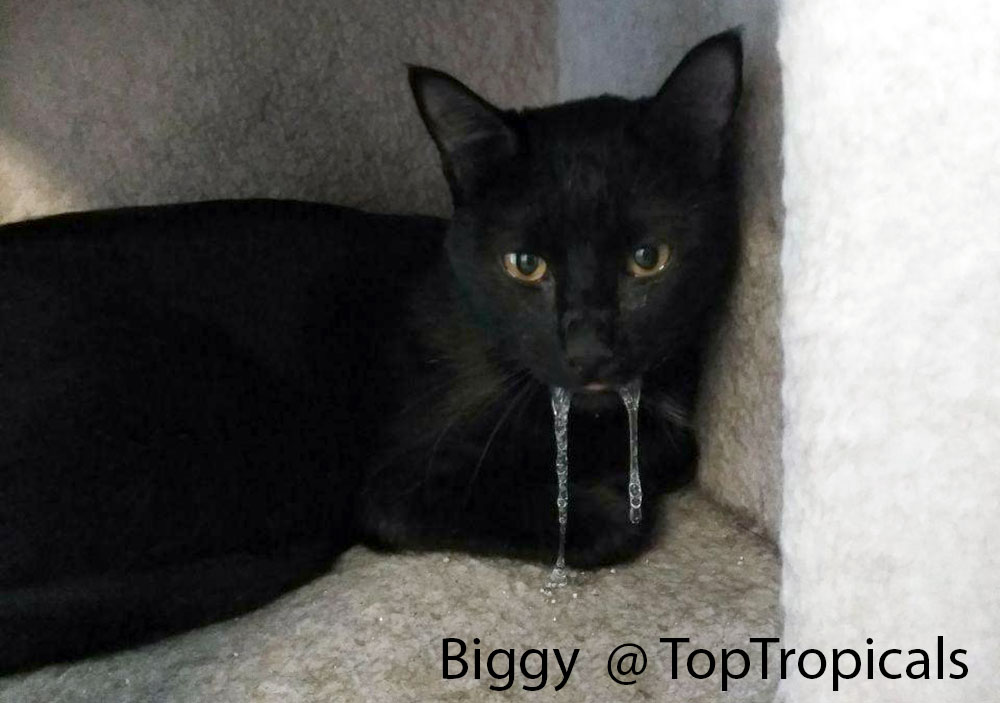
Biggy sneezed... Ooops, sorry for no mask!

TopTropicals PeopleCat Club

Thank you everybody for supporting us in helping PeopleCat Community!
Make your kind donation today and receive a surprise gift from us. Every little bit helps! Thank you and God bless you and your pets!

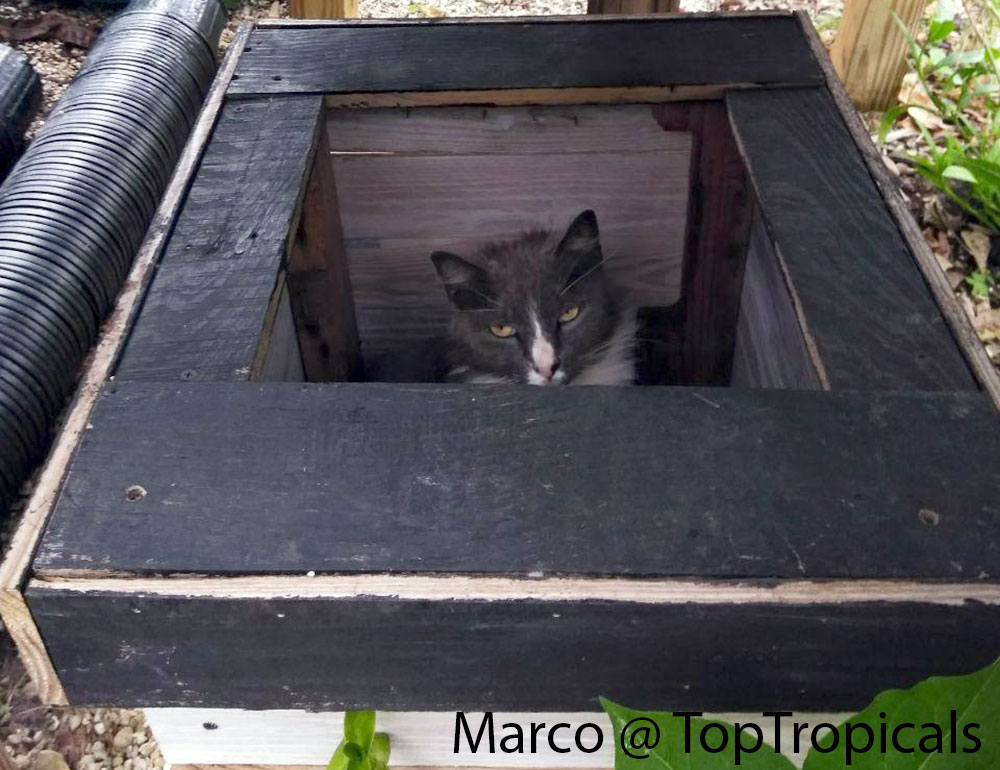
Coughing Marco is practicing Social Distancing