Garden Blog - Top Tropicals

Date: 12 Jan 2025

How to protect tropical plants in Winter

Winter tips and podcast

Photo above: wrapping plants with frost cloth

Winter can be tough on plants, especially on tropical varieties. But with a little preparation, you can protect your garden and keep your plants safe from the cold. Here's how:

Winter Care Tips for Tropical Plants

Cut watering: Reduce watering to prevent root rot. Cold + wet = dead roots.
Water before frost: Thirsty plants are more vulnerable. Water them before a cold night to prevent damage.
Wind protection: Wind is more harmful than temperature drops. Plant near structures like houses or trees for shelter.
Prepare for long cold periods: If cold weather lasts for hours, use all available protection, including Christmas lights and propane heaters.
Don't use dry fertilizer in winter: Heavy fertilizing encourages tender growth, which is more susceptible to cold damage. Sunshine Boosters liquid fertilizers are safe to use year around as their intake is controlled by reduced watering.
Use fabric covers, not plastic: Plastic can cook plants in the sun, while fabric allows better ventilation.
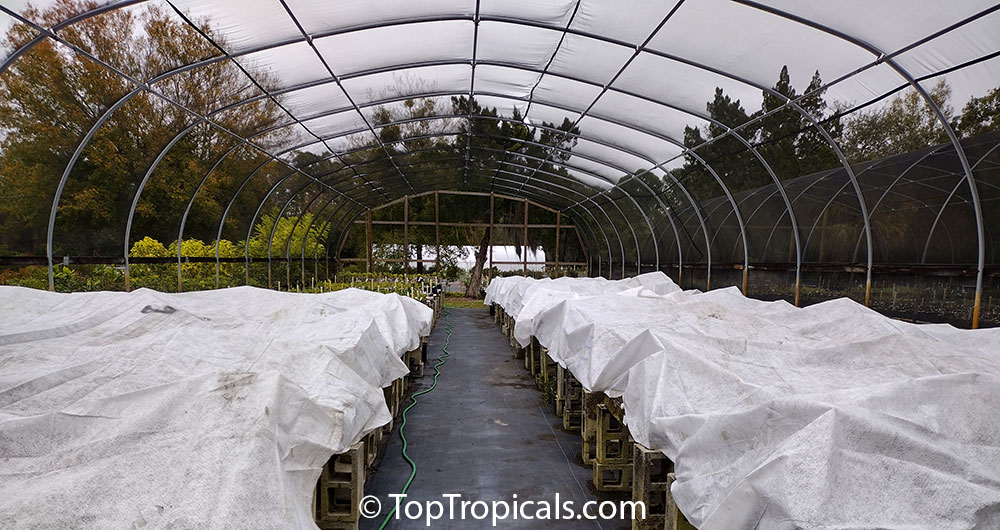
Protecting  tropical  plants  in  winter  with  covers

Photo above: we cover our plants in the nursery with a thin synthetic fabric (sintepon) called "frost cloth" or "strawberry cloth". It is light, breathable and allows light and water to go through unlike plastic that creates heavy water pockets.

Prepare for Cold Nights

Wrap plants: On cold nights, cover individual plants or trees with sheets or blankets to shield them from wind chill.
Use Christmas lights: A simple string of lights can add extra warmth, protecting your plants during frosty nights.
Use propane heaters: For added warmth in a larger area, place a propane heater near your plants. Make sure to follow safety guidelines and keep the heater at a safe distance from flammable materials. This can help maintain a few extra degrees of warmth, especially in more open garden spaces or temporary greenhouses. Always ensure proper ventilation to avoid harmful gas buildup.
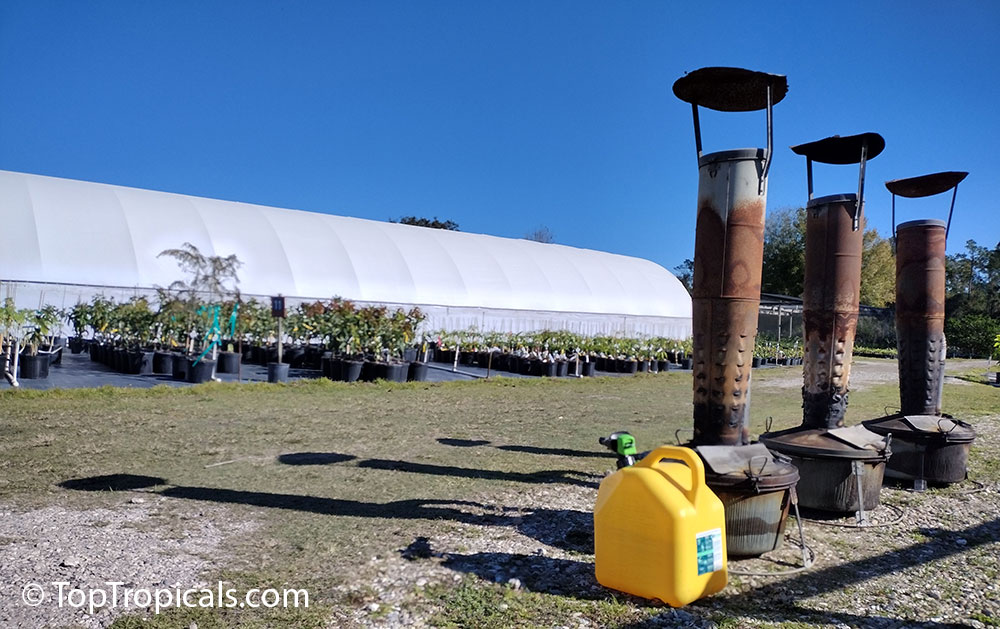
Protecting  tropical  plants  in  winter  with  heaters

Photo above: we use both propane and kerosene heaters at the nursery

Large Collections? Build a Temporary Greenhouse

Affordable winter greenhouse: For large plant collections, you don't need an expensive greenhouse. A mobile carport with plastic or fabric covering, costing around $200, can house up to 100 plants!
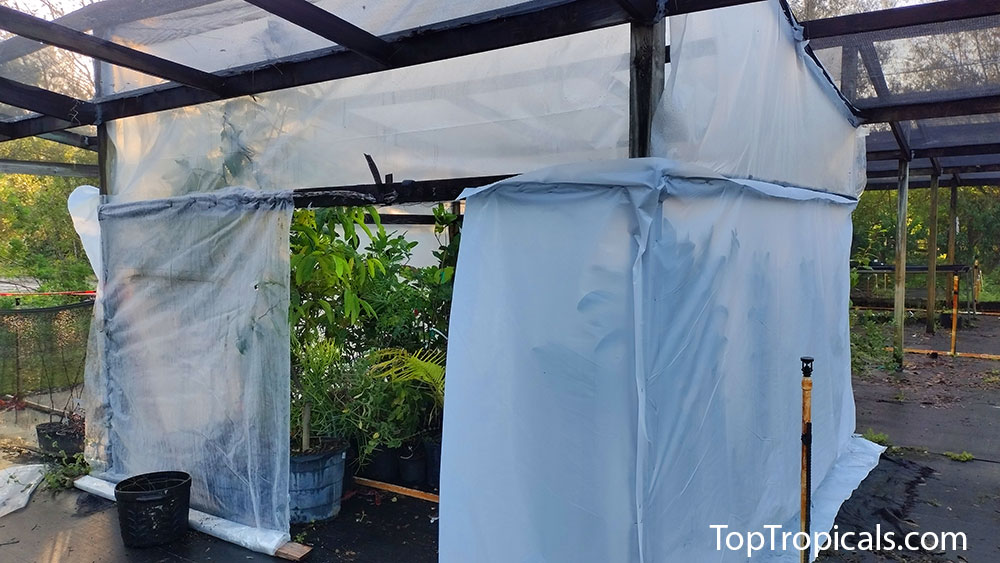
Protecting  tropical  plants  with  temporary  greenhouse

Photo above: Temporary wrapping around plant collection with a plastic or frost cloth protects from a windchill. It may also win you a few degrees even without a heater. In this particular case, according to our temp sensors, with 30F outside, it was 41F inside this "dome", no heaters used.

Southern Exposure and Garage Storage

Southern windowsills: Compact tropicals can thrive on southern-facing windowsills, getting plenty of sunlight during the day.
Move plants inside: If you have larger collections, move them into a well-lit garage for the colder nights or longer periods.
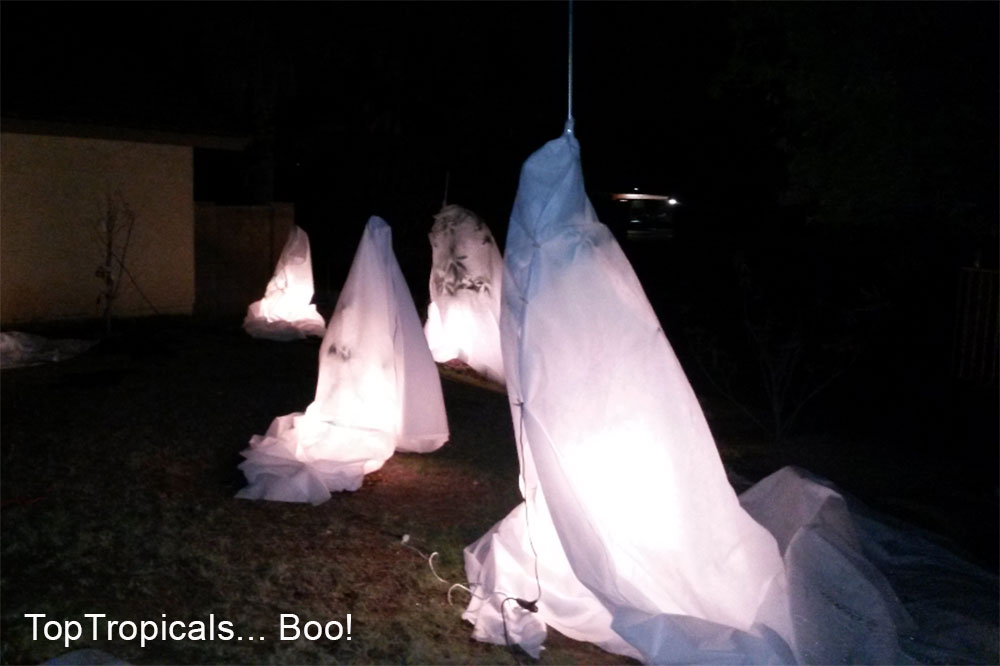
Protecting  tropical  plants  in  winter  with  Christmas  lights

Photo above: using Christmas lights around plants while wrapping with frost cloth.

Key Factors for Survival

Cold duration: Tropical plants can survive brief cold spells but long durations, even above freezing, can be deadly.
Wind-chill: Wind chill can be harsher than the temperature itself.
Exposure: Southern-facing slopes hold heat longer, making them ideal for your plants.
Humidity: Proximity to lakes or oceans can create a milder micro-climate.
Gradual temperature Drops are safer. Plants adjust better to slow temperature changes than sudden cold blasts. Gradual cooling allows plants to prepare, reducing the risk of damage.
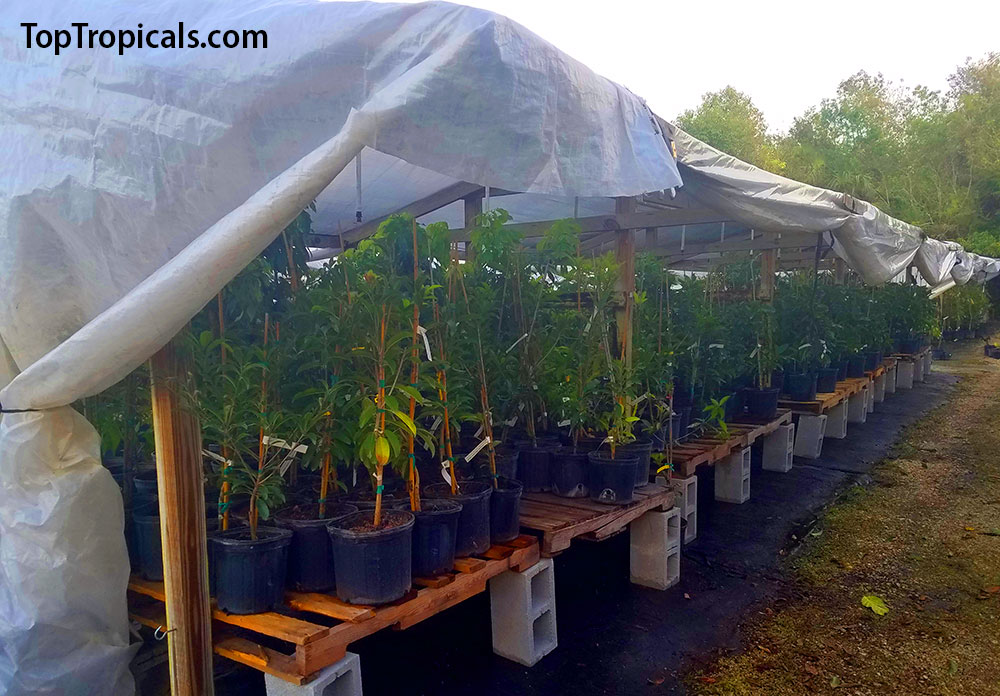
Protecting  tropical  plants  in  winter  with  plastic  greenhouse

Strengthen Plant Hardiness

Health and maturity: Well-established, healthy plants are more cold-hardy.
Boost plant immunity: Use products like SUNSHINE-Epi to improve cold resistance. Apply it before and during cold snaps to protect your plants.
Healthy plant is hardy. Make sure to fertilize your plants on regular basis - healthier and stronger plants are more cold hardy.

With these steps, you can protect your plants and help them survive the winter months. Stay warm and keep your garden thriving!

Podcast with Horticulturist Mark Hooten:
How to Protect Tropical Plants in Winter

Protect  plants  in  winter  podcast

Date: 2 Jul 2025

How to grow tropical fruit outside the Tropics

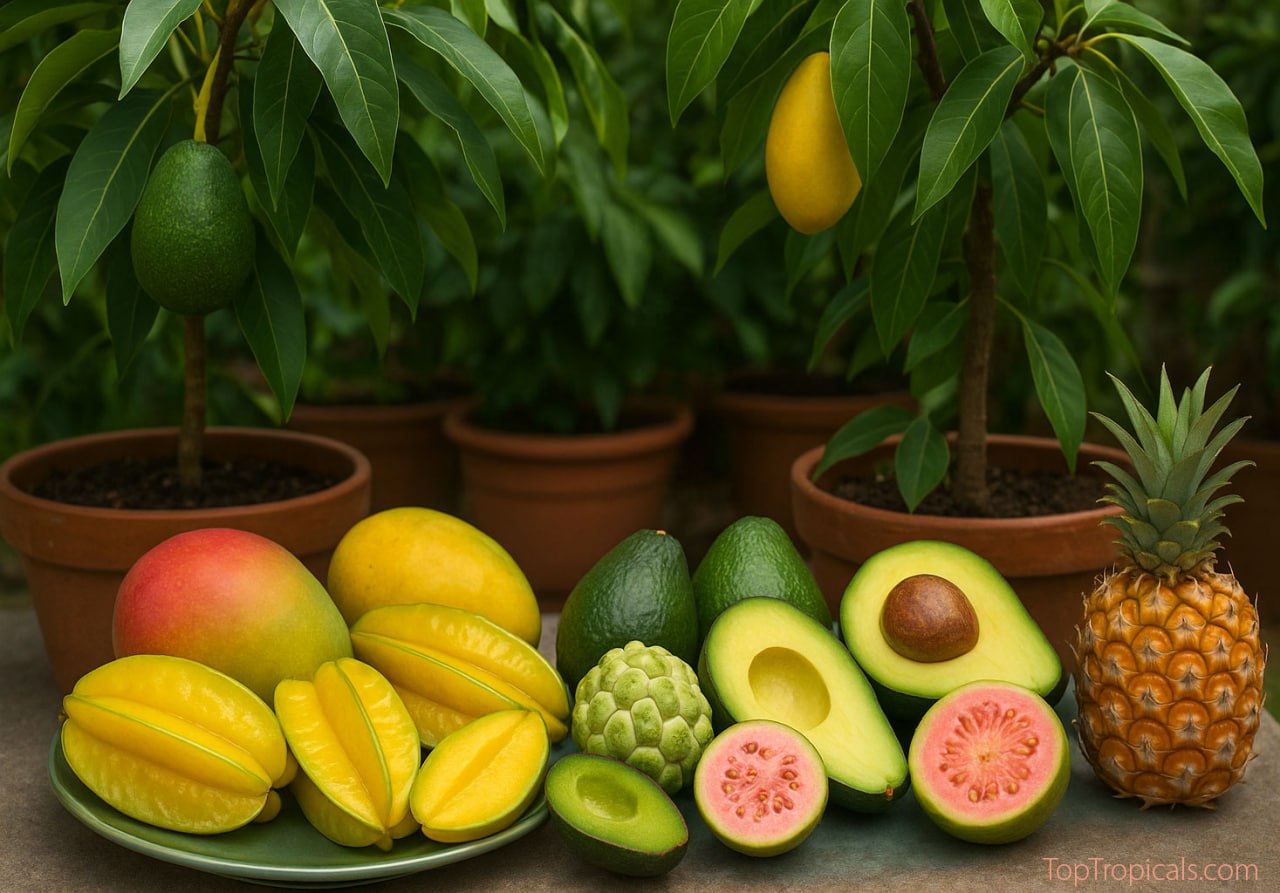
Tropical fruit trees grown in containers

Tropical fruit trees grown in containers

🥭 How to grow tropical fruit outside the Tropics


👨‍ Can you grow tropical fruit in colder climates? Absolutely! The key is growing them in containers so you can move them indoors during cold weather. With the right plant selection, a bit of motivation, good plant food, and a little love, you can enjoy a delicious harvest of exotic fruit - enough to treat your family and even share with friends. Here's everything you need to start your own Tropical Fruit Garden in containers.

🏆 Top tropical fruits and expert tips for growing in containers


🛒 Shop top picks for your container tropical garden:


🥭 Condo Mango
Cold hardy Avocado
🍒 Tropical Cherries - Eugenias
⭐️ Carambola (Start Fruit)
🍉 Guava
🍈 Annona
🍍 Pineapple
🌶 Herbs and spices - tropical edibles right away
🕙 Fast-fruiting trees
🍊 Shop all fruit trees
Supplies and Boosters

#Food_Forest #How_to #Discover

🟢 Join 👉 TopTropicals

Date: 26 Feb 2026

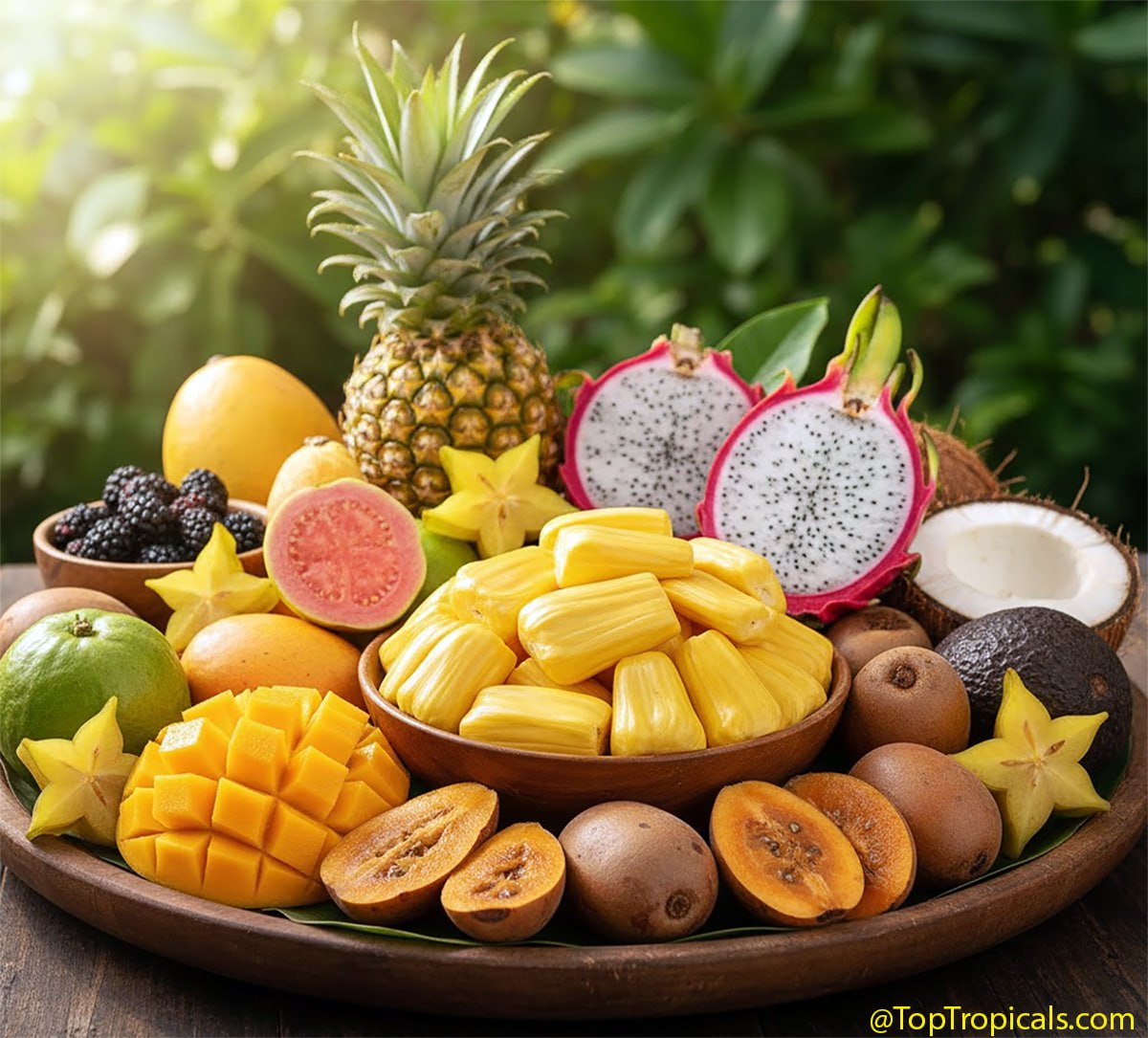
Stop Sugar Crashes: 5 Tropical Fruit Hacks for Healthy Dessert

Exotic Tropical Fruits for Blood Sugar Management. Stop the sugar crash cycle. Learn how to manage glucose levels and insulin spikes using tropical fruits, healthy fats, and metabolic hacks for healthy dessert.

Exotic Tropical Fruits for Blood Sugar Management. Stop the sugar crash cycle. Learn how to manage glucose levels and insulin spikes using tropical fruits, healthy fats, and metabolic hacks for healthy dessert.

🍨 Stop Sugar Crashes: 5 Tropical Fruit Hacks for Healthy Dessert


The smarter way to handle sugar cravings - no restriction required

Tired of the post-cookie slump? Sugar cravings are a physiological response to blood glucose fluctuations, not a lack of willpower. Refined sugars trigger an insulin spike followed by a hypoglycemic crash, trapping you in a cycle of fatigue and hunger.
The secret to metabolic health is managing glycemic load. By choosing nutrient-dense tropical fruits, you satisfy your sweet tooth while maintaining stable energy homeostasis.
The solution is not to give up dessert. It is to change what dessert means. Here is how to use tropical horticulture to hack your biology and regulate insulin:
  • 🍭 1. Choose fruit that comes with fiber


    Whole tropical fruits deliver sweetness wrapped in fiber, water, and nutrients. That slows sugar absorption and keeps energy steady.
    Try:

· Mango, chilled and sliced
  • · Sapodilla - naturally caramel-sweet
  • · Mulberries by the handful
  • · Loquat halves straight from the fridge
  • · Dragon Fruit for light, clean sweetness
Same pleasure. Less crash.
  • 🍭 2. Pair sweet with fat to blunt the glucose spike


    Healthy lipids are a biological hack for your metabolism. Fats slow gastric emptying, ensuring a steady glucose release rather than an inflammatory spike. Furthermore, lipids trigger cholecystokinin (CCK) - the hormone that signals satiety to the brain - effectively "turning off" cravings at the source.

· Avocado blended into a chocolate-style mousse: The monounsaturated fats create a creamy texture while blunting the sugar response.
  • · Banana with nut butter: Combining fast-acting fruit sugars with dense protein and fats.
  • · Pineapple with raw nuts: The bromelain in pineapple aids digestion, while the fats in nuts provide long-lasting satiety.
  • · Mango mixed into full-fat yogurt: The combination of probiotics, protein, and lipids turns a simple fruit into a complete, low-glycemic snack.
When fruit is balanced with fat, cravings calm down instead of escalating.
  • 🍭 3. Use naturally rich fruits in place of sugar


    Some tropical fruits taste like dessert already.

· Jackfruit has candy-like sweetness
  • · Sapote is creamy and custard-like
  • · Guava brings floral depth
  • · Cherries add brightness
  • · Mash Banana into baking instead of white sugar.
  • · Blend Mango into yogurt instead of syrup.
  • · Top oatmeal with Mulberry instead of brown sugar.
Dessert stays. The crash disappears.
  • 🍭 4. Balance sweet with tart


    Adding contrast reduces the urge to overeat sweetness.

· Carambola adds crisp tang.
  • · Pineapple brightens the palate.
  • · Loquat gives gentle acidity.
Balanced flavors satisfy faster.
  • 🍭 5. Start the day right


    Skipping breakfast increases late-day sugar cravings.
    A morning smoothie with Avocado, Banana, and Mango prevents the afternoon energy dip. Hydration also matters - thirst often disguises itself as a sweet craving.
  • 🍭 In essence


    Dessert is not the enemy. Refined sugar is.
    When sweetness comes from nature's bounty, it nourishes instead of draining energy.
    You do not need to quit dessert.
    You just need to let nature handle it.

    Consult with a healthcare professional before making significant dietary changes, especially if you have diabetes or metabolic conditions


🛒 Start your tropical fruit journey

Annona · Guava · Mango · Sapodilla · Mulberry · Pineapple · Avocado · Banana · Loquat · Dragon fruit · Jackfruit · Sapote · Cherries · Carambola

📚 Learn more:


#Food_Forest #Remedies #Discover

🟢 Join 👉 TopTropicals

Date: 22 Dec 2024

What are the easiest, low maintenance plants?

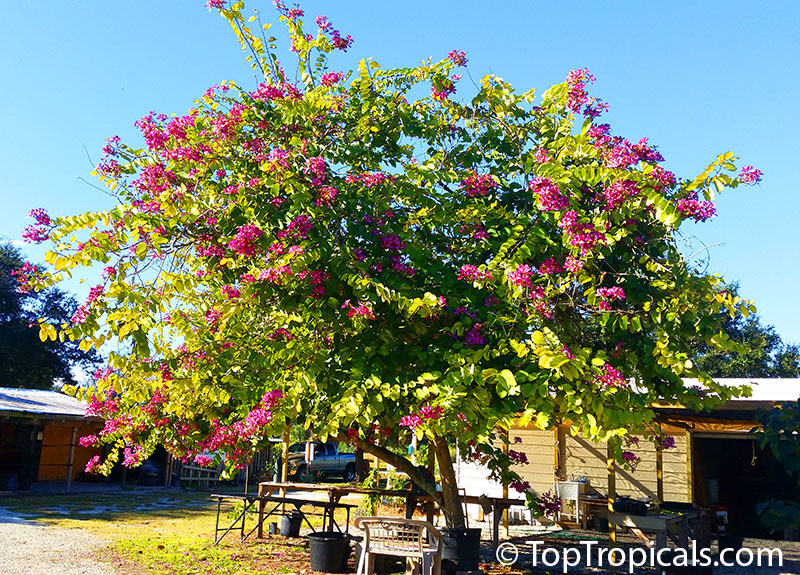
Bauhinia  blakeana  -  Hong  Kong  Orchid  Tree

Photo above: Bauhinia blakeana - Hong Kong Orchid Tree. The most beautiful of all orchid trees. This winter bloomer starts flowering in very small size, when only 2-3 ft tall, and grows fast. (Bonus plant: makes it 7 easy plants!)

Six easiest to grow, effortless plants

Q: I'm seeking low-maintenance, tropical plants for my yard since I have limited time for gardening. Could you recommend some easy-to-care-for options that will still give my outdoor space a tropical feel?

A: Tropical plants don't necessarily require extensive care. Many options are low maintenance, effortless, and easy to grow, including a variety of plants, trees, shrubs, and vines that demand minimal upkeep. They are fast growing, not fussy about soil, cold- and heat- resistant, and can rely on regular sprinkler irrigation. Below are six our favorites - the easiest and most effortless tropical plants for your Southern landscape. You can find the full list here.

1. Fruit tree: Lolita Cherry

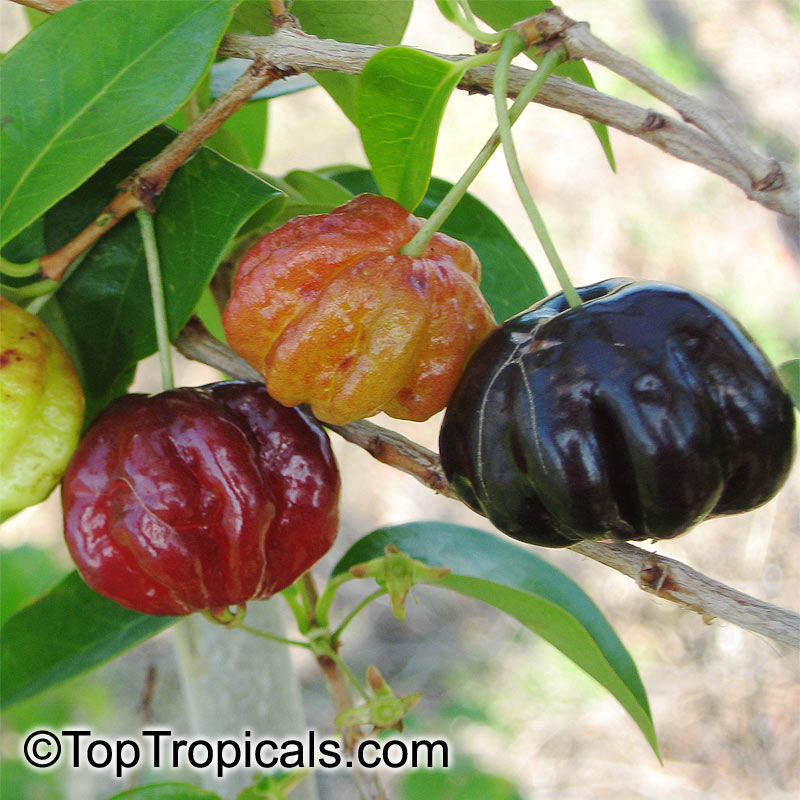
Eugenia  uniflora  -  Black  Surinam  Cherry  Lolita

Eugenia uniflora - Black Surinam Cherry Lolita. The plant is vigorous and ready to fruit the same year. The fruit has exceptional flavor, very sweet, without aftertaste, large 1-1.2 inch, very juicy. Reliable producer. These cherries are cold hardy and can take short periods of frost.

2. Flowering tree: Shaving Brush Tree

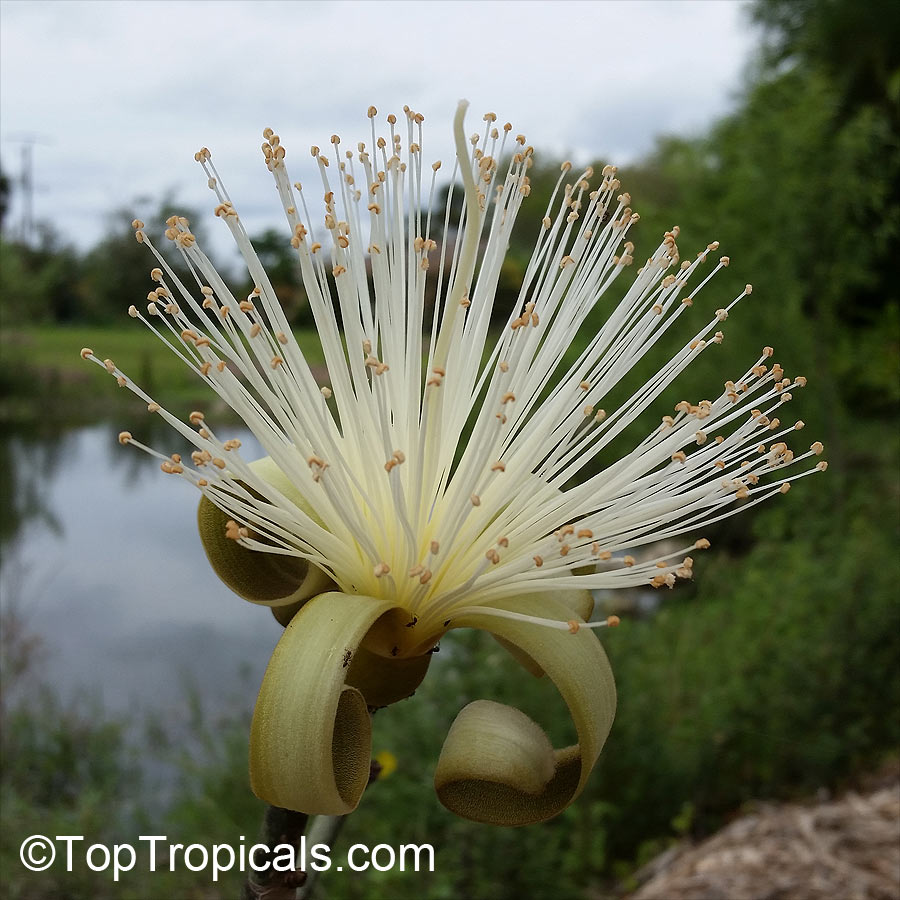
Pseudobombax  ellipticum  -  Shaving  Brush  Tree

Pseudobombax ellipticum - Shaving Brush Tree is one of the coolest looking flowering trees, this fast-growing tree bears spectacular showy staminate flowers in the spring. It usually has no leaves at that time, which serves to show off the large and striking blooms. Very low water needs, grows fast!

3. Flowering shrub: Firespike

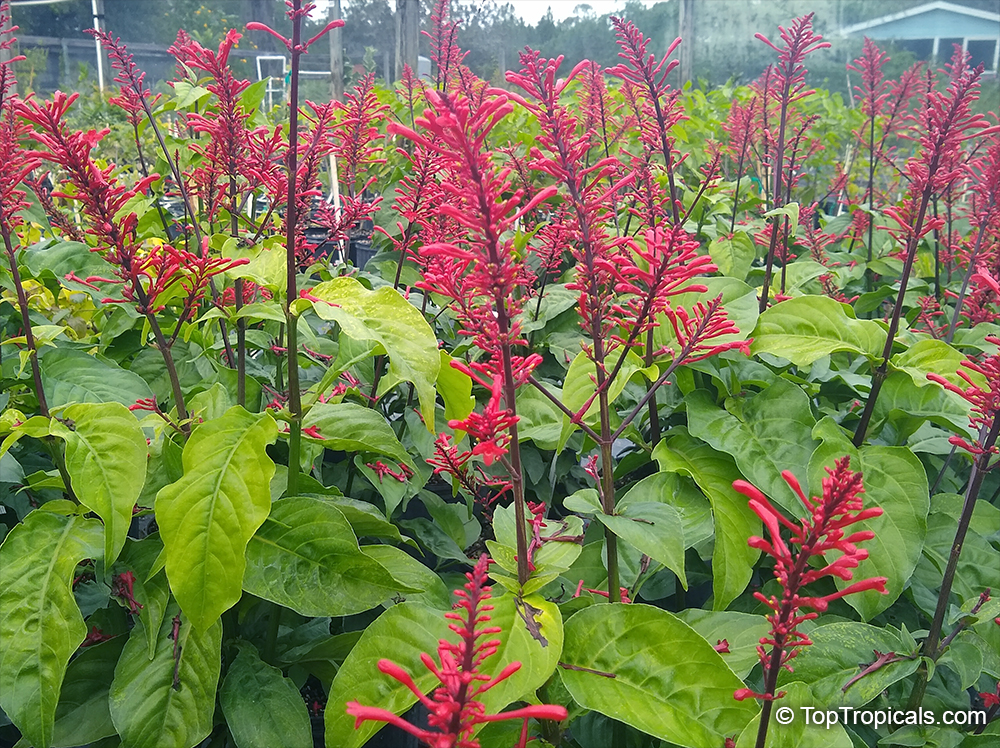
Odontonema  cuspidatum  -  Firespike,  Red

Odontonema cuspidatum - Firespike - ultimate butterfly magnet with showy bright red flowers. Will take sun or shade. Very easy and happy plant!

4. Flowering vine: Bleeding Heart

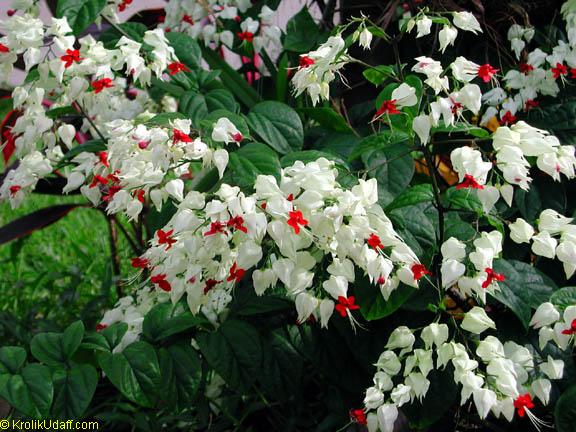
Clerodendrum  thomsoniae  -  Bleeding  Heart

Clerodendrum thomsoniae - Bleeding Heart. One of the most spectacular blooming vines. Spectacular, dramatic flowers are slightly flat, they have white sepals on either side of bright crimson petals. The appearance may be liken to a line of dangling hearts, each emerging from the other. Very easy to grow and undemanding plant. Blooms in both sun or shade!

5. Small perennial: Ground Orchids - many colors!

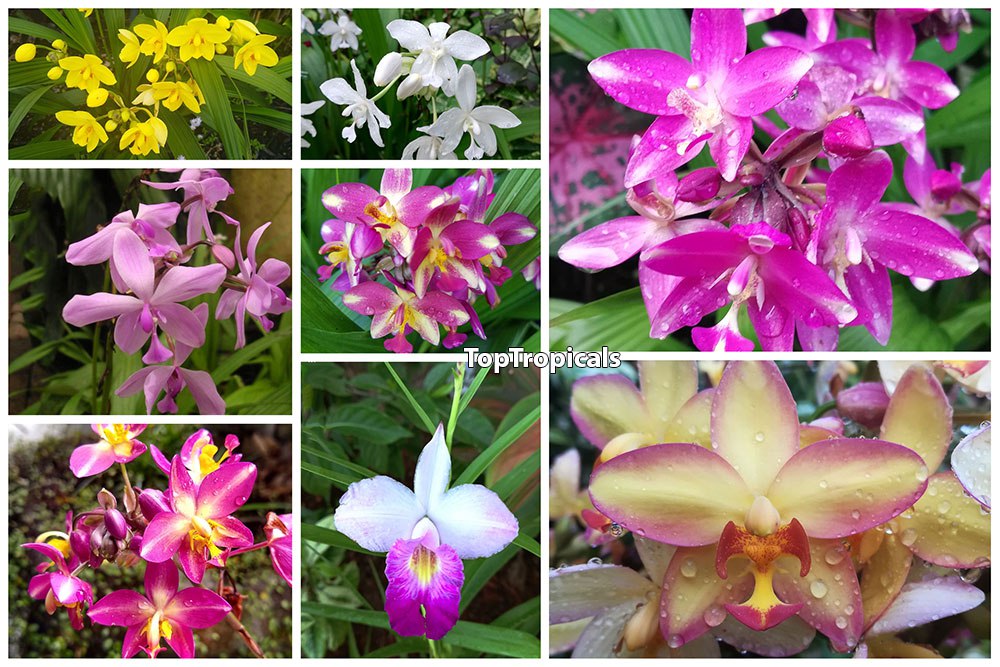
Ground  orchids

Ground orchids are the easiest and most rewarding flowers for a tropical garden. They thrive in regular garden soil or potting mix, tolerate both sun and shade, and bloom nearly year-round. They take both sun or shade, are cold-resistant and carefree. And look at these colors! From vibrant purples to soft pinks and yellows, ground orchids bring a splash of tropical beauty with minimal effort. Their consistent blooming makes them a must-have for gardeners seeking color all year.

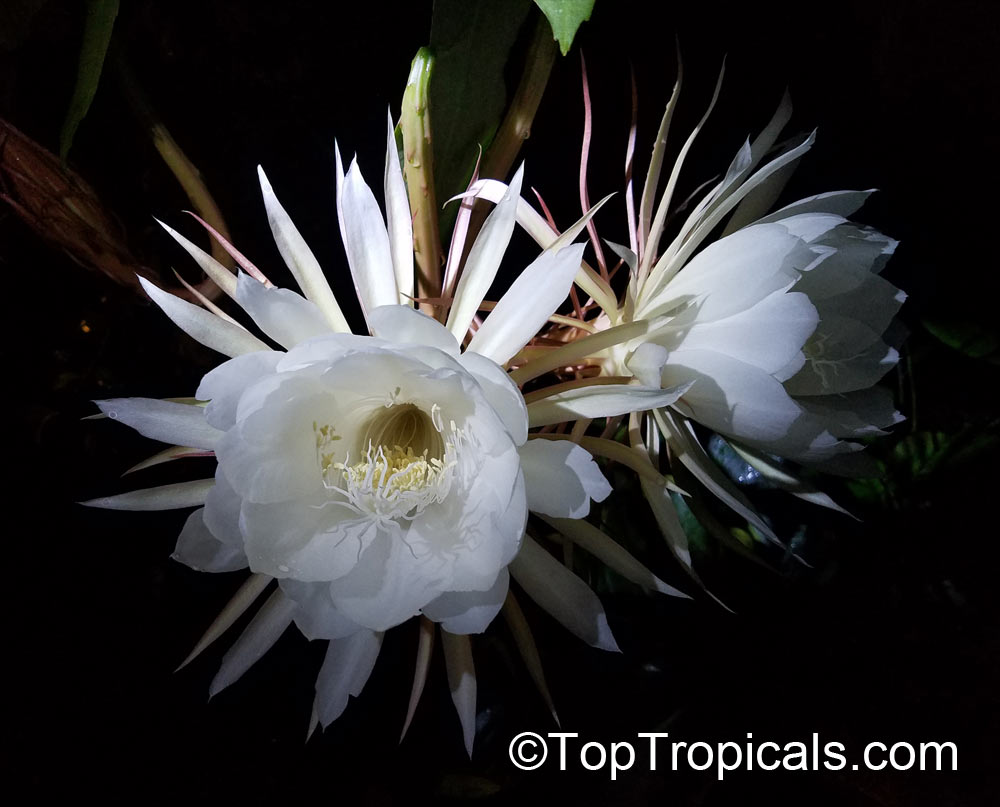
6. Fragrant exotic: Queen of the Night

Epiphyllum  oxypetalum  -  Queen  of  the  Night

Epiphyllum oxypetalum - Queen of the Night - powerfully fragrant at night! This special cactus grows in tropical rainforests and has large wide meaty leaves. The flower is huge, white, and nocturnal. Blooms at night hours, hence the name. One of the most exotic indoor plants, great shade garden specimen. Easy to care, very low maintenance. Very low water needs.

Date: 16 Dec 2019

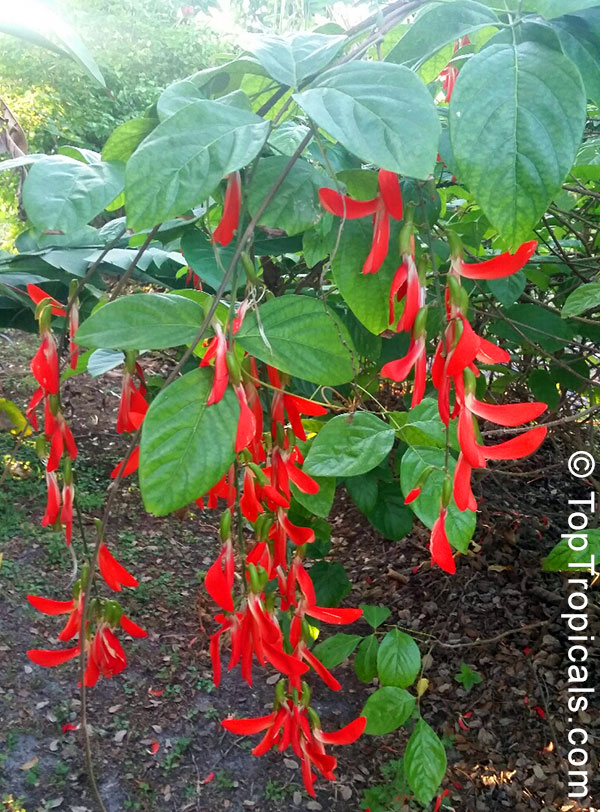
Hardy Dwarf Red Jade Vine

by Onika Amell, tropical plant specialist

Q: I simply adore Jade vines. I think they are the Queens of all the vines! I have been very been successful growing the green Strongylodon macrobotrys and purple Jade Mucuna pruriens vines here in Clewiston Florida but I am struggling to make the Red Jade vine (Mucuna benettii) thrive. It keeps dying on me during cold snaps. Any suggestions?

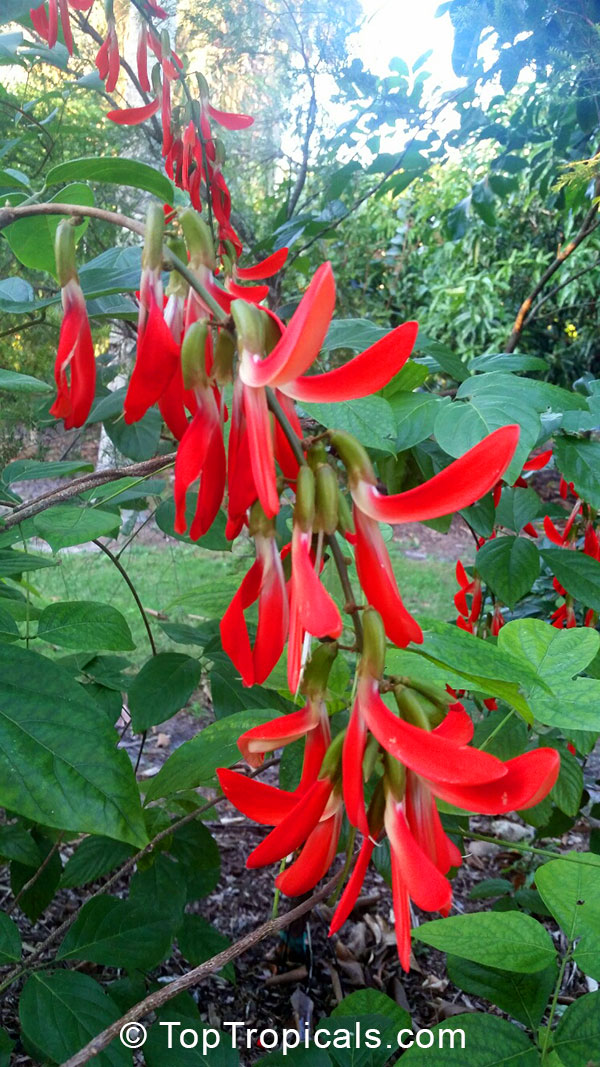
A: ...Here is our solution for you. Consider growing a Dwarf Red Jade Vine or Camptosema grandiflora. It is closely related to the regular and ultra tropical Red Jade Vine Mucuna benettii but much tougher and hardier. It is considered to be one of the more cold hardy of the Jade Vines...
This gorgeous, rare and unusual vine is a sheer showstopper. It is easy to grow and it will reward you with long fiery chains of dangling orange-red flowers that bloom from late fall to early spring. Even though it is listed as a dwarf do not be fooled. This vine will get quite large and will need a strong support over time. The flowers are long and heavy and will show best when planted on an arbor or pergola where they are able to hang down and wow you and your visitors. It puts on a wonderful display. Butterflies, bees and hummingbirds will all thank you for growing this stunner!...

CONTINUE READING >>