Garden Blog - Top Tropicals

Date: 18 Sep 2016

About Cold Protection...

Q: I have a question, if I'm in Okeechobee Florida zone 9b are there any plants that you sell that would have to be protected at all? I have a lot that I've purchased from you and don't want to lose any of them winter.

A: Sometimes it is hard to guarantee if certain plants are hardy enough in certain area. From our experience, tropical plant performance in non-tropical areas depend on many factors; a lot of times plants appear to be hardier than they are believed to be. Other times, an obviously hardy plant doesn't survive winter. So there always will be a chance of risk involved, while nice surprises are not an exception. We have been testing many tropical species throughout many years of our nursery experience. Wind protection in many cases is more important than temperature. Enclosed sections of your garden provide better chances to survive cold snaps. Generally speaking, here is the list of some plants (not complete list, just examples) that in our experience have been surviving light freezes without significant damage.

Q: I live in San Jose,CA. Got Mango Alphonso 2 yrs back and protected it for a year in a pot during winter. Last spring I planted it and during winter I put a freeze cloth to protect it but it died. How can I make sure it wont die if I buy this time plz?

A: Mango trees are tolerant only to light frost, once established. If it gets below freezing in your area for more than a few hours, and especially if you have numerous nights with frost throughout winter, we recommend to keep mango tree in a pot. This way it can be moved to protected area during cold night. The more established the tree, the more chances to survive colder temperatures.
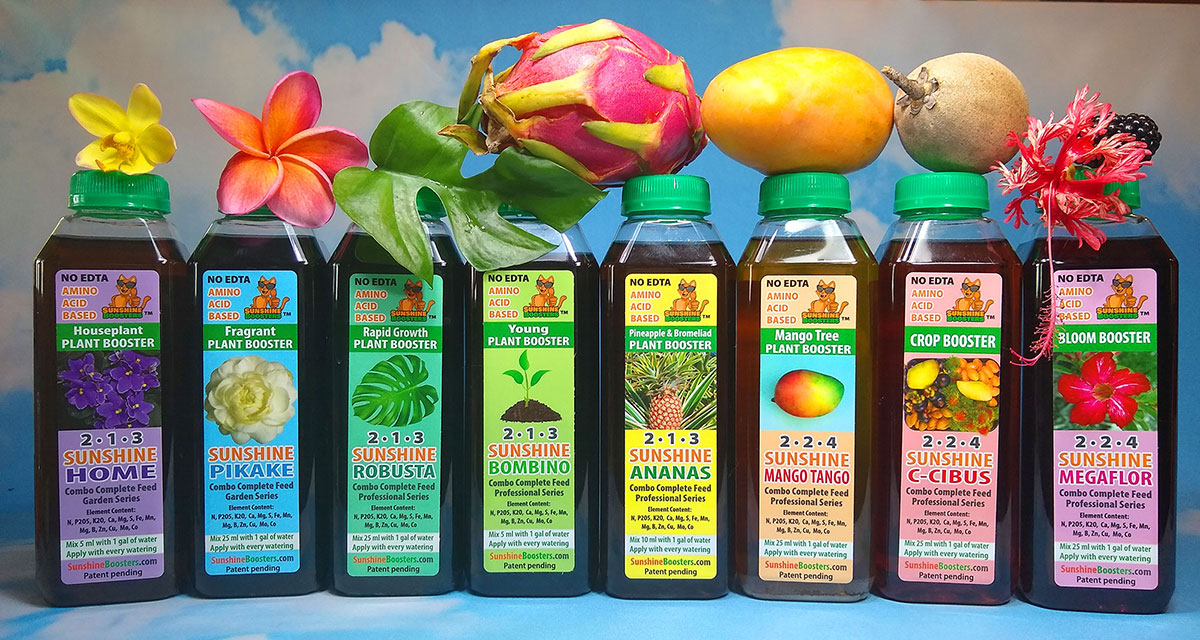
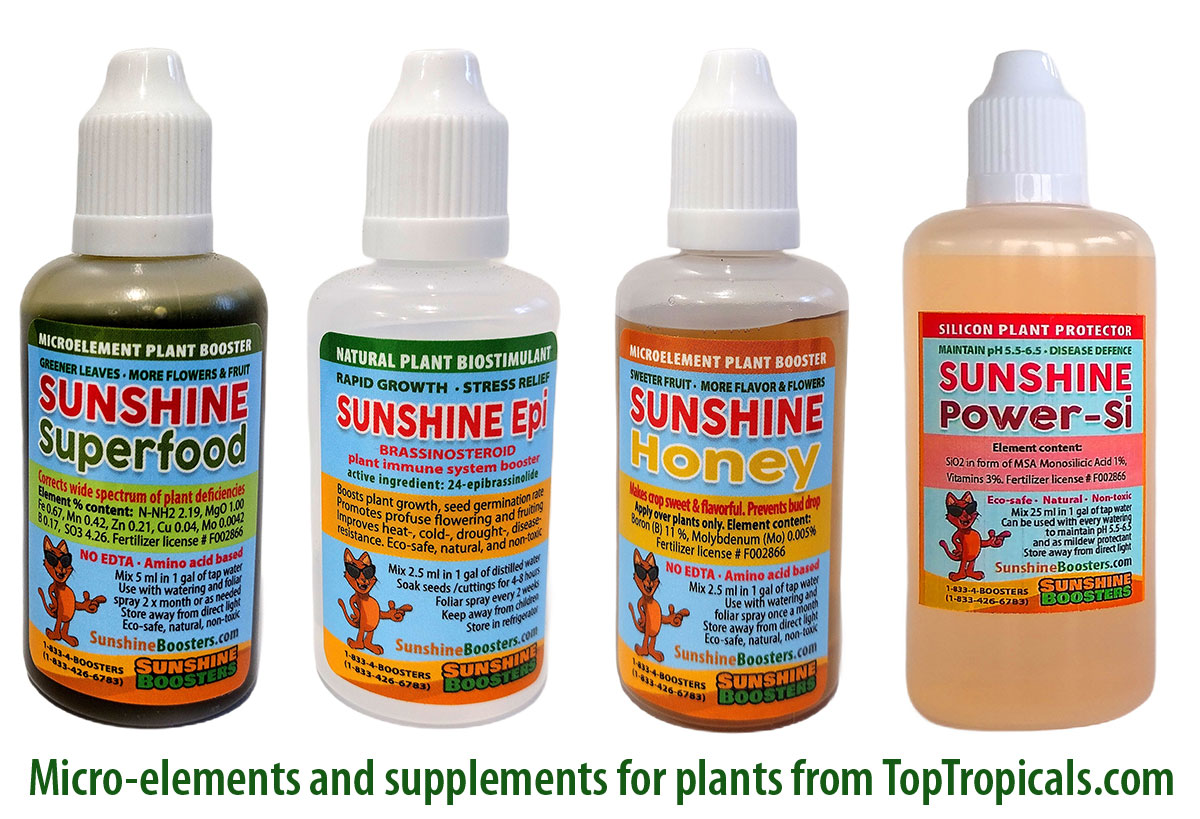
We also use plant booster Sunshine to increase plants cold tolerance
Cold protection is a lengthy subject. You may also use propane heaters during cold nights.
Here is some more information on cold protection.
Also, we recommend to check out our magazine Tropical Treasures (about pushing the limits of tropical gardening) for a detailed article on cold protection.
These are specific articles on Zone-Pushing in different issue #s regarding dealing with cold. See downloadable issues:
(#1) Growing Tropicals in Nontropical Climate, Three Freezing Nights in Southwest Florida
(#2) Temperature drops - an alert or a rehearsal?
(#5) Dealing with cold snaps, Cold hardy beauties
(#7) When winter is around the corner, Growing exotic Cordyline in colder climate
(#8) When the weather outside is frightful
(#9) Winter champions
(#11) Ready-for-winter checklist for in-ground plants
(#13) Winter checklist
(#18) Dealing with cold damaged plants
You may also order hard copies.

If temperatures drop below freezing in your area, remember to add Heat Pack

Date: 24 Jun 2016

Coastal plants. Suggestions for coastal regions


Spathodea campanulata - African Tulip Tree

Q: I'm looking for a plant to replace a Torrey pine that was sadly cut down. The pine made the soil very acidic and it's already silty, sandy, and salty from being near a coastal marsh. I was thinking of a Kei Apple. However, there are only seeds available on the website and I'd prefer a sapling to get things started faster. Are there other trees you'd suggest for that environment?

A: Here are some fast growing salt tolerant trees that we can suggest, just to name a few: Bucida buceras - Florida Black Olive Tree, Callistemon citrinus - Weeping red Bottlebrush, Capparis cynophallophora - Jamaica Caper, Cassia fistula - Golden Shower Tree, Coccoloba uvifera - Sea Grape, Cordias, Delonix regia - Royal poinciana, Flamboyant, Elaeocarpus grandiflorus - Fairy Petticoats, Ficus lyrata - Fiddle-Leaf Ficus, Ficus religiosa - Bo-Tree, Peepal, Sacred Ficus, Mahoe, Peltophorum pterocarpum - Yellow Poinciana, Plumeria, Spathodea campanulata - African Tulip Tree (shown on right). See full list of salt tolerant plants.

15% on all mango trees! This weekend only. Offer is valid through Sunday, June 26. See all mango varieties

Date: 19 May 2016

Care of mail-order plants during hot summer

Q: I live in California and about a month ago ordered several plants from you, including fruit trees (Carambola, Mango, Avocado) and flowering trees (Xanthostemon, Adeniums, Champaca, Ylang Ylang). They were all doing well until I tried to move them into full sun, when they got leaf burn immediately. Ylang Ylang was doing great in a shade, but I repotted it from 1 gal into 3 gal and it is drooping leaves now. It has been very hot (over 100F) and dry (humidity is less than 25%). Any suggestions?

A: Hot summer can be pretty challenging time for establishing new plants. These are some guidelines to make your summer gardening more successful and rewarding.

1. You can order plants at any time, but keep your eye on your local weather forecast and try to chose cooler periods to schedule your plant shipments. Here at TopTropcals we monitor weather at destinations, and we can also delay shipment per your request until more favorable conditions.

2. During hot Summer months, many plants are still OK to ship, and to be planted, many species are heat tolerant. It's usually safe to ship most succulents, including Desert roses and Euphorbias. Some fruit trees are pretty easy too, like Loquats, Mango, Eugenias. Many flowering trees can take heat: Acacias, Clusias, Jatropha, Sausage Tree, Plumerias and many others. Check our full list of plants suitable for hot and dry conditions. Most jasmines, including Jasmine Sambac and Trachelospermum make also a safe choice for hot weather planting.

3. Use shade cloth or simply white sheets to protect young plants and new plantings from hot sun.

4. When establishing mail ordered plants during hot weather, keep them in shade for longer period of time than average recommended 1-2 weeks. Give them a chance to establish really well. In areas with low air humidity, try to create a simple mist system

Date: 26 Aug 2024

Top ten fast-fruiting trees

Cat  fruit  in  a  box

Q: I would like to plant several fruit trees... I am 85 years old and hope to see them fruiting soon. What fruit trees can you recommend that will fruit quickly?

A: Most grafted fruit trees, such as Mango, Avocado, and Peaches, will fruit quickly - often within the same year or the next. There are also many wonderful tropical fruits that will produce for you within a year or two, even without the need for grafting. Below are the top 10 of most popular, most rewarding and easy to grow fast fruiting tropical trees:

1. Annona - Sugar Apple, Custard Apple.

Annona  -  Sugar  Apple,  Custard  Apple

Annonas are the fastest fruiting trees: 2-3-4 years from seed to fruit, depending on species. They are the best tropical fruit trees suited for container growing, due to their small height and can be maintained within 6-8 ft tall.

2. Guava (Psidium sp.): Cattley and Tropical guava

Guava  fruit  -  Psidium

Guava is a reliable producer, starts fruiting in a pot at small size. Some varieties, especially Cattley guavas - Psidium littorale - are relatively cold hardy and can take some frost without damage. Guavas are fast growing small trees or large bushes.

3. Eugenia - Tropical Cherries

Eugenias  -  Tropical  Cherries

Eugenias are favorites of Southern gardens. They are relatively cold hardy and start producing right away. Black Surinam Cherry Lolita and Grumichama are our favorites!

4. Barbados Cherry (Malpighia glabra)

Barbados  Cherry  -  Malpighia  glabra

Another exceptional tropical cherry is Barbados Cherry. It is super popular as a heavy producer. The plant can start fruiting when it's only a few inches tall! If you are looking for a compact, but fast growing tree with colorful fruit that starts fruiting right away - plant Barbados Cherry. It will also happily fruit in containers.

5. Eriobotrya (Eriobotrya japonica)

Loquat  -  Eriobotrya  japonica

Loquat tree is fast-growing, drought-tolerant, cold-tolerant, compact tropical fruit tree. It is a heavy producer. Fruits are juicy, aromatic, and resemble apricots. Ripen from early Spring to early Summer. Ideal for small gardens, beginner fruit tree growers.

6. Papaya (Carica papaya)

Papaya

Papaya is probably the fastest fruiting tree that can start production the same year from planting a seed. Many dwarf varieties available in selection, reaching only 6-8 ft tall, but producing large crops of full size fruit - they are easy to harvest. Plant 2-3 Papaya trees of different cultivars that fruit at different times of the year and enjoy heavy crops of healthy fruit year around! Another benefit - this tree doesn't take much space in the garden, you can plant as many as you want.

7. Mulberry (Morus hybrids)

Mulberry

Mulberry is very cold hardy and can grow in wide range of climate zones, from USDA 5 to 10. Everyone knows this sweet, tasty, juicy fruit. The tree will produce right away, you will see fruit the next season after planting, and the tree grows fast.

8. Carambola - Starfruit (Averrhoa carambola)

Carambola  -  Starfruit,  Averrhoa  carambola

Growing Carambola tree is a fun and rewarding way to enjoy this unique star-shaped delicious fruit right at home. It fruits on the 3d year from seed. The tree is easy to grow and reliable producer, providing wind protection.

9. Blackberry Jam Fruit (Randia formosa)

Blackberry  Jam  Fruit  -  Randia  formosa

Blackberry Jam Fruit, Jasmin de Rosa is a curious small evergreen tree or bush that combines features of a fragrant flower and delicious dessert fruit which tastes like fresh Blackberry jam. Fragrant white flowers are similar to Gardenia.

10. Peanut Butter Tree (Bunchosia argentea)

Peanut  Butter  Tree  -  Bunchosia  argentea

Peanut Butter Tree, earns its name from its fleshy fruits that boast a delightful peanut butter flavor. Compact in size, small tree reaching only 10-15 ft or kept as a bush, it's a perfect choice for limited spaces. Can thrive indoors, starting to fruit within just 2-3 years from seed.

Shop All Fast-fruiting Trees

Date: 5 May 2023

⛈ Severe weather:
How to help your plants survive

Beautiful  mango  tree

By Ed Jones, the Booster Guy

Q: A horrible hailstorm hit last night, damaging the majority of plants and trees on my property (piles of hail left like snow - crazy!). Do you have any advice on how to give plants some extra TLC while they recover? Any tips are appreciated.

A: Spring is here and in some areas of the country, so is severe weather season. So what can you do to give your plants a fighting chance when Mother Nature shows her ugly side? Here in Florida, spring and summer thunderstorms are a normal occurance. Unfortunately, those storms often come with small tornados, high winds and sometimes hail.

The photo below was from a hail storm that came through the north side of Sebring, Florida in April of 2022.

Hail  storm  in  Florida

So the question remains. What can we do to help our plants when this type of weather strikes? Well the short answer is that there is not much we can do to prevent it from happening. These storms usually strike pretty quickly and most of us, given some warning, will chose to make sure vehicles are in the garage if possible and that loose items in the yard are brought in to a safe place. If you have time to move potted plants, that would be great, but it is not worth risking your own safety to do so.

The good news is that most plants will recover on their own. Even though they may look ugly for a while, patience is the best cure for most of them. Of course, the healthier the plant, the better chance it will have when it suffers damage due to severe weather. A good fertilizer plan along with regular doses of micronutrients will help your plants to be at their best so that they can recover quickly. And here is what you can do... CONTINUE READING >>

tropical  plants  landscape