A: As we mentioned on our Introduction to Mango Varieties page, there are thousands of named mango cultivars available. Similar to
the classification of avocados (see our Avocado Variety Guide), mango
trees can be selected based on your specific needs. These needs can include tree size and growth habit, disease resistance and hardiness, and
most importantly, fruit characteristics such as taste, texture, size, color, storage ability, juice and
sugar content.
We are currently working on a comprehensive Mango Variety Guide and will be sharing it
with you soon. In the meantime, below are a few tips on selecting the right mango tree.
NOTE: all of the Mango varieties we offer are FIBERLESS!
Top 5 Favorite Mango we just
love!
1. Alphonso - the best Indian cultivar in terms of sweetness and
flavor. One of the rarest varieties and sought after - sweet large juice fruit. Coconut-like flavor.
2. Maha Chinook - Many
consider it the best mango had ever tasted. Very rare mango variety from Singapore. This variety is semi-dwarf and great for pot culture. Nam Doc Mai close relative.
3.
Fralan - Super reliable producer and hardy tree. Green fruit, sweet and
juicy. Fralan means "Thunder" - as the fruit cracks when peeled.
4. Fruit Cocktail -
Flavor is an amazing palette of different fruit, with citrus, pineapple, and guava notes.
5. Nam Doc Mai - It's not just us, everyone loves this Mango!
The most popular variety: semi-dwarf and great for pot culture. Eaten green or ripe, a Thailand favorite. It is hands down the most sought after of the Asian mangoes and for good
reason.
Top 10 Dwarf "Condo"
Mango
1.
Mallika - condo mango native to India. Among the best of the new generation of Indian dessert mangos. Intensely sweet, rich and highly aromatic flavor with hints of citrus and melon.
2. Ice Cream - far and away the most popular of the "condo mangoes." Flavored like the name. The tree can easily be maintained at a height of just six feet (!) making it ideal for container growing.
3. Julie - the most popular variety in Jamaica and many other Caribbean islands because of
its rich, sweet, coconut/pineapple-like flavor. It is a dwarf cultivar, great for containers, but keep in mind it's very cold sensitive, don't plant it in the ground if you get freeze in winter.
4. Okrung - Thai compact cultivar,
fruit eaten while green. The fruit is traditionally served in Thailand in combination with sticky rice. One of the most popular varieties in Thailand. The fruit is very sweet, with the highest sugar content.
5. Pickering - great for pot culture. It has a bushy, compact growth habit, and can be maintained in a container at just six feet (!). The fruit has a firm
flesh with a fantastic coconut/mango flavor.
6. Nam Doc Mai - The most popular variety for pot culture, we already mentioned in our favorites above.
7. Cogshall - an ultra compact grower. Suitable for container growing on a balcony, or planting in a suburban backyard. It can easily be maintained at just eight feet tall, and it will still produce a good size crop year after year. The fruit is very colorful and has a mild, sweet flavor. It is also fungus resistant.
8. Carrie - the flavor
is by far the most outstanding. It has absolutely no fiber and extremely rich in flavor, sweet, aromatic and a pure pleasure to eat. You will savor every mouthful! Its compact size makes it an excellent dooryard tree.
9. Diamond - It has a great taste very similar to Nam Doc Mai. Very compact, of a dwarf habit, great as condo mango.
10. Keitt - the best all-around late mango. It is very productive, good-flavored, and disease resistant. It also has a very long and late season. The compact tree is semi dwarf that bears 4-5 pound goliath fruit!
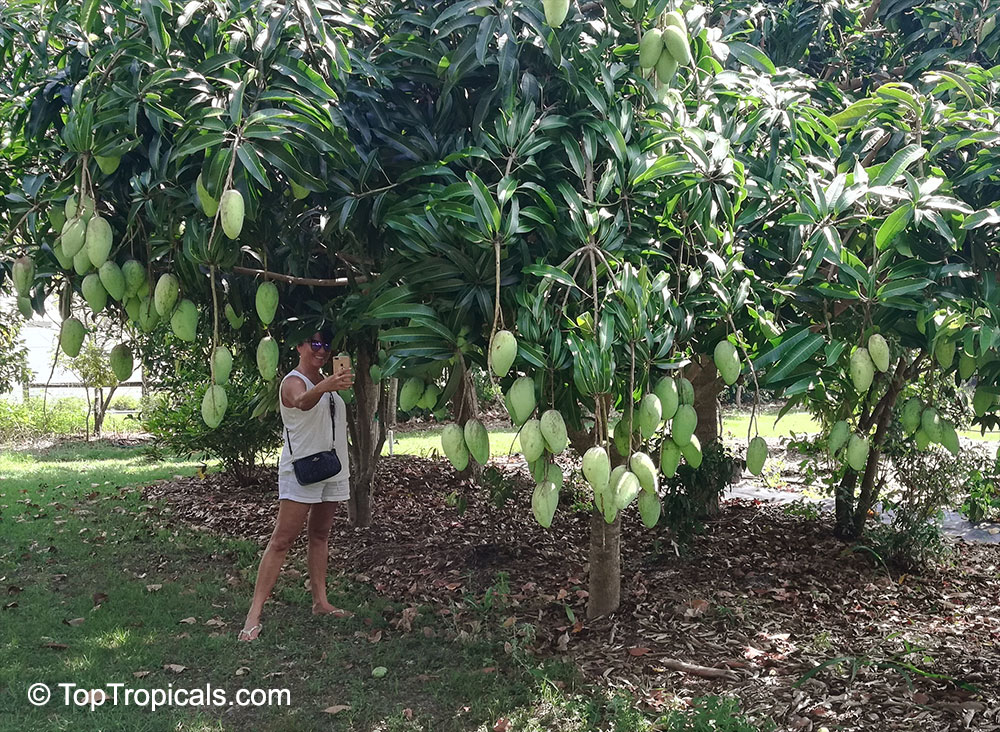
Photo above: Pim Seng Mun mango tree is a reliable and heavy
producer.
Top 5 recommended vigorous growers and reliable producers
1. Glenn - Excellent eating quality, consistent production, and effortless to grow.
2. Pim Seng Mun - extremely productive mango.
3. Sweet Tart - New patented variety - exclusive offer.
4. Fruit Punch - Multi fruit flavor, delicious!
5. Orange
Sherbet - One of the best new varieties for backyard growing. Flavor is sweet citrus-orange and less lemony than Lemon Meringue mango. The tree is moderately vigorous.
Top 5 exotic varieties for rare
fruit collection
Now that you have decided to collect them all but have limited space, these
are the top 5 of the most interesting rare cultivars:
1. Kar Lon Long -
rare and unusual, native to India. Fruits that can weigh up to 5 lbs each! The unique flavor that has been described as being a cross between a mango and a pineapple.
2. Mun Kun Si - similar to Nam Doc Mai but much bigger. Rare variety, very popular
among Thai and Vietnamese people. The fruit are extremely sweet, fiberless and somewhat crunchy ("Mun" means crunchy). Very late producer, fruit may still be on a tree as late as January.
3. Pina Colada - very sweet, has rich flavor with a hint of coconut and pineapple.
4. Ugly Betty - awesome mango, great sweet flavor, while the fruit is real ugly! Slightly mis-shaped at the top - hence the name.
5. Giselle - from Zill's breeding program and was a seedling of a mango called Tower. It was described as a juice mango and is named after Gary's wife.
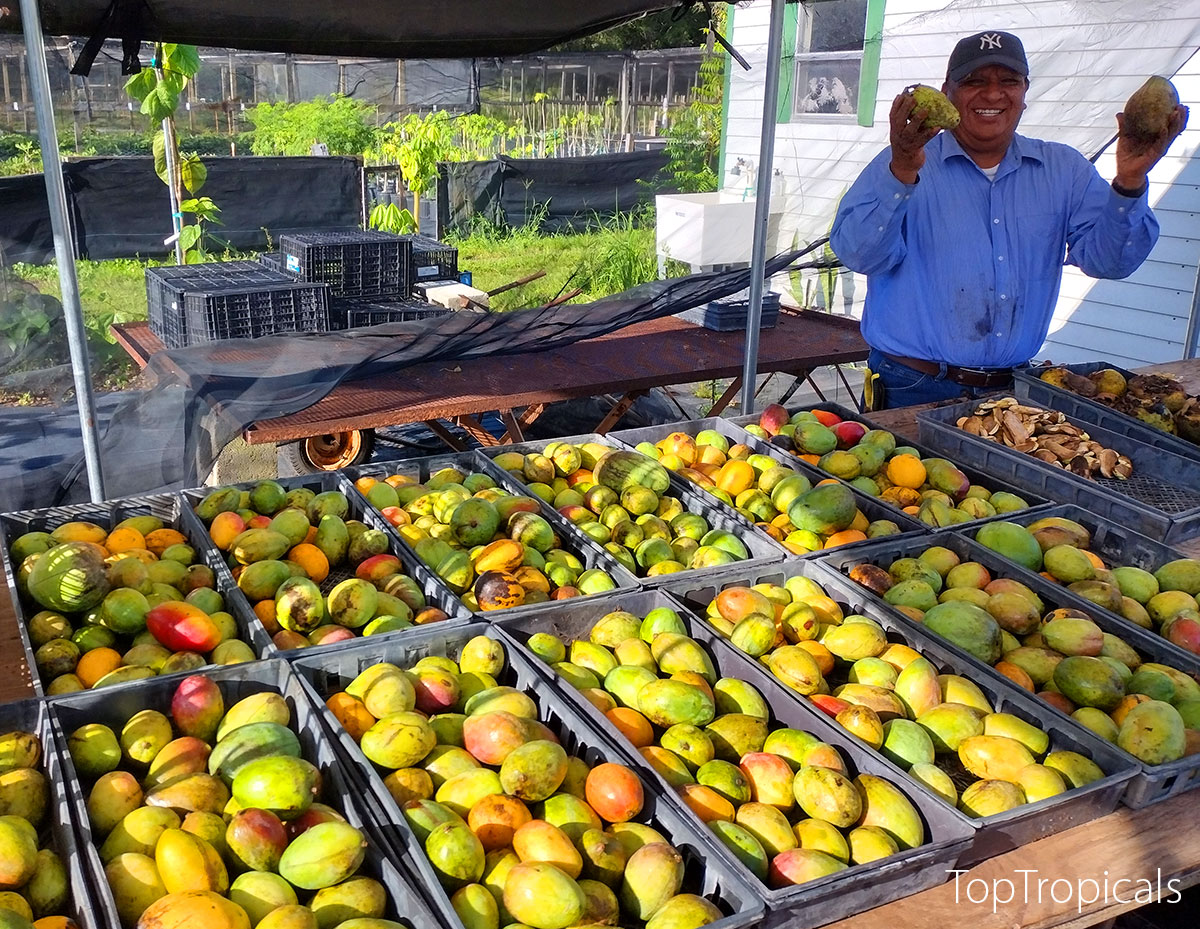
Photo above: preparing mango seeds for planting - growing seedlings
for future grafting.