Garden Blog - Top Tropicals

Date: 3 May 2026

3 Olive Trees Worth Planting in Your Yard Right Now
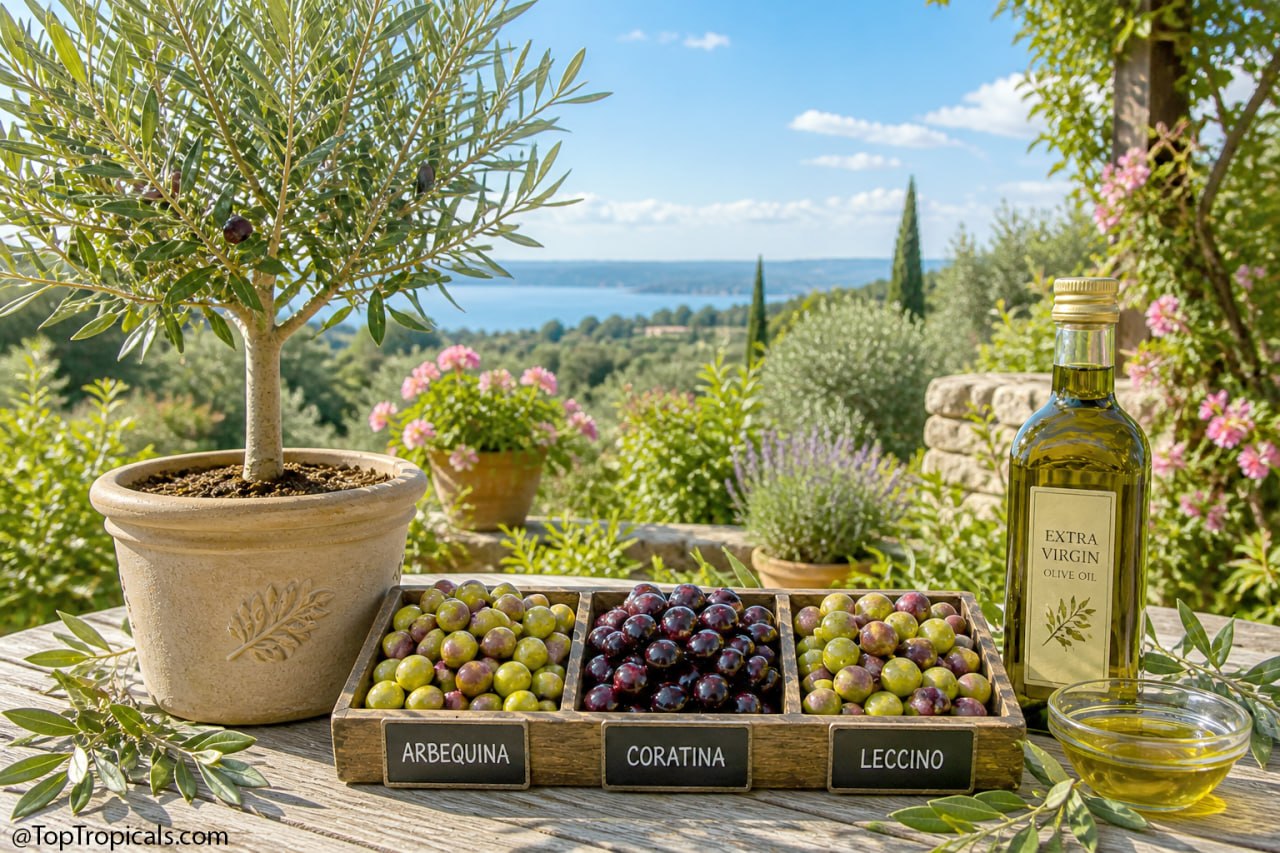
3 Olive Trees Worth Planting in Your Yard Right Now

Olive trees aren’t just for the Mediterranean anymore. In warm parts of the U.S. - including much of Florida - certain varieties handle heat, humidity, and even occasional cold better than people expect. If you’ve been thinking about adding something useful, low-maintenance, and long-lived to your garden, olives deserve a spot on your list. Here are three varieties that actually make sense to grow.

1. Arbequina: Compact, Productive, and Beginner-Friendly

Arbequina is one of the easiest olives to grow, especially if space is limited. It is naturally compact, which makes it great for containers or small yards. It starts producing early compared to other olives, handles heat well, and adapts to different soils. The fruit is mild, buttery, and excellent for oil. If you want an olive tree that behaves well and produces without much fuss, this is the one. More...

2. Coratina: Bold Flavor and Strong Growth

Coratina is a completely different type of olive - vigorous, tough, and known for intense flavor. It is fast-growing and very hardy once established, and it produces heavily under the right conditions. The fruit is high in oil content with a flavor that is strong and peppery, making it prized for premium olive oil. This is a great choice if you want a more traditional, high-performance olive tree with character. More...

3. Leccino: Reliable and Cold-Tolerant

Leccino is known for consistency and is one of the most widely planted olives for a reason. It is more cold-tolerant than many other varieties and is a reliable producer year after year. It has a medium growth habit that is easy to manage, and the fruit works well for both oil and curing. If your area gets occasional cold snaps, Leccino is a safer bet. More...

Why olives make sense in your garden

Olives check a lot of boxes most fruit trees don’t. They are drought-tolerant once established and don’t need rich soil; average or even poor soil is fine. They are long-lived trees that can produce for decades and have low pest pressure compared to many tropical fruits. They’re not high-maintenance, and they don’t demand constant attention.

What to know before you plant

A few practical points make all the difference. Full sun is non-negotiable, and drainage matters because if water sits, the roots suffer. Light pruning keeps trees productive and manageable. Some varieties produce better with cross-pollination. In Florida conditions, airflow and avoiding overly wet soil are key.

If you want a tree that looks good, produces something useful, and doesn’t need babysitting, olives are hard to beat. Choose Arbequina for small spaces and ease, Coratina for strong growth and bold oil, or Leccino for reliability and cold tolerance. Plant one - or plant all three - and you’ll start to see why olive trees have been grown for thousands of years.

Shop Olive trees

"Learn more:
Olea europea - Olive Tree - in Plant Encyclopedia
Grow your own Olive Oil
Marinated green olives: quick-n-fun exotic recipes
How to grow your own Olive

Shop Olive trees

#Food_Forest #How_to #Discover

Olive Plant Facts

Botanical name: Olea europea
Also known as: Olive
USDA Zone: 8 - 11
Highligths Plant used for bonsaiSmall tree 10-20 ftFull sunWater Requirement: Low. Allow soil to dry out between wateringsWatering: Moderate. Water when top soil feels dryEdible plantPlant attracts butterflies, hummingbirdsEthnomedical plant.
Plants marked as ethnomedical and/or described as medicinal, are not offered as medicine but rather as ornamentals or plant collectibles.
Ethnomedical statements / products have not been evaluated by the FDA and are not intended to diagnose, treat, cure, or prevent any disease. We urge all customers to consult a physician before using any supplements, herbals or medicines advertised here or elsewhere.Subtropical plant. Mature plant cold hardy at least to 30s F for a short time
Get personalized tips for your region
Join TopTropicals

Date: 4 May 2026

🍲 Where the Garden Becomes the Kitchen

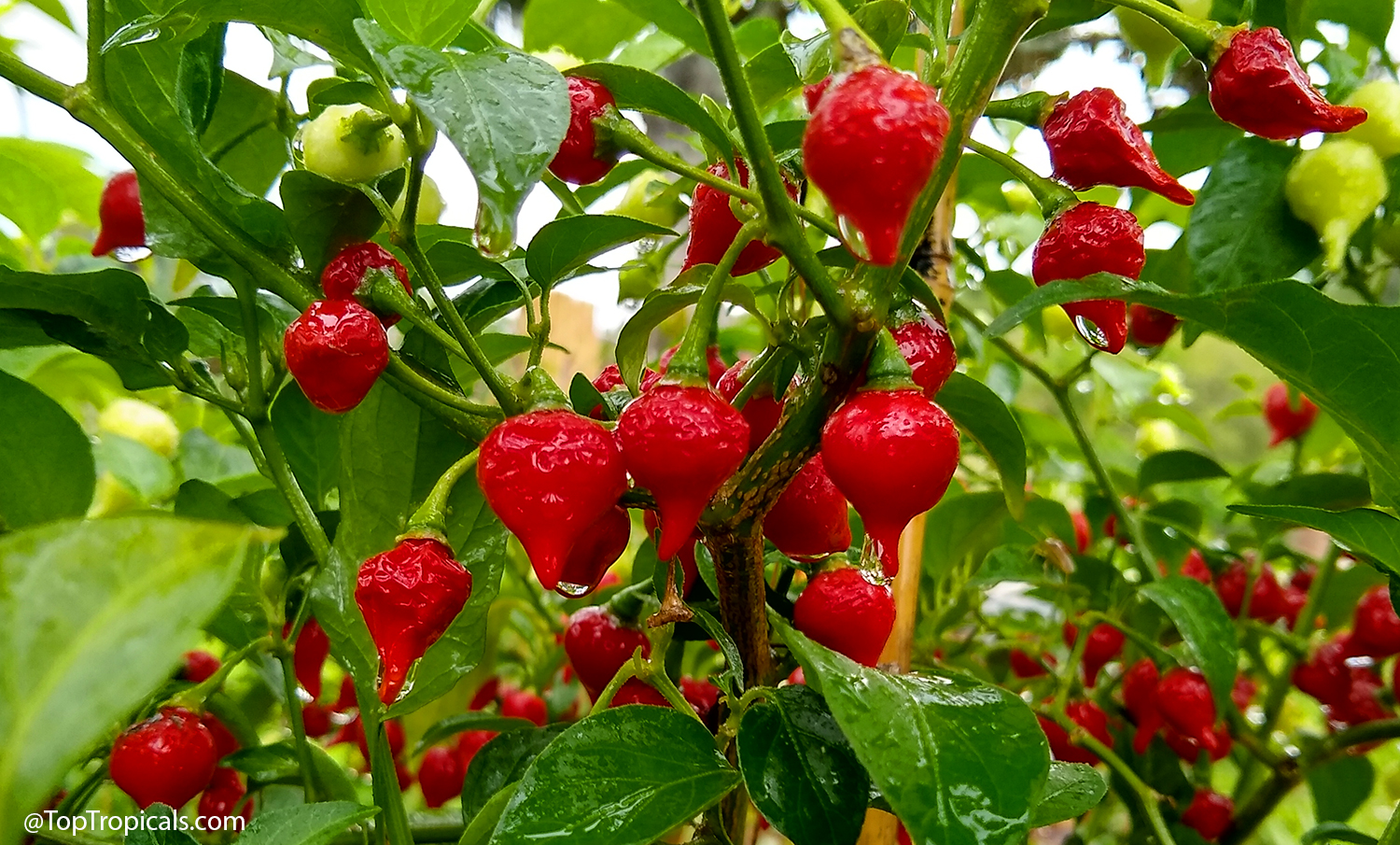
Close-up  of  Capsicum  annuum  x  chinense  Biquinho  pepper  plant  with 
 clusters  of  small,  bright  red,  teardrop-shaped  fruits  hanging  among  glossy 
 green  leaves,  some  still  green,  with  water  droplets  visible  after  rain.

Biquinho pepper loaded with fruit - small, beak-shaped peppers ripen from green to bright red, offering intense fruity habanero flavor with little to no heat on a compact, heavy-producing plant.

Sweet Pepper Plant Facts

Botanical name: Capsicum annuum
Also known as: Sweet Pepper, Chilli Pepper, Cayenne Pepper, Paprika, Ornamental pepper
USDA Zone: 4 - 10
Highligths Small plant 2-5 ftFull sunWatering: Regular. Let topsoil dry slightlyBlue, lavender, purple flowersWhite, off-white flowersEdible plantEthnomedical plant.
Plants marked as ethnomedical and/or described as medicinal, are not offered as medicine but rather as ornamentals or plant collectibles.
Ethnomedical statements / products have not been evaluated by the FDA and are not intended to diagnose, treat, cure, or prevent any disease. We urge all customers to consult a physician before using any supplements, herbals or medicines advertised here or elsewhere.Irritating plantSubtropical plant. Mature plant cold hardy at least to 30s F for a short time
Get personalized tips for your region

A lot of plants that thrive in Florida heat have deep roots in Mexico, and not just as ornamentals. Think coral vine or flame vine climbing a fence in summer, or bird of paradise sitting at the edge of a patio like it owns the place. These are not plants that need coaxing. They grow fast, full, and unapologetically. Then there are the plants you actually eat: peppers, prickly pear , sweetleaf, and fruit trees like avocado, guava, and sapodilla. They do not just decorate the yard. They change how the yard works, and how the kitchen feels all year.

Avocado Plant Facts

Botanical name: Persea americana, Persea gratissima
Also known as: Avocado, Alligator Pear, Aguacate, Abacate
USDA Zone: 9 - 11
Highligths Large tree taller than 20 ftSmall tree 10-20 ftFull sunWatering: Regular. Let topsoil dry slightlyEdible plantSubtropical plant. Mature plant cold hardy at least to 30s F for a short time
Get personalized tips for your region

That is the part that sneaks up on you. Gardening stops being about having a pretty yard and starts becoming a way of living. Mango tacos taste different when you picked the mango yourself. Everything does.

Mango Plant Facts

Botanical name: Mangifera indica
Also known as: Mango
USDA Zone: 9 - 11
Highligths Large tree taller than 20 ftSmall tree 10-20 ftFull sunWatering: Moderate. Water when top soil feels dryYellow, orange flowersPink flowersEdible plantSeaside, salt tolerant plant
Get personalized tips for your region

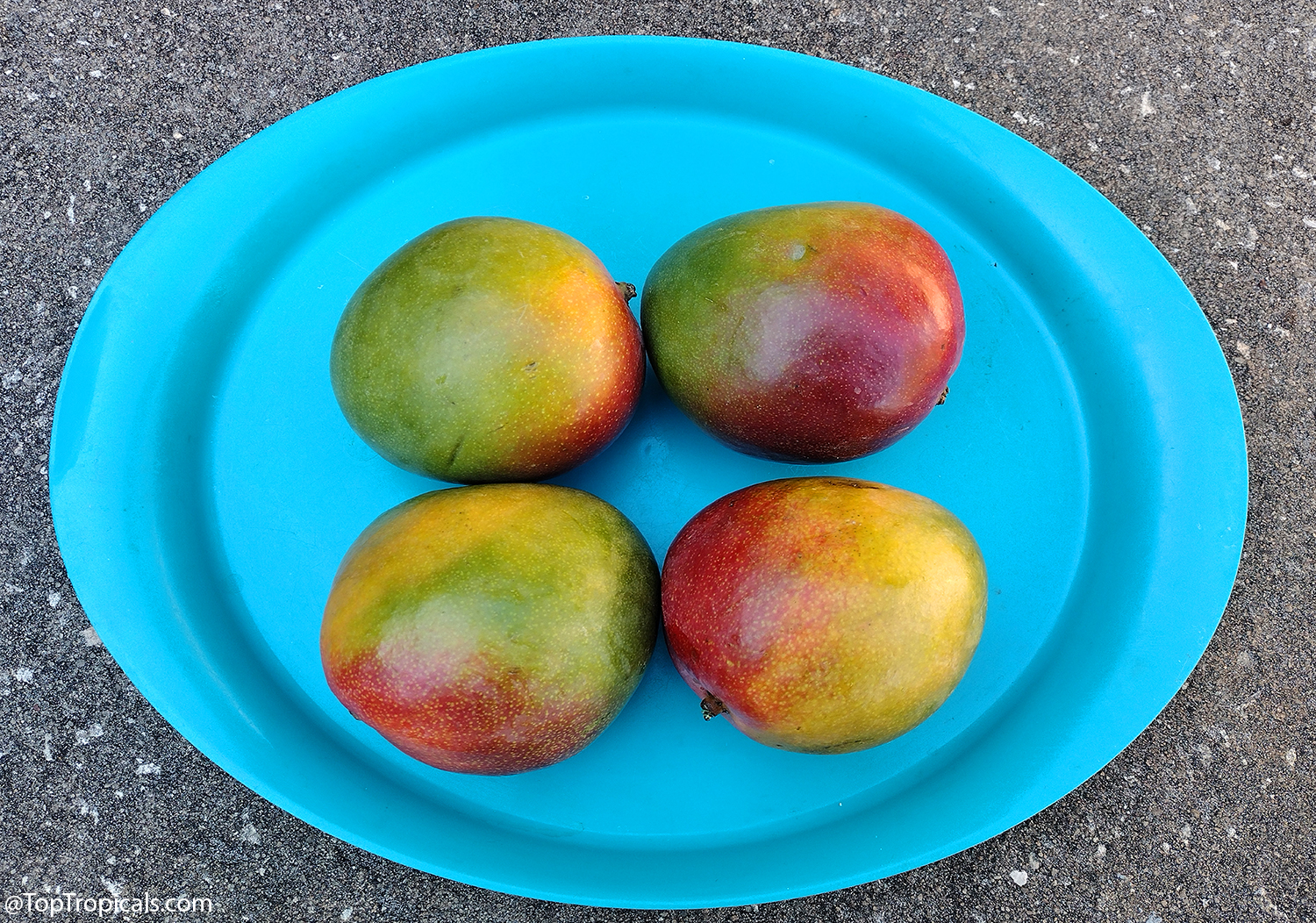
Four  Kent  mangoes  with  red,  green,  and  yellow  blush  arranged  on  a 
 plate.

Kent mango - classic late-season variety with smooth, fiberless flesh and rich, sweet flavor.

🍀Mexican Plants That Thrive With Minimal Effort

by Tatiana Anderson, Top Tropicals Garden Expert

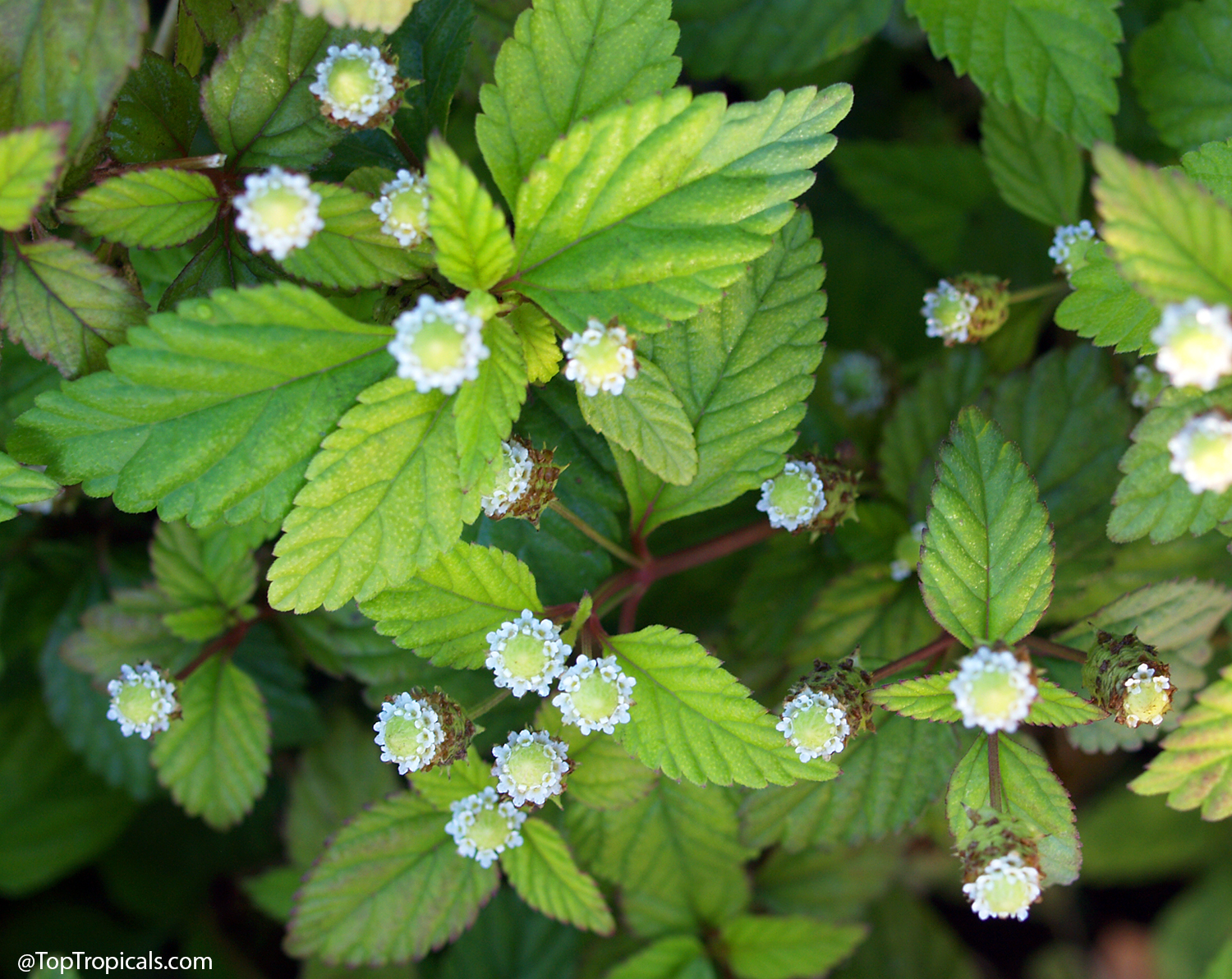
Close-up  of  Lippia  dulcis  (Aztec  Sweet  Herb)  showing  small  white 
 button-like  flowers  with  pale  green  centers  surrounded  by  serrated  bright 
 green  leaves  on  a  low-growing  plant.

Lippia dulcis - Aztec Sweet Herb in bloom - a low-growing Mexican herb with tiny white flowers and remarkably sweet leaves that can be eaten fresh or added to fruit dishes, traditionally used since Aztec times for coughs and colds.

Aztec Sweet Herb Plant Facts

Botanical name: Phyla dulcis, Lippia dulcis, Phyla scaberrima, Lippia mexicana
Also known as: Aztec Sweet Herb, Sweetleaf
USDA Zone: 9 - 11
Highligths Groundcover and low-growing 2ft plantSmall plant 2-5 ftSemi-shadeFull sunWatering: Regular. Let topsoil dry slightlyOrnamental foliageWhite, off-white flowersEdible plantSpice or herb plantEthnomedical plant.
Plants marked as ethnomedical and/or described as medicinal, are not offered as medicine but rather as ornamentals or plant collectibles.
Ethnomedical statements / products have not been evaluated by the FDA and are not intended to diagnose, treat, cure, or prevent any disease. We urge all customers to consult a physician before using any supplements, herbals or medicines advertised here or elsewhere.Fragrant plantSubtropical plant. Mature plant cold hardy at least to 30s F for a short time
Get personalized tips for your region

These Mexican plants are surprisingly easy to grow if you give them what they expect: sun, heat, and good drainage. Most of them are built for tough conditions and will grow fast with minimal care once established.

The one rule that matters: fill the planting hole with water. If it does not drain in 5-10 seconds, plant on a mound or use a container.

Flowering vines will take off quickly, edibles like peppers and sweetleaf lippia are very forgiving, and cactus types prefer to be left alone rather than overwatered.

For full, step-by-step growing tips and plant-specific advice, read our blog - we break everything down in practical, real-world terms.

📚 Top Tropicals Garden Blog

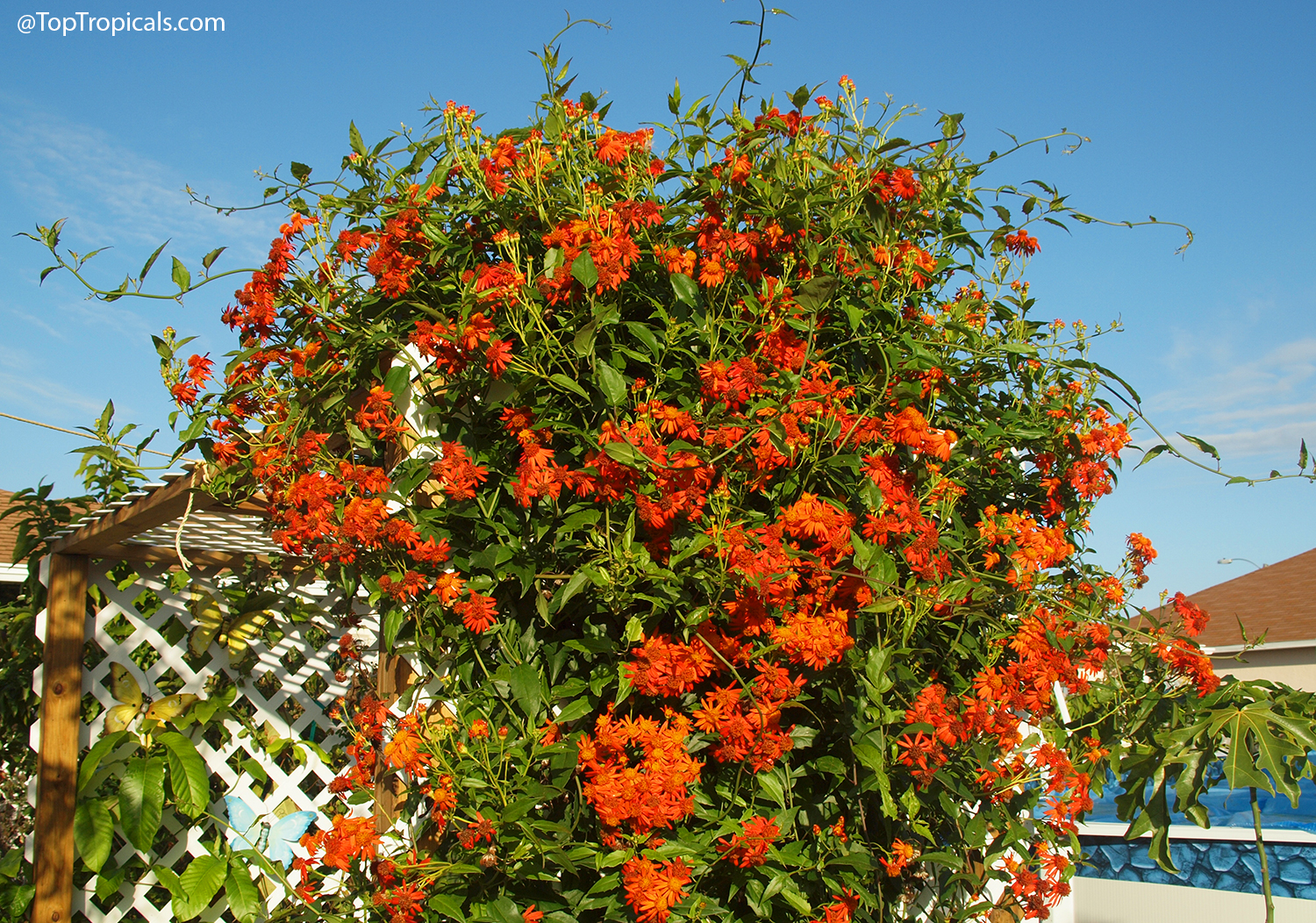
Large,  dense  Senecio  confusus  (Mexican  Flame  Vine)  covered  in  clusters 
 of  bright  red-orange  daisy-like  flowers  climbing  over  a  trellis  against  a 
 blue  sky.

Mexican Flame Vine in full bloom - a fast-growing, drought-tolerant climber that quickly covers fences with vivid red flowers, attracting pollinators and adding bold color with minimal care.

Mexican Flame Vine Plant Facts

Botanical name: Pseudogynoxys chenopodioides, Senecio confusus
Also known as: Mexican Flame Vine, Orangeglow Vine
USDA Zone: 9 - 11
Highligths Groundcover and low-growing 2ft plantVine or creeper plantFull sunWater Requirement: Low. Allow soil to dry out between wateringsWatering: Moderate. Water when top soil feels dryYellow, orange flowersRed, crimson, vinous flowersInvasive plantPlant attracts butterflies, hummingbirdsSubtropical plant. Mature plant cold hardy at least to 30s F for a short timeFlood tolerant plantSeaside, salt tolerant plant
Get personalized tips for your region

🛒 Shop heat tolerant plants

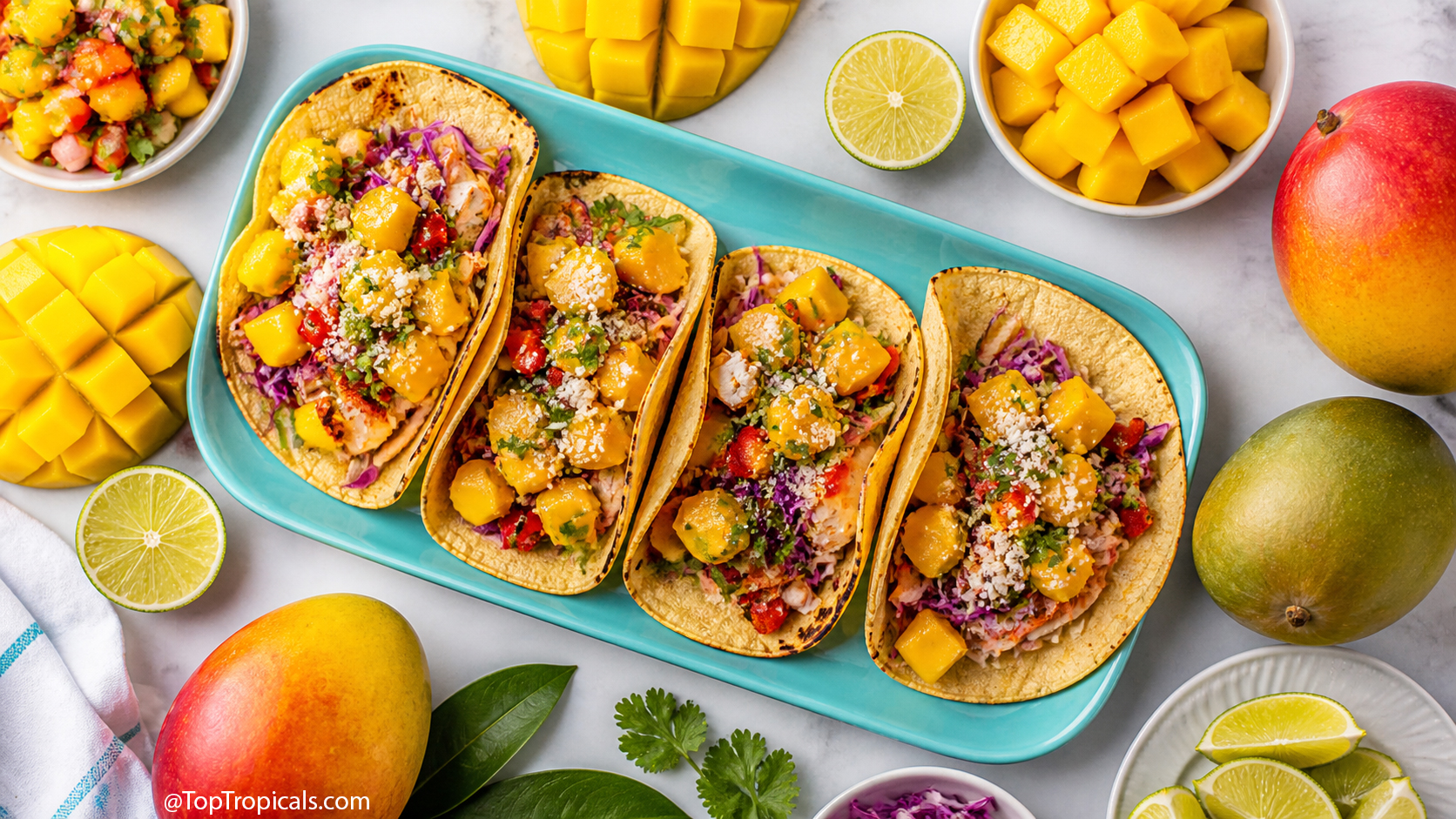
🌮 Sunshine’s Mango Taco 😺

Fresh  mango  tacos  loaded  with  juicy  chunks  and  bright  toppings, 
 surrounded  by  whole  and  sliced  mangoes  for  that  tropical  feel.

Mango Tacos

This is not cooking. This is assembly.

What you need

  • Tortillas
  • 1 ripe mango (diced)
  • Something warm (sweet potato, chicken, or leftovers)
  • A little onion (optional)
  • Lime (or bottled lime juice)
  • Sour cream or yogurt
  • Salt and pepper

How Sunshine does it

  1. Heat whatever you have in a pan
  2. Put mango in a bowl, add lime and a pinch of salt
  3. Mix sour cream with lime (this is your sauce)
  4. Put everything into a tortilla
  5. Enjoy with a margarita

Sunshine's rules

  • No measuring
  • No recipes
  • If it tastes good, it is correct

Want this to be normal?
Start with a mango tree. That is usually how it begins.

🛒 Plant your own mango tree

💌 Mother's Day is one week away

Still deciding? A gift card is the easiest option. With our bonus, it is also the best value.

Mother’s  Day  themed  Top  Tropicals  gift  certificate  with  a  pink 
 decorative  frame  filled  with  jasmine,  plumeria,  magnolia,  and  champaka 
 flowers,  tropical  fruits  across  the  center,  and  a  Happy  Mothers  Day  banner 
 at  the  top,  with  space  for  certificate  details  and  message.

Mother’s Day Top Tropicals gift certificate

🎁 Get a Gift Card

Date: 19 Feb 2026

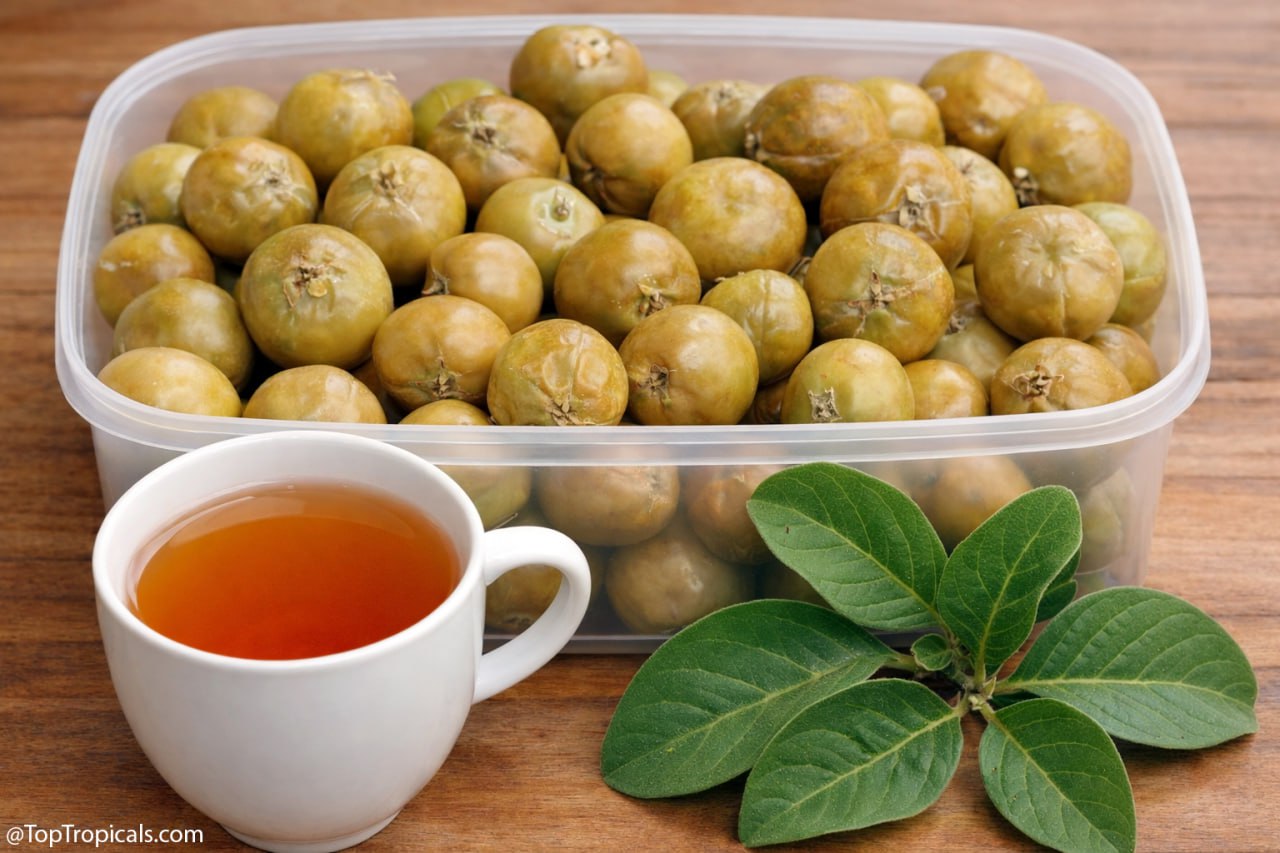
10 ways to enjoy Wild Medlar - Spanish Tamarind

Vangueria infausta (Spanish Tamarind, Wild Medlar)

Vangueria infausta (Spanish Tamarind, Wild Medlar)

🍊 10 ways to enjoy Wild Medlar - Spanish Tamarind


Vangueria infausta (Spanish Tamarind, Wild Medlar) from Africa to your backyard: the fruit, the medicine, the tradition.

Wild Medlar Plant Facts

Botanical name: Vangueria infausta
Also known as: Wild Medlar, Spanish Tamarind
USDA Zone: 9 - 11
Highligths Small tree 10-20 ftFull sunWatering: Moderate. Water when top soil feels dryEdible plantDeciduous plantEthnomedical plant.
Plants marked as ethnomedical and/or described as medicinal, are not offered as medicine but rather as ornamentals or plant collectibles.
Ethnomedical statements / products have not been evaluated by the FDA and are not intended to diagnose, treat, cure, or prevent any disease. We urge all customers to consult a physician before using any supplements, herbals or medicines advertised here or elsewhere.Subtropical plant. Mature plant cold hardy at least to 30s F for a short time
Get personalized tips for your region


Spanish Tamarind may look like a small, unassuming fruit - but don’t let it fool you. In its native Africa, this tree is a food staple, a home remedy, and a cultural favorite, all wrapped into one. And now, it’s ready to bring that same magic into your garden and kitchen. People have used this fruit for generations - and how you can too.

🍊 1. Eat it fresh, off the tree


When ripe, the fruit turns golden brown and softens slightly. Its flavor is sweet-tart, almost like a tangy apple or tamarind with a hint of citrus. Just peel and eat!

🍬 2. Dry it for snacks


In many African regions, the fruit is sun-dried and enjoyed like natural fruit leather. It keeps well, travels well, and makes a great healthy snack.

🍵 3. Brew it into a fruit tea


Dried fruit can be steeped into a tart, refreshing tea that’s packed with vitamin C and antioxidants. Add honey or ginger for a soothing drink.

🍷 4. Ferment it into traditional beer or wine


In some local cultures, the fruit is fermented into a mild alcoholic drink, similar to fruit wine or beer. This is one of the tree’s oldest known traditional uses.

🍧 5. Make jams and preserves


Boil the pulp with sugar and lemon juice to make tangy medlar jam. Spread it on toast, stir into yogurt, or use it in baking.

6. Add to porridge or smoothies


Crushed or juiced medlar fruit is added to traditional maize porridge for a nutrient boost. You can do the same with oatmeal or smoothies.

7. Try traditional fruit pudding


A simple medlar mash with a little sweetener makes a rich, apple-like pudding with hints of spice. Great as a chilled dessert.

🌿 8. Use the leaves and bark medicinally


In folk medicine, leaves are brewed into a tea for treating fever, colds, and stomach aches. Bark is used for chest congestion and coughs. Roots are sometimes used for even stronger remedies like malaria treatment.

9. Clean your teeth the traditional way


Believe it or not, people use medlar leaves to clean their teeth! The leaves are antimicrobial and have a slight astringent taste that leaves your mouth feeling fresh.

🎨 10. Dye fabric naturally
Crush the bark or boil the leaves to create natural dyes in yellow, green, and even purple tones. This use is still practiced in rural areas of southern Africa.

✍️ Why this tree belongs in your life


Wild Medlar is more than just a fruit. It’s a versatile, resilient, and deeply cultural plant that connects generations. It’s food, it’s healing, it’s art—and now it can be part of your garden story.
Grow it for the fruit, the medicine, the tradition… or just for the joy of growing something wild and wonderful.

🛒 Plant Spanish Tamarind and enjoy exotic fruit benefits

📚 Learn more:


Vangueria infausta - Spanish Tamarind in Plant Encyclopedia
7 steps for a care-free Spanish Tamarind - the easiest rare fruit to grow
The wild fruit with a secret: health benefits of rare Spanish Tamarind - the exotic fruit you've never heard of

#Food_Forest #Remedies #Recipes #Discover

🟢 Join 👉 TopTropicals

Date: 26 Jan 2026

Why Turmeric was named the 2026 Herb of the Year

Turmeric - Curcuma

Turmeric - Curcuma

🌷 Why Turmeric was named the 2026 Herb of the Year


🌷 Turmeric was named the 2026 Herb of the Year by the International Herb Association, and it is easy to see why gardeners are paying attention. This tropical plant from the ginger family is best known for its bright orange underground rhizomes, used for centuries as a spice, natural dye, and traditional remedy.

🌷Native to India, Turmeric (Curcuma longa) is closely related to Ginger and Cardamom. Its rhizomes are a staple in curry and widely used in Asian, African, and Caribbean cuisines. In recent years, turmeric has also gained attention for potential anti-inflammatory properties.

Spice Turmeric Plant Facts

Botanical name: Curcuma longa
Also known as: Spice Turmeric, Longevity Spice, Indian Saffron, Tumeric
USDA Zone: 8 - 11
Highligths Small plant 2-5 ftSemi-shadeFull sunWatering: Regular. Let topsoil dry slightlyPink flowersSpice or herb plantDeciduous plantEthnomedical plant.
Plants marked as ethnomedical and/or described as medicinal, are not offered as medicine but rather as ornamentals or plant collectibles.
Ethnomedical statements / products have not been evaluated by the FDA and are not intended to diagnose, treat, cure, or prevent any disease. We urge all customers to consult a physician before using any supplements, herbals or medicines advertised here or elsewhere.Subtropical plant. Mature plant cold hardy at least to 30s F for a short time
Get personalized tips for your region


🌷 Herb, spice or flower?


• Botanically, turmeric is a spice, since it comes from the plant’s rhizomes rather than its leaves. In the kitchen, however, it often functions like an herb. Fresh turmeric can replace powdered turmeric in most recipes and delivers brighter flavor and color.
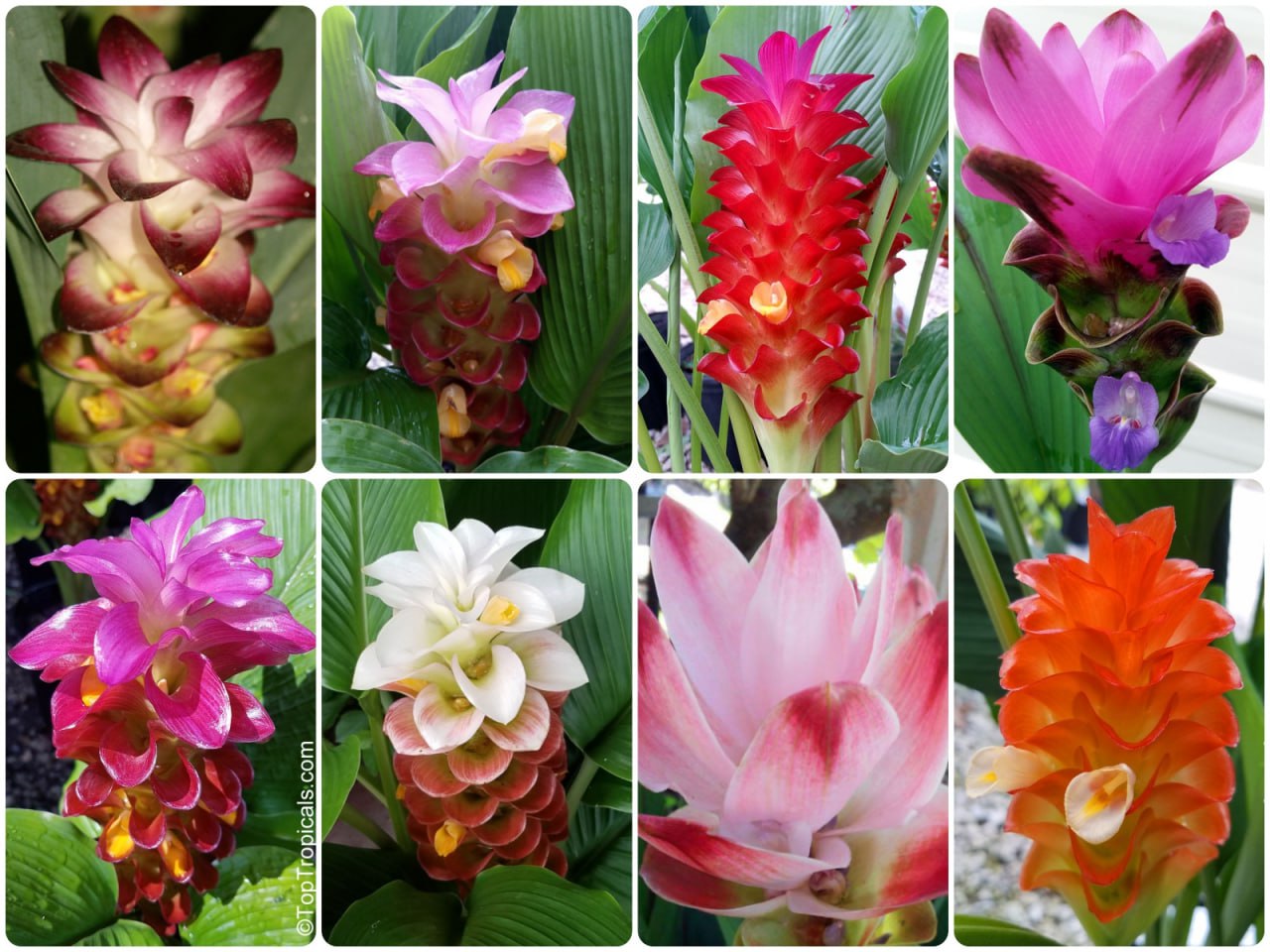
• Beyond edible Turmeric, there are many Curcuma hybrids grown purely for ornament. These selections produce striking, long-lasting flower spikes in shades of pink, white, orange, red, and purple, rising above lush tropical foliage. Ornamental curcumas are popular as patio plants and indoor accents, adding dramatic color and texture even where they are grown strictly in containers.

🌷 Growing turmeric anywhere - even in cool climates


Although Turmeric is a tropical perennial, it grows very well in containers, making it suitable for gardeners everywhere. When grown in pots, turmeric is treated as a warm-season plant that can be moved indoors as temperatures cool.

🌷 How to grow Turmeric


Turmeric is a compact, but bold plant, reaching 3-4 feet tall and wide, so it needs a roomy container. It prefers:

• Rich, well-drained soil
• Slightly acidic conditions (around pH 6–6.5)
• Consistent moisture
• Warm temperatures and bright, indirect light

The plant produces flowers that do not set seed, so turmeric is grown entirely from rhizomes.

🌷 Harvesting and using Turmeric


As the season ends, turmeric naturally goes dormant and the leaves yellow and dry. This signals harvest time. Dig the rhizomes, clean them, and dry them in a cool, shaded place.

Rhizomes can be:
• Boiled, dried, and ground into powder
• Frozen whole and grated as needed
• Pickled for long-term storage

Some healthy rhizomes can also be saved and replanted the following season, making turmeric both productive and renewable.

Compact, bold, and useful, turmeric proves that tropical plants can thrive well beyond the tropics - especially when grown in pots.

🛒 Plant Curcuma for both flowers, spice and herb

📚 Learn more :


Turmeric (Curcuma) in Plant Encyclopedia
Curcuma - the tropical tulip with a secret spice twist
Curcuma: one plant, two powers - color and spice!
How Curcuma Turmeric keeps blood pressure in balance.
Turmeric Curcuma: Grow Your Own Brain Boosters
The most interesting edible gingers?

#Food_Forest #Container_Garden #Remedies #Discover

🟢 Join 👉 TopTropicals

Date: 22 Jan 2026

This old-school tropical fruit is making a quiet comeback: Eggfruit - Canistel

Canistel - Pouteria campechiana, Egg Fruit

💛 This old-school tropical fruit is making a quiet comeback: Eggfruit - Canistel


❓✔️ The tropical fruit that feels like dessert but isn’t junk: FAQ


💛 What is canistel fruit?


Canistel is the fruit of Pouteria campechiana, often called Egg Fruit because its texture resembles a cooked egg yolk. It has dense, yellow flesh and a naturally sweet, custard-like flavor.


💛 Is canistel a high-energy fruit?


Yes. Canistel contains complex carbohydrates that provide steady, long-lasting energy instead of quick sugar spikes. It is a good choice for active days or when you need sustained fuel.


💛 Does canistel help you feel full?


It does. The thick texture and fiber content make canistel very satisfying, helping you feel full with smaller portions.


💛 Can canistel support weight management?


Canistel is filling and naturally sweet, which can help reduce cravings for processed desserts and snacks.


💛 Is canistel easy to digest?


Yes. Its soft, pasty texture is gentle on the stomach and often well tolerated by people with sensitive digestion.


💛 How does canistel benefit skin health?


Canistel provides beta-carotene and vitamin C, which support skin renewal, elasticity, and overall skin appearance.


💛 Does canistel help with muscle function?


Yes. It contains potassium and other minerals that support muscle function and help reduce fatigue after physical activity.


💛 Is canistel good for brain health?


Canistel supplies iron and B vitamins that support oxygen delivery and mental clarity, especially during periods of fatigue.


💛 Does canistel support healthy aging?


Its antioxidants help protect cells from oxidative stress, which plays a role in aging and long-term wellness.


💛 Is canistel just a snack fruit?


Not at all. Canistel is a functional fruit used in custards, smoothies, baked goods, spreads, and even savory dishes, offering both nutrition and comfort-food satisfaction.


🛒 Plant Egg Fruit - Canistel Tree

📚 Learn more:

Canistel Plant Facts

Botanical name: Pouteria campechiana
Also known as: Canistel, Eggfruit, Chesa
USDA Zone: 9 - 11
Highligths Large tree taller than 20 ftSmall tree 10-20 ftFull sunWatering: Regular. Let topsoil dry slightlyEdible plant
Get personalized tips for your region

Pouteria campechiana - Canistel, Eggfruit - in Plant Encyclopedia
Canistel breakfast mash: quick-n-fun exotic recipes
Health Benefits of Canistel Fruit
Pouteria campechiana - Canistel, the curious heart-shaped Egg Super-Fruit

#Food_Forest #Remedies #Discover

🟢 Join 👉 TopTropicals