Curcuma - Plant Encyclopedia Results
| Number of plants found: 12 | Next | 
|
Go to page: | 1 | 2 |
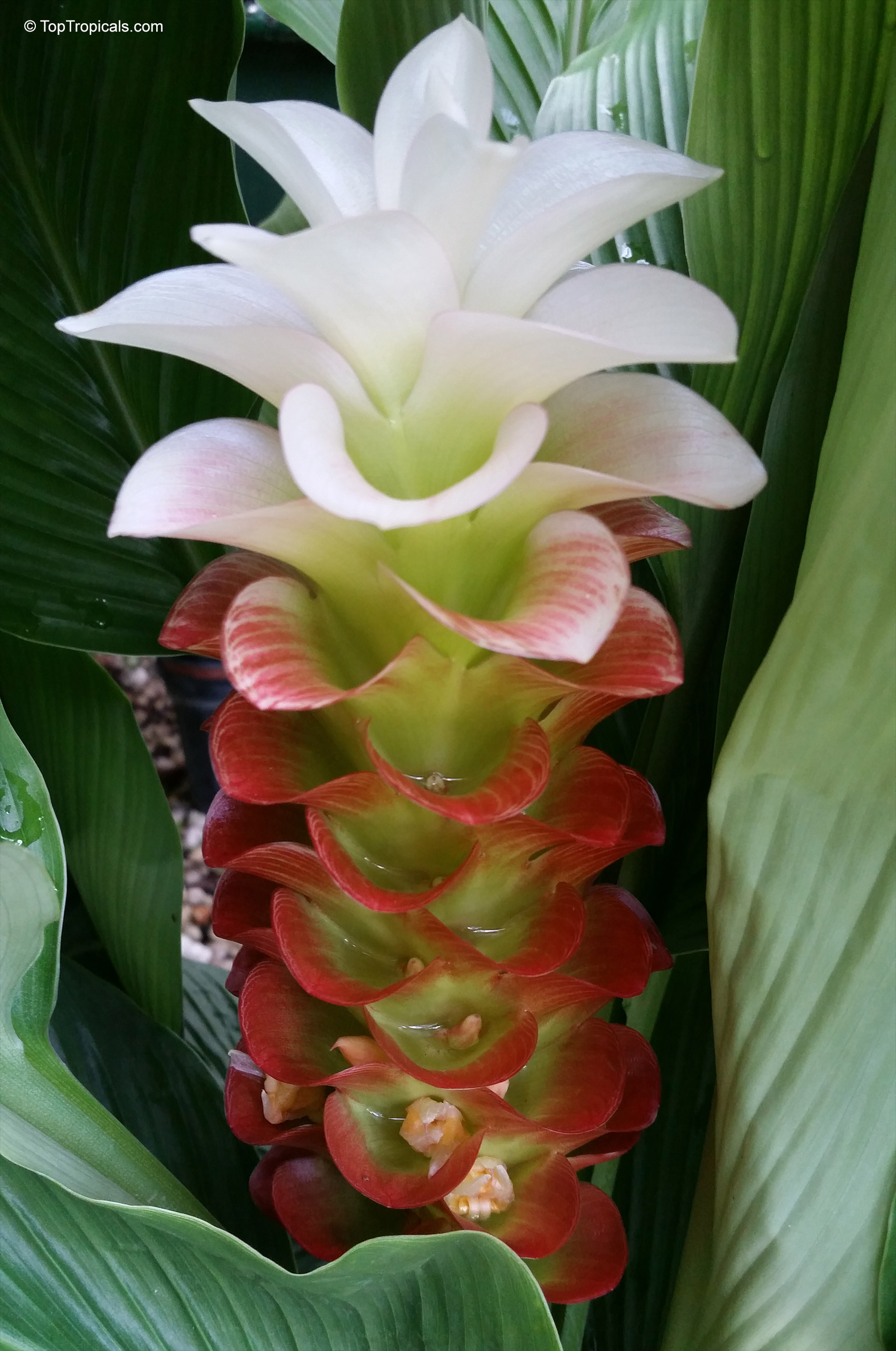
Botanical name: Curcuma sp.
Common name: Curcuma Katie
Cultivar: Katie
Family: Zingiberaceae
Origin: Southeast Asia, Thailand
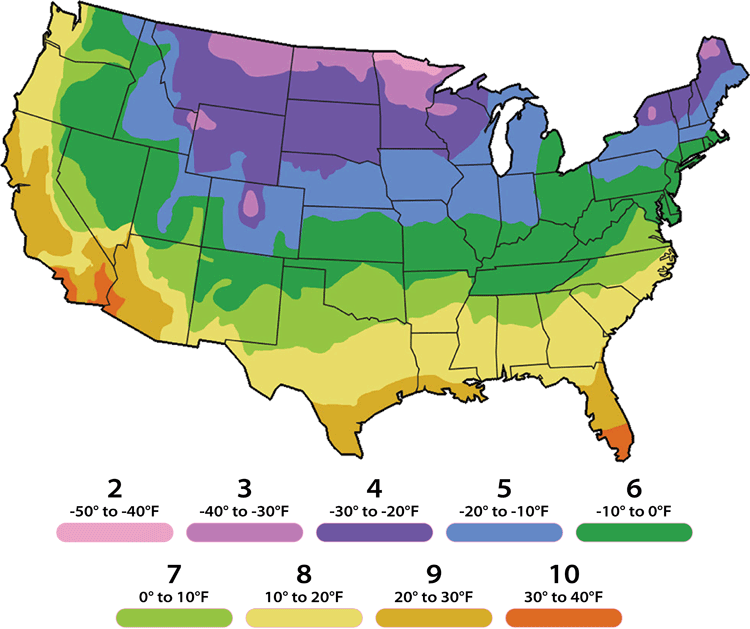
USDA Zone: 8-11


Curcuma is a genus of rhizomatous herbaceous perennials in the Zingiberaceae family, comprising more than 100 species native to tropical and subtropical Asia, with some species extending to northern Australia and the western Pacific. Plants arise seasonally from underground rhizomes and typically form clumps 1-5 feet (30 cm-1.5 m) tall, with broad, often prominently pleated leaves. Many ornamental species and cultivars produce striking inflorescences composed of overlapping bracts in shades of white, pink, purple, red, orange, yellow, or green, with the smaller true flowers emerging between them. Some ornamental Curcumas, particularly selections derived from Curcuma alismatifolia and related species, are commonly known as Siam Tulips and are valued as both garden and cut flowers.
Curcumas grow best in warm conditions, bright filtered light to partial shade, and fertile, well-drained soil with regular moisture during active growth. Most undergo a pronounced seasonal dormancy, when the foliage dies back and watering should be greatly reduced until new shoots emerge. Cold tolerance varies among species, but many ornamental Curcumas are suited to USDA Zones 8-11 with winter protection toward the colder end of the range; elsewhere the rhizomes can be overwintered indoors. Several members of the genus are important food, spice, or medicinal plants, most notably Curcuma longa, whose dried rhizomes are the source of turmeric, but these uses should not be assumed for ornamental species or cultivars. The genus offers a particularly diverse range of foliage, colorful long-lasting bracts, and growth forms for tropical gardens, containers, and cut-flower production.
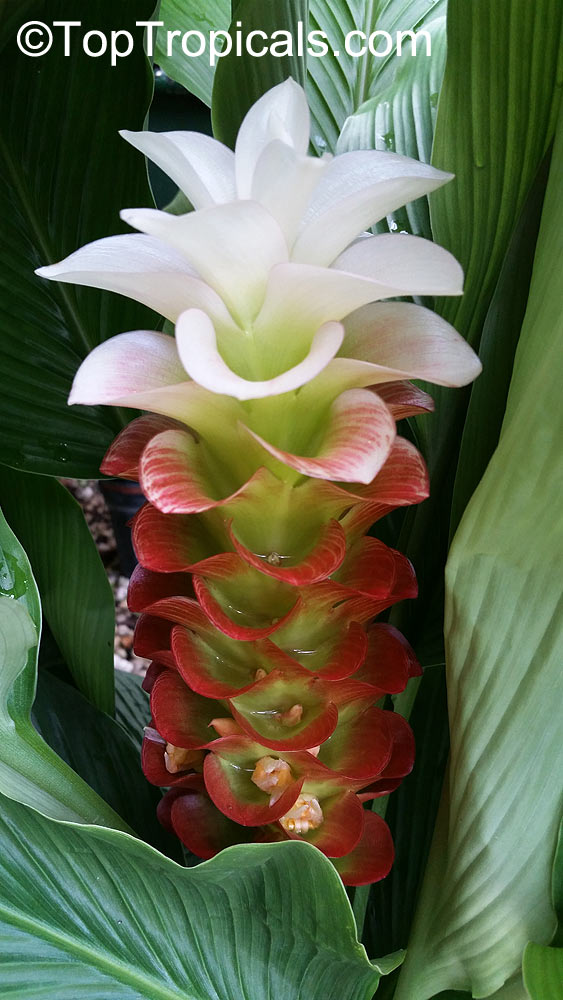
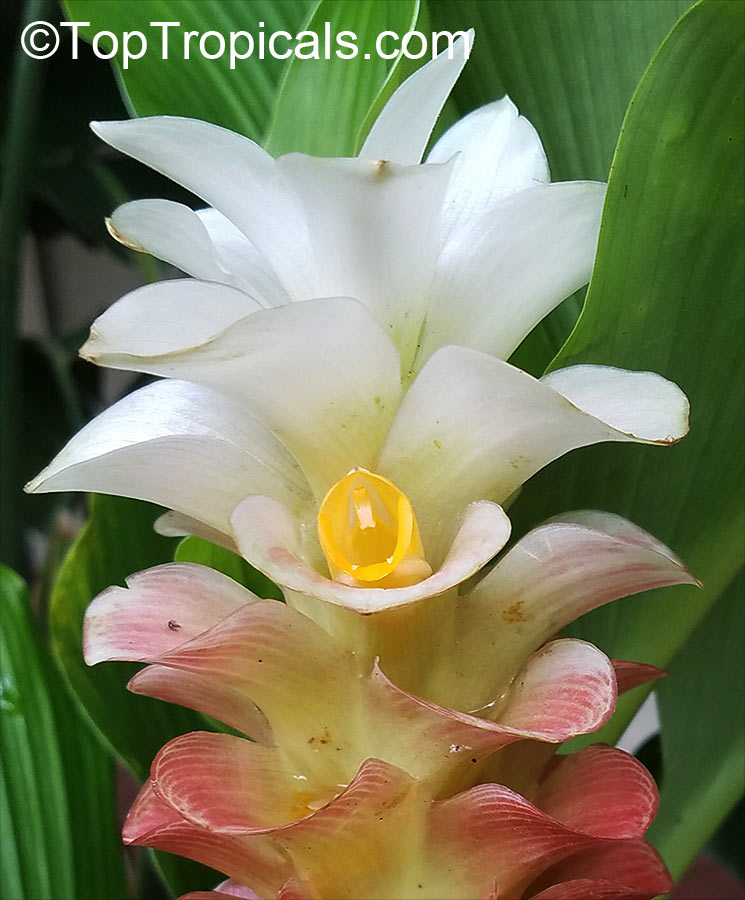
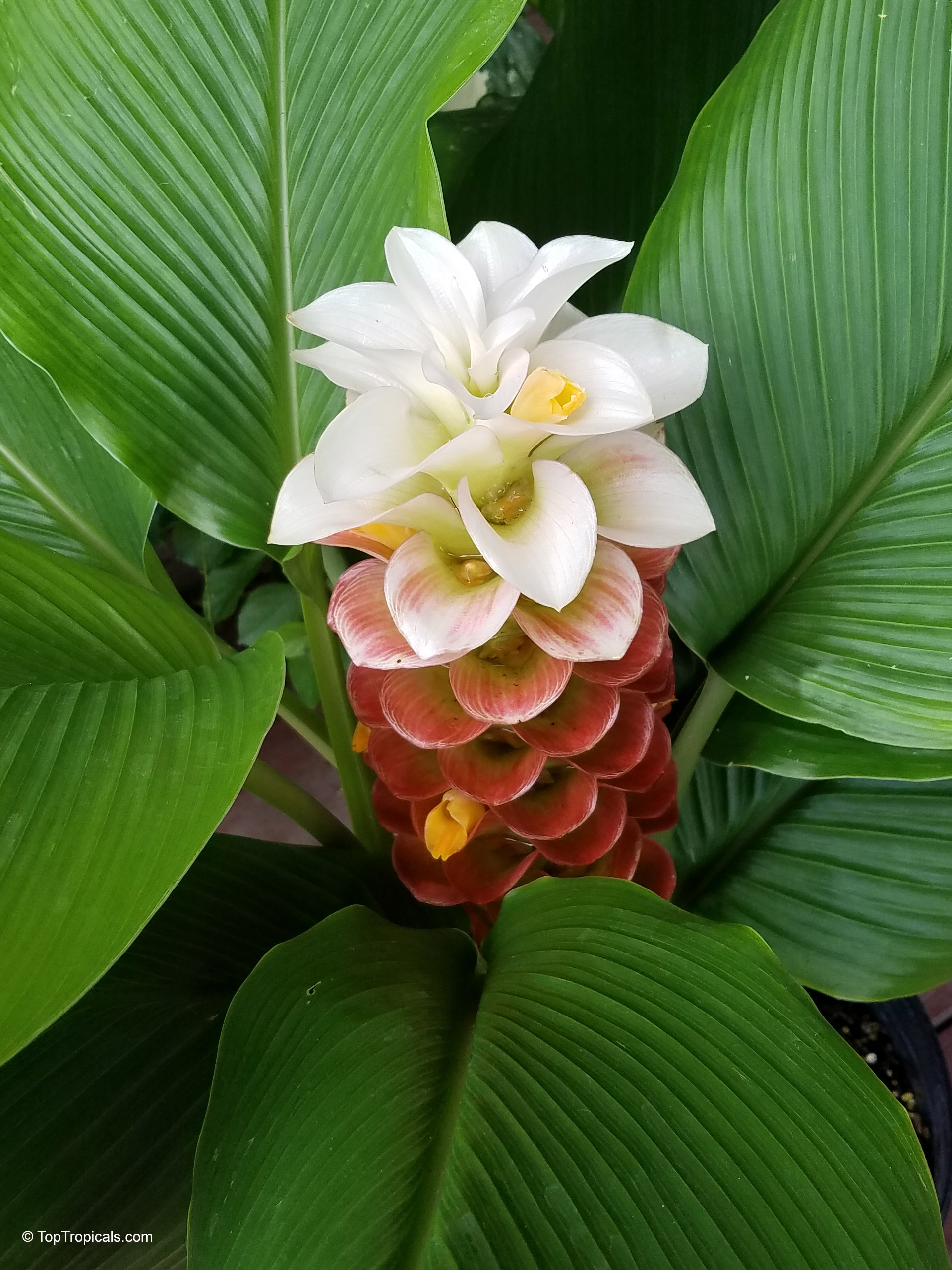
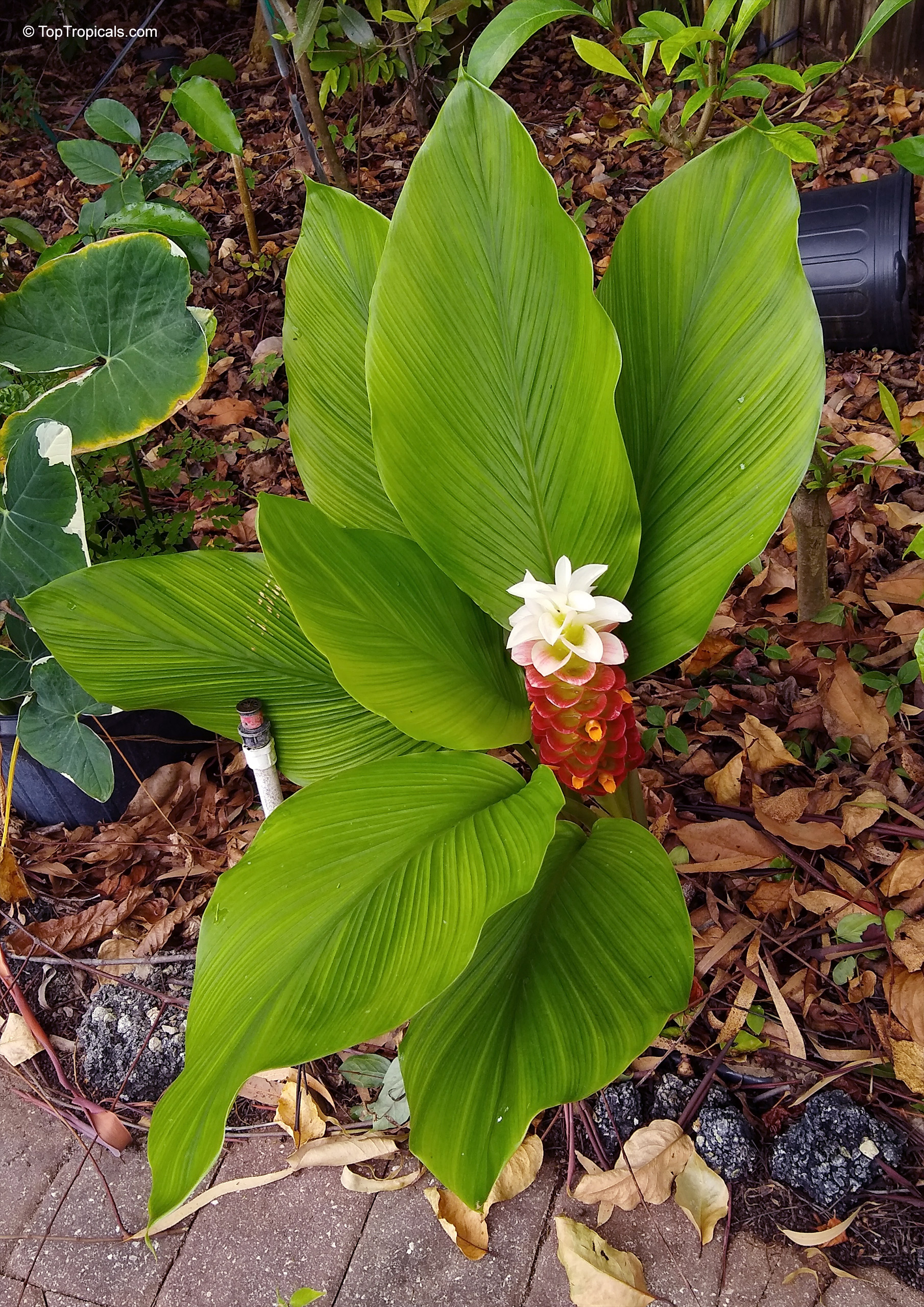
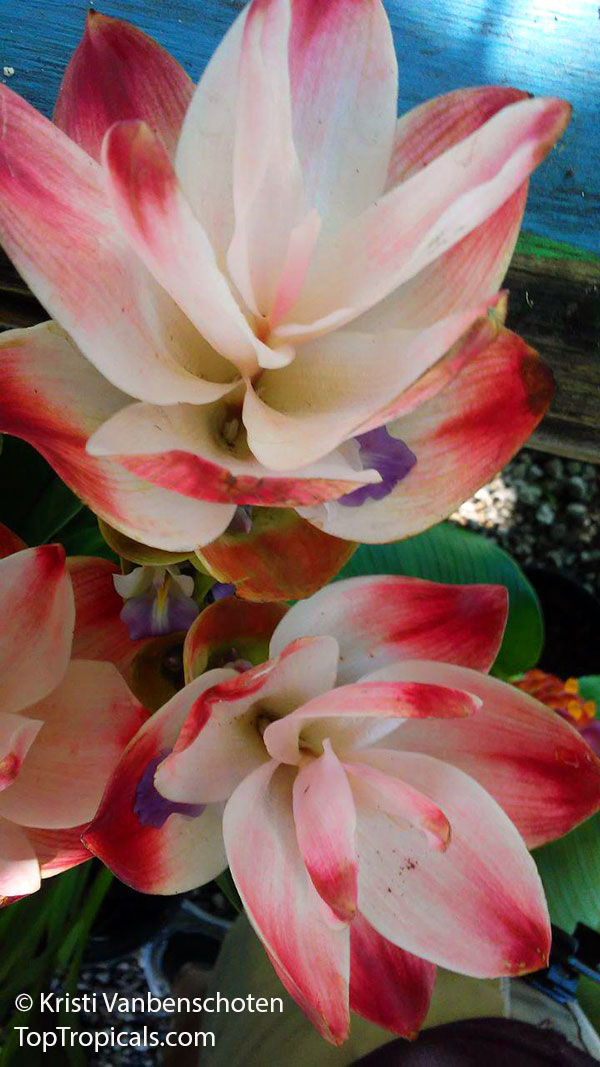
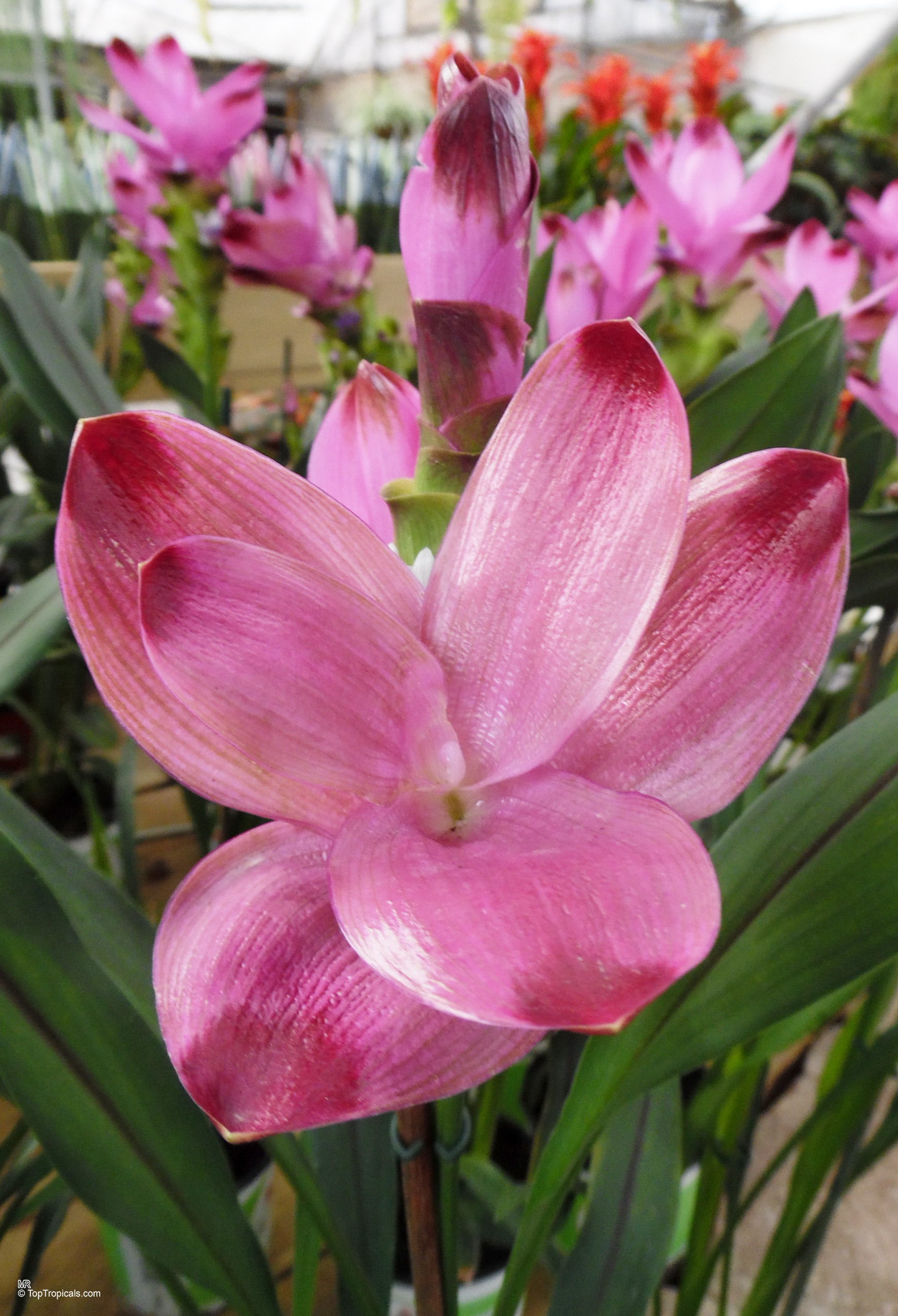
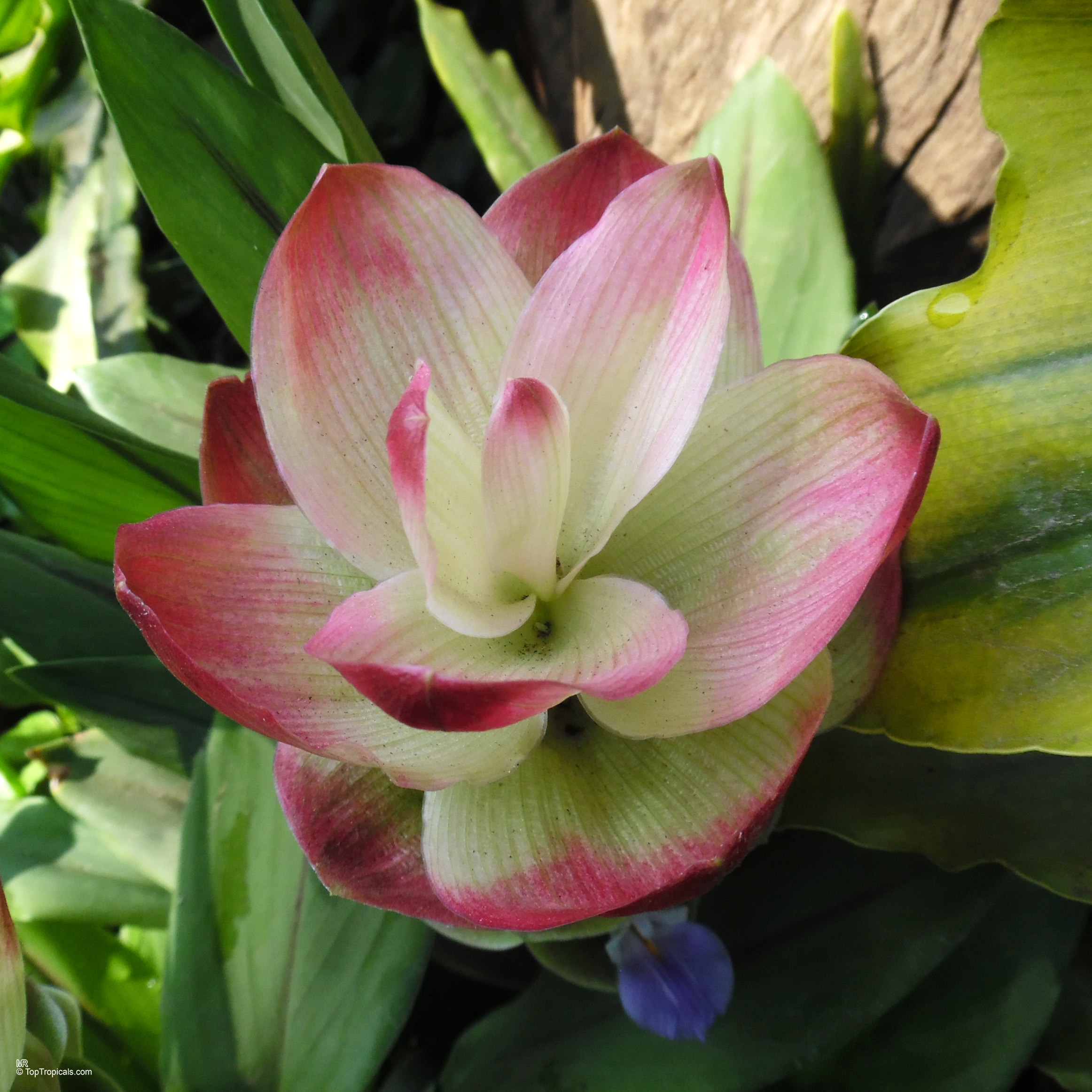
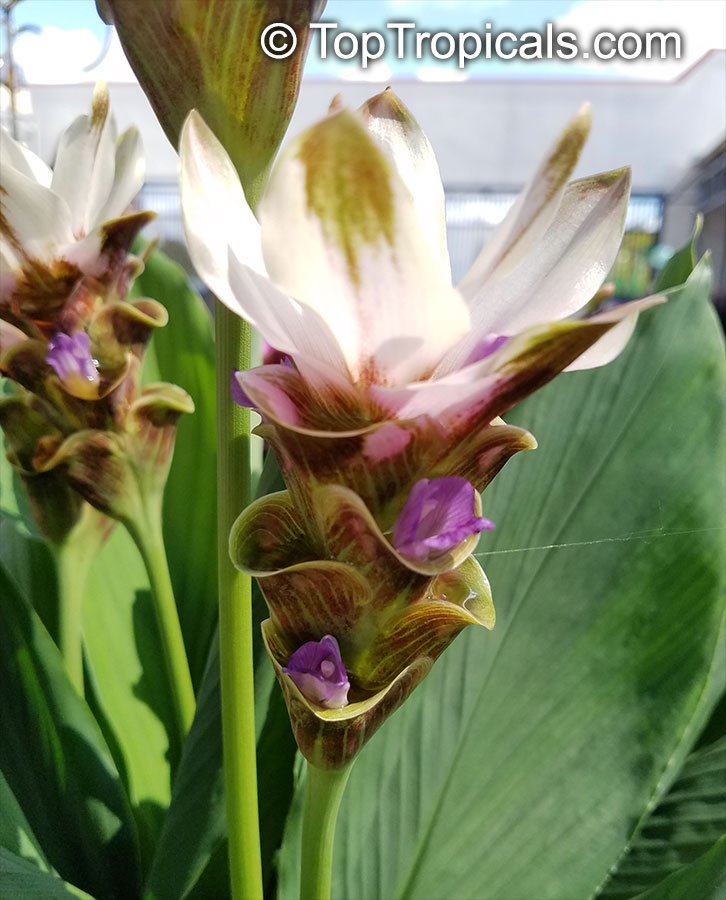
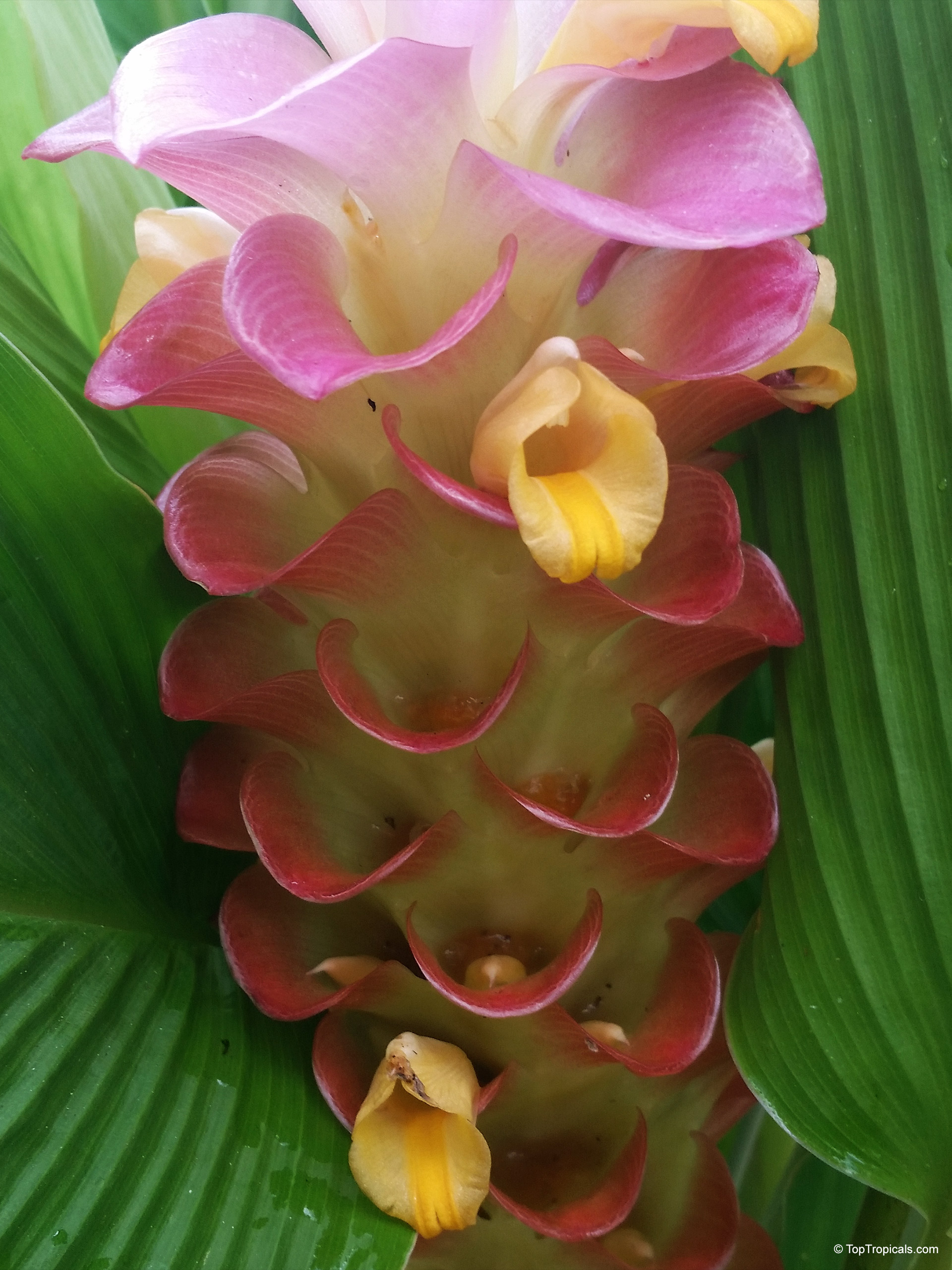
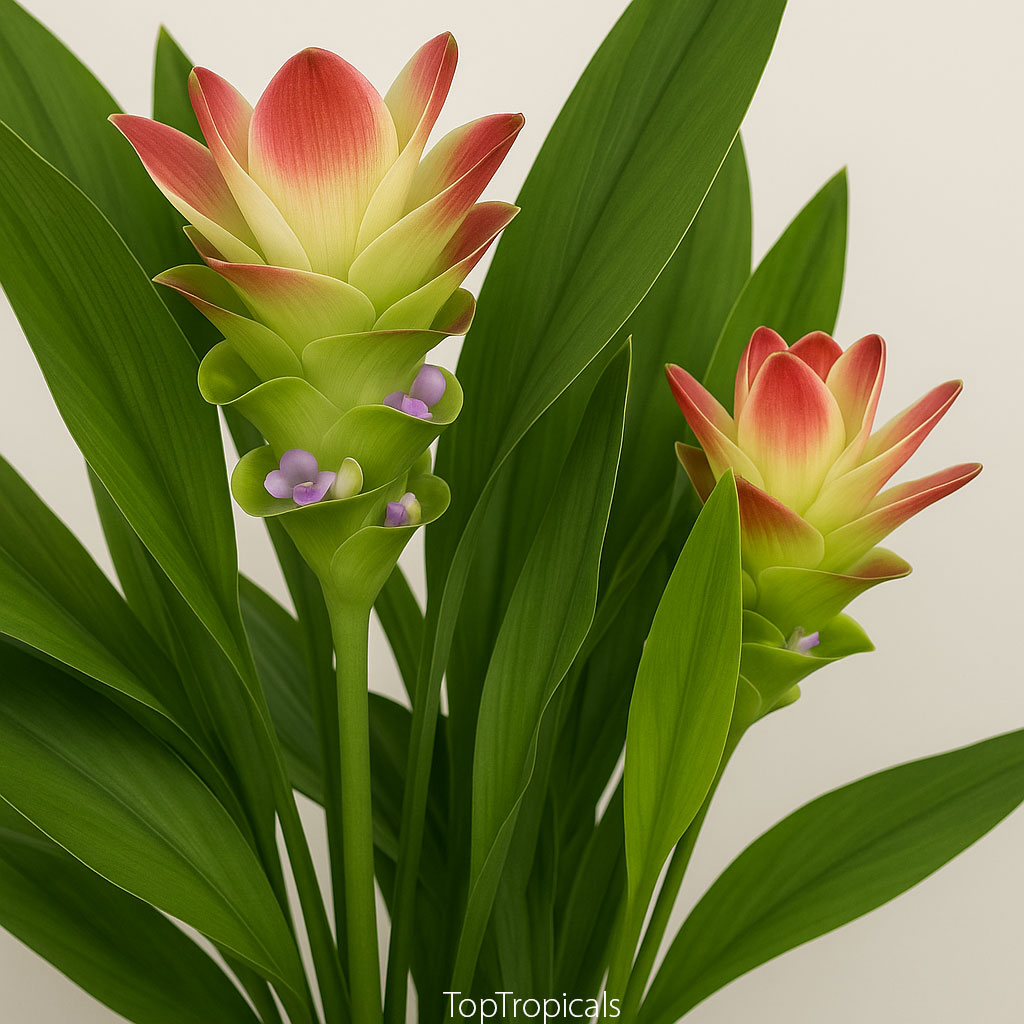
Curcuma 'Katie' is an ornamental Curcuma cultivar grown for its showy, long-lasting inflorescences and compact tropical appearance. It produces upright flower spikes composed of overlapping pink to rosy-pink bracts, often becoming paler toward the tips, with small true flowers appearing between the bracts. The colorful inflorescences rise above or among the foliage and remain attractive for an extended period, making 'Katie' suitable for both garden display and container culture.
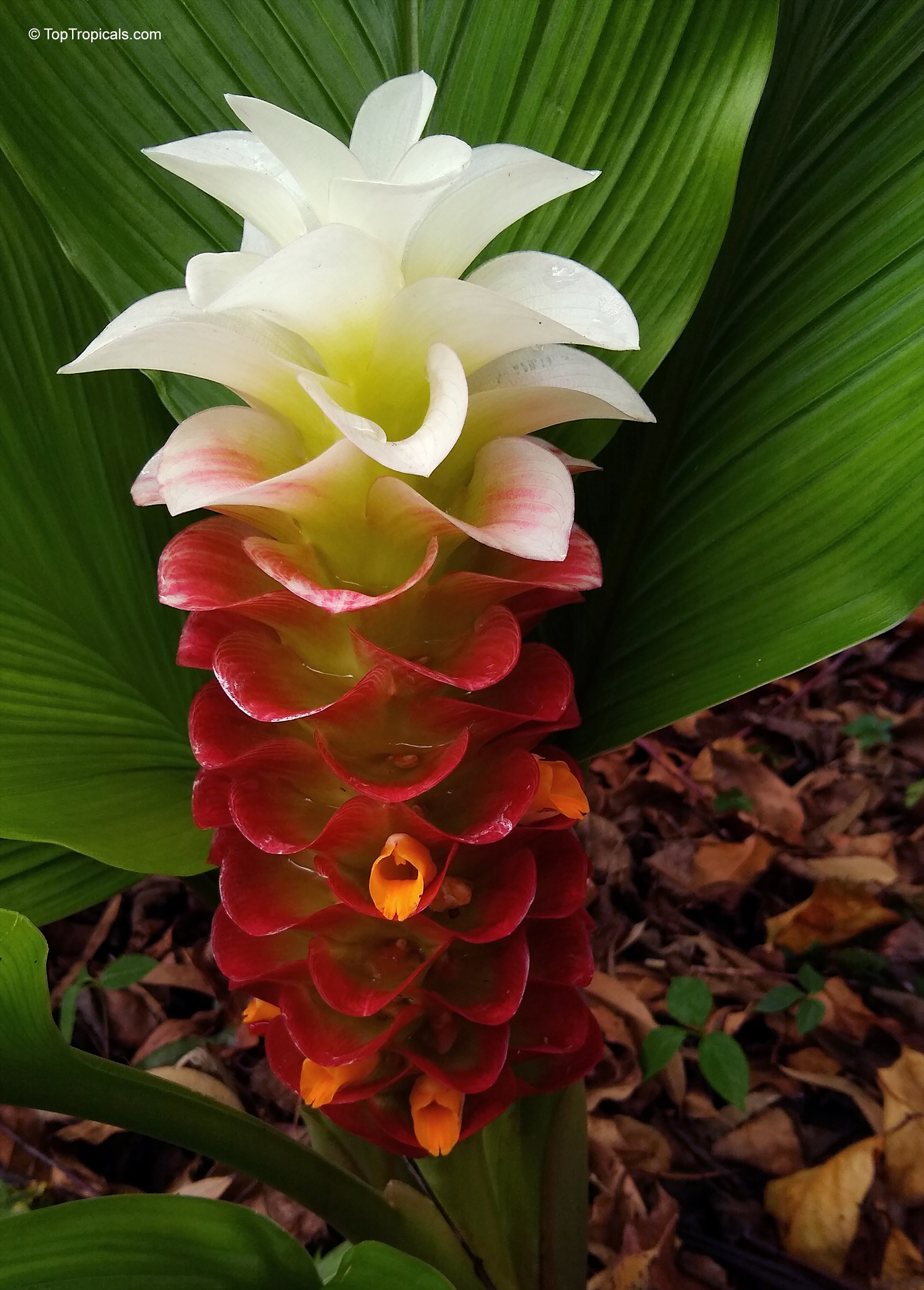
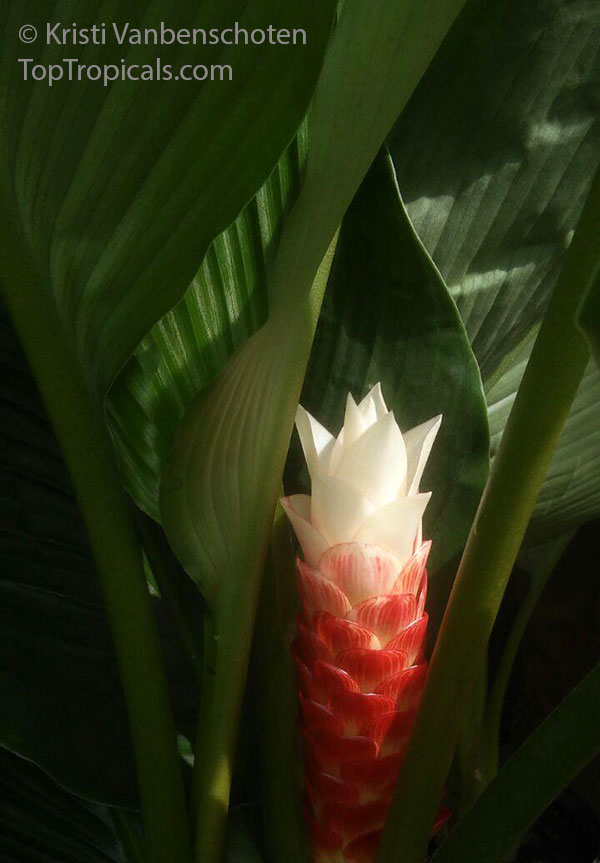
Botanical name: Curcuma sp.
Common name: Strawberry Sundae Curcuma
Cultivar: Strawberry Sundae
Family: Zingiberaceae
USDA Zone: 9-10

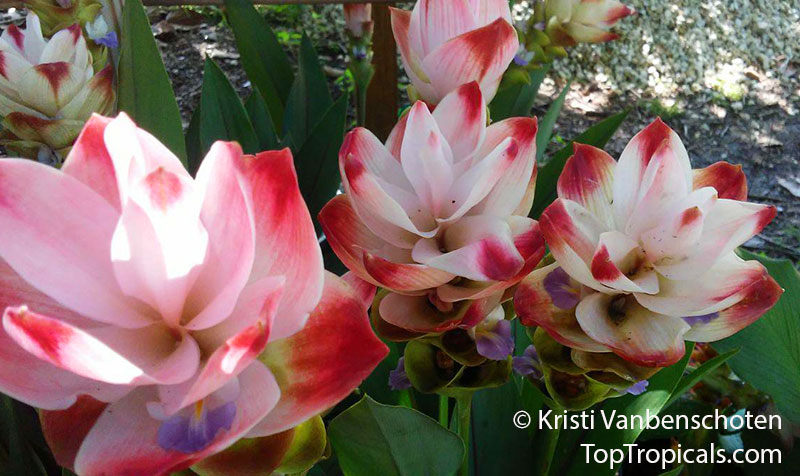
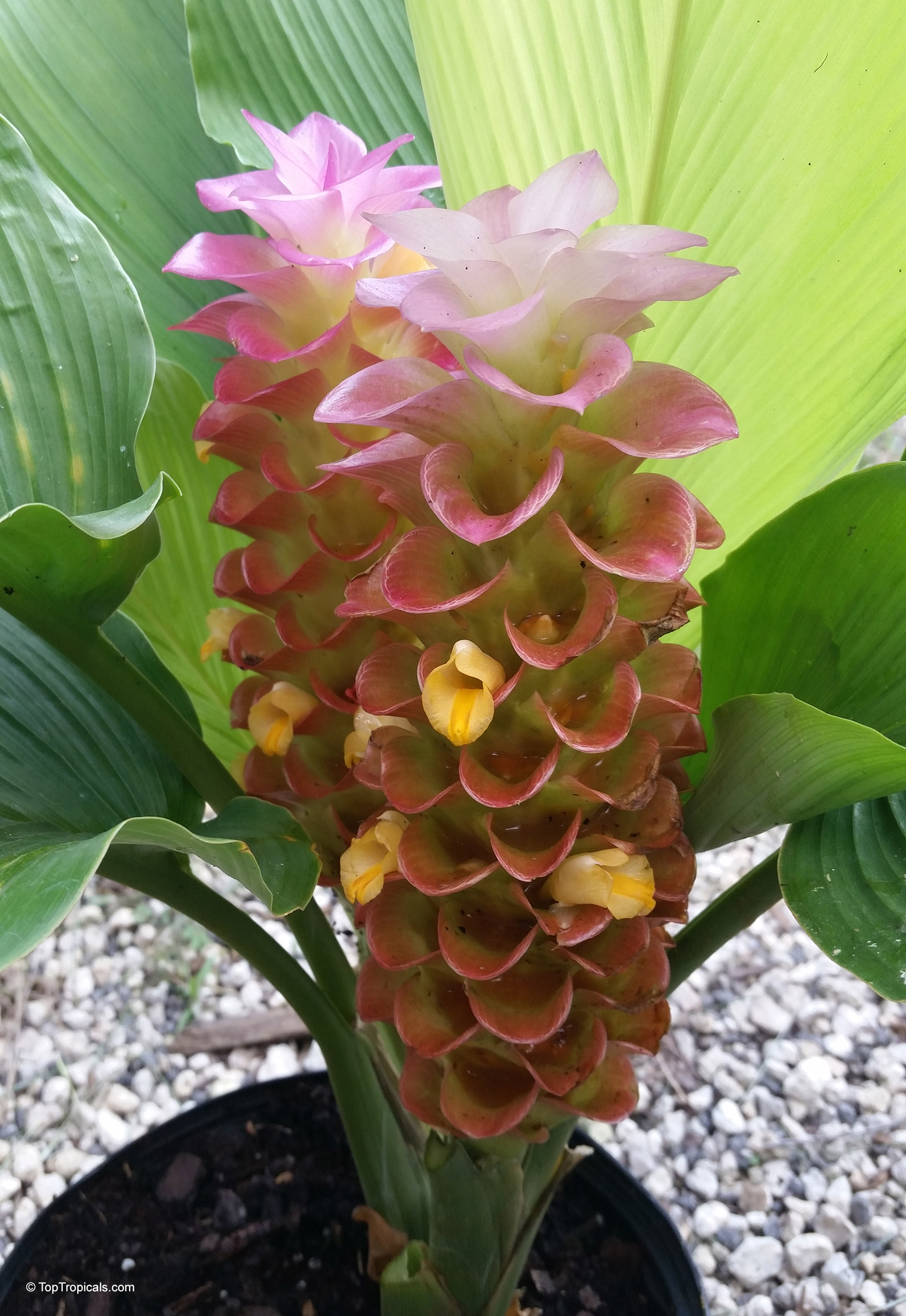
Curcuma 'Strawberry Sundae' is an ornamental Curcuma cultivar prized for its attractive two-toned inflorescences. The upright flower spikes are formed by overlapping bracts in shades of soft pink to strawberry pink, blending into creamy white or pale green toward the lower portions and creating the pastel effect suggested by its name. Small true flowers emerge between the colorful bracts. Its compact, lush appearance and long-lasting inflorescences make it especially attractive in containers and tropical garden displays.
Botanical name: Curcuma alismatifolia
Common name: Siam Tulip
Family: Zingiberaceae
Origin: Thailand
USDA Zone: 8-10
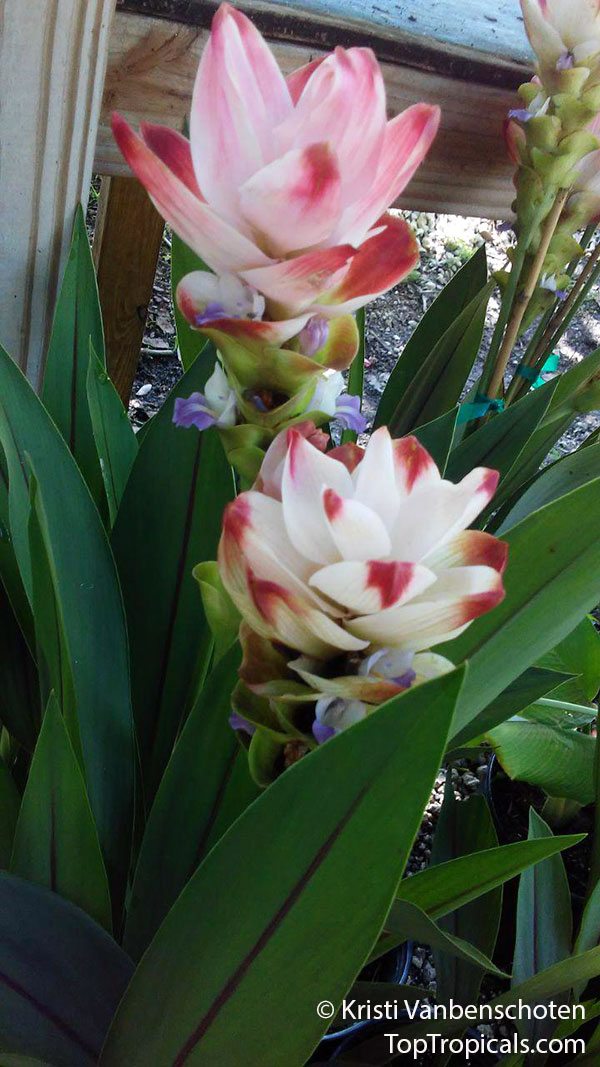
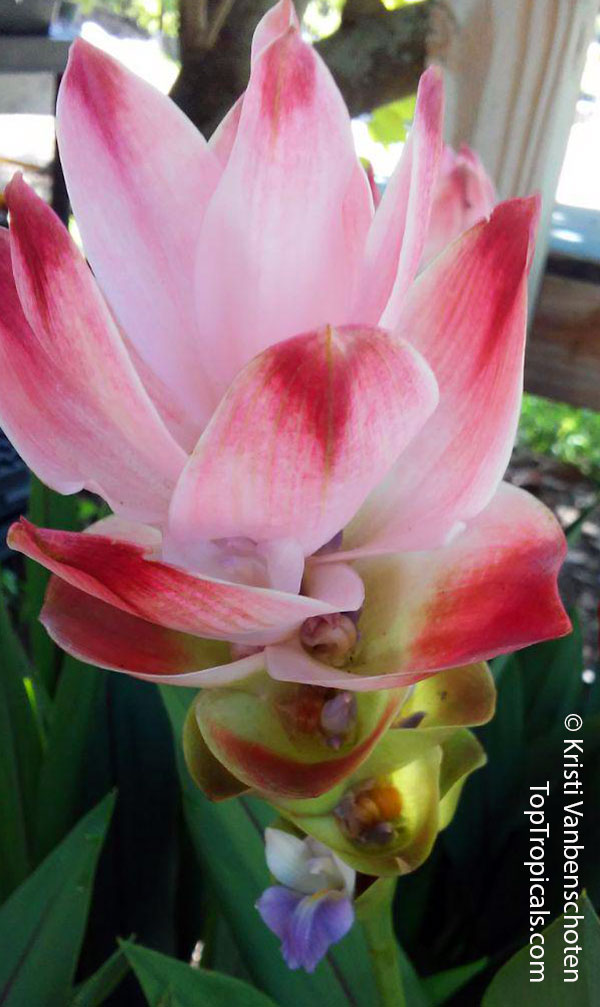
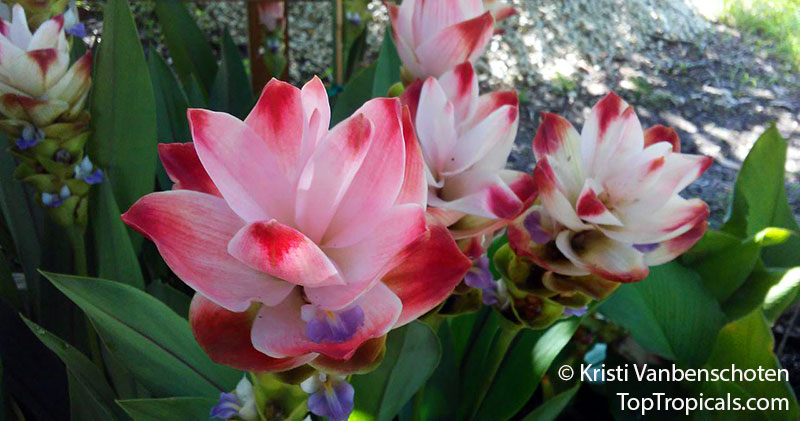
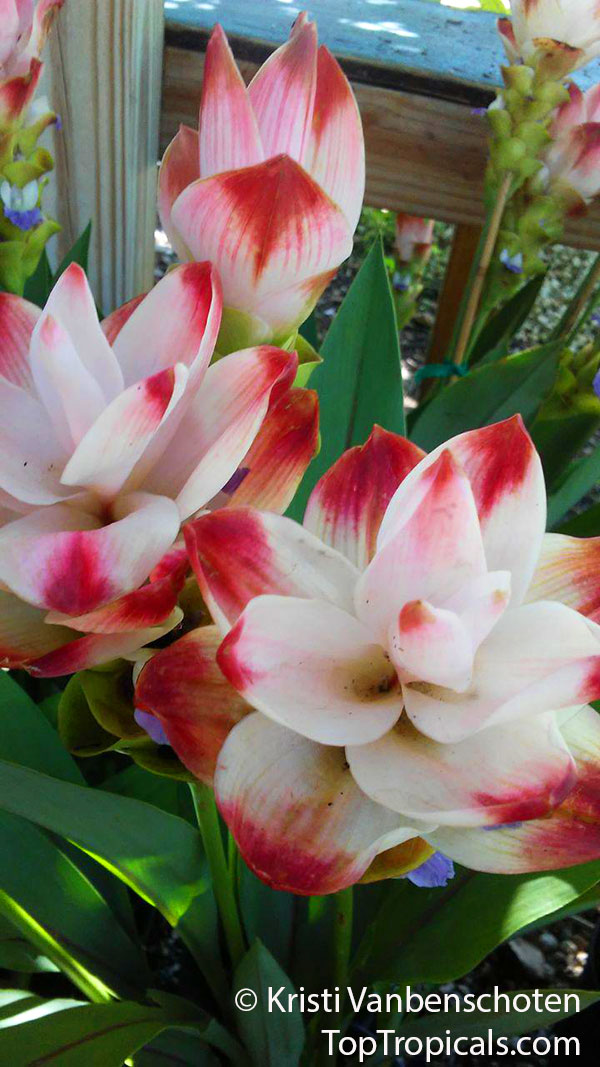
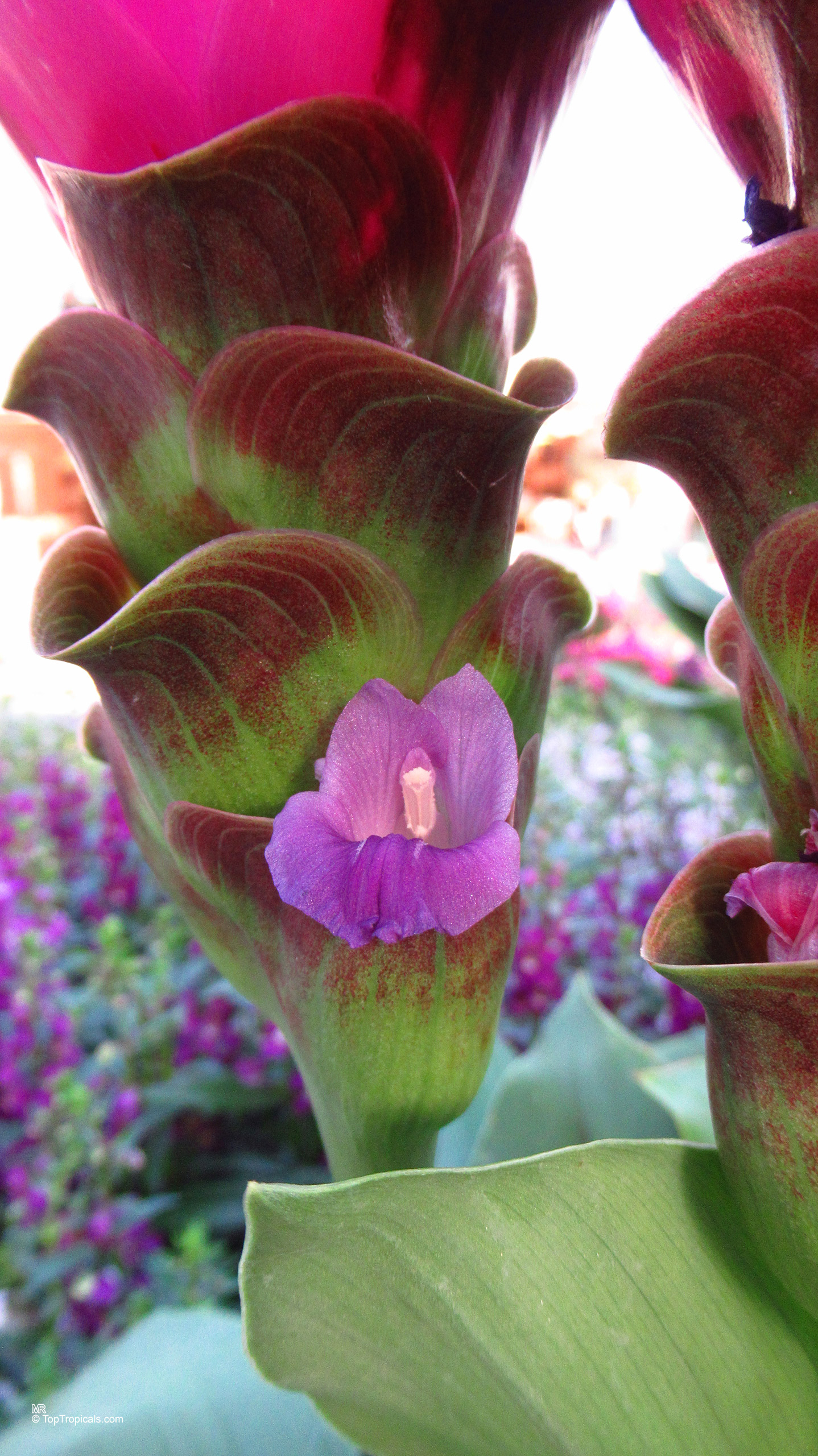
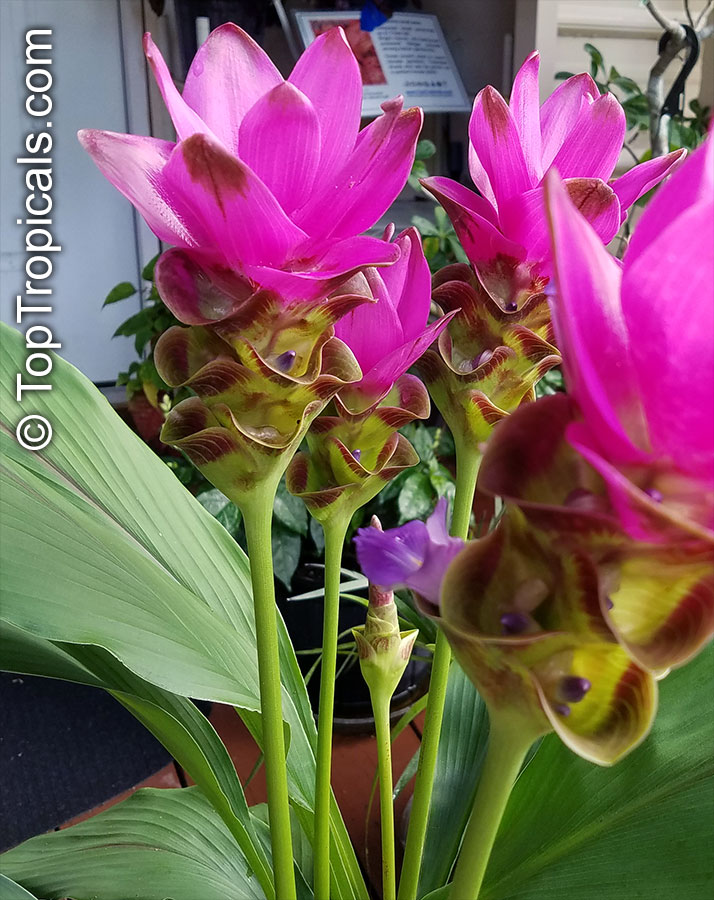
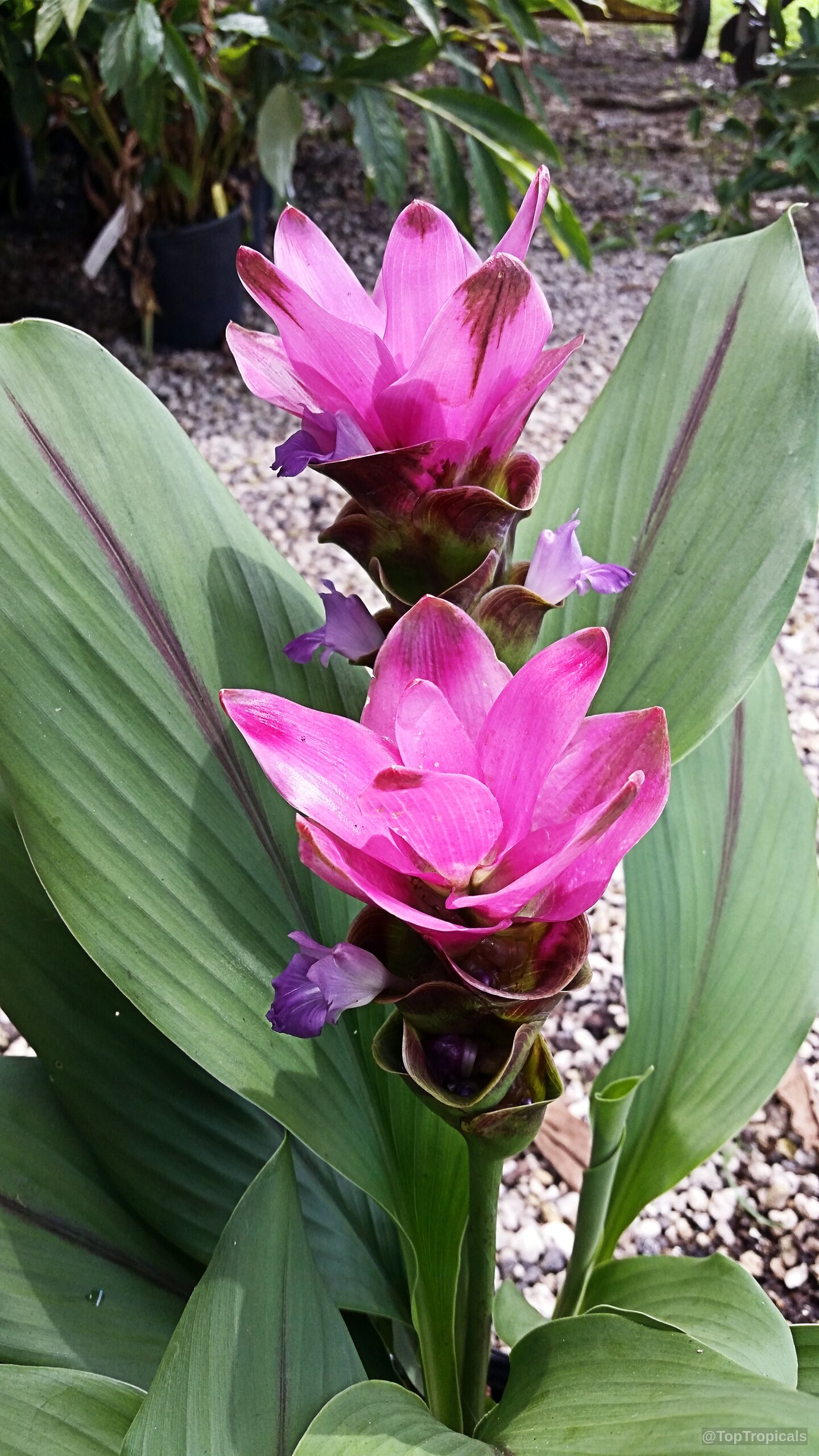
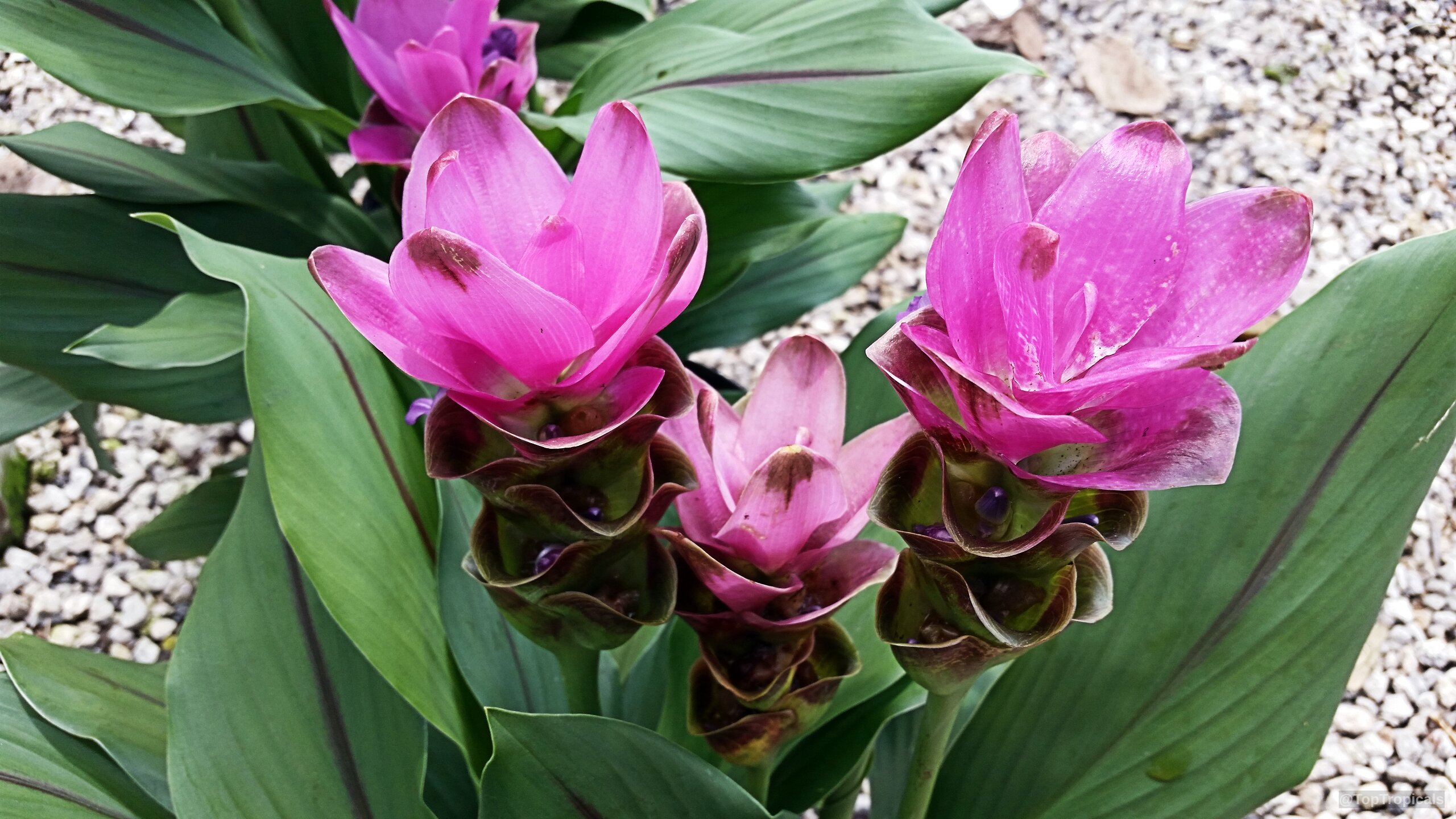
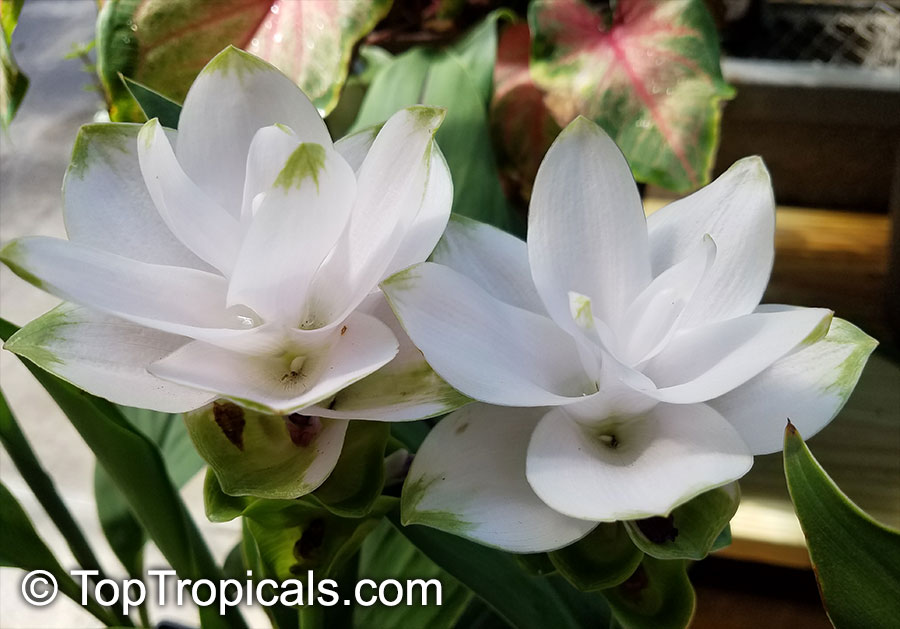
Native to Thailand, Curcuma alismatifolia (Siam Tulip) is a small shrub that reaches up to 2-5 feet tall. In outdoor settings, the plant prefers shade or semi-shade, and needs regular water. During the growing season it produces stunning pink or white and off-white flowers. This species is considered a deciduous plant, and will lose much of its foliage during the dormant season.
Though this plant is typically grown in USDA Zone 9-11, a mature plant can be cold hardy at least to 30°F for a short time. In colder regions, this plant has to be grown in a protective pot placed in locations sheltered from extremely cold temperatures. Make sure the soil for Curcuma alismatifolia is kept moist to ensure growth and it should be well drained. Additionally, the pot should be lined with a plastic layer to protect from frost. If a container is used, the soil can dry out more quickly so it is important to check the soil regularly. When watering, make sure to water the soil and not the foliage. During the hottest months it may need water every day, as the heat can dry out the soil rapidly.
In summary, Curcuma alismatifolia is a deciduous plant native to Thailand reaching 2-5 feet tall. It prefers shade or semi-shade, needs regular water and produces stunning pink or white and off-white flowers. The mature plant is cold hardy at least to 30°F for a short time or in colder regions can be grown in a protective pot with a plastic lining in sheltered locations from the cold. The soil needs to be moist and well-drained, and should be checked regularly. Water the soil and not the foliage. It may need water every day during the warmest months.



Botanical name: Curcuma australasica
Common names: NativeTurmeric, Wild Turmeric, Cape York Lily
Family: Zingiberaceae
Origin: Australia
USDA Zone: 9-11

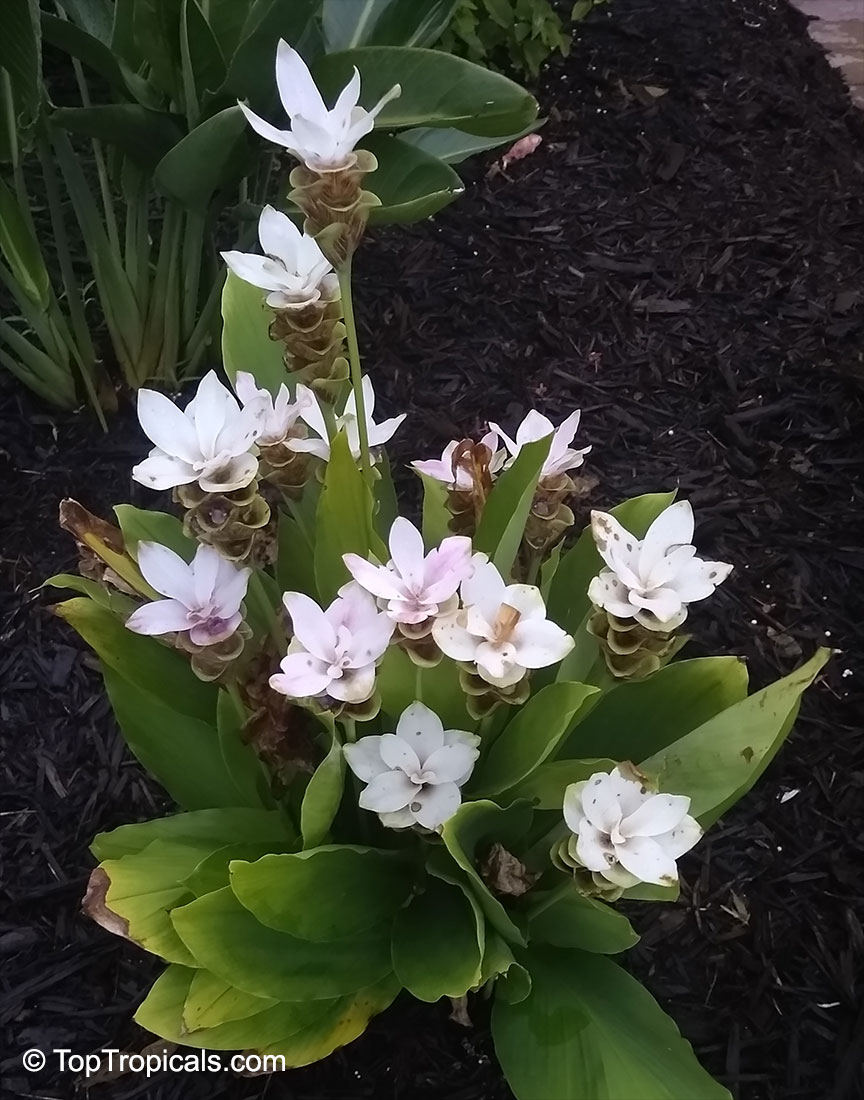
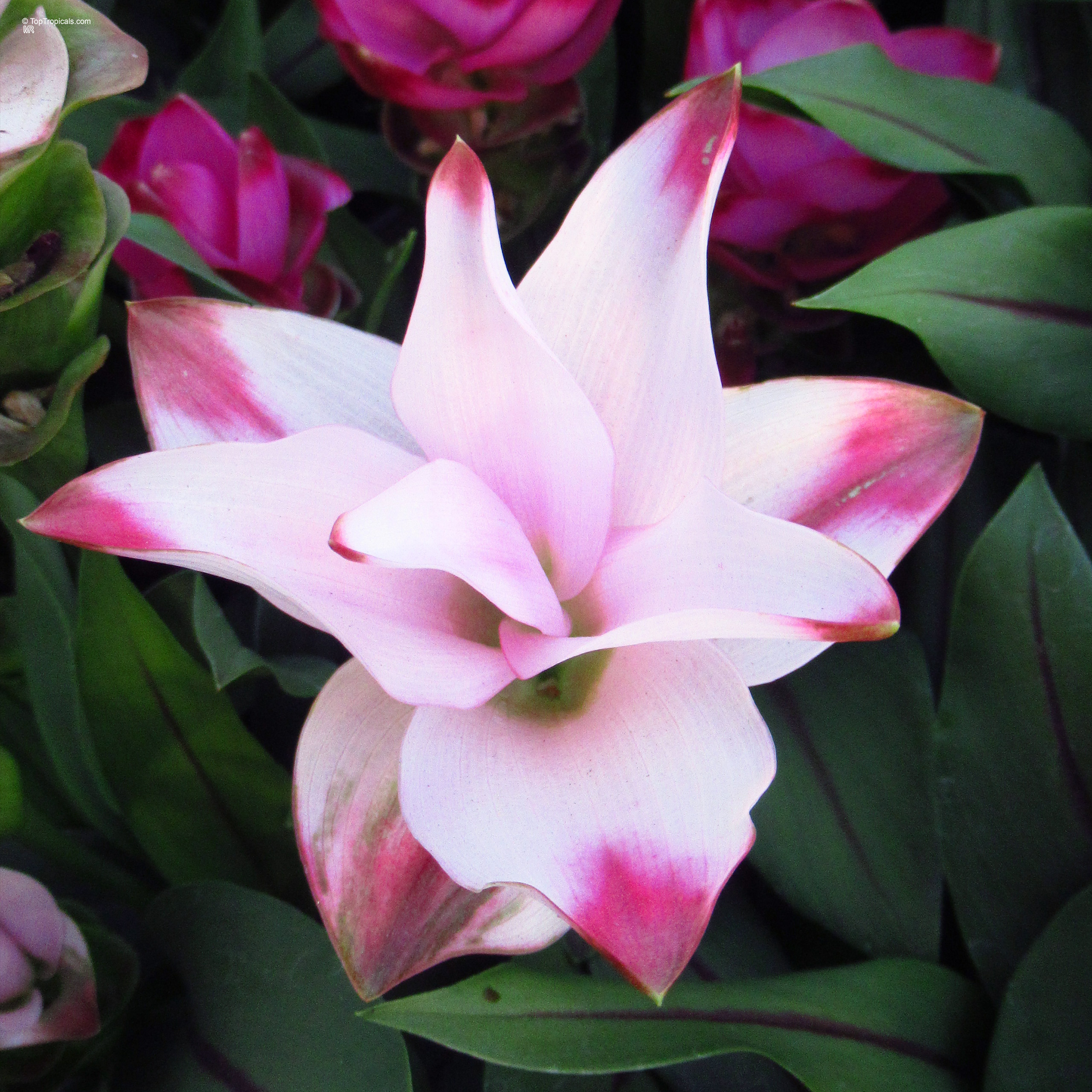
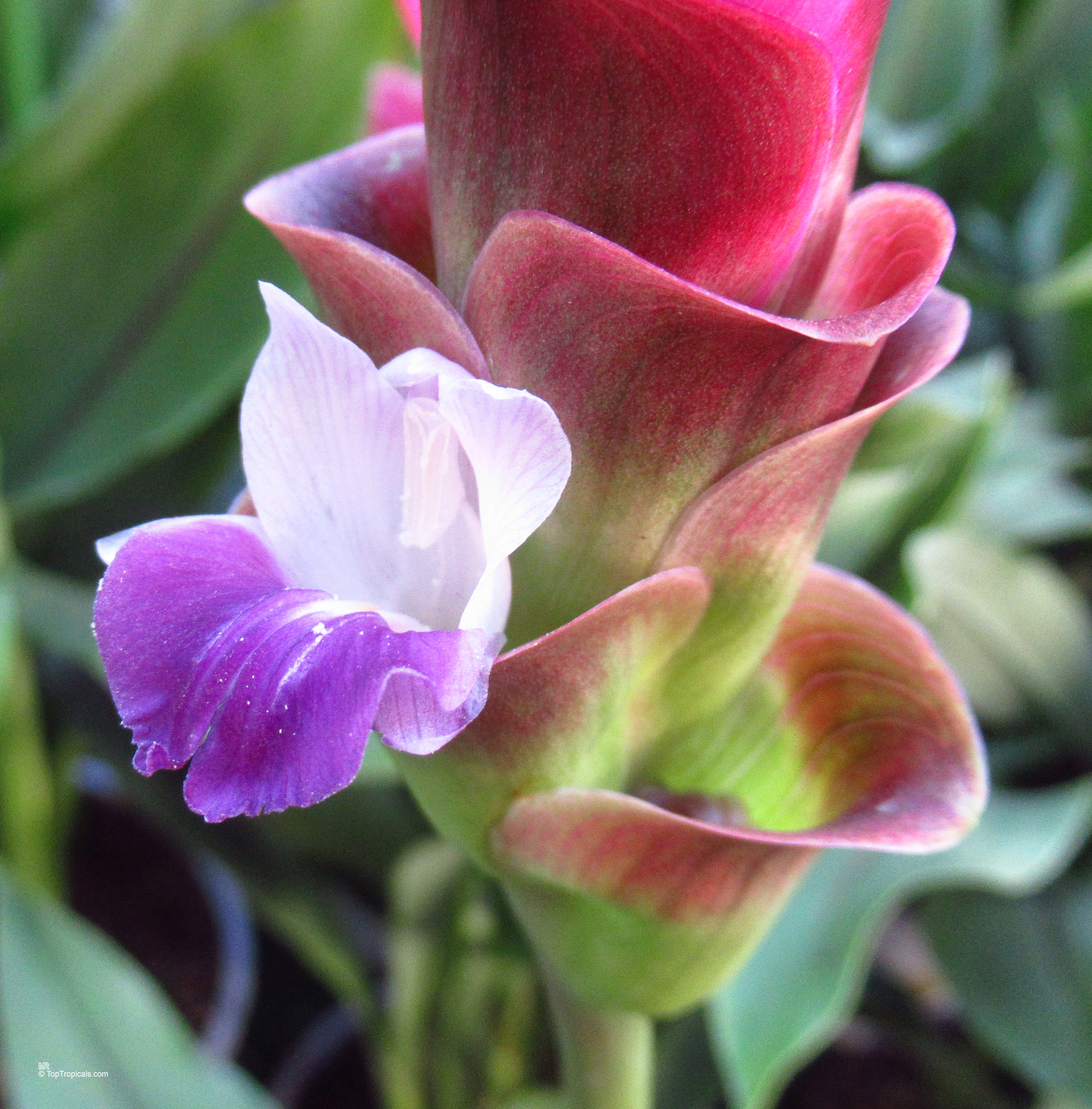
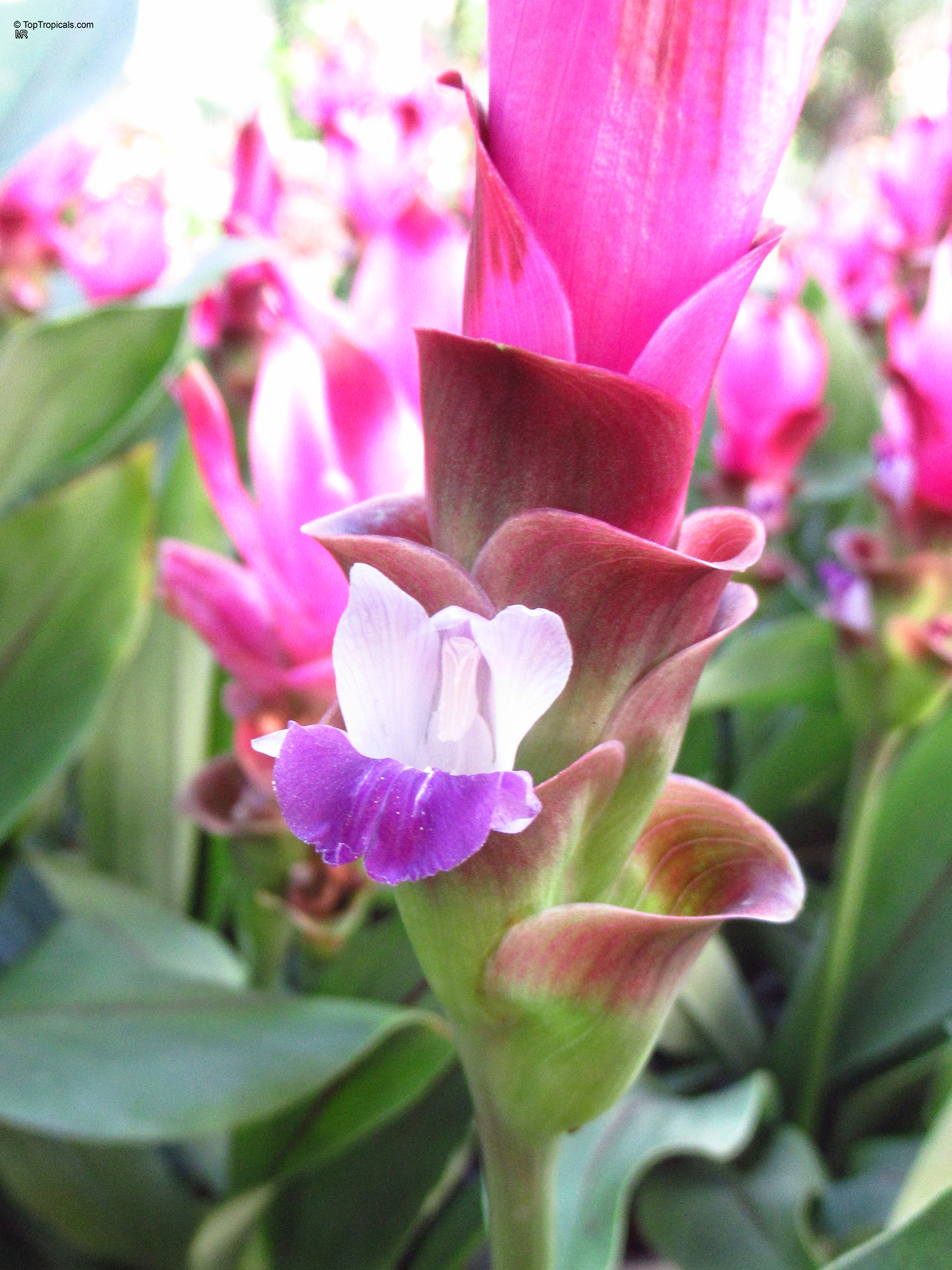
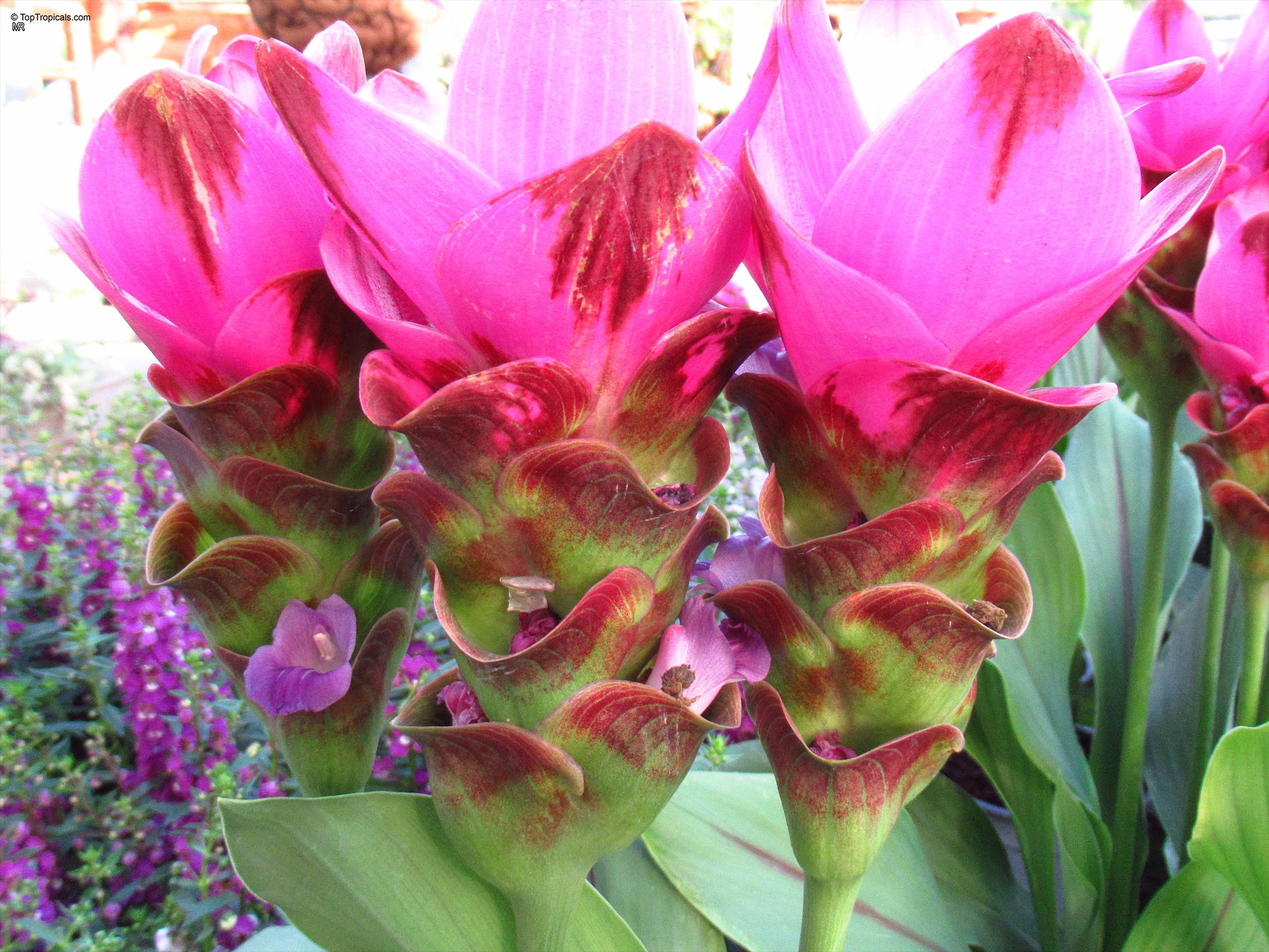
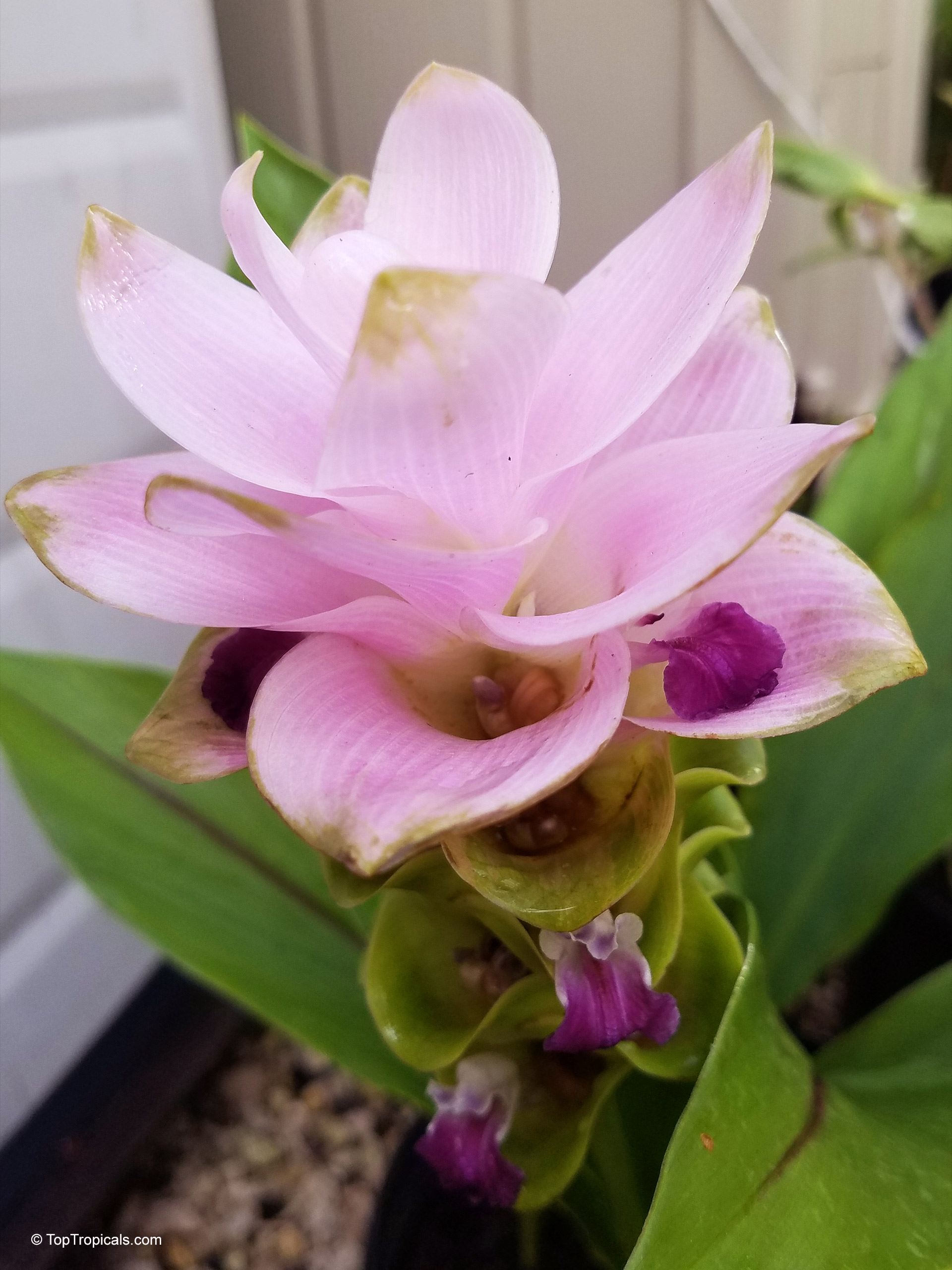
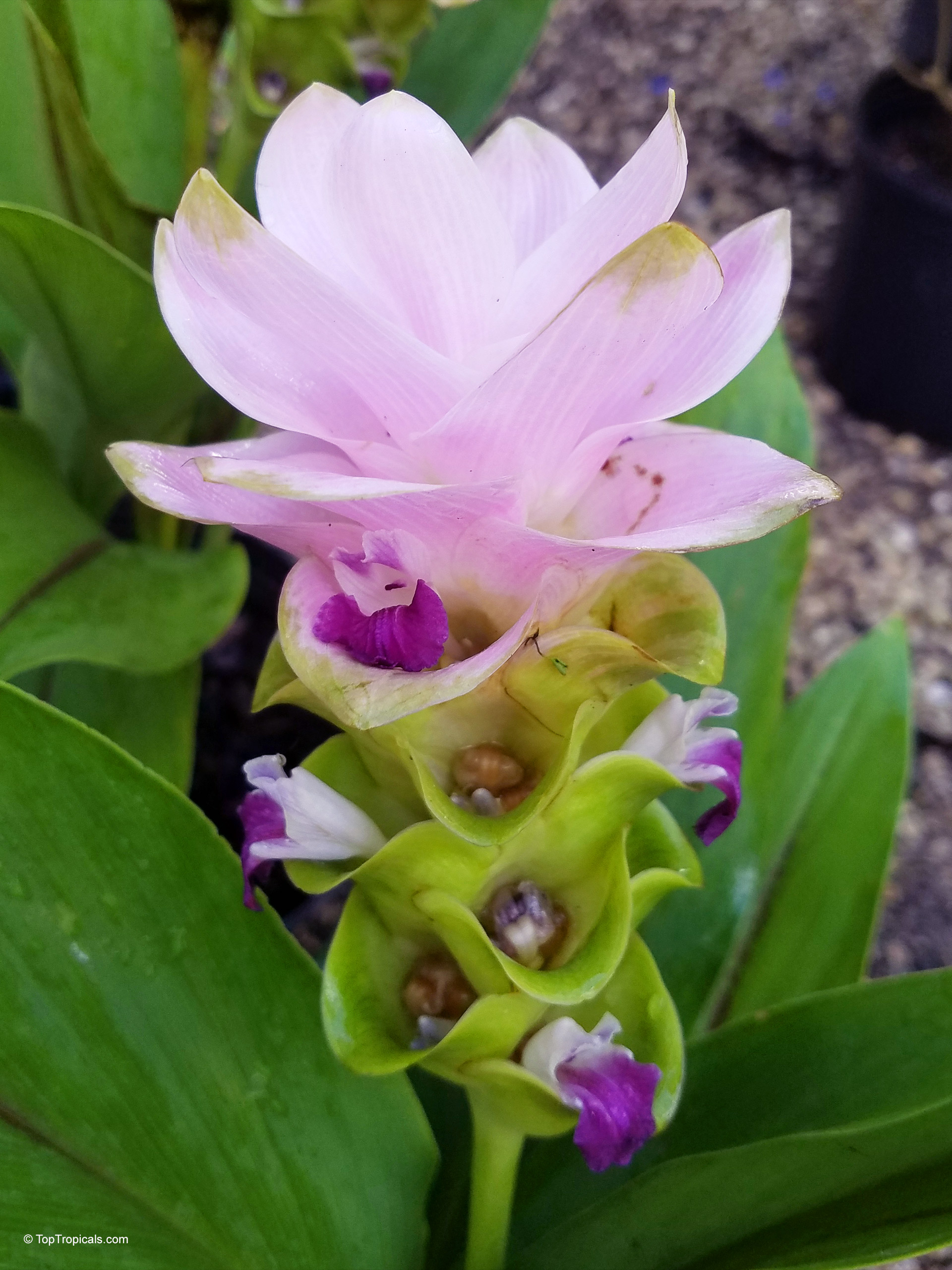
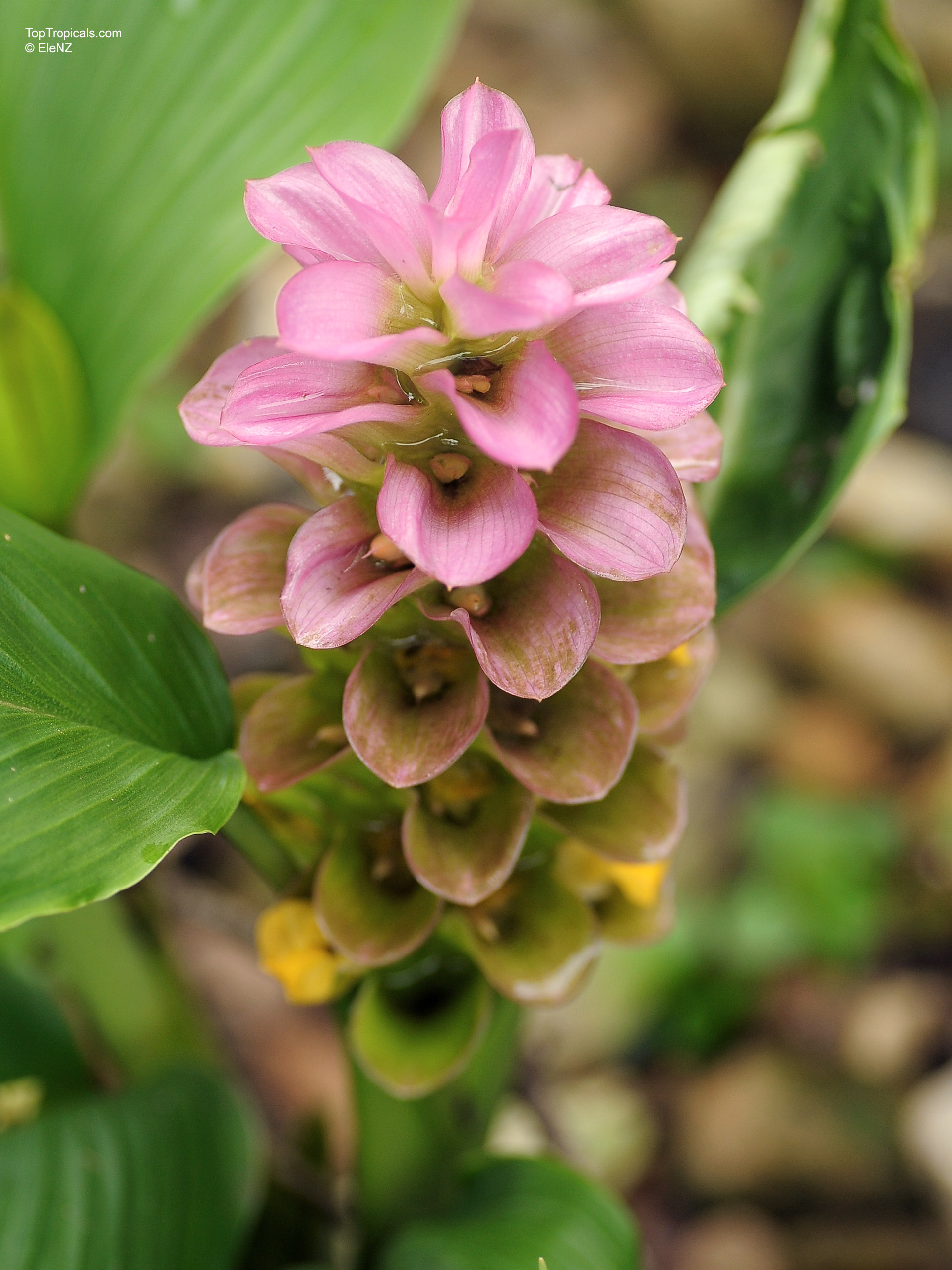
Curcuma australasica, commonly known as Cape York Lily or Native Turmeric, is a rhizomatous herbaceous perennial in the Zingiberaceae family native to northern Australia, New Guinea, and the Maluku Islands. It grows naturally in wet tropical habitats and forms seasonal clumps of broad, prominently pleated green leaves arising from underground rhizomes. Upright inflorescences appear during the growing season, with overlapping green to pale bracts, often becoming pink or purplish toward the upper portion, and small yellow true flowers emerging between them. The foliage dies back seasonally, leaving the plant dormant as underground rhizomes until warm conditions stimulate new growth.
Curcuma australasica grows best in warm conditions, partial shade to bright filtered light, and fertile, well-drained soil with regular moisture during active growth. Watering should be greatly reduced during dormancy. The species is well suited to tropical gardens and containers, and ornamental selections have been developed for particularly colorful and long-lasting floral bracts. Hardy in approximately USDA Zones 9-11, it benefits from winter protection and good drainage in the colder part of its range.
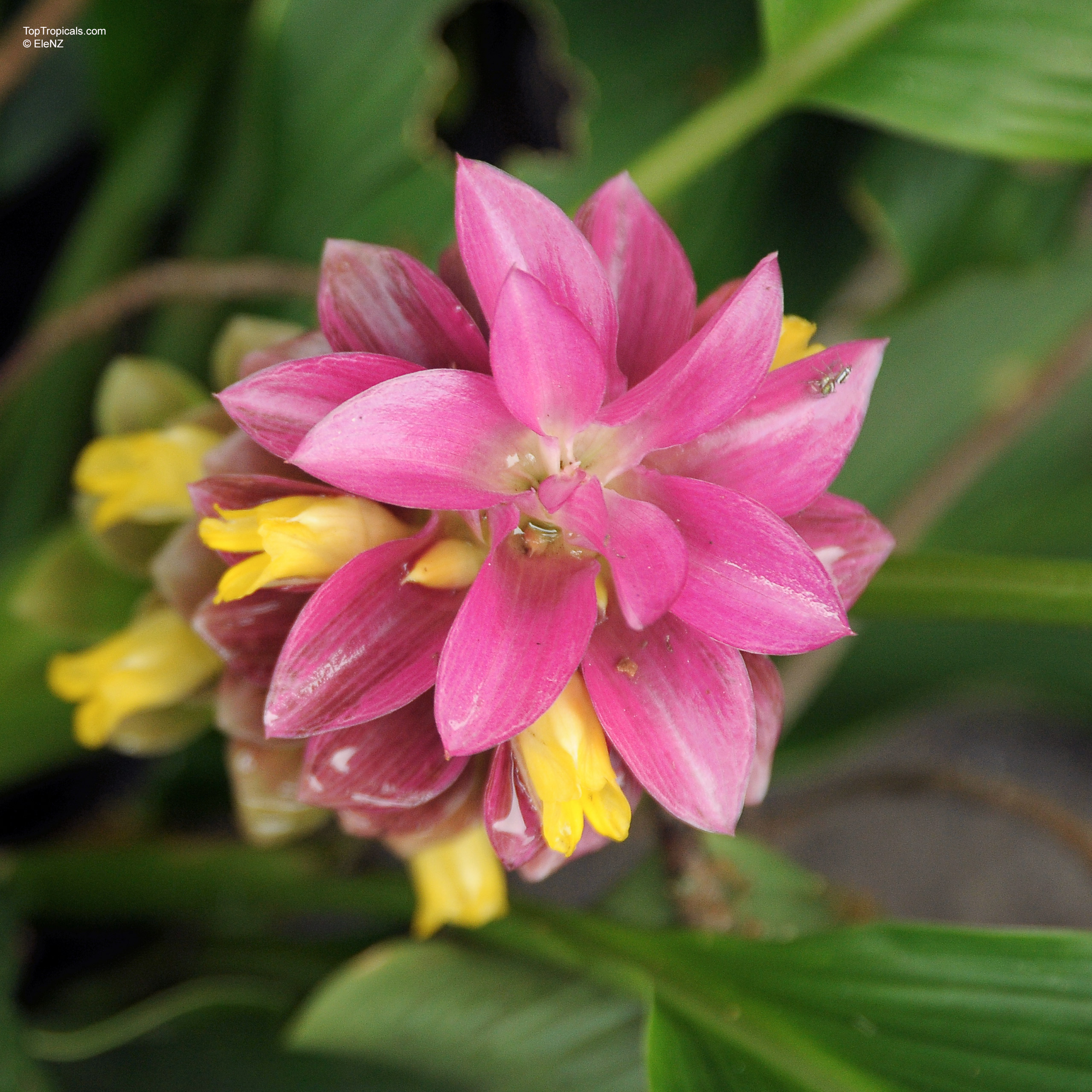
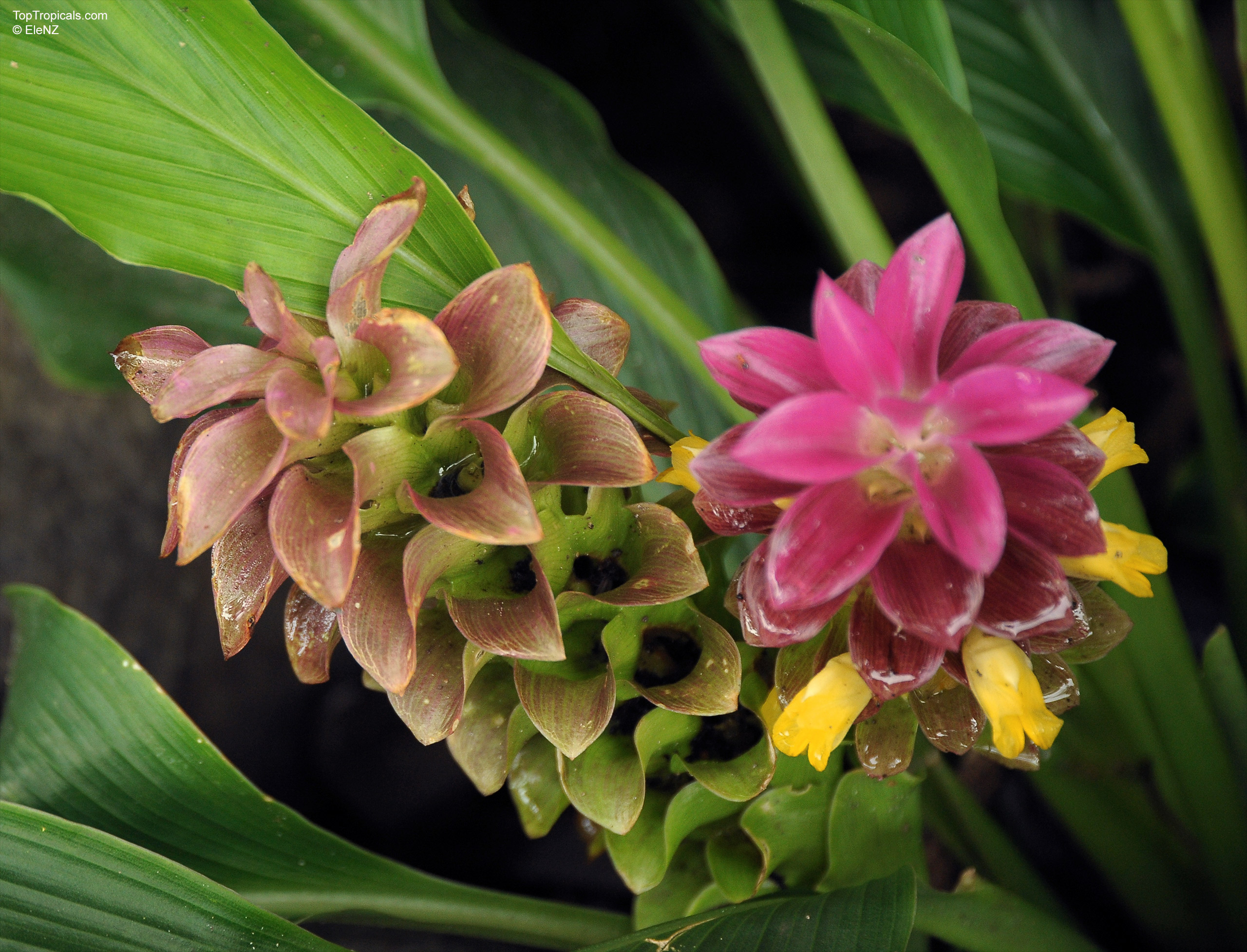
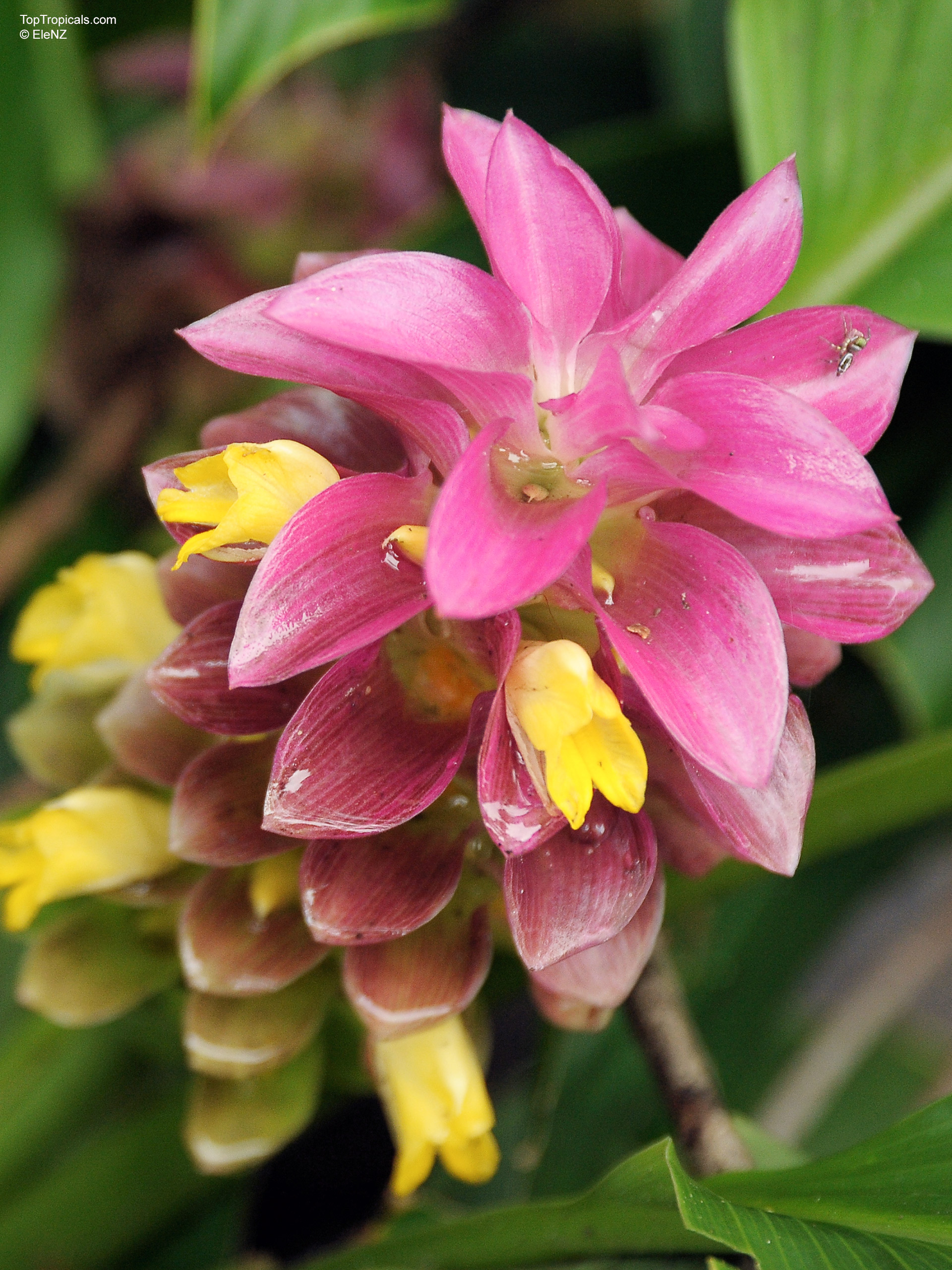
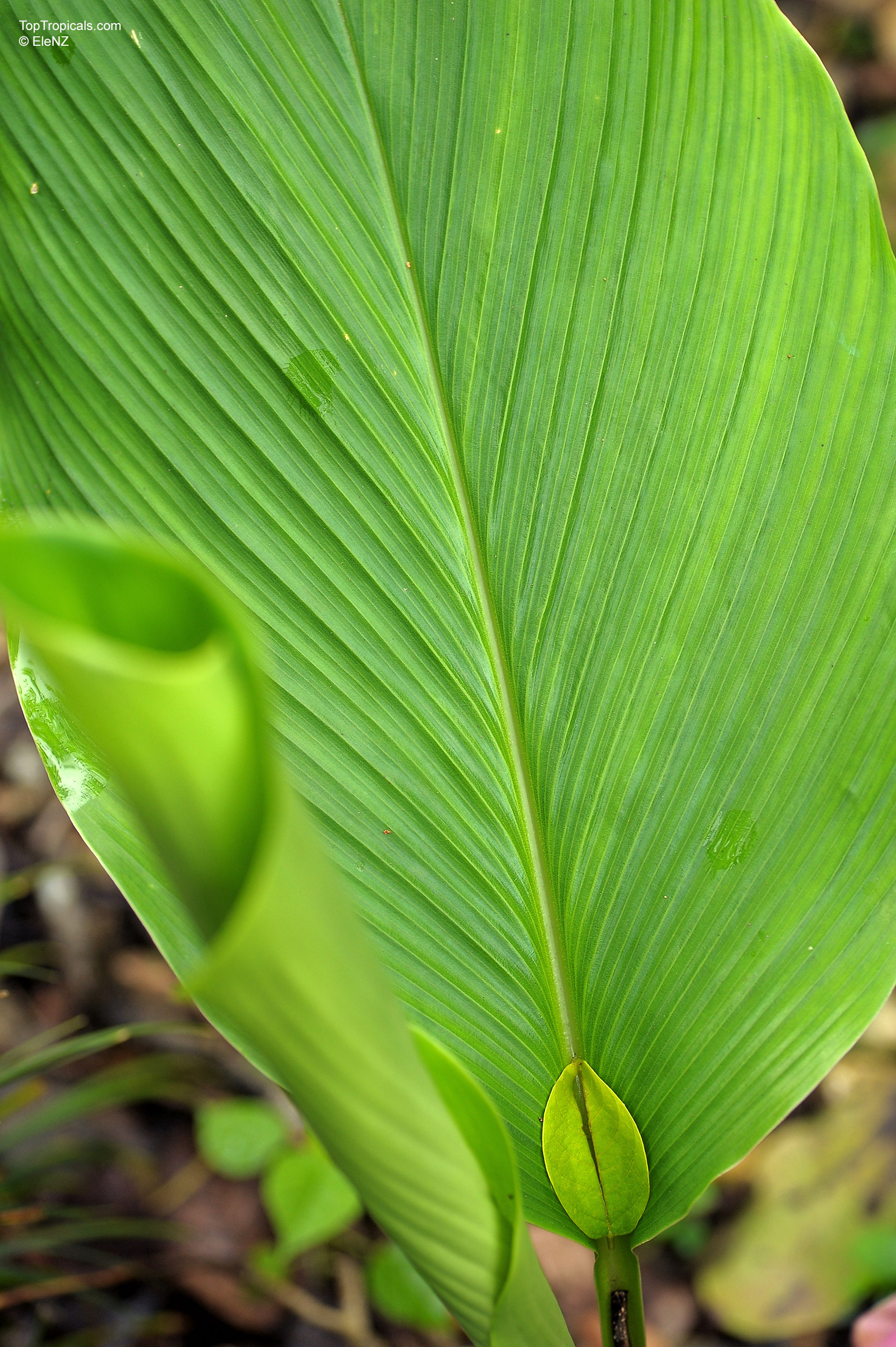
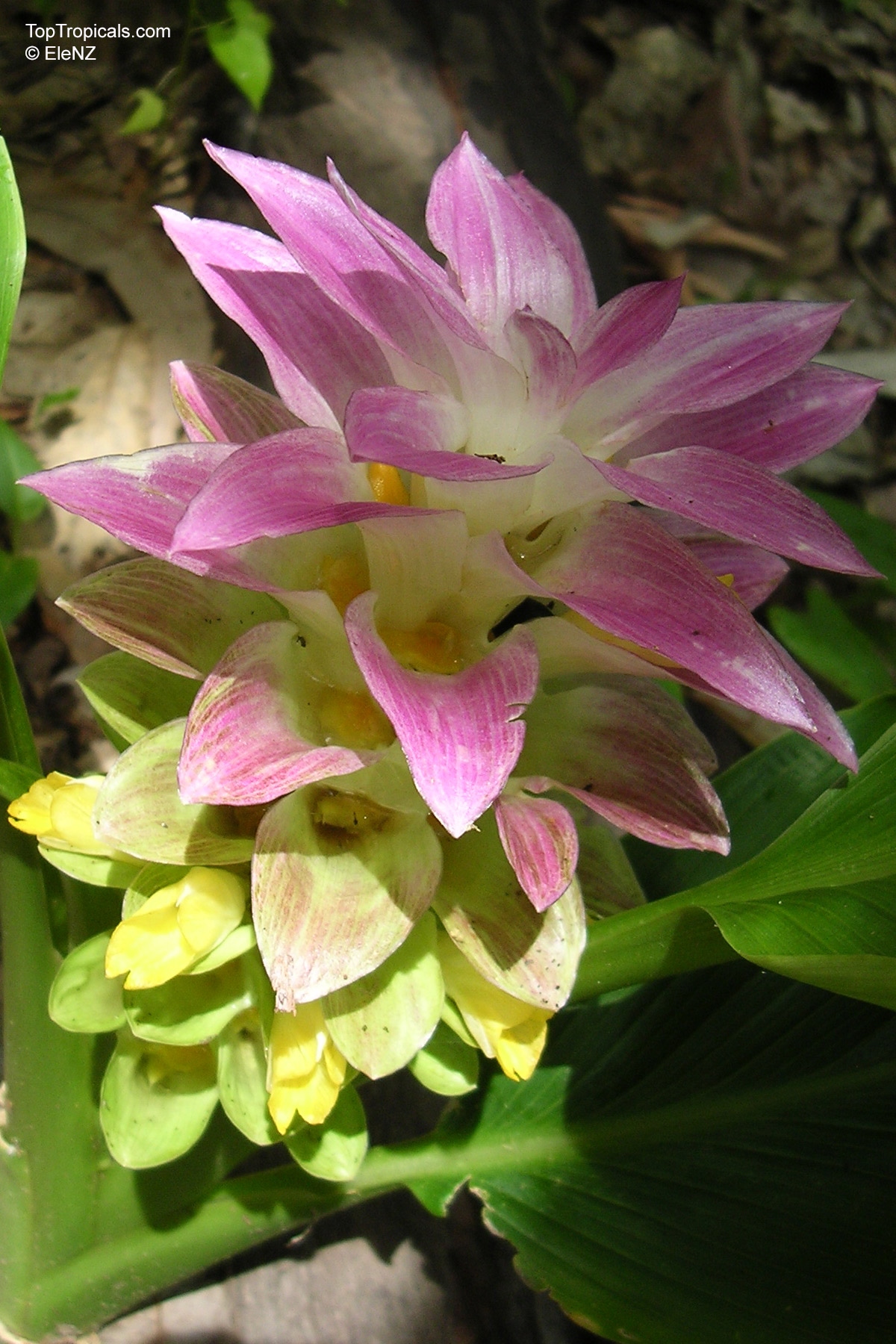
Botanical name: Curcuma longa
Common names: Spice Turmeric, Longevity Spice, Indian Saffron, Tumeric
Family: Zingiberaceae
Origin: Asia
USDA Zone: 8-11


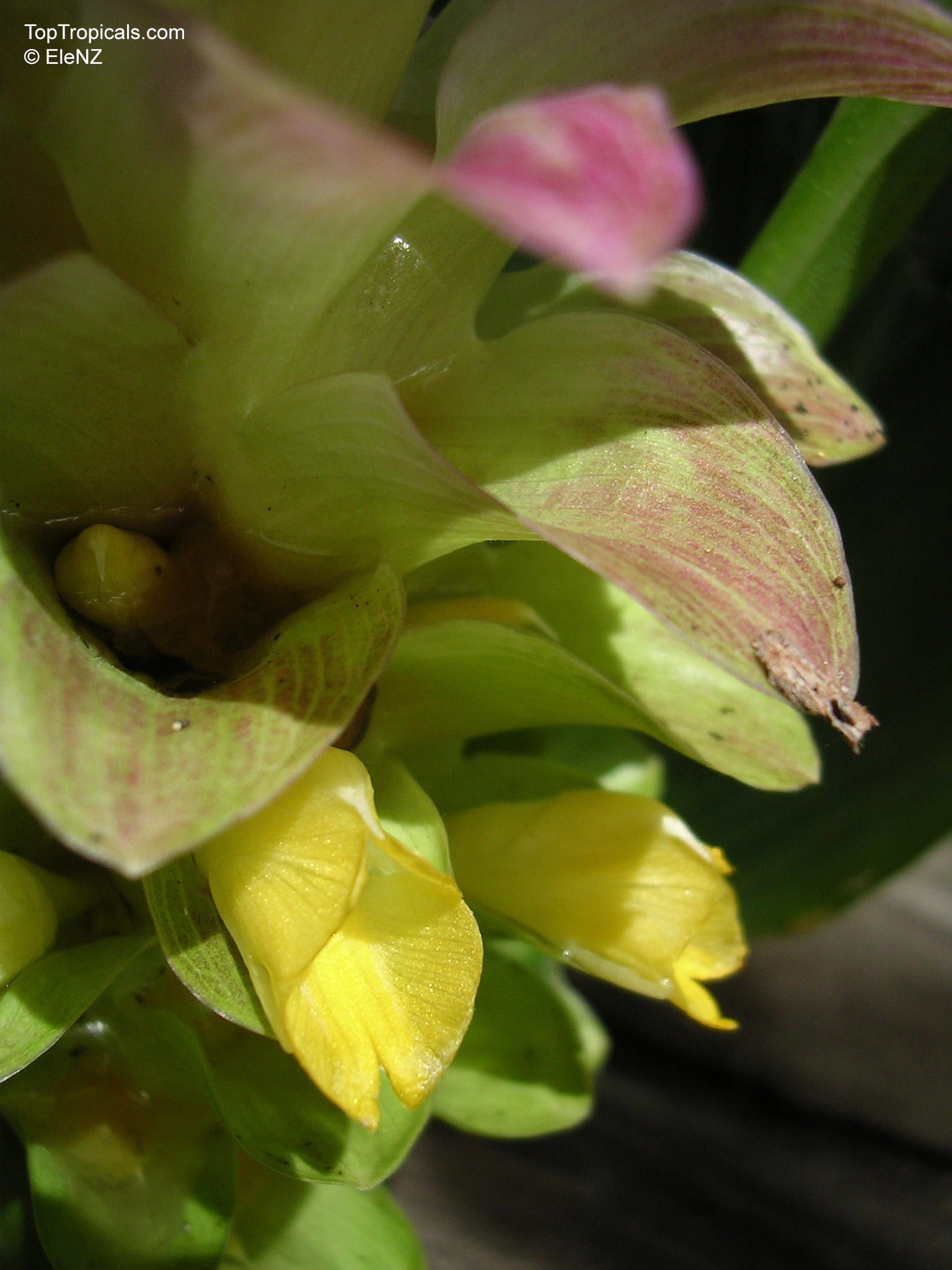
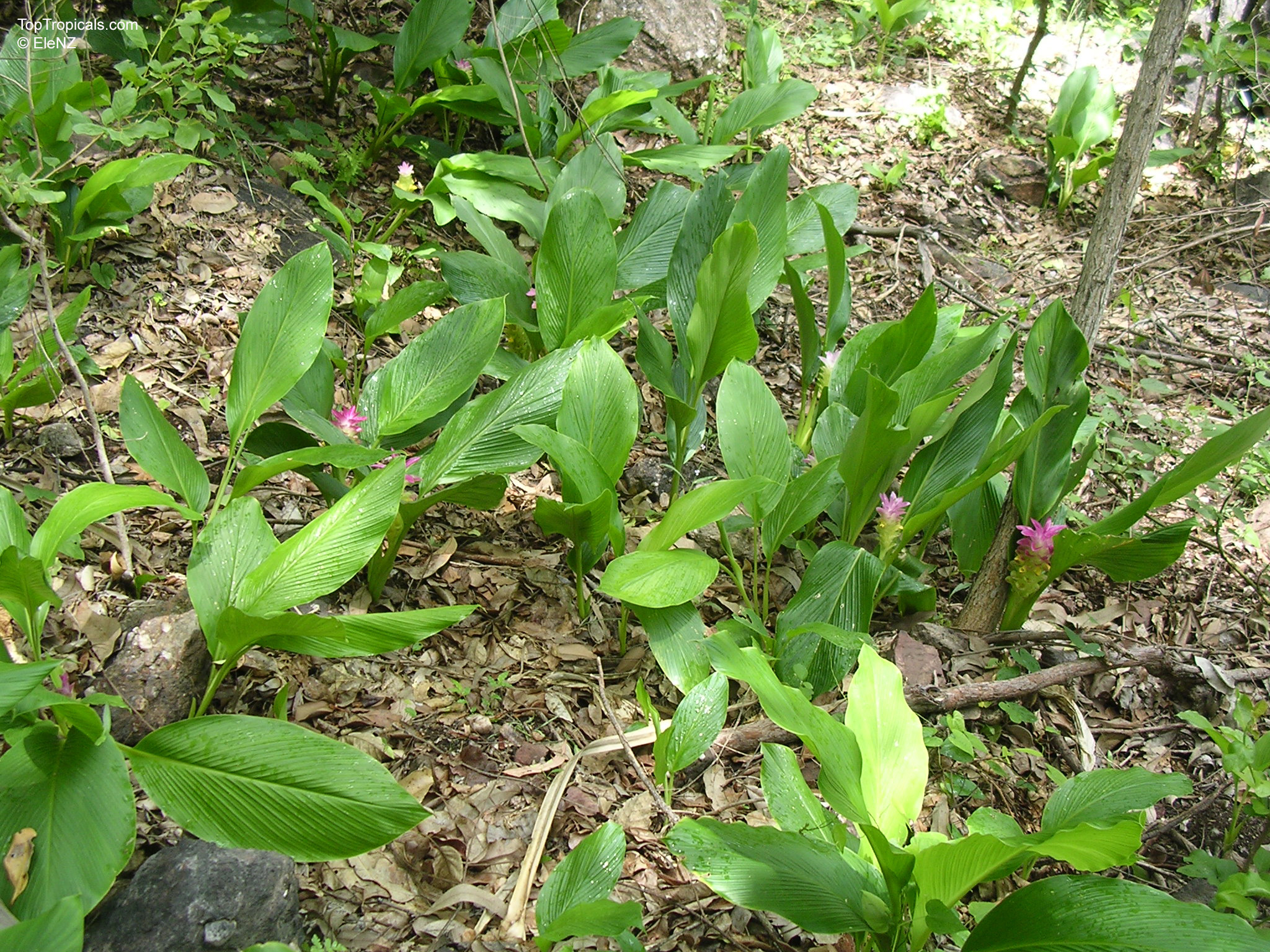
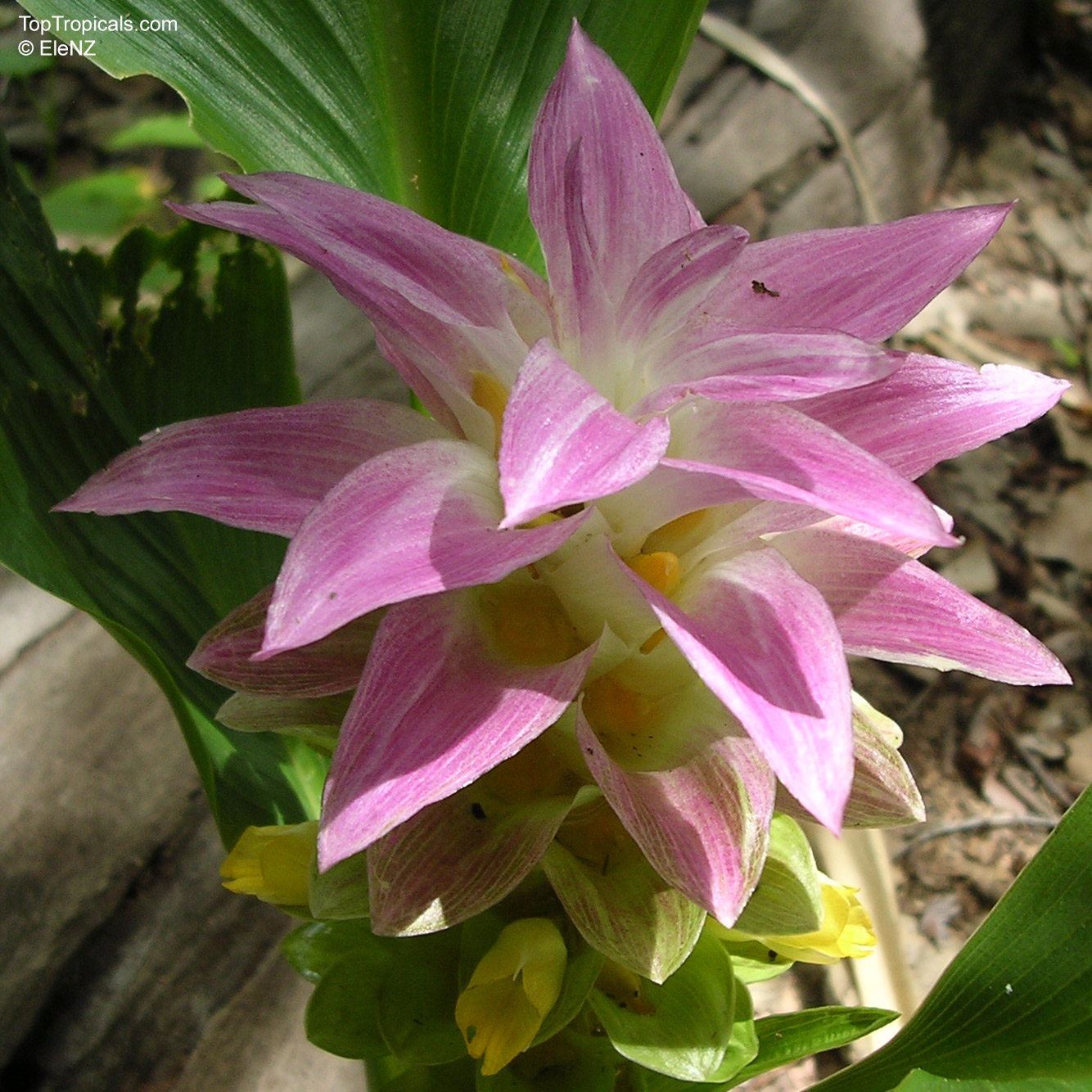
(Curcuma longa), commonly known as Turmeric, is a rhizomatous herbaceous perennial in the Zingiberaceae family, originating in tropical South and Southeast Asia and known primarily as an ancient cultivated crop rather than as a truly wild species. It forms clumps of broad, strongly veined green leaves arising from thick, branching underground rhizomes and typically reaches 2-4 feet (60-120 cm) tall. The inflorescences consist of overlapping pale green to whitish bracts, often flushed with pink toward the top, with small yellowish to pale yellow true flowers emerging between them. The foliage dies back seasonally, leaving the rhizomes dormant until warm conditions stimulate new growth.
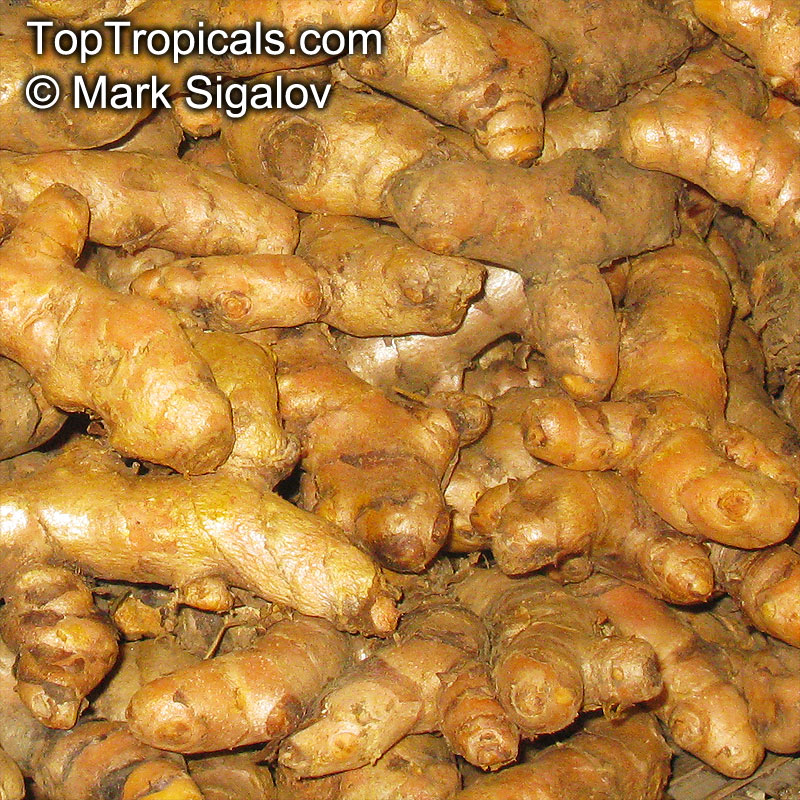
(Curcuma longa) grows best in warm, humid conditions, partial shade to bright filtered light, and fertile, well-drained soil with abundant moisture during active growth. Watering should be greatly reduced after the foliage dies back. The aromatic yellow-orange rhizomes are dried and ground to produce turmeric, widely used as a spice, food coloring, and traditional medicinal ingredient; they are rich in curcuminoids, particularly curcumin. Hardy in approximately USDA Zones 8-11, the rhizomes can survive colder winters when deeply mulched and protected from prolonged freezing and excessive winter moisture, while in colder climates they can be lifted or grown in containers and overwintered indoors. (Curcuma longa), commonly known as Turmeric, is a rhizomatous herbaceous perennial in the Zingiberaceae family, originating in tropical South and Southeast Asia and known primarily as an ancient cultivated crop rather than as a truly wild species. It forms clumps of broad, strongly veined green leaves arising from thick, branching underground rhizomes and typically reaches 2-4 feet (60-120 cm) tall. The inflorescences consist of overlapping pale green to whitish bracts, often flushed with pink toward the top, with small yellowish to pale yellow true flowers emerging between them. The foliage dies back seasonally, leaving the rhizomes dormant until warm conditions stimulate new growth.
(Curcuma longa) grows best in warm, humid conditions, partial shade to bright filtered light, and fertile, well-drained soil with abundant moisture during active growth. Watering should be greatly reduced after the foliage dies back. The aromatic yellow-orange rhizomes are dried and ground to produce turmeric, widely used as a spice, food coloring, and traditional medicinal ingredient; they are rich in curcuminoids, particularly curcumin. Hardy in approximately USDA Zones 8-11, the rhizomes can survive colder winters when deeply mulched and protected from prolonged freezing and excessive winter moisture, while in colder climates they can be lifted or grown in containers and overwintered indoors.
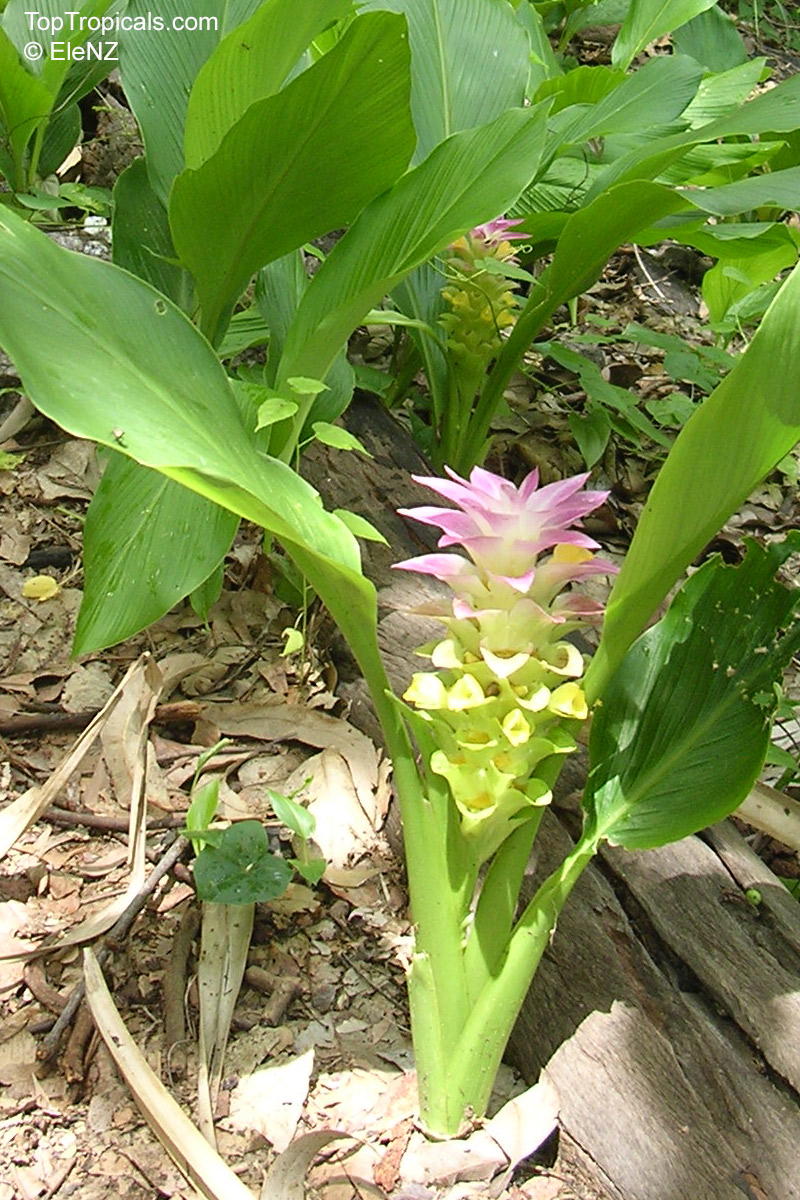
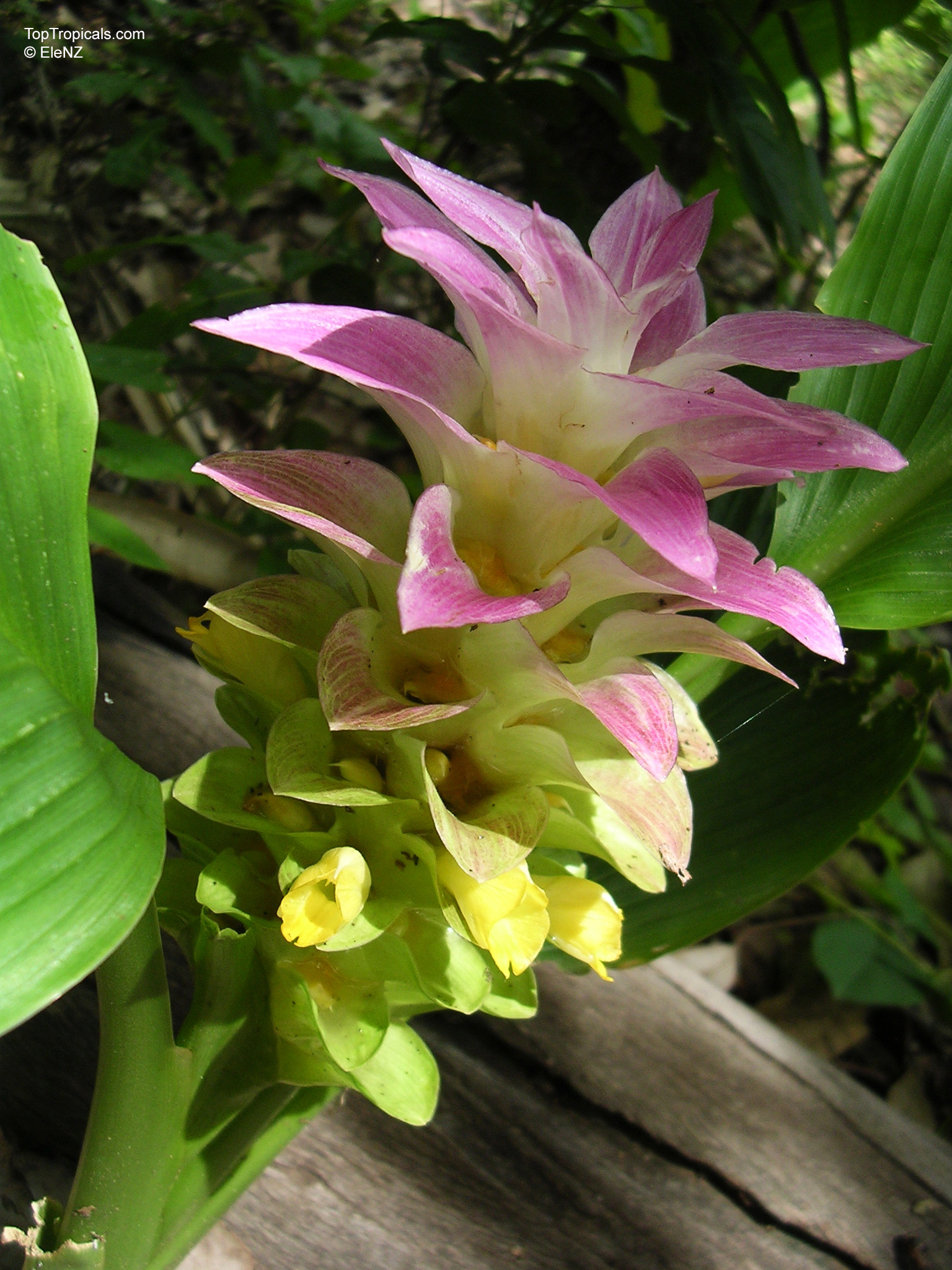
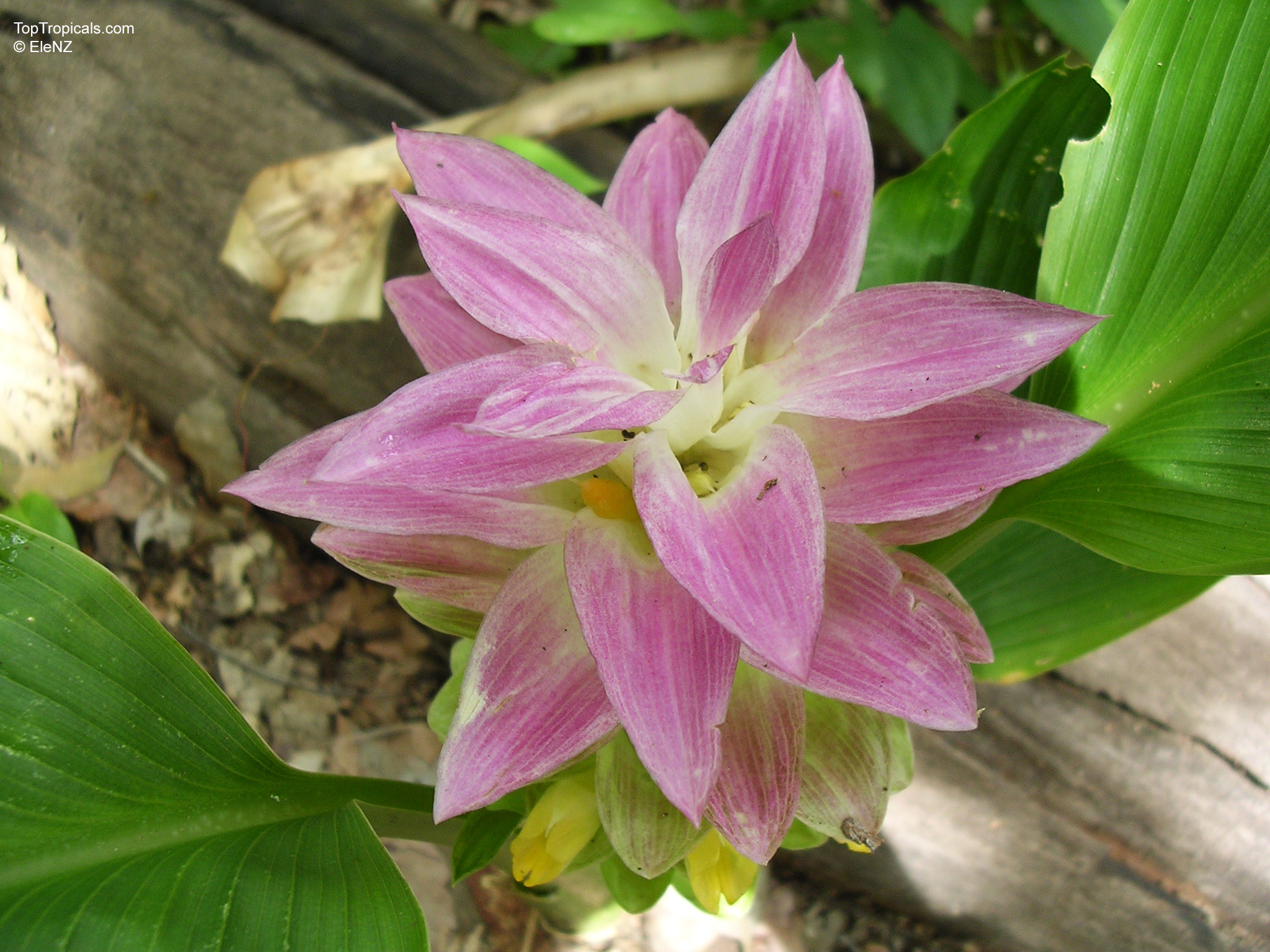
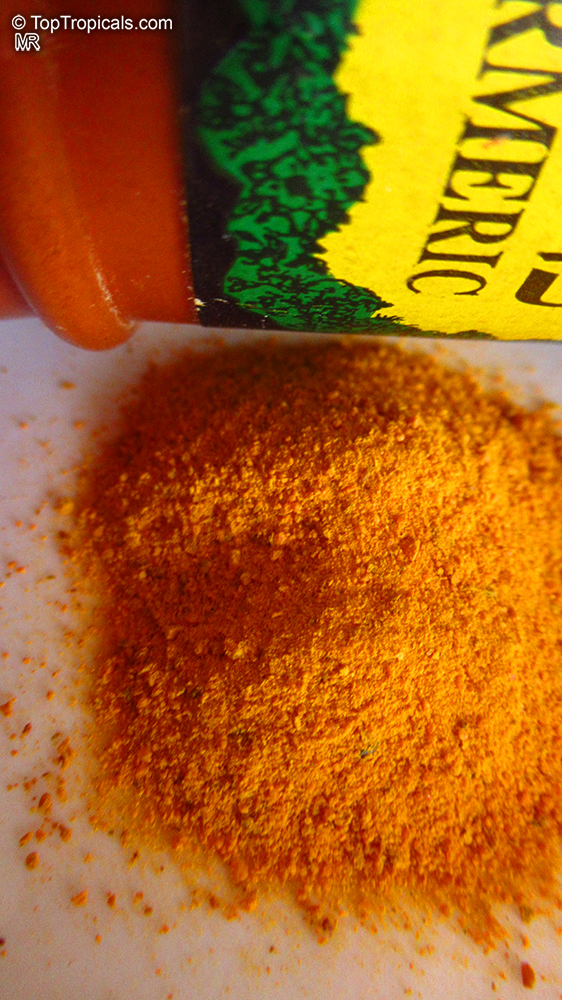
This plant is deciduous through winter-spring.
Recommended Fertilizer: SUNSHINE Robusta - Rapid Growth Booster
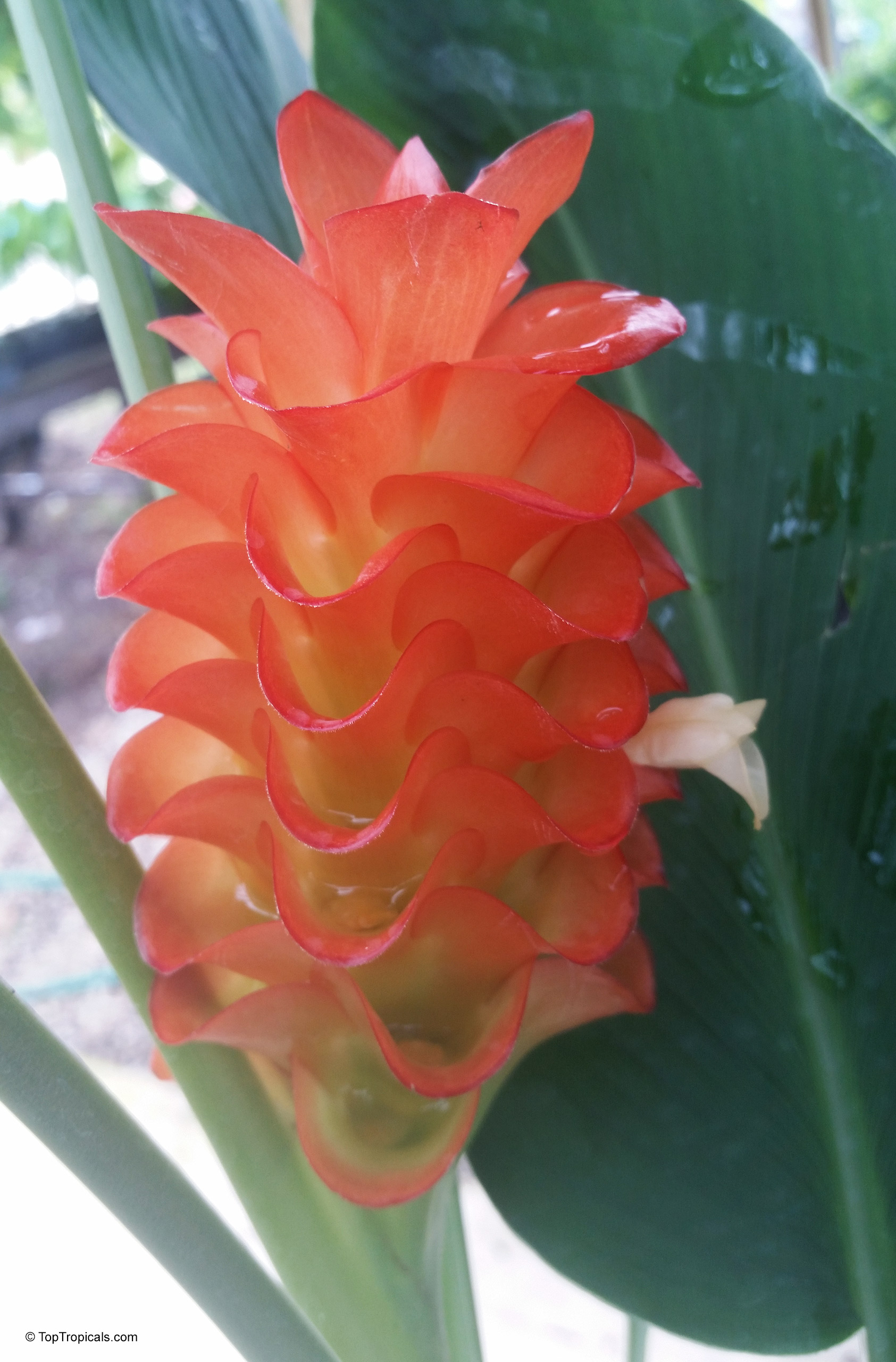
Botanical names: Curcuma roscoeana, Curcuma kurzii, Curcuma coccinea
Common names: jewel of Burma, Orange Ginger, Orange Siam Tulip
Family: Zingiberaceae
Origin: Southeast Asia
USDA Zone: 9-11
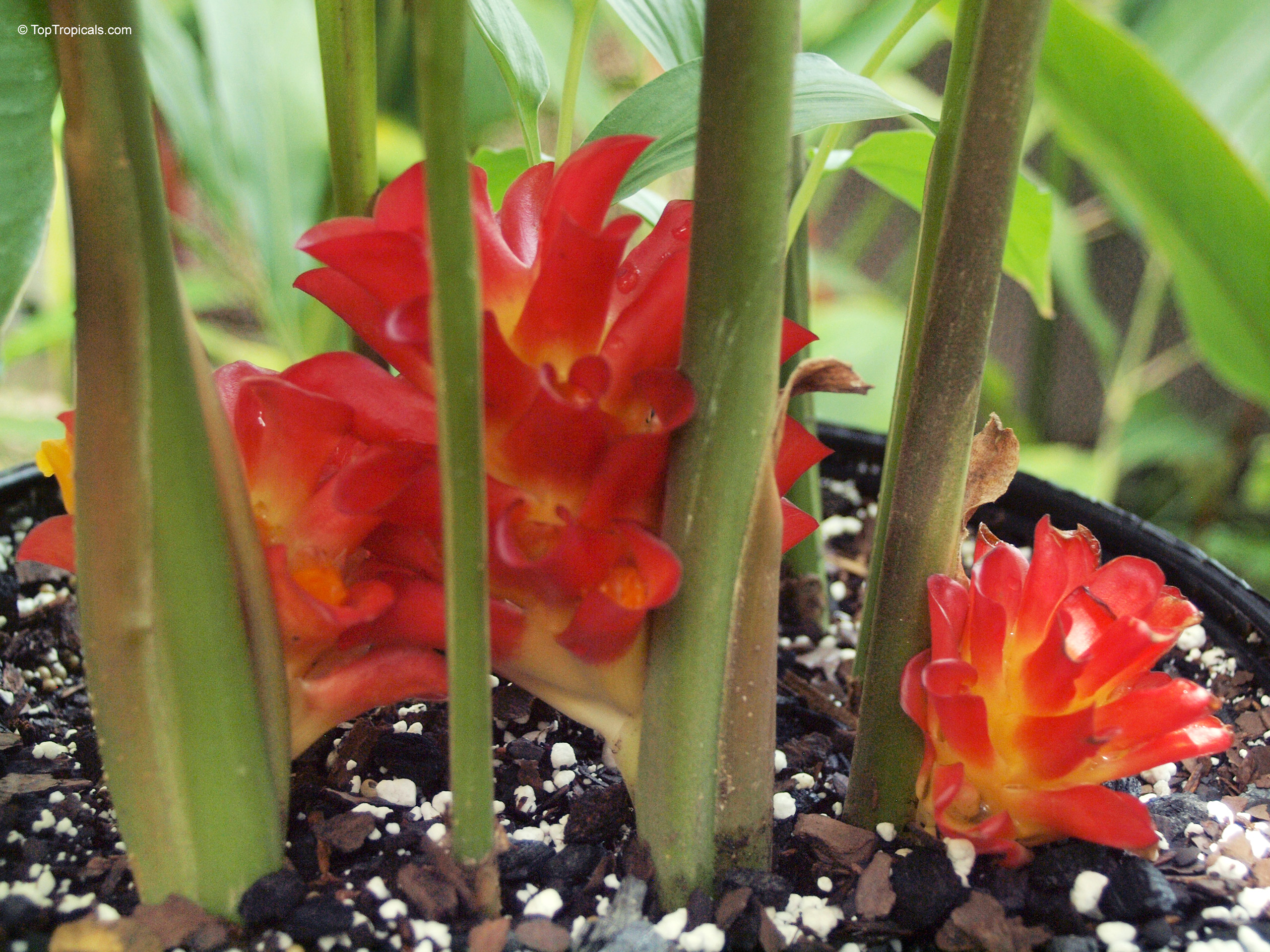
Curcuma roscoeana is a small shrub with beautiful yellow or orange flowers and deep red-orange bracts native to Southeast Asia. Growing to a height of 2-5 feet, it is a deciduous plant that prefers semi-shade to shade and moderate water. It is hardy in the USDA Hardiness Zones 9 to 11.
When the weather is warm, the colorful blooms of Curcuma roscoeana appear in the early autumn and last for several weeks, making it an attractive addition to any landscape.
If you live in a cold region, Curcuma roscoeana can be grown in a pot indoors as well. To keep this small shrub healthy, ensure it is in a spot with bright, indirect sunlight and provide ample water, particularly during the winter. Watering once a week, when the soil is dry, should be sufficient. Make sure to check the soil's moisture before watering and reduce watering if the soil doesn't appear dry. Fertilize the plant once a month during the growing season for best results.
Curcuma roscoeana is an easy-to-care-for plant that adds a touch of beauty and color to any space. With its vibrant blooms and simple maintenance, it's an ideal choice for any gardener.


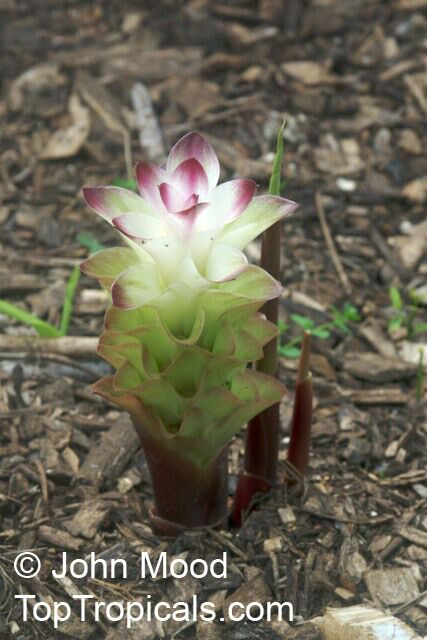
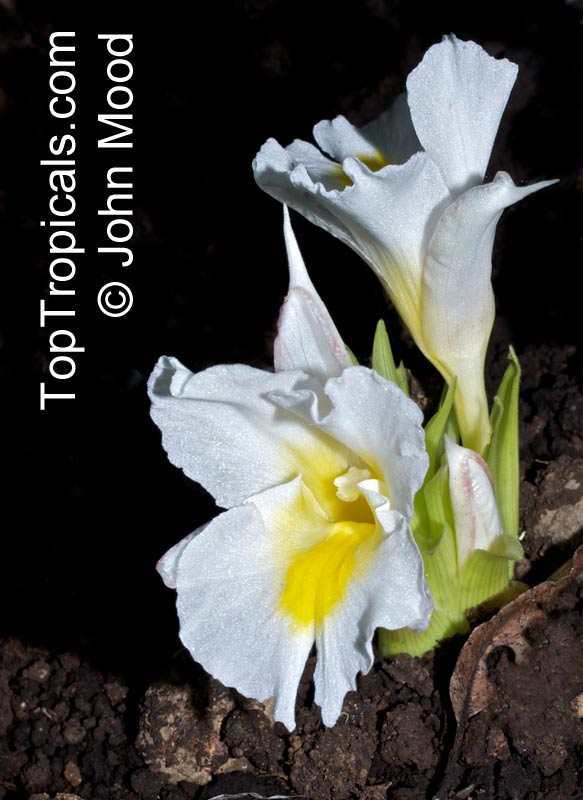
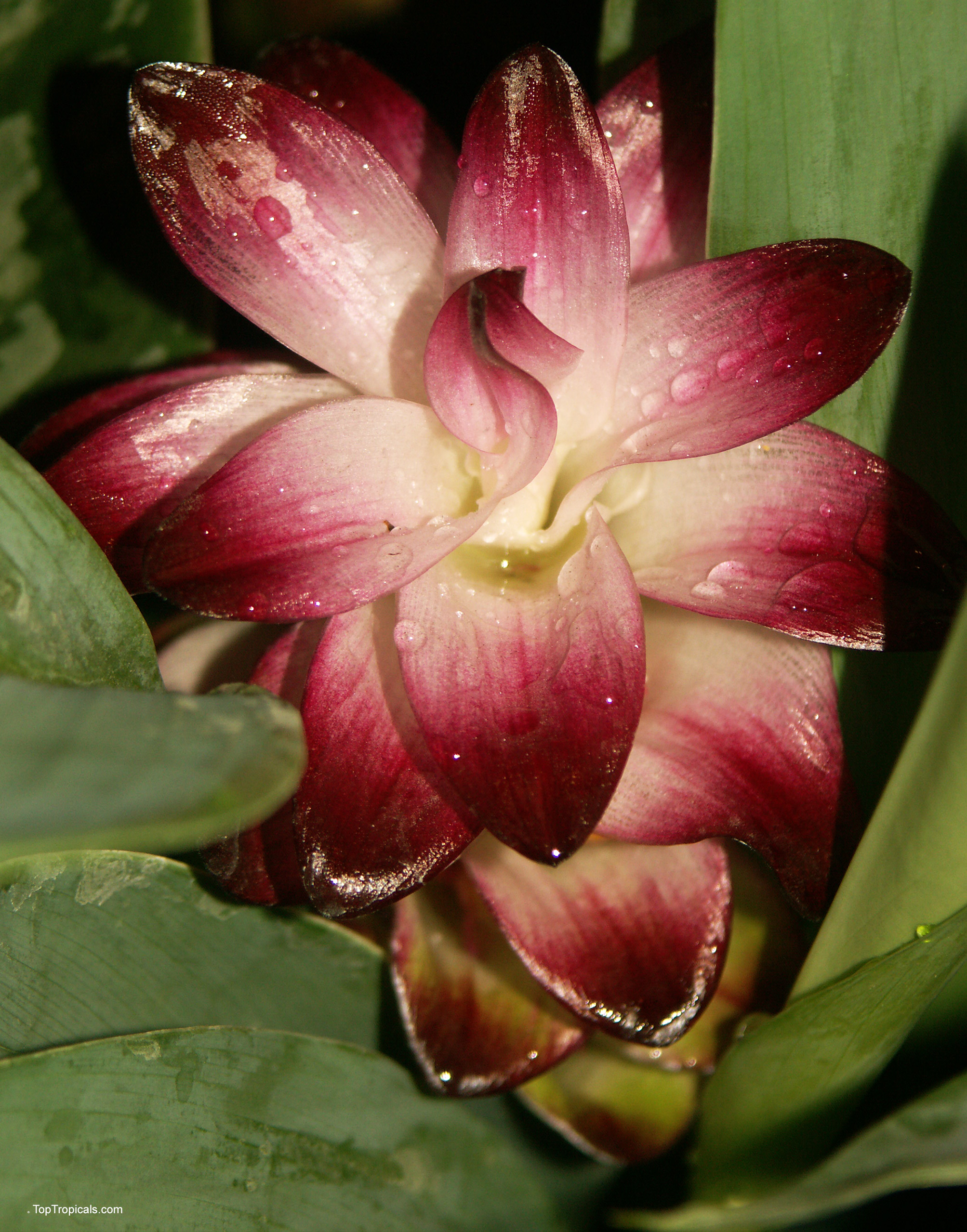
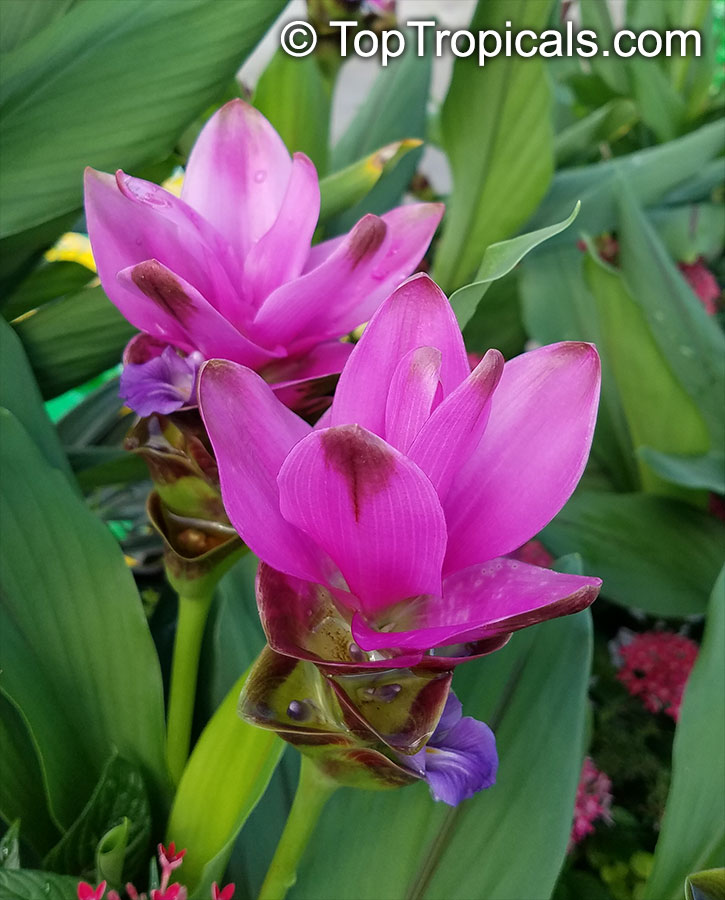
Botanical name: Curcuma sp.
Common names: Turmeric, Siam Tulip
Family: Zingiberaceae
Origin: Southeast Asia, Thailand
USDA Zone: 8-11


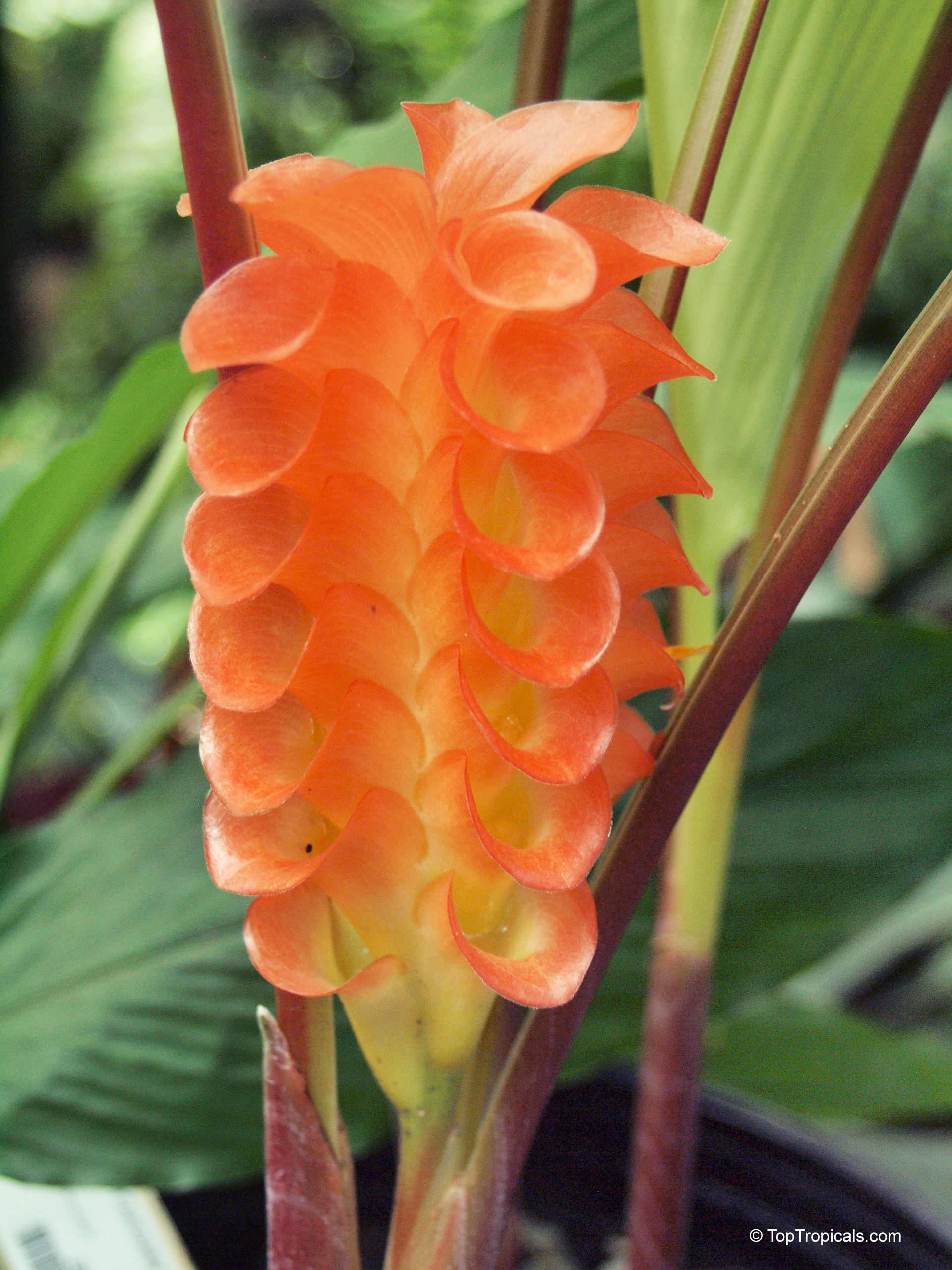
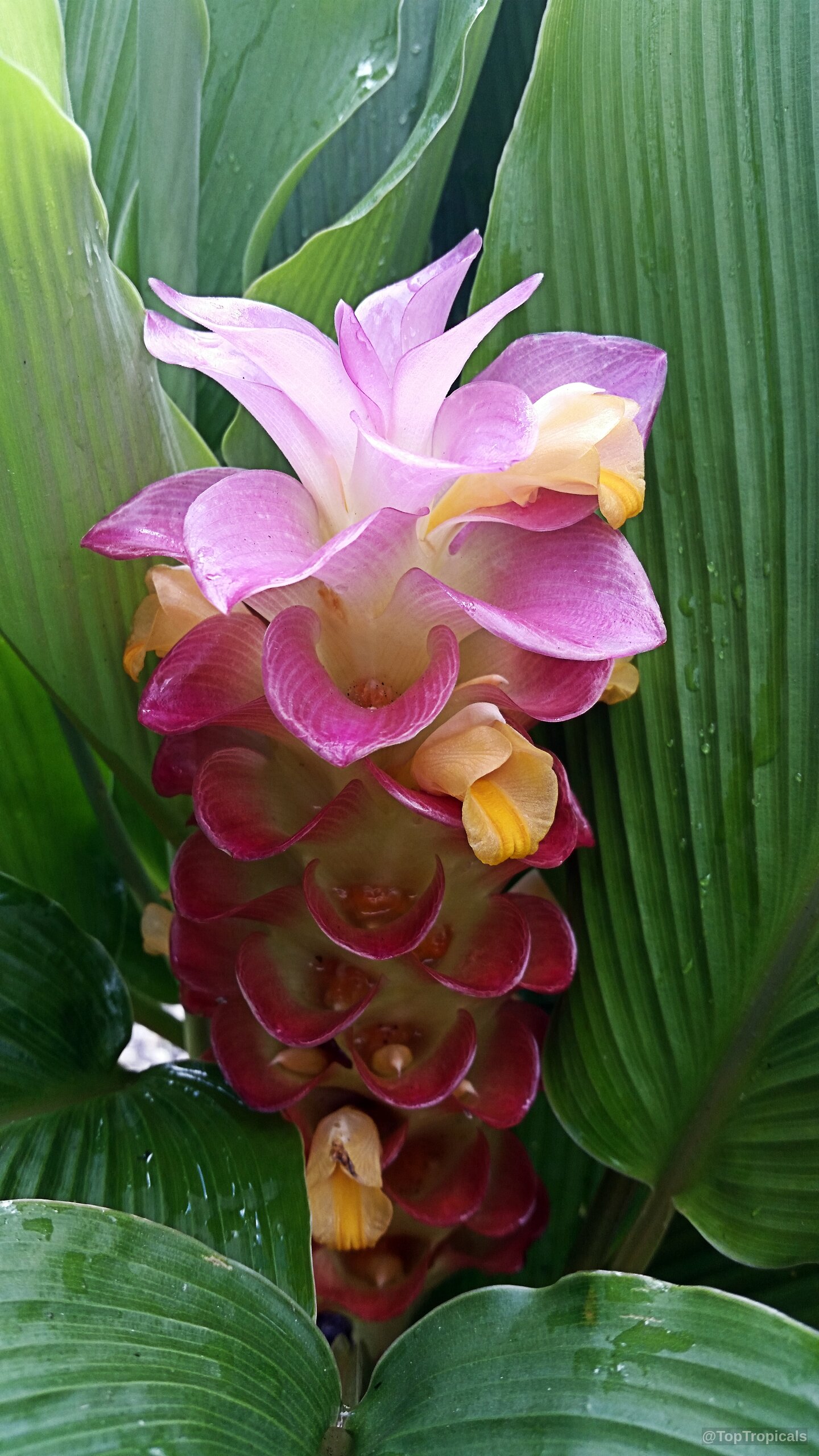
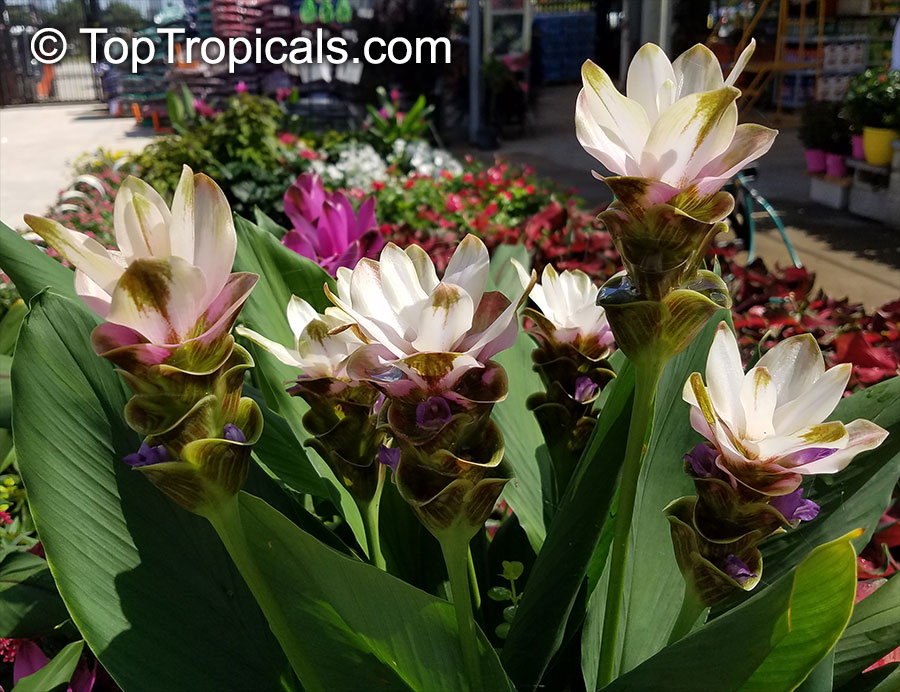
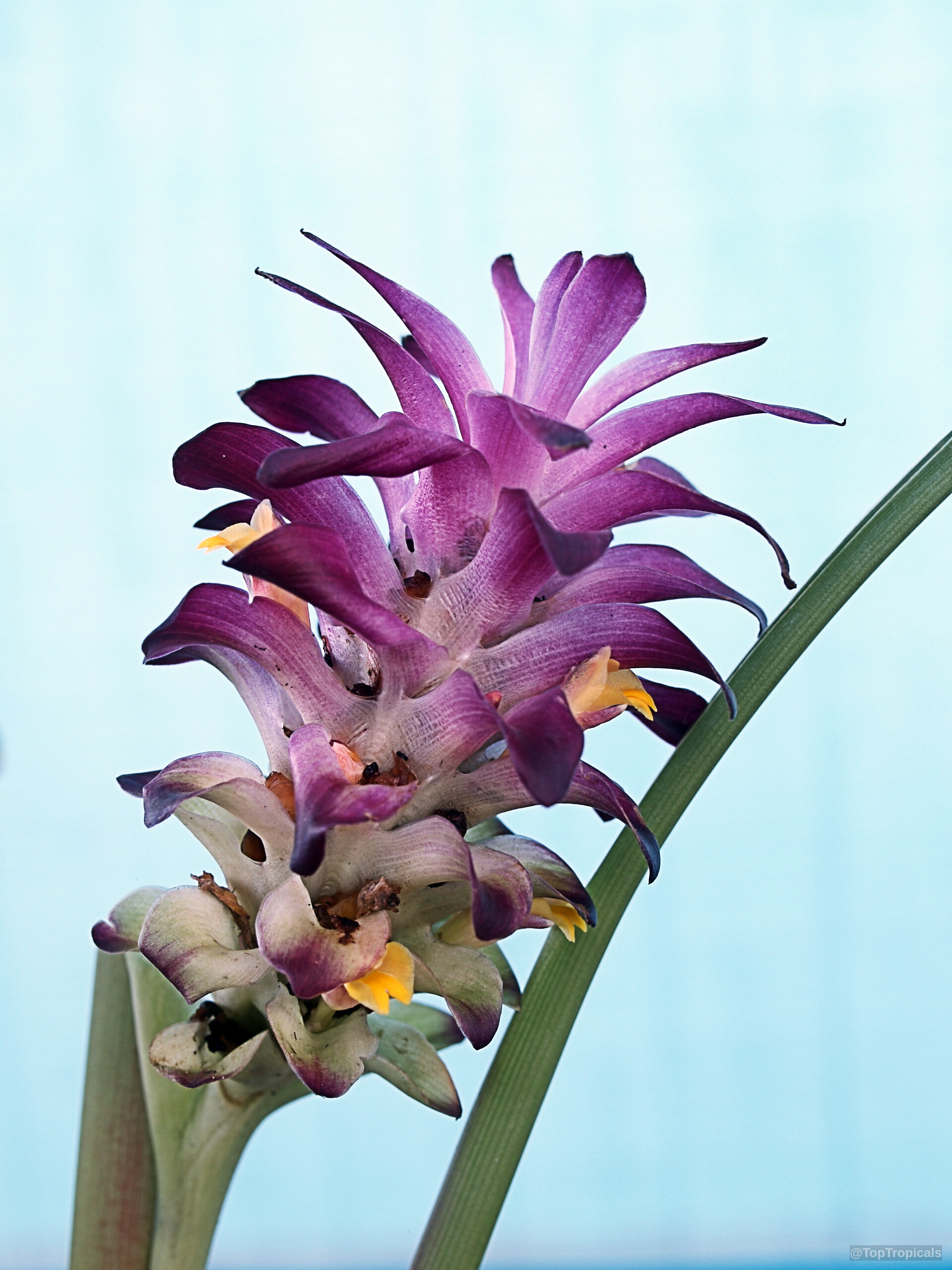
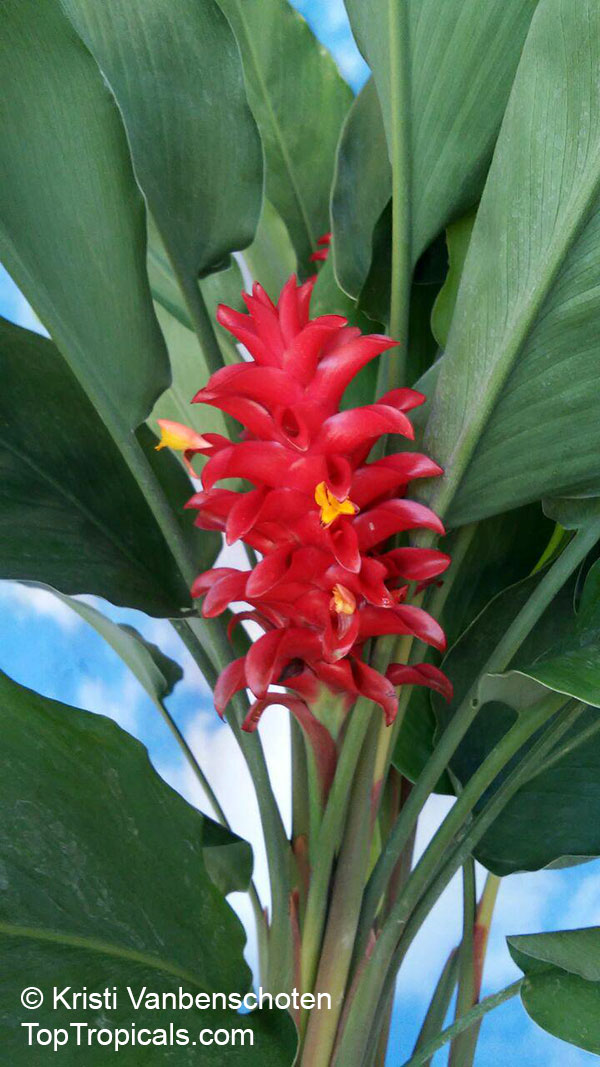
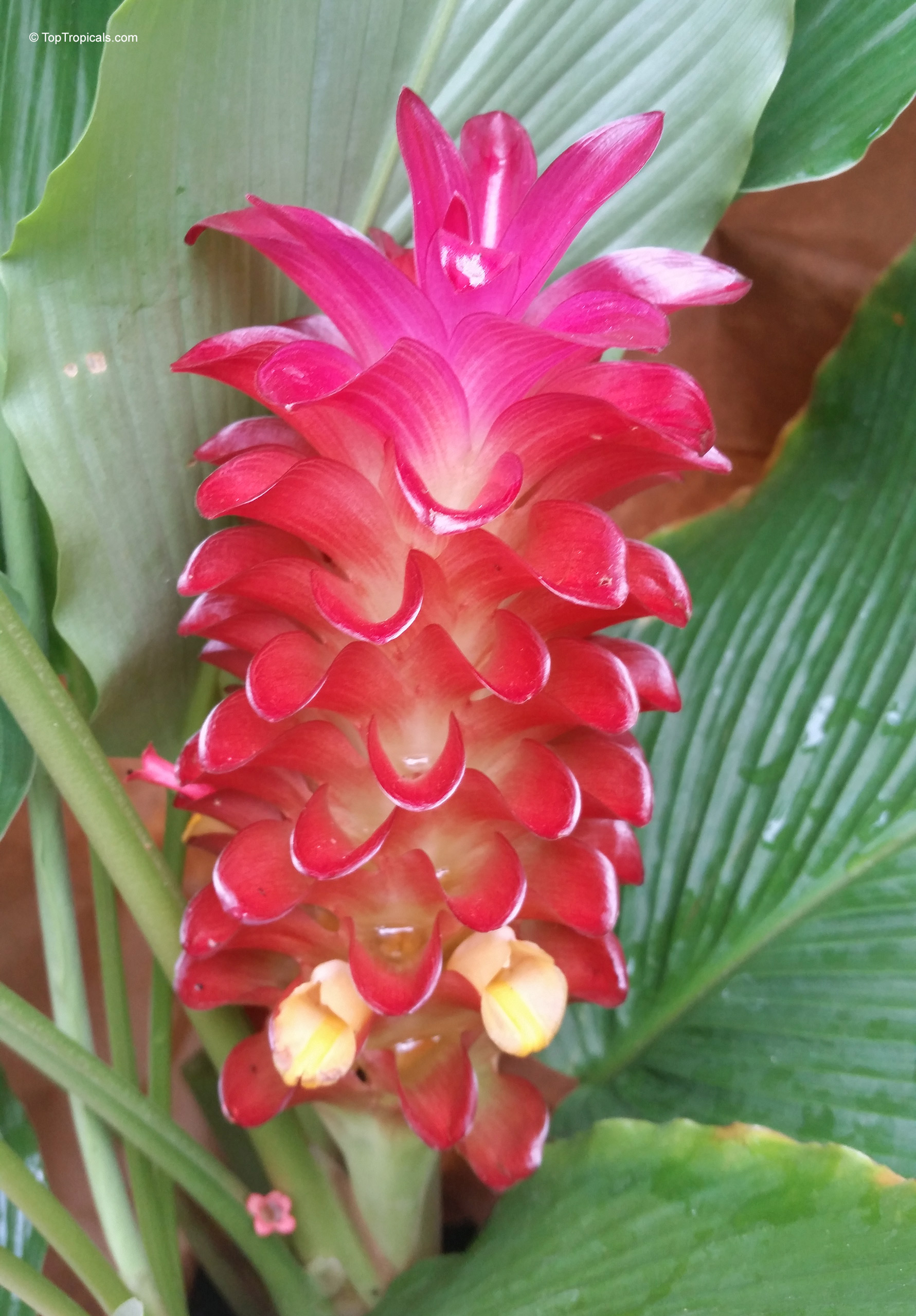
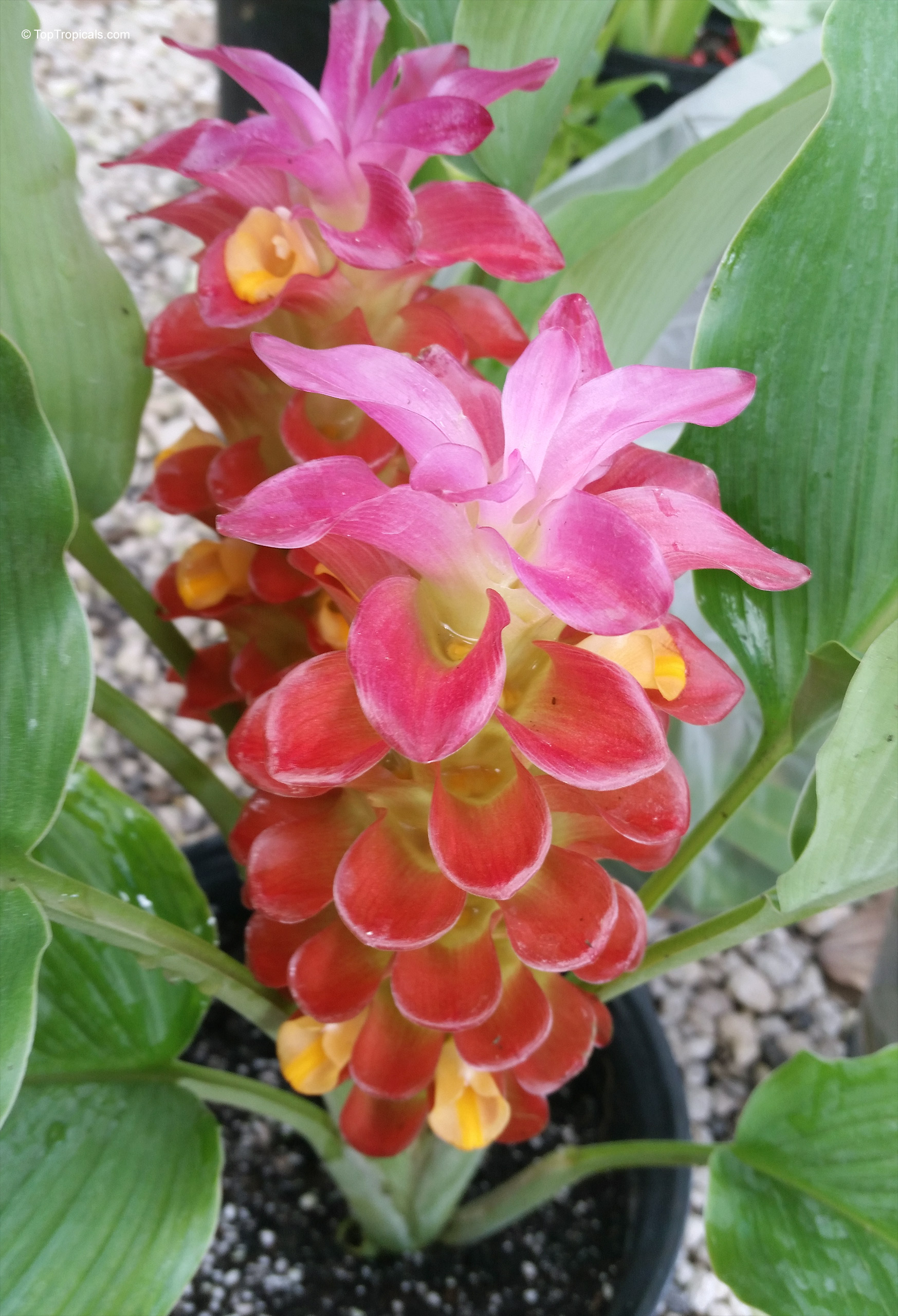
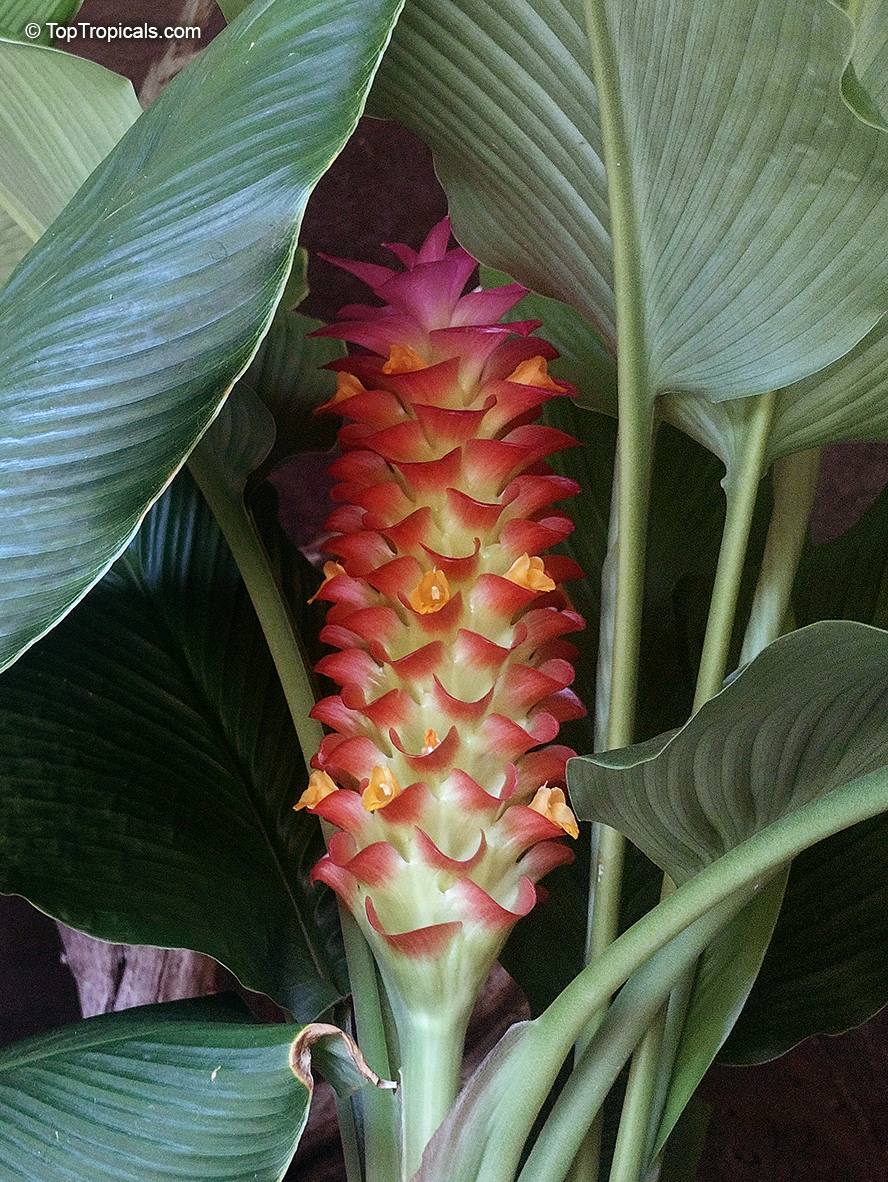
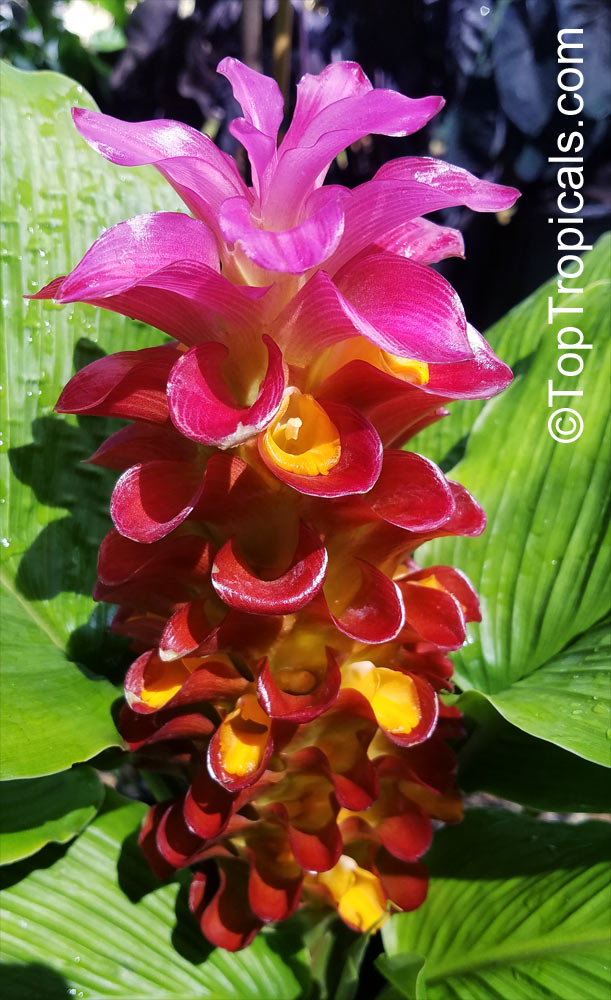
Curcuma is a genus of rhizomatous herbaceous perennials in the Zingiberaceae family, comprising more than 100 species native to tropical and subtropical Asia, with some species extending to northern Australia and the western Pacific. Plants arise seasonally from underground rhizomes and typically form clumps 1-5 feet (30 cm-1.5 m) tall, with broad, often prominently pleated leaves. Many ornamental species and cultivars produce striking inflorescences composed of overlapping bracts in shades of white, pink, purple, red, orange, yellow, or green, with the smaller true flowers emerging between them. Some ornamental Curcumas, particularly selections derived from Curcuma alismatifolia and related species, are commonly known as Siam Tulips and are valued as both garden and cut flowers.
Curcumas grow best in warm conditions, bright filtered light to partial shade, and fertile, well-drained soil with regular moisture during active growth. Most undergo a pronounced seasonal dormancy, when the foliage dies back and watering should be greatly reduced until new shoots emerge. Cold tolerance varies among species, but many ornamental Curcumas are suited to USDA Zones 8-11 with winter protection toward the colder end of the range; elsewhere the rhizomes can be overwintered indoors. Several members of the genus are important food, spice, or medicinal plants, most notably Curcuma longa, whose dried rhizomes are the source of turmeric, but these uses should not be assumed for ornamental species or cultivars. The genus offers a particularly diverse range of foliage, colorful long-lasting bracts, and growth forms for tropical gardens, containers, and cut-flower production.

Recommended Fertilizer: SUNSHINE Robusta - Rapid Growth Booster
Last one
Recommended Fertilizer: SUNSHINE Robusta - Rapid Growth Booster
Botanical name: Curcuma sp.
Common name: Garnet Ginger
Cultivar: Garnet
Family: Zingiberaceae
USDA Zone: 9-11
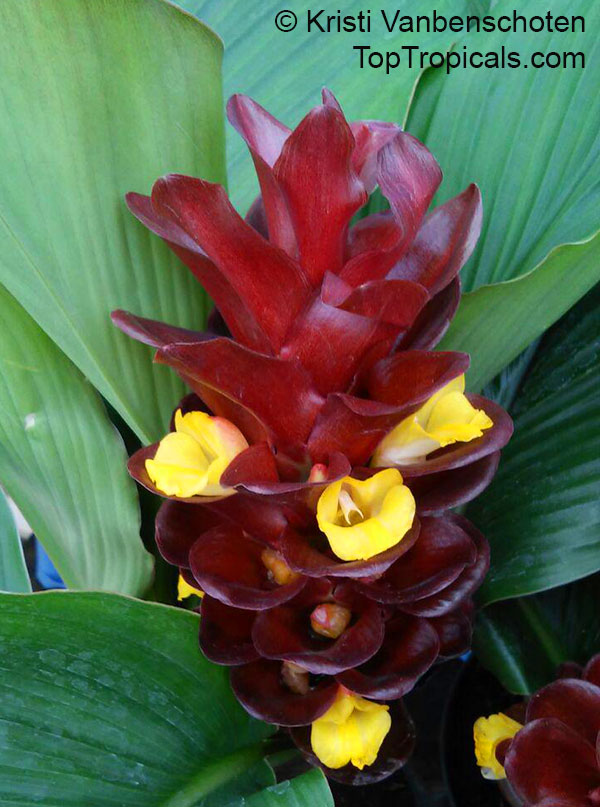
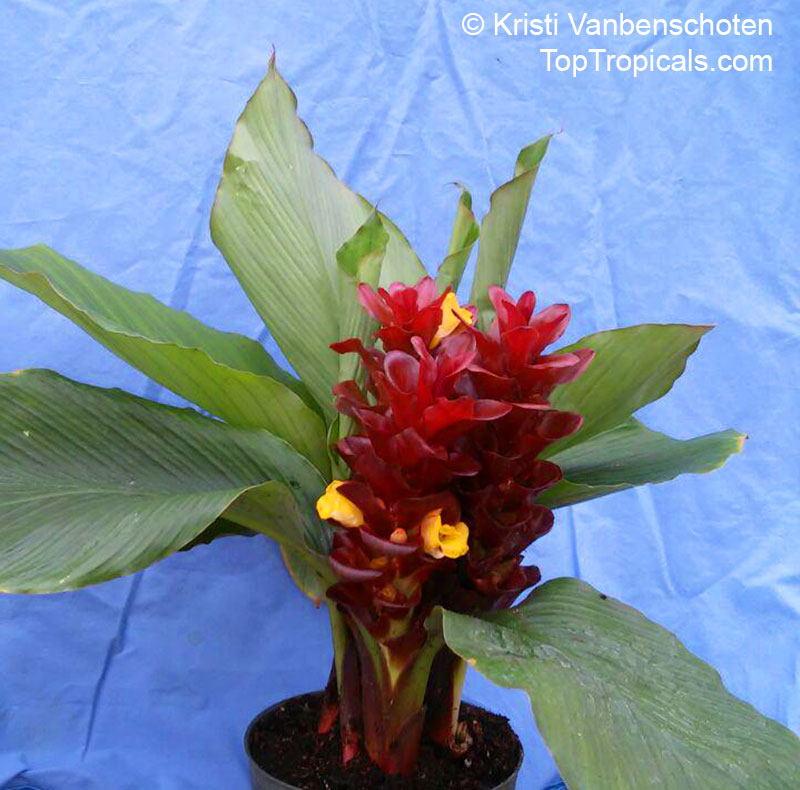
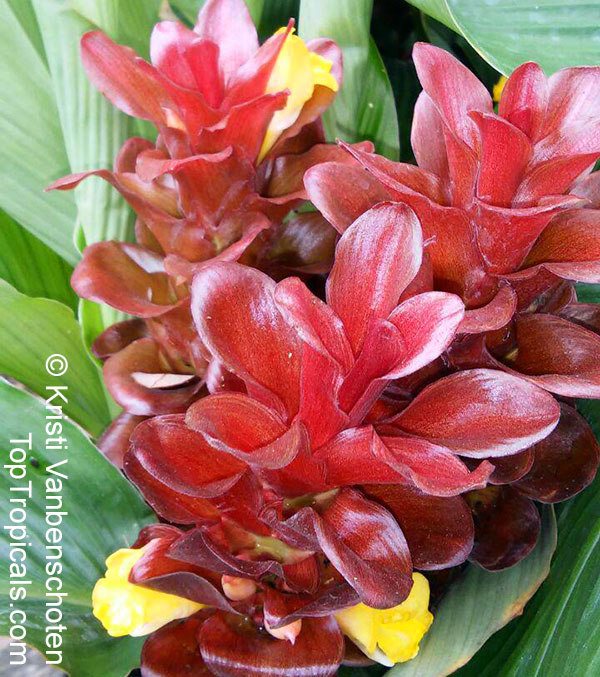
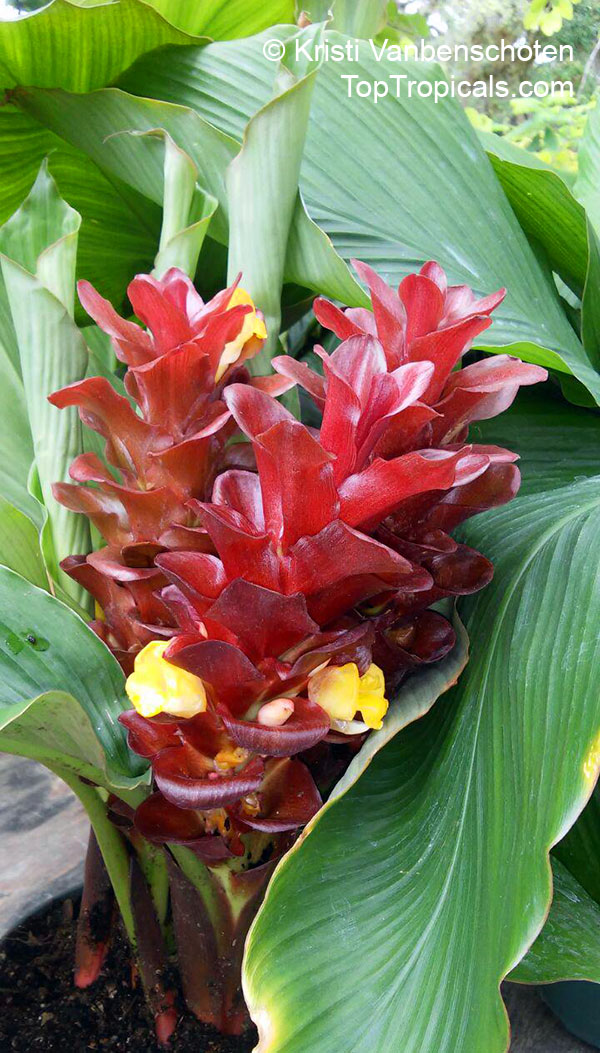
Curcuma 'Garnet' is an ornamental hybrid distinguished by its dramatic dark garnet-red to burgundy inflorescence bracts, which contrast strikingly with bright yellow flowers emerging between them. The dense, cone-shaped inflorescences rise among broad green leaves and provide a bold tropical display. This cultivar is grown primarily for its unusually deep bract color, one of its most distinctive ornamental features.
'Garnet' thrives in warm, humid conditions with rich, well-drained soil and regular moisture during active growth. It is suitable for USDA zones 9 to 11, with protection from frost in the colder part of its range. Plants typically enter dormancy after the growing season, when watering should be reduced.
The name 'Garnet' can cause confusion in cultivation. Specialist Gingerwood Nursery notes that at least three different hybrid Curcuma are associated with similar names: the American 'Garnet', 'Thai Garnet', and Sawasdee 'Garnet'. These are distinct plants of different origins and should not be treated as synonyms.
Botanical names: Boesenbergia rotunda, Curcuma rotunda
Common names: Chinese Keys, Fingerroot, Lesser Galangal, Chinese Ginger
Family: Zingiberaceae
Origin: Southeast Asia
USDA Zone: 9-10

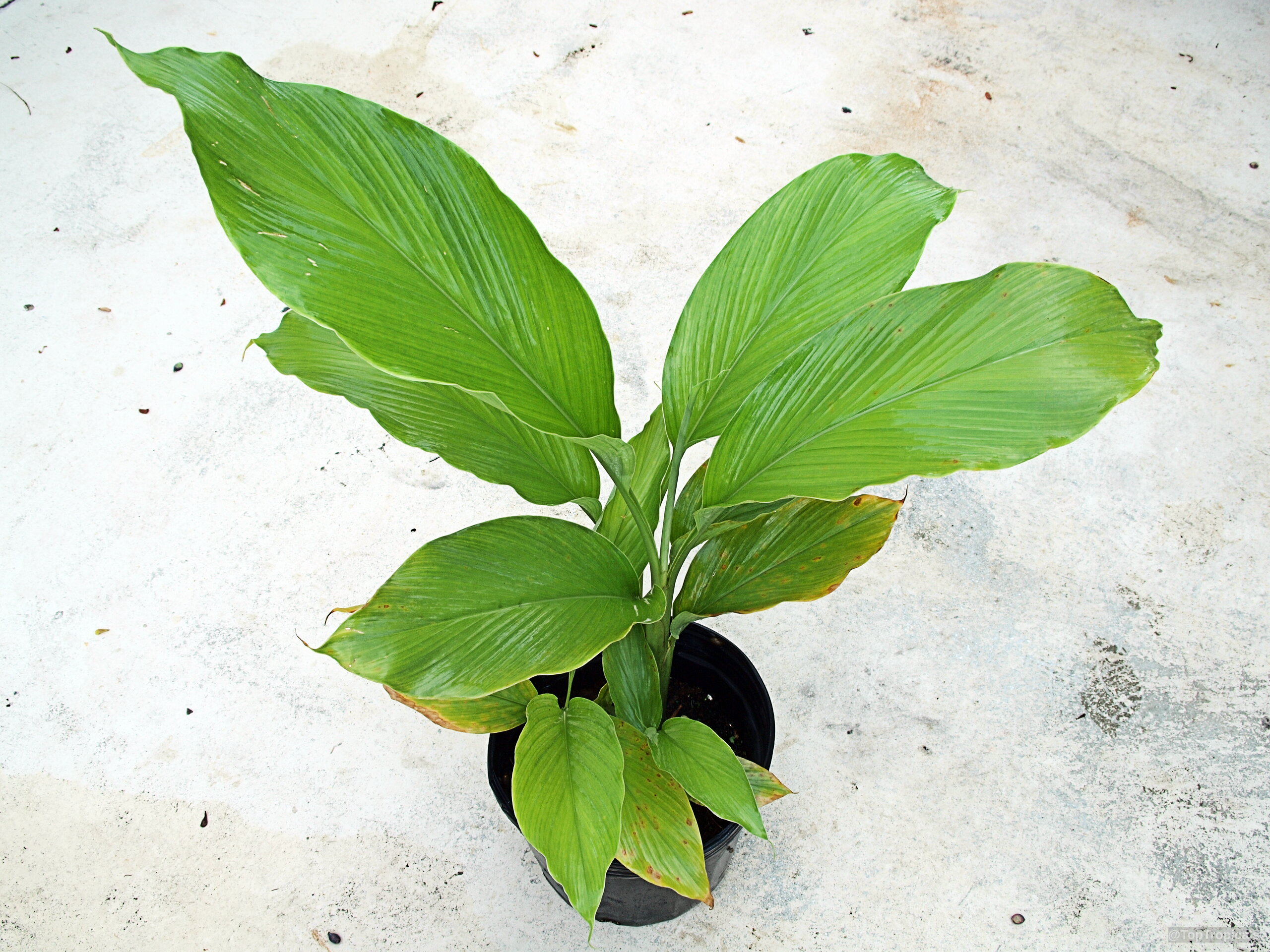
Boesenbergia rotunda, or Chinese Keys, is a small shrub native to Southeast Asia and grows to a height of 2-5 feet. It has large, glossy leaves, and its pink to off-white flowers are tubular and aromatic, and appear in terminal inflorescences. It is often planted for ornamental purposes, and its rhizomes are typically used as a vegetable in main dishes, or eaten raw when young.
When grown in USDA Zone 9-11, the plant should be placed in semi-shade and be given regular, but moderate watering. It is also important to give Boesenbergia rotunda an adequate amount of nitrogen to ensure its continued vitality. In colder regions, it can be grown in a pot, and should be transferred indoors during the winter.
Boesenbergia rotunda bears interesting, edible fruits, and has an impressive ethnomedical history. The small, hard fruits are often used as a spice or herb, and have a slightly sweet and sour taste. In traditional medicine, the plant is touted for its medicinal uses, and believed to have antispasmodic, anti-inflammatory and analgesic properties. Eating the fruit can also directly benefit health, as it is said to improve circulation, ease stomach pain, and relieve menstrual cramps. In addition, it is thought to help improve digestion and reduce inflammation. One mature plant can produce up to sixty fruits per season.


Botanical names: Hitchenia careyana, Curcuma careyana
Common name: Praying Mantle Ginger
Family: Zingiberaceae
USDA Zone: 9-10

| Next | |
Use link to repeat this search:
https://toptropicals.com/cgi-bin/garden_catalog/cat.cgi?find=curcuma&search_op=and&keyword_op=and&language=e&number=10
&no_change_lang=1&user=tt&sale=1&first=0