🌸 Transform your garden with the Chinaberry Tree (Melia azedarach) - a fast-growing, fragrant beauty that doubles in size in just one season!
🌸 Its lilac flowers and sweet vanilla-like scent will fill your garden with elegance, while its hardy nature ensures it thrives even in colder climates.
🌸 Enjoy lush, green foliage and a lovely shade canopy, all with minimal care. Plus, it's low-maintenance, pest-resistant, and has medicinal benefits!
Ready to add this aromatic gem to your landscape? Don't wait bring home the Chinaberry Tree today!
Q: A horrible hailstorm hit last night, damaging
the majority of plants and trees on my property (piles of hail left like snow
- crazy!). Do you have any advice on how to give plants some extra TLC while
they recover? Any tips are appreciated.
A: Spring is here and in some areas of the
country, so is severe weather season. So what can you do to give your plants a
fighting chance when Mother Nature shows her ugly side? Here in Florida, spring
and summer thunderstorms are a normal occurance. Unfortunately, those storms
often come with small tornados, high winds and sometimes hail.
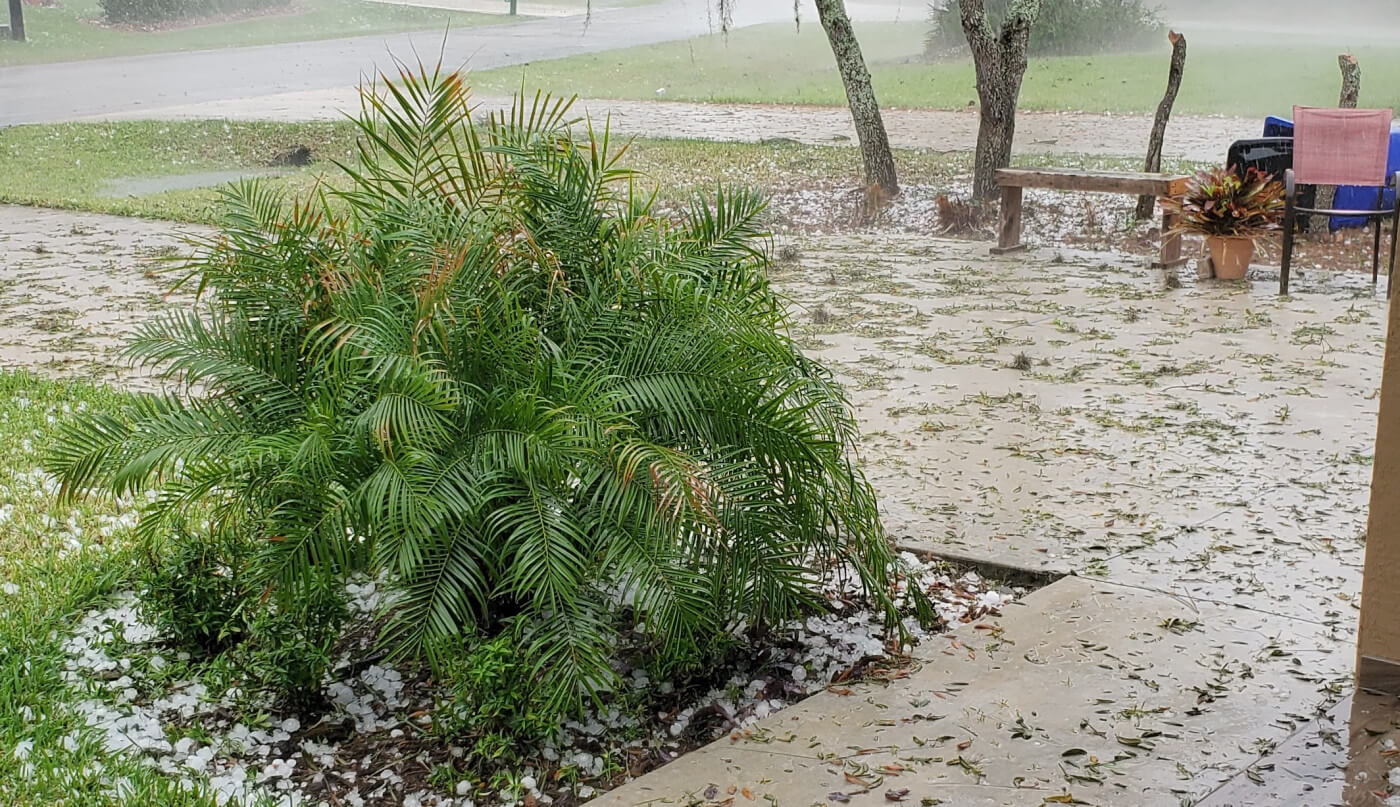
The photo below was from a hail storm that came through the north side
of Sebring, Florida in April of 2022.
So the question remains. What can we do to help our plants when this
type of weather strikes? Well the short answer is that there is not much we can
do to prevent it from happening. These storms usually strike pretty quickly
and most of us, given some warning, will chose to make sure vehicles are in
the garage if possible and that loose items in the yard are brought in to a
safe place. If you have time to move potted plants, that would be great, but it
is not worth risking your own safety to do so.
The good news is that most plants will recover on their own. Even though they may look ugly for a
while, patience is the best cure for most of them. Of course, the healthier
the plant, the better chance it will have when it suffers damage due to severe
weather. A good fertilizer plan along with regular doses of micronutrients
will help your plants to be at their best so that they can recover quickly.
And here is what you can do... CONTINUE READING >>
Smokey: Winter roots make spring easy. Keep that plant straight.
Sunshine: I am keeping it straight by not touching it at all.
Smokey: That is exactly what I was afraid of.
November is the month when the garden finally stops yelling at you.
The heat backs off, the bugs calm down, and the weeds take a breath.
This is when we get to take control again.
And as gardeners, we know the truth:
Either you use your garden, or your garden will use you in
spring.
Let me walk you through this, gardener to gardener.
"November is when the garden finally listens.
Give it a little direction now, shape it, guide it, and prepare it for
spring.
It will reward you all year." - Tatiana Anderson, Top Tropicals Plant
Expert
🌴
When The Garden Uses
You
We have all lived this scene:
March weeds appear, and two days later it looks like a jungle.
One missed watering turns into five wilted plants and a full week of
recovery.
A skipped feeding shows up as yellow leaves and panic searching
online.
Bugs return fast, and suddenly you are washing leaves every other
day.
Random plant purchases fill your yard with chaos and mismatched care
needs.
When the garden takes control, spring feels like hard work, not
joy.
Overgrown Tropical Garden Showing How a Garden Can Use You
📊
When You Use Your Garden
November flips the script.
Plants slow down. Soil stays warm.
This is the safest month to experiment, move plants, fix mistakes, and
redesign.
What you do now pays off huge in March.
You map out sun zones and shade zones.
You mulch now so weeds do not explode later.
You move plants to better positions without heat stress.
You remove the high-drama plants before they start another season of
complaints.
You pick what you want for next year instead of letting impulse buys
rule you.
Spring becomes smooth instead of overwhelming.
And honestly? It feels good to walk outside in March and see order instead
of chaos.
In the photo: Every garden starts in small steps. Biquinho Pepper
(front) in the garden.
What Benefit
Do You Get Personally?
Less watering.
Fewer bugs.
Bigger fruit.
Better flowering.
Less money wasted.
Less time fixing problems you could have prevented now.
This is why experienced tropical gardeners adore November.
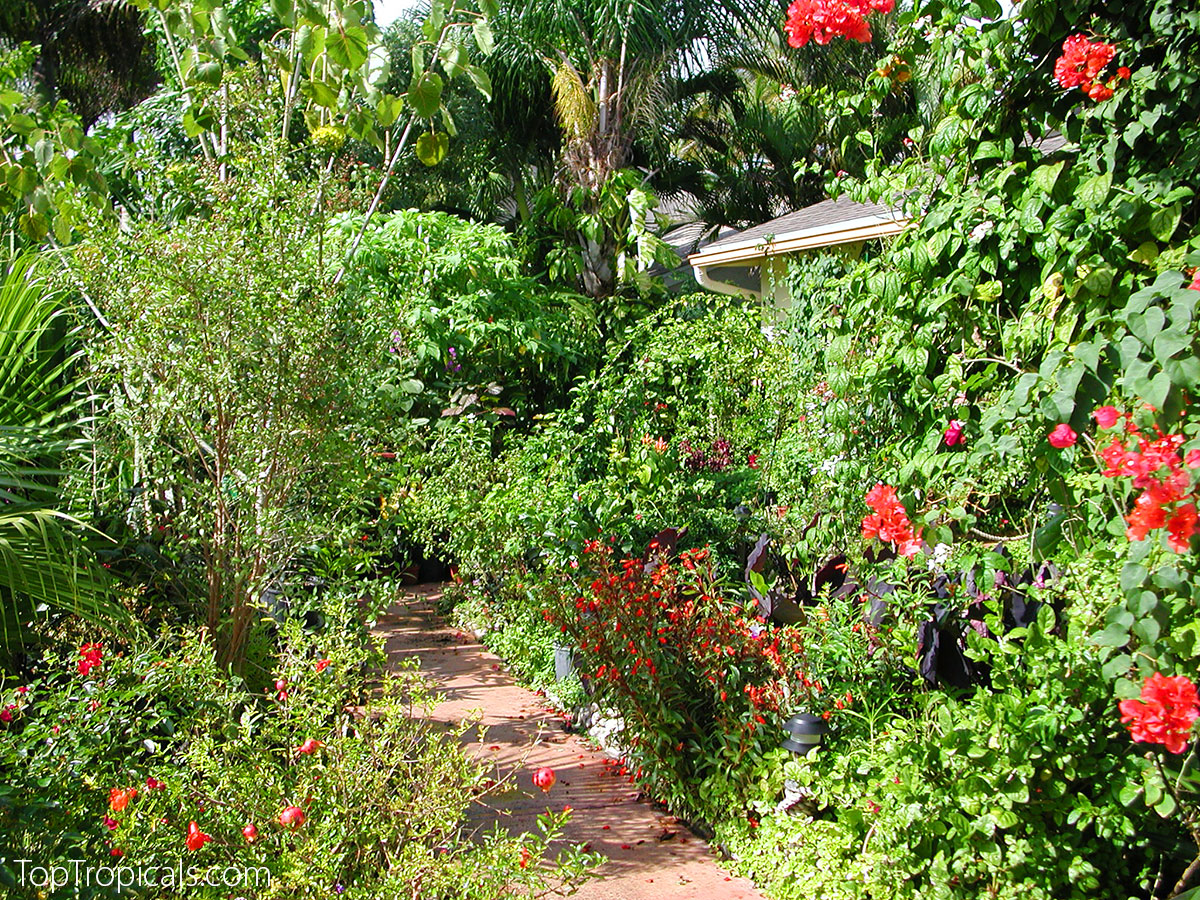
In the photo: Organized Tropical Garden. Firebush (lemon gold
variety) and Cordylines (Ti Leaf) make colorful spots in the garden.
🐭
Start With Something Small Today (5 Minutes)
Pick one:
Add mulch to the driest spot in your yard.
Cut one dead branch from any tree.
Move one pot to a better sun angle.
Pull three weeds from the worst area.
Water deeply once this week.
Small steps now save hours later.
⭐
One Short Story
Last year we planted a
Star Fruit in November.
By March, it was already covered in flowers, and have been harvesting fruit
non-stop since then!
That is what winter planning does: it gives plants a head start you can
actually see.
🐍
Plants That Will Use You If You Let Them
These are great plants, but only if you plan before planting them:
Papaya
- fits any yard, delicious fruit and natural digestive remedy
Pick even one of these and your garden starts giving back.
In the photo: Cattley Guava brings not only tasty fruit but also a
wonderful character with its amazing multi-color twisted trunk.
🌡️ November Advantage
You cannot ruin anything in November.
This is the safest, calmest month to shape your garden the way you want.
If you act now, spring becomes a victory lap.
If you wait, spring becomes a rescue mission.
In the photo: Adenium is a colorful accent in the
garden.
💐
Thanksgiving Tie-In
This is the season to reset, breathe, and be thankful for your outdoor
space.
A garden that works for you is one of the best gifts you can give yourself
going into the new year.
Start your November plan today.
Use your garden.
Do not let it use you.
In the photo: Megaskepasma, Iris, Colocasia, Crotons, Dracaena and Ti
Leaf bring instant tropical look to your garden.
Every so often a plant blooms and the whole greenhouse seems to slow
down.
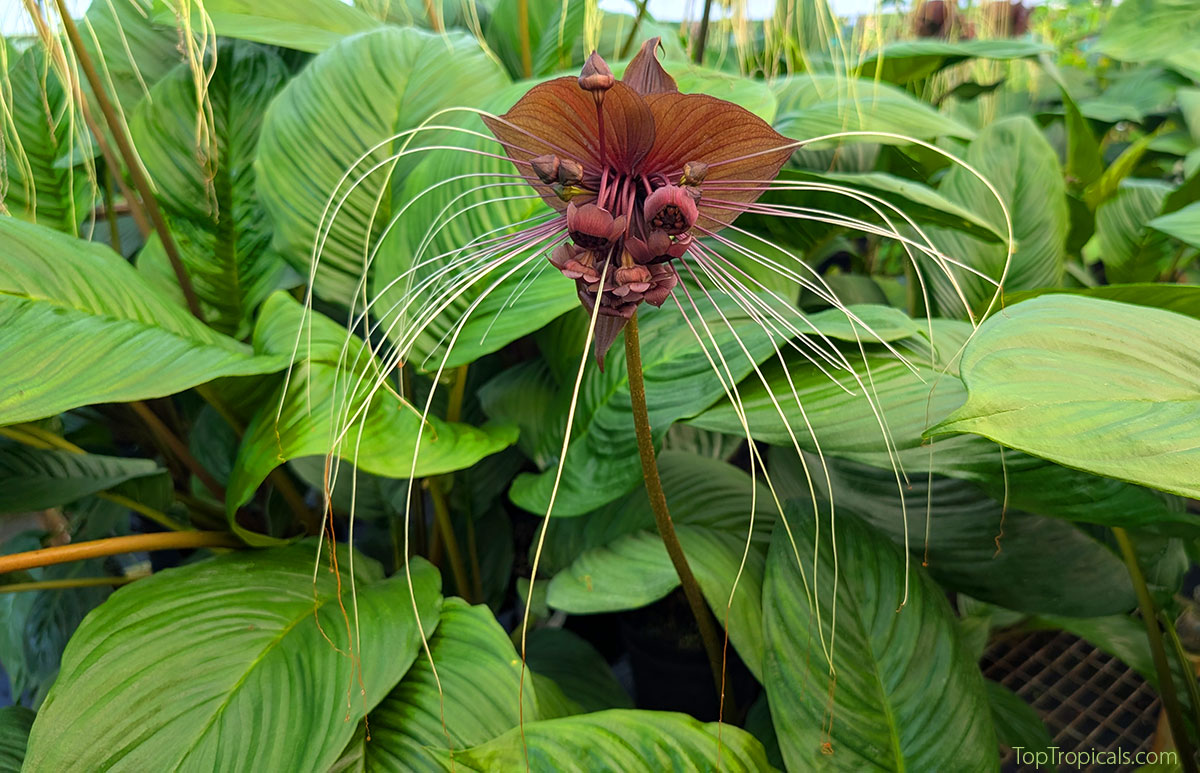
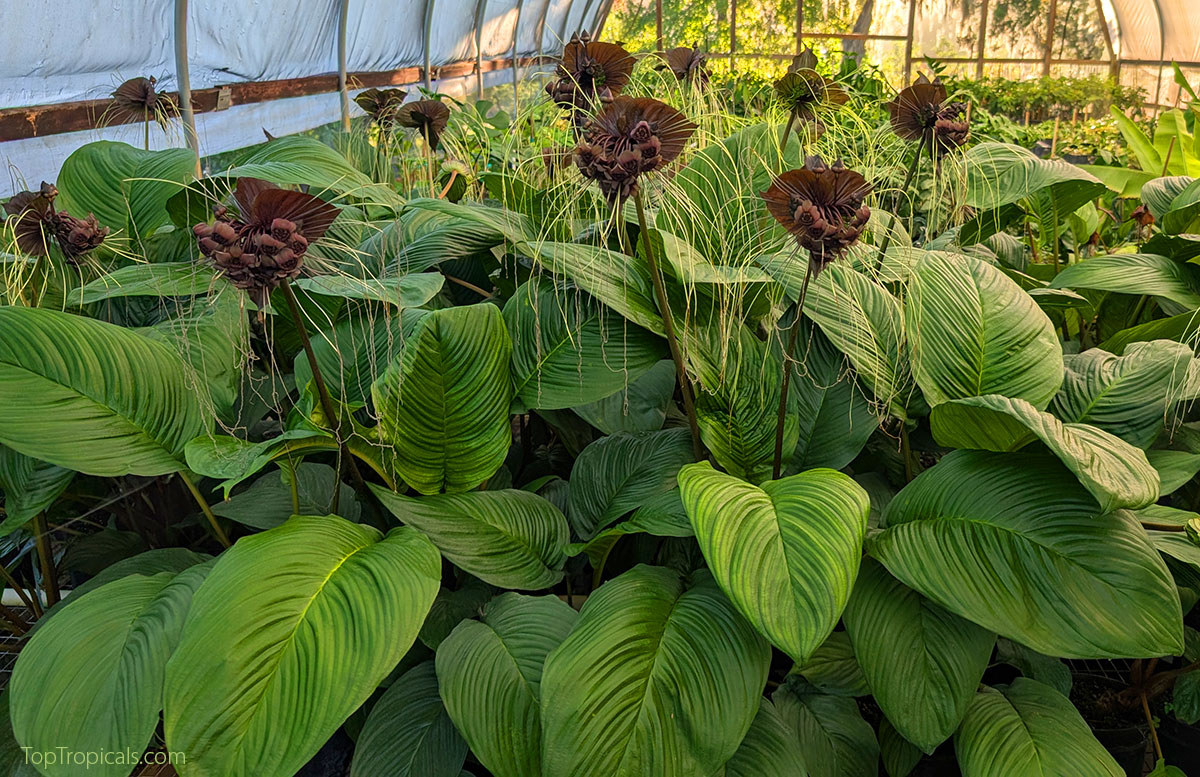
That is what happened this week with the Black Bat Lily, Tacca
chantrieri. We have grown Taccas for years, but
when the black ones open properly, it still feels special. The flowers are
dark and quiet, almost unreal up close. They do not shout for attention.
They make you lean in.
Right now, we have a lot of them blooming at the same time. If you have
never seen one in person, photos only get you part of the way there. The
wings are darker than you expect, and the whiskers seem to go on forever.
People walk into the greenhouse, stop, stare, and usually ask the same
question:
"Is that real?" - Yes. It is.
A quick honest note, because this matters. The blooms themselves are
delicate and may not travel well. That is just the nature of this plant. The
plants, however, are strong, well established. With the right conditions,
they bloom again. This is not a one-time trick.
Black Tacca is not a beginner houseplant, but it is also not impossible.
It likes filtered
light, steady warmth, and humidity. It does especially well in a greenhouse
or a
bright indoor spot where you already keep plants that enjoy moisture. It is
the kind of plant you keep
close, not one you forget in the corner.
We are offering them now simply because they are ready and looking their
best. If you have been waiting for one,
this is a good moment.
You can see the Black Bat Lily here:
https://toptropicals.com/store/item/2345.htm
Just wanted to share something we are enjoying in the greenhouse right
now. Some plants come and go. Some stay with you.
Tacca (Bat Lily) FAQ
What is Tacca?
Tacca, also known as Bat Lily or Devil Flower, is a tropical plant grown
for its unusual bat-shaped flowers with long whisker-like filaments. The
most popular species
is Tacca chantrieri, the Black Bat Lily.
Is Tacca hard to grow?
Tacca is not a beginner plant, but it is not impossible. It does best
with warmth, humidity, and filtered light. Gardeners who
already grow orchids, calatheas, or other humidity-loving plants usually do
well
with Tacca.
Does Tacca need a greenhouse?
A greenhouse is ideal, but not required. Tacca can be grown indoors in a
bright spot with indirect light and good humidity, such as near a humidifier
or in a bright bathroom with a window or skylight.
Will my Tacca arrive in bloom?
Plants may be blooming in the greenhouse, but flowers are often removed
before shipping because they are
delicate and do not travel well. The plants are well established and capable
of blooming again with proper care.
How often does Tacca bloom?
Tacca does not bloom constantly. It may take time to establish before
flowering, but once settled, it can bloom seasonally and may produce
multiple flowers
in warm, humid conditions.
Does Tacca grow from a bulb?
Tacca grows from a rhizome, not a bulb. The rhizome stores energy and
allows the plant to regrow and bloom again.
Why does Tacca have long whiskers?
The long filaments are thought to help attract pollinators such as flies
by mimicking the look of decaying organic matter. While unusual, this is
part of the plant's natural pollination strategy.
When northern gardens fade into gray, our tropicals wake up. Winter is
color season here - and even if you live up north, you can still enjoy these
same flowering trees indoors or on a sunny patio.
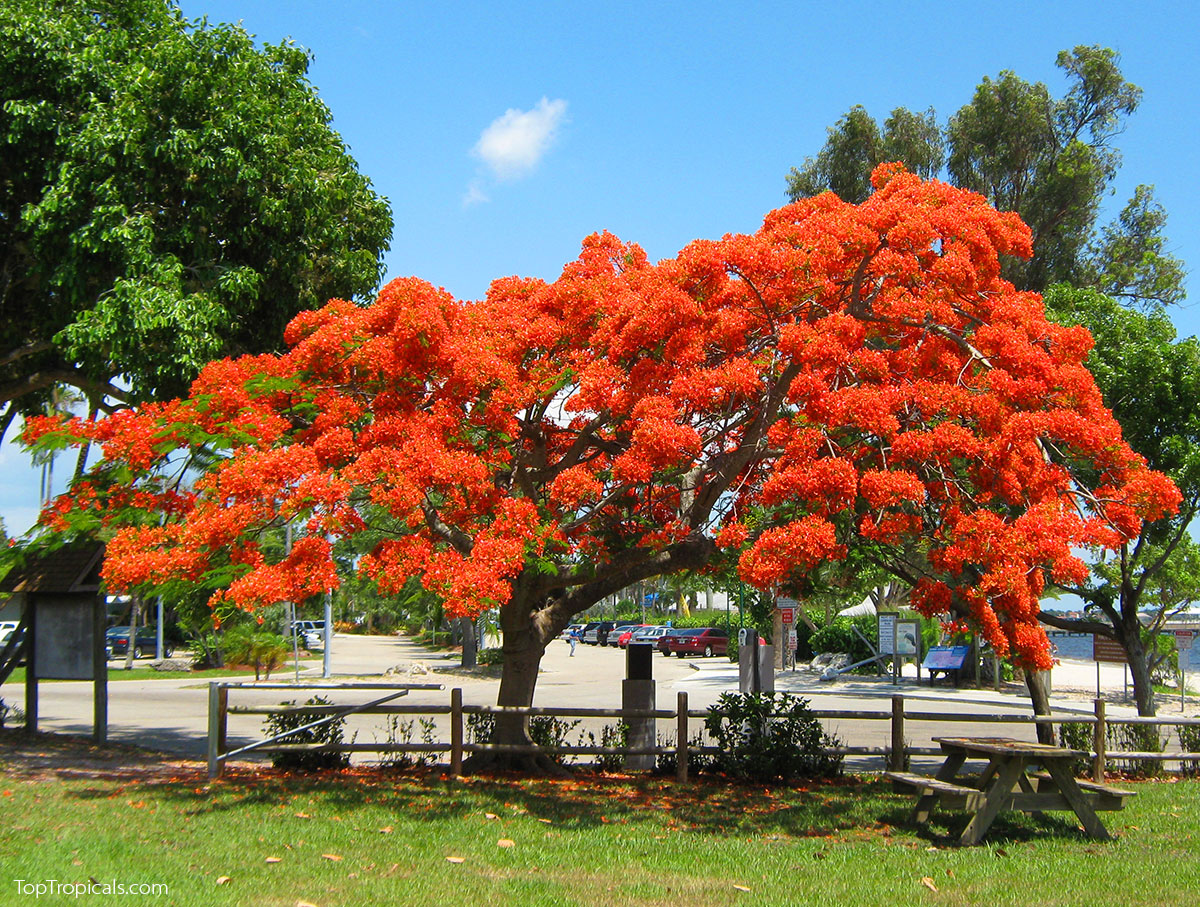
From the fiery Royal
Poinciana to the golden Tabebuia and
violet Jacaranda,
these eight trees prove that winter can bloom anywhere
How to Care for Winter-Flowering Trees
We're often asked, at Top Tropicals, “Can I really grow tropical
trees in winter?”
Yes — with the right light and care, you can.
Here’s what works best both outdoors and indoors, according to our
expert, Tatiana Anderson.
🌡️ Fall Planting Guide
Let’s talk about timing, because that’s the part most people
get nervous about.
Everyone asks: “Isn’t it too cool to plant now?” —
and the answer is no!
Fall and early winter are actually the best months for tropicals in Zones 9
to 11.
Here’s why: the air has cooled off, but the soil is still warm.
Roots love that combination. They quietly spread underground while the rest
of
the plant takes a break.
By spring, those roots are ready to feed a burst of new growth — and
that’s when you’ll see the first big flush of flowers.
Pick a sunny spot that gets plenty of light — six to eight hours
if you can.
Loosen the soil and mix in compost or pine bark so it drains well.
Dig a hole about twice as wide as the pot and just as deep.
Set the plant level with the ground, backfill, and water it deeply to
settle everything in.
Then add mulch — two or three inches is plenty — but keep it
away from the trunk so it can breathe.
Tatiana’s tip: “Fall planting builds roots while everyone
else is resting. By spring, your tree wakes up ready to grow.”
🌳 Outdoor Care (Warm Climates Zones 9–11)
Now, let’s talk about what happens after planting — because
real gardening starts once the plant is yours. Tropical trees thrive on
routine: steady sunlight, deep watering, and just a bit of attention.
Water them about once a week when the weather is mild, more often if
it’s dry or windy.
Always check the soil first — if it feels dry two inches down, go
ahead and water.
Mulch helps more than most people realize — it keeps roots cool in
summer and warm in winter, and it saves you from watering as often.
Now, for those of you in Zone 9, here’s the truth: your trees can
take a chill, but they don’t love surprises.
A quick night in the upper 20s F won’t hurt mature plants, but young
ones appreciate a little help — a frost cloth or being planted at the
south side.
And don’t underestimate the wind. Cold, dry gusts can burn leaves
faster than frost.
Use fences, hedges, or taller shrubs as windbreaks, and take advantage of
microclimates — those warm pockets next to the house, brick patios, or
corners that get extra afternoon sun.
Tatiana’s tip: “A tropical garden in Zone 9 isn’t
about fighting nature — it’s about cooperating with it. Find the
warm corners, protect from the cold wind, and your trees will thank you with
flowers all winter.”
🏚️ Indoor & Patio Care (Cooler Climates)
For our northern friends — yes, you can grow tropicals indoors!
You just need good light, warm air, and a little attention.
Pick a large pot, with drainage holes and a light tropical soil mix.
Place it in a bright window — south or southwest if you can —
or under grow lights for about 12–14 hours a day.
Keep temperatures between 65 and 85 F, and water when the top inch of soil
dries out.
Misting helps keep leaves clean and adds humidity.
Rotate the pot every couple of weeks so all sides get sun. In summer, move
your plant outdoors gradually so it can enjoy real sunlight — then
bring it back in before nights drop below 40 F.
Tatiana’s tip: “Don’t be afraid of growing trees in
pots. They adapt beautifully — just select the right trees and pay
attention to their needs.”




 How to Care for Winter-Flowering Trees