Garden Blog - Top Tropicals

Date: 10 Jun 2026

Pitaya Purple Haze: dragon fruit beyond pink and white - A Collectors Guide
Pitaya Purple Haze, dragon fruit, Hylocereus

Pitaya Purple Haze, dragon fruit, Hylocereus

🍉 Pitaya Purple Haze: dragon fruit beyond pink and white - A Collector's Guide


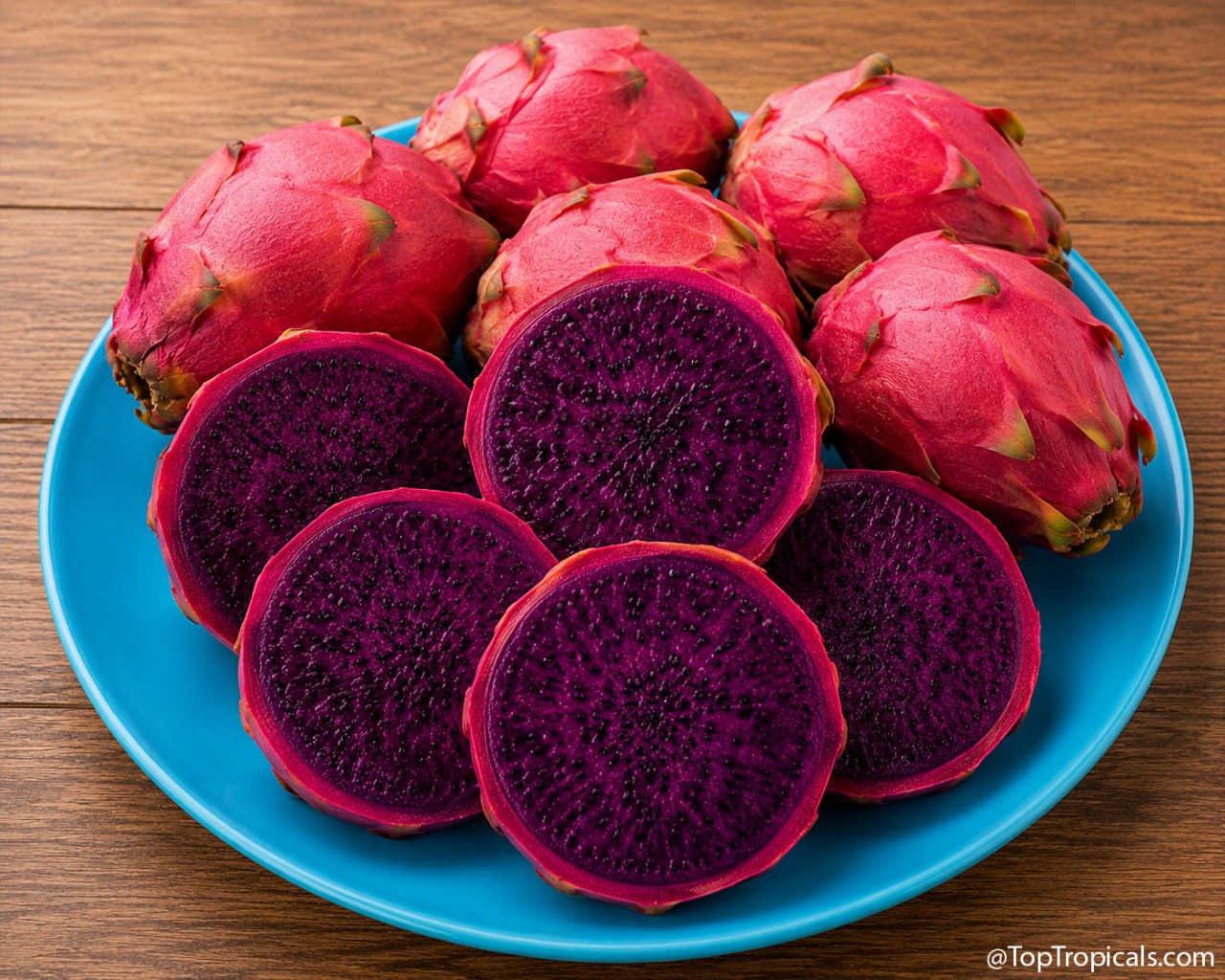
If Red Dragon Fruits are impressive, Purple Haze takes color to another level. This famous hybrid combines Hylocereus guatemalensis and Hylocereus polyrhizus to produce some of the most intensely colored fruit in the dragon fruit world. Cut one open and you'll find rich purple flesh so deeply pigmented that it rivals beetroot.

🔸 The dragon fruit that looks almost unreal


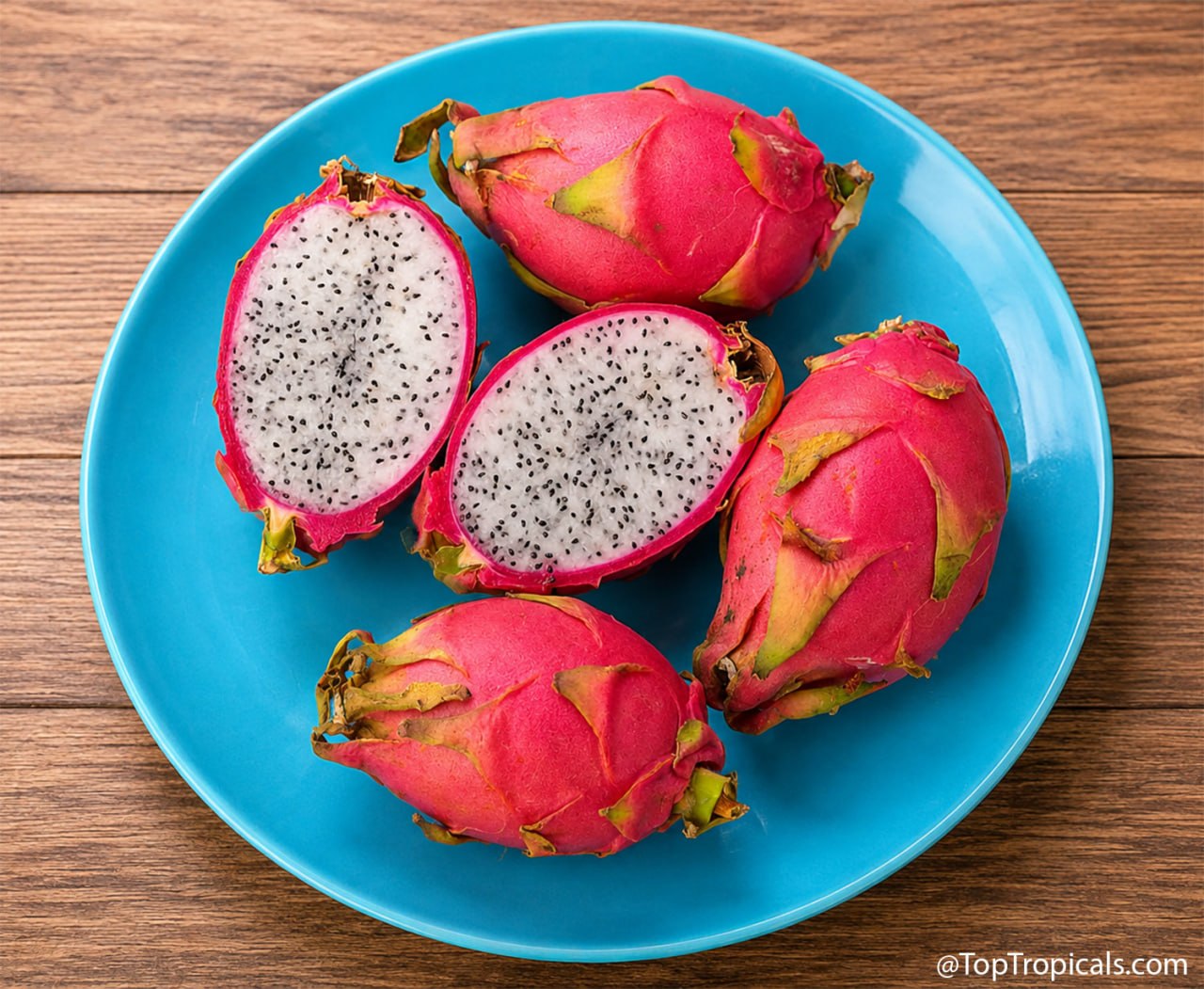
Purple Haze produces large fruit with bright pink skin, green-tipped fins, and vivid purple flesh packed with tiny edible seeds. Individual fruit commonly weigh between one and two pounds, making them among the larger dragon fruit varieties available to home gardeners.

The intense purple color comes from exceptionally high levels of betalains - the same natural pigments responsible for the color of beets. Among dragon fruits, Purple Haze is often considered one of the richest sources of these beneficial antioxidants.

🔸 A flavor that keeps people coming back


Many dragon fruits are valued for appearance. Purple Haze earns praise for both looks and flavor.

The flesh is sweet, juicy, and refreshing with a distinctive grape-like flavor that sets it apart from typical white-fleshed varieties. The small seeds add a pleasant texture without distracting from the fruit's smooth eating quality.

For many collectors, Purple Haze ranks among the best-tasting dragon fruits available.

🔸 Big crops and multiple harvests


Purple Haze is not just beautiful - it's productive.

Established plants are known for heavy yields and can produce as many as three fruiting cycles per year under favorable conditions. The variety is considered a reliable producer, making it popular with both collectors and home gardeners.

Growers seeking extra-large fruit often thin developing buds, allowing the remaining fruit to reach impressive size.

🔸 Why collectors love it


Purple Haze combines nearly everything dragon fruit enthusiasts look for - large fruit, exceptional flavor, stunning color, high productivity, and multiple harvests each year.

It is a variety that proves dragon fruit can be much more than a novelty. With its rich purple flesh and sweet grape-like flavor, Purple Haze is one of the standout stars in the colorful world of dragon fruits. 👉 More...

🛒 Explore and collect Dragon Fruit varieties

📚 Learn more:

Pitaya Plant Facts

Botanical name: Hylocereus sp.
Also known as: Pitaya, Pitahaya, Dragon Fruit, Strawberry Pear
USDA Zone: 9 - 11
Highligths Large shrub 5-10 ft tallVine or creeper plantSemi-shadeFull sunWatering: Moderate. Water when top soil feels dryWhite, off-white flowersThorny or spinyEdible plantSubtropical plant. Mature plant cold hardy at least to 30s F for a short timeSeaside, salt tolerant plant
Get personalized tips for your region

· Dragon fruit Hylocereus in Plant Encyclopedia
· Pitaya Hana: dragon fruit beyond pink and white
· Pitaya Eureka Red: dragon fruit beyond pink and white
· Pitaya David Bowie: Dragon Fruit Beyond Pink and White
· A Quick Guide to Dragon fruit varieties: Red, White, Yellow, Purple and more...
· What is the best Dragon fruit with red flesh?
· Planting your own Dragon Fruit plantation
· Do-It-Yourself Support Structure for Dragon Fruit
· Why you need to grow your own dragon fruit
· Do red, white and yellow Dragon fruit taste differently?

#Food_Forest #Dragon_Fruit #Discover

🟢 Join 👉 TopTropicals

Date: 9 Jun 2026

How did your Moringa trees do last winter?

How did your Moringa trees do last winter?

🌿 Updates from our customer Garden Jules:

📚 Learn more:

Horseradish tree Plant Facts

Botanical name: Moringa oleifera, Moringa pterygosperma
Also known as: Horseradish tree, Ben Oil Tree, Coatli, Drumstick tree, Bridal veil, Miracle Tree
USDA Zone: 9 - 11
Highligths Plant used for bonsaiLarge tree taller than 20 ftSmall tree 10-20 ftFull sunWatering: Moderate. Water when top soil feels dryWhite, off-white flowersEdible plantPlant attracts butterflies, hummingbirdsDeciduous plantEthnomedical plant.
Plants marked as ethnomedical and/or described as medicinal, are not offered as medicine but rather as ornamentals or plant collectibles.
Ethnomedical statements / products have not been evaluated by the FDA and are not intended to diagnose, treat, cure, or prevent any disease. We urge all customers to consult a physician before using any supplements, herbals or medicines advertised here or elsewhere.Fragrant plantSubtropical plant. Mature plant cold hardy at least to 30s F for a short time
Get personalized tips for your region

·   Moringa oleifera in Plant Encyclopedia
· Moringa leaves made simple - daily benefits and 6 easy recipes
· What tropical plants survived Florida's historic freeze without protection
·   Moringa omelet recipe
·   Moringa vs spinach: which one wins for nutrition?
·   What edible plants and herbs can reduce your blood pressure
·  Top 12 Eye-Supporting Fruit and Plants for Vitamin A - Retinol
·   Memory & Cognitive Support (Brain Boosters) Edible Plants and Herbs
·   How to grow drumsticks on a tree
·   What is the most useful tree in the world?
·   How to grow a happy Moringa Tree

#Food_Forest #Remedies #Trees

🟢 Join 👉 TopTropicals

Date: 8 Jun 2026

Pitaya Hana: dragon fruit beyond pink and white - A Collectors Guide

Pitaya Hana: white dragon fruit Hylocereus

Pitaya Hana: white dragon fruit Hylocereus

🍉 Pitaya Hana: dragon fruit beyond pink and white - A Collector's Guide


Most dragon fruit varieties are known for their colorful fruit. Hana stands out for something else - speed.
Originally discovered along Hawaii's famous Hana Highway on the island of Maui, Hana has earned a reputation as one of the fastest-growing dragon fruit varieties in cultivation. Under good conditions, the plant can grow more than six feet per year and may begin producing fruit in as little as 14 months from a cutting.


🔸 A dragon fruit with Hawaiian roots


Hana is a hybrid of Hylocereus undatus and Hylocereus monacanthus, combining vigorous growth with excellent fruit quality. The plant is easy to recognize by its relatively thin stems and unusually long thorns, giving it a different look from many modern dragon fruit varieties.

Like many Hawaiian treasures, Hana remains somewhat uncommon outside collector circles, making it a prized addition to a dragon fruit collection.

🔸 Fragrant flowers and dependable production


Hana is self-fertile, so a single plant can produce fruit without requiring another variety nearby. It is also known as an excellent pollen producer and is often used to help pollinate other dragon fruits.

Its large night-blooming flowers open after sunset, filling the air with a sweet fragrance. Unlike most dragon fruit flowers, Hana's blooms often show a delicate pink blush near the base of the petals, adding extra beauty to an already spectacular display.

🔸 Sweet flavor with a floral twist


The fruit are typically small to medium-sized, though some can exceed a pound. The skin is bright pink with green-tipped scales, while the flesh is white and filled with tiny black seeds.

What makes Hana memorable is its flavor. Many growers describe it as sweet melon with subtle floral notes and a pleasant rosy aftertaste - a combination that sets it apart from ordinary white-fleshed dragon fruits.

🔸 Why collectors love it


Fast growth, early fruiting, fragrant flowers, self-fertility, and unique flavor make Hana one of the most interesting dragon fruit varieties available to home gardeners. It is proof that some of the most rewarding dragon fruits are not always the biggest or the most colorful - sometimes they are simply the ones that grow fast and taste unforgettable. 👉 More...

🛒 Explore and collect Dragon Fruit varieties

📚 Learn more:

Pitaya Plant Facts

Botanical name: Hylocereus sp.
Also known as: Pitaya, Pitahaya, Dragon Fruit, Strawberry Pear
USDA Zone: 9 - 11
Highligths Large shrub 5-10 ft tallVine or creeper plantSemi-shadeFull sunWatering: Moderate. Water when top soil feels dryWhite, off-white flowersThorny or spinyEdible plantSubtropical plant. Mature plant cold hardy at least to 30s F for a short timeSeaside, salt tolerant plant
Get personalized tips for your region

· Dragon fruit Hylocereus in Plant Encyclopedia
· Why white-flesh Dragon fruits deserve more attention
· Pitaya Eureka Red: dragon fruit beyond pink and white
· Pitaya David Bowie: Dragon Fruit Beyond Pink and White
· A Quick Guide to Dragon fruit varieties: Red, White, Yellow, Purple and more...
· What is the best Dragon fruit with red flesh?
· Planting your own Dragon Fruit plantation
· Do-It-Yourself Support Structure for Dragon Fruit
· Why you need to grow your own dragon fruit
· Do red, white and yellow Dragon fruit taste differently?

#Food_Forest #Dragon_Fruit #Discover

🟢 Join 👉 TopTropicals

Date: 7 Jun 2026

Which jaboticaba to grow: a quick guide to the most popular varieties

Myrciaria cauliflora Jaboticaba tree

Myrciaria cauliflora Jaboticaba tree

Myrciaria cauliflora Jaboticaba fruit

Myrciaria cauliflora Jaboticaba fruit

Myrciaria cauliflora Jaboticaba fruit

🍇Which jaboticaba to grow: a quick guide to the most popular varieties

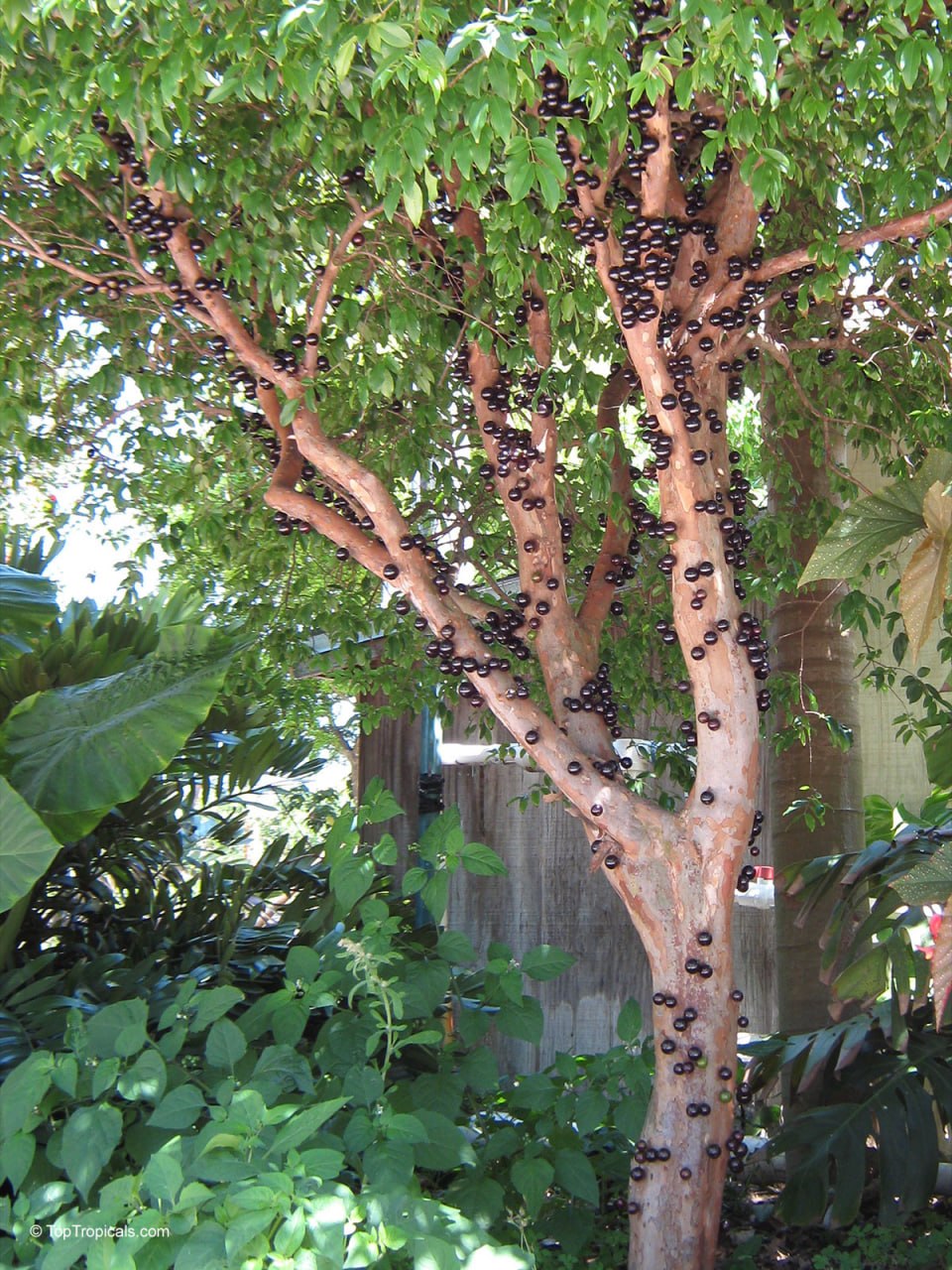
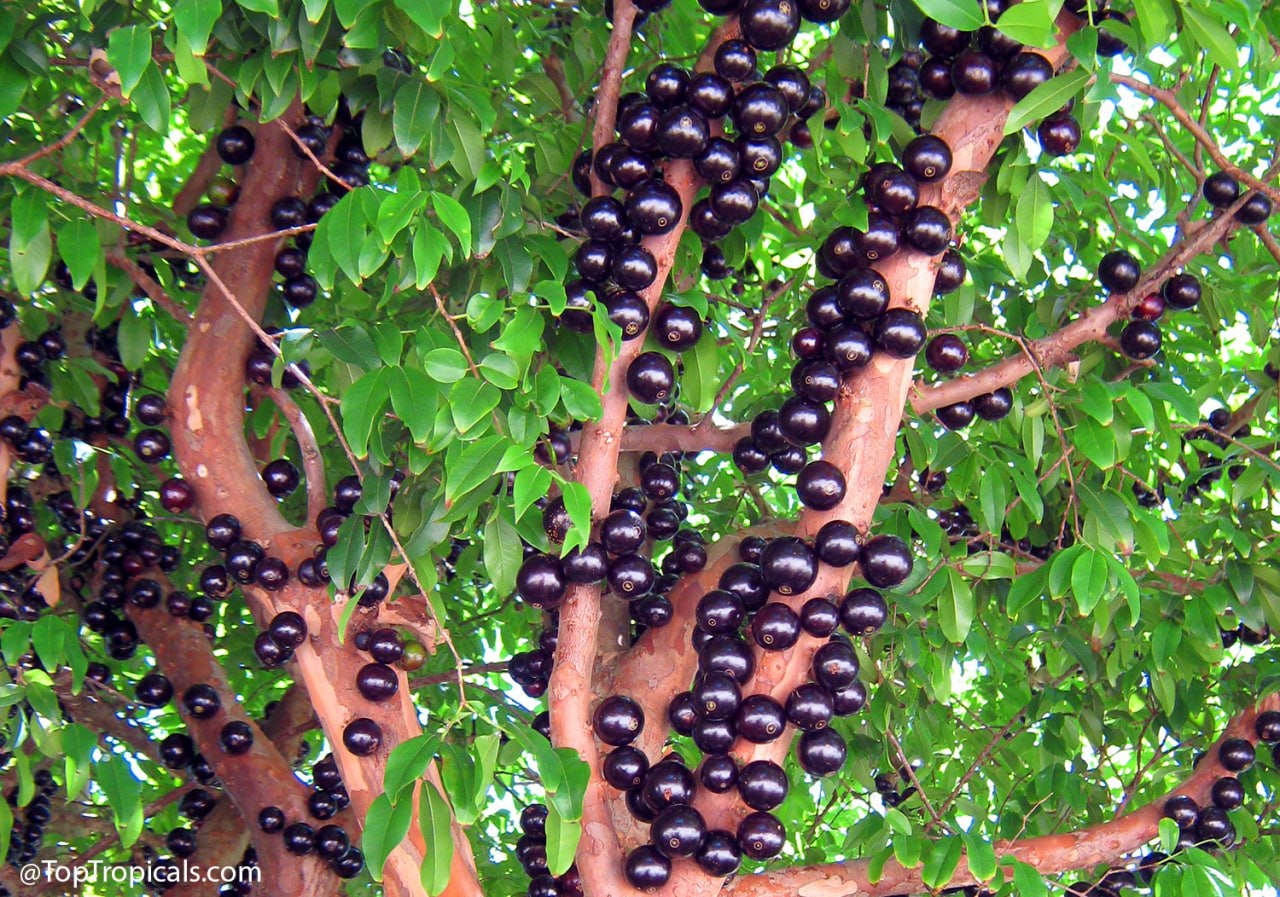
Jaboticabas are among the most unusual fruit trees in the world. Native to Brazil, they produce grape-like fruit directly on the trunk and branches. Most varieties have sweet pulp, can fruit multiple times per year, and grow well in containers.

Despite their tropical appearance, jaboticabas are surprisingly cold hardy. During our historic Florida freeze, established trees handled 25F for two nights and nearly two weeks of unusual cold without protection. Many varieties can tolerate temperatures into the 20s, making them one of the more cold-hardy tropical fruit trees for Florida.

From fast-fruiting dwarfs to giant-fruited collectors' varieties, each jaboticaba offers something a little different. Here's a practical guide to some of the most popular selections.

For beginners: Precoce Dwarf (Red Scarlet)


One of the fastest-fruiting jaboticabas, often producing in 3-5 years. Compact, container-friendly, ideal for gardeners who want fruit sooner.

•  Fruits young
•  Naturally compact
•  Excellent container plant
•  Good for cooler climates where winter protection is needed

The classic choice: Sabara


The classic Brazilian jaboticaba and still the most widely grown variety. Small, exceptionally sweet fruit with thin skin and juicy pulp. Can produce several crops per year.

•  Traditional jaboticaba flavor
•  Thin-skinned fruit
•  Sweet and juicy
•  Excellent for bonsai and containers
•  One of Brazil's most popular wine varieties

For large fruit: Grimal


Often called Giant Jaboticaba, with much larger fruit than most varieties. Thick juicy pulp, small seeds, heavy production.

•  Larger fruit
•  Thick pulp
•  Heavy producer
•  Excellent fresh eating quality

For exceptional flavor: ESALQ


Known for large, exceptionally sweet fruit and relatively early production.

•  Outstanding sweetness
•  Large fruit
•  Fruits in about 4-5 years
•  Collector favorite

For beauty and productivity: Branca Vinho


One of the most ornamental jaboticabas, with attractive foliage, upright growth, and excellent white-fleshed fruit. Fruits young and often several times per year.

•  Beautiful foliage and trunk
•  White-fleshed fruit
•  Excellent flavor
•  Multiple crops per year
•  Good cold tolerance

For collectors: Blue Jaboticaba


A close jaboticaba relative (Myrciaria vexator) producing blue-purple fruit with a sweet grape-like flavor. Often grown as much for its beauty as its fruit.

•  Unique blue fruit
•  Sweet grape-like flavor
•  Ornamental tree
•  Rare and unusual

For faster growth: Volcano Red (La Vinotinto)


More vigorous and faster growing than traditional jaboticabas. Famous in Hawaii for Volcano Red wine.

•  Faster growth
•  More vigorous tree
•  Good adaptability
•  Tolerates occasional waterlogging
•  Source of Hawaiian Volcano Red wine

Which one is right for you?


•  Fastest fruit: Precoce Dwarf
•  Classic flavor: Sabara
•  Largest fruit: Grimal
•  Sweetest fruit: ESALQ
•  Best ornamental: Branca Vinho or Blue Jaboticaba
•  Fastest growth: Volcano Red

👉 All jaboticabas share the same magical trait - flowers and fruit appearing directly on the trunk. The differences are in fruit size, growth rate, and how quickly you'll enjoy your first harvest. Jaboticabas are notoriously slow growing, and large fruiting-size trees can take many years to develop. Established specimens are hard to find and can save years of waiting. If you've been thinking about adding one to your garden, remember: the best time to plant a jaboticaba was years ago - the second-best time is today.

🛒 Select from Jaboticaba varieties

📚 Learn more:

Jaboticaba Plant Facts

Botanical name: Myrciaria cauliflora, Plinia cauliflora, Eugenia cauliflora
Also known as: Jaboticaba, Duhat
USDA Zone: 9 - 11
Highligths Plant used for bonsaiSmall tree 10-20 ftFull sunKeep soil moistEdible plantSubtropical plant. Mature plant cold hardy at least to 30s F for a short timeFlood tolerant plant
Get personalized tips for your region

Jaboticaba (Myrciaria cauliflora) in Plant Encyclopedia
Before you open a bottle of wine, meet the Secret Wine Tree from Brazil
What does Blue Jaboticaba taste like?
How Blue Jaboticaba is different from regular Jaboticaba?
What is Jaboticaba? I like the sound of this word!

#Food_Forest #Discover #How_to

🟢 Join 👉 TopTropicals

Date: 6 Jun 2026

Avocado Ulala (Super Hass): the hidden world beyond green and black

Avocado Ulala (Super Hass) fruit close up

Avocado Ulala (Super Hass) fruit close up

Avocado Ulala (Super Hass)

Avocado Ulala (Super Hass)

Avocado Ulala (Super Hass): the hidden world beyond green and black


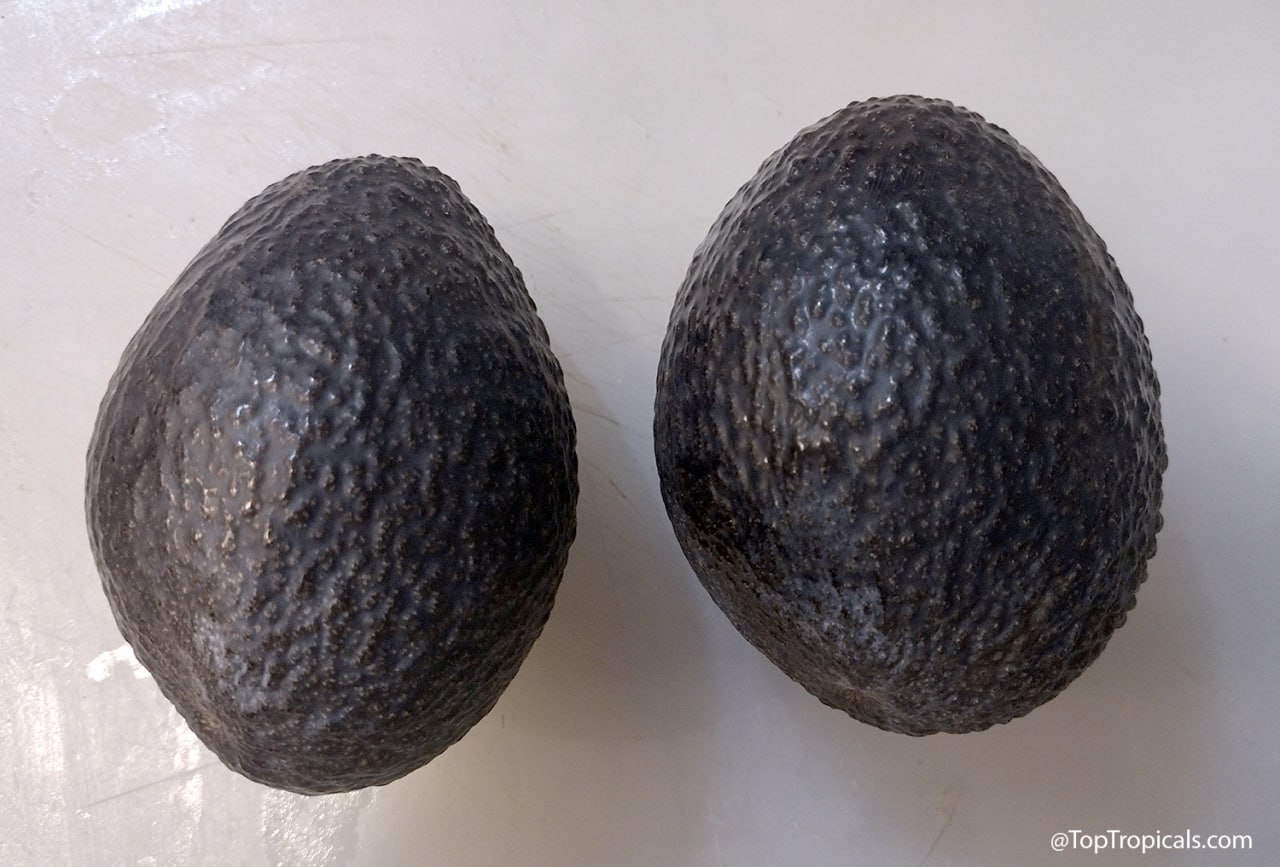
Avocado Ulala (also spelled "Ooh La La" or "U-La-La") , often marketed as Super Hass, produces attractive dark purple-black fruit reminiscent of Hass but on a smaller tree. The flesh is rich, creamy, and high in oil, making it an excellent fresh-eating avocado. Its combination of cold tolerance, manageable size, and premium fruit quality has earned it a loyal following.

· Botanical name: Persea americana 'Ulala' (Super Hass)
· Origin: Louisiana
· Cold hardiness: Tolerates temperatures around 20°F
· USDA zones: 9a-11
· Flower type: A
· Tree size: Approximately 25 ft x 15 ft
· Growth habit: Upright and moderately vigorous, with a narrower canopy than many traditional avocado varieties
· Fruit size: 6-10 oz
· Fruit shape: Pear-shaped
· Fruit color: Purple-black when ripe
· Skin: Thick and easy to peel
· Flesh: Creamy, smooth, and rich
· Flavor: Buttery, nutty, and excellent for fresh eating
· Season: November-February
· Best use: Fresh eating, slicing, and premium guacamole
· Special feature: Produces dark-skinned Hass-like fruit while offering better cold tolerance than traditional Hass
· Why growers love it: Ulala combines the appearance and flavor that made Hass famous with improved cold hardiness and a productive tree. The attractive purple-black fruit, rich flesh, and winter harvest season make it a favorite among avocado enthusiasts. 👉 More

💡 Avocado tip: The best fertilizer is consistency


Avocados prefer small, regular feedings rather than large doses. Light feeding throughout the growing season often produces better results than occasional heavy fertilization. We recommend SUNSHINE C-Cibus - Amino-Acid Crop Booster - safe to apply with every watering, year around.

🛒 Explore cold hardy Avocado varieties

📚 Learn more:


· Avocado Variety Guide: Snack or Guacamole? Collector's inspiration
· Avocado Fuerte: the hidden world beyond green and black
· Avocado Florida Hass: the hidden world beyond green and black
· Avocado Brogdon: the hidden world beyond green and black
· Avocado Joey: the hidden world beyond green and black
· Avocado Fantastic: the hidden world beyond green and black
· Avocado Fantastic Quick Facts
· Cold-hardy avocado survival groups - what the numbers really mean
· How to protect Avocado from cold and how hardy is it?
· Avocado that laughs at frost: Mexicola Grande for cooler climates
· Cold hardy Avocado Joey - you eat it with the skin

📖 Our Book: Avocado Variety Guide, Snack or Guacamole?
·
Hard copy · PDF File Download

#Food_Forest #Avocado #Discover

🟢 Join 👉 TopTropicals