Date: 27 Apr 2020
How to feed a Mango tree...
and to grow a Dwarf Mango
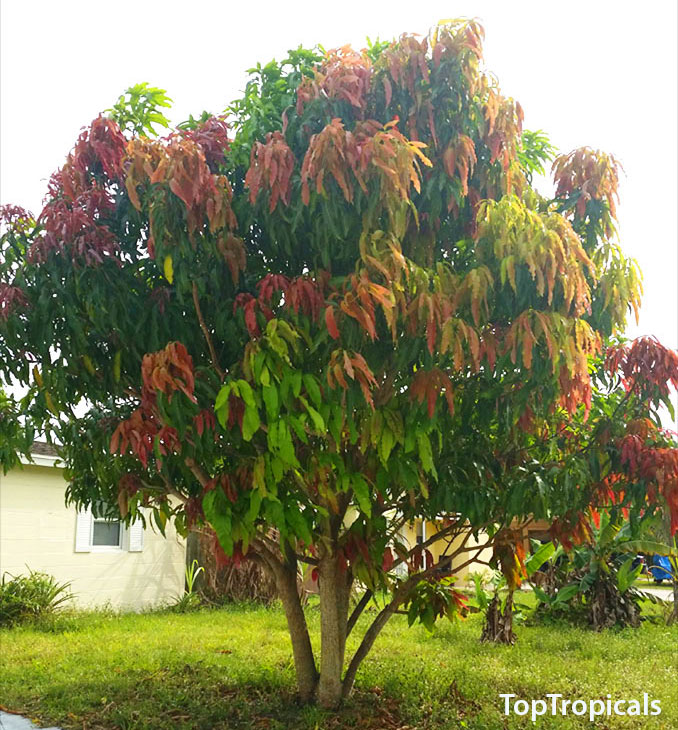
How to fertilize a Mango tree
Q: My mango trees that I bought and planted last august now have fruit. I bought 2 types of fertilizer from you and never used it. Should I use your fertilizer now?
A: It is a perfect time now to fertilize your plants as they
start active growth.
For mango trees, we recommend liquid fertilizer Sunshine Booster - Mango Tango. It is formulated for Mango trees,
especially for container grown. It improves quantity and quality of flowers and
ability to set fruit, reduces bud-flower-fruit drop. Can be used as often as
with every watering. For best results, use in combination with Sunshine Honey and Sunshine Superfood plant supplements. Its scientifically-balanced
stable formula is organic Amino-acid based and has NO EDTA chelators to eliminate
nutrients lockup; it does not affect crop taste.
Additionally, you may use slow-release granulated fertilizer Mango-Food once a month during hot season only. Dosage: 1 teaspoon per
each gal of soil.
Water-soluble fertilizers can be also used, however, those are usually
EDTA-chelated which is not as efficient as Amono-acid based Sunshine Boosters and
may create nutrients build up, especially if overdosed in containers.
For in-ground mango trees, you may use all the above, and slow-release
granulated fertilizer can be applied in larger quantities: spread a handful
around the drip line.
Remember that only liquid Sunshine Boosters can be applied year around. With other fertilizers, you need to be careful not to overdose, and apply only during hot weather (when night temperatures are steadily above 65F).
How to grow a Dwarf Mango tree
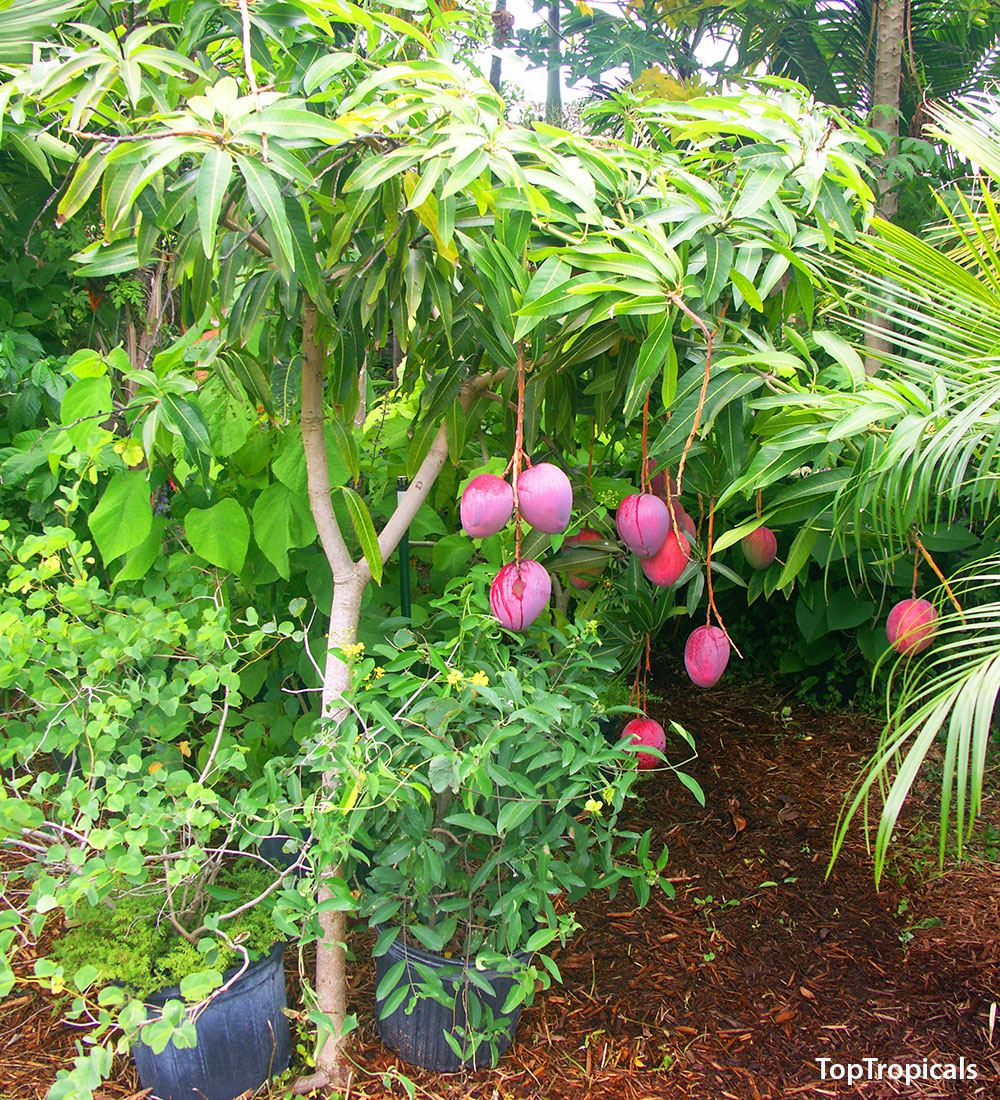
Q: I received the Ice cream mango tree in great condition (thank you for the ingenious packing job) on Wednesday and have planted it in a pot slightly bigger than the root ball. I plan to grow the tree on my front porch, so how big a container should I ultimately use when the tree outgrows this pot? How big a container does it need to fruit? I hope to keep it around 6-7 feet high, if possible. I live in Hawaii.
A: Ice Cream mango is a perfect variety for container culture, and it should be happy in Hawaii. You did everything right. Keep it in this small pot for now and wait until it starts vigorous growth in Summer. Once it starts growing (and you will notice roots growing too, sometimes they try to grow through the holes in the bottom of the pot), then it's time to step up into a bigger container (7-10 gal). Eventually you may use container size as large as 15 gal. Ice cream mango is slow growing and compact, and you will be able to maintain it under 7 ft with very minimal pruning if any.

Date: 26 Jan 2017
Aquarius Zodiac lucky plants

Aquarius - 1/22 - 2/18.
Aquarius is an AIR sign ruled by odd-ball Uranus.
The water-bearer's plants will often grow in unusual places and may vary in appearance. They often have purple or blue flowers, or may have unusual colors.
The most healing and beneficial plants for Aquarius are the ones that help circulation, relax the nervous system, or promote inspiration. When Uranus was discovered, it replaced Mercury as ruler of Aquarius. Physiologically, Uranus rules the bioelectrical impulses that power the body's nervous system (nervous tension and nervous exhaustion brought on by powerful changes in the environment are related to both Mercury and Uranus). Physically, Aquarius rules the lower legs, the calves, and the ankles, and the electrical impulses that travel through the body's nervous system. The nervous system itself is ruled by Mercury, and Uranus is said to be a "higher octave" of Mercury. Since Uranus was discovered after the correspondences with plants had been established, the herbs used in Aquarius are Mercury herbs. Always difficult to pinpoint, quirky Aquarius appreciates the unusual and complex flavor of star anise. Use this star-shaped spice when you wish to bring happy surprises into your life.
Aquarius Zodiac lucky plants:
Anise, Orchid, Golden rain - Koelreuteria paniculata, Bird of Paradise, Heliconia, Petrea, Mandevilla, Jasminum, Kiwi, Persimmon, Loquat, Olive, Alocasia, Colocasia, Citrus, Apple, Peppers, Gingers, Carambola, herbs spicy with an unusual flavor, White Pothos, Ivy, Shami - Prosopis cineraria, Neem, Medinilla, Sheesham Tree, Catnip, Passion fruit, Valerian, Aloe, Myrrh, Kava-kava, Cinnamon, Clove, Eucalyptus, Coffee, Cola nut, Nepenthes, Vanilla Orchid, Strongylodon - Jade vine, Tacca - Bat Lily, Eranthemums, Agapanthus, Orchid trees, Bolusanthus, Chamaedorea metallica, Clerodendrum ugandense, Clitoria, Duranta, Guaiacum, Jacaranda, Lavanda.
For other signs information, see full Plant Horoscope.
New Video: TopTropicals at TPIE show in Ft Lauderdale. Last week, your friends at Top Tropicals attended the 2017 Tropical Plant International Expo in sunny Ft. Lauderdale Florida. The Expo was an opportunity for Top Tropicals to introduce our SUNSHINE in a Bottle plant boosters as well as to bring a very rare plant Enchanted Incense to the tropical plant market!
Check out this video: TopTropicals at TPIE.
Stay updated with TopTropicals Videos by subscribing to our channel at YouTube.com/TopTropicals
Date: 5 Jan 2025
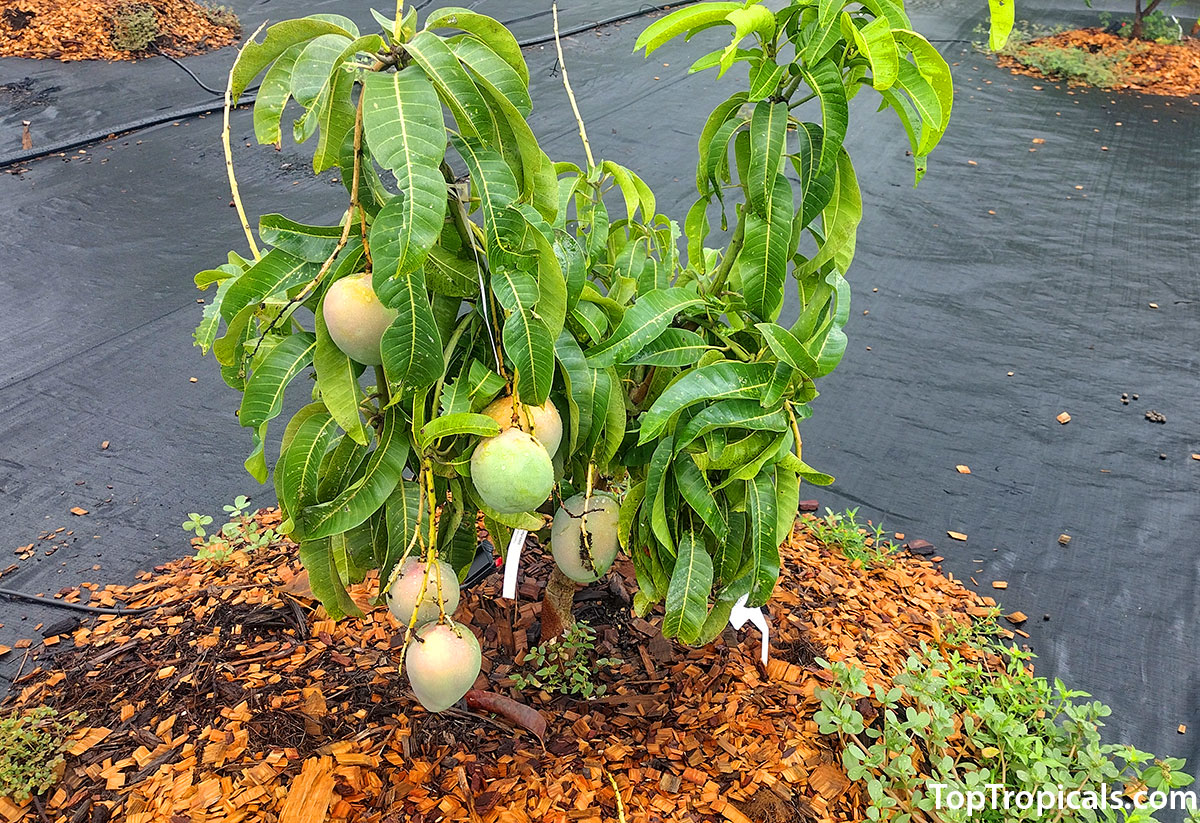
Condo (Dwarf)
Mango Practical Guide:
What varieties are good for container culture
or small yards
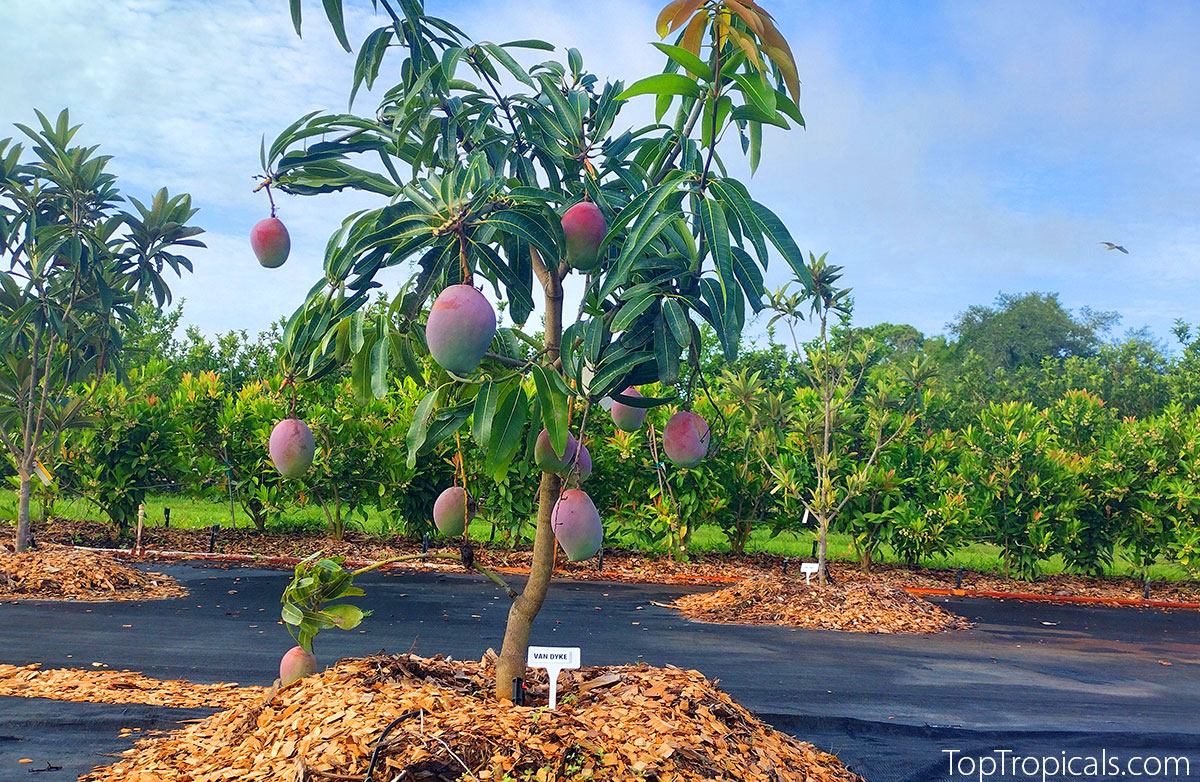
Q: "Our winters are too cold for a mango tree, but I'd like to grow one in a pot so I can bring it inside during cold nights. Which varieties do you recommend for container gardening? I've heard of Condo Mango - do you carry them?"
A: Yes, we always carry Condo Mango varieties: they are a fantastic choice for gardeners with limited space or in cooler climates. They grow well in containers and can be easily maintained through pruning. Whether you're growing them on a balcony, in a greenhouse, or in a backyard, Condo Mangos provide the perfect mix of beauty and practicality.
What Are Condo Mangos?
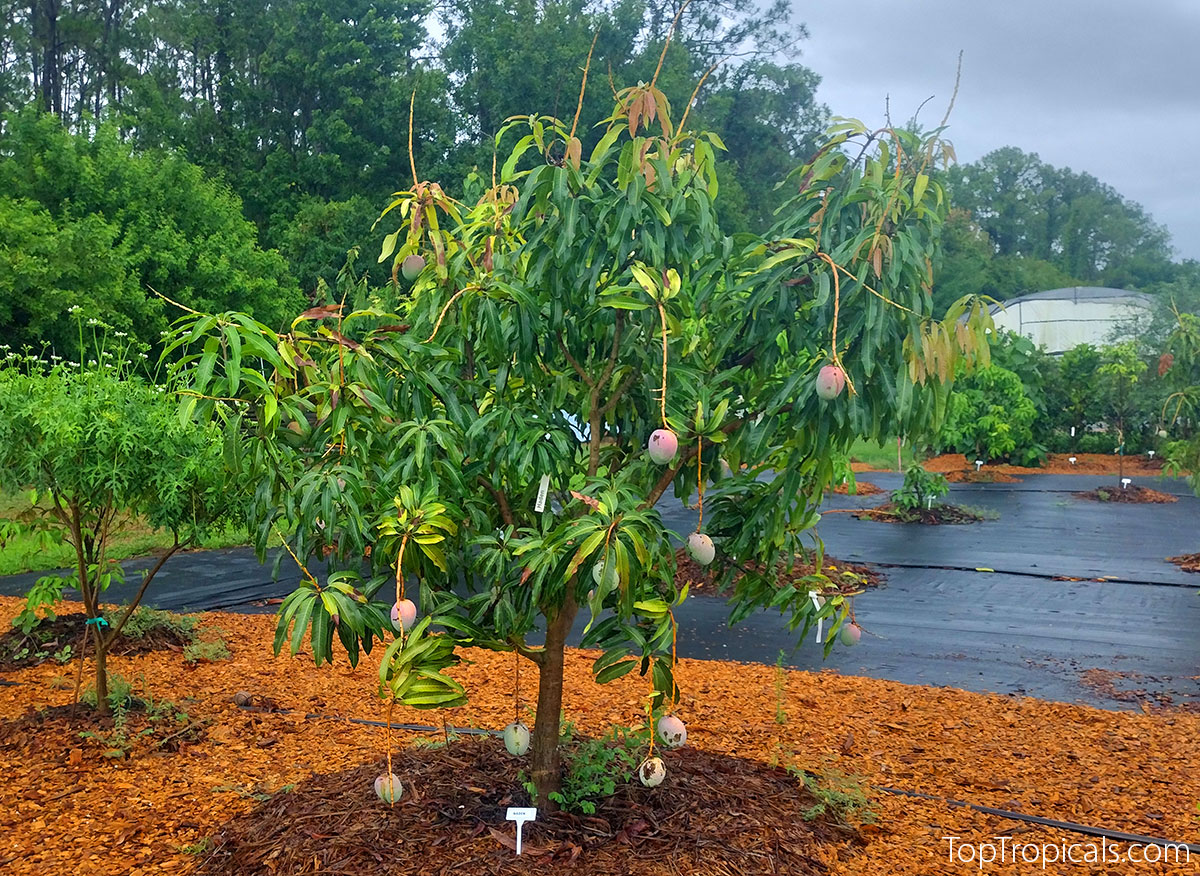
Condo Mangos, also known as dwarf mango trees, are perfect for small spaces. These trees can be grown in containers, making them ideal for balconies, greenhouses, or small suburban backyards. With proper care, they can be maintained at a manageable height of 6-10 feet through regular pruning. Some plant enthusiasts even manage growing Mango tree as an indoor plant!
The term Condo Mango
Condo Mango refers to mango varieties that thrive in containers and are small by nature, allowing them to be easily kept even smaller with selective pruning.
Size and Growth
Unlike traditional mango trees, Condo Mangos are compact. They naturally grow to around 6-10 feet, but with proper pruning, they can be kept small, making them an excellent choice for limited space.
Growing in Containers
- Condo Mango trees thrive in pots and containers.
- A 15-20 gallon pot is ideal to give the roots enough room to grow.
- Ensure your container has drainage holes to prevent root rot.
Planting Tips
- Plant Condo Mangos in full sun, where they'll get plenty of heat and
light.
- Use well-draining soil for optimal growth.
- Fertilizer regularly with quality plant food. Out best choice is Sunshine Mango Tango for edibles.
- Late Winter to early Spring is the best time to plant in containers,
before the rainy season starts.
- Mangoes grow well in USDA zones 9-10, but if you live in cooler climates,
you can grow them indoors or in a greenhouse, as long as you meet their heat
and light needs.
Pruning and Maintenance
- Prune Condo Mango trees once a year to keep them at the desired height
(6-10 feet), right after harvesting (late Summer to Fall)
- Trim the tips of the branches to maintain a compact shape and encourage
healthy growth.
- Regular pruning will help keep the tree manageable and ensure better
fruit production.
Learn more: Find out what are Top 10 Dwarf Condo Mango - great for container culture.
Date: 3 Feb 2019
Aquarius Plant Horoscope
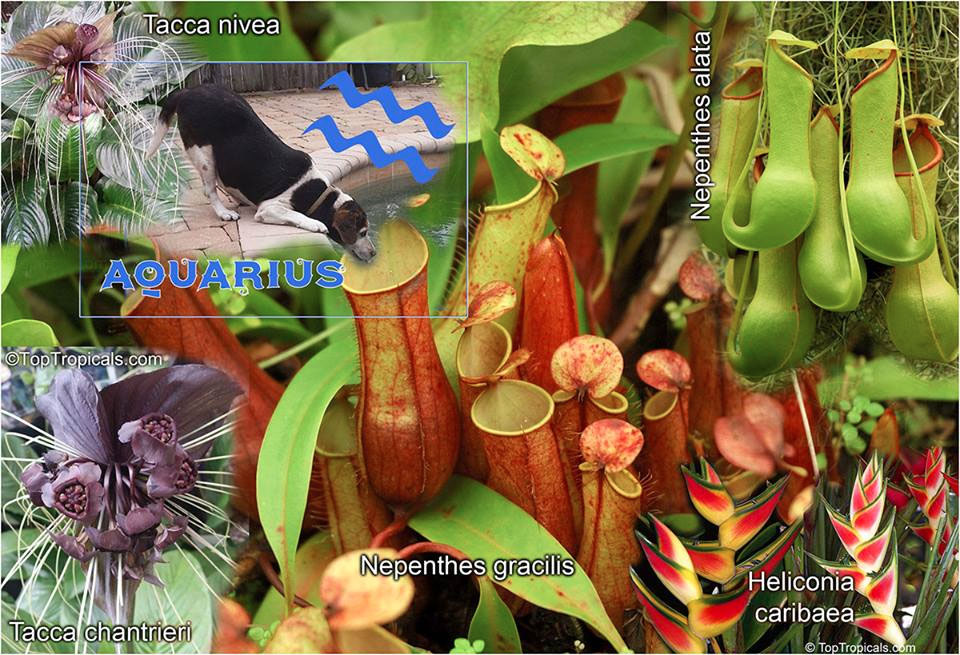
Aquarius - 1/22 -
2/18.
Aquarius is an AIR sign ruled by odd-ball Uranus.
The water-bearer's plants will often grow in unusual places and may vary in
appearance. They often have purple or blue flowers, or may have unusual
colors.
The most healing and beneficial plants for Aquarius are the ones that help
circulation, relax the nervous system, or promote inspiration. When Uranus
was discovered, it replaced Mercury as ruler of Aquarius. Physiologically,
Uranus rules the bioelectrical impulses that power the body's nervous system
(nervous tension and nervous exhaustion brought on by powerful changes in the
environment are related to both Mercury and Uranus). Physically, Aquarius
rules the lower legs, the calves, and the ankles, and the electrical impulses
that travel through the body's nervous system. The nervous system itself is
ruled by Mercury, and Uranus is said to be a "higher octave" of Mercury. Since
Uranus was discovered after the correspondences with plants had been
established, the herbs used in Aquarius are Mercury herbs. Always difficult to
pinpoint, quirky Aquarius appreciates the unusual and complex flavor of star anise. Use this star-shaped spice when you wish to bring happy
surprises into your life.
Aquarius Zodiac lucky plants:
Anise, Orchid, Golden rain - Koelreuteria paniculata, Bird of Paradise, Heliconia, Petrea, Mandevilla, Jasminum, Kiwi, Persimmon, Loquat, Olive, Alocasia, Colocasia, Citrus, Apple, Peppers, Gingers, Carambola, herbs spicy with an unusual flavor, White Pothos, Ivy, Shami - Prosopis cineraria, Neem, Medinilla, Sheesham Tree, Catnip, Passion fruit, Valerian, Aloe, Myrrh, Kava-kava, Cinnamon, Clove, Eucalyptus, Coffee, Cola nut, Nepenthes, Vanilla Orchid, Strongylodon - Jade vine, Tacca - Bat Lily, Eranthemums, Agapanthus, Orchid trees, Bolusanthus, Chamaedorea metallica, Clerodendrum ugandense, Clitoria, Duranta, Guaiacum, Jacaranda, Lavanda.
For other signs information, see full Plant Horoscope.

Date: 24 Feb 2019
Pisces Zodiac lucky plants
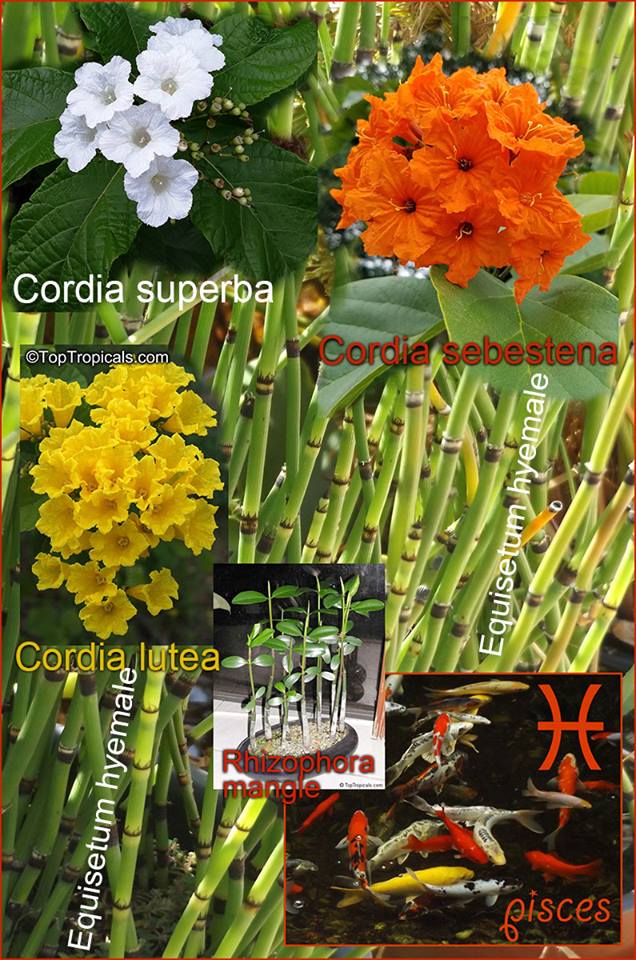

Pisces- 2/19 -
3/20. As a WATER sign ruled by both Jupiter and Moon (and Neptune, that
was not discovered until 1846, after the plant correspondences were
established; Neptune is considered a "higher octave" of the Moon), Pisces plants are
often large but hard to find, and may grow near the ocean. The most healing
plants for Pisces are those that strengthen the immune system or have an
antibacterial effect. Pisces plants may also catalyze expanded states of awareness
and be helpful in dream work.
Herbs connected to Pisces are ruled by its former ruler, the Moon
(Neptune, the current ruler, was not discovered until 1846, after the plant
correspondences were established; Neptune is considered a “higher octave†of
the Moon). Diseases of Pisces have traditionally included psychotic disorders,
various forms of substance addiction, lung diseases such as tuberculosis, and
ailments of the foot; contemporary herbalists also add immune system
diseases. Pisces is strengthened by rosemary's ability to promote an aura of
centered grounding. This protective herb helps strengthen boundaries and cultivate a
closer connection to the physical realm.
Pisces Zodiac
lucky plants: Water lily, Lotus, Clematis, Wisteria, Lisianthus, Brunfelsia, Echinacea, English Lavender, Rosemary, Coconut palm, Cranberry, Clove, Coccoloba, Sea Oats, Mangroves, Ochrosia, Aquatic plants, Colocasia, Alocasia, Aralia, Ficus trees, Banyan, Peepal, Banana, Mango, Mimosa, Olive, Anise, Vilca and Yopo, Kava-kava, Nutmeg, Anthuriums, Eucalyptus, Bauhinia,
Clusia, Caesalpinia, Callistemon, Bucida, Cassia fistula, Cordia, Calabash, Lipstick palm, Delonix, Elaeocarpus, Erythrina, Fatsia, Guaiacum, Mahoe, Koelreuteria, Kopsia, Macaranga, Pandanus, Peltophorum, Psychotria, Banesteriopsis, Tabebuia.
For other signs information, see Plant Horoscope Page