Garden Blog - Top Tropicals

Date: 31 Oct 2025

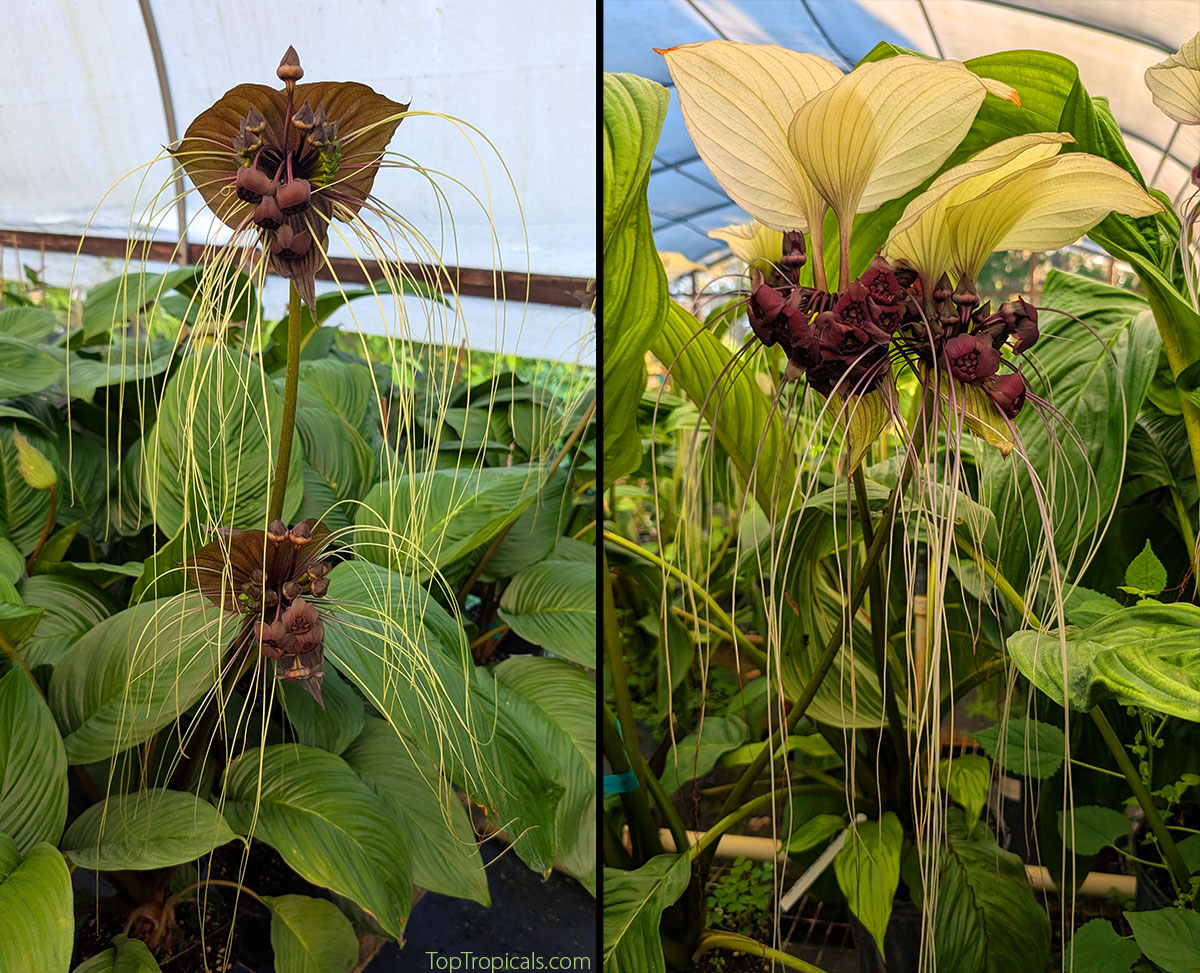
Black  Bat  Lily  and  White  Bat  Lily  plants  blooming  together  in  the  Top 
 Tropicals  greenhouse,  showing  contrast  between  dark  maroon  and  ivory  bracts 
 with  long  trailing 
 whiskers.

Black and White Bat Lilies (Tacca chantrieri and Tacca nivea) side by side in bloom

How to Care for Bat Lilies

by Top Tropicals Plant Expert Tatiana Anderson

🌞 Light

  • Bright, filtered light. Morning sun or dappled shade is perfect.
  • Avoid direct midday sun outdoors — it can scorch the leaves.
  • Indoors, place near a bright window with sheer curtains or use a grow light.

🌡️ Temperature

  • Warm and stable, ideally 70-85 F during the day.
  • Protect from cold drafts or sudden chills.
  • Ideally, do not let temperature drop below 45 F, although Taccas can tolerate short period of upper 30's.

💧 Watering

  • Keep soil evenly moist but not soggy.
  • Water when the top inch feels barely dry.
  • Use lukewarm water.
  • Avoid letting the pot sit in water.

💨 Humidity

  • High humidity (60-80%) is key.
  • Mist leaves often, use a humidity tray, or keep near a humidifier.
  • In greenhouses or bathrooms with a skylight, it thrives naturally.

🌱 Soil

  • Use rich, loose, well-draining mix
  • Combine bark, peat, and perlite for ideal airflow around the roots.
  • Best mix for growing tropical Tacca in pots - soilless potting mix Abundance . It provides perfect drainage and has a texture similar to a jungle rainforest media.

🍽️ Feeding

  • During growth season (Spring through Fall), feed with Green Magic controlled release fertilizer every 6 months. For even better results, you may apply liquid fertilizer Sunshine Boosters Rubusta.
  • Stop feeding dry fertilizer in cooler months when growth slows. Liquid Sunshine Boosters are safe to use with every watering, year around.

🏡 Indoor Growing

  • Great for bright bathrooms, sunrooms, or any warm, humid corner.
  • Rotate pot occasionally for even growth.
  • Keep away from heating vents and AC drafts.

🌴 Outdoor Growing (in warm climates)

  • Partial shade or filtered light under trees.
  • Excellent in large containers that can be brought inside for winter.
  • Shelter from heavy rain and wind.

Sunshine: "So… it’s a diva?"
Smokey: "Exactly. But take care of it - and it rewards you with wings!"
Smokey and Sunshine: "Happy Halloween!"

🎥 Watch Short Videos:

🛒 Grow your own gothic masterpiece:
Shop Bat Head Lily Tacca
Date: 18 Feb 2026

⭐️ Choosing the Right Variety of Jasmine Sambac

By Tatiana Anderson, Horticulture Expert at Top Tropicals

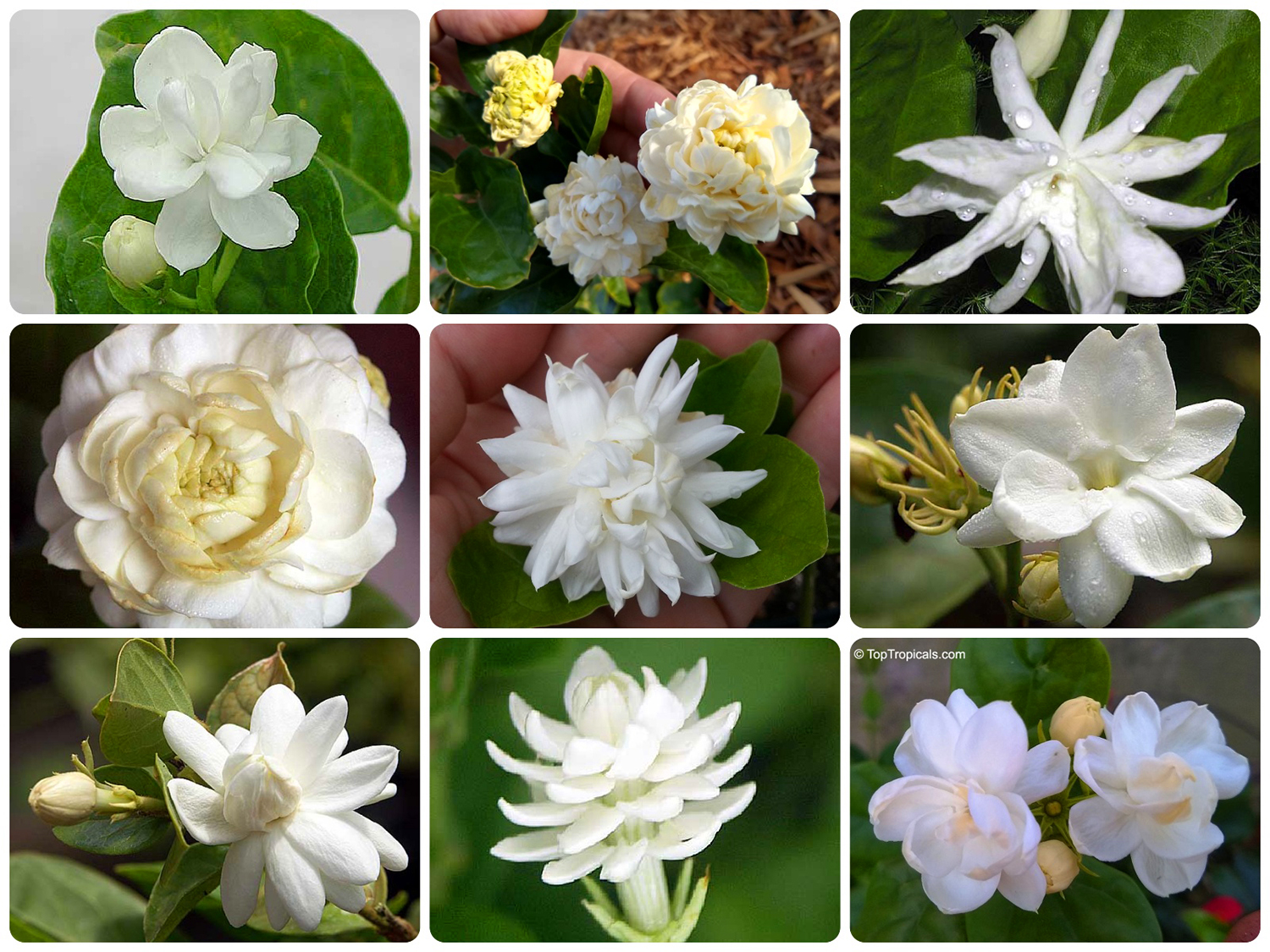
Jasmine  Sambac  varieties  collage  showing  single,  double,  and 
 multi-layered  white  fragrant  flowers  including  Belle  of  India,  Grand  Duke, 
 Arabian  Nights,  and  other 
 forms.

Jasmine Sambac varieties: Arabian Nights, Little Duke, Belle of India, Grand Duke, Duke Supreme, Maid of Orleans, Mysore Mulli, Malichat, Gundu Mallii

One of the reasons Jasmine Sambac is so fascinating is that it does not come in just one form. Each variety has its own personality.

If you want a compact patio plant, Arabian Nights or Little Duke are excellent choices. They stay tidy, bloom generously, and are easy to manage in containers.

If you prefer elegant, elongated petals and a refined look, Belle of India is a favorite. It can be grown as a small bush or trained lightly as a vine.

For those who love full, carnation-like double flowers, Grand Duke of Tuscany and Grand Duke Supreme are classic selections. They are vigorous and make impressive shrubs in warm climates.

If you need a stronger climber for fences or hedges, Maid of Orleans performs beautifully in full sun while Mysore Mulli prefers semi-shade.

Collectors often enjoy rare forms like Mali Chat or newer hybrids such as Gundu Malli, which combine traits from different lines.

How to Grow Jasmine Sambac Successfully

Sambac is not difficult, but it responds best to consistency.

Light: Full sun produces the most flowers. In very hot climates, light afternoon shade is acceptable. Indoors, place it in the brightest window available.

Soil: Use a well-draining potting mix such as Sunshine Abundance. Sambac does not like heavy, constantly wet soil.

Water: Water thoroughly, then allow the top layer to dry slightly before watering again. Reduce watering during cooler months.

Pruning: Light trimming after a bloom cycle encourages branching. More branches mean more flower buds.

Feeding: Sambac is a heavy bloomer, and fragrance takes energy. During active growth, feed regularly with a balanced fertilizer that supports flowering such as Green Magic (controlled release every 6 months) or liquid Sunshine Boosters Pikake (formulated especially for fragrant flowers) - with every watering. I prefer formulas slightly higher in potassium to encourage stronger bud formation and richer bloom cycles. Consistent feeding during warm months makes a visible difference in both flower count and intensity of scent.

With proper care, Jasmine Sambac will reward you not just with flowers, but with perfume that changes the atmosphere of your entire garden.

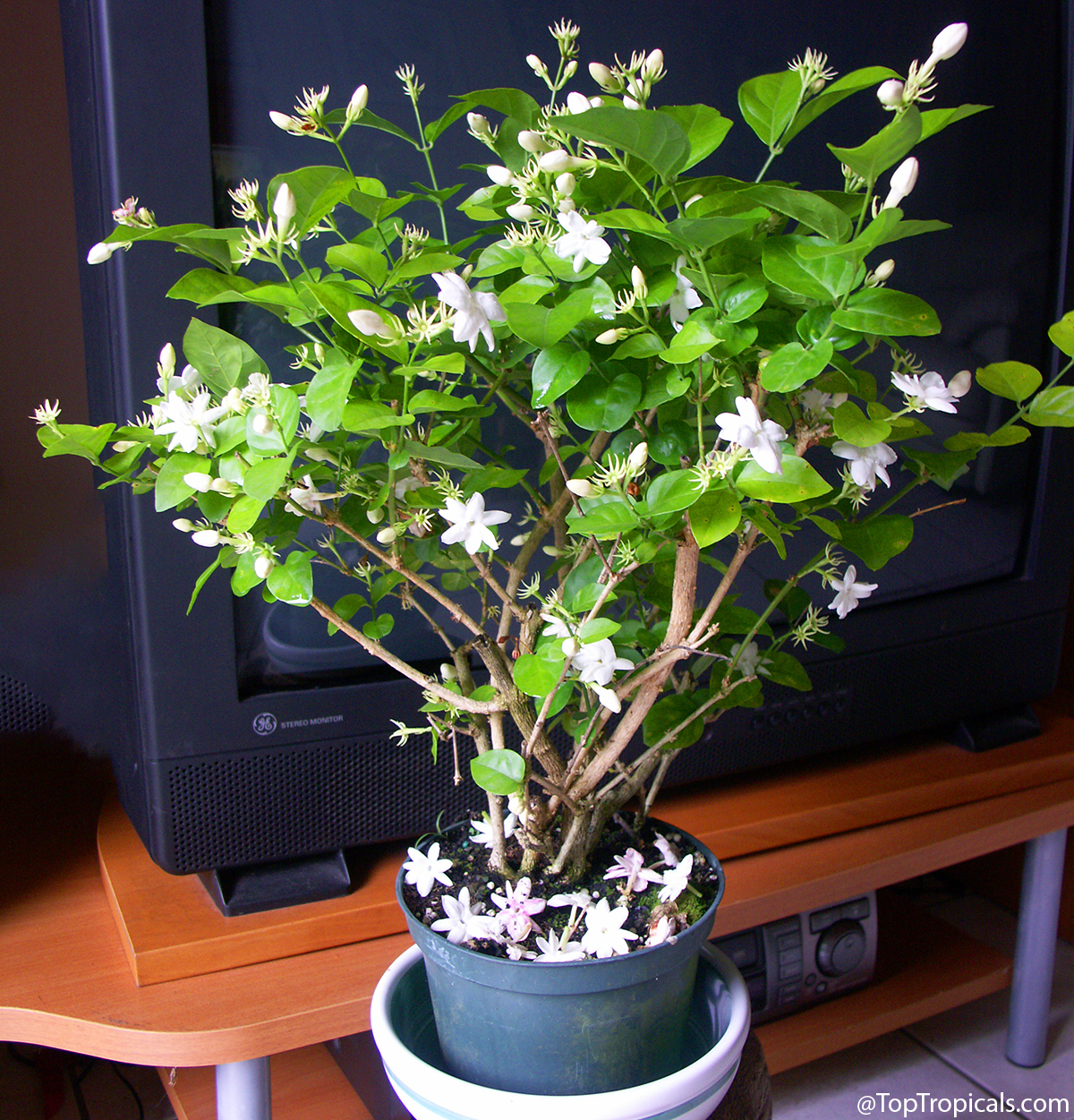
Jasmine  Sambac  Maid  of  Orleans  blooming  indoors  in  a  container  with 
 numerous  white  star-shaped  flowers  and  glossy  green 
 leaves.

Jasmine Sambac Maid of Orleans flowering indoors in a container under bright light.

❓Frequently Asked Questions About Jasmine Sambac

  • Does Jasmine Sambac need full sun?
    It flowers best in full sun. In very hot climates, light afternoon shade is acceptable. Indoors, give it the brightest window possible.
  • Can I grow it in a pot?
    Yes. Sambac performs beautifully in containers. Many gardeners prefer pots because it is easier to control size and move during cold weather.
  • How often does it bloom?
    With proper light and feeding, it blooms in cycles throughout the warm season. Consistency in care makes flowering more reliable.
  • Why is my plant not blooming?
    The most common reasons are insufficient light or irregular feeding. Increase light first, then review your fertilizing routine.
  • Is it difficult to grow indoors?
    Not if you provide strong light and good air circulation. Compact varieties adapt especially well.
  • Is it frost tolerant?
    No. Jasmine Sambac is tropical. Protect it from temperatures below 40F and bring it indoors before frost.

🌸 Year of the Horse Special – Jasmine Bonus

Celebrate 2026 with the fragrance of Jasmine plants. For a limited time, enjoy special savings when you grow one of the most wanted perfume plants in cultivation.

Jasmine Sale - 15% Off
Save 15% on all Jasmine plants. Discount is already applied in the online store - no code needed.
Offer valid through 02/28/2026.

🛒 Explore varieties of Sambac

Date: 23 Jun 2026

Move Over Adeniums: Why This Unusual Gout Plant Is the Ultimate Natural Bonsai

Move Over Adeniums: Why This Unusual Gout Plant Is the Ultimate Natural Bonsai

🔥 Move Over Adeniums: Why This Unusual "Gout Plant" Is the Ultimate Natural Bonsai


If you love the sculpted look of Adeniums (Desert Roses), there is a rare tropical showpiece you need to add to your collection right now: Jatropha podagrica, commonly known as the Gout Plant.
With its knobby, swollen bottle-like stem and striking blooms, this plant looks less like a typical houseplant and more like a piece of living coral reef art.


The Ultimate Lazy Gardener's Bonsai


Unlike traditional bonsai trees that require years of meticulous wire training, pruning, and root shaping, Jatropha podagrica is a "natural bonsai." It does all the hard structural work for you.
Staying compact at just 2 to 3 feet tall, this unusual succulent is an absolute must-have for container gardens, succulent collectors, and bonsai lovers looking for an effortless, natural focal point.

The Caudex (Swollen Trunk): It forms a distinctive, bottle-shaped, knobby trunk completely on its own, mimicking the aged look of a masterfully trained bonsai from day one.
Massive Tropical Foliage: It features surprisingly large, umbrella-like leaves that can reach 10 to 12 inches in diameter, creating a bold contrast against the rugged trunk.
Coral-Red Flowers: It produces vibrant, eye-catching red flower clusters that resemble ocean coral. These terminal clusters pop brilliantly and stand high above the foliage canopy.

The Shade Trick for Giant Leaves


One of the coolest features of the Gout Plant is how it adapts to light. While it prefers partial sun and handles bright conditions beautifully, it thrives in the shade.
When kept in lower light or partial shade, the plant reacts by growing even larger, broader leaves to catch the light. This creates a dramatic, lush tropical canopy right above that textured, rugged trunk - giving you an even more exaggerated, stunning bonsai silhouette.

Effortless Care: Low Water, High Reward


If you are prone to forgetting to water, this is the plant for you. Because that beautiful, swollen trunk acts as a built-in water reservoir, the Gout Plant is highly drought-tolerant.

👉 Quick Care Guide


Light: Partial sun to partial shade (shade yields bigger leaves).
Soil: Must be planted in loose, well-draining soil mix.
Water: Low. Let the soil dry out significantly between waterings.
Size: Stays a manageable 2-3 feet high, making it ideal for small patios, bright windowsills, or compact garden spaces.

Easy to care for, completely unique, and an instant conversation starter - the Gout Plant brings an exotic, dramatic flair to any space without demanding constant attention.

🛒 Get Yours Before They're Gone

📚 Learn more:

Gout Plant Facts

Botanical name: Jatropha podagrica
Also known as: Gout Plant, Gout Stick, Buddha Belly, Guatemala Rhubarb, Tartogo
USDA Zone: 9 - 11
Highligths Plant with caudexPlant used for bonsaiSmall plant 2-5 ftSemi-shadeShadeFull sunWatering: Moderate. Water when top soil feels dryYellow, orange flowersRed, crimson, vinous flowersOrnamental foliageToxic or PoisonousPlant attracts butterflies, hummingbirdsSubtropical plant. Mature plant cold hardy at least to 30s F for a short timeSeaside, salt tolerant plant
Get personalized tips for your region

· Jatropha podagrica in Plant Encyclopedia
· 9 awesome accent plants and vines that love heat and dry conditions
· Coral-blooming bonsai with a bottle-shaped trunk - perfect container plant
· Attention grabber: swollen trunk, giant leaves, and flowers just like corals

🎥 Plant this bonsai with a bottle-shaped trunk - perfect container plant

#Container_Garden #Nature_Wonders #Discover

🟢 Join 👉 TopTropicals

Date: 23 Nov 2025

🏡 To Use Your Garden Or Be Used By It

Two  cats  in  a  garden  planting  a  young  tree.  Smokey,  a  black-and-white 
 tuxedo  cat,  holds  a  small  shovel  and  works  the  soil,  while  Sunshine,  a 
 fluffy  orange  tabby,  sits  smiling  beside  a  bag  of  garden 
 soil.

Smokey and Sunshine November Planting.

Smokey: Winter roots make spring easy. Keep that plant straight.
Sunshine: I am keeping it straight by not touching it at all.
Smokey: That is exactly what I was afraid of.

November is the month when the garden finally stops yelling at you. The heat backs off, the bugs calm down, and the weeds take a breath. This is when we get to take control again. And as gardeners, we know the truth: Either you use your garden, or your garden will use you in spring. Let me walk you through this, gardener to gardener.

"November is when the garden finally listens. Give it a little direction now, shape it, guide it, and prepare it for spring. It will reward you all year." - Tatiana Anderson, Top Tropicals Plant Expert

🌴 When The Garden Uses You

We have all lived this scene:

  • March weeds appear, and two days later it looks like a jungle.
  • One missed watering turns into five wilted plants and a full week of recovery.
  • A skipped feeding shows up as yellow leaves and panic searching online.
  • Bugs return fast, and suddenly you are washing leaves every other day.
  • Random plant purchases fill your yard with chaos and mismatched care needs.
  • When the garden takes control, spring feels like hard work, not joy.

An  overgrown  tropical  garden  with  dense  foliage  and  vines  spilling  over
    a  walkway,  showing  how  a  garden  can  take  over  when  not  maintained.

Overgrown Tropical Garden Showing How a Garden Can Use You

📊 When You Use Your Garden

November flips the script. Plants slow down. Soil stays warm. This is the safest month to experiment, move plants, fix mistakes, and redesign.

What you do now pays off huge in March.

  • You map out sun zones and shade zones.
  • You mulch now so weeds do not explode later.
  • You move plants to better positions without heat stress.
  • You remove the high-drama plants before they start another season of complaints.
  • You pick what you want for next year instead of letting impulse buys rule you.

Spring becomes smooth instead of overwhelming. And honestly? It feels good to walk outside in March and see order instead of chaos.

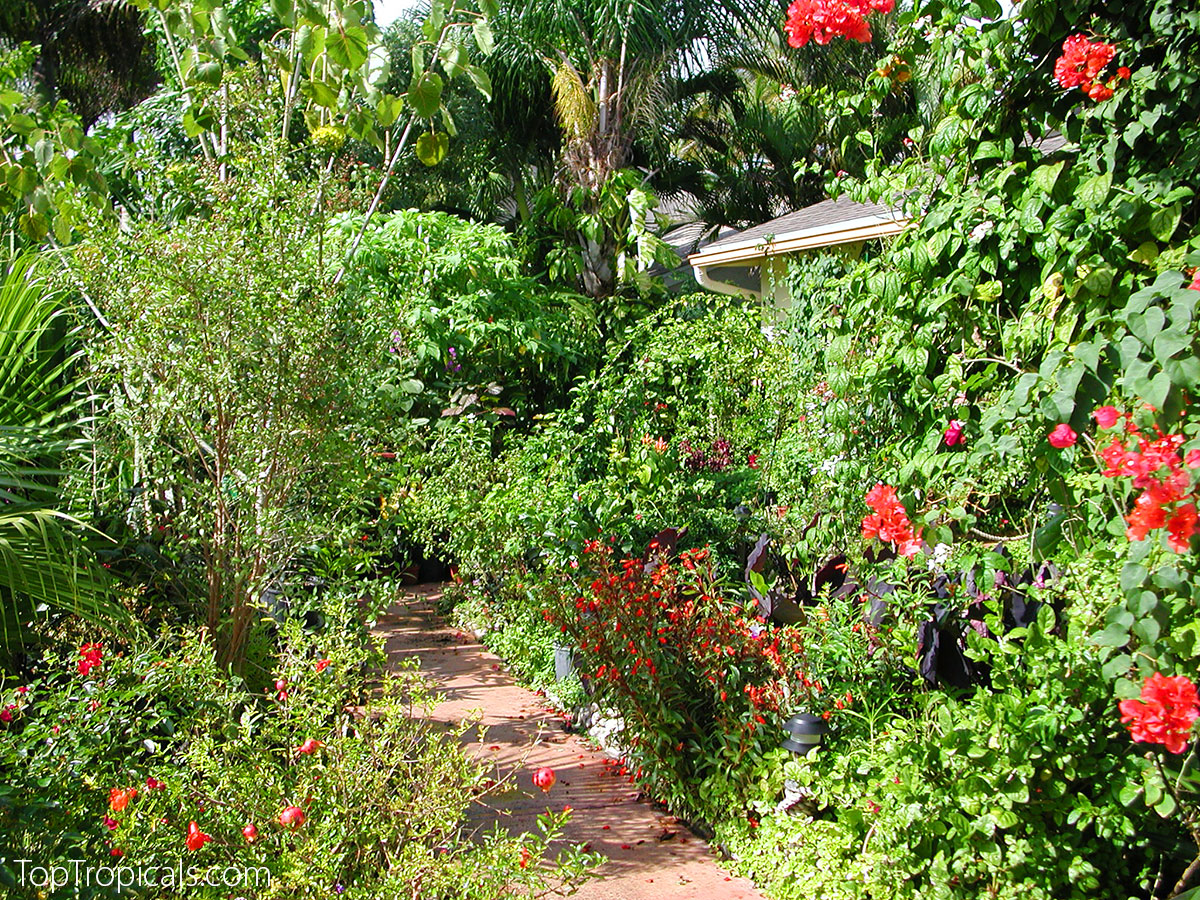
A  neat,  organized  tropical  garden  with  trimmed  plants,  open  pathways, 
 and  balanced  landscaping,  showing  how  a  gardener  can  use  and  direct  the 
 garden.

In the photo: Every garden starts in small steps. Biquinho Pepper (front) in the garden.

What Benefit Do You Get Personally?

  • Less watering.
  • Fewer bugs.
  • Bigger fruit.
  • Better flowering.
  • Less money wasted.
  • Less time fixing problems you could have prevented now.

This is why experienced tropical gardeners adore November.

Garden

In the photo: Organized Tropical Garden. Firebush (lemon gold variety) and Cordylines (Ti Leaf) make colorful spots in the garden.

🐭 Start With Something Small Today (5 Minutes)

Pick one:

  • Add mulch to the driest spot in your yard.
  • Cut one dead branch from any tree.
  • Move one pot to a better sun angle.
  • Pull three weeds from the worst area.
  • Water deeply once this week.

Small steps now save hours later.

⭐ One Short Story

Last year we planted a Star Fruit in November. By March, it was already covered in flowers, and have been harvesting fruit non-stop since then! That is what winter planning does: it gives plants a head start you can actually see.

Young  Carambola  Star  Fruit  tree  fruiting

🐍 Plants That Will Use You If You Let Them

These are great plants, but only if you plan before planting them:

  • Banana (thirsty)
  • Hibiscus (hungry)
  • Brugmansia (sensitive)
  • Passion vine (takes over anything it touches)

Place them wrong, and they become full-time jobs.

An  overgrown  passion  vine  covering  a  garden  swing,  showing  how  a 
 fast-growing  plant  can  take  over  when  not  maintained.

In the photo: Passion Vine taking over the swing.

🐰 Plants That Work For You

These feel like free upgrades to the yard:

Pick even one of these and your garden starts giving back.

A  landscaped  garden  path  with  a  Cattley  Guava  tree  featuring  a  twisted 
 multicolor  trunk,  surrounded  by  trimmed  tropical  plants  and  decorative 
 garden 
 elements.

In the photo: Cattley Guava brings not only tasty fruit but also a wonderful character with its amazing multi-color twisted trunk.

🌡️ November Advantage

You cannot ruin anything in November. This is the safest, calmest month to shape your garden the way you want. If you act now, spring becomes a victory lap. If you wait, spring becomes a rescue mission.

A  landscaped  tropical  garden  with  a  potted  Adenium  in  full  bloom,  red 
 Cordylines  behind  it,  and  neat  mulched  beds  with  decorative  garden 
 elements.

In the photo: Adenium is a colorful accent in the garden.

💐 Thanksgiving Tie-In

This is the season to reset, breathe, and be thankful for your outdoor space. A garden that works for you is one of the best gifts you can give yourself going into the new year.

Start your November plan today. Use your garden. Do not let it use you.

A  neatly  designed  tropical  garden  bed  featuring  Megaskepasma,  iris, 
 Colocasia,  colorful  Crotons,  Dracaena,  and  Ti  Leaf  plants  arranged  in 
 mulched 
 landscaping.

In the photo: Megaskepasma, Iris, Colocasia, Crotons, Dracaena and Ti Leaf bring instant tropical look to your garden.

Shop Fruit trees

Shop Flowering shrubs

Date: 2 Jan 2025

Seven most popular low-growing plants
for small gardens

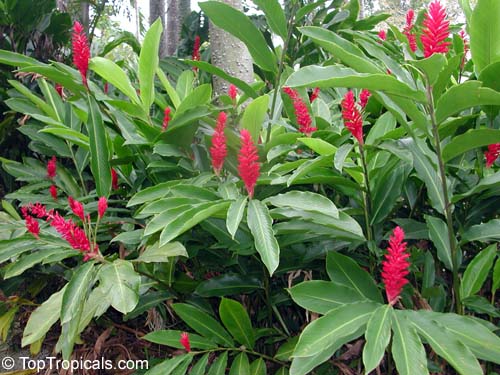
Alpinia  purpurata  -  Dwarf  Red  Cone  Ginger

Photo above: Alpinia purpurata - Dwarf Red Cone Ginger - is a medium-growing, compact option for your garden, offering vibrant red flowers with minimal space needed. Its tropical appeal and tolerance for partial shade make it perfect for adding color without overwhelming your garden. Grows up to 4-5 ft.

Easy plants that can stay compact and short!

Q: I am looking for a few compact plants that I don't need to trim all the time. Can you recommend some low-growing pretty shrub to plant along my driveway (sun) and under an oak tree (shade)?

A: Here are a few most popular showy shrubs for you that can stay compact and require minimal if any pruning or maintenance!

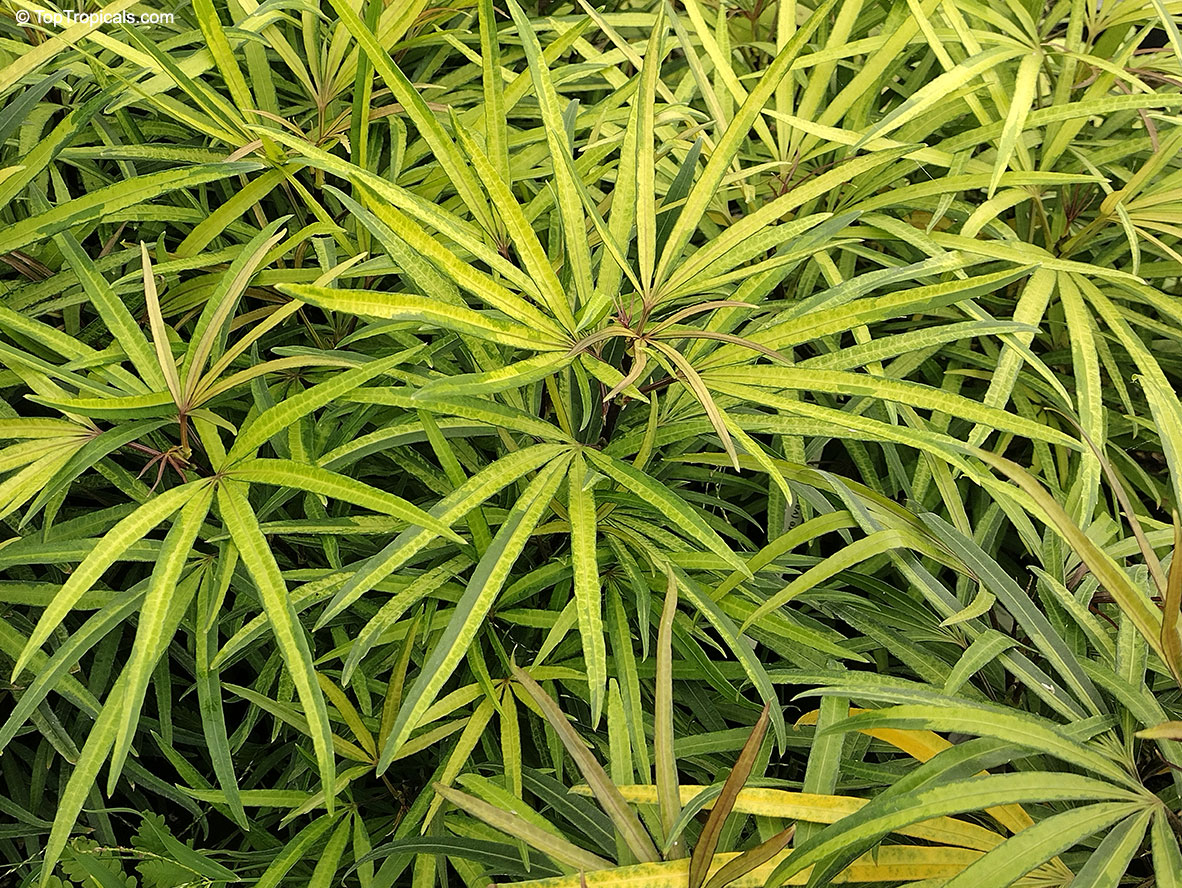
Osmoxylon  lineare  (variegated)  -  Miagos  bush,  Golden  Feather

Osmoxylon lineare - variegated Miagos bush, Golden Feather - is a compact and striking shrub perfect for adding an exotic touch to a small garden or indoor space. Its hardiness and low-maintenance nature, combined with its tolerance for various light conditions, make it an ideal choice for a small, visually appealing addition to your garden. Full sun or light shade.

Capsicum  annuum  x  chinense  -  Biquinho  Pepper

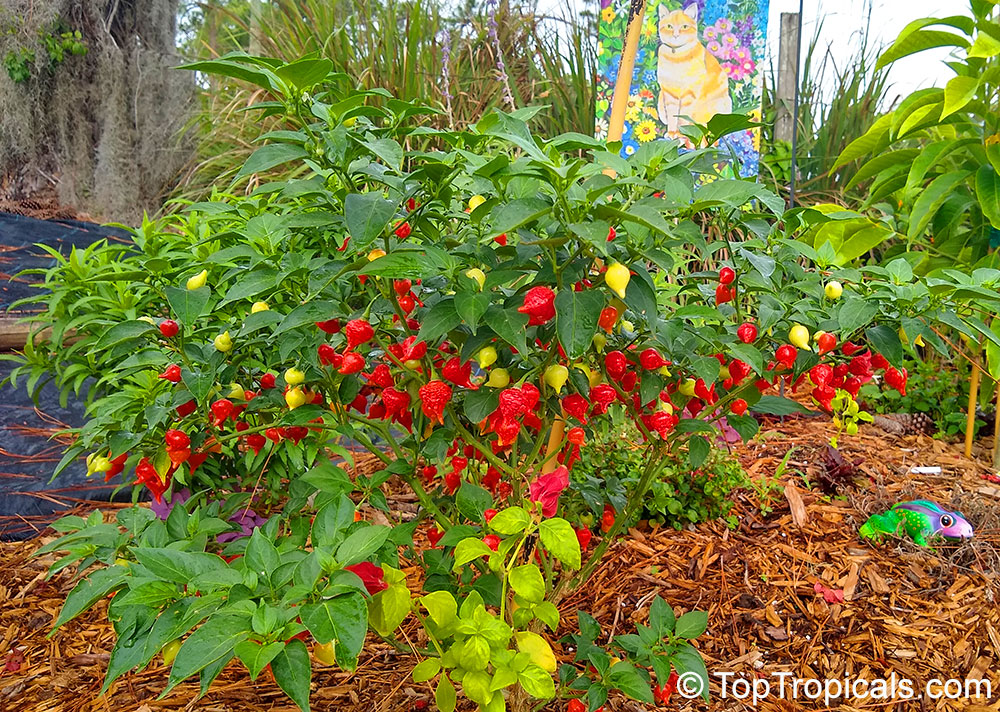
Capsicum annuum x chinense - Biquinho Pepper - amazing showy pepper, both ornamental and useful! Vibrant, compact plant that combines ornamental beauty with culinary use. Its small, bright fruits offer a burst of fruity, habanero-like flavor, making it a unique addition to any garden or kitchen, with little to no heat. Full sun: the more sun - the more peppers!

Lippia  dulcis  -  Aztec  Sweet  Herb,  Sweetleaf

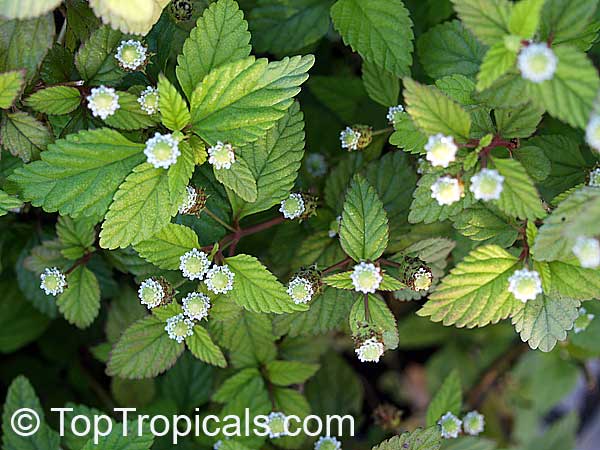
Lippia dulcis - Aztec Sweet Herb, Sweetleaf - not only showy, but also scented leaves and useful herb right at your doorstep! This fragrant, compact elegant plant adds both beauty and function to your garden. Its sweet-tasting leaves are perfect for snacking or enhancing fruit salads, while also serving as a natural remedy for colds and coughs.

Justicia  carnea  Alba  -  White  Brazilian  Plume  Flower

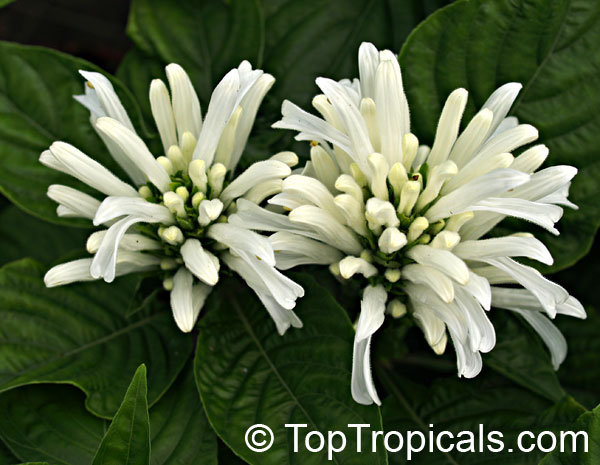
Justicia carnea Alba - White Brazilian Plume Flower is a compact, tropical beauty that thrives in full to partial sun and attracts hummingbirds and butterflies. Its stunning white flowers and lush green foliage make it a perfect choice for adding a tropical touch to your garden, and its relatively cold hardy!

Pedilanthus  tithymaloides  -  Devils  Backbone

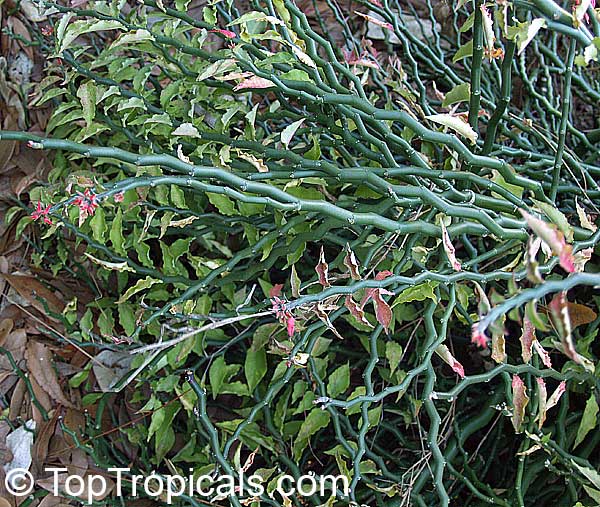
Pedilanthus tithymaloides - Devils Backbone - thrives in toughest spots! Hardy, low-maintenance plant, offering striking pink flowers and showy, unique ziz-zag foliage. Easy care requirements, full sun and minimal watering.

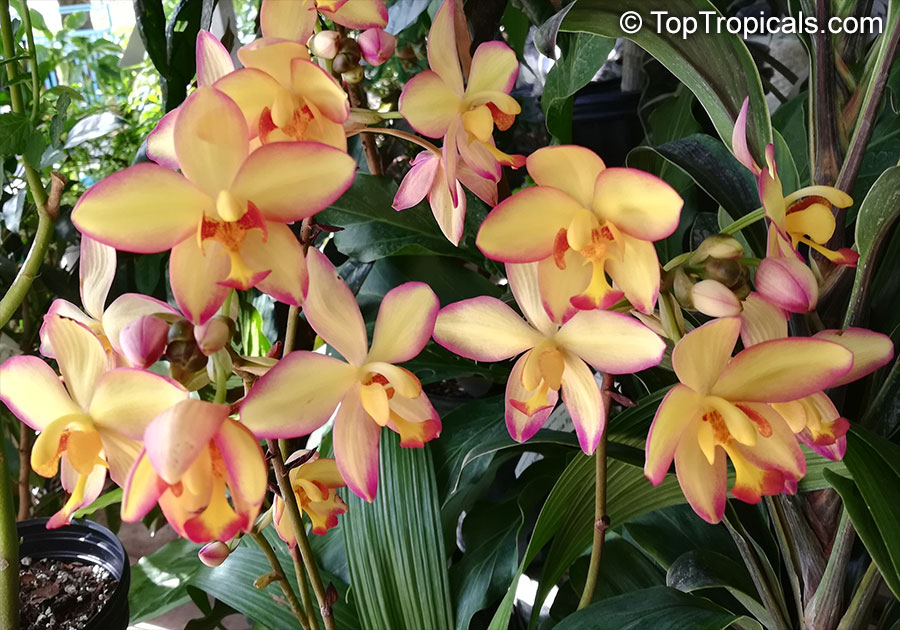
Ground  Orchids

Ground orchids are a fantastic choice for exotic flower beds and colorful borders, growing just 2-3 feet tall and blooming year-round. They offer a wide selection of colors and bloom year-round. Sun or shade, they thrive in both! And yes, they grow in regular garden soil, which is why they are also called Terrestrial Orchids.