Jatropha podagrica (Gout Plant)

Botanical name: Jatropha podagrica
Common names: Gout Plant, Gout Stick, Buddha Belly, Guatemala Rhubarb, Tartogo
Family: Euphorbiaceae
Origin: Guatemala, Honduras, Nicaragua

USDA Zone: 10-11


 Plant form: Small; plant with caudex; suitable for bonsai
 Mature height: 2-5 ft


 Sun exposure: Full sun or bright light indoor; semi-shade; shade
 Cold tolerance: Tolerates light freezing to about 30°F for short periods (mature plants). Young plants must be protected.
 Watering: Moderate

 Flower color: Red, crimson, vinous; yellow, orange
 Suitable for: Outdoors in the suitable USDA zone; small gardens, containers, and indoor growing
 Foliage color: Ornamental foliage
 Irritating or toxic: Toxic plant/plant part
 Wildlife: Attracts butterflies and hummingbirds
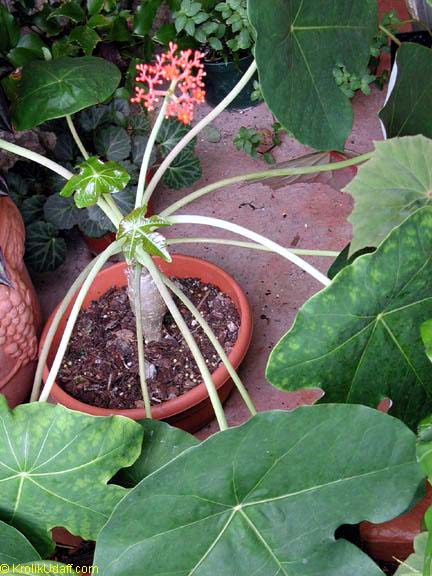
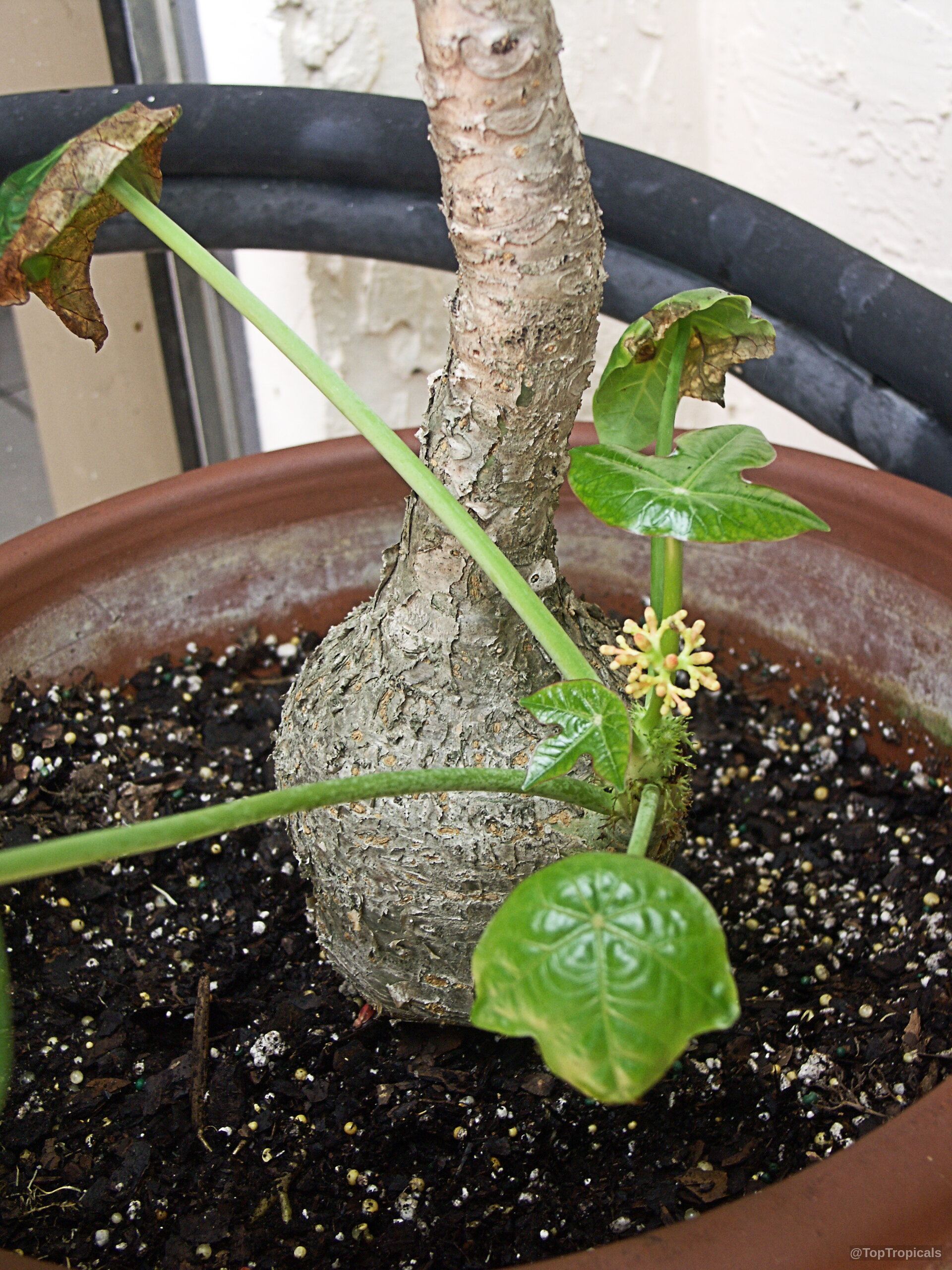
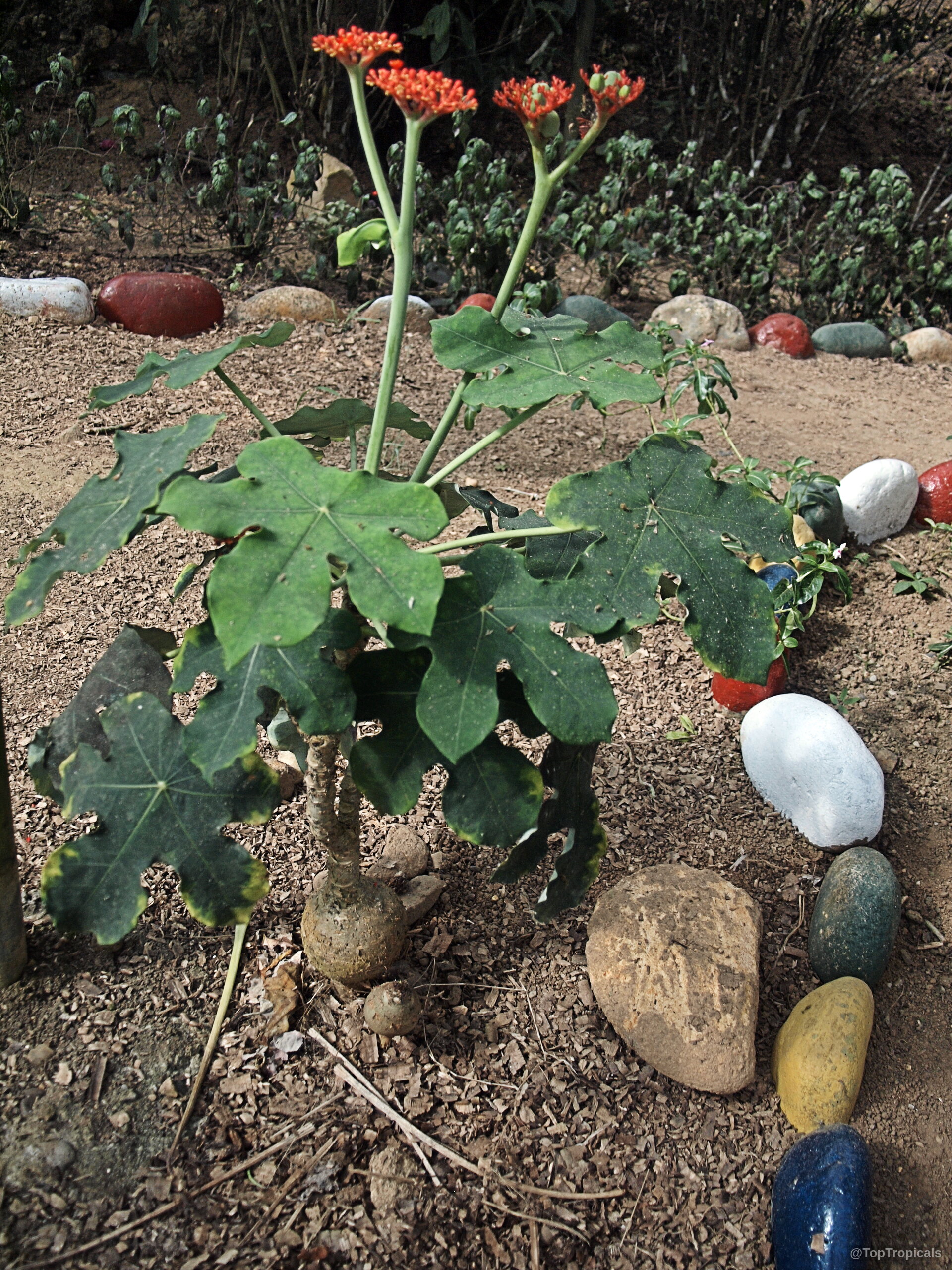
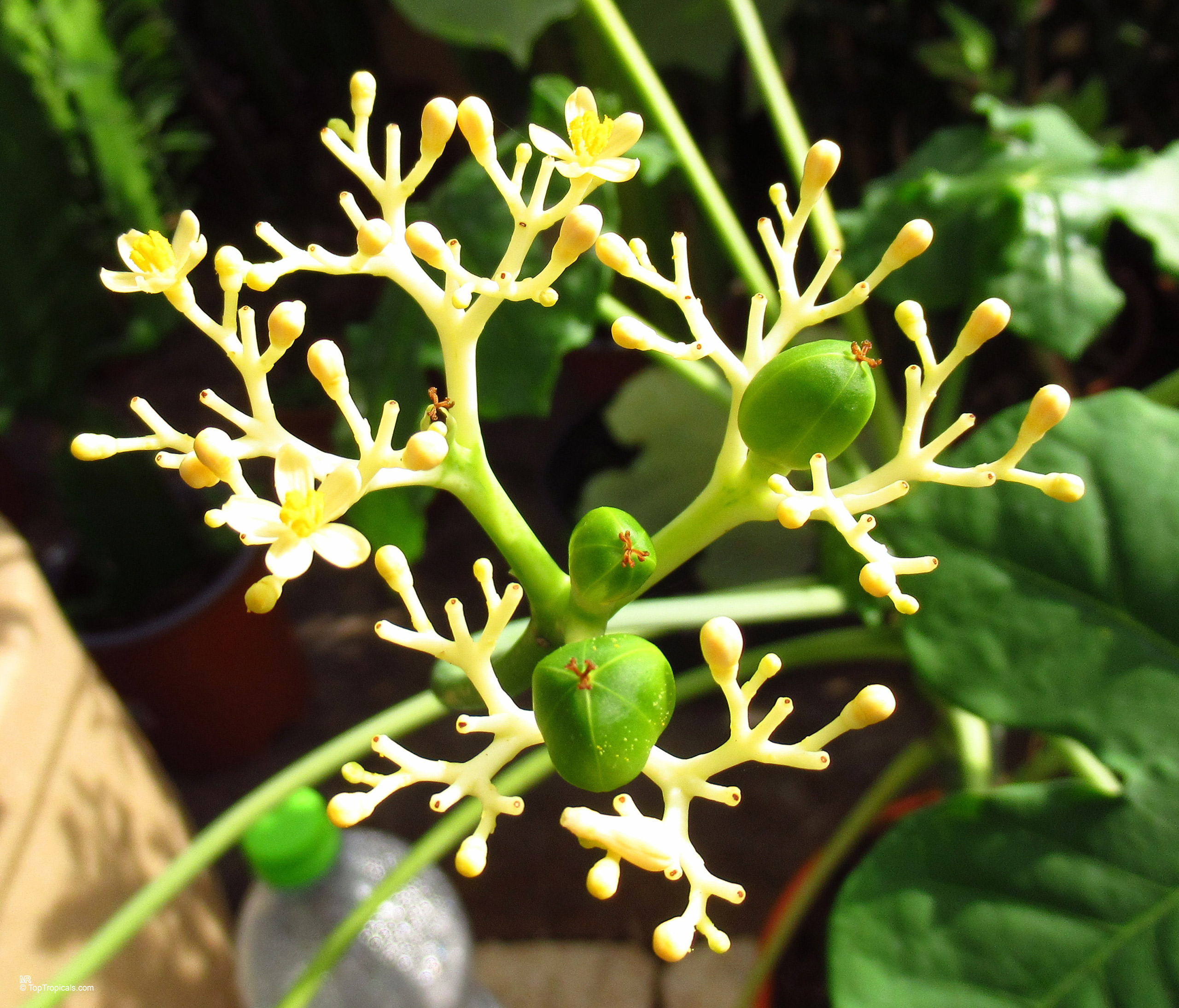
Jatropha podagrica, commonly known as Buddha Belly Plant, Gout Plant, or Bottle Plant, is a deciduous, caudiciform succulent shrub in the Euphorbiaceae family, native to seasonally dry tropical forests of Central America, particularly Guatemala, Honduras, and Nicaragua. It develops a distinctive swollen, bottle-shaped trunk, often reaching three to six feet tall, with a narrow upper stem bearing large, long-stalked, palmately lobed leaves. The foliage is bright green, usually with three to five broad lobes, and may be shed during dry or cool periods. Showy clusters of small, bright coral-red to orange-red flowers appear on long stalks above the leaves. The fruits are three-lobed capsules that split explosively when ripe, scattering the seeds.
Jatropha podagrica grows best in full sun to partial shade and well-drained soil, with moderate watering during active growth and reduced moisture during winter dormancy. The swollen trunk stores water, allowing the plant to tolerate dry periods, but prolonged wetness can cause root rot. It is frost-sensitive and suitable for outdoor cultivation in USDA Zones 10-11; in colder climates it makes an excellent container plant. Flowering may continue even when the plant is leafless. All parts are poisonous, especially the seeds, and the milky sap can irritate the skin.
Similar plants: Jatropha podagrica (Gout Plant)