Date: 18 Feb 2026
🔥 Blazing into the 2026 with hot jasmines

Smokey: It's jasmine, Tiger. A shrub. Not Wembley. Calm down.
💮 2026 Year of the Horse - and the Plant I Trust Most
By Tatiana Anderson, Horticulture Expert at Top Tropicals
Every new year carries its own energy.
2026 is the Year of the Horse - a year of movement, fire, momentum, and bold decisions. It is not a quiet year. It pushes us forward.
When fellow gardeners ask me what to grow in a year like this, my answer
is simple:
Grow something that balances strength with grace.
For me, that plant is Jasmine Sambac.
In many cultures, Sambac represents devotion, purity, and deep affection. In the Philippines it is the national flower - Sampaguita - woven into garlands for weddings and sacred ceremonies. In Hawaii, it becomes leis - a symbol of welcome and connection - Pikake. In India, it perfumes temples and homes.
This is not just a fragrant shrub.
It is a plant tied to love, loyalty, and continuity.
The Horse runs forward.
Jasmine anchors the heart.
In a fiery year like 2026, I believe we need both.
And that is why I always return to Jasminum sambac.
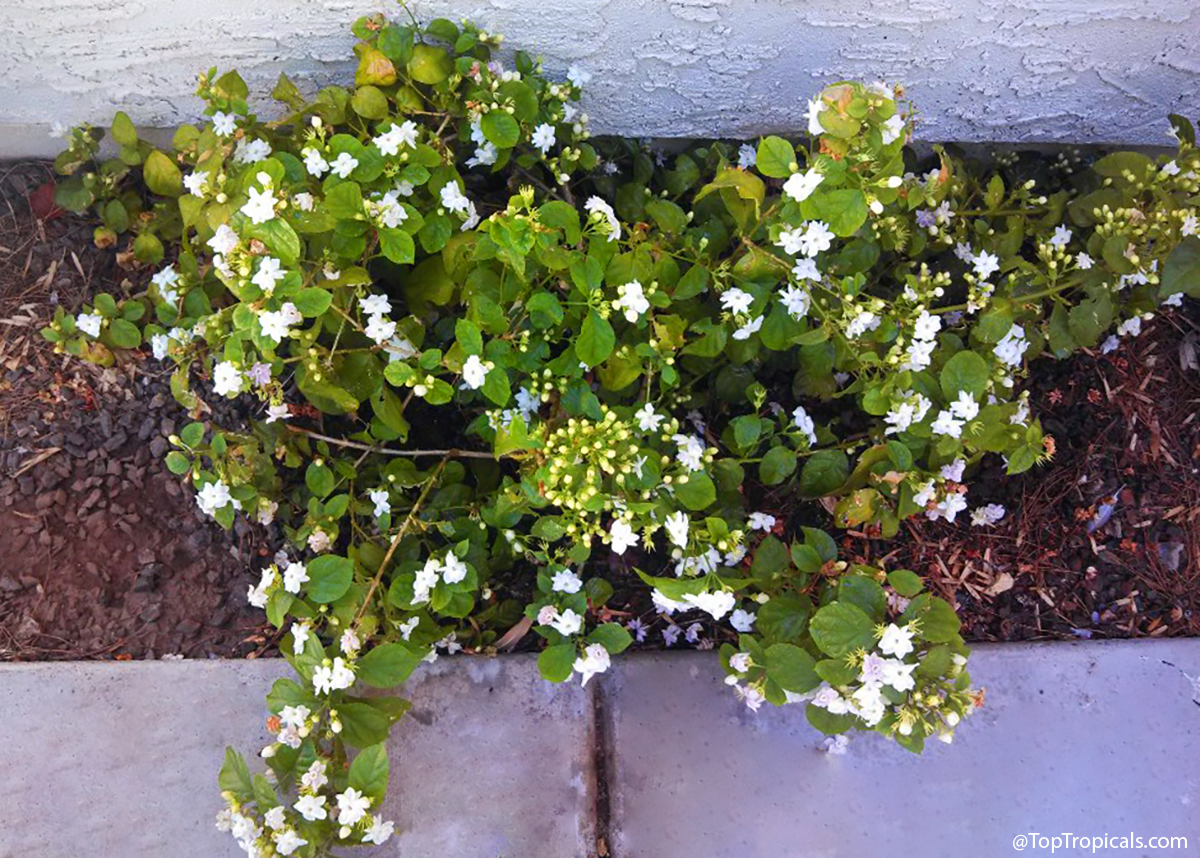
✅ Why Jasmine Sambac?
Over the years I have grown thousands of plants, but very few have the staying power of Jasmine Sambac.
It is not just fragrant. It is intensely, unmistakably fragrant. One open flower can perfume an entire patio. In the evening, the scent becomes deeper and richer.
But what makes Sambac truly special is its adaptability.
It can grow as a compact patio shrub, a flowering hedge, or a climbing vine. It performs beautifully in containers. It tolerates both full sun and partial shade. The more light you give it, the more flowers it rewards you with.
And unlike many tropicals, Sambac does not bloom just once. With proper care, it flowers in cycles throughout the warm season.
For gardeners, that combination is rare: beauty, perfume, flexibility, and repeat bloom.
That is why it has remained one of the most wanted fragrant plants in cultivation.
Date: 17 Feb 2026
Nandi and her eyes

Nandi the cat with big eyes

Nandi the cat with big eyes

Nandi the cat with big eyes
👀 Nandi and her eyes
"Look into my eyes so I can hypnotize you."
- Zen Mistress Nandi
🐈📸 Nandi - Onika's cat from TopTropicals PeopleCats.Garden
#PeopleCats
🟢 Join 👉 TopTropicals
Date: 17 Feb 2026
Lunar New Year starts today - welcome the Year of the Fire Horse 2026 with Jasmines
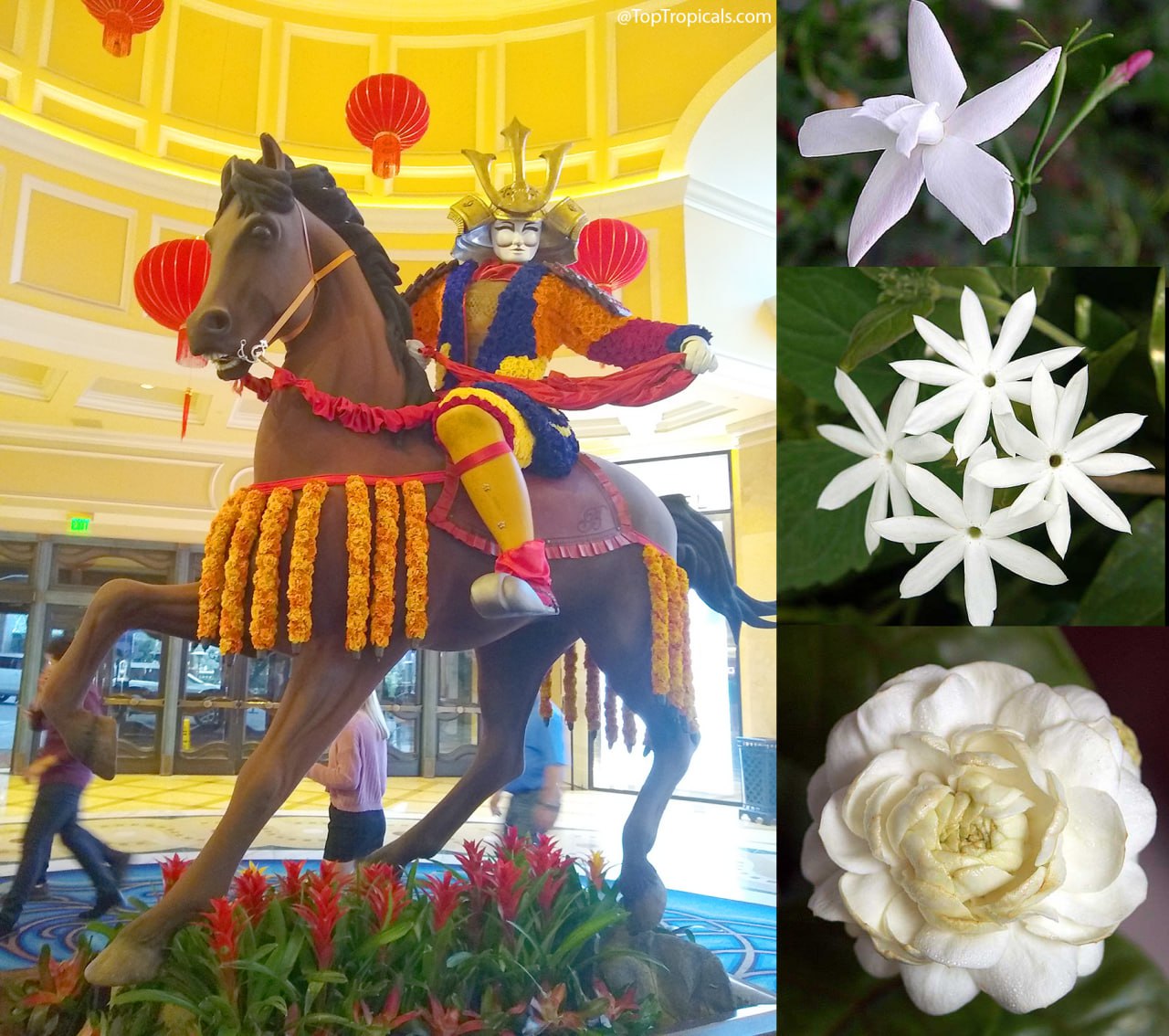
Year of the Fire Horse 2026 with its lucky plants Jasmines
🔥 Lunar New Year starts today - welcome the Year of the Fire Horse 2026 with Jasmines
- 💮 One of the luckiest plants for 2026 is Jasmine. Today, February 17, 2026, the Lunar New Year begins, welcoming the energetic and passionate Year of the Fire Horse.
- 💮 If you’ve been feeling restless, ready for movement, or craving something fresh in your life - that’s Horse energy. This year is about action, authenticity, and doing things your way. And in Chinese tradition, certain plants help align your space with that powerful momentum.
💮 Why Jasmine is especially lucky this year
Jasmine symbolizes love, luck, and beauty - three themes closely connected to the Fire Horse’s vibrant spirit. Horses are social, expressive, and affectionate. Jasmine’s sweet fragrance supports harmony, romance, and positive energy in your home.
In Feng Shui traditions, fragrant flowering plants help soften intense Fire energy. Jasmine does exactly that - it balances passion with calm.
💮 How to use Jasmine for good fortune in 2026
· Grow jasmine near entrances or windows to invite good luck into your home
- · Place it in patios or garden walkways where its scent can circulate
- · Use jasmine oil or candles in bedrooms to enhance relaxation and romantic harmony
💮 RReady for momentum?
Ready to feel bold, inspired, and a little unstoppable? The Year of the Fire Horse moves fast - and it rewards those who move with it. Think you need more clarity, more spark, more direction? Jasmine anchors that fire with calm confidence. It keeps the passion high and the chaos low.
If you’re stepping into 2026 with purpose, don’t just make resolutions. Plant something living. Let jasmine bloom beside you - and grow into the year you’ve been waiting for.
🛒 Discover lucky Jasmine plants
📚 Learn more:
#Horoscope #Perfume_Plants #Discover
🟢 Join 👉 TopTropicals
Date: 16 Feb 2026
Yes, you can grow a mango tree on your patio - here is how to do it right
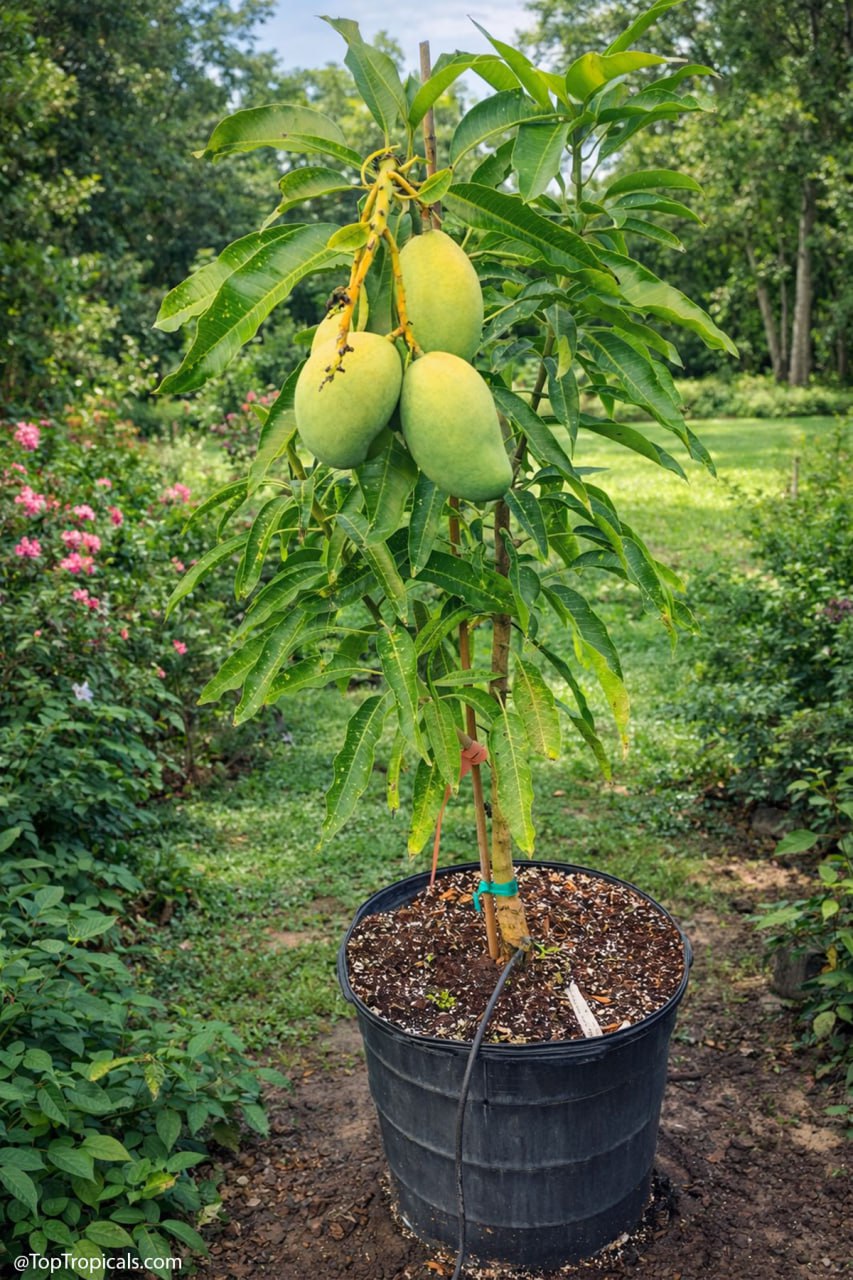
Mango fruiting in container
🥭 Yes, you can grow a container mango tree on your patio - here is how to do it right
Think you need a backyard orchard to grow mangoes? You don't. Mango trees grow very well in containers. Compact varieties, often called condo mangoes, stay naturally smaller and are well suited for pots, patios, and small yards. We grow and ship mango trees nationwide and have seen which varieties perform best in containers.
Growing mangoes in pots is also practical in cooler climates. The tree can be moved to protection during cold weather while still producing real fruit. Here is how to do it right.
🥭 Pick the right condo mango tree variety
Choose condo or semi-dwarf mango varieties that stay smaller and respond well to pruning. These mango trees usually stay 6 to 10 feet tall in containers with light pruning. Fruit size is full-size, just fewer than on large trees.
Good mango choices for pots include:
- · Cogshall - compact and productive
- · Pickering - naturally small and reliable
- · Carrie - manageable size, great flavor
- · Ice Cream - slow growing, narrow canopy
- · Julie - classic Caribbean type
- · more condo varieties...
🥭 Choose the right pot
Start small. Young mango trees do best in a 5- to 7-gallon pot. Oversized containers too early often cause overwatering and root issues.
Increase size gradually:
First pot: 5-7 gallons
Next size: 10-15 gallons
Mature container: 20-25 gallons
The pot must drain well. Mango roots dislike wet soil. Add holes if needed. Plastic, ceramic, and fabric pots all work.
🥭 Use fast-draining soil
Mango trees need air around their roots.
Use a loose, fast-draining mix, such as Abundance Professional Soilless Mix. Improve drainage with perlite, pine bark, or coarse sand. Avoid heavy or water-holding soils. Drainage matters more than fancy ingredients.
🥭 Water carefully
Mango trees prefer a wet-dry cycle.
Water deeply, then allow the top few inches of soil to dry before watering again. Always check with your finger first.
In warm weather, water once or twice a week. In winter, much less. Overwatering is the most common container mistake.
🥭 Give plenty of sun
Mango trees love sun and heat.
Place the pot in full sun with at least 8 hours daily. More sun improves growth and flowering.
If overwintered indoors, use the brightest window possible. Grow lights help, but outdoor sun is best when weather allows.
🥭 Fertilize lightly but consistently
Potted mango trees benefit from regular feeding during active growth.
Use a balanced mango or fruit tree fertilizer such as Sunshine Mango Tango (safe to use with every watering, year-around). Controlled-release fertilizer Green Magic (every 6 months) work well too. Avoid excess feeding, which promotes leaves over flowers.
If leaves pale, check watering first, then nutrition.
🥭 Prune to stay compact
Pruning is essential for mangoes in pots.
Light tipping and trimming control size, encourage branching, and increase flowering points. Keep the canopy open and balanced. Watch how simple tipping works in real life: .
Avoid heavy pruning before flowering. Most pruning is best right after harvest.
🥭 Protect from cold
Mango trees are tropical and cold-sensitive.
When temperatures drop below 40F, move the pot to protection or indoors. Young trees are especially vulnerable.
During winter, reduce watering and stop fertilizing. Growth slows and the tree rests.
When warm weather returns, reintroduce the tree to sun gradually to prevent leaf burn.
🥭 Final thoughts
Growing a mango tree in a pot is practical and rewarding. With the right variety, good drainage, full sun, and careful watering, a potted mango can thrive and fruit for years, even in small spaces. Ready to start? Choose a compact mango variety.
🛒 Discover Condo Mango
📚 Learn more:
#Food_Forest #How_to #Discover #Mango
🟢 Join 👉 TopTropicals
Date: 15 Feb 2026
Tamarind date dipping sauce, quick-n-fun exotic recipes
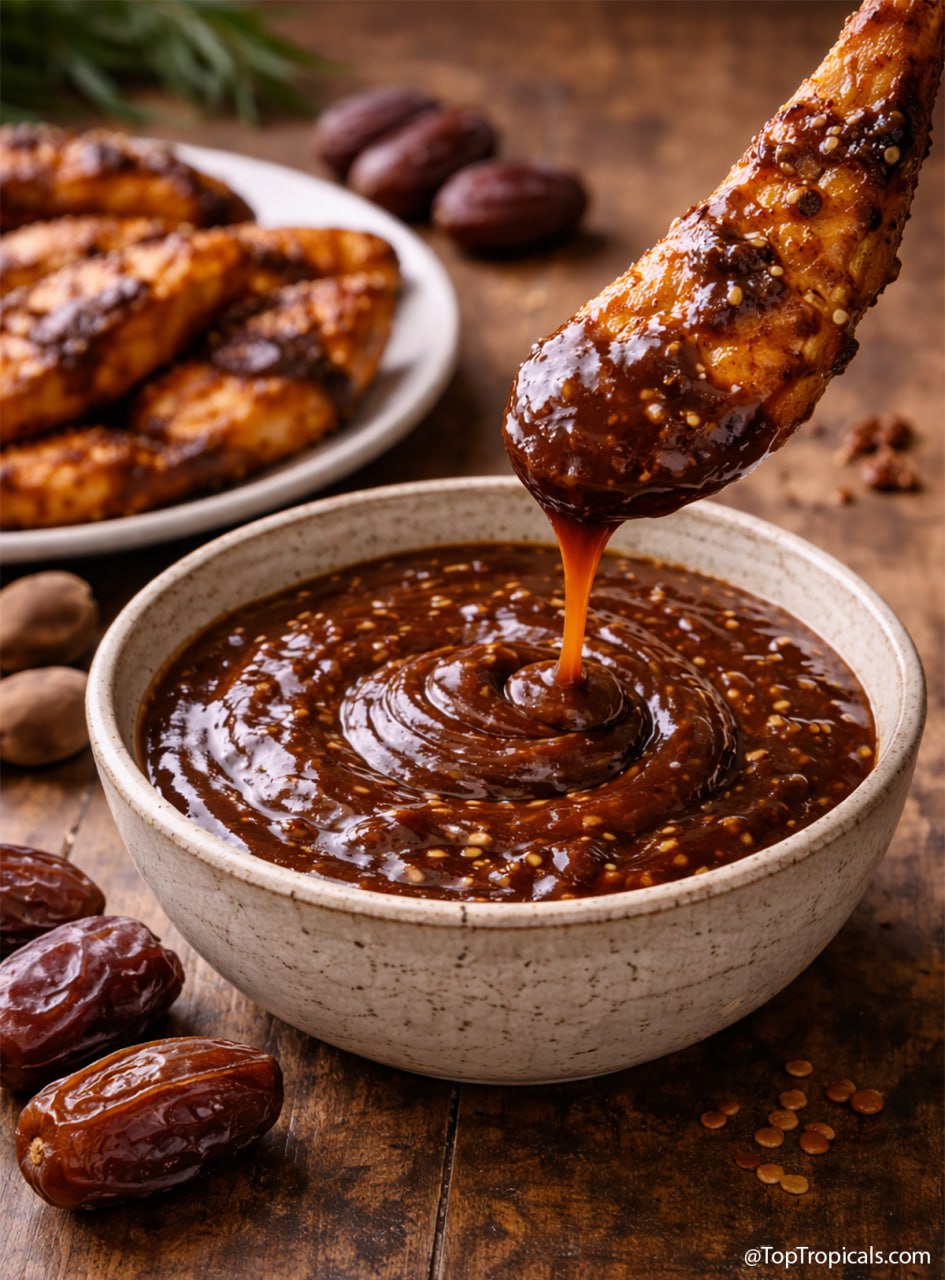
Tamarind date dipping sauce
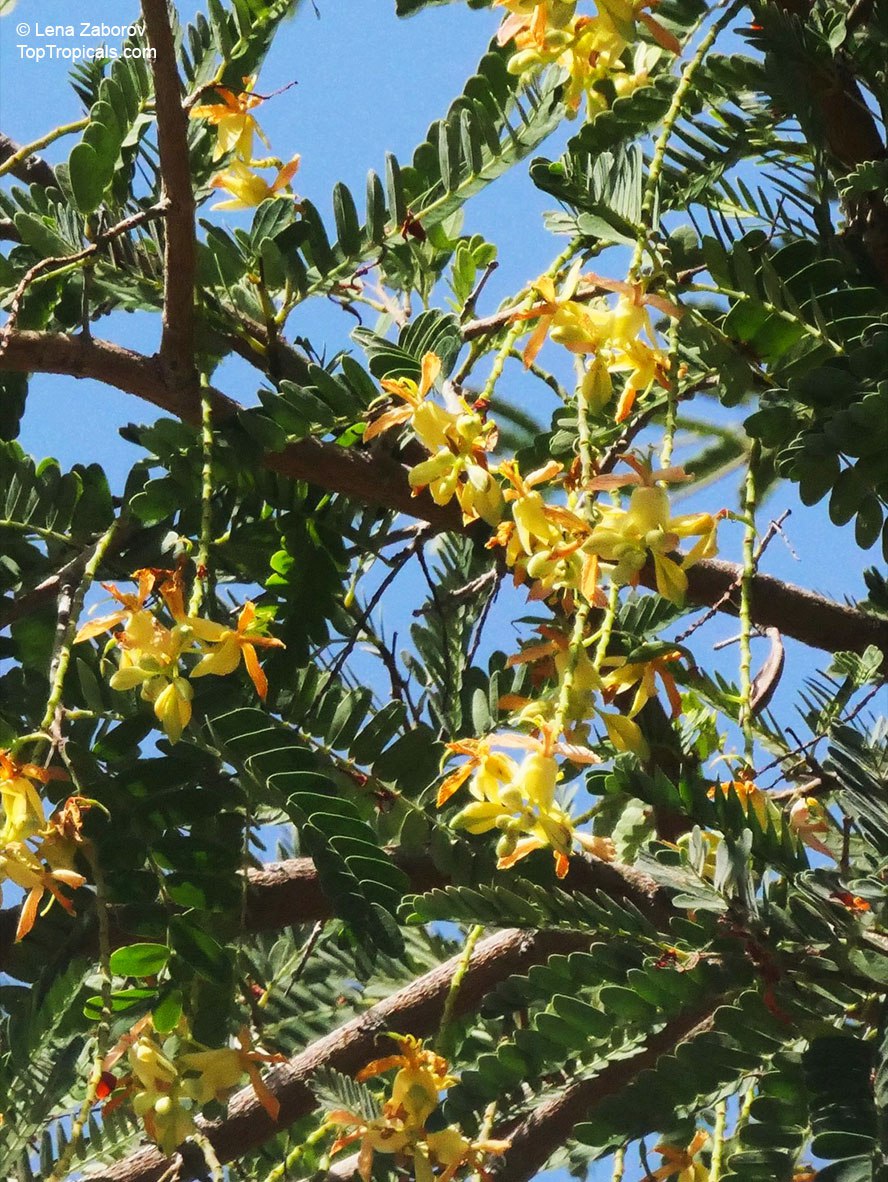
Tamarind - Tamarindus indica - flowers
🍴 Tamarind date dipping sauce: quick-n-fun exotic recipes
Tamarind Date Dipping Sauce
Ingredients
- 3 soft dates
- 1 tablespoon tamarind pulp
- 1 pinch salt
- 2–3 tablespoons warm water
Instructions
- Soak the dates briefly in warm water if they are firm.
- Add the dates, tamarind pulp, and salt to a blender.
- Blend until smooth.
- Add warm water gradually until the sauce reaches dipping consistency.
- Serve with snacks, roasted vegetables, or grilled foods.
🌿 About the plant:
When combined with dates, tamarind transforms into a sweet-sour chutney common in Indian street food.
🏡 In the garden:
Tamarind (Tamarindus indica) flowering occurs in warm months with small yellowish blooms. Pollination leads to the familiar curved pods.
🛒 Add Tamarind tree to your garden
📚 Learn more:
Tamarindus indica in Plant Encyclopedia
#Food_Forest #Recipes
🟢 Join 👉 TopTropicals