Garden Blog - Top Tropicals

Date: 22 Jan 2026

Canistel breakfast mash: quick-n-fun exotic recipes

Canistel breakfast mash

Canistel breakfast mash

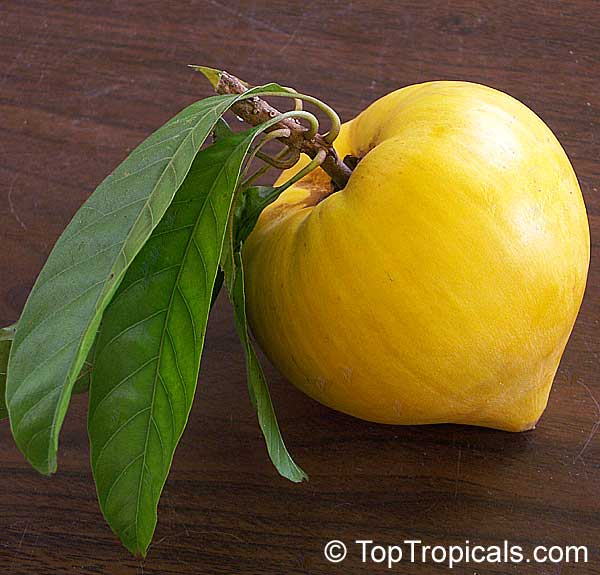
Canistel - Pouteria campechiana, Egg Fruit

Canistel - Pouteria campechiana, Egg Fruit

🍴 Canistel Breakfast Mash

Ingredients

  • 1 ripe canistel (egg fruit), peeled and seeded
  • 1 tablespoon milk
  • Ground cinnamon, to taste

Instructions

  1. Scoop the canistel flesh into a bowl.
  2. Mash thoroughly with a spoon, adding milk gradually until smooth and custard-like.
  3. Serve immediately, topped with a light sprinkle of cinnamon.

🌿 About the plant:


Canistel (Pouteria campechiana), often called Eggfruit, has dense yellow flesh with a flavor reminiscent of sweet potato, pumpkin, and custard. It is naturally rich and filling, which is why it is often used mashed, blended, or cooked.

🌱 In the garden:


Canistel is a tough, drought-tolerant tropical fruit tree that performs well in warm climates. It prefers full sun, well-drained soil, and minimal fuss once established. Compact growth and heavy production make it well suited for edible landscapes and container growing.

🛒 Add to your garden:


📚 Learn more:


#Food_Forest #Recipes

🟢 Join 👉 TopTropicals

Date: 18 Mar 2026

The Alien Lily: why this rare Peruvian bulb is taking over garden feeds

Eucrosia bicolor - Peruvian lily

The Alien Lily: why this rare Peruvian bulb is taking over garden feeds 🔥

Most bulbs are predictable, but Eucrosia bicolor is a total showstopper. Discover why this rare Peruvian lily looks like a firework and how to grow it.
  • 💥 I planted a simple, nondescript bulb and honestly? I wasn’t prepared for what came out of the soil. This one feels like it belongs in a museum, or on a tiny stage with spotlights!
  • 💥 Eucrosia bicolor is not your typical garden plant - it’s a rare bulb from the dry regions of Peru, and when it blooms, it puts on a theatrical performance. It’s rare, it’s a bit dramatic, and it looks like something designed for a sci-fi movie set.
Picture this: you’ve got a simple tulip-like bulb sitting quietly for months. Then suddenly, a flower stalk shoots up, and out comes this wild bloom - bright red base with long, thin golden “whiskers” sticking out like fireworks frozen mid-burst. It doesn’t even look real at first glance.
  • 💥 Move over, Orchids: why Peruvian Lily is the ultimate conversation starter


    The Eucrosia bicolor is a rare bulb from the dry forests of Peru. For months, it sits quietly in its pot, looking like a plain onion. But then, the magic happens:

  • · The "Fireworks" Bloom: A tall stalk shoots up, topped with bright red flowers and impossibly long, golden-tipped "whiskers.
  • · The"Museum"Look: The stamens are so long and delicate they look like frozen explosions or a tiny botanical chandelier.
  • · Lush Foliage: Even when it isn't blooming, its broad, soft leaves offer a"Lily of the Valley"elegance that keeps your shelf looking green.


💥 The"introverted"bulb: why you should stop watering this plant to make it bloom


Being part of the Amaryllis family, Peruvian Lily has a unique quirk: it craves a"disappearing act."
It requires a dry dormancy period where it completely dies back.
It’s essentially a"don't call me, I'll call you"plant.
But when it decides it's time? It comes back stronger every year.

💥 Quick Care Guide for Collectors


How to Master the"Peruvian Performance"? Caring for this rarity is actually quite simple once you understand its rhythm.
  • · Light. Yes, it blooms in shade! To get those museum-quality blooms, you’ll want to place it in a spot with warmth and bright, indirect sunlight - a sunny windowsill is usually its happy place.
  • · Water. During its active growing season, keep the soil moist, but here is the"secret sauce": once the leaves begin to yellow, stop watering entirely. This mimics the dry season in Peru and allows the bulb to rest.
  • · Placement. Because of this specific"on/off"cycle, it’s best kept in a container where you can easily control its environment and move it to a place of honor the moment those firework-like stalks appear.
  • · The Verdict: It’s not a constant bloomer, and that’s exactly why it's special. When that stalk finally appears, it feels like an event. It’s the kind of plant that makes you run to the living room every morning just to see if"today is the day."


🛒 Find the Peruvian Lily here

🎥 Close-up of Eucrosia bicolor flower with long golden stamens
📚 Eucrosia bicolor in Plant Encyclopedia

#Container_Garden #How_to #Discover

🟢 Join 👉 TopTropicals

Date: 26 Aug 2024

Top ten fast-fruiting trees

Cat  fruit  in  a  box

Q: I would like to plant several fruit trees... I am 85 years old and hope to see them fruiting soon. What fruit trees can you recommend that will fruit quickly?

A: Most grafted fruit trees, such as Mango, Avocado, and Peaches, will fruit quickly - often within the same year or the next. There are also many wonderful tropical fruits that will produce for you within a year or two, even without the need for grafting. Below are the top 10 of most popular, most rewarding and easy to grow fast fruiting tropical trees:

1. Annona - Sugar Apple, Custard Apple.
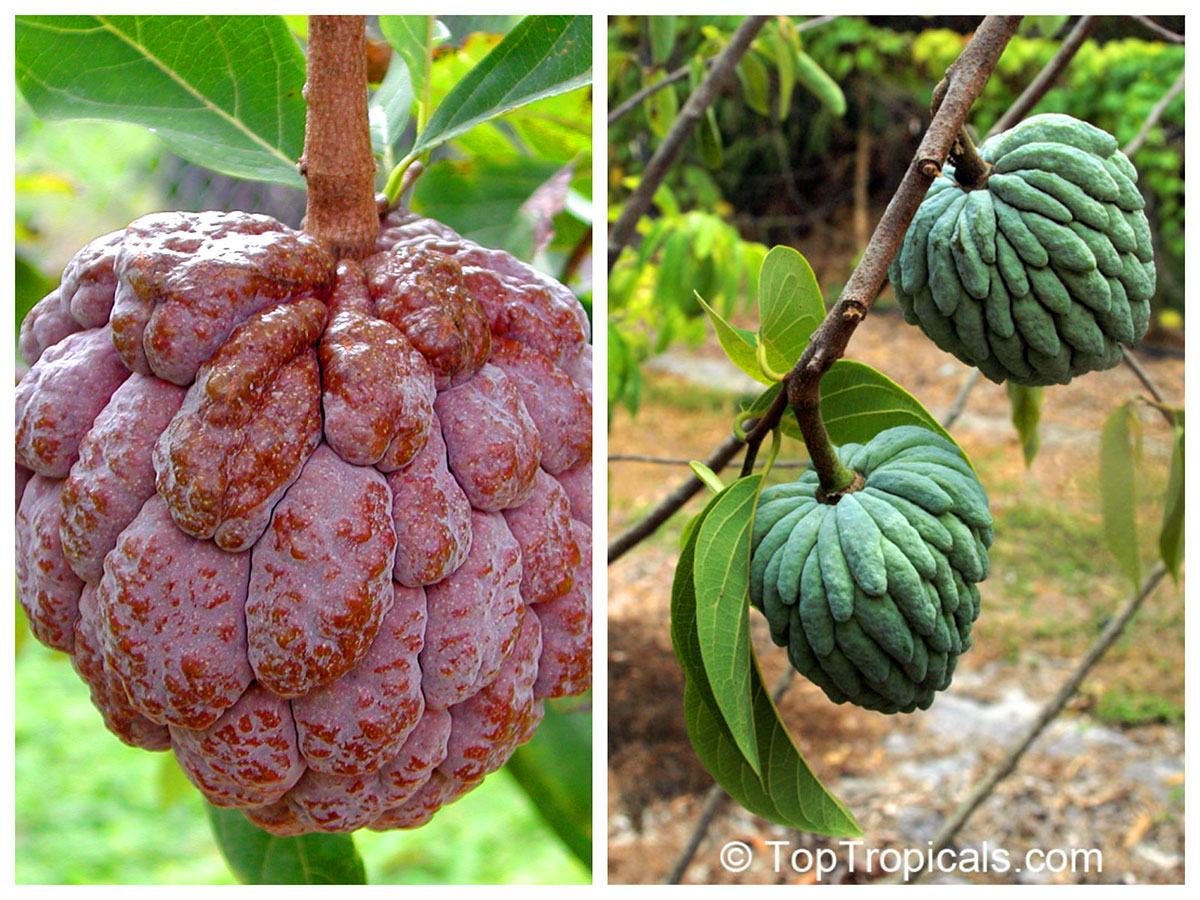
Annona  -  Sugar  Apple,  Custard  Apple

Annonas are the fastest fruiting trees: 2-3-4 years from seed to fruit, depending on species. They are the best tropical fruit trees suited for container growing, due to their small height and can be maintained within 6-8 ft tall.

2. Guava (Psidium sp.): Cattley and Tropical guava
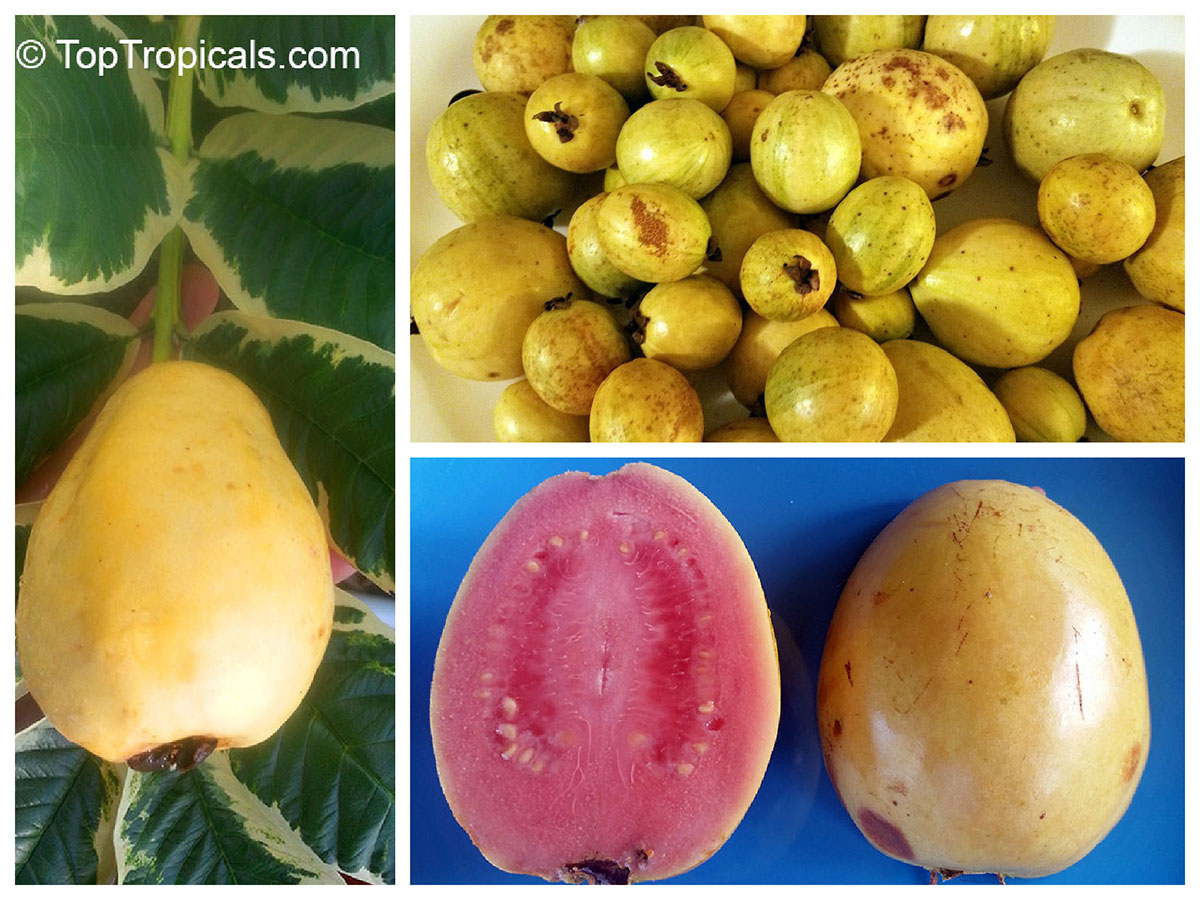
Guava  fruit  -  Psidium

Guava is a reliable producer, starts fruiting in a pot at small size. Some varieties, especially Cattley guavas - Psidium littorale - are relatively cold hardy and can take some frost without damage. Guavas are fast growing small trees or large bushes.

3. Eugenia - Tropical Cherries
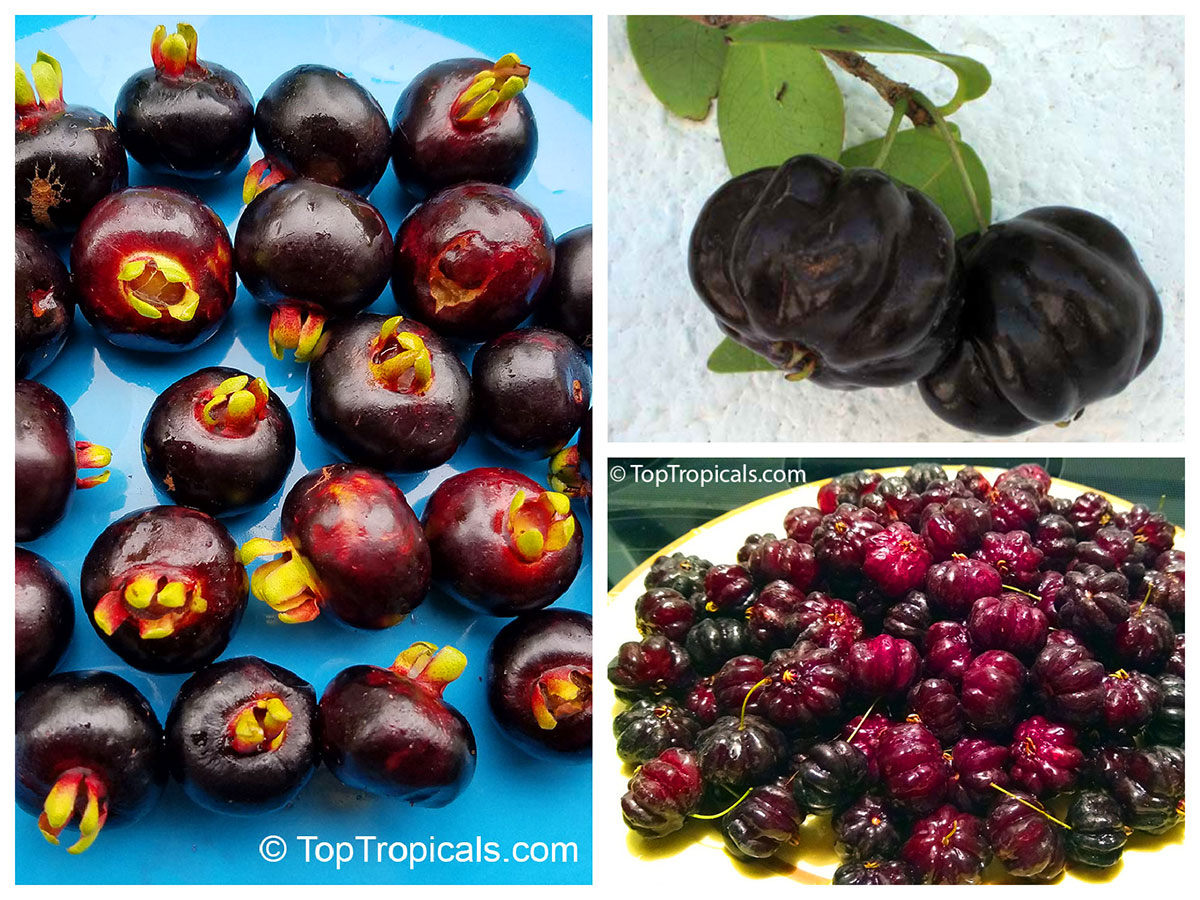
Eugenias  -  Tropical  Cherries

Eugenias are favorites of Southern gardens. They are relatively cold hardy and start producing right away. Black Surinam Cherry Lolita and Grumichama are our favorites!

4. Barbados Cherry (Malpighia glabra)
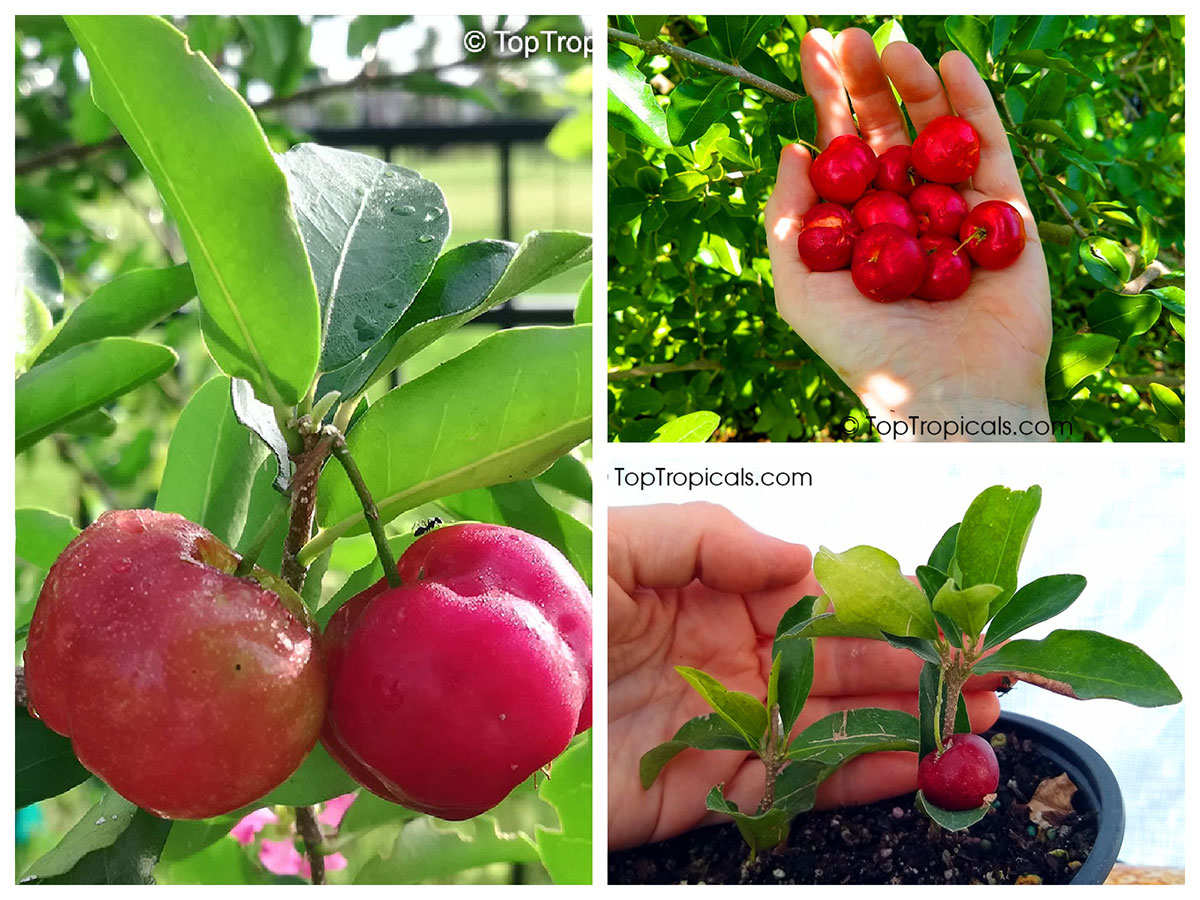
Barbados  Cherry  -  Malpighia  glabra

Another exceptional tropical cherry is Barbados Cherry. It is super popular as a heavy producer. The plant can start fruiting when it's only a few inches tall! If you are looking for a compact, but fast growing tree with colorful fruit that starts fruiting right away - plant Barbados Cherry. It will also happily fruit in containers.

5. Eriobotrya (Eriobotrya japonica)
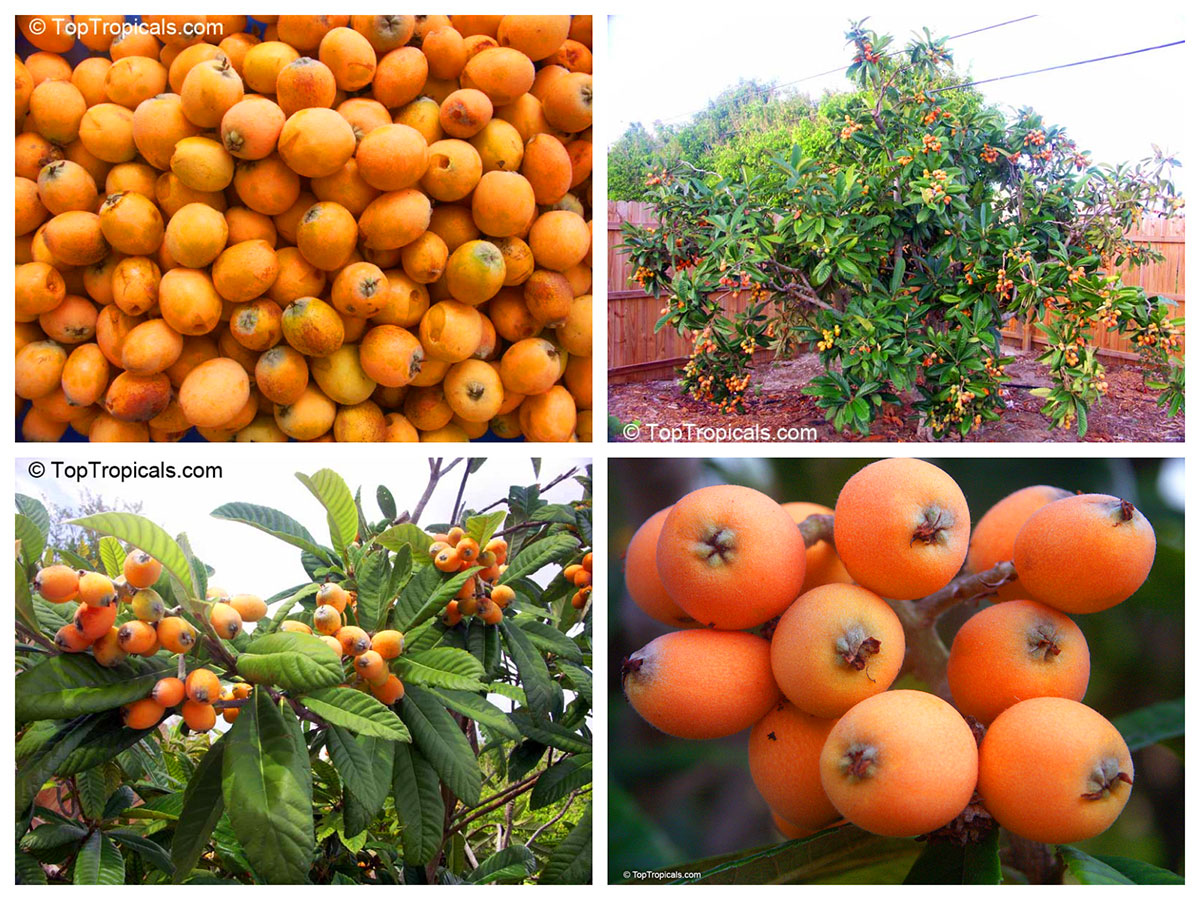
Loquat  -  Eriobotrya  japonica

Loquat tree is fast-growing, drought-tolerant, cold-tolerant, compact tropical fruit tree. It is a heavy producer. Fruits are juicy, aromatic, and resemble apricots. Ripen from early Spring to early Summer. Ideal for small gardens, beginner fruit tree growers.

6. Papaya (Carica papaya)
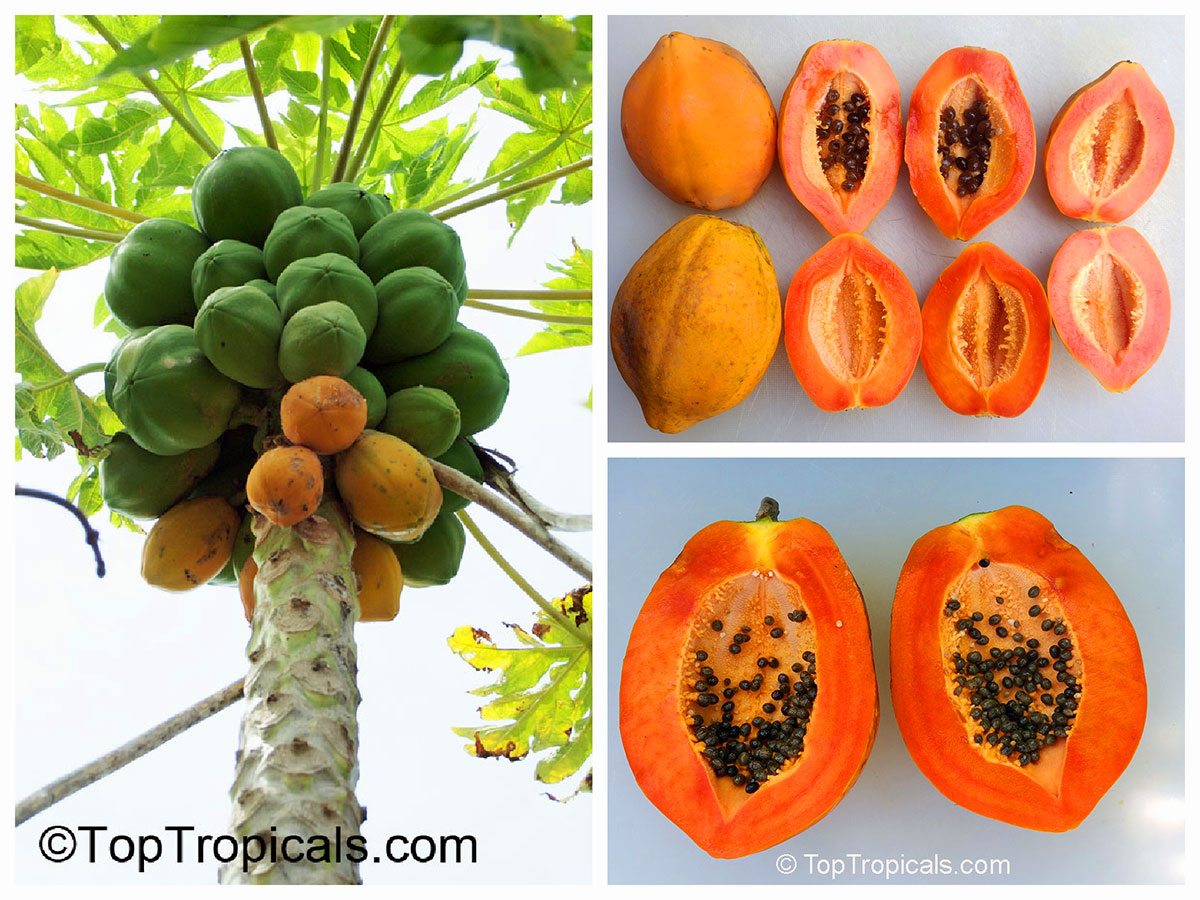
Papaya

Papaya is probably the fastest fruiting tree that can start production the same year from planting a seed. Many dwarf varieties available in selection, reaching only 6-8 ft tall, but producing large crops of full size fruit - they are easy to harvest. Plant 2-3 Papaya trees of different cultivars that fruit at different times of the year and enjoy heavy crops of healthy fruit year around! Another benefit - this tree doesn't take much space in the garden, you can plant as many as you want.

7. Mulberry (Morus hybrids)
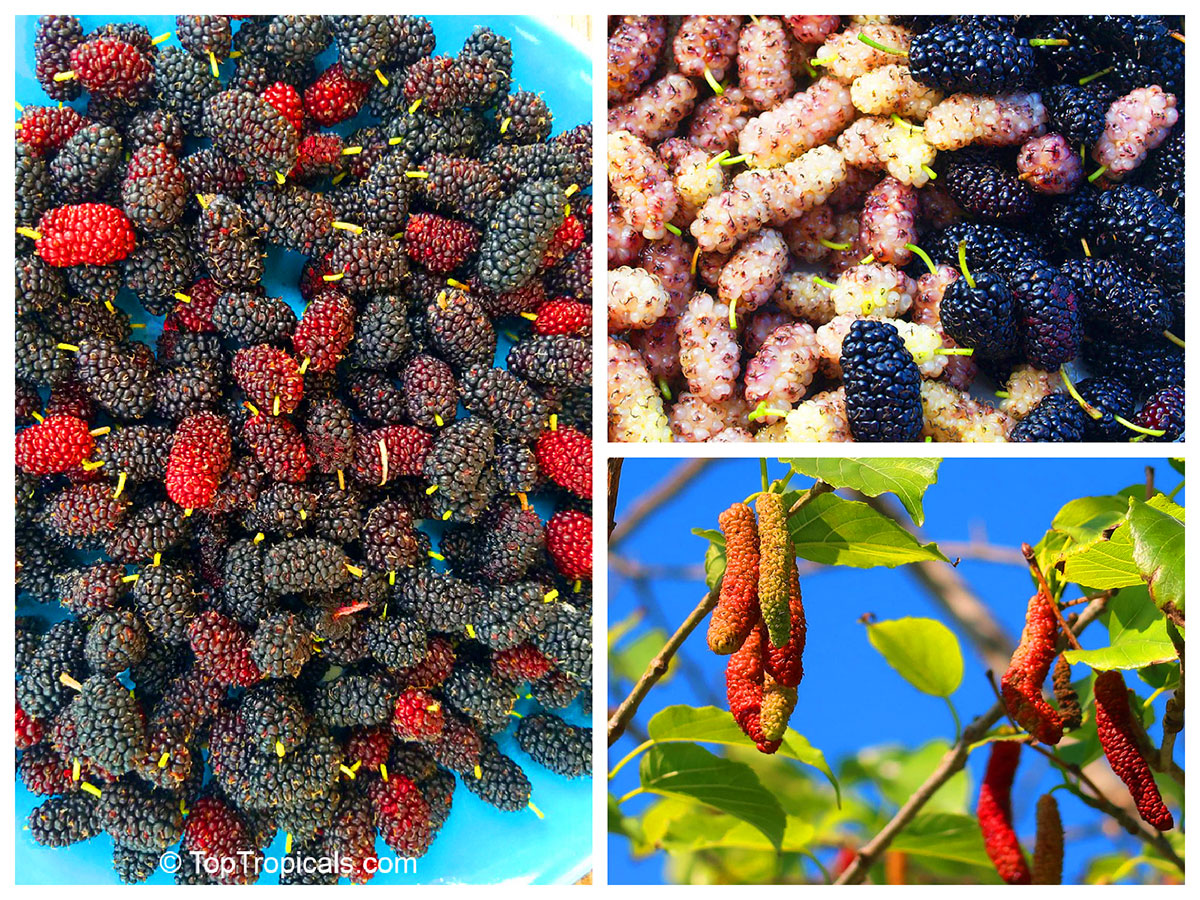
Mulberry

Mulberry is very cold hardy and can grow in wide range of climate zones, from USDA 5 to 10. Everyone knows this sweet, tasty, juicy fruit. The tree will produce right away, you will see fruit the next season after planting, and the tree grows fast.

8. Carambola - Starfruit (Averrhoa carambola)
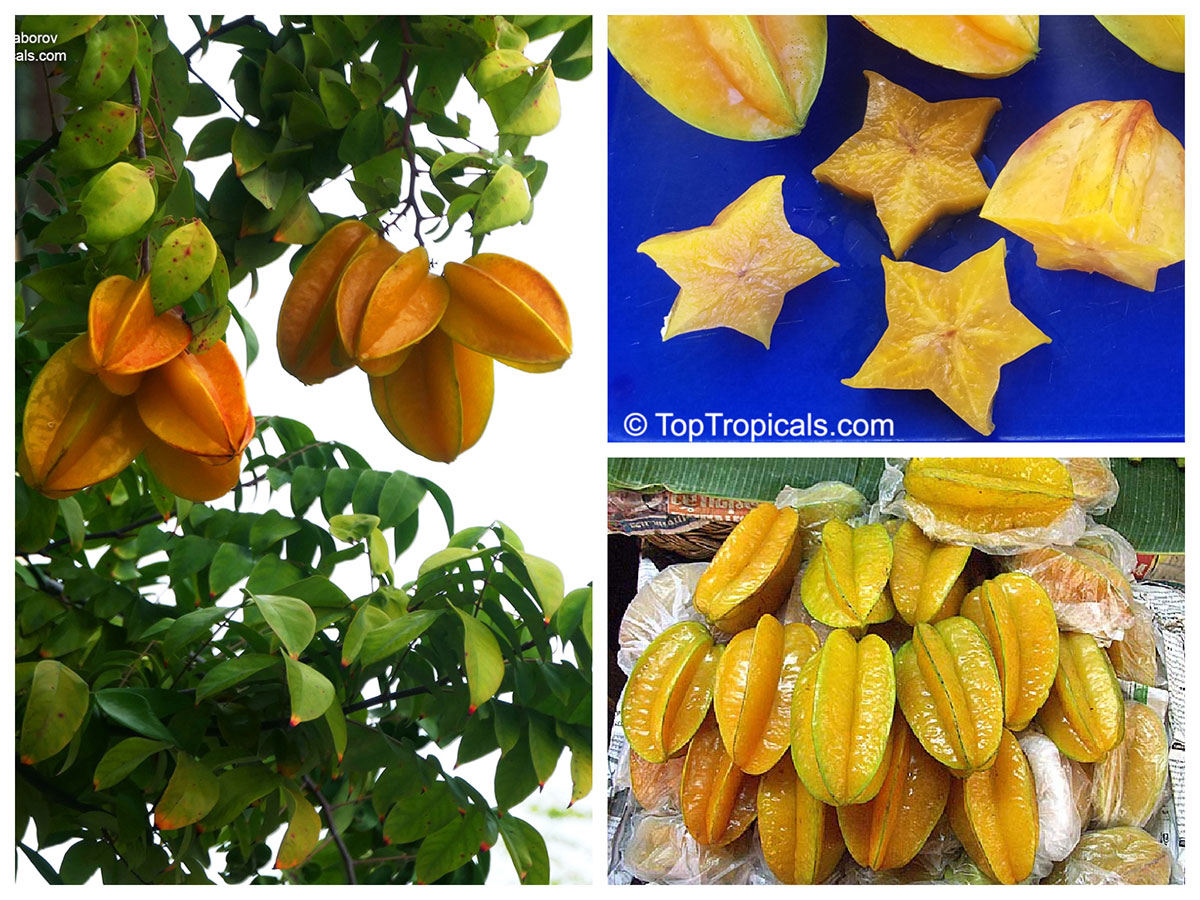
Carambola  -  Starfruit,  Averrhoa  carambola

Growing Carambola tree is a fun and rewarding way to enjoy this unique star-shaped delicious fruit right at home. It fruits on the 3d year from seed. The tree is easy to grow and reliable producer, providing wind protection.

9. Blackberry Jam Fruit (Randia formosa)
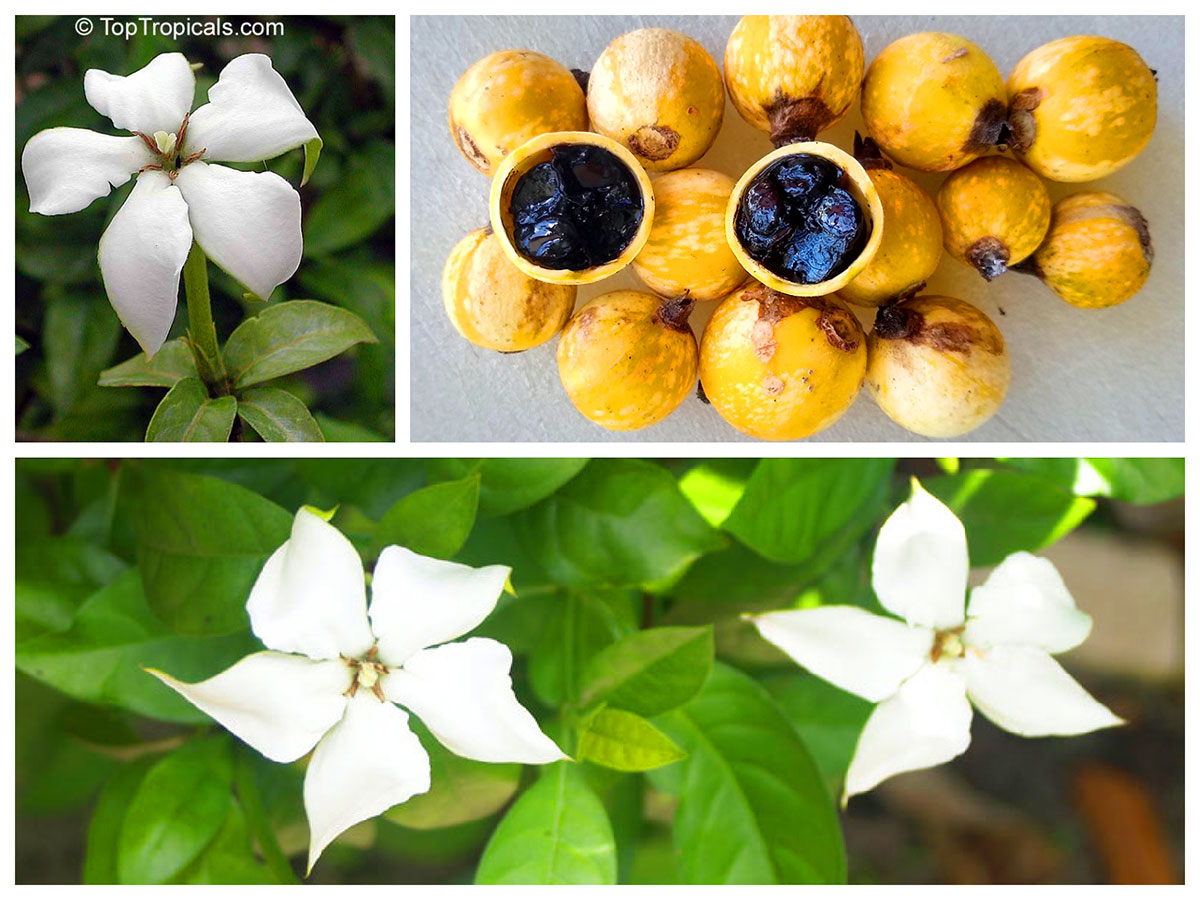
Blackberry  Jam  Fruit  -  Randia  formosa

Blackberry Jam Fruit, Jasmin de Rosa is a curious small evergreen tree or bush that combines features of a fragrant flower and delicious dessert fruit which tastes like fresh Blackberry jam. Fragrant white flowers are similar to Gardenia.

10. Peanut Butter Tree (Bunchosia argentea)
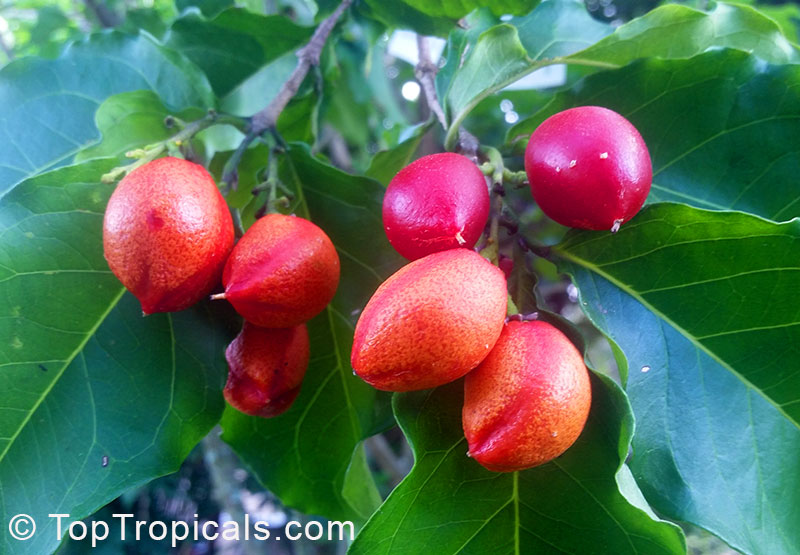
Peanut  Butter  Tree  -  Bunchosia  argentea

Peanut Butter Tree, earns its name from its fleshy fruits that boast a delightful peanut butter flavor. Compact in size, small tree reaching only 10-15 ft or kept as a bush, it's a perfect choice for limited spaces. Can thrive indoors, starting to fruit within just 2-3 years from seed.
Shop All Fast-fruiting Trees

Date: 27 Jul 2023

Top varieties of pineapples

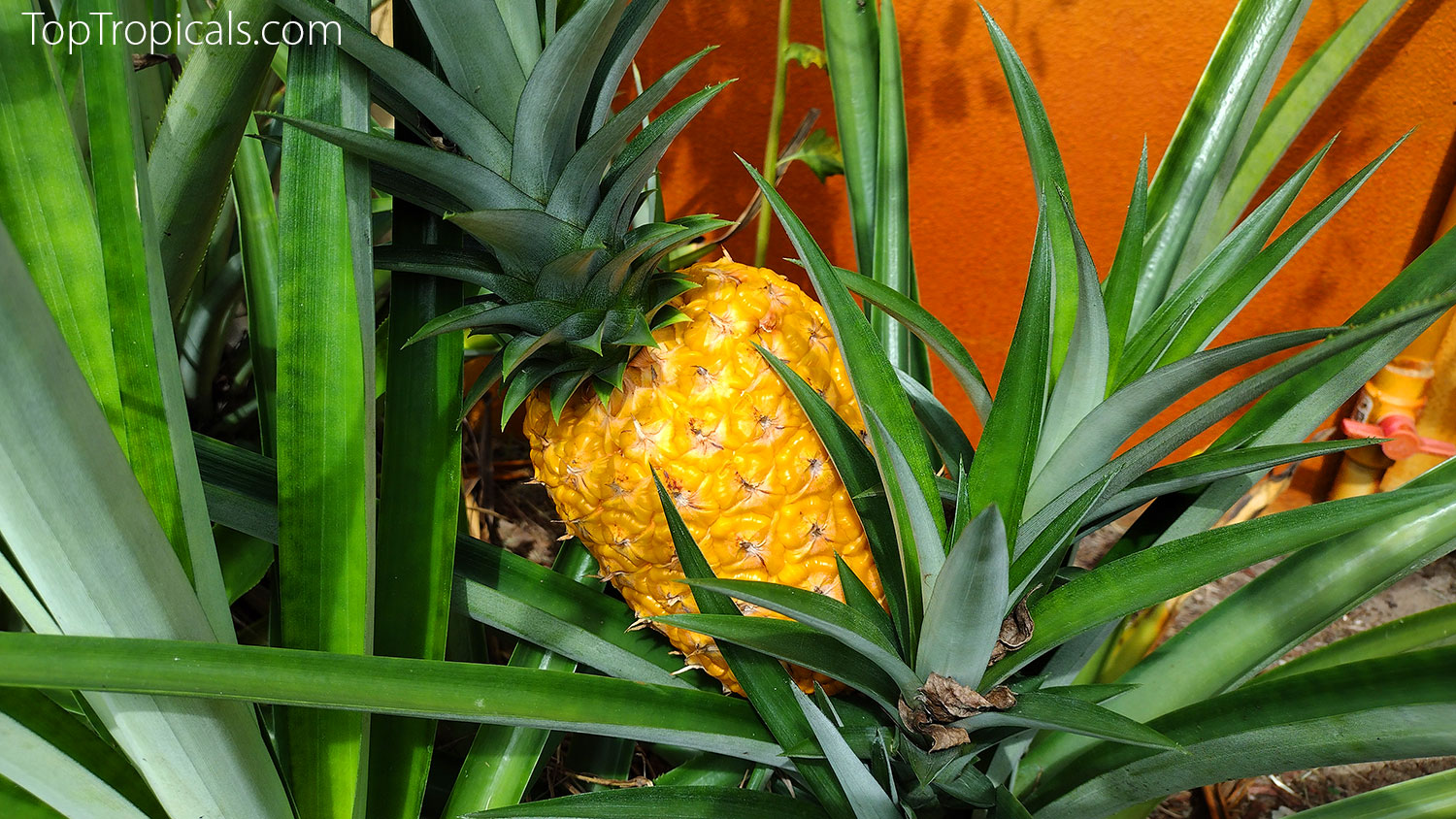
Pineapple

Q: I want to grow my own pineapples, which varieties do you recommend for the best production? Do I need any special organic fertilizer?

A: Growing your own pineapple is pure bliss. Watching the transformation from a small crown into a luscious fruit is immensely rewarding. Every tropical gardener should experience the joy of growing this tropical gem and relishing its sun-kissed sweetness straight from the garden. Pineapples are easy to grow and can fruit in containers too, so if you live in a colder climate, no problem! They will take very little space in your greenhouse or sunroom. Just remember to feed your pineapple plants with Sunshine Boosters so they will feed you the biggest and the sweetest fruit! Sunshine Boosters are natural, organic-amino-acid based plant nutrients that are perfect for any edibles.
There are several varieties of pineapples in commercial cultivation. Below are the most interesting cultivars. Discover the pineapple paradise!

Elite Gold: Bursting with tropical flavor and vibrant gold flesh, Elite Gold dazzles with its unique taste and ornamental beauty.

Florida Special: Perfectly balanced sweetness and acidity, this variety thrives in warmer climates, gifting you a taste of Florida's sunshine.

Sugar Loaf: Irresistibly sweet with a hint of citrus, Sugar Loaf's compact size makes it an ideal choice for container gardening.

White Jade (Spineless Sweet): Exceptionally sweet and without spines, White Jade pampers you with a delectable, thorn-free harvest.

Lava Burst (Burgundy Variegated Rainbow): This visually stunning ornamental pineapple variety boasts striking burgundy and green leaves, resembling a rainbow of colors. Its fruit edible but small; its exceptional beauty adds a touch of exotic elegance to any garden or indoor space. Lava Burst is a delightful conversation starter and a captivating addition to your plant collection, making it a favorite among pineapple enthusiasts for its aesthetic appeal.

Embrace the sense of accomplishment and the satisfaction of savoring homegrown, mouthwatering pineapples - nature's sweetest gift!

Read more about Pineapples: The most luscious Hospitality Fruit.

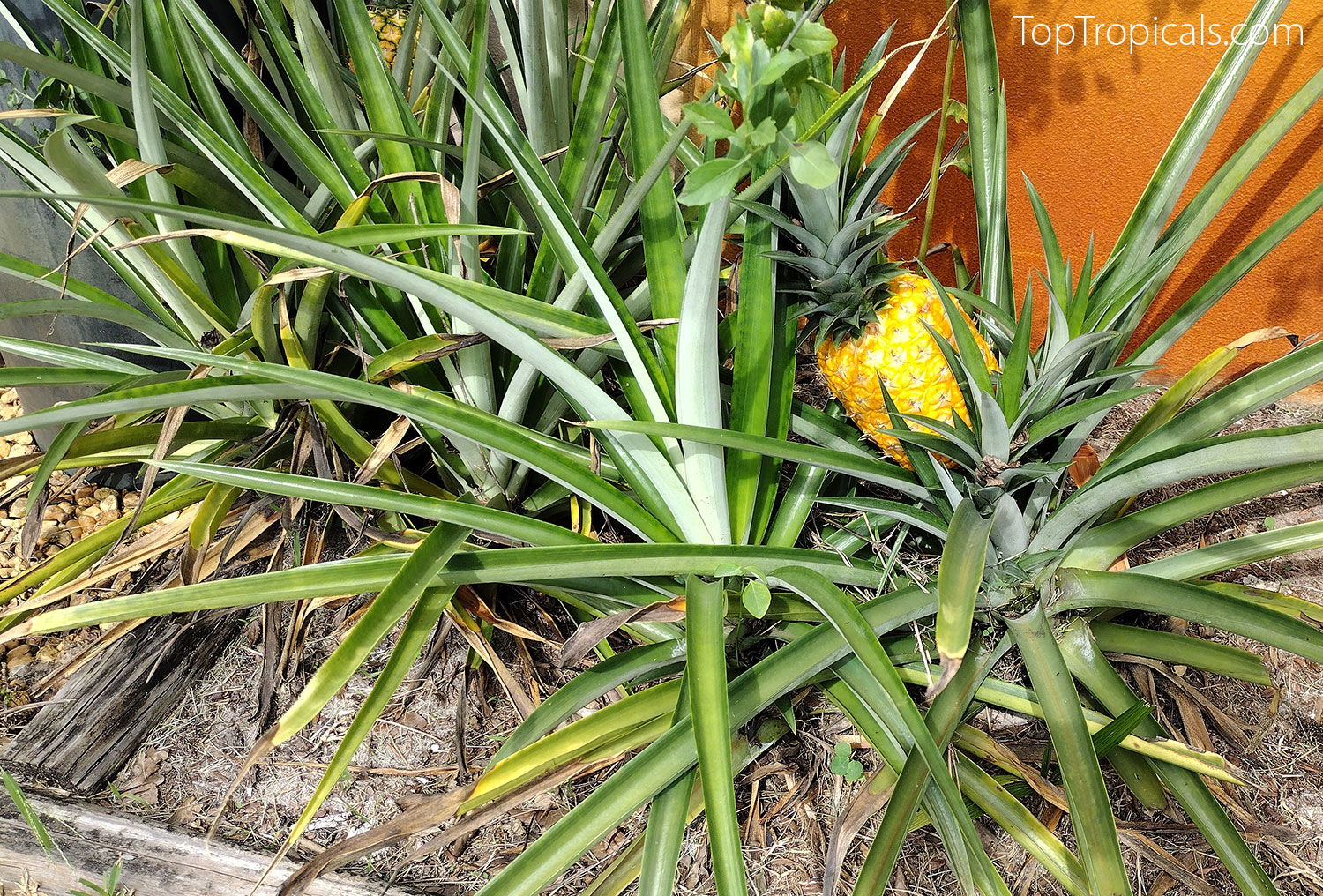
Pineapple

Date: 21 Mar 2023

How to grow Calathea indoors

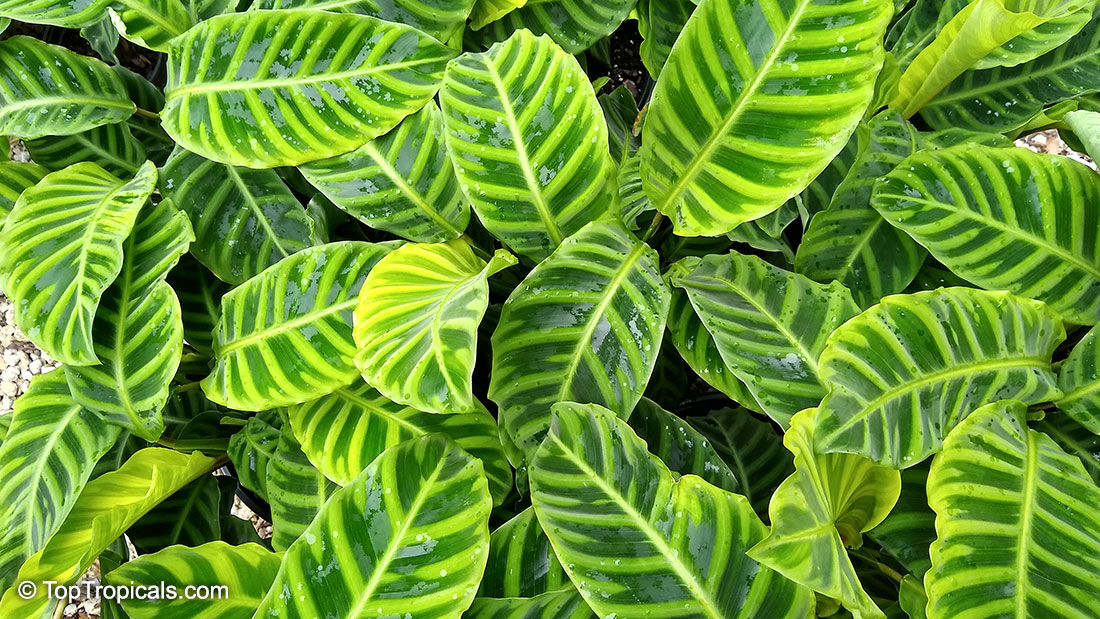
Calathea  zebrina  -  Zebra  Plant

In the photo: Calathea zebrina - Zebra Plant

Calathea is a beautiful and popular houseplant known for its unique and colorful foliage. Here are the steps to grow calathea indoors:

1. Choose a suitable location: Calathea plants prefer bright, indirect sunlight, so choose a location near a window with filtered light. Avoid direct sunlight as it can scorch the leaves.
2. Select a pot that is slightly larger than the plant's root ball and has drainage holes. Fill the pot with a well-draining potting mix that is rich in organic matter. Plant at the same depth as it was in its previous pot.
3. Water: Keep the soil consistently moist but not waterlogged. Water when the top inch of soil feels dry to the touch. Use room temperature water and avoid using hard water or water that contains high levels of minerals.
4. Provide humidity: Calathea plants thrive in humid conditions, so provide them with regular misting or place a tray of water near the plant to increase humidity. You can also use a humidifier to maintain optimal humidity levels.
5. Fertilize: Apply Sunshine Boosters liquid fertilizer. It is safe to feed the plant with Rubusta formula with every watering and year around. Feeding plants is especially important in Spring when active growth starts.
6. Prune any yellow or damaged leaves regularly to keep the plant healthy and attractive. Use clean, sharp scissors to make clean cuts.

By following these steps, you can successfully grow a beautiful and healthy Calathea plant and any beautiful container plant indoors.

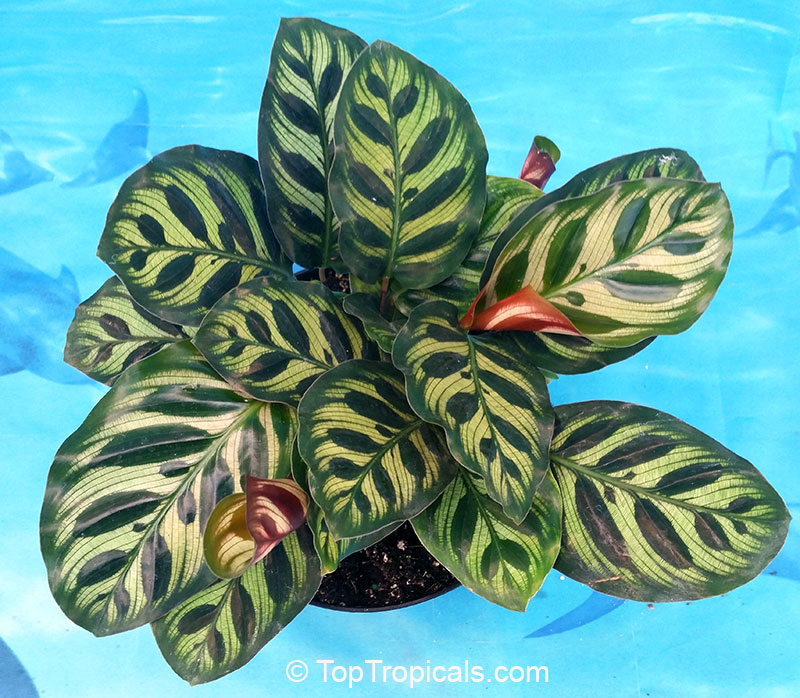
Calathea  makoyana  -  Peacock  plant

In the photo: Calathea makoyana