Garden Blog - Top Tropicals

Date: 4 Oct 2023

Most useful Hibiscus plants

Grow your edible flower landscape in no time!
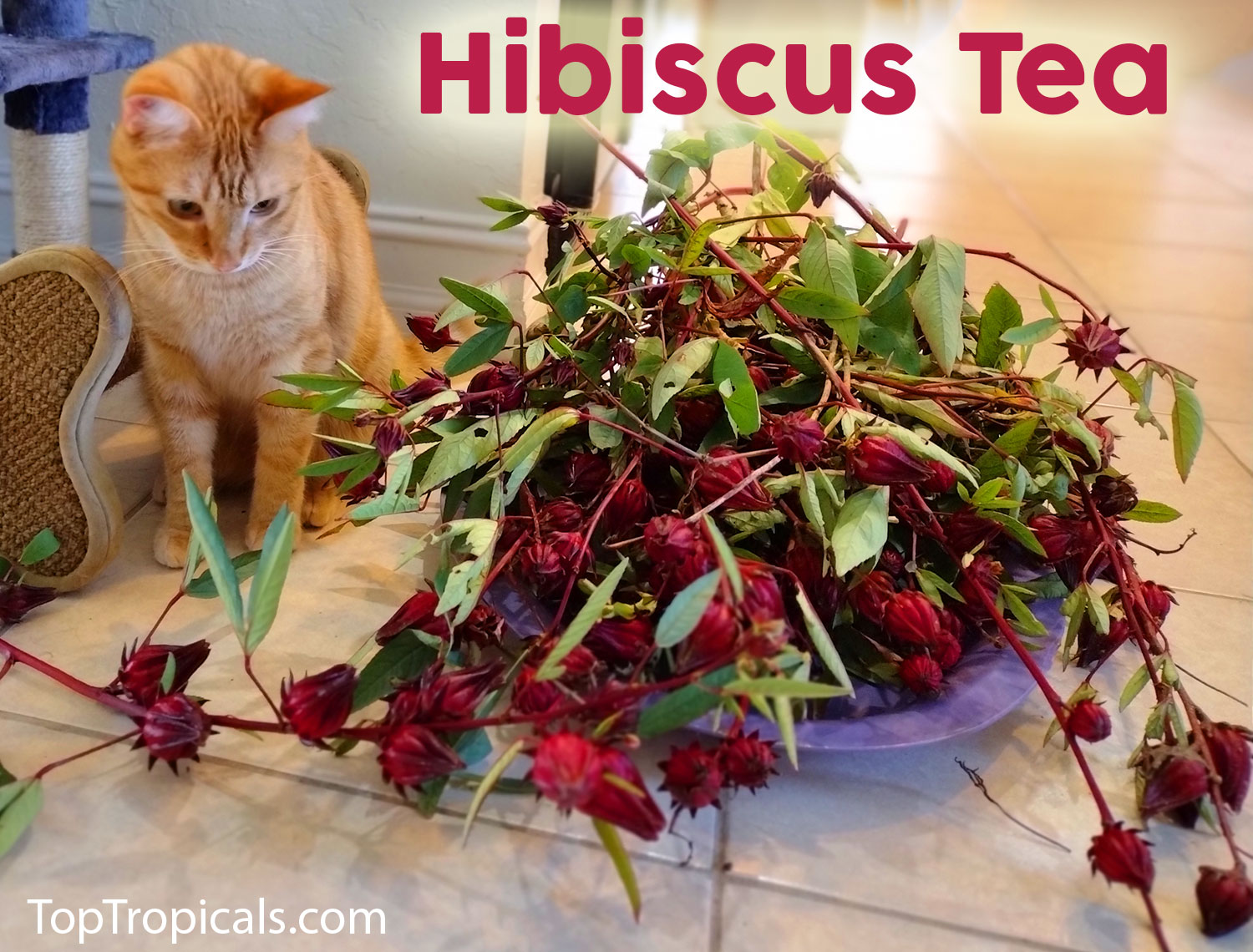
Cat  with  Karkade  hibiscus

Who doesn't adore hibiscus flowers? We usually think of the fancy Hibiscus rosa-sinensis in all its colorful glory or the Exotic Garden Hibiscus. But guess what? There's a whole bunch of other hibiscus species out there that are not only drop-dead gorgeous but also surprisingly practical. They can jazz up your garden and your dinner plate! Today, we're dishing out a sneak peek at a few of these charming hibiscus varieties. These beauties aren't just a treat for your taste buds; they're also a gardener's dream. They practically grow themselves and are always wearing a smile!

Hibiscus sabdariffa - Flor de Jamaica, Karkade Sorrel
Hibiscus acetosella - African Cranberry Hibiscus
Hibiscus cannabinus (furcellatus) - Salad Hibiscus, Sleepy Hibiscus
Hibiscus mutabilis Cotton Candy - Mallow Hibiscus
Hibiscus variegated Snow Queen
Hibiscus schizopetalus - Coral Hibiscus

Tea or Salad Hibiscus
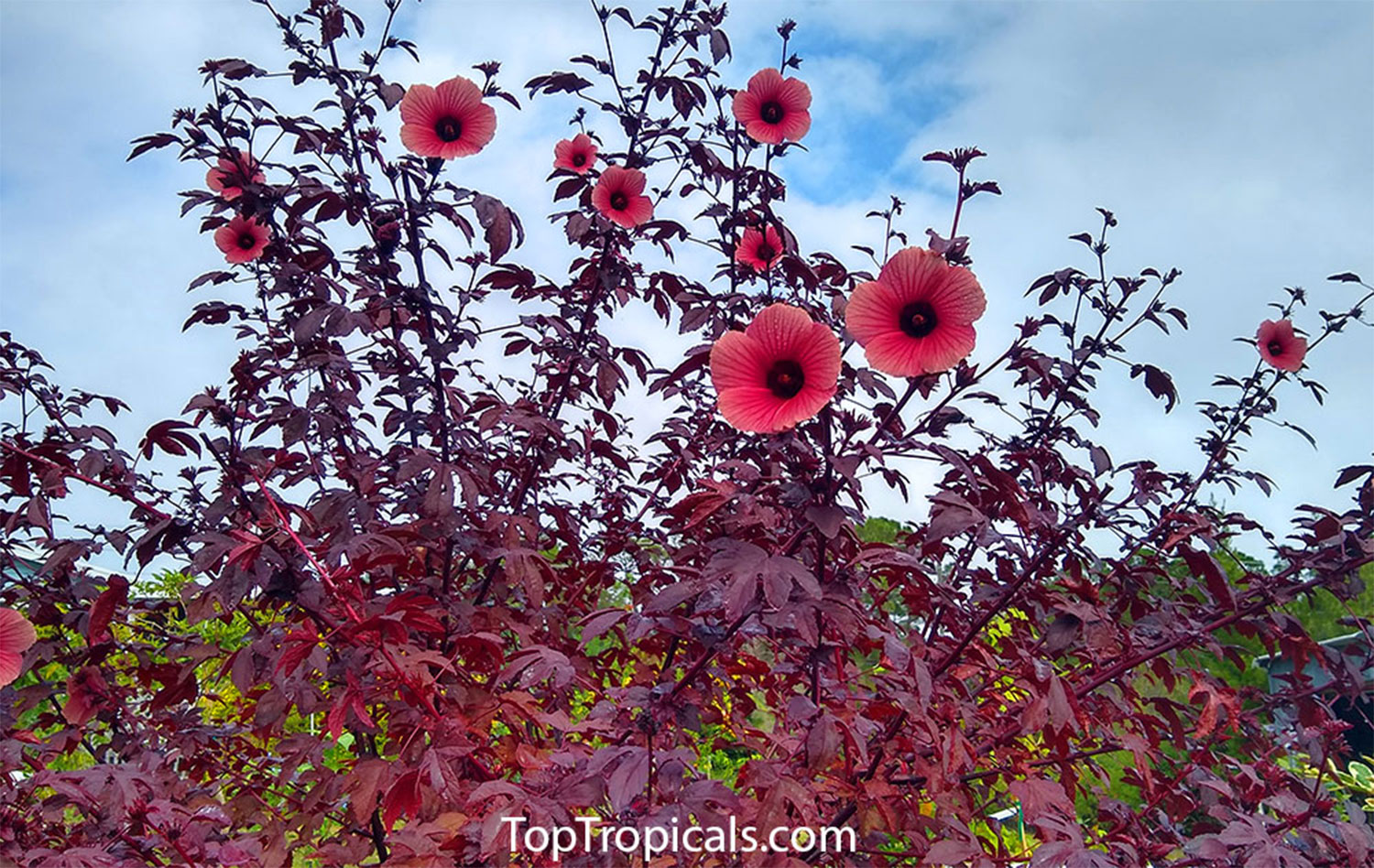
Hibiscus  acetosella  -  African  Cranberry  Hibiscus

Hibiscus acetosella - African Cranberry Hibiscus. Leaves are acidic, rich of vitamin C, good for salads and teas.
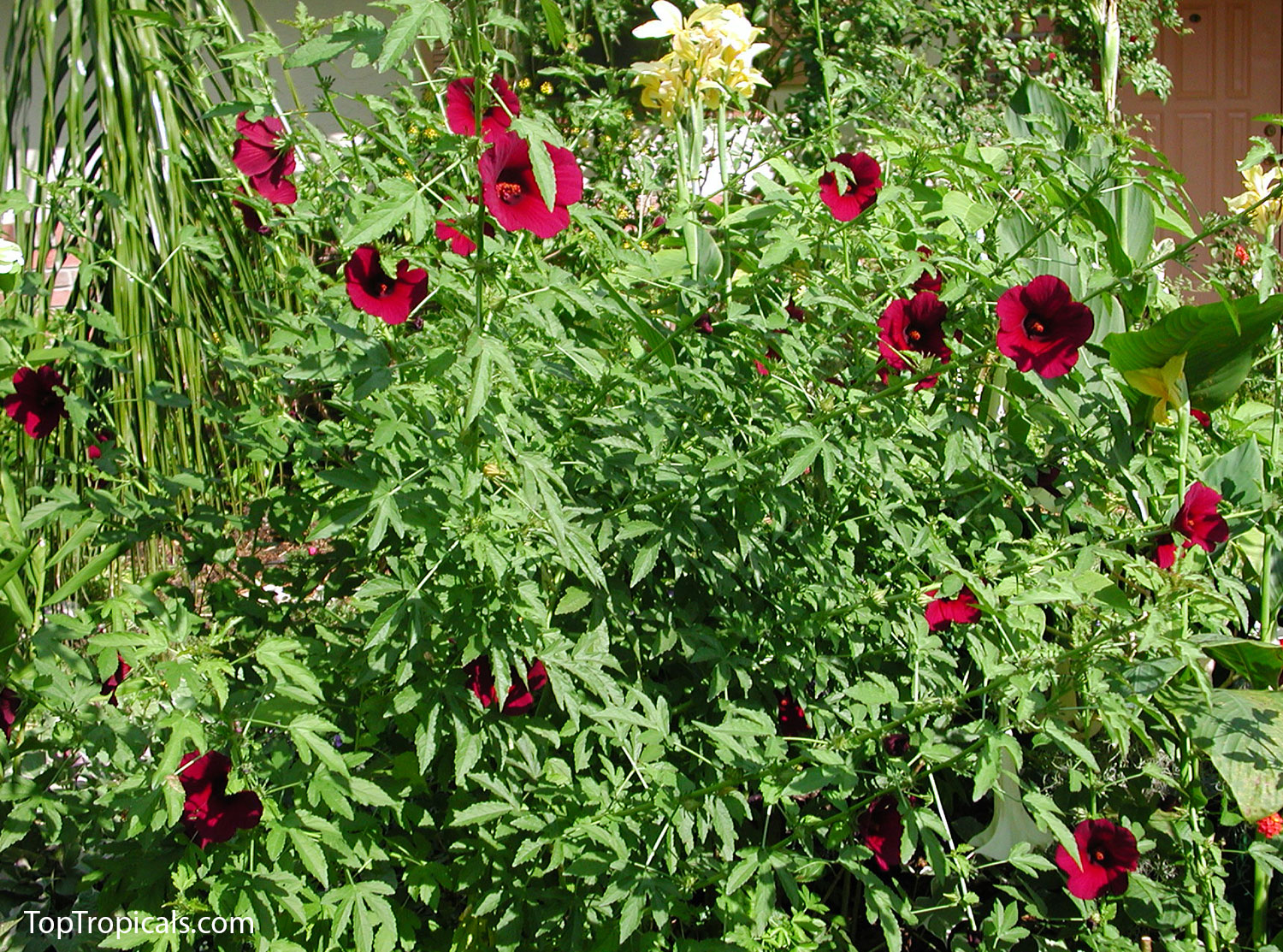
Hibiscus  cannabinus  (furcellatus)  -  Salad  Hibiscus,  Sleepy  Hibiscus

Hibiscus cannabinus (furcellatus) - Salad Hibiscus, Sleepy Hibiscus. Vinous flowers open in the morning, and by 3-4 pm they convolve into a curious fico-like knot. Very similar to acetosella, only with green leaves, this edible hibiscus is great for salads, rich of vitamin C. Seeds, flowers, and leaves are also used for making delicious tea. Very fast growing, forms a large bush.
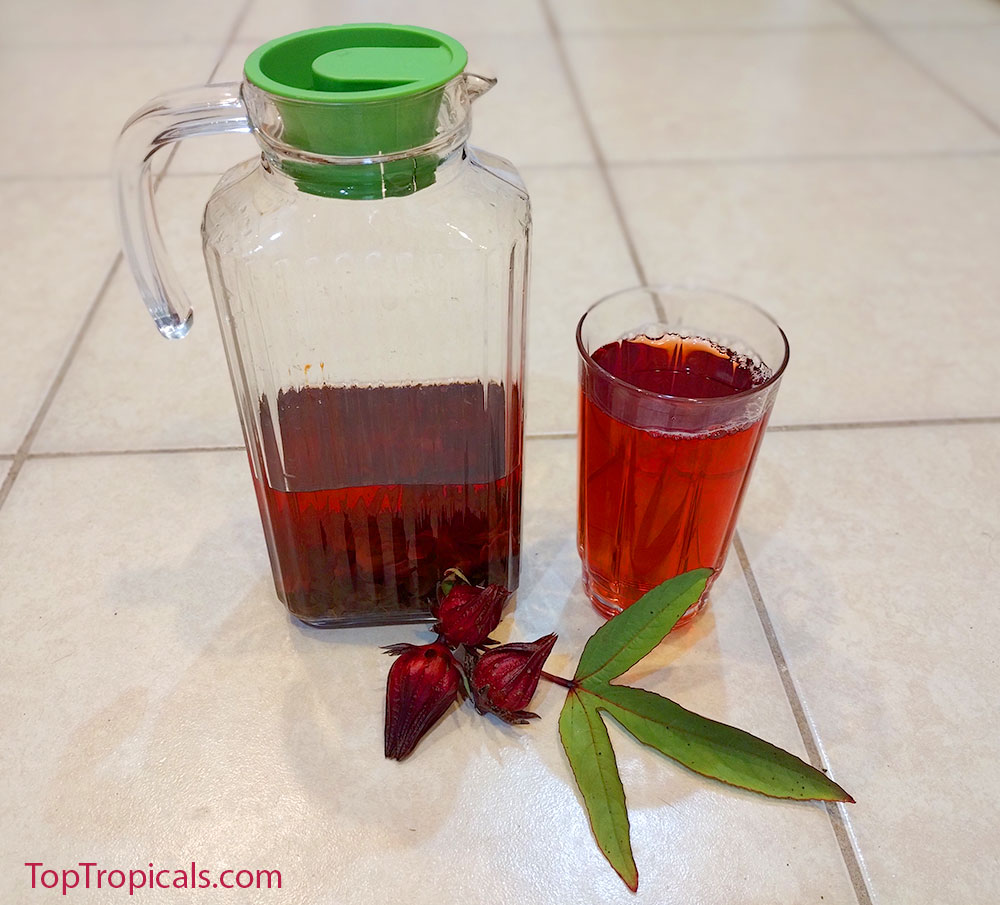
Hibiscus  tea  Karkade

Hibiscus sabdariffa - Flor de Jamaica, Karkade: the most delicious, fruity Jamaican Hibiscus tea. It makes our favorite Summer drink!

Hibiscus with a smile :)
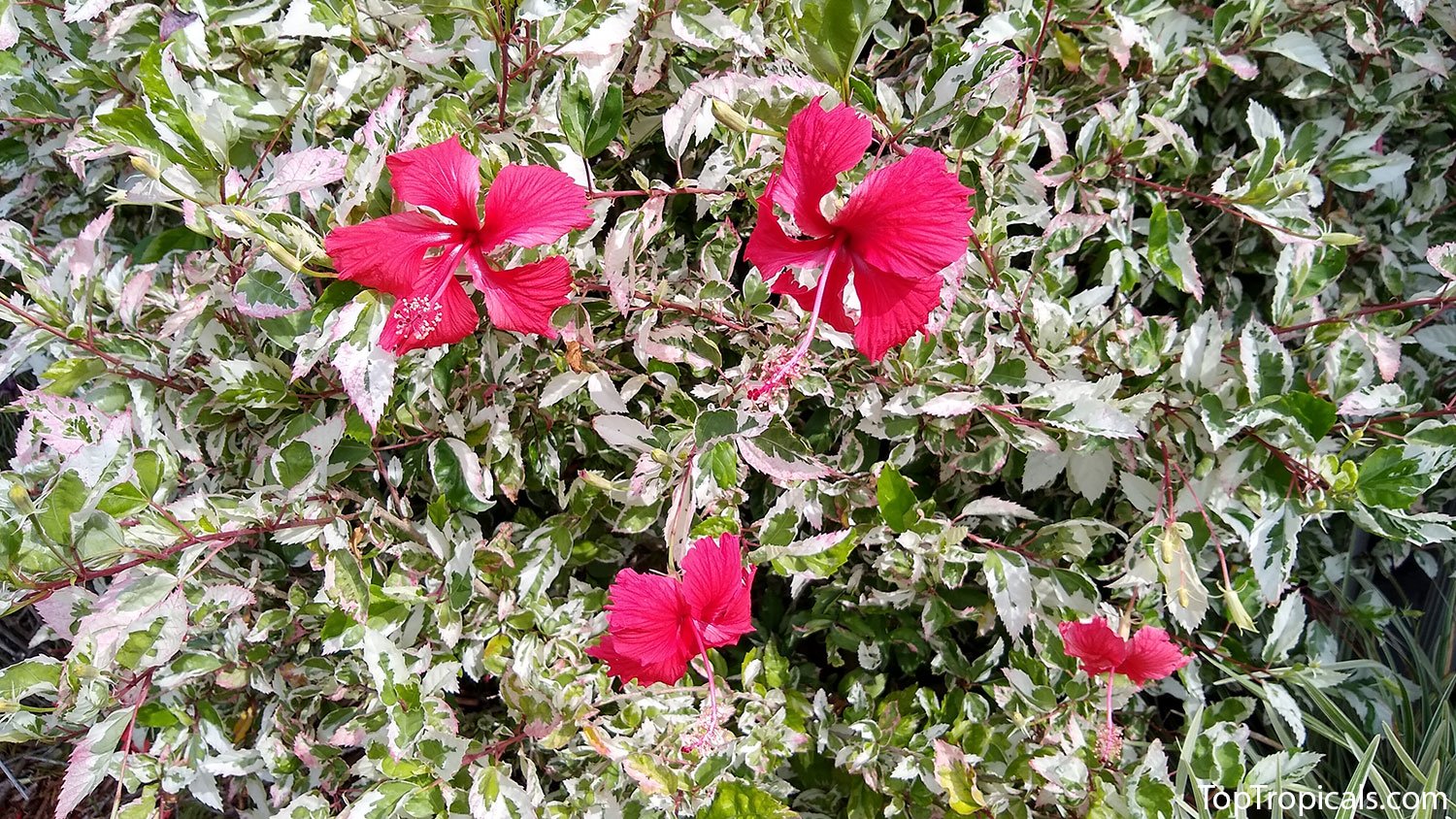
Hibiscus  variegated  Snow  Queen

Hibiscus variegated Snow Queen. Green foliage is dramatically splashed with bright white which provides striking contrast to the large red flowers. A festival of color!
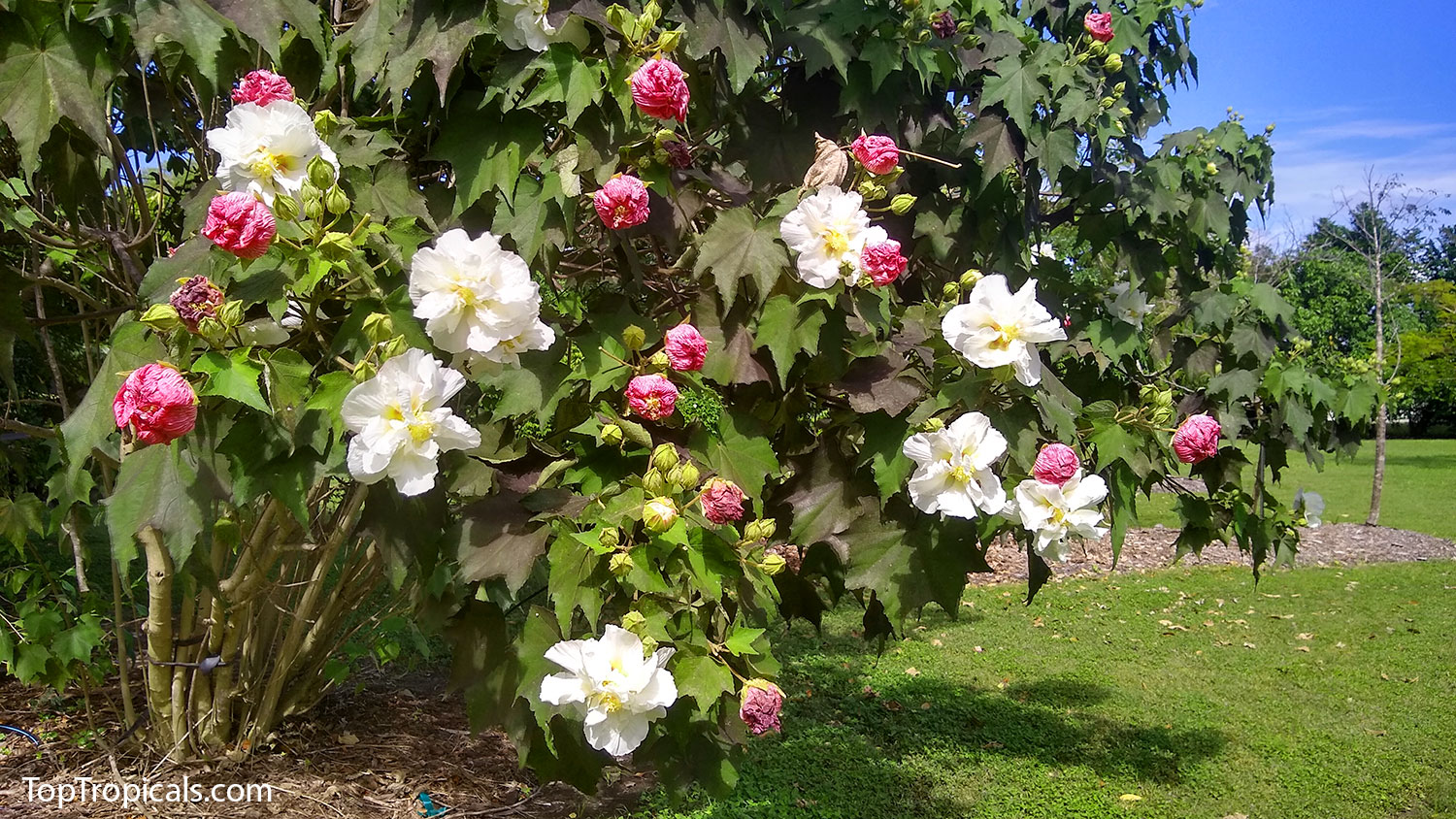
Hibiscus  mutabilis  Cotton  Candy  -  Mallow  Hibiscus

Hibiscus mutabilis Cotton Candy - Mallow Hibiscus. Flowers open pure white and change color over a three-day period until they are deep pink and then as they die assume a dark "blue-pink" hue. The three distinct colors appear on the bush simultaneously as the blooms color cycle independent of one another. Quite large blossoms are up to 5 inches across!
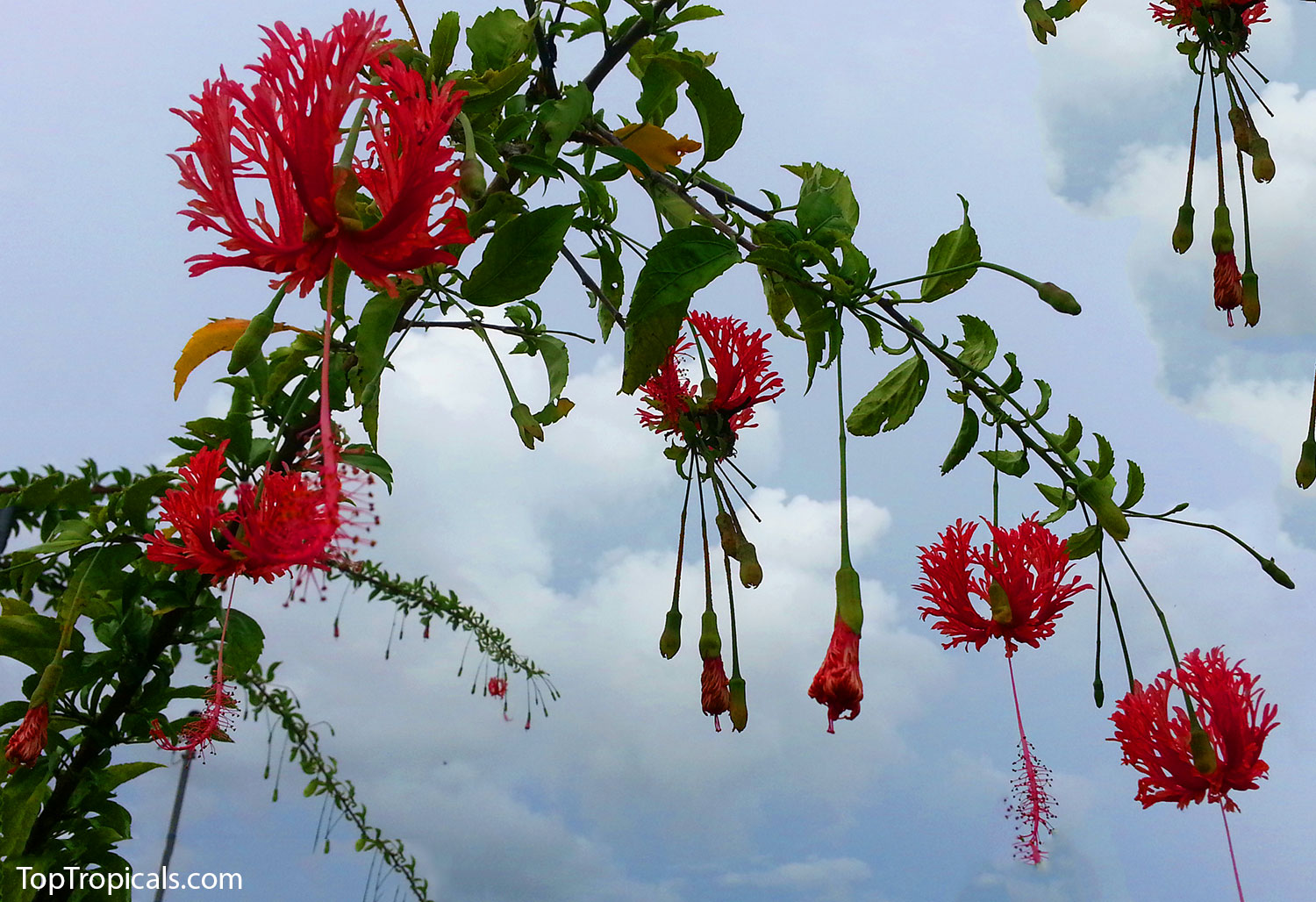
Hibiscus  schizopetalus  -  Coral  Hibiscus

Hibiscus schizopetalus - Coral Hibiscus. A weeping tree hibiscus, rare and hard to find and every gardener wants it! Grows rapidly and blooms freely. Flowers look like parachutes and can be recognized by the fringed and lacy petals which are bent backward.

Date: 25 Nov 2019

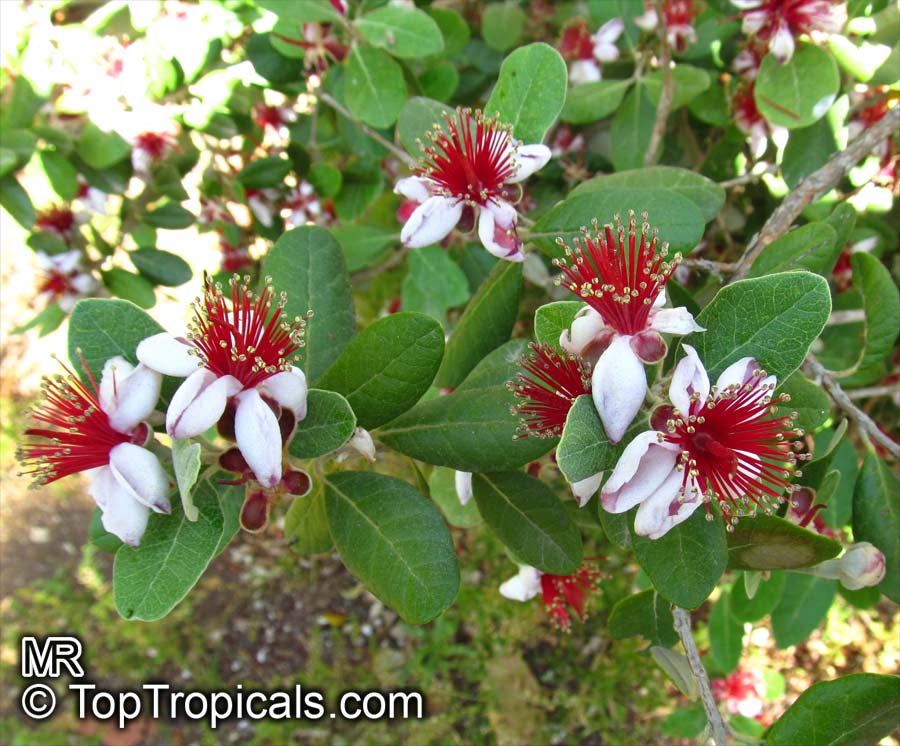
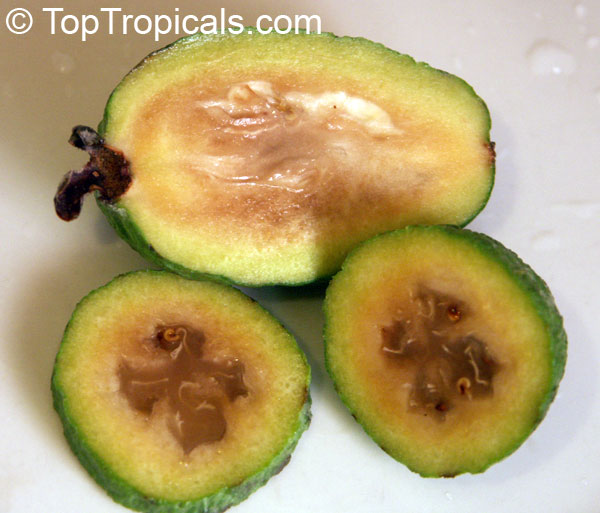
Flavor of Feijoa Superfood

by Onika Amell, tropical plant specialist

Q: What exactly is Feijoa - Pineapple Guava? Does the fruit really taste like pineapple? I am curious to know if it is easy to grow.

A: Feijoa is certainly one of the easiest fruit trees to grow as it does not require much care. It is an attractive, evergreen tree or large shrub with dark green, oval, leathery leaves. It has an abundance of uses in the garden and produces lovely edible flowers and fruit! The fruit is eaten fresh, added to smoothies or fruit salad and is also commonly used to make delicious jams and wicked chutneys. Feijoa fruit go a long way in flavor.
This plant is drought tolerant and will grow in almost any soil type. It loves full sun or partial shade and is wind resistant. A lot of gardeners like to grow it as a wind barrier for this reason. It can easily be shaped into a dense, informal hedge or screen that needs very little pruning. Because of this density, it provides excellent shelter for all kinds of wildlife. Butterflies, birds, and butterflies will all love you for growing Feijoa!
Space the plant five feet apart to create a wind barrier hedge. Heat does no not bother it at all and it will also withstand temperatures to 10 degrees F.
The plant gets its names from the delicious perfume it emits. Some folks seem the fruit taste like pineapple, with a slight minty undertone. Others feel the flavor reminds them of juicy fruit gum! The texture is described as smooth and slightly gritty - almost like a pear, but firmer.
If you prefer to grow this plant as a tree rather than a large shrub, simply remove the lower branches up to one-third of the tree's height over a period of time. The Pineapple Guava can grow up to 15 feet wide and tall. They also do really well as a container plant on patios where you can truly enjoy the lovely fragrance of the fruit. It prefers rich, organic, well-drained soil and will need light fertilization every other month in most soils.

We recommend:

Fruit Festival Plant Food - Super Crop Booster
Mango-Food - Smart Release Fruit Tree Booster
SUNSHINE-Honey - Sugar booster
SUNSHINE C-Cibus - Crop Nutrition Booster

Pretty, pink, edible flowers will wow you from May to June, followed in late summer or fall by the delicious and fragrant fruit. An interesting thing about this fruit is that you don't pick it. It falls to the ground when it is ripe. Or simply place something under your tree, like a tarp, and shake the tree. The ripe fruit will fall off. You can store the fruit in your refrigerator for up to a week. And remember! The fruit of the Feijoa is not only a very rich source of soluble dietary fiber, but also an excellent source of Vitamin C, and very rich in antioxidants. They are also low in calories. Each fruit only holds 55 calories.

Date: 24 Jun 2018

TopTropicals

Spring is coming, plants need food! Time to fertilize...

Last winter was long and snowy in the most part of our country. Hold on fellow gardeners up North, it is almost over!
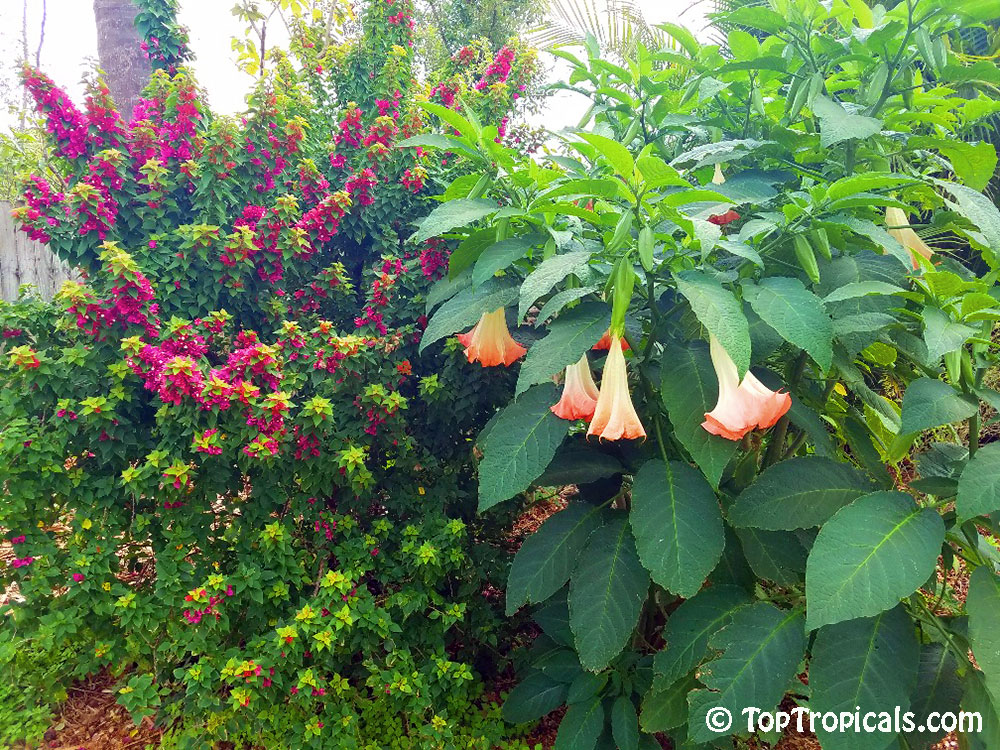
Here in Florida we have been blessed again with a mild winter without serious cold snaps. Early Spring that is already in the air. Look at this picture of flowers in our front yard now.
If the weather is already warm in your area (low temperatures above 55), it is time to start fertilizing. We are sending our love and support to tropical Puerto Rico suffered from hurricane last year, and will be happy to help you guys to restore your lost gardens!

CHECK LIST

what to do to give your garden a good kick start:

1. Slow release granulated food. Apply Slow Release Fertilizer and continue once a month. 1 tsp per gallon of pot, or a handful for in-ground plants. This will provide essential macro elements (NPK) required for a plant growth.

2. Water soluble micro-elements. Besides macro-elements, plants need many other elements that most of the time missing in soil. A lack of micro-elements causes different deficiencies, resulting in weak root systems, slow growth, deformed leaves, leaves yellowing, lack or no flowers/fruit. Apply these supplements as a foliar spray once a month to induce healthy growth and flower/fruit development. We recommend the following micro-element products to keep your plants healthy and vigorous year round:
a) SUNSHINE SuperFood - plant health booster. This revolutionary new liquid complex contains ALL microelements needed and can fix all possible problems occuring to your tropical plants - from roots to flowers and fruit. We have convenient dropper bottles of 5 ml for small plant collections, 50 ml for larger gardens, and 100 ml for professional landscape applications.
b) SUNSHINE-Micro - Microelement booster - for common iron deficiency (pale leaves)
c) SUNSHINE-Super-Iron - Microelement booster - for severe iron deficiency (severe yellowing leaves)

3. SUNSHINE plant boosters - SUNSHINE-E, -BC (caudex plants and bonsai), -H (house plants). Apply these natural plant stimulants to help plants recover from cold, dormancy, increase plant's metabolism and make a plant more readily absorb both Macro- and Micro-elements. SUNSHINE boosters also will help plants grow vigorously, withstand Summer heat and drought, and produce bigger and better flowers and fruit.

4. Kickstart a sweeter fruit. To get a better and sweeter crop in Summer and Fall, you need to start first application now. SUNSHINE Honey - is natural, Amber-colored, honey-like liquid microelement product for fruiting and edible plants that will make them sweeter, tastier and more flavorful! Very effective for tropical fruits, tubers, vegetables. Great for tropical fruit trees: Mango, June Plum, Annonas, Tropical Cherries, Carambola, Citrus; subtropical fruit trees: Peaches, Apricots, Loquat and berry plants (blackberry, mulberry, etc.)

5. SUNSHINE-S. Don't forget to plant seeds! It's a perfect timing now to start your tropical garden indoors even if it is still cold outside. Soak them in SUNSHINE-S solution to increase germination rate.

See full list of SUNSHINE boosters. All these products are essential plant elements. They are not toxic and can be used safely for edible landscapes.

Date: 22 Jul 2022

Callisia fragrans, Golden Tendril:
Holistic Medicinal Plant

Callisia  fragrans

by Alex Butova, the Witch of Herbs and Cats

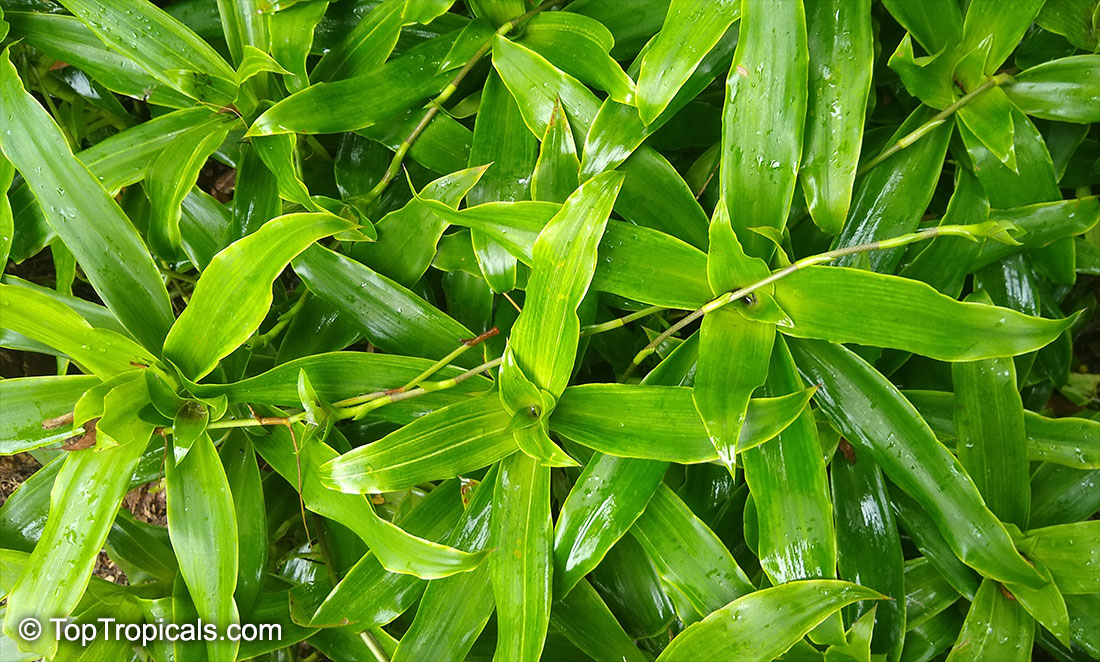
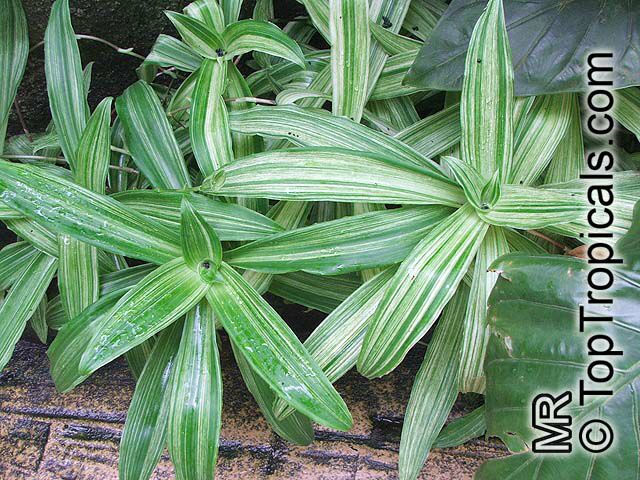
...This beautiful, low-maintenance plant has been living in our homes for over two hundred years. The name of Callisia speaks for itself - Callisia from the Greek is kallos meaning beauty and fragans means fragrant. It is not only an easy ornamental plant for both garden and indoor collection, it has wide medicinal use in Europe. Its active biological substances that can fight infections, stimulate metabolism, strengthen immunity and circulatory system...
...Moreover, the leaves and flowers of Callisia fragrans are edible, the plant has been used as a food source in tropical countries. The rhizomes are also edible and can be boiled or roasted... Every garden or indoor plant collection should have this easy and useful plant!..
CONTINUE READING >>

Callisia  fragrans

Date: 7 Aug 2025

Blackberry Jam Fruit - the sweetest surprise

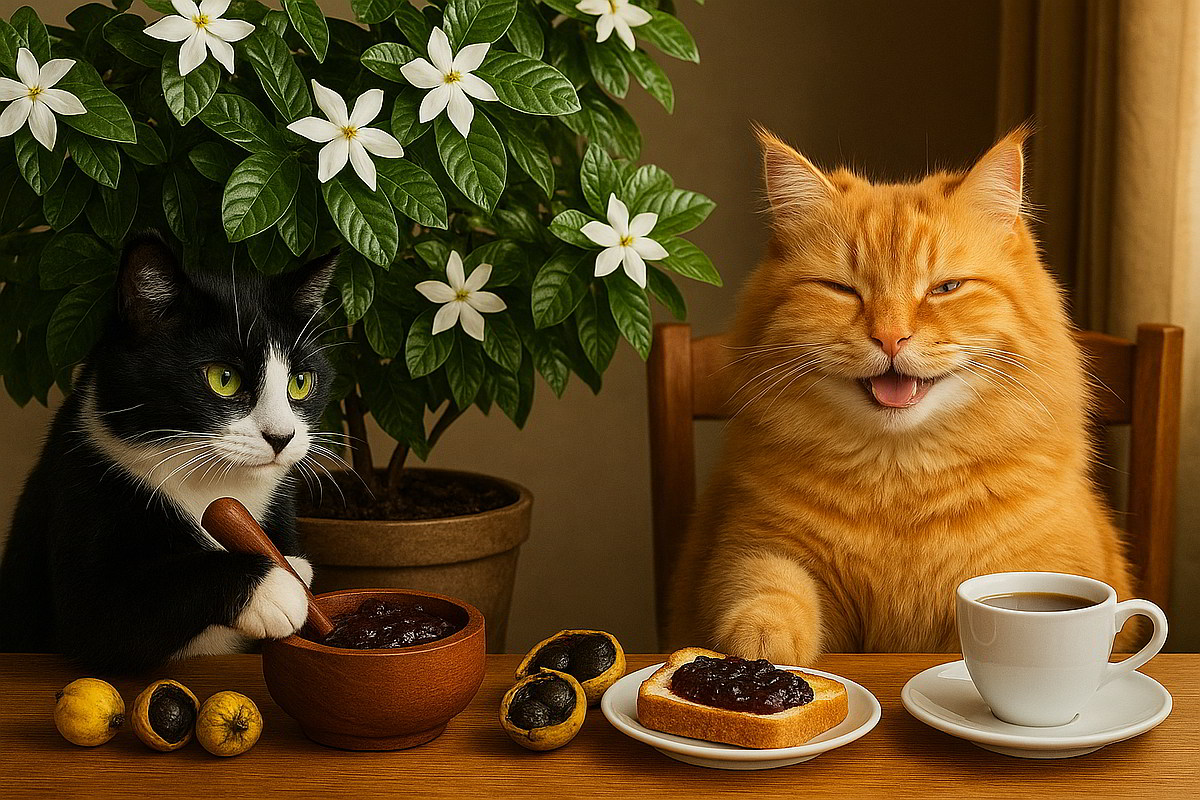
A  tuxedo  cat  making  jam  from  Blackberry  Jam  Fruit  (Randia  formosa)  while  an  orange  cat  smiles  in  a  chair,  sipping  tea  beside  a  large  flowering  Randia  plant  in  a  cozy,  sunlit  room.

Tea and Jam with the PeopleCats – A Tropical Afternoon Beneath the Randia

Meet the cats behind the jam! The tuxedo cat is none other than Google-the-cat - our beloved elder and one of the original cat-fathers of Top Tropicals PeopleCats.garden. At 18 years old, he’s still sharp, curious, and very much in charge. The orange fluffball? He represents the universal image of cat joy - and we’ve got a few real-life orange sunshine residents just like him.

Why do you include cats in a plant newsletter?

Because they’re part of the garden. Our rescued PeopleCats live among the plants, nap under the mango trees, inspect new arrivals, and occasionally steal a sunspot meant for seedlings. They’re not mascots — they’re part of our team. Sharing their presence is like showing a part of the soul of our space.🐈

Are the cat images real or AI-generated?

All our cats are real! We take lots of pictures and videos. And a few images are AI-generated illustrations inspired by our real PeopleCats.garden residents. While not literal photographs, they are creative interpretations that capture the spirit of our tropical home and its furry citizens.🐾

Are the stories about the cats true?

Mostly! The jam-making, tea-drinking, and greenhouse meetings are creative interpretations - but inspired by real personalities. We use AI scenes to bring their spirit to life. Real cats. Real plants. Imagined adventures.🐱

Watch Top Tropicals videos about PeopleCats

Shop Blackberry Jam Plants