Date: 10 Aug 2025
🍈 We Cut Open a 37 lb Jackfruit - You Won't Believe What's Inside!
🍈 Cutting into a 37-pound Jackedak Jackfruit with Chiane and Ashley!
🍈 Join us at Top Tropicals as we explore one of the largest fruits on Earth - the mighty Jackfruit. From golden, juicy bulbs bursting with tropical sweetness to edible seeds and the soft “rag” with hints of bubblegum, pineapple, and custard, this giant fruit has more surprises than expected.
- ✔️Learn how to cut and clean a jackfruit
- ✔️See which parts are edible (you might be surprised!)
- ✔️Why it's a favorite for exotic fruit lovers
- ✔️Hear our taste-test reactions: bubblegum, custard, pineapple?
🍈 Whether you're into exotic fruits, cooking, or growing your own tropical trees, this is one tasty experience you don't want to miss.
🍈 Want to grow your own Jackfruit? We've got you covered!
Date: 16 Aug 2025
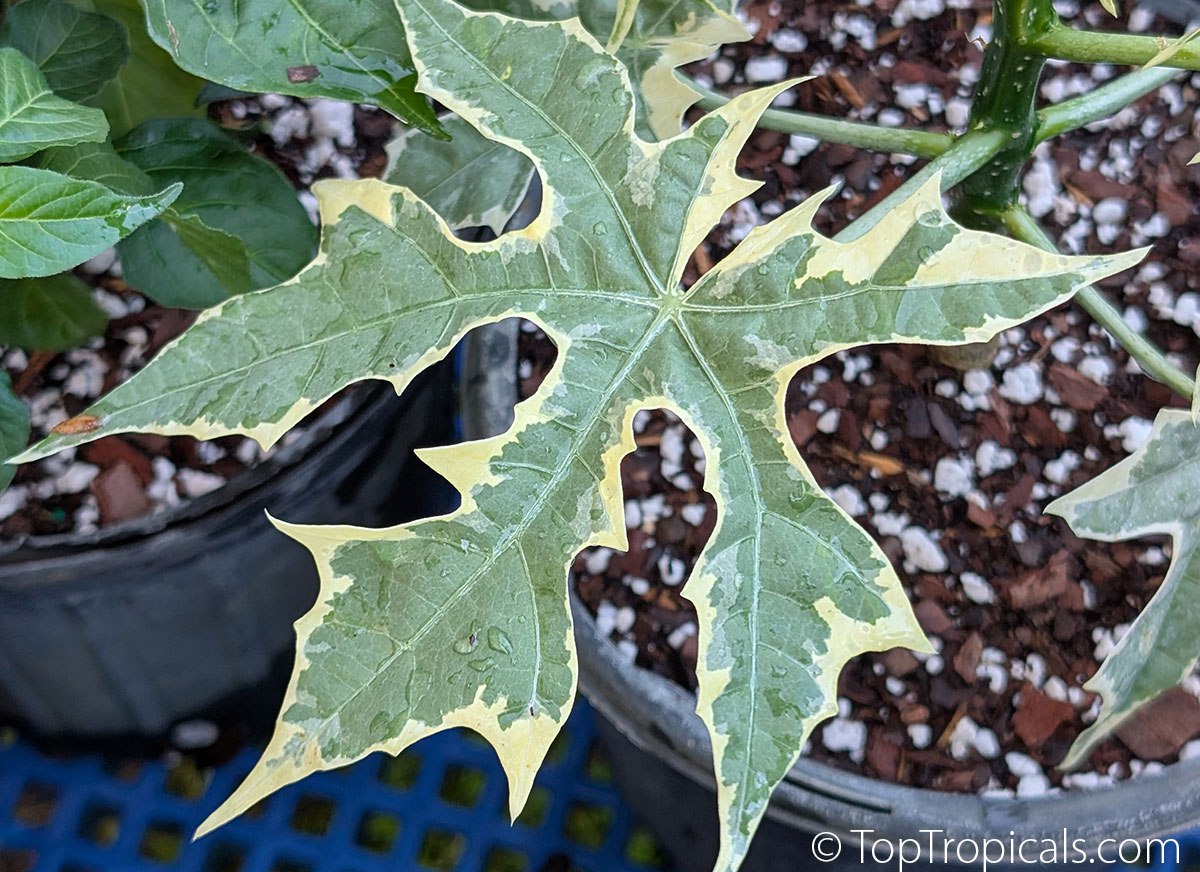
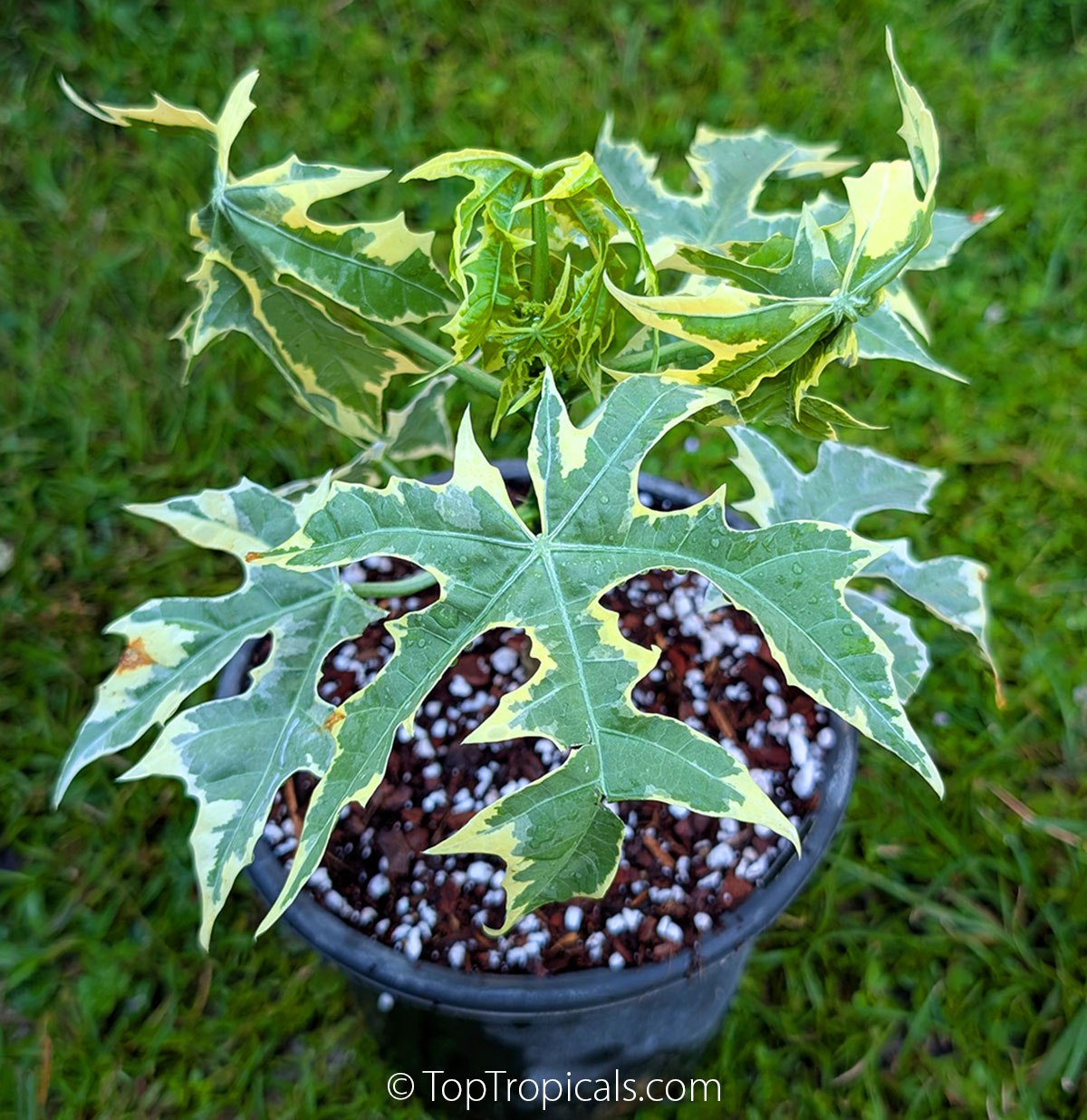
Variegated Chaya - beauty meets nutrition
Cnidoscolus aconitifolius variegatus - Variegated Chaya, Maya Spinach Tree
🌱 Variegated Chaya - beauty meets nutrition
- 🌿 Variegated Chaya - Variegated Maya Spinach Tree or Cnidoscolus aconitifolius variegatus - is a showstopper in the edible garden. Its heavily cut, creamy-white variegated leaves look like they belong in a tropical ornamental bed, but this beauty is also a powerhouse leafy green.
- 🌿 Native to the Yucatan Peninsula, Chaya has been a traditional food for centuries. Younger leaves (and a little stem) are cooked like spinach, simmered for at least 5-15 minutes to neutralize toxins, then served with butter, oil, or in soups. Once cooked, they’re loaded with protein, calcium, iron, and vitamins A and C - a true garden superfood.
- 🌿 Fast-growing and low-maintenance, Chaya can reach 6-8 feet and thrives in full sun or partial shade. It's drought-tolerant, attracts butterflies and hummingbirds with its white flowers, and grows easily from cuttings. Perfect for food forests, permaculture gardens, or anyone wanting beauty and function in one plant.
🛒 Plant it, cook it, love it
📚 Learn more:
- Bright, bold, and edible: Variegated Chaya
- Chaya's health benefits: a must-have tropical leafy vegetable for sustainable gardening
#Food_Forest #Remedies
🟢 Join 👉 TopTropicals
Date: 3 Oct 2025
Plant for birds: feast for wildlife and people from a tiny vine!
Passiflora suberosa - Corkystem Passion Vine
Plant for birds: feast for wildlife and people from a tiny vine!
- Passiflora suberosa - Corkystem Passion Flower: did you know this Florida native passion vine is more than just a butterfly host? Birds love it too - they’ll happily snack on the little fruits and sing you thank-you songs all day long!
- And yes, the fruit is edible for people as well! The berries are small, but they make a fun and exotic treat.
- The plants has a tiny flower and a tiny fruit – both only about half an inch – but together they create a mighty native habitat.
- It's a triple win: butterflies, birds, and people can all enjoy something from this charming little plant. Plus, it’s the larval host for Gulf Fritillary, Zebra Longwing, and Julia butterflies, and its tiny greenish flowers provide nectar all year long. Fast-growing, easy, and full of life – a real gem for any Florida garden.
- This vine is delicate and compact, perfect for a medium trellis or climbing a small tree. Unlike the big, aggressive passion vines that can cover a whole fence, this one stays manageable.
- This Passion vine is not just charming and wildlife-friendly, it’s also tough as nails. Cold hardy and easy to grow, this native vine takes whatever Florida throws at it – heavy rains, long droughts and heat, poor sandy soils, even total neglect – and still thrives. A perfect choice if you want beauty, wildlife, and resilience all in one little plant.
🛒 Plant this small and tough vine with food and wildlife benefits
📚 Learn more:
- ✦ What is the sweetest Passionfruit?
- ✦ How big is Giant Granadilla?
- ✦ Does Red Passion flower produce edible fruit?
- ✦ The truth about Passion flower and Passion fruit
- ✦ Top 20 plants for a Butterfly Haven
- ✦ Top Eight irresistible vines for a hummingbird haven
#Food_Forest #Hedges_with_benefits #Butterfly_Plants #How_to
🟢 Join 👉 TopTropicals
Date: 4 Oct 2023
Most useful Hibiscus plants
Grow your edible flower landscape in no time!
Who doesn't adore hibiscus flowers? We usually think of the fancy Hibiscus rosa-sinensis in all its colorful glory or the Exotic Garden Hibiscus. But guess what? There's a whole bunch of other hibiscus species out there that are not only drop-dead gorgeous but also surprisingly practical. They can jazz up your garden and your dinner plate! Today, we're dishing out a sneak peek at a few of these charming hibiscus varieties. These beauties aren't just a treat for your taste buds; they're also a gardener's dream. They practically grow themselves and are always wearing a smile!
Hibiscus sabdariffa - Flor de Jamaica, Karkade Sorrel
Hibiscus acetosella - African Cranberry Hibiscus
Hibiscus cannabinus (furcellatus) - Salad Hibiscus, Sleepy Hibiscus
Hibiscus mutabilis Cotton Candy - Mallow
Hibiscus
Hibiscus variegated Snow
Queen
Hibiscus schizopetalus - Coral
Hibiscus
Tea or Salad Hibiscus
Hibiscus acetosella - African Cranberry Hibiscus. Leaves are acidic, rich of vitamin C, good for salads and teas.
Hibiscus cannabinus (furcellatus) - Salad Hibiscus, Sleepy Hibiscus. Vinous flowers open in the morning, and by 3-4 pm they convolve into a curious fico-like knot. Very similar to acetosella, only with green leaves, this edible hibiscus is great for salads, rich of vitamin C. Seeds, flowers, and leaves are also used for making delicious tea. Very fast growing, forms a large bush.
Hibiscus sabdariffa - Flor de Jamaica, Karkade: the most delicious, fruity Jamaican Hibiscus tea. It makes our favorite Summer drink!
Hibiscus with a smile :)
Hibiscus variegated Snow Queen. Green foliage is dramatically splashed with bright white which provides striking contrast to the large red flowers. A festival of color!
Hibiscus mutabilis Cotton Candy - Mallow Hibiscus. Flowers open pure white and change color over a three-day period until they are deep pink and then as they die assume a dark "blue-pink" hue. The three distinct colors appear on the bush simultaneously as the blooms color cycle independent of one another. Quite large blossoms are up to 5 inches across!
Hibiscus schizopetalus - Coral Hibiscus. A weeping tree hibiscus, rare and hard to find and every gardener wants it! Grows rapidly and blooms freely. Flowers look like parachutes and can be recognized by the fringed and lacy petals which are bent backward.
Date: 25 Nov 2019
Flavor of Feijoa Superfood
by Onika Amell, tropical plant specialist
Q: What exactly is Feijoa - Pineapple Guava? Does the fruit really taste like pineapple? I am curious to know if it is easy to grow.
A: Feijoa is certainly one of the easiest fruit trees to grow as it does
not require much care. It is an attractive, evergreen tree or large shrub with
dark green, oval, leathery leaves. It has an abundance of uses in the garden
and produces lovely edible flowers and fruit! The fruit is eaten fresh,
added to smoothies or fruit salad and is also commonly used to make delicious
jams and wicked chutneys. Feijoa fruit go a long way in flavor.
This plant is drought tolerant and will grow in almost any soil type. It
loves full sun or partial shade and is wind resistant. A lot of gardeners like
to grow it as a wind barrier for this reason. It can easily be shaped into a
dense, informal hedge or screen that needs very little pruning. Because of
this density, it provides excellent shelter for all kinds of wildlife.
Butterflies, birds, and butterflies will all love you for growing Feijoa!
Space the plant five feet apart to create a wind barrier hedge. Heat does
no not bother it at all and it will also withstand temperatures to 10 degrees
F.
The plant gets its names from the delicious perfume it emits. Some folks
seem the fruit taste like pineapple, with a slight minty undertone. Others feel
the flavor reminds them of juicy fruit gum! The texture is described as
smooth and slightly gritty - almost like a pear, but firmer.
If you prefer to grow this plant as a tree rather than a large shrub,
simply remove the lower branches up to one-third of the tree's height over a
period of time. The Pineapple Guava can grow up to 15 feet wide and tall. They
also do really well as a container plant on patios where you can truly enjoy the
lovely fragrance of the fruit. It prefers rich, organic, well-drained soil
and will need light fertilization every other month in most soils.
We recommend:
Fruit Festival Plant Food - Super Crop Booster
Mango-Food - Smart Release Fruit Tree Booster
SUNSHINE-Honey - Sugar booster
SUNSHINE C-Cibus - Crop Nutrition Booster
Pretty, pink, edible flowers will wow you from May to June, followed in late summer or fall by the delicious and fragrant fruit. An interesting thing about this fruit is that you don't pick it. It falls to the ground when it is ripe. Or simply place something under your tree, like a tarp, and shake the tree. The ripe fruit will fall off. You can store the fruit in your refrigerator for up to a week. And remember! The fruit of the Feijoa is not only a very rich source of soluble dietary fiber, but also an excellent source of Vitamin C, and very rich in antioxidants. They are also low in calories. Each fruit only holds 55 calories.