Date: 5 Jan 2026
☘️ What plants are easy to ship in Winter?
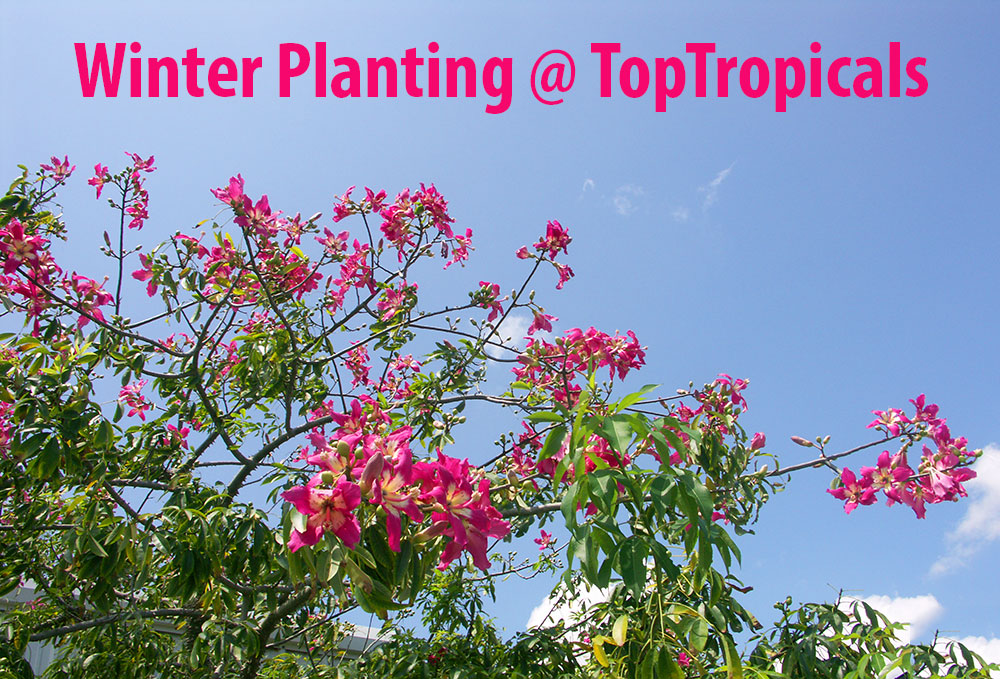
Ordering plants in winter is often easier than people expect - and for many plants, it is actually better. Lush foliage plants like philodendrons and medinilla, fine-leaved trees such as moringa, jacaranda, and poinciana, and even sensitive fruit trees like papaya, jackfruit or starfruit ship more safely in cool weather without overheating stress.
Winter is also ideal for subtropical and cold-tolerant plants, dormant or deciduous plants like plumeria and adenium, orchids - including ground orchids and vanilla orchids, and winter bloomers that flower their best right now. Winter care is simple: water less, use gentle liquid amino-acid fertilizers like Sunshine Boosters, and monitor insects.
In mild climates, many tropicals can be planted anytime, while extra-tender plants can stay potted until spring. Winter is a perfect time to bring tropical warmth indoors and enjoy greenery when you need it most.
🌿Learn more: easy plants for Winter shippingDate: 26 Jan 2026
Why Turmeric was named the 2026 Herb of the Year
🌷 Why Turmeric was named the 2026 Herb of the Year
- 🌷 Turmeric was named the 2026 Herb of the Year by the International Herb Association, and it is easy to see why gardeners are paying attention. This tropical plant from the ginger family is best known for its bright orange underground rhizomes, used for centuries as a spice, natural dye, and traditional remedy.
- 🌷Native to India, Turmeric (Curcuma longa) is closely related to Ginger and Cardamom. Its rhizomes are a staple in curry and widely used in Asian, African, and Caribbean cuisines. In recent years, turmeric has also gained attention for potential anti-inflammatory properties.
🌷 Herb, spice or flower?
- • Botanically, turmeric is a spice, since it comes from the plant’s rhizomes rather than its leaves. In the kitchen, however, it often functions like an herb. Fresh turmeric can replace powdered turmeric in most recipes and delivers brighter flavor and color.
- • Beyond edible Turmeric, there are many Curcuma hybrids grown purely for ornament. These selections produce striking, long-lasting flower spikes in shades of pink, white, orange, red, and purple, rising above lush tropical foliage. Ornamental curcumas are popular as patio plants and indoor accents, adding dramatic color and texture even where they are grown strictly in containers.
🌷 Growing turmeric anywhere - even in cool climates
Although Turmeric is a tropical perennial, it grows very well in containers, making it suitable for gardeners everywhere. When grown in pots, turmeric is treated as a warm-season plant that can be moved indoors as temperatures cool.
🌷 How to grow Turmeric
Turmeric is a compact, but bold plant, reaching 3-4 feet tall and wide, so it needs a roomy container. It prefers:
- • Rich, well-drained soil
- • Slightly acidic conditions (around pH 6–6.5)
- • Consistent moisture
- • Warm temperatures and bright, indirect light
The plant produces flowers that do not set seed, so turmeric is grown entirely from rhizomes.
🌷 Harvesting and using Turmeric
As the season ends, turmeric naturally goes dormant and the leaves yellow and dry. This signals harvest time. Dig the rhizomes, clean them, and dry them in a cool, shaded place.
Rhizomes can be:
- • Boiled, dried, and ground into powder
- • Frozen whole and grated as needed
- • Pickled for long-term storage
Some healthy rhizomes can also be saved and replanted the following season, making turmeric both productive and renewable.
Compact, bold, and useful, turmeric proves that tropical plants can thrive well beyond the tropics - especially when grown in pots.
🛒 Plant Curcuma for both flowers, spice and herb
📚 Learn more :
#Food_Forest #Container_Garden #Remedies #Discover
🟢 Join 👉 TopTropicals
Date: 21 Aug 2025
🍒 Tropical Cherries – Eugenias
Tropical Tea Time with Grumichama
Eugenias have earned a spot in many Southern gardens because they’re easy, dependable, and surprisingly versatile. These small trees and shrubs grow well in the ground or in containers, and they don’t waste time before setting fruit.
15% Off Eugenias – Limited Time
Use code EUGENIA15 at checkout.
Excluding S/H. Offer expires 08/28/2025
👍 Popular Choices:
What Makes Eugenia Cherries Stand Out
- Start producing fruit in just a couple of years
- Compact size — easy to keep 6–12 ft tall, smaller in pots
- Low-care — tolerant of most soils and resistant to common pests
- Strong in hot weather, yet can handle a light frost down to the mid-20s °F
- Plenty of fruit for people and birds alike
Grumichama Tree in Bloom – Eugenia brasiliensis
Growing & Care
Outdoors
- Best in USDA Zones 9–11
- Sun or partial shade; more sun usually means sweeter fruit
- Plant in well-drained soil; avoid heavy, wet spots
- Withstands summer heat and humidity, and can take a light freeze
Container / Indoor
- Do well in 5–10 gallon pots on patios or balconies
- Need bright light indoors — a sunny window or grow lights
- Can flower and fruit in containers if kept warm and well lit
- In cooler zones, bring plants indoors for winter and back out in spring
General Care
- Water: Keep soil evenly moist; drought-tolerant once established but best yields with regular watering
- Soil: Use good potting mix - LINK TO SOIL
- Fertilizer: Balanced slow-release LINKL TO FERTILIZER Sunshine Boosters
- Pruning: Light trimming keeps plants bushy and productive
- Pollination: Self-fertile; one plant will fruit on its own
Read Garden Blog about Tropical Cherries
Date: 18 Jan 2017
10 plants that can make you happy.
3D garden ideas.
3D garden ideas.
Q: Can you make my yard bigger and prevent it from freezing?
A:
Yes, we can make your backyard bigger by adding a 3rd dimension - trees as a upper level, shrubs as a second level, vines in between, low growing perennials below them. Add ground covers and potted plants as separate specimens in between in-ground planted trees and shrubs. One more separate dimension is orchids and other epiphytes that happily grow on the trees. This multi-level structure will allow you not only collect so many plants, but also maintain them in a natural environment, similar to how they grow in a wild.
As far as preventing from freezing - it depends. You can use greenhouse, cover plants, create microclimate under large canopies, etc. Some tropical plants are tolerant to light frost, once established. If it gets below freezing in your area for more than a few hours, and especially if you have numerous nights with frost throughout winter, we recommend to keep plants in pots (BTW, this way you save space and can collect even more!). Pots can be moved to protected area during cold nights. The more established the tree, the more chances to survive colder temperatures. You may also use propane heaters during cold nights.
We also use plant booster SUNSHINE boosters to increase plants cold tolerance.
Cold protection is a lengthy subject. Here is some more information on cold protection.
Also, we recommend to check out our magazine Tropical Treasures (about pushing the limits of tropical gardening) for a detailed article on cold protection.
These are specific articles on Zone-Pushing in different issue #s regarding dealing with cold. See downloadable issues:
(#1) Growing Tropicals in Nontropical Climate, Three Freezing Nights in Southwest Florida
(#2) Temperature drops - an alert or a rehearsal?
(#5) Dealing with cold snaps, Cold hardy beauties
(#7) When winter is around the corner, Growing exotic Cordyline in colder climate
(#8) When the weather outside is frightful
(#9) Winter champions
(#11) Ready-for-winter checklist for in-ground plants
(#13) Winter checklist
(#18) Dealing with cold damaged plants
You may also order hard copies.
If temperatures drop below freezing in your area, remember to add Heat Pack to your order!
10 plants that will make you happy.
Everyone wants to be happy. Did you know that growing plants is not only fun but can also make you happy? In our new series we will introduce to you 10 plants for your tropical collection that will make you happy.
Visit our Facebook, YouTube Channel and stay happy!
Check out this video: 10 plants that will make you happy. Plant # 1 - Rose Apple.
Stay updated with TopTropicals Videos by subscribing to our channel at YouTube.com/TopTropicals
Date: 7 Oct 2025
⭐ The Winter Stars: 8 Flowering Trees That Steal the Show
8 Best Flowering Trees That Bloom in Winter: Royal Poinciana with red-orange canopy, Dwarf Pink Tabebuia, Dwarf Golden Tabebuia, Pink Butterfly Orchid Tree, Golden Rain Tree, Weeping Red Bottlebrush, Hong Kong Orchid Tree, and Jacaranda with purple flowers.
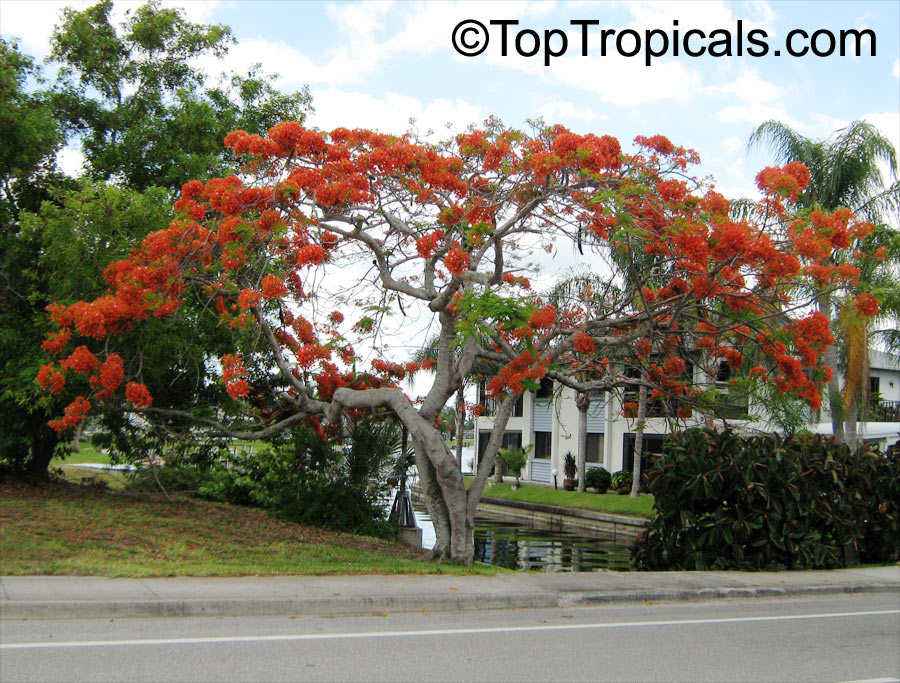
Royal Poinciana (Delonix regia)
The diva of tropical trees. Huge red-orange flowers blanket the branches
from late winter through summer. If you’ve ever seen one in full
bloom, you know — it stops traffic.
Best in large yards or open spaces, but young ones do great in big pots for
a few years.
🛒 Shop
Tatiana: “If you want a tree that makes
people
say ‘wow,’ this is it.”
Tabebuia chrysotricha – Dwarf Golden Tabebuia
Small tree, big drama. It turns solid gold just before new leaves appear. Blooms while completely bare — a stunning contrast of yellow on brown wood. Perfect for patios, courtyards, and containers. Handles cool nights down to the mid-20s F. Bright, cheerful, and forgiving — the kind of tree that always looks like it’s celebrating. 🛒 Shop
Tabebuia impetiginosa – Dwarf Pink Tabebuia (Pau D’Arco)
The Florida “cherry blossom.” Pink-lavender flowers smother the branches each winter, often before any leaves return. Thrives in sandy soil, tolerates drought, and grows beautifully in large planters or pots indoors near a sunny window. Ideal for seasonal residents or anyone who wants color when everything else is asleep. 🛒 Shop
Jacaranda mimosifolia
If color had music, this would be jazz. Soft, fern-like leaves and cascades of violet-blue trumpet flowers — airy, elegant, unforgettable. Outdoors, it makes a graceful shade tree; in containers, it stays compact with regular pruning. Jacarandas reward patience — they bloom bigger each year. 🛒 Shop
Koelreuteria paniculata – Golden Rain Tree
A favorite for its surprises — golden blooms in summer, pink paper lantern pods in fall, and bronze leaves before rest. Fast-growing, tough, and easy. Loves full sun and moderate water. Great for open lawns or patio tubs. The kind of tree that gives you something new to look at every month. 🛒 Shop
Callistemon citrinus – Bottlebrush Tree
The hummingbird magnet.
Bright red, brush-shaped flowers bloom several times a year —
sometimes even in cool weather.
The dwarf form, ‘Little John,’ stays about 4 feet tall, perfect
for pots or small borders.
Trim lightly after flowering to keep it compact and colorful. 🛒
Shop
Tatiana: “If you’ve never grown a
tropical tree before — start here. It’s the friendliest
one.”
Bauhinia variegata – Pink Butterfly Tree
Graceful, fragrant, and forgiving. Its pink-lavender orchid-like flowers open from late winter through spring, filling the garden with color and pollinators. It’s fast-growing, drought-tolerant, and excellent for both ground and pots. Even the buds are edible — a fun bonus for adventurous gardeners. 🛒 Shop
Bauhinia blakeana – Hong Kong Orchid Tree
The queen of them all.
Huge magenta-purple blooms that last for months, from fall through spring.
Fragrant, clean (no messy seed pods), and perfect for patios or large
decorative containers.
Give it sun, a little water, and it will reward you with bloom after bloom.
🛒 Shop
Tatiana: “It’s the one tree that never lets winter
win.”
A note on grafted Hong Kong Orchid Trees: Most Hong Kong Orchid Trees are grafted, and that’s actually a big advantage. Because they don’t grow from seed, grafted plants mature faster and begin blooming while still small — sometimes within the first year. That makes them perfect for patio pots or small gardens where space is limited.
Bringing the Tropics Home
Whether your garden faces the Gulf or your window faces the snow, these trees let you live in color year-round. Plant them outdoors in warm zones or grow them in pots indoors — they adapt, they bloom, they brighten every corner.
Gardening isn’t about waiting for spring — it’s about finding joy in every season. And when a tree blooms in January, that joy feels twice as sweet.
🛒 Shop Winter Flowering Plants
✍️ Winter Bloomer Q&A
Q: Can these trees really bloom indoors?
Yes! Smaller species like Bottlebrush ‘Little John,’ Dwarf Tabebuias, and many Bauhinias bloom beautifully in pots with bright light or grow lamps.
Q: Do they lose their leaves in winter?
Some, like Tabebuias and Jacarandas, drop leaves right before blooming — it’s normal and part of their charm. Others, like Bottlebrush, stay evergreen.
Q: What fertilizer works best?
We use Sunshine Boosters — gentle, balanced, and perfect for tropicals. Feed every 2–3 weeks during active growth.
Q: How do I know when to water?
Touch the soil! If it’s dry an inch or two down, water deeply. Overwatering is the main mistake with tropicals.
Q: Can they handle frost?
A quick dip into the upper 20s F is fine for most mature trees. Cover young ones or move containers under shelter if colder.
Q: Which are best for beginners?
Start with Bottlebrush ‘Little John’ or Golden Tabebuia — compact, colorful, and nearly foolproof.
Q: When will they bloom?
Usually within few years if they get enough sun and warmth. Grafted plants blooms much sooner
Q: Which of these trees are best for pot growing?
For patios, balconies, or indoor sunrooms, choose the compact or grafted types:
- Tabebuia chrysotricha, Dwarf Golden Tabebuia, bright and easy.
- Tabebuia impetiginosa, Dwarf Pink Tabebuia, hardy and long-blooming.
- Callistemon ‘Little John’ – stays neat and flowers all year.
- Grafted Bauhinia blakeana – blooms while young, perfect for pots.