Garden Blog - Top Tropicals

Date: 14 Nov 2018

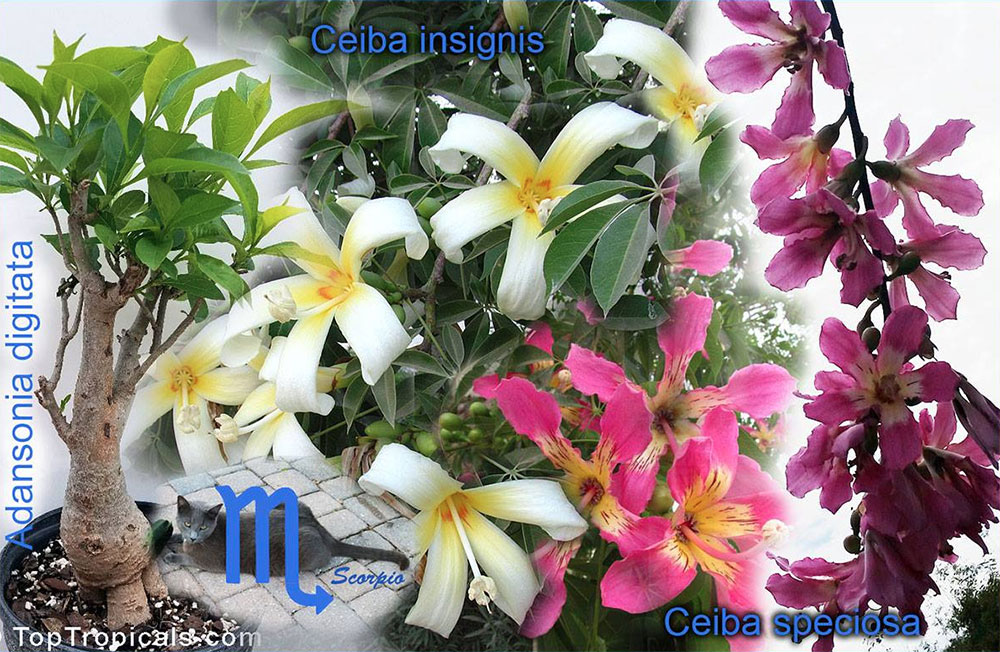
Plant Horoscope. Scorpio Zodiac lucky plants: Plants with thorns, red in color, and grow under adversity
TopTropicals.com

Scorpio - 10/23-11/21.
A WATER sign ruled by both Mars and Pluto.
Scorpio's plants are often found in remote places or on poor ground. They will likely have thorns, can be red in color, and grow under adversity. The good news is, most of these plants are nearly indestructible! This makes them desirable for every gardener.
The reproductive organs are ruled by Scorpio, so these are plants that balance the hormones, regulate the menstrual cycle, help with childbirth and pregnancy. Until this century, Scorpio was ruled by Mars, and the herbs associated with it had to do with the urogenital system and the colon. Many of the herbs related to Scorpio are cleansing and revitalizing. Now, astrologers assign Scorpio to Pluto, discovered in 1930 (Pluto is said by astrologers to be a higher octave of Mars). Physiologically, Scorpio involves the processes of catabolism and anabolism, the death and regeneration of body cells. Diseases of Scorpio are often involved with the slow buildup of toxic substances in the body (carcinogens, etc) or in the mind (anger, jealousy). Scorpio loves a spice with depth and complexity. Camphor Basil adds rich flavor to every dish it seasons, and its own aphrodisiac tendencies appeal to Scorpio's lusty nature.

Scorpio Zodiac lucky plants:
Ceiba, Baobab, Pistachio, Nutmeg, Thunbergia, Combretums, Dragon fruit, Medinilla, Camphor Basil, Oregano, Vanilla orchid, Hibiscus, Various cacti and succulents, Adenium, Honeysuckle, Peppers, Cordyline, Spider plant, Jasmine, Gooseberries, Wild indigo, Bougainvillea, Aloe vera, Raspberry , Palmetto, Horseradish tree, Camphor, Allspice and Bay Rum,Jujube, Sweet Mimosa, Agave, Milkweed, Hong Kong Orchid Tree, Pony Tail, Dwarf Poinciana, Bottlebrushes, Clusias, Crocosmia, Zig-Zag Cactus, Dracaena, Fire Bush, Hoyas, Jatropha , Kalanchoe, Sausage tree, Devils Backbone, Pereskia, Red Plumeria, Firecracker, Rattlebox, Rhoeo, Calendula, Geranium, Thistles, Mint , Sage, Catnip, Coriander, Sandalwood, Ginseng, Euphorbias, Acacias.
Date: 25 Sep 2018

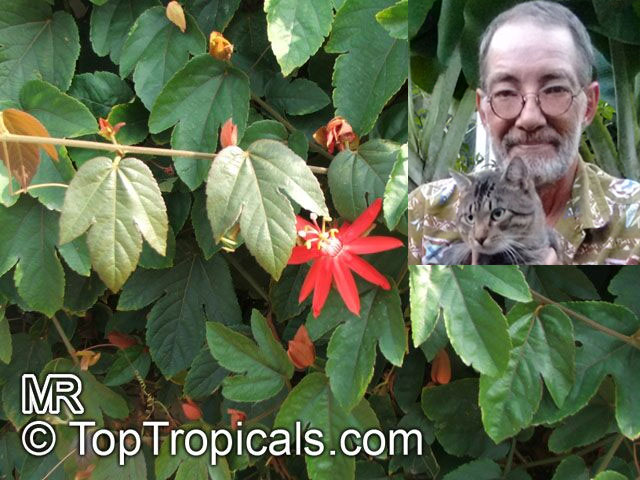
How to get Passion Vine to flower?
From Mark Hooten, the Garden Whiz

TopTropicals.com

Q: Several months ago, I purchased a passionflower vine, a red one with lots of flowers. I ended up putting it in a much larger pot with a large trellis, using a popularly advertised bagged potting soil recommended at a big box store. I have given it a blue colored water-soluble fertilizer every couple of weeks as recommended. However, while the vine seems very happy, growing faster than i can keep winding it around the trellis, it has not flowered all summer. I there something I am doing wrong?

A: Passionvines as a group (and there are some 500 different kinds!) are sort-of unusual among popularly grown ornamentals because they have "nitrogen issues". This is because, even though unrelated, they are much like most legumes, as they maintain a symbiotic relationship with certain beneficial soil bacteria which allows them to gather atmospheric nitrogen and store it in their roots. When they have an overabundance of nitrogen, they simply stop flowering and produce rampant leafy growth while never flowering. They only flower well after a period of healthy vine growth, because the plant had finally used up all of its stored nitrogen.
Since you had both used a bagged potting soil which likely already contained fertilizer with nitrogen added, as well as bi-monthly doses of a liquid fertilizer which also contains nitrogen, it has been receiving so much nitrogen it only knows to grow more vineage until the nitrogen is used up. If and when that happens, it will again begin to flower. This rule applies of course not only to flowering but also to fruiting varieties of Passiflora: the more flowers, the more fruit you get!
So the answer is - for the time being, just stop giving it supplemental fertilizer and it will start flowering for you sooner than later!

See all passion vines from TopTropicals.

Date: 11 Aug 2018

From Anna Banana: Shipping and planting during hot weather

TopTropicals

Q: I received email notification that my order was delayed due to hot weather. Why? And do I need to do anything special if I plant when it is hot?

A: When plants are shipped via FedEx Ground, it is hot in the truck! According to our FedEx area manager information, if outside temperature is 100 degrees, inside the truck it can be 130! We don't want to put your plants through that much stress. We monitor the weather at destination, and as soon as it cools down a little bit, your order will be shipped.

Planting during hot weather:
1. For a mail-ordered plant follow planting instructions and never plant it from the box directly into the ground. Keep it in a pot the size of a root ball until the plant recovers from shipping stress, re-grows root system and adjusts from several days of darkness to a bright light. Move the pot gradually into brighter light, eventually into a spot of its permanent home. Do not over water the pot. Once you see new growth - the plant is ready to be transplanted into the ground.
2. Use only quality soil, containing lots of organic matter (compost, peat moss); soil conditioner is beneficial (pine bark). Plant it on a little hill, so growing point is elevated 1-1.5"above the rest of the surface.
3. Put a good layer of mulch around the plant, at least 1-2" thick, and not too close to the trunk as it may cause stem rot on contact.
4. Water daily with a garden hose until the plant shows active growth - then watering may be reduced every other day or less, or you may rely on sprinklers and/or rains.
5. If the sun is too hot, use shade cloth (or simply a white bed sheet) to cover the plant for the first few days (use bamboo sticks for support). It will help the plant to establish without heat stress. If leaves start dropping - this may be a sign of excessive light and heat. Shading is the way to reduce it.
6. Use SUNSHINE booster to help plants overcome heat stress, and shipping stress. It really works!

Remember that a plant has a very slow nature, unlike creatures from animal world. Give it some time and never rush it into new conditions. Go slowly and patiently - this is the only way to get a reward of a fruit crop or a beautiful flower.

Date: 20 Jul 2018

How to get shade quickly... and stay away from oaks

TopTropicals

Q: I just moved from Tennessee into a new house in Florida and there are no trees on the property, the yard is brutal hot. What can I plant so I have some shade real quick? I like Florida shady oaks, how long will they take to grow?

A: First of all, do not rush into oak solution. Oaks are beautiful shade trees, however they have at least 2 problems:
a) Oaks are slow growers and unless you are willing to wait some 20 years... you won't get that desirable shade that quickly.
b) We have hurricanes in Florida... sometimes. A hurricane can damage any tree, however with oaks it may be the worse case scenario - the branches of those giant trees are huge, hard and heavy and in unfortunate situation when you need to remove or trim a broken tree, it may cost you... a few thousand dollars.

These are solutions that are more economical and practical:

1) Selection. If you have room, get one of these most popular Florida shade trees: Royal Poinciana, Golden Shower, Hong Kong Orchid Tree, Red Kapok, Bottlebrush, and many others. See full list of fast growing shade trees. Or simply get a Mango Tree and have delicious fruit too! Many varieties of Mangos are very large and fast growing.

2) Do it right. Even if you are planting a smaller tree, 1-3 gal size, it may become a nice shade tree within 2-3 years and start providing your driveway with desirable shade. The keys for fast growth are -
a) Good soil. Dig as big hole as possible and fill it with good rich soil containing compost. See planting instructions PDF.
b) Water. Do not rely on sprinklers and rains. Water your tree daily for the first week, then at least twice a week for another month. After that, irrigation system will be enough.
c) Fertilizer. Put a few handfuls of fertilizer in a planting hole. Then fertilize once a month during warm season. Apply micro elements for even better results and faster growth.

3) Ask experts. Contact our office for advice. We will suggest the most suitable shade tree for your yard based on features of your property: location, soil, exposure, etc.

Check out fast growing shade trees

Date: 24 Jun 2018

Plant Horoscope. Virgo Zodiac lucky plants: Crape Myrtle and Laurus nobilis

Virgo - 8/23-9/22. Virgo is an EARTH sign ruled by the planet Mercury, which also rules Gemini. Virgo is traditionally the Goddess of the Grain, and is associated with autumn. Her plants often have finely divided leaves or stems, subtle odors, or small, brightly-colored flowers. The most beneficial plants for Virgo are high in potassium and help to calm the nerves. In its rulership of Virgo, Mercury governs the abdomen and the lower intestinal tract and the entire digestive process. Herbs associated with Virgo assist in digestion (as do Cancer herbs) and help to reduce flatulence. The relaxing, calming scents help Virgo release stress and worries.

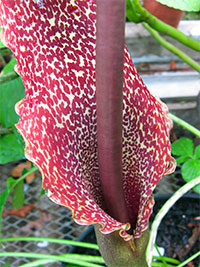
Virgo Zodiac lucky plants: Amorphophallus, Dill, Barringtonia, Bolusanthus, Dioscorea, Grewia asiatica (Falsa), Hibiscus Karkade, Iboza riparia, Lagerstroemia Queens Crape Myrtle, Laurus nobilis (Bay Leaf), Lippia, Melissa, Catnip, Mint, Arugula, Piper betle, Piper sarmentosum, Psychotria, Clove, Banisteriopsis, Papaya, Mesua ferrea (Ironwood), Assai Palm, Jacaranda, Pimenta dioica (Allspice), Petrea, Plumbago, Clitoria, Eranthemum, Litchi, Cashew, Pecan, Nut trees, Cherries, Lavender, Sansiveria, Aloe vera, Blackberry, Honey suckle, Satureja, Vitex, Mulberry, Elaeocarpus, Feronia elephantum (Bel Fruit). On the photo: Sauromatum venosum - Voodoo Lily.

For links to these plants and other signs information, see full Plant Horoscope.