Garden Blog - Top Tropicals

Date: 12 Feb 2026

Hoa Mai and the Year of the Horse - why yellow flower Ochna is the luckiest plant of 2026?

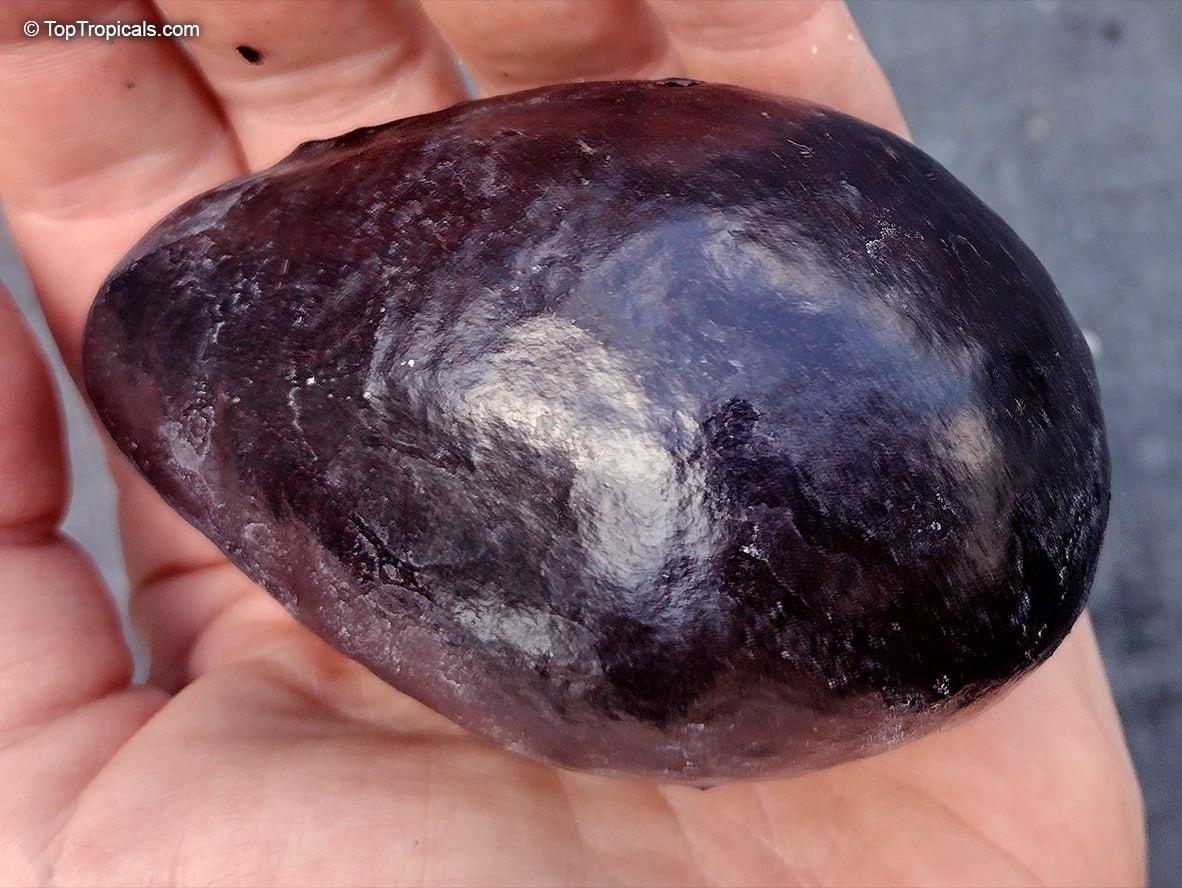
Ochna integerrima - Vietnamese Mickey Mouse plant, Hoa Mai - seeds

Ochna integerrima - Vietnamese Mickey Mouse plant, Hoa Mai - seeds

Ochna integerrima - Vietnamese Mickey Mouse plant, Hoa Mai tree

Ochna integerrima - Vietnamese Mickey Mouse plant, Hoa Mai tree

Ochna integerrima - Vietnamese Mickey Mouse plant, Hoa Mai flowers

Ochna integerrima - Vietnamese Mickey Mouse plant, Hoa Mai flowers

🔥 Hoa Mai and the Year of the Horse - why yellow flower Ochna is the luckiest plant of 2026?


Ochna integerrima - Vietnamese Mickey Mouse plant, Hoa Mai has seeds and sepals that resemble the face of Mickey Mouse, hence the common name.

Vietnamese Mickey Mouse Plant Facts

Botanical name: Ochna integerrima, Ochna thomasiana
Also known as: Vietnamese Mickey Mouse Plant, Hoa Mai, Mai Vang, Hoang Mai
USDA Zone: 9 - 11
Highligths Large shrub 5-10 ft tallSemi-shadeFull sunWatering: Moderate. Water when top soil feels dryYellow, orange flowersWhite, off-white flowersPlant attracts butterflies, hummingbirdsEthnomedical plant.
Plants marked as ethnomedical and/or described as medicinal, are not offered as medicine but rather as ornamentals or plant collectibles.
Ethnomedical statements / products have not been evaluated by the FDA and are not intended to diagnose, treat, cure, or prevent any disease. We urge all customers to consult a physician before using any supplements, herbals or medicines advertised here or elsewhere.Fragrant plant
Get personalized tips for your region


💖 On February 17, 2026, the Lunar New Year begins - welcoming the Year of the Fire Horse


And if there is one plant that perfectly captures the bold, bright energy of a new zodiac cycle, it is Ochna integerrima, known in Vietnam as Hoa Mai. This cheerful yellow bloomer is not just decorative. In Vietnam, it is the flower of Tet - a living symbol of luck, prosperity, and fresh beginnings.

💖 Does Vietnamese New Year start on a different date in 2026?


No. In 2026, Tet - the Vietnamese Lunar New Year - begins on the same day as the Chinese Lunar New Year: February 17. Tet follows the lunar calendar, just like Chinese New Year, so both celebrations align this year.
Tet, officially called Tet Nguyen Dan, marks the arrival of spring and is the most important holiday in Vietnam. And nothing represents Tet in southern Vietnam more than Hoa Mai in full bloom.

💖 Why Hoa Mai is the flower of Tet


Hoa Mai literally means "yellow blossoms". In southern Vietnam, these bright yellow flowers open right around Lunar New Year, often covering the entire plant.
The color yellow symbolizes:
· Wealth
· Prosperity
· Happiness
· Good fortune

Families display flowering Hoa Mai trees in homes, courtyards, and businesses during Tet. The more blossoms, the more luck the coming year is believed to bring.

💖 Why it is called the Mickey Mouse plant


After flowering, Ochna integerrima produces glossy black berries that sit on bright red sepals. The combination looks surprisingly like a tiny cartoon face - two black "ears" and a round head - which is how it earned the nickname Vietnamese Mickey Mouse plant.

It is playful, unusual, and a total conversation starter.

💖 A perfect plant for Year of the Fire Horse energy


The Fire Horse year is associated with:
· Passion
· Independence
· Bold action
· Fast movement
And honestly? A plant that explodes into golden blooms in the middle of winter feels exactly right for that kind of year!
If you have been waiting to start something new - planting a rare shrub, reshaping your garden, training a miniature tree - this zodiac cycle carries that "go for it" momentum.

💖 Can you grow Hoa Mai outside Vietnam?


Yes - and that is part of its appeal. Ochna integerrima - Hoa Mai - is:
· A slow-growing, medium shrub
· Trainable into a small tree or bonsai form
· Suitable for containers
· Relatively tolerant of light frost
It blooms in winter, when many tropical collections feel quiet. That alone makes it valuable in warm-climate gardens like Florida.

To encourage winter blooms, steady feeding before and during the cooler season helps stimulate bud formation. Consistent light, good drainage, and balanced fertilization are key.

💖 A living symbol of luck for 2026


Every Lunar New Year carries its own theme. The Year of the Fire Horse is about bold growth, forward motion, and courage.
Hoa Mai blooms exactly at the moment when people reset intentions, clean their homes, and welcome fresh energy. It is not just a plant - it is a seasonal signal that a new chapter has begun.

And if you want to invite a little more golden luck into your garden this February, few plants say "new year, new beginning" better than Hoa Mai in full bloom.

🛒 Plant your own lucky Mickey Mouse Plant

📚 Learn more:


Ochna integerrima in Plant Encyclopedia
What is Mickey Mouse Plant?
2026: Year of the Fire Horse - time to grow bold, live free, and plant lucky
Year of the Fire Horse - what should you grow in 2026?
More #Horoscope info for plants and cats

#Horoscope #Hedges_with_benefits #Nature_Wonders #Fun_Facts

🟢 Join 👉 TopTropicals
Date: 22 Jan 2026

Canistel breakfast mash: quick-n-fun exotic recipes

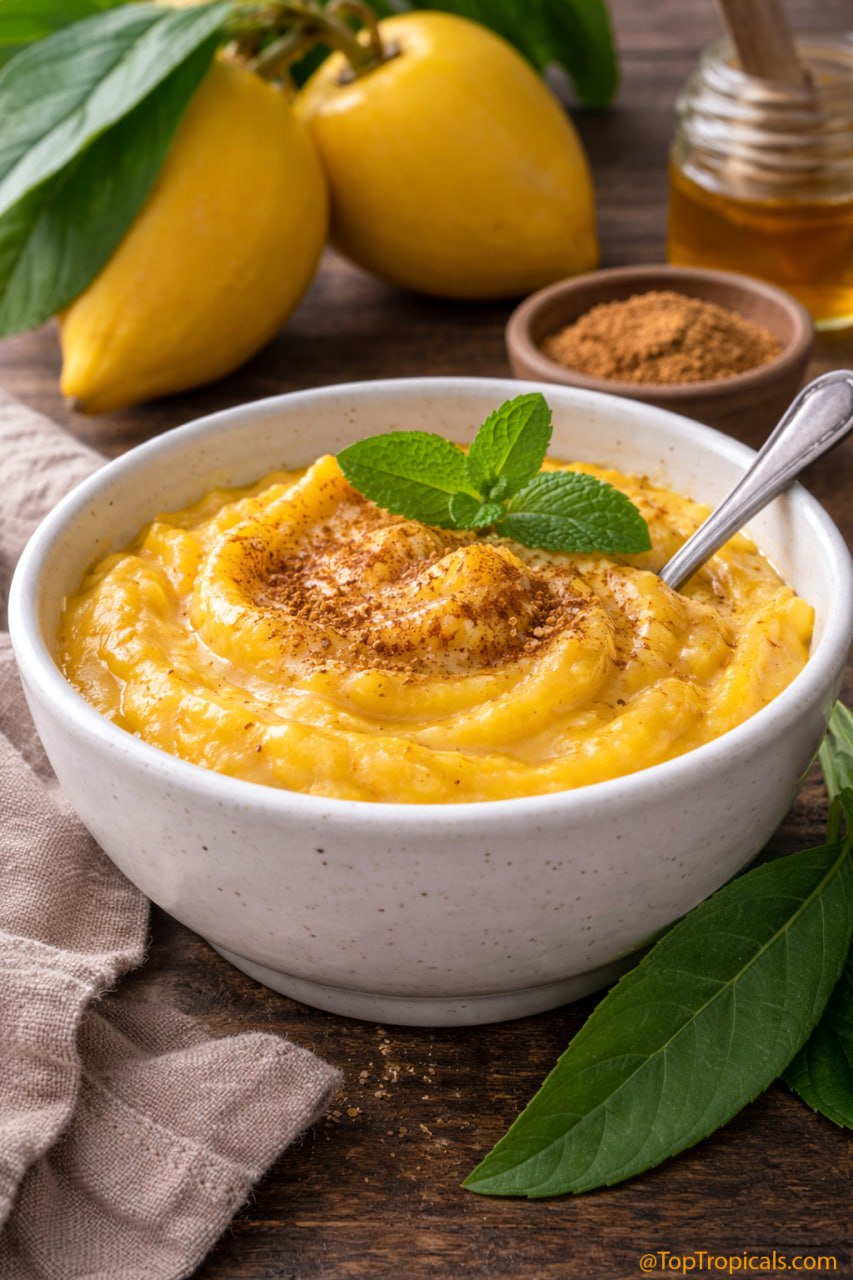
Canistel breakfast mash

Canistel breakfast mash

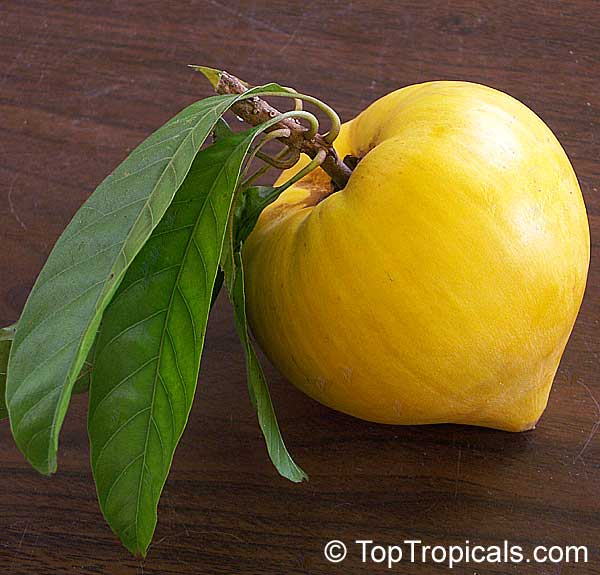
Canistel - Pouteria campechiana, Egg Fruit

Canistel - Pouteria campechiana, Egg Fruit

🍴 Canistel Breakfast Mash

Ingredients

  • 1 ripe canistel (egg fruit), peeled and seeded
  • 1 tablespoon milk
  • Ground cinnamon, to taste

Instructions

  1. Scoop the canistel flesh into a bowl.
  2. Mash thoroughly with a spoon, adding milk gradually until smooth and custard-like.
  3. Serve immediately, topped with a light sprinkle of cinnamon.

🌿 About the plant:


Canistel (Pouteria campechiana), often called Eggfruit, has dense yellow flesh with a flavor reminiscent of sweet potato, pumpkin, and custard. It is naturally rich and filling, which is why it is often used mashed, blended, or cooked.

Canistel Plant Facts

Botanical name: Pouteria campechiana
Also known as: Canistel, Eggfruit, Chesa
USDA Zone: 9 - 11
Highligths Large tree taller than 20 ftSmall tree 10-20 ftFull sunWatering: Regular. Let topsoil dry slightlyEdible plant
Get personalized tips for your region


🌱 In the garden:


Canistel is a tough, drought-tolerant tropical fruit tree that performs well in warm climates. It prefers full sun, well-drained soil, and minimal fuss once established. Compact growth and heavy production make it well suited for edible landscapes and container growing.

🛒 Add to your garden:


· Sweet Egg Fruit to your garden - Canistel Tree
· Cinnamon tree

📚 Learn more:


Pouteria campechiana - Canistel, Eggfruit - in Plant Encyclopedia
Health Benefits of Canistel Fruit
Pouteria campechiana - Canistel, the curious heart-shaped Egg Super-Fruit

#Food_Forest #Recipes

🟢 Join 👉 TopTropicals

Date: 23 May 2026

Avocado Fantastic: the hidden world beyond green and black

Avocado Fantastic fruit

Avocado Fantastic fruit

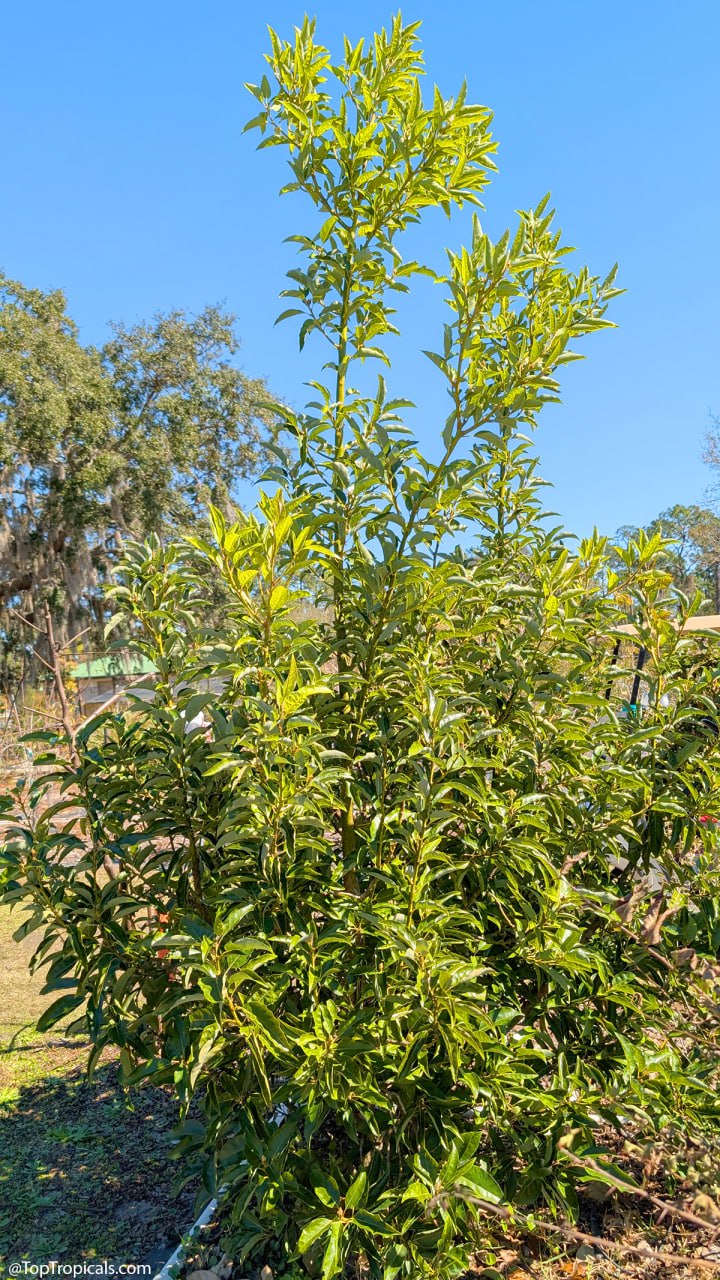
Avocado Fantastic tree

Avocado Fantastic tree

Avocado Fantastic: the hidden world beyond green and black


Most people think avocados come in two colors - green and black. Maybe they've heard of Hass. But the hidden world of avocados is far more diverse, filled with giant fruits, unusual shapes, red-skinned varieties, and even trees that can handle surprising cold.

One of the most remarkable is Fantastic.

💚 The avocado that wasn't supposed to survive


Avocados are often considered tropical and tender. Fantastic challenges that idea. This unusual variety gained a following in Texas, where it reportedly survived temperatures near 10F around San Antonio. Mature trees can tolerate temperatures around 15F for short periods, making it one of the most cold-hardy avocados available.
For gardeners in cooler regions, Fantastic has become something of a legend - proof that growing avocados is not limited to the tropics.

💚 A survivor of Florida's historic freeze


During Florida's historic February 2026 freeze, temperatures at our Sebring nursery dropped to 25F with several nights of prolonged freezing. While many tropical plants suffered damage, Fantastic came through without noticeable injury - remarkable performance for a tropical fruit tree.

💚 More than just a tough tree


Fantastic would not be worth growing if cold hardiness were its only claim to fame. Fortunately, it also produces excellent fruit.
The avocados are relatively small, typically weighing 6 to 8 ounces, with very thin green skin that darkens as the fruit matures. Inside is smooth, creamy flesh with a rich, buttery texture and pleasant nutty flavor.
The skin is so thin that many people simply cut the fruit in half and scoop it out with a spoon, or even it it with the skin. This is the kind of avocado often enjoyed fresh rather than turned into guacamole.

💚 A handsome, manageable tree


Fantastic is a Mexican-type avocado, and it shows many of the characteristics that make this race so appealing.
The tree has an attractive upright growth habit and tends to remain more compact than many large Florida avocado varieties. Rather than becoming an enormous shade tree, it often develops into a narrower, more manageable specimen that fits comfortably into a home landscape.
The foliage is elegant and refined, giving the tree a lighter appearance than many broad-leaved avocados. Like other Mexican-type varieties, the leaves release a pleasant anise-like fragrance when crushed - a surprising feature that many gardeners discover by accident.

💚 Why Fantastic deserves more attention


Many avocado collectors spend years searching for unusual varieties. Some are chasing flavor. Others want larger fruit or longer harvest seasons.
Fantastic offers something different: confidence.

It gives gardeners in cooler climates a chance to grow a fruit that many people assume is impossible outside the tropics. Even in warmer regions, its remarkable cold tolerance provides peace of mind when winter weather turns unpredictable.

In a world where most shoppers only see green avocados and black avocados at the grocery store, Fantastic is a reminder that the hidden world of avocados is far richer, more diverse, and far more interesting than most people realize.

And for many growers, that discovery is simply Fantastic. 👉 More

🛒 Explore cold hardy Avocado varieties

📚 Learn more:


· Avocado Variety Guide: Snack or Guacamole? Collector's inspiration
· Cold-hardy avocado survival groups - what the numbers really mean
· How to protect Avocado from cold and how hardy is it?
· Avocado that laughs at frost: Mexicola Grande for cooler climates
· Cold hardy Avocado Joey - you eat it with the skin

📖 Our Book: Avocado Variety Guide, Snack or Guacamole?
·
Hard copy · PDF File Download

#Food_Forest #Avocado #Discover

🟢 Join 👉 TopTropicals

Date: 22 May 2026

Why orchids are way easier to grow than you think: 7 tips for the beginner

orchids are way easier to grow than you think

🌸 Why orchids are way easier to grow than you think: 7 tips for the beginner

Many beginners avoid orchids. Because they look exotic, it’s easy to assume they belong in a high-tech greenhouse. But the truth is surprisingly simple: most orchids die from too much love, not too little. The popular Phalaenopsis (Moth Orchid) is actually lower-maintenance than many common houseplants - once you understand how its roots work.

🌸 1. The #1 Mistake Beginners Make


Orchids are not regular potted plants. In nature, most are epiphytes, meaning they grow attached to tree bark where roots get constant airflow and dry quickly after rain. When well-meaning beginners plant them in dense soil or keep them constantly wet, the roots suffocate and rot. Ironically, orchids thrive on a little bit of neglect.

⚠️The Grocery Store Trap: Many orchids bought at supermarkets are packed tightly into decorative pots filled with dense moss. While they look beautiful, the roots are often already suffocating. This is why a seemingly healthy orchid can suddenly decline a few weeks after you bring it home.

👉 Pro tip: Aerial roots growing wildly outside the pot are a sign of a happy, healthy orchid - don't cut them off!


🌸 2. Decode Your Orchid’s Roots (The Ultimate Watering Trick)


Forget strict watering schedules. Instead, let the orchid tell you when it’s thirsty by looking at the color of its roots:

🟢❌ Bright Green Roots: The plant is still perfectly moist. Do not water.
⚪️✅ Silvery-Gray Roots: The plant is dry and ready for a drink.

When it's time to water, drench the mix thoroughly, let it drain completely out of the bottom, and don't water again until the roots turn silver.
And please, skip the ice cube trick. Orchids are tropical plants; freezing ice shocks their roots and causes long-term damage.

🌸 3. No Greenhouse? No Problem.


You don't need a tropical conservatory. Most orchids thrive in standard indoor conditions with bright, indirect light.
An east-facing windowsill is usually the sweet spot. Too much direct afternoon sun will scorch the leaves, while deep shade will prevent the plant from ever reblooming.

🌸 4. Don't Panic When the Flowers Fall


After a spectacular bloom cycle, an orchid’s flowers will drop, leaving behind a bare green spike. This does not mean your plant is dying.
Orchids naturally enter a resting period that can last for several weeks or months. They are simply conserving energy to build new leaves and roots before their next big show.

🌸 5. Master the Art of Gentle Feeding


Another common misstep is over-fertilizing. Orchids prefer a "weakly, weekly" approach rather than heavy doses of nutrients all at once.
Using a gentle, specialized formula like SUNSHINE Orchidasm works incredibly well for orchids and other delicate epiphytes. Because it focuses on steady, healthy growth rather than forcing rapid development, it provides the exact kind of mild, consistent nourishment orchids need to produce longer-lasting blooms. It is safe to use with every watering.

🌸 6. Think Beyond the Tree Bark


When we picture orchids, we usually think of the kinds that grow in airy bark. However, the orchid family is massive and includes terrestrial (ground) orchids.
Ground orchids grow directly in soil and can even be planted outdoors in warmer climates. If you are still nervous about managing the unique root systems of traditional orchids, ground orchids are a fantastic, beginner-friendly gateway into the hobby.

🌸 7. The Orchid Addiction is Real


The funniest thing about orchids is the shift in mindset. The moment a beginner successfully triggers a rebloom on their first plant, the fear completely vanishes.
And before you know it, that one single windowsill orchid quietly turns into five.

🛒
Explore Ground Orchids, Vanilla orchids, and enjoy Sunshine Orchidasm

📚 Learn more: 

Ground Orchid Plant Facts

Botanical name: Spathoglottis kimballiana
Also known as: Ground Orchid, Garden Orchid
USDA Zone: 9 - 10
Highligths Groundcover and low-growing 2ft plantSemi-shadeFull sunWatering: Regular. Let topsoil dry slightlyYellow, orange flowersBlue, lavender, purple flowersPink flowersPlant attracts butterflies, hummingbirds
Get personalized tips for your region

· Orchids in Plant Encyclopedia
· How to grow everblooming orchids like in the store?
· Orchids for Dummies
· Sunshine Orchidasm

#Fertilizers #How_to #Container_garden #Discover #Shade_Garden

🟢 Join 👉 TopTropicals

Date: 10 May 2026

🍑 From the Garden: Why I Always Recommend Growing Your Own Peaches

by Tatiana Anderson, Top Tropicals Garden Expert

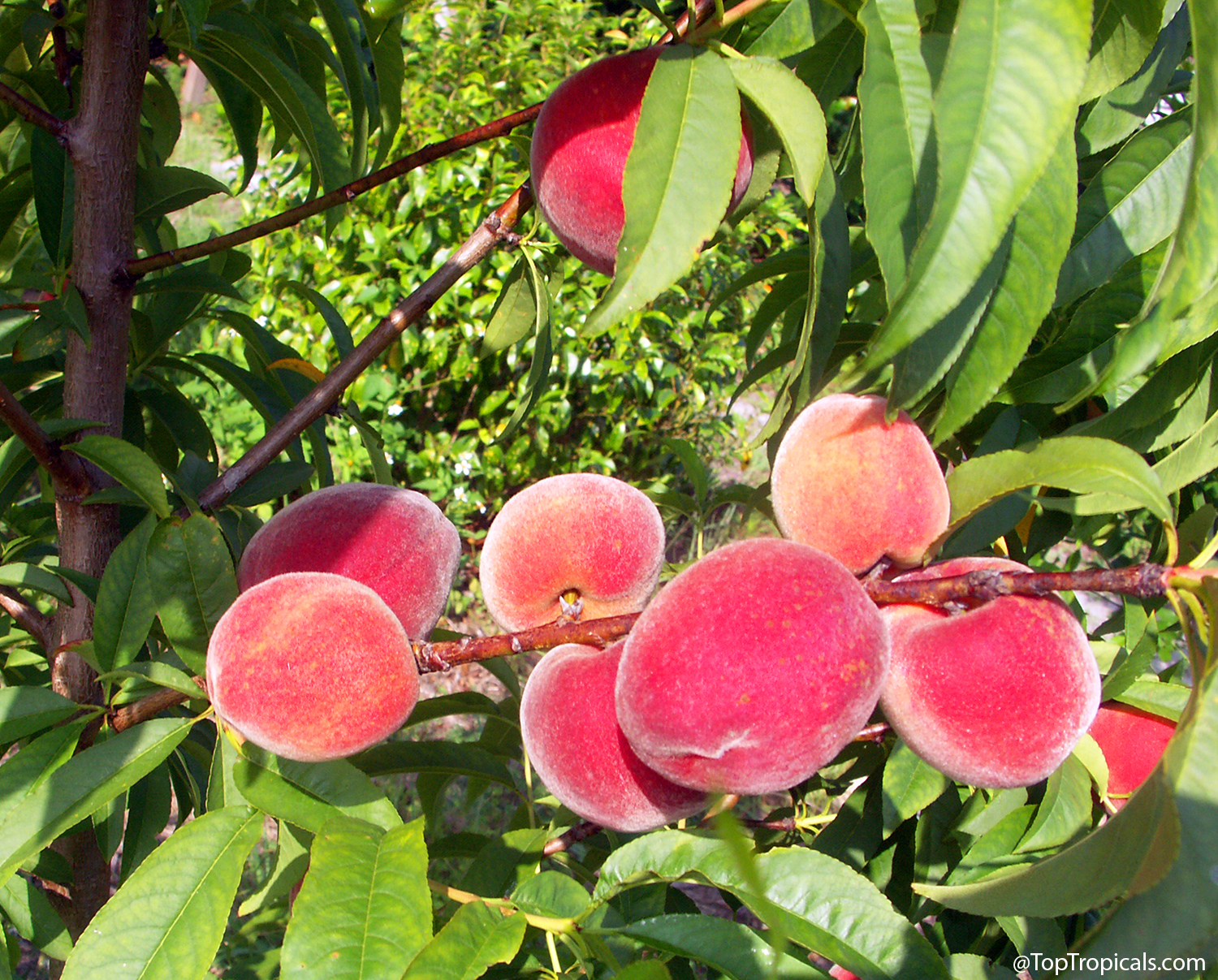
A  peach  tree  growing  outdoors  under  a  blue  sky  with  ripe  red-orange 
 peaches  hanging  among  long  green  leaves.  The  image  also  shows  a  close-up 
 view  of  several  fuzzy  peaches  ripening  on  a 
 branch.

Peach trees are beautiful long before harvest day - glossy green leaves, colorful fruit, and that classic fuzzy peach look straight from the branch.

I'll be honest with you. The first time I bit into a peach straight off the tree, still warm from the afternoon sun, I understood why people get obsessed with this fruit. There is no comparison to what you find in a grocery store. Store peaches are picked hard, shipped cold, and by the time they reach you, something important is already gone. A tree-ripened peach is soft, fragrant, juicy, and sweet in a way store peaches rarely are. Eat it fresh, slice it into a cobbler, throw it on the grill - it holds up beautifully either way.

Peach Plant Facts

Botanical name: Prunus persica, Amygdalus persica
Also known as: Peach
USDA Zone: 5 - 10
Highligths Small tree 10-20 ftFull sunWatering: Regular. Let topsoil dry slightlyWhite, off-white flowersPink flowersEdible plantDeciduous plantSubtropical plant. Mature plant cold hardy at least to 30s F for a short time
Get personalized tips for your region

So let's talk about how to actually get there.

Planting

Peaches are not difficult. Give them sun, drainage, and room for air movement, and they will usually tell you very quickly that they are happy.

  • Full sun is essential - 8 hours minimum, and more is better.
  • Drainage matters - peach roots do not like sitting wet.
  • If your soil stays wet, plant on a mound - simple fix, big difference.
  • Water deeply, then pause - let the soil partially dry before watering again.
  • Prune every year - it keeps the tree open, improves airflow, and helps the tree put energy into fruit instead of tangled growth.

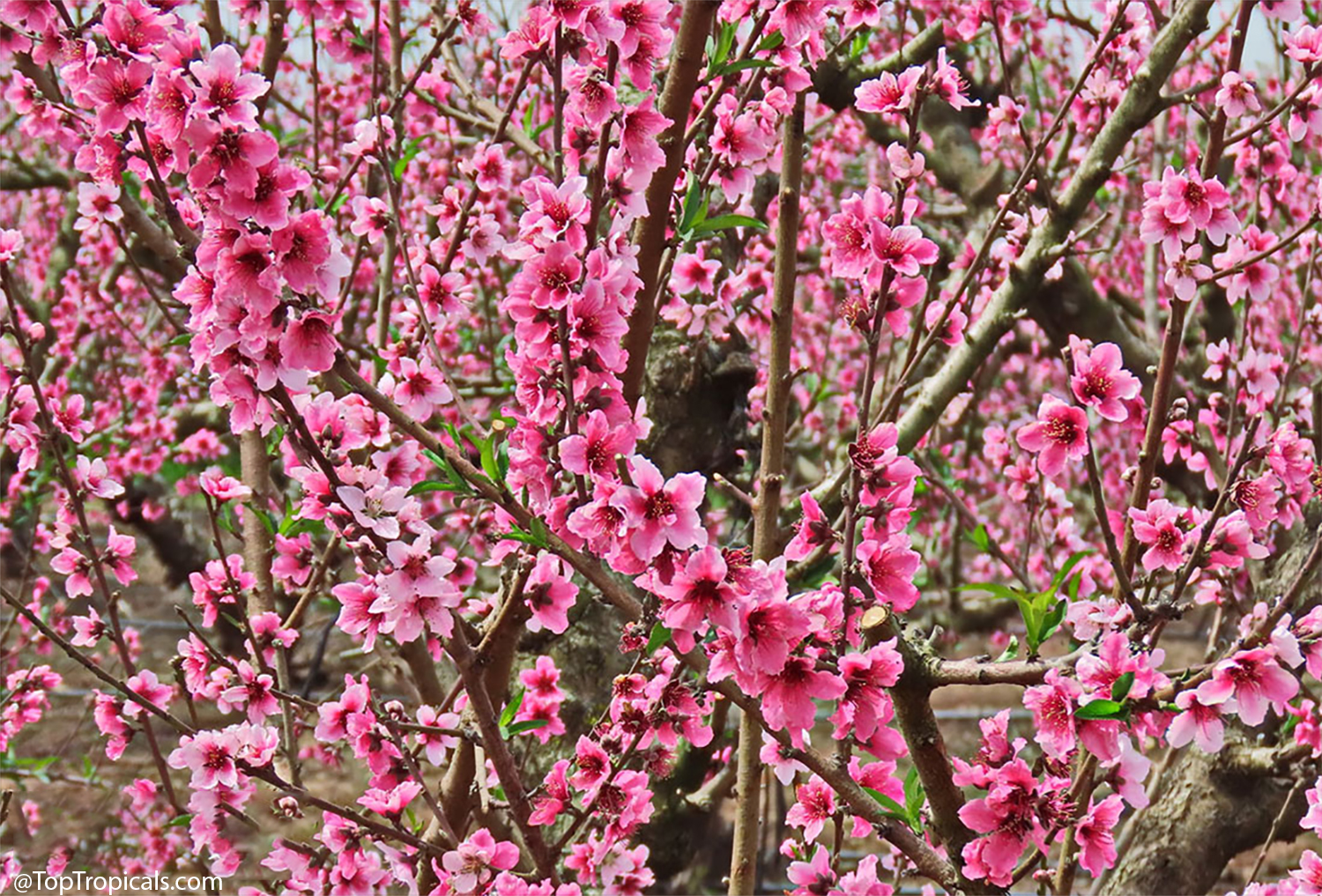
Branches  of  a  peach  tree  covered  in  masses  of  bright  pink  blossoms 
 during  spring  bloom.  The  flowers  densely  fill  the  tree,  creating  a  colorful 
 display  of  pink  petals  against  the  brown 
 branches.

Peach trees put on one of spring's prettiest shows - clouds of pink blossoms before the fruit season even begins.

What If You Do Not Have Room?

You can still grow peaches in a large container. This is a great option for patios, small yards, renters, or gardeners who want better control over soil and drainage.

  • Use a large pot with drainage holes.
  • Choose a fast-draining potting mix, not heavy garden soil. We recommend Sunshine Abundance potting mix.
  • Place the container in the sunniest spot you have.
  • Water more often than in-ground trees, but never let the pot stay soggy.
  • Prune to keep the tree compact and easy to manage.

Fertilizing

Peach trees are generous plants, but producing vigorous growth and a heavy crop of sweet fruit takes energy. Regular feeding makes a noticeable difference in tree health, flowering, and fruit quality.

I prefer a simple two-part approach that provides both steady background nutrition and quick, readily available nutrients when the tree is actively growing.

  • Green Magic controlled-release fertilizer provides a steady supply of nutrients for months and serves as the foundation of the feeding program.
  • Sunshine Boosters liquid fertilizers deliver amino acid-based nutrients that are quickly absorbed and especially useful during periods of active growth, flowering, and fruit development. Sunshine C-Cibus formula is the best for fruit trees.

During the growing season, this combination helps build stronger branches, healthier leaves, better flowering, and sweeter, higher-quality fruit.

If your tree shows yellowing leaves or weak growth, consistent feeding often makes a dramatic difference within a few weeks.

📚 More about low-chill peaches from our garden Blog

Clusters  of  ripe  fuzzy  peaches  growing  on  tree  branches  surrounded  by 
 long  green  leaves  in  bright  sunlight.  The  peaches  show  shades  of  pink,  red, 
 and  soft  yellow  as  they  ripen  on  the 
 tree.

Tree-ripened Tropic Beauty peaches warming in the sun - fuzzy, colorful, and almost ready to pick straight from the branch. Tropic Beauty variety is one of the most colorful and sweet.

📚 More about Tropic Beauty Peach

🛒 Shop Low-Chill Peach trees

Sunshine’s Philosophy: Lazy Peach Sundae 😺

Sunshine absolutely loves peach cobbler, especially when someone else does all the peeling, slicing, mixing, and baking. But when he is left to prepare dessert on his own, his standards become much more practical. Why turn on the oven when perfectly ripe peaches already taste amazing? His philosophy is simple: if a recipe takes less than five minutes and ends with peaches and vanilla ice cream in the same bowl, it is a masterpiece.

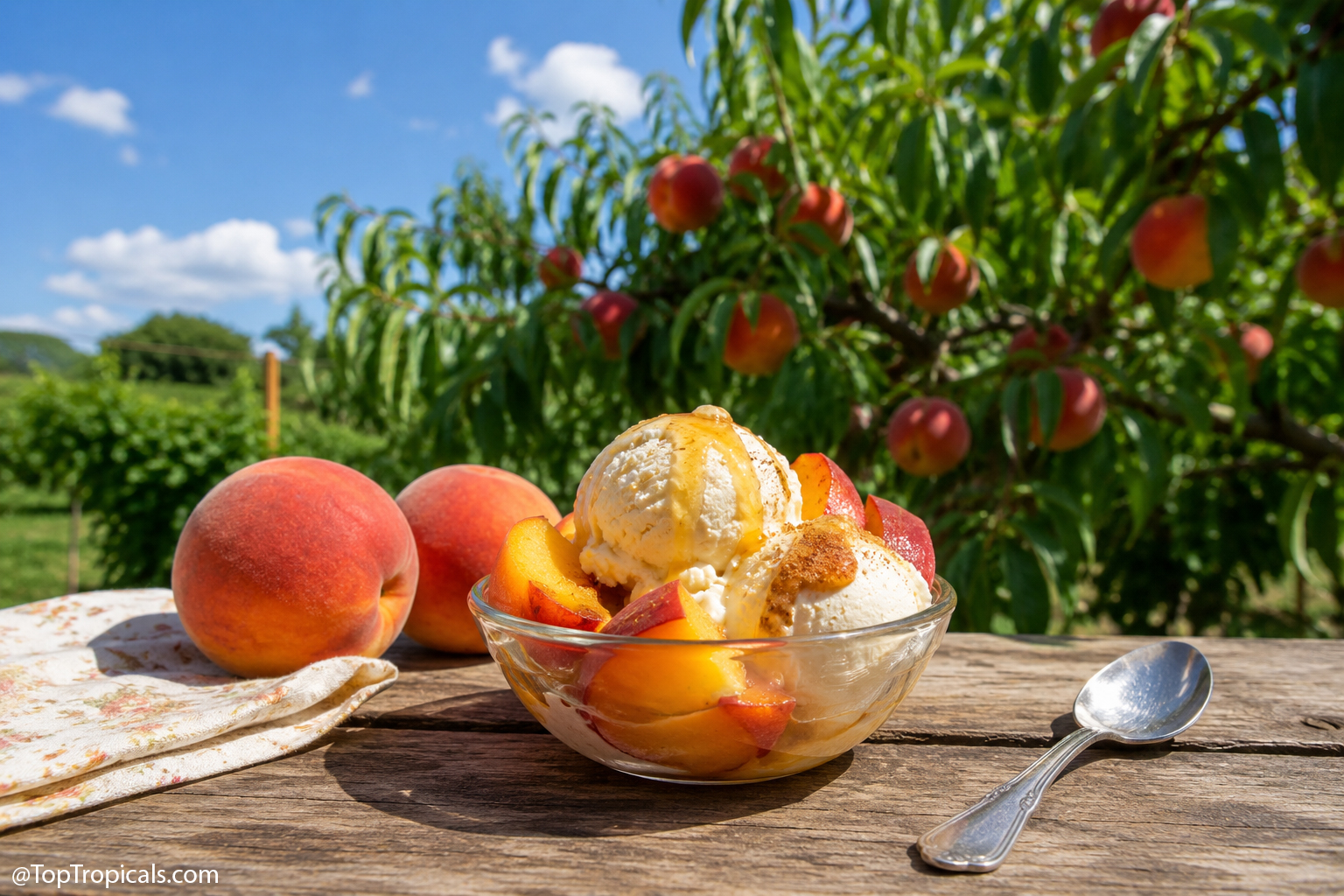
A  bowl  of  sliced  ripe  peaches  topped  with  two  scoops  of  vanilla  ice 
 cream,  drizzled  with  honey  and  lightly  sprinkled  with  cinnamon,  sits  on  a 
 rustic  wooden  table  outdoors.  Fresh  whole  peaches  rest  nearby,  with  a  sunny 
 peach  orchard  full  of  fruit  and  a  bright  blue  sky  in  the 
 background.

Sunshine's Lazy Peach Sundae - fresh peaches, cold ice cream, and zero effort on a perfect sunny day.

Sunshine's Lazy Peach Sundae

This is not cooking. This is assembly.

Ingredients

  • 2 ripe homegrown peaches
  • 2 big scoops of vanilla ice cream
  • A drizzle of honey (optional)
  • A pinch of cinnamon (optional)

Instructions

  1. Slice the peaches.
  2. Put them in a bowl.
  3. Add vanilla ice cream.
  4. Drizzle with honey and sprinkle with cinnamon if you feel ambitious.
  5. Eat immediately while smiling.

Sunshine's Review

"I peeled exactly nothing and still got dessert. This is my kind of gardening."

Want this?
Start with a low-chill peach tree. That is usually how it begins.

🛒 Plant your own Peach tree