Orchidaceae - Plant Encyclopedia Results
| Number of plants found: 120 | Next | 
|
Go to page: | 1 | 2 | 3 | 4 | 5 | Last |
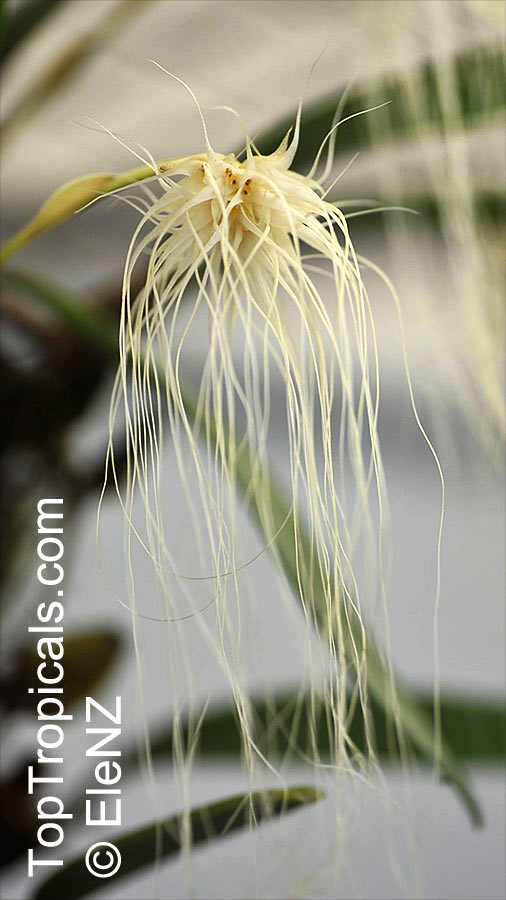
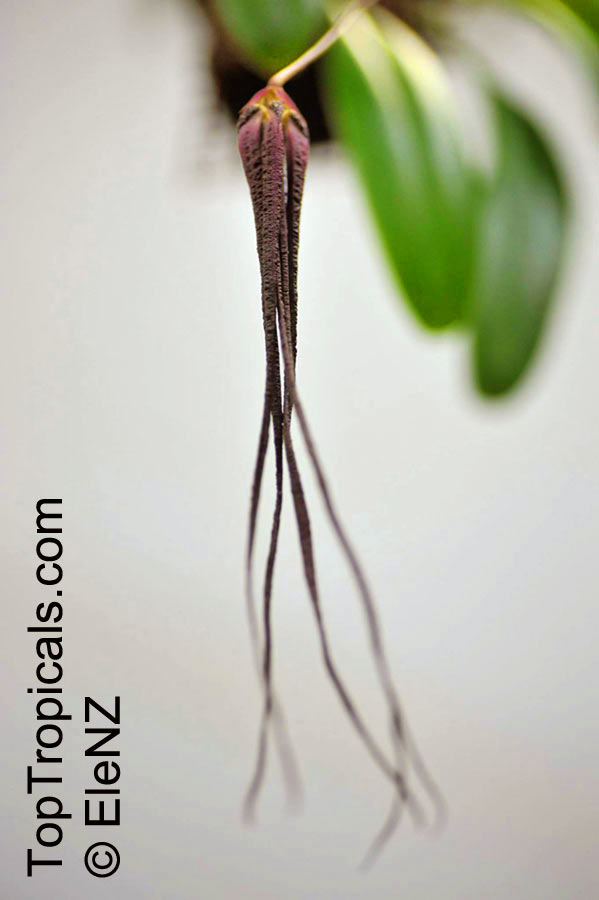
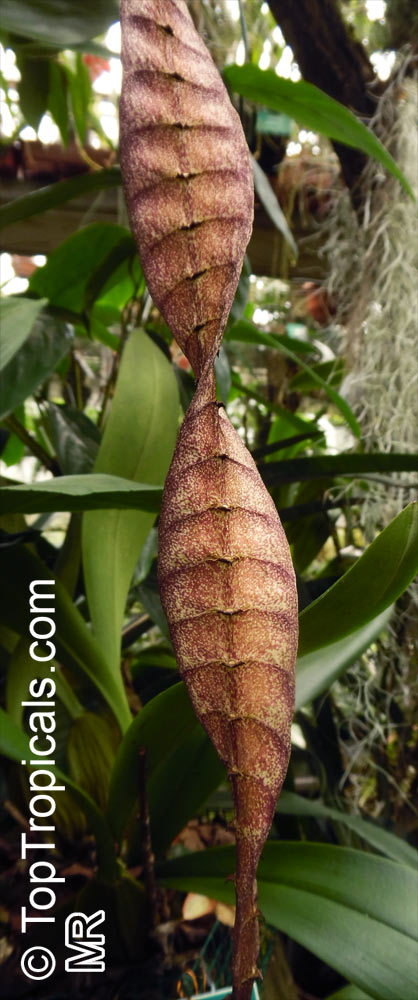
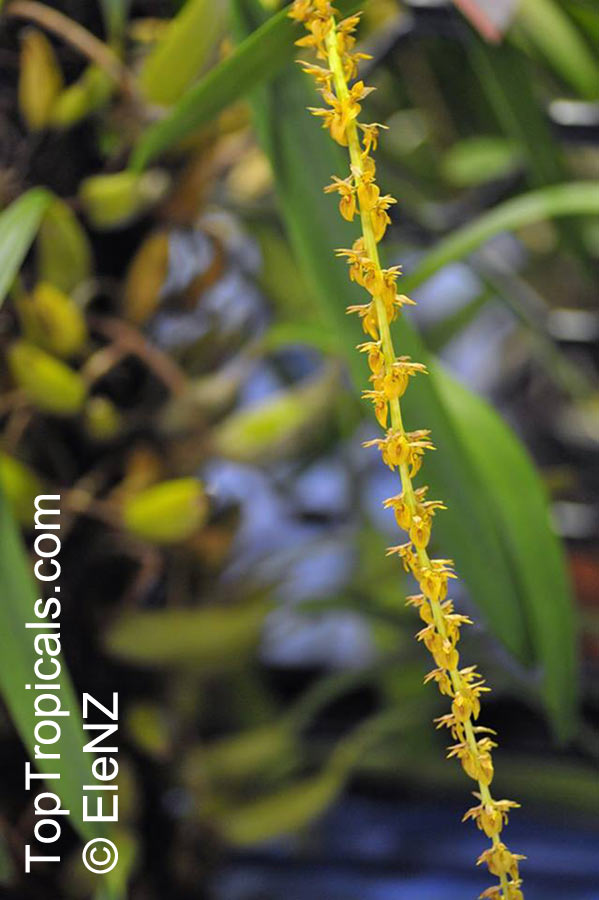
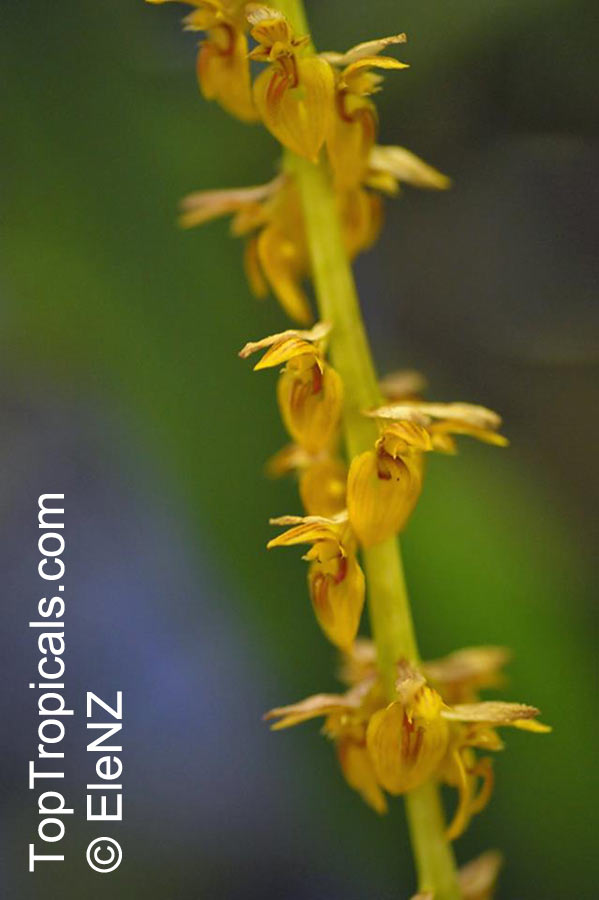
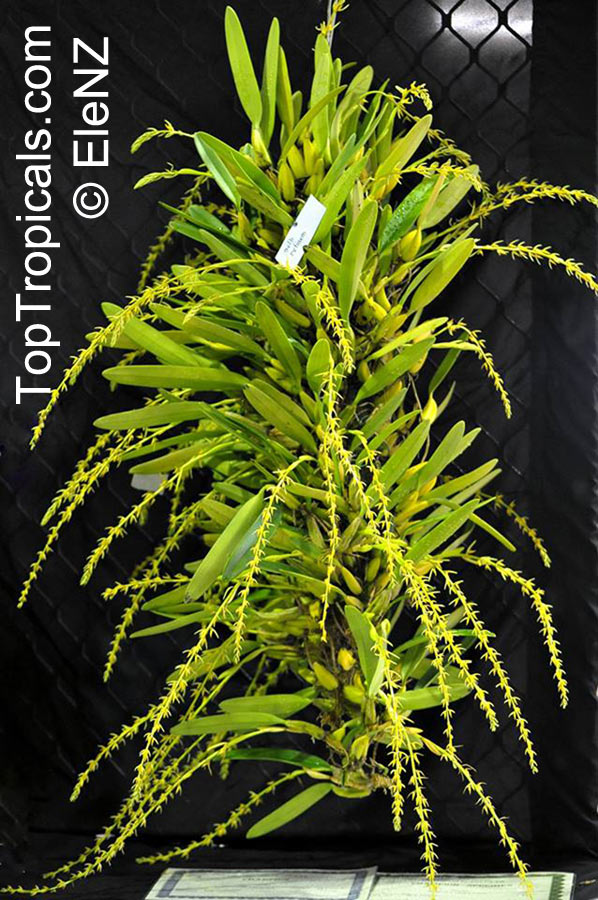
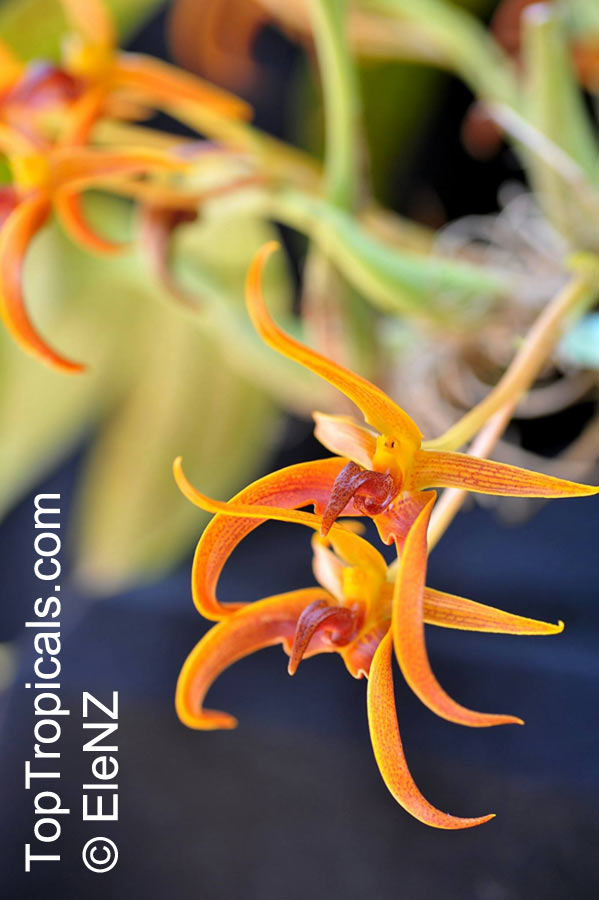
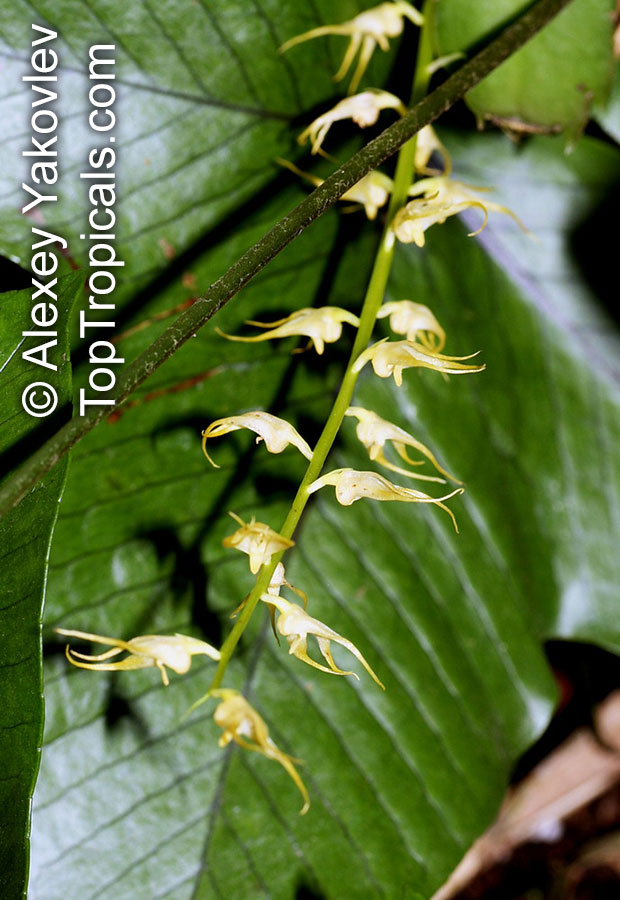
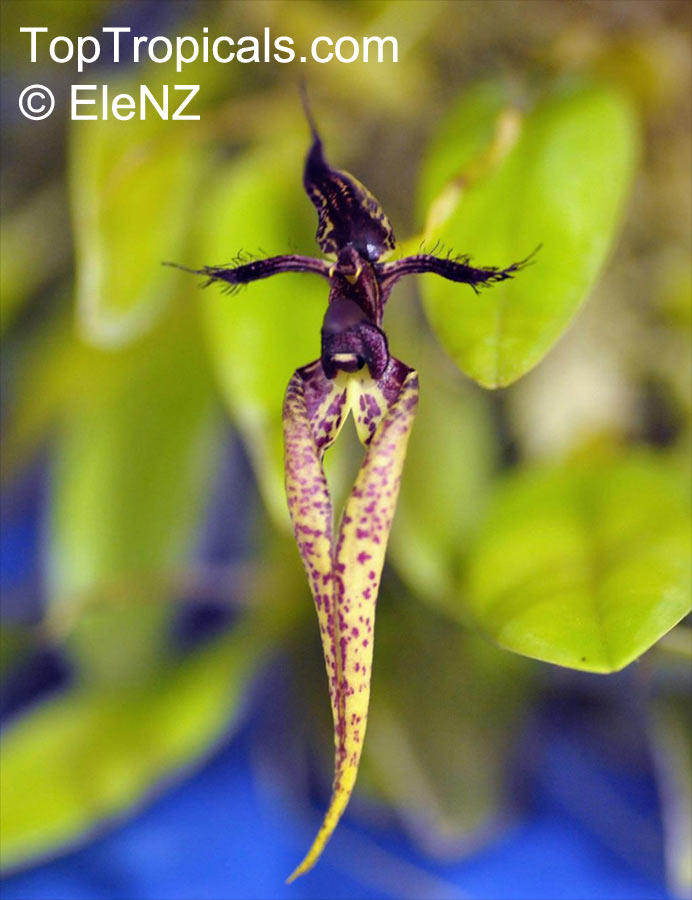
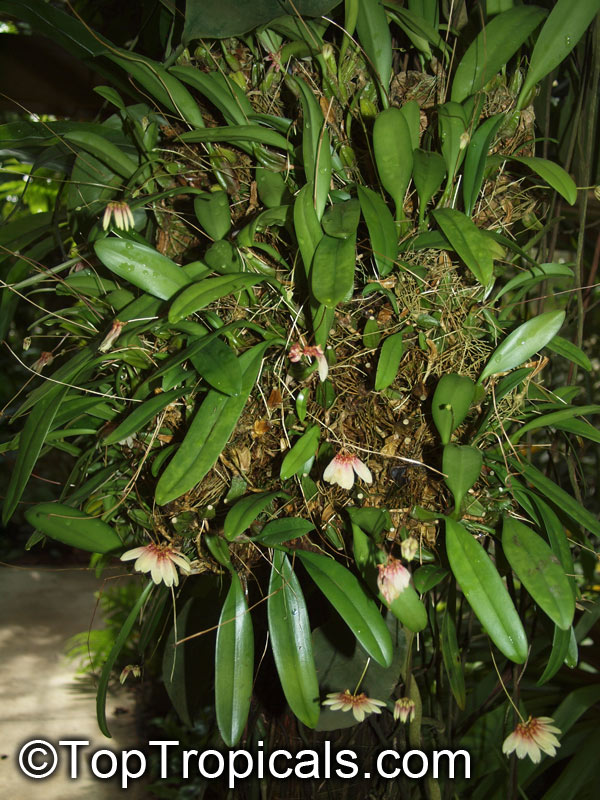
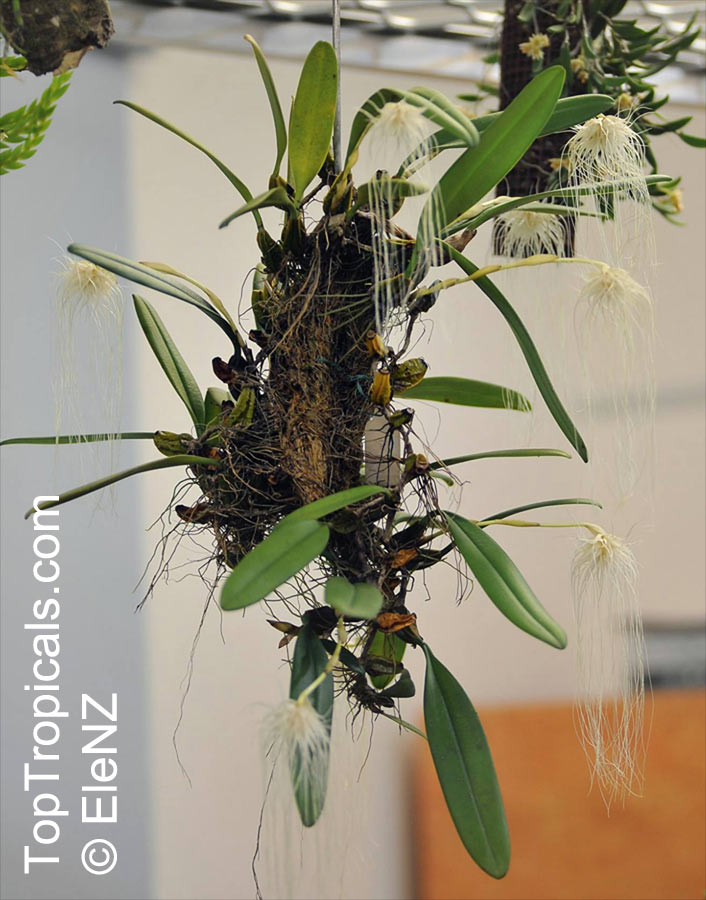
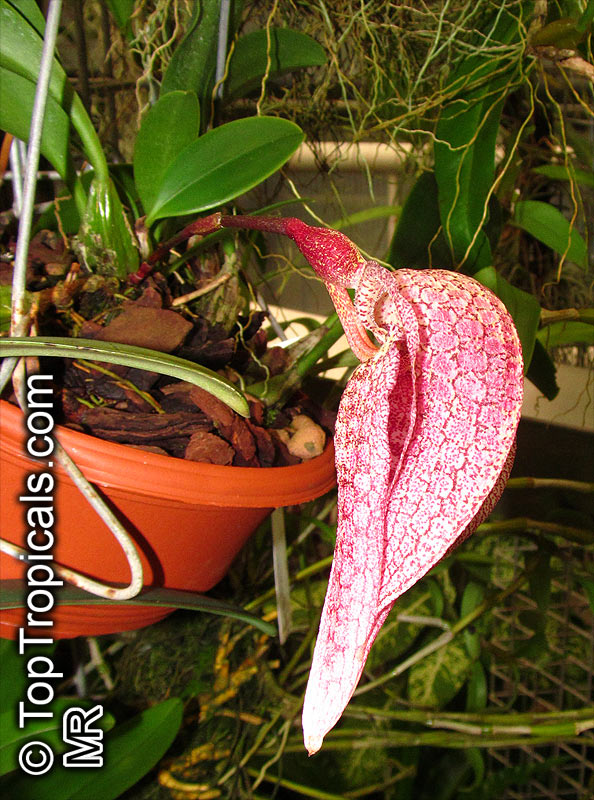
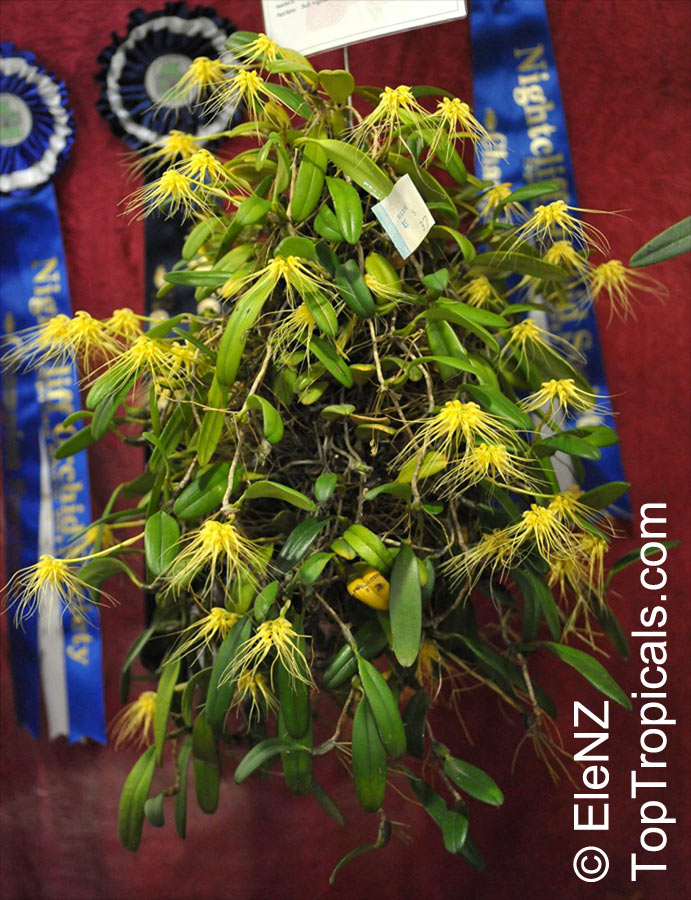
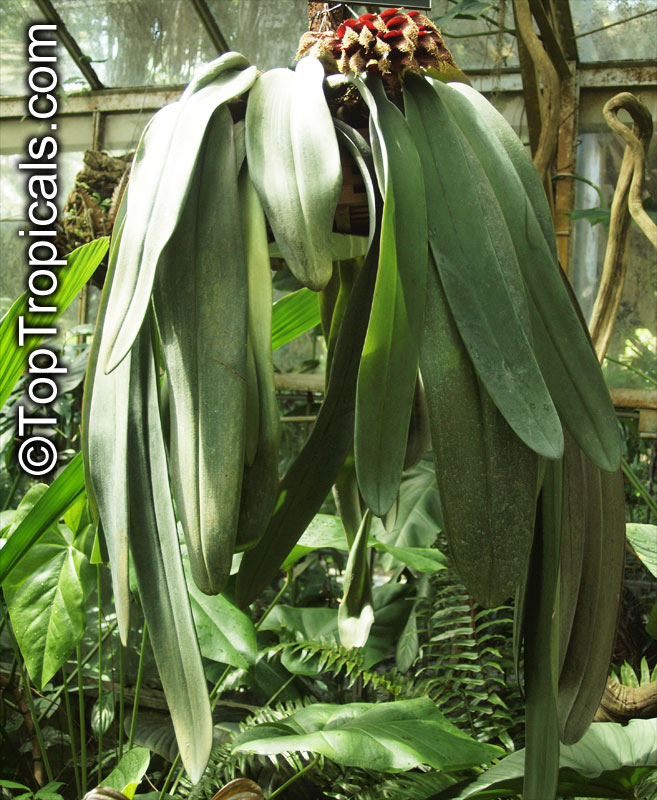
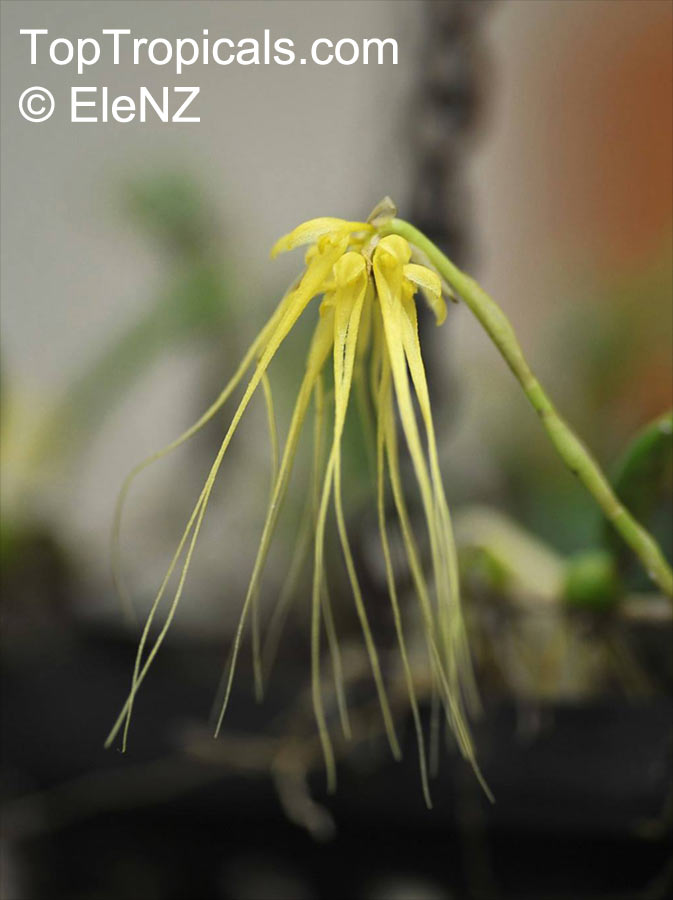
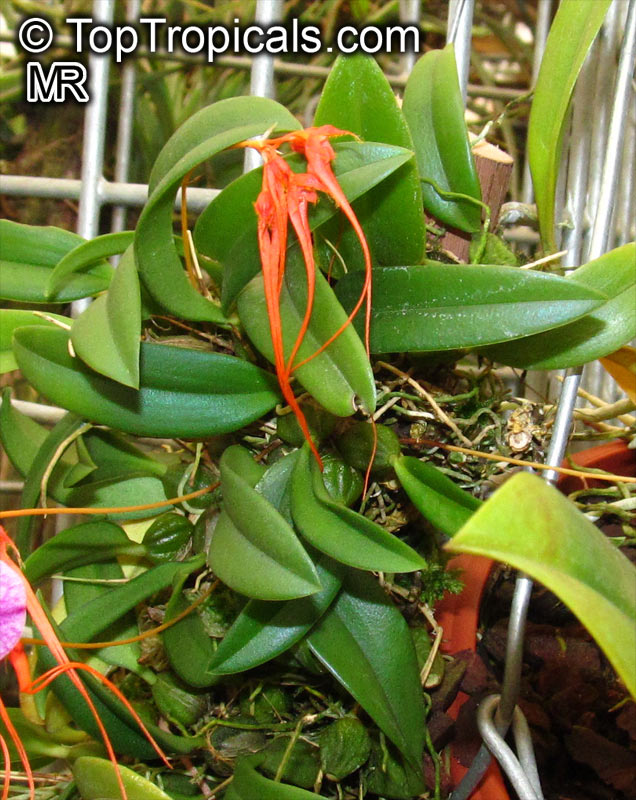
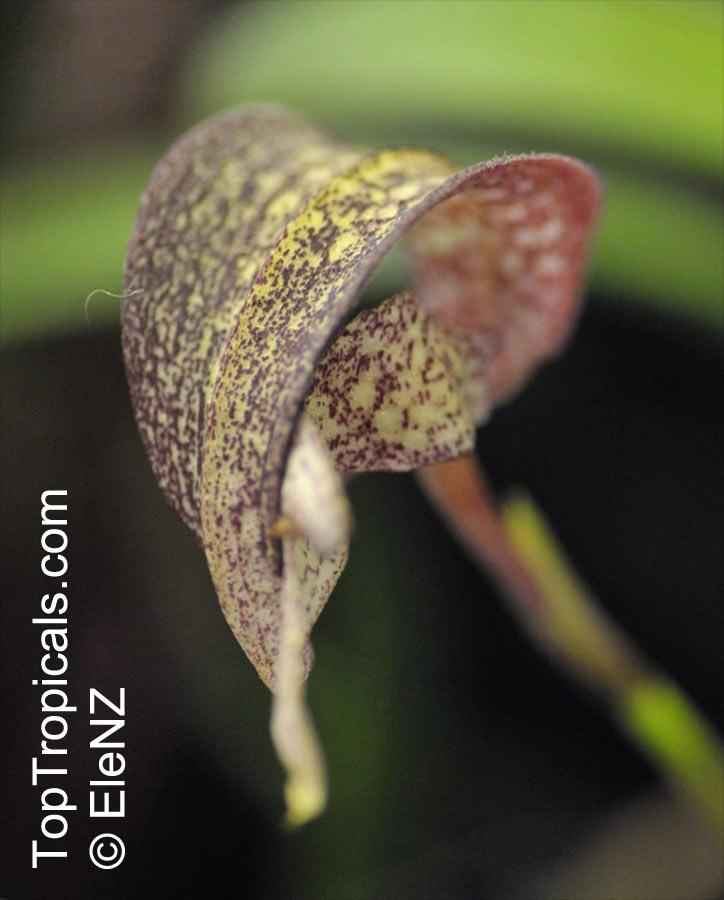
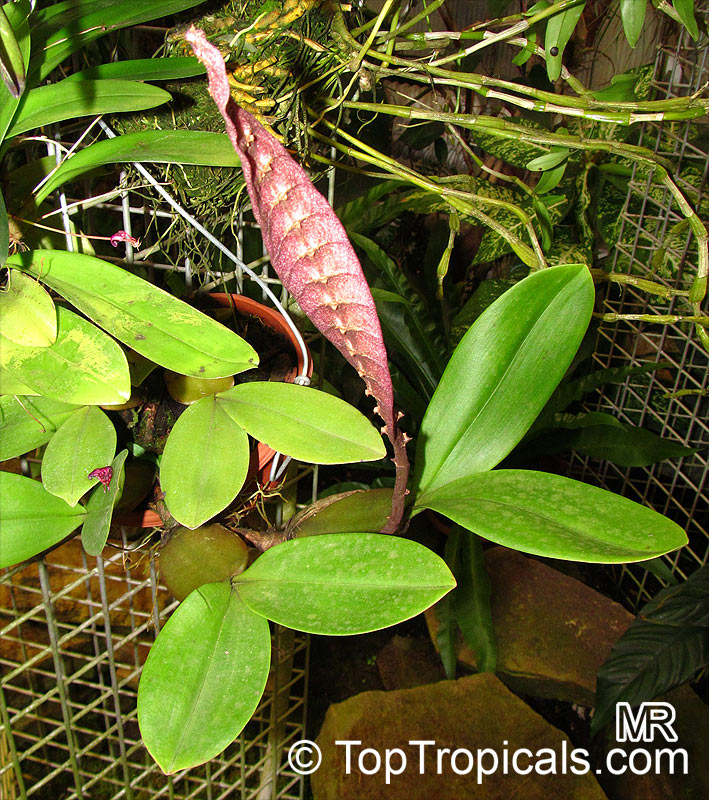
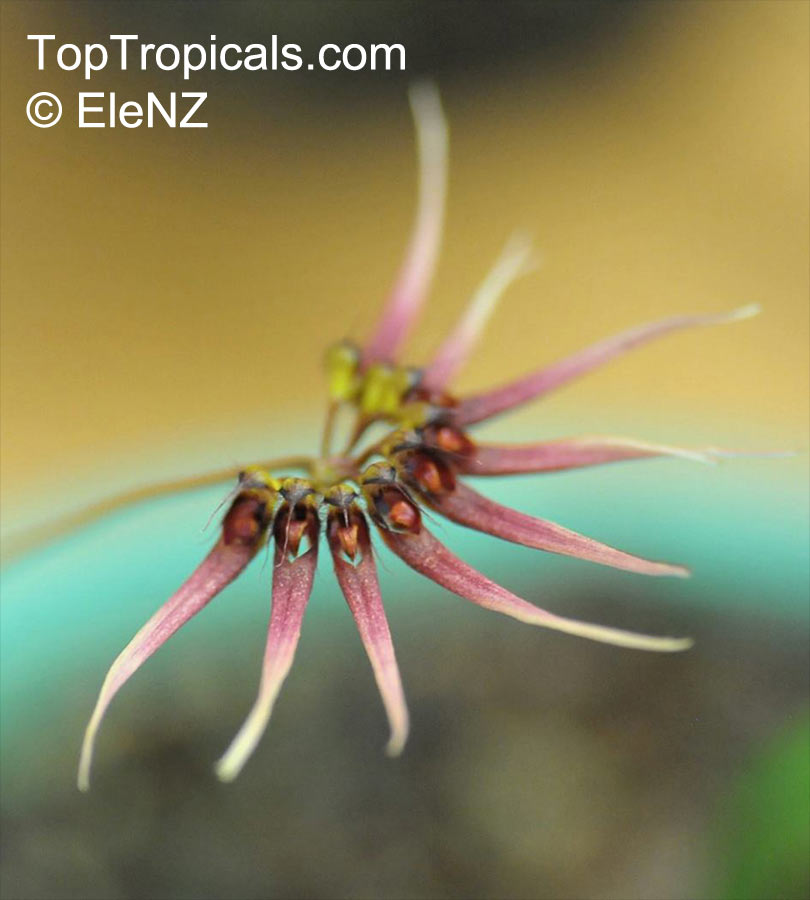
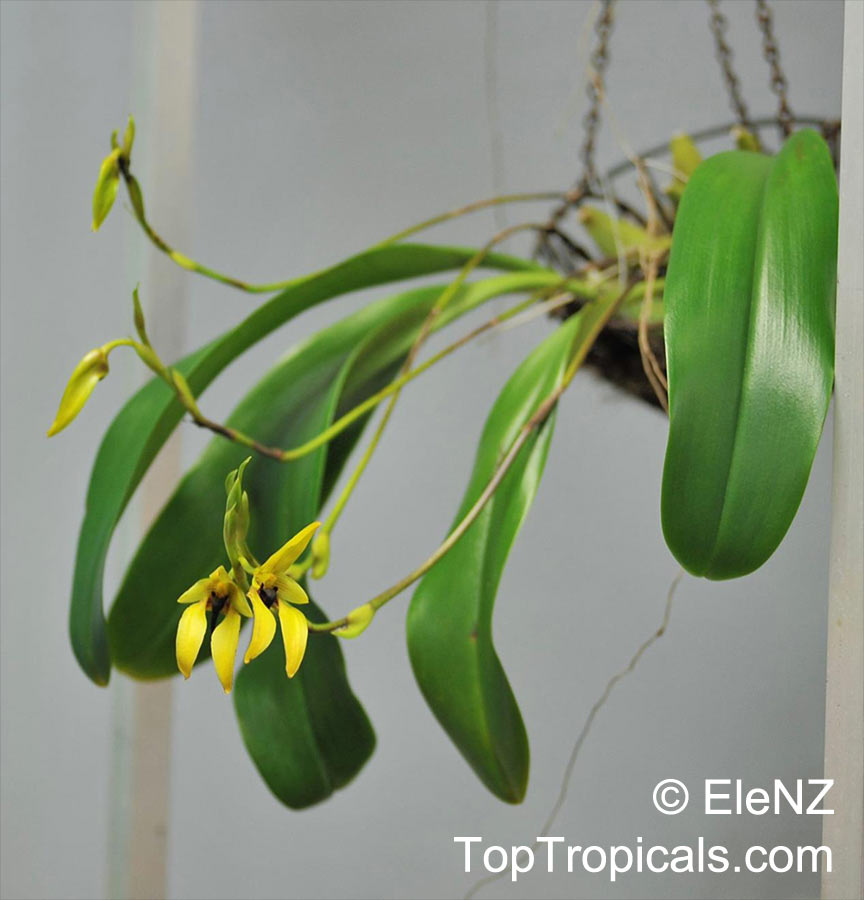
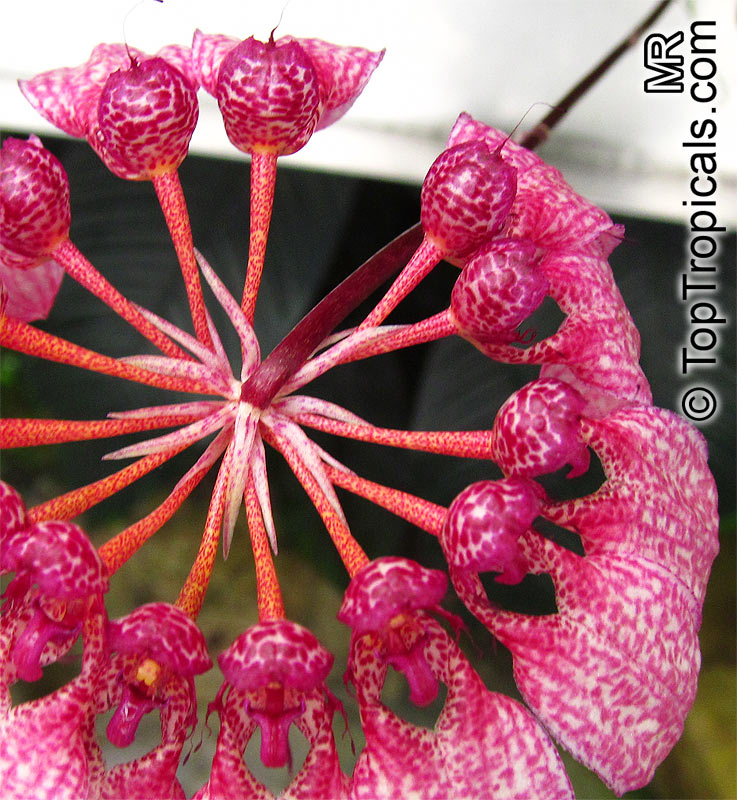
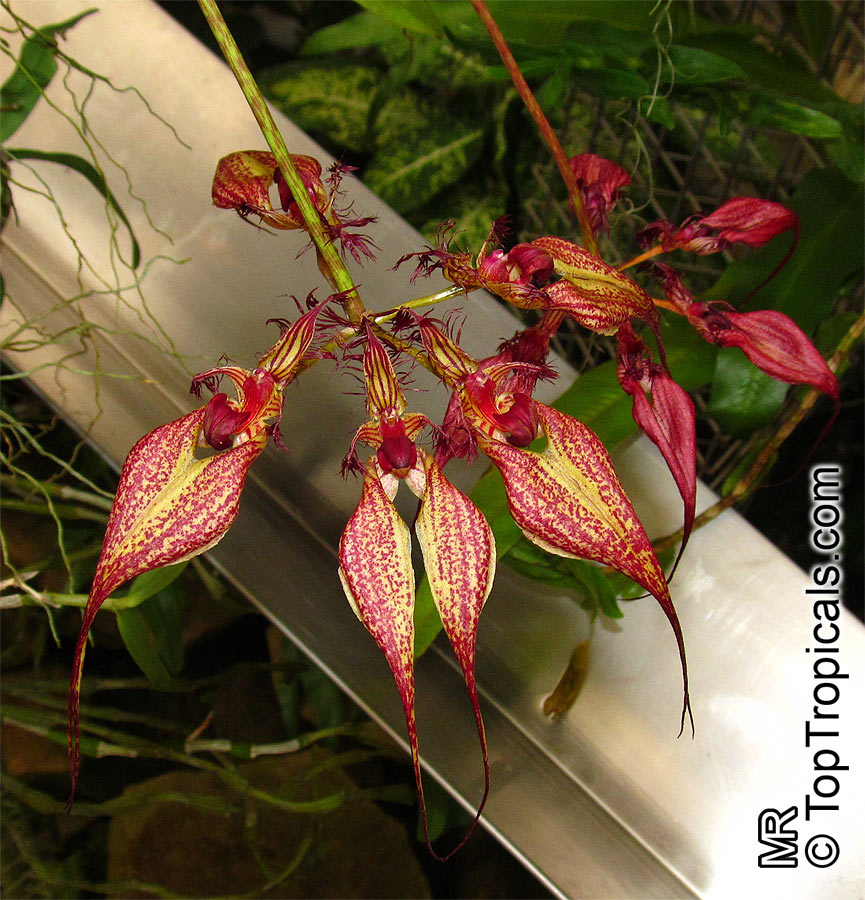
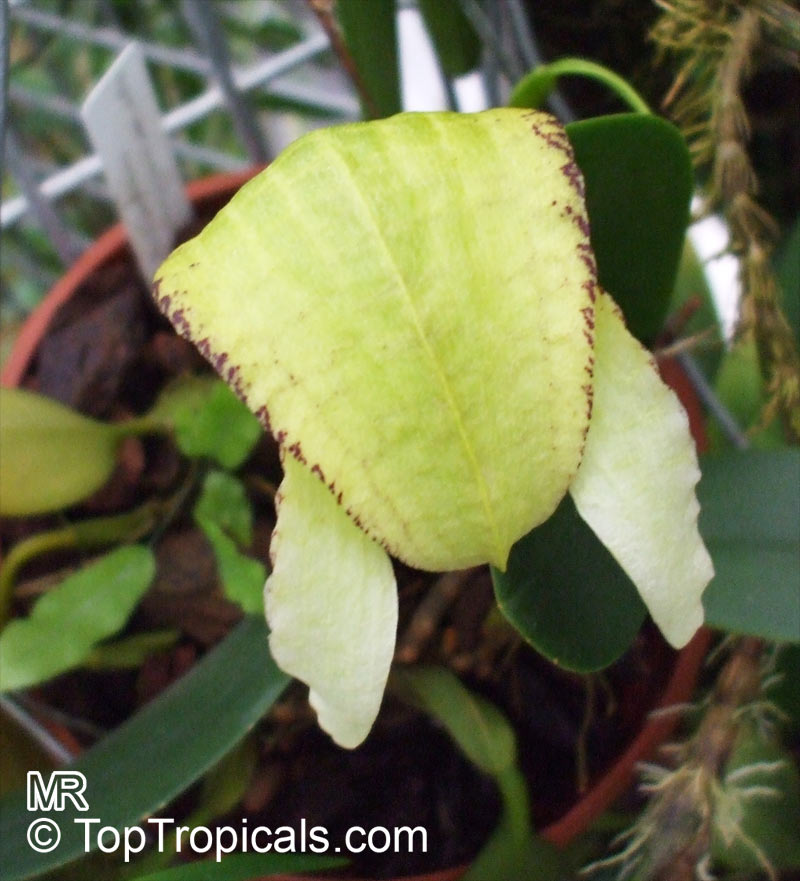
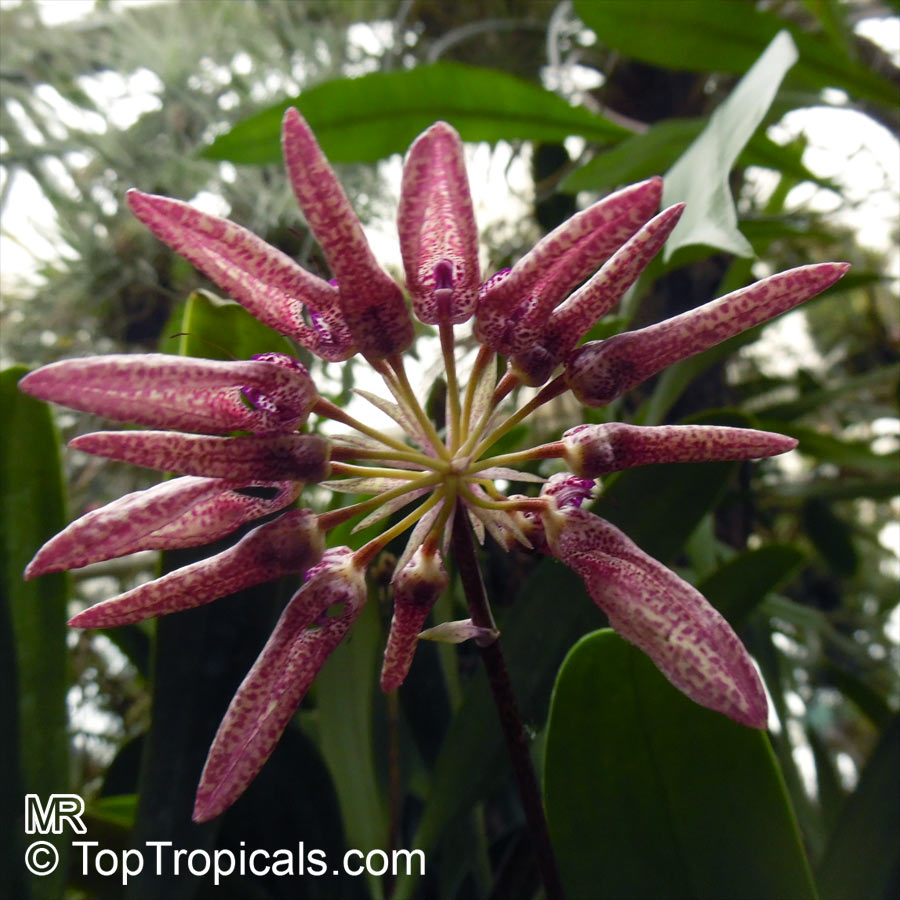
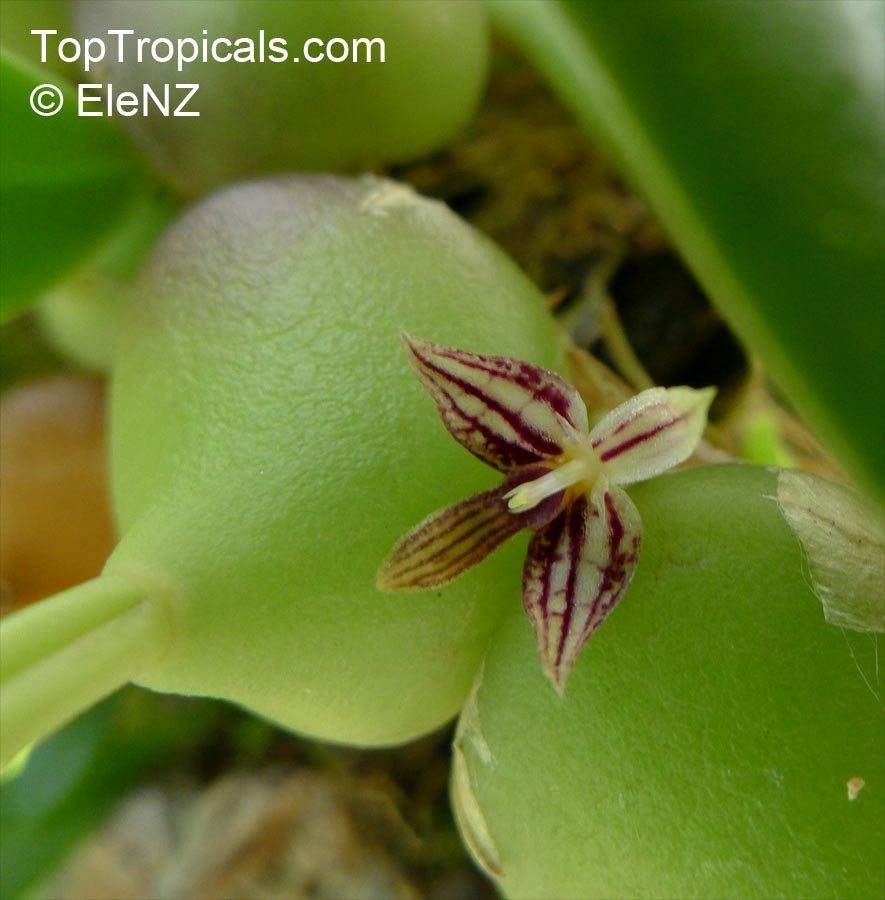
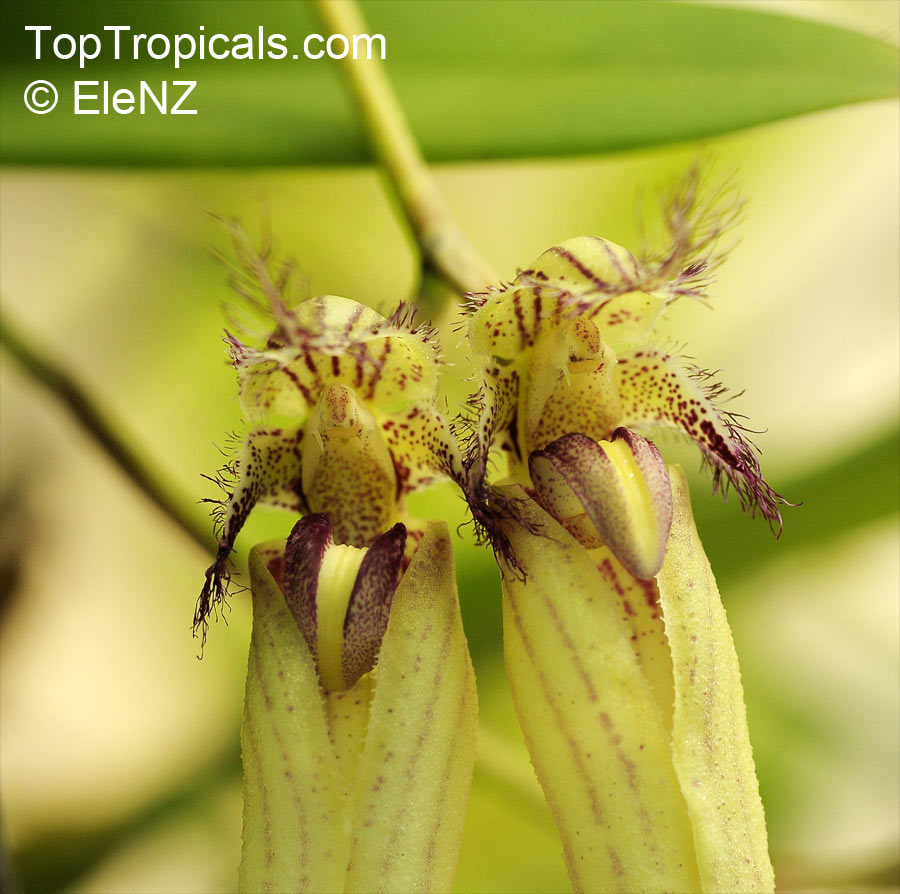
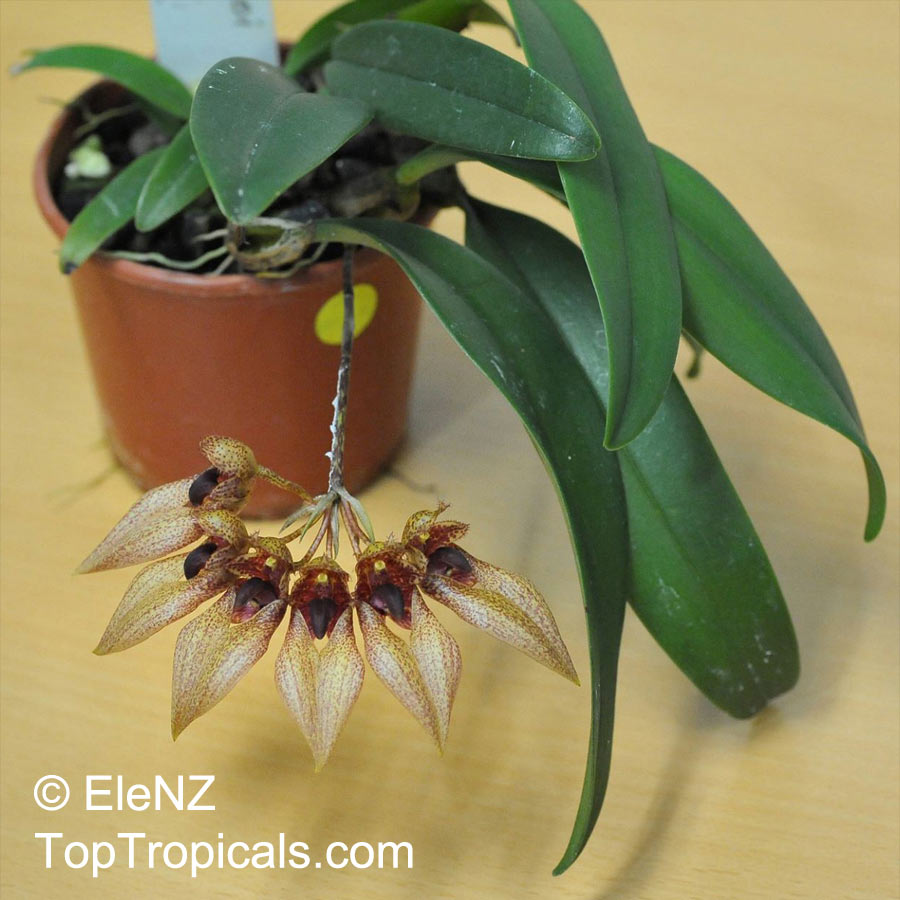
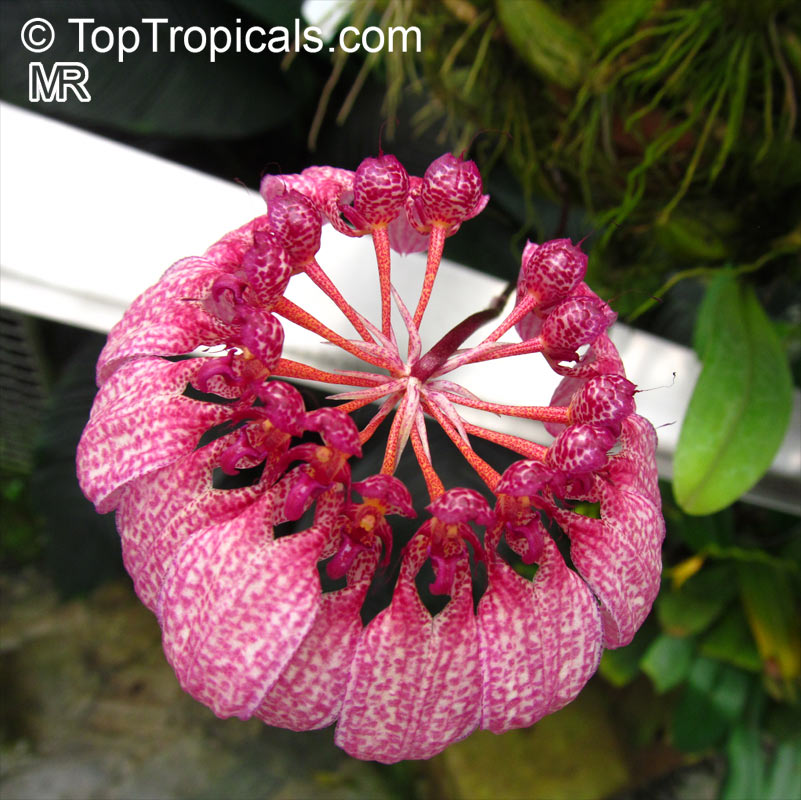
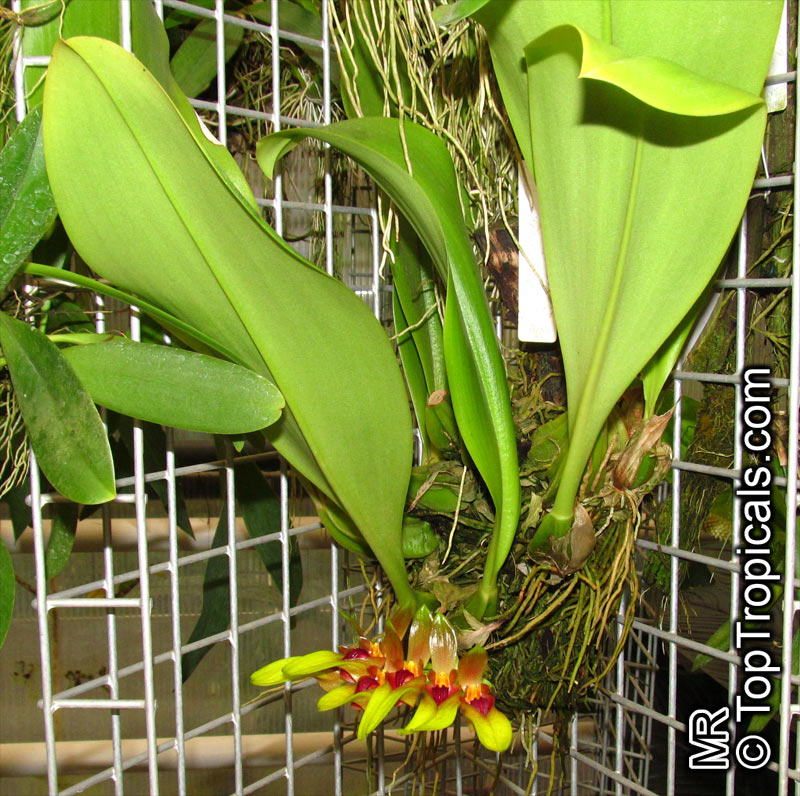
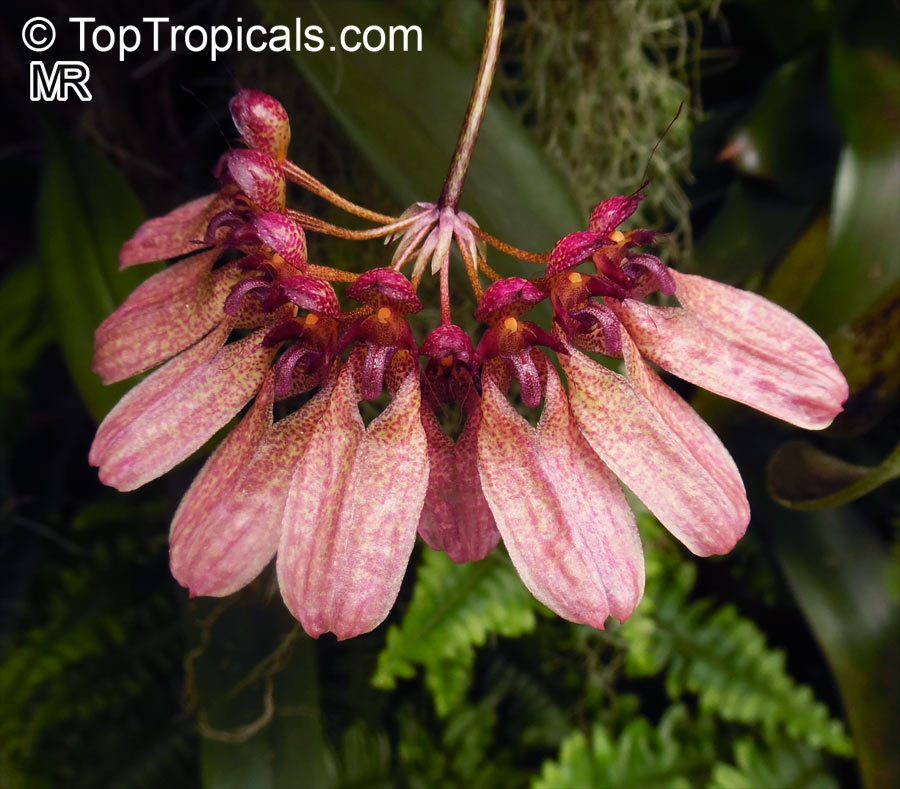
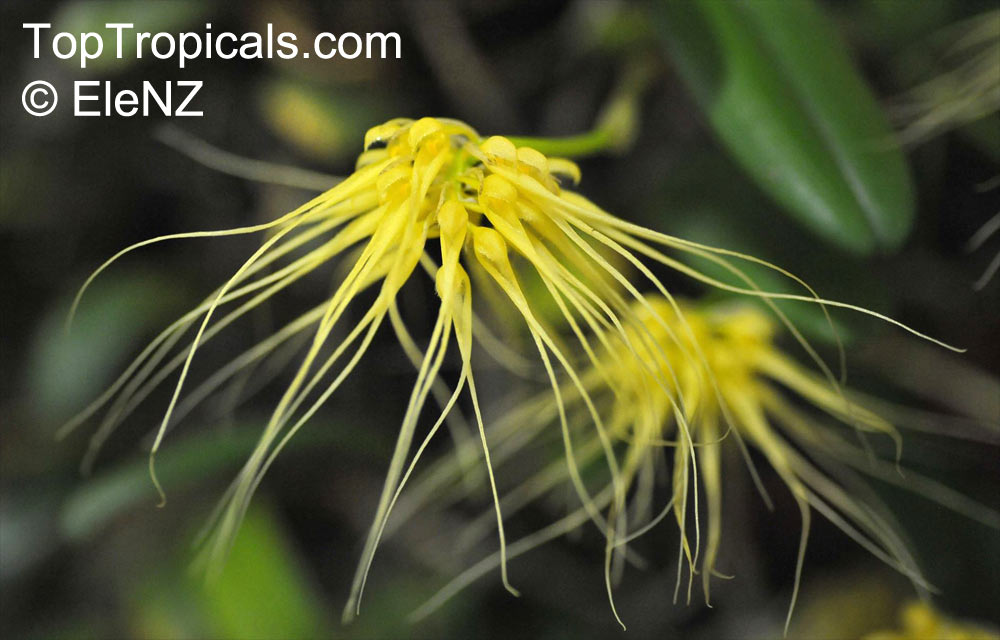
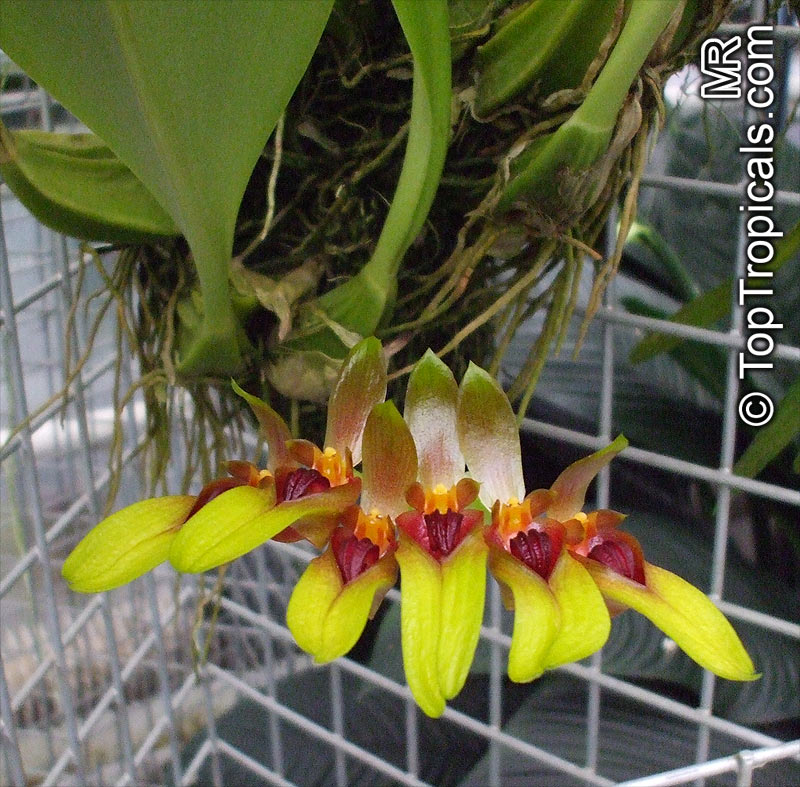
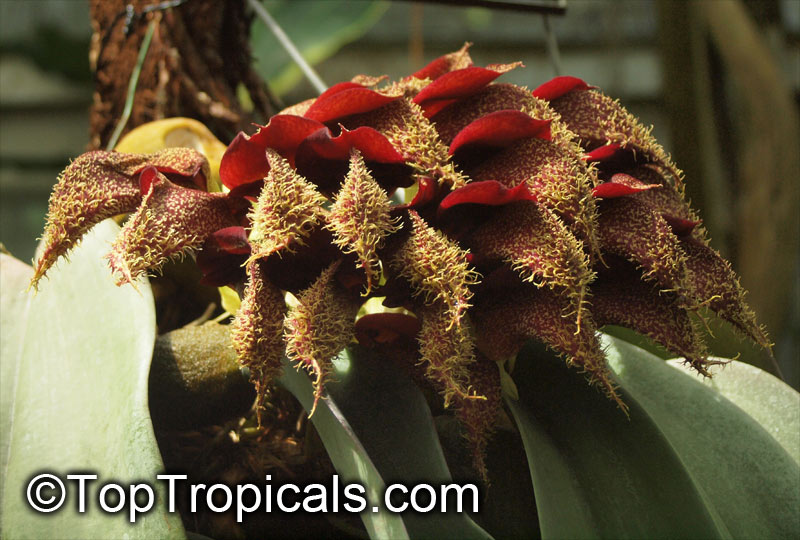
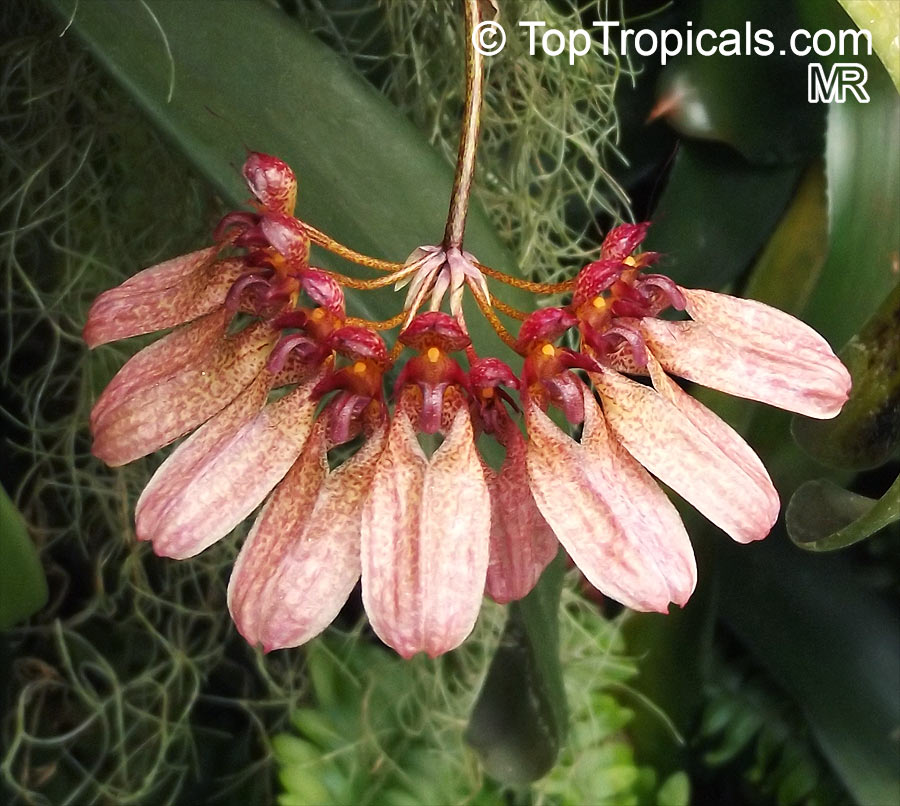
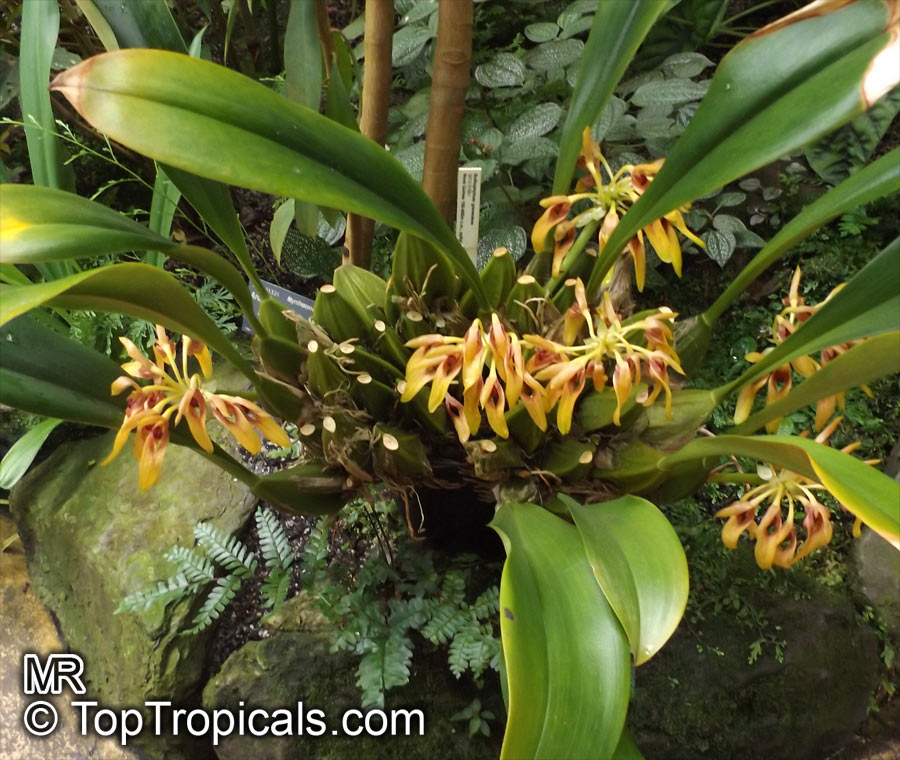
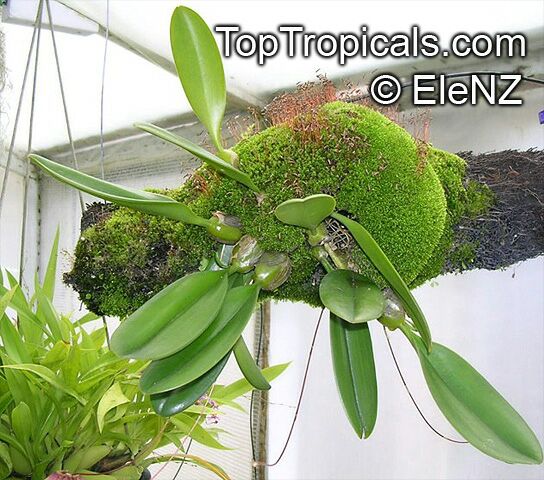
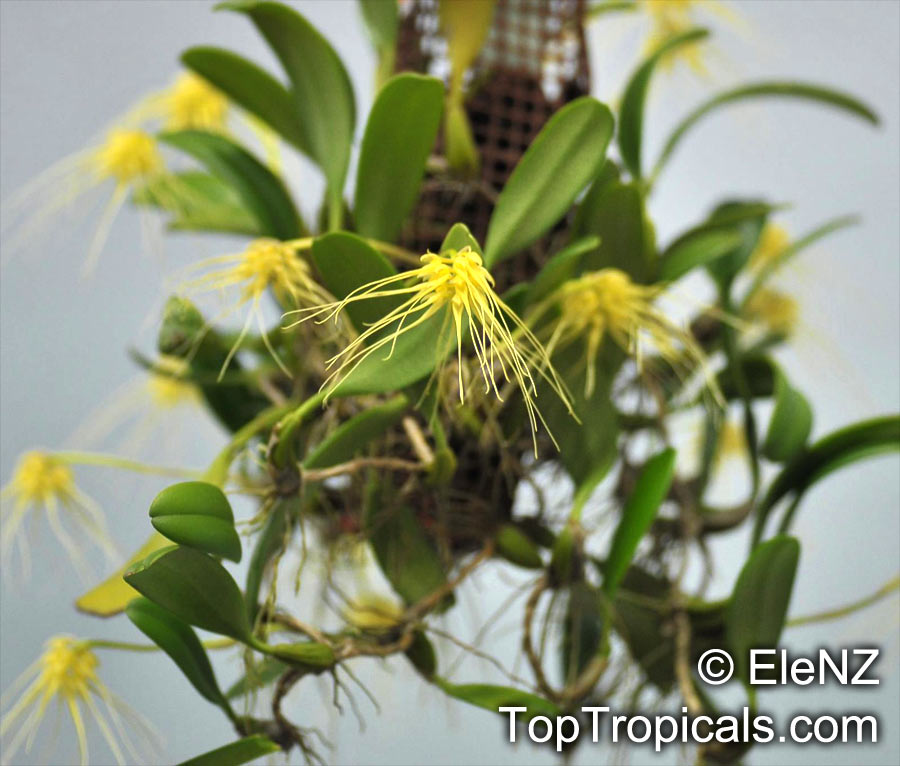
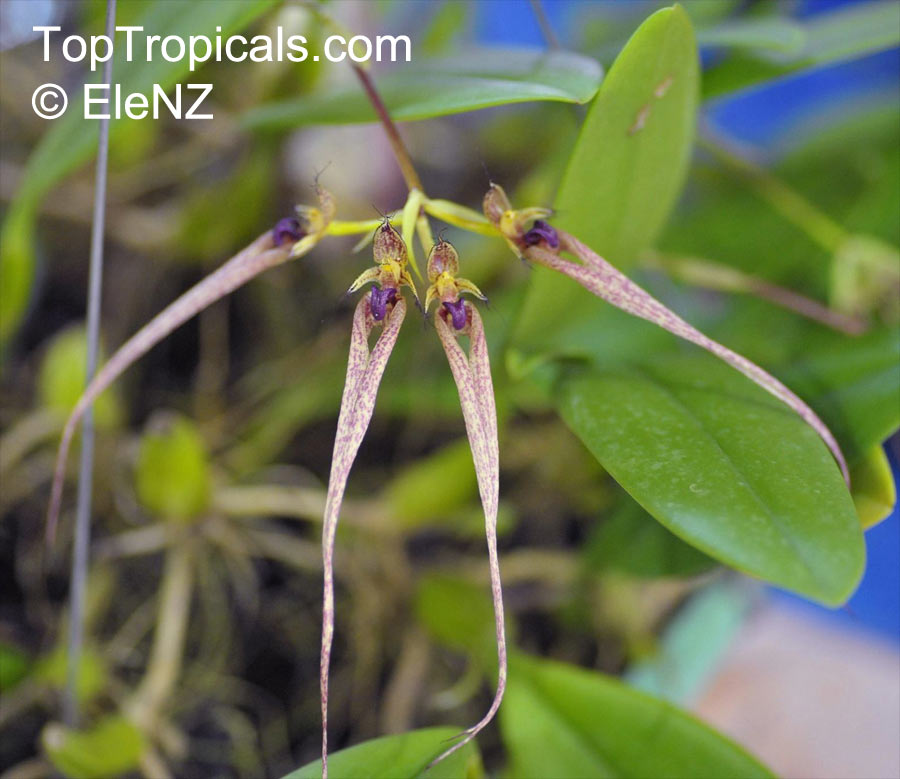
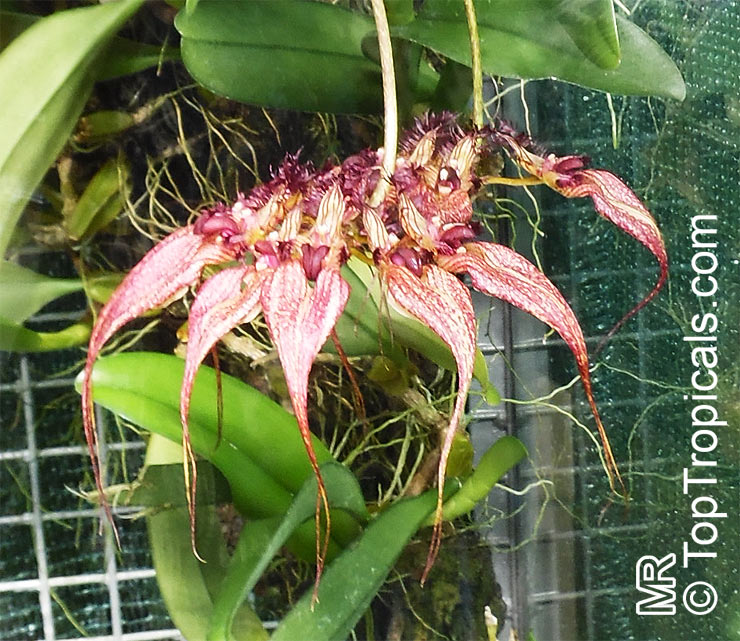
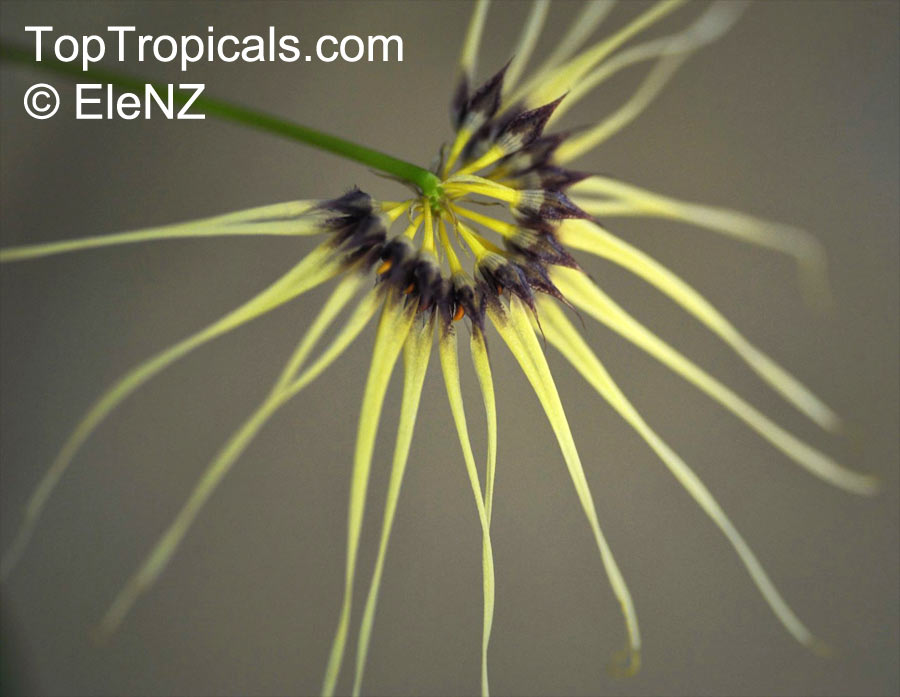
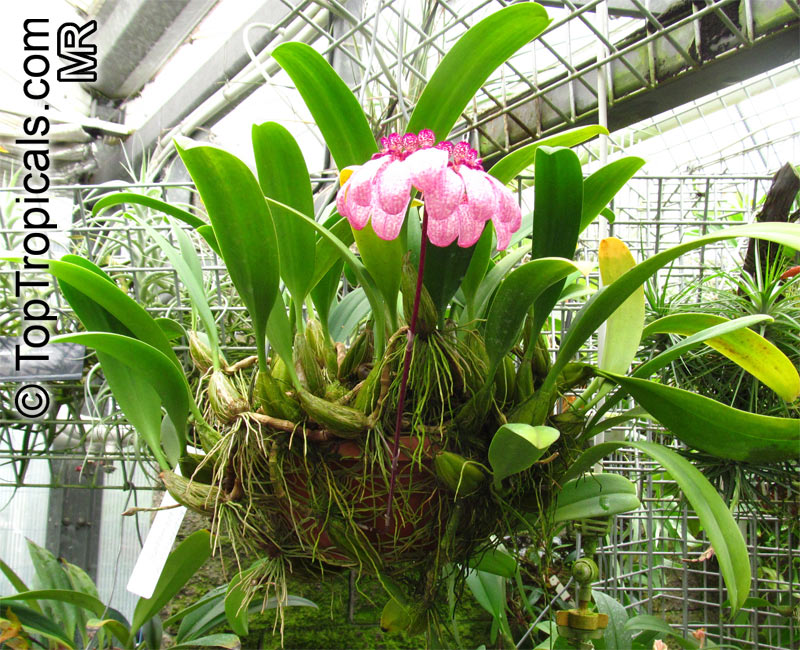
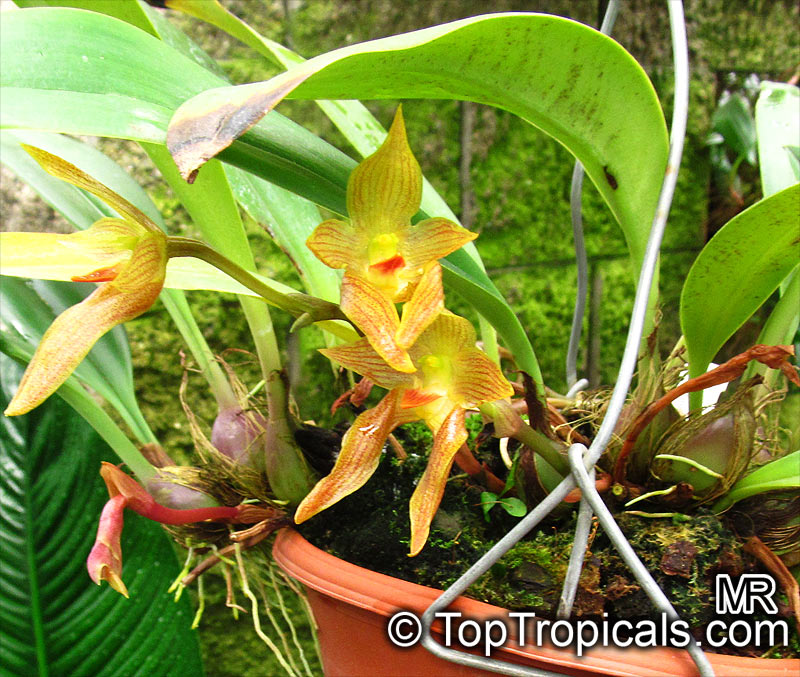
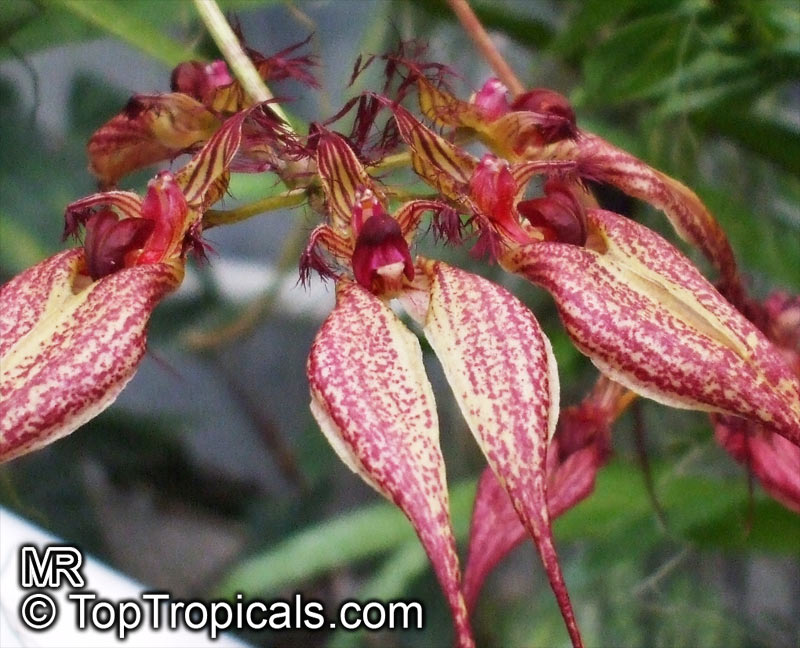
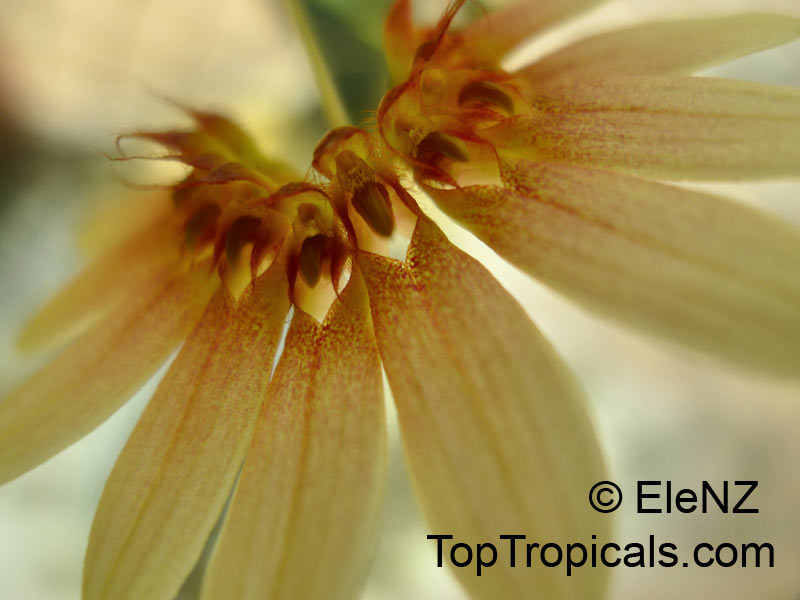
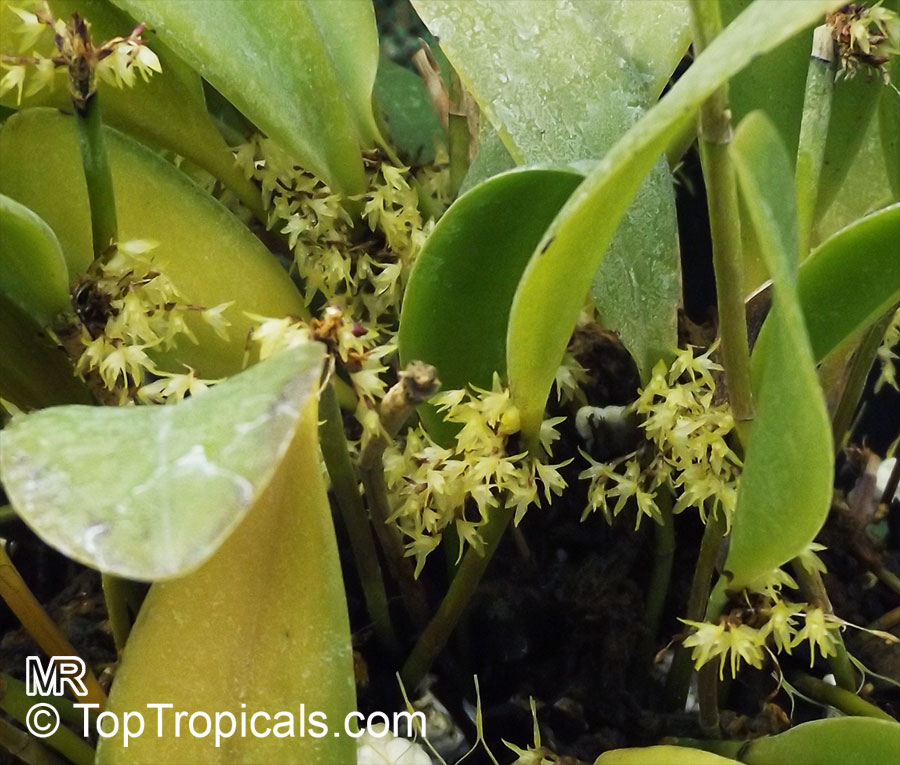
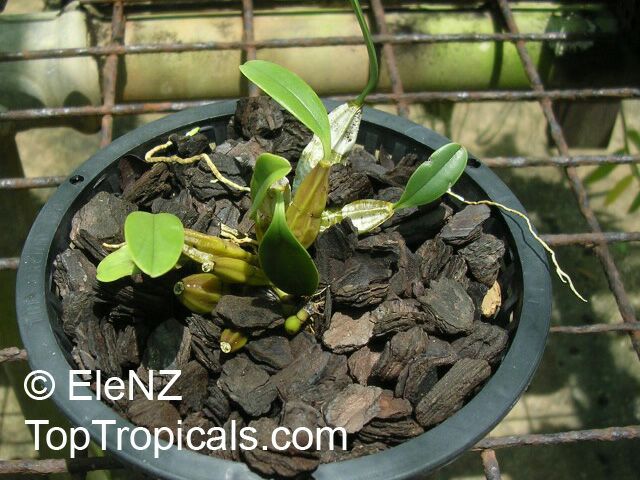
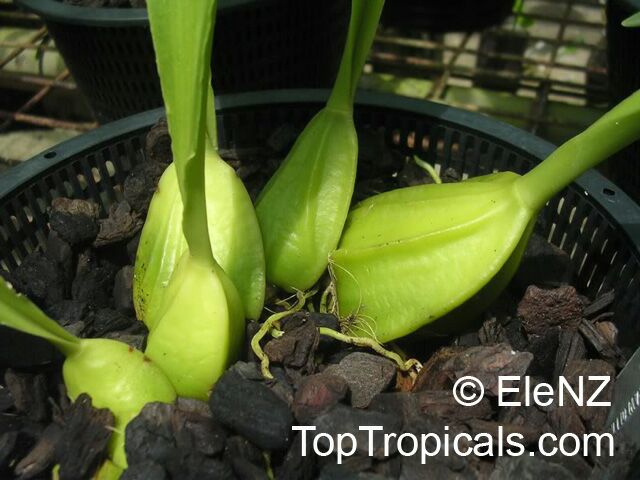
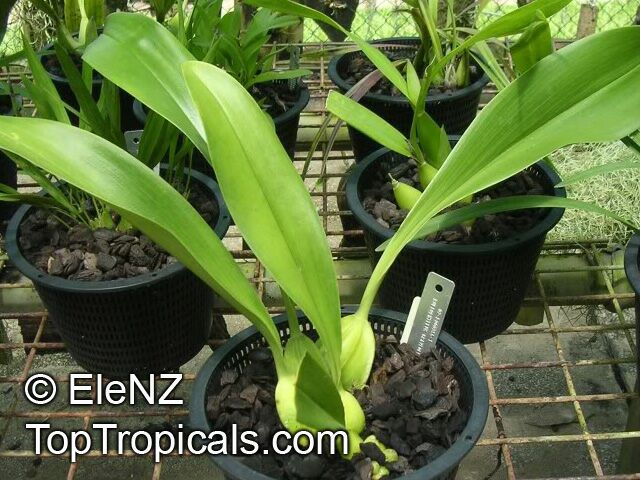
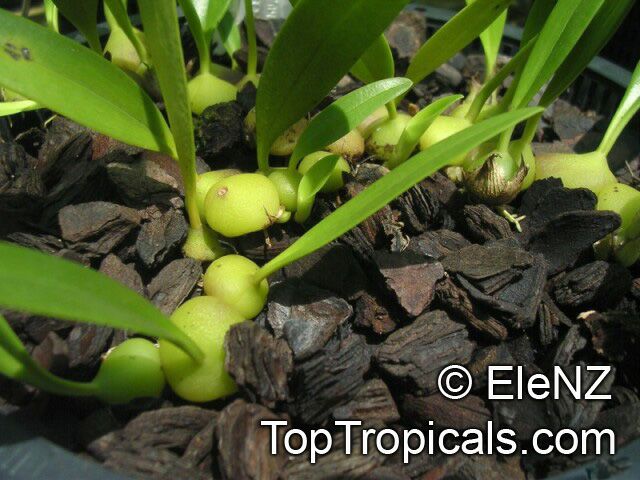
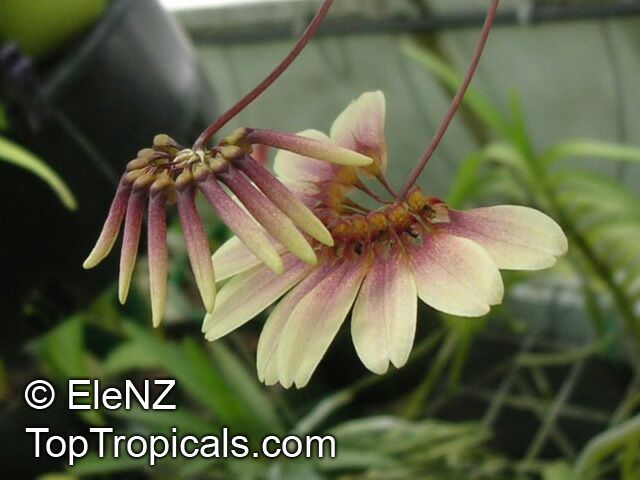
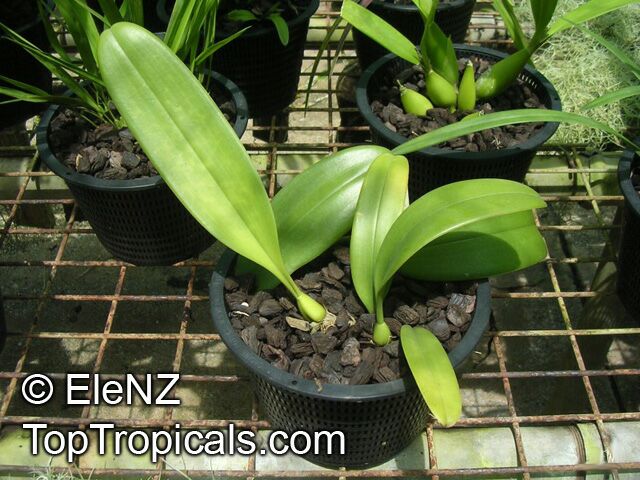
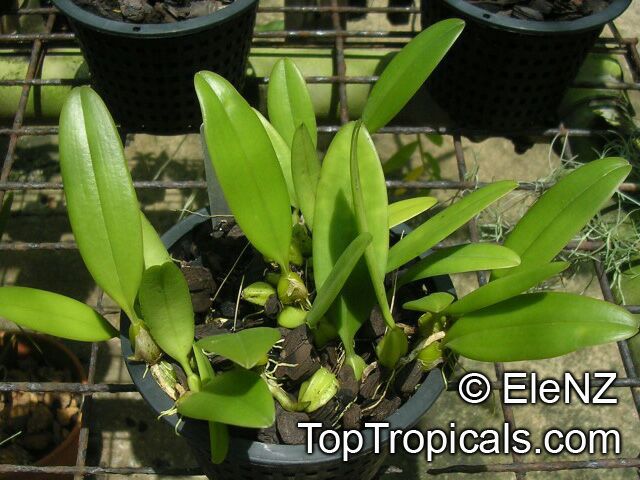
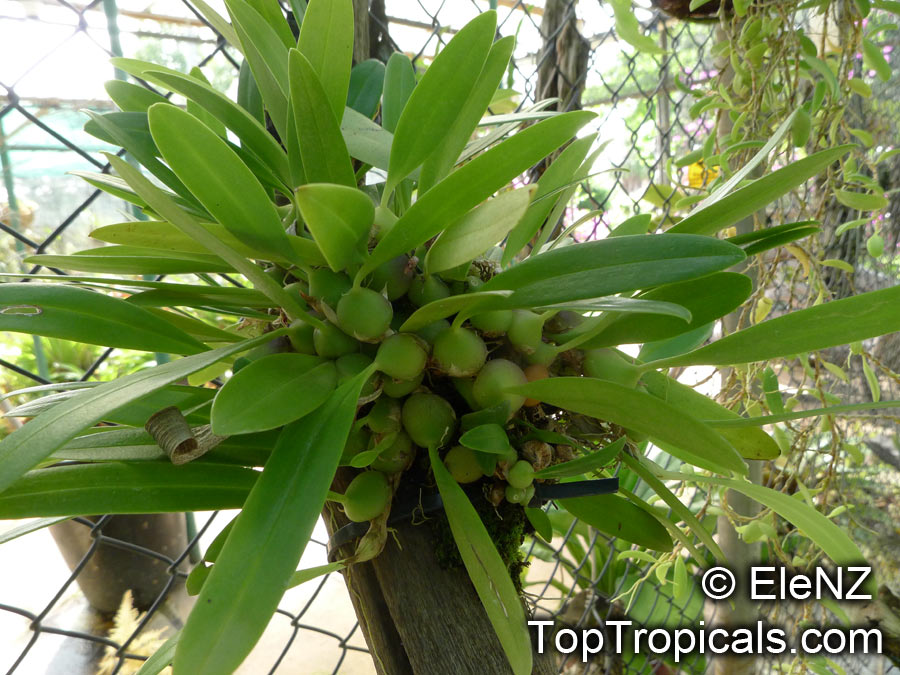
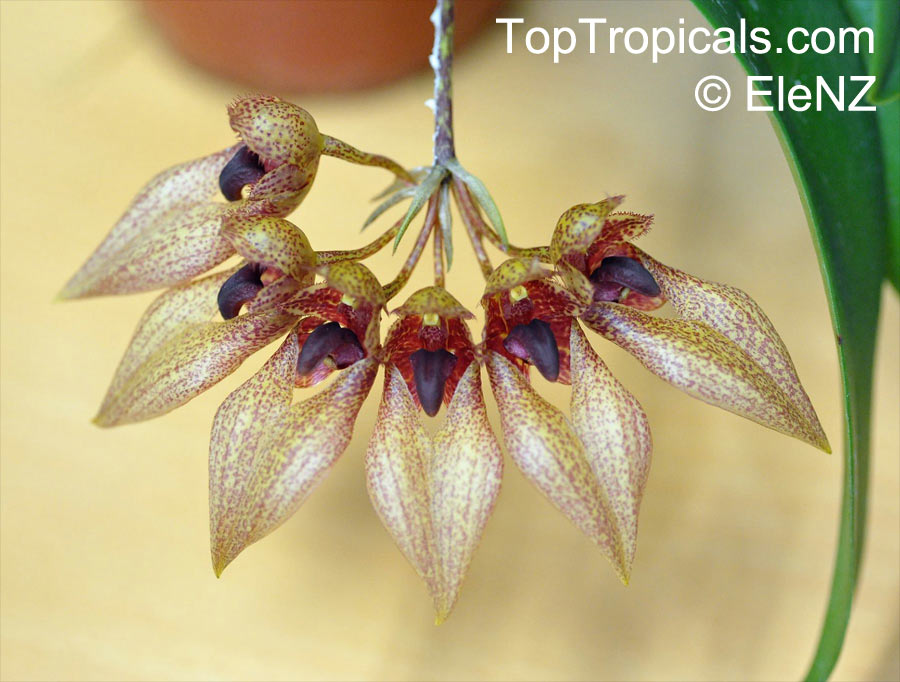
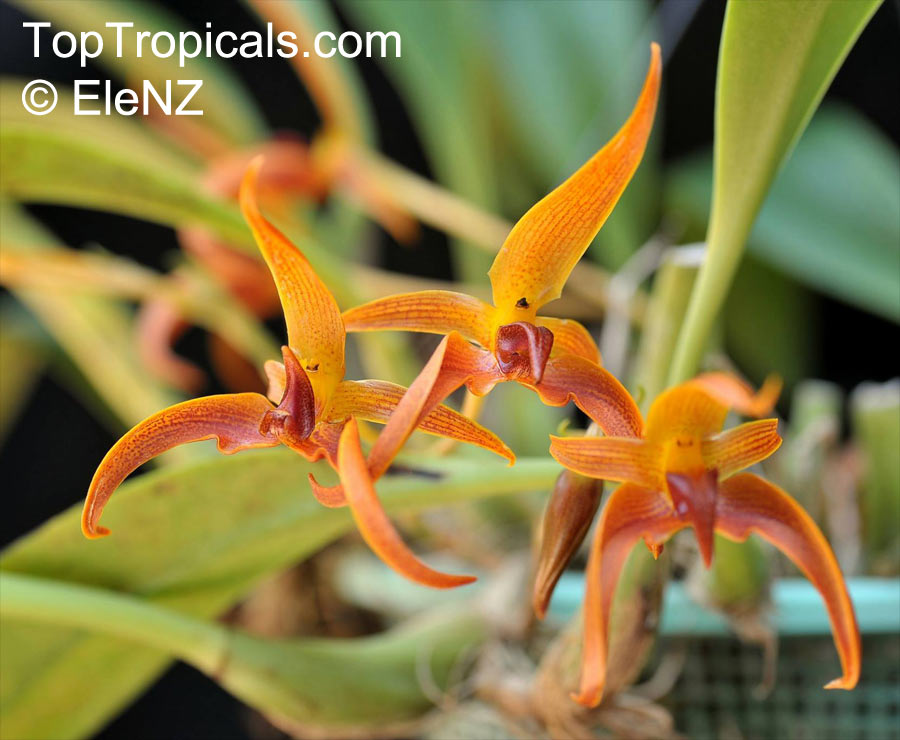
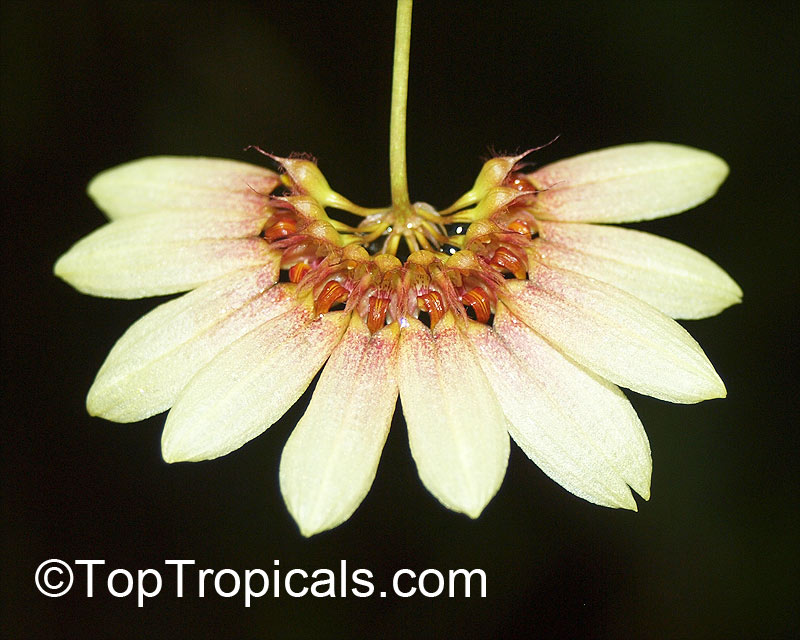
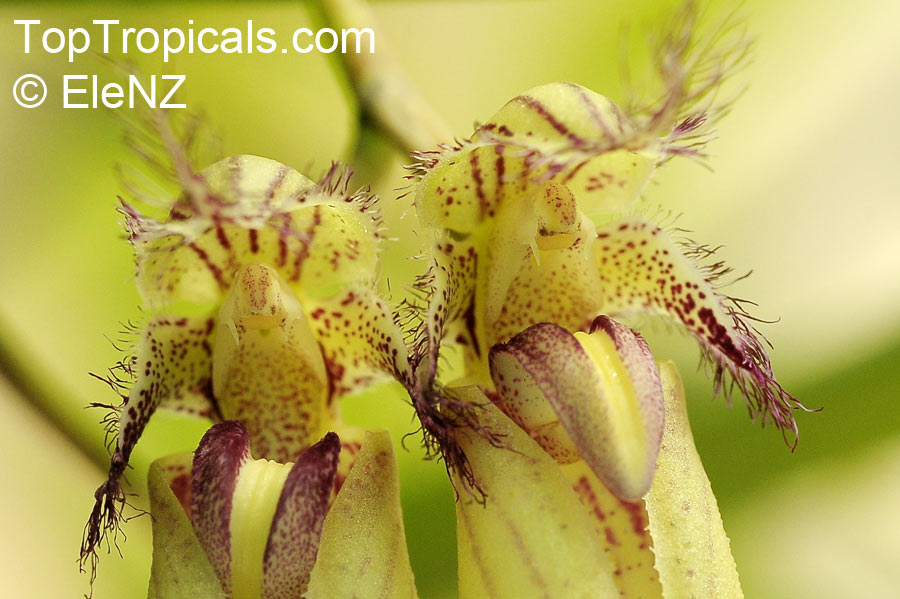
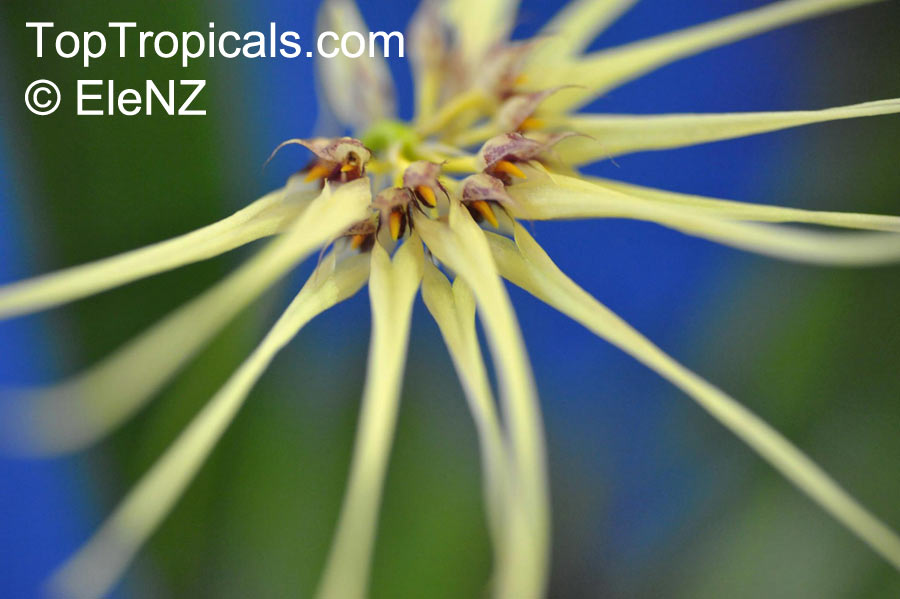
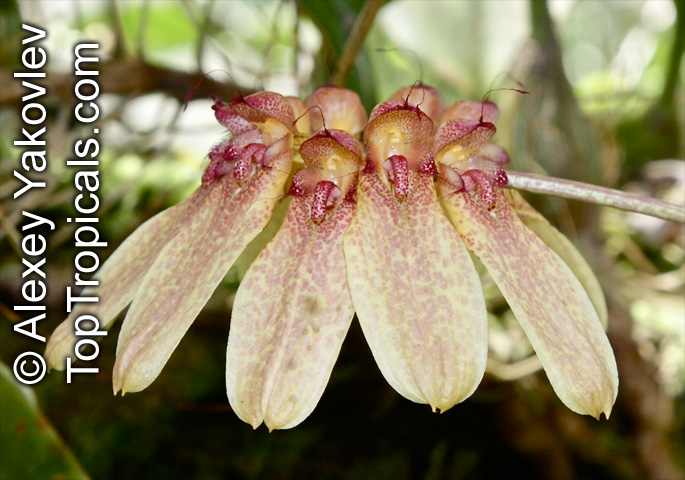
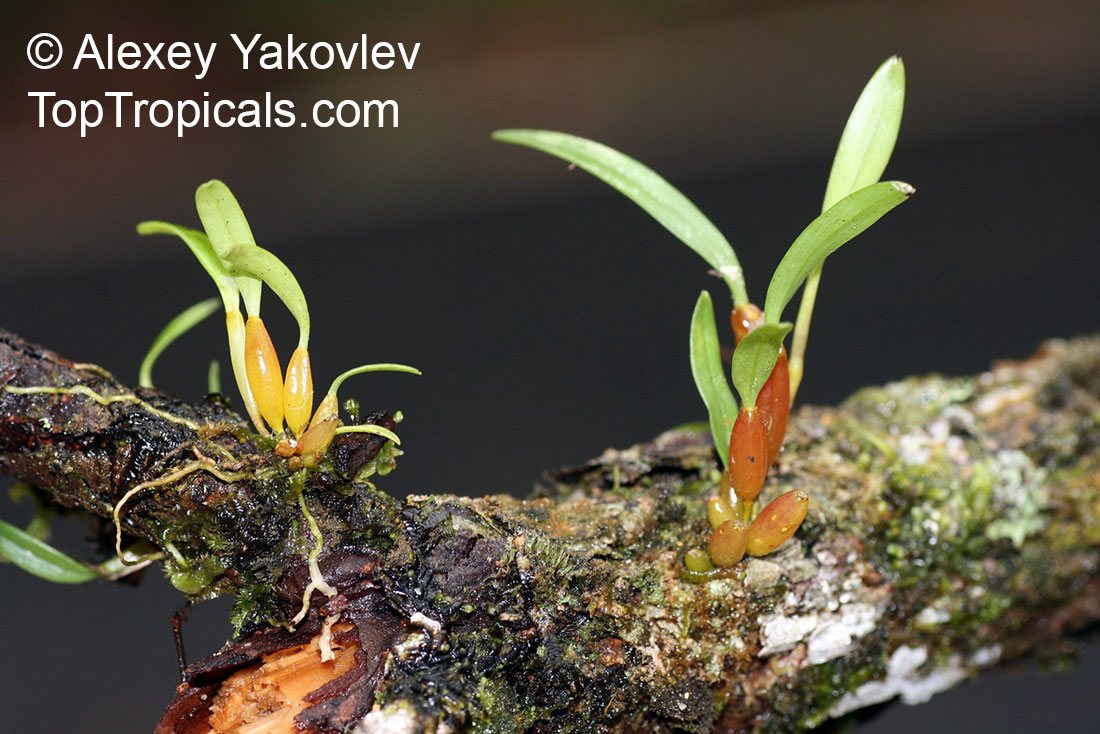
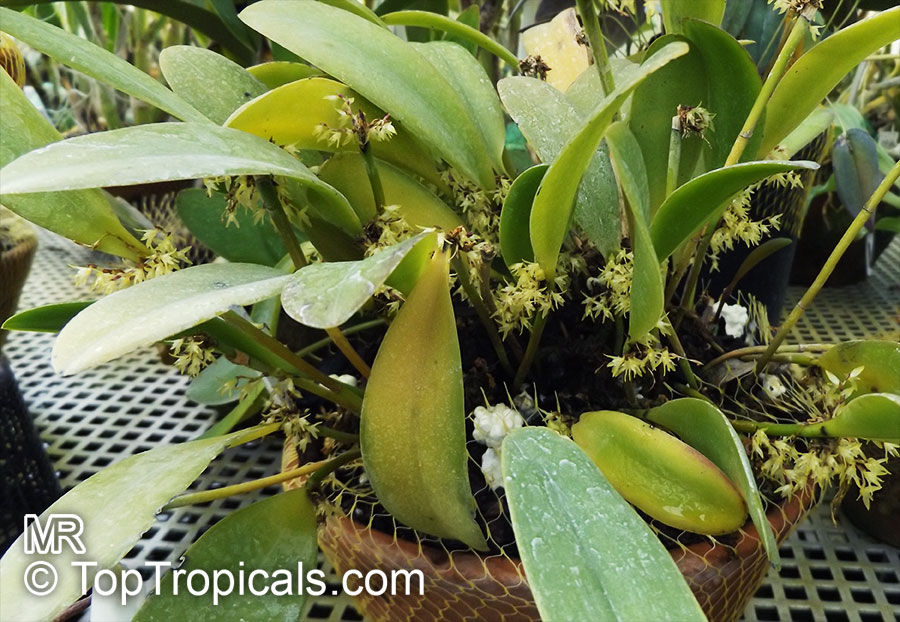
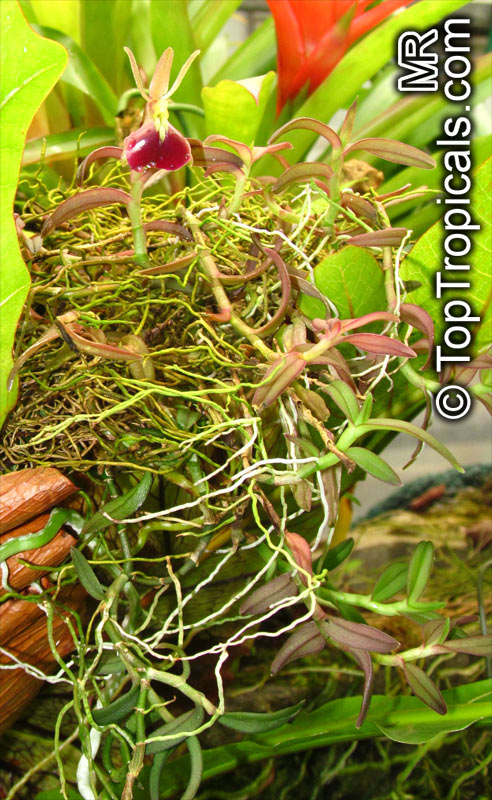
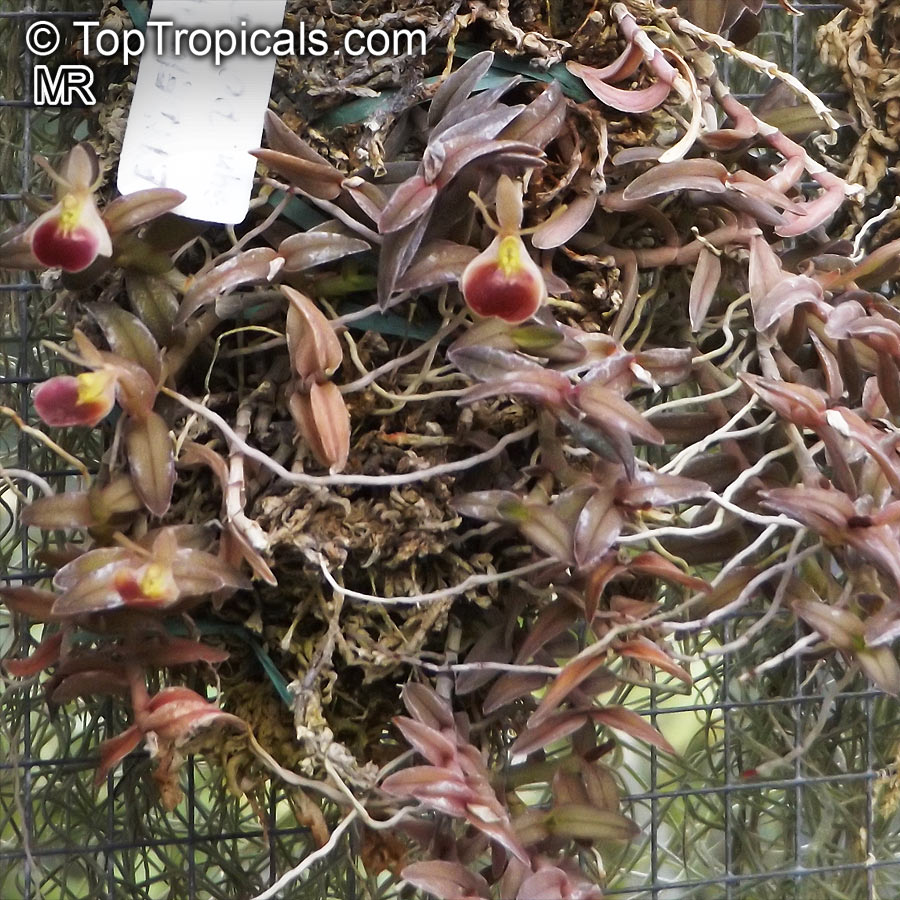
Botanical name: Bulbophyllum sp.
Common name: Bulbophyllum
Family: Orchidaceae
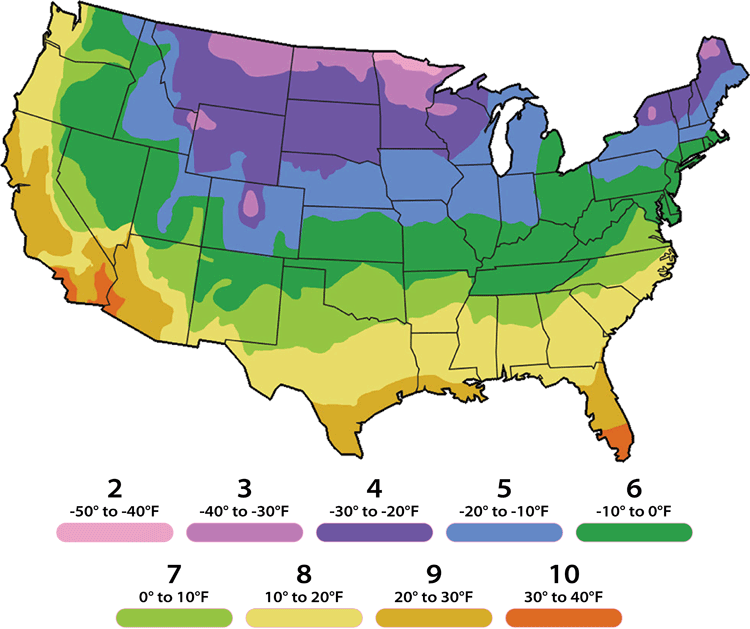
USDA Zone: 9-10


Bulbophyllum is the largest genus in the Orchidaceae.
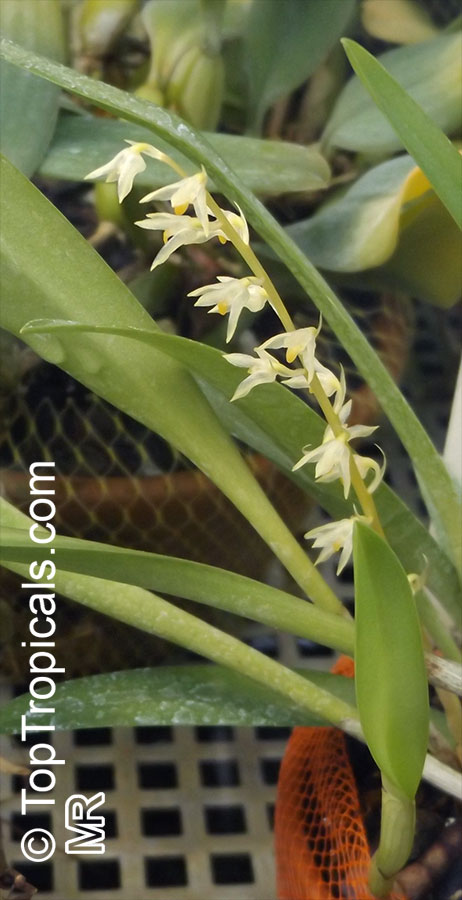
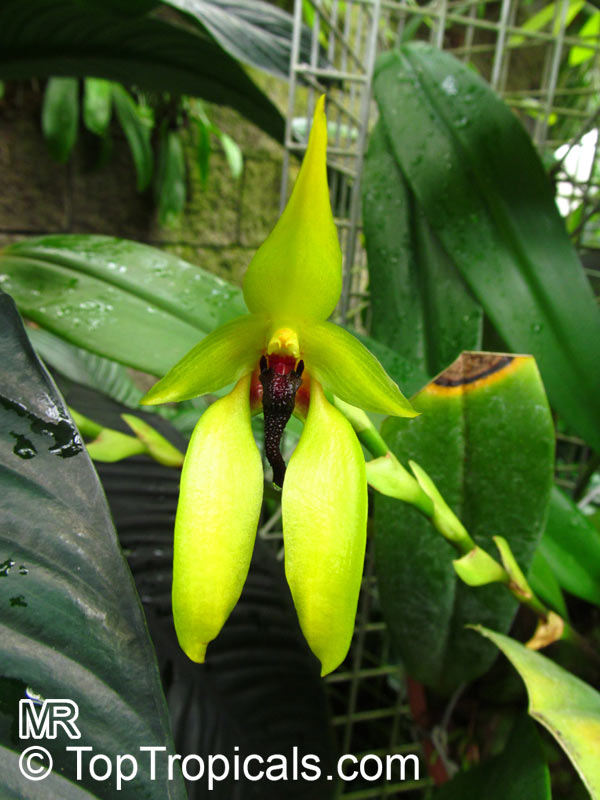


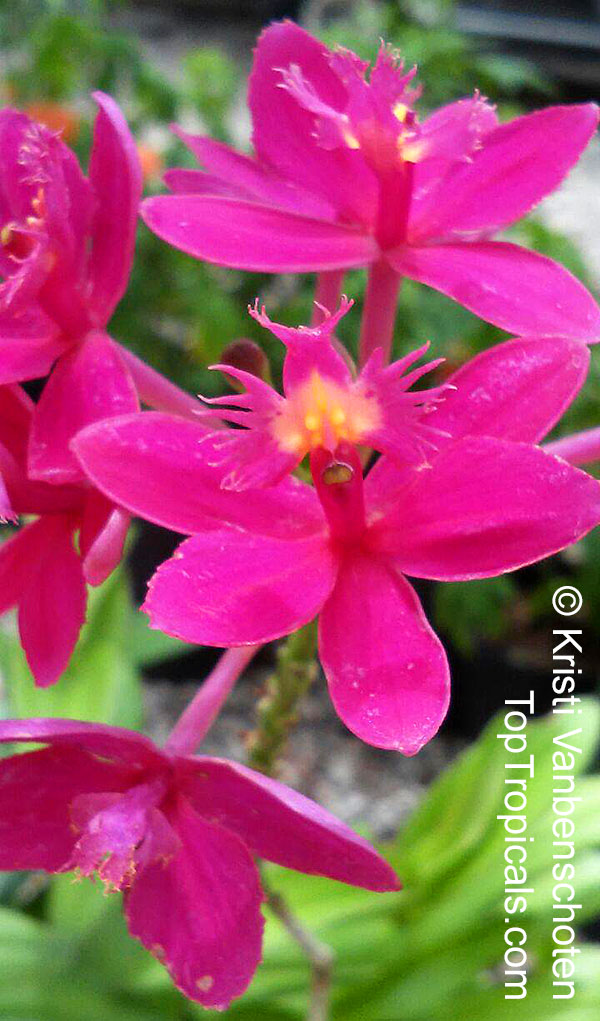
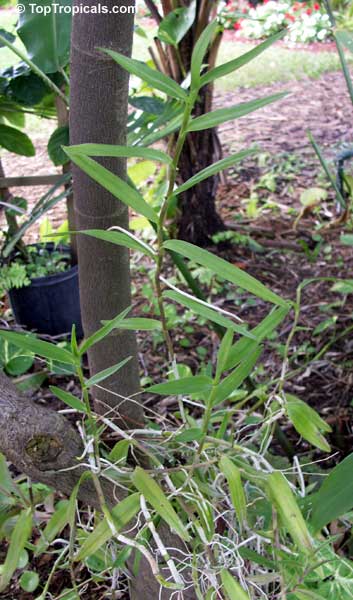
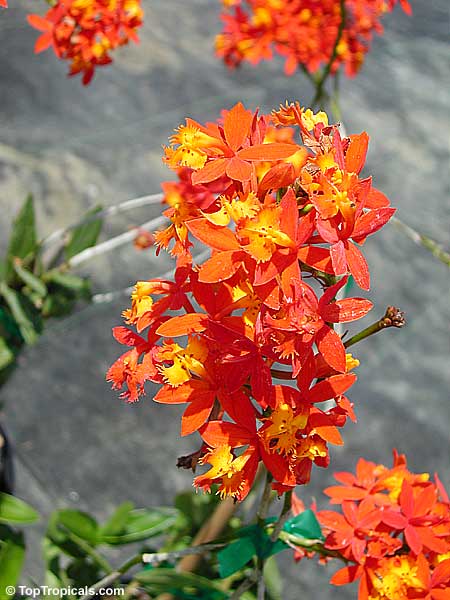
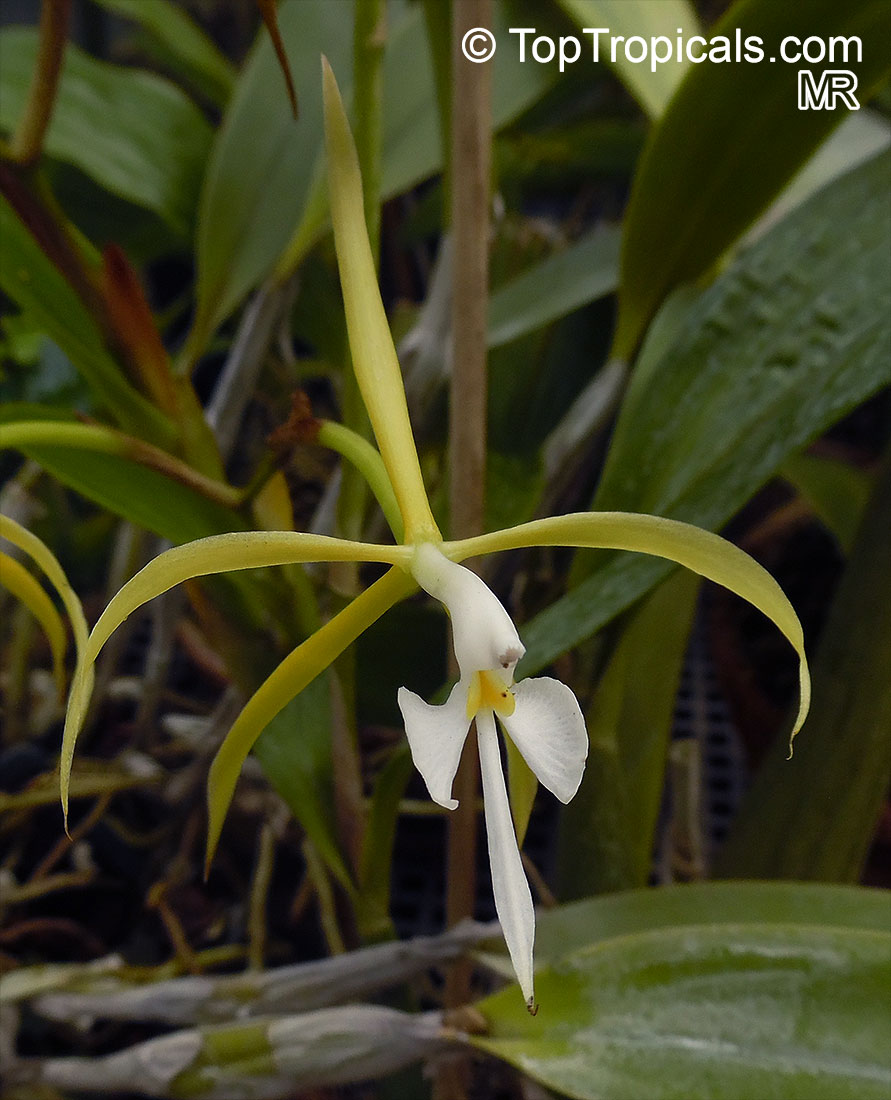
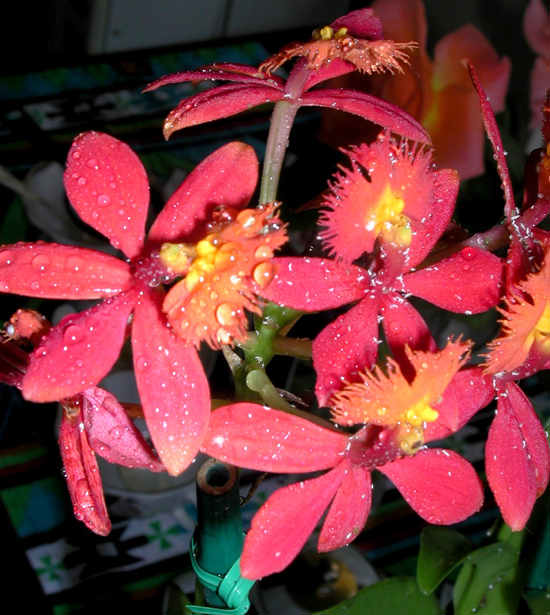
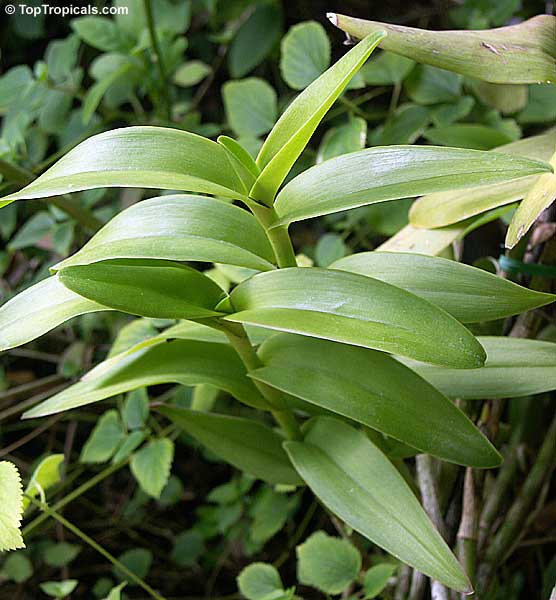
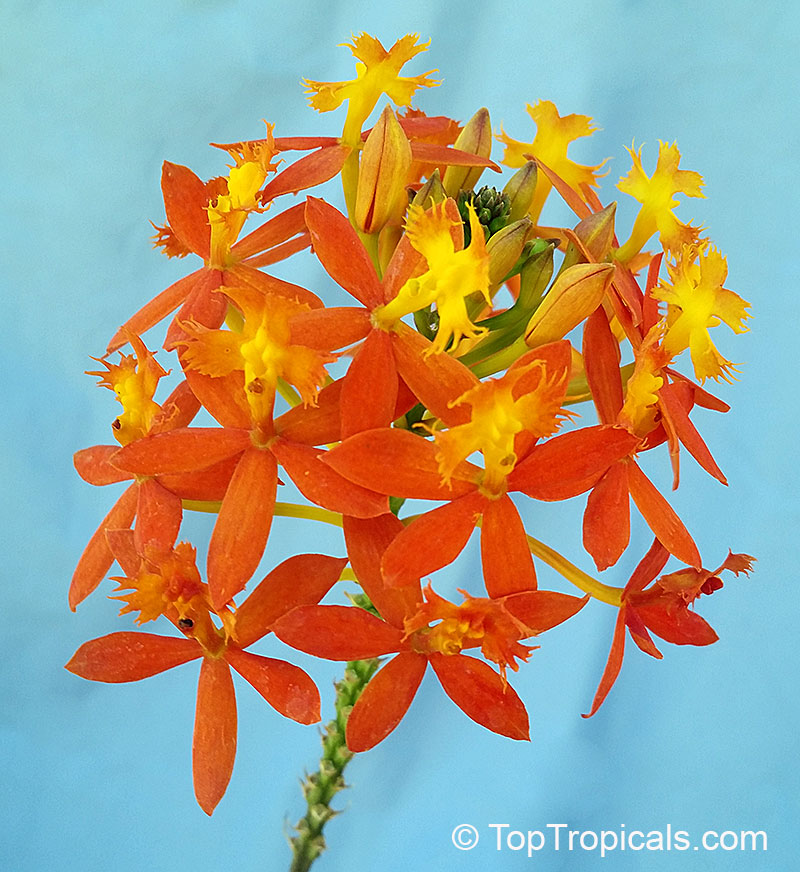
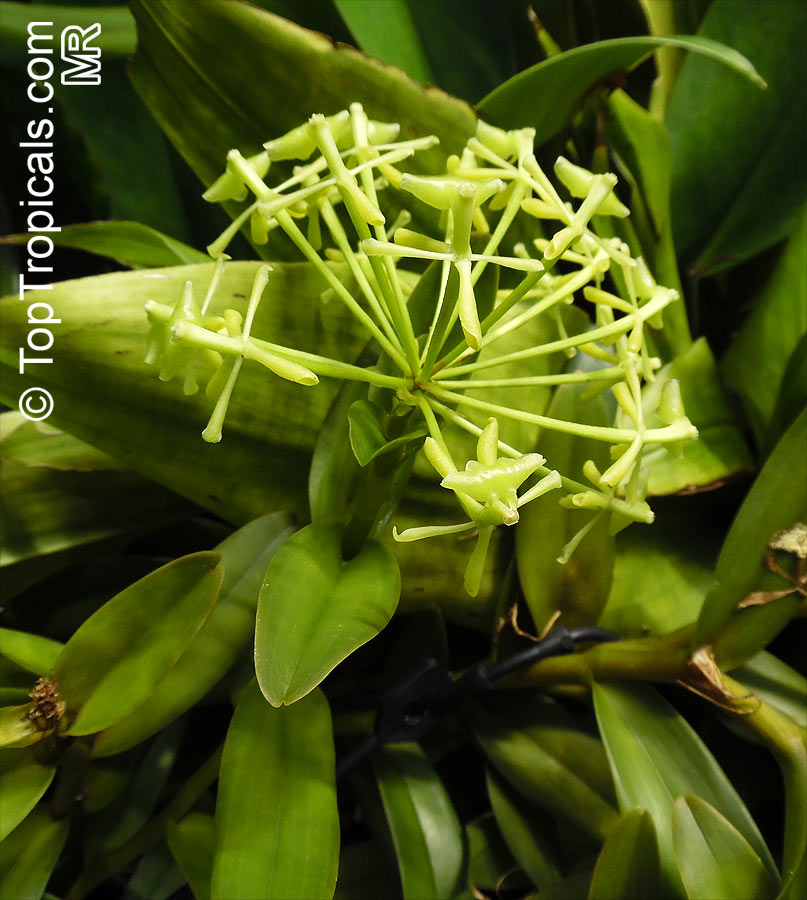
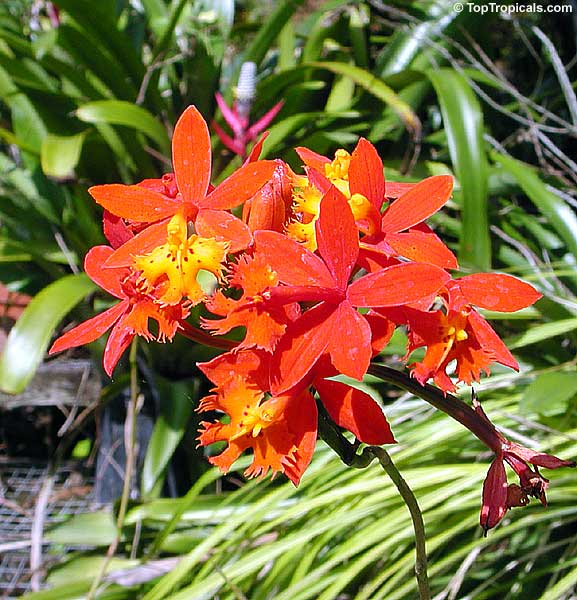
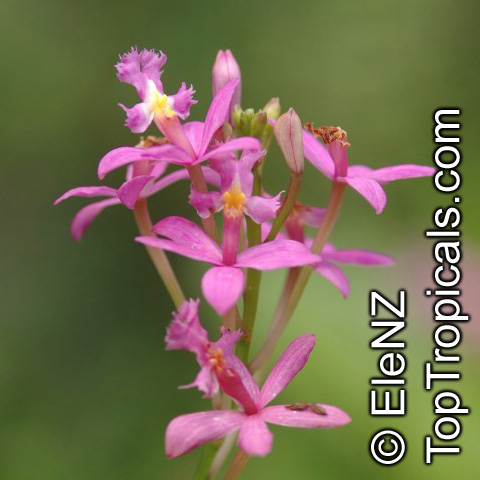
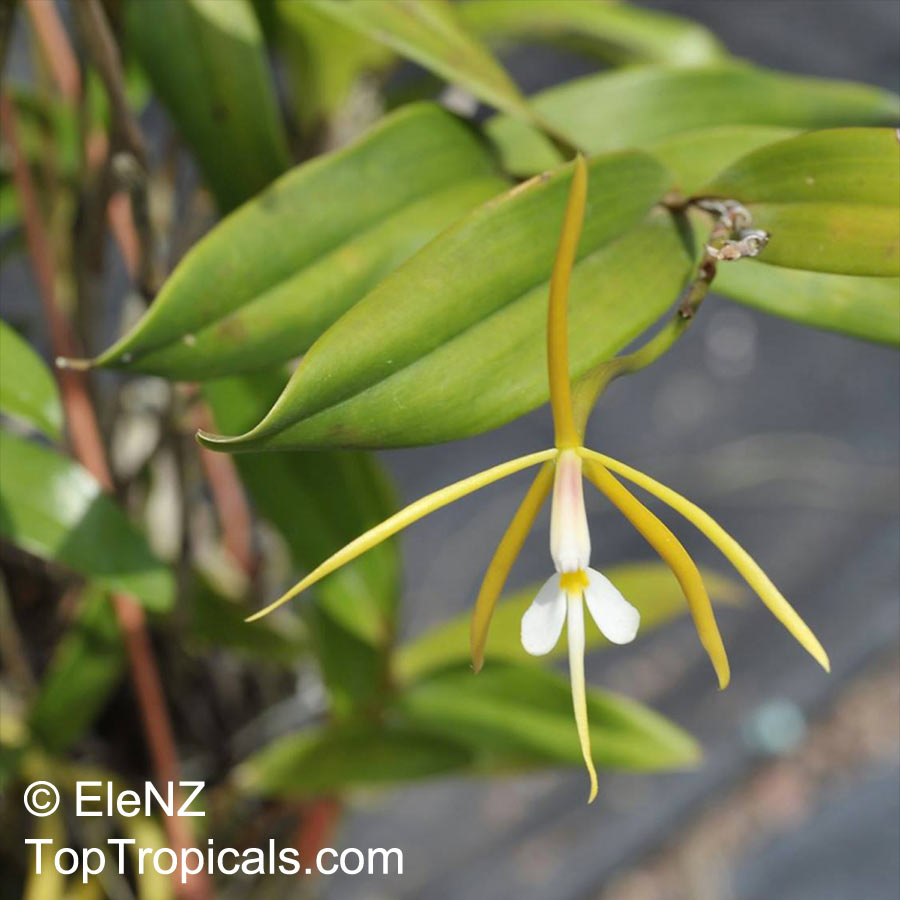
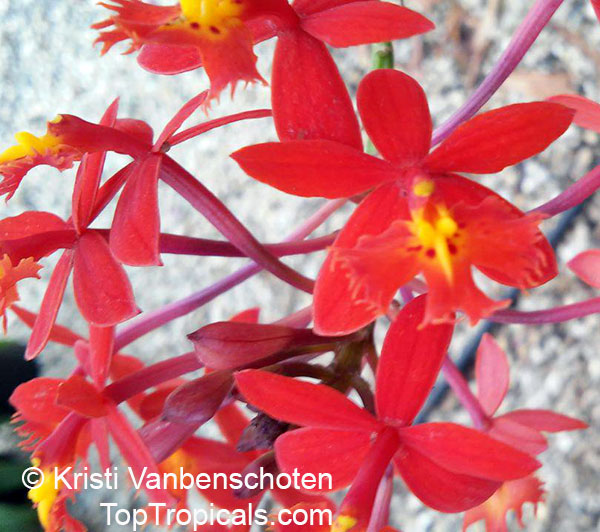
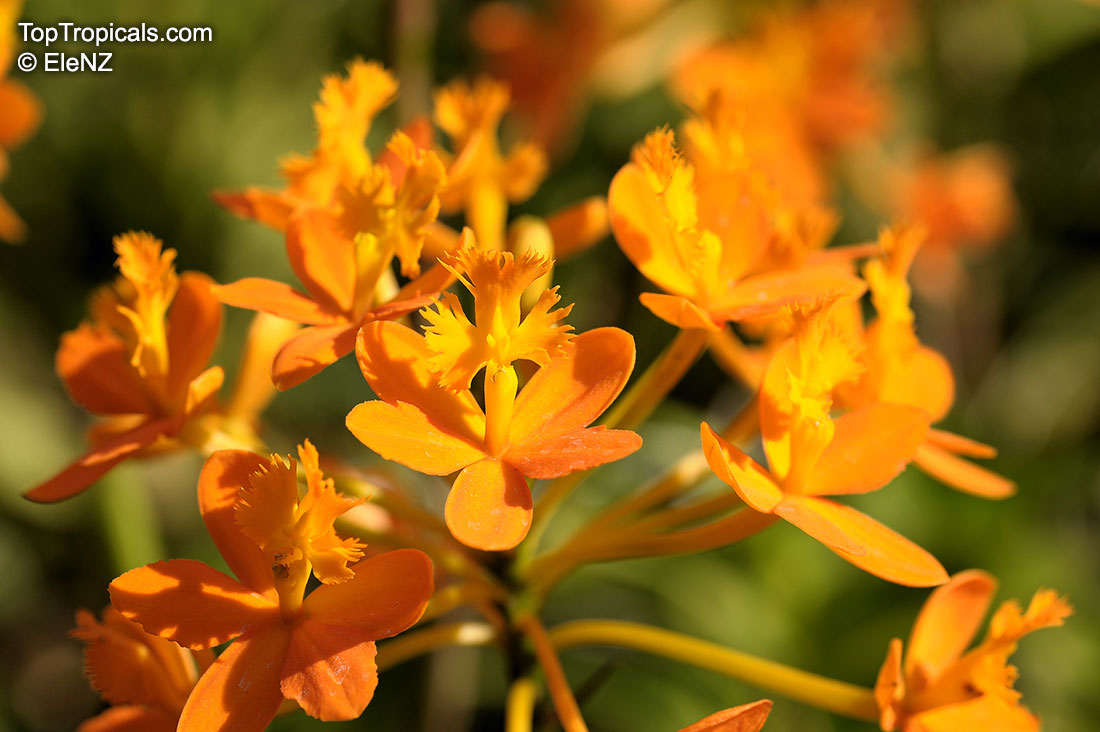
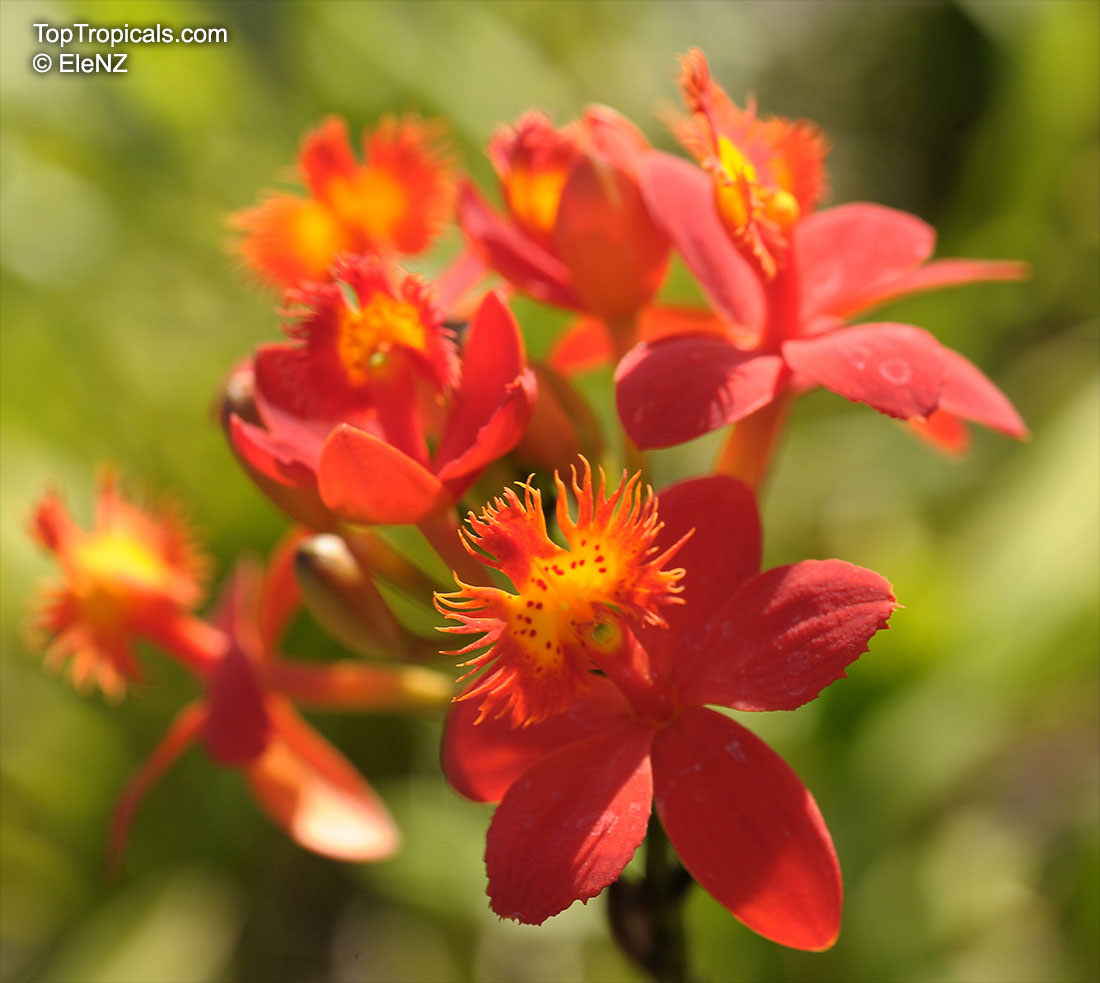
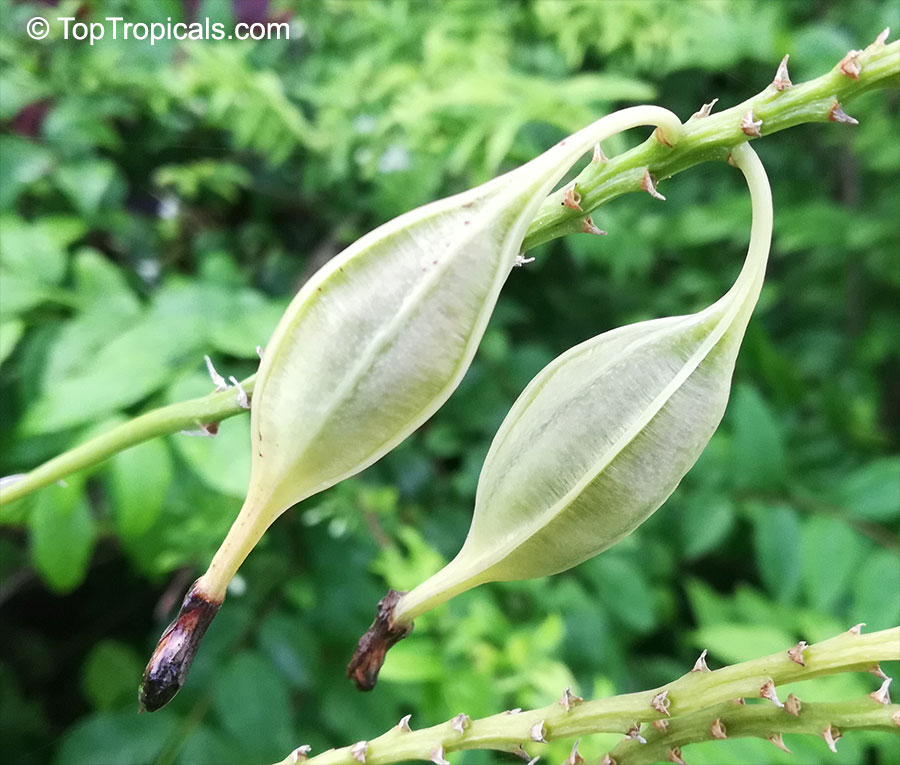
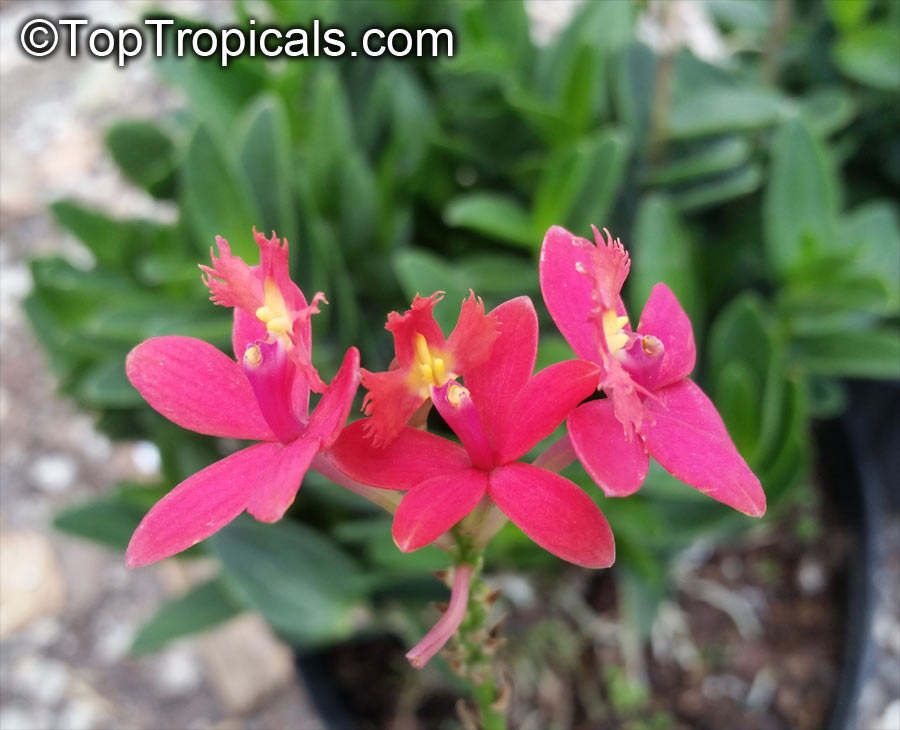
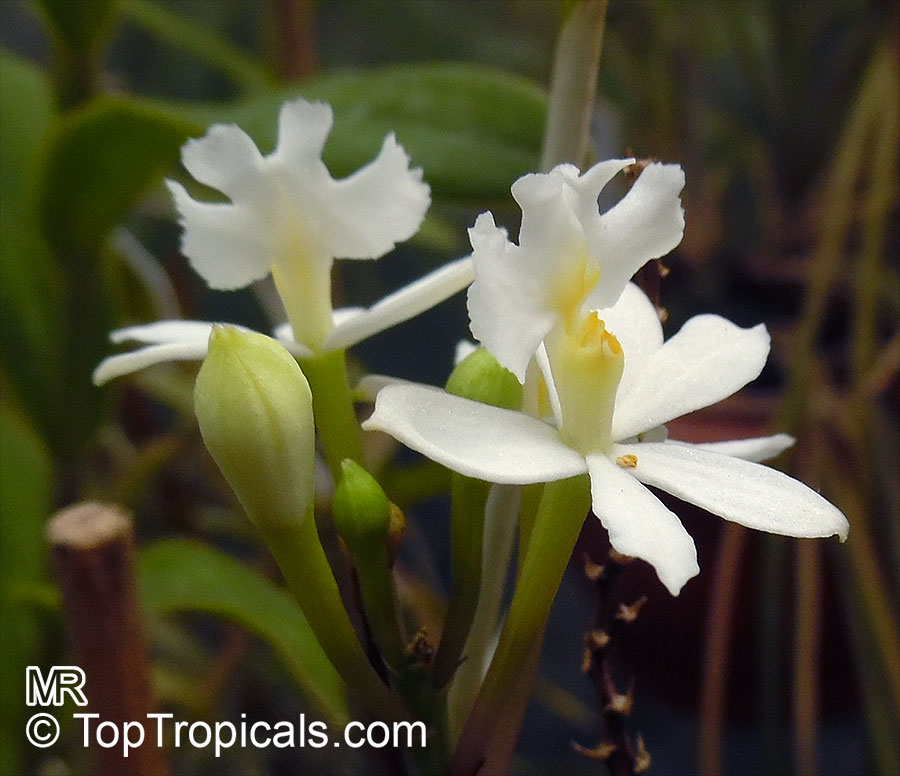
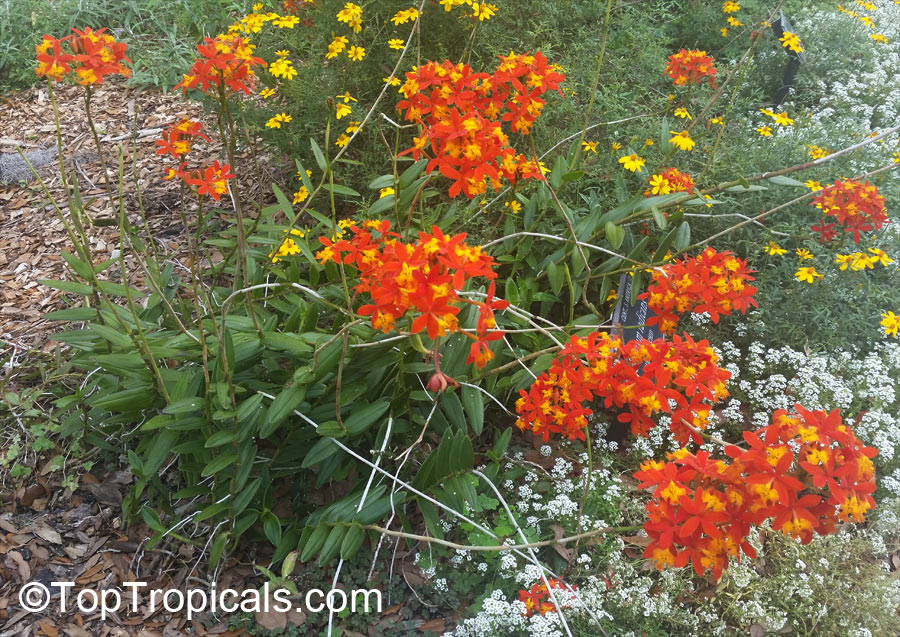
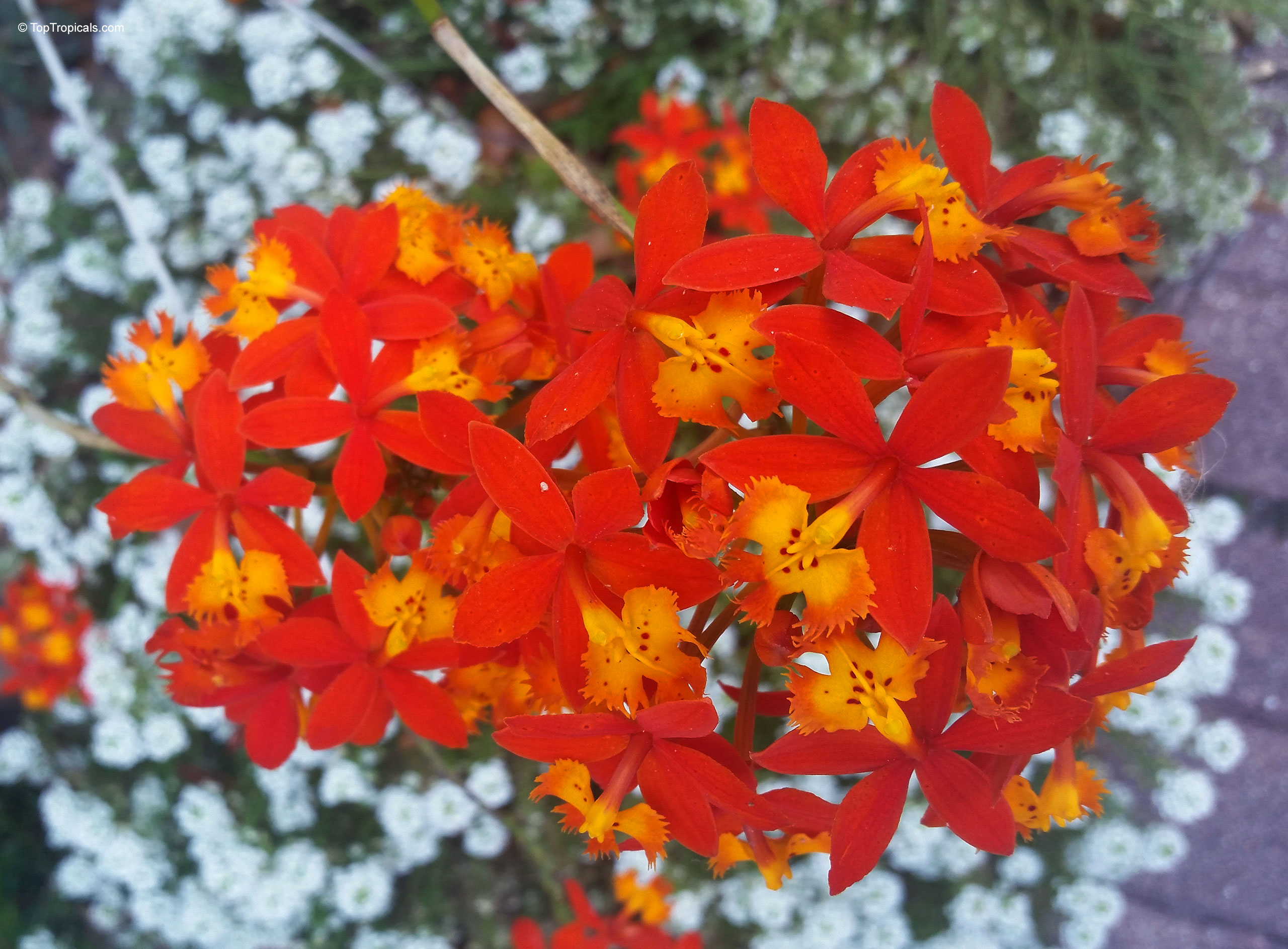
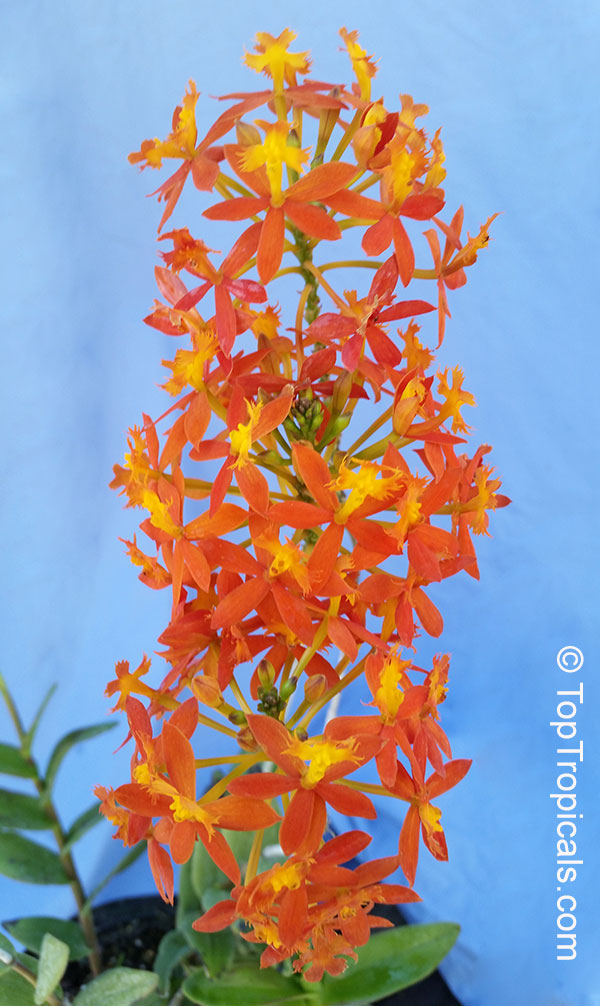
Botanical name: Epidendrum sp.
Common names: Reed Orchid, Epidendrum Orchid, Clustered Flowers Orchid, Crucifix Orchid
Family: Orchidaceae
USDA Zone: 9-11
Cold tolerance: 25°F


Epidendrum is a very large and morphologically diverse genus of orchids in the Orchidaceae family, native to tropical and subtropical regions of the Americas. Its species occupy habitats ranging from humid lowland forests to cool mountain regions and may grow as epiphytes, lithophytes, or terrestrial plants. Growth forms vary greatly, from compact orchids to large plants with elongated stems, and flowers range from small and inconspicuous to large and brightly colored. Many species have a distinctive lip that is partly or completely fused to the column. The popular reed-stem Epidendrums, with upright cane-like stems and showy terminal clusters of red, orange, pink, yellow, or purple flowers, represent only one horticulturally important group and should not be regarded as typical of the genus as a whole.
Cultivation requirements vary considerably among species because of the genus's enormous ecological range. Many commonly cultivated Epidendrums prefer bright filtered light to partial sun, good air circulation, and an open, well-drained orchid medium, with regular moisture during active growth. Reed-stem types are particularly adaptable and are widely grown in tropical and subtropical gardens as well as containers. Numerous species and hybrids are cultivated, and Epidendrum has also contributed to many intergeneric orchid hybrids. Cold tolerance varies greatly; tropical garden types generally require frost-free or nearly frost-free conditions, while cooler-growing species should be cultivated according to the climate of their native habitats.
See Orchid page for pictures of different orchids and care info.
See video about Ground Orchids.


Recommended Fertilizer: SUNSHINE Megaflor - Bloom Nutrition Booster
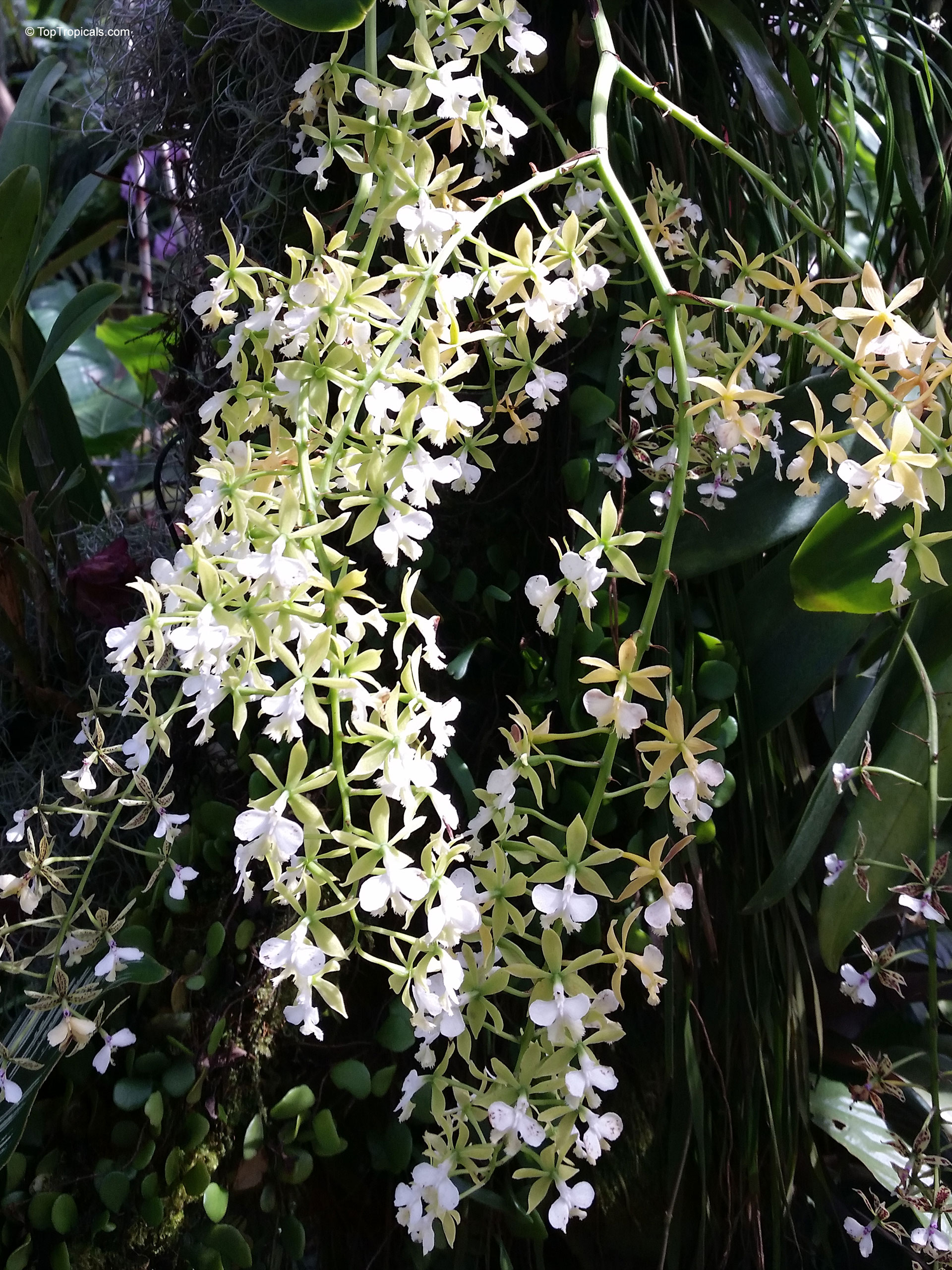
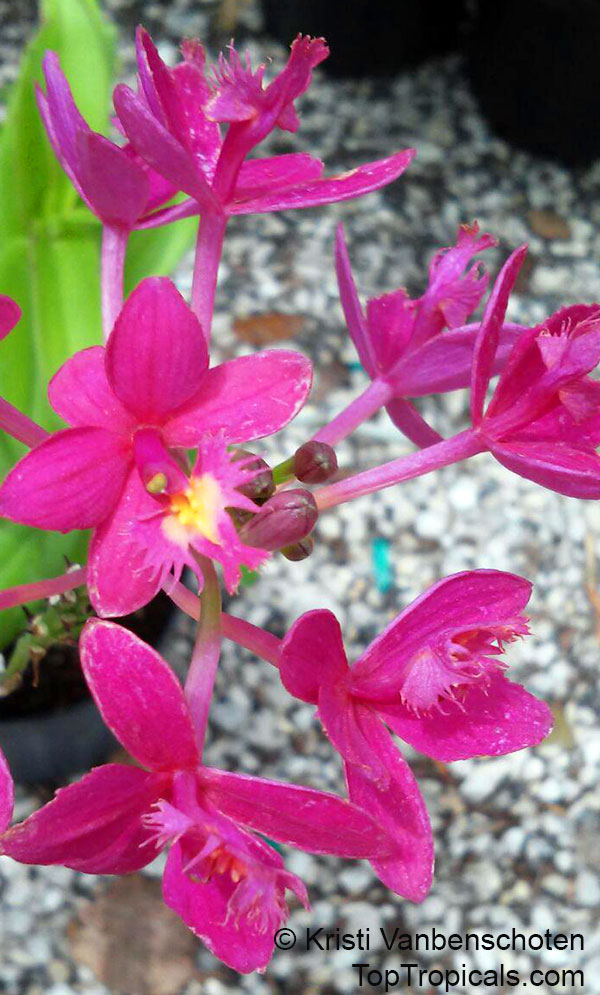
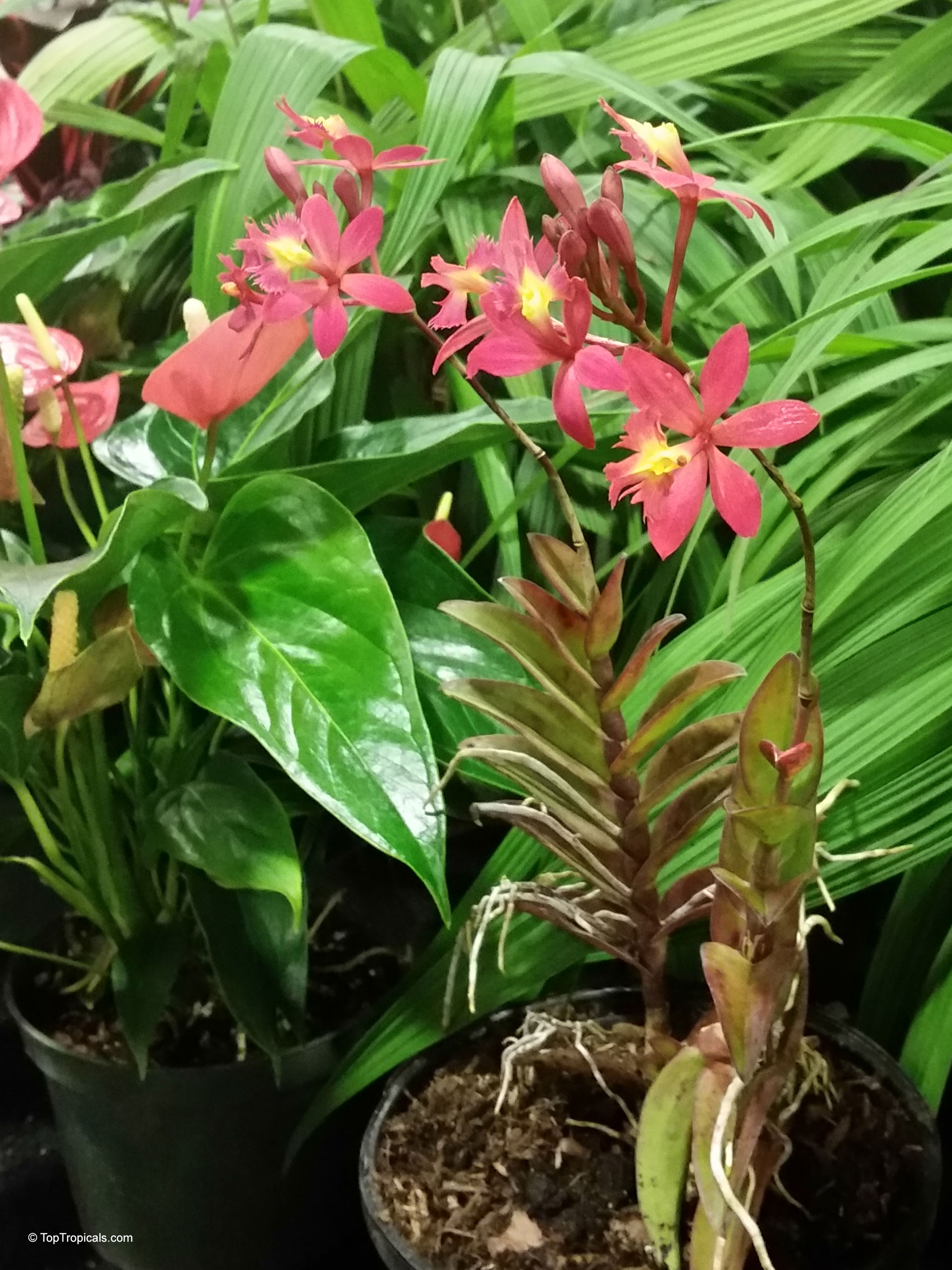
Epidendrum is a diverse neotropical genus that has flowers characterized by a frilly or fringed lip. This feature is occasionally diagnostic to distinguish between species. These orchids are widely cultivated and may be hybridized with Sophronitis, another South American genus. The flowers are usually small and delicately colored, and borne on a dense inflorescence. Many species have a fragrance. These well established plants are a red raspberry color.
See video about Ground Orchids.
Recommended Fertilizer: SUNSHINE Megaflor - Bloom Nutrition Booster
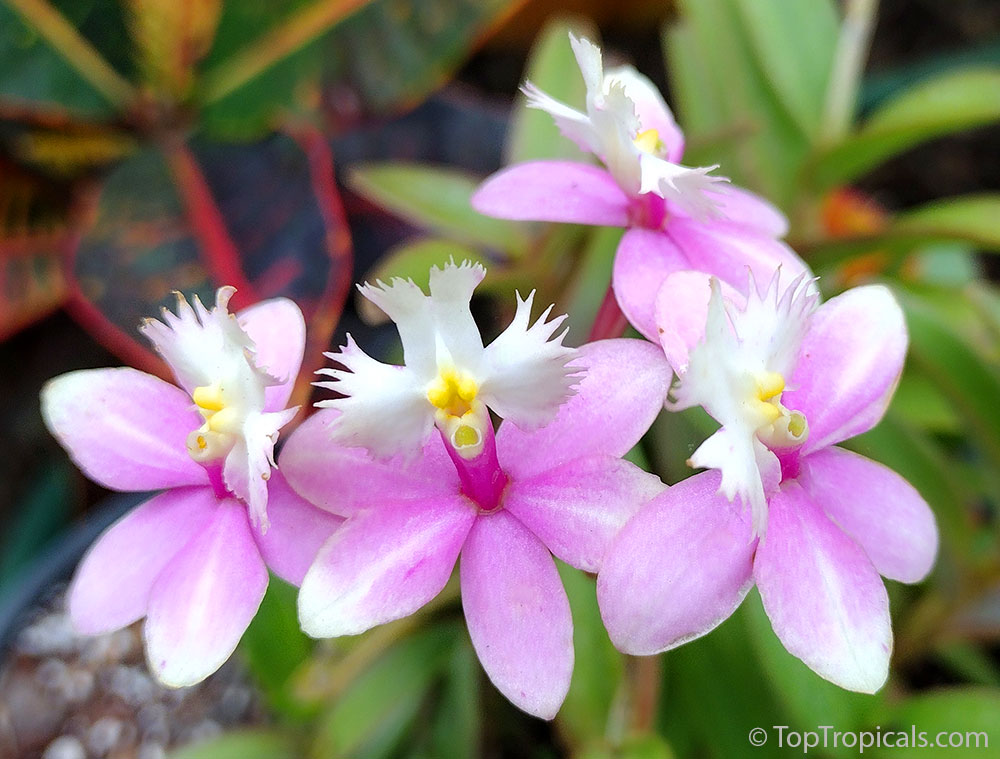
Epidendrum is a diverse neotropical genus that has flowers characterized by a frilly or fringed lip. This feature is occasionally diagnostic to distinguish between species. These orchids are widely cultivated and may be hybridized with Sophronitis, another South American genus. The flowers are usually small and delicately colored, and borne on a dense inflorescence. Many species have a fragrance.
See video about Ground Orchids.
Recommended Fertilizer: SUNSHINE Megaflor - Bloom Nutrition Booster
Recommended Fertilizer: SUNSHINE Megaflor - Bloom Nutrition Booster
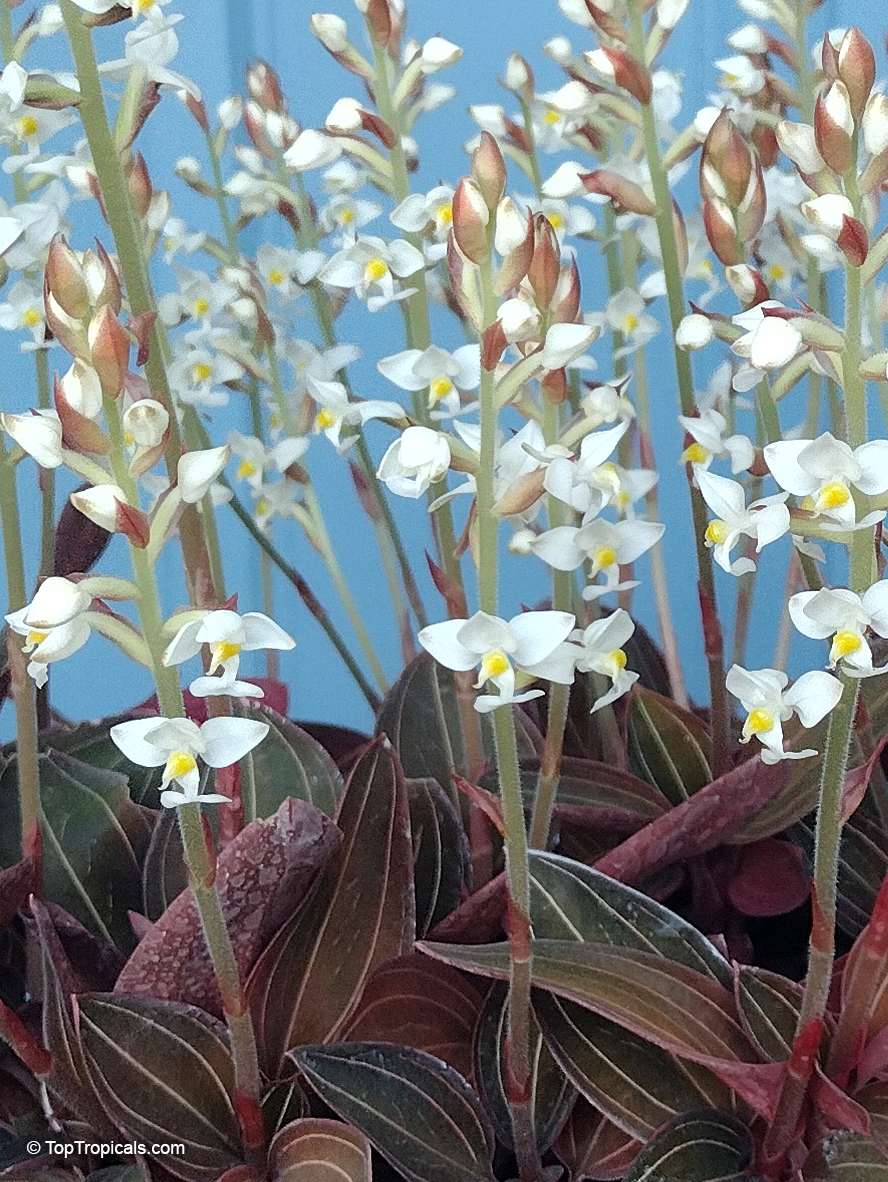
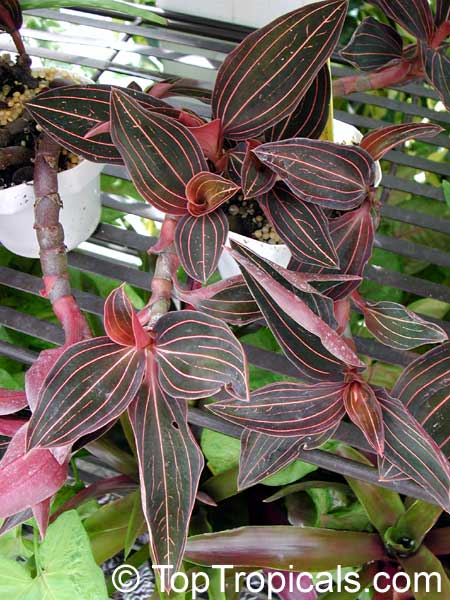
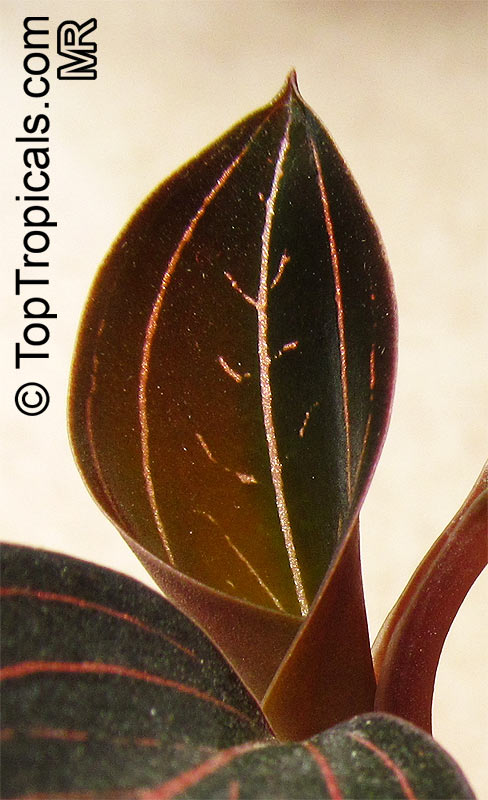
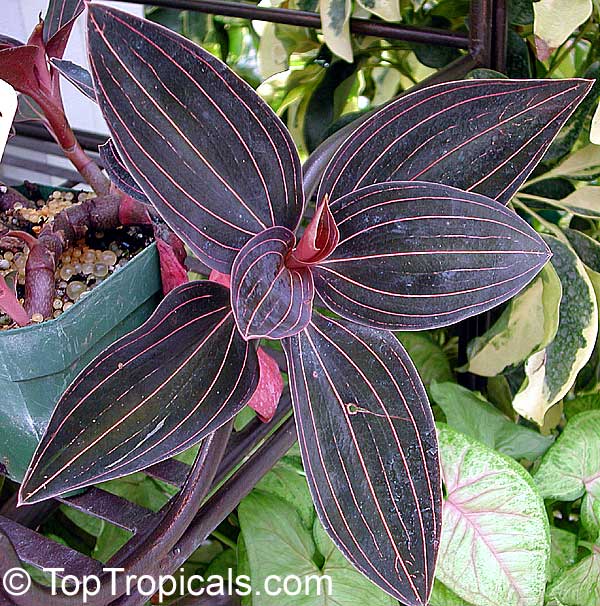
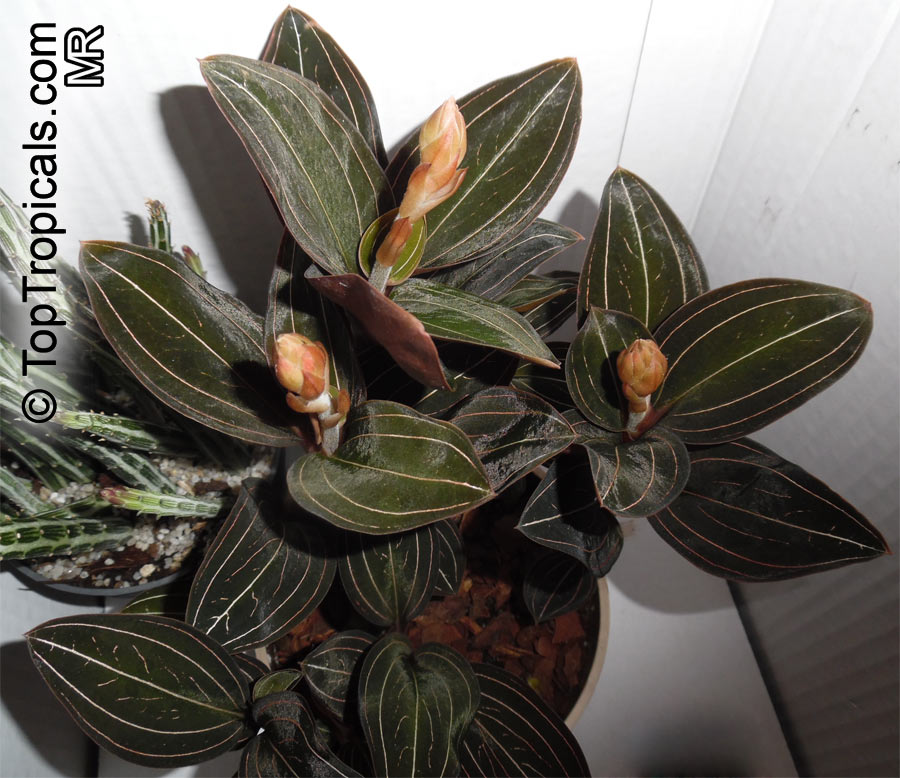
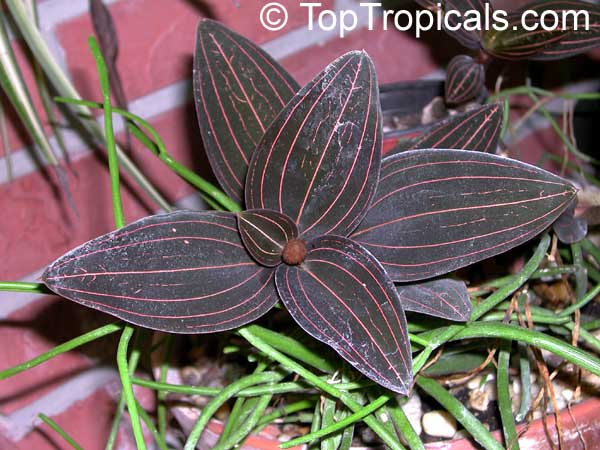
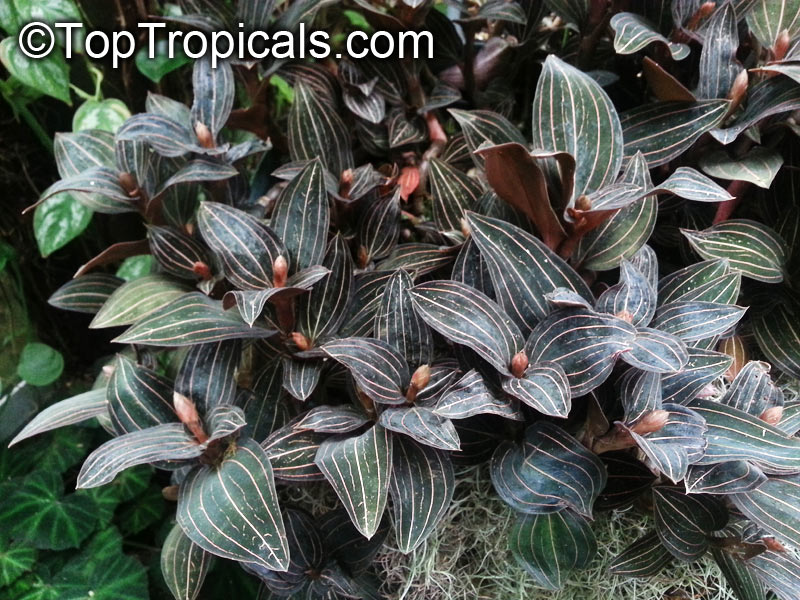
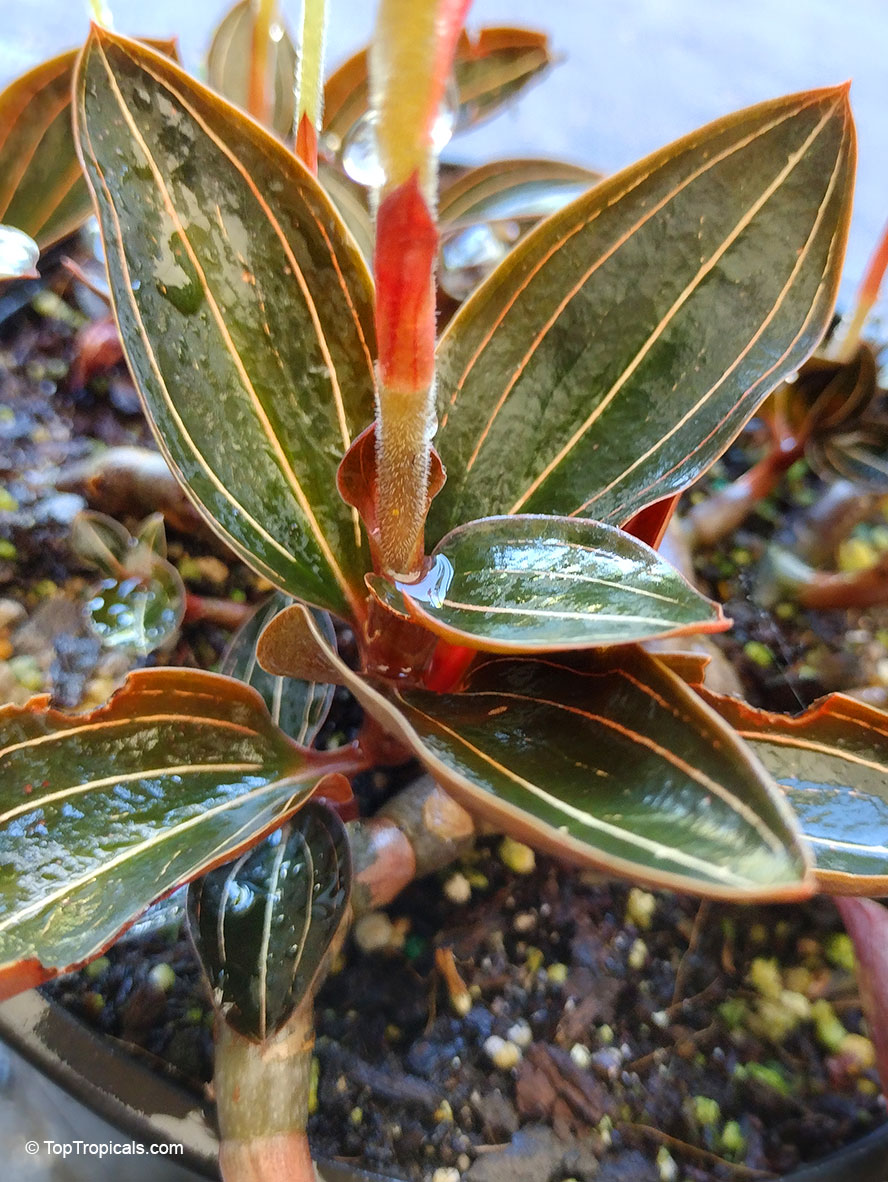
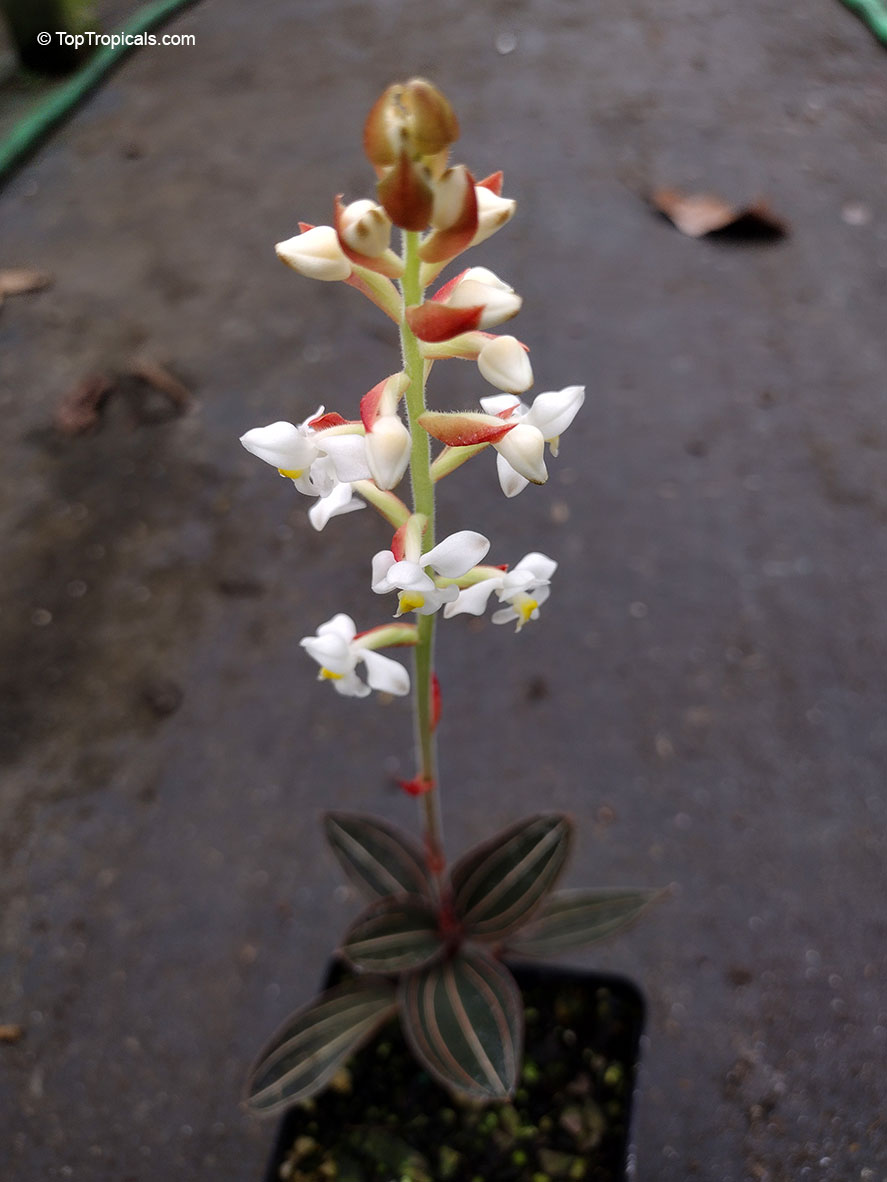
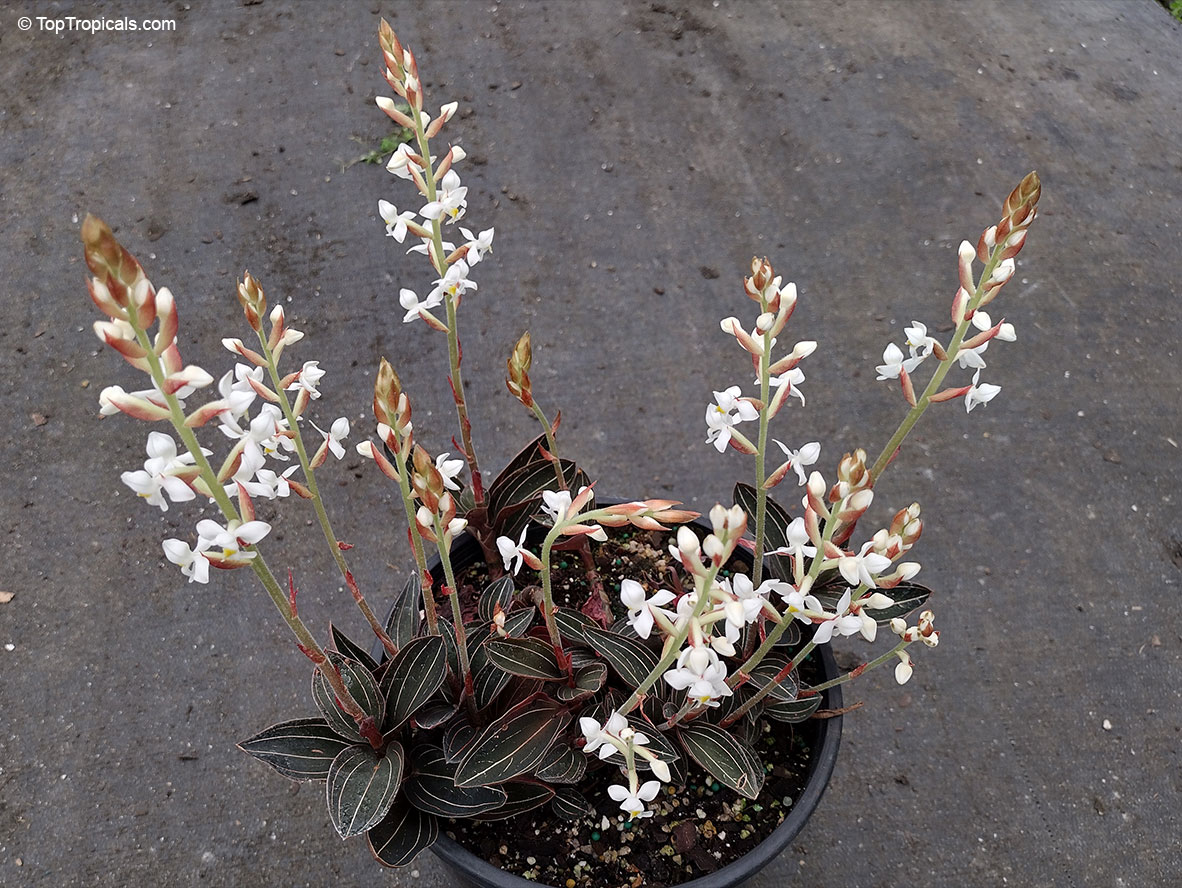
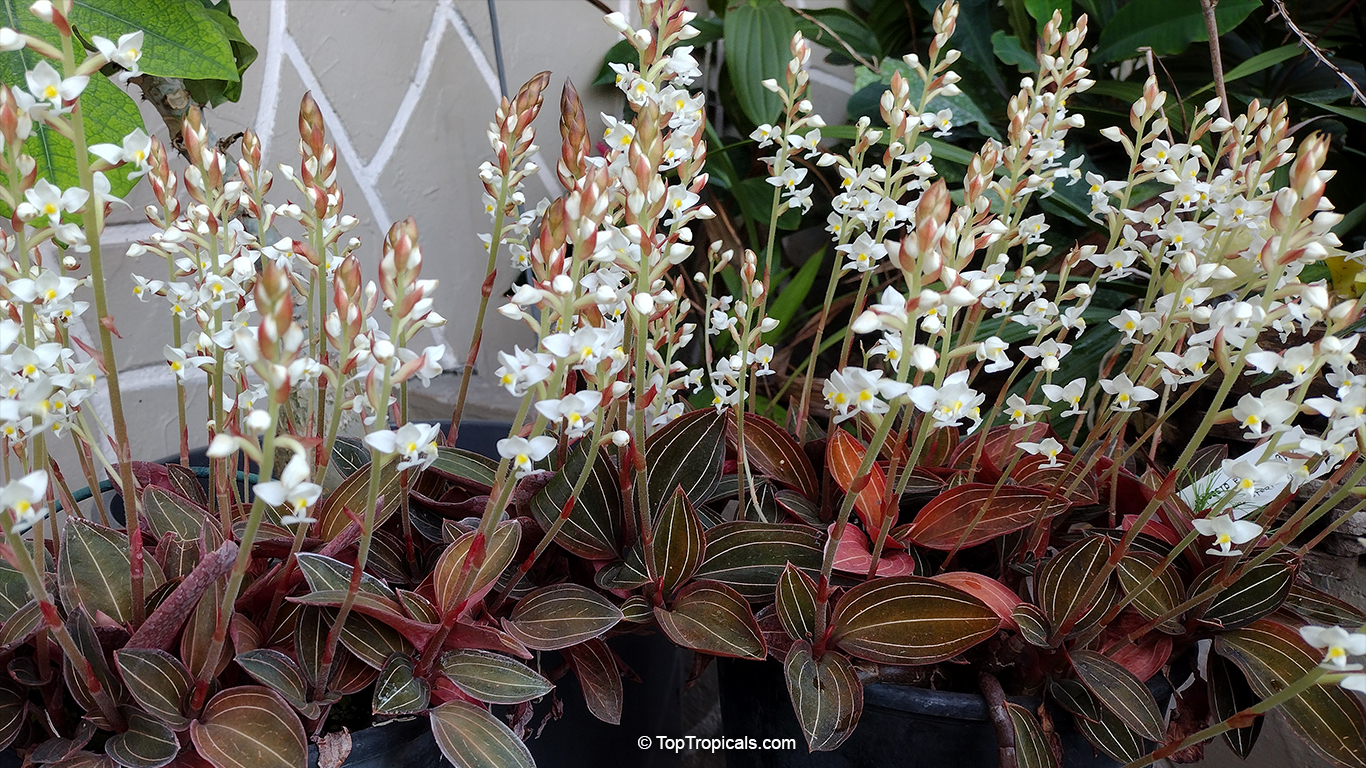
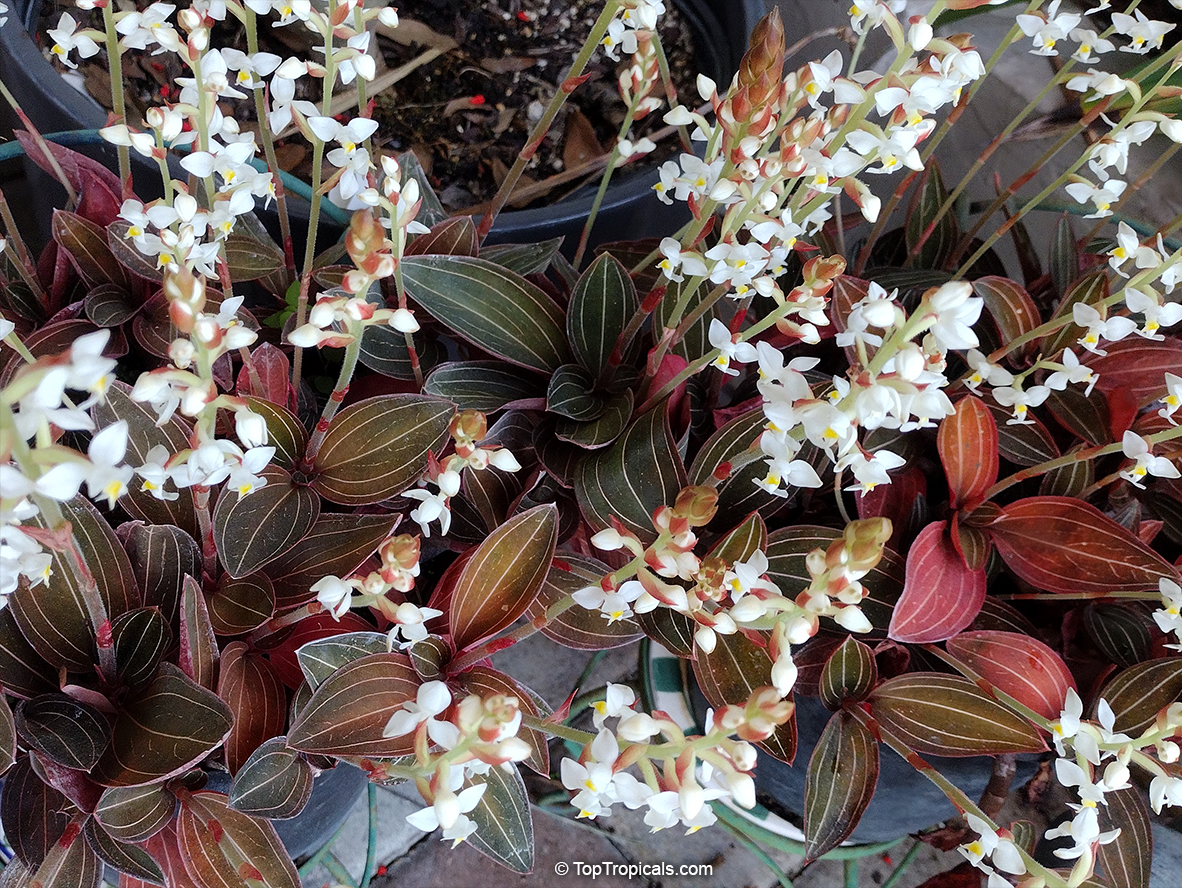
Botanical names: Ludisia discolor, Haemaria discolor, Anoectochilus dawsonianus, Myoda rufescens
Common names: Jeweled Ludisia, Jewel Orchid, Goodyera
Family: Orchidaceae
Origin: India, Indonesia, South East Asia
USDA Zone: 10-11


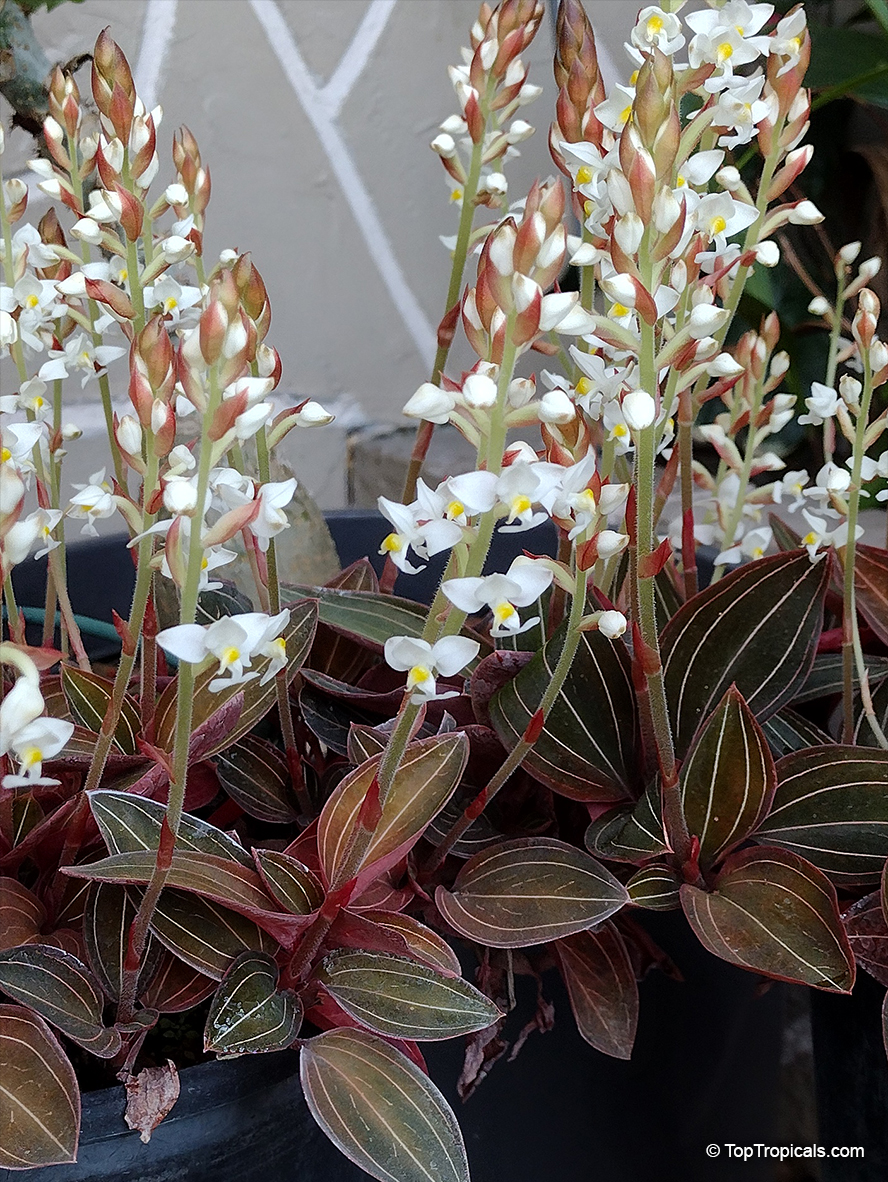
Ludisia discolor, commonly known as jewel orchid, is a terrestrial, rhizomatous orchid in the Orchidaceae family, native to humid tropical forests from southern China through Indochina and Malesia to Sumatra and the Philippines. Unlike many familiar tropical orchids, it grows on the forest floor and is cultivated primarily for its foliage rather than its flowers. The creeping fleshy stems bear velvety dark green to nearly black leaves, usually marked with contrasting reddish, pinkish, or silvery veins. Upright flower spikes carry numerous small white flowers that open successively; the lip and column are characteristically twisted in opposite directions. The flowers may be fragrant in some cultivated forms, while other plants have little or no noticeable scent. The species was originally described as Goodyera discolor but is now accepted as Ludisia discolor.
Ludisia discolor prefers strong shade or low to medium filtered light, warm temperatures, and humid air. As a terrestrial orchid, it should not be treated like a typical epiphytic orchid grown in coarse bark alone. Use a fertile, loose, well-drained substrate that retains some moisture, such as a mixture containing fine bark, coco coir, and other organic material. Keep it lightly and consistently moist but never waterlogged. Its creeping rhizomes root readily and make propagation by division or stem cuttings easy. Frost sensitive, it is suitable outdoors in USDA Zones 10-11 and is widely grown elsewhere as a compact indoor or terrarium plant.




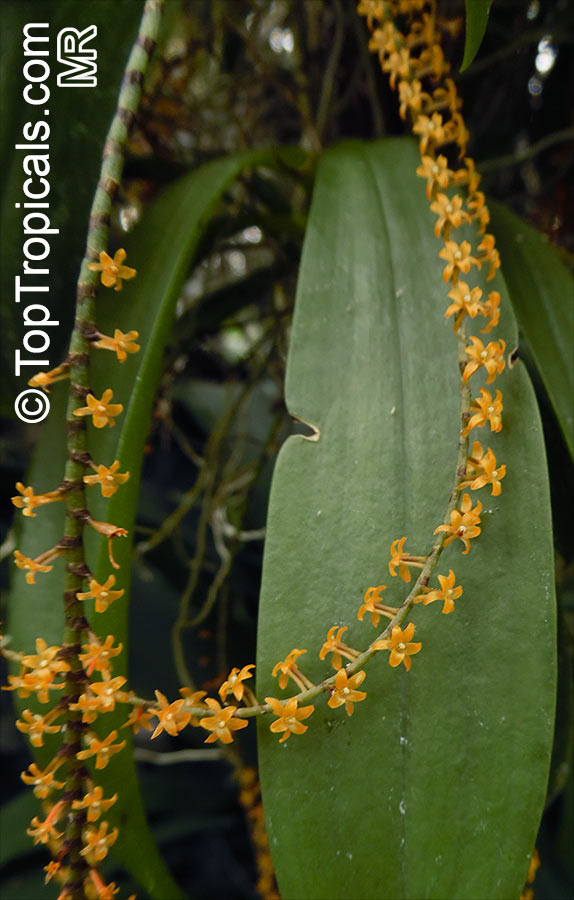
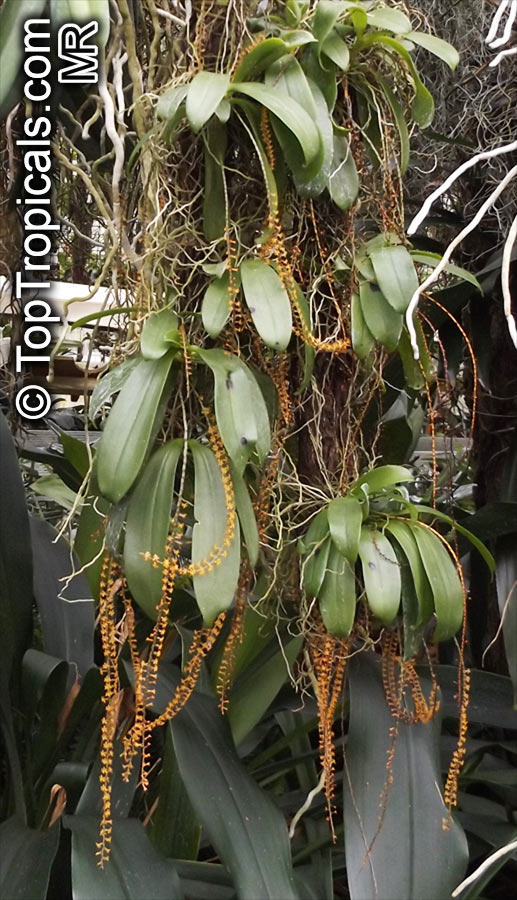
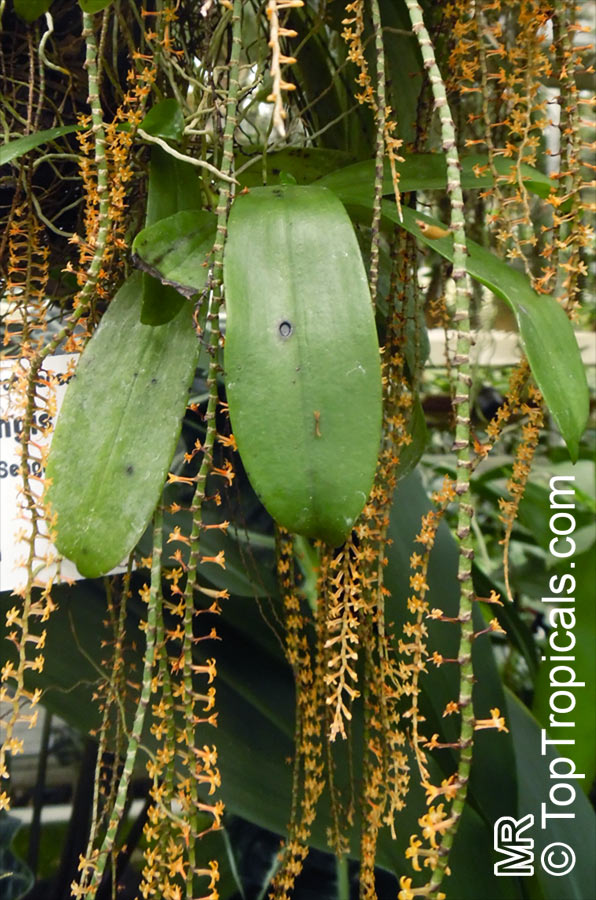
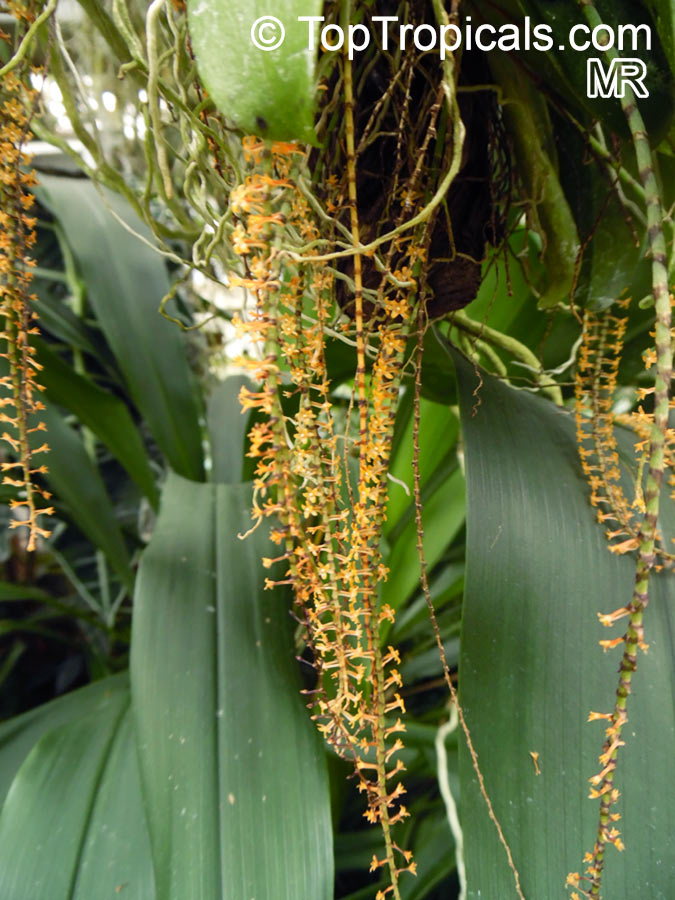
Botanical names: Aerangis hariotiana, Microterangis hariotiana, Chamaeangis hariotiana
Common name: Hariot's Microterangis
Family: Orchidaceae
Origin: Comoros
USDA Zone: 9-10
Its flowers are irresistible to butterflies, moths, and hummingbirds. Aerangis hariotiana (Hariot's Microterangis) is an epiphytic plant native to Comoros, a set of islands off the coast of East Africa. The plant has ovate-lanceolate leaves and grows 2-5 ft tall. It prefers semi-shade, but can still thrive in bright filtered light.
Aerangis hariotiana will thrive in USDA Zone 9-11 and can be grown as a potted plant indoors in colder regions as long as it is given the appropriate amount of humidity, light and water. This plant does best in a light and airy potting mix with several handfuls of natural material such as fir-bark, perlite, and other ingredients, depending on the composition of your soil. It's important to keep the soil lightly moist, but not soggy.
Aerangis hariotiana also requires humidity and should have its roots misted regularly to prevent dehydration. Lastly, it is a good idea to use a balanced fertilizer at least once a year.
Besides its strongly night-scented, sherbet-orange miniature flowers, Aerangis hariotiana also attracts hummingbirds and butterflies, making it a great addition to any garden. Its blooms appear in late winter and early spring, making it an unusual addition to gardens in cold-weather regions. If you're looking for a unique statement piece to add to your garden, this small and prolific bloomer is sure to catch the eye!
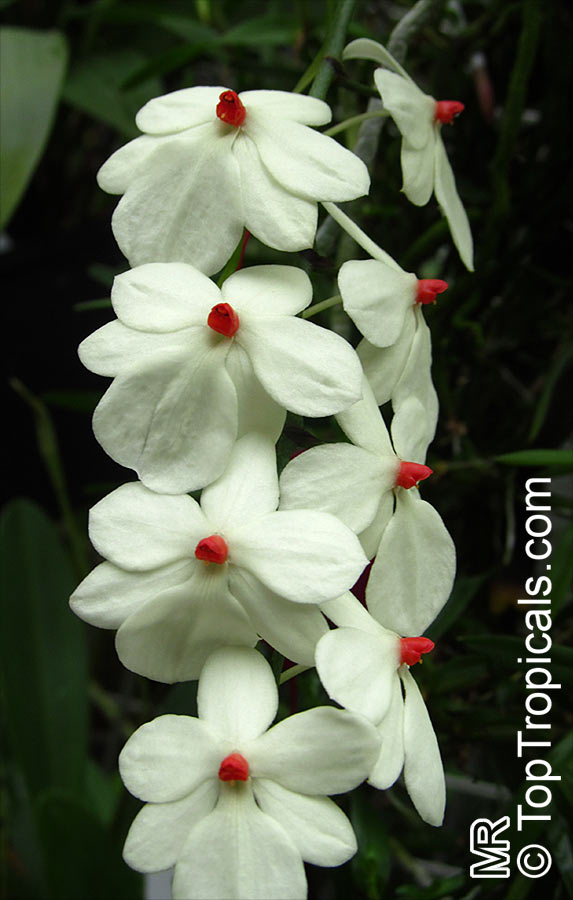
Botanical names: Aerangis luteoalba, Angraecum rhodostictum
Common name: Beige Aerangis
Family: Orchidaceae
Origin: Central Africa
USDA Zone: 9-10
A small, usually pendulous, monopodial epiphyte that is almost stemless. The short stem is hidden by the basal sheaths of closely set leaves. The roots are often flattened, with thin velamen, are green when wet, and have emerald green tips. Aerangis luteo-alba var. rhodosticta has yellowish white flowers with a bright orange-red column.
Cultivated plants should be kept moist during periods corresponding to the wet seasons. They should be allowed to dry slightly between waterings during the dry seasons, but should never dry out completely or be left dry for extended periods.
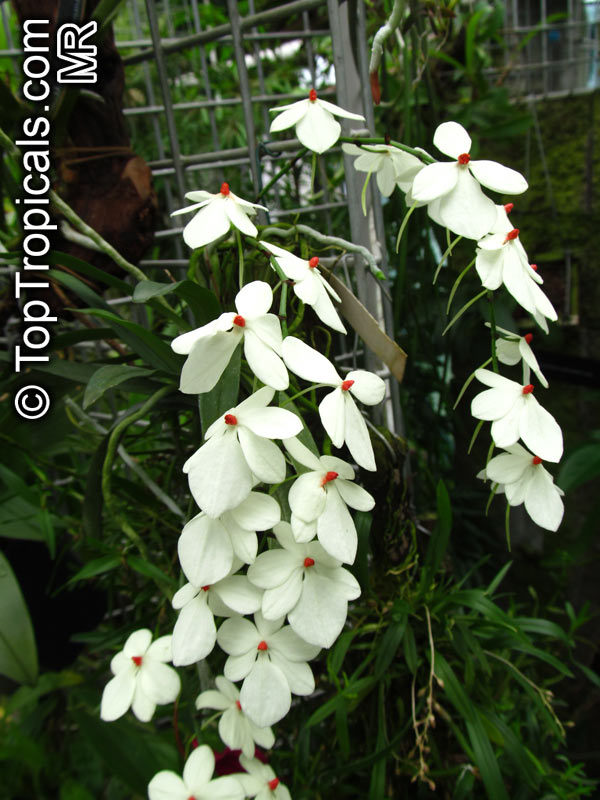
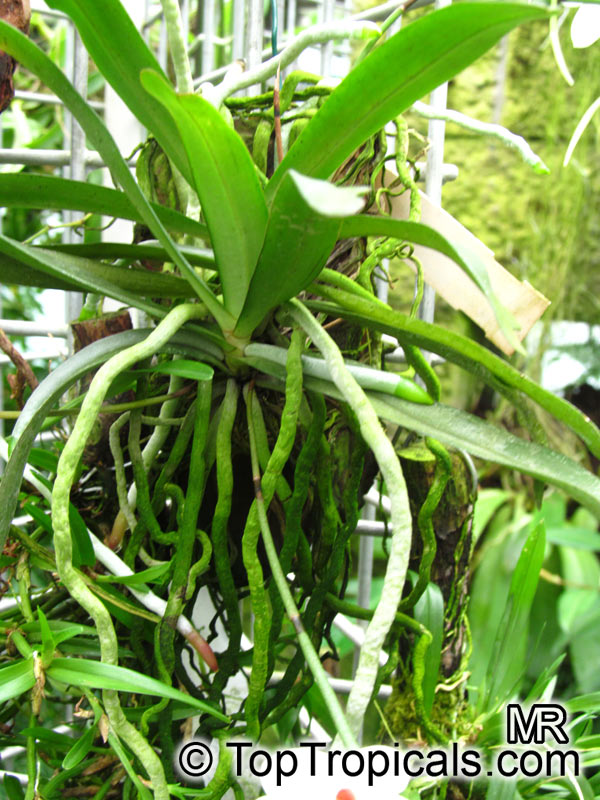
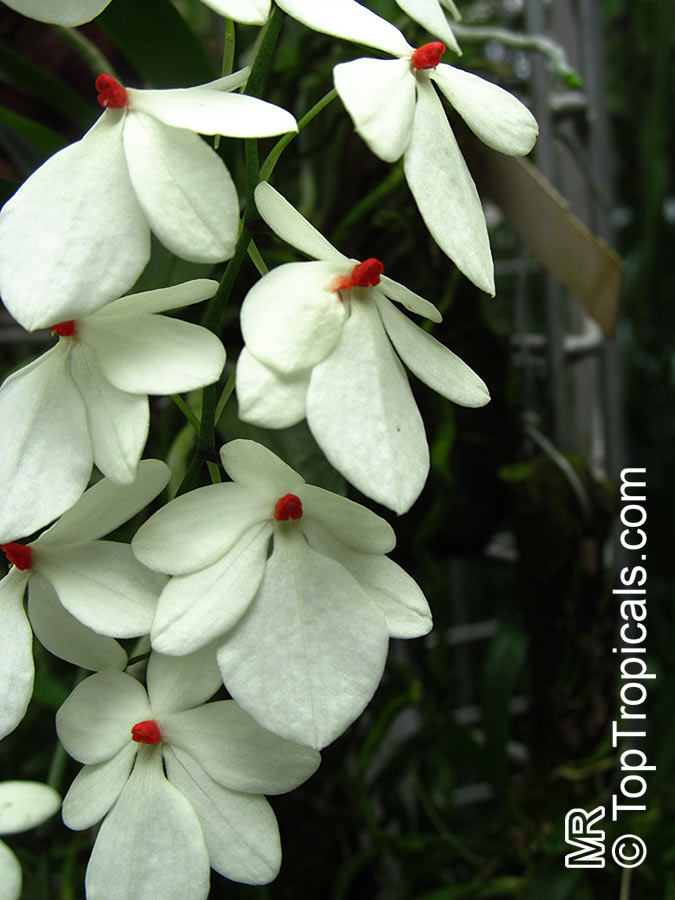
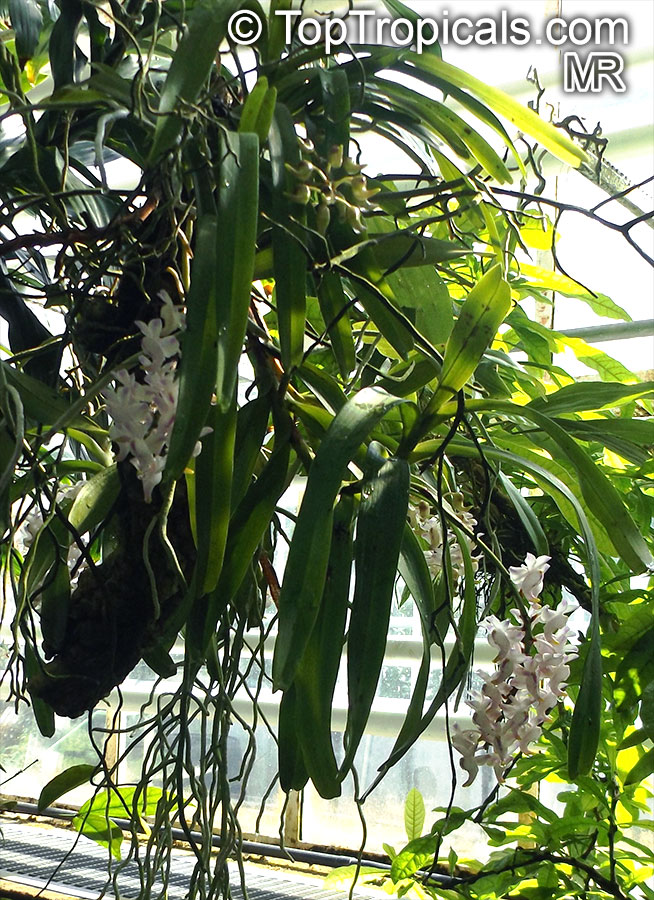
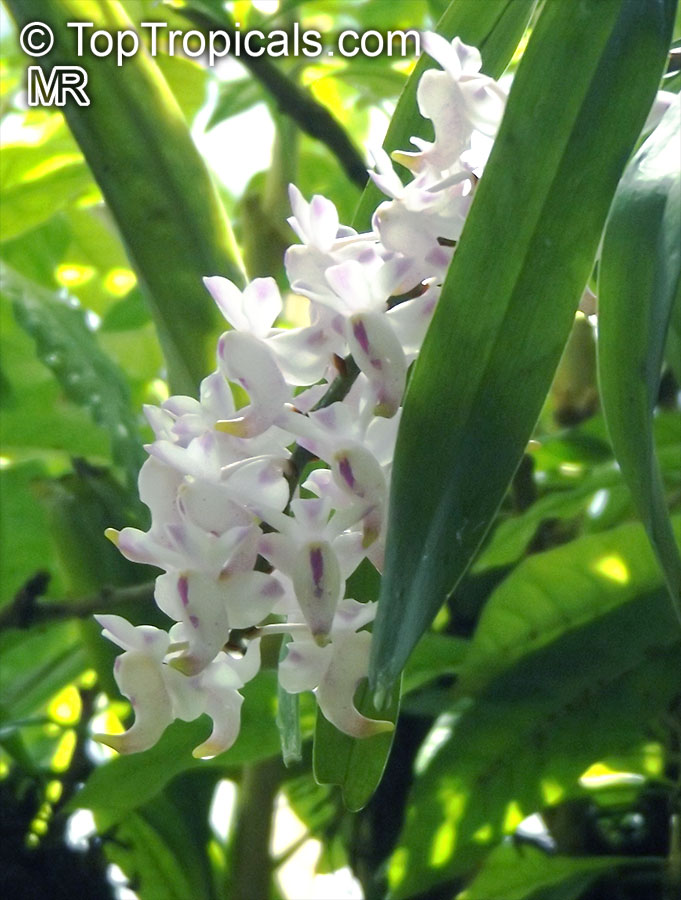
Botanical name: Aerides odorata
Common name: Fragrant Aerides
Family: Orchidaceae
Origin: Indochina, Himalaya
USDA Zone: 9-10
This species is a large to giant sized, highly variable, hot to cool growing epiphyte. Like related genera, Aerides are best grown in open slatted baskets. Aerides species require ample water, every day in warm climates. 70% or higher relative humidity is beneficial although the plants can be grown lower. They require bright filtered light with some direct sunlight in the morning, semi-shade area placement is perfect.
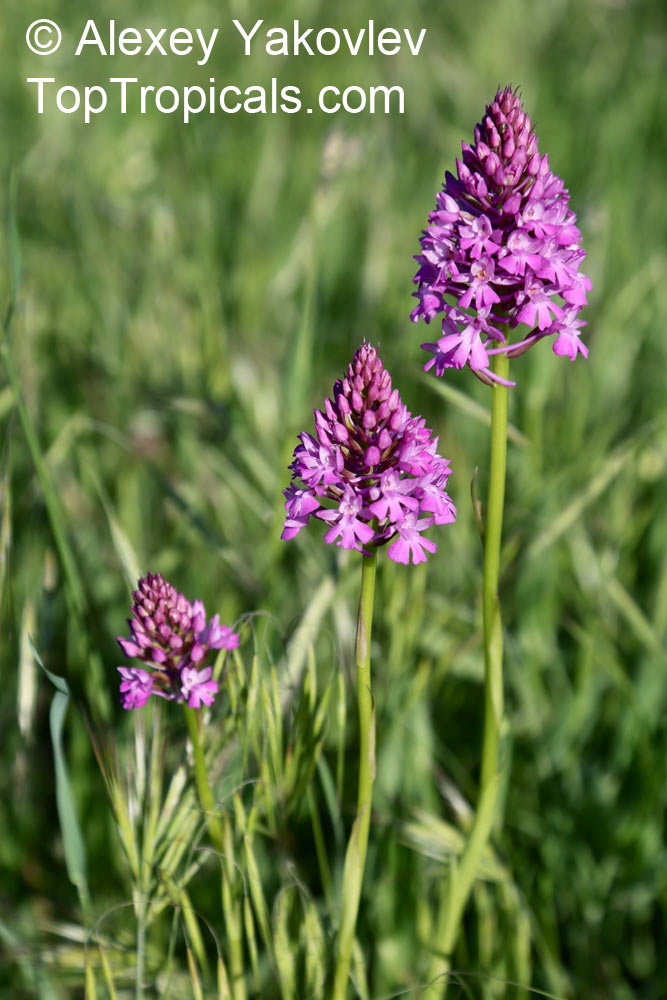
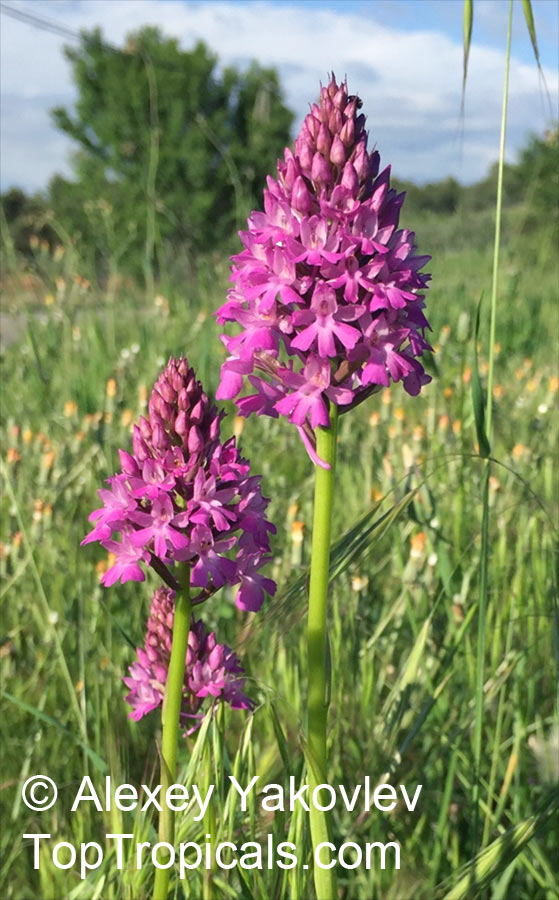
Botanical name: Anacamptis pyramidalis
Common name: Pyramidal Orchid
Family: Orchidaceae
Origin: Mediterranean region
USDA Zone: 5-9


It is a good orchid to put into a meadow or wildflower lawn and usually thrives. Flowering takes place in late June through July. It also grows happily in a cold greenhouse, preferably in a plunged terracotta pot.
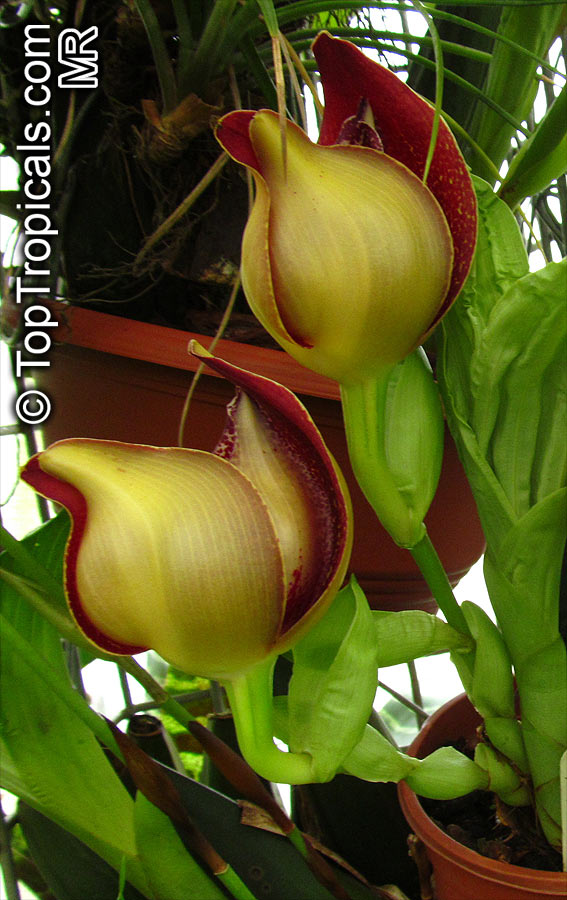
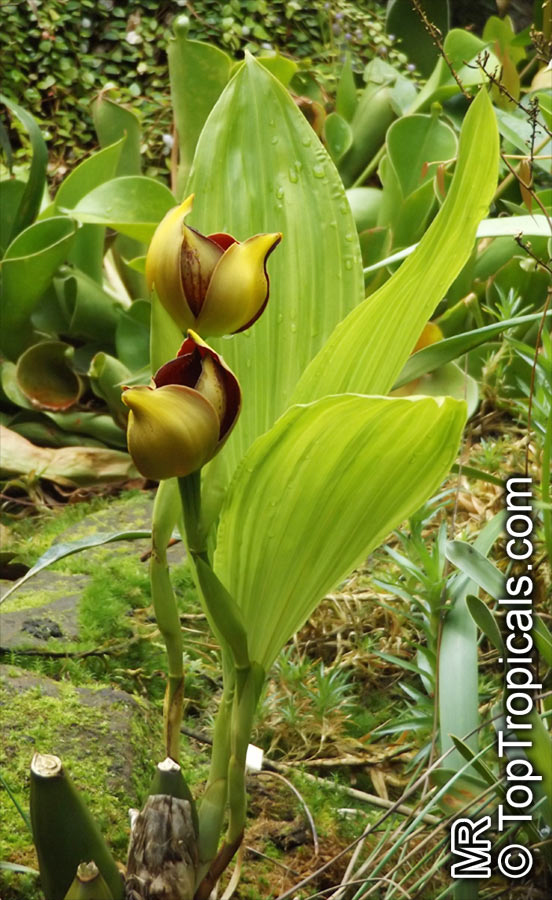
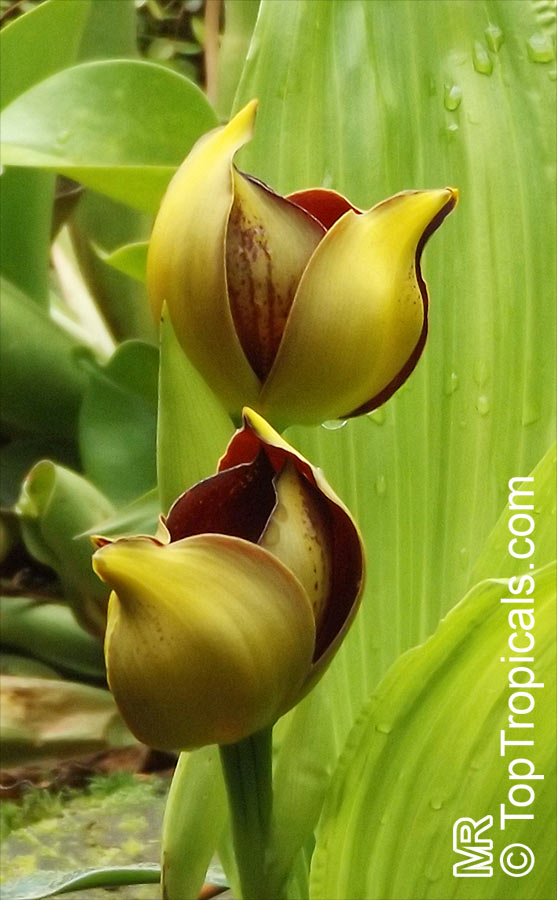
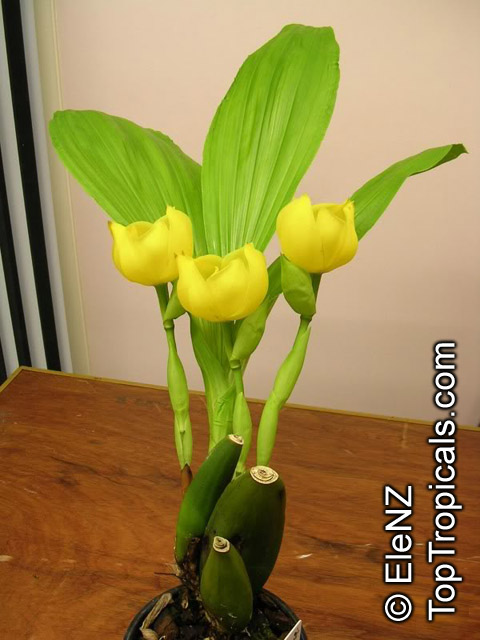
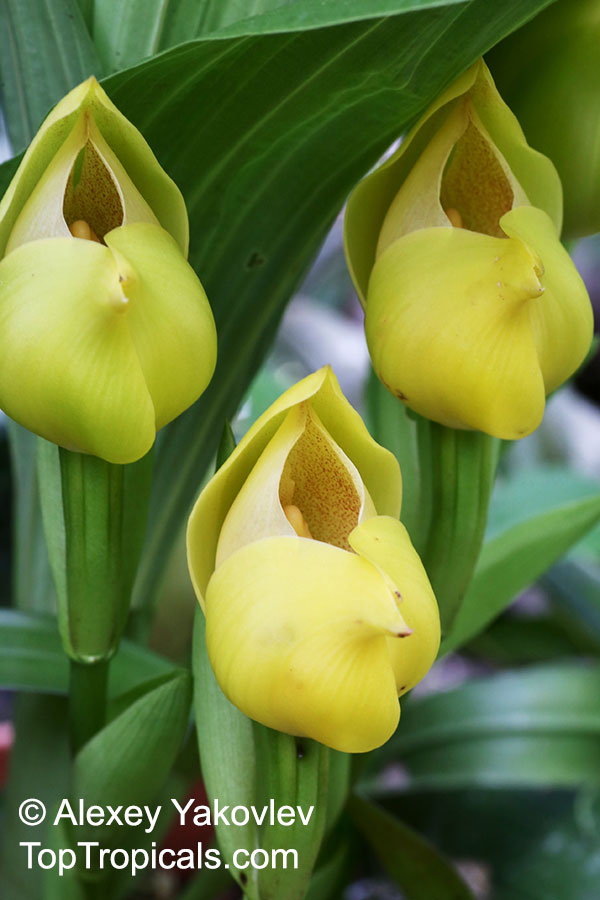
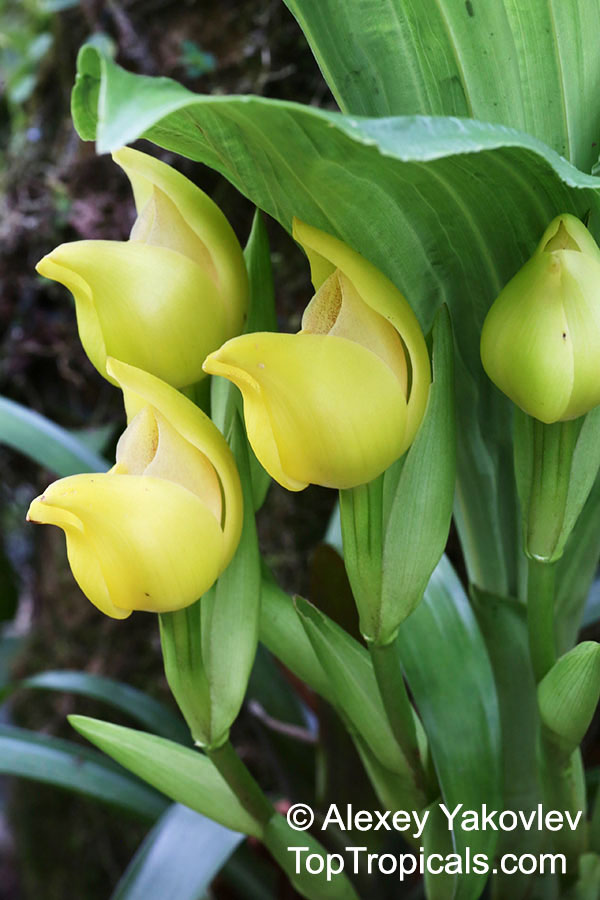
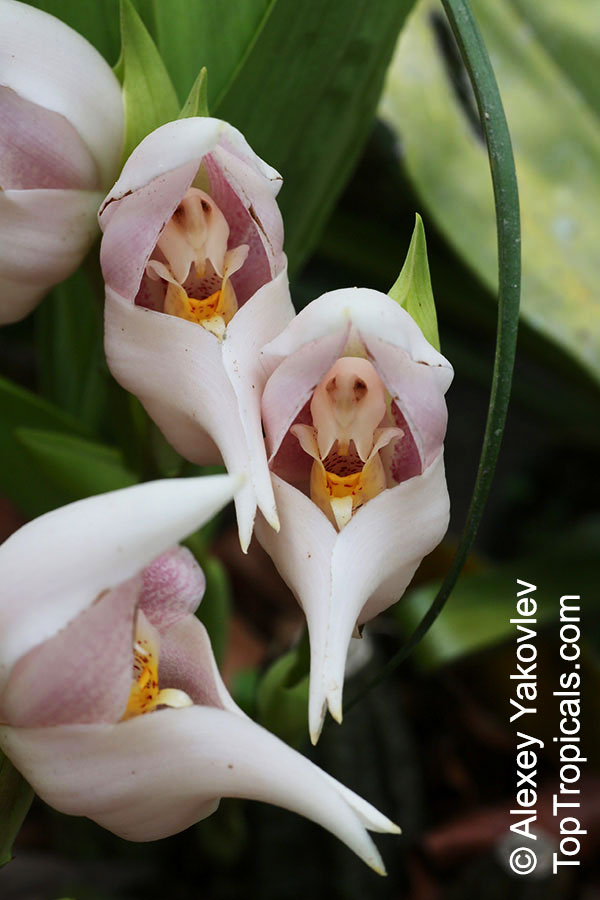
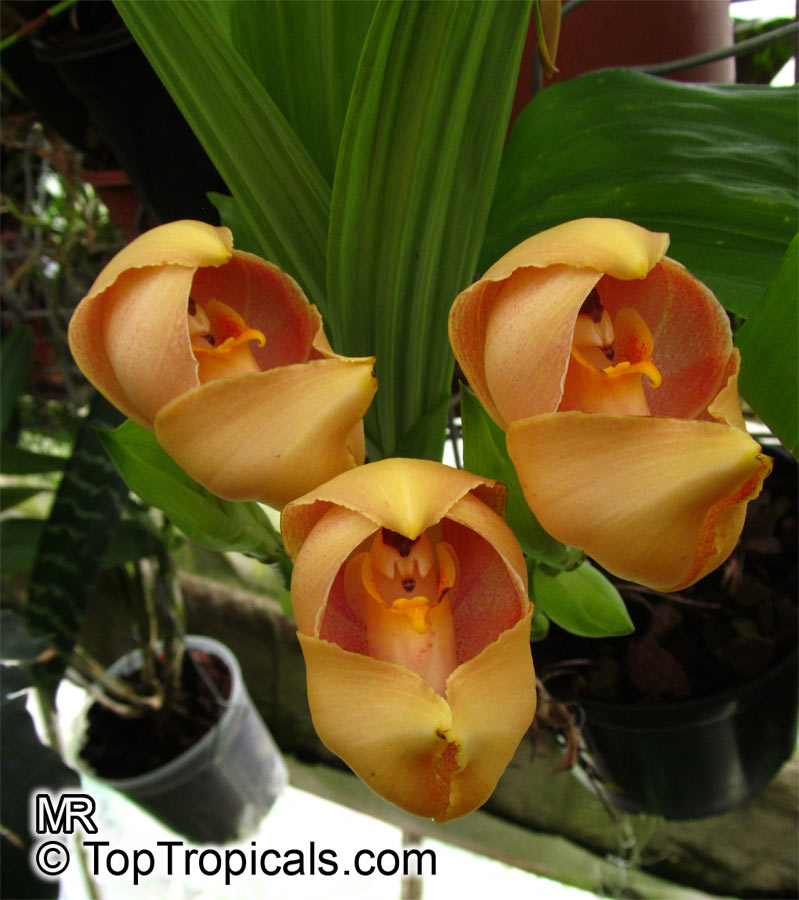
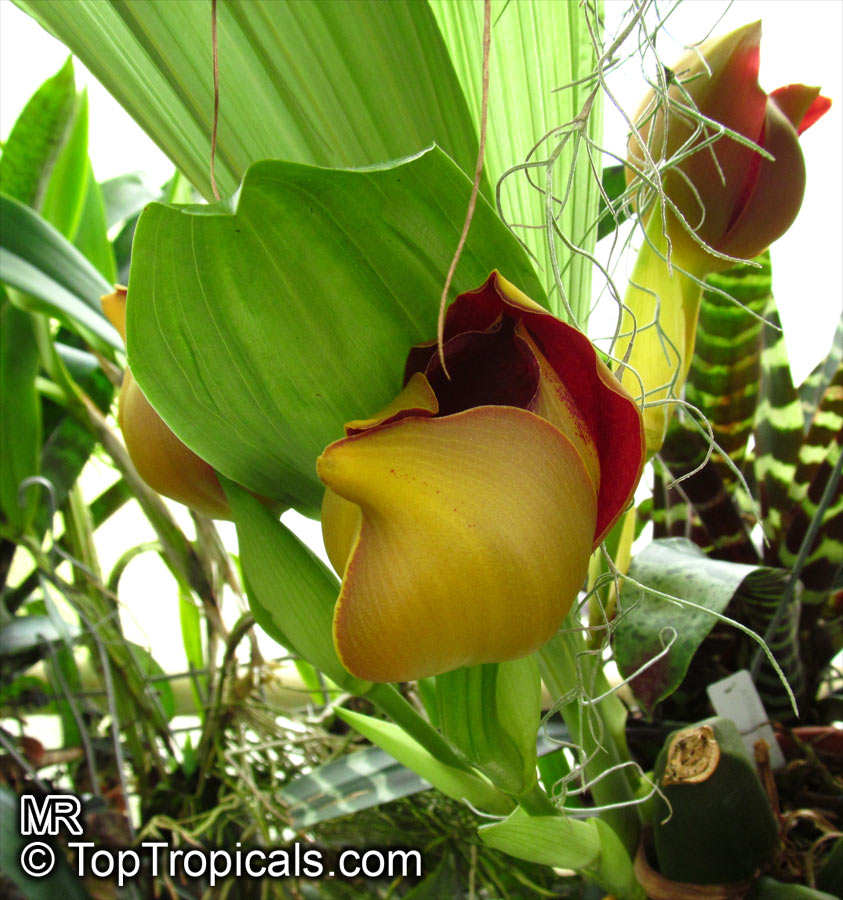
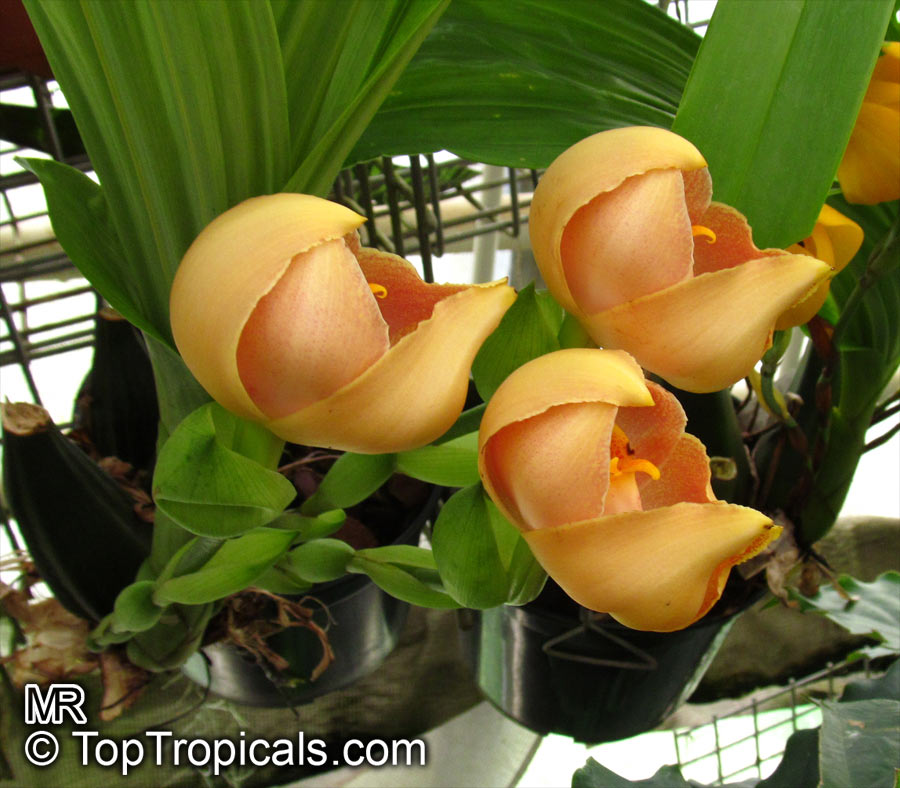
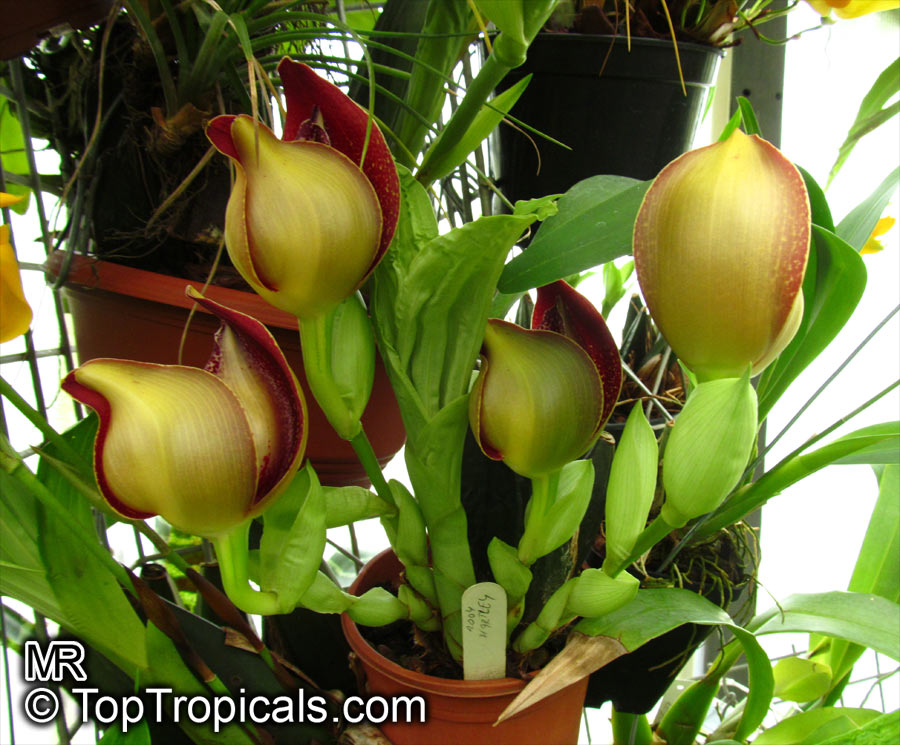
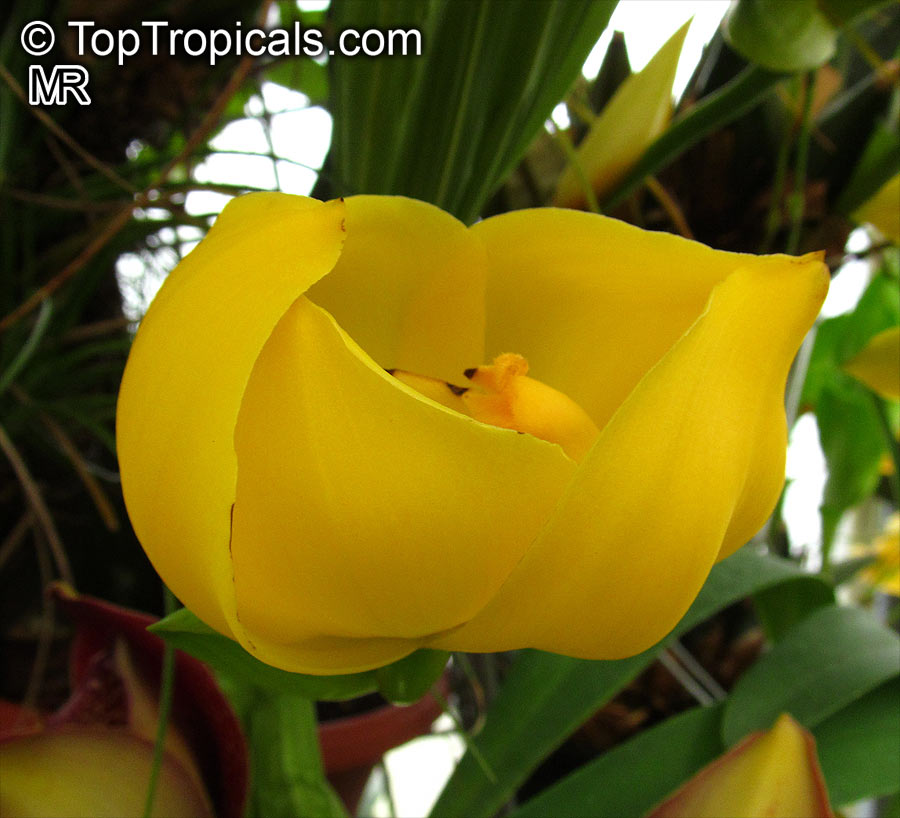
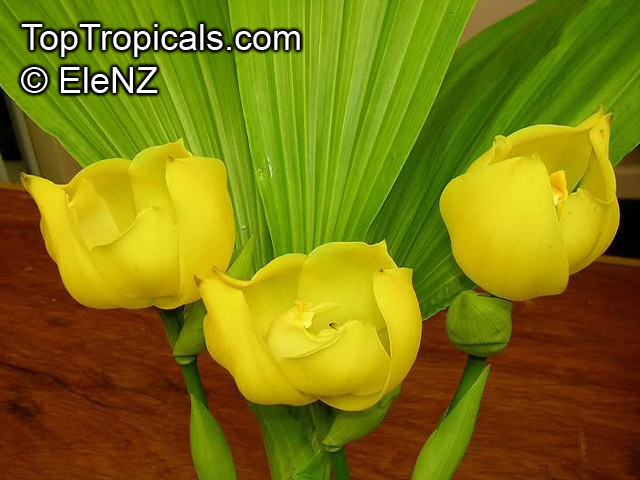
Botanical name: Anguloa sp.
Common name: Tulip Orchid
Family: Orchidaceae
USDA Zone: 9-10

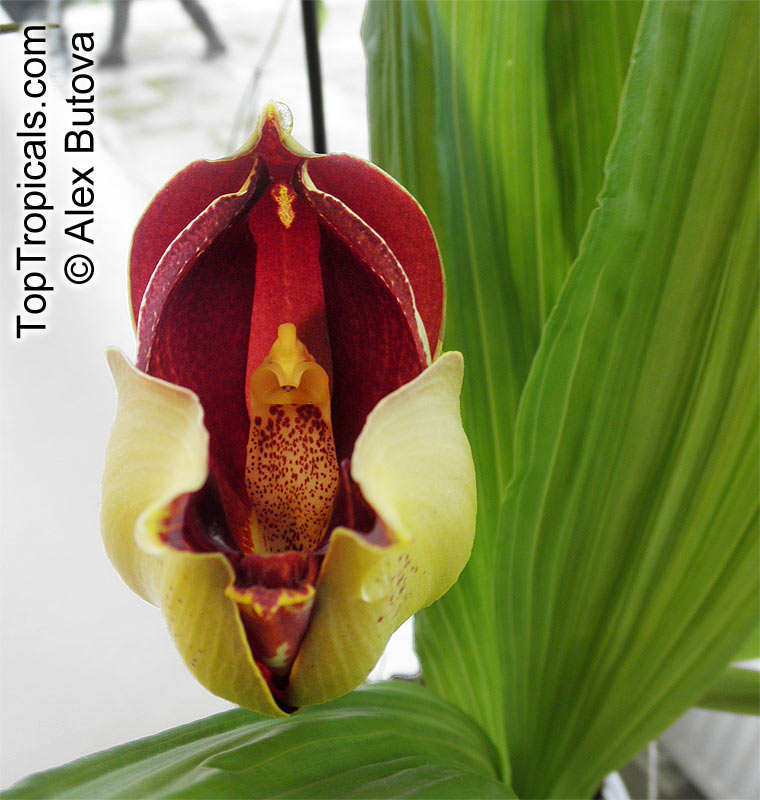
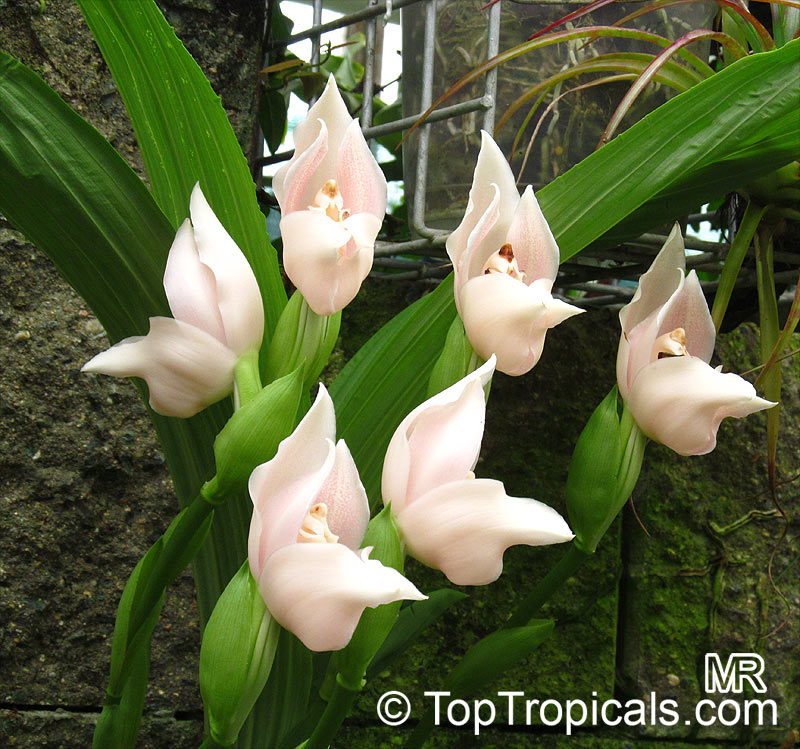
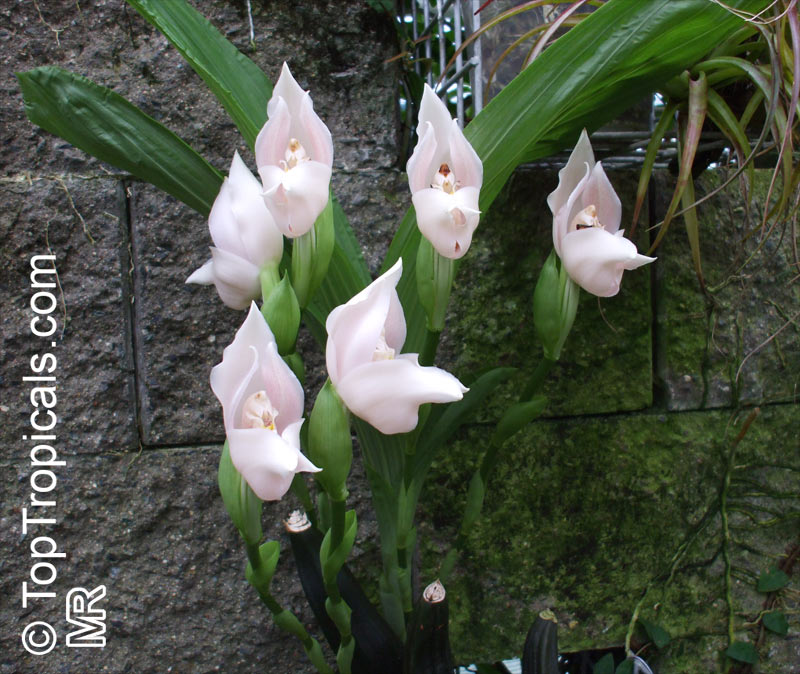
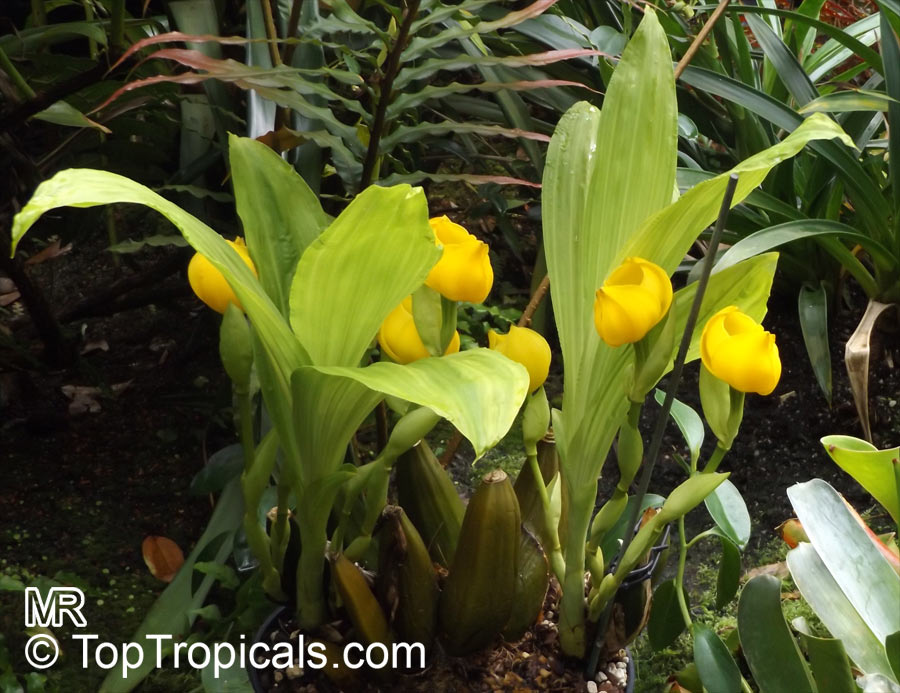
Anguloa sp. is a small shrub grows from 2-5 ft, making it ideal for containers or small gardens. It prefers semi-shade to full sun, with regular watering. In hot regions it needs Moderate water for optimal health, and grows best in USDA Zones 9-11. When in season it presents large, showy blooms in shades of pink, white, and off-white, red and crimson, even vinous and yellow-orange. The blooms are sweetly fragrant, having strong scent of cinnamon, and attract both butterflies and hummingbirds.
When growing in a pot in colder regions, it's important to keep it sheltered from any frost. The soil should be kept slightly moist, not wet, so it is advisable to water only when the soil slightly dries up. Frequent misting may also help to keep some moisture around the plant. A layer of mulch in winter can help protect the roots from any natural frost.
Overall Tulip Orchids are a moderately easy to care for plant. As long as the climate is hospitable and given the right balance of water and sun, the reward of large, show stopping blooms is worth the effort.
Botanical name: Ansellia africana
Common name: Leopard Orchid
Family: Orchidaceae
Origin: South Africa
USDA Zone: 10-11
Cold tolerance: 50°F
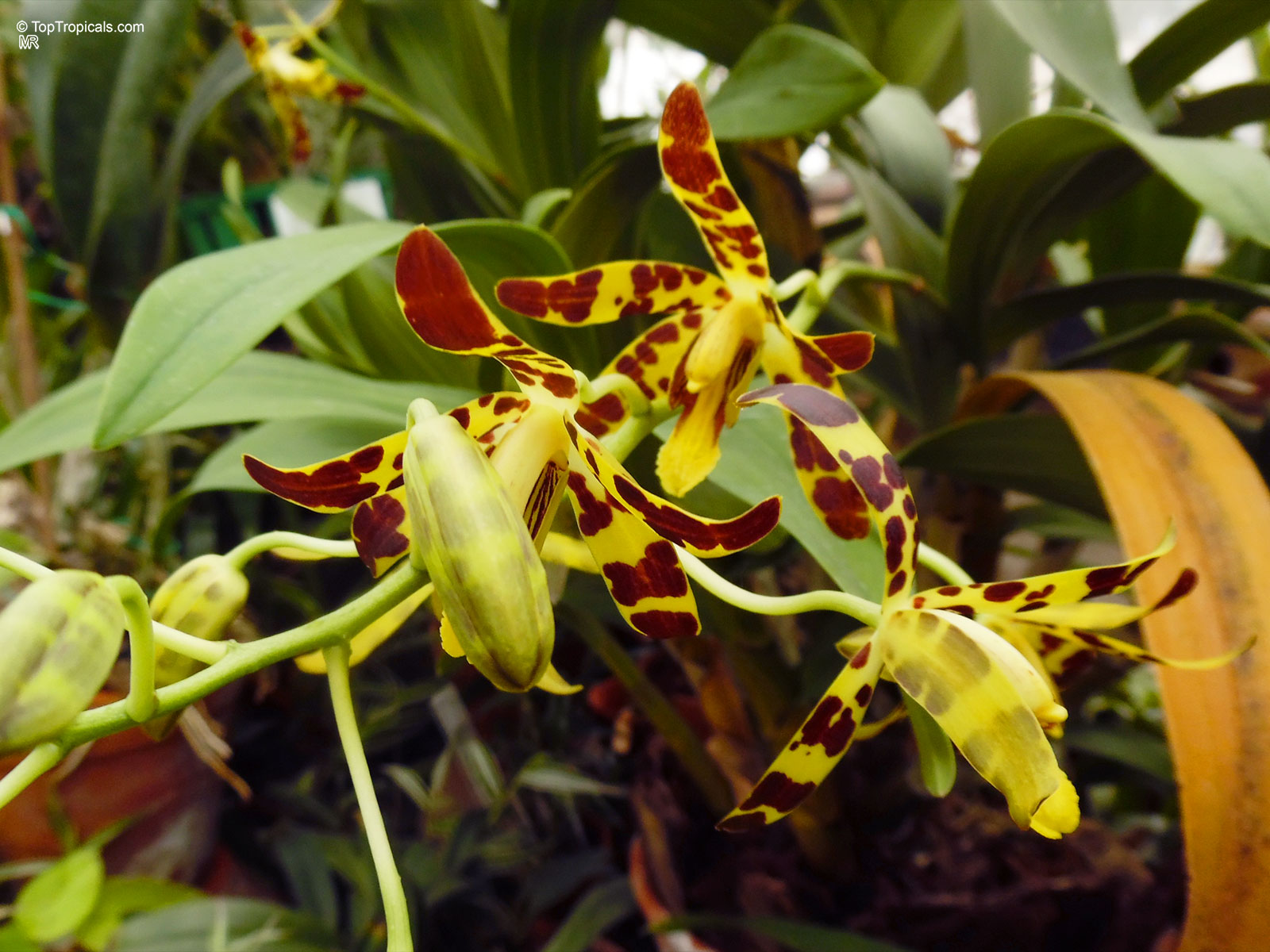
Ansellia africana, also known as the Leopard Orchid, is a striking epiphytic orchid native to sub-Saharan Africa. It forms large clumps of tall, cane-like pseudobulbs with long, arching leaves, and produces numerous yellow flowers covered with bold brown or maroon spots that resemble the pattern of a leopard's coat. These showy blooms appear in branching sprays and make the plant one of the most distinctive African orchids. The species is highly regarded for its dramatic floral display and the ability to thrive in bright light, often growing high in trees in the wild.
In cultivation, Ansellia africana requires warm temperatures, abundant light, frequent misting to keep aerial roots hydrated, and good air movement to prevent rot. It benefits from regular watering during active growth but prefers a drier rest period after flowering. This orchid is not frost tolerant and should be grown in USDA Zones 10-11, with protection required if temperatures fall below 50 F. Large plants adapt well to baskets or open containers that allow their extensive roots to develop freely, and they reward consistent feeding with impressive floral displays.
Botanical name: Arpophyllum giganteum
Common names: Hyacinth Orchid, Bottlebrush Orchid
Family: Orchidaceae
Origin: Central America
USDA Zone: 9-10
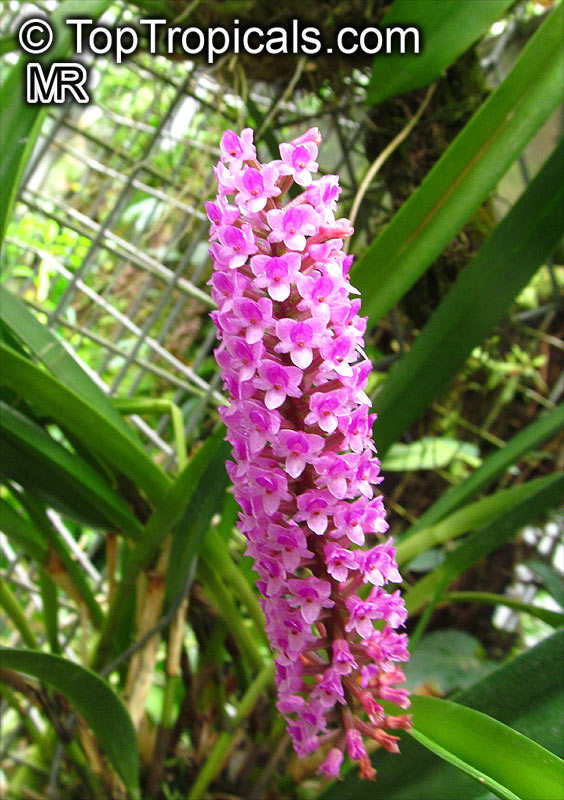
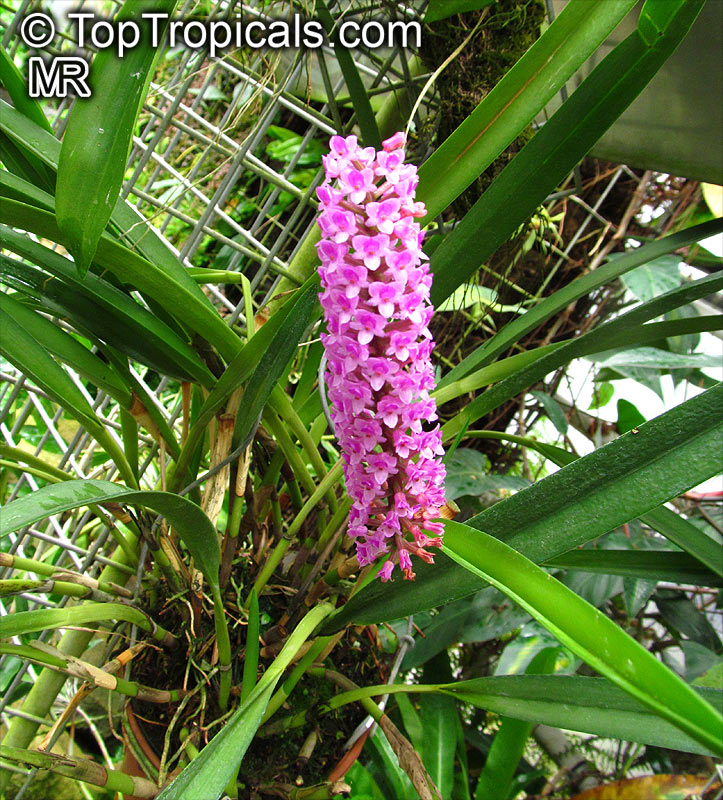
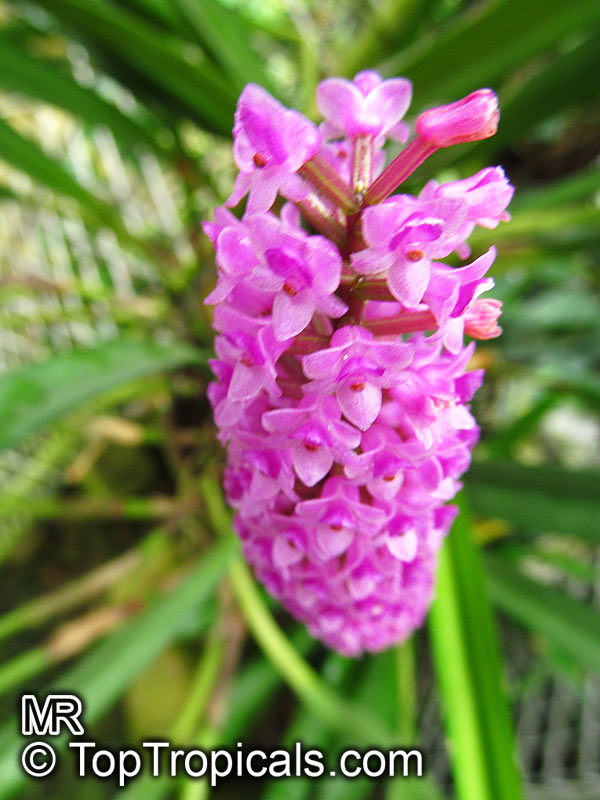
Arpophyllum giganteum, commonly known as Hyacinth Orchid, is a type of epiphytic orchid native to Central America. This small shrub typically grows to a height of 2 to 5 ft and thrives in USDA Zone 9-11. Its bright pink flowers appear in the spring and summer, with the single flower head up to 40 cm in length.
The Hyacinth Orchid will grow best when provided with semi-shade and moderate water. For those living in colder regions it can be grown in containers. Place the container in a spot where it will receive filtered indirect sunlight, potted in a well-draining potting mix and watered around once a week, making sure it is not left in standing water. Fertilizer, when needed, should be mixed in with the watering. Allow the orchid to dry out between each watering and maintain a temperature of at least 65°F. Taking care to not overwater, as this can result in the orchid developing root rot.
In summary, the Arpophyllum giganteum, otherwise known as the Hyacinth Orchid, is native to Central America and is an ideal houseplant for those living in USDA Zones 9-11. It is a small shrub, growing up to 2-5 ft tall and producing single flower heads up to 40 cm in length. When caring for, it will require semi-shade, moderate water, and temperatures of at least 65°F. Those living in colder regions should plant in containers and take special caution not to overwater. With the right care, the bright pink flowers of the Hyacinth Orchid will be sure to be brightening your home come spring and summer.
| Next | |
Use link to repeat this search:
https://toptropicals.com/cgi-bin/garden_catalog/cat.cgi?find=orchidaceae&search_op=and&keyword_op=and&language=e&number=10
&no_change_lang=1&user=tt&sale=1&first=0