Garden Blog - Top Tropicals

Date: 2 Apr 2026

Stop Fixing Your Soil: 15 Bulletproof Fruit Trees for Tough Ground
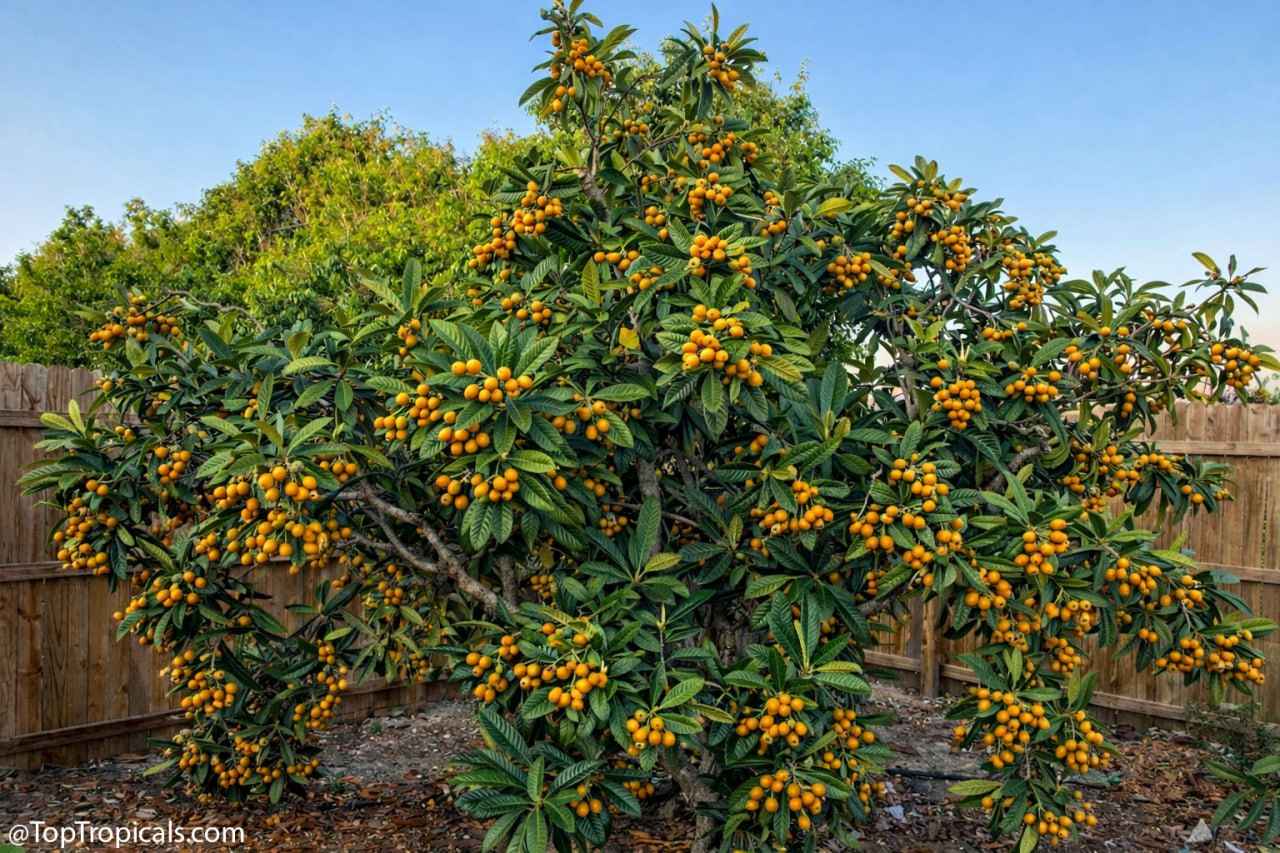
Loquat (Eriobotrya japonica) fruiting

Loquat (Eriobotrya japonica) fruiting

Stop Fixing Your Soil: 15 "Bulletproof" Fruit Trees for Tough Ground 💩

Not everyone starts with a lush, loamy paradise. In many parts of Florida and the South, "soil" is just a polite word for sand, limestone rock, or depleted clay.
The biggest mistake new gardeners make? Spending hundreds of dollars on soil amendments before they ever put a tree in the ground.
The secret the pros know: You don't need to change your land to fit your plants; you need to choose plants that love your land. Some of the most delicious fruits actually thrive on neglect - and a few even produce better fruit when the soil is "poor."


🌳 The "Big 5" Toughest Fruit Trees


If your yard is a dry, sandy lot or a rocky outcrop, start with these. They are the ultimate "survivors."

Jujube, Chinese Date (Ziziphus jujuba): Arguably the toughest fruit tree on earth. It laughs at drought, poor soil, and neglect. The fruit is crisp like an apple when fresh and sweet like a date when dried.

Loquat (Eriobotrya japonica): A Southern staple. It’s evergreen, beautiful, and produces honey-sweet fruit in early spring when nothing else is ripe.

Mulberry (Morus alba): If you can’t grow a Mulberry, you might be gardening on the moon. It grows in sand, clay, or sidewalk cracks with equal enthusiasm.

Fig (Ficus carica): Figs actually prefer not to be pampered. In overly rich soil, they grow lots of leaves but little fruit. Give them well-drained, mediocre soil and they’ll thrive.

Pomegranate (Punica granatum): These trees are "stress-lovers." Rocky, alkaline soil is no problem, and a bit of soil stress often results in a higher sugar content in the fruit.

Pomegranate Plant Facts

Botanical name: Punica granatum
Also known as: Pomegranate, Granada, Grenade, Pomegranate, Granada, Anar, Granaatappel, Pomo Granato, Romeira, Melo Grano
USDA Zone: 8 - 11
Highligths Large shrub 5-10 ft tallSmall tree 10-20 ftFull sunWatering: Moderate. Water when top soil feels dryRed, crimson, vinous flowersThorny or spinyEdible plantDeciduous plantEthnomedical plant.
Plants marked as ethnomedical and/or described as medicinal, are not offered as medicine but rather as ornamentals or plant collectibles.
Ethnomedical statements / products have not been evaluated by the FDA and are not intended to diagnose, treat, cure, or prevent any disease. We urge all customers to consult a physician before using any supplements, herbals or medicines advertised here or elsewhere.Subtropical plant. Mature plant cold hardy at least to 30s F for a short timeSeaside, salt tolerant plant
Get personalized tips for your region


🌳 Tropical Flavors That Don't Need "Perfect" Dirt


You don’t need a rainforest to grow tropical treats. These species are surprisingly resilient once they get their roots established.

🌟 The Sand-Lovers:

Mango (Mangifera indica): While young trees need a little babying, a mature Mango is incredibly drought-tolerant and handles Florida’s sandy "sugar sand" like a champ.

Mango Plant Facts

Botanical name: Mangifera indica
Also known as: Mango
USDA Zone: 9 - 11
Highligths Large tree taller than 20 ftSmall tree 10-20 ftFull sunWatering: Moderate. Water when top soil feels dryYellow, orange flowersPink flowersEdible plantSeaside, salt tolerant plant
Get personalized tips for your region


Sapodilla (Manilkara sapota): A rugged, wind-resistant tree that produces fruit tasting like brown sugar and pear. It is a top-tier choice for coastal or sandy areas.

Tamarind (Tamarindus indica): It’s slow-growing but patient. Once it’s in, it’s there for a century, regardless of soil quality.

🌟 The Low-Maintenance Stars


Longan (Euphoria longana): If you’ve struggled with finicky Lychee trees, try Longan. It’s more cold-hardy and much less picky about its soil.

Citrus: While they need regular feeding (fertilizer), Citrus trees are naturally adapted to the sandy ridges of the South.

🌟 The "Quick-Win" Berry & Shrub Layer


If you want fruit this year, don’t wait for a tree to mature. Add these hardy producers to your edges. And here is why it works:

Dragon Fruit (Hylocereus undatus). It’s a cactus! It literally prefers poor, fast-draining soil over rich potting mixes.

Barbados Cherry (Malpighia glabra). A vitamin C powerhouse that handles low-nutrient soil with ease.

Grumichama (Eugenia brasiliensis). Slower grower, but steady and tolerant once established.

Surinam Cherry (Eugenia uniflora). Virtually indestructible. Often used as a hedge because it grows so vigorously in poor soil.

Pineapple Guava (Feijoa sellowiana). A beautiful silver-leafed shrub that is salt-tolerant and drought-resistant.

Pineapple Plant Facts

Botanical name: Ananas comosus
Also known as: Pineapple, Pina
USDA Zone: 9 - 11
Highligths Small plant 2-5 ftSemi-shadeFull sunWatering: Moderate. Water when top soil feels dryOrnamental foliageThorny or spinyEdible plantSubtropical plant. Mature plant cold hardy at least to 30s F for a short time
Get personalized tips for your region


🌳 The Strategy: "Plant First, Improve Later"


In the South, the "dig a $100 hole for a $10 tree" rule doesn't always apply. Trying to completely re-engineer your soil often leads to drainage issues (the "bathtub effect").

Try this instead:
1. Select a species naturally adapted to your pH and texture.
2. Plant it at the correct height (never too deep!).
3. Mulch heavily with wood chips. This improves the soil from the top down over time, mimicking a natural forest floor.

🛒 Shop Fruit Trees and Mango

📚 Learn more:


· Loquat, Sapodilla, Mulberry, Eugenia, Tamarind - in Plant Encyclopedia
· 10 best fruit trees to grow in Florida and Southern landscapes

#Food_Forest #How_to #Discover

🟢 Join 👉 TopTropicals
Date: 16 Mar 2026

Can your cat snore this loud? Sound up

Cat Niki

Can your cat snore this loud? Sound up 📣 🎤

Why listening to a cat snoring is good for your health 💤

😴 Scientists have studied many natural relaxation sounds - ocean waves, rain on the roof, forest wind. But one of the most overlooked therapeutic sounds may be much closer to home: a cat snoring next to you.

😴 When a cat snores, it produces slow, rhythmic vibrations that naturally encourage the human brain to relax. Similar to white noise, this gentle rumble can help calm racing thoughts and lower stress levels. The brain interprets the steady sound as a signal that everything around you is safe and peaceful - after all, if the cat is sleeping that deeply, the world can't be that dangerous.

😴 Studies on human-animal interaction show that simply being near a relaxed pet can reduce cortisol levels, lower blood pressure, and even improve mood.

😴 And unlike meditation apps or sleep machines, a snoring cat comes with additional health benefits: warmth, occasional purring, and the strong reminder that sometimes the best thing you can do for your health is exactly what the cat is doing - lie down, relax, and take a nap.

😴 Side effects include: Zero productivity and a sudden urge to cancel all your plans. 😴

🐈📸 Cat Niki is fast asleep and snoring at TopTropicals PeopleCats.Garden.

#PeopleCats #Discover

🟢 Join 👉 TopTropicals

Date: 2 Jun 2026

The Holy Grail of Medinillas: Why Collectors are Chasing the Philippine Pink

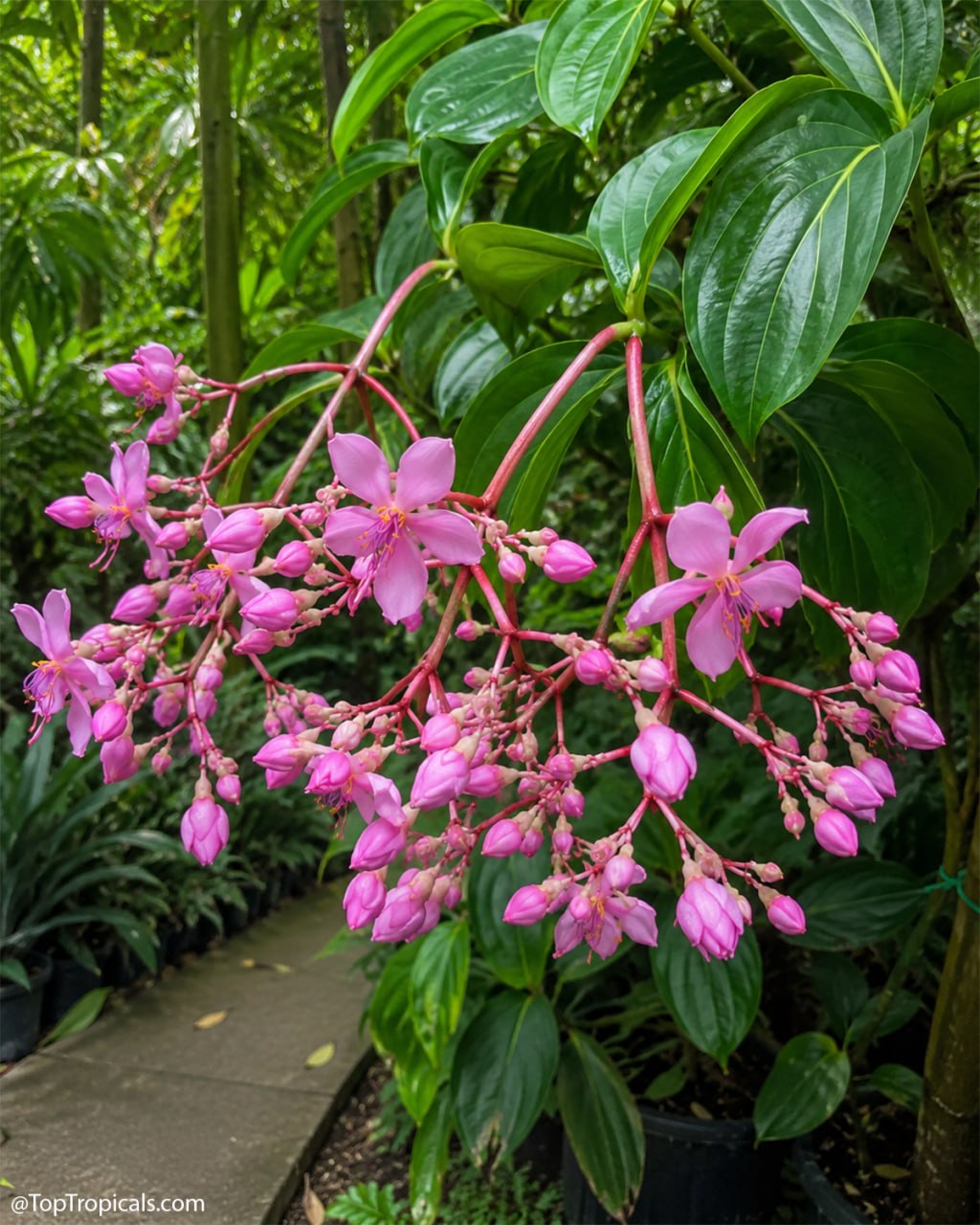
Medinilla apoensis - Philippine Pink

Medinilla apoensis - Philippine Pink

Medinilla apoensis - Philippine Pink

🎀 The Holy Grail of Medinillas: Why Collectors are Chasing the Philippine Pink


Some tropical plants are impressive because of their massive size, others capture attention with the delicate beauty of their flowers; Medinilla apoensis - popularly known as the "Philippine Pink" - stands out because it somehow does both at the same time.

🎀This rare Philippine species produces vivid, bright pink flower clusters that rise and cascade above the foliage like glowing tropical chandeliers. Unlike many Medinillas that rely mostly on oversized pink bracts for their visual show, this species gets its dramatic appearance from the flowers themselves - large, intensely colored blooms arranged in elegant, pendant clusters.
The effect is so striking that many people assume the plant is artificial the first time they see it.

🎀 A Different Kind of Medinilla


Most indoor gardeners are familiar with the famous Medinilla magnifica, often called the "Rose Grape" plant. However, Medinilla apoensis has a completely different personality.

· Architectural Foliage: The leaves are heavily veined, lush, and deeply textured, giving the plant a rich rainforest appearance even when it isn't flowering.
· Floating Blooms: When it's time to bloom, the bright pink flowers emerge on branched, hanging stems, floating above and around the leaves instead of hiding beneath them.
· Oversized Flowers: The individual flowers can reach nearly 2 inches across—unusually large for the genus—creating a fuller and far more dramatic display than its relatives.

Its graceful, cascading growth habit only adds to the effect, making mature plants look almost sculptural.

🎀 A Rare Collectors Treasure from the Cloud Forests

As the name suggests, Medinilla apoensis originates from the Philippines, a tropical region famous for its extraordinary epiphytic plants and rich rainforest biodiversity. In the wild, these plants naturally grow perched on tree branches in humid mountain forests, where constant airflow, filtered light, and mist create the ideal microclimate.

Because it remains relatively uncommon in commercial cultivation, the "Philippine Pink" has that exact combination that plant enthusiasts love: it is rare, exotic-looking, and elegantly dramatic.

🏆 The Best Part? It is surprisingly manageable to grow indoors if you can mimic its native cloud-forest habitat.

🎀 How to Help It Thrive

Despite its finicky, ultra-tropical appearance, Medinilla apoensis isn't impossible to keep happy. Like many epiphytes, its success comes down to a few key elements:

· Light: Bright, filtered or dappled sunlight (avoid direct, scorching afternoon sun).
· Climate: Warm temperatures and consistently high humidity.
· Watering: Regular moisture, but never allow the roots to sit in stagnant water.
· The Golden Rule: Avoid dense, heavy soil. In nature, their roots are exposed to constant airflow. To prevent root rot, use a chunky, fast-draining tropical mix containing orchid bark, coco coir, and perlite.

🎀 The Ultimate Showstopper

Some plants blend seamlessly into the background of a collection. Medinilla apoensis is not one of them.

Between the heavily textured foliage, the sculptural cascading habit, and those glowing pink flowers suspended like fine jewelry, this is the kind of plant that instantly becomes the center of attention in a greenhouse, patio, or bright living room.

For the dedicated plant collector, finding one of these rare treasures in full bloom feels less like routine gardening and a lot more like discovering hidden tropical treasure.

🛒 Shop Medinilla plants

📚 Learn more:

Philippine Pink Medinilla Plant Facts

Botanical name: Medinilla apoensis
Also known as: Philippine Pink Medinilla
USDA Zone: 10
Highligths Small plant 2-5 ftSemi-shadeWatering: Moderate. Water when top soil feels dryWatering: Regular. Let topsoil dry slightlyPink flowers
Get personalized tips for your region

· Medinilla apoensis in Plant Encyclopedia
· What pot is good for Medinilla?
· Is this a Plant or a Coral?
· How to add a splash of tropical flair to your plant collection
· The Drama you want in your garden: dazzling Medinilla!
· Medinilla Gregori Hambali - an Exquisite Natural Wonder
· The Rolls Royce of House Plants: Medinilla

#Shade_Garden #Container_Garden #Discover

🟢 Join 👉 TopTropicals

Date: 31 May 2026

Avocado Florida Hass: the hidden world beyond green and black

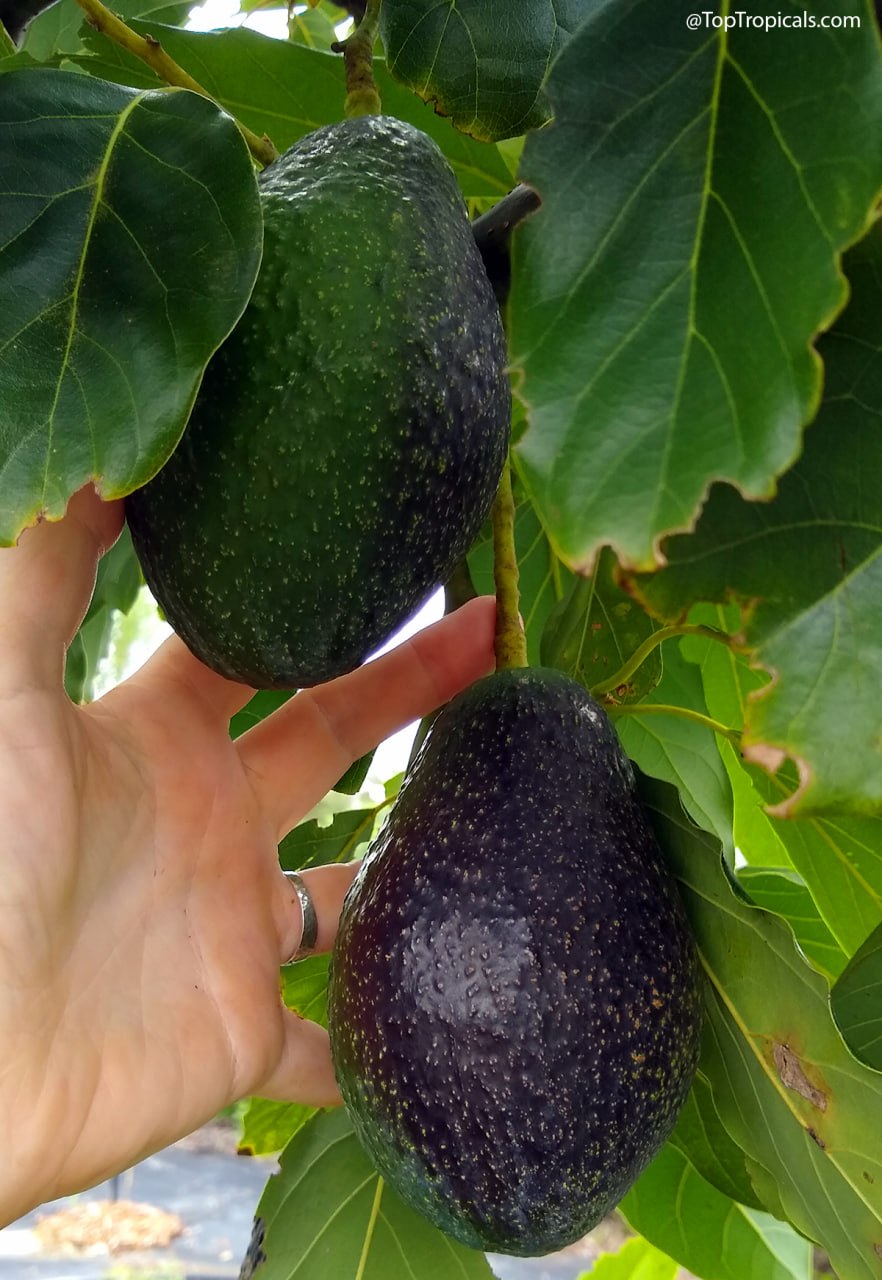
Avocado Florida Hass

Avocado Florida Hass

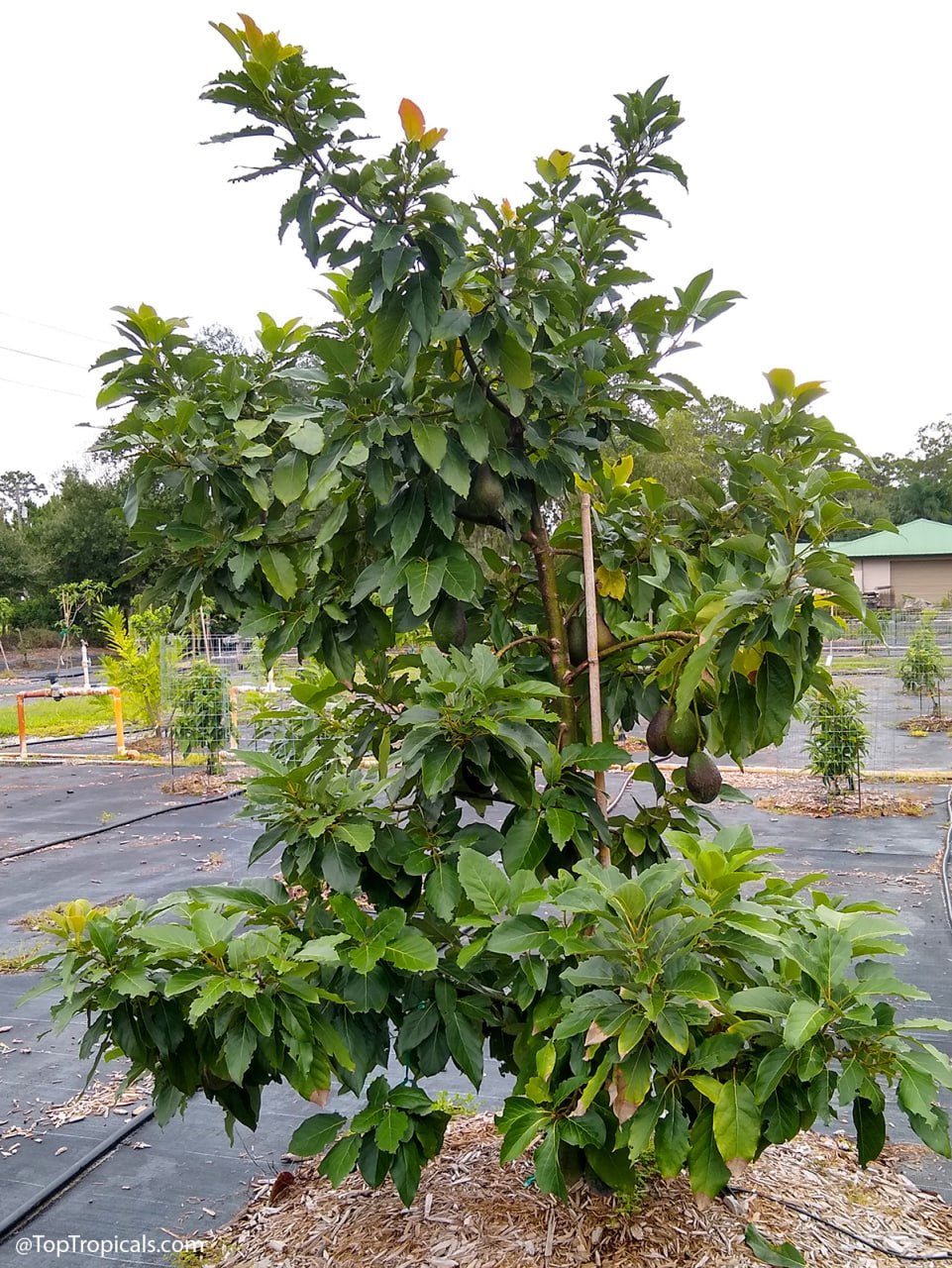
Avocado Florida Hass tree

Avocado Florida Hass tree

Avocado Florida Hass: the hidden world beyond green and black


Florida Hass brings some of the flavor characteristics of traditional Hass to Florida gardens while offering better adaptation to humid conditions. The fruit is smaller than many Florida avocados but rich, creamy, and ideal for fresh eating. It is often recommended for gardeners seeking a Hass-like experience in the Southeast.

· Botanical name: Persea americana 'Florida Hass'
· Origin: Mexican (Florida selection)
· Cold hardiness: Tolerates temperatures around 30°F
· USDA zones: 9b-11
· Flower type: A
· Tree size: Approximately 30 ft x 20 ft
· Growth habit: Compact, upright, and well suited to home gardens
· Foliage: Dense, glossy green foliage that provides an attractive evergreen canopy
· Fruit size: 4-12 oz
· Fruit shape: Pear-shaped to oval
· Fruit color: Green when immature, turning dark purple-black at maturity
· Skin: Thick, pebbly, Hass-like skin
· Flesh: Creamy, smooth, and high in oil
· Flavor: Rich, buttery, and similar to Hass, with excellent eating quality
· Season: July-September
· Best use: Fresh eating, guacamole, sandwiches, salads, and gourmet dishes
· Special feature: Hass-like flavor and appearance combined with better adaptation to Florida's humid climate
· Why growers love it: Florida Hass offers the rich flavor and dark skin that avocado lovers associate with traditional Hass, but on a tree better adapted to the heat and humidity of the Southeast. Its compact size and excellent fruit quality make it a favorite for home gardens. 👉 More

💡 Avocado tip: Let the leaves stay
Fallen avocado leaves make excellent mulch. As they break down, they return nutrients to the soil and help create the natural forest-floor conditions avocados love.


🛒 Explore cold hardy Avocado varieties

📚 Learn more:


· Avocado Variety Guide: Snack or Guacamole? Collector's inspiration
· Avocado Brogdon: the hidden world beyond green and black
· Avocado Joey: the hidden world beyond green and black
· Avocado Fantastic: the hidden world beyond green and black
· Avocado Fantastic Quick Facts
· Cold-hardy avocado survival groups - what the numbers really mean
· How to protect Avocado from cold and how hardy is it?
· Avocado that laughs at frost: Mexicola Grande for cooler climates
· Cold hardy Avocado Joey - you eat it with the skin

📖 Our Book: Avocado Variety Guide, Snack or Guacamole?
·
Hard copy · PDF File Download

#Food_Forest #Avocado #Discover

🟢 Join 👉 TopTropicals
Date: 16 Jun 2026

💜 The Tree Everyone Stops to Take Pictures Of

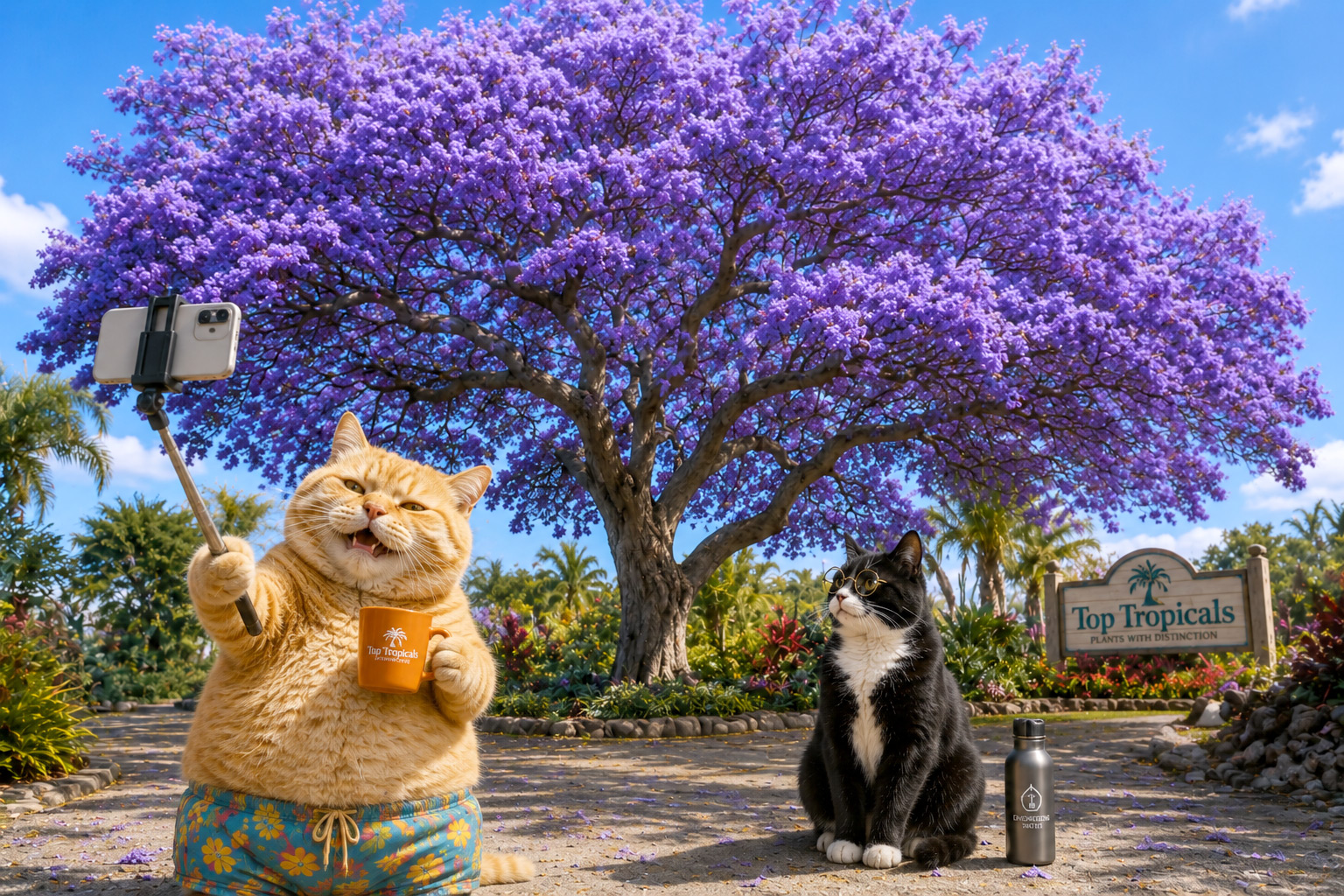
Sunshine,  an  orange  tabby  cat,  takes  a  selfie  beneath  a  blooming  purple
    jacaranda  tree  while  Smokey,  a  tuxedo  cat  wearing  glasses,  watches  nearby 
 at  Top 
 Tropicals.
Sunshine: Every angle looks good.
Smokey: That's because you're photographing a Jacaranda at peak bloom.
Sunshine: I think the purple brings out my orange.
Smokey:The Jacaranda makes everything look better.

There's a moment, if you've never seen a mature Jacaranda in full bloom, that stops you completely.

You're driving down a street, or walking through a neighborhood you've passed through a hundred times, and suddenly there it is — a tree that looks like someone painted it from memory rather than from life. The canopy spreads wide and low, covered so thoroughly in lavender-blue flower clusters that you can barely see the branches beneath. People are already stopped on the sidewalk. Someone has their phone out. A couple is standing beneath it, looking up.

You understand immediately why they stopped. You stop too.

That first encounter with a Jacaranda mimosifolia in bloom is the kind of thing gardeners remember for years. It's also, for many of them, the moment they decided they needed one.

👉Plant Your Purple Jacaranda

💜 The Tree That Turns Cities Purple

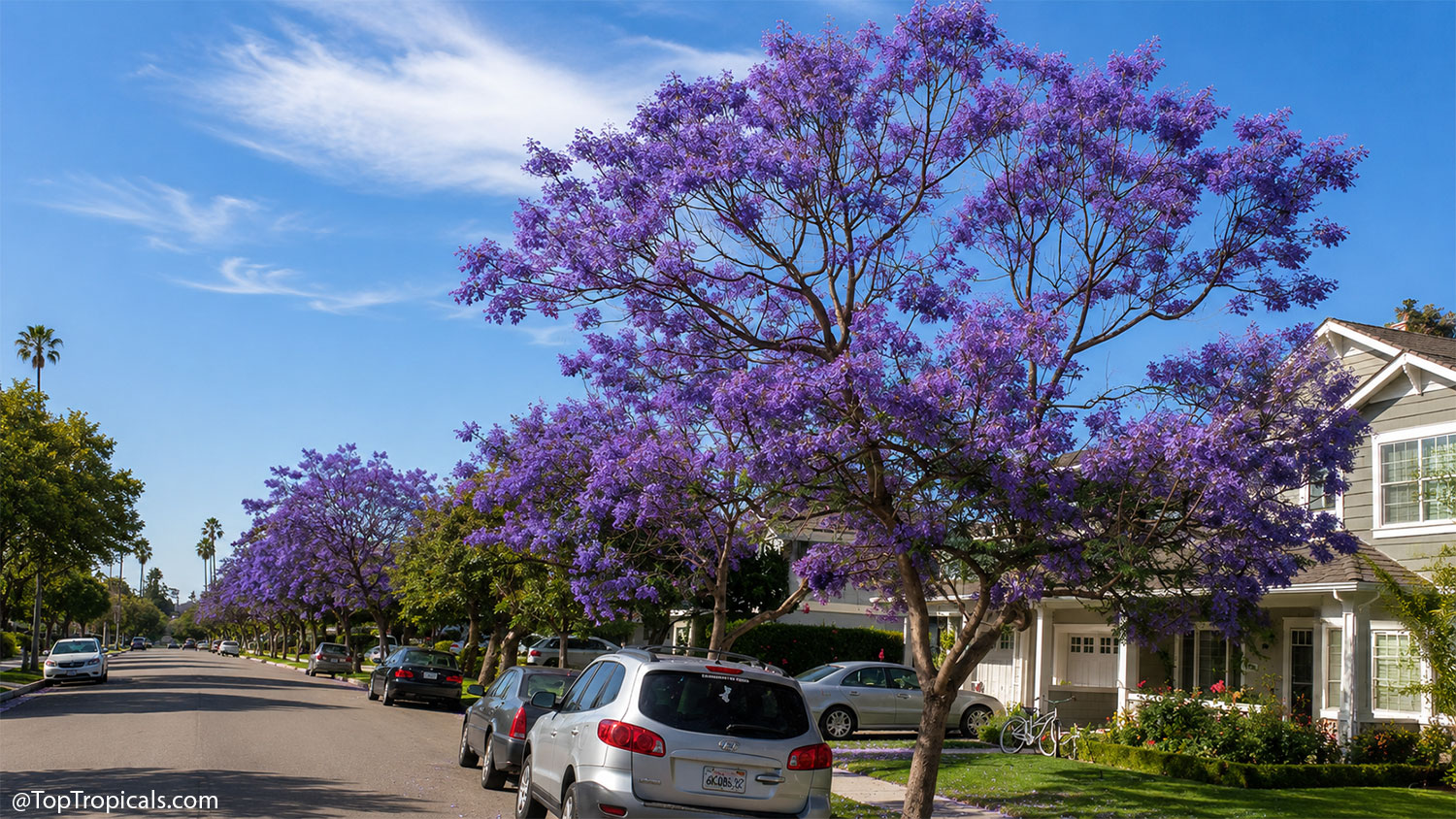
Residential  street  lined  with  blooming  jacaranda  trees  covered  in 
 vibrant  purple  flowers.  A  large  jacaranda  shades  parked  cars  and  front 
 yards,  while  additional  flowering  trees  create  a  stunning  purple  avenue 
 beneath  a  bright  blue 
 sky.

When jacarandas bloom, entire neighborhoods are transformed into rivers of purple. Their spectacular floral display turns ordinary streets into some of the most photographed landscapes of spring and early summer.

Most flowering trees get admired. Jacarandas become events.

Pretoria, South Africa is known worldwide as "Jacaranda City." During bloom season, entire neighborhoods seem to disappear beneath a haze of lavender-blue flowers.

Buenos Aires, Sydney and Brisbane have their own Jacaranda traditions. In Southern California, mature Jacarandas are so anticipated that bloom season regularly fills social media with photos of purple-lined streets and neighborhoods.

People don't merely grow Jacarandas. They wait for Jacaranda season. There's something unusual about a tree that generates that kind of anticipation. Most ornamental trees are appreciated in passing. Jacaranda creates a ritual.

💜 A Tree Surrounded by Legends


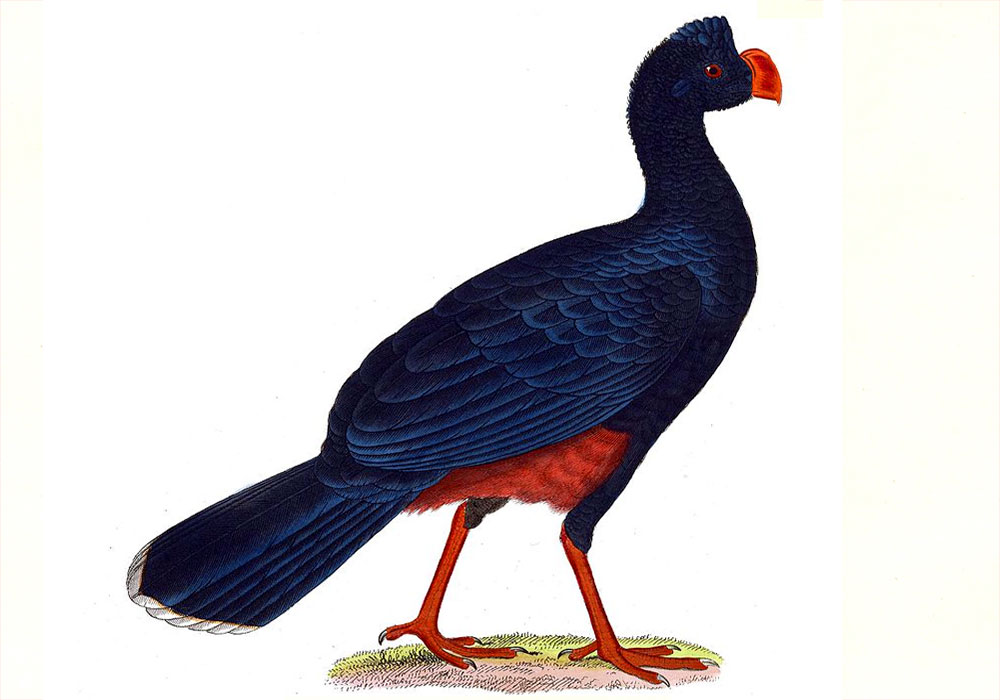
Mitu  mitu  bird  (Alagoas  Curassow)  -  adult  male.  Illustration  from 
 Nouveau  recueil  de  planches  coloriées 
 d'oiseaux,  1838

Mitu mitu — the bird of the Tupi-Guarani legend (Wikimedia Commons)

In Tupi-Guarani tradition, Mitu, a great forest bird, carried the Daughter of the Moon from the heavens and placed her in a flowering Jacaranda tree. She descended among the people, bringing wisdom and knowledge before returning to the sky.

Few trees become part of local folklore. Fewer still become part of everyday life across multiple continents.

💜 Beautiful Beyond Bloom

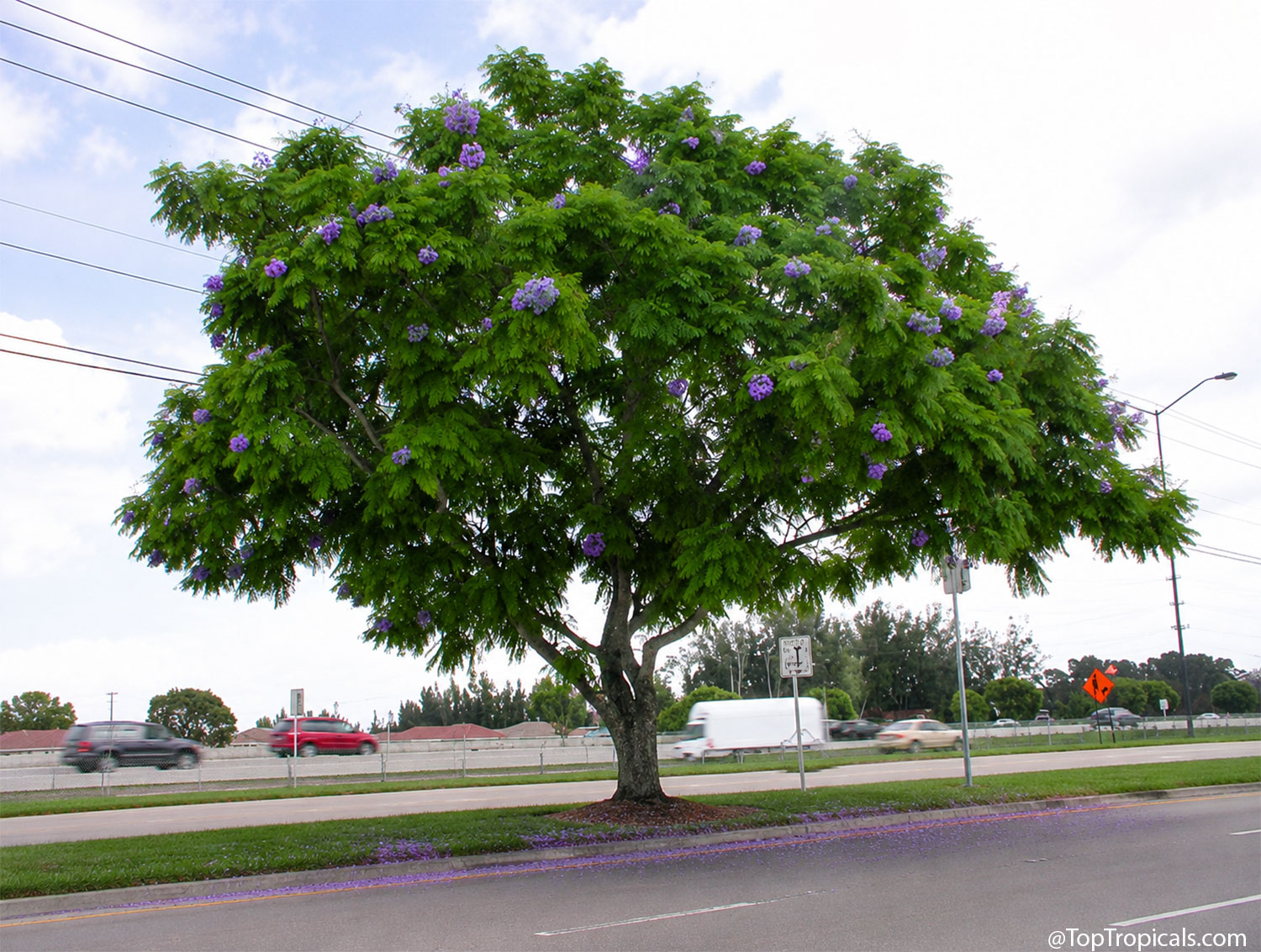
Young  jacaranda  tree  with  lush  fern-like  green  foliage  and  scattered 
 clusters  of  purple  flowers  growing  along  a  roadside.  The  broad  canopy  forms 
 a  graceful  umbrella  shape,  showing  the 
 tree's  attractive  structure  even  when  not  in  peak  bloom.

Jacaranda is beautiful even outside its main flowering season. Its finely divided, fern-like foliage creates a soft tropical canopy, while occasional clusters of purple blooms offer a preview of the spectacular display that transforms the tree into a cloud of lavender each year.

Here's what surprises people who plant their first Jacaranda: they love it even when it isn't flowering.

The foliage is finely divided and fern-like, giving the tree a delicate, airy texture that softens any landscape. The branching structure is naturally graceful, spreading wide with a canopy shape that looks considered rather than accidental. The light that comes through the leaves is gentle and dappled — the kind of shade that doesn't feel heavy, that lets enough brightness in to make the space beneath feel pleasant rather than dim.

💜 Mature Size

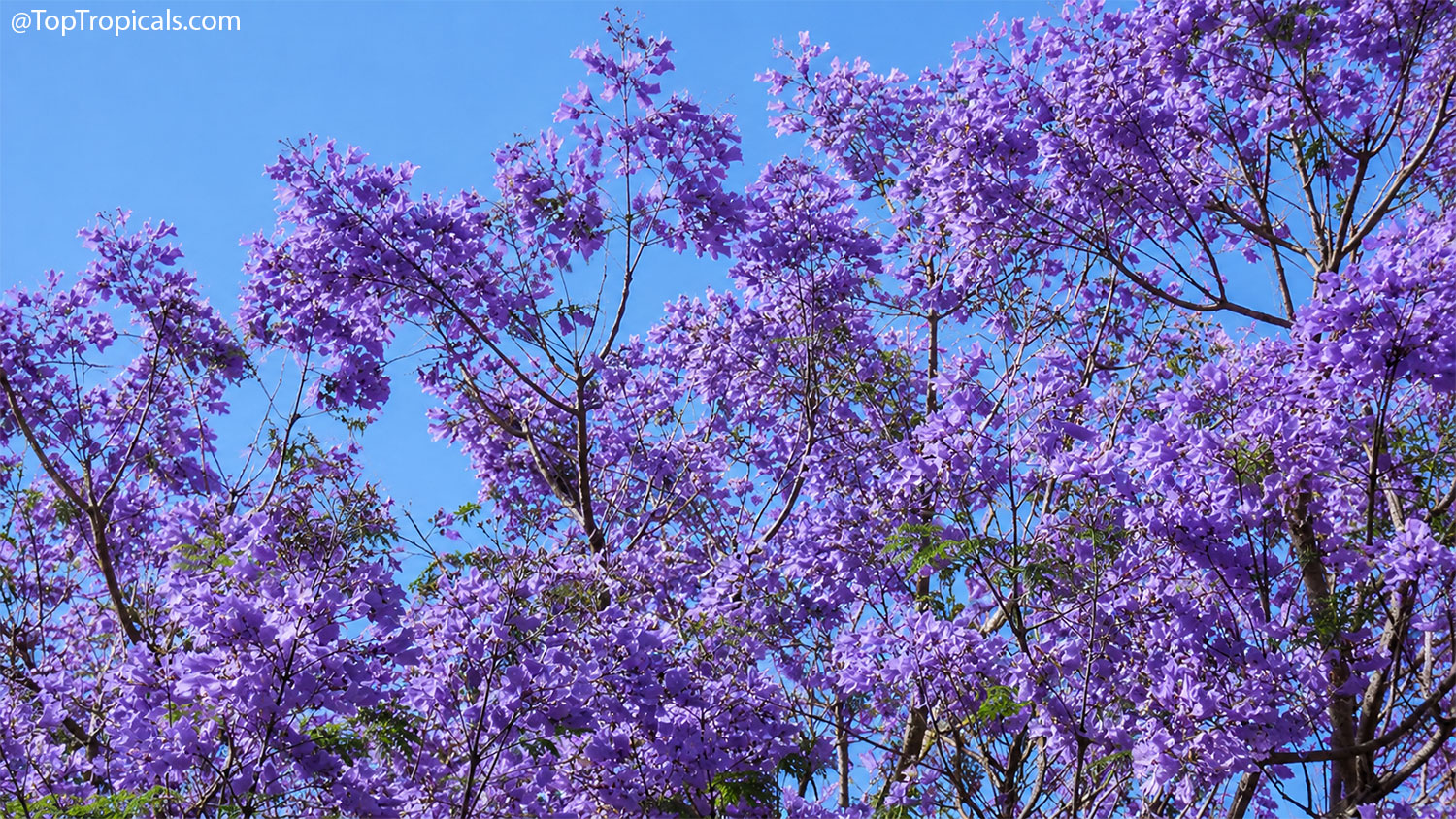
Upper  canopy  of  a  blooming  jacaranda  tree  filled  with  thousands  of 
 lavender-purple  flowers  against  a  clear  blue  sky.  The  delicate 
 trumpet-shaped  blossoms  create  a  soft,  cloud-like  effect  among  the 
 tree's  fine  branches  and  sparse  fern-like  foliage.

At peak bloom, jacaranda trees appear draped in purple clouds. The airy canopy of lavender blossoms creates a breathtaking display that has made this tree famous in gardens, parks, and city streets around the world.

A mature Jacaranda typically reaches 25 to 30 feet tall with a broad, spreading canopy of similar width. Given room to grow, it becomes a true focal point in the landscape.

That size is the point. A Jacaranda works beautifully as a specimen tree where you have room to let it express itself fully. It makes an excellent lawn tree, its canopy casting light shade over a wide area. Planted where it can be seen from a distance, it becomes a focal point in any season and a spectacle during bloom.

If you want a tree that will grow into something people notice — something that will still be there and still be blooming long after you've finished planting the rest of the garden — Jacaranda delivers.

How to Grow Jacaranda

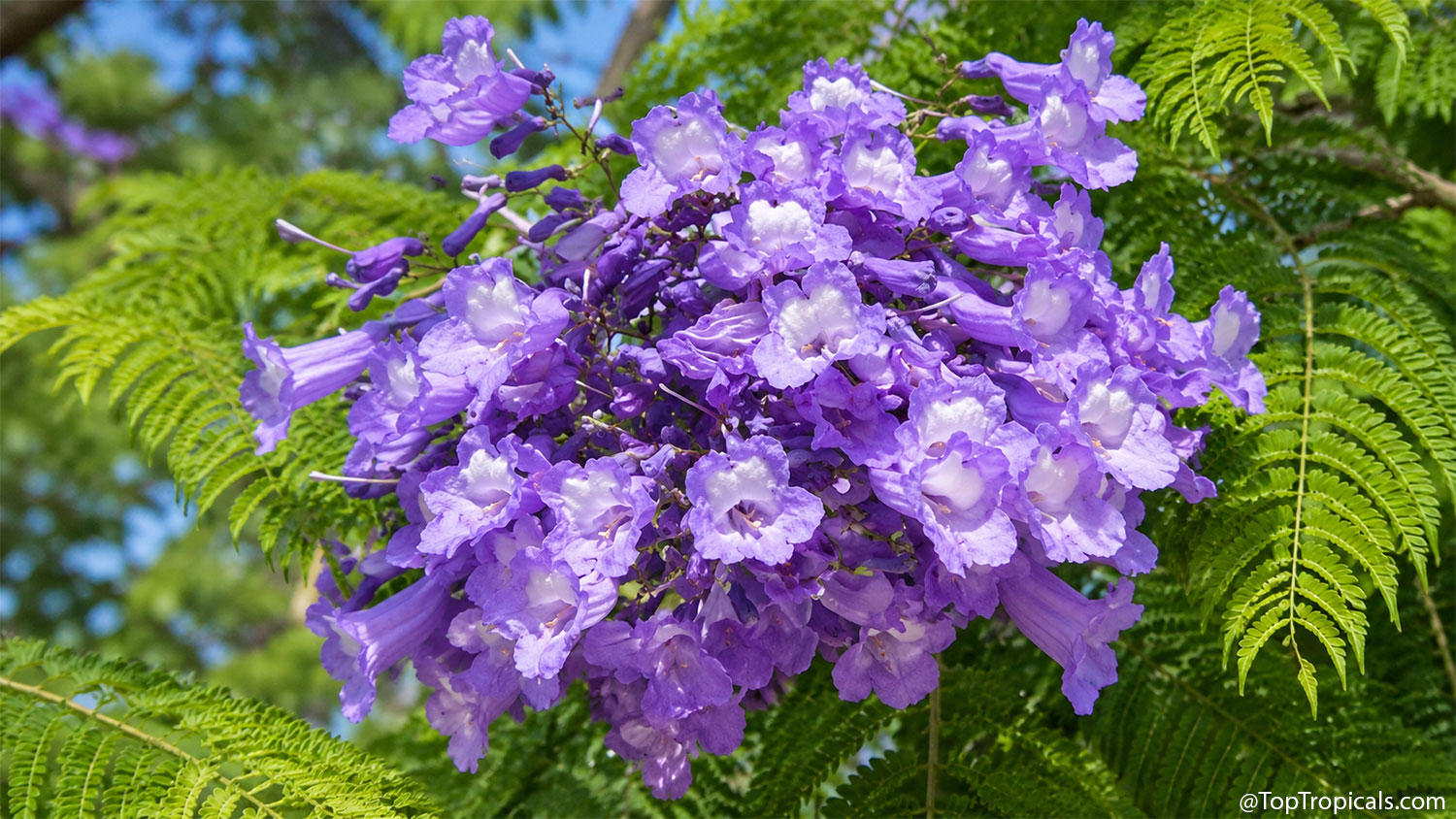
Dense  cluster  of  lavender-purple  jacaranda  flowers  surrounded  by 
 delicate  fern-like  green  foliage.  The  trumpet-shaped  blooms  are  packed 
 tightly  together,  with  pale  white  throats  creating  a  striking  contrast 
 against  the  vibrant  purple 
 petals.

The beauty of jacaranda is not only in its massive floral display but also in the individual flower clusters. Each bouquet combines dozens of delicate trumpet-shaped blooms framed by soft, fern-like foliage, creating a perfect balance of texture and color.

For best results, provide:

  • Full sun
  • Best planted away from sidewalks and driveways
  • Well-drained, sandy loam; highly sensitive to waterlogged or heavy clay soils
  • Regular watering while establishing
  • Moderate watering once mature
  • A balanced fertilizer during the growing season
  • USDA Zones: 9B – 11. Can tolerate brief, light frosts once mature. Protect from cold while young

Bloom season: Late Spring to Early Summer (Main flush), occasional light scattered bloom in Fall. As the flowers fall, they often create a colorful purple carpet beneath the canopy, extending the display from the branches to the ground below.

In warm climates such as South Florida, coastal Southern California, and Hawaii, Jacaranda can become a long-lived landscape tree that provides shade, beauty, and spectacular seasonal blooms for decades.

Top Tropicals Tip:
To help young trees get established quickly, consider using Sunshine Boosters Green Magic when planting or transplanting. During the growing season, regular feeding with Sunshine Boosters Megaflor can help support vigorous growth and a healthy canopy.
To maximize the bloom density for next season, ensure the tree receives consistent micronutrients during the late summer growth surge.

Read Top Tropicals Guide to Sunshine Boosters™

Jacaranda can also be grown in large containers, where its size may be managed through container culture and occasional pruning. This is a useful option for gardeners in colder climates or for those who wish to enjoy the tree on patios and terraces.

📚 More About Jacaranda on the Top Tropicals Garden Blog

💜 Why Gardeners Fall in Love With Jacaranda

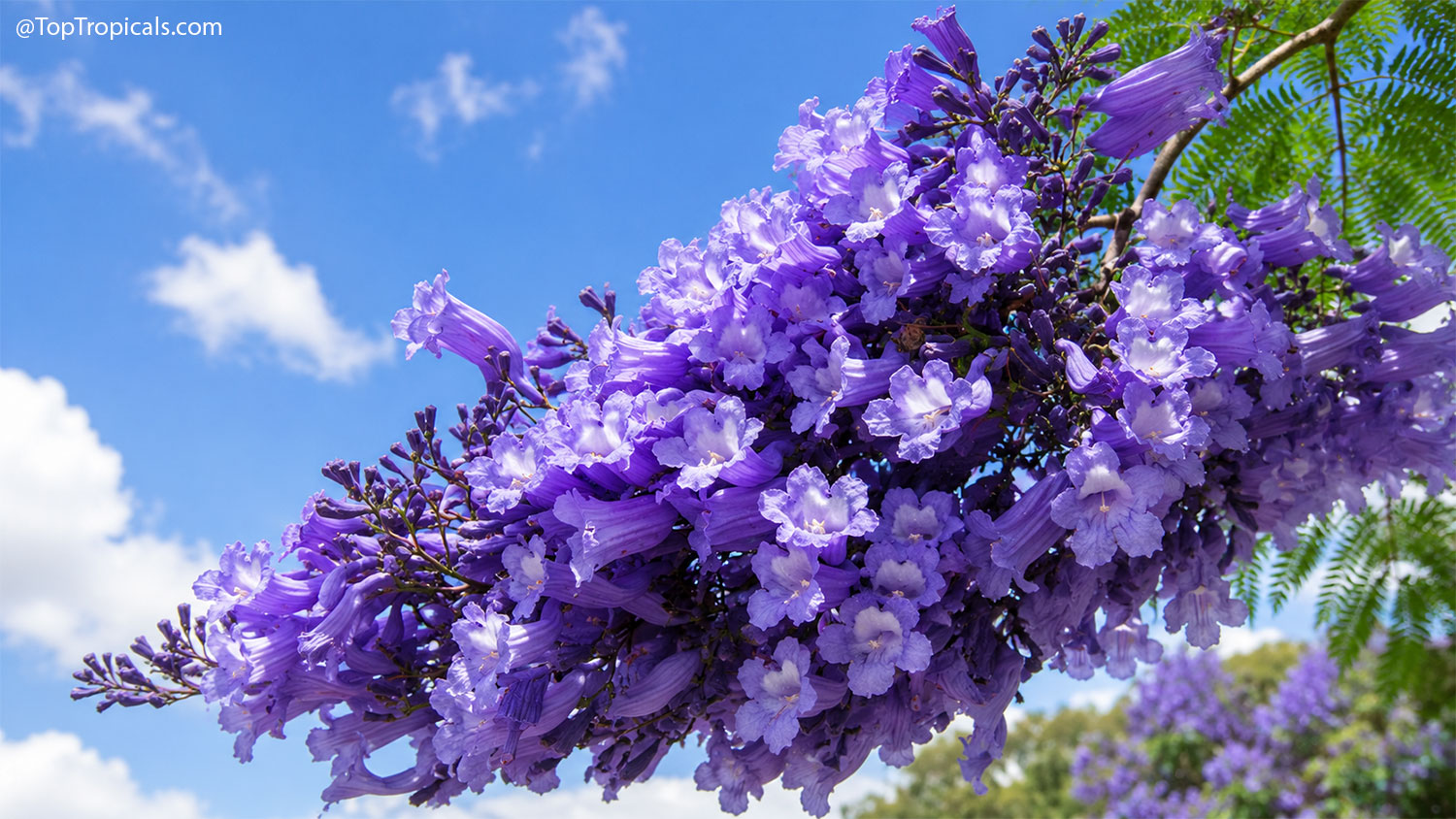
Large  cluster  of  lavender-purple  jacaranda  flowers  hanging  from  a 
 branch  against  a  bright  blue  sky  with  white  clouds.  The  trumpet-shaped 
 blooms  are  packed  tightly  together,  creating  a  spectacular  display  of  color,
    while  delicate  fern-like  foliage  frames  the 
 scene.

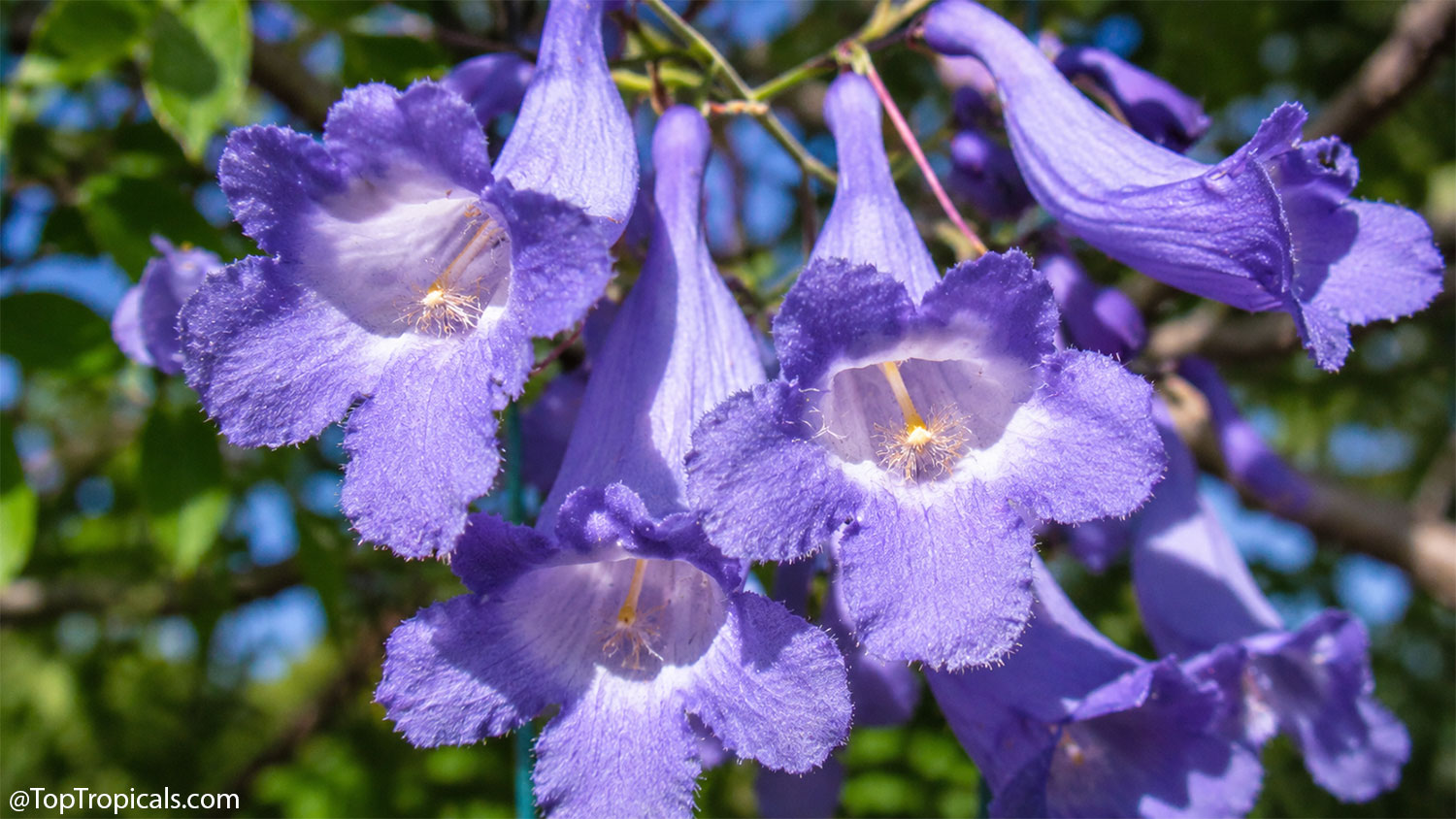
Jacaranda flowers bloom in dense clusters of lavender-purple trumpets, creating one of the most spectacular floral displays in the tree world. Against a clear blue sky, the blossoms seem to glow, giving the tree its famous "purple cloud" appearance.

Ask someone with a mature Jacaranda in their yard what it's like when it blooms, and they'll usually smile before they answer.

There's a particular pleasure in seasonal anticipation - in knowing that something beautiful is coming, in watching for the first flower clusters to appear, in the morning you walk outside and realize the tree has finally opened. Jacaranda delivers that pleasure reliably, year after year.

Mature trees become landmarks. "Turn left at the purple tree" is a surprisingly common way to find a house during Jacaranda season. They become the reason people slow down while driving past your house. They become the tree your kids remember.

Few landscape trees combine beauty, shade, elegance, and seasonal drama quite the way a Jacaranda does. Long after the flowers fade, the tree remains a graceful presence in the garden. And when bloom season returns, it reminds you exactly why you planted it.

Some trees provide shade. Others provide flowers. Jacaranda provides both.

That's a rare thing in a garden, and it's worth planting.

Sunshine: What happens when the flowers are gone?
Smokey: Then you enjoy the tree.
Sunshine: And when the flowers come back?
Smokey: Then you remember why you planted it.

👉Shop Jacaranda Trees

Close-up  of  pale  lavender  jacaranda  flowers  showing  the  distinctive 
 trumpet-shaped  blooms  with  soft,  velvety  petals  and  fuzzy  white  throats. 
 Sunlight  highlights  the  delicate  flower  texture  against  a  softly  blurred 
 background  of  green 
 foliage.

A close-up look at the intricate flowers of the Jacaranda tree (Jacaranda mimosifolia). Each velvety trumpet-shaped bloom combines soft lavender tones with delicate textures that make this tree one of the most recognizable flowering trees in the world.