Pitaya David Bowie: Dragon Fruit Beyond Pink and White - A Collectors Guide
🍉 Pitaya David Bowie: Dragon Fruit Beyond Pink and White - A Collector's Guide
Most people know dragon fruit as a bright pink fruit with white flesh from the grocery store. But that's only the beginning. The world of dragon fruits is surprisingly diverse, with varieties ranging from white to deep purple, giant fruit to compact producers, and flavors that can remind you of kiwi, pear, melon, berries, or even lemonade. In this series, we'll explore some of the most interesting dragon fruit varieties, highlighting their appearance, flavor, growth habits, and what makes each one special.
🔸 At first glance
David Bowie (Hylocereus undatus x monacanthuis) looks like a classic dragon fruit - bright red skin, white flesh, and a familiar appearance. But spend a little time with this variety and you'll discover why collectors actively seek it out. David Bowie is one of the most popular white-fleshed dragon fruit varieties, prized for its large fruit, reliable production, and refreshing flavor.
🔸 A classic dragon fruit done right
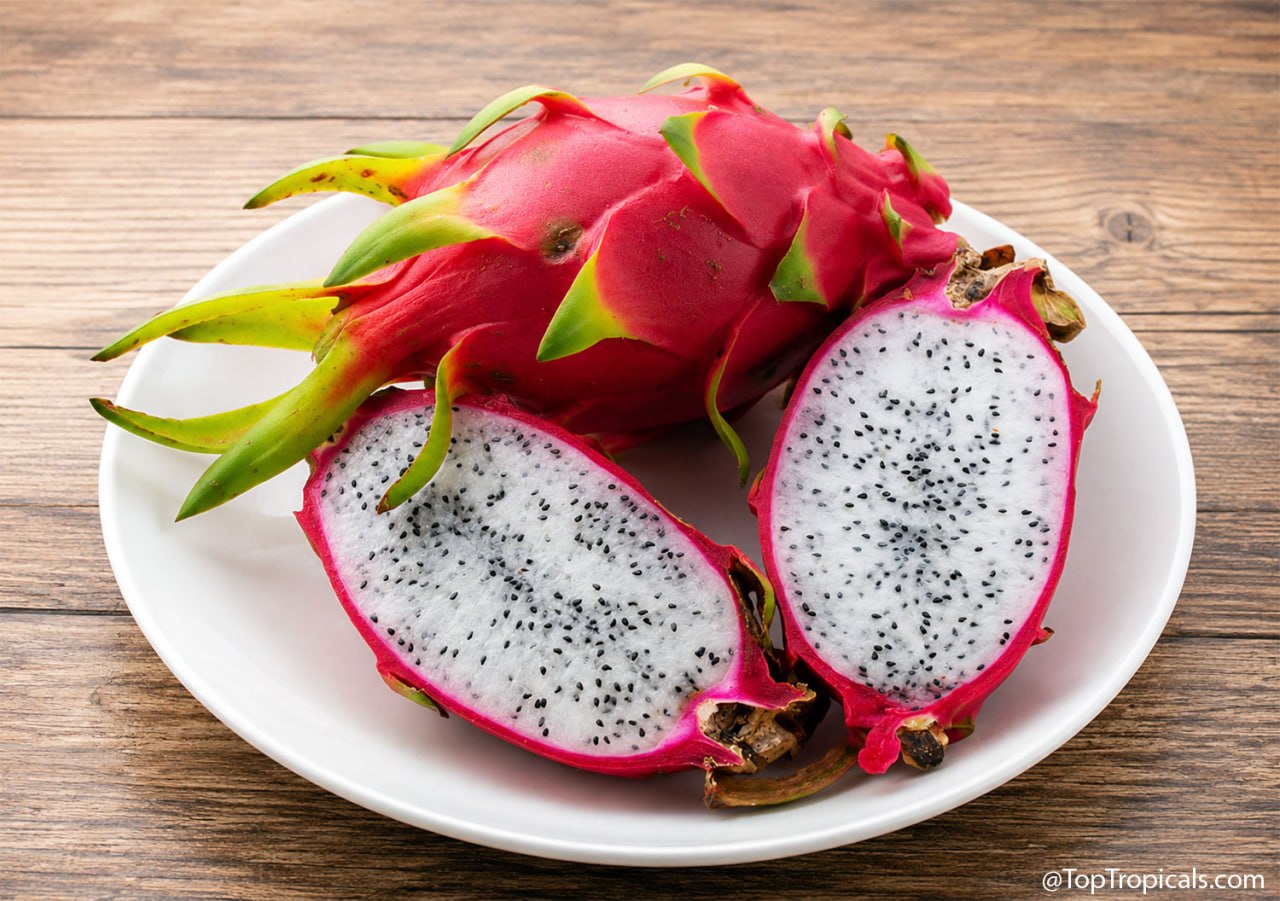
This self-pollinating variety produces medium to large fruit, often approaching a pound in weight. The bright red skin is decorated with numerous green-tipped fins, giving the fruit an especially dramatic appearance.
Among white-fleshed dragon fruits, David Bowie is known for producing larger-than-average fruit while maintaining excellent eating quality.
🔸 Refreshing flavor with a citrus twist
Unlike some dragon fruits that are valued mainly for appearance, David Bowie delivers a flavor that keeps people coming back.
The flesh is mildly sweet and refreshing, often compared to a cross between kiwi and pear. What makes it memorable is a pleasant tangy character and subtle lemony finish that brightens the flavor and makes it especially enjoyable chilled.
The fruit is excellent eaten fresh and is also popular for smoothies, fruit salads, and garnishes.
🔸 Easy to grow and rewarding
David Bowie is self-pollinating, making it an excellent choice for home gardeners who want reliable fruit production from a single plant.
Like other dragon fruits, it is a vigorous climbing cactus that produces spectacular night-blooming white flowers before setting fruit. The blooms are large, fragrant, and beautiful enough to make the plant worth growing even before the harvest arrives.
🔸 Why collectors love it
Not every dragon fruit has to be purple, yellow, or unusually exotic to earn a place in a collection.
David Bowie remains popular because it combines everything growers want - attractive fruit, dependable production, large size, refreshing flavor, and self-pollinating flowers. Sometimes the classics become classics for a reason. 👉 More...
"Bless you all for finding this and sharing… Love those books your research cats are hunting through. Where do I get those, too?"
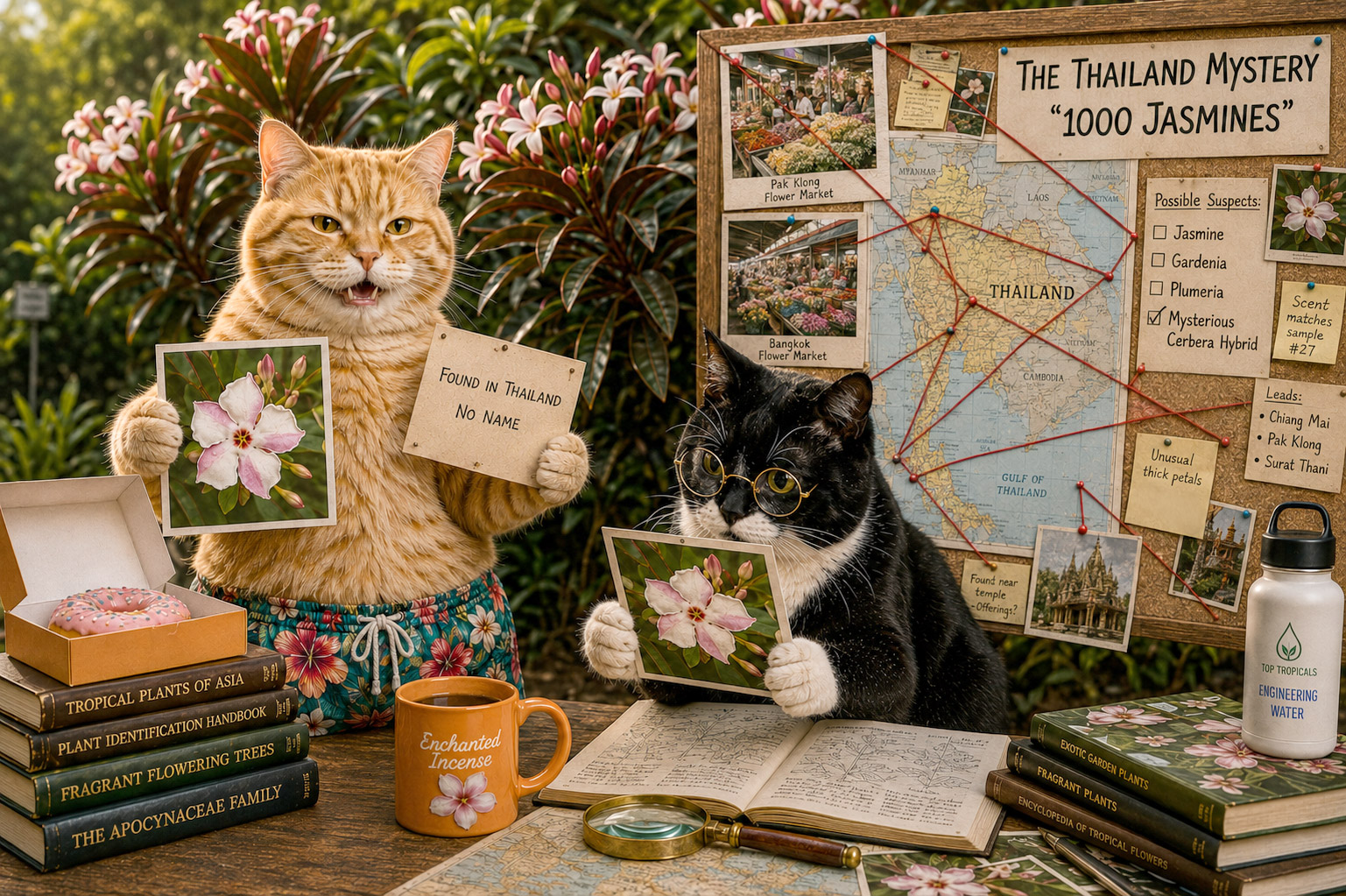
Smokey & Sunshine looked at each other. Then at the books. Then at the donuts.
Sunshine: I knew someone would ask about them. Smokey: About the plants in the photo? Sunshine: No. The books. People want to read them. Smokey: Most of those books don't exist. We made them up for the photo. Sunshine: "The Apocynaceae Family" sounded very convincing. Very distinguished. Like the Corleone family, but with more flowers and fewer offers you can't refuse. Smokey: The Corleones were also toxic. So the comparison holds. Did you notice you spilled donut glaze on the cover and called it peer review. Sunshine: That is simply how great botanical discoveries are made. Smokey: That explains the investigation board. And the suspects list. Sunshine: The point is — now people want to read the books. All of them. Smokey: The books. Do. Not. Exist. Sunshine: Exactly. Which is why we need to convince the Top Tropicals humans to write them. They have 5000 plants, 60000 photos, and 25 years of notes. The raw material is right there. Smokey: That would be a very large book. Sunshine: Excellent. We can call it The Encyclopedia of Plants That Smell Better Than Donuts. Smokey: That narrows it down to exactly one chapter. Sunshine: A very good chapter though. Jasmine alone would fill at least twenty pages. Smokey: While we wait for the humans to write it, the actual Top Tropicals plant encyclopedia is at toptropicals.com. Over 5,000 plants. No donuts involved. Sunshine: ...yet.
Date: 31 May 2026
Avocado Florida Hass: the hidden world beyond green and black
Avocado Florida Hass: the hidden world beyond green and black
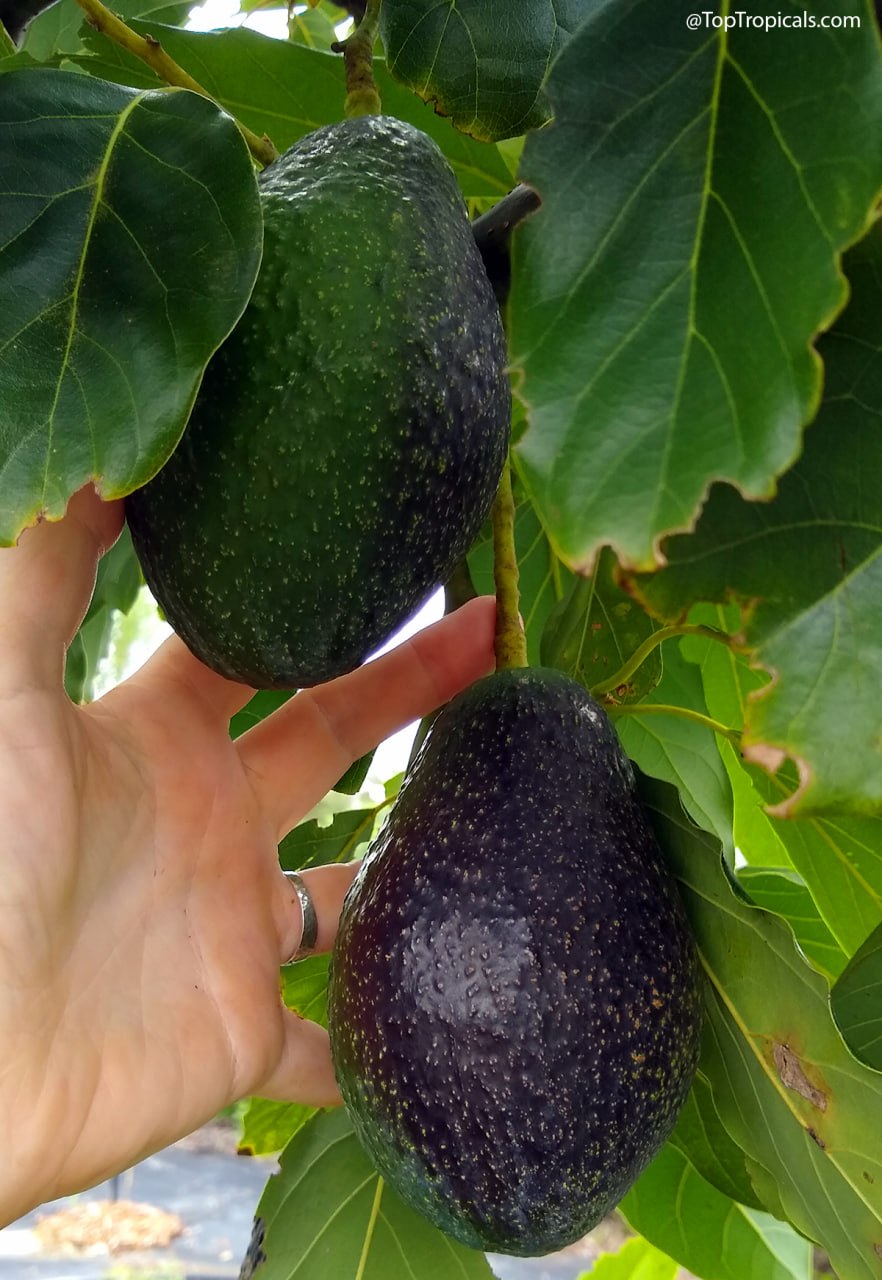
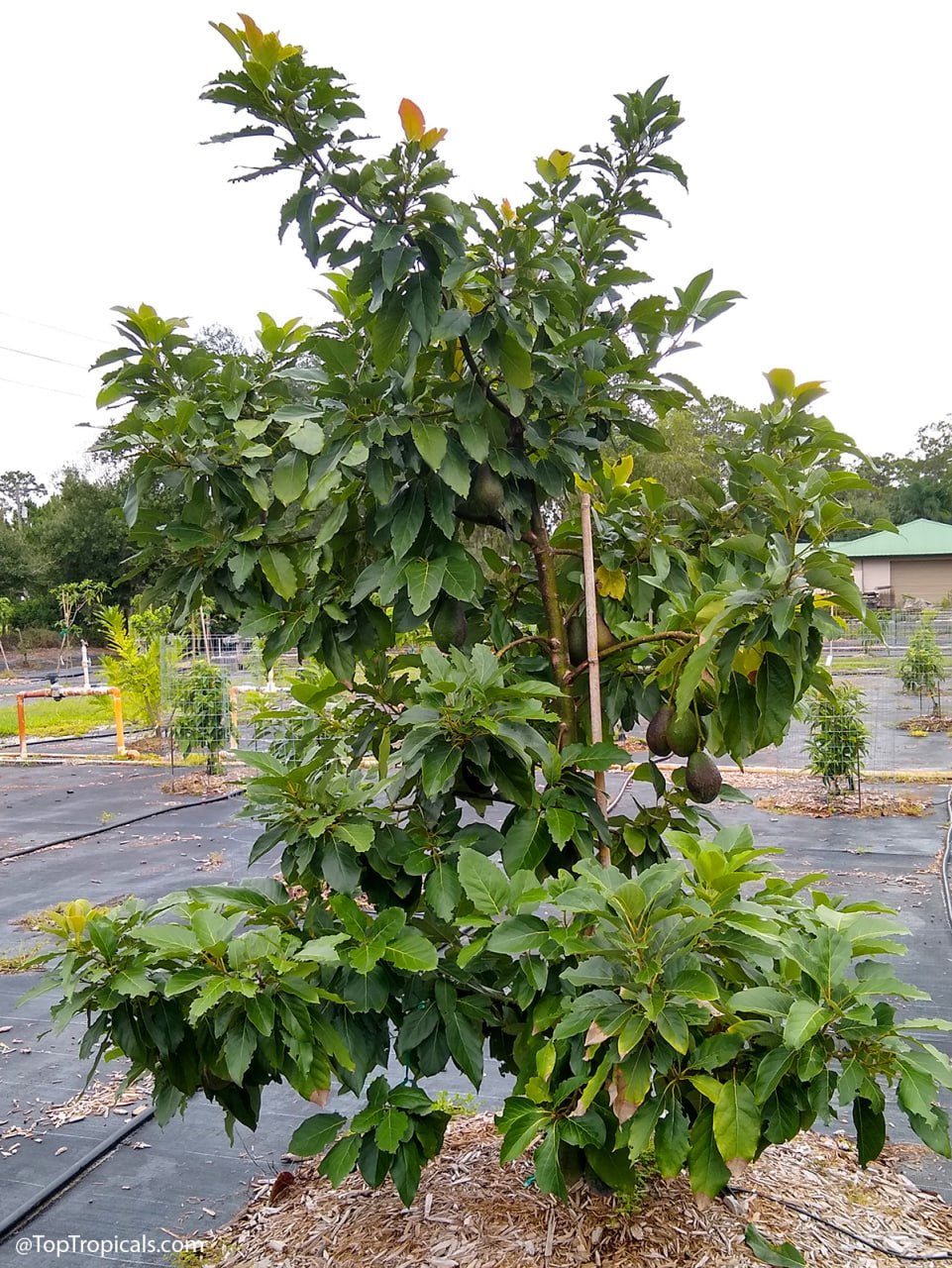
Florida Hass brings some of the flavor characteristics of traditional Hass to Florida gardens while offering better adaptation to humid conditions. The fruit is smaller than many Florida avocados but rich, creamy, and ideal for fresh eating. It is often recommended for gardeners seeking a Hass-like experience in the Southeast.
· Botanical name: Persea americana 'Florida Hass' · Origin: Mexican (Florida selection) · Cold hardiness: Tolerates temperatures around 30°F · USDA zones: 9b-11 · Flower type: A · Tree size: Approximately 30 ft x 20 ft · Growth habit: Compact, upright, and well suited to home gardens · Foliage: Dense, glossy green foliage that provides an attractive evergreen canopy · Fruit size: 4-12 oz · Fruit shape: Pear-shaped to oval · Fruit color: Green when immature, turning dark purple-black at maturity · Skin: Thick, pebbly, Hass-like skin · Flesh: Creamy, smooth, and high in oil · Flavor: Rich, buttery, and similar to Hass, with excellent eating quality · Season: July-September · Best use: Fresh eating, guacamole, sandwiches, salads, and gourmet dishes · Special feature: Hass-like flavor and appearance combined with better adaptation to Florida's humid climate · Why growers love it: Florida Hass offers the rich flavor and dark skin that avocado lovers associate with traditional Hass, but on a tree better adapted to the heat and humidity of the Southeast. Its compact size and excellent fruit quality make it a favorite for home gardens. 👉 More
💡 Avocado tip: Let the leaves stay Fallen avocado leaves make excellent mulch. As they break down, they return nutrients to the soil and help create the natural forest-floor conditions avocados love.
Sunshine: John said it smelled like a thousand
jasmines. Smokey: And somehow that's all the information he brought
back from Thailand. Sunshine: He brought a photo, too. Smokey: Excellent. We can begin our international manhunt.
Well, Smokey and Sunshine have closed the case and found the mystery
plant. The cork board is coming down, the magnifying glass is back in the
drawer, and the "Enchanted
Incense" mug is finally empty.
Now let's talk about the plant itself.
🌸 Some plants arrive with a label. Some arrive with a
story.
Cerbera x manghas - Enchanted Incense - produces some of the most
unusual
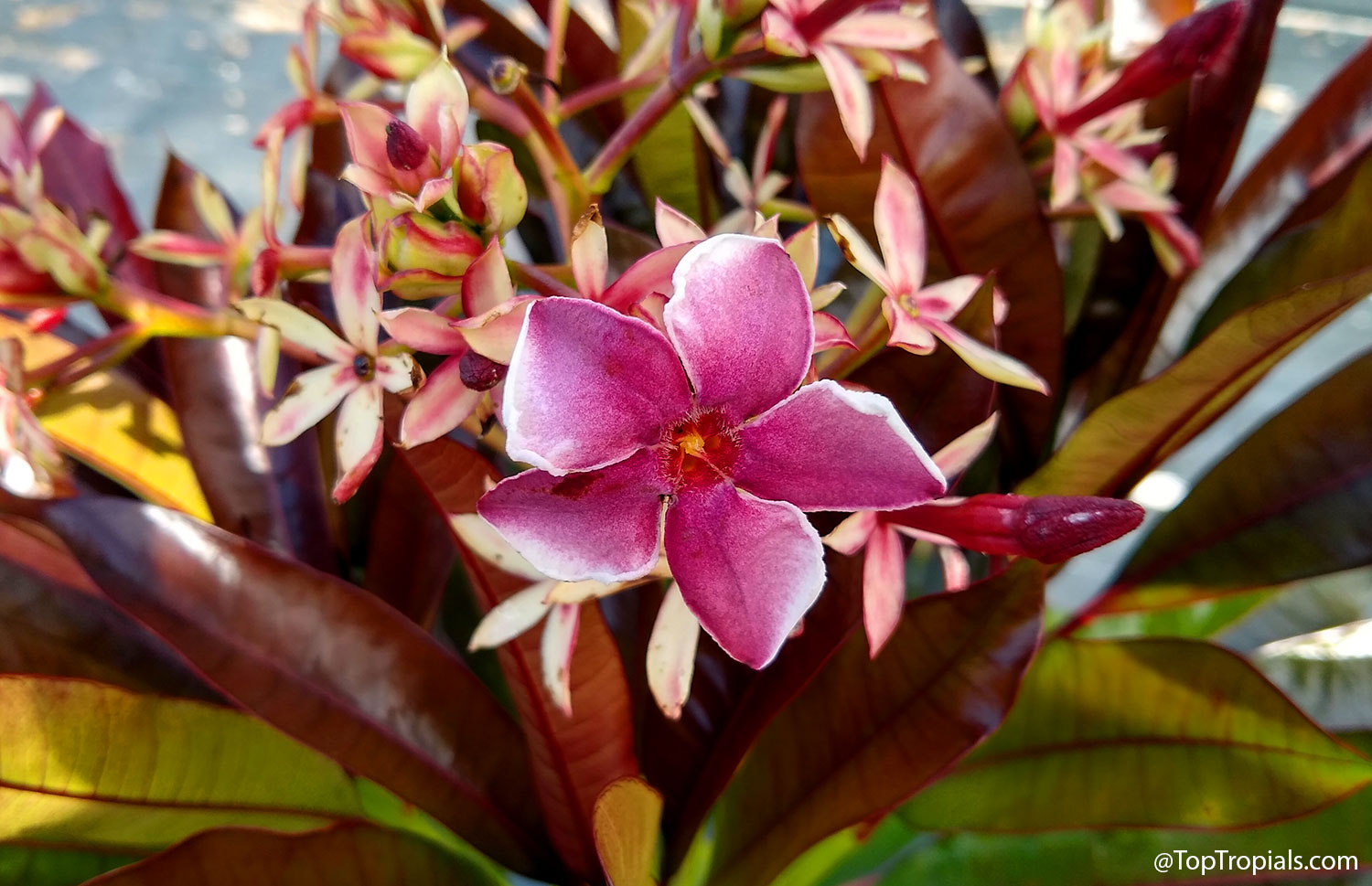
fragrant flowers in the tropical garden. Its velvety reddish blooms,
outlined in white and carried on vivid pink tubes, create an exotic display
that looks hand-painted.
When our good friend John Mood returned from a plant conference in
Thailand, he did not bring us a plant. He brought us a mystery.
John had spent decades growing and collecting rare tropical plants. When he
said he had found something special, we paid attention.
On a visit to Chatuchak
Market, one of the most famous plant markets in Asia,
something stopped him. Not the flowers. The fragrance.
"I found a plant that smells stronger than a thousand jasmines," John
told us.
That one sentence stayed with us for years.
He had photographs. He had his memory of that scent. What he did not have
was a name. No tag. No seller information. Just the photos and the certainty
that he had smelled something genuinely unusual.
So we started looking.
We showed the photographs around. We asked collectors. We compared flowers.
Every lead turned into another question. But eventually, after years of
searching on and off, we found it.
The mystery plant turned out to be an unusual Cerbera
unlike anything we had grown before.
Today we call it Enchanted Incense. Fragrance lovers recognized
immediately what John had recognized in that Bangkok market. This was not
just another pretty tropical flower.
🌸 The Plant
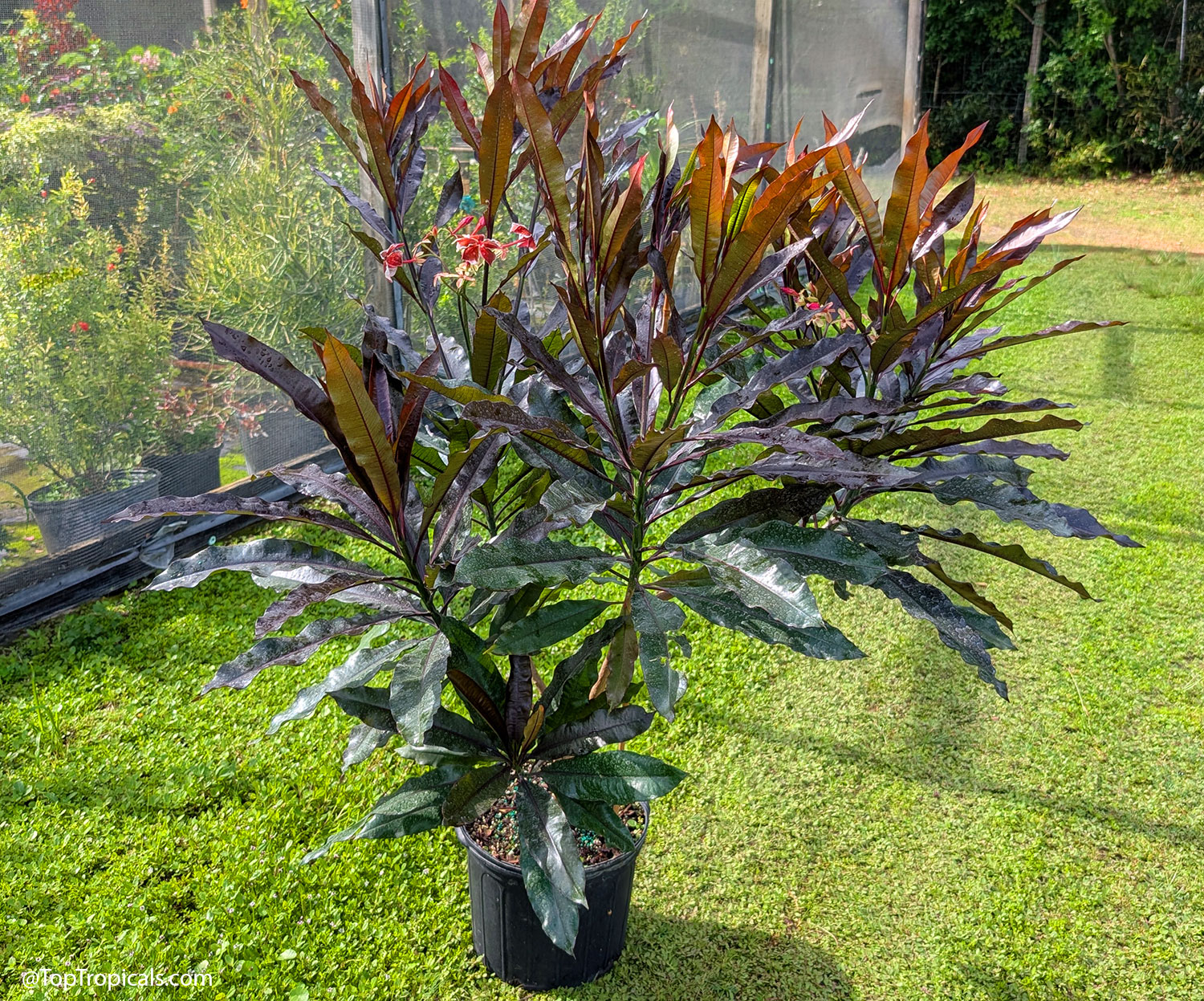
Even when
not in full bloom, Cerbera
x manghas Enchanted Incense is a standout plant. Its glossy, deep
burgundy foliage and bronze new growth create a bold tropical presence,
while the unusual flowers add an extra layer of intrigue.
Visitors at our nursery still walk past it and stop. Not because they
noticed the plant. Because they noticed something in the air and could not
figure
out where it was coming from.
The flowers start soft pink and white, then deepen to rich red and auve as
they mature. They come in clusters, four to five inches across, and the
fragrance they produce does not stay close to the flower. It moves. It fills
the space around the plant. On a warm morning it can perfume an entire
patio.
The foliage is worth mentioning too. Deep green leaves with burgundy and
mauve tones that make it attractive even when it is not blooming. The growth
habit is slow and slightly weeping, similar to plumeria,
which is no coincidence since they are close
relatives. Unlike plumeria, Enchanted Incense stays evergreen in warm
climates.
It is a compact, slow-growing small tree that is happy in a container. That
makes it practical for gardeners in colder climates who need to bring it in
for winter, and for anyone who wants a fragrant plant near a seating area
rather than somewhere across the yard.
🌸 Why We Grow It
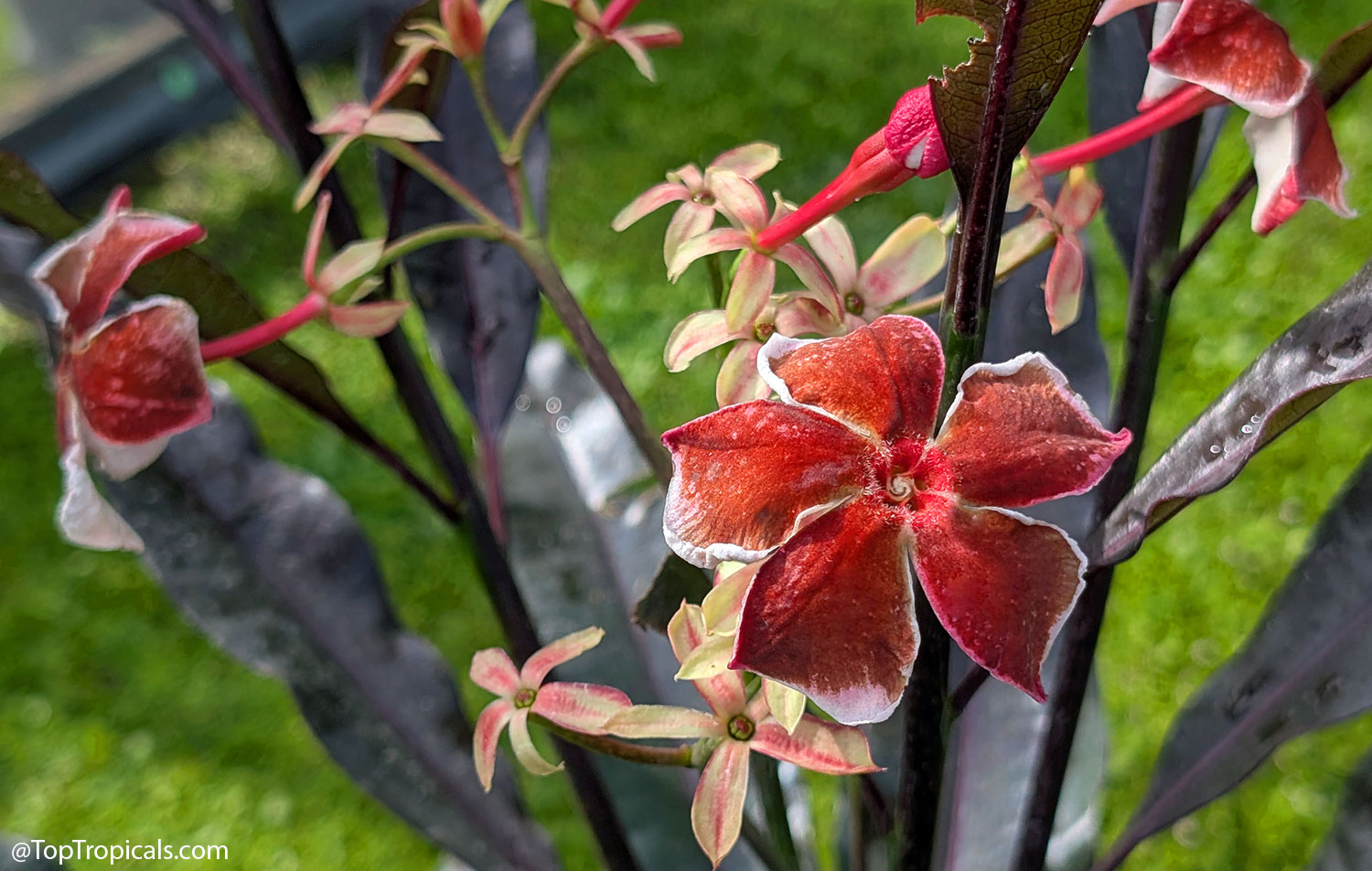
The
flowers of Cerbera
x manghas - Enchanted Incense - look otherworldly. Deep reddish petals,
bright pink
tubes, and contrasting white edges combine to create one of the most
distinctive fragrant blooms.
We grow thousands of plants, and most can be described in a sentence or
two.
This one cannot.
A large Enchanted Incense grows right outside our office. Every year it
reminds us why we
spent so much time searching for it.
Visitors stop beside it and ask the same question: "What is that
smell?"
They usually notice the fragrance before they notice the plant.
Some follow the scent across the nursery. Others stop in the middle of a
conversation and start looking around. Nearly
everyone ends up standing next to the tree trying to figure out where that
incredible fragrance is coming from.
In a world full of beautiful tropical plants, Enchanted Incense remains
one of the few that announces itself before you even see it.
Cerbera
x manghas -
Enchanted Incense can display remarkable variation in flower color. This
form
combines soft rose-pink blooms with white-edged petals and rich burgundy
foliage, creating a striking contrast throughout the plant.
Light: Full sun is best (at least
six hours
daily). It will tolerate partial shade but blooms much more generously in
good
light.
Watering: Water regularly during
warm weather. In cool weather and winter, keep the soil on the drier side.
Overwatering when
temperatures are low is the most common mistake.
Soil: Use a well-draining mix. This
plant absolutely does not want wet feet.
Fertilizer: Feed with a
Green Magic
controlled-release fertilizer for flowering plants in spring, supplemented
with occasional liquid fertilizer through the summer. For non-stop blooms
without the risk of
salt build-up in containers, we highly recommend
Sunshine
Boosters™.
Read
our Guide to Sunshine Boosters™ and Green Magic fertilizer
Winter Care: Bring it indoors
when temperatures approach the mid-30s°F. The rootstock is fairly
tough,
but the foliage is not. Cold and wet conditions combined are the real risk.
One Last Thing
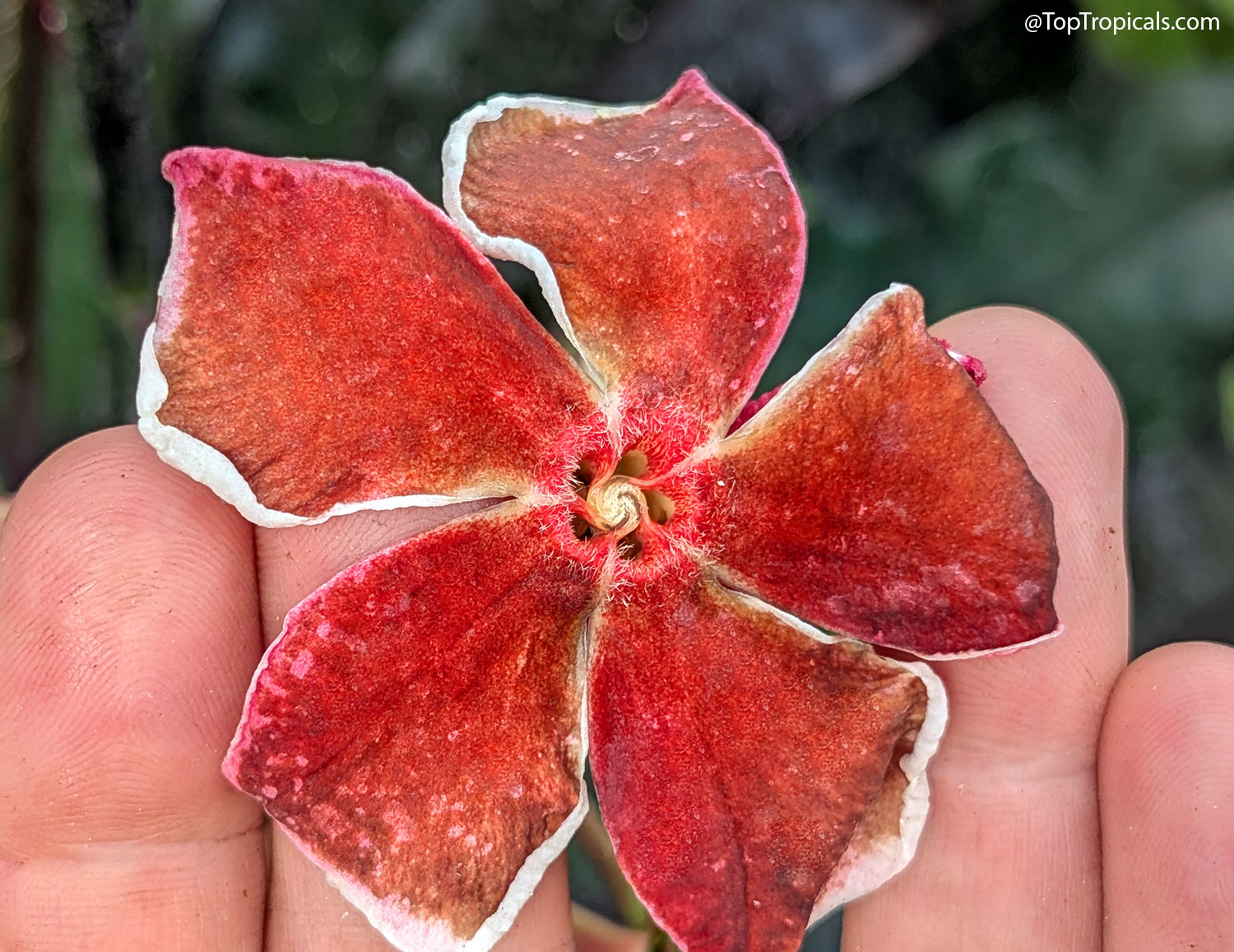
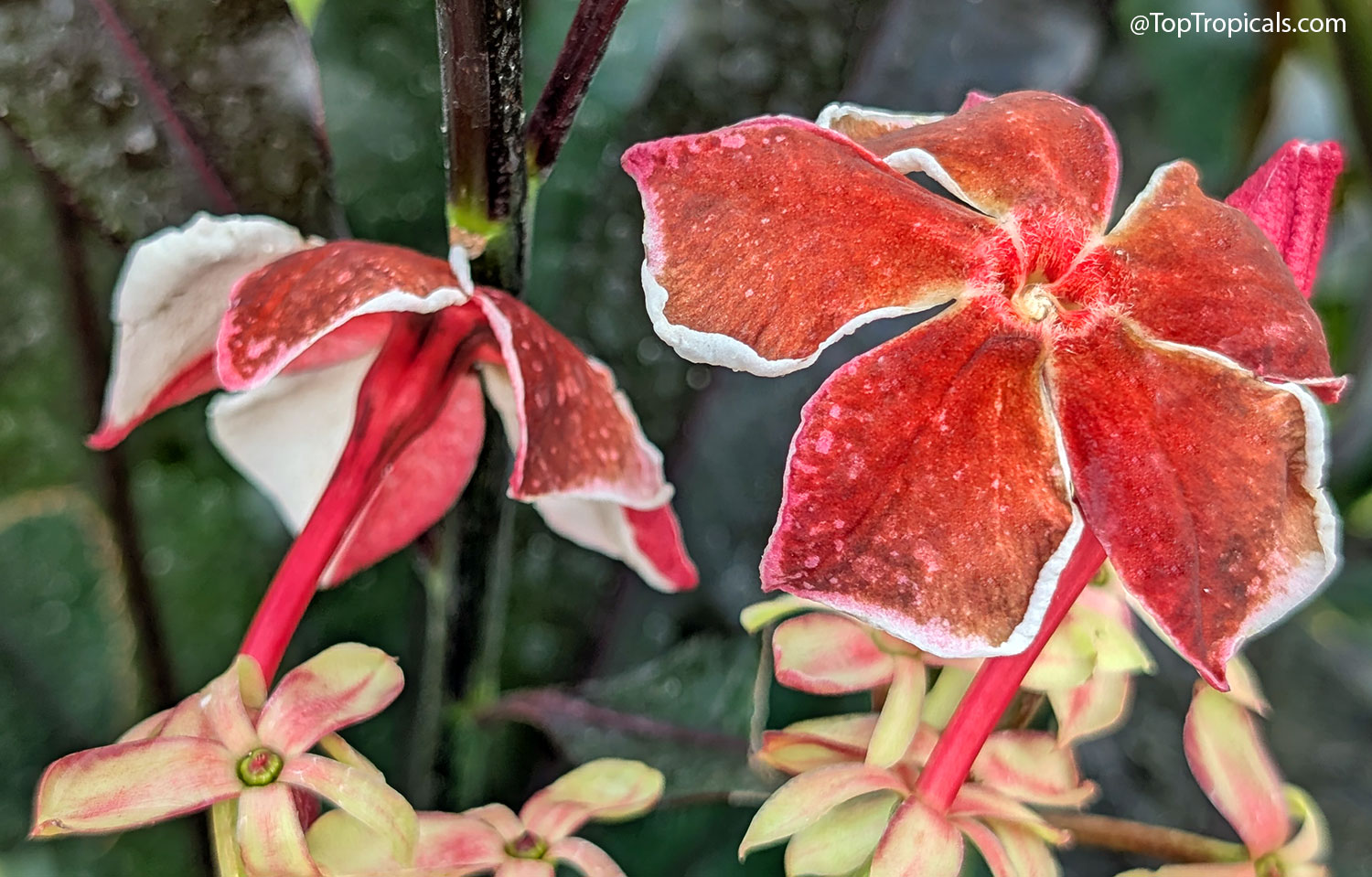
A closer
look reveals the remarkable details of Cerbera
x manghas - Enchanted Incense.
The velvety petals, crisp white edging, and fuzzy pink center give the
flower an appearance
unlike anything else in the garden. And then comes the scent...
John came back from Bangkok with a few photographs and a fragrance he
could not forget. It took us years to track down the plant behind that
memory. We have never regretted a single minute of the search.
Sunshine: So after all those years, what's the answer? Smokey: Stand next to the plant. Sunshine: That's it? Smokey: The fragrance explains the rest.
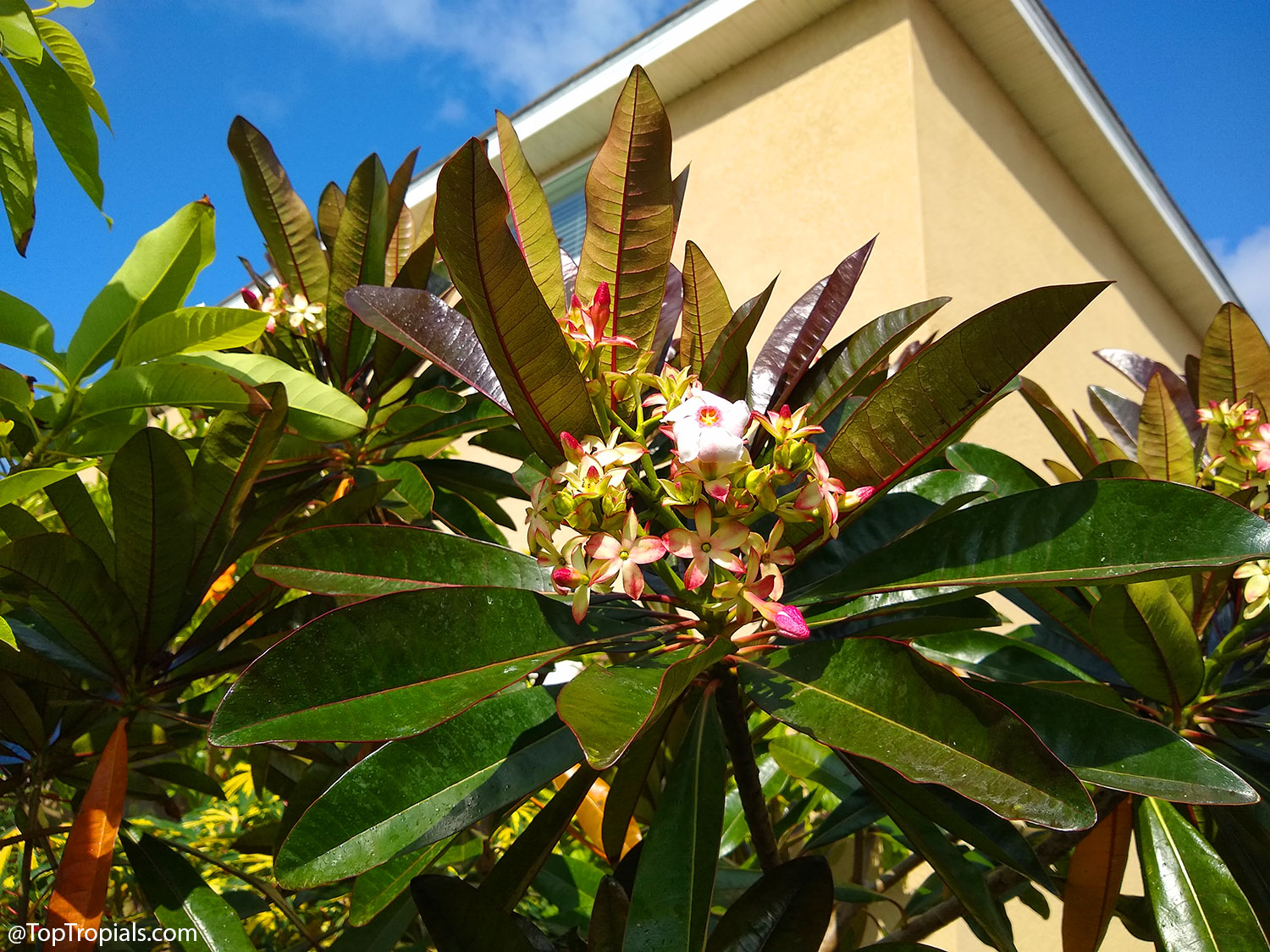
A closer
look reveals the remarkable details of Cerbera
x manghas - Enchanted Incense develops into an attractive small tree
with lush evergreen foliage and colorful new growth. In the
landscape, it combines year-round structure with clusters of bright
redding-pink fragrant flowers that stand out beautifully against the glossy
leaves.






 Growing Tips