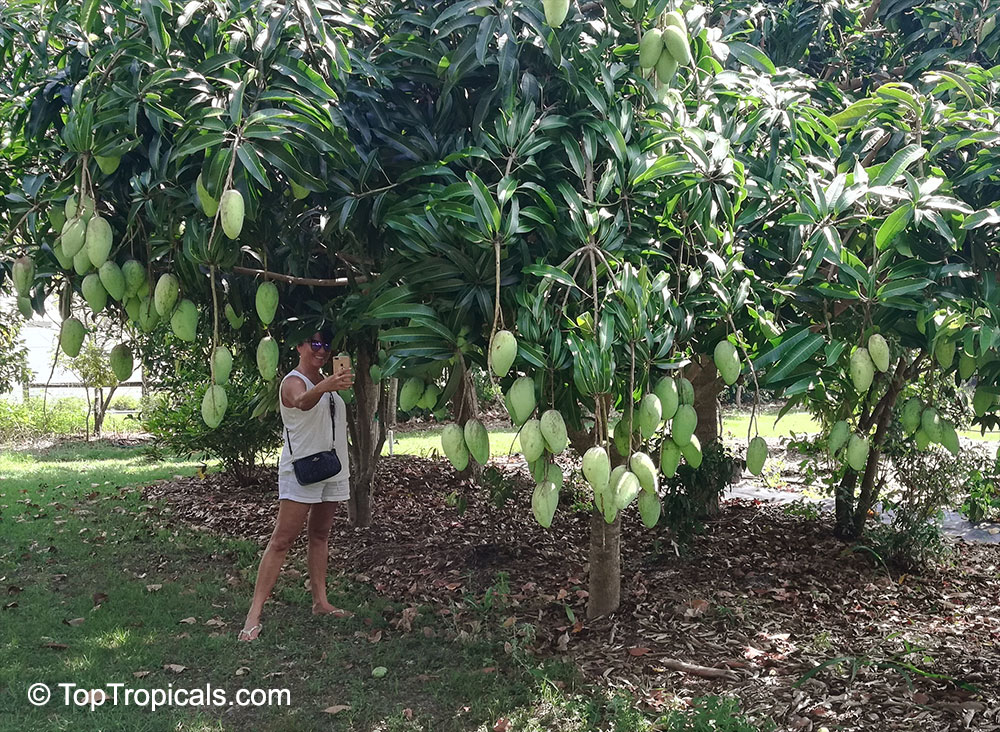
Large Grafted Mango Trees - Plant Now Before
Winter!
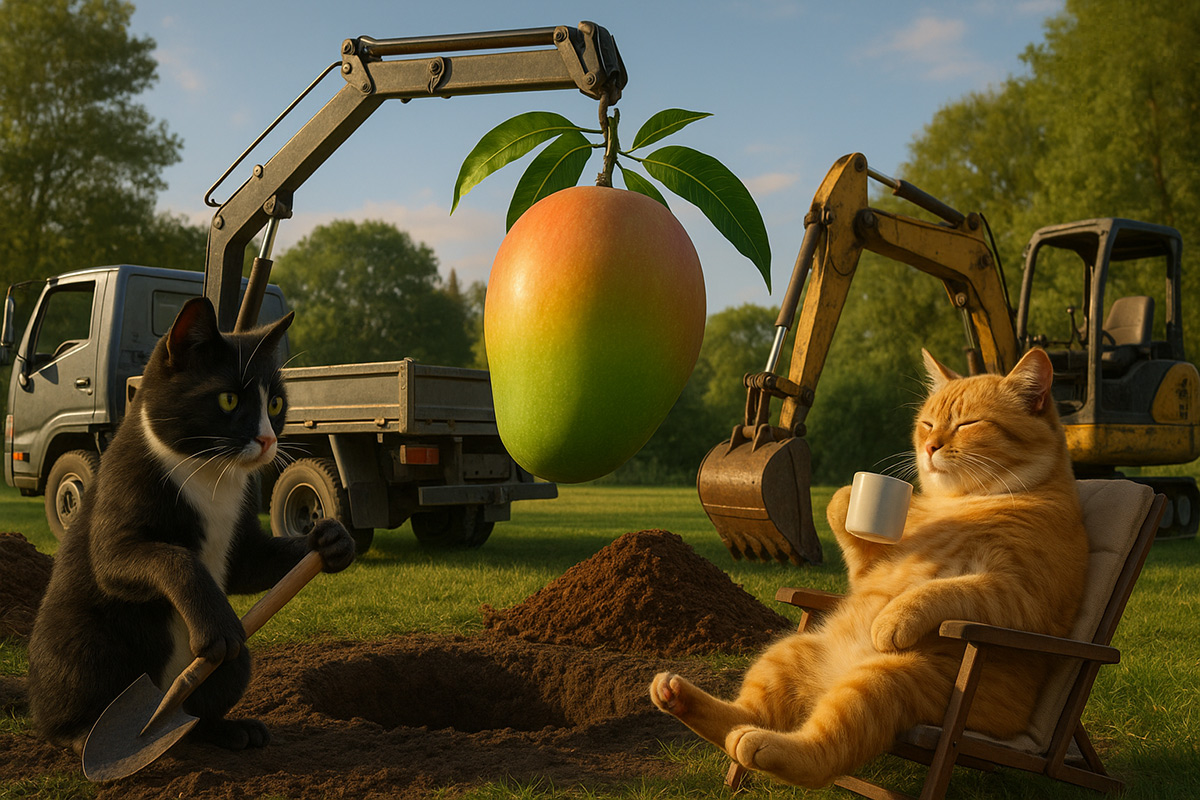
"Next Time We'll Specify - A TREE!" - Smokey and
Sunshine Plant a Giant Mango
🌡️ Why plant now?
Fall is the perfect time to plant tropical fruit trees. The
soil is still warm, the air is mild, and your trees can quietly build strong
roots. By spring, they’ll already be settled and ready to grow
fast.
Imagine walking outside next summer and picking your own
mangoes from a tree you planted this fall!
🌴 Twilight in the garden. Smokey is holding a glowing
pumpkin. Sunshine is sipping cocoa.
Sunshine: "Smokey, why does that plant look like it wants to fly away?"
Smokey: "That’s the Bat Lily - Tacca. It’s rare, it’s
weird, and it’s in bloom just in time for Halloween."
Sunshine: "Figures. You always find the spooky ones."
Meet the Bat Lily (Tacca)
Tacca is also called the Bat Lily or Devil Flower. This
tropical wonder grows bat-shaped wings and foot-long whiskers. The black
form
(Tacca chantrieri) looks straight out of a gothic dream, while the
white
one (Tacca nivea) is ghost-like and elegant.
Some of our plants are blooming right now in the nursery — true
Halloween magic! Blooms are delicate and may not travel, but the plants are
strong
and will flower again soon in your care.
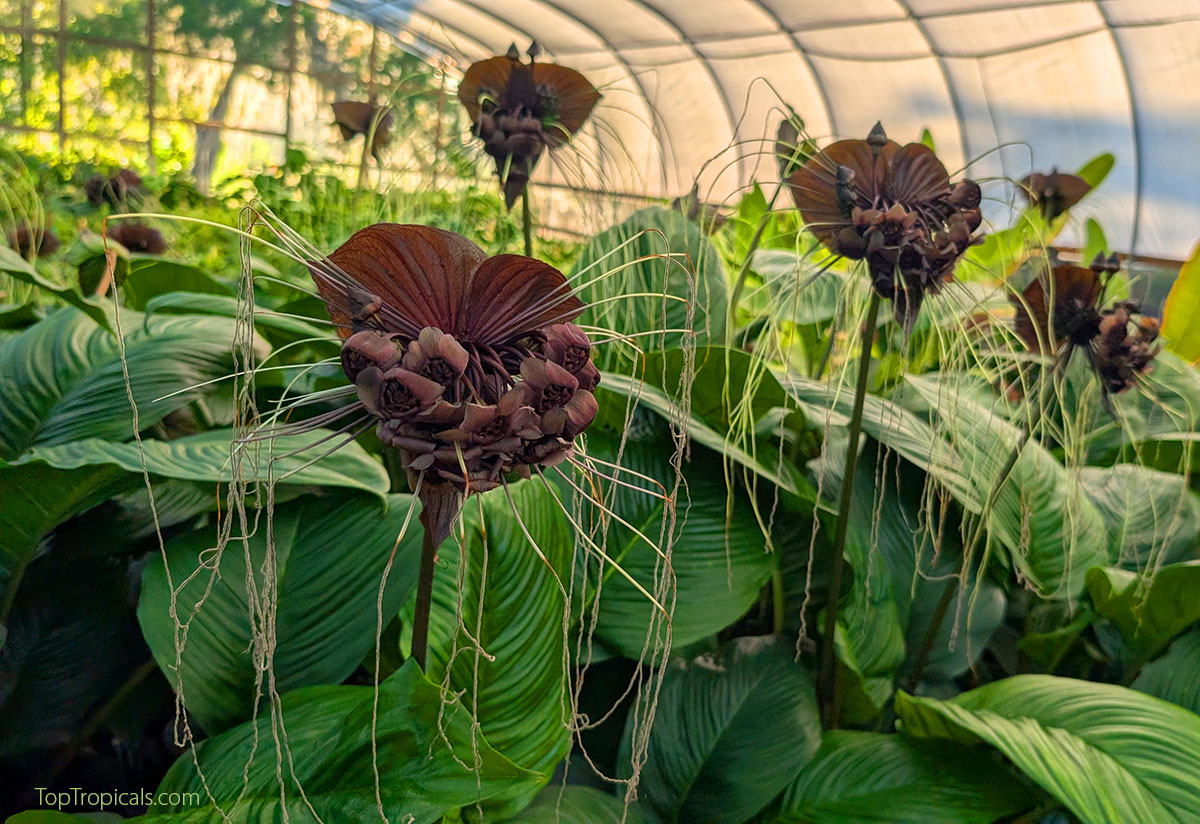
Black Bat Lily (Tacca chantrieri) with dark maroon wings and long
whiskers
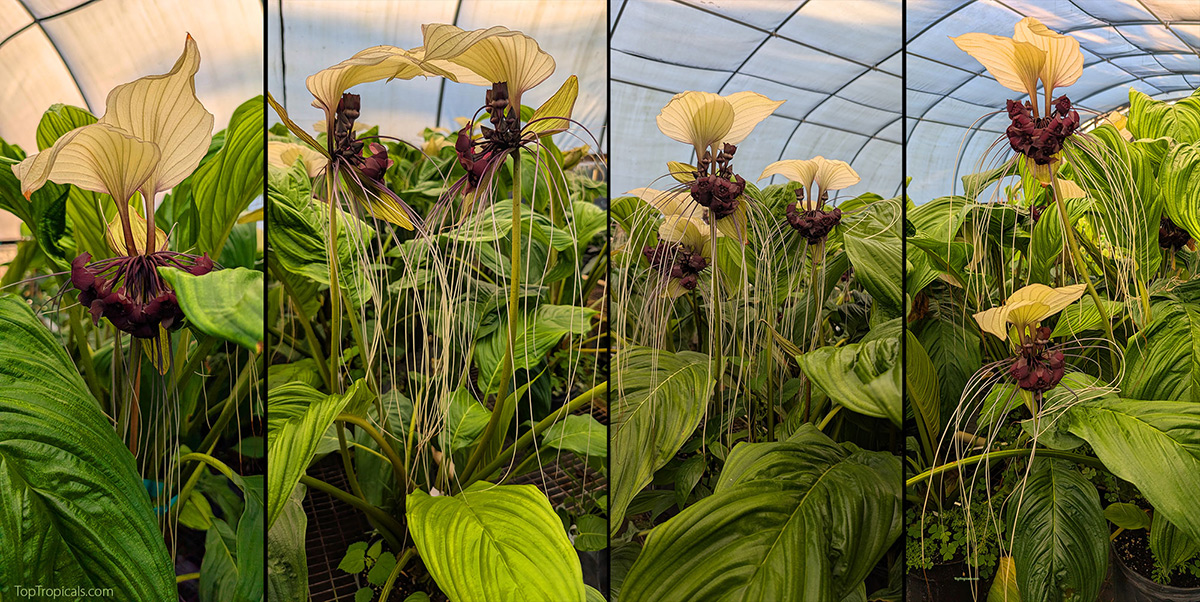
White Bat Lily (Tacca nivea) in bloom with wide ivory wings
"The White Bat Lily (Tacca nivea) is bold and sculptural, with oversized
ivory wings that command attention. Its pale bracts stretch wide above
clusters
of deep maroon flowers, and long, silvery whiskers spill gracefully through
the foliage. In filtered light, the plant seems to glow from within —
elegant, crisp, and perfectly balanced between the strange and the
beautiful.
If I could pick, I’d go with the White Tacca. It feels more
architectural, more balanced — those oversized wings catch light in a
way that
shows off every vein and curve. It looks engineered by nature, almost like
an
alien design prototype that actually works.
The Black Bat Lily (Tacca chantrieri) feels alive with shadow. Its dark
maroon wings and wiry whiskers make it look like something that fluttered
out of
the jungle at dusk. The bloom’s layered structure and near-black sheen
give it a quiet power — mysterious, understated, but impossible to
ignore. But if I were designing mood lighting for a greenhouse at night, the
Black Tacca wins. It’s subtle, mysterious, like a secret only visible
up
close. Together, they’re perfect opposites — yin and yang of the
tropical underworld: white for daylight, black for moonlight." — says
Tatiana Anderson, Top Tropicals Plant Expert
Special Offer: Discounts on Rare Tacca Plants
Grow your own Bat Lilies — White or Black — at a special
Halloween price!
Get 25% OFF Tacca plants with code
TACCA2025
Min order $25 (excluding S/H), valid online only,
cannot be combined with other offers.
Hurry, offer expires
November 03, 2025!
🎃
Storewide Halloween Sale – For Everything Beyond Tacca
Not into spooky plants? Enjoy savings on all other tropical plants
across the store!
Get 15% OFF tropical plants with code
HALLOWEEN2025
Min order $100 (excluding S/H), valid online only,
cannot be combined with other offers.
🎩 How to grow Chinese Hat Flower - when winter colors most needed
The Holmskioldia sanguinea, better known as the Chinese Hat Flower, gets its name honestly. Each bloom looks like a tiny hat or parasol - a little tube backed by a flat, round disc. Once you notice it, you cannot unsee it!
Chinese hat Plant Facts
Botanical name: Holmskioldia sanguinea Also known as: Chinese hat, Cup and Saucer, Parasol Flower, Mandarins hat
USDA Zone: 9 - 11
Highligths
What really makes this plant special is when it blooms. While most gardens slow down, Chinese Hat Flower kicks into gear from winter through early spring. The branches fill with flowers first, and the leaves follow later. It is one of those plants that quietly steals the show when everything else is taking a break.
More than one color
Most people know the classic red form, but there are several color varieties worth mentioning: 🔴 Red - the most common and bold 🟡 Yellow - Holmskioldia citrina, bright and cheerful, harder to find 🟠 Bronze / orange-bronze - warm tones that glow in winter light
Having different colors makes it easy to mix them or use just one as a winter focal point.
How it grows and where it works best
Chinese Hat Flower is a fast-growing, scrambling shrub. It is not stiff or formal. Think loose, graceful branches that like support. It does great when trained on: · Trellises · Fences · Arbors · Large containers with a support · You can also let it grow as a free-form shrub and lightly prune to keep it tidy.
Care, the practical version
· Light: Full sun to light shade · Water: Regular watering, especially while establishing · Soil: Well-drained, not picky · Pruning: After flowering to shape and encourage new growth
Once established, it is easygoing and forgiving.
Bonus points
· Blooms when the garden needs color most · Attracts butterflies and hummingbirds · Works as a flowering screen or accent plant · Looks tropical without being high-maintenance
If you like plants that earn their space and do something interesting in winter, Chinese Hat Flower is one to keep in your garden.
Rare Pineapple that looks like a sunset and thrives on neglect
🌅 Rare Pineapple that looks like a sunset and thrives on neglect
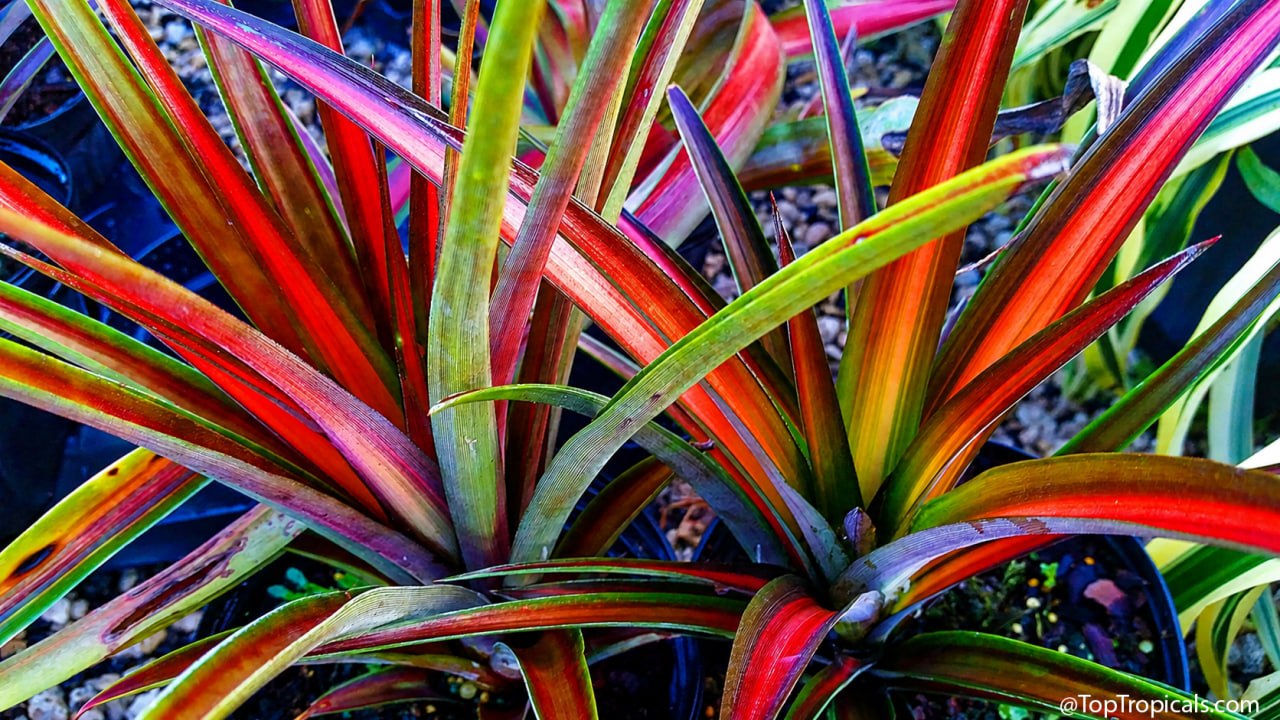
Forget plain green plants - this pineapple looks like a tropical sunset! One look at Pineapple Lava Burst and you immediately understand why people stop and stare. This isn't your typical pineapple plant hiding quietly in the background; the leaves explode with shades of burgundy, pink, cream, green, and bronze, often changing intensity depending on sunlight and temperature. Even gardeners who don't normally collect bromeliads suddenly want one after seeing it in person.
Pineapple Plant Facts
Botanical name: Ananas comosus Also known as: Pineapple, Pina
USDA Zone: 9 - 11
Highligths
🍍 A pineapple plant that acts like living artwork
Pineapple Lava Burst belongs to the same plant family as bromeliads, and it definitely inherited the dramatic side of the family. The long arching leaves create a fountain-like shape, while the bold variegation gives the plant a painted appearance. In bright light, the burgundy and pink tones become especially intense, making the whole plant glow with tropical color.
Unlike many ornamental plants that only shine during bloom season, Lava Burst stays visually interesting year-round. Even without fruit, it looks like a centerpiece.
🍍 Yes - it actually produces a pineapple
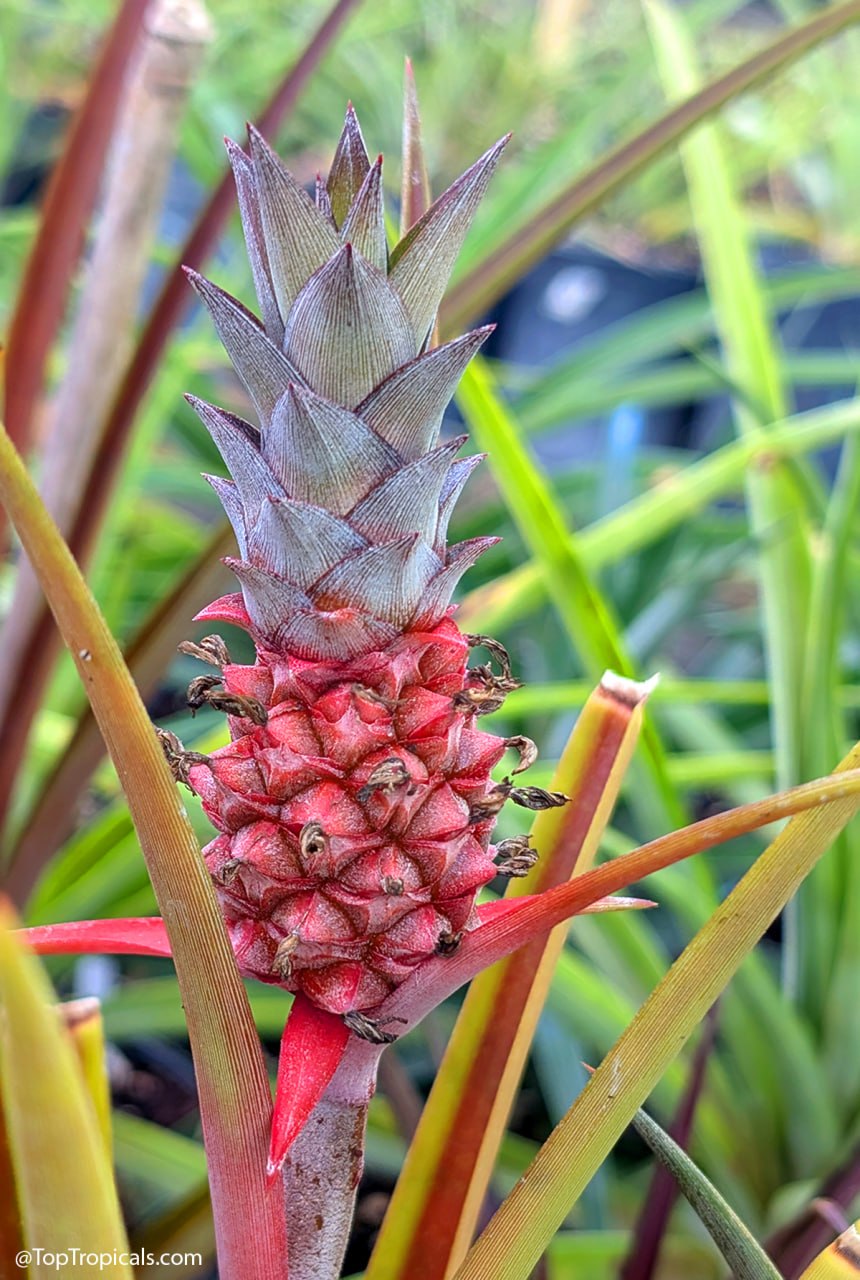
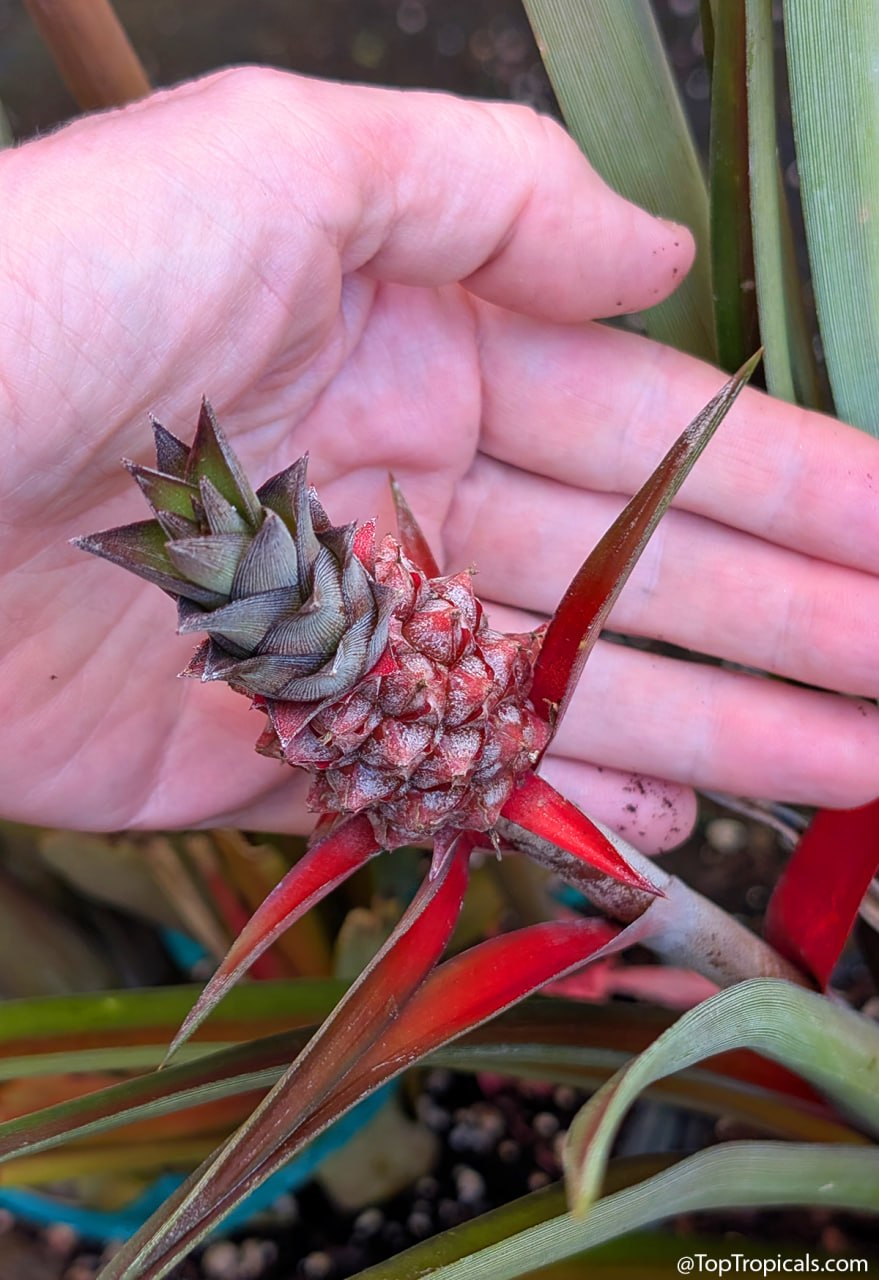
One of the fun surprises about Lava Burst is that it does produce a real edible pineapple. The fruit is usually smaller than grocery store pineapples, but that’s not really the point. When the colorful fruit forms in the center, the plant becomes a tropical sculpture - a combination of striped foliage and bright fruit that looks like it belongs in a botanical garden rather than a typical backyard.
🍍 Pro-Grower Tips for Success
👌 Color Intensity: To get the most "lava" out of your plant, give it plenty of light. Increased UV exposure is the physiological trigger for anthocyanin production - the pigment responsible for those deep red and pink tones. If your plant is looking a bit green, it’s likely asking for a sunnier spot.
👌 Cold Hardiness & Protection: While these thrive in the heat, they are sensitive to frost. After the recent 25°F freezes we’ve seen in Florida, remember that these are the perfect "mobile" plants. Because they handle containers so well, you can easily move them into a garage or indoors during a cold snap to protect the foliage from burn.
👌 Fertilizing for Vibrancy: To keep the variegation crisp and the colors saturated, use a high-quality micro-element fertilizer - SUNSHINE Ananas - Pineapple and Bromeliad Booster with every watering. During active growth season, a gentle application of Green Magic provides the necessary nutrients to maintain plant health and color intensity without the risk of burning the delicate root system.
🍍 Surprisingly easy for a tropical-looking plant
Despite looking rare and complicated, ornamental pineapples are generally very manageable. Lava Burst likes warmth, bright light, and fast-draining soil. It handles containers extremely well, which makes it popular for patios, pool areas, lanais, and sunny windows indoors. Like many pineapple varieties, it dislikes soggy soil more than occasional dryness, making it much easier to grow than many fussy tropical foliage plants.
Its architectural shape also pairs beautifully with palms, crotons, cordylines, and other colorful tropical mainstays. Whether you have a sprawling poolside landscape or a small-space apartment garden, this plant brings a wow factor that is hard to beat.
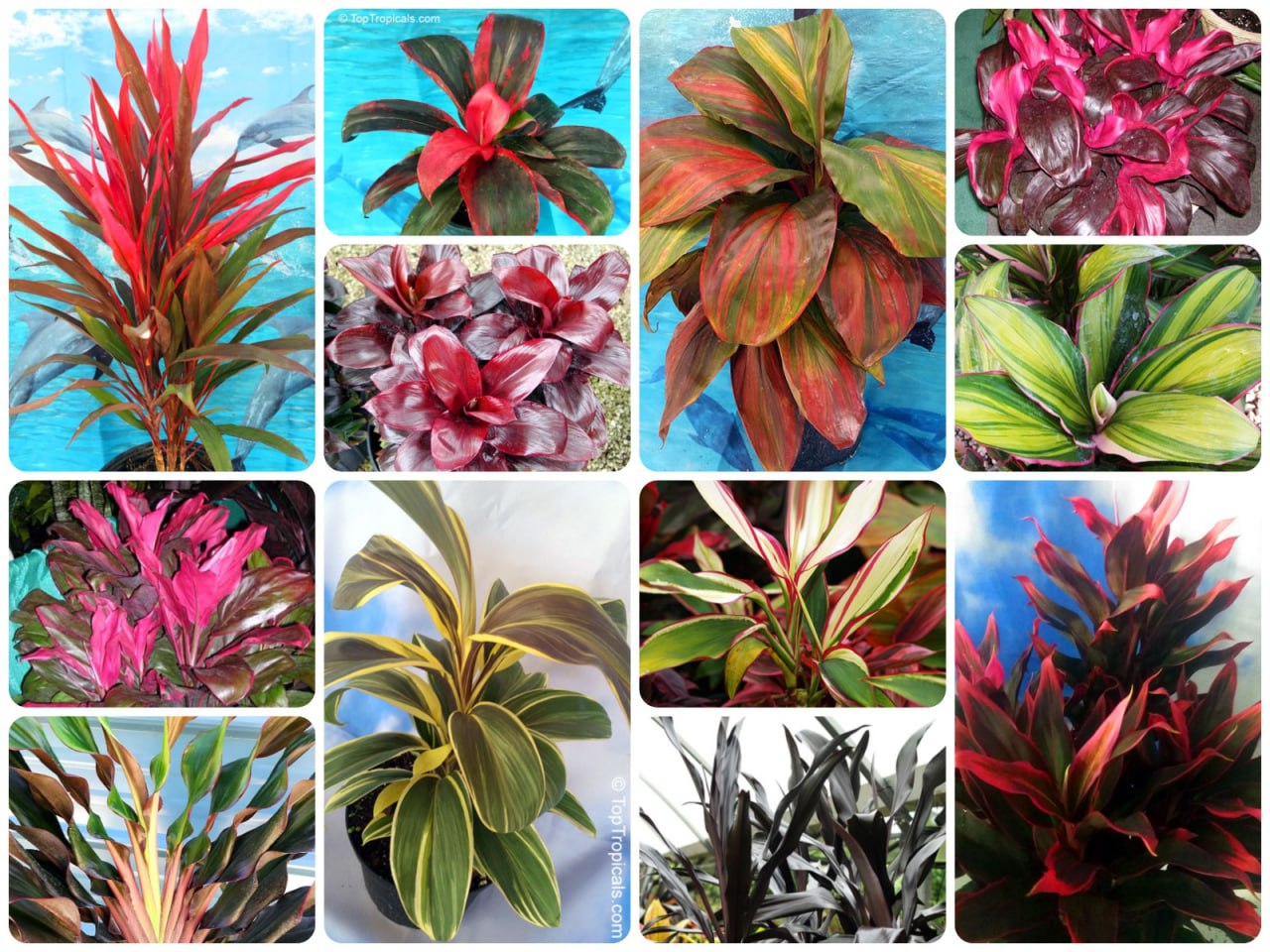
The Hawaiian Ti plant (Cordyline fruticosa) is more than just a colorful tropical accent. Across Polynesian, Hawaiian, and Southeast Asian cultures, the color of ti plant leaves has long been associated with different meanings, moods, and uses - both symbolic and practical.
Hawaiian Ti Leaf Plant Facts
Botanical name: Cordyline fruticosa, Cordyline terminalis Also known as: Hawaiian Ti Leaf
USDA Zone: 10 - 11
Highligths
🌈 Green leaves
Green ti plants are linked to peace, balance, and steady growth. Traditionally, they were planted around homes for protection and good fortune. In the garden, green varieties are usually the toughest and most shade-tolerant.
🌈 Red and deep burgundy leaves
Red ti plants are associated with strength, power, and protection. In Hawaiian tradition, red ti leaves were believed to ward off negative energy and were often used in ceremonies. Garden-wise, deeper reds usually mean more sun exposure and stronger pigmentation.
🌈 Pink, magenta, and multicolor leaves
These colorful ti plants symbolize joy, celebration, and creativity. They are often used as ornamental focal points and in festive plantings. Variegated and pink types tend to prefer brighter light to keep their colors sharp.
🌈 Purple and dark-toned leaves
Purple ti plants are linked to mystery, spirituality, and transformation. Their dramatic color comes from high anthocyanin levels and usually intensifies in bright light with good nutrition.
🌈 Yellow or light variegation
Yellow tones often represent optimism and new beginnings. Plants with lighter variegation may grow a bit slower and need protection from harsh sun, but they add a softer contrast in tropical landscapes.
🌈 One practical note
Leaf color is influenced not just by variety, but also by light, temperature, and nutrition. Fading color usually means too little light or depleted soil, while rich, bold tones signal a happy plant.
Ti plant colors tell a story - part cultural tradition, part plant health, and part personal style in your garden.