Garden Blog - Top Tropicals

Date: 3 Aug 2019

Grafted or seedling?
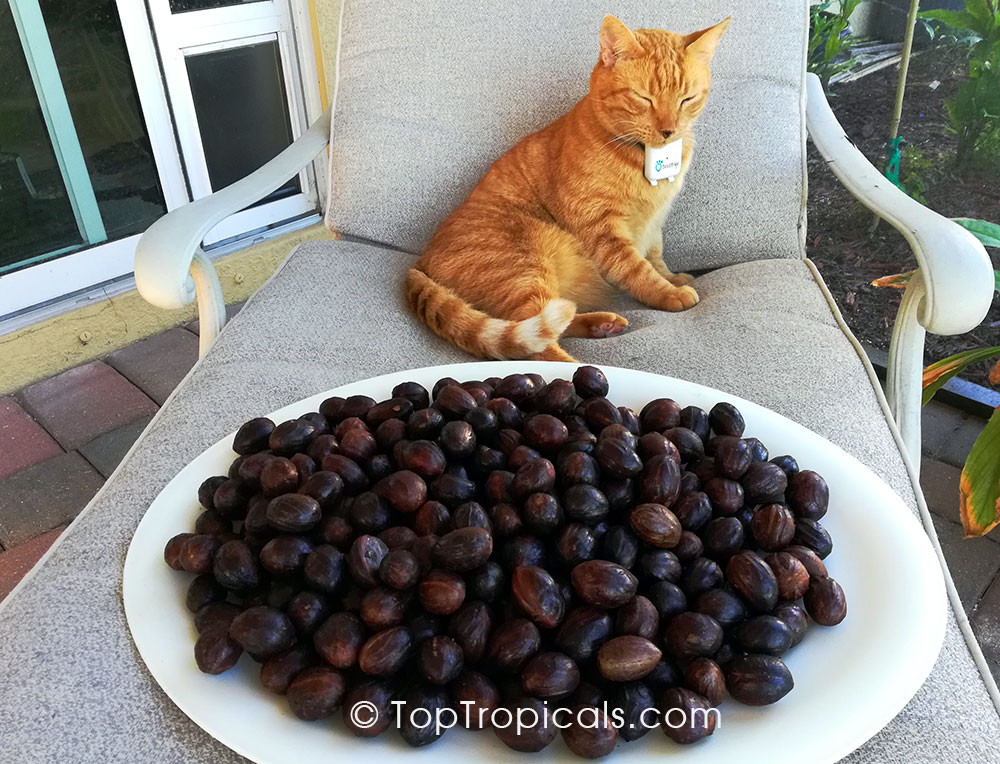
Photo: Mr Barcy meditating before planting Nutmeg seeds

Q: I planted an avocado seed and it sprouted quickly, it has been only a couple months and I already have a small plant. How soon will it produce fruit? Can I grow other tropical fruit from seed?

A: Unfortunately, some fruit trees, including varieties of avocado, mango, lychee, as well as apples and peaches - must be either grafted or air-layered in order to produce, for 2 main reasons:
- seedlings may take a very long time until fruiting, up to 10-15 years
- seedling gives no guarantee on the quality of the fruit or variety
These fruit trees should be propagated as "clones" - both grafted material or cuttings are actually copies of the mother plant and will keep the same fruit qualities. Grafted trees usually start producing immediately.
However there is a number of fruit trees that come true from seed, and take a very short time to start flowering. Jackfruit, Annonas (Sugar Apple, Guanabana, etc), Papaya, Icecream Bean, Eugenias start producing at a young age (3-4 years from seed).

Recommended fertilizers for fruit trees:

Fruit Festival Plant Food - Super Crop Booster
Mango-Food - Smart Release Fruit Tree Booster
SUNSHINE-Honey - for sweeter fruit
SUNSHINE SuperFood - microelement supplement

Date: 24 Jun 2018

TopTropicals

Cleanest fruit?

"Dirty" fruit: According to the Environmental Working Group research, Strawberries are top the list of the 12 "dirtiest" fruits and vegetables grown commercially. Spinach is the second, followed by (in order of contamination) nectarines, apples, grapes, peaches, cherries, pears, tomatoes, celery, potatoes and sweet bell peppers. Each of these foods tested positive for pesticide residues and contained higher concentrations of pesticides than other produce. This causes of course chronic health implications. Children are of special concern as younger bodies have greater susceptibility to pesticides than adult bodies, the report emphasizes. Pesticides may induce chronic health complications in children, including neuro- and behavioral problems, birth defects, allergies, asthma, and even cancer...

"Clean 15": Avocados lead 2018's clean fruits and veggies list, that also includes: mangoes, papayas, pineapples, kiwi, sweet corn, cabbage, onions, frozen sweet peas, asparagus, eggplant, honeydew melon, cantaloupe, cauliflower and broccoli.
Obviously, home grown fruit and vegetables are even better. Such fruit as Custard Apples, Sapodilla, Sapote, Jackfruit, Dragon Fruit, Passion Fruit and other rare varieties of tropical fruit, are even better for you because they are not grown commercially, and the choice from your own organic garden is the healthiest for yourself and your family!
Plant them today and get your cleanest fruit tomorrow!

Check out all tropical fruit trees and all tropical spice plants.

Date: 22 Mar 2017

Condo Mango

Q: I was curious about indoor fruiting mango trees. I live in upstate New York and was thinking about trying to grow an indoor tree for fruit. I have a small heated greenhouse. Is there a variety that can be grown from seed that would suit my purposes and if not what is the most economical way I could obtain a cutting or small grafted plant? I keep my greenhouse around 60F in the winter and have no supplemental lighting. Are there any varieties that may work in a sunroom or other well lit indoor location?

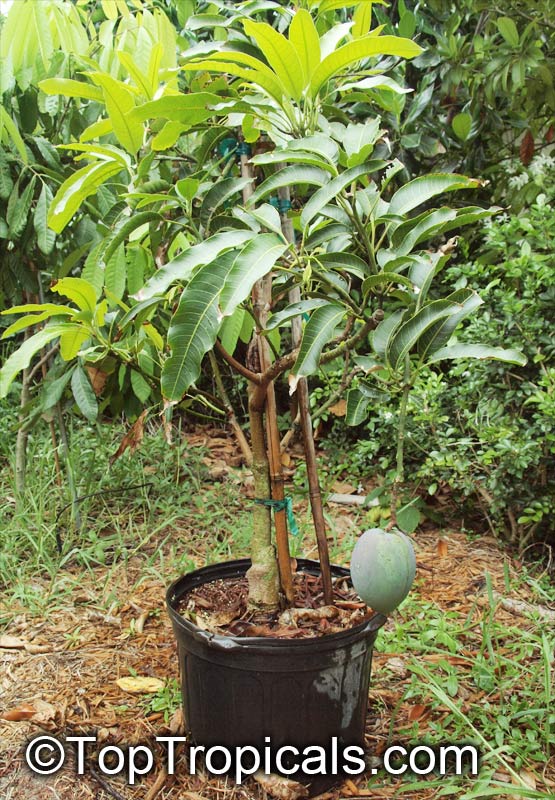
A: There are many dwarf varieties of mango suitable for container culture. They are called "condo mangoes".
The most popular condo varieties are: Carrie, Cogshall, Cushman, Fairchild, Graham, Ice Cream, Julie , Mallika, Nam Doc Mai, Pickering. You may read more about them in our online catalog. You may also look into variety Lancetilla which is also a compact tree, and produces one of the biggest size fruit, up to 5 pounds. If you want some rare variety that hardly anyone else has - try Baptiste, an exotic Haitian dessert mango.

Your greenhouse should work for the winter time. Mango trees can take as low as mid 40s during winter and even lower as long as that cold is occasional. If you keep the temperature around 60, this should work well for over wintering. Just make sure to reduce watering to a minimum, because cool temperatures, low light and wet soil - is a bad combination for tropical plants, especially for mango trees which prefer to be kept on a dry side.

Many indoor gardeners have fruiting mango trees in their collection. However, keep in mind that the most important requirement for a mango is full sun. While you may over winter the plant for a few months in a low light conditions, in order for it to flower and produce fruit it needs lots of light. If moving the tree into full sun your yard during the summer is possible, this would be the best solution.

We always recommend SUNSHINE boosters for both over wintering tropical plants in colder climates, and for indoor gardening. SUNSHINE applications will help your tree to cope with cool temperatures and low light conditions. This will also dramatically increase flowering and fruiting performance. Another important factor for keeping your container plant healthy is quality of your potting soil. We offer a special professional mix that contains lots of good stuff: coconut fiber, peat moss, pine bark, and perlite. Fertilizing potted plants is also very important during the warm season, because this is the only way for them to get nutrients (which in the ground can be reached by spreading root system).

As far as seedlings vs. grafting - the only way to have a nicely fruiting mango tree is to plant a grafted variety. Seedlings start producing only after 8-15 years, and the quality of such fruit may be questionable. Only grafted plants can guarantee the desired taste of a variety. Besides, grafted mangoes start producing immediately - you may see fruit forming on plants as small as 3 ft, in 3 gal containers. However, during the first 1-2 years you will need to remove extra fruit and leave only 1-2 fruit so the plant doesn't get exhausted and has enough energy to establish strong root system.

For fun stories about growing mango, check out our Radio Show recording YO Tango Mango!

Date: 22 Mar 2026

Do Fruit Trees Increase Property Value? Tropical Plants That Pay Off

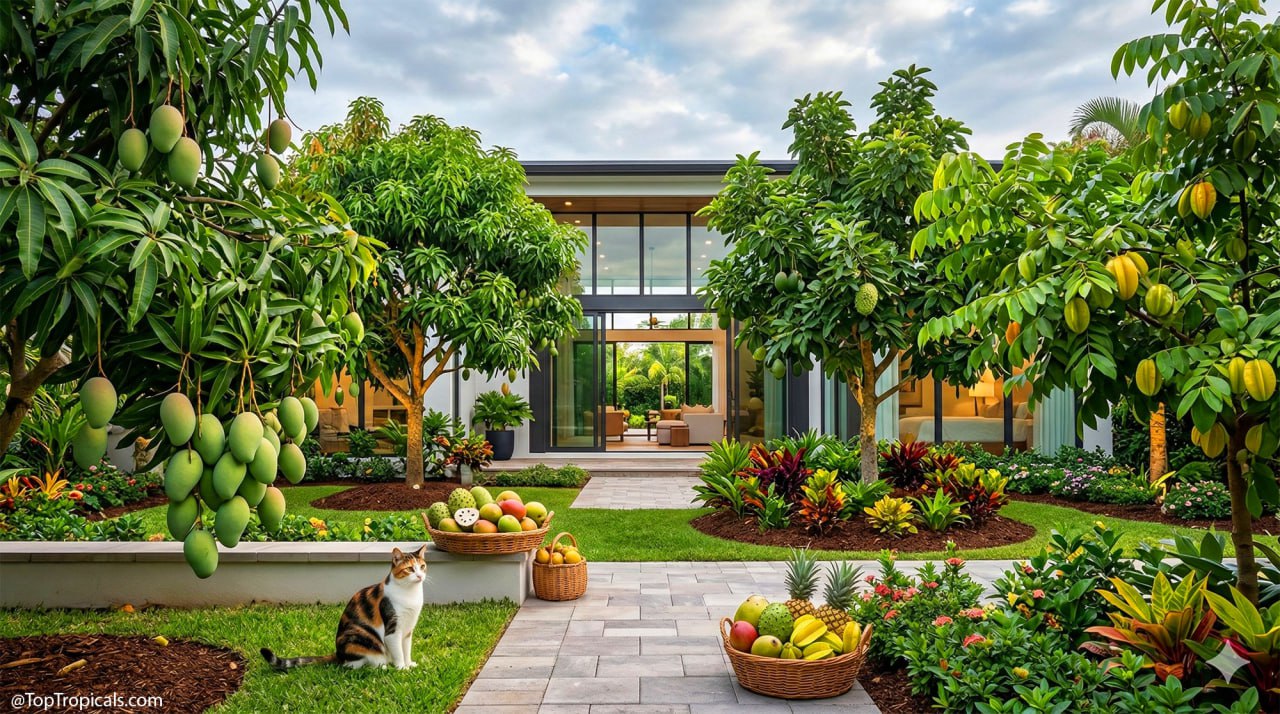
Yard with fruiting tropical trees

Yard with fruiting tropical trees

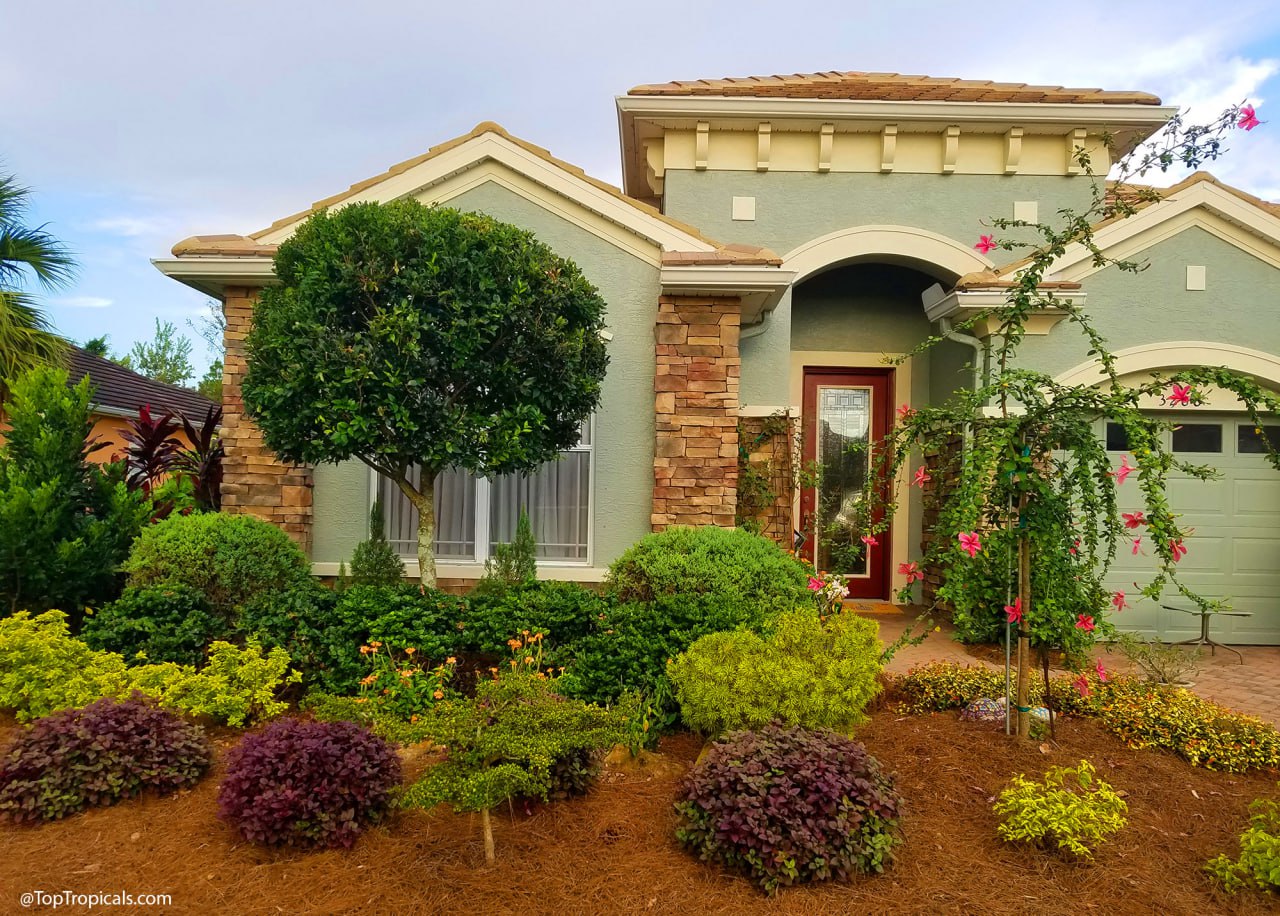
Landscaped yard in Florida

Landscaped yard in Florida

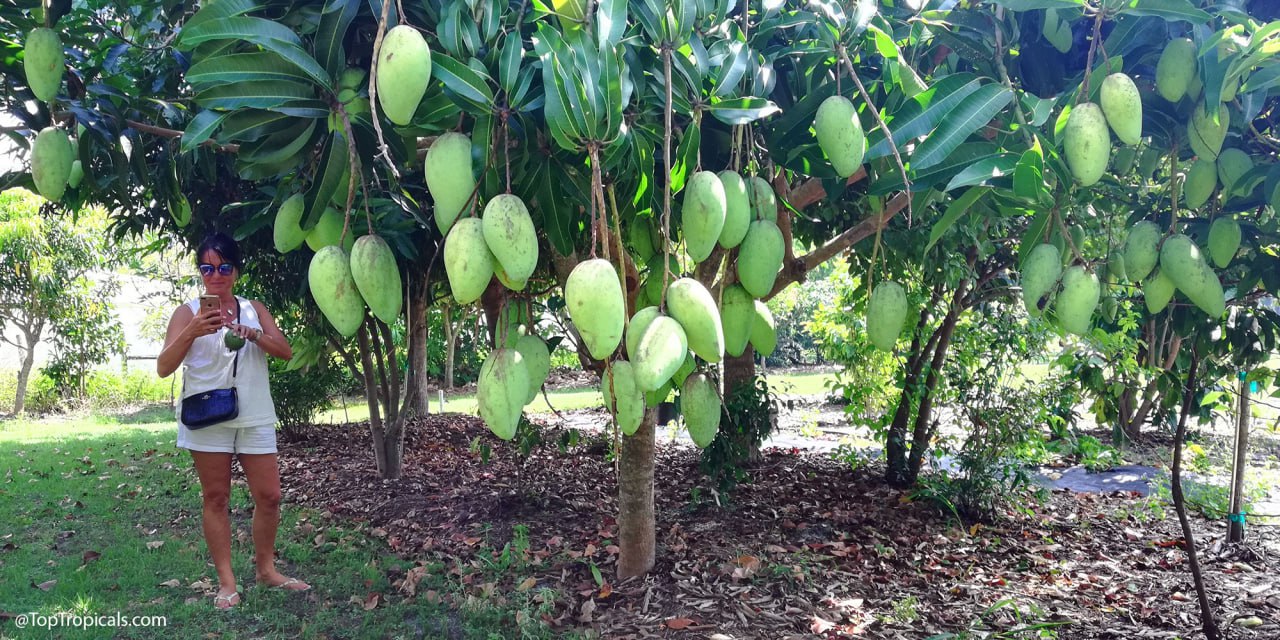
Mango tree fruiting in the garden

Mango tree fruiting in the garden

Do Fruit Trees Increase Property Value? Tropical Plants That Pay Off 🏡

Can your backyard pay for itself? Learn which 12 tropical fruit trees real estate experts say are the smartest investment for your landscape. Discover how tropical fruit trees like mango and avocado add "edible equity" and curb appeal to your property, making it more desirable to future buyers. Turn your yard into a private paradise that lowers grocery bills and boosts home value.

In warm climates like Florida, a mango tree isn't just landscaping - it’s a food-producing asset. Mature tropical fruit trees offer "edible equity," saving homeowners hundreds in grocery bills while creating a unique, memorable aesthetic for buyers.
  • 🥭 1. Focus on "Instant Recognition" Favorites


    Trees buyers already know and love provide the strongest ROI. They signal that the yard is already productive - something new builds can’t offer.

  • •  Top Picks: Mango, Avocado, Papaya, Banana, Guava, and Loquat.
  • •  The Value: A single mature avocado or mango tree can yield hundreds of pounds of fruit annually.


🥭 2. Create a "Memorable Discovery" with Exotic Varieties


Unusual fruits turn a standard yard into a tropical orchard, acting as a conversation piece during home tours.
  • •  The Exotic List: Jackfruit, Sugar Apple, Soursop, Sapodilla, Ice Cream Bean, and Star Fruit.


🥭 3. Strategic Placement for Energy Savings


Large-canopy trees like jackfruit or mango do more than provide food; they act as natural insulation.
  • •  Natural Cooling: Strategic planting reduces afternoon sun exposure and lowers AC costs.
  • •  Indoor/Outdoor Flow: Use trees to frame window views, block neighbors, and create private "outdoor rooms."


🥭 4. The Power of the "Mini Orchard"


A collection of 3–5 trees creates a stronger emotional pull than a lone plant. Buyers begin to visualize a lifestyle of smoothies and harvests.
  • •  Winning Combos: Mango + Avocado + Papaya or Guava + Star Fruit + Banana.


🥭 5. Maintenance: Health Equals Value


Fruit trees only add value if they look manageable. A neglected tree suggests a neglected home.
  • •  Pre-Sale Prep: Prune for tidiness, mulch the base, and clear fallen fruit.
  • •  Spacing Matters: Avoid overcrowding; ensure buyers can walk comfortably through the yard without feeling "closed in."


🥭 The Long-Term Play


Unlike decorative plants that may need frequent replacement, fruit trees appreciate over time. Because a mango tree takes years to reach peak production, the best time to plant for future resale value is now. By the time you list, your yard will offer shade, privacy, and a harvest that buyers find hard to resist.

🛒 Start Growing Your Edible Equity - Find the Perfect Fruit Tree for Your Yard

📚 Learn more:

Mango Plant Facts

Mangifera indica
Mango
USDA Zone: 9-11
Large tree taller than 20 ftSmall tree 10-20 ftFull sunModerate waterYellow, orange flowersPink flowersEdible plantSeaside, salt tolerant plant

Mango trees in Plant Encyclopedia

#Food_forest #How_to #Discover

🟢 Join 👉 TopTropicals

Date: 23 Sep 2020

Fast-fruiting trees?

Photo above: Annona reticulata - Red Custard Apple

Q: More of a question than a review, but a review regarding your catalog, it would be easier for us buyers, if we could search for plants that produce fruit in 2 years or less, I don't have the patience to wait longer than that for fruit. I'm trying to buy for a fairly good sized garden but want some fast growers and fruit produced in 2 yrs. Can you help me out?

A: Fruiting time depends on many factors (established size, growing conditions, fertilizing, and even specific variety), this is why we can not just put a simple icon "will fruit within 2 years".
However, most grafted and air-layered fruit trees, including all Mango, Avocado, Loquat, Sapote, Sapodilla, Lychee/Longan, Peaches and Nectarines - will fruit right away. If you see in our store "grafted" or "air-layered" in plant description - these trees will fruit soon. Some of them already flowering and fruiting.
Some non-grafted trees or seedlings like Annona, Artocarpus (Jackfruit), Eugenia, Guava, Banana, Dragon fruit, Mulberry, Blackberry/Raspberry - will fruit within 3-4 years from seed or even sooner (Banana, Mulberry, Dragon fruit, Blackberry-Raspberry - within a year). Usually it says in description that this plant can produce fruit soon.
Bigger size plants are more established and have more energy to produce, so try to get larger size plants if your budget permits, and especially if you can pick up bigger plants rather than shipping them - obviously, shipping has size limitations.
In addition, all spice trees like Bay Leaf, Bay Rum, Allspice and many more - they will produce spice for you right away, so you don't need to wait at all!
If you have questions about fruiting time on any specific plant you put your eye on, don't hesitate to ask!

Photo above: Pimenta dioica - Allspice