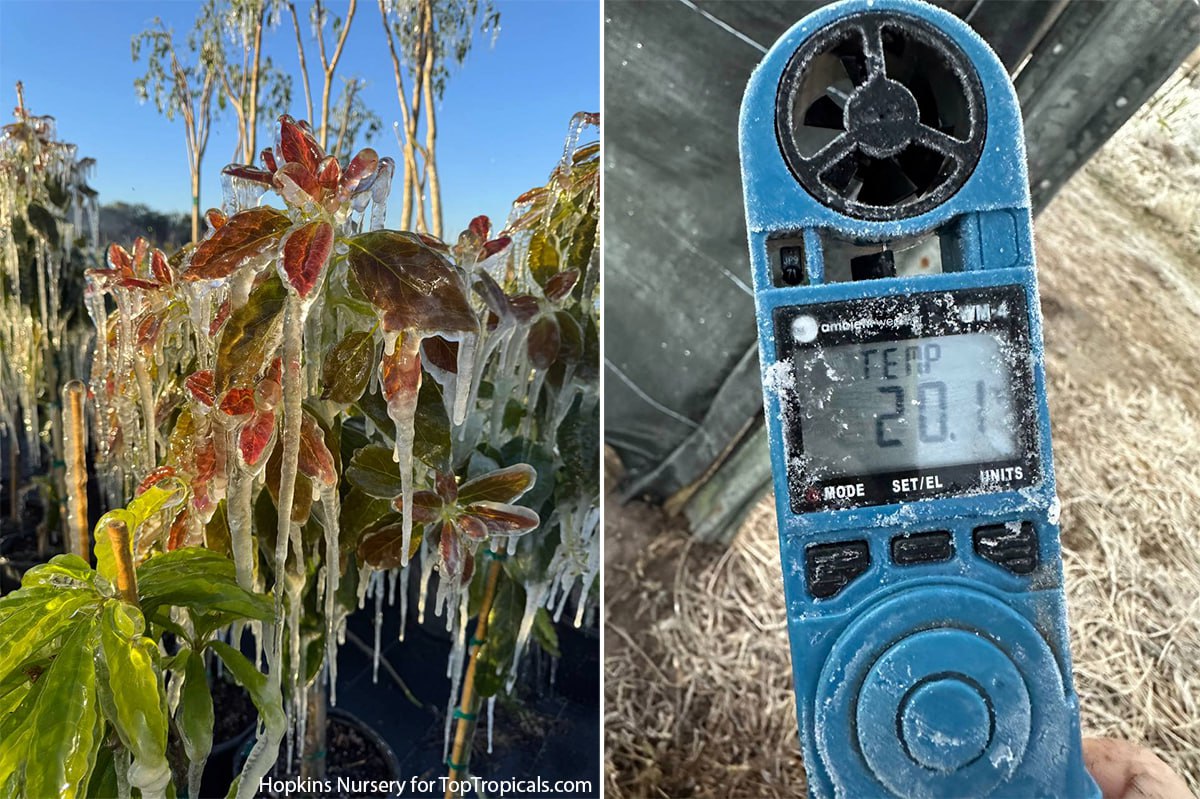
Avocado leaves covered with ice
❄️ Cold-hardy avocado varieties - what freezing they really survive
Avocado trees are usually associated with warm, frost-free climates, so every winter freeze raises the same question - which avocados actually survive cold weather? After recent freeze events, interest spikes as gardeners look for real answers, not guesses. The truth is, avocado cold hardiness is not just about the lowest temperature. Duration, moisture, wind, and tree maturity matter just as much - sometimes more.
Persea americana, Persea gratissima
Avocado, Alligator Pear, Aguacate, Abacate
USDA Zone: 9 - 11
What cold hardiness really means for avocados
Cold hardiness does not mean an avocado tree escapes winter untouched. It simply means the tree survives a freeze without being killed.
Leaf burn, branch dieback, or temporary growth setbacks can still occur. Survival is the key distinction.
Cold tolerance is influenced by:
· Tree age and establishment. Young avocado trees are always more vulnerable. Once established, tolerance improves significantly.
· Length of the freeze
· Wind exposure
· Daytime sun and heat retention
· Drainage and soil moisture
· Overall tree health going into winter
Where cold-hardy avocados come from
The most cold-hardy avocados are of Mexican origin. These types evolved in cooler, higher-elevation regions and differ genetically from West Indian and Guatemalan avocados.
These varieties are widely grown around San Antonio, Texas (USDA Zone 8b), where trees have been damaged but not killed by temperatures near 10F. As a general rule, established Mexican-type avocados can tolerate short freezes (about 3-6 hours) down to roughly 15F with little or no permanent damage. Temperature estimates apply to established trees under favorable conditions. The best results come from combining the right genetics with smart planting, good drainage, and thoughtful winter care.
Why cold tolerance varies so much
Cold ratings are never absolute. The same variety can survive very different temperatures depending on conditions such as tree maturity, freeze duration, wind, microclimate, and humidity. For example, an avocado may tolerate 10-15F in dry Texas winters but only 15-20F in wetter East Coast conditions.
Planting and protection tips for colder climates
· Plant in the warmest available location, ideally near a south or southeast wall
· Protect trees from cold wind
· Ensure excellent drainage; standing water during cold weather is deadly
· Use raised mounds in poorly drained areas
During freezes, small trees should be covered, mulched heavily, and protected with frost cloth. In severe cold, gentle heat under covers may help. Mature trees often need little to no protection.
Avocado varieties known for the best freeze survival
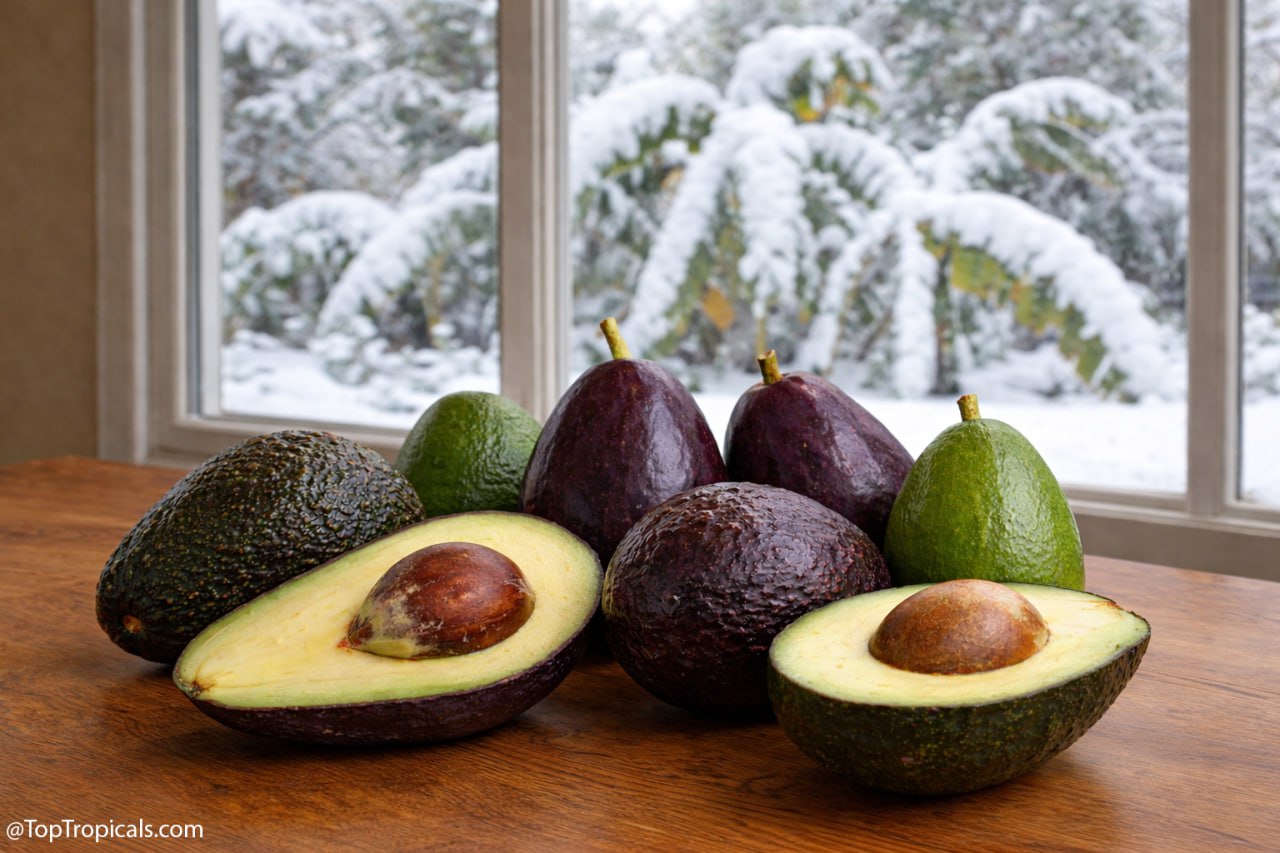
These varieties are among the more reliable choices for colder regions once established, reported tolerance near 15F:
·
Brazos Belle - medium to large purple-black fruit, season October-November
·
Fantastic - green fruit with paper-thin skin, creamy texture, the most cold tolerant
·
Joey - selected in Uvalde, Texas; purple-black fruit, excellent flavor, heavy producer, season September-October
·
Lila - medium green fruit, season September-October (not to be confused with Lula)
·
Poncho - medium to large green fruit
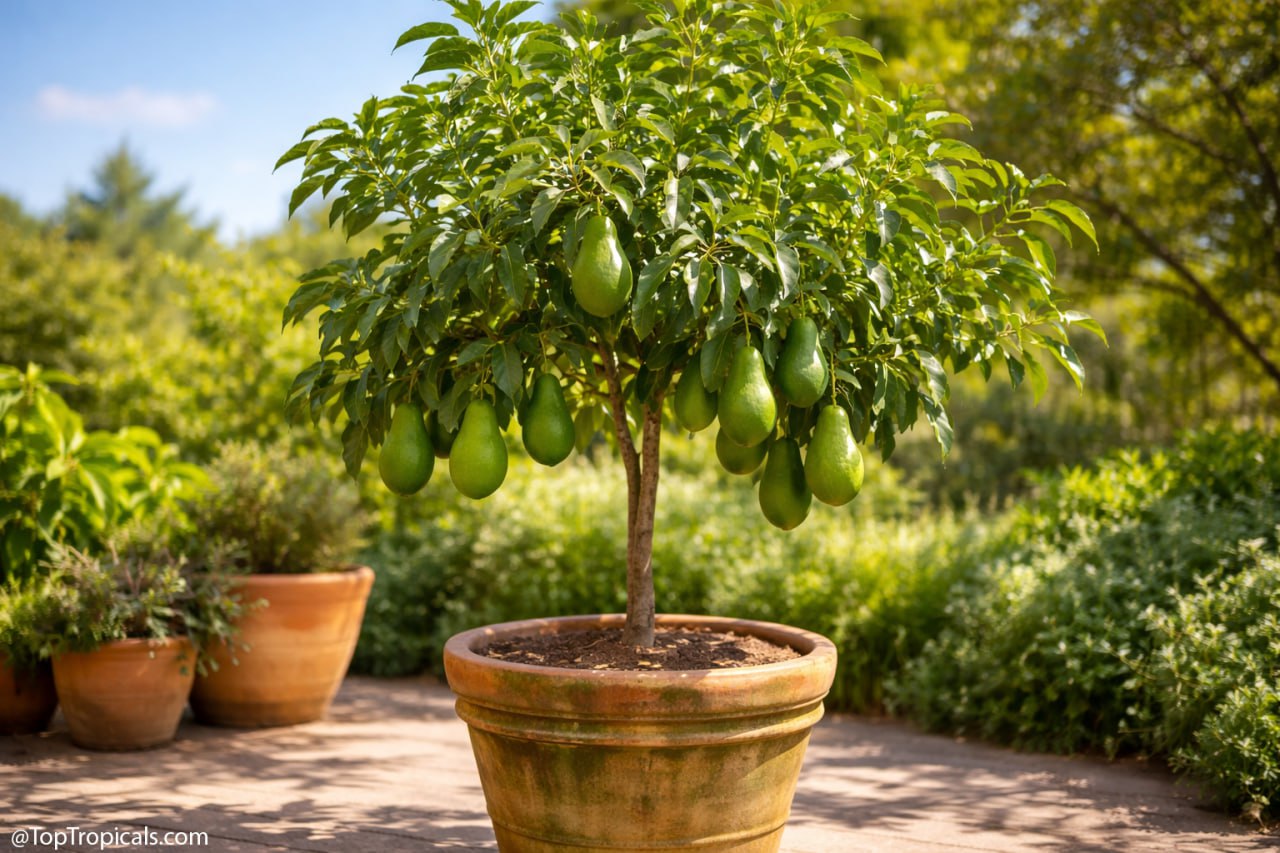
Cold-hardy avocados make growing this fruit possible beyond the tropics, but expectations must stay realistic. Survival does not mean zero damage, and protection still matters during extreme weather.
🛒 Explore cold hardy Avocado varieties
📖 Our Book: Avocado Variety Guide, Snack or Guacamole?
· Hard copy · PDF File Download
📚 Learn more:
· Avocado Variety Guide
· How to protect Avocado from cold and how hardy is it?
· Avocado that laughs at frost: Mexicola Grande for cooler climates
· Cold hardy Avocado Joey - you eat it with the skin
· Cold-hardy avocados: how cold-hardy are they?
· Cold-hardy avocado survival groups - what the numbers really mean
🎥 Avocados survived 25F hard freeze 3 nights of Florida Record Freeze
#Food_Forest #Avocado #Discover #How_to
🟢 Join 👉 TopTropicals