Garden Blog - Top Tropicals

Date: 2 Jul 2025

How to grow tropical fruit outside the Tropics
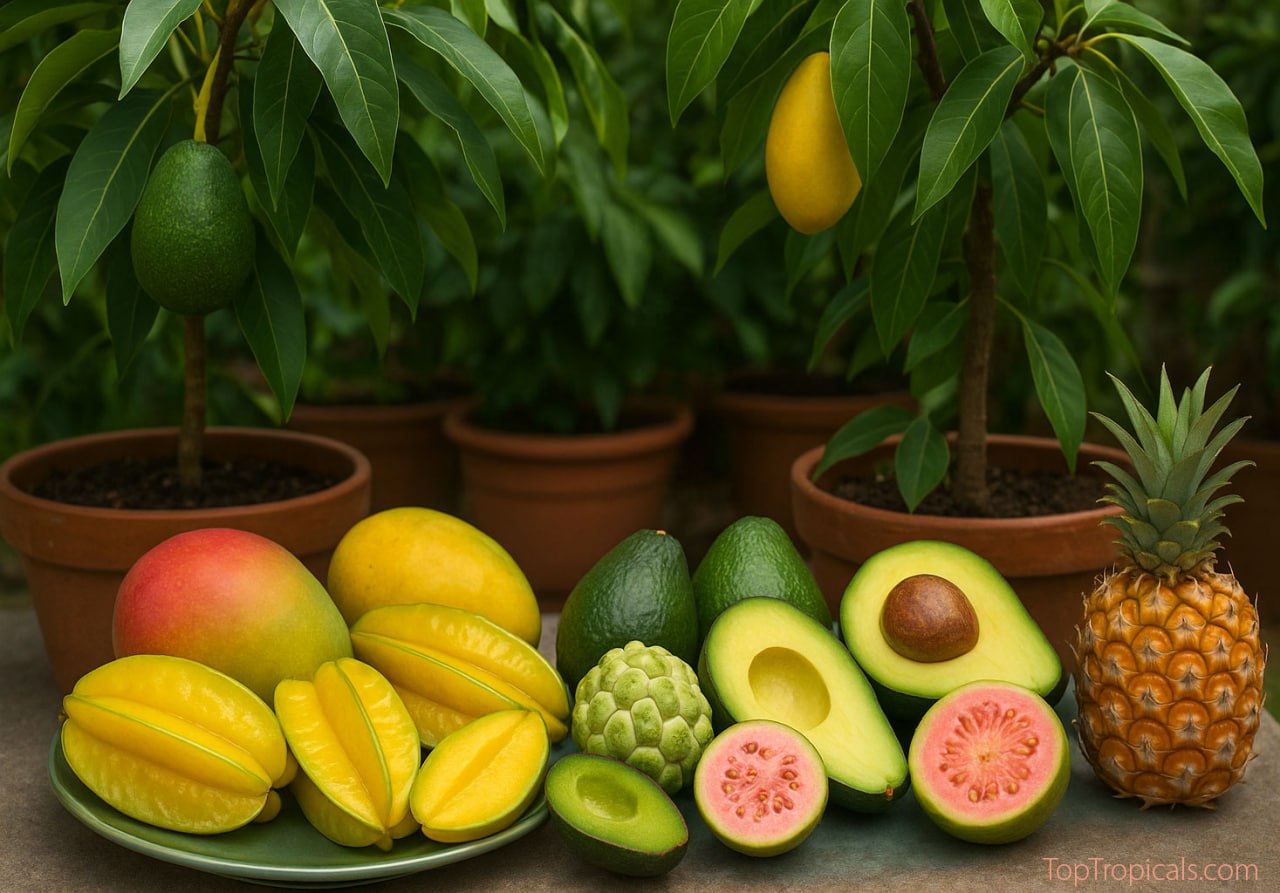
Tropical fruit trees grown in containers

Tropical fruit trees grown in containers

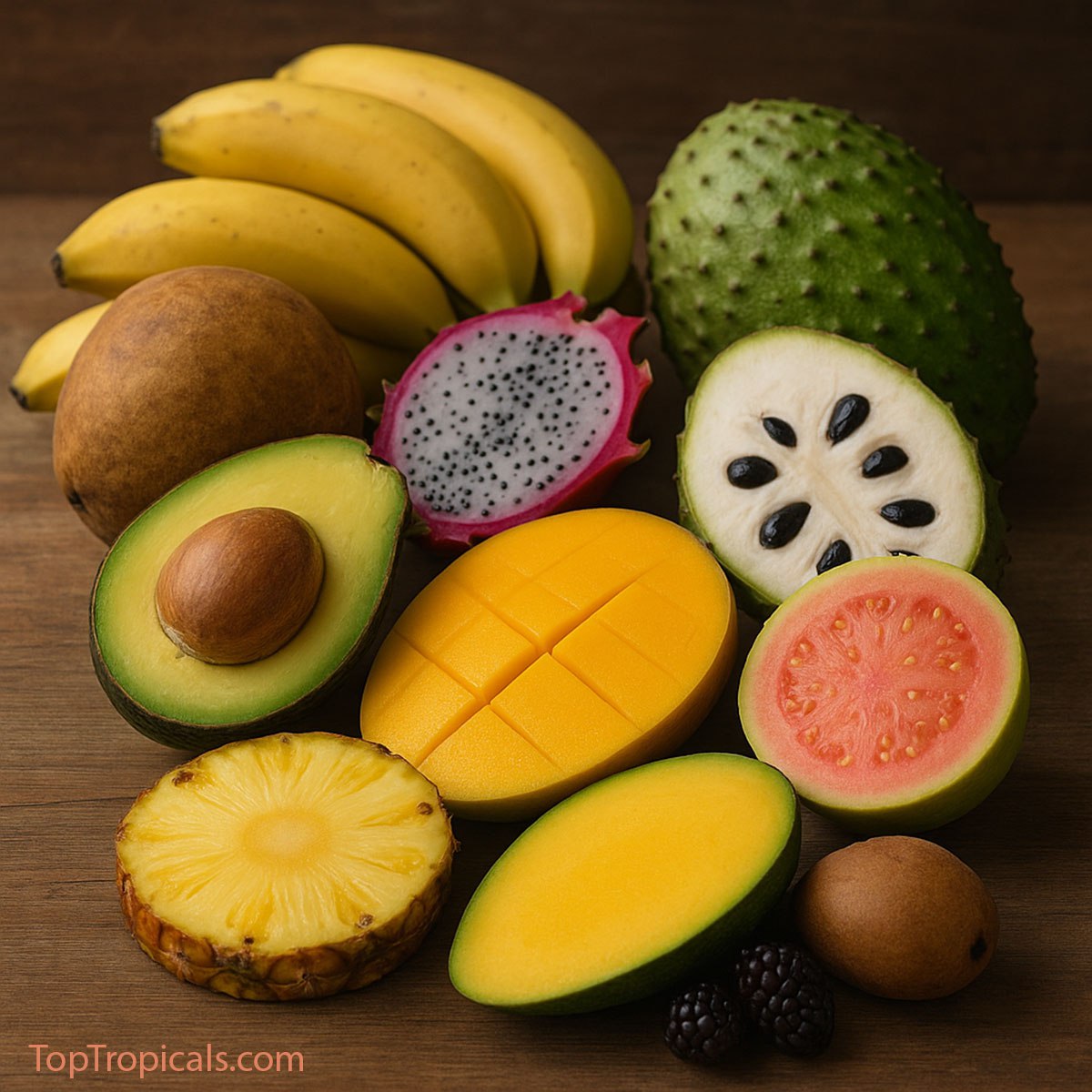
🥭 How to grow tropical fruit outside the Tropics


👨‍ Can you grow tropical fruit in colder climates? Absolutely! The key is growing them in containers so you can move them indoors during cold weather. With the right plant selection, a bit of motivation, good plant food, and a little love, you can enjoy a delicious harvest of exotic fruit - enough to treat your family and even share with friends. Here's everything you need to start your own Tropical Fruit Garden in containers.

🏆 Top tropical fruits and expert tips for growing in containers


🛒 Shop top picks for your container tropical garden:


🥭 Condo Mango
Cold hardy Avocado
🍒 Tropical Cherries - Eugenias
⭐️ Carambola (Start Fruit)
🍉 Guava
🍈 Annona
🍍 Pineapple
🌶 Herbs and spices - tropical edibles right away
🕙 Fast-fruiting trees
🍊 Shop all fruit trees
Supplies and Boosters

#Food_Forest #How_to #Discover

🟢 Join 👉 TopTropicals
Date: 23 Sep 2020

Fast-fruiting trees?

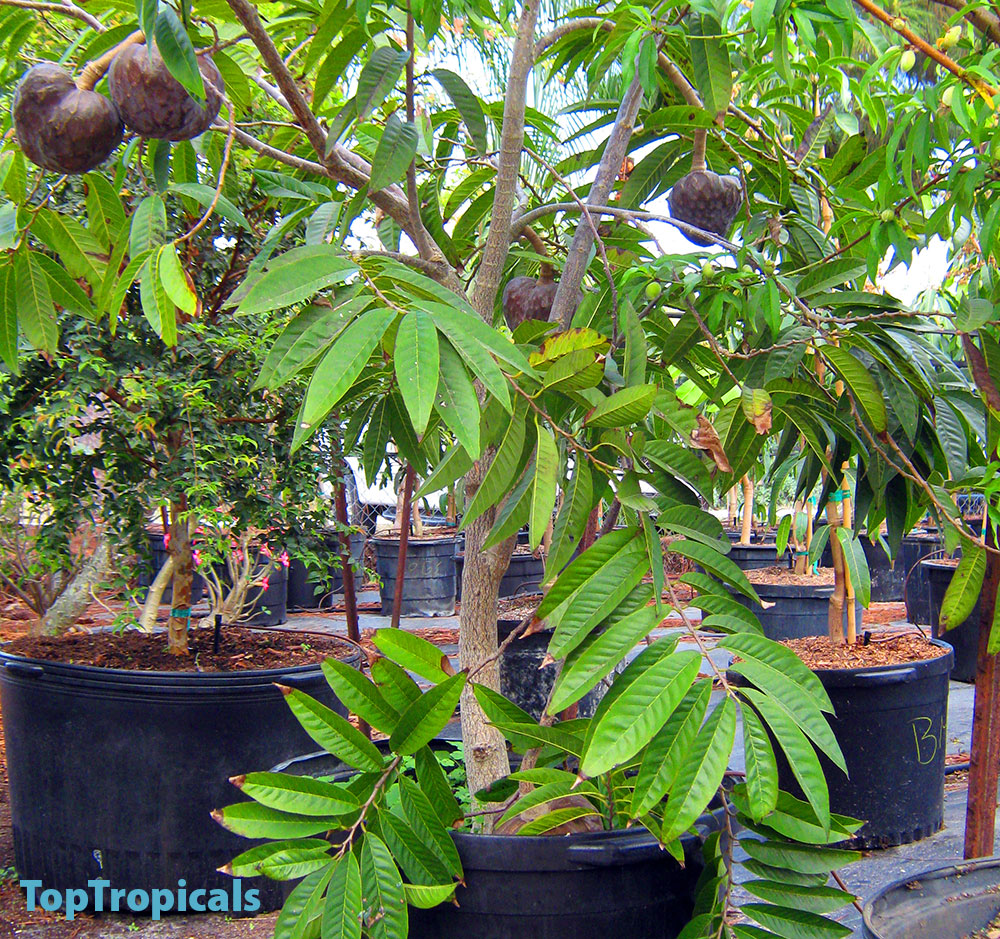
Photo above: Annona reticulata - Red Custard Apple

Q: More of a question than a review, but a review regarding your catalog, it would be easier for us buyers, if we could search for plants that produce fruit in 2 years or less, I don't have the patience to wait longer than that for fruit. I'm trying to buy for a fairly good sized garden but want some fast growers and fruit produced in 2 yrs. Can you help me out?

A: Fruiting time depends on many factors (established size, growing conditions, fertilizing, and even specific variety), this is why we can not just put a simple icon "will fruit within 2 years".
However, most grafted and air-layered fruit trees, including all Mango, Avocado, Loquat, Sapote, Sapodilla, Lychee/Longan, Peaches and Nectarines - will fruit right away. If you see in our store "grafted" or "air-layered" in plant description - these trees will fruit soon. Some of them already flowering and fruiting.
Some non-grafted trees or seedlings like Annona, Artocarpus (Jackfruit), Eugenia, Guava, Banana, Dragon fruit, Mulberry, Blackberry/Raspberry - will fruit within 3-4 years from seed or even sooner (Banana, Mulberry, Dragon fruit, Blackberry-Raspberry - within a year). Usually it says in description that this plant can produce fruit soon.
Bigger size plants are more established and have more energy to produce, so try to get larger size plants if your budget permits, and especially if you can pick up bigger plants rather than shipping them - obviously, shipping has size limitations.
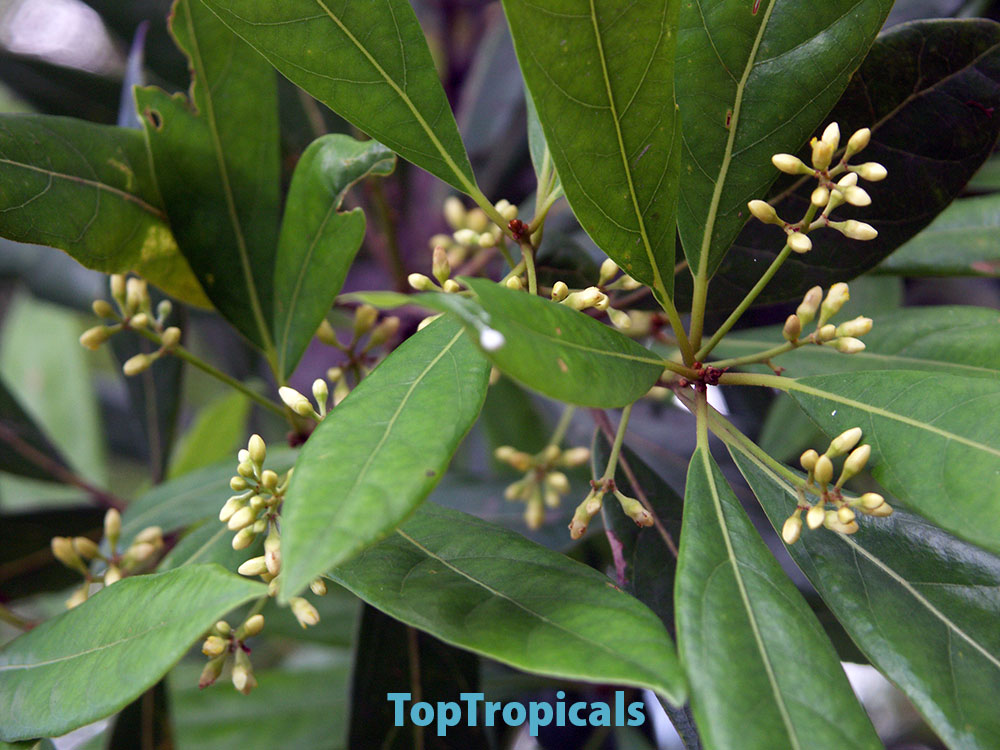
In addition, all spice trees like Bay Leaf, Bay Rum, Allspice and many more - they will produce spice for you right away, so you don't need to wait at all!
If you have questions about fruiting time on any specific plant you put your eye on, don't hesitate to ask!

Photo above: Pimenta dioica - Allspice

Date: 25 Nov 2019

Flavor of Feijoa Superfood

by Onika Amell, tropical plant specialist

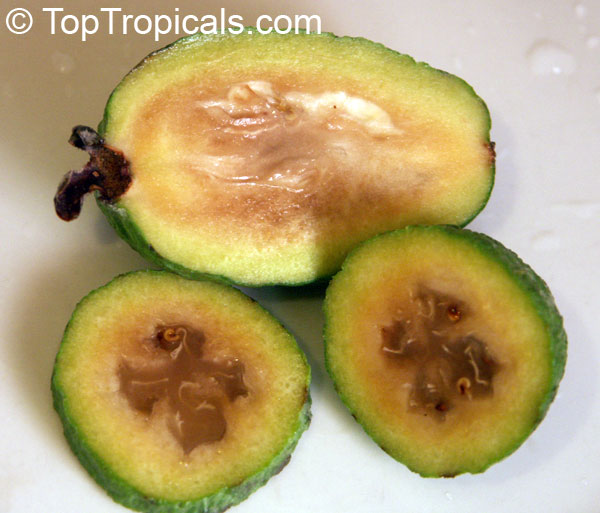
Q: What exactly is Feijoa - Pineapple Guava? Does the fruit really taste like pineapple? I am curious to know if it is easy to grow.

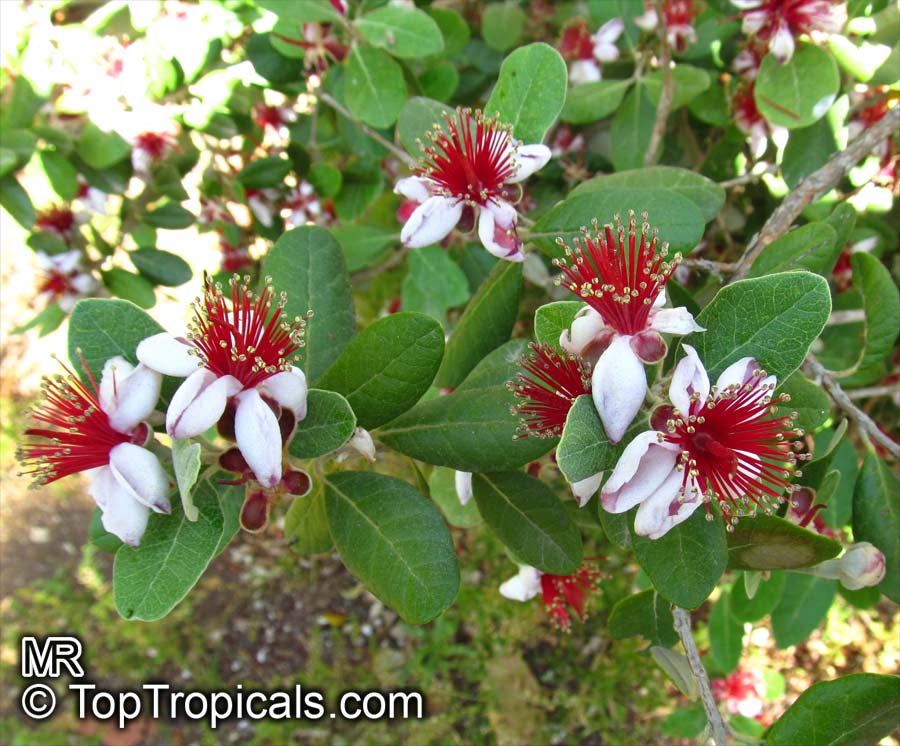
A: Feijoa is certainly one of the easiest fruit trees to grow as it does not require much care. It is an attractive, evergreen tree or large shrub with dark green, oval, leathery leaves. It has an abundance of uses in the garden and produces lovely edible flowers and fruit! The fruit is eaten fresh, added to smoothies or fruit salad and is also commonly used to make delicious jams and wicked chutneys. Feijoa fruit go a long way in flavor.
This plant is drought tolerant and will grow in almost any soil type. It loves full sun or partial shade and is wind resistant. A lot of gardeners like to grow it as a wind barrier for this reason. It can easily be shaped into a dense, informal hedge or screen that needs very little pruning. Because of this density, it provides excellent shelter for all kinds of wildlife. Butterflies, birds, and butterflies will all love you for growing Feijoa!
Space the plant five feet apart to create a wind barrier hedge. Heat does no not bother it at all and it will also withstand temperatures to 10 degrees F.
The plant gets its names from the delicious perfume it emits. Some folks seem the fruit taste like pineapple, with a slight minty undertone. Others feel the flavor reminds them of juicy fruit gum! The texture is described as smooth and slightly gritty - almost like a pear, but firmer.
If you prefer to grow this plant as a tree rather than a large shrub, simply remove the lower branches up to one-third of the tree's height over a period of time. The Pineapple Guava can grow up to 15 feet wide and tall. They also do really well as a container plant on patios where you can truly enjoy the lovely fragrance of the fruit. It prefers rich, organic, well-drained soil and will need light fertilization every other month in most soils.

We recommend:

Fruit Festival Plant Food - Super Crop Booster
Mango-Food - Smart Release Fruit Tree Booster
SUNSHINE-Honey - Sugar booster
SUNSHINE C-Cibus - Crop Nutrition Booster

Pretty, pink, edible flowers will wow you from May to June, followed in late summer or fall by the delicious and fragrant fruit. An interesting thing about this fruit is that you don't pick it. It falls to the ground when it is ripe. Or simply place something under your tree, like a tarp, and shake the tree. The ripe fruit will fall off. You can store the fruit in your refrigerator for up to a week. And remember! The fruit of the Feijoa is not only a very rich source of soluble dietary fiber, but also an excellent source of Vitamin C, and very rich in antioxidants. They are also low in calories. Each fruit only holds 55 calories.

Date: 20 Oct 2025

11 tropical fruits to eat instead of taking a fiber supplement

Tropical fruits to eat instead of taking a fiber supplement

Tropical fruits to eat instead of taking a fiber supplement

🍑 11 tropical fruits to eat instead of taking a fiber supplement

  • When we think of tropical fruit, we picture sweetness, sunshine, and exotic flavors packed with vitamin C. But beneath all that juicy goodness lies another gift: dietary fiber - quietly working to support digestion, feed the gut microbiome, and help keep blood sugar steady.
  • Avocado leads the pack among tropical fruits for fiber content. One creamy, ripe fruit can provide around 10 grams of fiber, roughly a third of an adult’s daily need. And there’s more to avocado than fiber - it’s also rich in healthy fats, micronutrients, and that silky texture everyone loves.
  • Other tropical fruits bring their own kind of fiber strength. Guava delivers up to 9 grams per cup, plus a burst of vitamin C.
  • Mango offers about 3 grams in half a fruit, especially when eaten with some of the skin.
  • Pineapple, though not always seen as a fiber powerhouse, still contributes around 2 grams per cup, along with bromelain, the enzyme that helps digestion.
  • Jackfruit’s fibrous pulp makes it another standout - it’s so meaty, it’s even used as a plant-based substitute in savory dishes.
  • Sapote fruit (Mamey, Canistel) and Sapodilla add fiber with a smooth, custard-like texture.
  • Adventurous tropical varieties like Annona (custard apple, soursop) may not top the charts in fiber numbers, but their soft, fibrous flesh still adds value: about 1.3 grams of fiber per 100 grams of fruit.
  • Bananas contain both soluble and insoluble fiber; the soluble part (mainly pectin) helps control blood sugar and appetite, while the insoluble fiber aids regularity.
  • Mulberries are rich in insoluble fiber, especially in their skin, supporting digestion and promoting healthy bowel movements.
  • Dragon fruit offers a mix of soluble fiber in its juicy flesh and insoluble fiber from its tiny edible seeds, which help support gut health and feed good bacteria.

These fruits aren’t just delicious - they help you meet your daily fiber needs in ways that are far more enjoyable (and sustainable) than taking supplements. And when home gardeners, farmers, or tropical communities grow and share them, it’s a double win: nutrition and tradition hand in hand.

✔️ Tropical fiber power: tips for getting more fiber from tropical fruits

  • ⏺Eat whole, not juiced. Most of the fiber is in the pulp, skin, and seeds. Juicing removes much of that goodness.
  • ⏺Mix it up. Tropical fruits are great, but balance them with legumes, whole grains, nuts, and veggies for a full fiber range.
  • ⏺Take it slow. If your diet is low in fiber, increase gradually to avoid bloating or discomfort.
  • ⏺Drink plenty of water. Fiber works best when paired with hydration.
  • ⏺Mind the ripeness. Unripe fruits can have more resistant starch, another form of fiber.
  • ⏺Get creative. Toss tropical fruits into smoothies, salsas, breakfast bowls, or even desserts - a tasty stealth-fiber strategy.


🛒 Plant a fruit tree to harvest your fruit tomorrow

📚 Learn more:


Tropical fruit health benefits guide - what fruit and edibles can help with health issues and vitamin deficiencies, Part 1 and Part 2.

#Food_Forest #Remedies #Discover #How_to

🟢 Join 👉 TopTropicals

Date: 11 Nov 2025

Fruits with the most vitamin E, according to dietitians

Fruits with the most vitamin E

Fruits with the most vitamin E

🥭 Fruits with the most vitamin E, according to dietitians

  • 🔛 Vitamin E works as an antioxidant that helps fight inflammation throughout the body. While nuts and seeds top the charts, some fruits quietly add their share to your daily needs - especially when eaten with a bit of healthy fat. According to New York City Nutrition, vitamin E anti-inflammatory action supports heart, brain, and skin health.
  • 🔛 Vitamin E is a fat-soluble vitamin that acts as an antioxidant, meaning it fights inflammation in the body. Because of this anti-inflammatory role, vitamin E is beneficial for immune health, heart health, eye health, brain health, and skin health.
  • 🔛 Adults need about 15 milligrams a day, according to the National Institutes of Health. Deficiency is rare, but it’s smart to get vitamin E from a variety of foods. Fruits alone don’t provide large amounts, but they can complement vitamin-E-rich foods like almonds or sunflower seeds.
  • 🔛 Since vitamin E needs fat for absorption, pair fruit with something creamy or crunchy - like yogurt, olive oil, nuts, or seeds - for best results.
  • 🔛 Here are some fruits that naturally offer vitamin E:

  • 🍊 Sapote 1 cup = 3.7 mg vitamin E. A tropical favorite with rich orange flesh and a flavor somewhere between pumpkin pie and sweet potato, with hints of honey and almond, Sapote is great fresh, blended in shakes, or scooped over ice cream. It also packs calcium, iron, potassium, and vitamins A and C.
  • Blackberries 1 cup = 1.7 mg vitamin E. Deep color, bold flavor, and plenty of antioxidants, Blackberries are high in fiber and low in calories. Dietitian Keri Glassman calls them her top fruit for fighting inflammation.
  • 🥭 Mango 1 cup = 1.5 mg vitamin E. The “king of fruits” brings more than tropical sweetness, Mango supports digestion, helps you feel full longer, and delivers both vitamin A and E in one juicy package.
  • 🍉 Guava 1 cup = 1.2 mg vitamin E. This fragrant fruit has a flavor that lands between strawberry and pear, Guava is also one of the highest-fiber fruits and surprisingly rich in protein for a fruit.
  • 🍑 Persimmon 1 fruit = 1.2 mg vitamin E. An autumn favorite that looks like an orange tomato but tastes sweet and mellow, Persimmons are rich in vitamins A and C and make a colorful, fiber-filled snack or dessert.
  • Avocado 1 fruit = 0.9 mg vitamin E. Creamy, mild, and versatile, Avocado’s healthy fats help your body absorb vitamin E while protecting heart health. Try it on toast, in salads, or as a smooth butter substitute in baking.

🛒 Plant more remedies in your food forest

📚
Learn more:
#Food_Forest #Remedies #Discover

🟢 Join 👉 TopTropicals