Garden Blog - Top Tropicals

Date: 7 Jun 2026

🌿 The Vanilla Plant That Outgrew Its 100-Gallon Container.
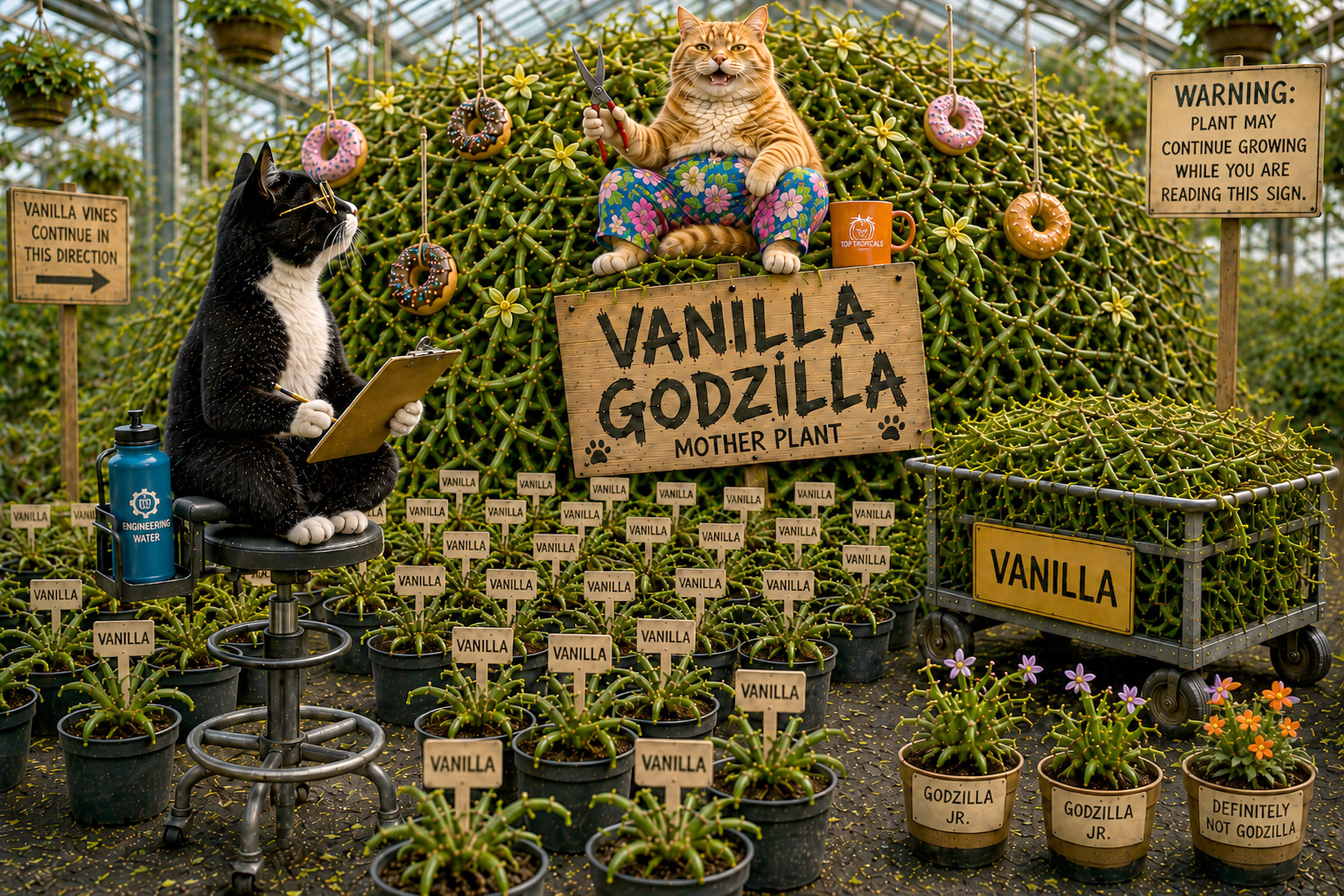
Smokey  the  tuxedo  cat  and  Sunshine  the  orange  cat  inspect  a  giant 
 Vanilla  Godzilla  mother  plant  in  a  greenhouse.  Sunshine  sits  atop  a  massive 
 mound  of  leafless  vanilla  vines  holding  pruning  shears,  while  Smokey  takes 
 notes  among  dozens  of  young  vanilla  plants  propagated  from  the  giant 
 specimen.
Smokey: Is that really the entire mother plant?
Sunshine: Most of it.
Smokey: What do you mean "most of it"? And why are there donuts hanging from the plant?
Sunshine: We still haven't found the other end. The donuts attract pollinators.
Smokey: Donuts do not attract pollinators.
Sunshine: Then explain why I keep visiting the plant.
Smokey: You work here.
Sunshine: That's what the plant wants you to think. It's called "Intelligent Design" for a reason.

The plant Sunshine is perched on is not a hedge. It is not a wall. It is a single specimen of Vanilla dilloniana, Dillon's Vanilla, and it has a name: Intelligent Design. Unlike the familiar Vanilla planifolia — the commercial vanilla of ice cream and extract — dilloniana produces no leaves. The plant is essentially a green vine, photosynthesizing entirely through its stems. It is an unusual and striking grower, and in good conditions it can develop into an impressive, multi-branched specimen. It is classified as rare, and is considered vulnerable or endangered across portions of its native range.
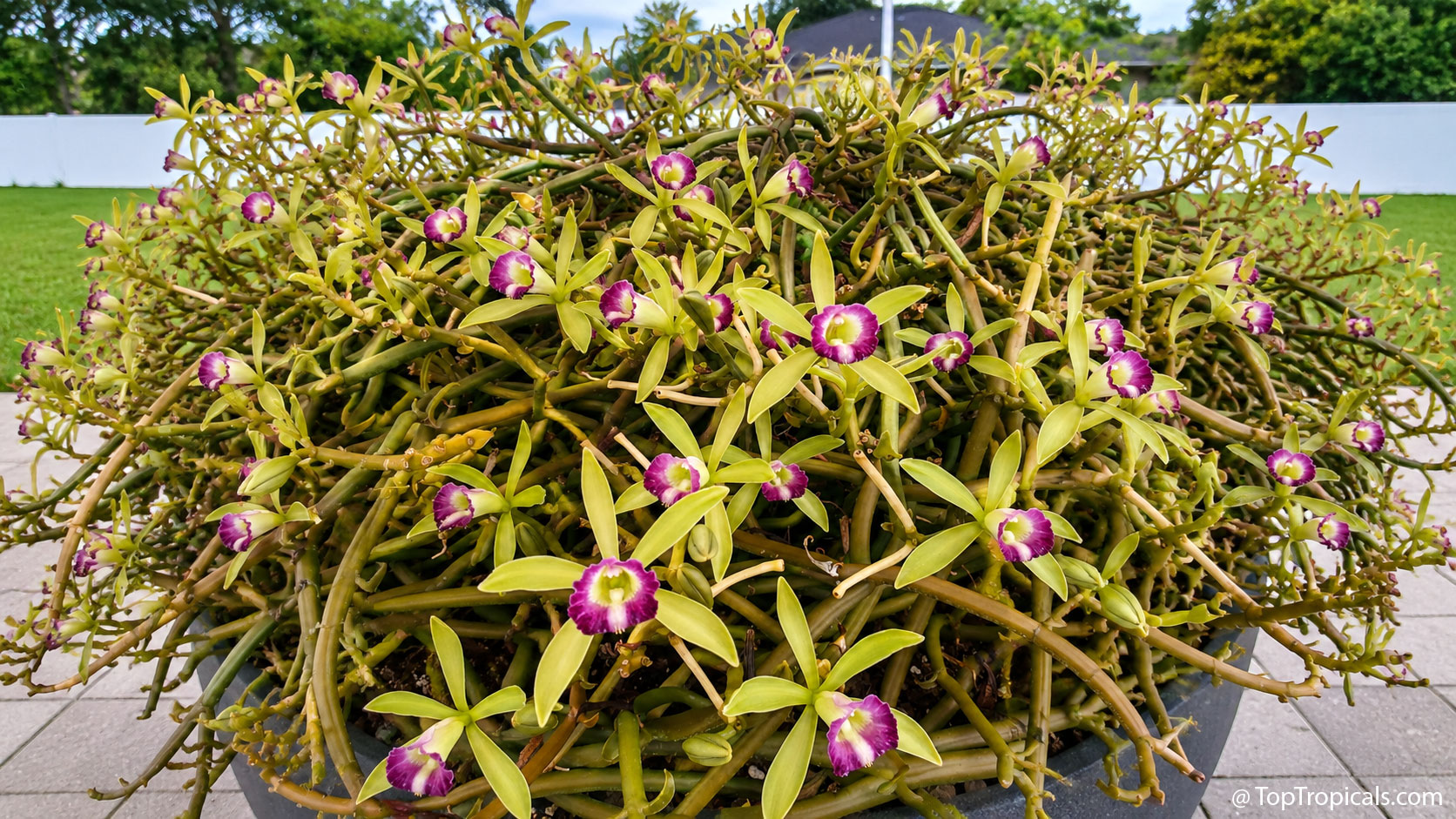
Close-up  of  the  Vanilla  dilloniana  mother  plant,  Intelligent  Design, 
 growing  in  a  100-gallon  container.  Hundreds  of  leafless  green  stems  weave 
 together  into  a  dense  mound  covered  with  pale  green  orchid  flowers  featuring
    vivid  purple  and  white 
 centers.

Vanilla dilloniana in full bloom before its next major upgrade.

Intelligent Design was grown and lovingly tended for years by Robert Riefer, a grower who is both a good friend of Top Tropicals and one of the most dedicated orchid collectors we know. The mother plant of this specimen traces its origins back to 1927 - nearly a century of continuous cultivation.

In 2011, the American Orchid Society recognized this remarkable plant with a Certificate of Horticultural Merit (CHM), one of the society's formal awards for plants of exceptional quality.

By 2017, the plant had already become well known in the orchid and tropical plant community, appearing in a video that documented Robert moving it into a 100-gallon container. That video became something of a legend among collectors.

🎥 Video: the biggest Vanilla Orchid in the world moving to 100 gal pot

Then the plant kept growing.

It outgrew the 100-gallon container. Robert eventually moved it into a 250-gallon pool on wheels - because when a plant refuses to stop, you give it room.
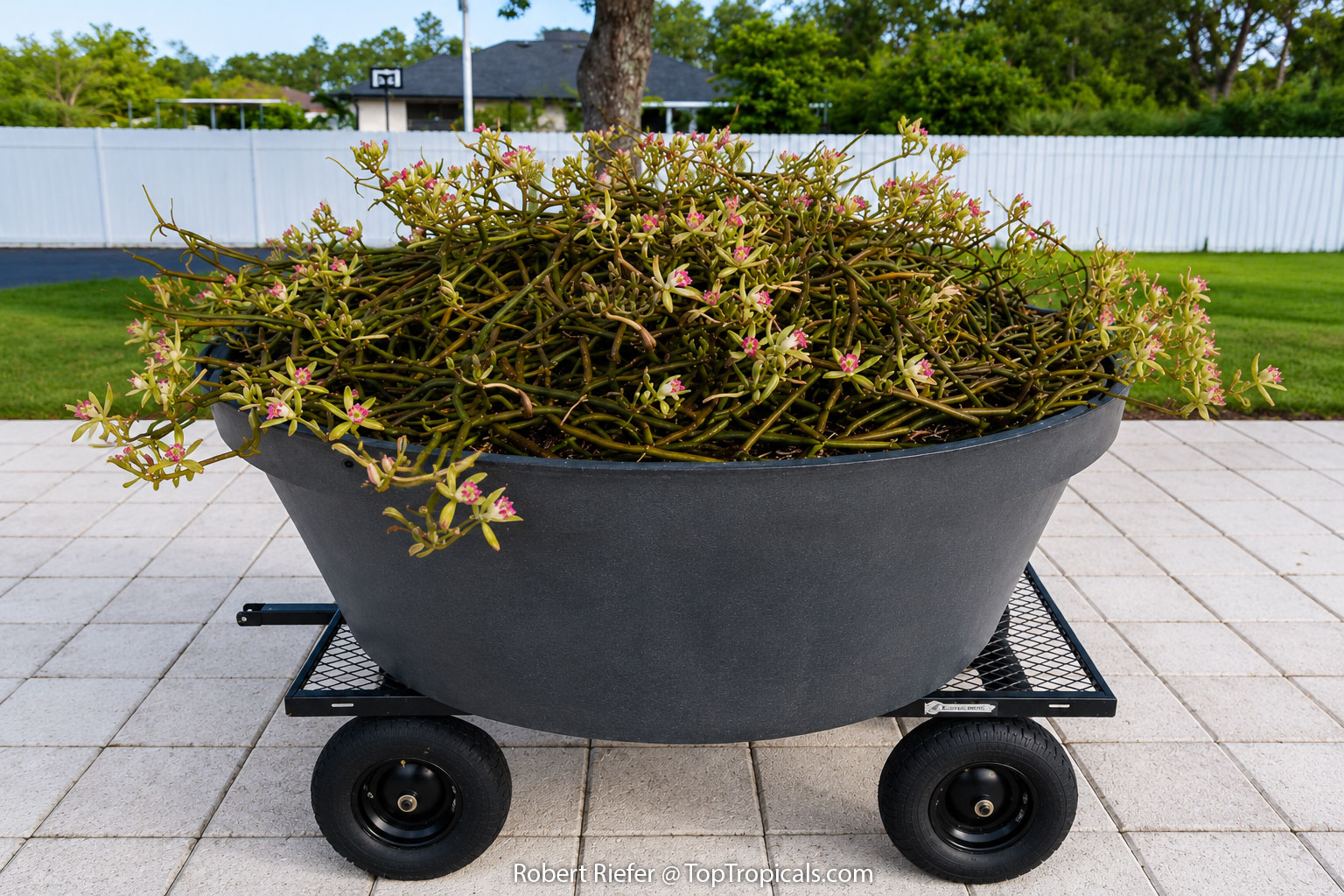
The  Vanilla  dilloniana  mother  plant,  Intelligent  Design,  growing  in  a 
 massive  250-gallon  container  on  wheels,  with  thousands  of  leafless  green 
 stems  forming  a  dense  mound  covered  in  small  orchid 
 flowers.

The move to a custom 250-gallon container allowed continued growth and flowering.

The plant is currently on display at Edison Ford Winter Estates museum and botanical garden in Ft Myers, Florida, during the month of June, where recent photographs show it larger and more floriferous than ever. It is, as best anyone can determine, the largest known cultivated specimen of Vanilla dilloniana in the world. If you are local or visiting Florida, don't miss the chance to see this world-famous orchid in person. It is expected to continue blooming through June.

And here's the remarkable part: the Vanilla dilloniana plants available from Top Tropicals are propagated directly from this exact plant - Intelligent Design itself.

🛒 Add Intelligent Design Vanilla to your collection

👉 A Piece of Living History - Direct from the Source

Young  Vanilla  dilloniana  plants  at  different  stages  of  growth,  showing 
 rooted  cuttings  trained  on  bamboo  stakes  in  1-gallon  pots  alongside  a  larger
    wrap-around  specimen  filling  a  7-gallon  container  with  thick  leafless 
 vines.

Every legendary Vanilla dilloniana starts somewhere. On the left are young Vanilla dilloniana plants. On the right is a more mature specimen in a 7-gallon pot beginning the characteristic wrap-around growth habit that eventually transforms this unusual orchid into a sprawling, sculptural giant.

Vanilla dilloniana is a rare species, considered vulnerable to endangered across parts of its native Caribbean range. Plants with documented provenance - especially provenance tied to a named, award-winning, century-old specimen - are genuinely uncommon in cultivation.

What you would be growing is a direct descendant of the famous Intelligent Design mother plant, carrying the same historic lineage recognized by the American Orchid Society.

For collectors, opportunities to acquire plants with this kind of documented history are exceptionally rare.

🛒 Start your own Vanilla Godzilla

Growing Leafless Vanilla

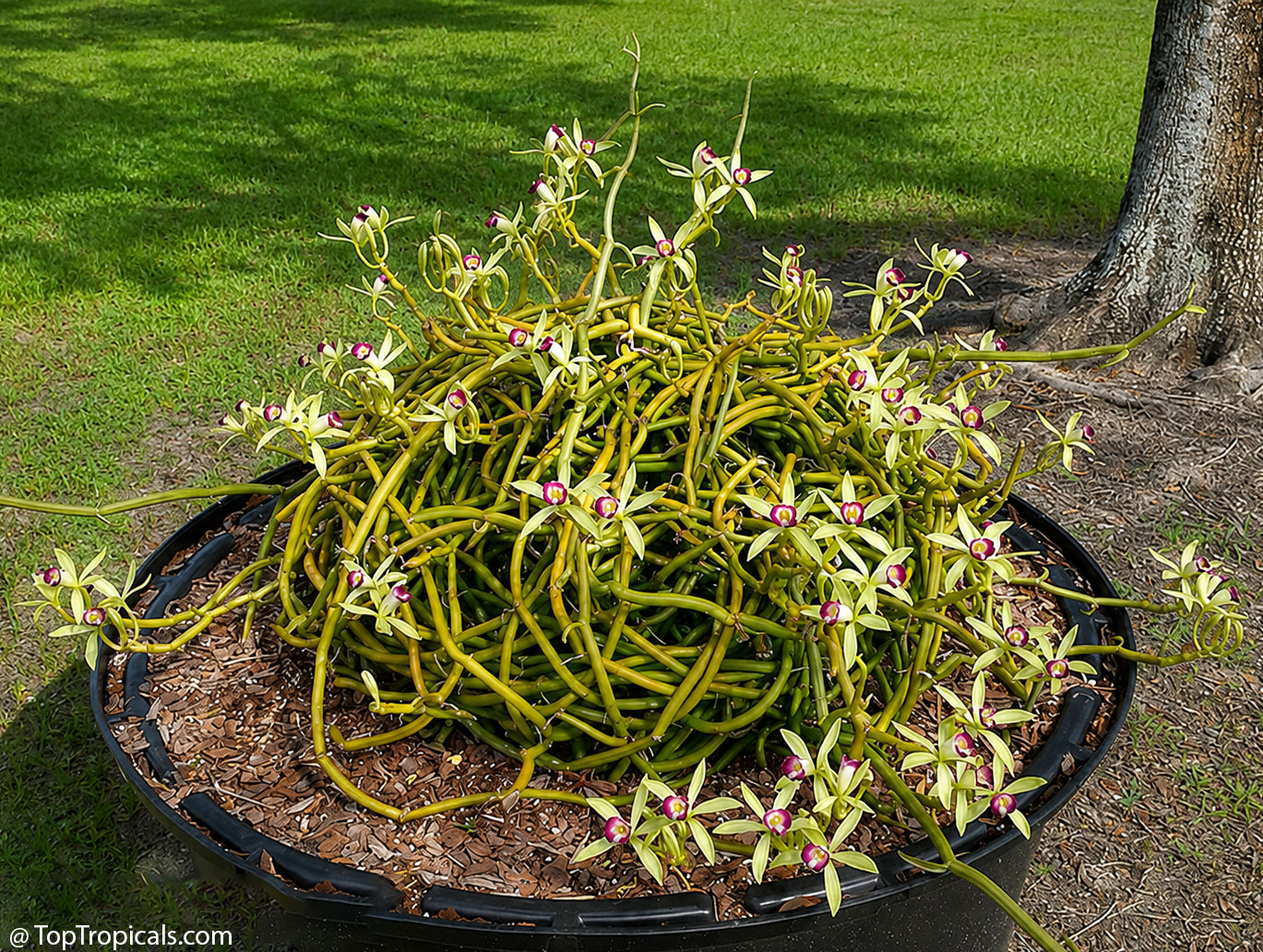
Large  specimen  of  Vanilla  dilloniana  growing  in  a  wide  container 
 beneath  a  tree,  with  a  dense  mass  of  leafless  green  vines  covered  in  unusual
    pale  green  flowers  with  purple 
 centers.

This is how the legendary Vanilla dilloniana mother plant, Intelligent Design, started its world-famous "Godzilla" journey in 50-gallon container. It's in full bloom, and its leafless stems form a living sculpture, dotted with dozens of striking orchid flowers that make this rare vanilla one of the most unusual cultivated orchids in the world.
  • Light: Bright filtered light is ideal. Morning sun is generally well tolerated. Avoid intense afternoon sun, especially during summer.
    Ideal: Dappled shade, eastern exposure, greenhouse conditions, or 30-50% shade cloth.
  • Temperature: Warm-growing tropical species.
    Best: 70-95F
    Protect below: 40F
    Not frost tolerant.
  • Cold Protection: In USDA Zones below 10, grow in a container and move indoors or to a protected greenhouse before temperatures drop below 40F.
  • Humidity: Prefers moderate to high humidity with good air circulation. Avoid cold, stagnant, damp conditions.
  • Watering: Water thoroughly, then allow the potting mix to partially dry before watering again. Do not keep constantly wet. In cool weather and winter, keep the soil on the drier side. Overwatering when temperatures are low is the most common mistake.
  • Potting Mix: Plant in a very fast-draining medium.
    Recommended: Top Tropicals Abundance Mix.
    The open structure allows excellent root aeration while retaining enough moisture for healthy growth.
  • Support & Growth Habit: Unlike most vanilla orchids that are trained vertically on posts or trellises, Vanilla dilloniana can be grown using the "Intelligent Design" method. Start with a sturdy support while the plant is young, then allow the stems to wrap around themselves in wide circles. As new growth emerges, continue guiding the vines around the container. Over time, the plant forms an impressive sculptural mound of intertwined stems.
  • Container Growing: Excellent for wide containers. The larger the mass of stems becomes, the more impressive the display and the greater the flowering potential. Unlike traditional vanilla culture, extensive vertical space is not required.
  • Repotting: Move to progressively larger containers as needed. Rather than growing upward indefinitely, the plant can continue expanding into a larger circular mass, making it well suited for long-term container culture.
  • Fertilizing: Feed lightly but consistently during active growth.
    Recommended: Sunshine Booster™ Orchidasm.
    Apply according to label directions every 2-4 weeks during warm growing weather. Reduce feeding during cool periods or when growth slows. Read our Guide to Sunshine Boosters™
  • Growth Rate: Moderate to fast under warm conditions. Established plants can branch freely and become surprisingly large over time.
  • The Flowers: Pale green to yellow-green flowers with a deeply fluted reddish-purple lip and yellow crest. Mature plants in bloom are highly prized by orchid collectors.
  • Collector Appeal: Unusual leafless growth habit. Historic provenance. Highly desirable among orchid collectors.

Why Is It Called "Intelligent Design"?
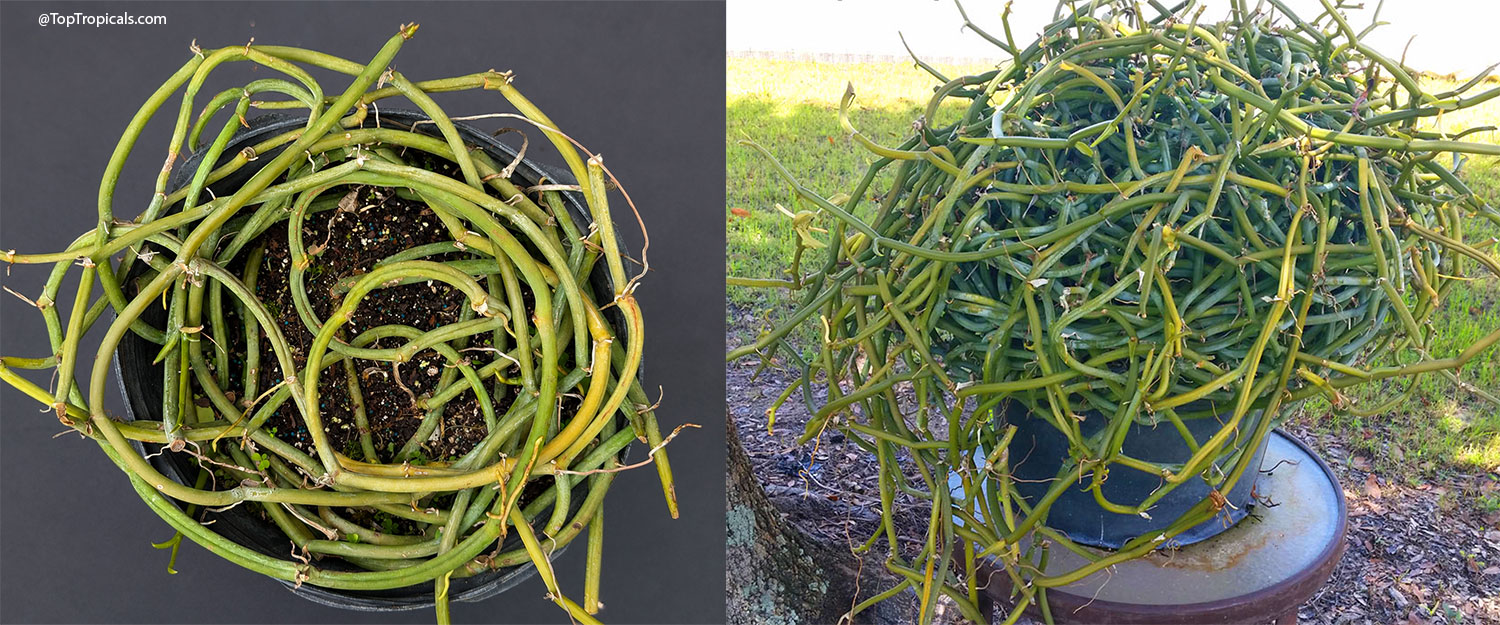
Side-by-side  comparison  of  a  young  Vanilla  dilloniana  in  a  7-gallon 
 pot.  The  left  image  shows  the  plant  beginning  to  wrap  around  the  container, 
 while  the  right  image  shows  the  same  plant  later  forming  a  dense  ball  of 
 leafless  green  vines  as  it  continues  its  characteristic  growth 
 habit.

The making of Intelligent Design. As Vanilla dilloniana grows, its long leafless stems naturally wrap around themselves, creating a dense sculptural mass of living vines. Even in a 7-gallon pot, the plant is already beginning to develop the unusual growth pattern that would eventually make its famous mother plant one of the largest cultivated specimens of its species.

The famous mother plant was named Intelligent Design by its grower, Robert Riefer. After decades of growth, countless blooms, container upgrades, and an apparent determination to occupy every available square foot of greenhouse space, the name seemed increasingly appropriate.

Unlike commercial vanilla, Vanilla dilloniana is grown primarily as a collector's orchid. Its leafless, sculptural stems create a living tangle of green architecture unlike almost any other cultivated vanilla species.

Ready to grow this remarkable Vanilla dilloniana? Start your own chapter in the story of Intelligent Design.

📚 Learn more from our Blog

🛒 Order Legendary Leafless Vanilla Dilloniana
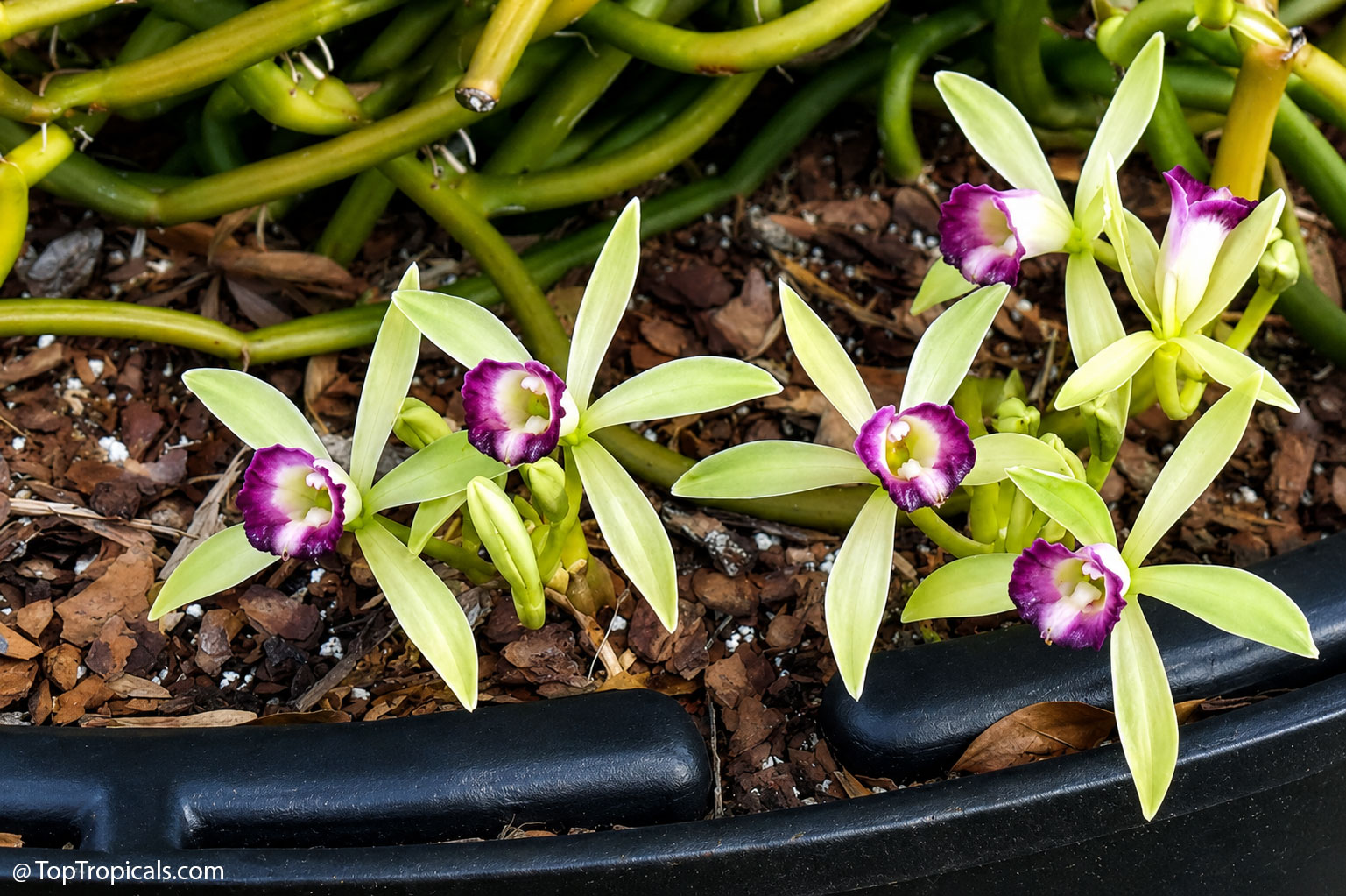
Close-up  of  Vanilla  dilloniana  flowers  blooming  along  the  edge  of  a 
 large  container,  showing  pale  green  star-shaped  petals  with  striking  purple 
 and  white  centers  against  a  tangle  of  leafless  green 
 vines.

The unusual flowers of Vanilla dilloniana emerge directly from its leafless stems, creating a stunning contrast of pale green petals and vibrant purple throats.
Smokey: We cannot guarantee that your plant will eventually require a 250-gallon pool on wheels.
Sunshine: We also cannot rule it out.
Smokey: Officially, we cannot confirm that the plant possesses intelligence.
Sunshine: The evidence is mounting.
Smokey: What evidence?
Sunshine: It convinced humans to build larger containers, move it into a 250-gallon pool on wheels, transport it to museum exhibitions, and place its agents in collections across the country.
Smokey: That's called excellent horticulture.
Sunshine: That's exactly what the Intelligent Design plant wants you to think.
Date: 19 Feb 2026

10 ways to enjoy Wild Medlar - Spanish Tamarind

Vangueria infausta (Spanish Tamarind, Wild Medlar)

Vangueria infausta (Spanish Tamarind, Wild Medlar)

🍊 10 ways to enjoy Wild Medlar - Spanish Tamarind


Vangueria infausta (Spanish Tamarind, Wild Medlar) from Africa to your backyard: the fruit, the medicine, the tradition.

Wild Medlar Plant Facts

Botanical name: Vangueria infausta
Also known as: Wild Medlar, Spanish Tamarind
USDA Zone: 9 - 11
Highligths Small tree 10-20 ftFull sunWatering: Moderate. Water when top soil feels dryEdible plantDeciduous plantEthnomedical plant.
Plants marked as ethnomedical and/or described as medicinal, are not offered as medicine but rather as ornamentals or plant collectibles.
Ethnomedical statements / products have not been evaluated by the FDA and are not intended to diagnose, treat, cure, or prevent any disease. We urge all customers to consult a physician before using any supplements, herbals or medicines advertised here or elsewhere.Subtropical plant. Mature plant cold hardy at least to 30s F for a short time
Get personalized tips for your region


Spanish Tamarind may look like a small, unassuming fruit - but don’t let it fool you. In its native Africa, this tree is a food staple, a home remedy, and a cultural favorite, all wrapped into one. And now, it’s ready to bring that same magic into your garden and kitchen. People have used this fruit for generations - and how you can too.

🍊 1. Eat it fresh, off the tree


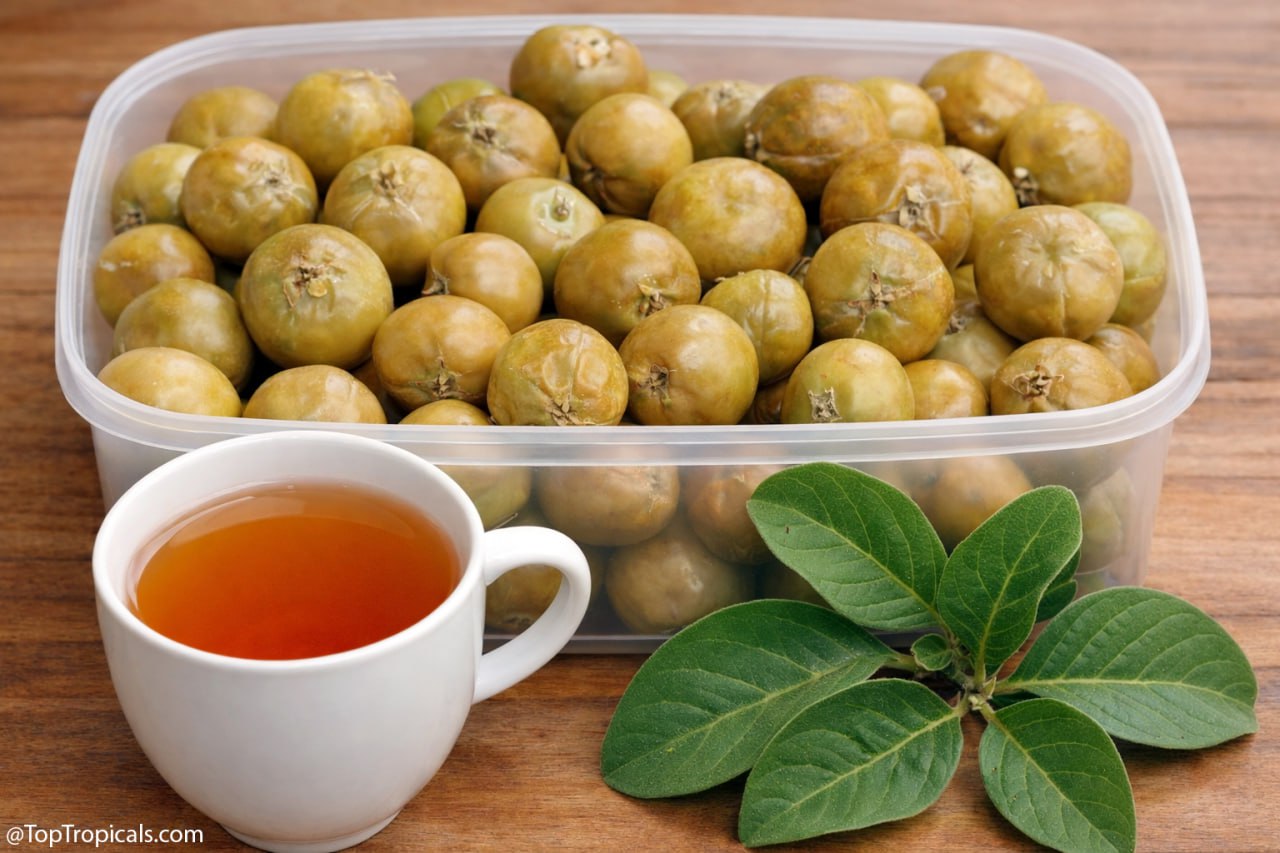
When ripe, the fruit turns golden brown and softens slightly. Its flavor is sweet-tart, almost like a tangy apple or tamarind with a hint of citrus. Just peel and eat!

🍬 2. Dry it for snacks


In many African regions, the fruit is sun-dried and enjoyed like natural fruit leather. It keeps well, travels well, and makes a great healthy snack.

🍵 3. Brew it into a fruit tea


Dried fruit can be steeped into a tart, refreshing tea that’s packed with vitamin C and antioxidants. Add honey or ginger for a soothing drink.

🍷 4. Ferment it into traditional beer or wine


In some local cultures, the fruit is fermented into a mild alcoholic drink, similar to fruit wine or beer. This is one of the tree’s oldest known traditional uses.

🍧 5. Make jams and preserves


Boil the pulp with sugar and lemon juice to make tangy medlar jam. Spread it on toast, stir into yogurt, or use it in baking.

6. Add to porridge or smoothies


Crushed or juiced medlar fruit is added to traditional maize porridge for a nutrient boost. You can do the same with oatmeal or smoothies.

7. Try traditional fruit pudding


A simple medlar mash with a little sweetener makes a rich, apple-like pudding with hints of spice. Great as a chilled dessert.

🌿 8. Use the leaves and bark medicinally


In folk medicine, leaves are brewed into a tea for treating fever, colds, and stomach aches. Bark is used for chest congestion and coughs. Roots are sometimes used for even stronger remedies like malaria treatment.

9. Clean your teeth the traditional way


Believe it or not, people use medlar leaves to clean their teeth! The leaves are antimicrobial and have a slight astringent taste that leaves your mouth feeling fresh.

🎨 10. Dye fabric naturally
Crush the bark or boil the leaves to create natural dyes in yellow, green, and even purple tones. This use is still practiced in rural areas of southern Africa.

✍️ Why this tree belongs in your life


Wild Medlar is more than just a fruit. It’s a versatile, resilient, and deeply cultural plant that connects generations. It’s food, it’s healing, it’s art—and now it can be part of your garden story.
Grow it for the fruit, the medicine, the tradition… or just for the joy of growing something wild and wonderful.

🛒 Plant Spanish Tamarind and enjoy exotic fruit benefits

📚 Learn more:


Vangueria infausta - Spanish Tamarind in Plant Encyclopedia
7 steps for a care-free Spanish Tamarind - the easiest rare fruit to grow
The wild fruit with a secret: health benefits of rare Spanish Tamarind - the exotic fruit you've never heard of

#Food_Forest #Remedies #Recipes #Discover

🟢 Join 👉 TopTropicals

Date: 24 Oct 2025

Guava fudge: quick-n-fun exotic recipes

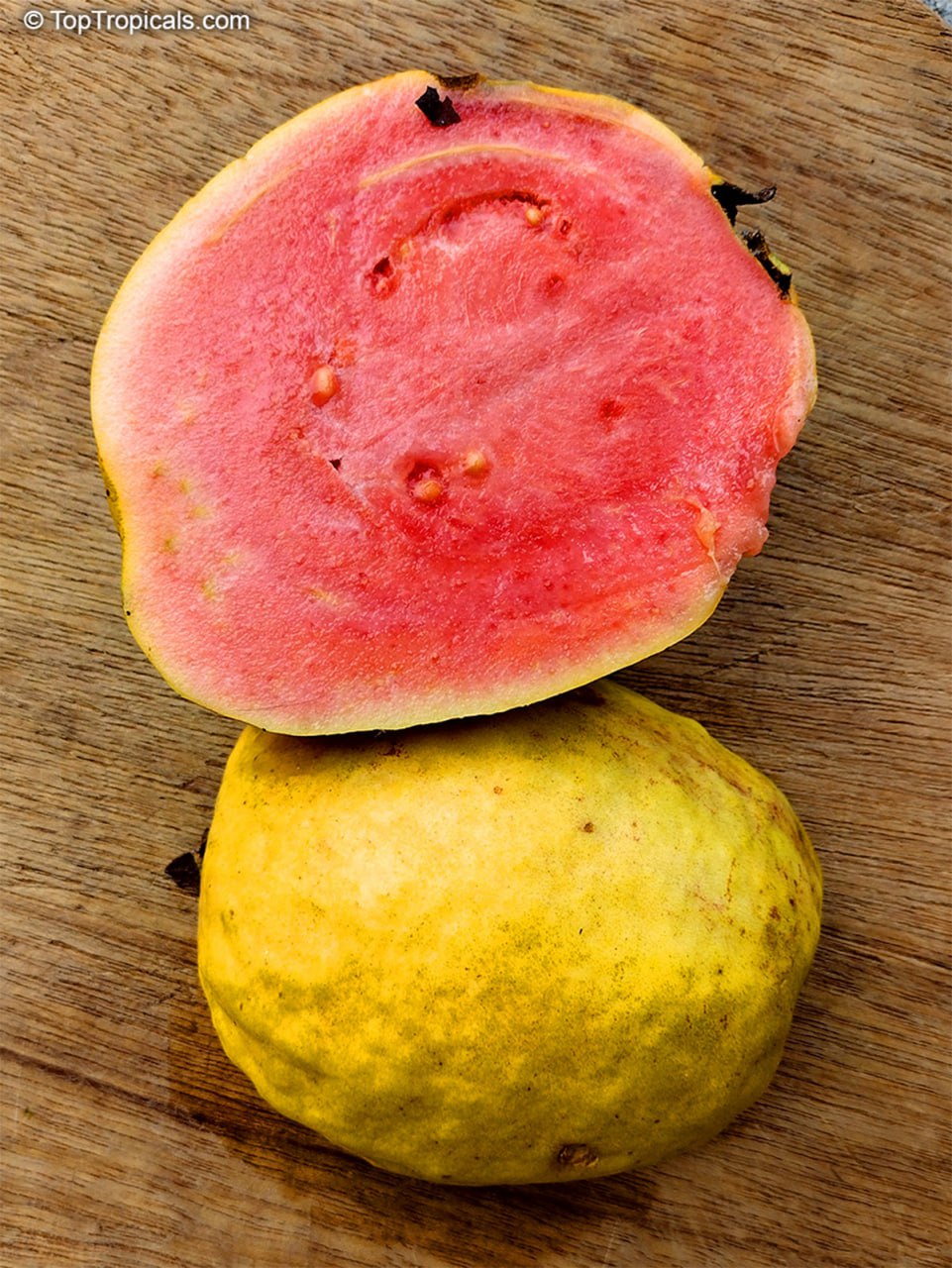
Guava fruit

Guava fruit

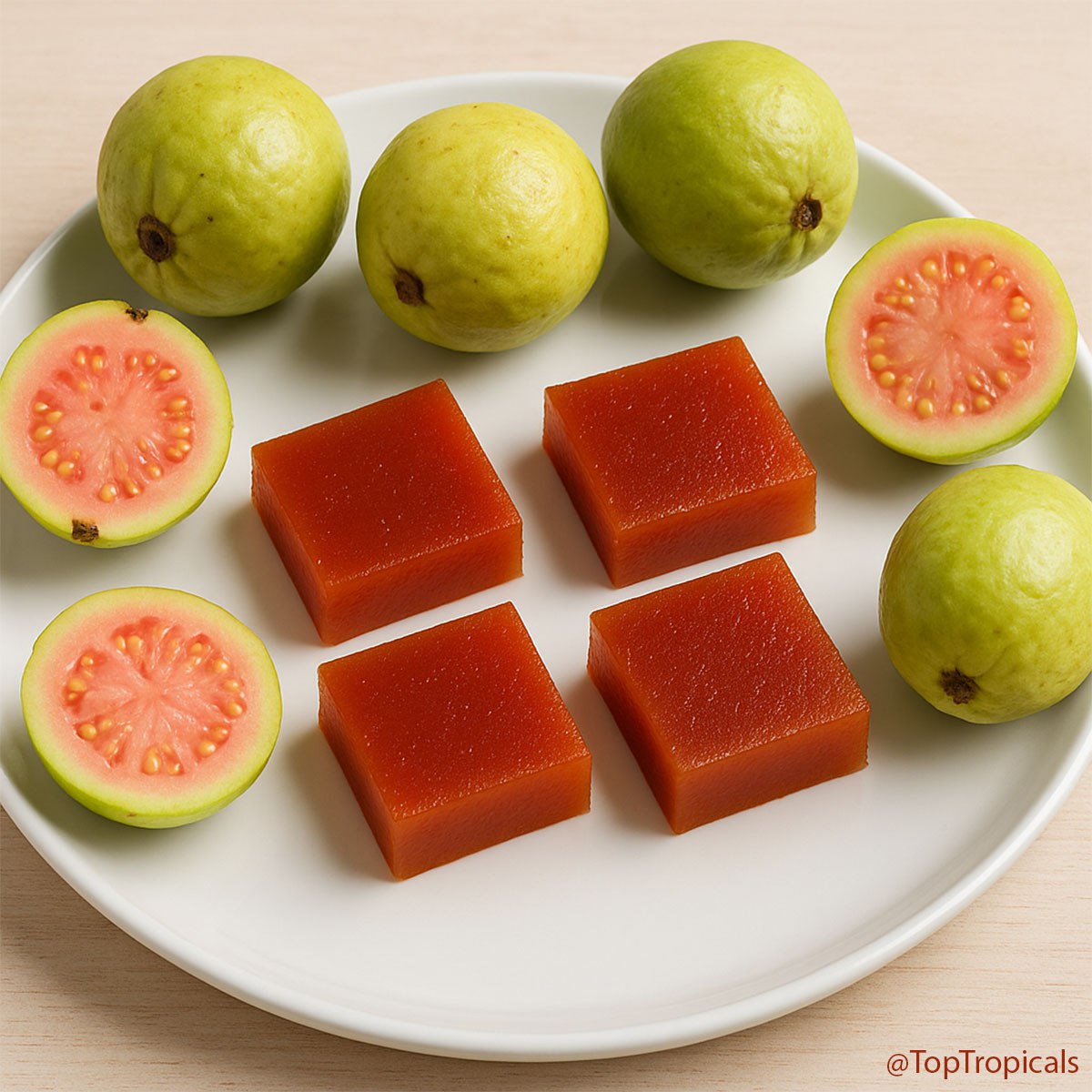
Guava fudge

Guava fudge

🔴Cook guava pulp with sugar until thick, pour into a pan, cut into squares.
🔴A tropical fudge-like sweet.

🍴 Guava fudge: quick-n-fun exotic recipes

Ingredients

  • 2 cups ripe guava pulp
  • 1½ cups sugar
  • 1 tbsp lemon juice (optional)

Instructions

  1. Cook guava pulp with sugar in a pan over medium heat.
  2. Stir constantly until mixture thickens and pulls away from sides.
  3. Pour into a greased pan and let it cool.
  4. Cut into small squares and enjoy your tropical fudge.

🛒 Grow your own sweet guava fruit

📚 Learn more:


Six guava varieties that will keep you picking year-round
How to grow a Guava Tree: Practical Guide to Growing Guava
More about #Guava

#Food_Forest #Recipes

🟢 Join 👉 TopTropicals

Date: 2 Mar 2026

Eugenia Cherries 🍒

By Tatiana Anderson, Horticulture Expert at Top Tropicals with Smokey & Sunshine help

Eugenia brasiliensis - Grumichama fruit on the branch

Growing Eugenia Cherries (Cherry of the Rio Grande & Grumichama)

Cherry of the Rio Grande and Grumichama are compact, adaptable tropical fruit trees well suited to Southern landscapes. While forgiving, they perform best when planted correctly from the beginning.

Site and Planting

  • Drainage is essential. Avoid low areas where water collects. Plant on a slight mound if soil is heavy or clay-like.
  • Choose full sun for best flowering and fruit production. Partial shade is tolerated.
  • A south or southeast exposure near a wall improves cold resilience and reduces wind stress.
  • Dig a hole twice as wide as the container, but no deeper than the root ball.
  • Set the tree level with surrounding soil. Do not bury the trunk.

Water and Feeding

  • Water regularly during the first few months while roots establish.
  • Once established, trees tolerate short dry periods but fruit best with moderate, consistent moisture.
  • Feed lightly and consistenly. SUNSHINE Boosters Robusta liquid fertilizer is safe to use with with every watering. During hot season you may add controlled release Green Magic every 6 months. It is essential to apply micro elements: Sunshine Superfood micro nutrients complex

Cold Tolerance

  • Protect young trees during hard freezes.
  • Established Cherry of the Rio Grande can tolerate brief drops into the low 20s.
  • Established Grumichama tolerates temperatures into the upper 20s.

Harvest and Production

  • Cherry of the Rio Grande fruits from late spring into summer. Pick when fully dark and slightly soft.
  • Grumichama ripens quickly, often within four weeks after flowering. Pick when glossy and deep purple-black.
  • Both trees often begin fruiting within 2–3 years and increase production steadily with maturity.

Growing in Containers

  • Use at least a 10–20 gallon pot for long-term growth.
  • Ensure multiple drainage holes.
  • Use a high-quality, well-draining container mix. Avoid heavy garden soil. Top Tropicals Abundance soil-less mix is specially formulated for pot growing
  • Place in full sun for best fruiting.
  • Water deeply, then allow the top layer to dry slightly before watering again.
  • Move containers to a protected area during hard freezes.
  • Prune lightly to maintain shape and airflow.

Common Mistakes

  • Planting in poorly drained soil.
  • Overwatering and keeping soil constantly saturated.
  • Over-fertilizing with excessive nitrogen.
  • Planting too deep and burying the trunk.
  • Expecting heavy crops immediately instead of allowing time for maturity.
  • Skipping cold protection for young plants.

Learn more: Tropical Cherries – Eugenias

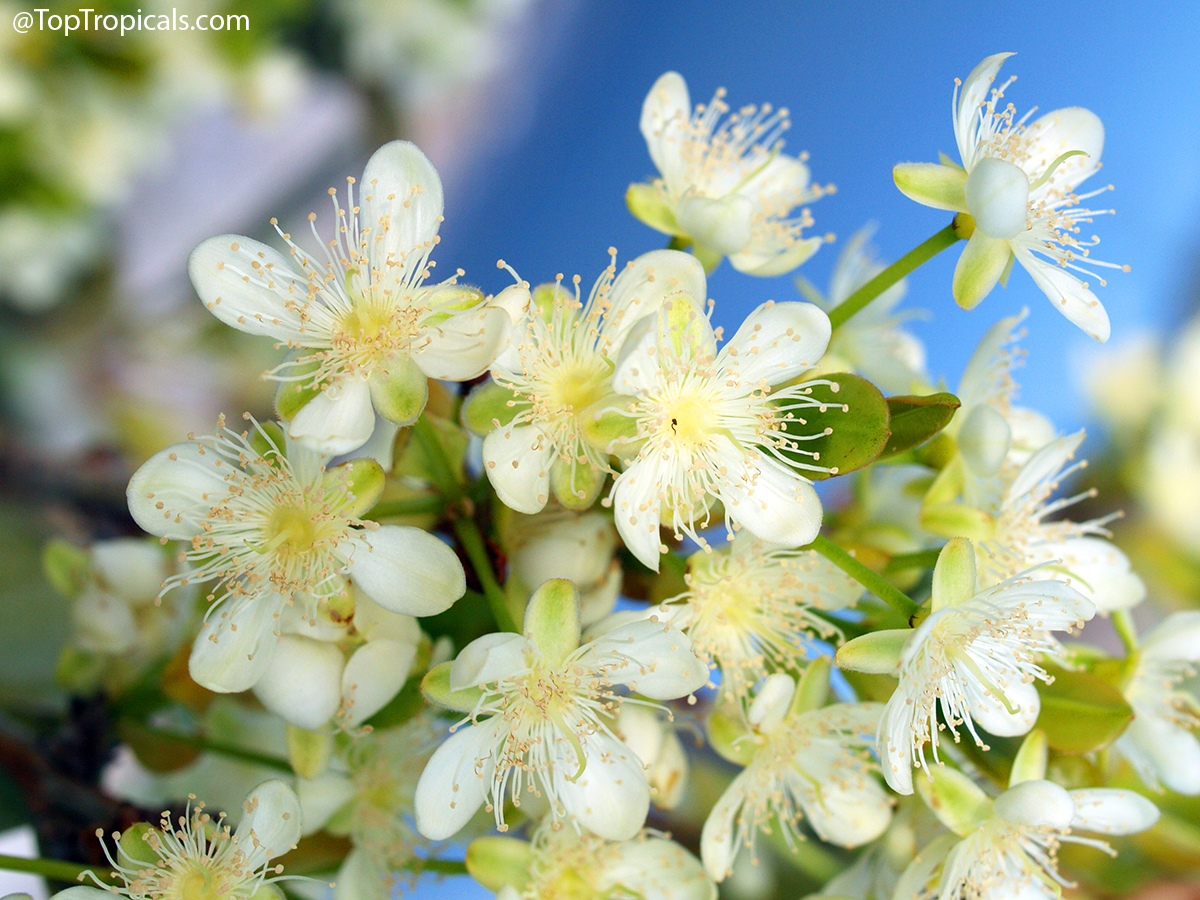
EGrumichama  flowers  (Eugenia  brasiliensis)  in  close-up  showing  white 
 petals  and  long 
 stamens

Eugenia brasiliensis - Grumichama flowers

❓Frequently Asked Questions: Eugenia cherries (FAQ)

  • Which one tastes better – Cherry of the Rio Grande or Grumichama?
    Cherry of the Rio Grande has a deeper, classic “sweet cherry” flavor with slight richness. Grumichama is softer, juicier, and often described as cherry with hints of grape and plum. Both are excellent fresh; Grumichama is especially popular for jam.
  • Which tree produces more fruit?
    Grumichama typically produces heavier crops once mature and can carry hundreds of fruits in a season. Cherry of the Rio Grande produces consistently but in slightly smaller volumes.
  • Do birds take all the fruit?
    Birds are attracted to both trees, especially Grumichama. Netting during peak ripening or harvesting promptly usually solves the issue.
  • Are these true "tropical" trees or subtropical?
    They are best described as subtropical tropicals. Unlike ultra-tender tropical fruits, Eugenia cherries tolerate occasional frost once established, making them more reliable in Southern landscapes.
  • Do they drop fruit messily?
    Fruit will fall if overripe, but the trees are compact and manageable. Regular harvesting prevents ground drop and keeps the area clean.
  • Can they be used for hedging or screening?
    Yes. Their dense evergreen foliage and upright growth make them suitable for edible hedges or privacy screens while still producing fruit.

Choosing between them is not about survival — both have proven resilient. It is about flavor preference, crop volume, and how you want to use the fruit in your kitchen and landscape.

Eugenia brasiliensis - Grumichama fruit close up

Eugenia aggregata (cv. Calycina), Cherry of the Rio Grande

🛒 Add Eugenia cherries to your garden

✍️ Top Ten Fruit Tree Winners of Florida 2026 Record Freeze

Date: 20 Mar 2022

Join our Sunday Garden Party Today!

Saving on your favorite plants is Easy.
Easy like Sunday Morning...


It's time for our favorite day and another Easy stroll through Top Tropicals Garden with savings of

up to 50% and MORE!

Spring into Spring Garden Party
Local or Virtual

Spring has arrived! Spring signals new beginnings and nature's renewal and offers a ray of hope in a world that could really use some right now.
Today is our Spring into Spring Garden Party at our TopTropicals Garden Center in Fort Myers, Florida. Cool vendors, Live Music, Plant Clinic and 15% off all plants. If you can't join us live, come to this virtual party and you can Save 15% too! And more...

Check our event page for the latest pictures and take advantage of our savings available to you! 15% off all orders of $100 or more. Simply use the code GARDENPARTY at checkout and save!

For 15% off use code:
GARDENPARTY

Min order $100 excluding S/H, exp. 3-21-22.

Exclusive offer for online guests only:
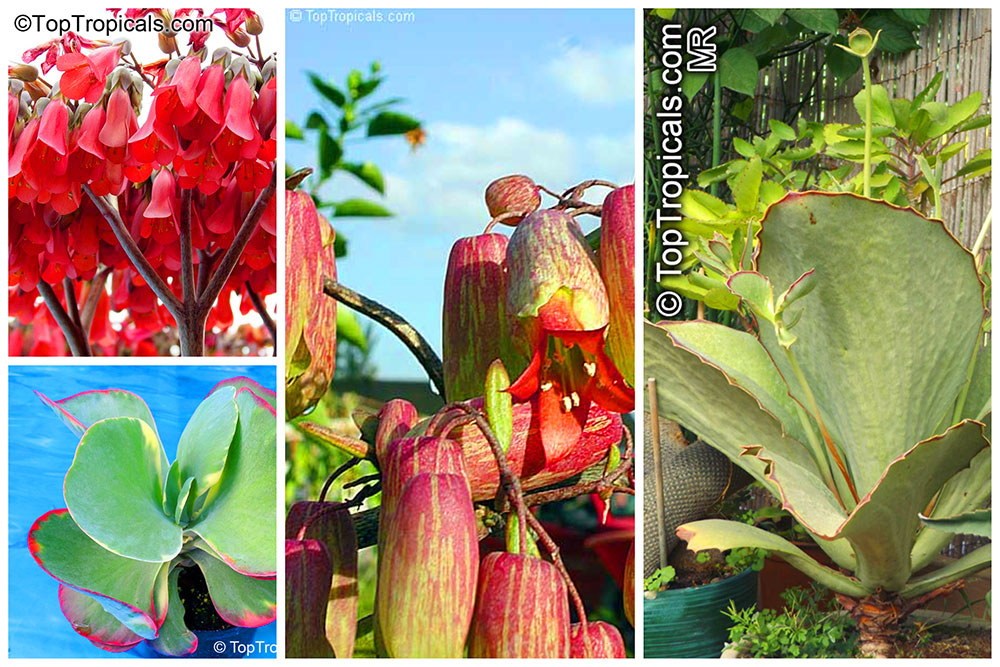
50% OFF 4 rare Kalanchoe species

As a special offer for online shoppers, we offer a flash deal of easy to grow, yet rare Kalanchoe varieties, with at instant 50% OFF for one day only! On top of that, use your GARDENPARTY 15% off coupon at checkout and make it a STEAL!

Kalanchoe synsepala Magnificent - Walking Cup Kalanchoe
Kalanchoe thyrsiflora (tetraphylla ) - Flapjacks
Kalanchoe pinnata - Hawaiian Air Plant, Bahamas Breath Plant
Kalanchoe daigremontiana - Mother of Thousands

Remember, this Easy Sunday Deal expires on Monday, 3-21-22.

Date: 20 Nov 2025

Feijoa coconut loaf: quick-n-fun exotic recipes

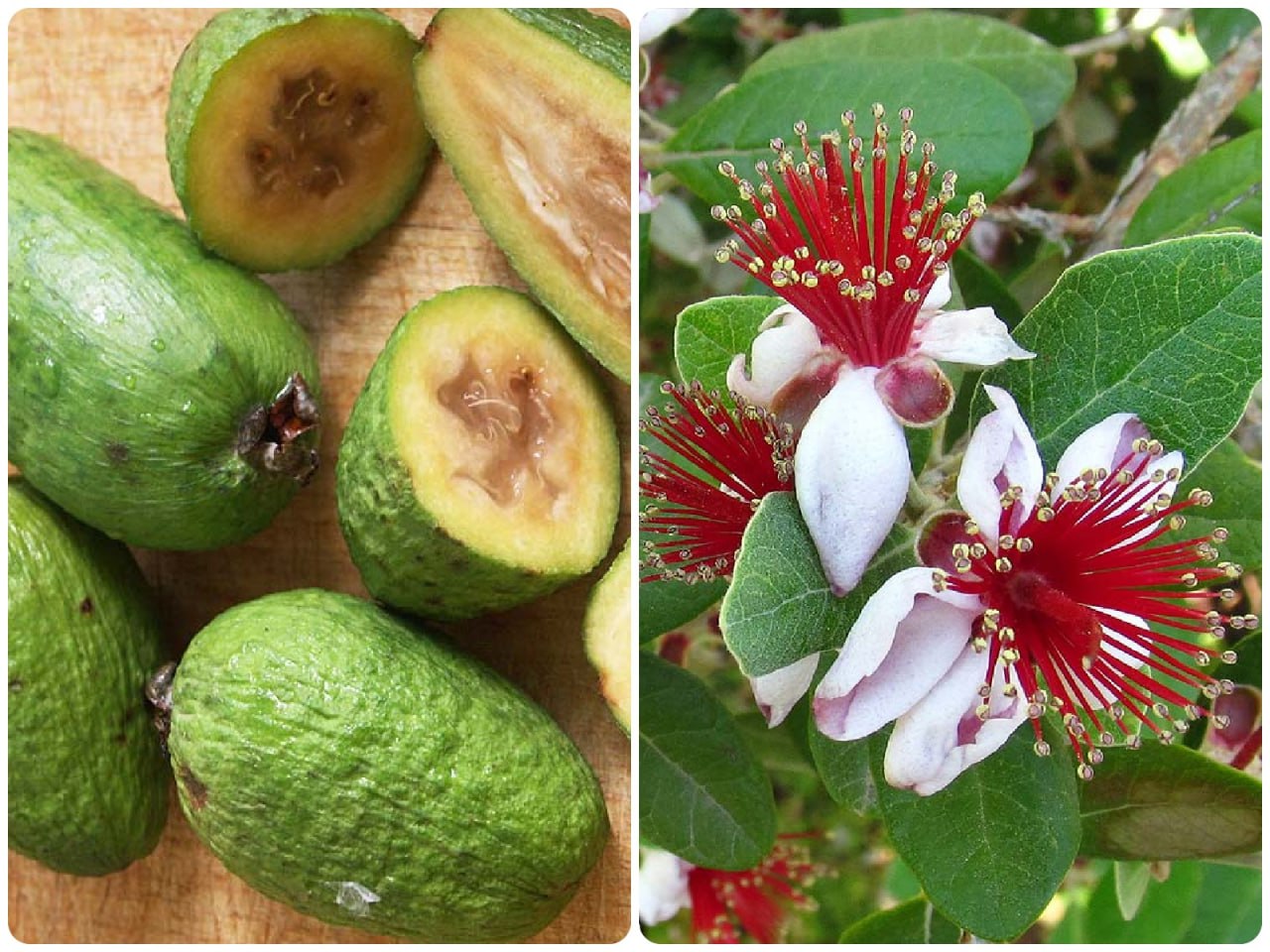
Pineapple Guava, Guavasteen, Fejoa (Feijoa sellowiana)

Pineapple Guava, Guavasteen, Fejoa (Feijoa sellowiana)

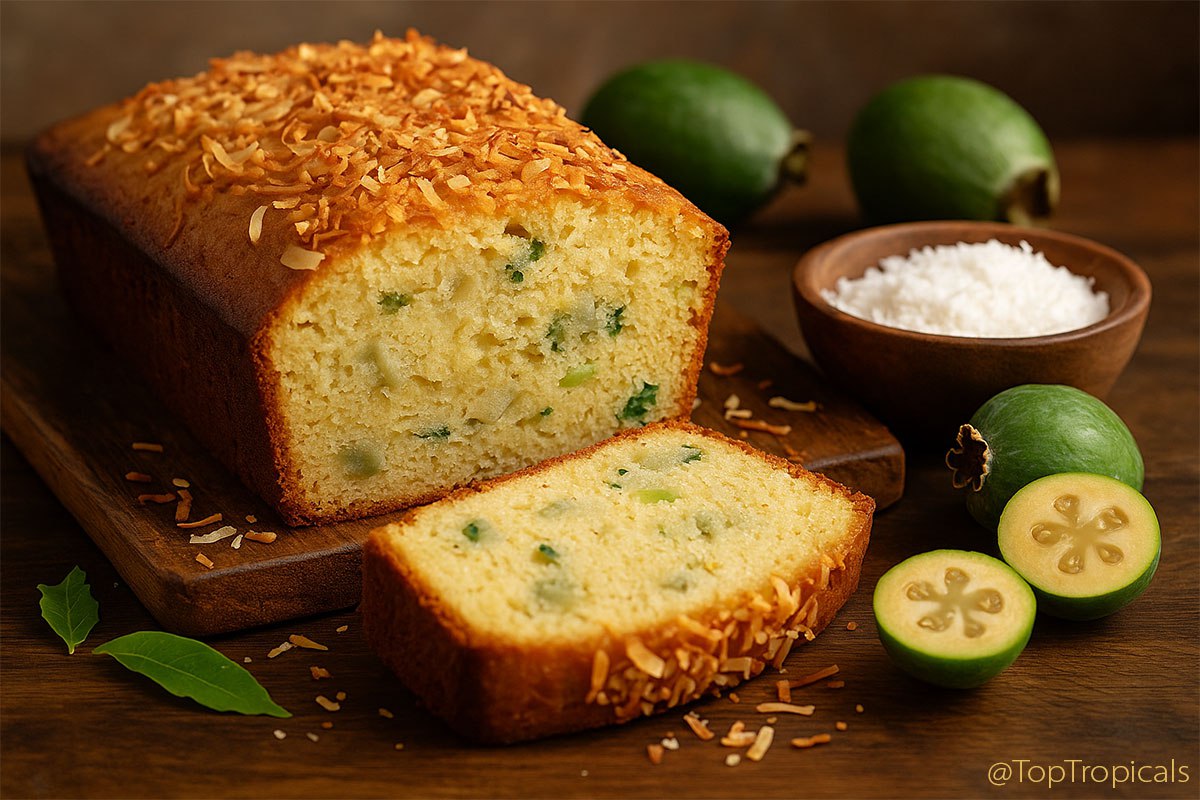
Feijoa coconut loaf

Feijoa coconut loaf

🍴 Feijoa coconut loaf: quick-n-fun exotic recipes


🔴Mix Feijoa pulp into a coconut quick-bread batter.
🔴Bakes into a fragrant tropical treat.

Feijoa Coconut Loaf

Ingredients

  • 1 cup feijoa pulp, finely chopped
  • 1 3/4 cups all-purpose flour
  • 1 cup sugar
  • 1 cup shredded coconut
  • 2 large eggs
  • 1/2 cup melted butter
  • 1/2 cup milk
  • 1 tsp baking powder
  • 1/2 tsp baking soda
  • 1 tsp vanilla extract
  • Pinch of salt

Instructions

  1. Preheat oven to 350F. Grease a loaf pan.
  2. Whisk flour, baking powder, baking soda, coconut, and salt.
  3. Mix eggs, sugar, melted butter, milk, and vanilla.
  4. Fold dry ingredients into wet, then stir in feijoa pulp.
  5. Pour batter into loaf pan and smooth the top.
  6. Bake 45 to 55 minutes or until golden and a toothpick tests clean.
  7. Cool before slicing.

🛒 Plant exotic fragrant Feijoa - Pineapple Guava

📚 Learn more:


Pineapple Guava: fragrant fruit, beautiful blooms, and real health benefits
Why is it called Pineapple Guava? It tastes just like strawberries! Feijoa Superfood.

#Food_Forest #Recipes

🟢 Join 👉 TopTropicals

Date: 22 Nov 2025

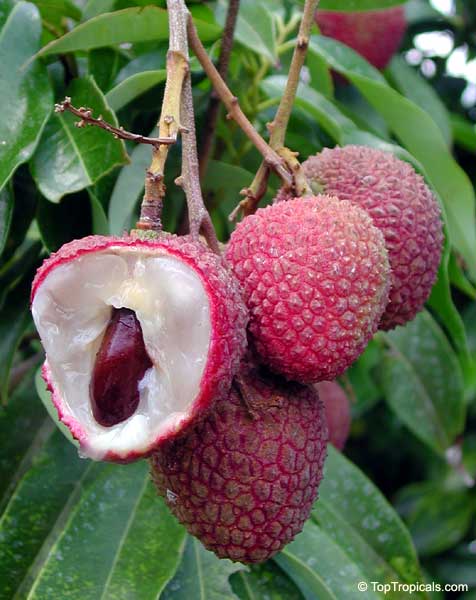
Lychee sorbet: quick-n-fun exotic recipes

Lychee - Litchi chinensis

Lychee - Litchi chinensis

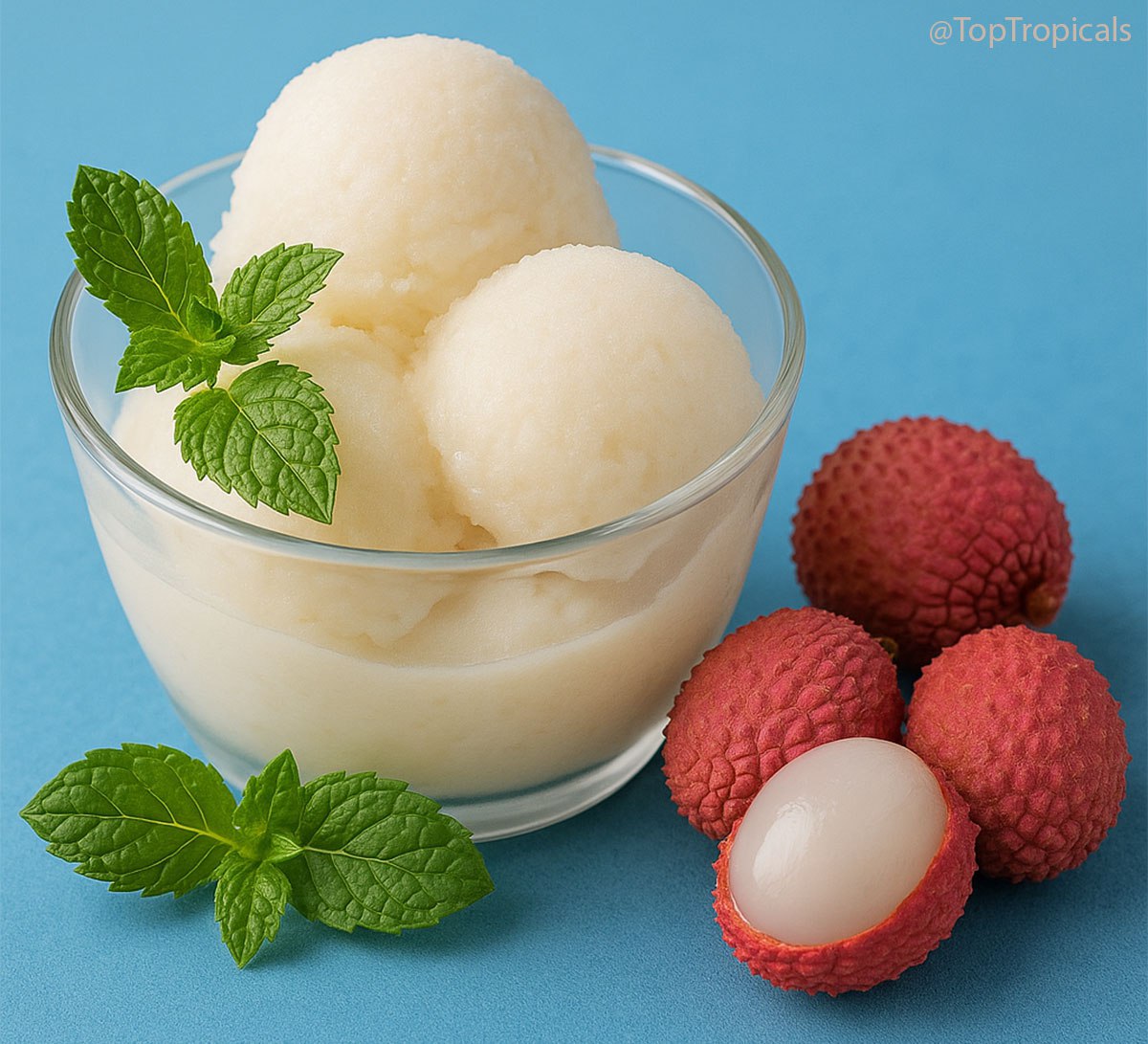
Lychee sorbet

Lychee sorbet

🍴 Lychee sorbet: quick-n-fun exotic recipes


🔴Blend Lychee pulp with lime juice, freeze until firm.
🔴A refreshing tropical ice treat.

Lychee Sorbet Recipe

Ingredients

  • 3 cups fresh lychee flesh, peeled and seeded (or canned lychees, drained)
  • 1/3 cup sugar or honey
  • 2 tablespoons fresh lime juice
  • 1/4 cup cold water, as needed for blending
  • Fresh mint leaves for garnish (optional)

Instructions

  1. Prepare the lychees by peeling them, removing the seeds, and collecting the white flesh. If using canned lychees, drain them well.
  2. Place the lychee flesh, sugar or honey, lime juice, and 2 tablespoons of the cold water into a blender.
  3. Blend until completely smooth. If the mixture is too thick to move easily, add a little more water, 1 tablespoon at a time.
  4. Pour the mixture into a shallow freezer safe container. Cover tightly.
  5. Freeze for 2 to 3 hours, stirring with a fork every 30 to 45 minutes, until the sorbet is firm but scoopable.
  6. Scoop into bowls and garnish with fresh mint leaves and extra lychee fruit if desired. Serve immediately.

🛒 Plant your Lychee tree - Litchi chinensis

📚 Learn more:


How long until I get fruit from my Lychee tree?
Why I can't grow a Lychee tree from a seed?
How to grow a Lychee tree and have a reliable crop. Practical Guide to Growing Lychee.
What are the best varieties of Lychee Tree?
What is the best fruit in the world? How to grow your own Lychee tree.

#Food_Forest #Recipes

🟢 Join 👉 TopTropicals

Date: 14 Mar 2026

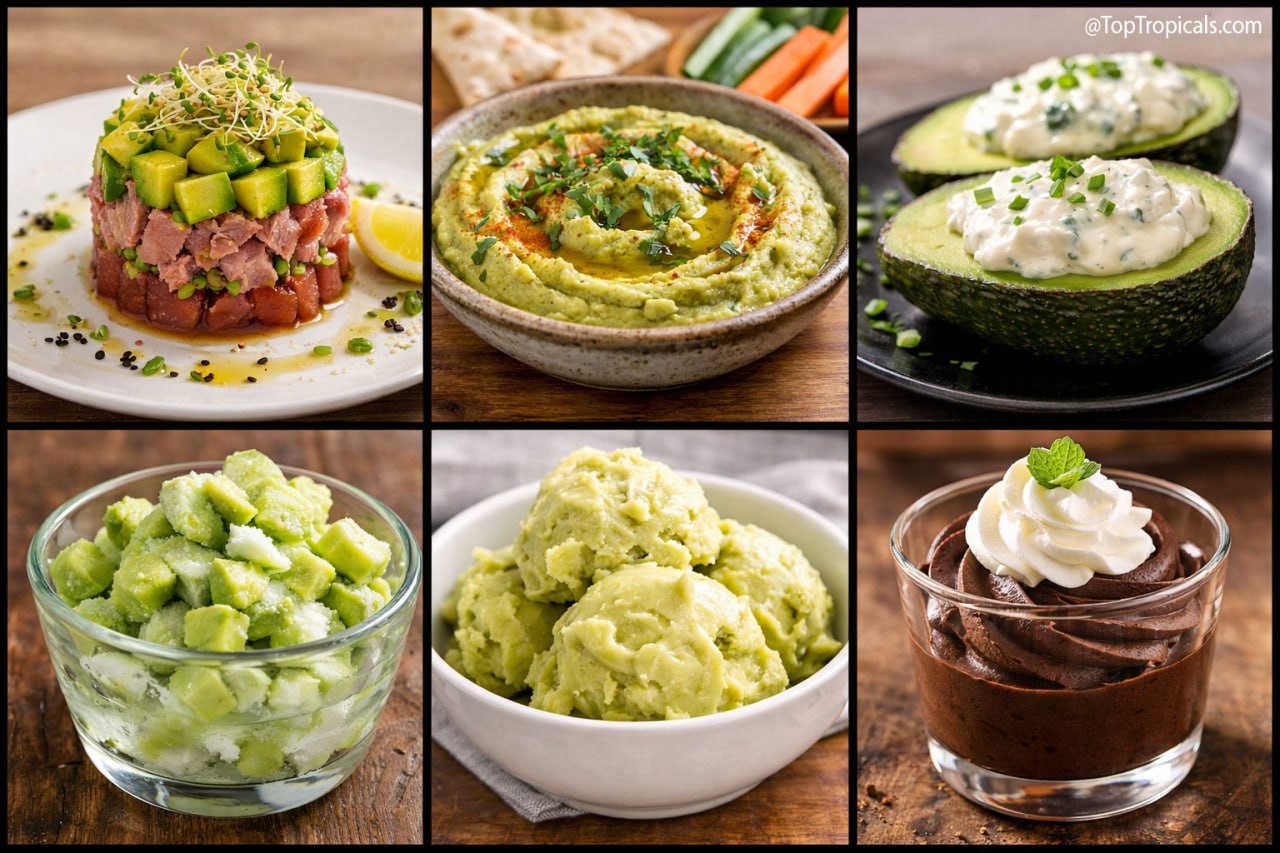
Not just guacamole - 6 unusual avocado recipes from top chefs

Avocado-inspired dishes arrangement

Avocado-inspired dishes arrangement

Not just guacamole - 6 unusual avocado recipes from top chefs


Avocado is rich, creamy, and loaded with healthy fats and fiber. It is also packed with vitamins C, K, B6, E, riboflavin, folate, niacin, and pantothenic acid, plus minerals that support digestion, bone health, heart health, and immune function.

Avocado Plant Facts

Botanical name: Persea americana, Persea gratissima
Also known as: Avocado, Alligator Pear, Aguacate, Abacate
USDA Zone: 9 - 11
Highligths Large tree taller than 20 ftSmall tree 10-20 ftFull sunWatering: Regular. Let topsoil dry slightlyEdible plantSubtropical plant. Mature plant cold hardy at least to 30s F for a short time
Get personalized tips for your region


Most people stop at guacamole, smoothies, or avocado toast. But in professional kitchens, avocado is treated as far more than a spread. It becomes a sauce base, a frozen dessert, even a chocolate mousse ingredient.

👉 Here are six unexpected avocado ideas inspired by well-known chefs:


1. Tuna avocado timbale


This plated appetizer looks restaurant-level but is surprisingly simple.
Small-diced fresh tuna is mixed with minced shallots or red onion, fresh coriander, pickled ginger, lemon juice, olive oil, salt, and pepper. The mixture is pressed into a small ring mold, then topped with diced avocado and garnished with sprouts.
The avocado adds cool creaminess against the bright citrus and savory tuna.

2. Avocado hummus


Blend two creamy favorites - chickpeas and avocado - into one smooth dip.

Combine drained chickpeas, ripe avocados, tahini or peanut butter, garlic, cumin, olive oil, lemon zest and juice, and salt. Process until silky. Finish with a drizzle of olive oil and a sprinkle of herbs and paprika.

It is lighter than traditional hummus and naturally vibrant green.

3. Stuffed avocado with blue cheese sauce


Avocado can also be the bowl.

Mix Dijon mustard, blue cheese, sour cream, a splash of wine vinegar, salt, and pepper into a thick dressing. Slice the avocado in half, remove the seed, and spoon the sauce into the center.

Eat it straight from the skin for a bold, savory appetizer.

4. Creamy avocado ice bowl


For a quick chilled dessert, cube ripe avocado and mix with cream and a light sweetener. Serve over ice.

It is not quite a smoothie and not quite ice cream - just cold, creamy avocado with clean sweetness.

5. Frozen avocado with condensed milk


Mash ripe avocado with condensed milk and freeze.

After a few hours, it becomes a scoopable, creamy treat with no special equipment required.

6. Green chocolate mousse


Perhaps the most surprising idea: avocado in chocolate mousse.

Puree ripe avocado and blend with melted dark chocolate, cocoa powder, coconut cream, and syrup. Chill until set, then top with whipped cream.

Despite the name, the dessert stays chocolate-brown. The avocado provides structure and silkiness, replacing part of the heavy cream.

💚 Why avocado works in sweet and savory dishes


Avocado is naturally buttery. It thickens sauces without flour, blends smoothly into dips, and creates creamy desserts without dairy overload. It freezes well and holds flavor beautifully.

So next time avocados are in season, think beyond guacamole. Stuff them, blend them, freeze them, or turn them into mousse. Feel like a chef!

This versatile fruit can do far more than sit on toast.

🛒 Select Avocado tree for contant fruit supply

📚 Learn more about #Avocado

#Food_Forest #Recipes

🟢 Join 👉 TopTropicals

Date: 2 Mar 2026

😼😺 The Story Behind Smokey and Sunshine 🐾

Smokey  and  Sunshine  in  office  presentation  about  Cherry  of  the  Rio 
 Grande  freeze  survival,  with  Sunshine  pointing  at  polar  bear  and  penguin 
 marketing  poster,  coffee  and  donuts  on  table,  tropical  plants  on  shelves  in 
 background.
Sunshine: You know, February 27 was International Polar Bear Day. I just learned about it and got a brilliant marketing idea. Cherry of the Rio Grande survived 25F. With wind. Real wind. That means we go north. Let them taste this magic. I even have a donut recipe with the fruit. It’s a bomb, Smokey. We expand. Trust me. Finally you can afford that new watering timer.

Smokey: Not so fast, genius. Twenty five degrees is not the North Pole. And polar bears and penguins do not share zip codes.

Sunshine: You always pour cold water on my brilliance. Fine. Where do we start?

Smokey: Well, first you go talk to Tatiana. She graduated from the Geography Department. She can explain climate zones. Cherry of the Rio Grande can grow in North Florida, Texas, and similar climates. Let’s master that before we conquer Arctic.

Sunshine: So… Phase One: Geography?

Smokey: Exactly.

Some stories are easier to tell with a little humor. Smokey and Sunshine were never just mascots. They represent the two forces behind every decision we make here: bold ideas and careful reality. One dreams big. The other checks the climate zone map. Together, they remind us that growing plants is part science, part optimism, and always personal. If you have ever wondered why they keep appearing in our newsletters, you can read their full story on the Smokey and Sunshine page. They have been with us longer than most people realize.

🐾 Learn the Story of Smoky and Sunshine

Freeze Testing of Grumichama and Cherry of Rio Grande 🍒❄️

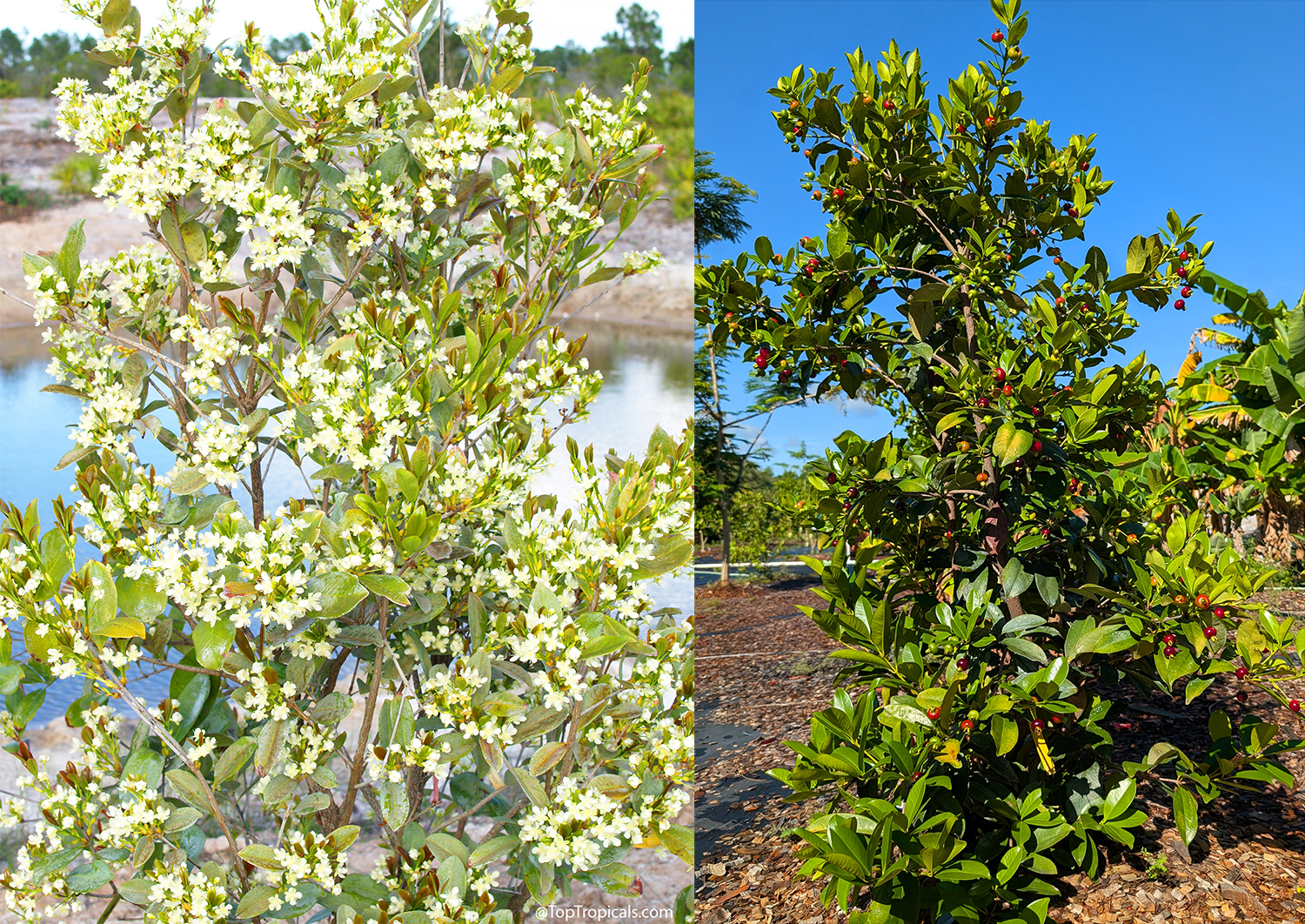
Grumichama  tree  (Eugenia  brasiliensis)  showing  white  flowers  and  ripe 
 red  fruits  in  tropical  garden 
 conditions

Eugenia brasiliensis - Grumichama tree flowering and fruiting

When temperatures dropped to 25F, with wind chill near 14F, winter made it clear which tropical trees were truly resilient. Some plants burned back. Tender growth collapsed. But our established Eugenia cherries stood steady. Leaves held. Branches stayed flexible. The canopy remained intact.

Cherry of the Rio Grande (Eugenia aggregata) and Grumichama (Eugenia brasiliensis) are among the most cold-hardy tropical cherries for Southern gardens. Both are native to Brazil and thrive in USDA Zones 9b–11, and even protected 9a sites.

Cherry of the Rio Grande Plant Facts

Botanical name: Eugenia involucrata, Eugenia aggregata
Also known as: Cherry of the Rio Grande, Cere Jodo Rio Grande
USDA Zone: 9 - 11
Highligths Small tree 10-20 ftSemi-shadeFull sunWatering: Moderate. Water when top soil feels dryWatering: Regular. Let topsoil dry slightlyEdible plantSubtropical plant. Mature plant cold hardy at least to 30s F for a short time
Get personalized tips for your region

Grumichama Plant Facts

Botanical name: Eugenia brasiliensis, Eugenia dombeyi
Also known as: Grumichama, Brazilian Cherry
USDA Zone: 9 - 11
Highligths Small tree 10-20 ftSemi-shadeFull sunWatering: Moderate. Water when top soil feels dryEdible plantSubtropical plant. Mature plant cold hardy at least to 30s F for a short timeSeaside, salt tolerant plant
Get personalized tips for your region

Cherry of the Rio Grande produces dark ruby fruit that ripens almost black, with a rich, full cherry flavor. It flowers early in spring and can fruit well into summer. Mature trees can tolerate brief drops into the low 20s once established. Trees typically grow 8 to 15 feet tall, remain naturally compact, and often begin fruiting within 2 to 3 years.

Grumichama is an evergreen tree known for both beauty and productivity. In spring, it covers itself in white starburst flowers that attract pollinators. Within about four weeks, glossy purple-black fruit develops. Established trees tolerate temperatures into the upper 20s and grow well in the ground or in 5–10 gallon containers. Mature trees can produce hundreds of fruits per season.

Across the Eugenia group, strengths are consistent: early bearing, compact growth, heat tolerance, light freeze endurance, and low pest pressure. They are adaptable to different soils, need modest water once established, and perform in full sun or partial shade. Birds enjoy the fruit, but there is usually plenty to share.

Nutritionally, Eugenia cherries provide Vitamin C, fiber, antioxidants, and notable Vitamin A that supports eye health. They offer sweetness with real dietary value.

In the kitchen, they are simple and rewarding. Cherry of the Rio Grande makes an easy compote. Simmer the fruit with a small amount of water until soft, mash lightly, and spoon over pancakes or warm bread. Grumichama turns into a deep red jam with sugar and lime, or can be blended into a bright spoon drizzle over vanilla ice cream.

Even when not fruiting, both trees remain attractive year-round with glossy evergreen foliage and clean structure. They fit well into edible landscapes, small yards, and container gardens.

Winter will return. The difference lies in planting fruit trees that can handle heat, humidity, and the occasional cold snap. If you are building a food forest for lasting harvests, cold-hardy tropical cherries like Cherry of the Rio Grande and Grumichama deserve a place in your garden.

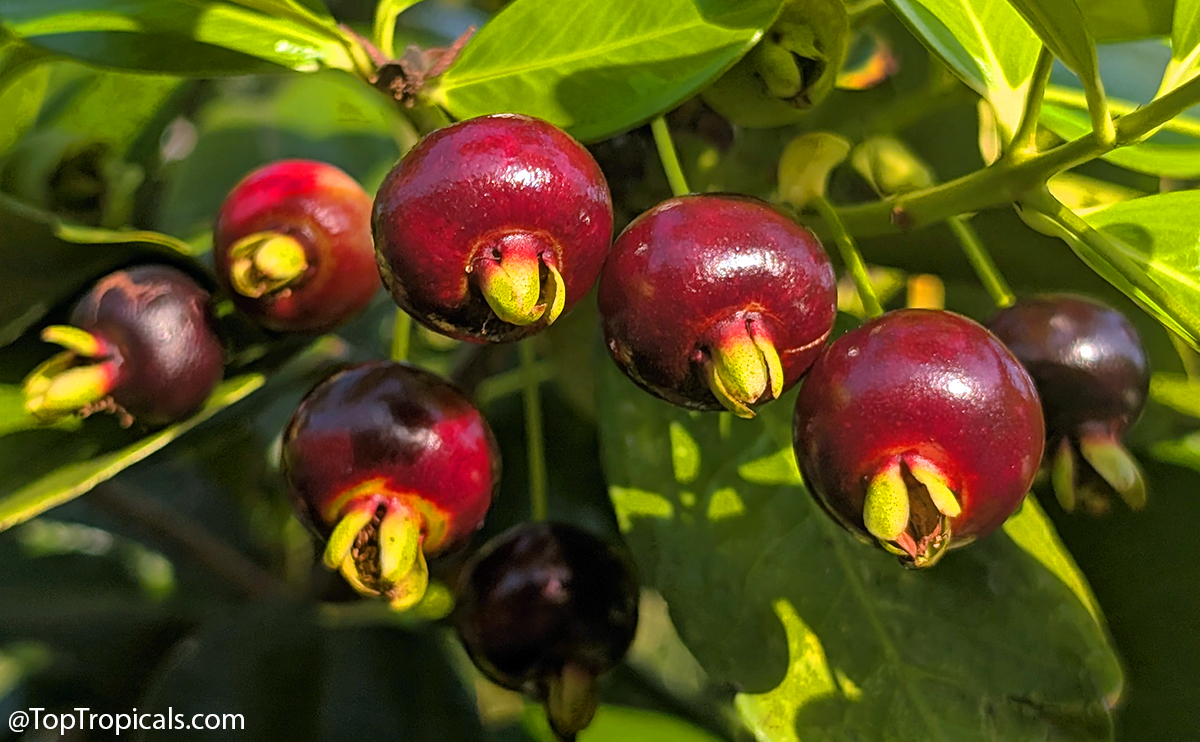
Ripe  Grumichama  fruits  (Eugenia  brasiliensis)  hanging  on  a  branch  with 
 glossy 
 leaves

Ripe Grumichama (Eugenia brasiliensis) fruits developing on the tree, turning deep red to nearly black when fully mature.

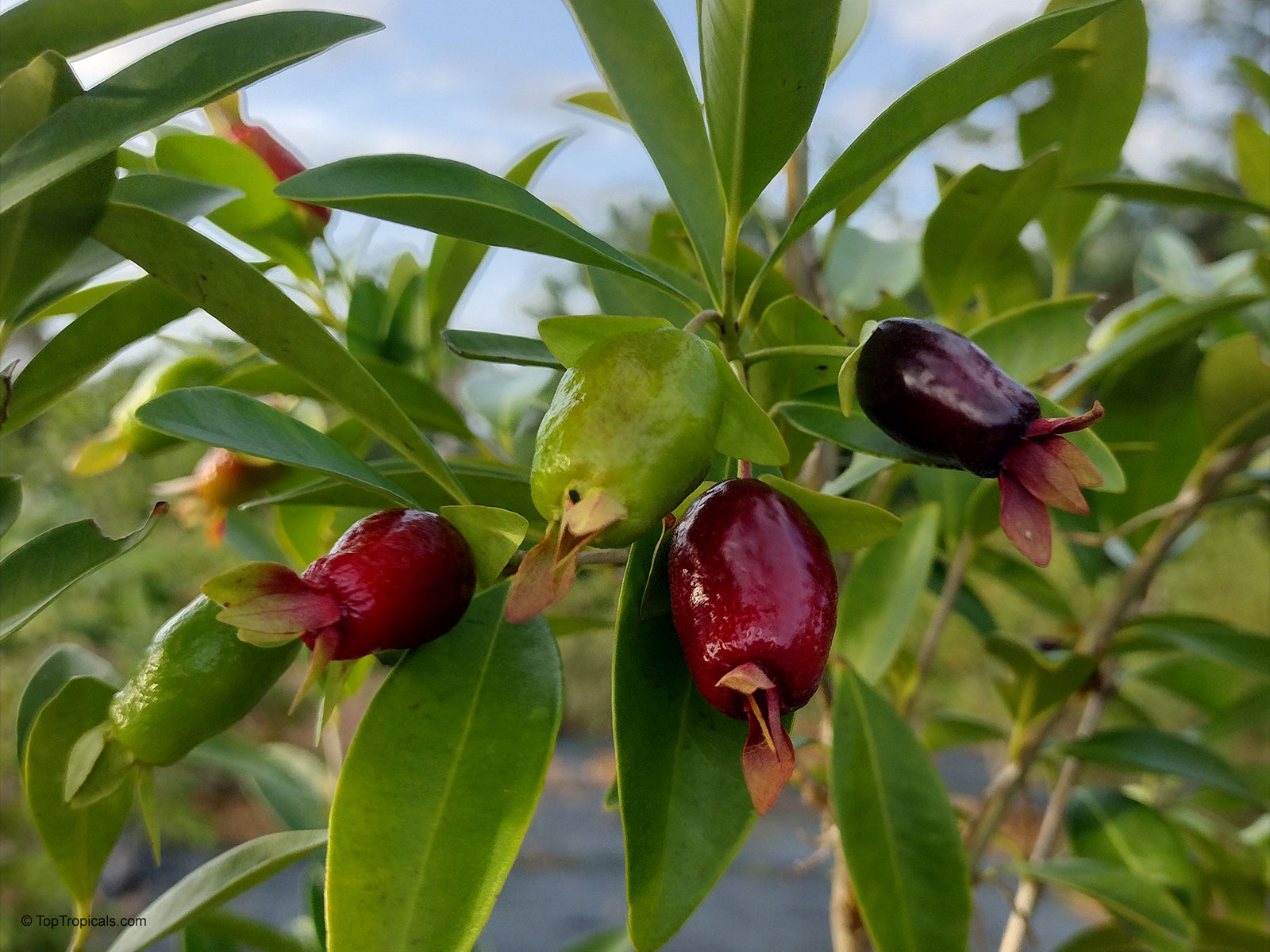
Cherry  of  the  Rio  Grande  (Eugenia  aggregata  cv.  Calycina)  fruits 
 ripening  from  green  to  dark  purple  on  the 
 branch

Eugenia aggregata (cv. Calycina), Cherry of the Rio Grande

🛒 Plant hardy Eugenia cherries

Date: 5 Mar 2024

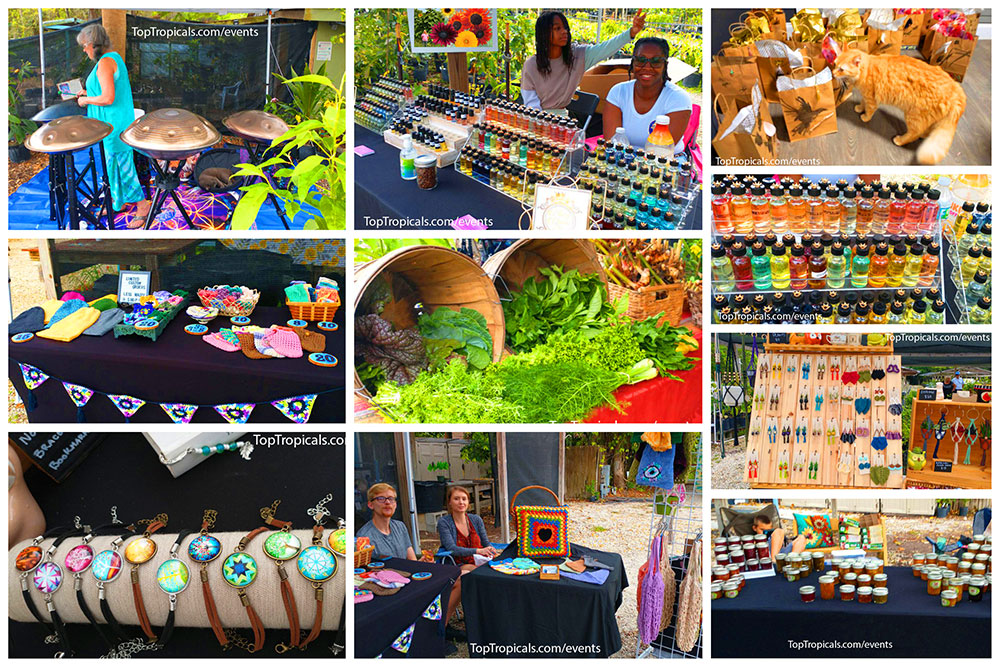
Event mementos: everybody had a happy time!

Plant  Festival  March  into  Spring  at  Top  Tropicals

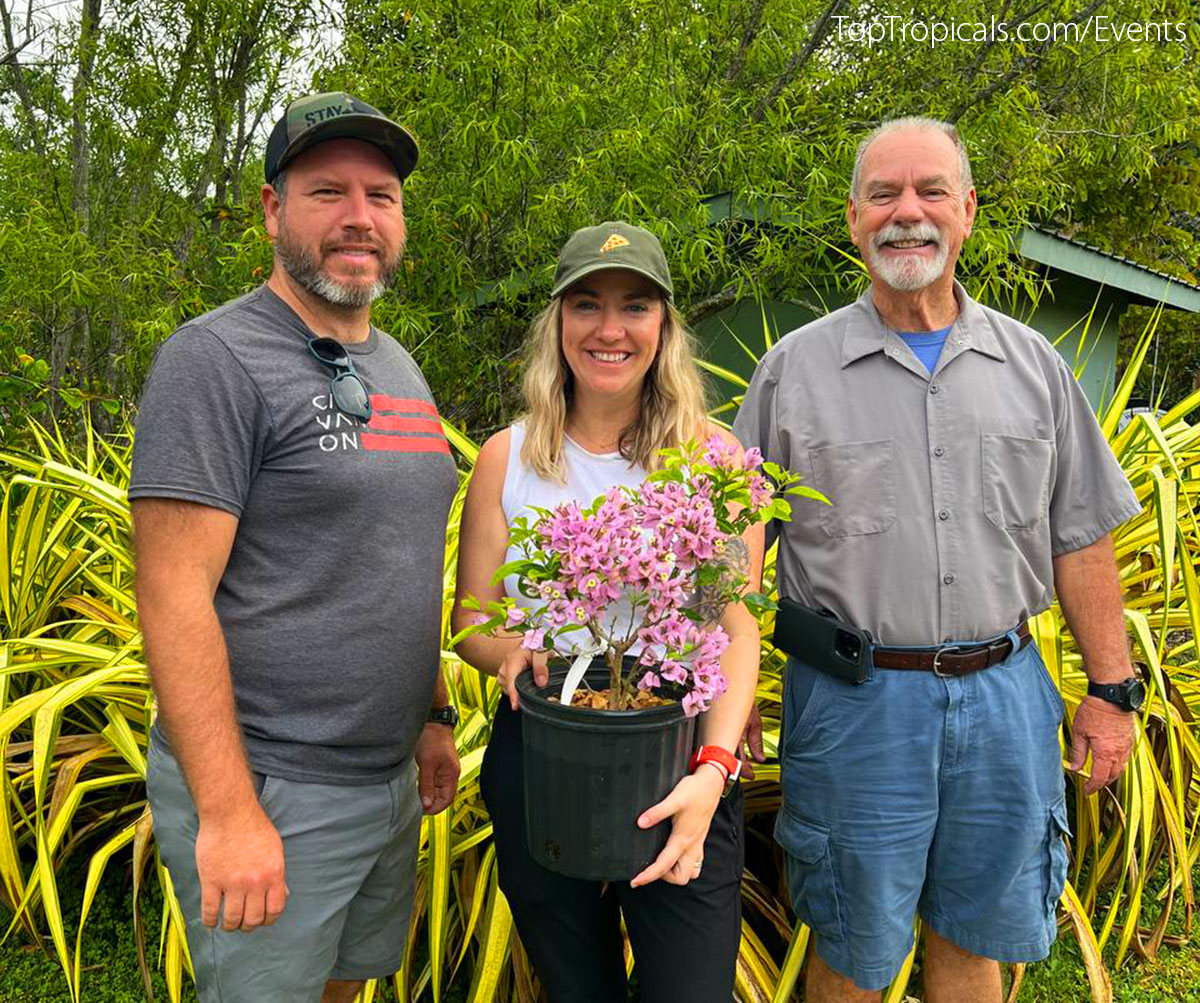
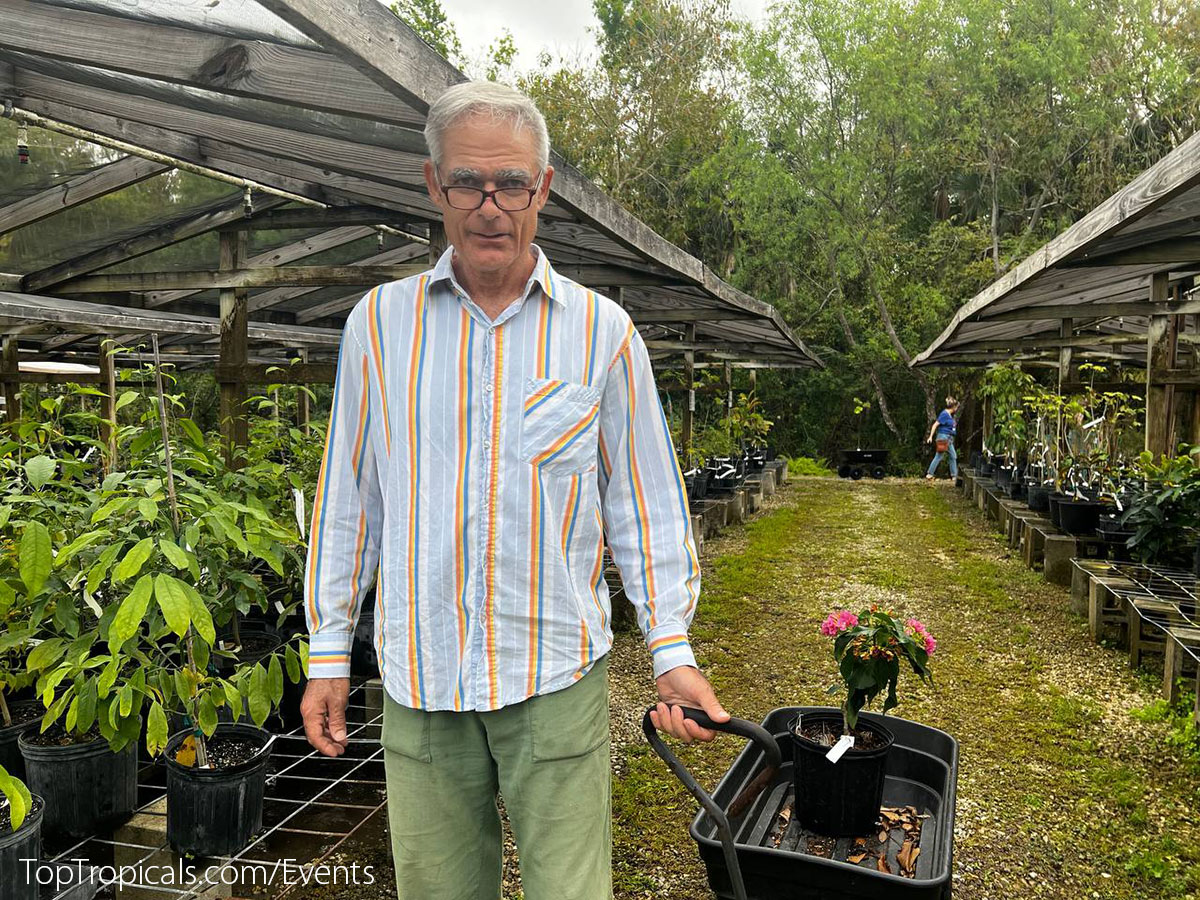
Our heartfelt gratitude to each and every one of you for visiting our Plant Festival March into Spring - on Saturday. It was delightful to see so many of you exploring the array of plants, finding ones that spoke to you, and ultimately making purchases that brought joy and life into your homes and gardens. The early birds received amazing Artistic Gift Bags by Onika Amell.
Your support means the world to us! It's moments like these that remind us of the beauty and wonder that nature brings into our lives...

Plant  Festival  March  into  Spring  at  Top  Tropicals

A  man  with  a  plant

Chiane  with  gift  bags