Garden Blog - Top Tropicals

Date: 31 May 2024

Top 5 favorite Mango varieties
and Top 10 Condo Mango trees

How to chose the right variety of a Mango tree?
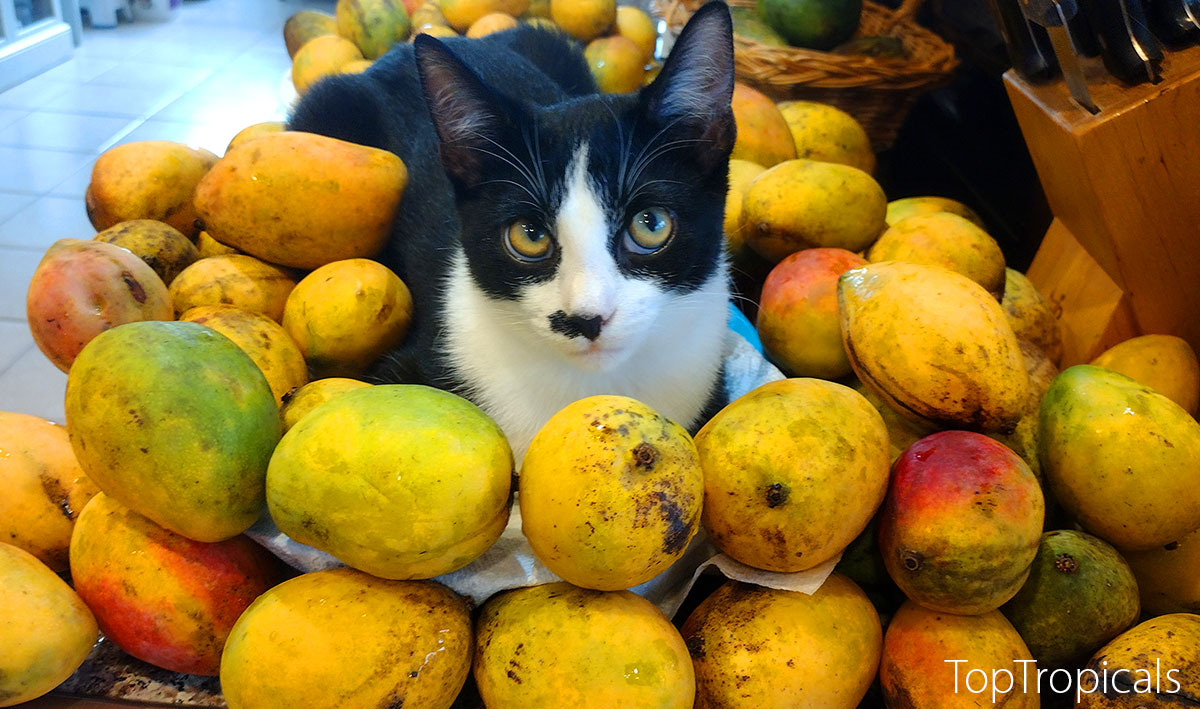
Cat  with  mango  fruit

Q: The most Frequently Asked Question about fruit trees: What is your favorite Mango variety? Which mango varieties are the best? Help me to make a choice!

A: As we mentioned on our Introduction to Mango Varieties page, there are thousands of named mango cultivars available. Similar to the classification of avocados (see our Avocado Variety Guide), mango trees can be selected based on your specific needs. These needs can include tree size and growth habit, disease resistance and hardiness, and most importantly, fruit characteristics such as taste, texture, size, color, storage ability, juice and sugar content.

We are currently working on a comprehensive Mango Variety Guide and will be sharing it with you soon. In the meantime, below are a few tips on selecting the right mango tree.
NOTE: all of the Mango varieties we offer are FIBERLESS!

Top 5 Favorite Mango we just love!

1. Alphonso - the best Indian cultivar in terms of sweetness and flavor. One of the rarest varieties and sought after - sweet large juice fruit. Coconut-like flavor.
2. Maha Chinook - Many consider it the best mango had ever tasted. Very rare mango variety from Singapore. This variety is semi-dwarf and great for pot culture. Nam Doc Mai close relative.
3. Fralan - Super reliable producer and hardy tree. Green fruit, sweet and juicy. Fralan means "Thunder" - as the fruit cracks when peeled.
4. Fruit Cocktail - Flavor is an amazing palette of different fruit, with citrus, pineapple, and guava notes.
5. Nam Doc Mai - It's not just us, everyone loves this Mango! The most popular variety: semi-dwarf and great for pot culture. Eaten green or ripe, a Thailand favorite. It is hands down the most sought after of the Asian mangoes and for good reason.
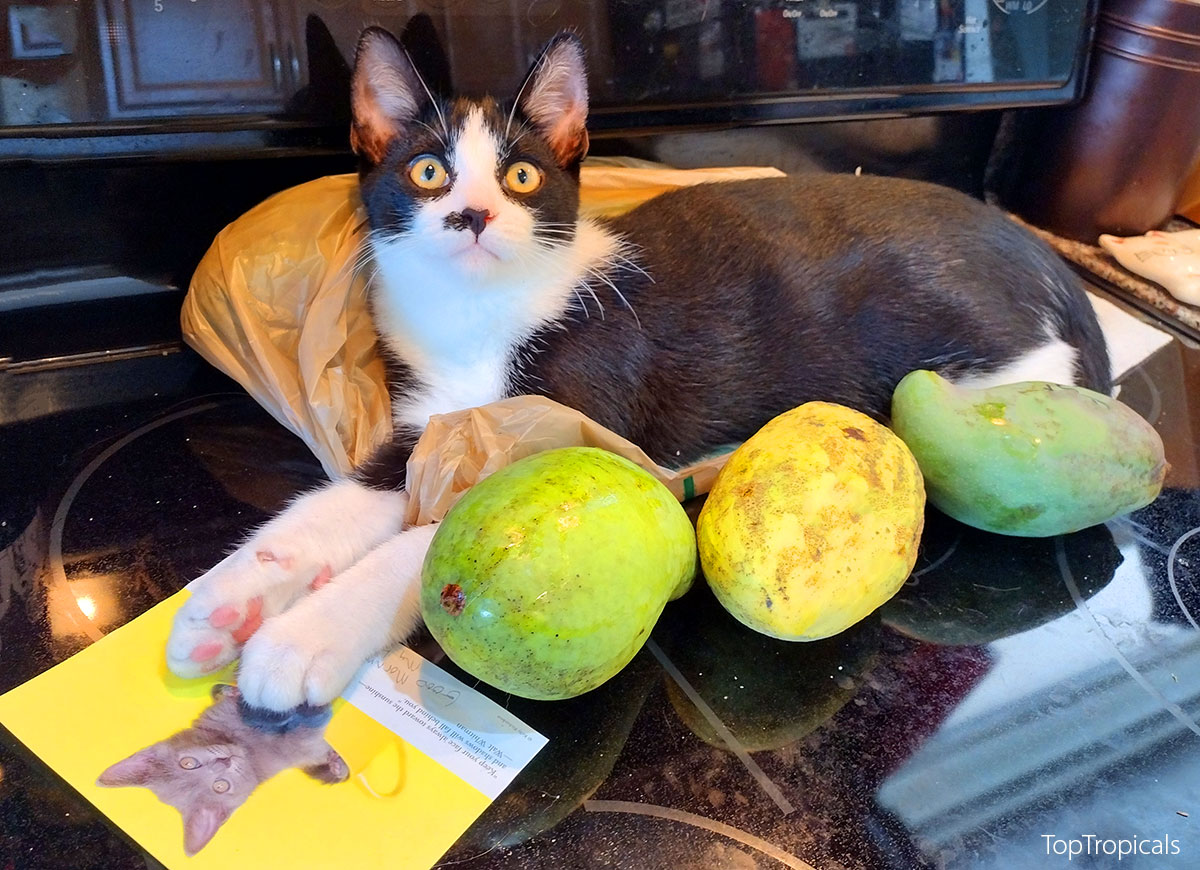
Cat  with  three  mango  fruit

Top 10 Dwarf "Condo" Mango

1. Mallika - condo mango native to India. Among the best of the new generation of Indian dessert mangos. Intensely sweet, rich and highly aromatic flavor with hints of citrus and melon.
2. Ice Cream - far and away the most popular of the "condo mangoes." Flavored like the name. The tree can easily be maintained at a height of just six feet (!) making it ideal for container growing.
3. Julie - the most popular variety in Jamaica and many other Caribbean islands because of its rich, sweet, coconut/pineapple-like flavor. It is a dwarf cultivar, great for containers, but keep in mind it's very cold sensitive, don't plant it in the ground if you get freeze in winter.
4. Okrung - Thai compact cultivar, fruit eaten while green. The fruit is traditionally served in Thailand in combination with sticky rice. One of the most popular varieties in Thailand. The fruit is very sweet, with the highest sugar content.
5. Pickering - great for pot culture. It has a bushy, compact growth habit, and can be maintained in a container at just six feet (!). The fruit has a firm flesh with a fantastic coconut/mango flavor.
6. Nam Doc Mai - The most popular variety for pot culture, we already mentioned in our favorites above.
7. Cogshall - an ultra compact grower. Suitable for container growing on a balcony, or planting in a suburban backyard. It can easily be maintained at just eight feet tall, and it will still produce a good size crop year after year. The fruit is very colorful and has a mild, sweet flavor. It is also fungus resistant.
8. Carrie - the flavor is by far the most outstanding. It has absolutely no fiber and extremely rich in flavor, sweet, aromatic and a pure pleasure to eat. You will savor every mouthful! Its compact size makes it an excellent dooryard tree.
9. Diamond - It has a great taste very similar to Nam Doc Mai. Very compact, of a dwarf habit, great as condo mango.
10. Keitt - the best all-around late mango. It is very productive, good-flavored, and disease resistant. It also has a very long and late season. The compact tree is semi dwarf that bears 4-5 pound goliath fruit!
Mango  tree  with  fruit

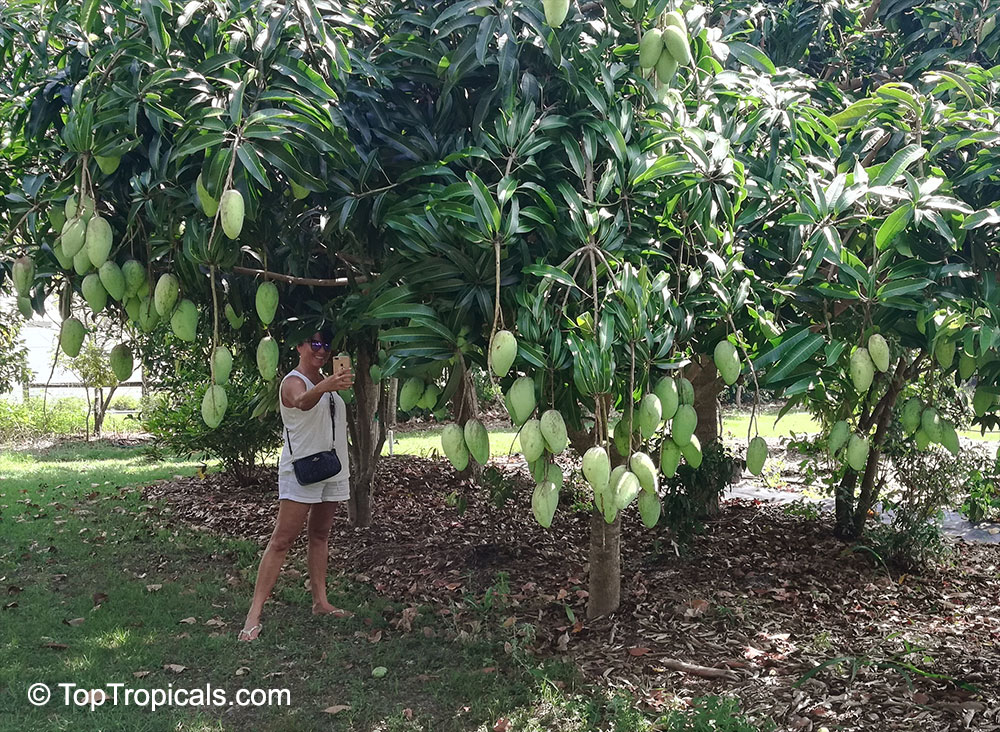
Photo above: Pim Seng Mun mango tree is a reliable and heavy producer.

Top 5 recommended vigorous growers and reliable producers

1. Glenn - Excellent eating quality, consistent production, and effortless to grow.
2. Pim Seng Mun - extremely productive mango.
3. Sweet Tart - New patented variety - exclusive offer.
4. Fruit Punch - Multi fruit flavor, delicious!
5. Orange Sherbet - One of the best new varieties for backyard growing. Flavor is sweet citrus-orange and less lemony than Lemon Meringue mango. The tree is moderately vigorous.

Top 5 exotic varieties for rare fruit collection

Now that you have decided to collect them all but have limited space, these are the top 5 of the most interesting rare cultivars:

1. Kar Lon Long - rare and unusual, native to India. Fruits that can weigh up to 5 lbs each! The unique flavor that has been described as being a cross between a mango and a pineapple.
2. Mun Kun Si - similar to Nam Doc Mai but much bigger. Rare variety, very popular among Thai and Vietnamese people. The fruit are extremely sweet, fiberless and somewhat crunchy ("Mun" means crunchy). Very late producer, fruit may still be on a tree as late as January.
3. Pina Colada - very sweet, has rich flavor with a hint of coconut and pineapple.
4. Ugly Betty - awesome mango, great sweet flavor, while the fruit is real ugly! Slightly mis-shaped at the top - hence the name.
5. Giselle - from Zill's breeding program and was a seedling of a mango called Tower. It was described as a juice mango and is named after Gary's wife.
Mango  fruit  display

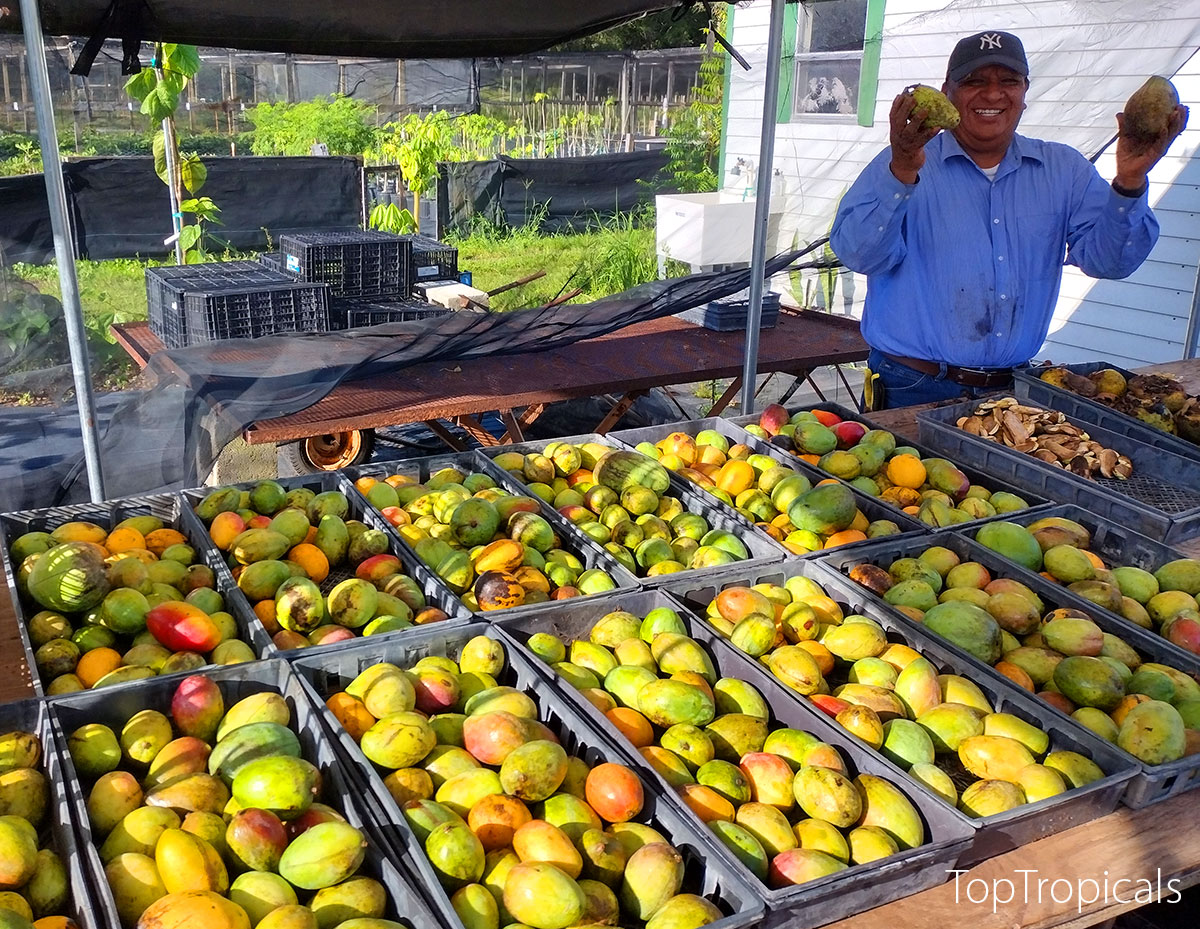
Photo above: preparing mango seeds for planting - growing seedlings for future grafting.
Date: 27 Oct 2025

🌳 Why Large Grafted Trees Are Better

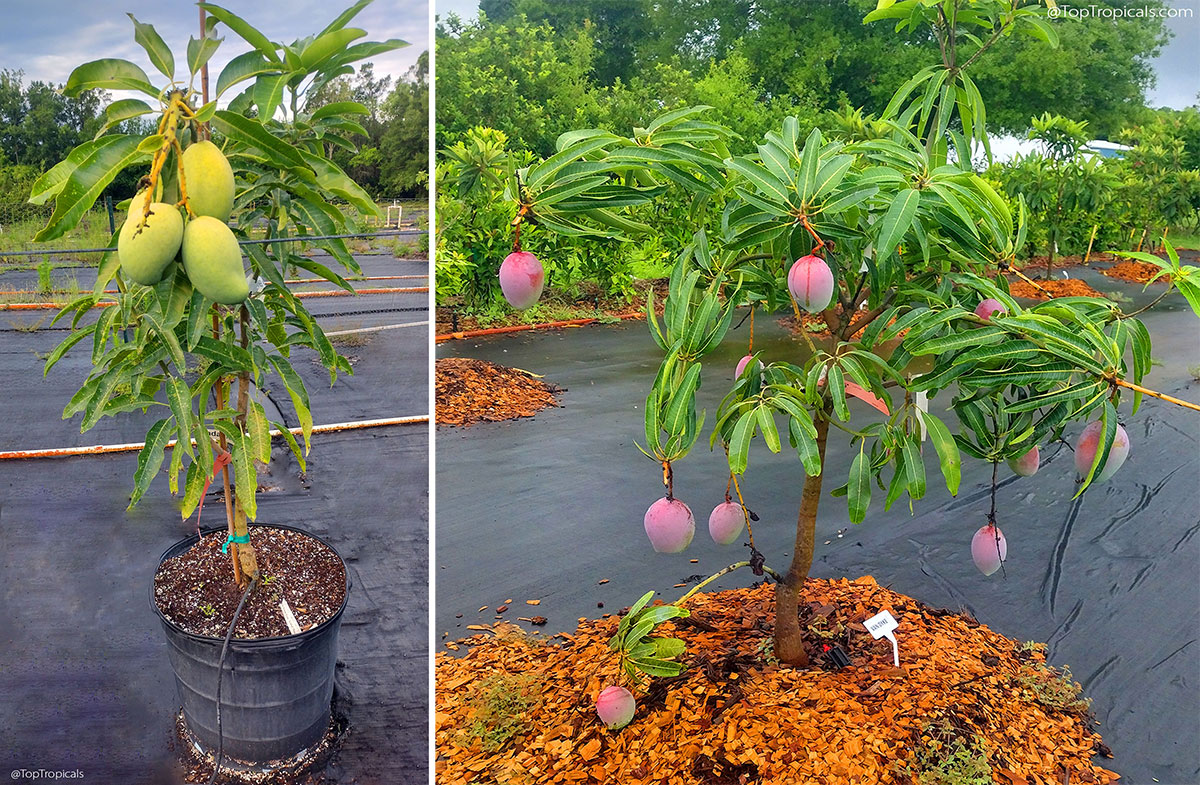
Comparison  of  Mango  trees  growing  in  container  and  in  ground  at  Top 


Tropicals  nursery  -  potted  tree  with  large  green  fruit  and  in-ground  tree 


with  ripe  purple  fruit  ready  for 


harvest

These are not seedlings — they’re grafted trees, which means you get the true variety with known flavor, quality, and performance. Large grafted trees give you a real head start:

  • Already mature with a strong root system.
  • Handle transplanting and weather shifts with ease.
  • Can bloom and fruit in the first or second season.

No guessing, no waiting years — you’ll get the exact fruit you want, sooner.

  • 👉 Learn more: How long does it take for a mango tree to bear fruit?

    For Indoor and Patio Growers

    No space for a full orchard? You can still grow your own tropical paradise! Our large grafted Condo Mango trees adapt beautifully to big containers on patios, balconies, and sunrooms. They stay compact, flower sooner, and can fruit even in pots when given good light and warmth.

  • 👉 Learn more: What are the Condo Mangos?

    Bring the tropics indoors — move your tree outside for summer sun, then back inside before frost. It’s the perfect way to enjoy homegrown fruit wherever you live.

    Give your garden a smart start this season. Large grafted Mango trees are ready — but only for a short time before winter.

    👉 Plant now, harvest sooner, and enjoy the true variety!

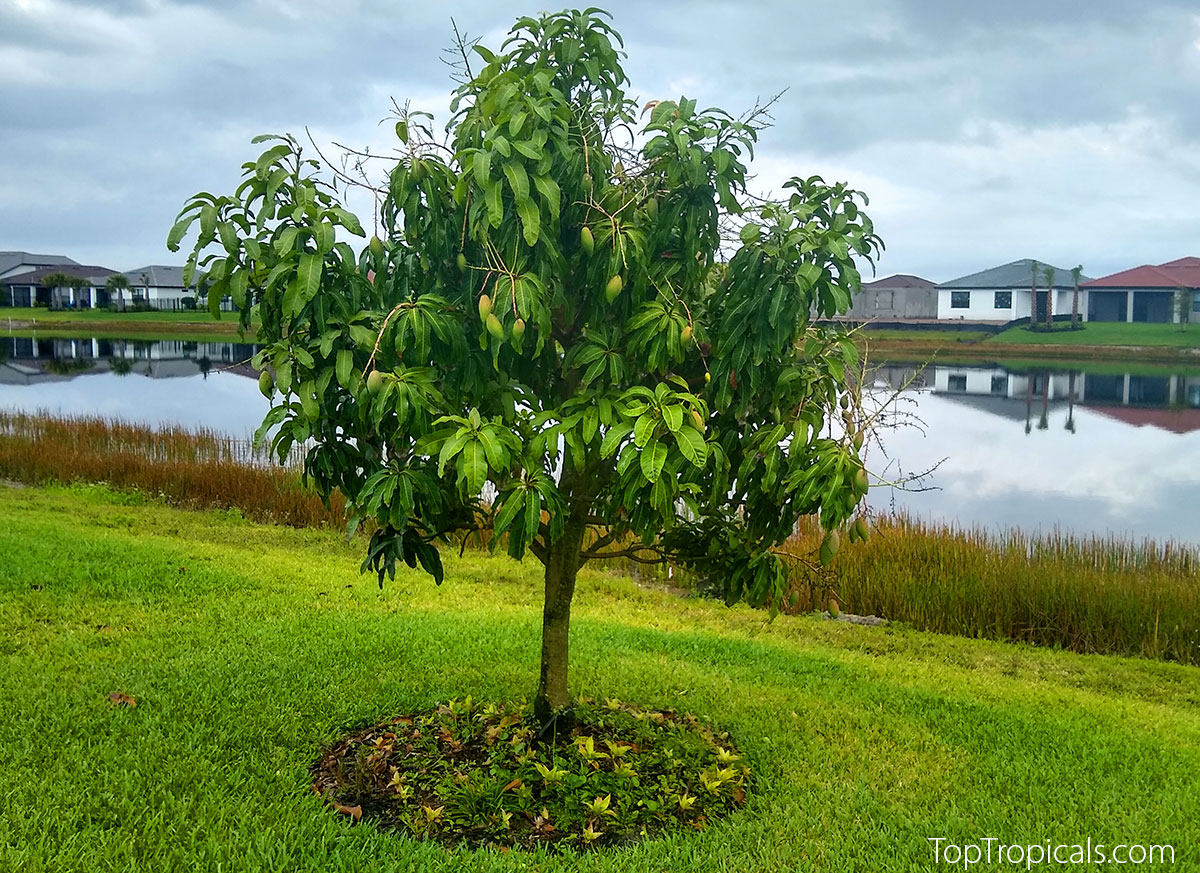
    Mango  tree  growing  by  a  lake  in  a  Florida  backyard,  healthy  green 


foliage  and  young  fruit  developing  on 


branches

    Plant Care Tips by Top Tropicals Plant Expert Tatiana Anderson
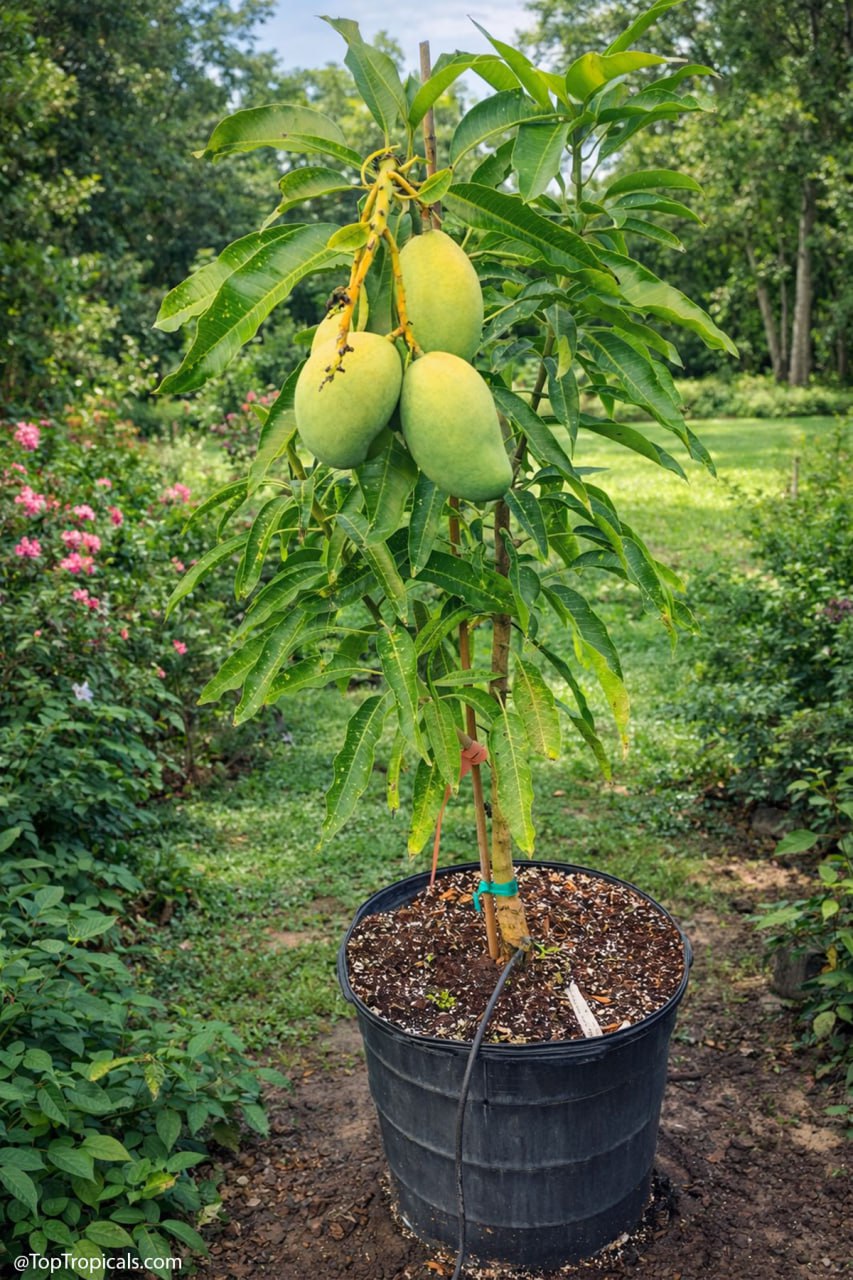
    Large grafted Mango trees are easy to establish.

    • Soil: Well-drained, rich mix — avoid heavy clay.
    • Water: Deeply once or twice a week after the tree is established; keep soil evenly moist during the first few weeks after planting.
    • Light: Full sun or bright patio spot.
    • Feeding: Use balanced fertilizer Sunshine Boosters Mango Tango with every watering and Green Magic controlled release fertilizer every 6 months for steady growth.
    • Protection: Cover on cold nights for the first winter.
    • 👉 Learn more: How to take care of a mango tree in winter.

    Plant once, care lightly, and your tree will reward you with fast growth and early fruit.

    🌳 Big Trees, Local Pickup Only

    For our local gardeners, we have something special. Extra-large 15- and 25-gallon Mango trees. These are full, mature specimens that simply can’t be shipped, but they’re perfect for local pickup or delivery.

    Instant Impact and Faster Fruit

    These trees already have strong trunks, big root systems, and start blooming next Spring. Plant one in your yard and it instantly looks like it’s been there for years.

    Delivery and Installation

    We offer local delivery and professional installation for large trees in the nearby area. Our team can bring the tree to your garden, position it correctly, and help with planting and setup.

    👉 Contact us to arrange delivery and installation for your 15- or 25-gallon tree.

    Limited Availability: Quantities are small, and these big trees go fast — once sold, they won’t be available again until next growing season.

    "Large grafted trees give you a head start — they’re stronger, settle in faster, and can reward you with fruit the very next season," says Tatiana Anderson

    🎥 Watch Short Videos:

    🛒 Shop Mango trees

Date: 16 Feb 2026

Yes, you can grow a mango tree on your patio - here is how to do it right

Mango fruiting in container

Mango fruiting in container

🥭 Yes, you can grow a container mango tree on your patio - here is how to do it right


Think you need a backyard orchard to grow mangoes? You don't. Mango trees grow very well in containers. Compact varieties, often called condo mangoes, stay naturally smaller and are well suited for pots, patios, and small yards. We grow and ship mango trees nationwide and have seen which varieties perform best in containers.

Growing mangoes in pots is also practical in cooler climates. The tree can be moved to protection during cold weather while still producing real fruit. Here is how to do it right.

🥭 Pick the right condo mango tree variety


Choose condo or semi-dwarf mango varieties that stay smaller and respond well to pruning. These mango trees usually stay 6 to 10 feet tall in containers with light pruning. Fruit size is full-size, just fewer than on large trees.

Good mango choices for pots include:
  • · Cogshall - compact and productive
  • · Pickering - naturally small and reliable
  • · Carrie - manageable size, great flavor
  • · Ice Cream - slow growing, narrow canopy
  • · Julie - classic Caribbean type
  • · more condo varieties...


🥭 Choose the right pot


Start small. Young mango trees do best in a 5- to 7-gallon pot. Oversized containers too early often cause overwatering and root issues.

Increase size gradually:
First pot: 5-7 gallons
Next size: 10-15 gallons
Mature container: 20-25 gallons

The pot must drain well. Mango roots dislike wet soil. Add holes if needed. Plastic, ceramic, and fabric pots all work.
  • 🥭 Use fast-draining soil


    Mango trees need air around their roots.
    Use a loose, fast-draining mix, such as Abundance Professional Soilless Mix. Improve drainage with perlite, pine bark, or coarse sand. Avoid heavy or water-holding soils. Drainage matters more than fancy ingredients.
  • 🥭 Water carefully


    Mango trees prefer a wet-dry cycle.
    Water deeply, then allow the top few inches of soil to dry before watering again. Always check with your finger first.
    In warm weather, water once or twice a week. In winter, much less. Overwatering is the most common container mistake.
  • 🥭 Give plenty of sun


    Mango trees love sun and heat.
    Place the pot in full sun with at least 8 hours daily. More sun improves growth and flowering.
    If overwintered indoors, use the brightest window possible. Grow lights help, but outdoor sun is best when weather allows.
  • 🥭 Fertilize lightly but consistently


    Potted mango trees benefit from regular feeding during active growth.
    Use a balanced mango or fruit tree fertilizer such as Sunshine Mango Tango (safe to use with every watering, year-around). Controlled-release fertilizer Green Magic (every 6 months) work well too. Avoid excess feeding, which promotes leaves over flowers.
    If leaves pale, check watering first, then nutrition.
  • 🥭 Prune to stay compact


    Pruning is essential for mangoes in pots.
    Light tipping and trimming control size, encourage branching, and increase flowering points. Keep the canopy open and balanced. Watch how simple tipping works in real life: .
    Avoid heavy pruning before flowering. Most pruning is best right after harvest.
  • 🥭 Protect from cold


    Mango trees are tropical and cold-sensitive.
    When temperatures drop below 40F, move the pot to protection or indoors. Young trees are especially vulnerable.
    During winter, reduce watering and stop fertilizing. Growth slows and the tree rests.
    When warm weather returns, reintroduce the tree to sun gradually to prevent leaf burn.
  • 🥭 Final thoughts


    Growing a mango tree in a pot is practical and rewarding. With the right variety, good drainage, full sun, and careful watering, a potted mango can thrive and fruit for years, even in small spaces. Ready to start? Choose a compact mango variety.


🛒 Discover Condo Mango

📚 Learn more:
#Food_Forest #How_to #Discover #Mango

🟢 Join 👉 TopTropicals

Date: 8 Aug 2024

Mango Rainbow tasting table-2: whats the taste of that Mango variety?

Mango Rainbow tasting table

🌈 Mango Rainbow tasting table-2: what's the taste of that Mango variety?

🥭 We've had another mango tasting table and asked participants to describe the taste in a few words. And this is what we got:
  • 🟠 Haden - mild, melting, classic heavenly mango flavor,dark yellow flesh, almost fiberless.
  • 🟠 Ugly Betty - opposite to the name, the taste is excellent , juicy, melting, sweet.
  • 🟠 Cotton Candy - true candy, fiberless, sweet, melting.
  • 🟠 Madame Fransis - dark orange pulp, slightly fibrous, robust, meaty like a steak, good with cognac. A little pulpy but unique flavor.
  • 🟠 Diamond - bright yellow, fiberless, sugary, juicy, no pulp at all, classic mango taste, good with ice cream, "wow" taste!
  • 🟠 Pickering - zesty, waterfall: all the flavors come at once, eat with White wine and/or a cake. Oval fruit somewhat flat, very large for a dwarf tree!
  • 🟠 Baptiste - hint of citrus, melts in your mouth, dark orange flesh, crisp, eat with Red wine and cheese.
  • 🟠 Florigon - creamy, buttery, spicy. Eat with Ice cream!
  • 🟠 Tommy Atkins - has a bit zing to it, perfect consistency, perfect taste. Super colorful, crimson red to purple skin!
  • 🟠 Nam Doc Mai - gold standard! Perfect every day.
  • 🟠 Carry - tastes even better than all others, smooth buttery, lite!


What Mango varieties have you tried this year?
Share in comments
👇

📝 Previous post: Mango Rainbow Tasting Table

🛒 Shop Mango varieties

#Food_Forest #Mango #Mango_Rainbow

🔴 Join 👉 TopTropicals

Date: 15 Jan 2026

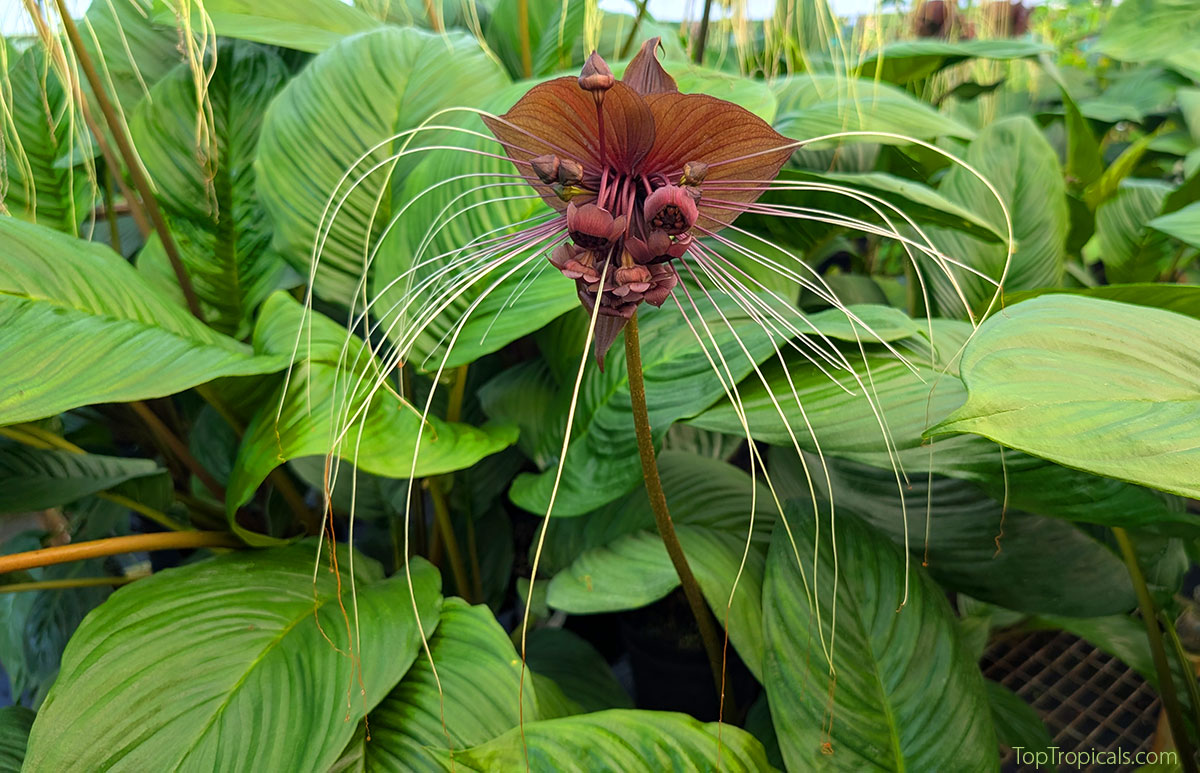
When the Black Bat Lily decides to bloom

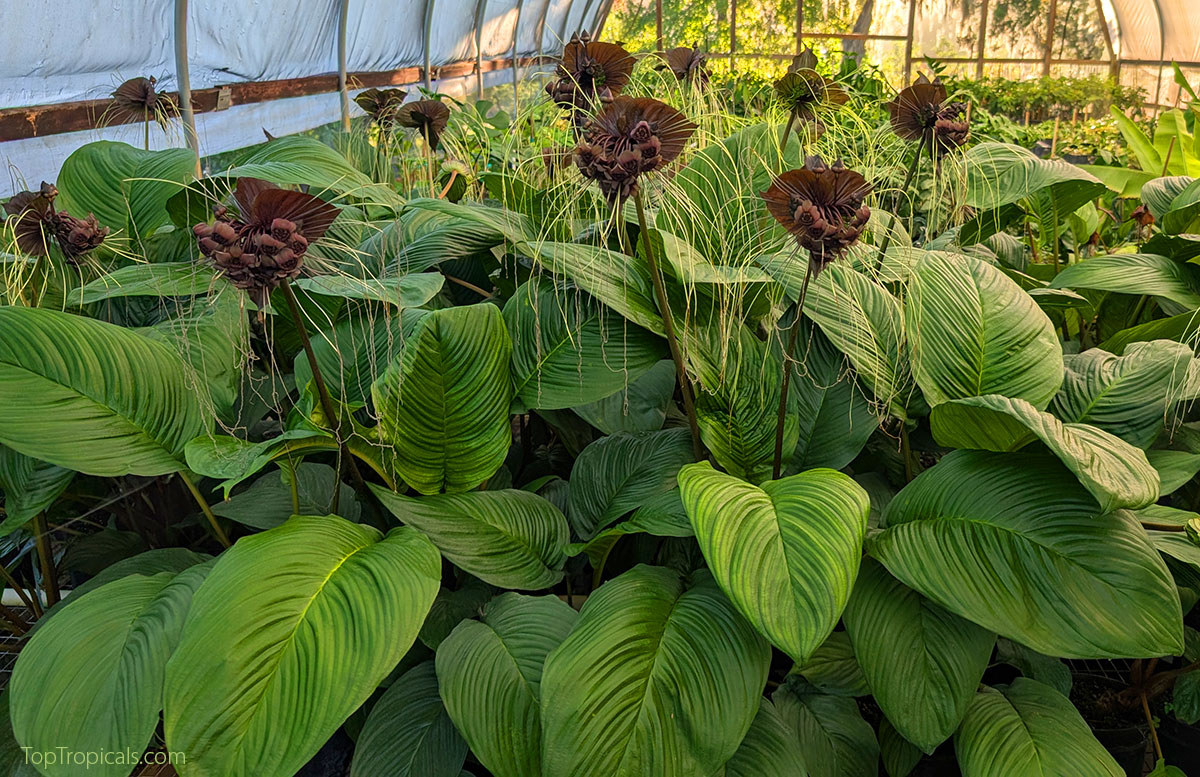
Blooming  Black  Bat  Lily  (Tacca  chantrieri)  with  dark  bat-shaped  flower 
 

and  long  whisker-like  filaments  surrounded  by  green  leaves

Every so often a plant blooms and the whole greenhouse seems to slow down.

That is what happened this week with the Black Bat Lily, Tacca chantrieri. We have grown Taccas for years, but when the black ones open properly, it still feels special. The flowers are dark and quiet, almost unreal up close. They do not shout for attention. They make you lean in.

Right now, we have a lot of them blooming at the same time. If you have never seen one in person, photos only get you part of the way there. The wings are darker than you expect, and the whiskers seem to go on forever. People walk into the greenhouse, stop, stare, and usually ask the same question: "Is that real?" - Yes. It is.

Group  of  blooming  Black  Bat  Lily  plants  (Tacca  chantrieri)  with  dark 
 

bat-shaped  flowers  and  long  whisker-like  filaments  in  a  greenhouse

A quick honest note, because this matters. The blooms themselves are delicate and may not travel well. That is just the nature of this plant. The plants, however, are strong, well established. With the right conditions, they bloom again. This is not a one-time trick.

Black Tacca is not a beginner houseplant, but it is also not impossible. It likes filtered light, steady warmth, and humidity. It does especially well in a greenhouse or a bright indoor spot where you already keep plants that enjoy moisture. It is the kind of plant you keep close, not one you forget in the corner.

We are offering them now simply because they are ready and looking their best. If you have been waiting for one, this is a good moment.

You can see the Black Bat Lily here: https://toptropicals.com/store/item/2345.htm

Just wanted to share something we are enjoying in the greenhouse right now. Some plants come and go. Some stay with you.

Tacca (Bat Lily) FAQ

What is Tacca?

Tacca, also known as Bat Lily or Devil Flower, is a tropical plant grown for its unusual bat-shaped flowers with long whisker-like filaments. The most popular species is Tacca chantrieri, the Black Bat Lily.

Is Tacca hard to grow?

Tacca is not a beginner plant, but it is not impossible. It does best with warmth, humidity, and filtered light. Gardeners who already grow orchids, calatheas, or other humidity-loving plants usually do well with Tacca.

Does Tacca need a greenhouse?

A greenhouse is ideal, but not required. Tacca can be grown indoors in a bright spot with indirect light and good humidity, such as near a humidifier or in a bright bathroom with a window or skylight.

Will my Tacca arrive in bloom?

Plants may be blooming in the greenhouse, but flowers are often removed before shipping because they are delicate and do not travel well. The plants are well established and capable of blooming again with proper care.

How often does Tacca bloom?

Tacca does not bloom constantly. It may take time to establish before flowering, but once settled, it can bloom seasonally and may produce multiple flowers in warm, humid conditions.

Does Tacca grow from a bulb?

Tacca grows from a rhizome, not a bulb. The rhizome stores energy and allows the plant to regrow and bloom again.

Why does Tacca have long whiskers?

The long filaments are thought to help attract pollinators such as flies by mimicking the look of decaying organic matter. While unusual, this is part of the plant's natural pollination strategy.

✍️ More about growing Tacca
🛒 Get your own Tacca plant
🎥Watch our videos about Tacca