Date: 24 Feb 2019
Pisces Zodiac lucky plants
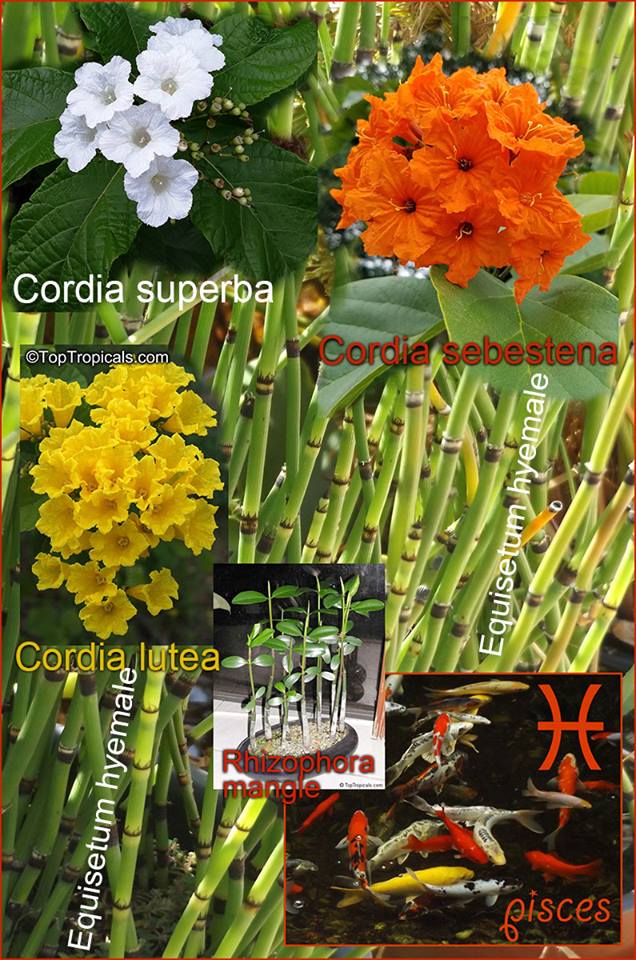

Pisces- 2/19 -
3/20. As a WATER sign ruled by both Jupiter and Moon (and Neptune, that
was not discovered until 1846, after the plant correspondences were
established; Neptune is considered a "higher octave" of the Moon), Pisces plants are
often large but hard to find, and may grow near the ocean. The most healing
plants for Pisces are those that strengthen the immune system or have an
antibacterial effect. Pisces plants may also catalyze expanded states of awareness
and be helpful in dream work.
Herbs connected to Pisces are ruled by its former ruler, the Moon
(Neptune, the current ruler, was not discovered until 1846, after the plant
correspondences were established; Neptune is considered a “higher octave†of
the Moon). Diseases of Pisces have traditionally included psychotic disorders,
various forms of substance addiction, lung diseases such as tuberculosis, and
ailments of the foot; contemporary herbalists also add immune system
diseases. Pisces is strengthened by rosemary's ability to promote an aura of
centered grounding. This protective herb helps strengthen boundaries and cultivate a
closer connection to the physical realm.
Pisces Zodiac
lucky plants: Water lily, Lotus, Clematis, Wisteria, Lisianthus, Brunfelsia, Echinacea, English Lavender, Rosemary, Coconut palm, Cranberry, Clove, Coccoloba, Sea Oats, Mangroves, Ochrosia, Aquatic plants, Colocasia, Alocasia, Aralia, Ficus trees, Banyan, Peepal, Banana, Mango, Mimosa, Olive, Anise, Vilca and Yopo, Kava-kava, Nutmeg, Anthuriums, Eucalyptus, Bauhinia,
Clusia, Caesalpinia, Callistemon, Bucida, Cassia fistula, Cordia, Calabash, Lipstick palm, Delonix, Elaeocarpus, Erythrina, Fatsia, Guaiacum, Mahoe, Koelreuteria, Kopsia, Macaranga, Pandanus, Peltophorum, Psychotria, Banesteriopsis, Tabebuia.
For other signs information, see Plant Horoscope Page
Date: 24 Feb 2019
To prune or not to prune?
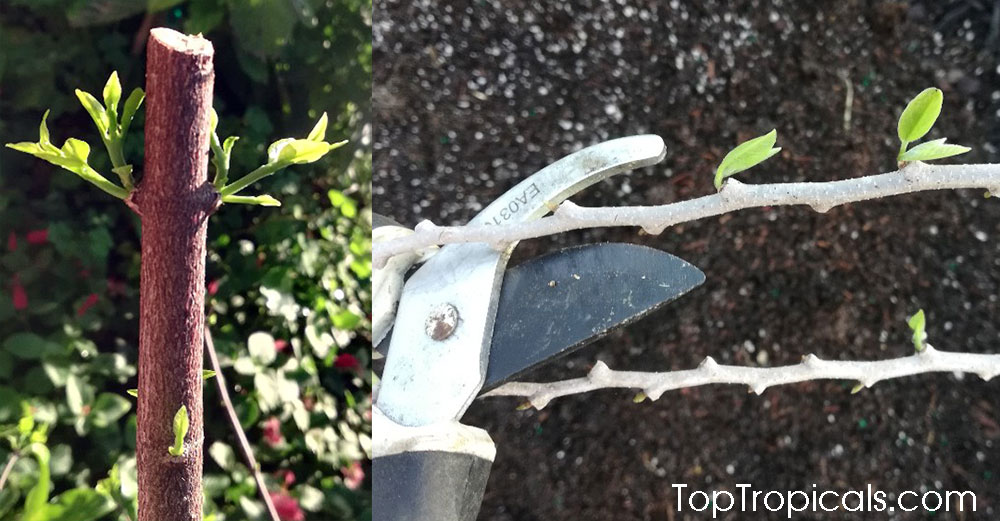
Q: We had a few nights with light frost and some of my tropical plants look sad, lost all leaves. I scratched the bark and it is green inside. Should I prune back all branches that look dead?
A: Never prune during winter time, even if some branches look dead. There is a chance you will be surprised by Spring when they sprout new leaves. Be patient and postpone all pruning until active growth starts, then cut off only damaged part, approximately 2"above new growth.
Date: 19 Feb 2019
Featured plant. Acalypha pendula, Dwarf Chenille Plant
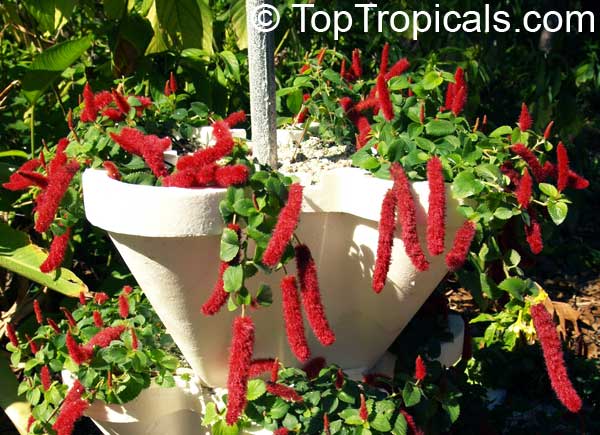
Strawberry Firetails, Dwarf Cat Tails, Kittens Tail...
Everybody wants this plant! Acalypha pendula, Dwarf Chenille Plant gets
its common name from the fuzzy plumes of tiny, foxtail-shaped bright red
flowers that trail above a thick mound of small, serrated leaves. Given enough
light, this plant blooms nearly year-round! The blossoms that begin as wispy
buttons and elongate into fuzzy cones. At maturity, they become 3-4"long
streamers.
A spectacular plant for a hanging basket, container or ground cover, it
is heat tolerant, great for both hot Southern landscapes or as an easy
houseplant, providing bright light.
Place this unusual house plant on a pedestal stand or pot it in a hanging
basket to show off those eye-catching fuzzy blooms.
This is a dwarf plant that stays small and doesn't need pruning. It's
naturally bushy, so you don't have to pinch its growing tips to get it to
branch out.
A favorite with children, and cats too!
Get it from our store with FREE shipping!

Date: 19 Feb 2019
Australia Planting 1 Billion Trees To Fight Climate Change
Australia plans to plant 1 billion new trees to fight climate change, by
the year 2050. That is a lot of trees and is the first real effort the
country has made toward combating climate change. The only real problem is finding
enough space to plant that many trees...
A billion trees is a billion trees, and even with a team of 30,000
people planting a tree per day for the next 31 years, the final tally would still
only be 339,450,000 trees. Australia will need a tree army to get that many
trees planted by 2050... Read the whole story...
How about planting just one tree today and save the World one step at a time?
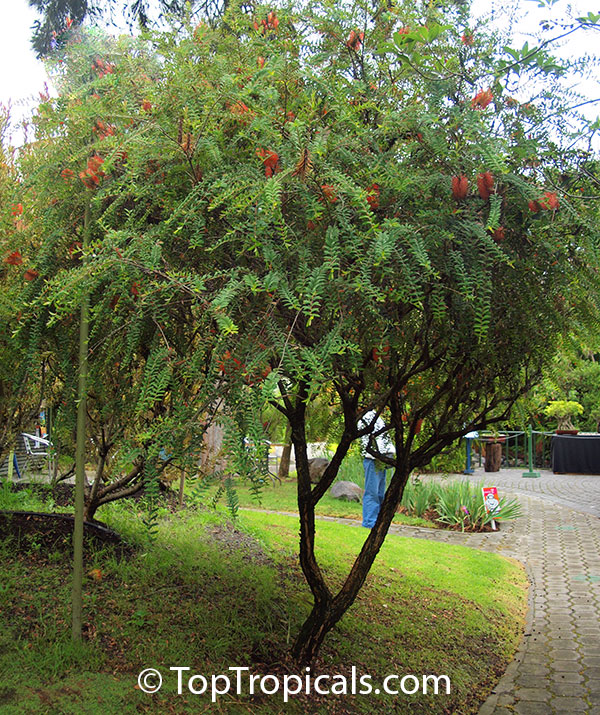
On the photo: Callistemon
Date: 16 Feb 2019
Featured plant. Randia formosa - Blackberry jam fruit
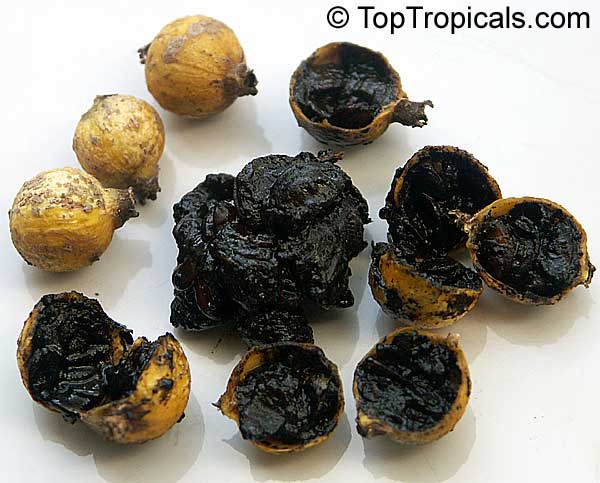
Randia formosa - Blackberry jam fruit
This unique compact plant, perfect for container culture, combines features of a fragrant flower and tasty desert fruit. Kids love it! Originally from Central and South America, this rare tropical small evergreen tree bears fruit which tastes like fresh Blackberry jam. Many claim that it's even better than preserves. Closely related to the gardenia, its flowers are sweetly fragrant. This relatively hardy tropical has attractive foliage and can be grown in a container as well as in the ground. The Randia formosa (or Rosenbergiodendron formosum) produces as many as 25 to 30 fruits at a time. Since it blooms for a few months in the fall and winter, fruiting and flowering can be enjoyed when many other plants are dormant. Large tubular white flowers that attract nocturnal moths... Read more about this plant...
Get it from our store... Limited quanity!