Garden Blog - Top Tropicals

Date: 28 Sep 2025

Guava Tree Plant Care

Tips from Top Tropicals Plant Expert - Tatiana Anderson
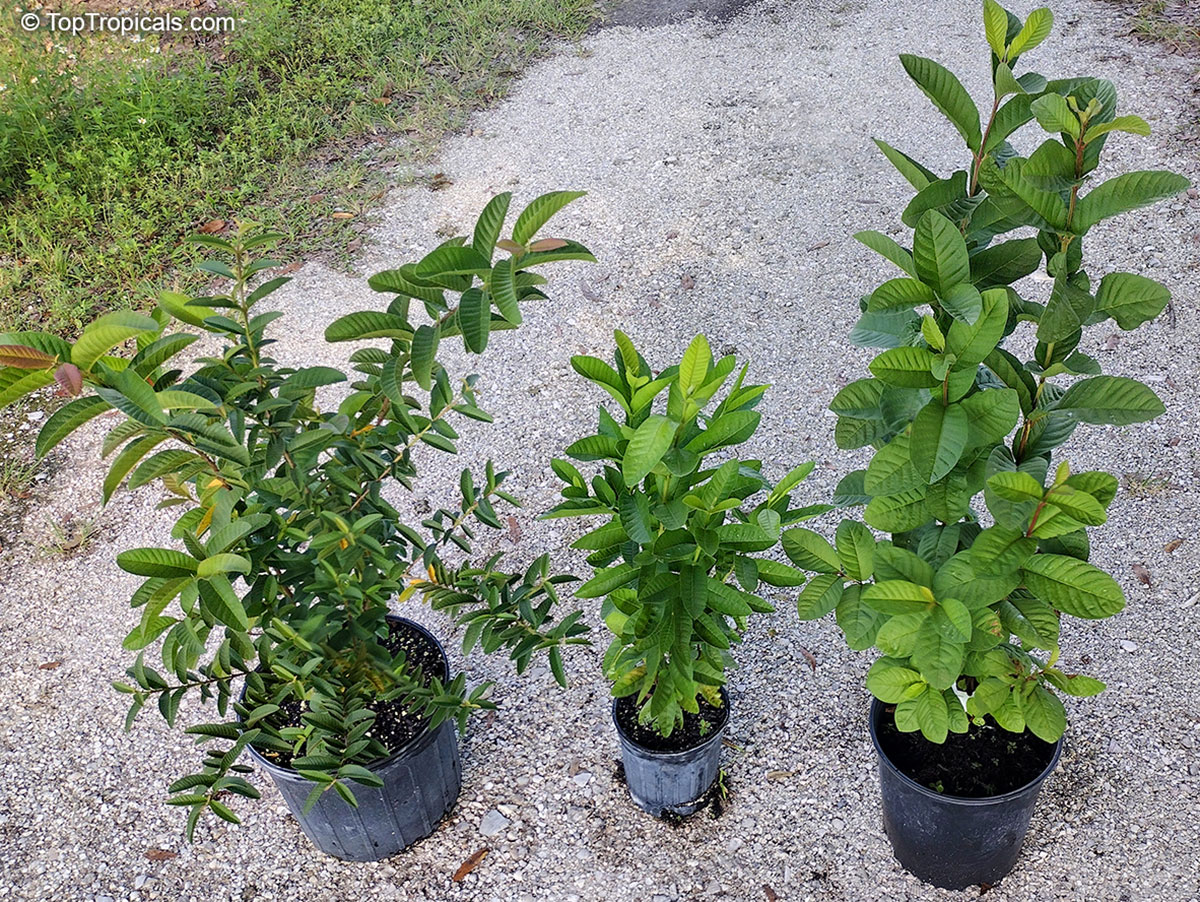
Guava  trees  for  sale  in  3-gallon  nursery  pots,  healthy  young  plants 


with  green 


foliage.

Where to Plant Outdoors

Guavas love full sun — aim for 6–8 hours of direct light. They’re adaptable to many soils but do best in well-drained, organic-enriched mixes. Plant them in a spot where you can water easily; guavas are thirsty trees during fruiting.

Container & Indoor Growing

Don’t have space or live in a cooler climate? Guavas thrive in large pots. Use well-drained potting mix. LINK TO OUR SOIL Keep them on a sunny patio during warm months and bring them indoors when nights dip below freezing. Compact varieties like Dwarf Hawaiian Rainbow or Tikal are especially good for pots.

Winter Care

Mature guavas can handle a light frost (down into the high 20s F), but young plants need protection. If planted outdoors, cover them with frost cloth on cold nights. Container guavas can be wheeled into a garage, greenhouse, or bright indoor window until the weather warms.

Watering and Fertilizing

Water deeply once or twice a week, more often in hot weather or when fruit is developing. They don’t like soggy soil, but they won’t complain about short floods either. Fertilize 3–4 times a year during the growing season with a balanced fruit tree fertilizer. Guavas especially love potassium and phosphorus for strong flowering and heavy crops. We recommend liquid crop booster Sunshine C-Cibus and balanced controlled release fertilizer Green Magic.

Pruning

Prune after fruiting to keep them compact and open up airflow. Remove crossing or dead branches. In containers, trim back vigorous shoots regularly to manage size and encourage more fruiting wood.

Pests and Problems

Guavas are generally tough and pest-resistant. The main thing to watch for in humid or rainy climates is mealybugs - those cottony white clusters on leaves or stems. They're easy to manage with neem oil or a quick spray of horticultural soap.

Fruit time

Guavas fruit young - often within a year or two.

Pollination

Guavas are self-pollinating, so you'll get fruit even with a single tree. Planting more than one tree, however, often boosts harvests and gives you a longer fruiting season.

If you've ever wanted instant gratification from a fruit tree, guava is it.
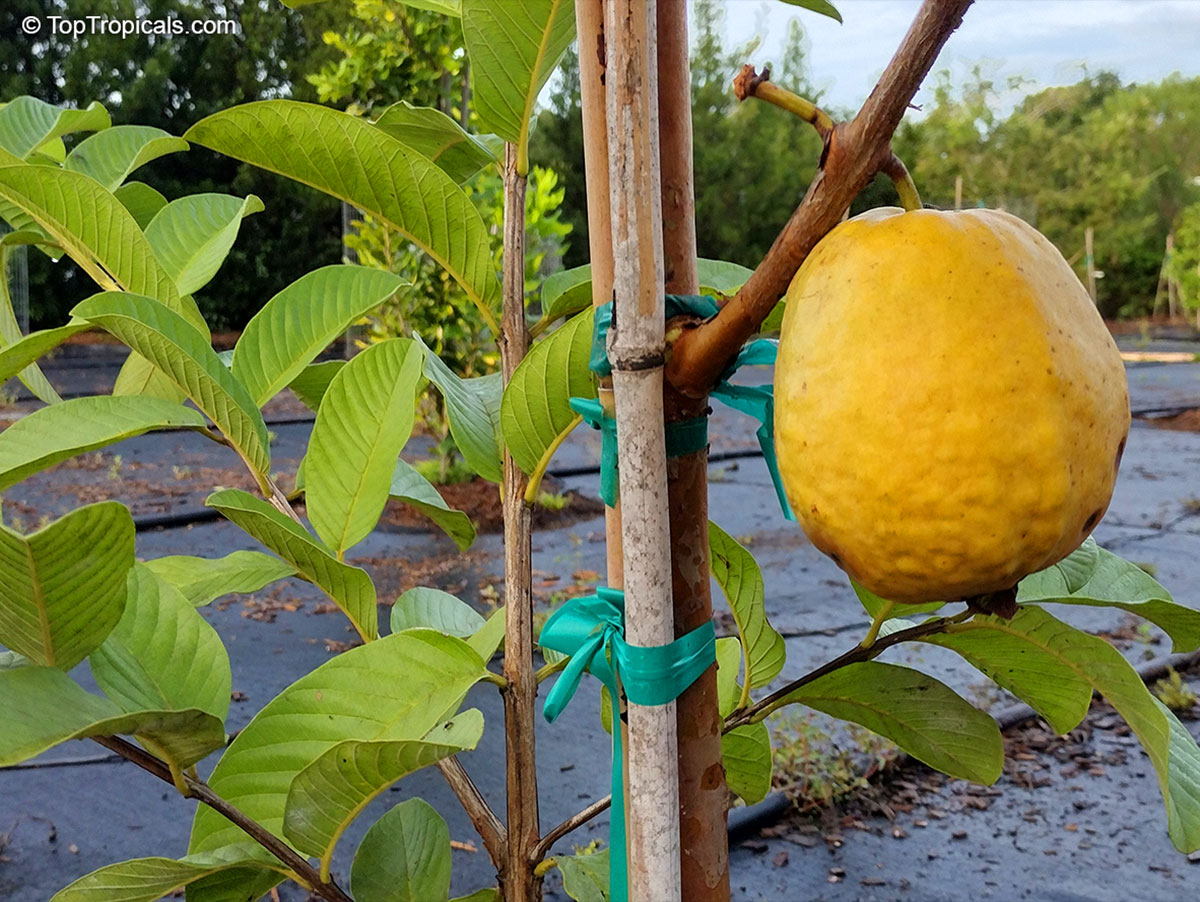
Ruby  Supreme  Guava  tree  with  a  large  ripe  yellow  fruit,  variety  known 


for  sweet  pink  flesh  and  reliable 


harvests.

🍴 Guava Recipes

With all that fruit, the next question is always: "What do I do with it?" Here are our favorites:

  • Cas Guava: Make Agua de Cas

    Boil halved Cas Guava fruits with sugar, simmer, strain, and bottle. Dilute with water when serving. The concentrate keeps for months in the fridge.
    Check out the recipe.

  • Hawaiian Gold: Make Drinks

    Perfect for Mojitos or Margaritas. Sweet, tangy juice pairs beautifully with lime and mint. Learn more

  • Araca Pera: Guava Wine

    Famous in Brazil, where the fruit is turned into a vibrant rosу wine. Locals say it’s the taste of summer in a glass — and yes, you can make it at home too. Learn more...

  • Quick snack: Guava Grilled Cheese

    Spread guava paste or fresh mashed fruit with cheese, grill until golden. Sweet and savory heaven. Learn more...

  • Simple Guava Juice

    Blend ripe guavas with water, ice, and a little sugar if you like. Instant refreshment.

✅Ready to Grow? Whether you want fresh juice, sweet fruit, or even your own guava wine, we’ve got the best varieties in stock right now. Your future self, sipping guava juice on a hot summer afternoon, will thank you.

👉 Order your guava tree today

Tabby  cat  sitting  between  a  glass  of  yellow  guava  juice  with  white 


guavas  and  a  glass  of  pink  guava  juice  with  green  guavas  and  cut  pink  guava 


fruit.

Date: 5 Mar 2024

Event mementos: everybody had a happy time!

Plant  Festival  March  into  Spring  at  Top  Tropicals

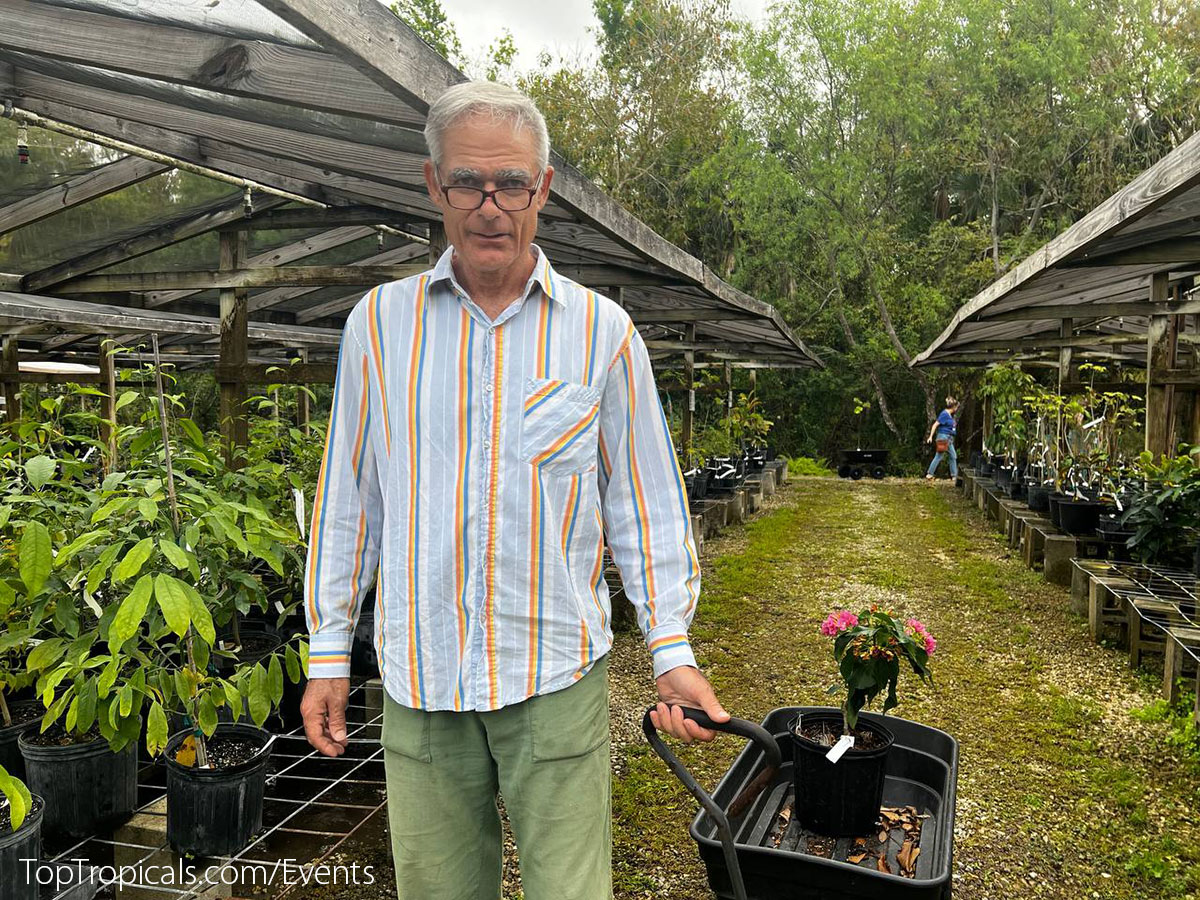
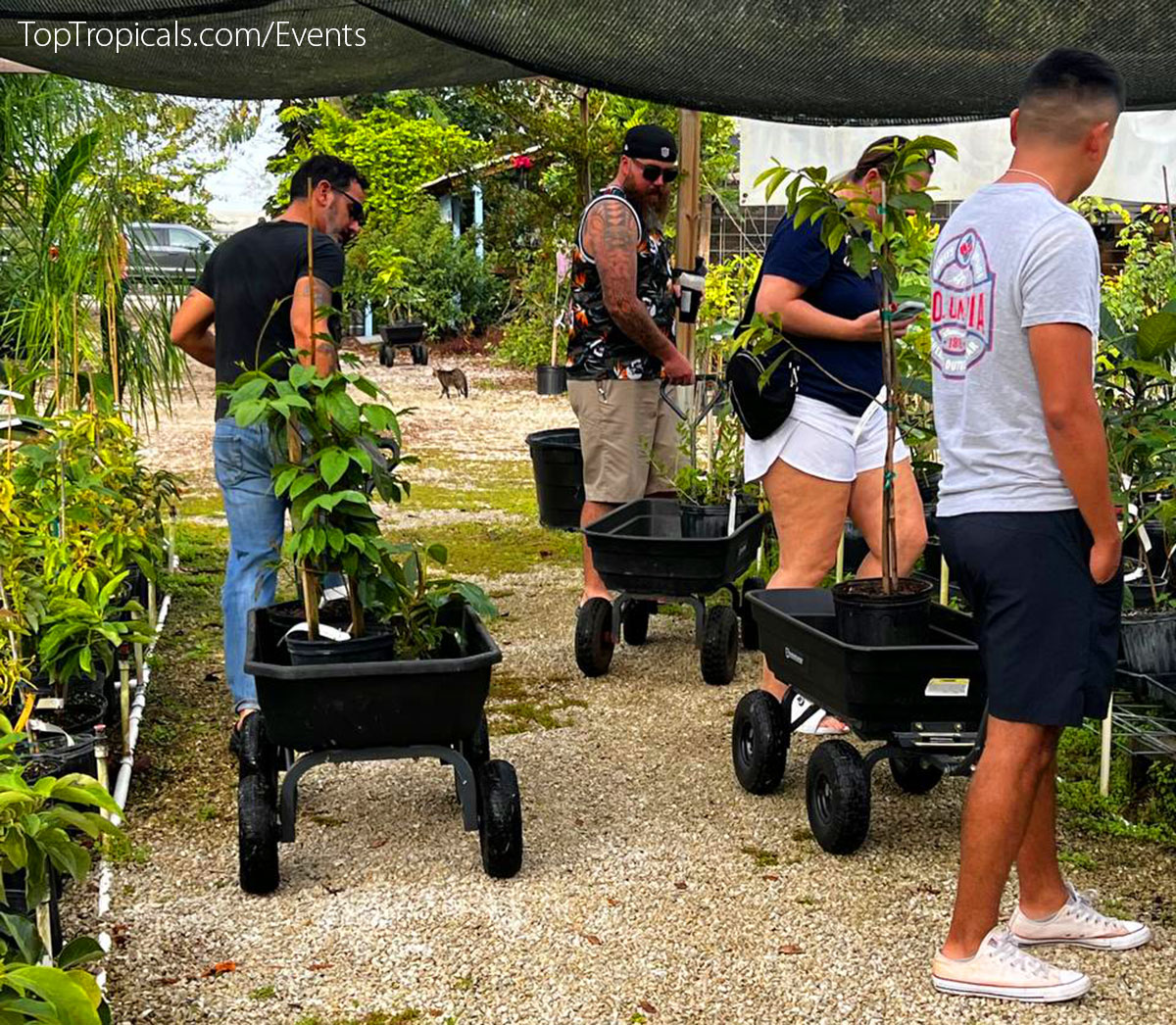
Our heartfelt gratitude to each and every one of you for visiting our Plant Festival March into Spring - on Saturday. It was delightful to see so many of you exploring the array of plants, finding ones that spoke to you, and ultimately making purchases that brought joy and life into your homes and gardens. The early birds received amazing Artistic Gift Bags by Onika Amell.
Your support means the world to us! It's moments like these that remind us of the beauty and wonder that nature brings into our lives...

Plant  Festival  March  into  Spring  at  Top  Tropicals

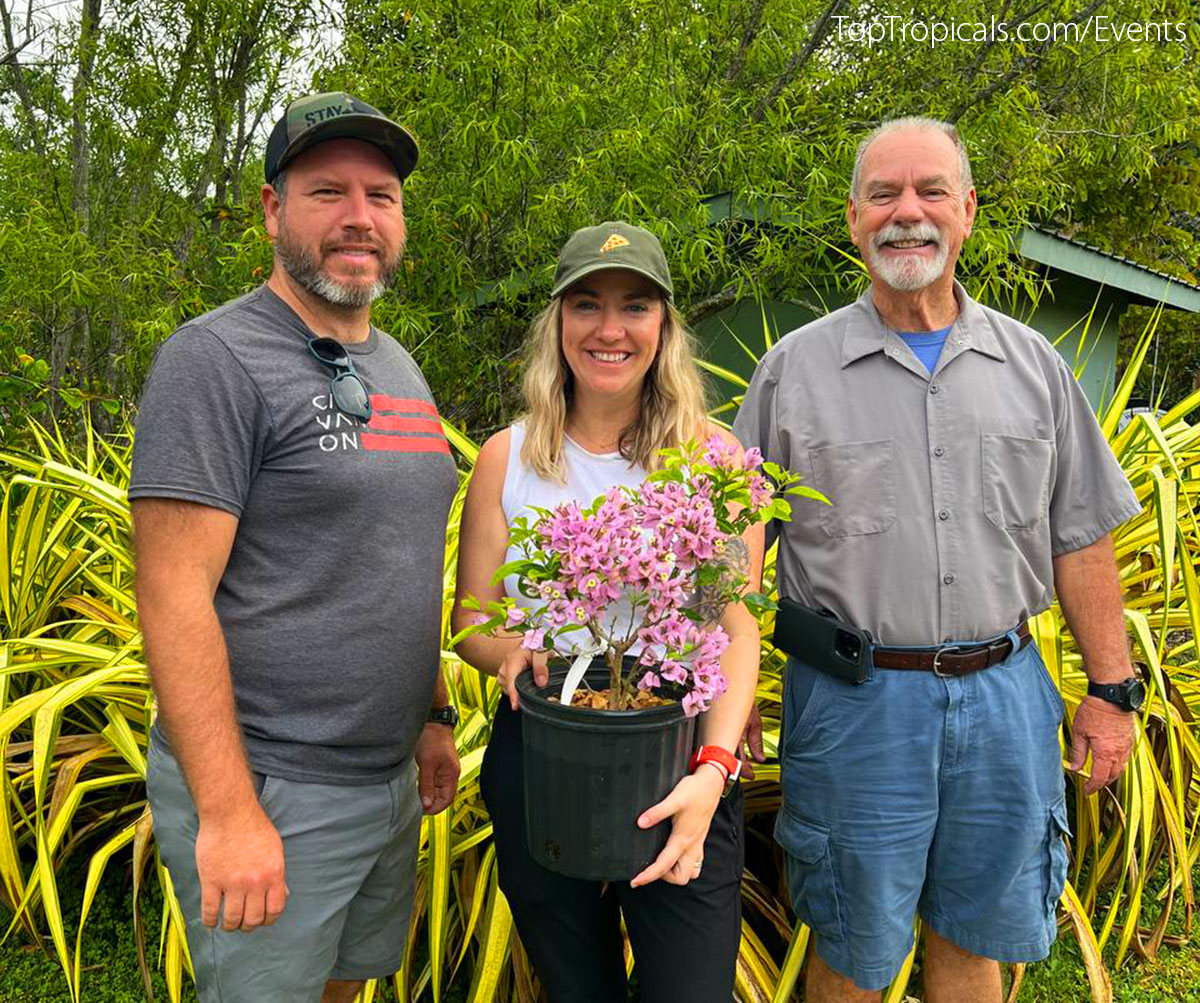
A  man  with  a  plant

Chiane  with  gift  bags

Date: 11 Aug 2018

From Anna Banana: Shipping and planting during hot weather

TopTropicals

Q: I received email notification that my order was delayed due to hot weather. Why? And do I need to do anything special if I plant when it is hot?

A: When plants are shipped via FedEx Ground, it is hot in the truck! According to our FedEx area manager information, if outside temperature is 100 degrees, inside the truck it can be 130! We don't want to put your plants through that much stress. We monitor the weather at destination, and as soon as it cools down a little bit, your order will be shipped.

Planting during hot weather:
1. For a mail-ordered plant follow planting instructions and never plant it from the box directly into the ground. Keep it in a pot the size of a root ball until the plant recovers from shipping stress, re-grows root system and adjusts from several days of darkness to a bright light. Move the pot gradually into brighter light, eventually into a spot of its permanent home. Do not over water the pot. Once you see new growth - the plant is ready to be transplanted into the ground.
2. Use only quality soil, containing lots of organic matter (compost, peat moss); soil conditioner is beneficial (pine bark). Plant it on a little hill, so growing point is elevated 1-1.5" above the rest of the surface.
3. Put a good layer of mulch around the plant, at least 1-2" thick, and not too close to the trunk as it may cause stem rot on contact.
4. Water daily with a garden hose until the plant shows active growth - then watering may be reduced every other day or less, or you may rely on sprinklers and/or rains.
5. If the sun is too hot, use shade cloth (or simply a white bed sheet) to cover the plant for the first few days (use bamboo sticks for support). It will help the plant to establish without heat stress. If leaves start dropping - this may be a sign of excessive light and heat. Shading is the way to reduce it.
6. Use SUNSHINE booster to help plants overcome heat stress, and shipping stress. It really works!

Remember that a plant has a very slow nature, unlike creatures from animal world. Give it some time and never rush it into new conditions. Go slowly and patiently - this is the only way to get a reward of a fruit crop or a beautiful flower.

Date: 16 Nov 2025

Tropical almond brittle: quick-n-fun exotic recipes

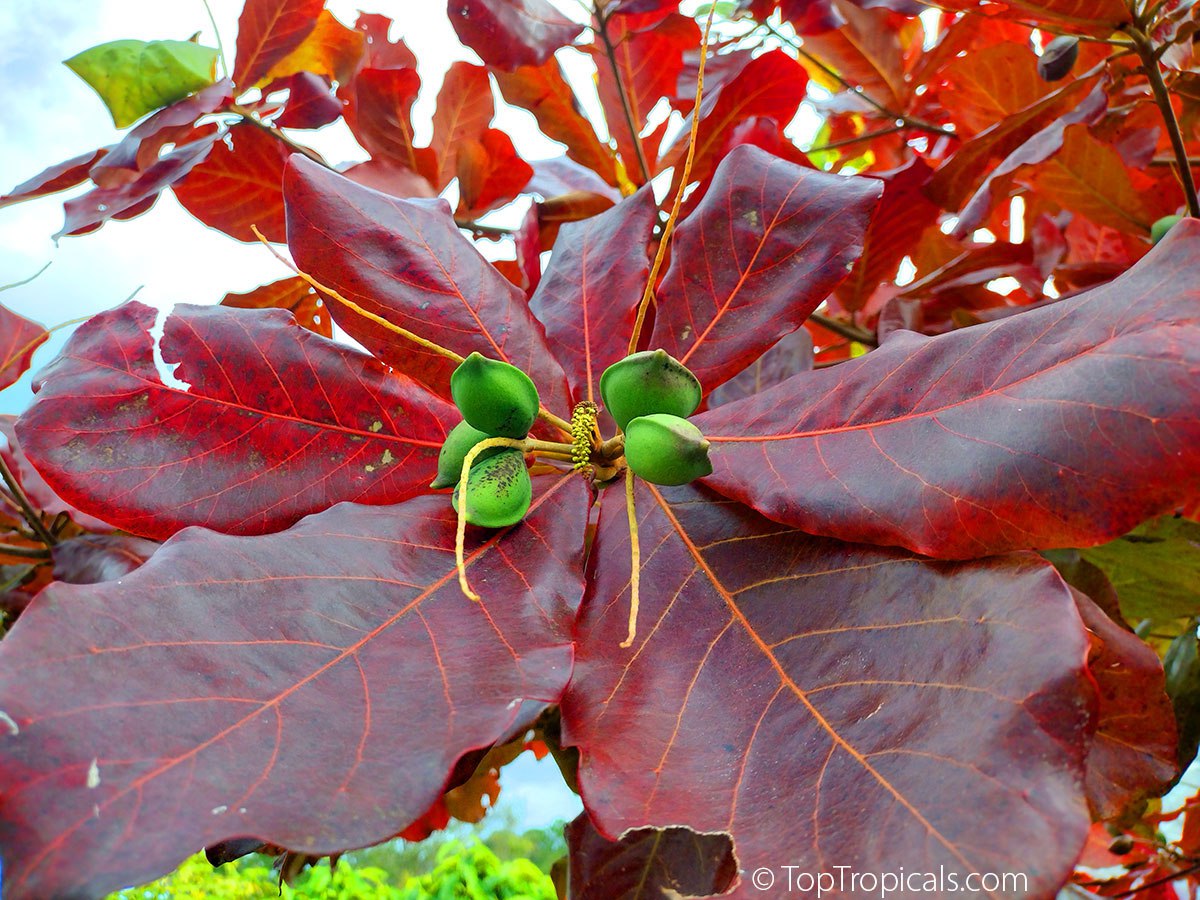
Tropical Almond (Terminalia catappa)

Tropical Almond (Terminalia catappa)

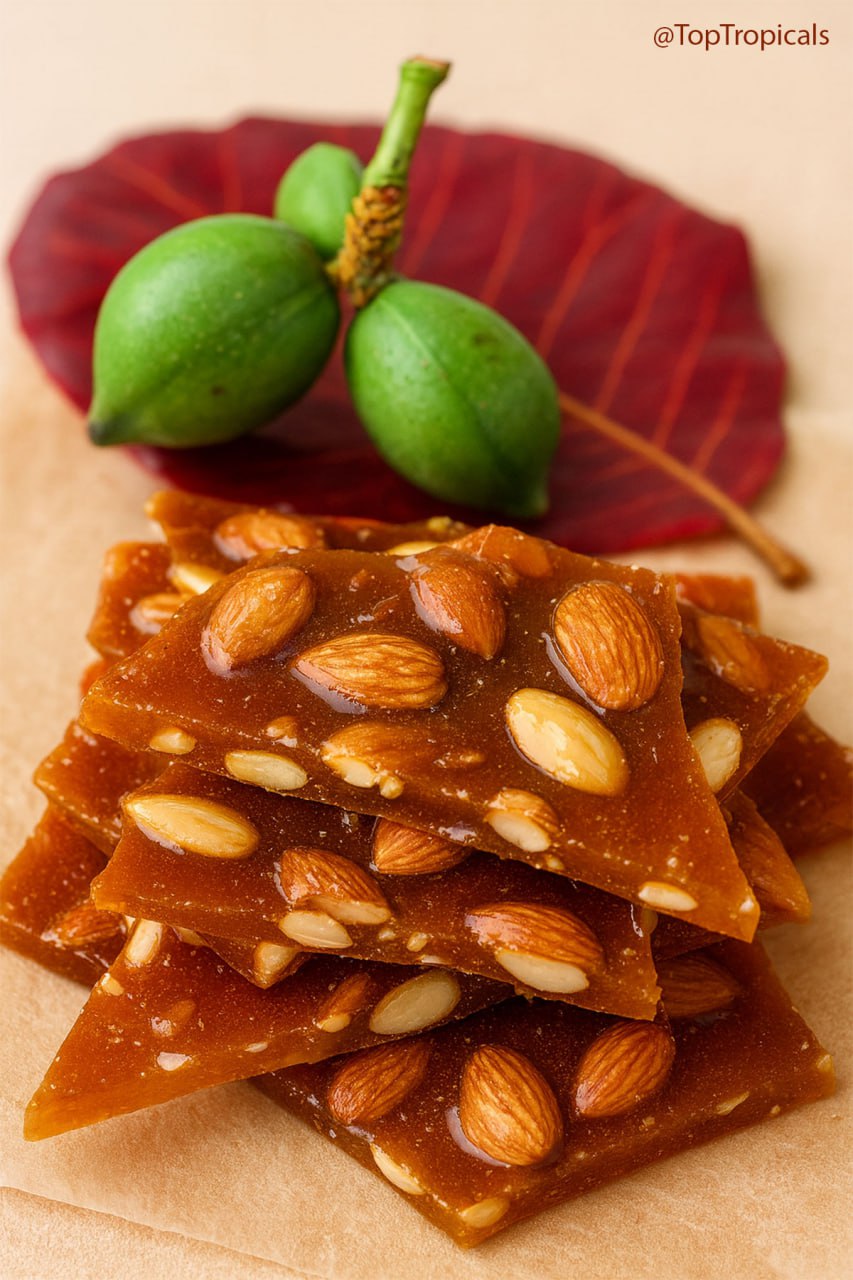
Tropical almond brittle

Tropical almond brittle

🍴 Tropical almond brittle: quick-n-fun exotic recipes

  • 🟢Caramelize sugar, stir in roasted tropical almonds (Terminalia catappa), spread thin.
  • 🟢Let cool, harden, and break into crunchy, nutty shards.

Tropical Almond Brittle

Ingredients

  • 2 cups roasted tropical almonds (Terminalia catappa)
  • 1 1/2 cups sugar
  • 1/2 cup water
  • 1 tbsp butter
  • Pinch of salt

Instructions

  1. Combine sugar, water, and salt in a saucepan.
  2. Cook over medium heat until sugar caramelizes to a golden amber color.
  3. Remove from heat and quickly stir in roasted tropical almonds.
  4. Pour onto parchment paper and spread into a thin layer.
  5. Let cool completely, then break into brittle shards.

🛒 Grow your own almonds

📚 Learn more:


Where do almonds come from?

#Food_Forest #Recipes

🟢 Join 👉 TopTropicals

Date: 26 Feb 2026

Stop Sugar Crashes: 5 Tropical Fruit Hacks for Healthy Dessert

Stop Sugar Crashes: 5 Tropical Fruit Hacks for Healthy Dessert

🍨 Stop Sugar Crashes: 5 Tropical Fruit Hacks for Healthy Dessert


The smarter way to handle sugar cravings - no restriction required

Tired of the post-cookie slump? Sugar cravings are a physiological response to blood glucose fluctuations, not a lack of willpower. Refined sugars trigger an insulin spike followed by a hypoglycemic crash, trapping you in a cycle of fatigue and hunger.
The secret to metabolic health is managing glycemic load. By choosing nutrient-dense tropical fruits, you satisfy your sweet tooth while maintaining stable energy homeostasis.
The solution is not to give up dessert. It is to change what dessert means. Here is how to use tropical horticulture to hack your biology and regulate insulin:

  • 🍭 1. Choose fruit that comes with fiber

Whole tropical fruits deliver sweetness wrapped in fiber, water, and nutrients. That slows sugar absorption and keeps energy steady.
Try:
  • · Mango, chilled and sliced
  • · Sapodilla - naturally caramel-sweet
  • · Mulberries by the handful
  • · Loquat halves straight from the fridge
  • · Dragon Fruit for light, clean sweetness
Same pleasure. Less crash.

  • 🍭 2. Pair sweet with fat to blunt the glucose spike

Healthy lipids are a biological hack for your metabolism. Fats slow gastric emptying, ensuring a steady glucose release rather than an inflammatory spike. Furthermore, lipids trigger cholecystokinin (CCK) - the hormone that signals satiety to the brain - effectively "turning off" cravings at the source.
  • · Avocado blended into a chocolate-style mousse: The monounsaturated fats create a creamy texture while blunting the sugar response.
  • · Banana with nut butter: Combining fast-acting fruit sugars with dense protein and fats.
  • · Pineapple with raw nuts: The bromelain in pineapple aids digestion, while the fats in nuts provide long-lasting satiety.
  • · Mango mixed into full-fat yogurt: The combination of probiotics, protein, and lipids turns a simple fruit into a complete, low-glycemic snack.
When fruit is balanced with fat, cravings calm down instead of escalating.

  • 🍭 3. Use naturally rich fruits in place of sugar

Some tropical fruits taste like dessert already.
  • · Jackfruit has candy-like sweetness
  • · Sapote is creamy and custard-like
  • · Guava brings floral depth
  • · Cherries add brightness
  • · Mash Banana into baking instead of white sugar.
  • · Blend Mango into yogurt instead of syrup.
  • · Top oatmeal with Mulberry instead of brown sugar.
Dessert stays. The crash disappears.

  • 🍭 4. Balance sweet with tart

Adding contrast reduces the urge to overeat sweetness.
  • · Carambola adds crisp tang.
  • · Pineapple brightens the palate.
  • · Loquat gives gentle acidity.
Balanced flavors satisfy faster.

  • 🍭 5. Start the day right

Skipping breakfast increases late-day sugar cravings.
A morning smoothie with Avocado, Banana, and Mango prevents the afternoon energy dip. Hydration also matters - thirst often disguises itself as a sweet craving.

🍭 In essence


Dessert is not the enemy. Refined sugar is.
When sweetness comes from nature's bounty, it nourishes instead of draining energy.
You do not need to quit dessert.
You just need to let nature handle it.

Consult with a healthcare professional before making significant dietary changes, especially if you have diabetes or metabolic conditions

🛒 Start your tropical fruit journey

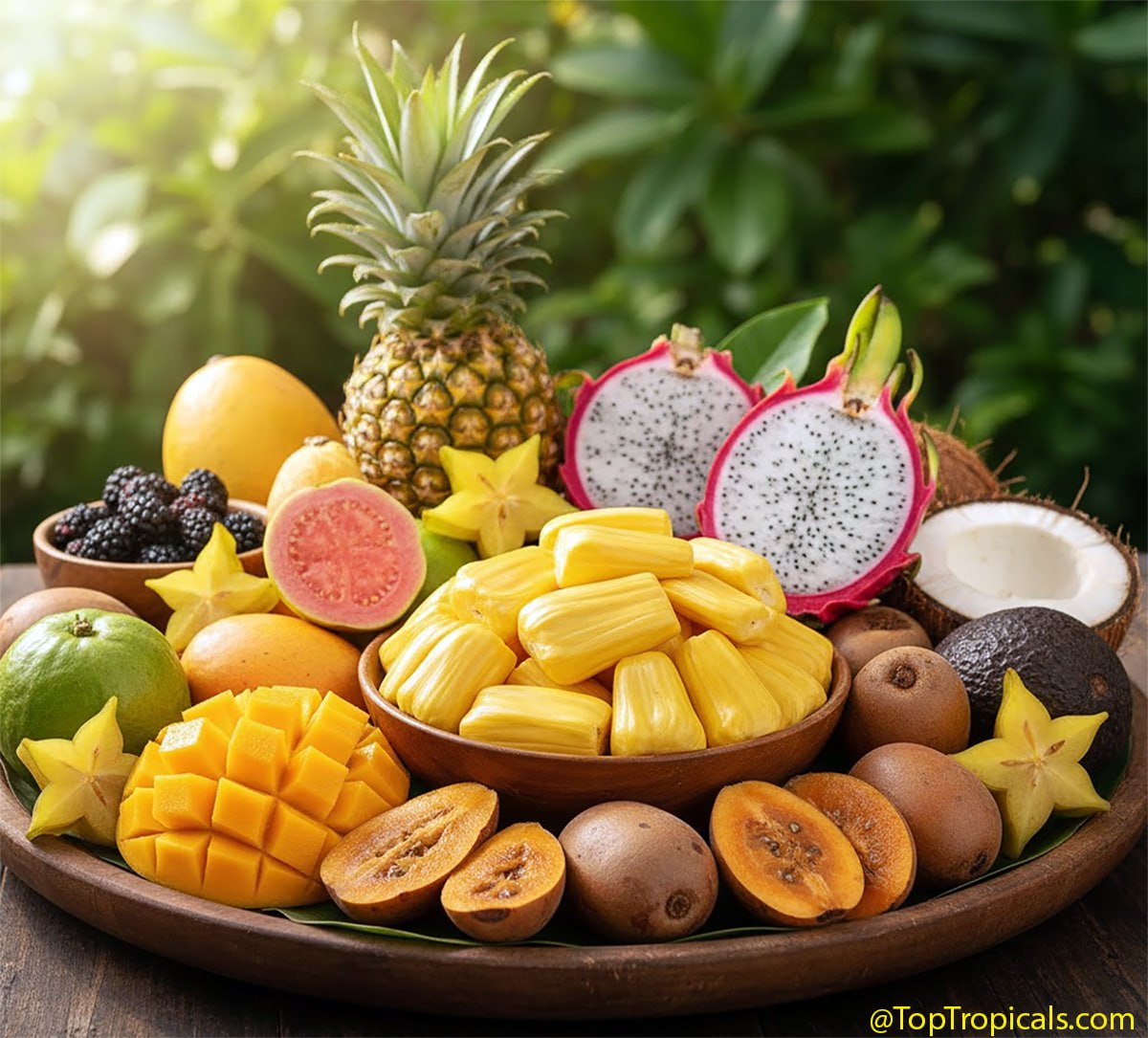
Annona · Guava · Mango · Sapodilla · Mulberry · Pineapple · Avocado · Banana · Loquat · Dragon fruit · Jackfruit · Sapote · Cherries · Carambola

📚 Learn more:


#Food_Forest #Remedies #Discover

🟢 Join 👉 TopTropicals