Garden Blog - Top Tropicals
Date: 2 Oct 2026
Your tropical plants are moving indoors

🏡 Your tropical plants are moving indoors. Are they ready?
💡 The biggest overwintering mistakes happen before plants ever come indoors. Here are 8 fall chores you shouldn't skip.
Every spring, we drag our tropical plants outside. They grow like crazy, flower, and sometimes produce fruit. By fall, that little hibiscus has become a monster, and the banana is outgrowing its pot.
Uh-oh! Where are we going to put them all?
Before hauling everything indoors, here are eight important jobs.
8 fall chores to save your tropical collection before the first frost.
🏡 1. Don't wait for frost
Many tropicals suffer long before freezing. Start moving sensitive plants when nights approach 50–55F. Calatheas may need to come inside earlier.
Remember, roots in containers cool much faster than roots in the ground!
🏡 2. Decide who gets the sunny window
Not every tropical needs the same winter accommodations.
• Sunshine lovers: Citrus, hibiscus, bananas and palms need bright windows or grow lights.
• Indoor naturals: Monsteras, philodendrons and calatheas adapt more easily.
• Winter sleepers: Desert roses may drop their leaves. Some bananas can be stored in a cool, frost-free location.
🏡 3. Don't bring the entire insect population indoors!
Outside, beneficial insects control pests. Inside, a few spider mites can become a major infestation.
Inspect leaves (especially underneath), stems and soil. Check pots for unwanted passengers. Shower foliage, treat pests outdoors and isolate newcomers for 3-4 weeks.
🏡 4. A little haircut, if needed
That gorgeous hibiscus might not fit through your front door!
Remove dead leaves, spent flowers and damaged branches. Lightly reshape oversized plants, but save major pruning for spring. Every healthy leaf is valuable during winter.
🏡 5. Clean the pots, leave the roots alone
Remove debris, wash containers and check drainage holes. Unless necessary, don't repot now. Disturbing roots before the low-light season adds stress.
🏡 6. Give them time to adjust
Gradually move sun-loving plants into shade 1–2 weeks before bringing them indoors. Some yellowing and leaf drop, especially on hibiscus and ficus, is normal.
🏡 7. Change your watering and fertilizing habits
A plant needing daily watering outdoors might need water only once a week or less indoors. Check the soil, not the calendar. Soggy roots are especially dangerous in winter!
Reduce fertilizing as growth slows and let dormant plants rest. Stop using dry granular fertilizers. Liquid amino acid-based fertilizers, like Sunshine Boosters, can be used year-round on actively growing plants. As watering decreases, fertilizer application should decrease too.
Keep tropicals away from heating vents and provide extra humidity when needed.
🏡 8. Set up your indoor jungle
Group plants by light requirements. Place tall specimens where they won't shade smaller ones. Use shelves, stands and hanging baskets.
Add grow lights where necessary, keep foliage away from cold windows and don't forget saucers. Your hardwood floors will thank you!
📅 Your fall countdown
• 3-4 weeks before: Choose plants, prepare space and lighting, inspect for pests.
• 2 weeks before: Begin shade acclimation, clean pots and treat infestations.
• Moving day: Check the forecast, inspect plants and arrange by light requirements.
• First month indoors: Isolate newcomers, watch for pests and adjust watering.
🏡 Let them take a winter vacation!
Some tropicals keep growing, others go dormant.
The goal? Healthy plants ready to explode with new growth next spring!
When warm weather returns, gradually reintroduce them to outdoor sunshine.
🛒 Shop Indoor plants
📚 Learn more:
• How to protect tropical plants in Winter
• How to overwinter tropical plants indoors
• 10 key tips for successful overwintering of tropical plants indoors
• How to take care of a mango tree in winter
🎥
#How_to #Discover
🟢 Join 👉 TopTropicals
Date: 1 Oct 2026
A shrub, a vine, or a tree? You decide! Bauhinia galpinii
🌺 A shrub, a vine, or a tree? You decide! Bauhinia galpinii.
One plant, three completely different ways to grow it. And butterflies love it, too!
Some plants just can't decide what they want to be. Bauhinia galpinii - Pride of De Kaap or Nasturtium Bauhinia, is native to South Africa. This unusual member of the orchid tree family has brilliant scarlet-orange flowers, butterfly-shaped leaves and a wonderfully flexible personality.
Unlike the familiar pink and purple orchid trees, this one doesn't insist on growing into a tree. Give it some room and a little imagination, and see what happens!
Most orchid trees produce large pink, purple or white blossoms. This one went in a completely different direction!
Its smaller, brilliant orange-red flowers resemble nasturtiums and appear in generous clusters. Against the deep green, two-lobed leaves that look like butterfly wings, the contrast is spectacular. And speaking of butterflies -
When Bauhinia galpinii is in full bloom, it can become a busy butterfly buffet. Large butterflies flutter from flower to flower, sipping nectar, while bees join the party.
The flowers aren't just beautiful to us. They provide a valuable nectar source for visiting pollinators. A sunny, flowering Bauhinia covered in butterflies is quite a sight!
Despite its exotic appearance, this South African beauty is remarkably easygoing. Give it full sun, well-drained soil and regular water while it establishes. Once mature, it handles heat and occasional drought beautifully.
💡It flowers generously through the warm months, often continuing into late fall in favorable climates.
Prune it to control its size, encourage branching or maintain your chosen shape.
In frost-prone areas, protect it from hard freezes.
🦋 Whether you want a flowering hedge, a cascading wall of scarlet or an unusual little tree, this Bauhinia is happy to play along.
And when the butterflies arrive? That's your garden's grand opening!
🛒 Grow your own Scarlet Bauhinia
📚 Learn more:
• Bauhinia galpinii in Plant Encyclopedia
• You won’t believe this red orchid tree exists!
• Why red flowers are so attractive?
• 8 Showy Shrubs to Plant This Fall for a Colorful Florida Winter
• 13 tropical flowers to plant in spring to attract pollinators year around
#Hedges_with_benefits #Butterfly_plants #Discover
🟢 Join 👉 TopTropicals
One plant, three completely different ways to grow it. And butterflies love it, too!
Some plants just can't decide what they want to be. Bauhinia galpinii - Pride of De Kaap or Nasturtium Bauhinia, is native to South Africa. This unusual member of the orchid tree family has brilliant scarlet-orange flowers, butterfly-shaped leaves and a wonderfully flexible personality.
Unlike the familiar pink and purple orchid trees, this one doesn't insist on growing into a tree. Give it some room and a little imagination, and see what happens!
🌺 One plant, three garden personalities
- ✓ A flowering shrub. Let it grow naturally, spreading its long, arching branches into a broad, colorful mound. Perfect for a sunny spot where you need something spectacular.
- ✓ A flowering waterfall. Plant it above a retaining wall or train it along a fence. Its flexible branches can spill over the edges, creating cascades of fiery flowers. It isn't a true climbing vine, so give it support if you want it to grow upward.
- ✓ A small tree. Prefer a more formal look? With selective pruning and training, you can develop a woody trunk and a spreading canopy. One plant, three completely different garden designs!
🌺 An orchid tree disguised as a nasturtium
Most orchid trees produce large pink, purple or white blossoms. This one went in a completely different direction!
Its smaller, brilliant orange-red flowers resemble nasturtiums and appear in generous clusters. Against the deep green, two-lobed leaves that look like butterfly wings, the contrast is spectacular. And speaking of butterflies -
🌺 A butterfly magnet!
When Bauhinia galpinii is in full bloom, it can become a busy butterfly buffet. Large butterflies flutter from flower to flower, sipping nectar, while bees join the party.
The flowers aren't just beautiful to us. They provide a valuable nectar source for visiting pollinators. A sunny, flowering Bauhinia covered in butterflies is quite a sight!
🌺 Big on Flowers, Easy on Care
Despite its exotic appearance, this South African beauty is remarkably easygoing. Give it full sun, well-drained soil and regular water while it establishes. Once mature, it handles heat and occasional drought beautifully.
💡It flowers generously through the warm months, often continuing into late fall in favorable climates.
Prune it to control its size, encourage branching or maintain your chosen shape.
In frost-prone areas, protect it from hard freezes.
🦋 Whether you want a flowering hedge, a cascading wall of scarlet or an unusual little tree, this Bauhinia is happy to play along.
And when the butterflies arrive? That's your garden's grand opening!
🛒 Grow your own Scarlet Bauhinia
📚 Learn more:
• Bauhinia galpinii in Plant Encyclopedia
• You won’t believe this red orchid tree exists!
• Why red flowers are so attractive?
• 8 Showy Shrubs to Plant This Fall for a Colorful Florida Winter
• 13 tropical flowers to plant in spring to attract pollinators year around
#Hedges_with_benefits #Butterfly_plants #Discover
🟢 Join 👉 TopTropicals
Date: 30 Sep 2026
6 Best-Tasting Mango Varieties
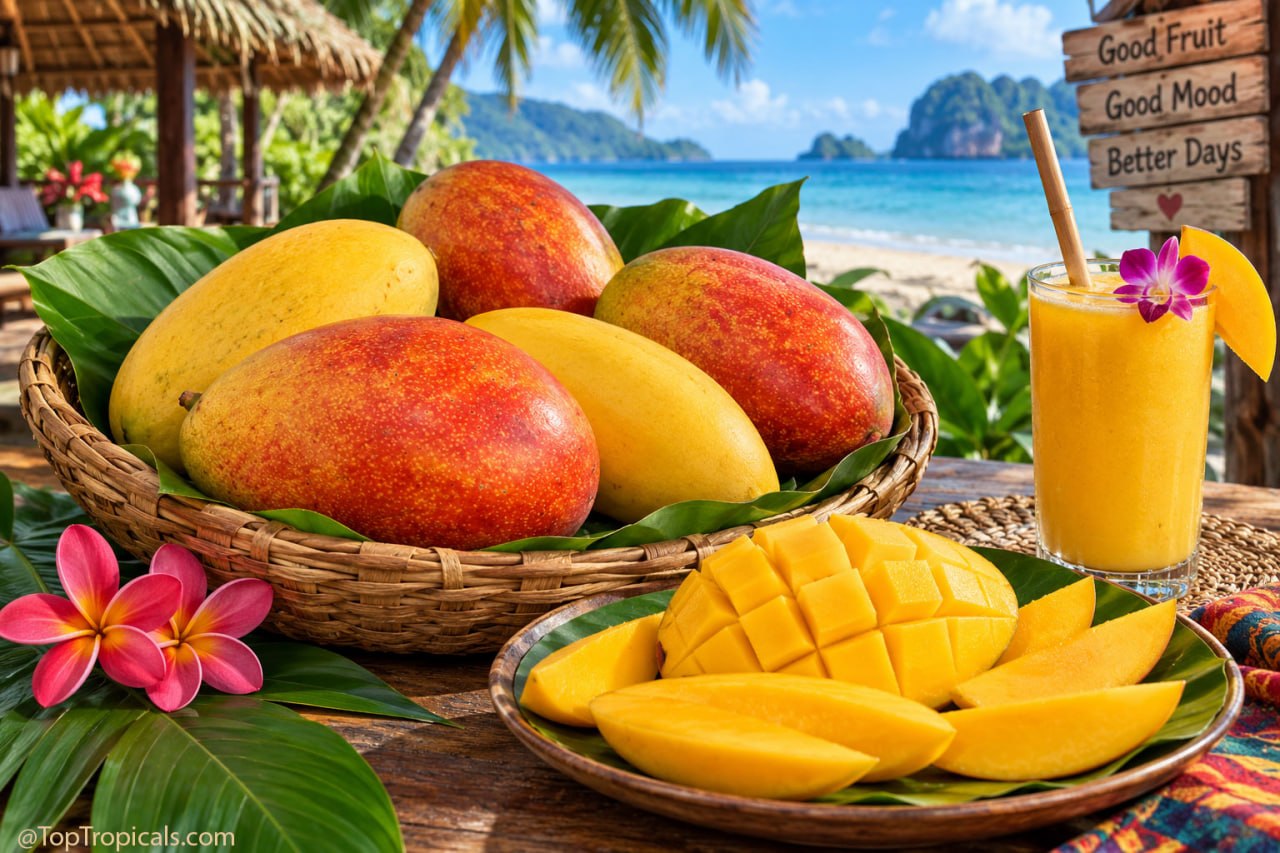
🥭 6 Best-Tasting Mango Varieties
Let's get one thing out of the way: mangoes are delicious. Choosing the "best-tasting" mango out of hundreds of varieties is highly subjective.
But some cultivars have flavors so distinctive that mango lovers talk about them again and again. These are five all-time favorites worth trying.
🥭 Sweet Tart
The name is surprisingly accurate. Sweet Tart combines intense sweetness with enough acidity to give the flavor a bright, almost candy-like punch. The flesh is rich, juicy and fiberless.
👌Flavor: intensely sweet, tangy, rich and complex.
🥭 Lemon Zest
This mango became famous for a reason. Along with rich mango sweetness, Lemon Zest has a distinctive citrus character that really can remind you of lemon candy.
👌Flavor: sweet, citrusy, aromatic and intensely flavored.
🥭 Coconut Cream
One of the most unusual mango flavor profiles. Coconut Cream has rich, creamy flesh with a noticeable coconut-like character. It's a mango, but your taste buds may argue otherwise.
👌Flavor: rich, creamy, sweet, with coconut notes.
💡 The flavor is incredible - but the tree itself is another story.
Coconut Cream has a crazy, sprawling growth habit and can turn into a landscaping nightmare if you let it do whatever it wants. Keep an eye on it and prune regularly to maintain a manageable shape. A little extra work, perhaps, but when it comes to taste, this one can beat just about everybody.
🥭 Carrie
Carrie is an old favorite that still holds its own against much newer cultivars. The soft, fiberless flesh has a powerful aroma and deep, classic mango flavor. Some people absolutely adore it.
👌Flavor: rich, aromatic, resinous and intensely "mango."
🥭 Orange Sherbet
Here's another mango with a name that gives away the experience. Orange Sherbet is intensely sweet and citrusy, with orange-like notes and smooth flesh.
👌Flavor: very sweet, orange-citrus, rich and aromatic.
🥭 Pineapple Pleasure
This one lives up to the name. Pineapple Pleasure is intensely sweet and tropical, with a noticeable pineapple-like flavor mixed into the mango richness. There is a bright, slightly tangy edge that keeps all that sweetness from becoming too heavy. If you like mangoes with a strong personality rather than just plain sugar-sweet fruit, this is a fun one.
👌 Flavor: very sweet, rich and tropical, with bright pineapple notes and a touch of tang.
✅ So which mango tastes best?
That's the dangerous question!
✓ Choose Sweet Tart for a sweet-and-tangy punch.
✓ Try Lemon Zest for lemony citrus notes.
✓ Choose Coconut Cream if you want something completely different.
✓ Pick Pineapple Pleasure for a sweet tropical punch with pineapple notes.
✓ Try Carrie for deep, old-fashioned mango flavor.
✓ And pick Orange Sherbet if sweet orange-citrus sounds irresistible.
These aren't the only great-tasting mangoes. Not even close.
With hundreds of cultivars in the mango world, we're simply picking a few standout varieties with distinctive flavors and long-standing reputations among mango enthusiasts.
The real solution? Plant more than one and conduct your own taste test.
🛒 Shop our best-tasting mango varieties
📚 Learn more:
Mango Tree - Mangifera indica - in Plant Encyclopedia
6 Best Thai and Southeast Asian Mango Varieties
5 Best Indian Mango Varieties and Their Flavors
5 Best Dwarf Mango Trees for Small Yards
5 Best Mango Trees for Beginners
Top 10 Dwarf "Condo" Mango, great for container culture
Top 5 recommended vigorous Mango tree varieties, reliable producers
Top 5 Favorite Mango we just love
10 steps how to grow a mango tree
#Mango_Rainbow - varieties you should try
#Food_Forest #How_to #Discover #Mango


Date: 29 Sep 2026
Daily Cat Lesson: How to Make the Litter Box Smell Like Roses
🐾 Daily Cat Lesson: How to Make the Litter Box Smell Like Roses
Well - preferably it should smell like nothing at all. Cats generally prefer clean, unscented litter, and strong perfumes may actually make a box less appealing.
- 🐾 Which litter is best?
For most cats, a fine-textured, unscented clumping litter is a good starting point. But cats have preferences - if yours refuses a particular litter, listen to the customer. - 🐾 How many boxes for multiple cats?
The standard recommendation is one box per cat, plus one extra, ideally distributed in different locations so one cat can't guard access to all of them. With a very large cat family, automatic and high-capacity systems can make the workload much more practical, but cleanliness and easy access still matter. - 🐾 The best odor control is removing the source.
Scoop clumping litter at least daily - more often with multiple cats - and periodically wash the box with mild detergent. Don't try to cover dirty-litter odor with heavy fragrance. - 🐾 Suddenly stopped using the litter box?
Don't automatically blame bad behavior. Urinary problems, constipation, pain, stress, a dirty box or another cat blocking access can all cause litter-box avoidance. - 🐾 What works for our 12+ indoor-cat community
- ✦ PetSafe Simply Clean Self-Cleaning Litter Box - Our old favorite. The entire litter bowl slowly rotates, moving clumps onto a conveyor and into a waste bin. No daily scooping. Our model appears discontinued, too sad: it was a budget under $200 system; but similar rotating/automatic systems are available such as Premier Pet Auto-Clean Litter Box.
- ✦ Pet Zone Smart Scoop Litter Box - Good for several cats. It automatically rakes clumping litter into a covered waste compartment. In our setup, we can usually go 2–3 days before emptying the bin.
- ✦ Tidy Cats Breeze Litter Box System - Very different approach: large pellets on top, urine passes through to a hidden absorbent pad underneath (pull-out tray). No sandy litter tracks around the house and excellent odor control. For one cat, you typically get 3-7 days from a pad; with multiple cats, it needs attention more often.
- ✦ Arm & Hammer Unscented Litter Deodorizer - Simple extra weapon against cat bathroom odor. Smells like candy.
🌹 The secret to making a litter box smell like roses? Don't. Make it smell like nothing.
🐈📸 Top Tropicals rescued cat Bob enjoying his private time with Tidy Cats Breeze System at PeopleCats.Garden.
🐈 Stay with us for your Daily Dose of Cat! #DailyCatLesson #PeopleCats
🟢 Join 👉 TopTropicals
Date: 29 Sep 2026
Tamarind coconut curry:

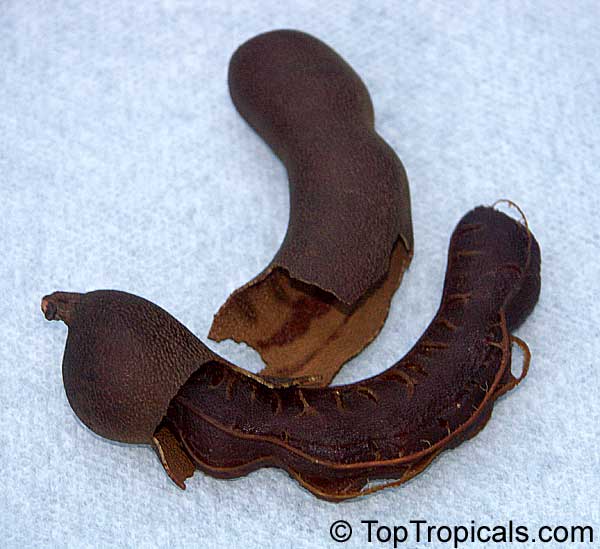
🍴 Tamarind coconut curry: quick-n-fun exotic recipes
🟡Stir tamarind into coconut milk with curry paste.
🟡Simmer 5 minutes and pour over vegetables or fish.
🟡Creamy with a bright edge.
🌿 About the plant:
Tamarind and coconut are a classic Southeast Asian pairing - sour meets creamy. The balance is what makes the sauce addictive.
🏡 In the garden:
In ideal tropical climates, Tamarind (Tamarindus indica) becomes a majestic shade tree. In cooler regions it can be grown in large containers while young.
🛒 Plant a Tamarind tree in your garden
📚 Learn more:


Tamarindus indica in Plant Encyclopedia
Tamarind Agua Fresca: quick-n-fun exotic recipes
Tamarind mango chutney: quick-n-fun exotic recipes
Tamarind shrimp stir-fry: quick-n-fun exotic recipes
Tamarind date dipping sauce: quick-n-fun exotic recipes
Top 10 fruit you'll ever need for your health benefits: #7 Tamarind
How to use Tamarind in cooking
#Food_Forest #Recipes
🟢 Join 👉 TopTropicals