Cook noodles and toss with fresh pineapple chunks, grated ginger, a splash of soy sauce, lime juice, and a drizzle of sesame oil. Top with chopped green onions and roasted peanuts for a sweet, tangy, tropical dinner. 👉 Add Pineapple to your garden
🥭 Mango Curry Noodles
Stir-fry cooked noodles with a spoonful of yellow curry paste and coconut milk. Add sliced ripe mango at the end, along with bell peppers and fresh cilantro. The creamy curry and sweet mango are surprisingly delicious together. 👉 Add Mango and Curry Leaf to your garden
Coconut Lime Noodles
Warm coconut milk with garlic, fresh ginger, and a squeeze of lime. Toss with cooked noodles and finish with toasted coconut flakes, cilantro, and a pinch of chili flakes for a bright tropical twist. 👉 Add Coconut to your garden
⭐️ Star Fruit Sesame Stir-Fry
Quickly stir-fry noodles with thin slices of star fruit, snow peas, carrots, and sesame oil. Add soy sauce and fresh ginger. The star fruit stays slightly crisp and adds a refreshing citrusy bite. 👉 Add Star Fruit to your garden
🍌 Banana Peanut Curry Noodles
Make a quick sauce with peanut butter, coconut milk, red curry paste, and a splash of soy sauce. Toss with noodles and top with lightly caramelized banana slices, chopped peanuts, and fresh cilantro. It sounds unusual but tastes rich, creamy, and slightly sweet. 👉 Add Banana to your garden
These recipes are all ready in about 15-20 minutes and pair well with chicken, shrimp, tofu, or can be enjoyed on their own. They also make fun conversation starters because the tropical ingredients give familiar noodles an unexpected twist.
What happens when two rare hibiscus species meet: a flower unlike any other
🌺 What happens when two rare hibiscus species meet: a flower unlike any other
Most hibiscus flowers put on a bold, classic tropical show; the Hibiscus 'Fairy Dancer' looks like it's caught in a permanent state of dance. It is a remarkable, historic hybrid created by TopTropicals resident, botanist and horticulturist Mark Hooten. This isn't just another color variant of a common garden shrub - it combines two extraordinary, wild, and geographically isolated species that had never before been paired in a registered hybrid.
🌺 A historic pairing of wild botanical treasures
To understand why this plant is causing such a stir among collectors, you have to look at its parents: The Mother: The famous Coral Hibiscus (Hibiscus schizopetalus), native to the slopes of Mount Kilimanjaro in East Africa, celebrated for its complex, lacy, hanging blossoms. The Father: The tiny, elusive, and extremely rare Madagascan species Hibiscus grandidieri. This plant is so uncommon in cultivation that it had never once appeared as a registered parent in the International Hibiscus Society's global database. When these two wild species finally met, the resulting hybrid completely defied expectations.
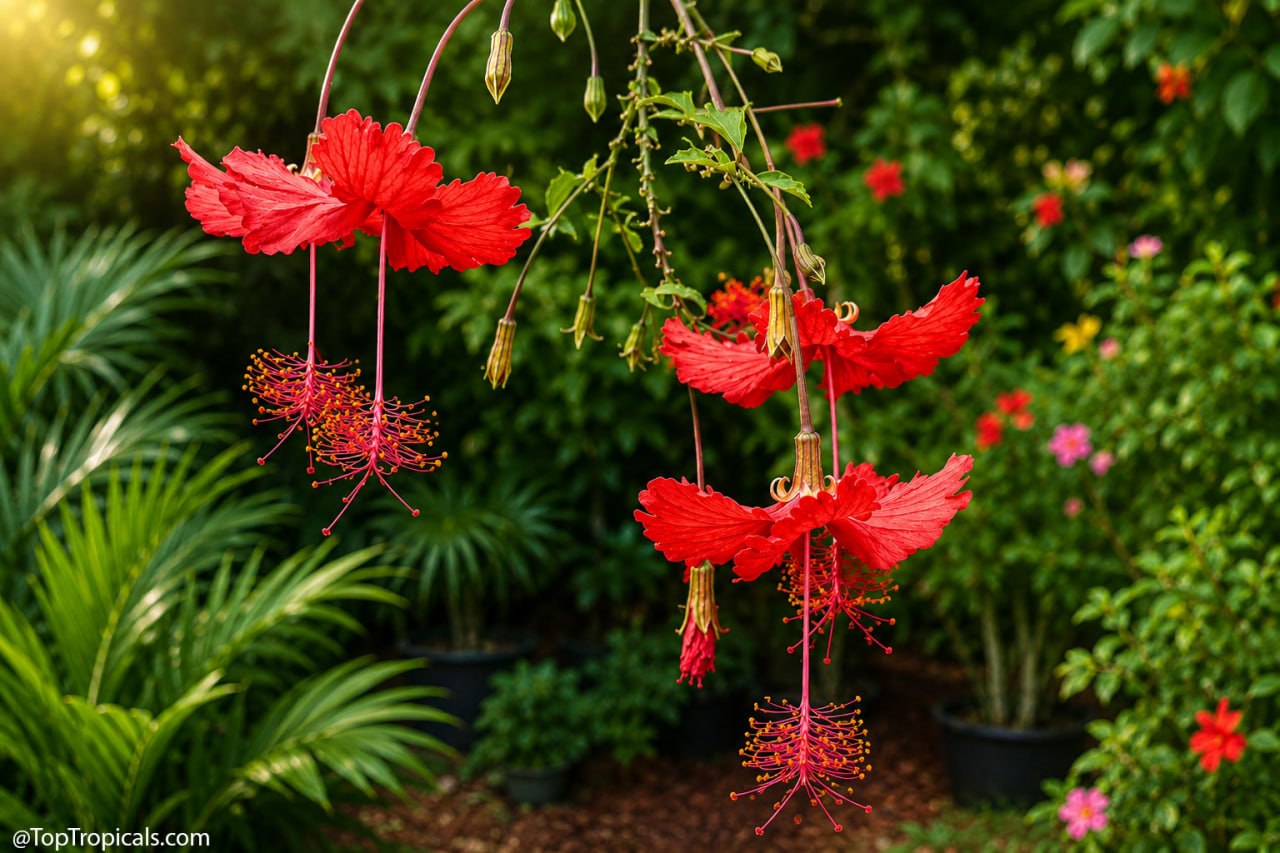
As captured beautifully in the cascading branches, the flowers hang gracefully from exceptionally long, thread-like stems. They seem to float effortlessly in midair, swaying elegantly with the slightest afternoon breeze like tiny crimson fairies performing an aerial ballet.
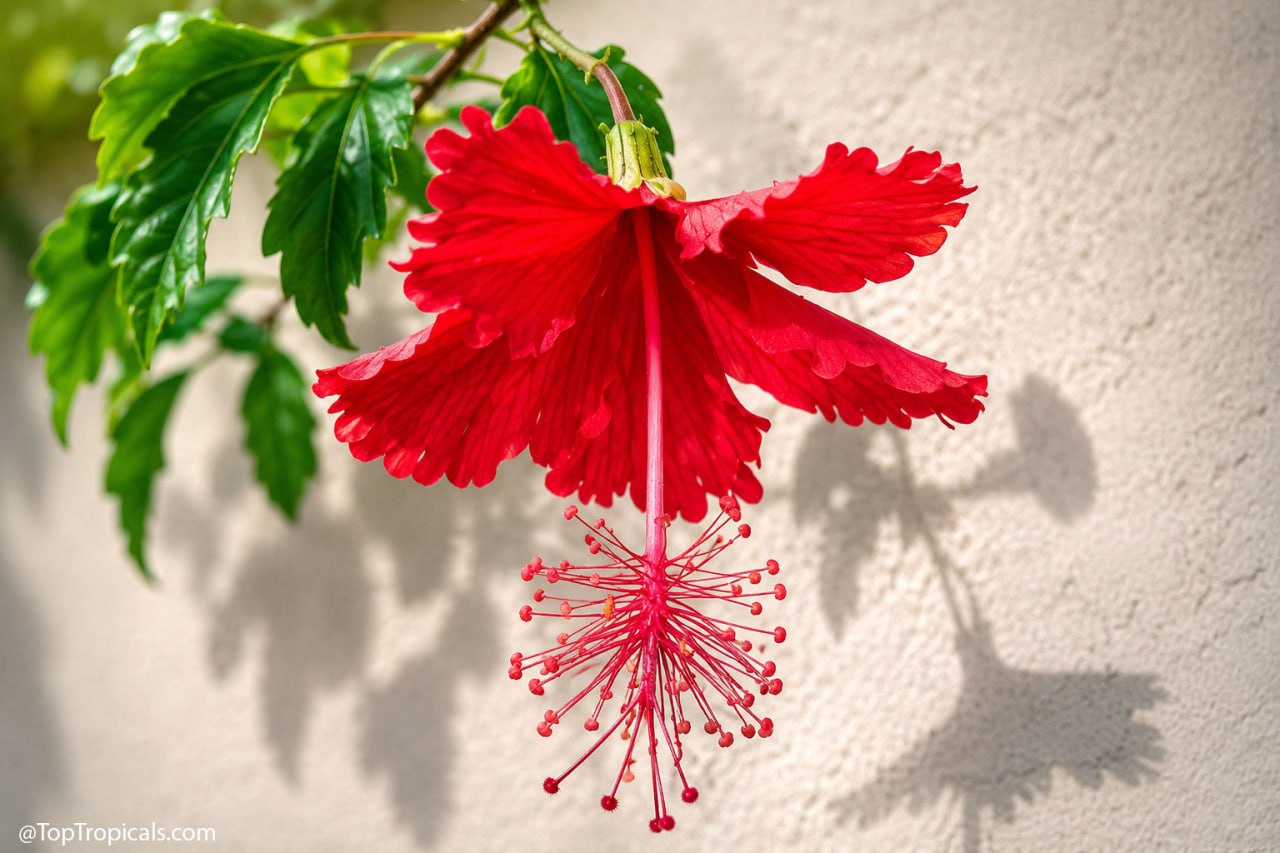
Every single bloom is entirely distinct from a standard garden hibiscus. As seen in the close-up, the vivid red petals are deeply divided and dramatically reflexed backward. Meanwhile, an elongated, delicate staminal column hangs far beneath the petals like a miniature, glowing chandelier, making the bloom fascinating to study from every single angle.
🌺 The world-first weeping hibiscus with delicate butterfly petals and fig-like leaves
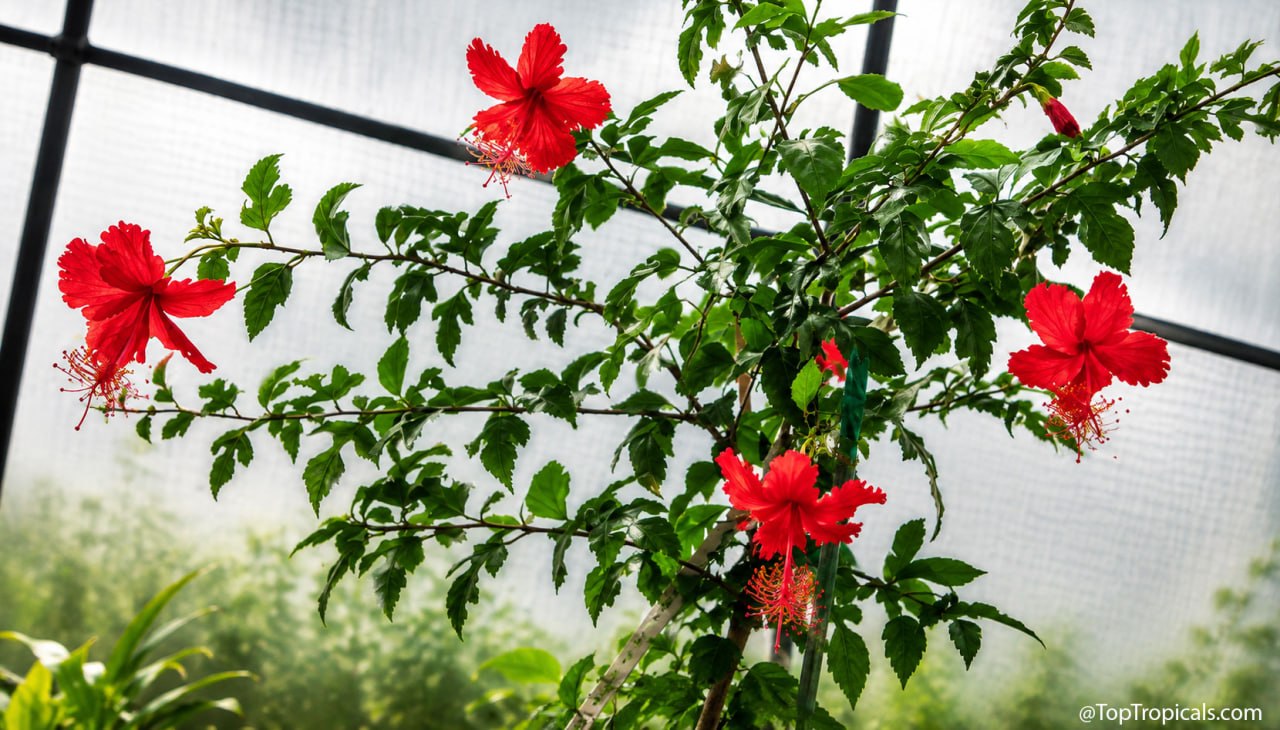
Unlike typical, coarse tropical hibiscus bushes, 'Fairy Dancer' features an inherently artistic silhouette: Continuous Blooming: While standard varieties mostly set buds at the very tips of their branches, 'Fairy Dancer' produces flowers all along its arching stems, creating a spectacular holiday-ornament effect. Unique Foliage: Instead of broad, heavy leaves, it produces small, deeply cut foliage that resembles miniature fig or mulberry leaves. Versatile Display: Because of its naturally airy, weeping growth, it adapts flawlessly to container culture. It looks absolutely stunning draping over patio walls, cascading from hanging baskets, or trained as a fine specimen plant.
🌺 Add a world-first hybrid to your collection
Some plants impress because they take up a massive amount of space. Others grab attention with loud, artificial colors. Hibiscus 'Fairy Dancer' steals the spotlight simply because it is an elegant, delicate masterpiece that your neighbors have guaranteed never seen before. 👉 More...
The flower that smells like a dead rat, but gardeners cant wait for it to bloom
Amorphophallus bulbifer
Amorphophallus bulbifer seeds
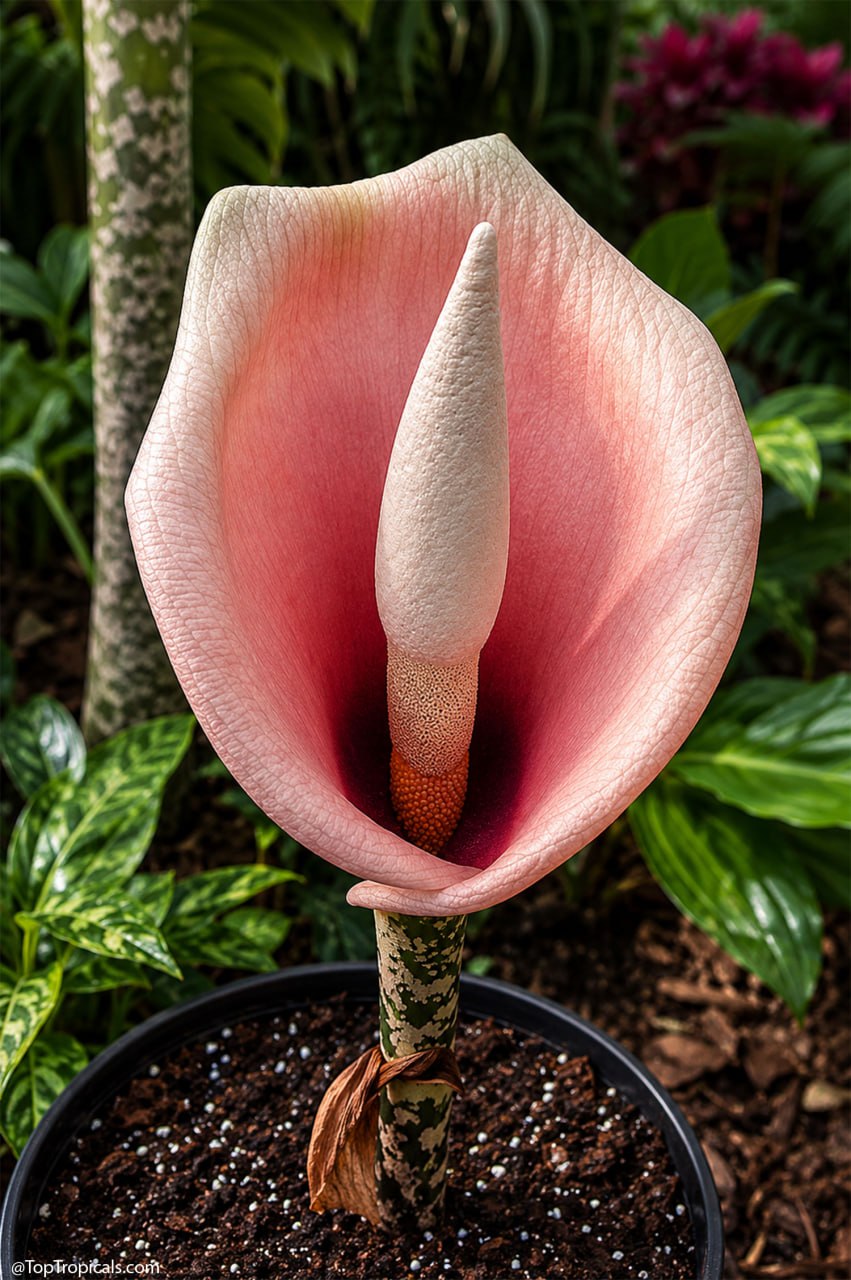
Amorphophallus bulbifer flower
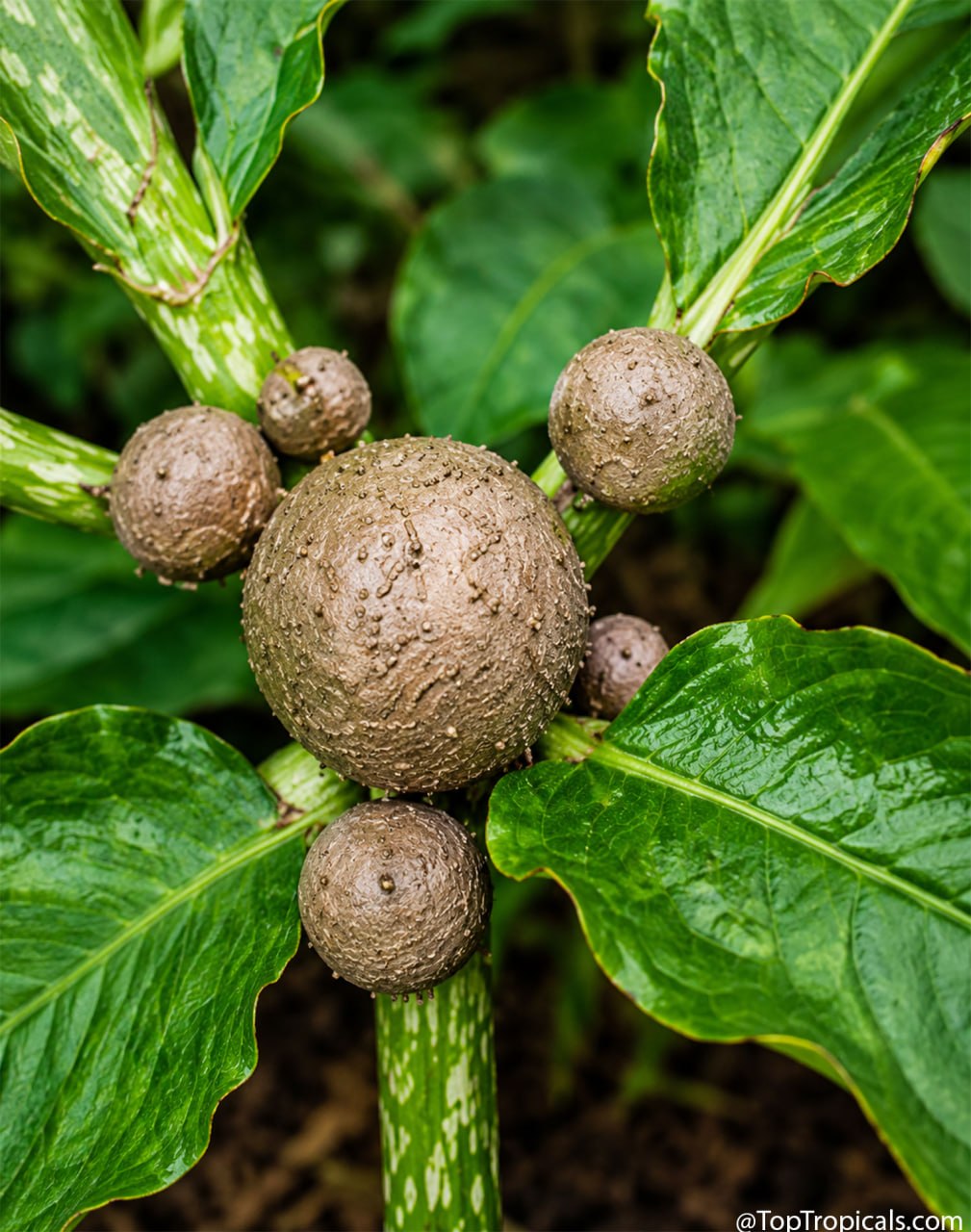
Amorphophallus bulbifer bulbils
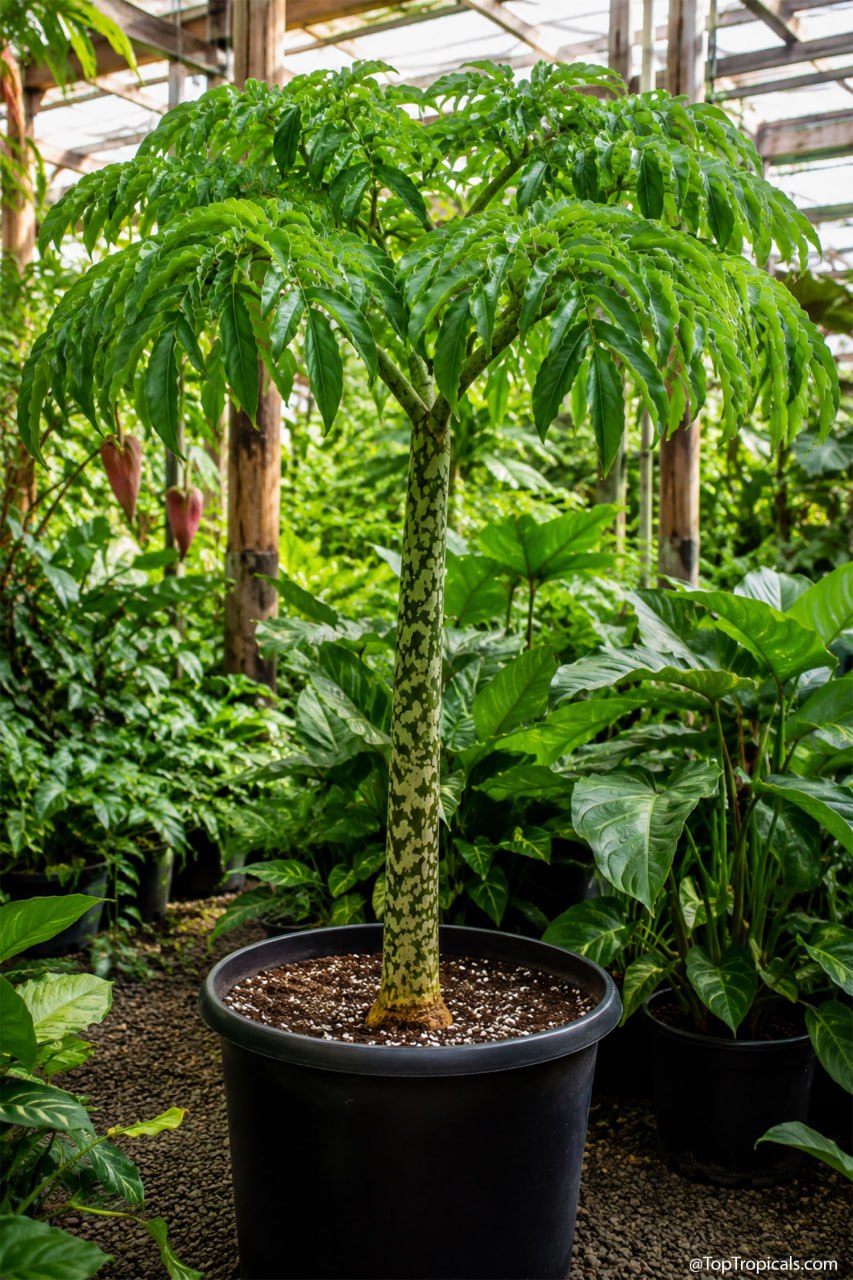
Amorphophallus bulbifer plant
🗿 The flower that smells like a dead rat, but gardeners can’t wait for it to bloom
Most people spend their lives trying to make their yards smell like a luxury perfume; then along comes Amorphophallus bulbifer, and suddenly collectors are counting down the days until a flower emerges that briefly smells like a crime scene.
Strange? Absolutely. But once you see this spectacular specimen in person, you’ll understand exactly why plant lovers are obsessed with it.
🐱 A stunning pink bloom with a brief (and smelly) purpose
Unlike its infamous, massive cousin - the Titan Corpse Flower - this particular variety is perfectly suited for home gardens. It actually produces one of the most elegant flowers in the entire genus: a soft pink to rosy-purple spathe with beautiful, chalice-like curves. The odor factor: Yes, it relies on a brief, foul scent to attract natural fly pollinators. However, unlike the giant corpse flowers, this scent is much milder and usually completely dissipates within just a few hours after opening.
🐱 It mimics a miniature exotic tree
Once the flower finishes its brief show, the plant shifts gears and produces a single, spectacular leaf that catches everyone by surprise.
It looks nothing like an ordinary garden leaf. Instead, a beautifully mottled, snakeskin-patterned stem rises from the ground, resembling the trunk of an exotic palm. At the top, it unfurls a broad, umbrella-like canopy of finely divided leaflets. This dramatic, high-end tropical foliage lasts for months before the plant rests for the winter.
🐱 Clones in the air: It grows "babies" on its leaves
One of the most fascinating features of this species is hidden right in its botanical name.
The word bulbifer literally means "bulb-bearing." As the season progresses, tiny, potato-like bulbils develop right on top of the leaf where the branches intersect. When they mature and naturally drop to the soil, they root easily and grow into entirely new plants—making this one of the absolute easiest exotic species to propagate and share.
🐱 The brilliant post-bloom seed show
If your flower receives a visit from local pollinators, the show is far from over.
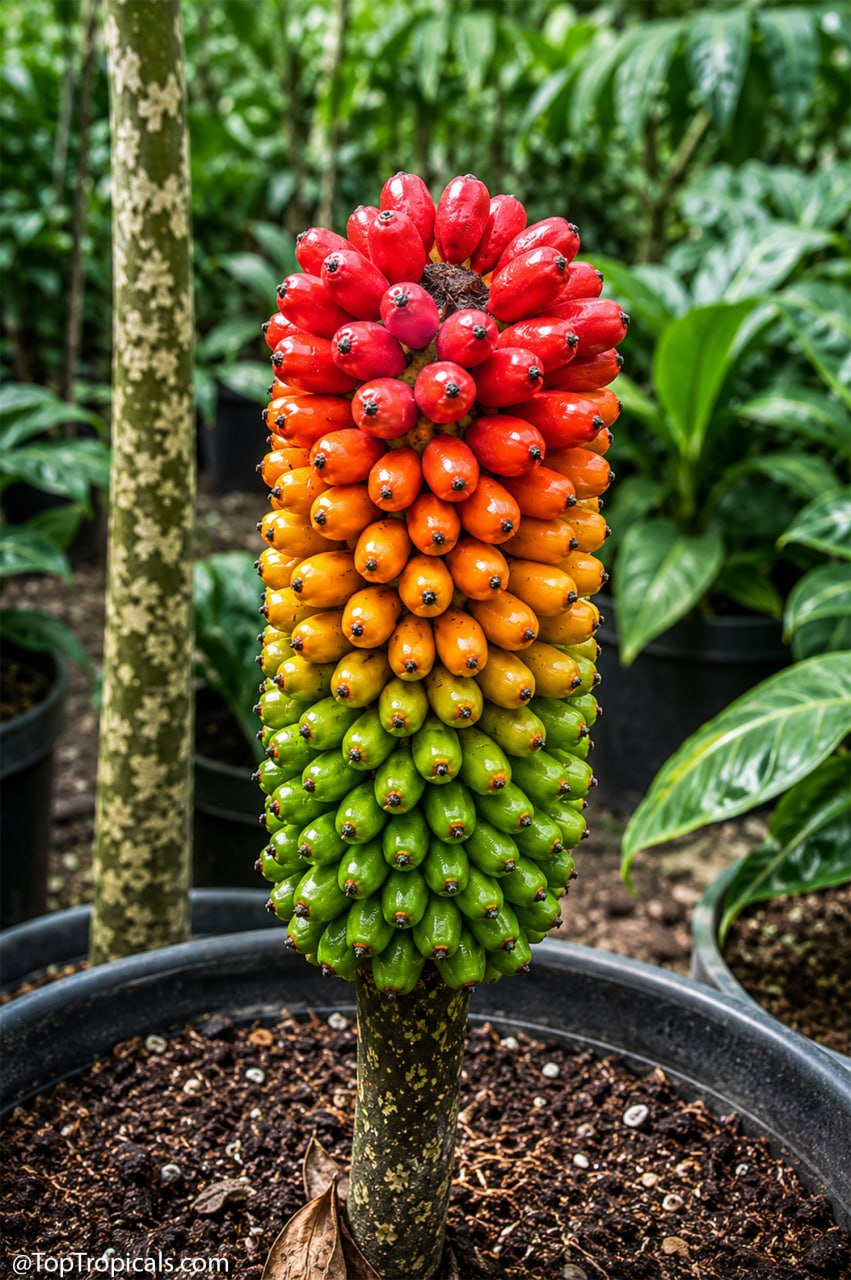
Over the following months, the bloom transforms into a striking, heavy stalk covered in berries that gradually shift from bright green to a brilliant, glowing scarlet red. This vibrant seed display lasts for months, acting as a stunning focal point while the underground tuber rests.
🐱 Surprisingly tough and easy to grow
Despite its alien appearance and dramatic lifecycle, this voodoo lily is incredibly forgiving and low-maintenance:
Light: Thrives in bright shade or filtered, dappled sunlight. Soil: Prefers rich, loose, well-draining soil mixed with organic matter. Water: Loves regular moisture during the summer growth spurt, but prefers to stay dry while dormant in the winter.
【Voodoo  Lily  Quick  Stats】🌸
  Botanical  Name:  Amorphophallus  bulbifer
🎨  Bloom  Appearance:  Elegant  soft  pink  &  rosy-purple
🌴  Foliage:  Resembles  a  mottled,  miniature  tropical  tree
👶  Special  Trick:  Grows  miniature  clones  right  on  its  leaves
With each passing season, the underground tuber grows larger and stores more energy, bringing it one step closer to an even more spectacular, conversation-starting bloom next spring.