Garden Blog - Top Tropicals

Date: 15 May 2026

The anti-cucumber legend

The anti-cucumber legend

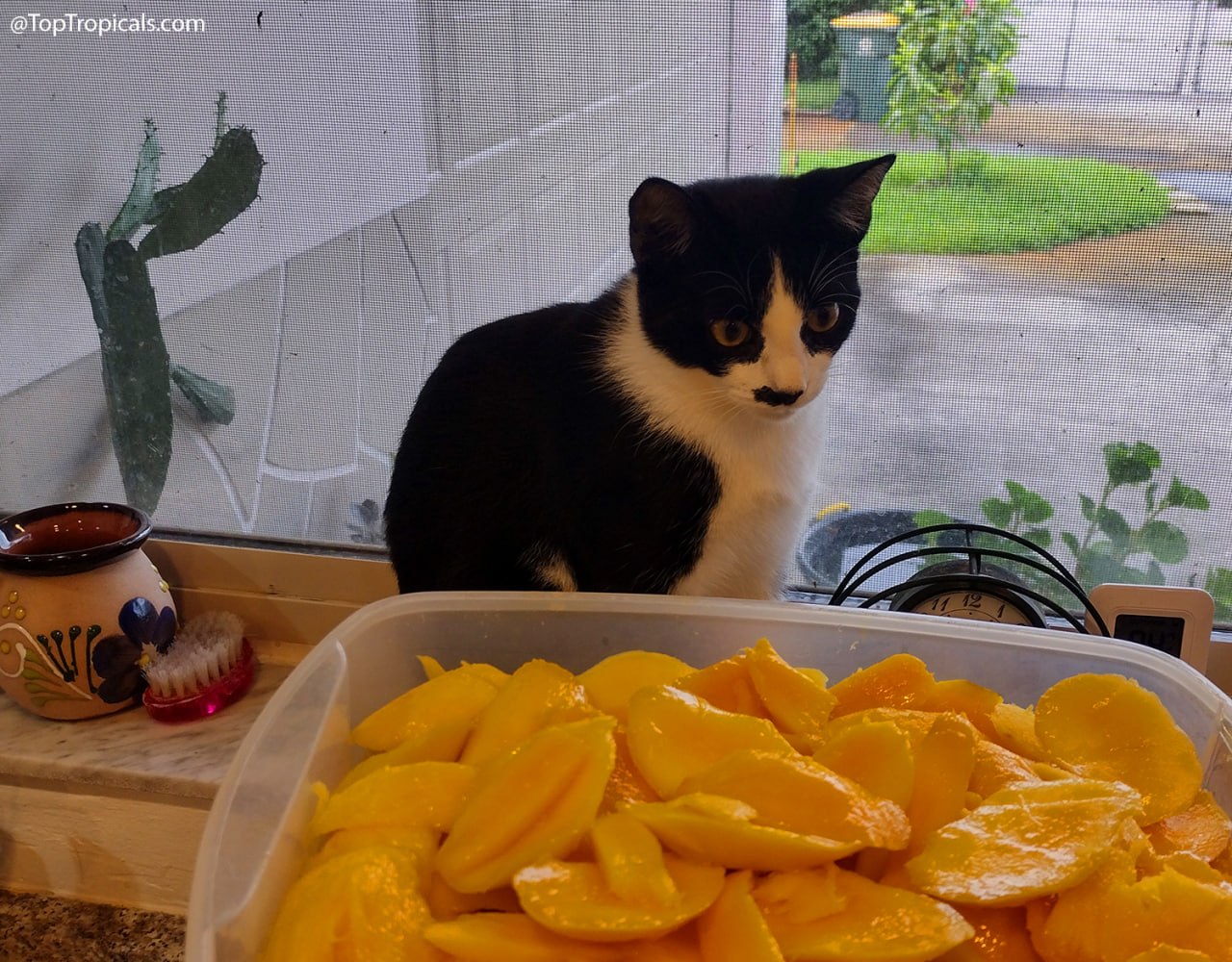
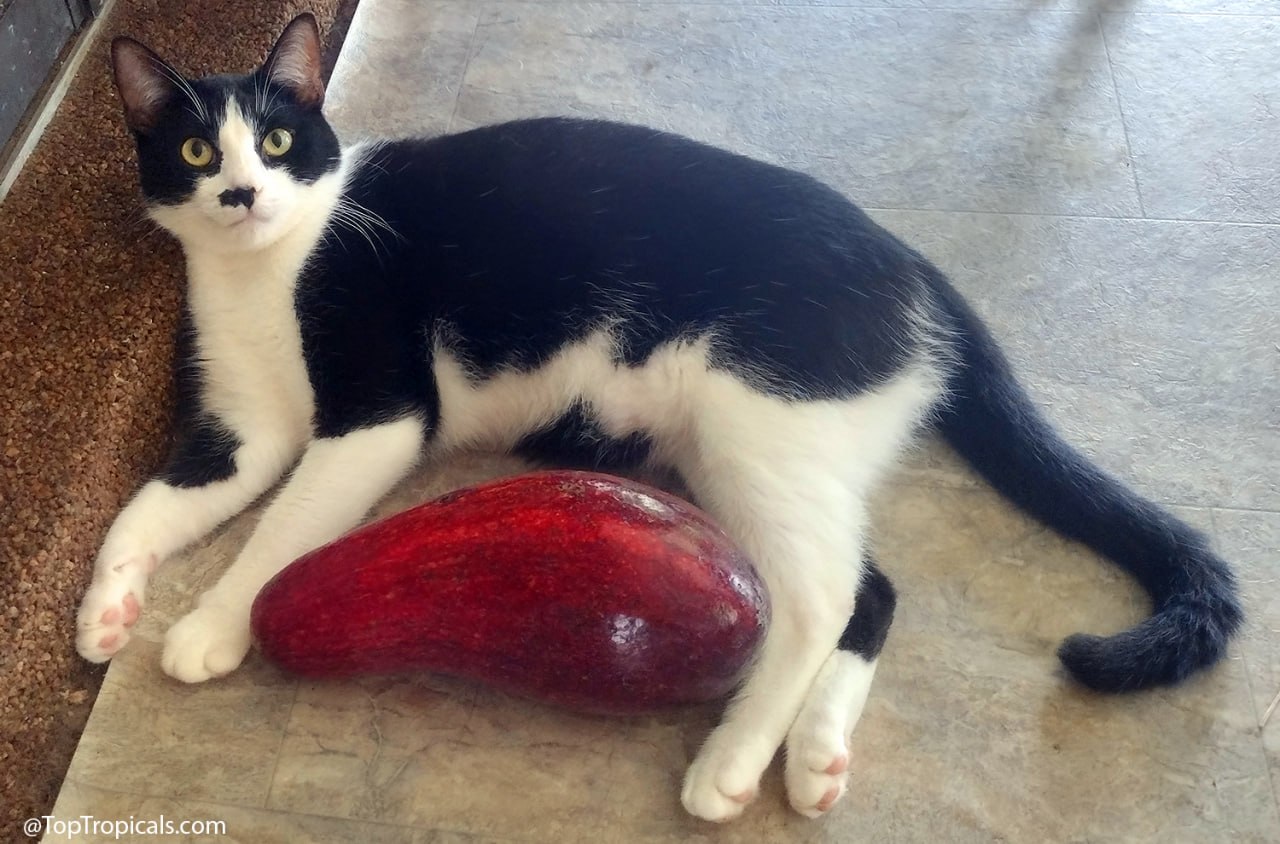
Cucumber videos prepared me for this moment.
They said cats fear cucumbers?
You brought me an avocado.
Nice try.
Wrong vegetable.
Wrong cat.

"Cat Philemon stress testing an Avocado Red Russel at TopTropicals PeopleCats.Garden.

Explore Avocado varieties

#PeopleCats #Food_Forest

Join TopTropicals

Date: 15 May 2026

The Tropical Survivor: Why This Pink Plume Defied a 25F Freeze

The Tropical Survivor: Why This Pink Plume Defied a 25F Freeze The Tropical Survivor: Why This Pink Plume Defied a 25F Freeze

The Tropical Survivor: Why This Pink Plume Defied a 25F Freeze


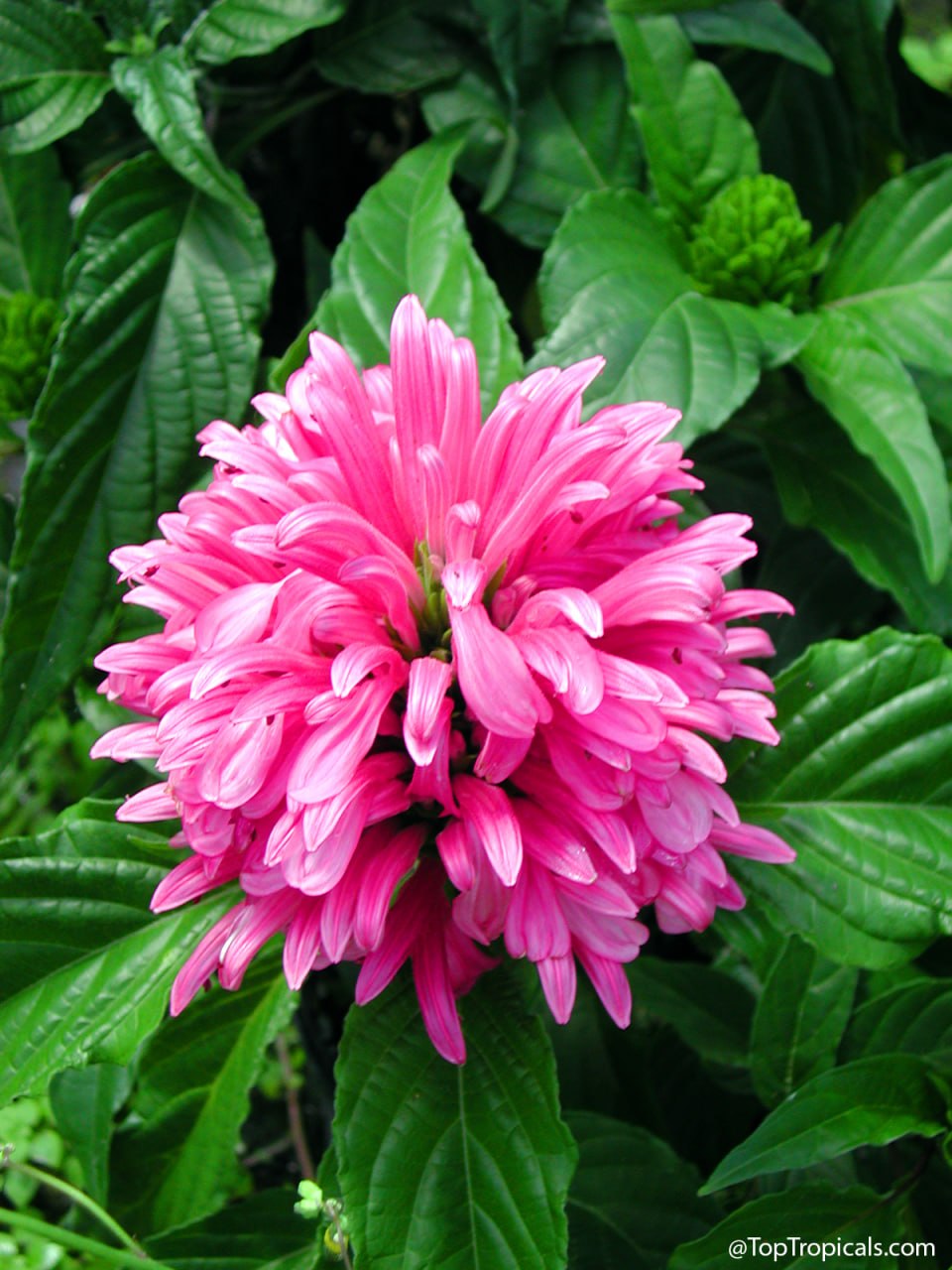
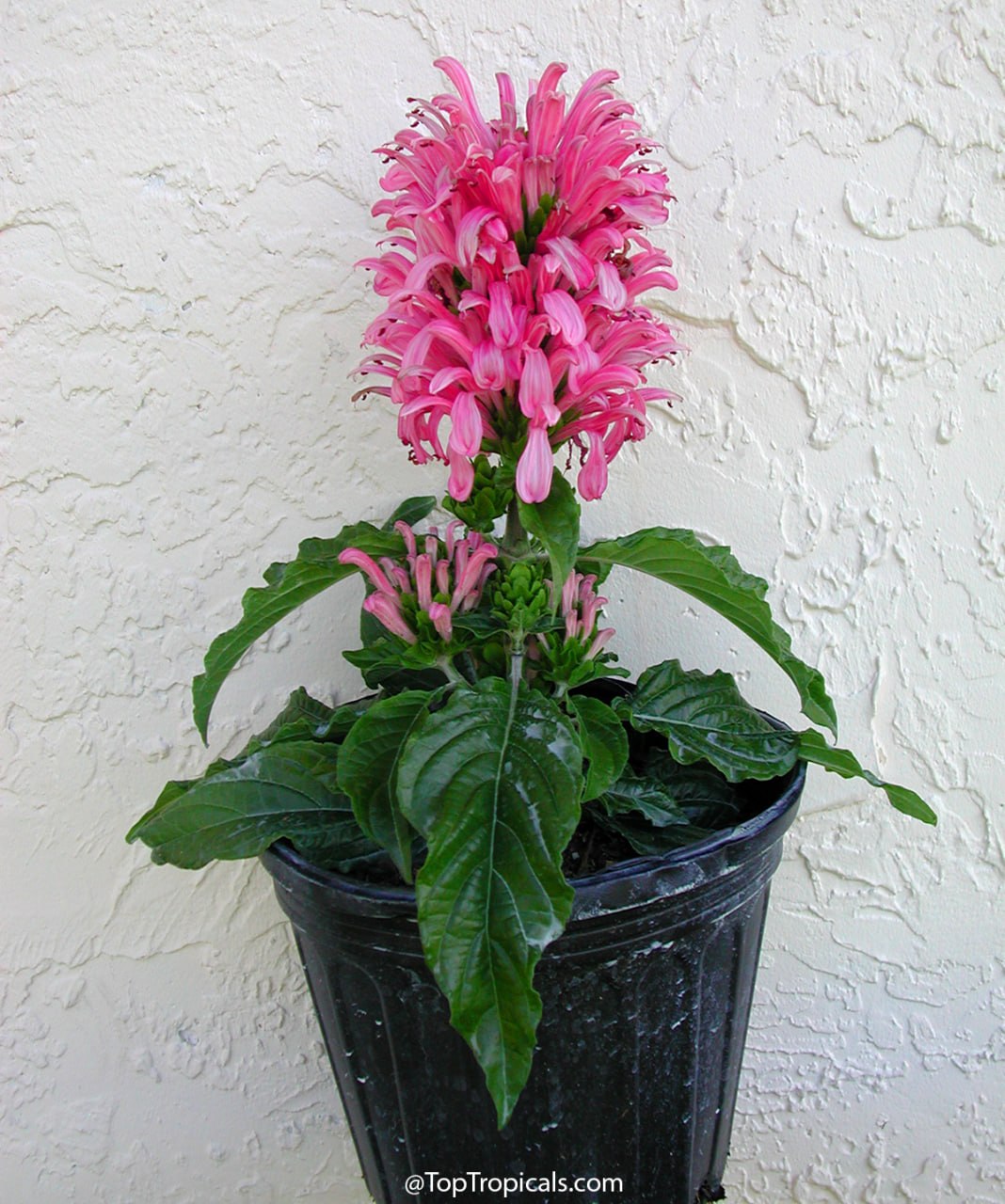
When Central Florida temperatures plummeted to 25F for two days, many gardeners braced for a total loss; and while most tropicals melted into black mush, Justicia carnea - the Pink Brazilian Plume or Jacobinia - proved that looks can be deceiving.

Brazilian Plume Plant Facts

Botanical name: Justicia carnea, Jacobinia carnea
Also known as: Brazilian Plume, Flamingo Flower
USDA Zone: 9 - 11
Highligths Small plant 2-5 ftSemi-shadeFull sunWatering: Regular. Let topsoil dry slightlyWhite, off-white flowersPink flowersPlant attracts butterflies, hummingbirdsSubtropical plant. Mature plant cold hardy at least to 30s F for a short time
Get personalized tips for your region


Tougher Than it Looks


As many other tropical plants from Acanthaceae family - Justicia plants are much hardier than they look.

At first glance, the Brazilian Plume looks like a greenhouse diva. It boasts huge, lush leaves and giant, cotton-candy pink flower clusters. However, it harbors a secret: it behaves more like a hardy perennial than a delicate shrub.

Even when a hard freeze burns the top growth to the ground, the root system remains remarkably resilient. Once the soil warms, fresh shoots often push through the dirt faster than expected.

A Hummingbird Magnet for the Shade


The real draw of Justicia carnea isn't just its survival skills - it’s the show-stopping blooms.

Large upright plumes can reach the size of a football. The tubular flowers are a primary target for hummingbirds and butterflies. Unlike most tropical bloomers, it thrives in filtered light and bright shade, making it perfect for understory planting.

👉 Gardener’s Tip:


Don't dig it up too soon! Freeze-damaged stems may look finished for weeks, but patience usually rewards you with new growth by late spring.

🌱 Quick Care Guide


Light: Bright shade or filtered sun
Soil: Rich, well-draining
Water: Regular moisture during heat
Best For: Pool areas, woodland gardens, and pollinator beds

For gardeners wanting that high-impact tropical aesthetic without the heartbreak of constant replanting, this Jacobinia is the ultimate comeback kid.

🛒 Plant beautiful and hardy Jacobinia

📚 Learn more:


· Justicia plants in Plant Encyclopedia
· Top 20 plants for a Butterfly Haven
· What flowers do NOT attract bees?
· Five best butterfly attractors for a Southern garden
· What tropical plants survived Florida's historic freeze without protection

#Butterfly_Plants #Discover #Container_Garden

🟢 Join 👉 TopTropicals
Date: 14 May 2026

How to take your plants from good to exceptional

How to take your plants from good to exceptional

How to take your plants from good to exceptional


If your plants are growing but not really impressing you, this is the missing piece. Basic feeding keeps plants alive. The right boosters take them further - stronger growth, better blooms, sweeter fruit, and healthier plants overall.

☘️ Additional boosters that take plants to the next level


Beyond the base nutrition, Sunshine Boosters includes additional products that help plants perform better during key stages of growth. All formulas, including supplements, are compatible and can be used together when needed.

☘️ Full microelement support


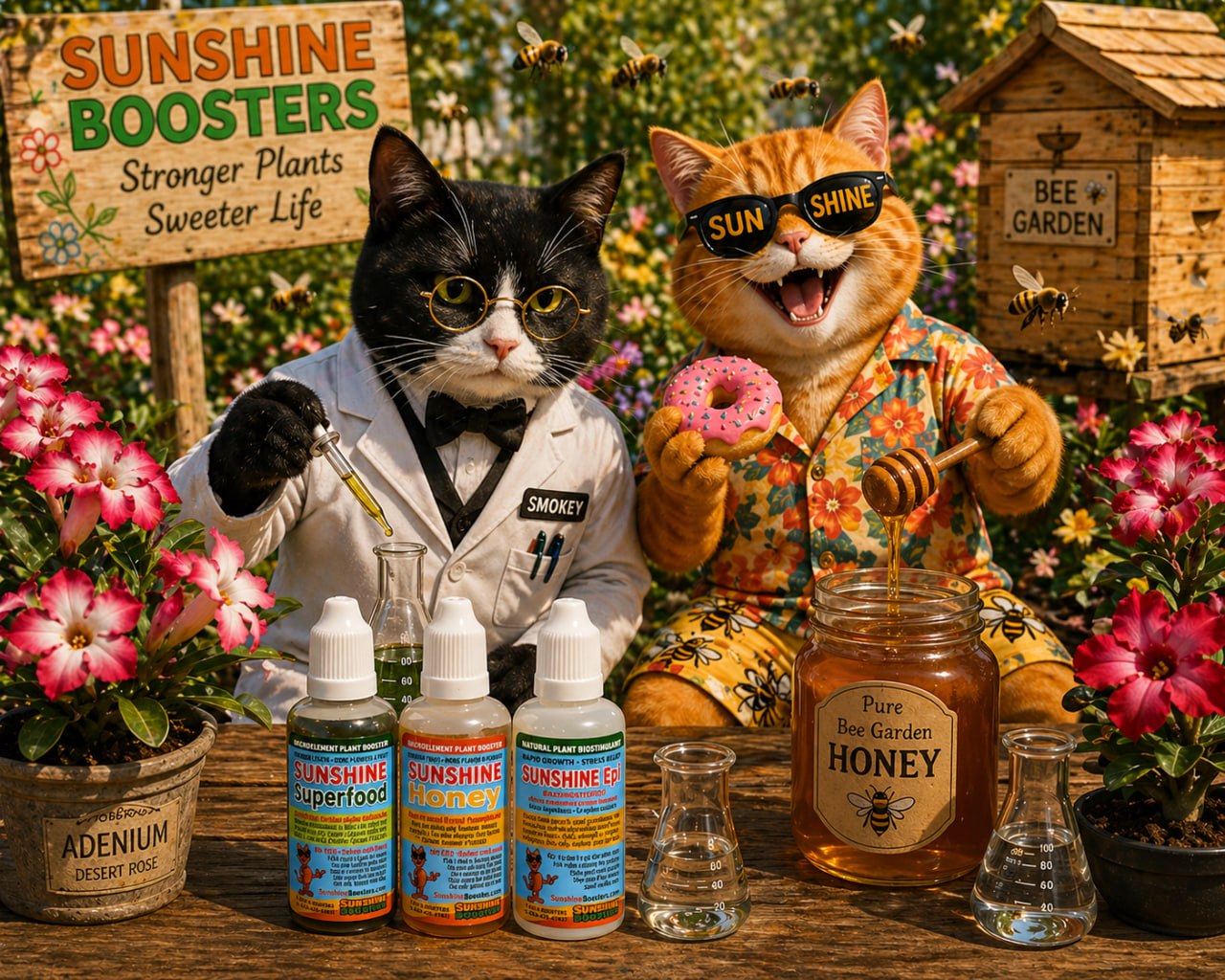
Sunshine SuperFood is a microelement supplement that corrects deficiencies and improves flowering and fruiting. It helps with yellow leaves, weak growth, poor rooting, and low fruit set.

☘️ Growth and stress support


Sunshine Epi is a natural bio-stimulant that supports faster growth, stronger roots, and better resistance to stress. It helps plants handle cold, heat, drought, and disease.

All these boosters work together with the base Sunshine Boosters system. They do not replace regular feeding but enhance it. When used at the right time, they help plants grow stronger, flower better, and produce higher-quality fruit with improved taste and appearance. 👉 More...

🛒
Get your plants real food

📚
Learn more:
How to feed the right formula at the right time
Why your plants need more than NPK
What makes Sunshine Boosters different
Sunshine Boosters: Complete Plant Nutrition System
Why do you need Sunshine Boosters?
📱 What are Sunshine Boosters

#Discover #Fertilizers #How_to

🟢 Join 👉 TopTropicals

Date: 13 May 2026

Mango Cat

Mango Cat Mango Cat
🥭 Mango Cat

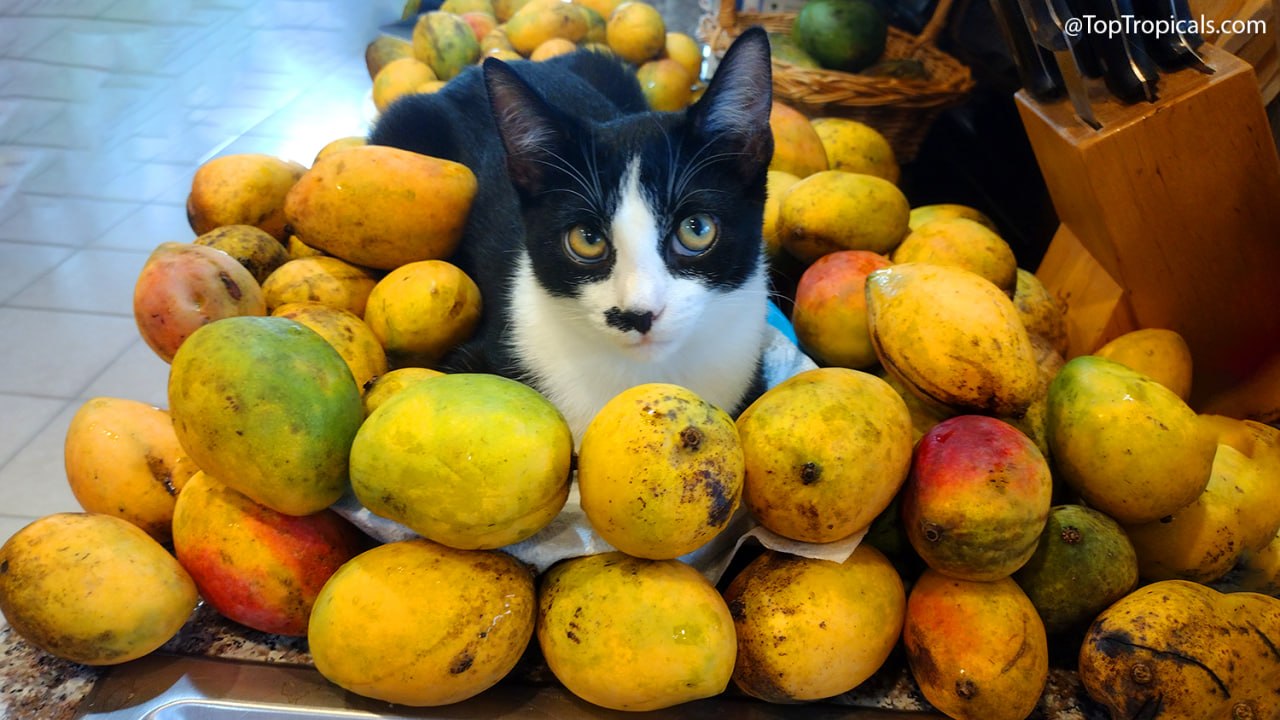
🐈📸 Cat Philemon discovering Mango fruit at TopTropicals PeopleCats.Garden.

Mango Plant Facts

Botanical name: Mangifera indica
Also known as: Mango
USDA Zone: 9 - 11
Highligths Large tree taller than 20 ftSmall tree 10-20 ftFull sunWatering: Moderate. Water when top soil feels dryYellow, orange flowersPink flowersEdible plantSeaside, salt tolerant plant
Get personalized tips for your region


🛒 Explore Mango varieties

#Food_Forest #Mango #PeopleCats #Mango_Rainbow

🟢 Join 👉 TopTropicals

Date: 13 May 2026

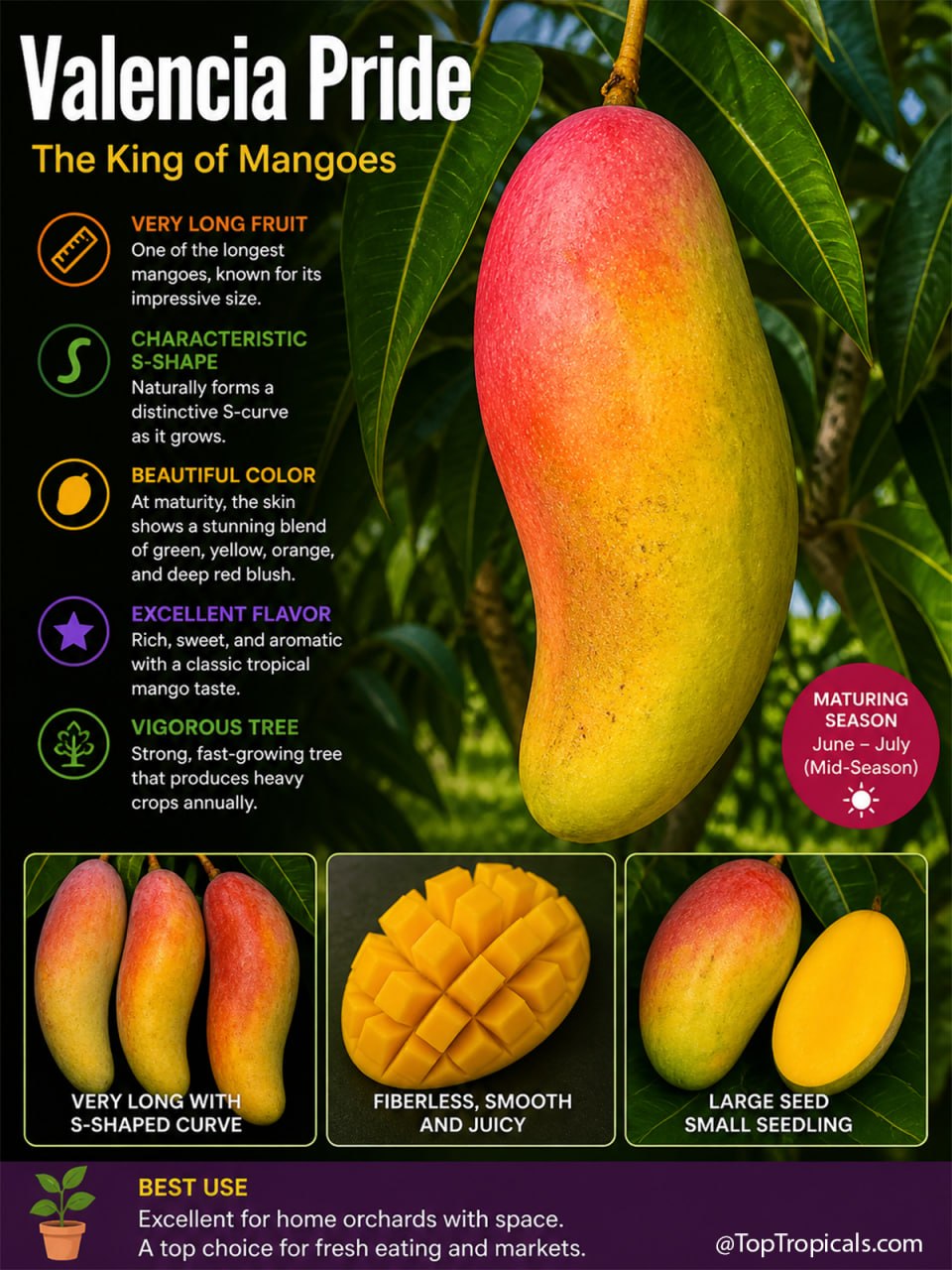
Mango Rainbow - Valencia Pride

Mango Rainbow - Valencia Pride
Mango Rainbow - Valencia Pride 🥭🌈

🥭 Valencia Pride is big, bold, and impossible to miss.

🔸Classic sweet tropical mango flavor
🔸Juicy, smooth, nearly fiberless flesh
🔸Large, colorful fruit with that signature S-shape

One of Florida’s classic mangoes, known for size and reliable production.
The tree grows fast and big - perfect for shade, but give it space.
If you want a mango that looks impressive and delivers every year, Valencia Pride is a strong pick. More 👉

🛒 Shop Mango varieties

📚 Learn more:
Mango Tree - Mangifera indica - in Plant Encyclopedia

Mango Plant Facts

Botanical name: Mangifera indica
Also known as: Mango
USDA Zone: 9 - 11
Highligths Large tree taller than 20 ftSmall tree 10-20 ftFull sunWatering: Moderate. Water when top soil feels dryYellow, orange flowersPink flowersEdible plantSeaside, salt tolerant plant
Get personalized tips for your region

#Mango_Rainbow - varieties you should try

#Food_Forest #Mango #Mango_Rainbow

🟢 Join 👉 TopTropicals

Date: 12 May 2026

The strange tropical plant that eats bugs - and gardeners cant stop collecting

The strange tropical plant that eats bugs - and gardeners cant stop collecting The strange tropical plant that eats bugs - and gardeners cant stop collecting The strange tropical plant that eats bugs - and gardeners cant stop collecting

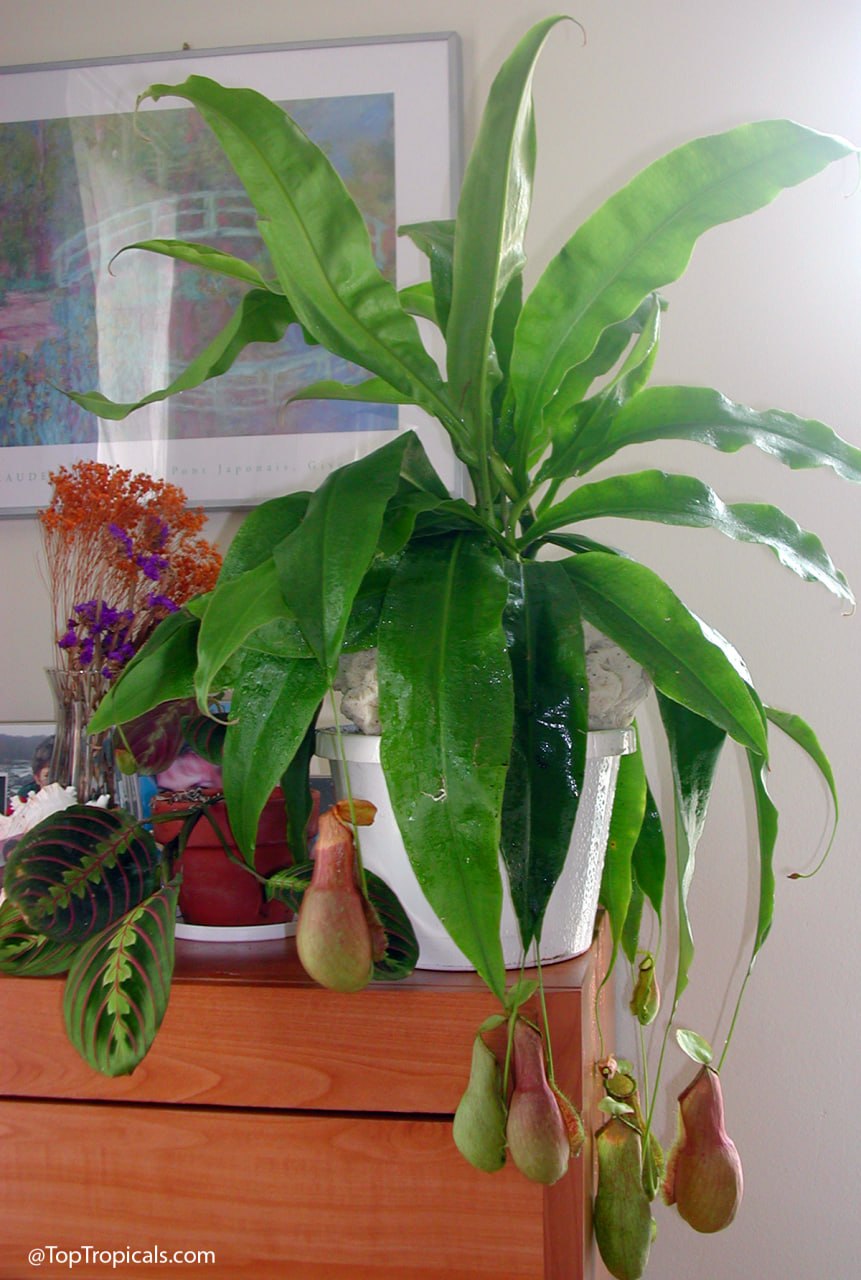
🐸 The strange tropical plant that eats bugs - and gardeners can't stop collecting


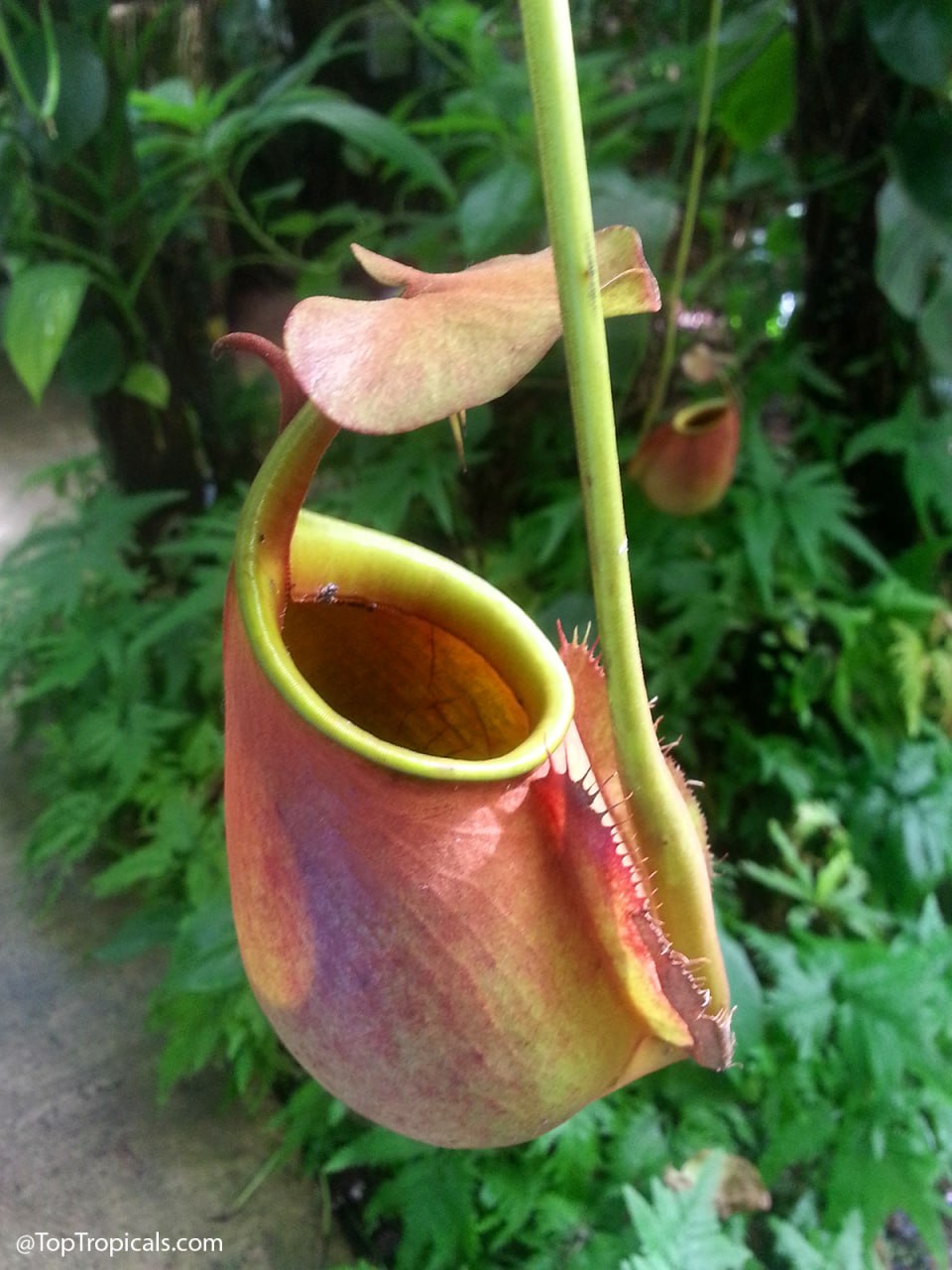
Nepenthes - tropical Pitcher Plants - look almost fake. Long vines and shiny leaves give way to colorful pitchers resembling exotic lanterns or sci-fi creatures. But these aren't flowers; they are sophisticated traps. Among the world's most fascinating carnivores, they lure insects into fluid-filled vessels to digest them for nutrients. Giant species can even trap small frogs or mice! 🐸🐭

🐱 Why pitcher plants look so unreal


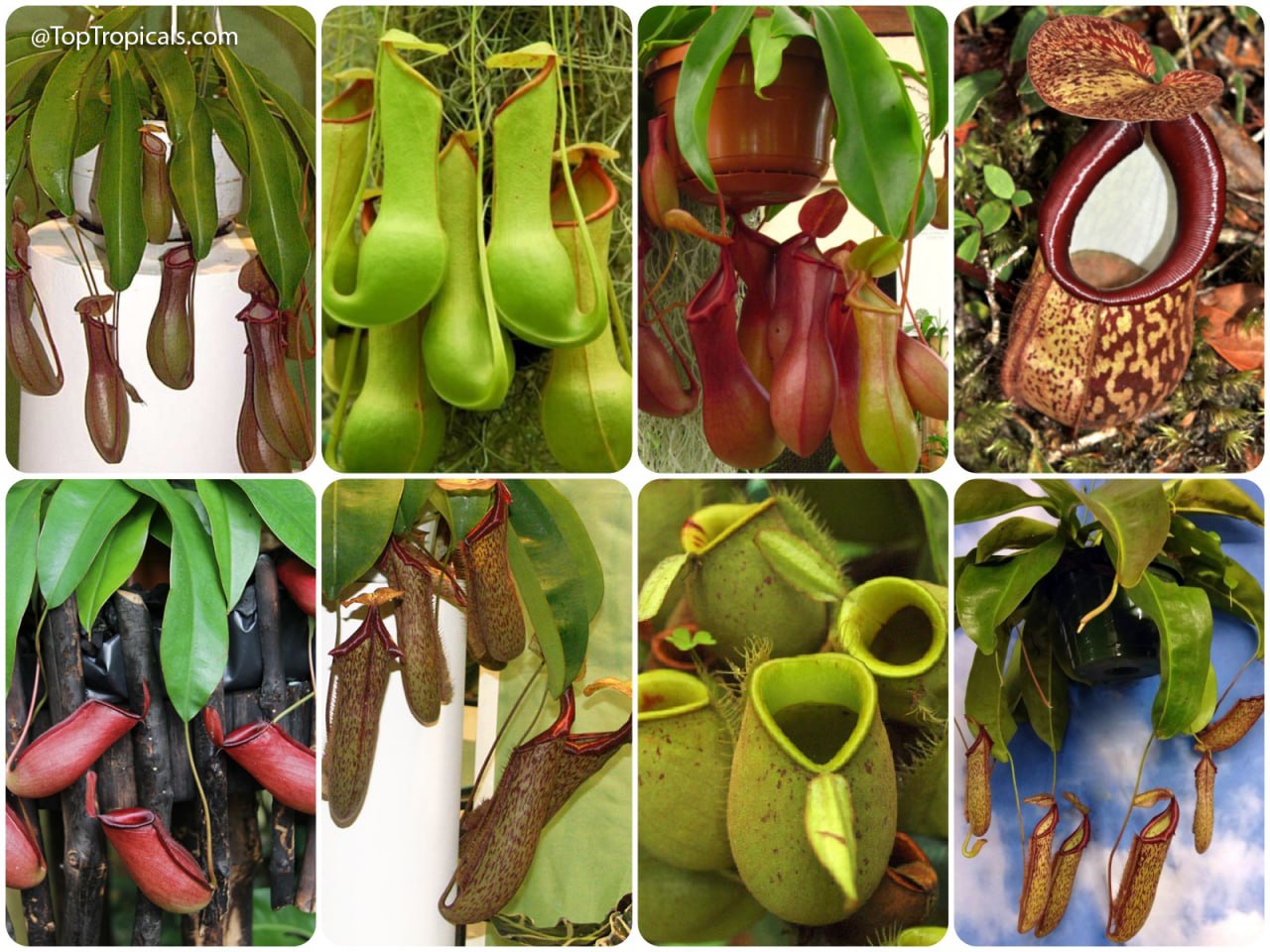
Pitchers are modified leaves designed to attract prey with vibrant colors and nectar. Many feature dramatic stripes or flared, sculpted rims. The diversity is immense: compact species fit on windowsills, while jungle giants produce foot-long traps. Some thrive in steamy lowlands, others in misty mountains. Their digestive fluid can even become sticky and elastic, making escape impossible.

🐱 The plant that inspired engineering


These plants have inspired more than just gardeners. Their slippery surfaces led to "liquid-infused" materials used in anti-fogging and water-repelling tech. Engineers study them as nature’s original biological pitfall trap, a masterclass in biomimetic design.

🐱 Why collectors become obsessed with Pitcher plants


What starts as a curiosity often becomes an obsession. With hundreds of species and hybrids, pitchers can resemble cobra heads, wine goblets, or alien pods. Under bright light, they develop stunning hues of burgundy, orange, or candy-stripes. Because of their popularity, ethical hobbyists emphasize buying nursery-propagated plants to protect wild populations from poaching.

🐱 Surprisingly easier than people think


Despite their reputation, many hybrids thrive indoors with basic care. They need bright indirect light, high humidity, and excellent drainage. Crucially, they require mineral-free water (distilled or rainwater) and airy media like sphagnum moss. Regular potting soil or tap water can be fatal to these sensitive plants.

🐱 The pitchers are temporary - and that's normal


It is normal for old pitchers to dry up as the plant grows. Healthy Nepenthes constantly replace traps, often changing shape and color as they mature. This shape-shifting behavior makes them addictive to watch - one month it’s an ordinary vine, the next it’s a living rainforest documentary.

🛒 Ready to go carnivorous? Feed your curiosity - get one for your collection

📚 Learn more:

Winged Nepenthes Plant Facts

Botanical name: Nepenthes alata, Nepenthes graciliflora
Also known as: Winged Nepenthes, Pitcher Plant
USDA Zone: 9 - 10
Highligths Vine or creeper plantSmall plant 2-5 ftSemi-shadeWatering: Regular. Let topsoil dry slightlyEpiphyte plantUnusual color
Get personalized tips for your region

Nepenthes Pitcher plants in Plant Encyclopedia
Nepenthes: Deadly traps of Monkey Cups

#Container_Garden #Nature_Wonders

🟢 Join 👉 TopTropicals
Date: 12 May 2026

EXCLUSIVE INTERVIEW: Behind the scenes with Smokey and Sunshine - after years of rumors they speak out!

EXCLUSIVE INTERVIEW: Behind the scenes with Smokey and Sunshine - after years of rumors they speak out!

Many people loved our mascots - Smokey and Sunshine - and kept asking the same questions over and over. So we finally decided to sit them down for an interview and ask everything at once.

Smokey is the tuxedo "engineering cat" with professor glasses, serious plant advice, and strong opinions about fertilizer and soil pH.

Sunshine is the fluffy orange Aloha guy of the group - chubby, relaxed, permanently snack-oriented, and somehow never in a hurry about anything. He approaches life with the confidence of a cat who believes coffee breaks, warm sunshine, and donuts are all basic human rights. He is also the one asking the questions normal people are actually thinking.

Together, they somehow turned gardening into conversations about plants, coffee, cats, donuts, and the meaning of life in a greenhouse.

In this interview, you will find out:

Are Smokey's glasses fake?
Are Sunshine's donuts real?
Are these cats based on real rescued Top Tropicals cats?
How many cats have been adopted by Top Tropicals over the years and how many are currently living in the gardens?
Why does Smokey take gardening so seriously?
Why does Sunshine think every problem can be solved with snacks?

Some answers may surprise you.
Some may explain a lot.

Read the full Smokey & Sunshine interview

"Learn more:
About Smokey & Sunshine

#PeopleCats

Join TopTropicals

Date: 11 May 2026

Fit without effort

Fit without effort
Fit without effort

"Happiness is finding the exact shape where two bodies fit without effort."
- Rumi

"Cats - Big Boy Jacques and Little Girl Klaksa at TopTropicals PeopleCats.Garden.

#PeopleCats #Quotes

Join TopTropicals

Date: 11 May 2026

7 tough shrubs that handle heat and dry soil

7 tough shrubs that handle heat and dry soil 7 tough shrubs that handle heat and dry soil 7 tough shrubs that handle heat and dry soil 7 tough shrubs that handle heat and dry soil

☀️ 7 tough shrubs that handle heat and dry soil


Tired of shrubs that burn out in summer? A lot of shrubs look great in spring - then collapse when real heat hits. Leaves scorch, blooms stop, and watering becomes a full-time job. That’s where the right plant choice changes everything.
These shrubs are built for extremes. They handle blazing sun, reflected heat, and dry soil without constant attention. Some even perform better when conditions get tough.


🔥 7 best shrubs for hot, dry spots


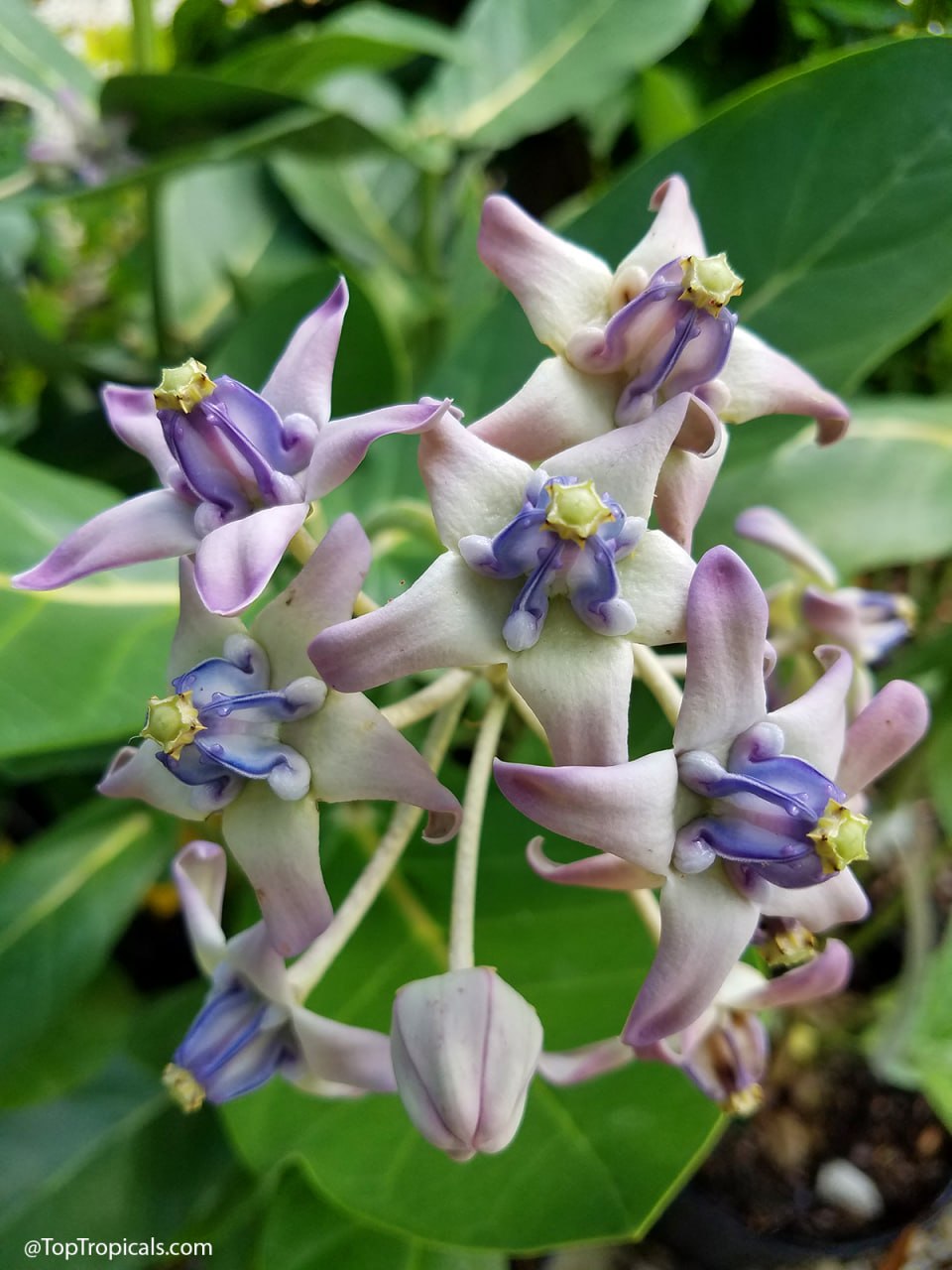
  1. ☀️ 1. Giant Milkweed (Arka) - Calotropis gigantea 📸
    Silvery leaves reflect heat, and it thrives in dry, poor soils where most plants fail. One of the most powerful butterfly plants! More details

    Giant Milkweed Plant Facts

    Botanical name: Calotropis gigantea
    Also known as: Giant Milkweed, Crown Flower, Giant Calotrope, Arka, Jilledu, Erukkam Madar, White Madaar
    USDA Zone: 9 - 11
    Highligths Large shrub 5-10 ft tallFull sunWatering: Moderate. Water when top soil feels dryBlue, lavender, purple flowersWhite, off-white flowersPink flowersPlant attracts butterflies, hummingbirdsEthnomedical plant.
Plants marked as ethnomedical and/or described as medicinal, are not offered as medicine but rather as ornamentals or plant collectibles.
Ethnomedical statements / products have not been evaluated by the FDA and are not intended to diagnose, treat, cure, or prevent any disease. We urge all customers to consult a physician before using any supplements, herbals or medicines advertised here or elsewhere.Seaside, salt tolerant plant
    Get personalized tips for your region
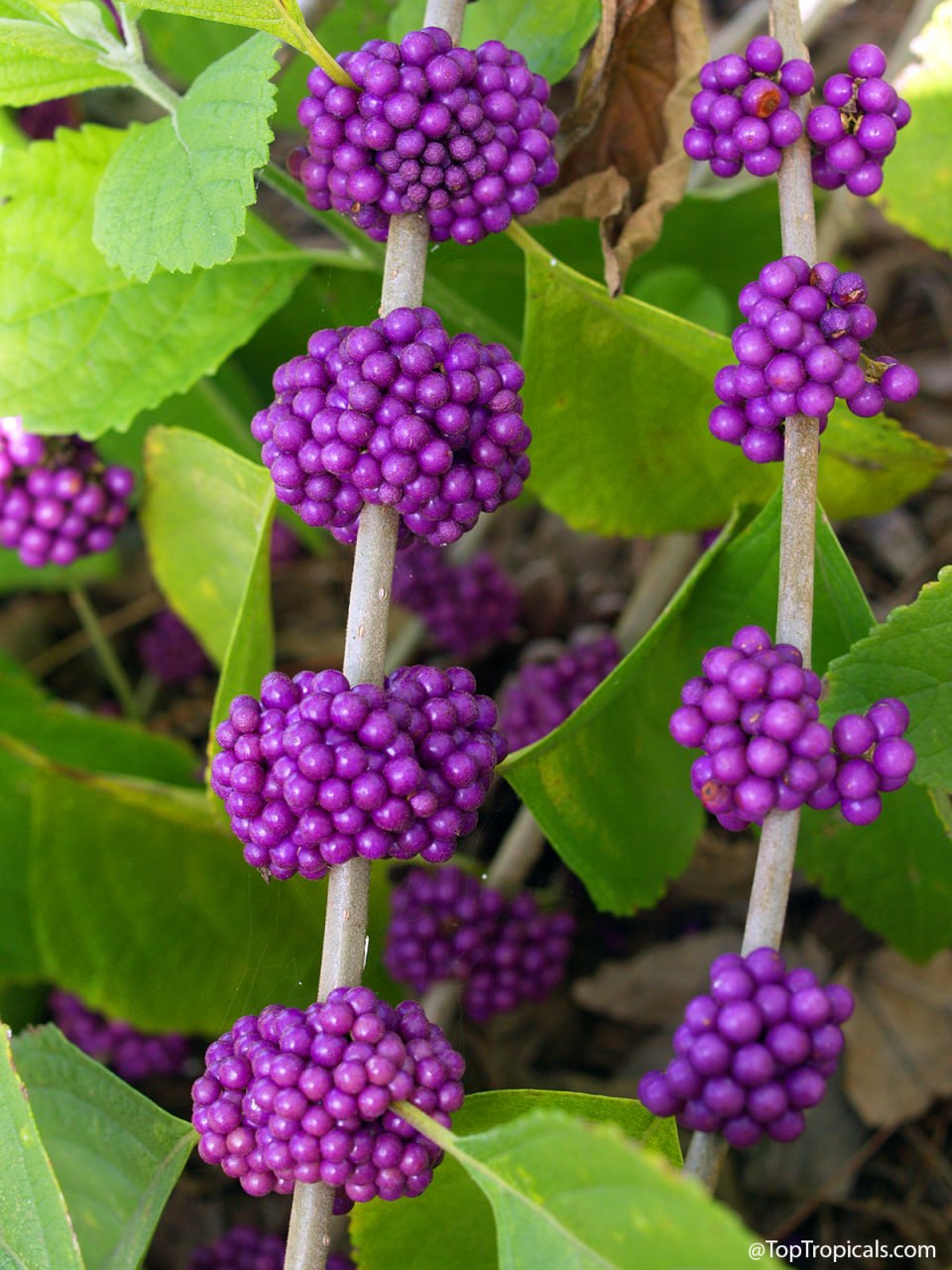
  2. ☀️ 2. American Beautyberry - Callicarpa americana 📸
    A Florida native that handles heat well - drought tolerant once established and known for its bright purple berries. More details

    American Beautyberry Plant Facts

    Botanical name: Callicarpa americana
    Also known as: American Beautyberry
    USDA Zone: 6 - 11
    Highligths Large shrub 5-10 ft tallSemi-shadeWatering: Moderate. Water when top soil feels dryPink flowersDeciduous plantSubtropical plant. Mature plant cold hardy at least to 30s F for a short time
    Get personalized tips for your region
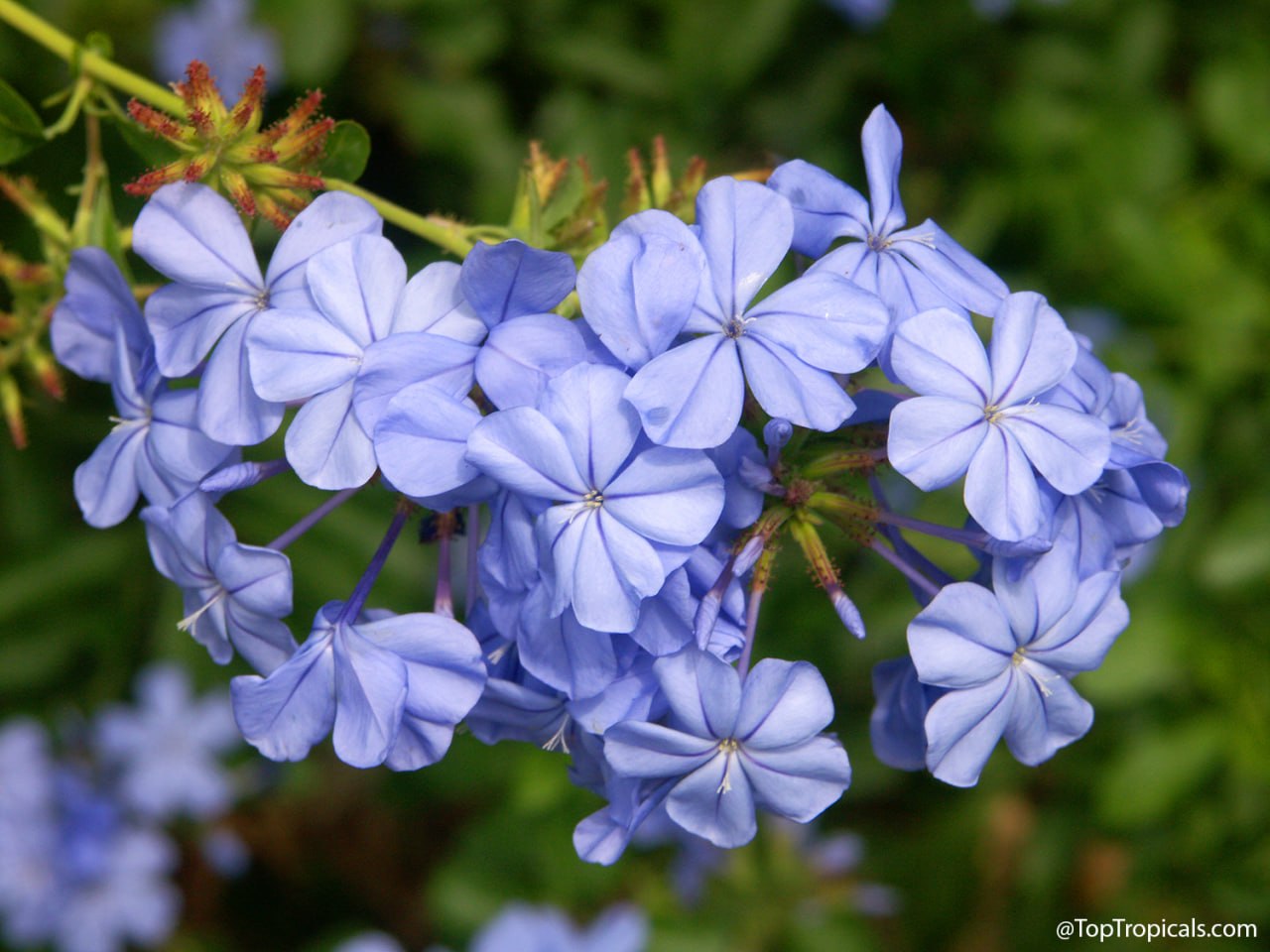
  3. ☀️ 3. Plumbago 📸
    One of the easiest flowering shrubs - thrives in full sun and keeps blooming with pretty sky-blue flowers through heat with minimal water. More details
  4. ☀️ 4. Cocoplum - Chrysobalanus icaco
    Excellent for coastal and dry conditions - tough, evergreen, and great as a hedge. Plus tasty fruit bonus! More details

    Cocoplum Plant Facts

    Botanical name: Chrysobalanus icaco
    Also known as: Cocoplum, Paradise Plum
    USDA Zone: 9 - 10
    Highligths Plant used for bonsaiLarge shrub 5-10 ft tallSmall plant 2-5 ftFull sunWatering: Regular. Let topsoil dry slightlyEdible plantSeaside, salt tolerant plant
    Get personalized tips for your region
  5. ☀️ 5. Dwarf Bottlebrush - Callistemon Little John
    A compact, dense version of the classic bottlebrush that stays small but performs big in heat. It handles full sun, poor soil, and dry conditions once established, while still producing those bright red brush-like flowers that pollinators love. Perfect for tight spaces where you need something tough, tidy, and reliable. More details
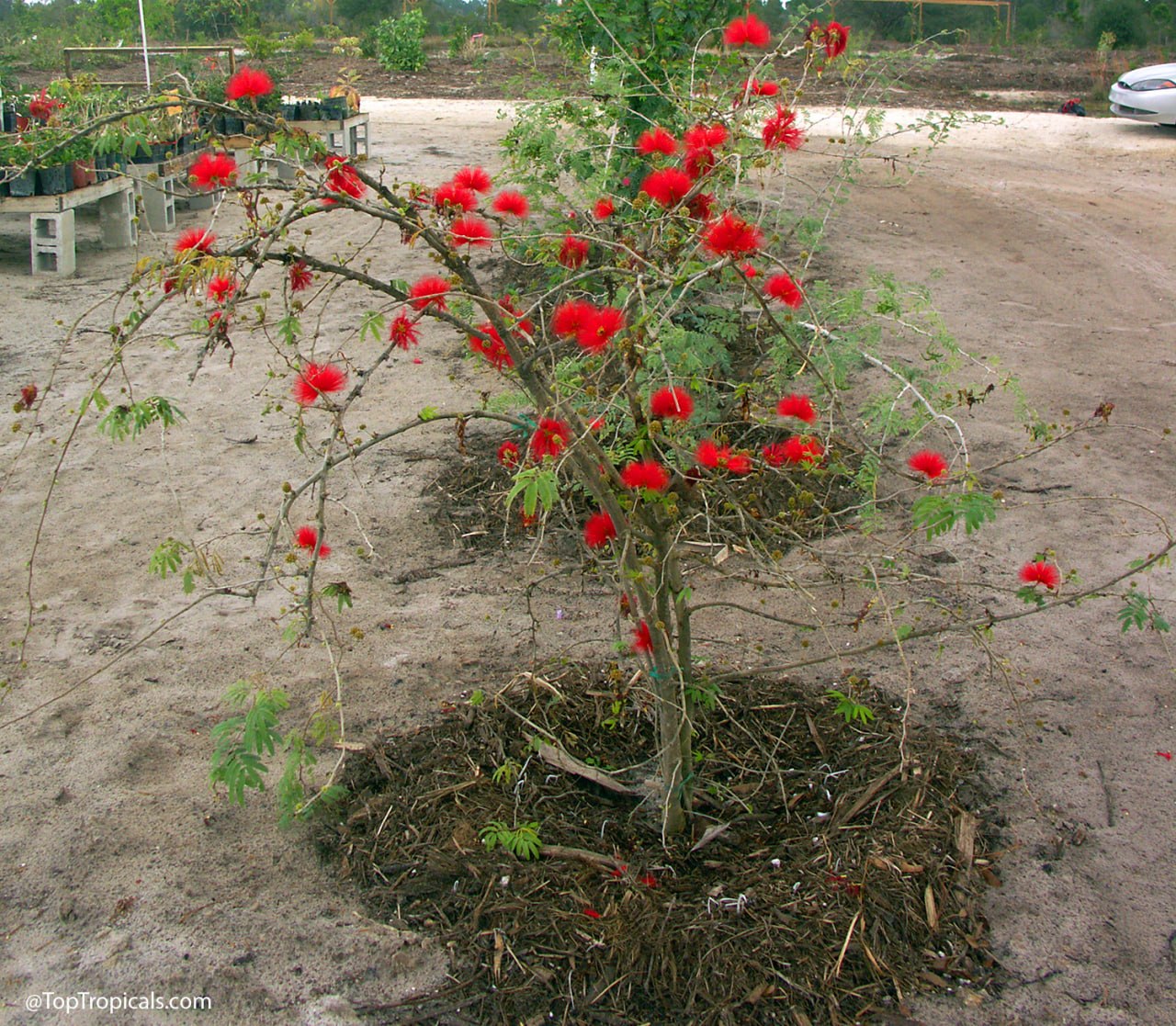
  6. ☀️ 6. Calliandra tweedii With Love - Red Tassel Flower 📸
    Fast-growing, very cold-tolerant, and handles dry spells surprisingly well once established. Beautiful scarlet red flowers throughout the year. More details
  7. ☀️ 7. Dwarf Powderpuff - Calliandra emarginata
    Compact, resilient, and a great choice for smaller spaces that still need something tough. More details


👉 Think trees and vigorous shrubs are your only option? Stay with us - next up are smaller plants and vines that thrive where everything else dries out.

🛒 Shop drought tolerant plants - for hot and dry spots

📚
Learn more:
Calotropis gigantea - Giant Milkweed - in Plant Encyclopedia
9 tough trees for hot, dry spots that actually thrive
9 best tropical shrubs that bloom all summer long or year around

#Discover #Hedges_with_benefits #How_to

🟢 Join 👉 TopTropicals
Date: 10 May 2026

Learn more:

Learn more: Learn more: Learn more:
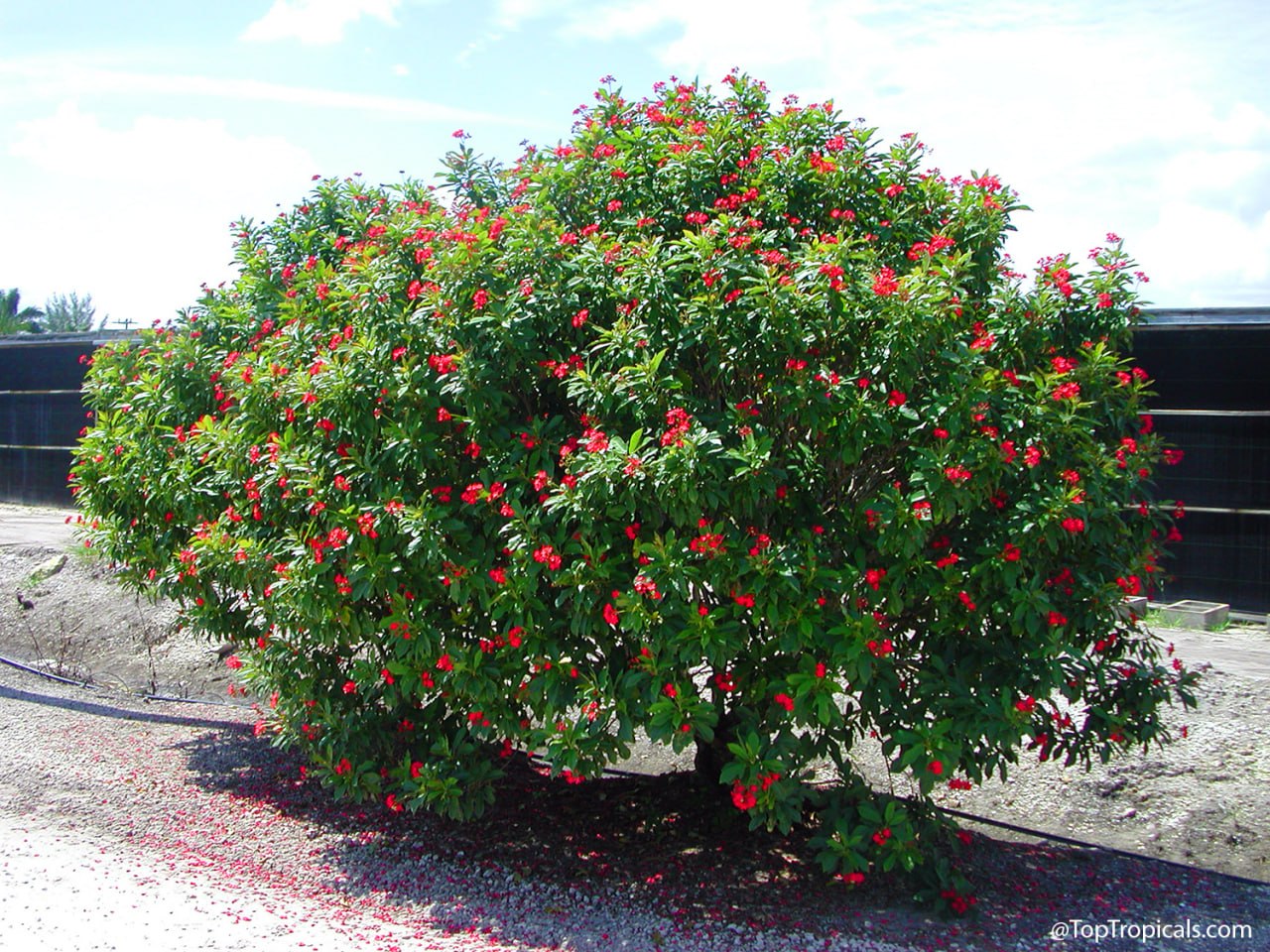
💕 Why is this shrub everywhere in Southern landscapes?
  • 🌸 Nonstop blooms
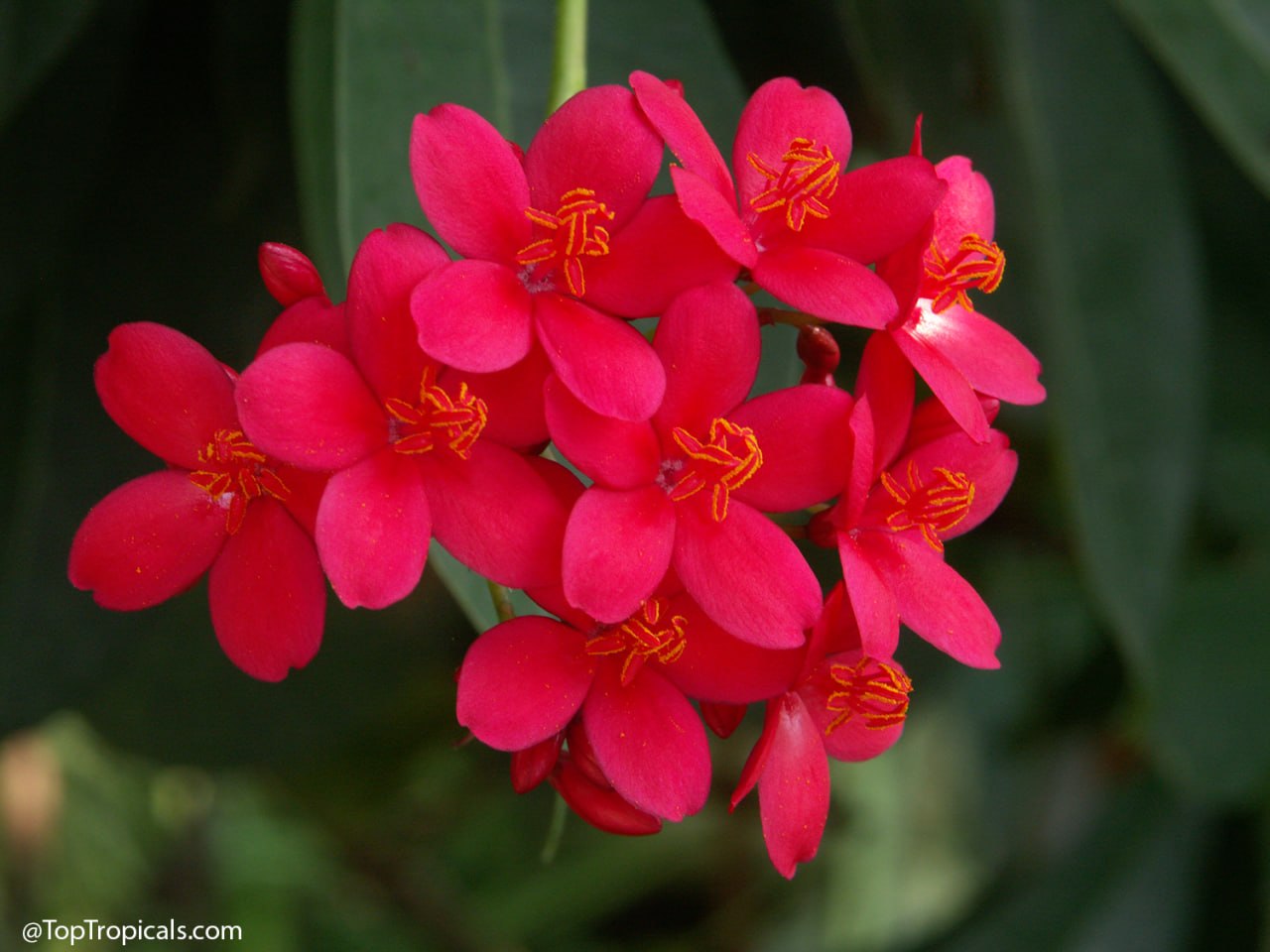
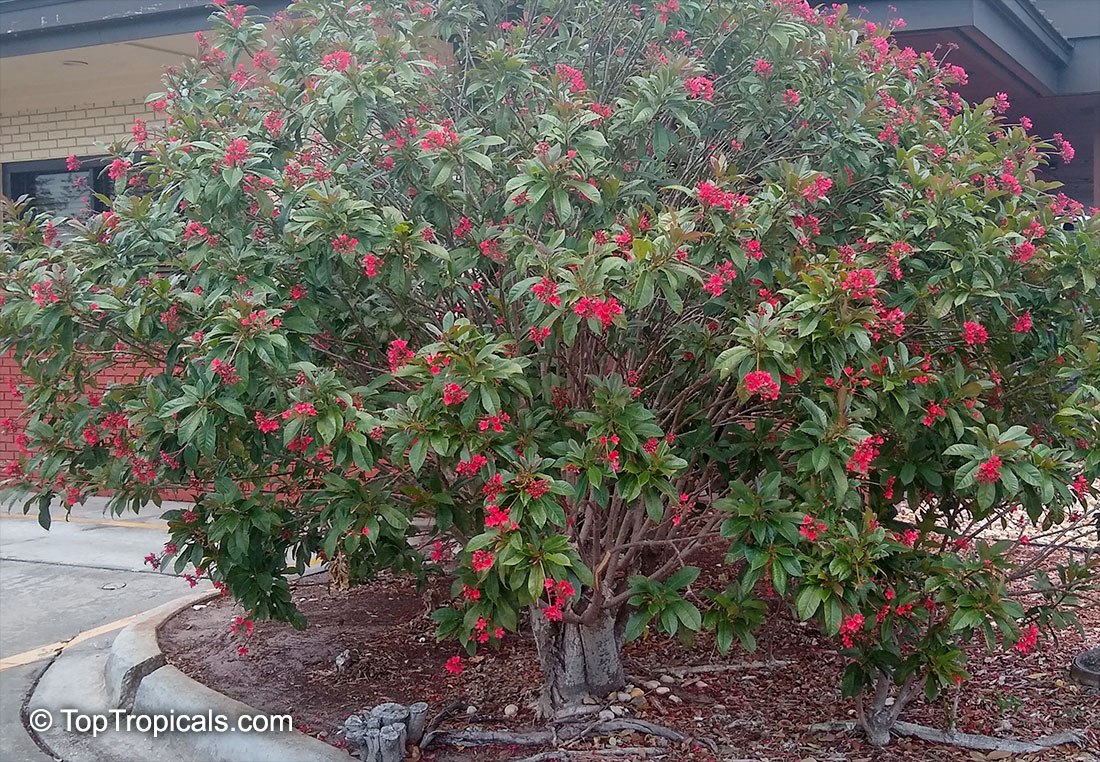
    One look at Jatropha integerrima compacta - Peregrina and the answer becomes pretty obvious. This compact tropical shrub or a dwarf tree blooms almost nonstop with clusters of bright scarlet star-shaped flowers that butterflies can't seem to resist. In warm climates, it keeps adding color when many other plants take a break.

    Peregrina Plant Facts

    Botanical name: Jatropha integerrima, Jatropha pandurata
    Also known as: Peregrina, Spicy Jatropha, Coral Plant, Physic Nut
    USDA Zone: 9 - 11
    Highligths Plant used for bonsaiLarge shrub 5-10 ft tallSmall tree 10-20 ftSemi-shadeFull sunWater Requirement: Low. Allow soil to dry out between wateringsRed, crimson, vinous flowersPink flowersPlant attracts butterflies, hummingbirdsIrritating plantSubtropical plant. Mature plant cold hardy at least to 30s F for a short timeSeaside, salt tolerant plant
    Get personalized tips for your region
  • 🌸 Compact size, big impact
    Compacta stays smaller and fuller than the regular Peregrina, which makes it especially popular for foundation plantings, pool areas, patios, and smaller gardens where oversized shrubs become a headache. The glossy green leaves stay attractive year round, giving it a clean, lush look even when it's between bloom cycles.
  • 🌸 Surprisingly low maintenance
    Another reason gardeners love it - this plant is surprisingly easygoing. It tolerates many soil types as long as drainage is good, handles heat well, and can be pruned almost anytime because it flowers on new growth. Want a tidy shrub? Trim it. Want a small tropical tree shape? It can do that too.
  • 🌸 A Southern landscape favorite
    For Southern gardeners looking for reliable color without constant fuss, Peregrina has quietly become one of those "plant it and enjoy it" landscape favorites.


🛒 Plant and enjoy the compact everblooming Peregrina

📚 Learn more:


Jatropha integerrima in Plant Encyclopedia
9 tough trees for hot, dry spots that actually thrive
7 best exotic dwarf trees for maximum impact in small tropical landscapes
2 most favorite flowering trees for small yards
5 small tropical trees that bloom all summer or year around

#How_to #Discover #Trees

🟢 Join 👉 TopTropicals