Garden Blog - Top Tropicals
Date: 18 Nov 2026
Daily Cat Lesson: Is Gravity Optional for Cats?
🐾 Daily Cat Lesson: Is Gravity Optional for Cats?
Timo is a big cat. So big, apparently, that the filing cabinet can accommodate only half of him.
The other half? Hanging in midair.
Does Timo care? Not remotely. He wakes up, washes his face, and continues defying the laws of physics.
🐾 How can cats be comfortable in such ridiculous positions?
Cats have remarkably flexible spines, mobile shoulders, and muscles that let them twist, stretch, and fold themselves into positions that would send a human straight to a chiropractor.
But there's another secret: proprioception - the body's built-in GPS. It tells cats exactly where their legs, paws, and tail are, even without looking.
Combined with their excellent sense of balance, this helps cats know how their weight is distributed and whether they're securely supported.
As long as Timo's center of gravity stays over the cabinet, his dangling legs aren't a problem.
Scientists say gravity affects all objects with mass.
Timo would like a second opinion.
❓ Does your cat sleep in a position that defies the laws of physics? Share a picture in the comments!
🐈📸 TopTropicals rescued cat Timo, demonstrating advanced feline physics at PeopleCats.Garden.
🐈 Stay with us for your #DailyDoseOfCat!
#DailyCatLesson #PeopleCats
🟢 Join 👉 TopTropicals
Date: 18 Nov 2026
Tamarind caramel pineapple:

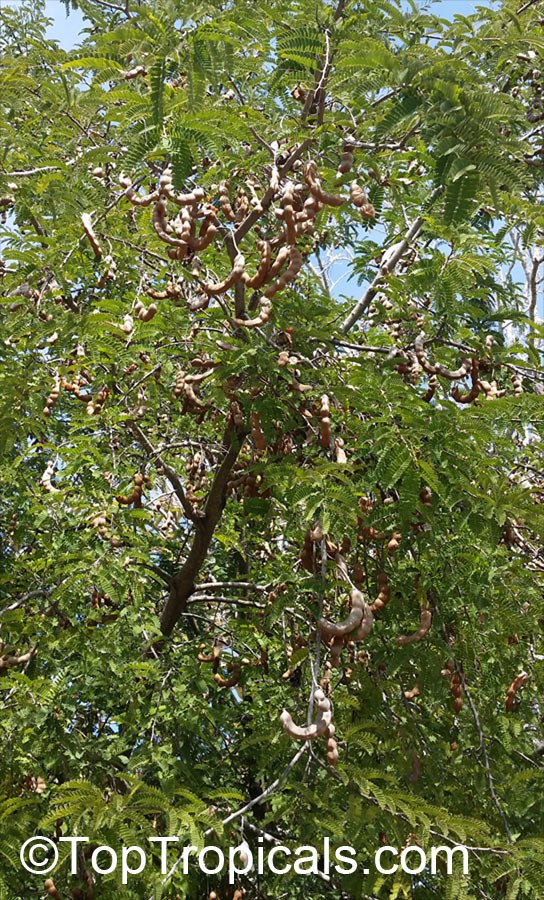
🍴 Tamarind caramel pineapple: quick-n-fun exotic recipes
🟡Reduce tamarind with sugar until thick.
🟡Brush over grilled pineapple slices.
🟡Sweet, sour, tropical finish.
🌿 About the plant:
Tamarind reduces beautifully into a glossy glaze. Its acidity prevents desserts from becoming overly sweet.
🏡 In the garden:
A mature tamarind tree (Tamarindus indica) can produce large quantities of pods annually, making it both ornamental and productive in warm climates.
🛒 Add Tamarind tree and Pineapple to your edible landscape
📚 Learn more:


Tamarindus indica in Plant Encyclopedia
Tamarind Agua Fresca: quick-n-fun exotic recipes
Tamarind mango chutney: quick-n-fun exotic recipes
Tamarind shrimp stir-fry: quick-n-fun exotic recipes
Tamarind date dipping sauce: quick-n-fun exotic recipes
Top 10 fruit you'll ever need for your health benefits: #7 Tamarind
How to use Tamarind in cooking
#Food_Forest #Recipes
🟢 Join 👉 TopTropicals
Date: 17 Nov 2026
How to Grow Olive Trees: 5 Secrets to Shaping, Fruiting
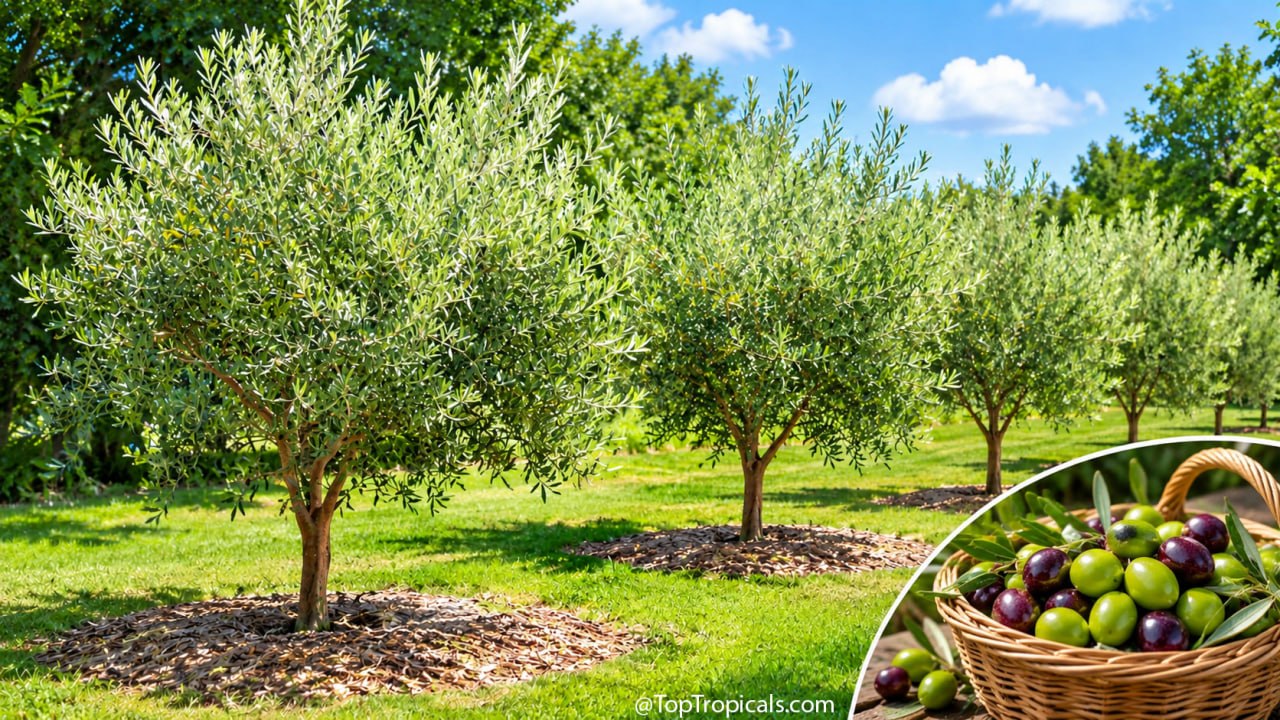
How to Grow Olive Trees: 5 Secrets to Shaping, Fruiting & Harvesting
Your olive tree keeps producing long, skinny branches. It grows, but never fills out. And where are those olives?
Olive trees (Olea europaea) can test your patience! But a few growing secrets can make a big difference.
Secret #1: Shape early, but don't overprune!
Young olives often produce long, leggy shoots instead of a full canopy.
Select 3–5 well-spaced main branches. Remove competing shoots, suckers, and inward-growing branches. Selectively shorten long young shoots to encourage branching.
💡 Here's the catch: Olives fruit on shoots produced the previous year. Cut off all those tips, and you may lose next year's harvest!
Once the framework develops, thin crowded branches rather than shortening every shoot. Let sunlight reach the canopy's interior.
Secret #2: More fertilizer doesn't mean more olives
Olives naturally grow in relatively poor Mediterranean soils. Excess nitrogen encourages leafy growth at the expense of fruiting.
Fertilize modestly when needed, and avoid pushing tender growth late in the season.
We recommend Sunshine C-Cibus to encourage flowering and fruiting, along with Green Magic controlled release fertilizer every 6 months.
Secret #3: In Florida, drainage is everything
Olives tolerate drought better than soggy roots. Florida's rainy summers can be challenging.
Plant on elevated ground where drainage is questionable. In containers, use a fast-draining mix and never leave pots standing in water.
Water young trees thoroughly, then allow the upper soil to dry before watering again.
👉 Olives for Your Florida Landscape - UF/IFAS
Secret #4: Your tree needs a little winter
Olives require winter chilling to initiate flower buds. A healthy tree in a warm climate may produce beautiful foliage but no olives.
Central and North Florida offer better conditions for fruiting because of their cooler winters. In South Florida, insufficient chilling makes harvests less reliable. Warm winter spells, rain during flowering, and excessive pruning can also reduce production.
Secret #5: Choose the right variety
Arbequina Olive, originally from Spain, is a promising choice for Florida. It has a compact habit, flavorful olives, excellent oil quality, and grows well in containers.
Coratina, from Italy, is valued for its high-quality, intensely flavored oil and vigorous growth.
Leccino, another Italian variety, produces mild-flavored olives suitable for oil production and is known for its adaptability.
All three are worth trying in Central and North Florida, although fruiting depends on sufficient winter chilling. Arbequina is self-fruitful, while Coratina and Leccino benefit from compatible pollinizers.
When will you finally harvest?
Vegetatively propagated olive trees commonly begin bearing around 3–5 years, sometimes earlier under favorable conditions. Expect small initial harvests that increase as the tree matures.
Olives may bear heavily one year and lightly the next.
Harvest green olives when fully sized and firm, or wait until they turn purple-black. Fresh olives are extremely bitter and must be cured before eating.
💡 The secret? Grow a well-shaped, sunlit canopy with plenty of young fruiting wood. That's how you turn skinny branches into your own olive harvest!
🛒 Grow Your Own Olives
📚 Learn more:


• Olea europea - Olive Tree - in Plant Encyclopedia
• 3 Olive Trees Worth Planting in Your Yard Right Now
• Warm marinated olives: quick-n-fun exotic recipes
• Grow your own Olive Oil
• How to grow your own Olive
#Food_Forest #How_to #Discover
🟢 Join 👉 TopTropicals
Date: 17 Nov 2026
Daily Dose of Cats: Black cats get THREE holidays a year!
🐾 Daily Dose of Cats: Black cats get THREE holidays a year!
Today, November 17, is Black Cat Protection Day in Italy – Giornata del Gatto Nero.
The celebration was established in 2007 by an Italian animal protection organization to fight centuries-old superstitions and prejudice against black cats.
Even the date is symbolic: in Italy, 17 is considered an unlucky number, much like 13 in America.
But did you know that in many cultures, black cats are actually considered GOOD luck?
In Scotland, a black cat arriving at your doorstep is believed to bring prosperity.
In Japan, black cats are believed to help single women find love.
British sailors considered black cats lucky companions that would help them return home safely.
🐾 A few fascinating facts about our miniature panthers:
🐾 Black cats aren't a separate breed. More than 20 cat breeds can have black coats.
🐾 Black cats can "rust"! Prolonged exposure to sunlight can turn their jet-black fur reddish-brown.
🐾 Some black cats have secret tabby stripes that become visible in bright sunlight.
🐾 The Bombay cat was specifically developed to resemble a miniature black panther.
🐾 Black fur has nothing to do with personality. Although, judging by our PeopleCats, being spoiled rotten may be a common side effect of living with humans!
🐾 Mark your calendar – three special days to celebrate black cats:
🖤 August 17 – Black Cat Appreciation Day (USA)
🖤 October 27 – National Black Cat Day (UK)
🖤 November 17 – Black Cat Protection Day (Italy)
Of course, at the PeopleCats' residence, every day is Black Cat Appreciation Day. Our little panthers wouldn't accept anything less!
The only bad luck a black cat can bring you is having to wear black clothes forever to hide the cat hair.
❓ Do you have a miniature panther at home? Show us your black beauties in the comments!
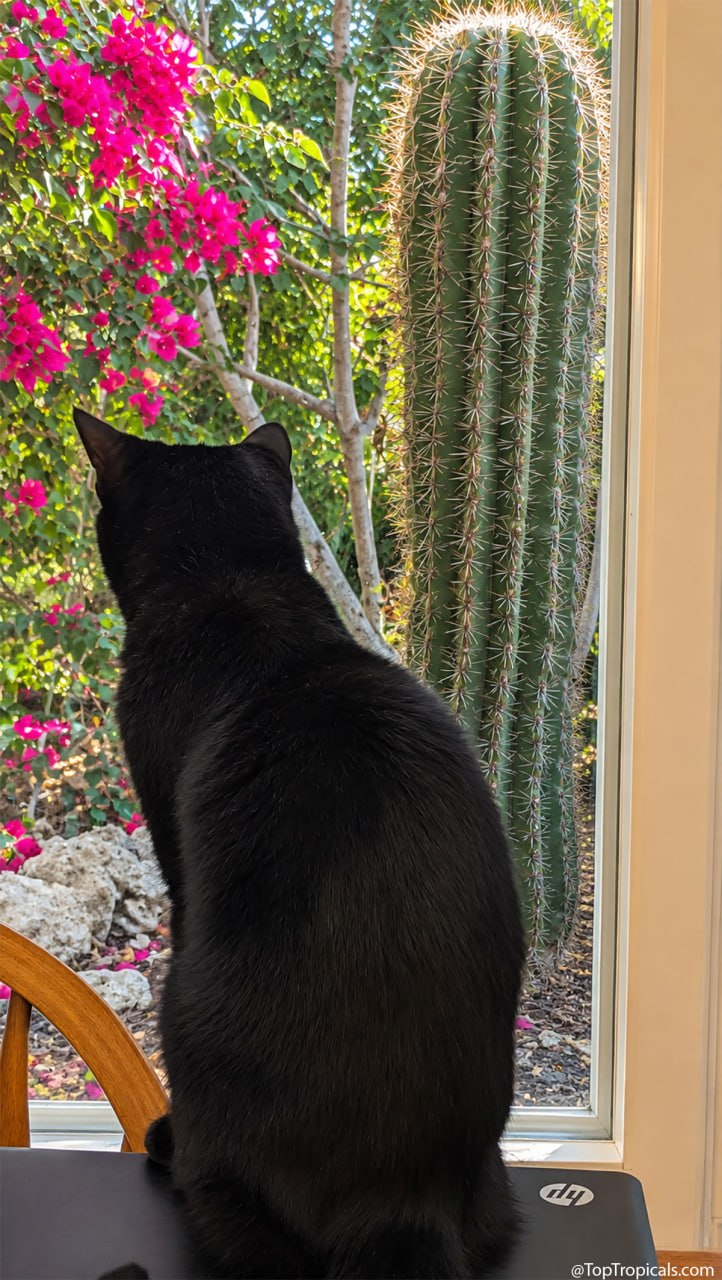
🐈📸 TopTropicals rescued black cat Klaksa admiring the giant cactus and blooming Bougainvillea from his favorite observation spot at PeopleCats.Garden.
🐈 Stay with us for your #DailyDoseOfCat!
#DailyCatLesson #PeopleCats
🟢 Join 👉 TopTropicals
Date: 16 Nov 2026
Garlic Vines amazing comeback after the freeze: it came back blooming!
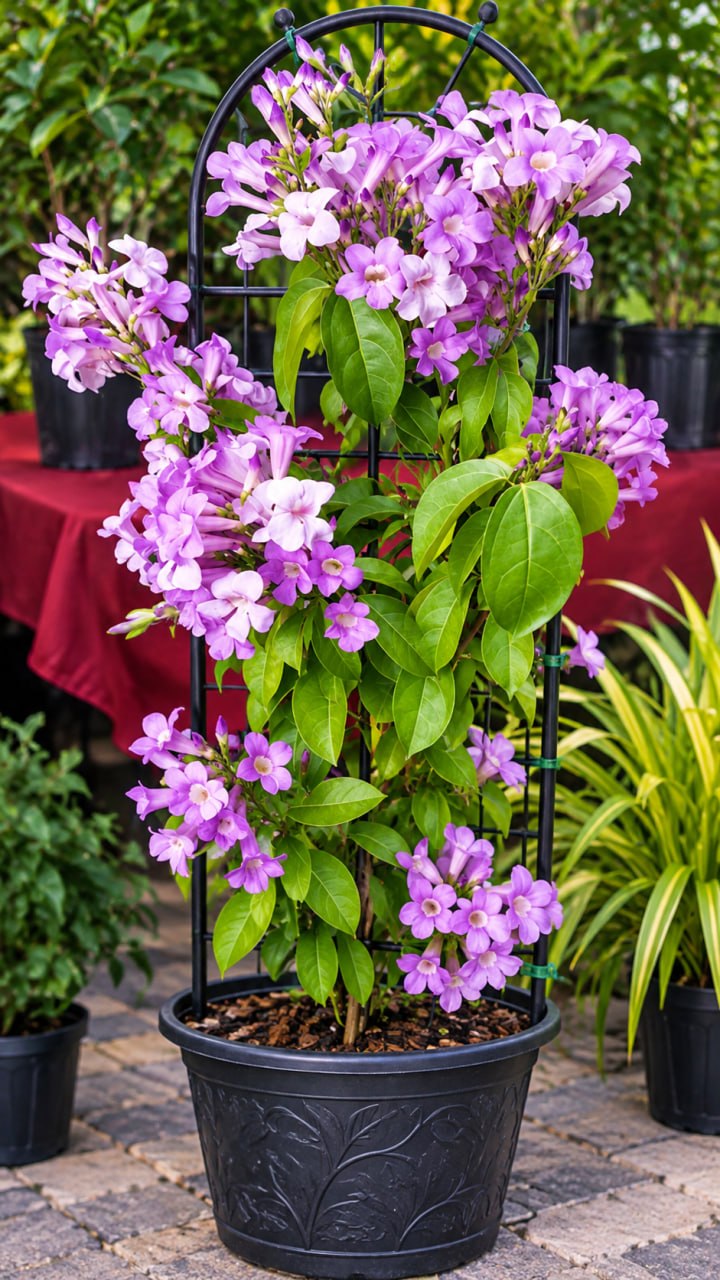
Garlic Vine's amazing comeback after the freeze: it came back blooming!
Every October, I wait for one of my favorite tropical vines to bloom. And every year, almost overnight, it surprises me with an explosion of purple flowers!
But this year was different. After February's record Florida freeze, I wasn't sure I'd ever see those flowers again.
Our beautiful Garlic Vine (Mansoa alliacea) was completely killed to the ground. All the branches and foliage were gone. I thought we'd lost it.
But apparently, Garlic Vine had other plans!
As temperatures warmed, fresh shoots appeared from the roots. The vine started growing again, and by fall, it had recovered beautifully.
Then, right on schedule, came the flowers!
💜 A waterfall of changing colors
Garlic Vine is famous for its spectacular clusters of trumpet-shaped blooms. The flowers open deep lavender-purple with pale throats, then gradually fade to soft lavender and almost white.
Because flowers of different ages appear together, the entire vine becomes a gorgeous mixture of purple, pinkish lavender, and white.
And here's another surprise: crush a leaf, and you'll smell garlic! That's how this unusual vine earned its name. According to folklore, that garlicky scent can even chase away vampires and bad luck.
💜 Tougher than we thought!
Garlic Vine is generally considered a frost-sensitive tropical. But our experience revealed something important: an established plant can survive a hard freeze underground, even when all its top growth is destroyed.
Of course, survival depends on how cold it gets, how long the freeze lasts, and how well-established the roots are. Young plants and container-grown specimens need more protection.
Our Garlic Vine's recovery was especially impressive because it not only regrew but also returned to flowering in the same year!
💜 Perfect for small gardens and containers
Unlike some tropical vines that quickly take over everything, Garlic Vine has a moderate growth rate and responds well to pruning.
Train it over a small fence or trellis, grow it on an arbor, or keep it compact in a container with support.
In South Florida, it can provide spectacular fall and winter color. Farther north, flowering often begins in fall, while colder weather may interrupt the display.
💜 Do you love purple?
If you're looking for spectacular cool-season flowers and a tropical vine that's tougher than it looks, Garlic Vine deserves a place in your garden. And after this year's freeze, I appreciate ours even more!
🛒 Plant Once, Enjoy Purple Every Fall
📚 Learn more:


• Mansoa alliacea in Plant Encyclopedia
• The Vine That Changes Color Before Your Eyes: Mansoa
• What color is garlic vine flower
• How to get rid of a bad luck with the Garlic Vine
• Ten shrubs you need to have for winter colors
• Top 20 plants for a Butterfly Haven
• 5 Showy Vines to Plant This Fall for a Colorful Florida Winter
• 13 festive shrubs with bright flowers that bring color to your Winter Garden when everything else is dormant
🎥
#Hedges_with_benefits #Butterfly_Plants #Discover
🟢 Join 👉 TopTropicals