Garden Blog - Top Tropicals
Date: 24 Sep 2026
HANGING LOBSTER CLAW: LEAVES IN DISGUISE
By Tatiana Anderson, Plant Expert, Top Tropicals

Smokey: Sunshine... that's the plant, for cat's sake.
Sunshine: Yes. Very fresh. I brought donuts too. Just in case.
Smokey: Of course you did. Fine. Give me your damn donuts.

Heliconia rostrata hangs a long chain of bright red "lobster claws," each tipped in yellow with a touch of green. They zigzag down the stem like a string of ornaments, and the first time you see one, it's hard to believe it's real.
It's real, and the strangest thing about it is what those claws turn out to be.
WHAT ARE THE LOBSTER CLAWS?
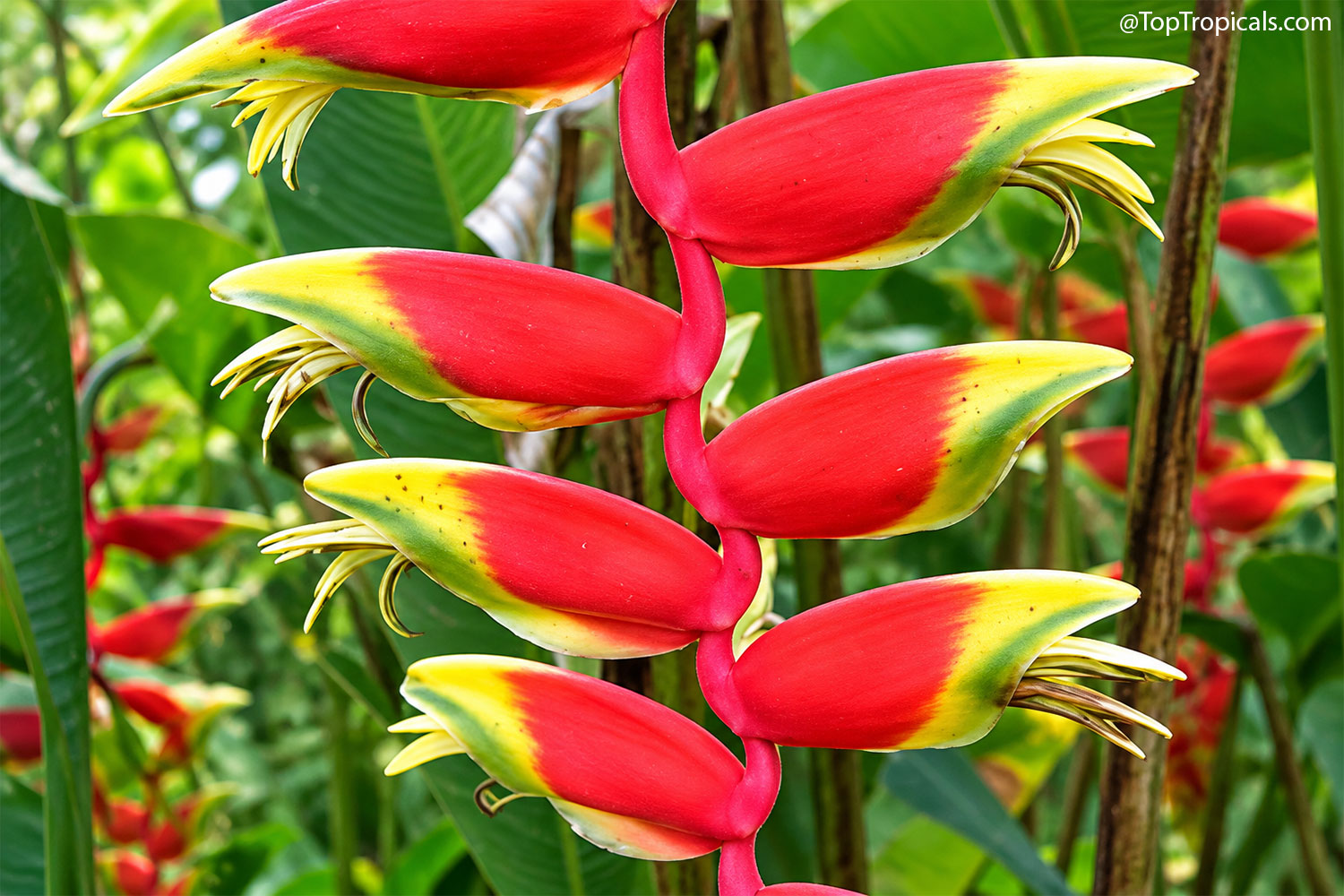
They look like flowers, but they're bracts. A bract is a modified leaf that's taken on a different job. On Lobster Claw, that job is protecting the flowers and putting on the show.
The true flowers are much smaller and emerge from inside the bracts. If you want to call the claws fake flowers, go ahead. Just know the real ones are in there.
Think of the bracts as the gift wrap and the flowers as the gift. Here, the wrapping gets all the attention.
HOW THE BRACTS WORK
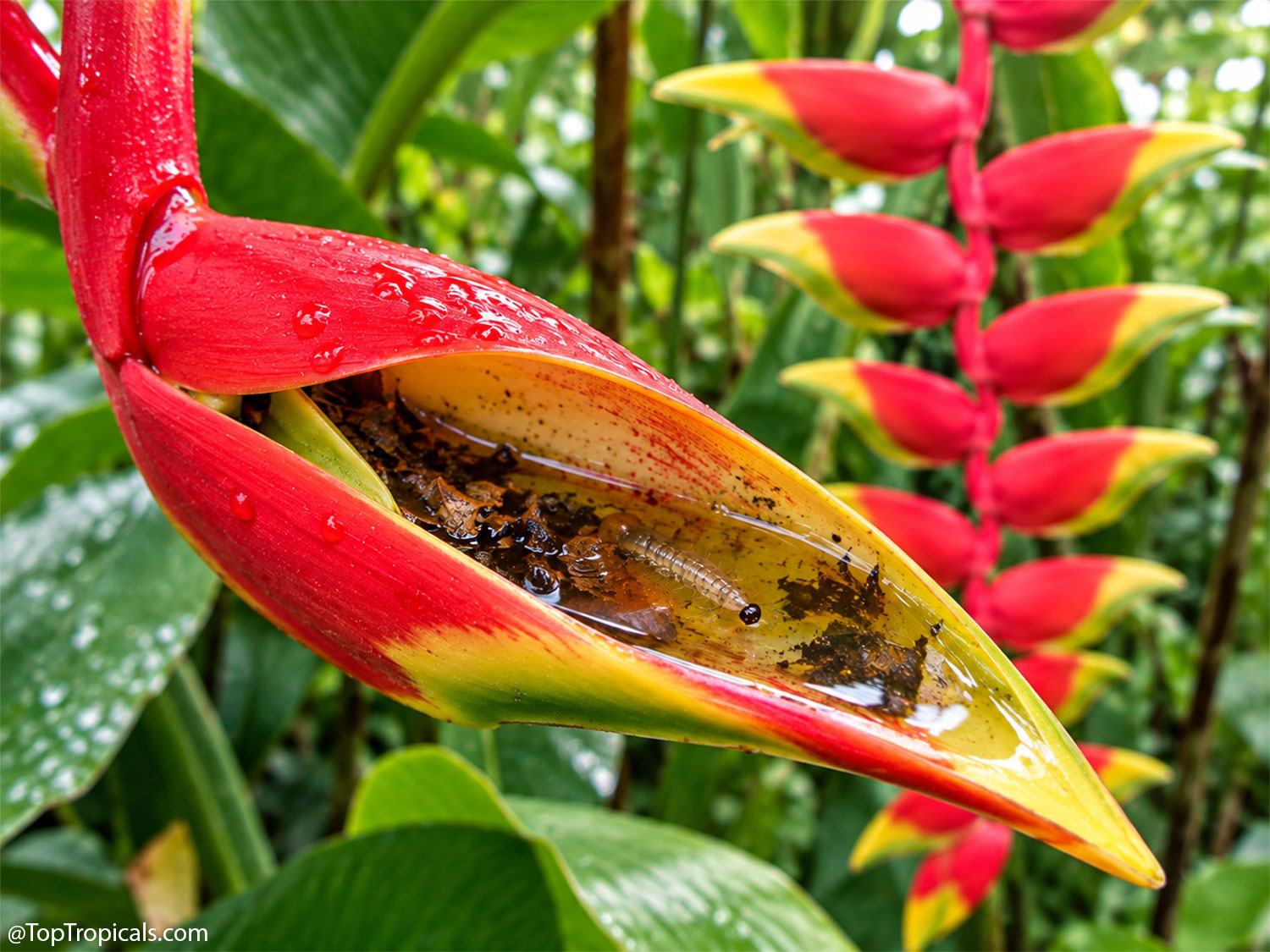
The bracts are folded like canoes and overlap one another. Those folds can hold a bit of rainwater, along with plant secretions and organic debris.
The botanical term for water held inside a plant is phytotelmata, from the Greek words for "plant" and "pond." Rain pooling in the center of a bromeliad is a familiar example.
In the tropics, these pockets can give tiny organisms shelter and moisture. Researchers studying Heliconia rostrata in Ecuador collected 280 invertebrates (small animals without a backbone) from the bracts during one week of sampling. That was a field study, so don't read it as a count for garden plants. Still, a plant grown for its looks has a small ecological role too.
📚 The Lobster Claw's Secret Water Tank
THE ODD PART: IT HANGS UPSIDE DOWN
Many Heliconia species hold their bracts upright, like open cups. Heliconia rostrata hangs its inflorescence (the whole flowering stem, bracts and all) downward.
You'd expect anything inside to drain right out. Even so, the overlapping bracts can hold a little moisture in their protected folds.
WHY GARDENERS LOVE LOBSTER CLAW
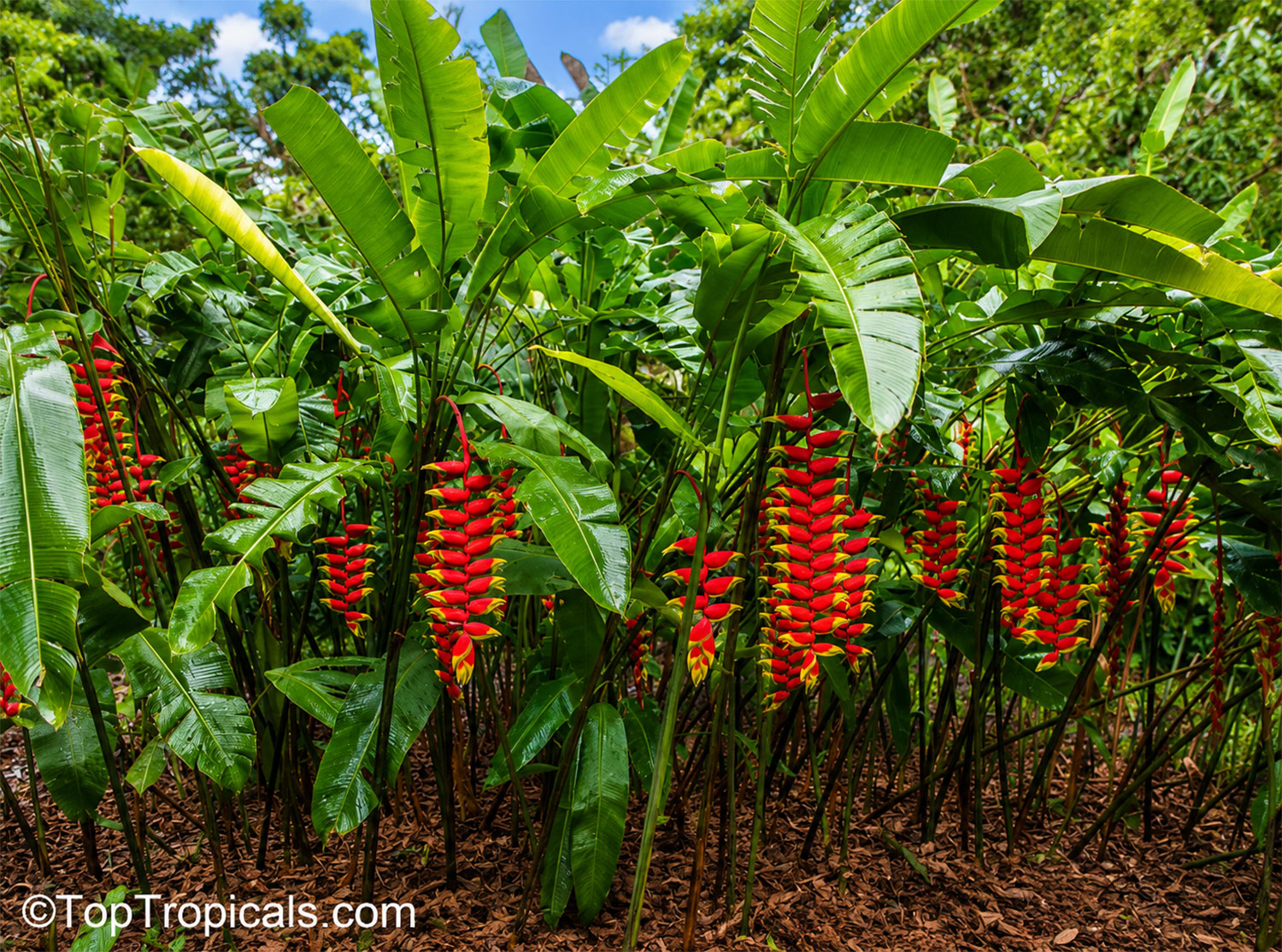
Lobster Claw is one of the most recognizable tropical ornamentals, and its hanging red, yellow, and green display draws the eye from across the yard.
Red and green sit on opposite sides of the color wheel, so each makes the other look brighter. Put a clump at the edge of a lawn or in front of a hedge, and the green around it looks more vivid.
Mature plants can reach around 7 feet tall and fill out with large, banana-like leaves. The claws last a long time on the plant, and they make excellent cut flowers.
In warm climates, plant it in the ground. Farther north, grow it in a big pot. Lobster Claw blooms very well in containers - even a 3- to 7-gallon pot can support an impressive flowering plant.
LOBSTER CLAW IN 30 SECONDS
Botanical name: Heliconia rostrata
Common names: Hanging Lobster Claw, Lobster Claw, Parrot's Beak
Height: up to about 7 feet
Growth habit: rhizomatous clump, usually 3–4 feet wide, gradually spreading to 5 feet or more over the years
Bloom season: late spring through fall and into winter; in consistently warm tropical climates, flowering can occur year-round
Main attraction: long, hanging red-and-yellow bracts
GROWING HELICONIA ROSTRATA
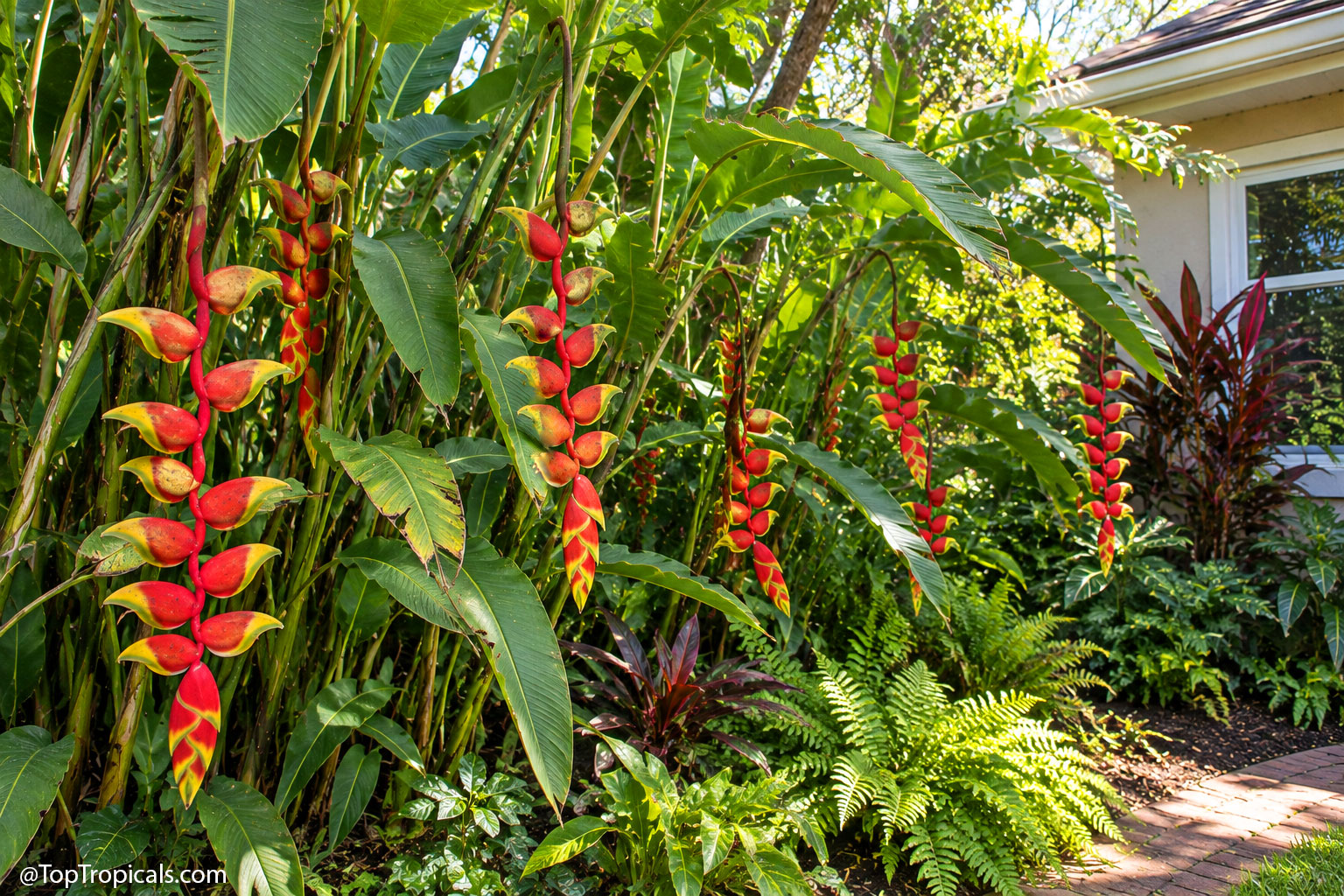
Light: Lobster Claw likes a bright spot. Filtered light or partial sun suits it, and in some climates it takes more. Where the afternoon sun is harsh, a bit of shade usually helps, especially while the plant is still adjusting. At our Florida nursery, we grow ours under 30% shade cloth, where they get plenty of bright light without the full force of the sun all day.
Wind: Shelter it from whipping wind when you can. The big leaves tear, much like a banana's. Torn foliage doesn't mean the plant is unhealthy, but plants out of the wind usually look better.
Water: Keep the soil consistently moist but well drained. This isn't a swamp plant.
Soil: Rich, well-drained soil with plenty of organic matter.
IN THE GROUND: WARM CLIMATES
Spacing: Lobster Claw grows from rhizomes (thick underground stems) and spreads into a clump. Expect about 3-4 feet across, with older clumps eventually reaching 5 feet or more. Give it room from the beginning - we recommend keeping it at least 3-4 feet from walkways, walls and neighboring plants.
Cold: For a Heliconia, Lobster Claw is relatively cold tolerant. Under favorable conditions, established plants may survive brief dips into the high 20s F, though leaves and flowers can be damaged even if the plant pulls through. After our Feb 2026 Florida record freeze, we cut away the damaged foliage and our Lobster Claws came right back from the rhizomes. Within about a couple of months they were full-size again - and eventually grew even wider and more vigorous than the year before.
IN A POT: COLD CLIMATES
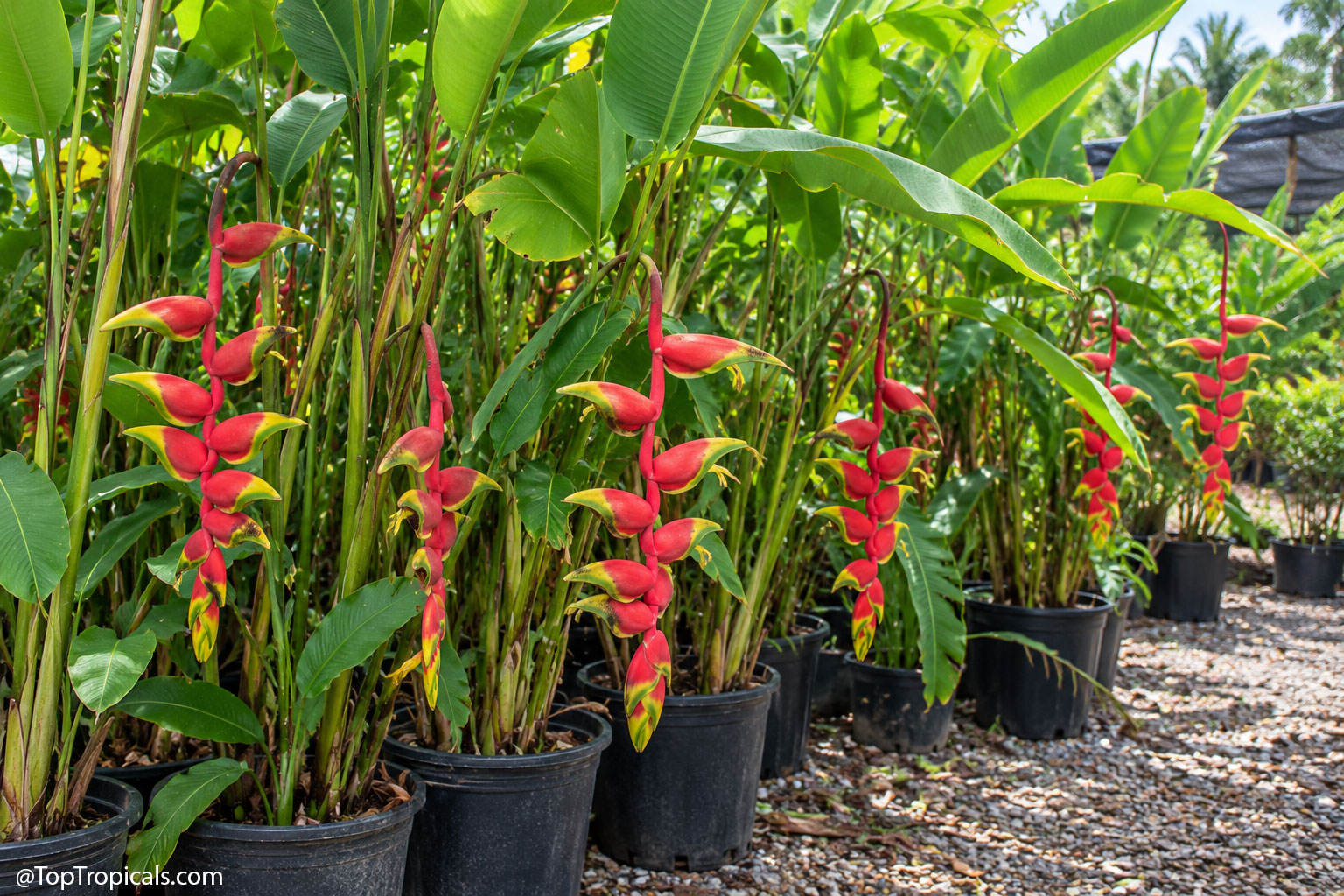
Container: Those rhizomes need room in a pot too, so use a large, sturdy container. A 7-gallon pot is a good practical size; move up to 15 gallons if you want a really impressive specimen. A small pot may keep the plant alive, but it isn't ideal if you want a big plant that flowers well. Don't let the soil dry out completely again and again while it's growing.
Height: In a good-size container, expect roughly 5-6 feet of growth. That's manageable for many protected patios, greenhouses and rooms with enough vertical space, but measure your doorway and ceiling before moving a mature plant indoors.
Bringing it in: Move it to a protected spot before freezing weather settles in. Lobster Claw may survive a brief light frost, but the foliage can be damaged. If you have the option, move a container indoors whenever freezing temperatures are forecast. Don't count on a dark garage to get it through the winter. It still prefers light, although the rhizomes can be allowed to rest more or less dormant with reduced water and light if necessary.
Indoor care: Give it the brightest, roomiest spot you have and reduce watering as growth slows. Heliconia likes humidity, but it can tolerate dry indoor air for a limited time. Don't panic if some leaves develop dry edges, yellow or simply look less beautiful indoors. The goal is to get the plant comfortably through winter, not to make January look like Costa Rica.
Next summer: Move it back outside once nights are reliably above about 50F. Reintroduce it to stronger light gradually to avoid scorching the leaves. With warmth, water and feeding, the rhizomes should resume vigorous growth and can flower again.
📚 How to Grow Massive, Exotic "Lobster Claw" Blooms Anywhere (Even in Pots!)
FEEDING: WHAT WE DO AT TOP TROPICALS
There's more than one good way to feed a Heliconia. We add a scoop of Green Magic controlled-release fertilizer every 6 months and use Sunshine Booster Megaflor, which is safe to apply with every watering year-round.
For plants spending winter indoors, the biggest change is water: as growth slows, reduce watering rather than keeping the pot constantly wet. Resume normal watering as warmth and active growth return.
❓ LOBSTER CLAW Q&A
When does it bloom?
Lobster Claw typically blooms from late spring through fall and into winter. In consistently warm tropical climates, it may flower at other times of year as well.
How soon will my plant bloom?
Our plants are mature, well-established and ready to bloom. With good growing conditions, you can normally expect flowers by the next growing season, whether planted in the ground or grown in a roomy container.
What size plant will I get?
Our Lobster Claws are grown in 1- to 3-gallon containers with well-developed root systems and rhizomes. Plants are typically around 2-3 feet tall and may actually grow larger at the nursery. Taller plants may be trimmed back for compact shipping - don't worry, Heliconia regrows quickly in warm weather.
What do I do after a stem finishes blooming?
Each Heliconia stem flowers only once. When the bloom is finished and the stem begins to dry, cut that stem. The underground rhizome will continue sending up fresh shoots, which mature and produce the next round of flowers.
Can I order now?
Yes. Fall is actually a great time to ship Lobster Claw. The worst
summer heat is over, and our plants have had an entire warm growing season
to
develop strong rhizomes and root systems.
In warm climates, you can plant them and let them continue establishing. In
colder climates, keep your plant protected indoors through winter, then move
it outside once nighttime temperatures stay above about 50F. You'll start
spring with an established plant ready to take off when the heat returns.
Can I eat it?
No. Don't take breakfast advice from Sunshine.
ONE FOR YOUR GARDEN
We grow Lobster Claw for the color. The strange biology is a bonus.
Next time you see one in bloom, take a closer look at how those claws are built. Better yet, plant one where you'll walk past it every day.
👉 Grow your own Lobster Claw📚 Lobster Claw in Top Tropicals Blog
📚 LEARN MORE:
📚Heliconia rostrata in plant encyclopedia
🎥
🎥
🛒 SHOPPING LINKS:
Date: 24 Sep 2026
Daily Cat Lesson: Whats So Special About a Black Cat?
🐾 Daily Cat Lesson: What's So Special About a Black Cat?
A black cat is genetically just a cat with lots of dark pigment - but humans have spent centuries giving that coat color supernatural powers.
🐾 Why are black cats black?
Their dark coat comes primarily from high production of eumelanin, the same pigment responsible for black and brown coloring in many mammals. In bright sunlight, some black cats even reveal faint hidden tabby markings.
🐾 Were black cats always considered unlucky?
No! Their reputation depends entirely on where - and when - you live.
In parts of medieval and early-modern Europe, black cats became associated with witchcraft and evil, helping create the superstition that one crossing your path meant bad luck.
But elsewhere, the story was very different. In Britain, black cats have traditionally also been associated with good luck, and sailors and their families sometimes considered them lucky companions.
In ancient Egypt, cats of many colors were highly valued and associated with the divine - there wasn't a special Egyptian curse against black cats.
🐾 And today?
A black cat crossing your path means exactly one thing:
A black cat is going somewhere.
No curse. No bad luck.
Just a beautiful cat with excellent pigmentation and approximately the same amount of trouble-making potential as the tabby sitting next to him. 🖤🐈
🐈📸 Top Tropicals rescued cats Georgie and Cash at PeopleCats.Garden.
🐈 Stay with us for your Daily Dose of Cat! #DailyCatLesson #PeopleCats
🟢 Join 👉 TopTropicals
Date: 24 Sep 2026
12 Potting Mix Mistakes That Kill Container Plants
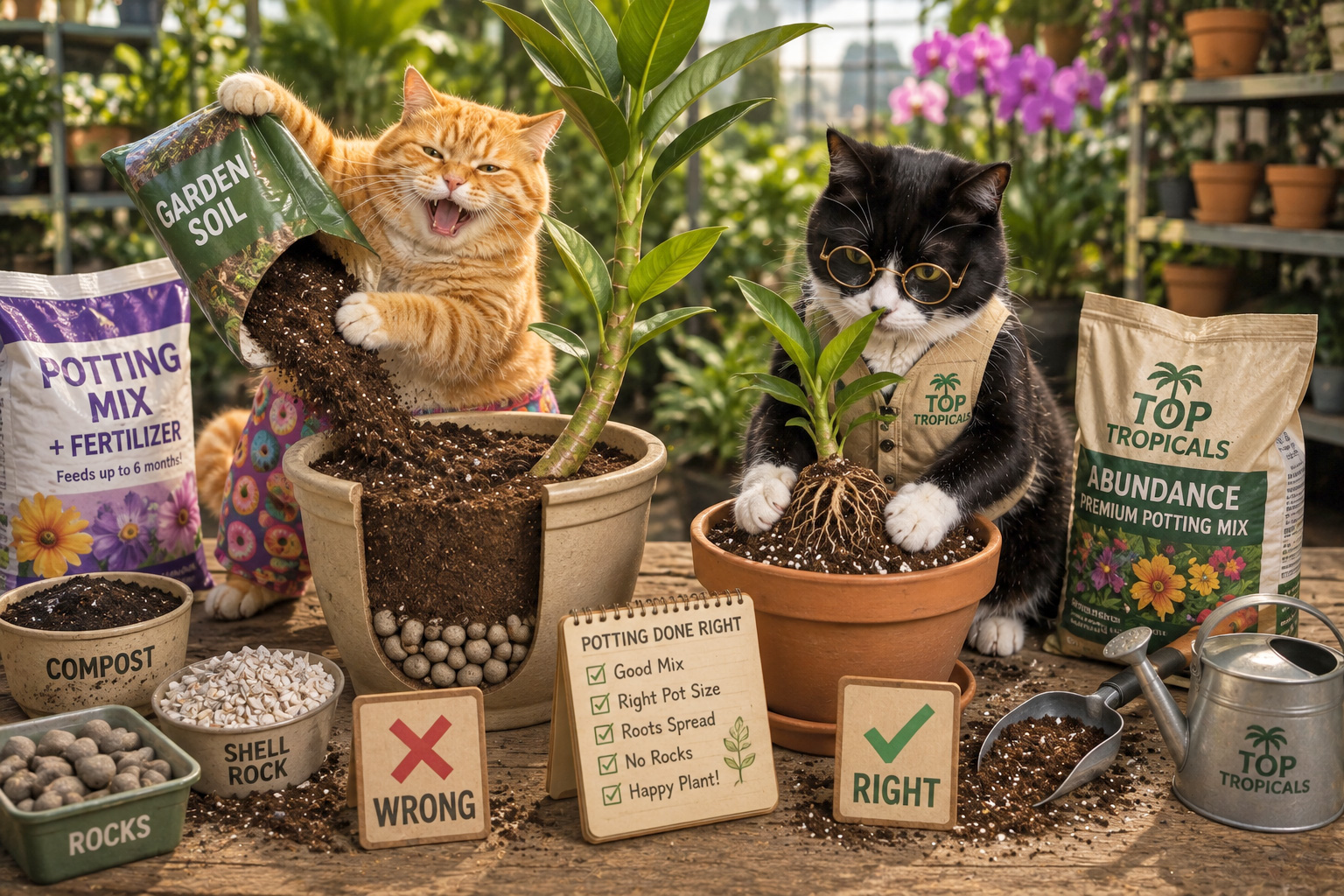
⛔️ 12 Potting Mix Mistakes That Kill Container Plants
Most container plant problems don't start with watering or fertilizer.
They start with the wrong potting mix.
Avoid these common mistakes and your plants will reward you with healthier roots and stronger growth.
❌ 1. Using garden soil in containers
Garden soil is designed for the ground, not for pots.
It becomes heavy, compacts easily, and holds too much water.
❌ 2. Using compost
A pot full of compost stays wet, compacts over time, and provides poor root aeration.
❌ 3. Buying potting mix with fertilizer already added
You don't know:
· what fertilizer was used
· how much was added
· how long it will last
Start with a quality neutral mix and fertilize according to your plant's needs.
❌ 4. Putting rocks in the bottom of the pot
One of gardening's oldest myths. Rocks don't improve drainage. They reduce healthy root space and raise the saturated water layer closer to the roots.
Improve the potting mix - not the bottom of the pot.
❌ 5. Using shell rock or limestone around tropical plants
Shell rock, limestone, crushed coral, and similar materials gradually raise soil pH.
Most tropical plants prefer slightly acidic soil and may decline over time.
Use river rock if decorative stones are desired.
❌ 6. Ignoring the perched water table
Every container retains a wet layer near the bottom after watering.
Heavy potting mixes make this layer deeper.
Coarse, airy mixes keep more of the root zone healthy.
❌ 7. Using a pot that's too large
More potting mix means more water.
A small plant in a large pot stays wet much longer.
Choose the smallest container that comfortably fits the root system.
❌ 8. Forgetting that roots need oxygen
Roots don't just drink. They breathe.
Without oxygen:
· root growth slows
· diseases increase
· root rot begins
❌ 9. Believing black, rich soil is always better
Professional growers don't judge a mix by its color.
They judge it by drainage, aeration, and long-term structure.
❌ 10. Using fine sand
Fine sand can make a heavy mix even denser.
Use only coarse horticultural sand, and only for plants that need exceptional drainage.
❌ 11. Leaving pots standing in water
Always empty saucers after watering.
Even the best potting mix can't help roots sitting in stagnant water.
❌ 12. Trying to fix poor soil with more fertilizer
Fertilizer feeds plants. It doesn't improve drainage or root aeration.
Healthy roots always come first.
✅ Think like a professional grower
Professional growers don't ask: "How rich does this soil look?"
They ask: "Does it drain well? Is there plenty of air around the roots? Will it stay loose over time?"
Healthy plants begin with healthy roots.
Healthy roots begin with the right potting mix.
🛒 Get Our Proven Professional Potting Mix
📚 Learn more
· The complete guide to potting mix
· What Makes a Great Potting Mix Recipe, the Best Ingredients
· Potting Mix Explained: Why Garden Soil Kills Container Plants
· The #1 Rule for Mail-Order Plant: Don't Disturb the Roots
· When Is the Best Time to Water Your Plants?
· How much water is too much?
· How to re-pot a plant properly
#Fertilizers #How_to #Discover
🟢 Join 👉 TopTropicals
Date: 23 Sep 2026
Daily Cat Lesson: Does Your Indoor Cat Get Enough Exercise?
🐾 Daily Cat Lesson: Does Your Indoor Cat Get Enough Exercise?
Indoor life is safer - but it can also be very sedentary.
Cats need regular activity to help maintain healthy weight, muscles and joints, and to satisfy their natural hunting instincts.
🐾 Buying toys isn't enough
Many cats quickly lose interest in toys that just lie on the floor.
Interactive play works better: wand toys, feathers, balls to chase, tunnels, climbing trees or anything that moves like prey.
• Try several short play sessions instead of one long workout. Even 5-10 minutes of chasing, jumping and pouncing can turn exercise into a hunt rather than a fitness program.
• For food-obsessed cats, puzzle feeders can make them work for part of their meal too.
And if your cat is surrounded by toys, yawns, washes her face and goes back to sleep?
Apparently the personal trainer needs to try harder. 💪
🐈📸 Top Tropicals rescued Manx tailless cat Matilda with her toys at PeopleCats.Garden.
🐈 Stay with us for your Daily Dose of Cat! #DailyCatLesson #PeopleCats
🟢 Join 👉 TopTropicals
Date: 23 Sep 2026
This Kitchen Herb Survives Las Vegas - and My Sons Backyard
🌿 This Kitchen Herb Survives Las Vegas - and My Son's Backyard
Every time I visit Las Vegas, there is one plant I always notice.
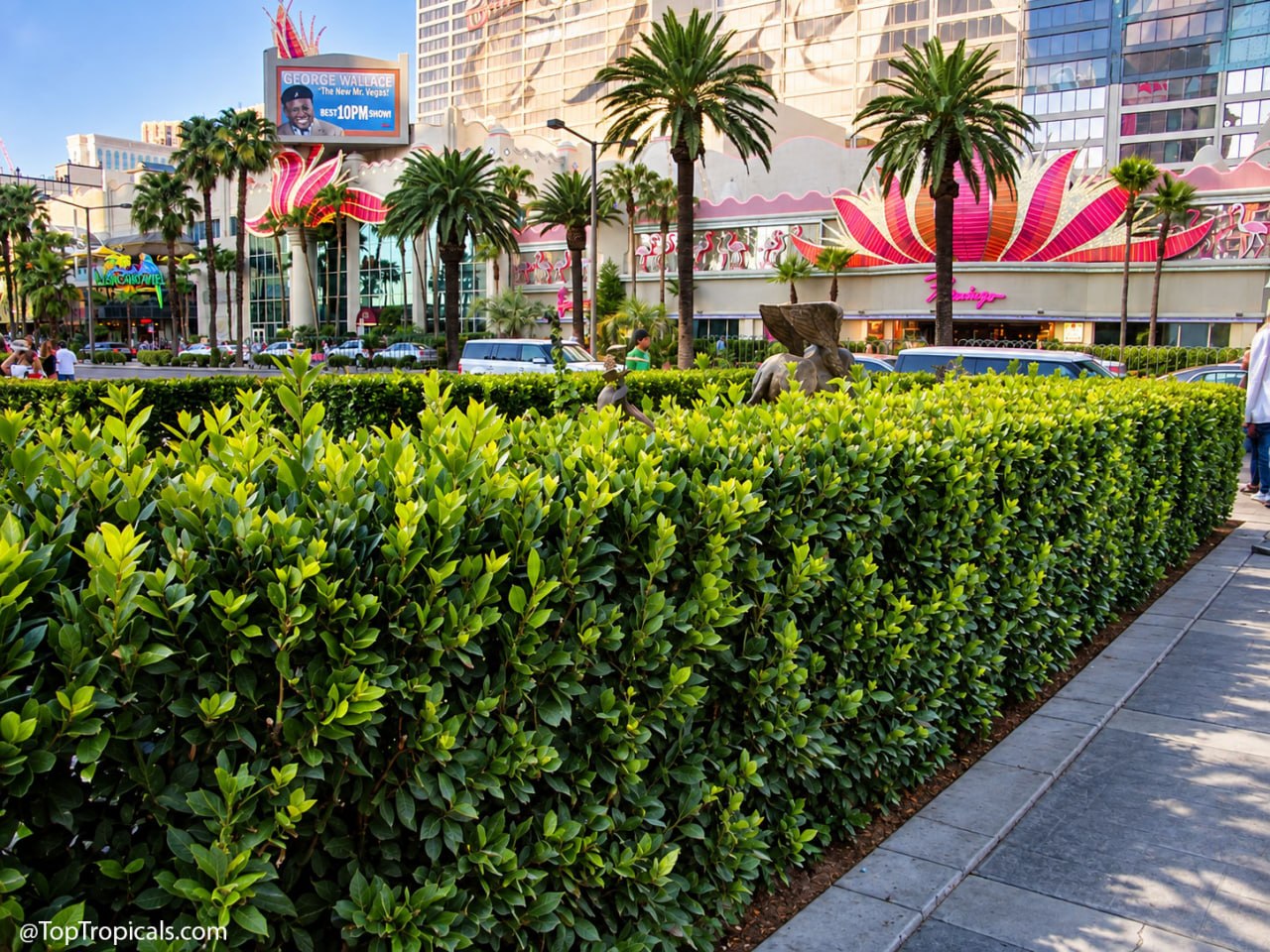
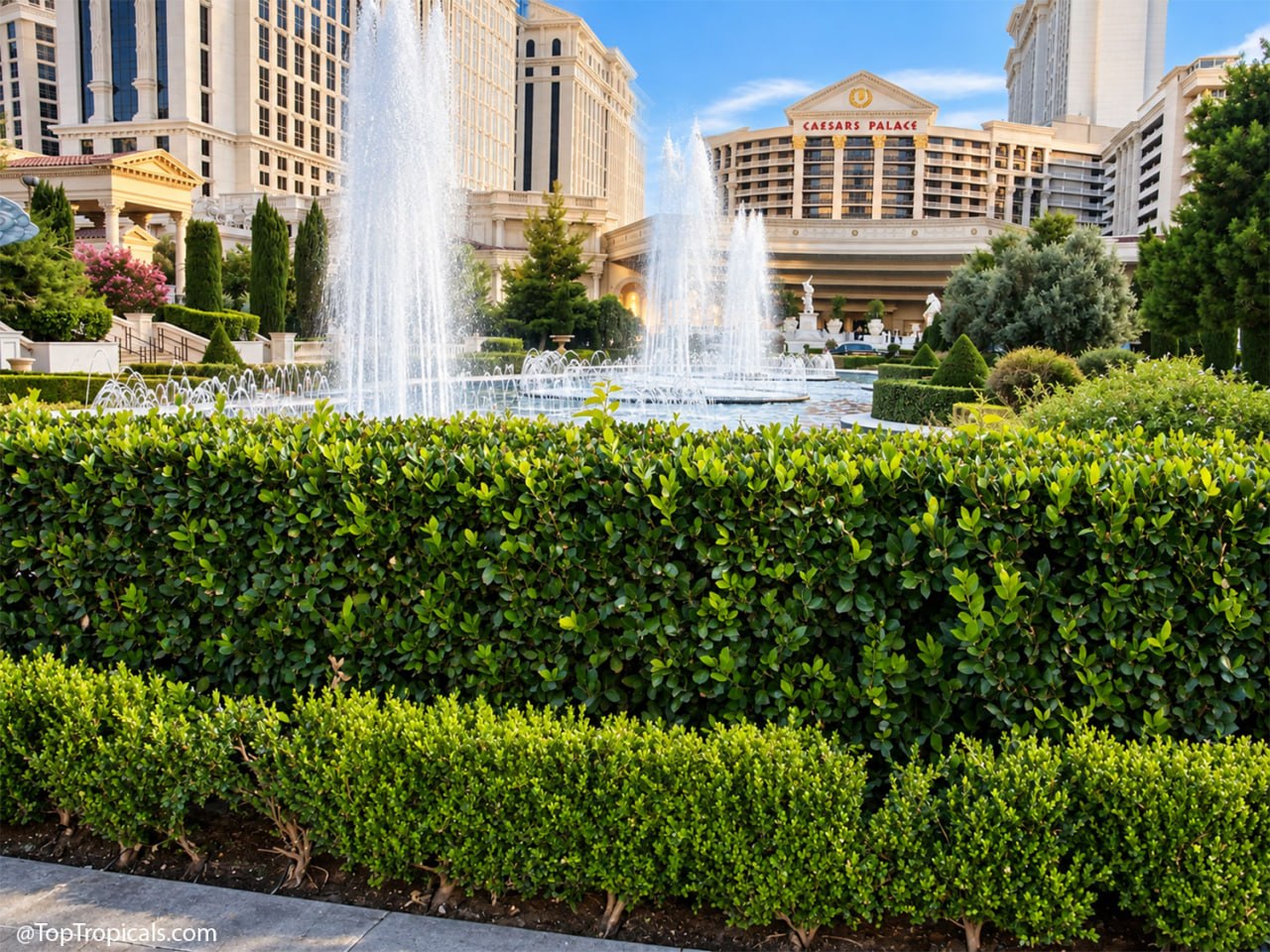
Not in a botanical garden. Not inside a fancy conservatory. Outside the Caesar Palace and the Bellagio.
While everyone is watching the fountains, I'm admiring the Bay Laurel hedge.
And every time I see it, I'm surprised by how good it looks. Dense, green, glossy and perfectly happy.
Las Vegas is not exactly gentle on plants. Summers are brutally hot and dry, while winter nights can dip below freezing.
Yet there it is: Bay Laurel (Laurus nobilis).
🌿 The Herb I Keep Admiring Outside the Bellagio
We usually think of Bay Laurel as a culinary herb - those dried leaves floating around in soup.
But this is actually a tough evergreen Mediterranean shrub or small tree. Its thick, leathery leaves are built to conserve moisture, and established plants tolerate heat and periods of dry weather remarkably well.
Of course, a manicured Las Vegas landscape is irrigated. But seeing Bay Laurel looking so beautiful there year after year says something about just how adaptable this plant can be. And I have an even better experiment much closer to home.
🌿 I Planted One in My Son's Backyard
A few years ago, I planted a tiny Bay Laurel at my son Alex's house.
He's not a plant person.
So there was no fertilizing schedule. No hovering with the hose. No pruning and fussing.
Basically, the plant was on its own.
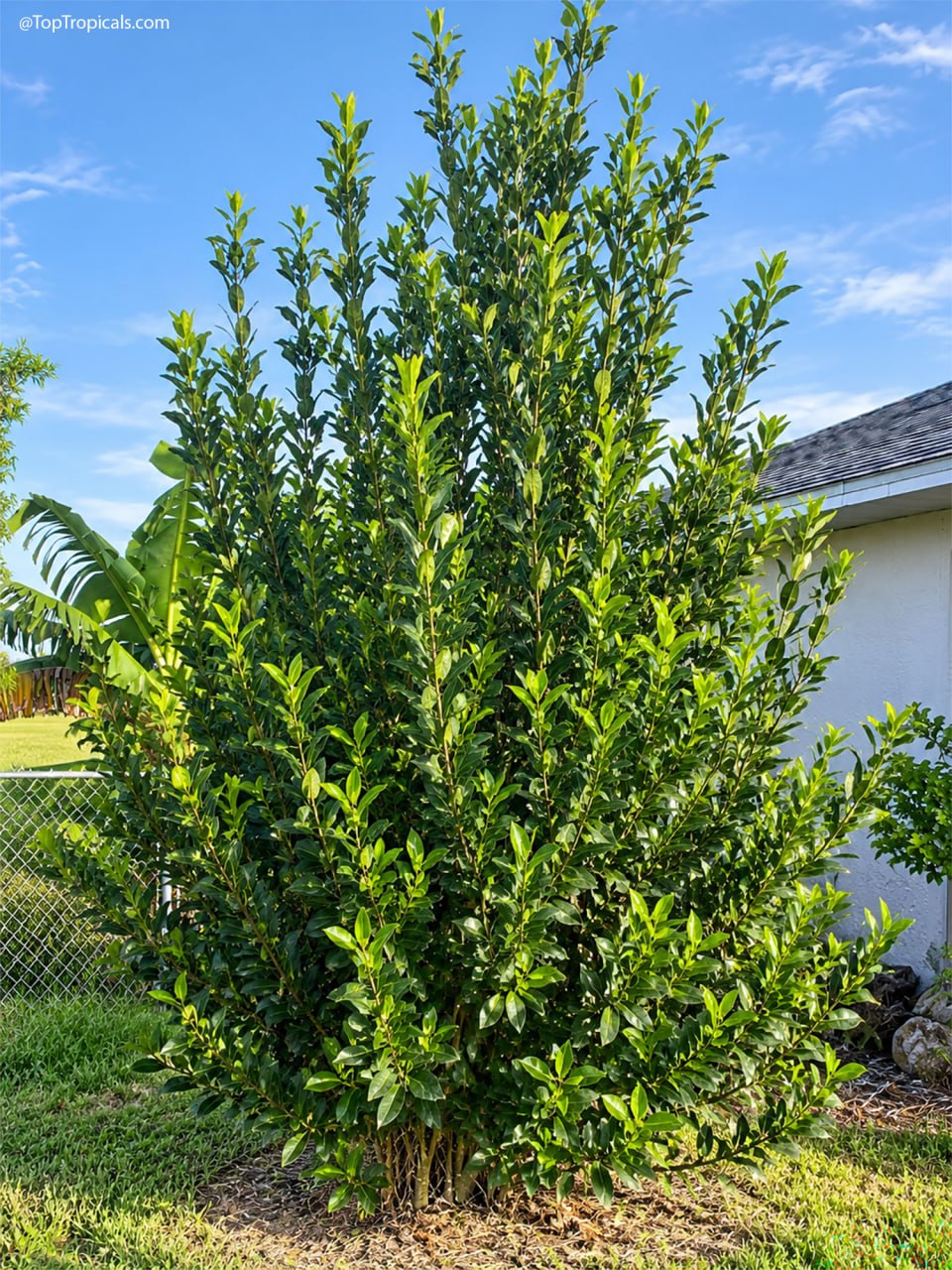
Look at it now.
It has grown into the massive bush. And there's a nice bonus: Alex's wife Heather cooks with it all the time. And they send me the cuttings!
Need a bay leaf? Walk outside and pick one.
That's my kind of edible landscaping.
🌿 The Secret: Don't Love It to Death
Bay Laurel comes from the Mediterranean region, so it appreciates conditions many herbs would complain about.
Give it sun, good drainage and reasonable water while it establishes. Once it has a strong root system, it becomes considerably more forgiving of occasional drought. It also handles pruning beautifully, so that monster can become a hedge, small tree, topiary or compact patio plant.
The big thing it doesn't appreciate is constantly soggy soil. Bay Laurel would rather be a little dry than sit with wet roots.
And despite its elegant appearance, it isn't strictly tropical. Established plants can handle some frost and freezing temperatures, which is one reason Bay Laurel can be grown outdoors well beyond truly tropical climates. Our plants in Sebring, FL survived 2026 Florida record freeze without blinking an eye!
In colder areas, simply keep it in a container and bring it into a protected location for winter.
🌿 Help! My Bay Laurel Became a Monster
That's a pretty good problem to have. Use fresh leaves in soups, tomato sauce, beans, rice, seafood, braised meats, marinades and pickling brines.
Have too many? Dry them - the flavor becomes mellower and develops that familiar warm bay aroma. Just remember to remove whole leaves before serving.
🌿 One Plant May Be All You Need
Bay Laurel isn't an herb you need to replant every season. Give it a permanent spot, and it can keep growing - and feeding your kitchen - for many years.
Mine has convinced me three times: thriving along the Las Vegas Strip, growing into a monster with practically no attention in my son's backyard, and sailing through our 2026 record freeze in Sebring.
If a plant can handle Las Vegas, a plant “dummy”, and a record freeze, I call that one tough herb. 🌿
🛒 Plant Once. Harvest for Years
📚 Learn more:


· Laurus nobilis in Plant Encyclopedia
· Why Ancient Romans Crowned Emperors With the Leaf in Your Spice Rack
· Tropical edibles that reduce your blood pressure
· Tropical plants that survived Florida's historic freeze without protection
#Discover #Remedies #Food_Forest
🟢 Join 👉 TopTropicals