Garden Blog - Top Tropicals
Date: 30 Aug 2026
12 smart ways to fit more plants into a small garden

🏡 12 smart ways to fit more plants into a small garden
Think your garden is too small? Think again.
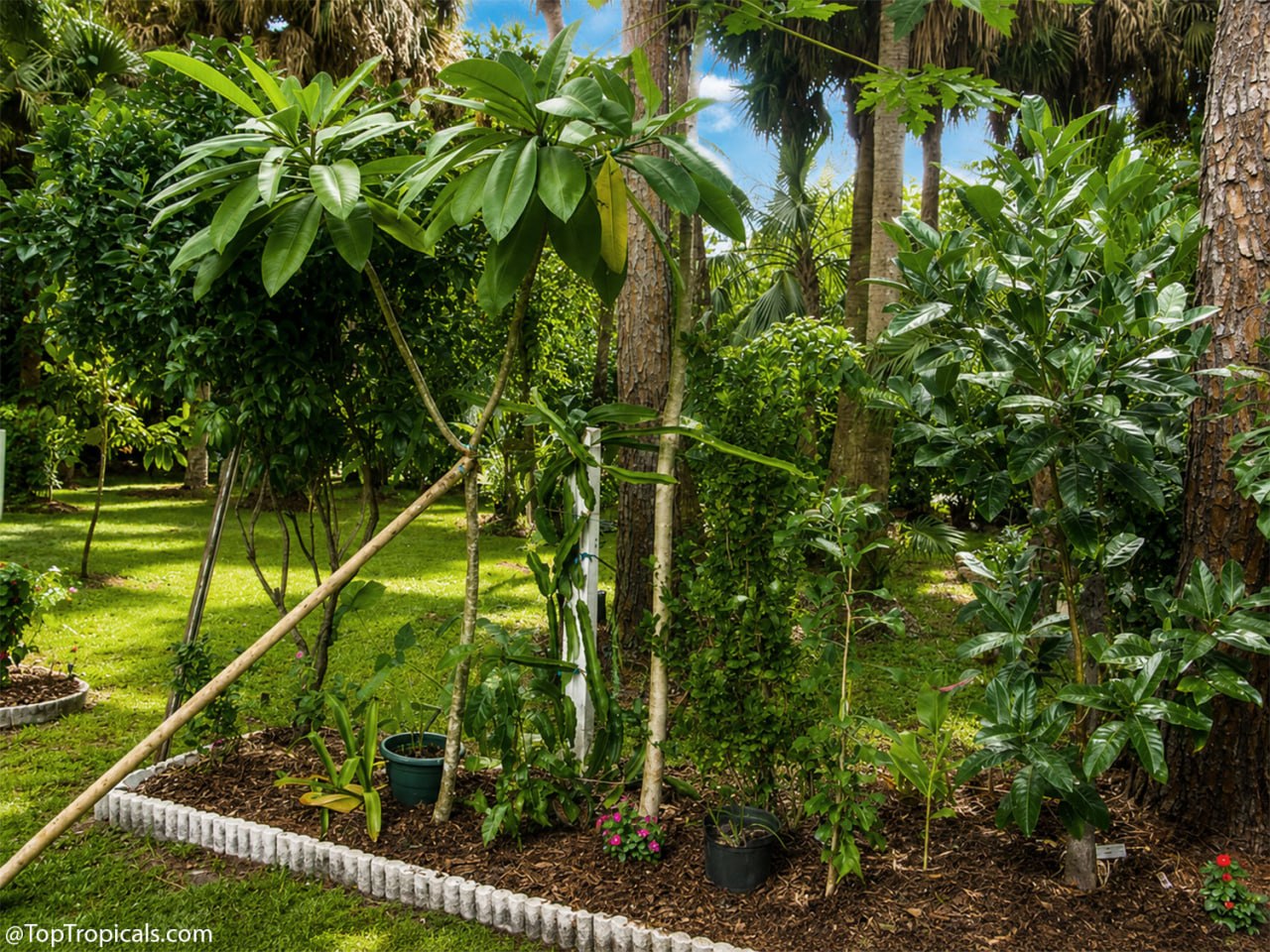
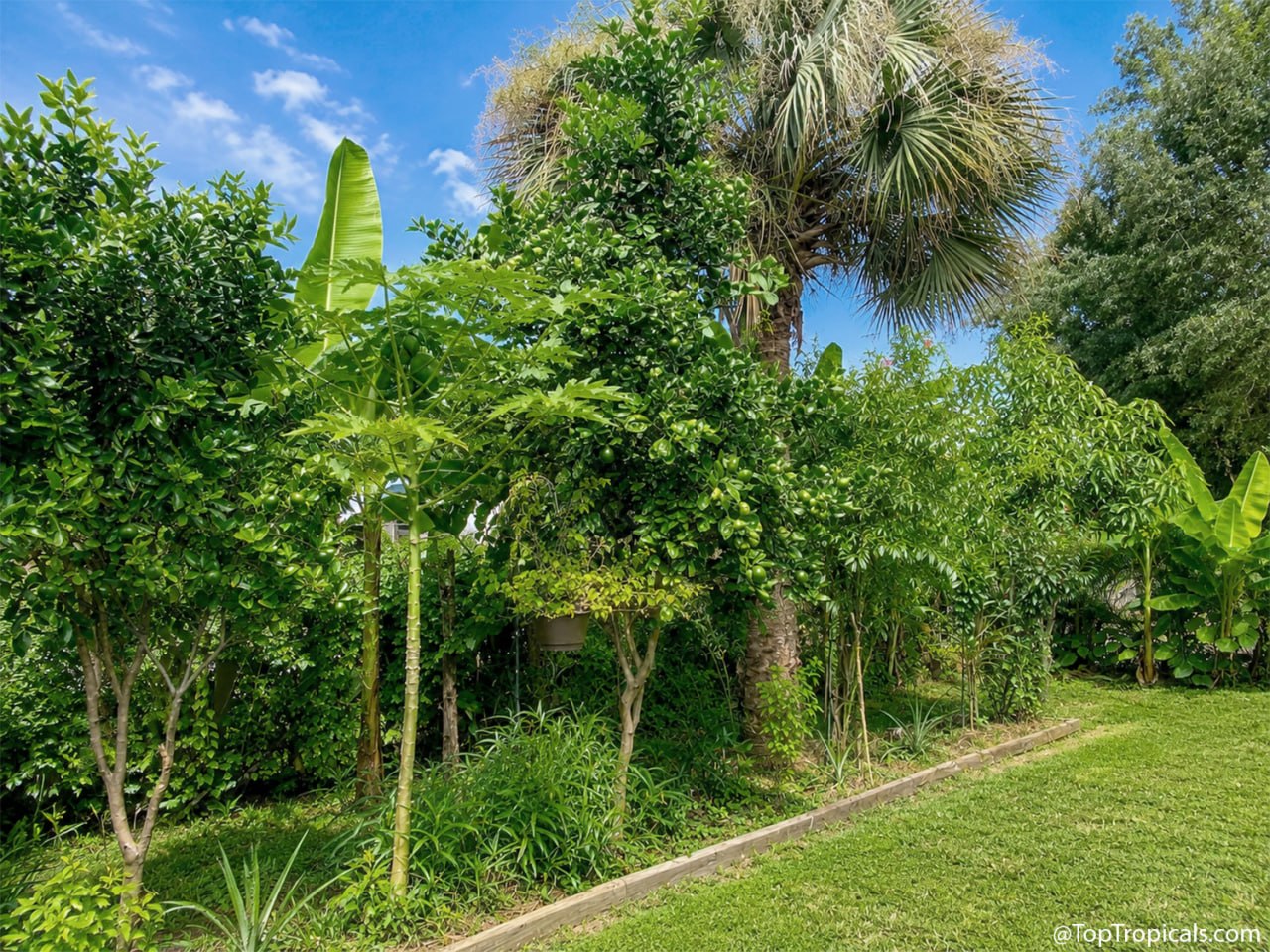
A few years ago, I visited the backyard of one of our customers from Thailand - Amprai - and was amazed. She had mangoes, bananas, citrus, papayas, and many other tropical plants growing together in what looked like an ordinary suburban yard. Somehow, everything fit without feeling crowded.
She showed me one clever space-saving technique used by Thai gardeners that completely changed the way I think about small gardens.
🌳 1. Grow upward, not outward.
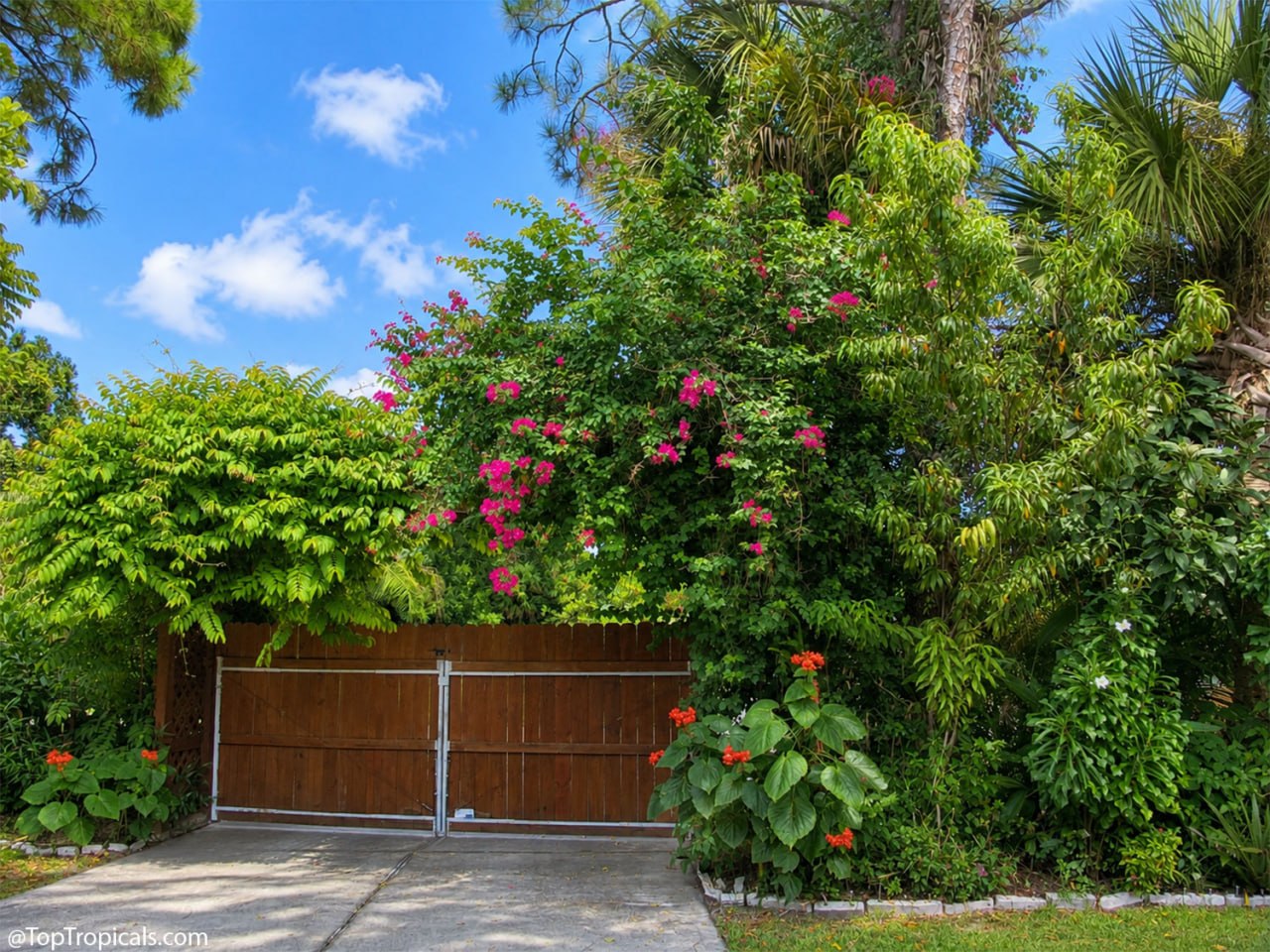
Use trellises, fences, pergolas, and walls instead of more ground space. Vines like passionfruit, dragon fruit, vanilla, and Barbados gooseberry love to climb.
🌳 2. Prune with a purpose.
Pruning isn't just about keeping trees small. Thai gardeners train branches upward instead of outward, turning wide trees into narrow ones. We saw productive mango trees growing only about 6 feet apart!
🌳 3. Use containers everywhere.
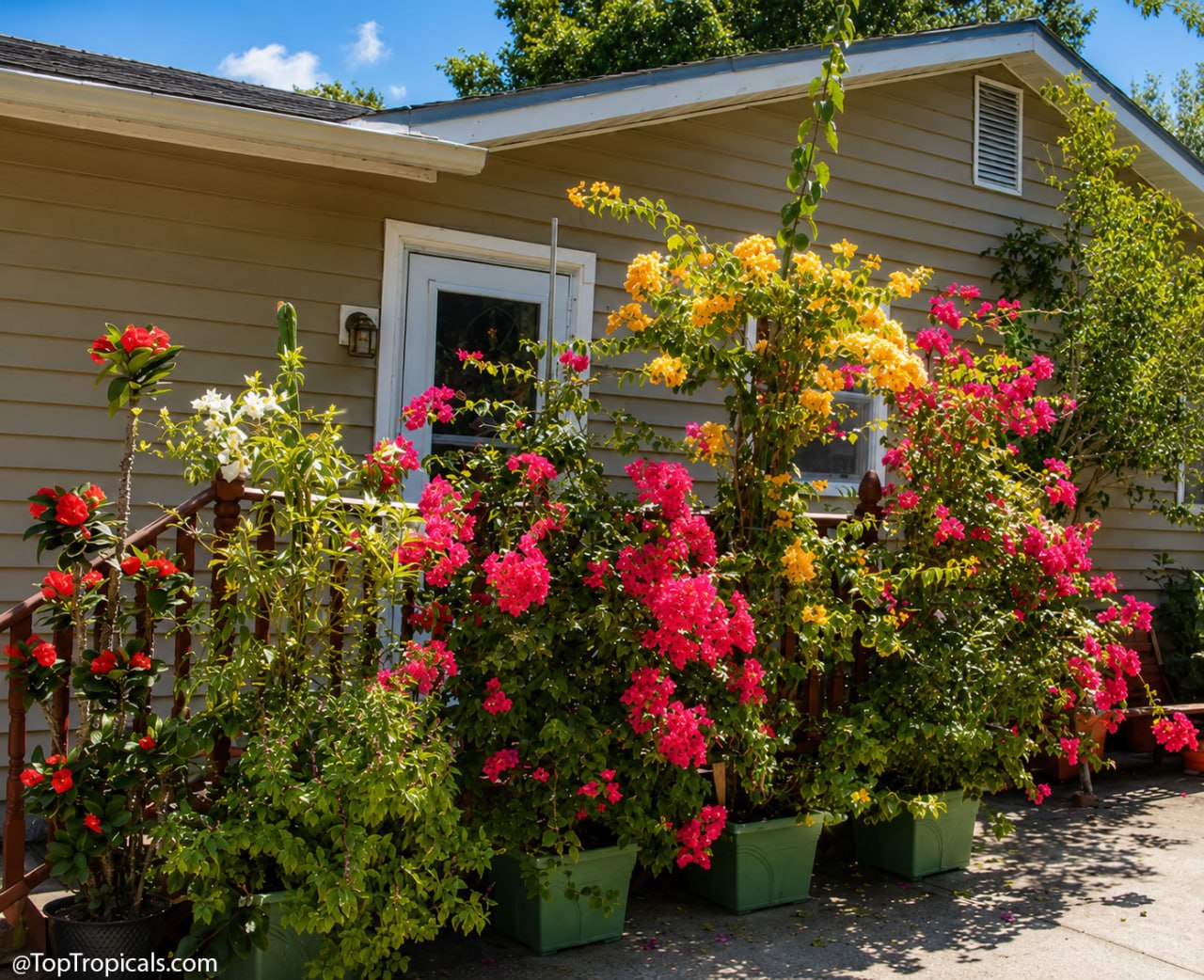
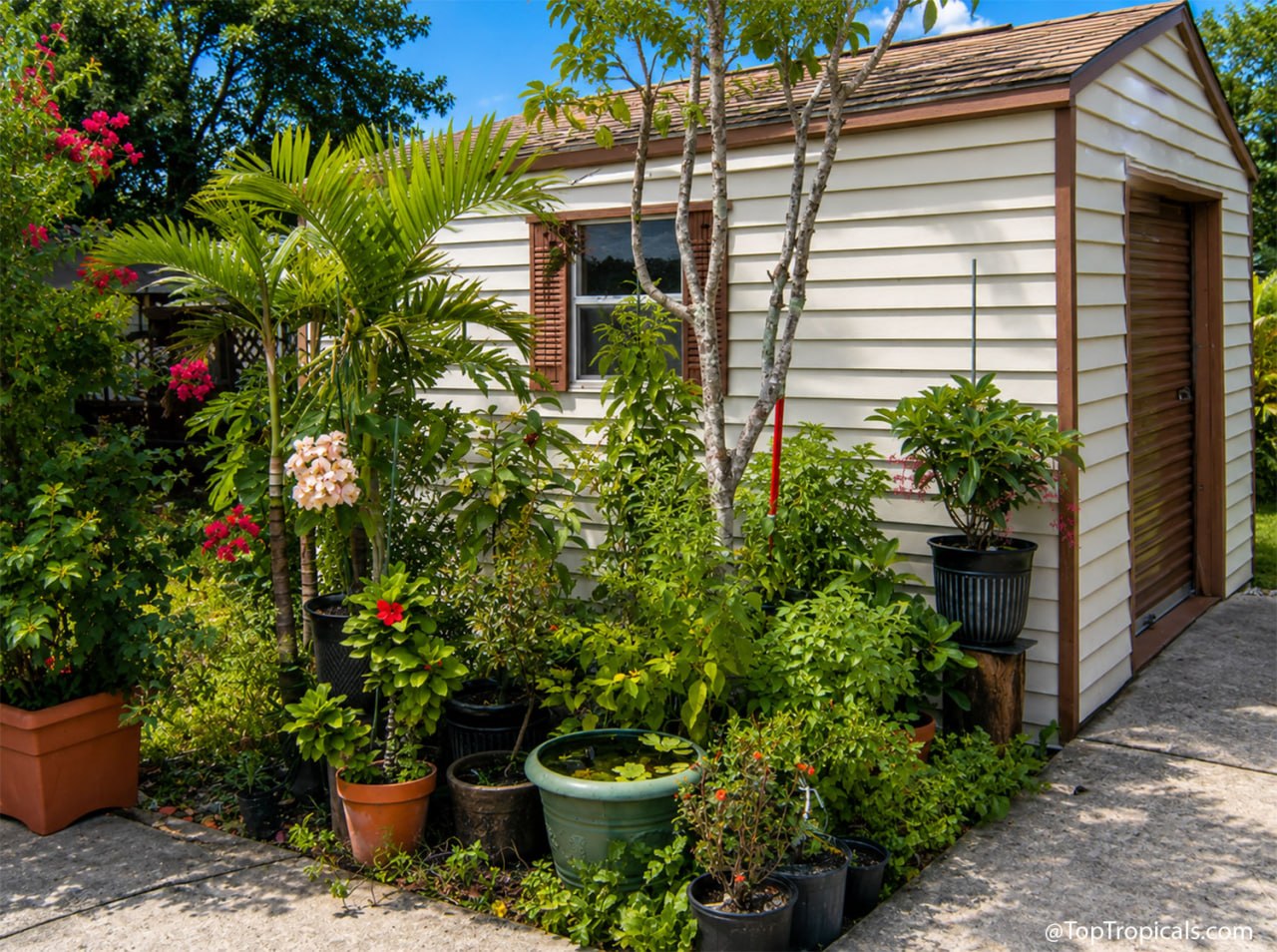
Patios, porches, steps, balconies, and entryways can all become growing space. Containers are easy to rearrange and protect during winter.
🌳 4. Plant in layers.
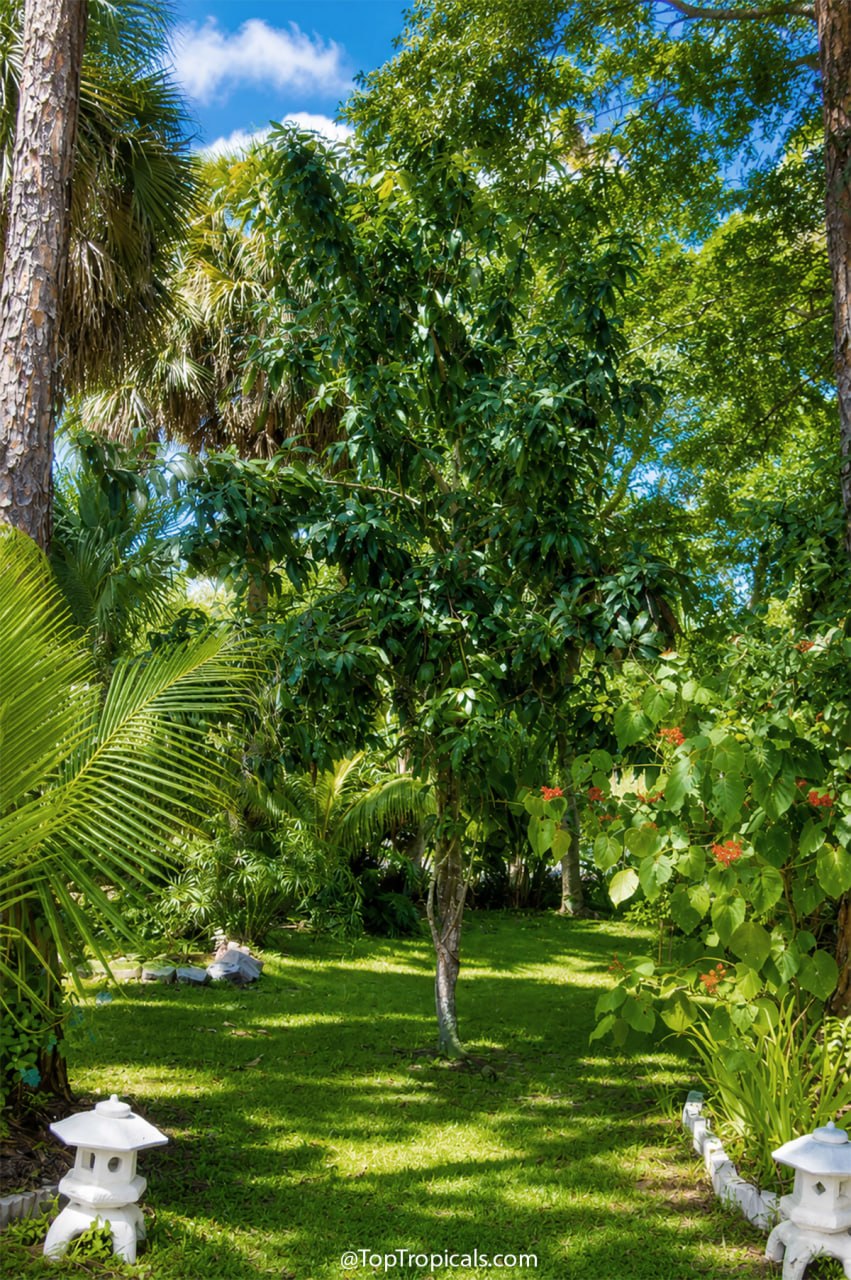
Think like a rainforest: a tall tree above, shrubs underneath, groundcovers below, and vines climbing through the canopy.
🌳 5. Start with compact varieties.
Choose naturally smaller fruit trees like condo mangoes, dwarf avocados, dwarf bananas, and other compact selections.
🌳 6. Grow edible ornamentals.
Many food plants are beautiful enough for landscaping. Pineapple, curry leaf, katuk, moringa, and edible hibiscus all earn their place.
🌳 7. Hang plants.
Use the air above you! Hanging baskets, mounted orchids, hoyas, and epiphytes create a whole new growing layer.
🌳 8. Use fences and property lines.
These are often wasted spaces that are perfect for climbers and flowering vines.
🌳 9. Don't ignore narrow spaces.
That skinny strip beside a driveway or fence is ideal for gingers, bromeliads, heliconias, herbs, and ground orchids.
🌳 10. Choose plants with multiple uses.
Why grow a plant that does only one job? Many species provide food, beauty, fragrance, pollinator value, and privacy all at once.
🌳 11. Make friends with shade.
Coffee, vanilla, philodendrons, gingers, and many orchids actually prefer filtered light.
🌳 12. Create "garden rooms."
Divide your yard into small destinations - a fruit corner, a butterfly garden, or a tropical foliage area. The whole garden instantly feels bigger.
🌿 The biggest mistake isn't having a small garden - it's treating it like a tiny version of a large one. Think up, down, under, and around. With a little planning, even a modest backyard can become a lush tropical paradise.
🛒 Explore Food Forest
📚 Learn more:
✦ Full article: the secret to growing more plants without buying more land
✦ The Garden where Happiness lives
✦ Interview with Amprai in her Small Garden (Tropical Treasures Magazine, PDF)
#Food_Forest #Discover #How_to
🟢 Join 👉 TopTropicals
Date: 29 Aug 2026
Daily Cat Lesson #8: Cat People Never Change
🐾 Daily Cat Lesson #8: Cat People Never Change
🐾 For more than 1,000 years, humans have been hopelessly in love with their cats. Apparently, some things never change. 🖤🐈
🐾 In the year 889, Japanese Emperor Uda sat down and wrote about his beloved black cat in his diary. It is considered the earliest known written record of a domestic cat in Japan. And if you think modern cat people are obsessed with their cats... read this:
"This black cat of mine... is dark black like a crow.
When he curls up he is very small, looking like a black millet berry, but when he stretches out he is long, resembling a drawn bow. The pupils of his eyes sparkle, dazzlingly bright like shiny needles flashing with light...
When he crouches he becomes a ball without feet, resembling a round jade taken from the depths of a cave. My cat moves silently, making not a single sound, like a black dragon above the clouds.
...I have cared for him now for five years. Every morning I give him milk gruel.
I once said to the cat, 'You possess the forces of yin and yang and have a body that is the way it should be. I suspect that in your heart you may even know all about me!' The cat heaved a sigh, raised his head, and stared fixedly at my face, seeming so choked with emotion, his heart so full of feeling, that he could not say a thing in reply."
- Emperor Uda of Japan, 889 ☯️
🐾 More than eleven centuries later, we're still taking pictures of our cats, describing how beautiful they are, serving them special meals, talking to them - and interpreting a stare as a deeply emotional response. 👀
Cat people never change.
📚 Learn more:
The full 889 AD account of one very spoiled imperial cat: Emperor Uda's full love letter to his black cat
🐈📸 Top Tropicals rescued cat Georgie at PeopleCats.Garden.
🐈 Stay with us for your Daily Dose of Cat! #DailyCatLesson #PeopleCats
🟢 Join 👉 TopTropicals
Date: 29 Aug 2026
The Truth About How Pineapples Are Born
🍍 The Truth About How Pineapples Are Born
Most people know what a pineapple looks like. But its flowers are surprisingly easy to miss.
Look closely at a developing pineapple and you may see tiny purple flowers emerging between its scales. They’re small, bright, and distinctly bromeliad-like.
And they reveal something fascinating about how a pineapple is made.
🍍 One pineapple starts with many flowers
A pineapple doesn’t come from one flower.
It begins as a cluster of many individual flowers packed around a central stalk. Each purple flower produces a small fruit, and as they develop, all those fruits fuse together into one pineapple.
That’s why pineapple is called a multiple fruit.
Those familiar “eyes” on a mature pineapple? Each one corresponds to an individual flower and fruit.
🌀Look at the spiral
The eyes form beautiful spirals because the original flowers were arranged that way on the flower spike.
During flowering, you can see the structure especially well: purple flowers between the developing sections, with the leafy crown already growing on top.
🍍 Yes, pineapple is a bromeliad
Pineapple (Ananas comosus) belongs to the Bromeliaceae family, along with many familiar ornamental bromeliads.
A mature plant produces a central flowering structure from its rosette. But in pineapple, that flower spike eventually becomes something much more familiar: fruit.
🍍 What happens next?
The change happens quickly.
Within days, the purple flowers fade and the developing fruits begin to swell. In just a week, the flower spike can already look much more like a miniature pineapple.
From there, it continues growing until the fruit matures and ripens.
🍍 Don’t miss the flowers
If your pineapple is beginning to fruit, look closely. The purple flowers are brief and much easier to miss than the fruit itself.
You can grow a pineapple, harvest it, and never realize you had dozens of tiny flowers right in front of you.
👉 Top Tropicals grows many different Pineapples, from fruiting varieties to unusual ornamental forms. If you’ve only been watching them for the fruit, take another look at the flowers.
🛒 Shop Pineapple varieties
📚 Learn more:


Ananas varieties (Pineapples) in Plant Encyclopedia
The white-fleshed, low-acid pineapple disrupting tropical gardens
What are the best varieties of Pineapples?
What is the best pineapple to grow at home
How we ate all pineapples from that ugly corner
The most luscious Hospitality Fruit: Pineapple
Three must-have fruit for every tropical garden
Rare Pineapple that looks like a sunset and thrives on neglect
🎥
#Food_Forest #Container_Garden #Discover
🟢 Join 👉 TopTropicals
Date: 28 Aug 2026
Daily Cat Lesson #7: I am NOT a Scratching Post!

🐾 Daily Cat Lesson #7: I am NOT a Scratching Post!
There are scratching posts.
There are cat trees.
There is furniture.
And yet somehow - my leg was selected.
- 🐾 Why do cats scratch?
Scratching isn't just about sharpening claws. It helps cats shed the old outer layers of their claws, stretch their paws, legs and back, and exercise the muscles involved in extending and retracting their claws. - 🐾 Cats also leave a message when they scratch.
Cats have scent glands in their paws. Scratching leaves both a visible mark and a scent signal. In Cat, it's basically: "I was here. This is part of my territory." - 🐾 Why does my cat scratch ME?
Your leg may simply be in exactly the right place and the right time for a stretch and scratch. And because you're familiar and smell like home, scratching around you can also be part of the cat's normal comfortable territorial behavior.
It doesn't necessarily mean he's angry with you.
Although this information is considerably more comforting to the cat than it is to your leg. - 🐾 What should you do?
Don't punish normal scratching behavior. Give your cat something better to scratch: a sturdy scratching post tall enough for a full-body stretch, plus horizontal scratchers if your cat prefers them.
Put them where the cat actually likes to scratch, not where they look best with the furniture. Cats have strong opinions about interior design.
And if your leg is still selected...
Congratulations. You may officially be part of the territory. 😹
🐈📸 Sphynx Cat Pelmen - a friend of TopTropicals PeopleCats.Garden.
🐈 Stay with us for your Daily Dose of Cat! #DailyCatLesson #PeopleCats
🟢 Join 👉 TopTropicals
Date: 28 Aug 2026
Potting Mix Explained: Why Garden Soil Kills Container Plants
Potting Mix Explained: Why Garden Soil Kills Container Plants
Most people assume soil is soil.
If it's black, rich, and full of organic matter, it must be perfect for every plant, right?
Actually, that's one of the biggest mistakes in container gardening.
You can grow a healthy tree in almost pure sand.
You can also kill that same tree in rich black compost.
The difference isn't nutrients - it's oxygen.
🔸 Garden soil and potting mix have different jobs
Garden soil is designed for nature.
Rainwater drains deep into the ground, roots can spread in every direction, worms create air channels, and excess moisture eventually disappears.
A container is completely different.
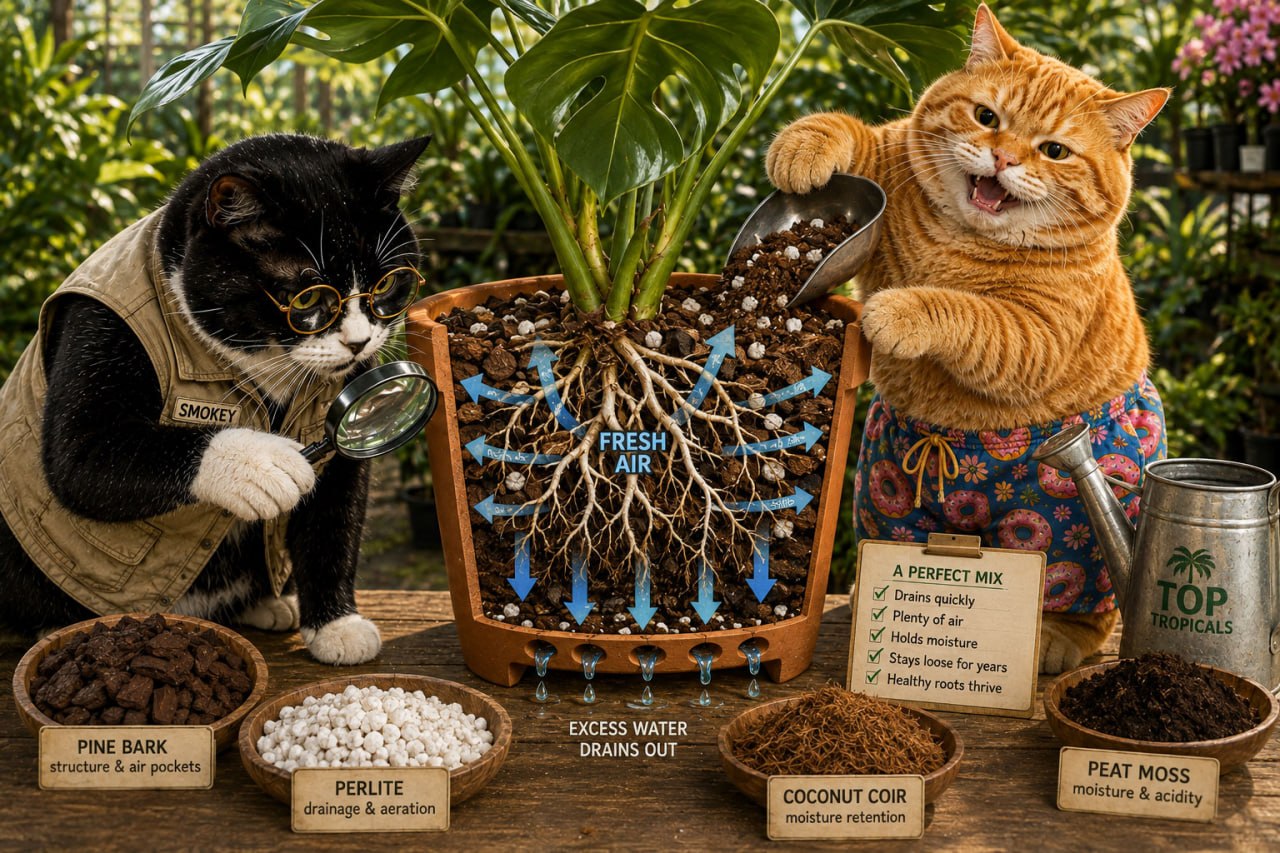
The roots are confined, water has only a few drainage holes to escape through, and if the growing medium stays too wet, oxygen disappears. That's when bacteria and fungi begin attacking the roots.
The problem isn't the pot.
The problem is using a heavy soil that wasn't designed for containers.
🔸 Water isn't the enemy
One of the best pieces of horticultural advice I ever received came from tropical fruit expert Murray Corman:
"Always overwater your plants. Improve your soil drainage."
It sounds backwards, but it's true.
Healthy roots need two things:
✅ Water
✅ Oxygen
Without oxygen, roots suffocate, diseases develop, and root rot begins.
A well-drained potting mix allows you to water generously because fresh air replaces excess water after each watering.
🔸 Why it's called a "soilless" mix
Professional potting mixes contain no actual soil.
Instead, they're carefully engineered from lightweight ingredients such as pine bark, coconut coir, peat moss, perlite, and other materials that create the perfect environment for roots.
Notice what's missing:
❌ Garden soil
❌ Clay
❌ Topsoil
❌ Muck
❌ Compost
The goal isn't to imitate nature.
The goal is to give roots plenty of air while holding just enough moisture.
🔸 Tropical plants like acidic, airy soils
Most tropical plants grow best in a slightly acidic potting mix with a pH around 5.5 to 6.5.
That's one reason professional mixes often contain pine bark, Canadian peat moss, and/or coconut coir. These ingredients create an airy root zone while naturally supporting the slightly acidic conditions many tropical plants prefer.
Avoid adding alkaline materials such as shell rock, limestone, crushed coral, or oyster shell unless the plant specifically requires them.
🔸 The secret is below the surface
Many gardeners focus on what's happening above the soil. Professional growers focus on what's happening below it.
The healthiest roots don't grow in the richest-looking soil. They grow in a potting mix that breathes.
That's why the secret behind healthy container plants isn't watering less. It's using the right potting mix.
🛒 Get Our Proven Professional Potting Mix
📚 Learn more
· The complete guide to potting mix
· The #1 Rule for Mail-Order Plant: Don't Disturb the Roots
· When Is the Best Time to Water Your Plants?
· How much water is too much?
· Container Gardening in Hot Climate
· How to re-pot a plant properly
#Fertilizers #How_to #Discover
🟢 Join 👉 TopTropicals