Garden Blog - Top Tropicals

Date: 4 Jan 2026

Dont drink your coffee until you see this!

Coffea arabica - Coffee tree, fruit

☕️ Don't drink your coffee until you see this!

  • Our coffee trees, Coffea arabica, are growing in 7-gallon pots, and after months of waiting, the cherries are fully ripe!
  • They bloomed in May, set fruit in August, and now in winter the fruit has turned red and ready to harvest.
  • Coffee is one of the easiest fruiting plants you can grow at home. It does well in containers, loves shade, and can be grown indoors or outdoors in warm climates. With regular watering and a little patience, you can grow, harvest, roast, and brew your own coffee right from your home garden.
  • We are harvesting now, and the next video will show the full roasting process step by step.

  • 👉 Coming up next: Roasting video coming soon - stay with us!


🛒 Start your own coffee harvest

📚 Learn more:

Plant Facts

Coffea arabica
Coffee
USDA Zone: 9-11
Large shrub 5-10 ft tallSmall tree 10-20 ftSemi-shadeShadeKeep soil moistWhite, off-white flowersEdible plantEthnomedical plant.
Plants marked as ethnomedical and/or described as medicinal, are not offered as medicine but rather as ornamentals or plant collectibles.
Ethnomedical statements / products have not been evaluated by the FDA and are not intended to diagnose, treat, cure, or prevent any disease. We urge all customers to consult a physician before using any supplements, herbals or medicines advertised here or elsewhere.Fragrant plantSubtropical plant. Mature plant cold hardy at least to 30s F for a short time
  • Coffea arabica in Plant Encyclopedia
  • Homegrown coffee - the journey begins!
  • How to make your own coffee from homegrown beans
  • Coffee trees in bloom
  • •  Brew Your Future: Grow Your Own Coffee
  • •  What is coffee made of?
  • •  Why Coffee tree is the best gift plant
  • •  Top 10 fruit you'll ever need for your health benefits: #2. Coffee Tree
  • •  What is the most popular and the easiest tropical fruit tree grown as a house plant?
    🎥

    #Food_Forest #Container_Garden #Shade_Garden

    🟢 Join 👉 TopTropicals
  • Date: 4 Jan 2026

    Is it Star Apple, Star Fruit, Cainito or Caimito? Are you lost? Here is the truth:

    ⭐️ Is it Star Apple, Star Fruit, Cainito or Caimito? Are you lost? Here is the truth:


    #Food_Forest

    🟢 Join 👉 TopTropicals

    Date: 4 Jan 2026

    Caimito creamy scoop: quick-n-fun exotic recipes

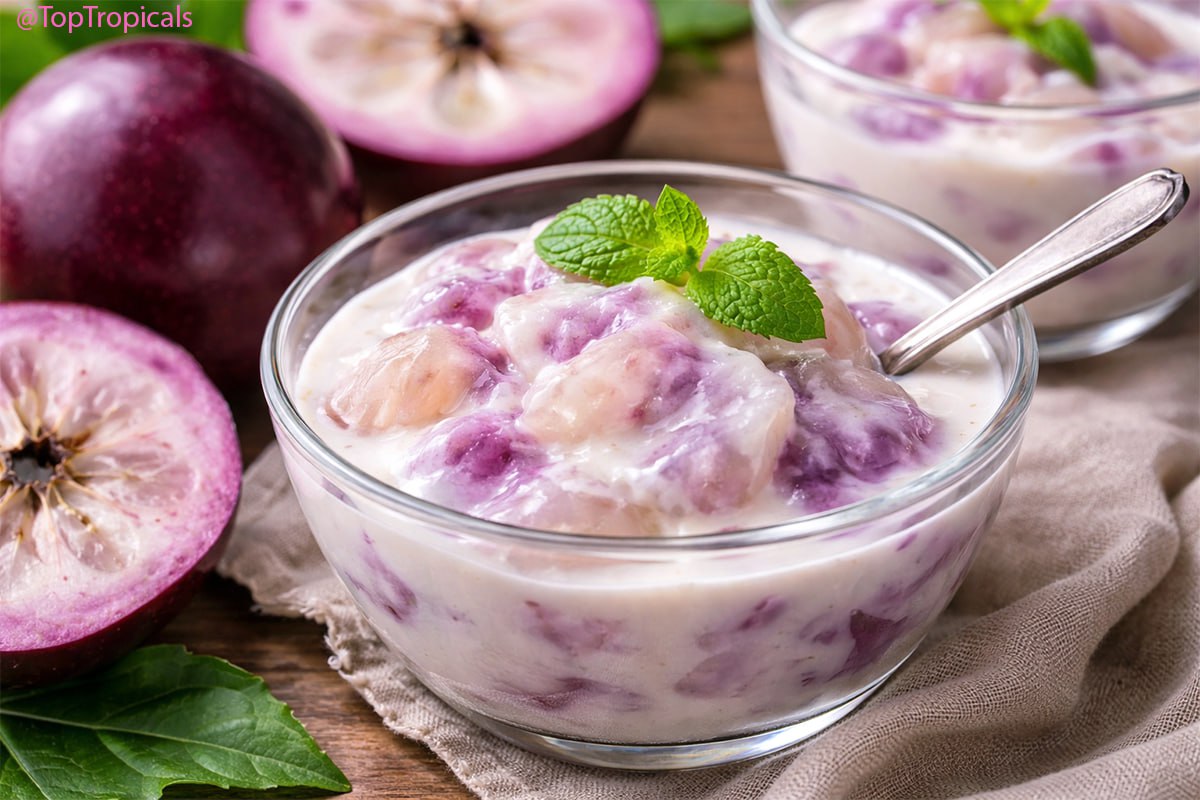
    Caimito creamy scoop

    Caimito creamy scoop

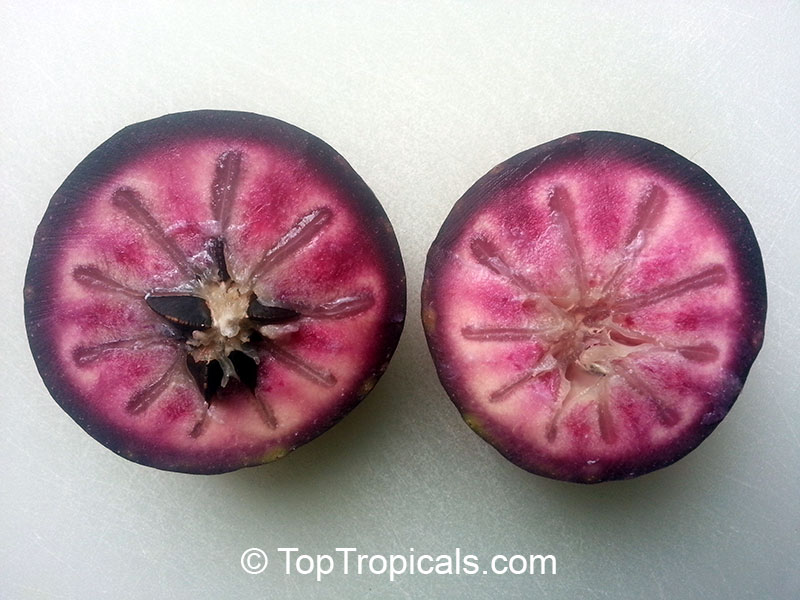
    Caimito Star Apple (Chrysophyllum cainito), fruit

    Caimito Star Apple (Chrysophyllum cainito), fruit

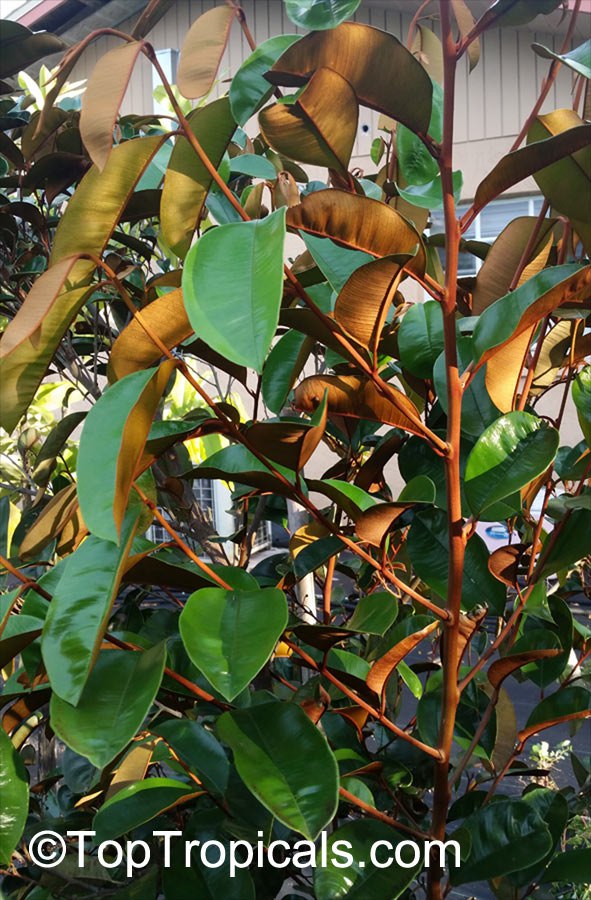
    Caimito Star Apple (Chrysophyllum cainito), leaves with rusty underneath

    Caimito Star Apple (Chrysophyllum cainito), leaves with rusty underneath

    🍴 Caimito creamy scoop: quick-n-fun exotic recipes

    • 🔴Chill star apple halves, then scoop out the jelly-soft pulp.
    • 🔴Stir gently with cold sweet cream for a tropical dessert cup.


    ⭐️ About the fruit:


    Caimito, also known as star apple, is a classic tropical fruit tree native to the West Indies and widely grown throughout the Caribbean, Central America, and other warm regions. It thrives in USDA zones 10-11 and can handle brief dips into the low 30s. The fruit has a mild, grape-like flavor and a soft, jelly texture, and is a good source of vitamin C and minerals. Traditionally eaten fresh, caimito is also used in desserts, drinks, and preserves.

    🌱 In the garden:


    Beyond its fruit, caimito is highly ornamental. Its large, glossy green leaves have a striking coppery-rust colored underside, giving the tree a dramatic two-tone effect when stirred by wind. It prefers full sun and regular watering and grows well in the ground or large containers. In cooler climates, container-grown trees can be moved indoors for winter protection, making caimito both a productive and visually stunning addition to the garden.

    🛒 Plant exotic Caimito Star Apple fruit tree

    📚 Learn more:

    Plant Facts

    Chrysophyllum cainito, Achras caimito
    Caimito, Star Apple, Satin Leaf
    USDA Zone: 9-11
    Large tree taller than 20 ftFull sunRegular waterEdible plantSubtropical plant. Mature plant cold hardy at least to 30s F for a short time
  • Caimito Star Apple (Chrysophyllum cainito) in Plant Encyclopedia
  • Starry fruit and rusty leaves: the tropical tree full of surprises
  • Why is it called Star Apple?

  • #Food_Forest #Recipes

    🟢 Join 👉 TopTropicals

    Date: 3 Jan 2026

    One day in Jacques adventurous life

    Cat Jacques

    🏃‍♂️ One day in Jacque's adventurous life


    "What came first - the chicken or... Jacques? That is the question!"

    🐈📸 Repeat offender Cat Jacques, guilty as charged again - see paper towel incident. at TopTropicals PeopleCats.Garden.

    #PeopleCats #Quotes

    🟢 Join 👉 TopTropicals

    Date: 3 Jan 2026

    Cutting into a 37-pound Jackedak Jackfruit with Chiane and Ashley

    🍈 Cutting into a 37-pound Jackedak Jackfruit with Chiane and Ashley


    📱

    #Food_Forest #Jackfruit

    🟢 Join 👉 TopTropicals

    Date: 3 Jan 2026

    Why Cheena Jackedak is the best Jackfruit

    📱 Why Cheena Jackedak is the best Jackfruit


    #Food_Forest #Jackfruit

    🟢 Join 👉 TopTropicals

    Date: 2 Jan 2026

    Have a Happy Year!

    Cat Macaron

    Cat Macaron

    🌈 Have a Happy Year!


    "Sometimes the most important thing in a whole day is the rest we take between two deep breaths." - Etty Hillesum

    🐈📸 Cat Macaron enjoying the second day of the New Year on a sunny window.
    TopTropicals PeopleCats.Garden

    #Quotes #PeopleCats

    🟢 Join 👉 TopTropicals

    Date: 2 Jan 2026

    Why white-flesh Dragon fruits deserve more attention?

    White Dragon fruit varieties (Hylocereus undatus)

    🏆 Why white-flesh Dragon fruits deserve more attention?

    • ✔️ Fast growers, heavy producers.


      White-fleshed Dragon fruits are often overlooked, but they are the real workhorses of the Pitaya world. These varieties tend to be more vigorous, faster growing, and less demanding than red-fleshed types. They establish quickly, handle a wider range of conditions, and are usually heavier producers.
    • ✔️ Juicy, light, and refreshing.


      Flavor-wise, white-flesh types are milder and juicier, with higher water content and lower sugar. That makes them refreshing, hydrating, and a good choice for people watching sugar intake. Because they set fruit more reliably and produce larger crops, white-fleshed dragon fruits are often the best option for beginners and for anyone who wants dependable harvests without fuss.
    • ✔️ The sweetest of them all.


      Yellow-skinned dragon fruit with white flesh takes things one step further. While the plant itself is a bit slower and more selective, the fruit is the sweetest and most flavorful of all dragon fruits, often described as honeyed or tropical with pineapple notes.


    ✍️ The best white-fleshed Dragon fruit varieties:

    • 🔴 ⚪️ Red skin, white flesh (Hylocereus undatus): the most common and productive group. These plants are vigorous, fast-growing, and known for large fruit size. Flavor is mildly sweet and very refreshing, often compared to kiwi or pear. Excellent choice for heavy production and easy care.
    • Varieties: David Bowie, Delight, Hana, Lake Atitlan, Seoul Kitchen, Vietnamese Jaina, Hana

    • 🟡⚪️ Yellow skin, white flesh (Hylocereus, or Selenicereus megalanthus) - Smaller fruit but unmatched sweetness. Crisp, juicy flesh with honey, pineapple, or tropical notes. Less productive than red-skin whites, but prized for flavor above all else.
    • Varieties: Amarilla (Kirin), Colimbiana, Godlen Dragon, Palora, Thai Gold (Hawaiian)

      Quick Takeaway:


    ⚪️ White-flesh reds = most vigorous, most productive, easiest to grow
    🟡 Yellow with white flesh = sweetest and most flavorful
    🔴 Red-flesh types = richer flavor but usually slower and less productive

    🛒 Explore and collect Dragon Fruit varieties

    📚 Learn more:

    Plant Facts

    Hylocereus sp.
    Pitaya, Pitahaya, Dragon Fruit, Strawberry Pear
    USDA Zone: 9-11
    Large shrub 5-10 ft tallVine or creeper plantSemi-shadeFull sunModerate waterWhite, off-white flowersThorny or spinyEdible plantSubtropical plant. Mature plant cold hardy at least to 30s F for a short timeSeaside, salt tolerant plant
  • · More about Dragon fruit plant from Plant Encyclopedia
  • · A Quick Guide to Dragon fruit varieties: Red, White, Yellow, Purple and more...
  • · What is the best Dragon fruit with red flesh?
  • · Planting your own Dragon Fruit plantation
  • · Do-It-Yourself Support Structure for Dragon Fruit
  • · Why you need to grow your own dragon fruit
  • · Do red, white and yellow Dragon fruit taste differently?
    • 📱 How to grow Dragon Fruit
    • 📱
    • 📱

    #Food_Forest #Dragon_Fruit #Discover

    🟢 Join 👉 TopTropicals
  • Date: 2 Jan 2026

    Velvet Nopal tacos: quick-n-fun exotic recipes

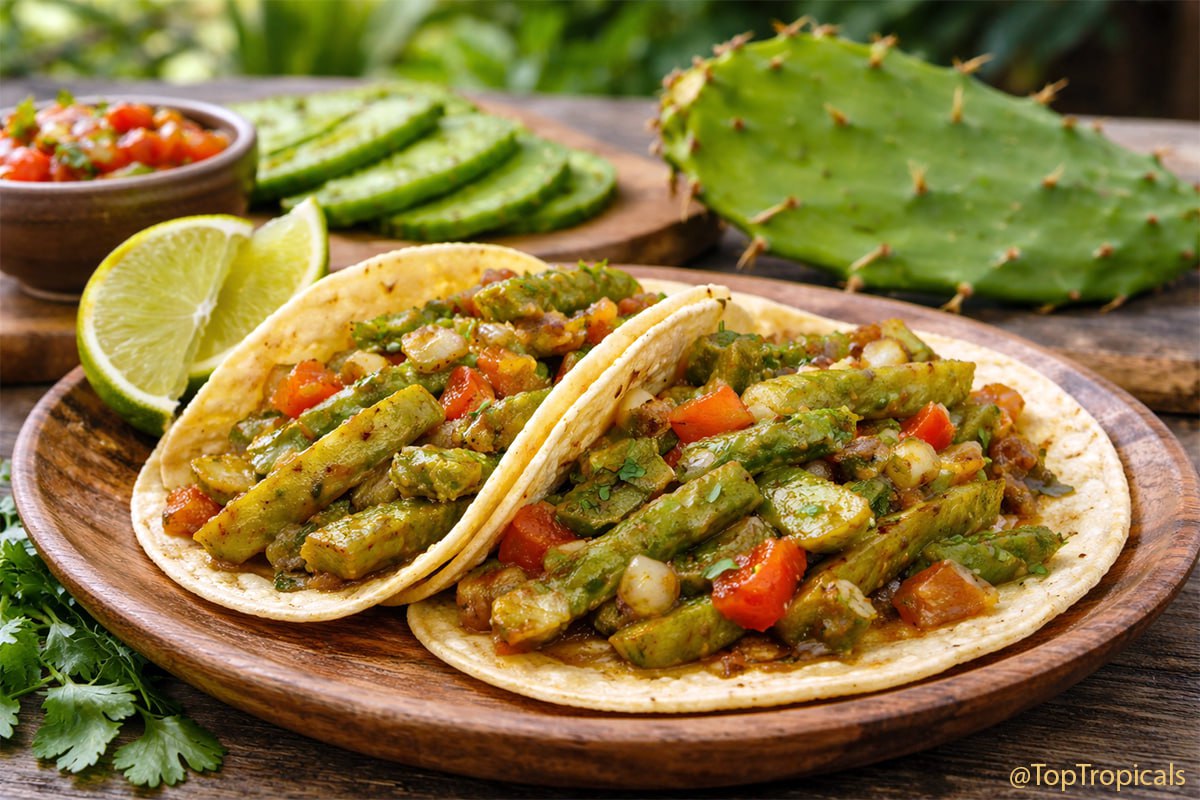
    Velvet Nopal tacos

    Velvet Nopal tacos

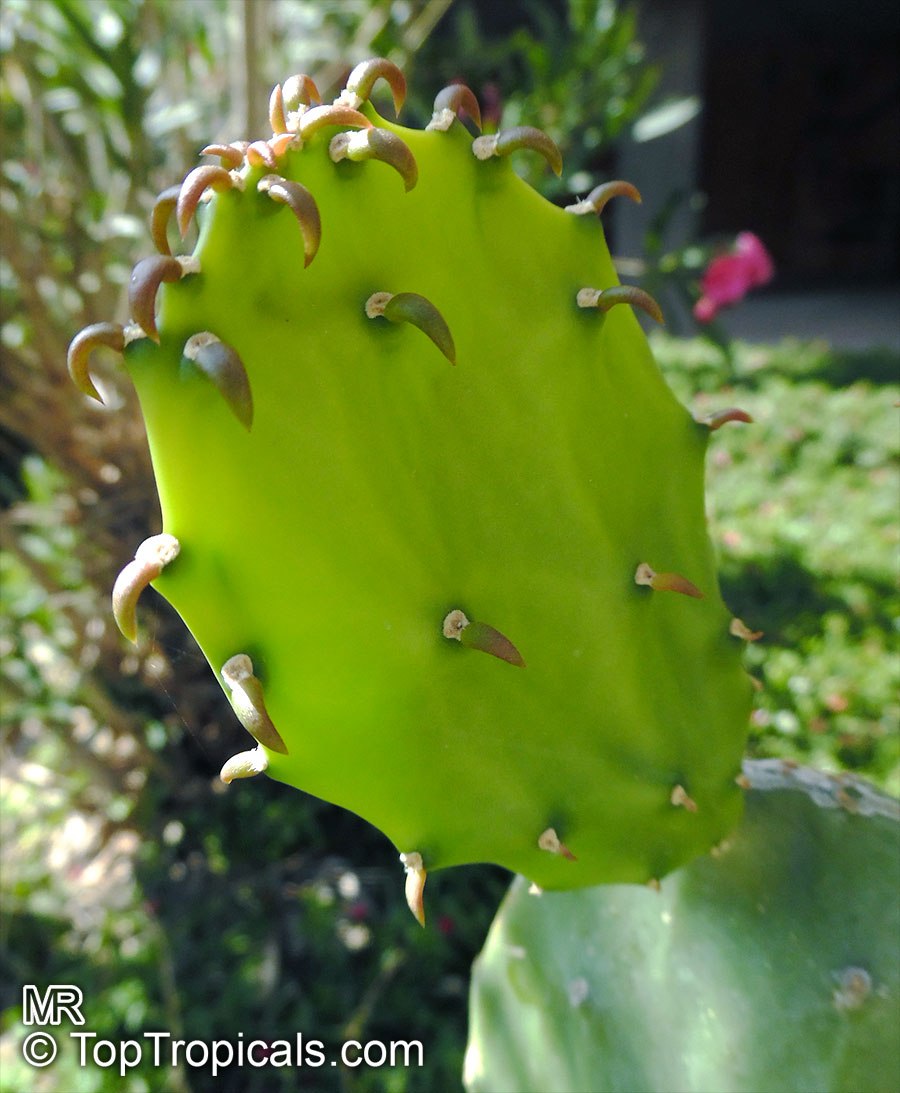
    Opuntia cochenillifera - Velvet Nopal Cactus, Prickly Pear

    Opuntia cochenillifera - Velvet Nopal Cactus, Prickly Pear

    🍴 Velvet Nopal Tacos

    Ingredients

    • 2 to 3 tender velvet nopal pads (Opuntia cochenillifera)
    • 1 small onion, diced
    • 1 small tomato, diced
    • 1 tablespoon vegetable oil
    • Salt to taste
    • Corn tortillas

    Instructions

    1. Remove spines from nopal pads and slice into strips.
    2. Boil the sliced nopal for 5 minutes, then drain well.
    3. Heat oil in a pan and saute onion until soft.
    4. Add tomato and cooked nopal, season with salt, and saute until tender.
    5. Serve warm in corn tortillas.

    🌵 About the plant:


    Nopal Opuntia (prickly pear cactus pads) is a cornerstone vegetable in Mexican cuisine and a long-standing staple across Central and South America. It is valued both as food and medicine. Traditionally eaten sauteed, grilled, or stewed, nopal is rich in fiber, minerals, and antioxidants. It is especially well known for its role in blood sugar management - many people who eat it regularly report significant improvement in diabetes control.

    🌱 In the garden:


    Prickly pear is a fast-growing, tough desert plant with showy red flowers. It thrives on neglect, tolerates drought, and also handles Florida rain surprisingly well. Easy to grow, productive, and edible, it is one of the most practical food plants you can add to your landscape.

    🛒 Add Nopal Cactus to your kitchen garden

    📚 Learn more:

    Plant Facts

    Opuntia cochenillifera, Nopalea cochenillifera, Opuntia nuda
    Cochineal Cactus, Warm hand, Velvet Opuntia, Nopales Opuntia, Nopal Cactus
    USDA Zone: 9-11
    Large shrub 5-10 ft tallSemi-shadeFull sunModerate waterRed, crimson, vinous flowersEdible plantSubtropical plant. Mature plant cold hardy at least to 30s F for a short time
  • Opuntia cochenillifera - Velvet Nopal Cactus, Prickly Pear in Plant Encyclopedia
  • Edible cactus with health benefits that your tortoise will love too

  • #Food_Forest #Recipes #Remedies

    🟢 Join 👉 TopTropicals

    Date: 1 Jan 2026

    Why young trees need staking?

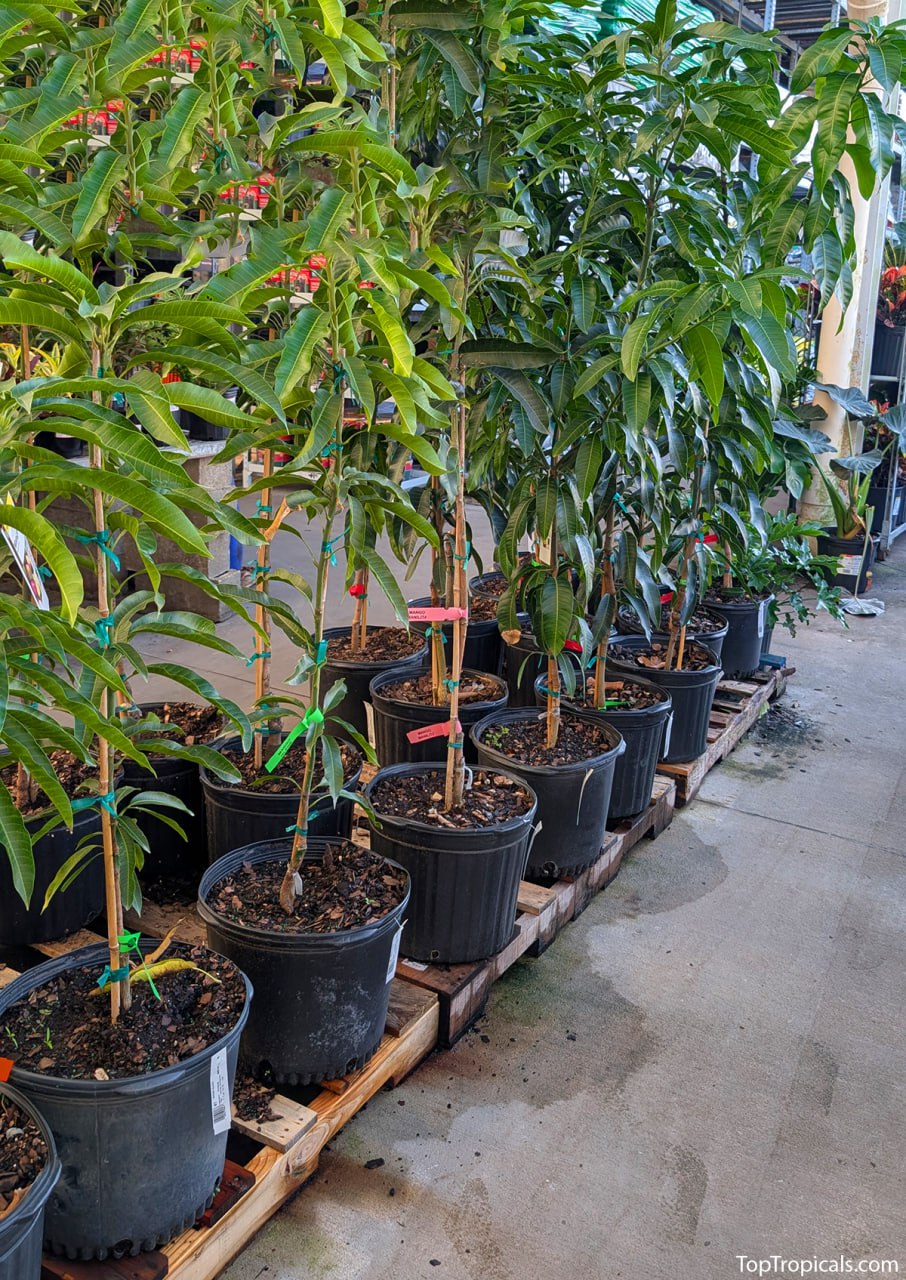
    Mango trees with bamboo support

    Mango trees with bamboo support

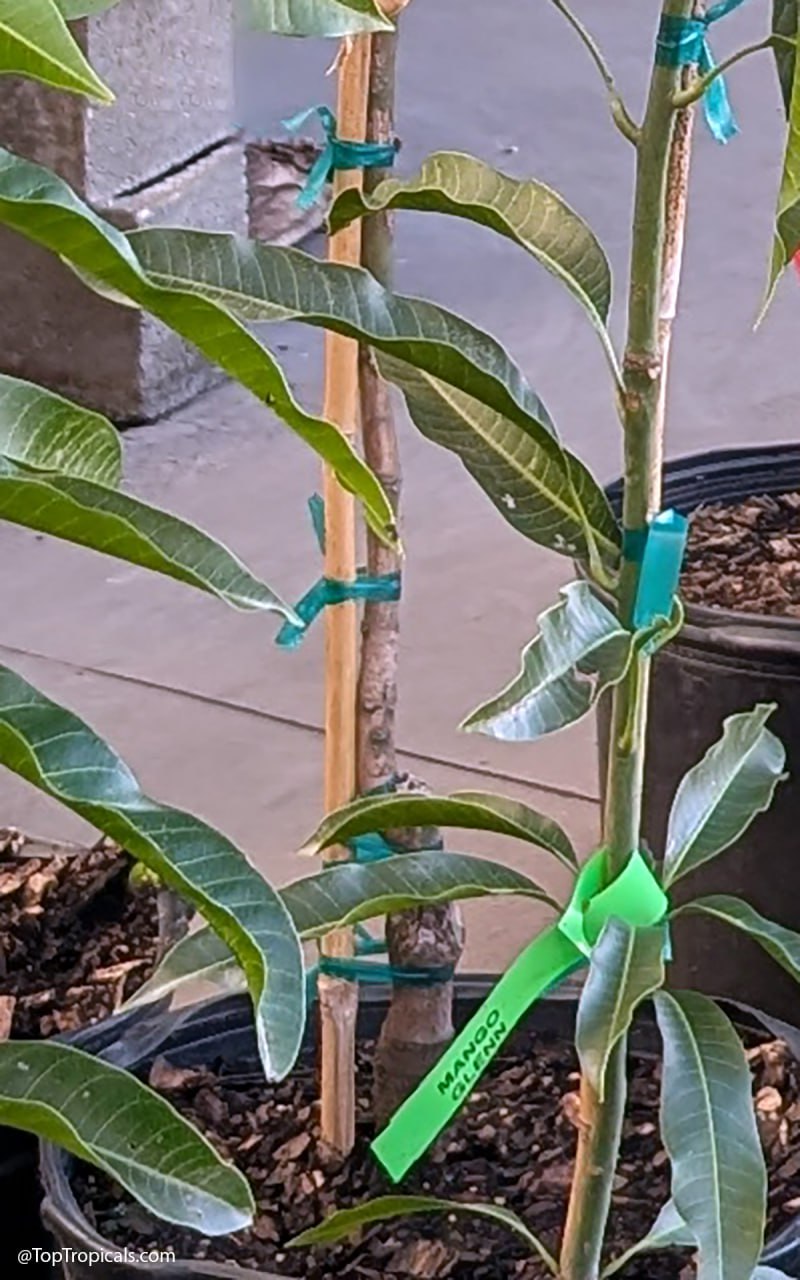
    Staking young trees

    Staking young trees

    🌳 Why young trees need staking?


    Staking a young tree is simple but important. The goal is to attach a bamboo stake to support the trunk, encourage straight growth, and-most importantly-prevent the stem from wiggling.

    Young trees grow fast and vigorously, but their trunks are often much taller and heavier than their root systems can support. At the same time, those trunks are still thin and flexible. Even light wind can cause the tree to rock back and forth. This movement disturbs developing roots and slows establishment.
    • ❗️ Without proper support:


    • 🔹 The trunk can break in strong wind.
    • 🔹 Roots loosen instead of anchoring.
    • 🔹 The trunk may grow crooked.
    • 🔹 The tree becomes uneven and less stable long-term.


    🌳 How to stake correctly

    • 🌳 Small trees


    • 🔹 Create an A-frame with one bamboo stake.
    • 🔹 Attach near the top, forming a triangle.
    • 🔹 Do not push the stake right next to the trunk. It may look neat, but it can damage roots and will not provide proper stability.


    🌳 Medium trees

    • 🔹 Use 2-3 tie points along the trunk.
    • 🔹 Use soft green garden tape, 1/2"wide.
    • 🔹 Secure firmly but allow slight movement.


    🌳 Tall or heavy trees

    • 🔹 Use a strong support such as a metal pipe. We use 1" aluminum electrical conduit.
    • 🔹 Attach with wider green tape, about 1"to protect the bark.
    • 🔹 Build tripods around larger trees.


    ❗️ Important maintenance tips:

    • 🔸 Check ties and tape often-every few weeks to once a month.
    • 🔸 As the tree grows, re-adjust the tape so it does not cut into the trunk as it thickens and doesn't cause any rot.
    • 🔸 Re-position bamboo stakes as needed, and be ready to replace them with a larger, stronger stake as the tree grows.

    These rules apply to both potted trees and trees planted in the ground. Proper staking early on helps your tree establish faster, grow straighter, and develop a strong, stable root system for the future.

    📸 Mango trees in 7 gal pots with"nursery-style"bamboo stakes that create a neat"standard". When stepping up or planting in the ground, attach a new stake and keep it away from the trunk.

    🛒 Explore fruit trees and flowering trees

    #Food_Forest #Trees #How_to

    🟢 Join 👉 TopTropicals