Garden Blog - Top Tropicals

Date: 5 Aug 2024

How to make a zippy Papaya-Citrus Marinade
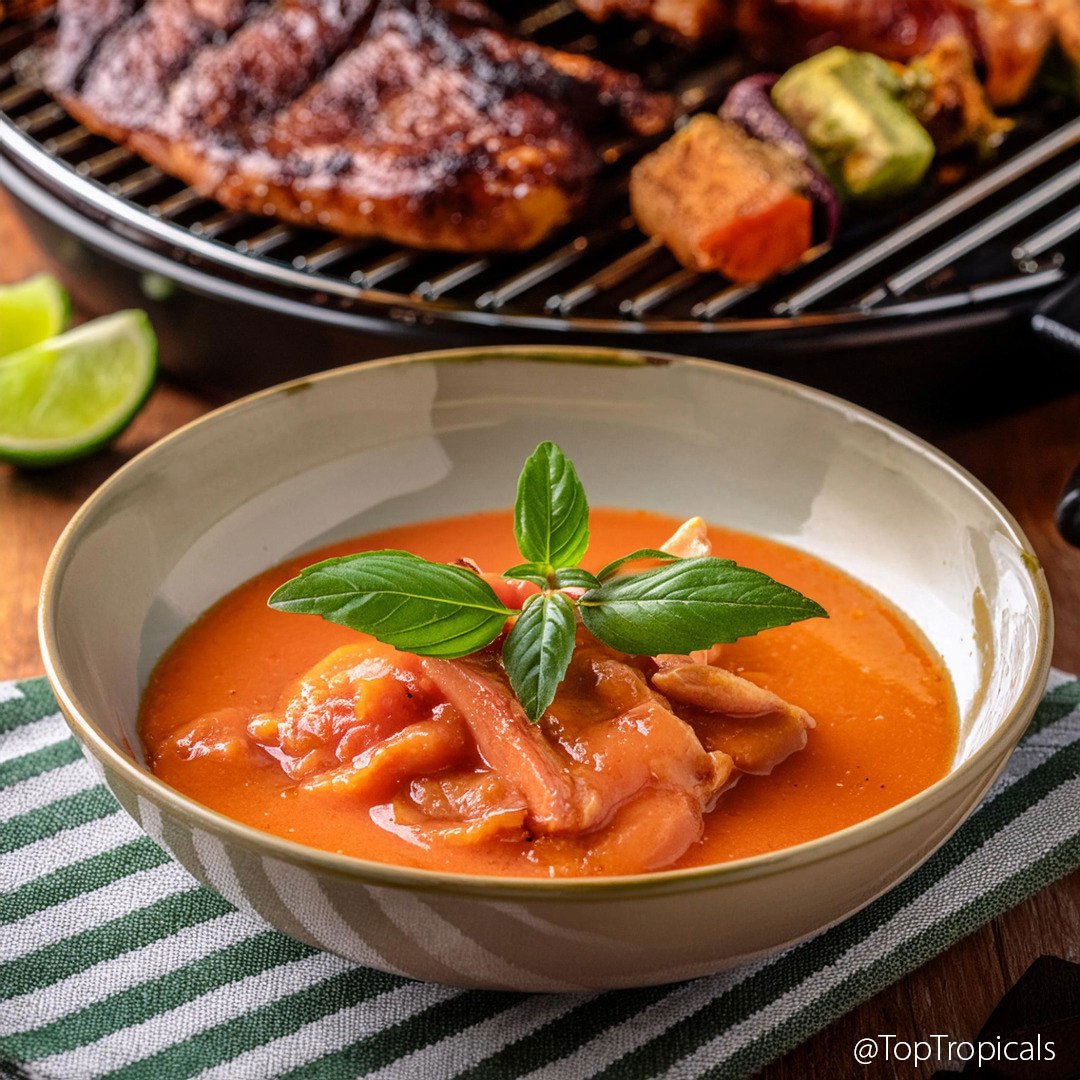
How to make a zippy Papaya-Citrus Marinade
🍲 How to make a zippy Papaya-Citrus Marinade

🍗 🍖 The Papaya enzyme papain makes this fruit especially suitable for tenderizing meat in marinades. Use this zippy marinade for beef or poultry.

  • ✔️ 1 cup papaya puree
  • ✔️ 1 tbsp lime zest
  • ✔️ 1/3 cup grapefruit juice
  • ✔️ 1/2 cup low sodium soy sauce
  • ✔️ 1 tbsp honey
  • ✔️ 1/2 tsp red pepper flakes
  • ✔️ 1 tbsp coarse black pepper
  • ✔️ 1/2 tsp basil leaves
  • ✔️ 2 tbsp olive oil


🍊 Combine and mix all ingredients except olive oil, then gradually mix in olive oil. Marinade meat for 2-8 hrs and cook over grill.

📚 From previous posts:

🛒 Get your own Papaya tree

#Recipes #Food_Forest

🔴 Join 👉 TopTropicals

Date: 4 Aug 2024

What is the biggest mango fruit?

Mango Kiew Yai

🥭 What is the biggest mango fruit?


🔍 We discovered one of the biggest Mango fruit after we planted this new variety - Kiew Yai.

Right now the fruit is almost a foot long!


⏳ The tree was planted in April - only 3 months ago.

😋 Looking forward to tasting it soon and sharing our taste impressions with you. Stay with us!

⬆️ Reminder: In order to have good quality fruit, your Mango tree must be grafted. Grafted varieties start fruiting right away, while seedlings may take from 7 to 10 years to fruit and the taste of the seedling's fruit will always be a surprise, they may be small in size and very fibrous.

📝 Check out our earlier posts on Mango

🛒 Order Kiew Yai and shop more Mango varieties

#Food_Forest #Mango

🔴 Join 👉 TopTropicals

Date: 3 Aug 2024

How to always have your own Root Beer

How to always have your own Root Beer


  • Piper auritum - Root Beer Plant, Acuyo, False Kava-Kava - is a close relative of Piper methysticum (Kava-Kava), and Piper nigrum (Black Pepper). It is very often confused with Kava-Kava, and probably has some similar medicinal effects.

  • This herb originated from Tropical America and grows also in the South Pacific.

  • Large-leaved perennial, known for its leaves, which are used for their spicy aromatic scent and flavor, some liken to root beer, others to anise-clove. It can be used for making a root beer-flavoted drink.

  • This species is easily identified by its huge leaves which can grow over a foot long in older specimens.

  • The leaves are chopped and used for flavoring, as well as used whole, as wrappings for meats, tamales, etc.


📚
Learn more about Piper plants

🛒 Grow your own Root Beer Plant

#Food_Forest #Remedies

🔴 Join 👉 TopTropicals

Date: 3 Aug 2024

How to always have your own Root Beer

How to always have your own Root Beer


  • Piper auritum - Root Beer Plant, Acuyo, False Kava-Kava - is a close relative of Piper methysticum (Kava-Kava), and Piper nigrum (Black Pepper). It is very often confused with Kava-Kava, and probably has some similar medicinal effects.

  • This herb originated from Tropical America and grows also in the South Pacific.

  • Large-leaved perennial, known for its leaves, which are used for their spicy aromatic scent and flavor, some liken to root beer, others to anise-clove. It can be used for making a root beer-flavoted drink.

  • This species is easily identified by its huge leaves which can grow over a foot long in older specimens.

  • The leaves are chopped and used for flavoring, as well as used whole, as wrappings for meats, tamales, etc.


📚
Learn more about Piper plants

🛒 Grow your own Root Beer Plant

#Food_Forest #Remedies

🔴 Join 👉 TopTropicals

Date: 3 Aug 2024

How to always have your own Root Beer

Piper auritum - Root Beer Plant, Acuyo, False Kava-Kava

How to always have your own Root Beer

  • Piper auritum - Root Beer Plant, Acuyo, False Kava-Kava - is a close relative of Piper methysticum (Kava-Kava), and Piper nigrum (Black Pepper). It is very often confused with Kava-Kava, and probably has some similar medicinal effects.
  • This herb originated from Tropical America and grows also in the South Pacific.
  • Large-leaved perennial, known for its leaves, which are used for their spicy aromatic scent and flavor, some liken to root beer, others to anise-clove. It can be used for making a root beer-flavoted drink.
  • This species is easily identified by its huge leaves which can grow over a foot long in older specimens.
  • The leaves are chopped and used for flavoring, as well as used whole, as wrappings for meats, tamales, etc.


📚
Learn more about Piper plants

🛒 Grow your own Root Beer Plant

#Food_Forest #Remedies

🔴 Join 👉 TopTropicals