Garden Blog - Top Tropicals

Date: 3 May 2026

3 Olive Trees Worth Planting in Your Yard Right Now
3 Olive Trees Worth Planting in Your Yard Right Now

3 Olive Trees Worth Planting in Your Yard Right Now


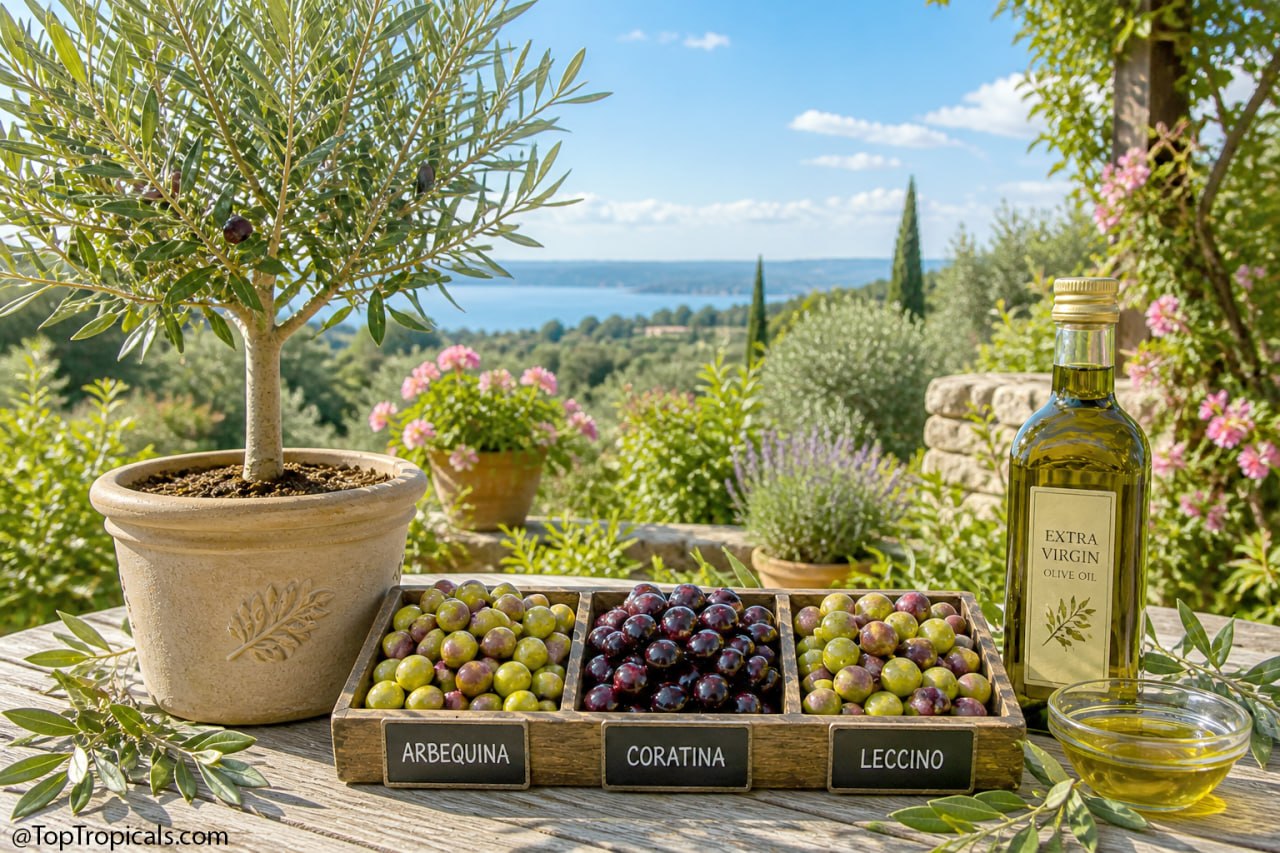
Olive trees aren’t just for the Mediterranean anymore. In warm parts of the U.S. - including much of Florida - certain varieties handle heat, humidity, and even occasional cold better than people expect. If you’ve been thinking about adding something useful, low-maintenance, and long-lived to your garden, olives deserve a spot on your list. Here are three varieties that actually make sense to grow.

  • 1. Arbequina: Compact, Productive, and Beginner-Friendly


Arbequina is one of the easiest olives to grow, especially if space is limited. It is naturally compact, which makes it great for containers or small yards. It starts producing early compared to other olives, handles heat well, and adapts to different soils. The fruit is mild, buttery, and excellent for oil. If you want an olive tree that behaves well and produces without much fuss, this is the one. 👉 More...

  • 2. Coratina: Bold Flavor and Strong Growth


Coratina is a completely different type of olive - vigorous, tough, and known for intense flavor. It is fast-growing and very hardy once established, and it produces heavily under the right conditions. The fruit is high in oil content with a flavor that is strong and peppery, making it prized for premium olive oil. This is a great choice if you want a more traditional, high-performance olive tree with character. 👉 More...

  • 3. Leccino: Reliable and Cold-Tolerant


Leccino is known for consistency and is one of the most widely planted olives for a reason. It is more cold-tolerant than many other varieties and is a reliable producer year after year. It has a medium growth habit that is easy to manage, and the fruit works well for both oil and curing. If your area gets occasional cold snaps, Leccino is a safer bet. 👉 More...

  • Why olives make sense in your garden


Olives check a lot of boxes most fruit trees don’t. They are drought-tolerant once established and don’t need rich soil; average or even poor soil is fine. They are long-lived trees that can produce for decades and have low pest pressure compared to many tropical fruits. They’re not high-maintenance, and they don’t demand constant attention.

What to know before you plant


A few practical points make all the difference. Full sun is non-negotiable, and drainage matters because if water sits, the roots suffer. Light pruning keeps trees productive and manageable. Some varieties produce better with cross-pollination. In Florida conditions, airflow and avoiding overly wet soil are key.

If you want a tree that looks good, produces something useful, and doesn’t need babysitting, olives are hard to beat. Choose Arbequina for small spaces and ease, Coratina for strong growth and bold oil, or Leccino for reliability and cold tolerance. Plant one - or plant all three - and you’ll start to see why olive trees have been grown for thousands of years.

📚 Learn more:

Plant Facts

Olea europea
Olive
USDA Zone: 9-11
Plant used for bonsaiSmall tree 10-20 ftFull sunDry conditionsModerate waterEdible plantPlant attracts butterflies, hummingbirdsEthnomedical plant.
Plants marked as ethnomedical and/or described as medicinal, are not offered as medicine but rather as ornamentals or plant collectibles.
Ethnomedical statements / products have not been evaluated by the FDA and are not intended to diagnose, treat, cure, or prevent any disease. We urge all customers to consult a physician before using any supplements, herbals or medicines advertised here or elsewhere.Subtropical plant. Mature plant cold hardy at least to 30s F for a short time


🛒 Shop Olive trees

#Food_Forest #How_to #Discover

🟢 Join 👉 TopTropicals
Date: 2 May 2026

What makes Sunshine Boosters different

What makes Sunshine Boosters different

What makes Sunshine Boosters different


If your plants look stressed, slow, or inconsistent, the issue might not be your care - it might be how you’re feeding them. Most fertilizers are harder to use than they should be. Once you understand why, everything starts to make sense.

  • ☘️ Why fertilizers are so confusing?


If you’ve ever stood in front of a shelf full of fertilizers thinking "what do I even pick?" - you’re not alone.
Most feeding programs are a mess. Different brands, different formulas, different schedules. One for growth, one for bloom, one for micros, one more "just in case".
And somehow it still feels like guesswork.
Easy to overfeed. Easy to underfeed. Easy to waste money.
That’s exactly the problem Sunshine Boosters were built to solve.
The formulas are balanced and mild, so you can use them regularly without stressing about mistakes.
Now here’s where it gets interesting.

  • ☘️ The problem with traditional fertilizers


Most traditional fertilizers weren’t made for how we actually grow plants today. Dry fertilizers are built for large field use. They often carry excess salts and don’t work well in containers or soilless mixes. Many don’t even include enough trace elements.
And over time, they can build up in the soil.
Sunshine Boosters works differently.

  • ☘️ Why liquid feeding wins


First - it’s liquid.
Plants don’t eat nutrients, they drink them. Liquid feeding means nutrients are available right away. Every watering becomes feeding. No waiting, no uneven supply.

  • ☘️ Amino-acid chelation - the real difference


Second - the way nutrients are delivered is completely different.
Most fertilizers use synthetic chelators like EDTA. They keep nutrients stable, but plants have to spend energy to use them.
Sunshine Boosters use amino-acid chelation instead.
That means nutrients come in a form plants already recognize and use naturally. Less effort for the plant, more energy for growth, flowers, and fruit.
And there’s no salt buildup over time.

  • ☘️ Low salt index - better water uptake


Speaking of salts - this is a big one.
High salt levels in fertilizers actually make it harder for plants to absorb water. That’s why plants can look stressed even when the soil is wet.
Sunshine Boosters has a low salt index.
Less resistance, better water flow into the roots, better hydration, stronger plants.

  • ☘️ Faster growth without the risk


Put it all together and you get faster growth, stronger structure, more flowers and fruit - without the usual risk of burning or overdoing it.
Because the nutrient levels are balanced and not overly concentrated, they do not affect the natural taste of fruits and edibles.
The products are also safe for regular use and friendly to pollinating insects, which is important for fruit production.

☘️ Feeding made simple


And the best part?
It’s simple.
Mix Sunshine Boosters with water. Use it when you water. That’s it.

  • 👉 Stay with us - next we’ll break down how different formulas match different plant needs, so you can get even better results. 👉 More...


🛒
Get your plants real food

📚
Learn more:
📱 What are Sunshine Boosters

#Discover #Fertilizers #How_to
🟢 Join 👉 TopTropicals

Date: 1 May 2026

This changes how you feed your plants

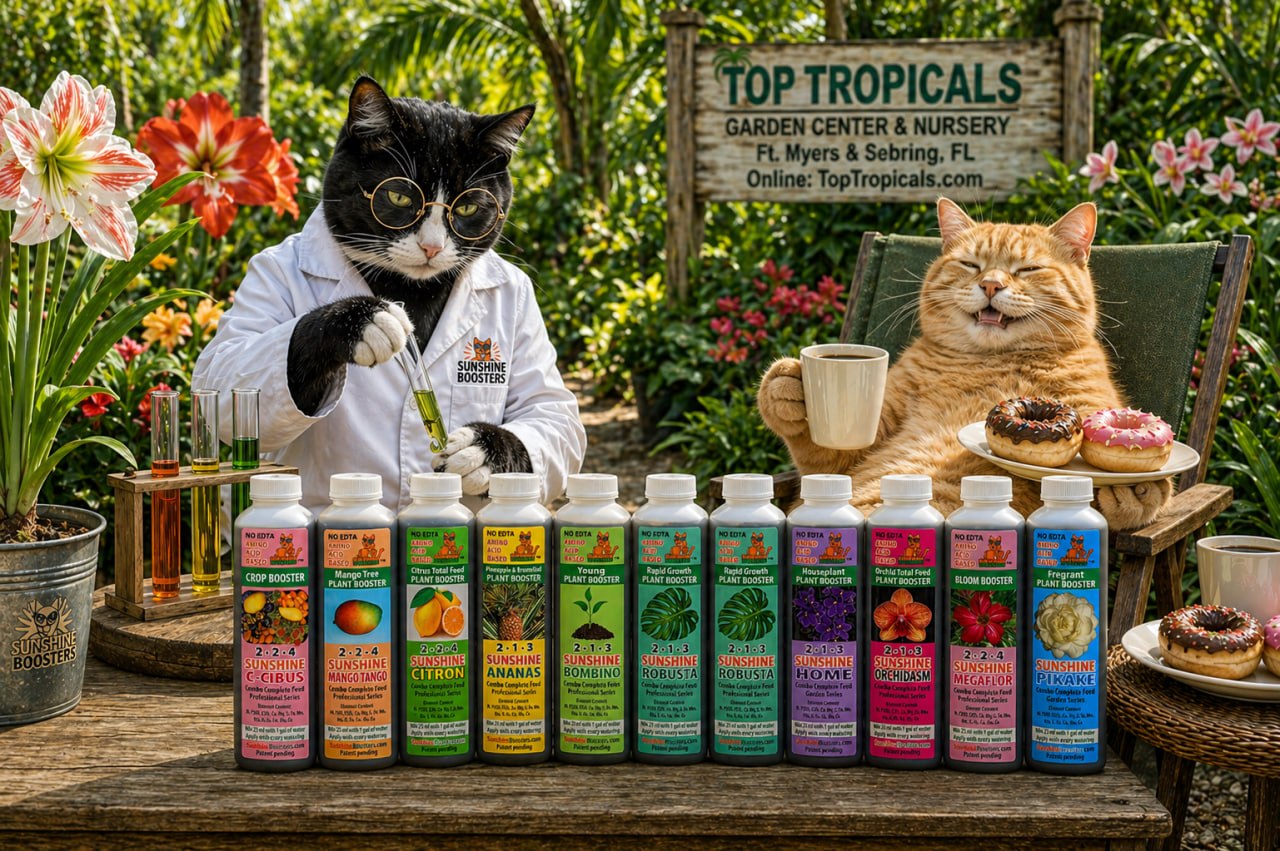
Smokey and Sunshine with Sunshine Boosters

Smokey and Sunshine with Sunshine Boosters

This changes how you feed your plants


Stop messing with fertilizers - you’re probably feeding your plants wrong. Keep it simple. Let your plants do the work.
Most gardeners don’t have a plant problem - they have a fertilizer problem. If feeding your plants feels confusing, expensive, or inconsistent, there’s a reason. The way most fertilizers are designed doesn’t match how plants actually grow today. Here’s what’s really going on - and why a simpler system works better.
  • ☘️ A simple way to feed your plants right


    Feeding plants shouldn’t feel like a chemistry class. But somehow it always does. Too many products. Too many formulas. Too many schedules. And somehow - still not sure if you’re doing it right.
    The truth is, growing healthy plants is simple. Good soil. Enough light. Proper care. And the right nutrients.
    That last part is where most people get stuck.

    Sunshine Boosters were made to fix exactly that. It’s a complete nutrition system that gives your plants what they actually need - without all the extra steps and guesswork.
  • ☘️ What Sunshine Boosters are and how they work


    So what is it, really?
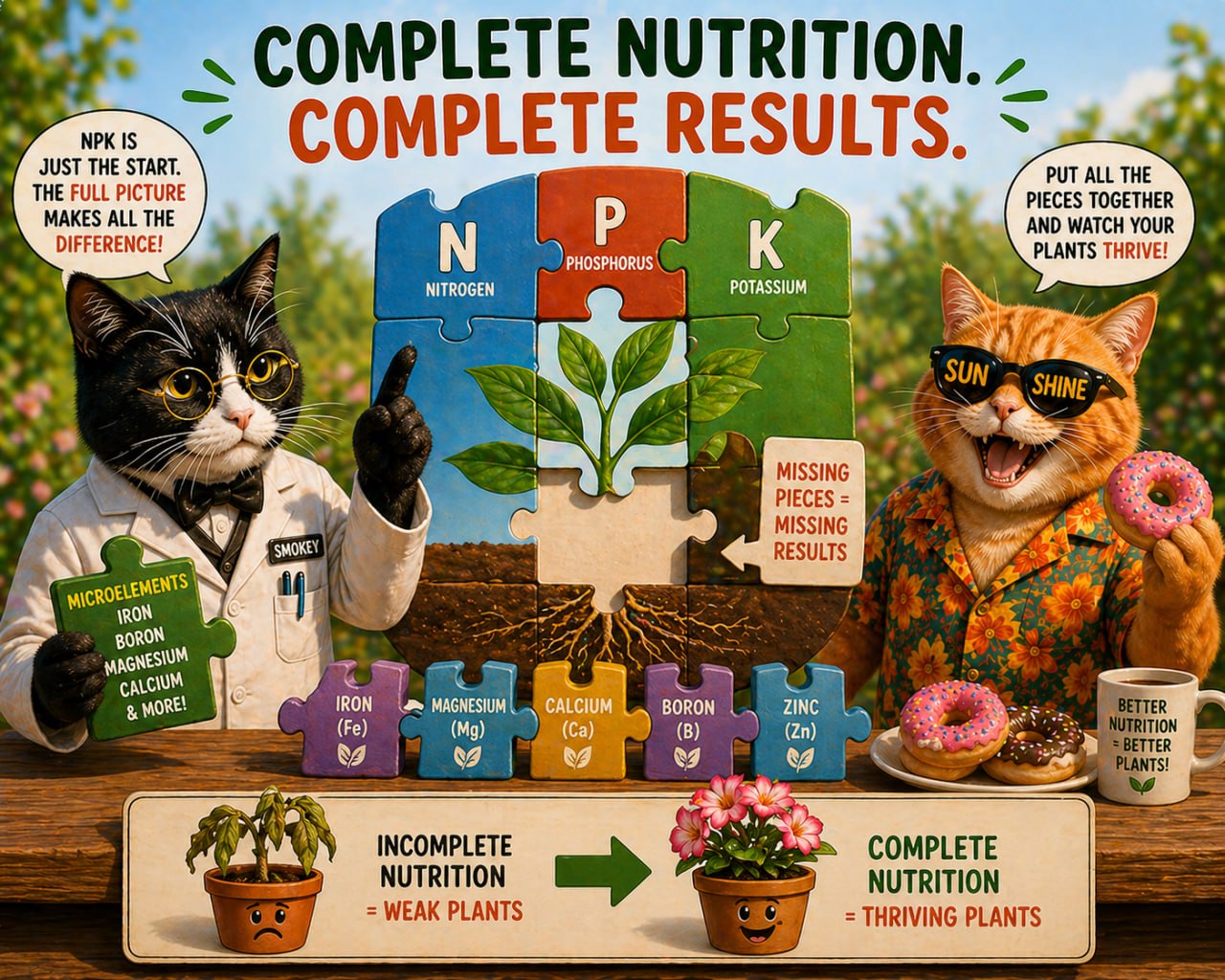
    Sunshine Boosters is a new generation of plant nutrients based on amino acids. It includes the main nutrients plants need - nitrogen, phosphorus, and potassium - plus all the microelements, already balanced in one formula.

    No extra bottles. No missing pieces.
    It dissolves completely in water, so plants can take it in right away. No buildup in the soil, no leftovers sitting there doing nothing.
    You just mix it with water and use it during regular watering. That’s it. It works through the roots, and even through the leaves if you spray it.
    Instead of trying to manage a whole feeding system - you just feed and grow.
    Less work, better plants.

  • 👉 Stay with us - this is just the start. We’ll break it down step by step so you really understand what your plants need and how to give it to them. 👉 More...


🛒
Get your plants real food

📚
Learn more:
📱 What are Sunshine Boosters

#Discover #Fertilizers #How_to
🟢 Join 👉 TopTropicals

Date: 29 Apr 2026

Soft peach tones - calm and glowing plumerias

Plumeria Morland

Plumeria Morland

Plumeria Thong Taweechok

Plumeria Thong Taweechok

Plumeria Gred Gaew

Plumeria Gred Gaew

Plumeria Moung Sangeam

Plumeria Moung Sangeam

Soft peach tones - calm and glowing plumerias. Pruning tip 🌈

This set is all about warmth without intensity - soft peach, coral, and golden tones that feel calm, balanced, and easy on the eyes. These are the plumerias you enjoy up close, where the subtle color blends really shine.

🌸 Today's featured plumerias:

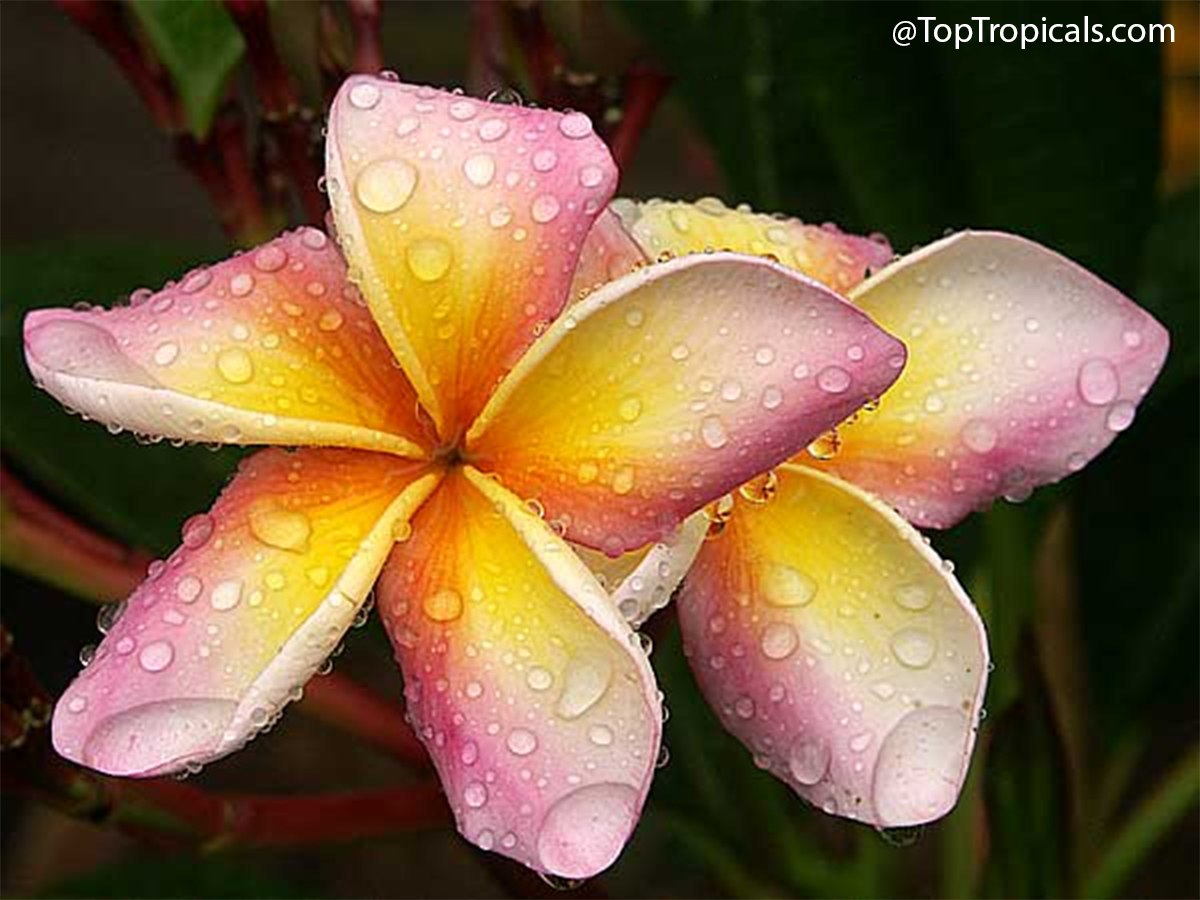
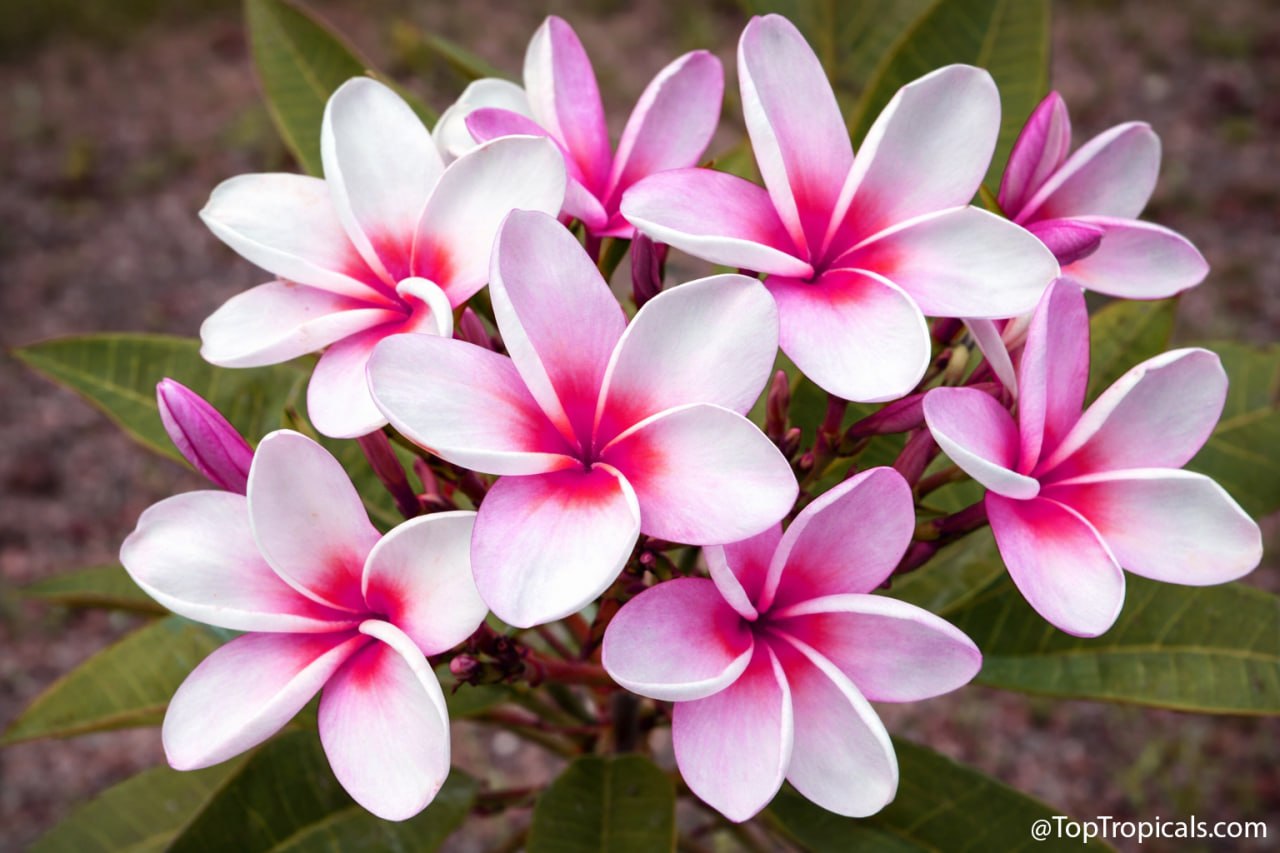
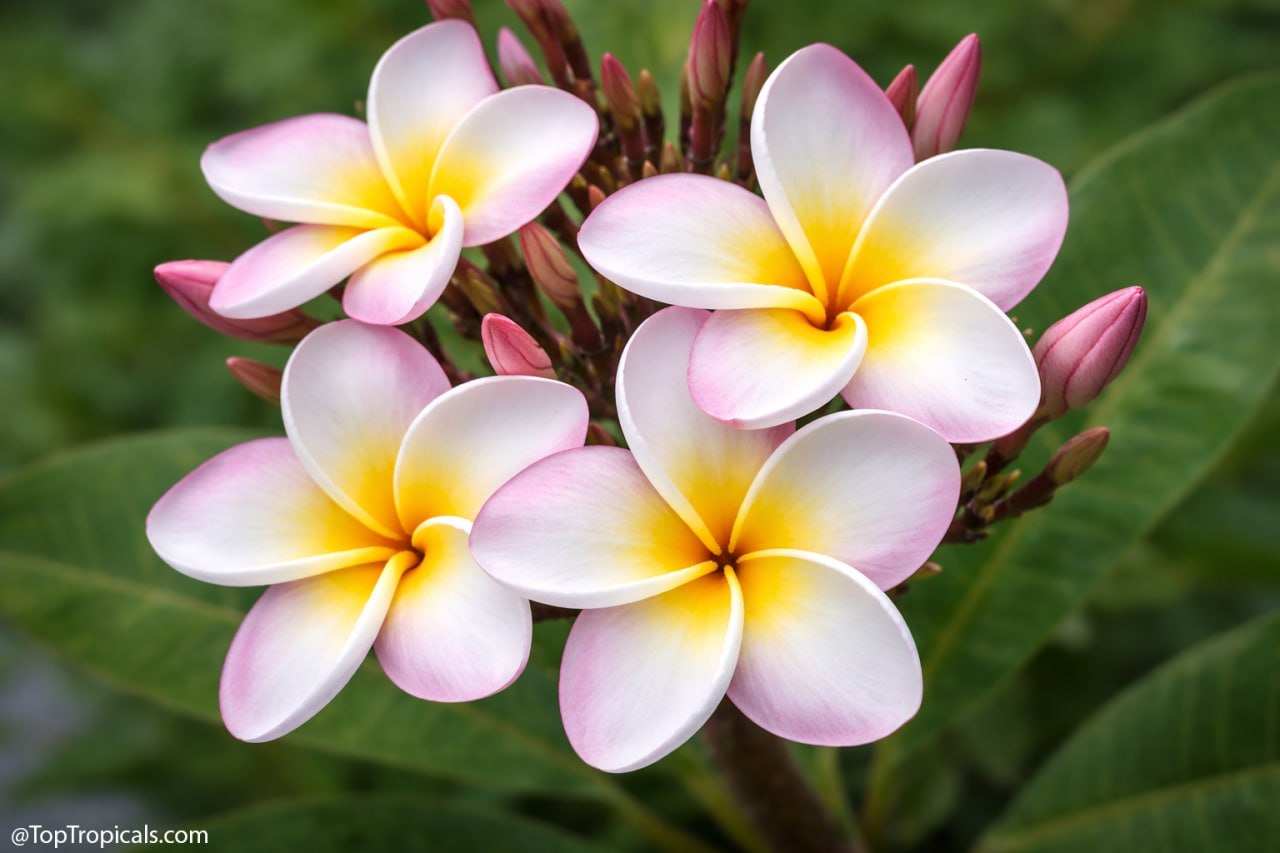
  •  ✦ Plumeria Morland - soft pink petals with a creamy yellow center fading into white edges. Gentle gradient with a fresh, radiant look and light fragrance.
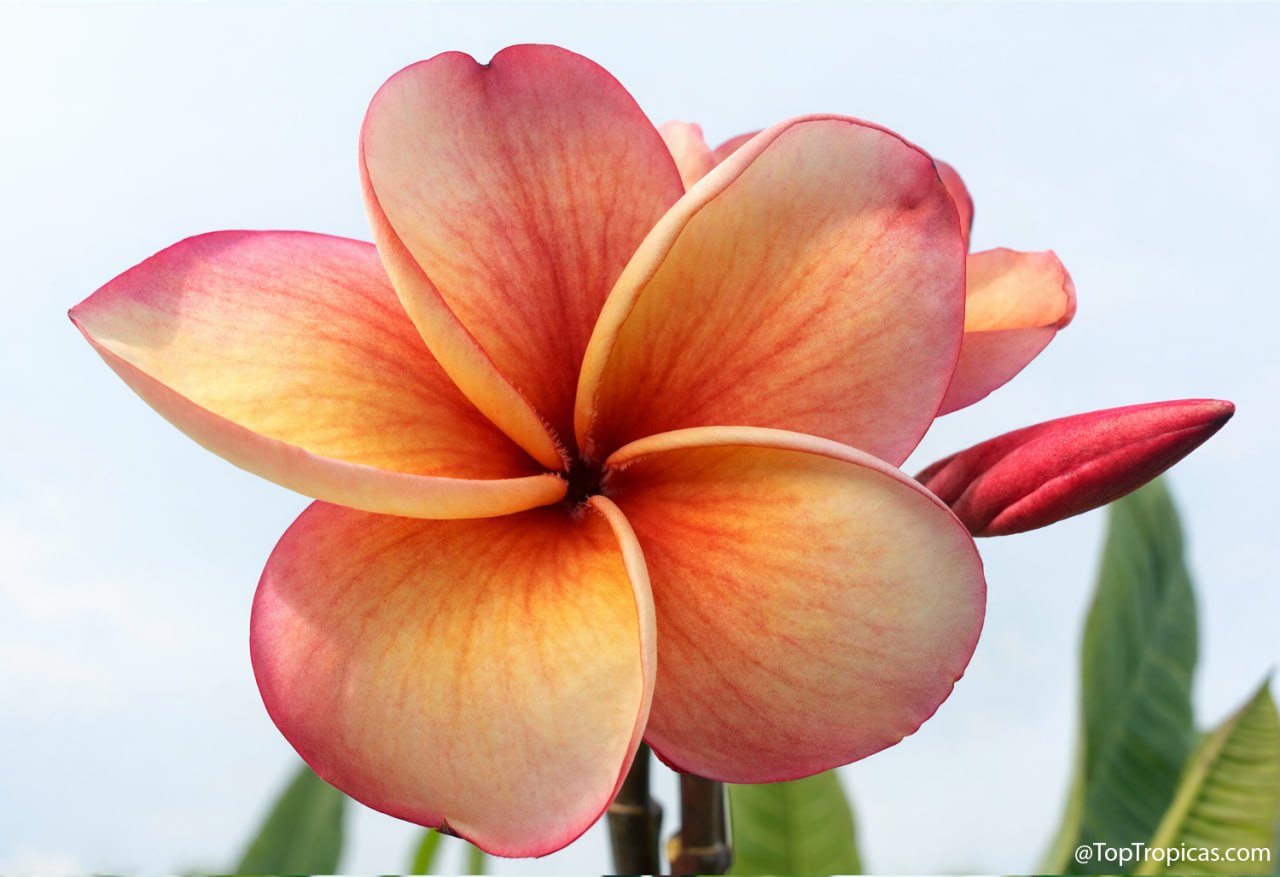
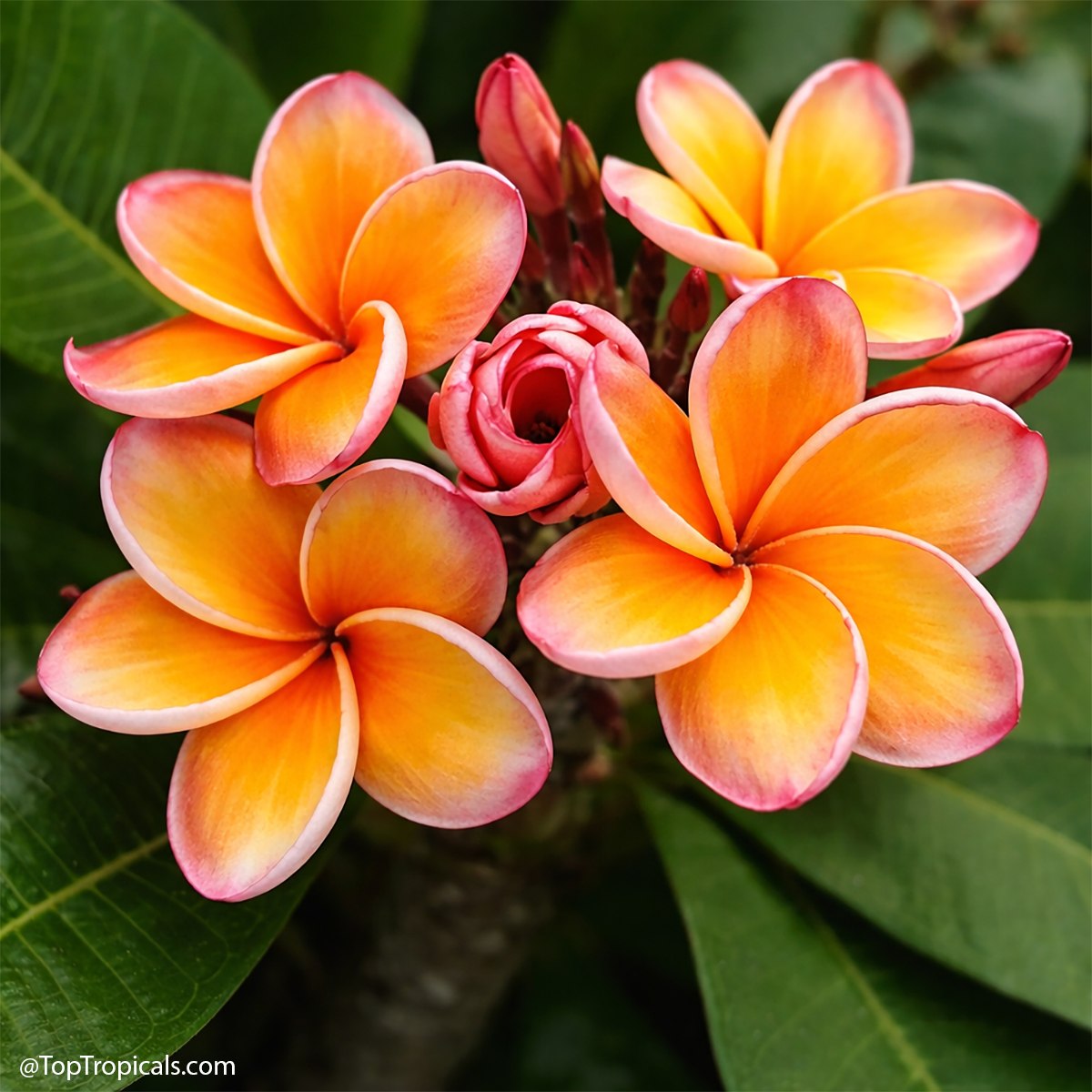
  •  ✦ Plumeria Thong Taweechok - warm golden-yellow petals infused with orange and coral, softening into creamy edges with a light pink blush. Smooth, glowing and well-balanced.
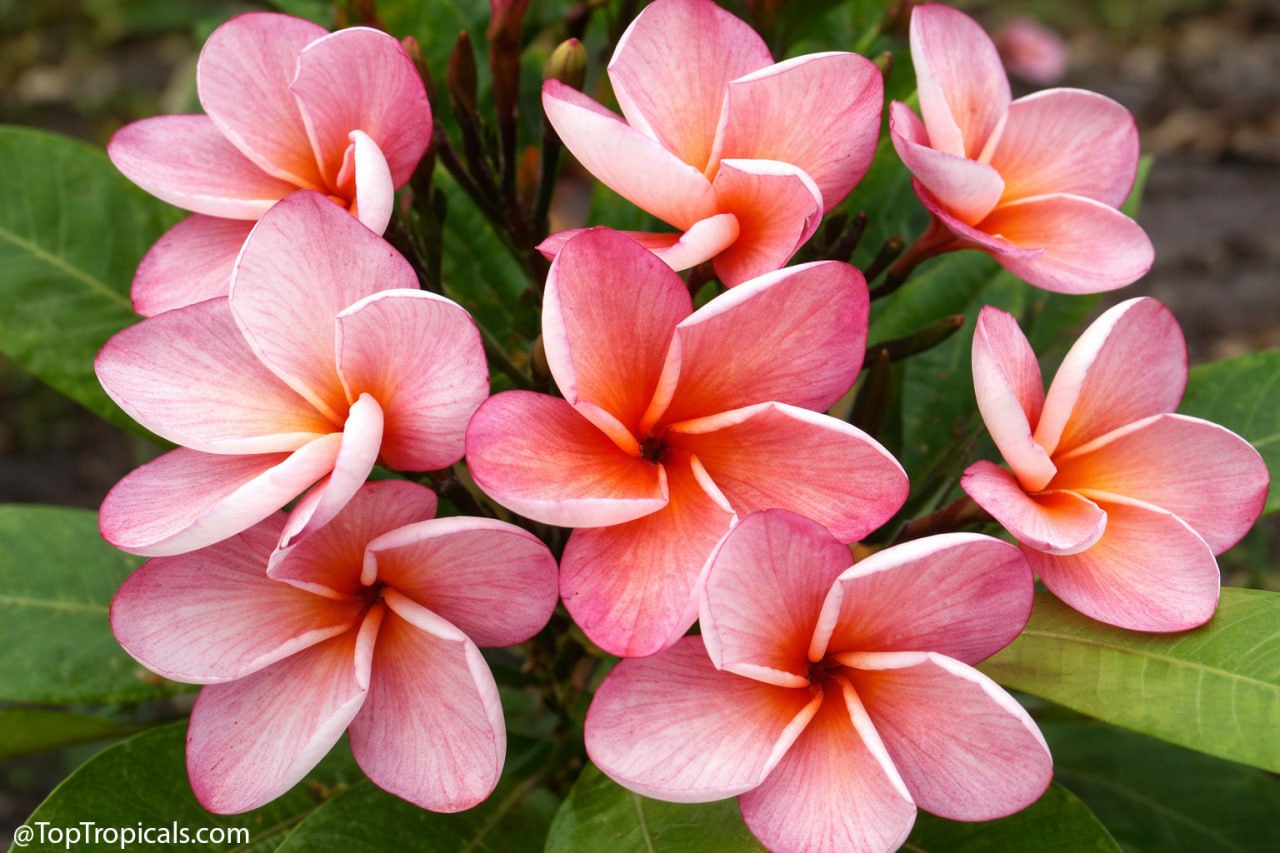
  •  ✦ Plumeria Gred Gaew - soft coral and peach tones with a glowing orange center and a clean white edge. Refined, crisp, and quietly elegant.
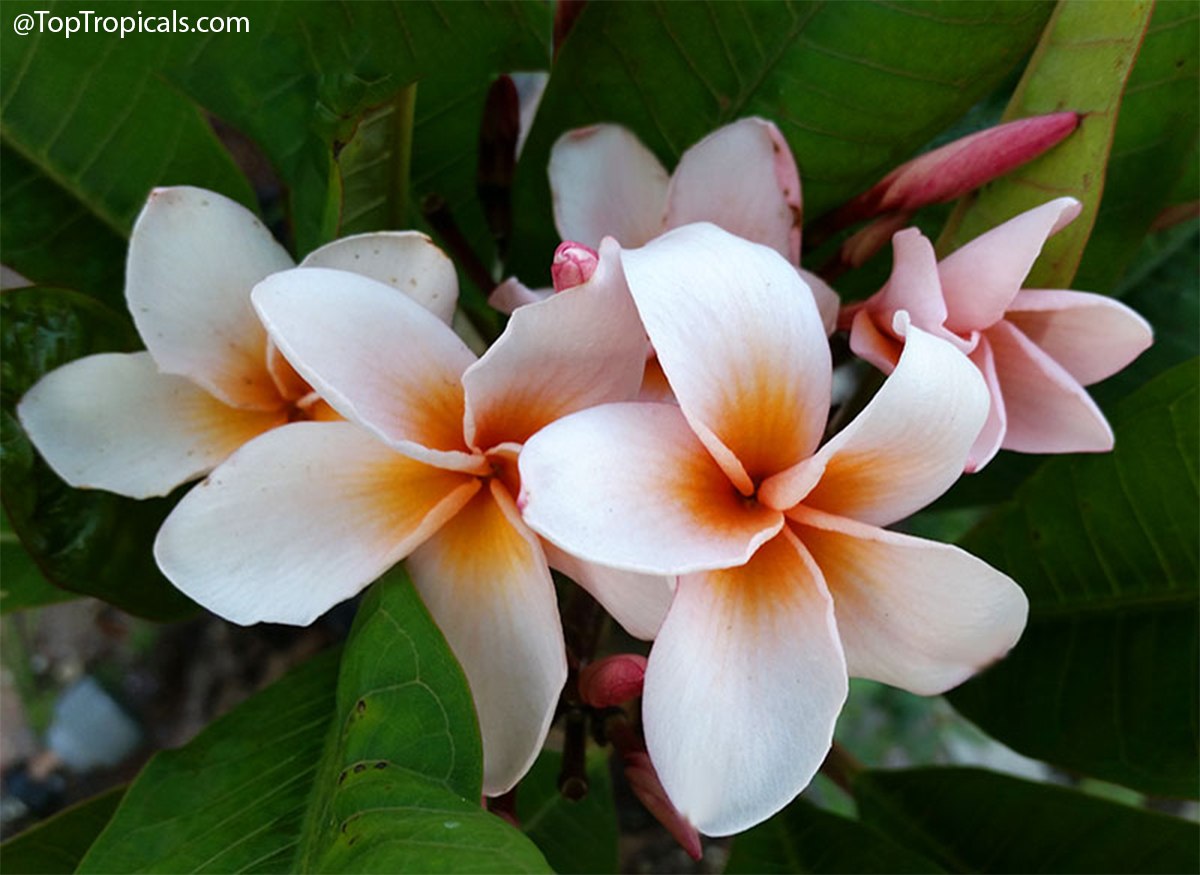
  •  ✦ Plumeria Moung Sangeam - creamy white to pale blush petals with a warm golden-orange center and a hint of peach at the edges. Soft, delicate, and naturally graceful.


💡 Plumeria tip: pruning for more blooms


Light pruning encourages branching - and more branches mean more flower tips. Trim after a bloom cycle or in early growing season, and your plumeria will come back fuller, bushier, and ready to produce more flowers.

🛒 Shop Plumeria Collection and Enjoy the fragrant blooms

📚 Learn more:
🎥 How to get endless Plumeria Blooms

#Perfume_Plants #Container_Garden #How_to #Discover #PlumeriaRainbow

Plant Facts

Plumeria alba
Dwarf Plumeria
USDA Zone: 9-11
Large shrub 5-10 ft tallSmall tree 10-20 ftFull sunModerate waterWhite, off-white flowersFragrant plant
🟢 Join 👉 TopTropicals

Date: 27 Apr 2026

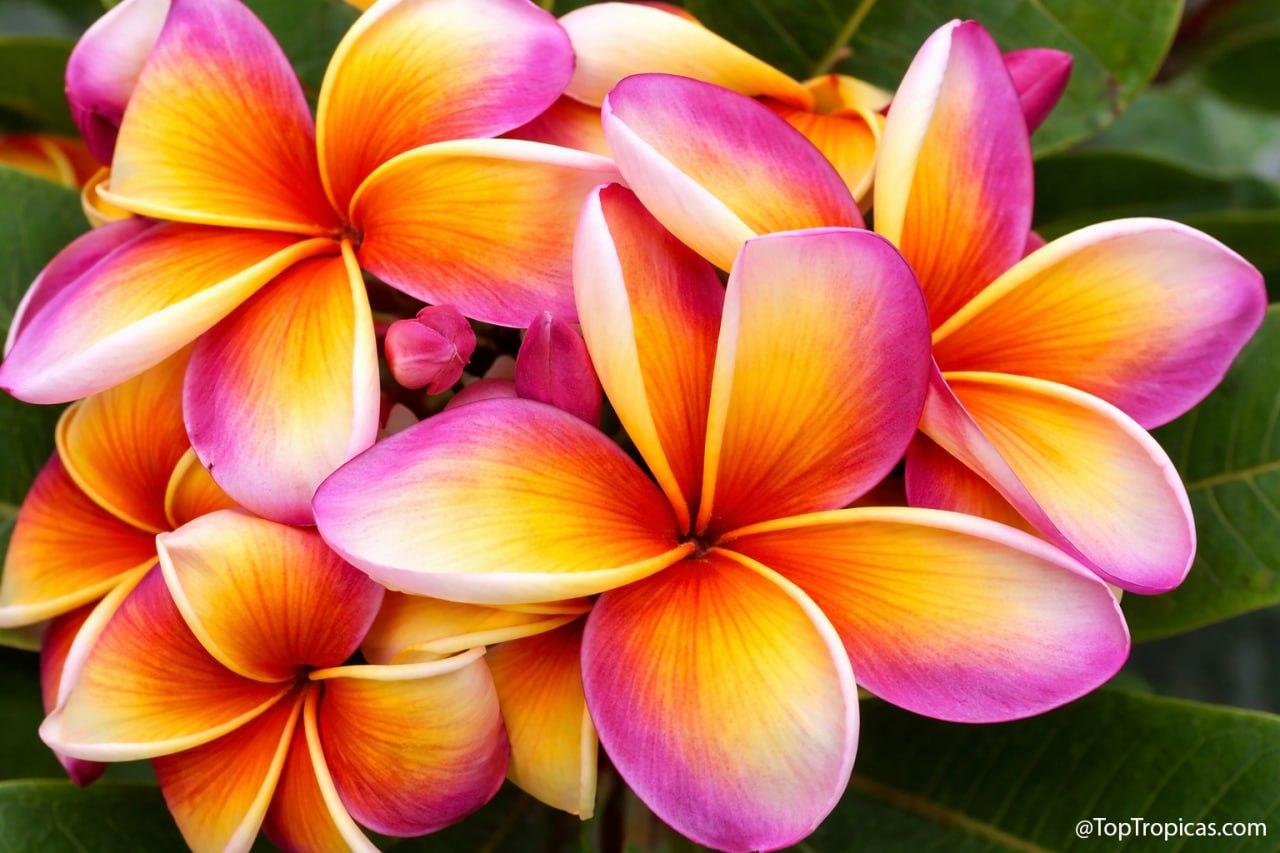
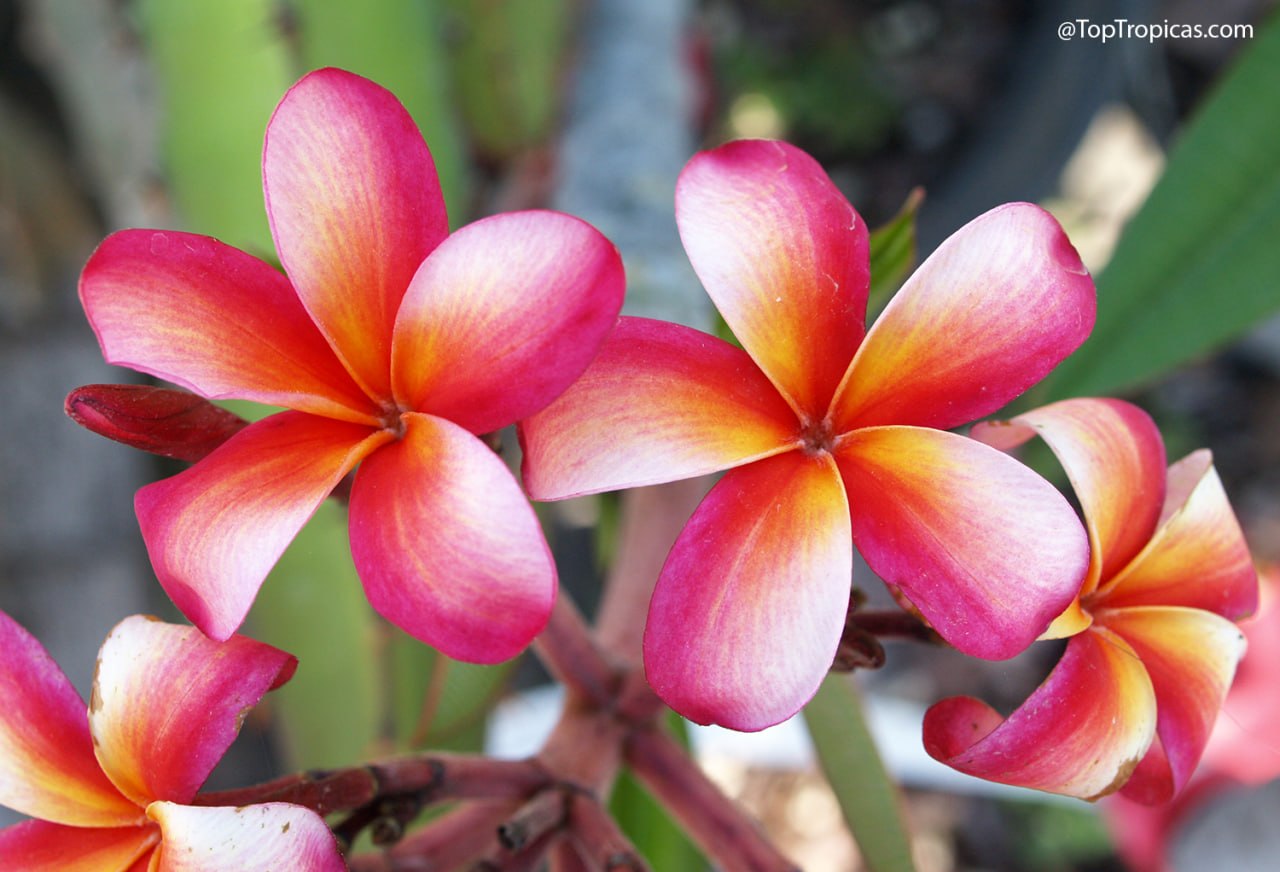
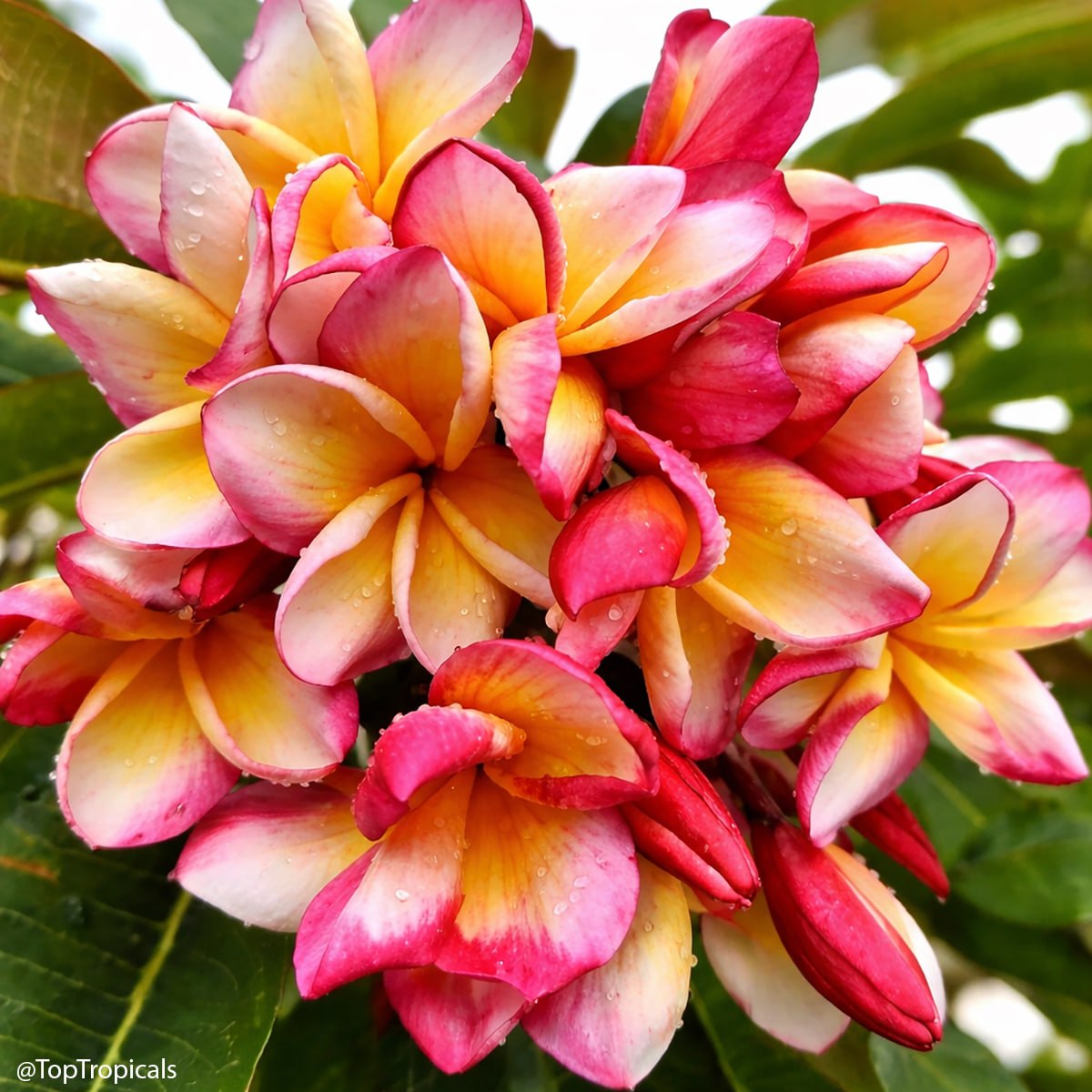
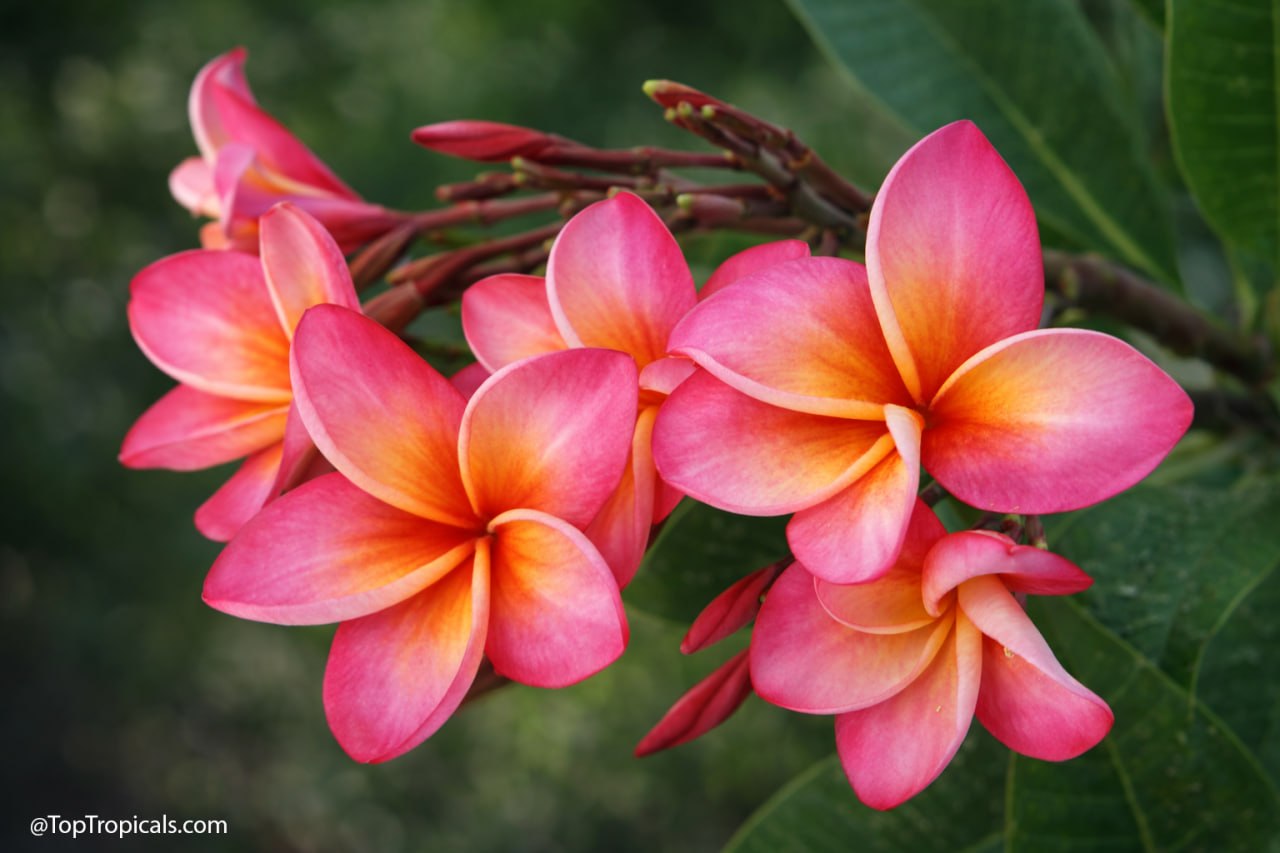
Rainbow plumerias - the wild side of color

Plumeria Mui Rainbow

Plumeria Mui Rainbow

Plumeria Pink Jaopraya

Plumeria Pink Jaopraya

Plumeria Sunset Symphony

Plumeria Sunset Symphony

Plumeria Dook

Plumeria Dook

Rainbow plumerias - the wild side of color. Winter dormancy tip 🌈

Some plumerias don’t follow rules - they mix, swirl, and splash colors all over the petals like a tropical sunset in motion. These “rainbow” types are the most playful and unpredictable, with every bloom looking a little different from the next.

🌸 Today's featured plumerias:

  •  ✦ Plumeria Mui Rainbow - deep orange-red center blending into golden yellow and finishing with pink to magenta edges. Bright, fiery colors with a smooth, glowing transition.
  •  ✦ Plumeria Pink Jaopraya - a bold swirl of red, white, pink, and yellow all in one flower. Complex, eye-catching, and impossible to ignore.
  •  ✦ Plumeria Sunset Symphony - creamy ivory, golden yellow, and coral-pink tones with deeper rose edges, creating a layered sunset effect that shifts from bloom to bloom.
  •  ✦ Plumeria Dook - rich pink petals melting into a glowing orange and golden center. Bright, warm, and full of tropical energy that stands out from a distance.


💡 Plumeria tip: winter dormancy


In cooler months, plumerias slow down and may drop all leaves. That’s normal.
During this rest period, cut watering way back and let the plant sleep.
Growth will restart when temperatures rise.

🛒 Shop Plumeria Collection and Enjoy the fragrant blooms

📚 Learn more:
🎥 How to get endless Plumeria Blooms

#Perfume_Plants #Container_Garden #How_to #Discover #PlumeriaRainbow

Plant Facts

Plumeria alba
Dwarf Plumeria
USDA Zone: 9-11
Large shrub 5-10 ft tallSmall tree 10-20 ftFull sunModerate waterWhite, off-white flowersFragrant plant
🟢 Join 👉 TopTropicals

Date: 24 Apr 2026

Bold reds and ruby tones - plumerias with real intensity

Plumeria Maneerat

Plumeria Maneerat

Plumeria Siam Ruby

Plumeria Siam Ruby

Plumeria Red Siam

Plumeria Red Siam

Plumeria Kled Tabtim

Plumeria Kled Tabtim

Bold reds and ruby tones - plumerias with real intensity. Feeding tip 🌈

This set is all about depth, richness, and that unmistakable red glow. From ruby shades to deep velvety tones, these plumerias bring strong color and a luxurious feel - the kind that instantly draws your eye.

🌸 Today's featured plumerias:

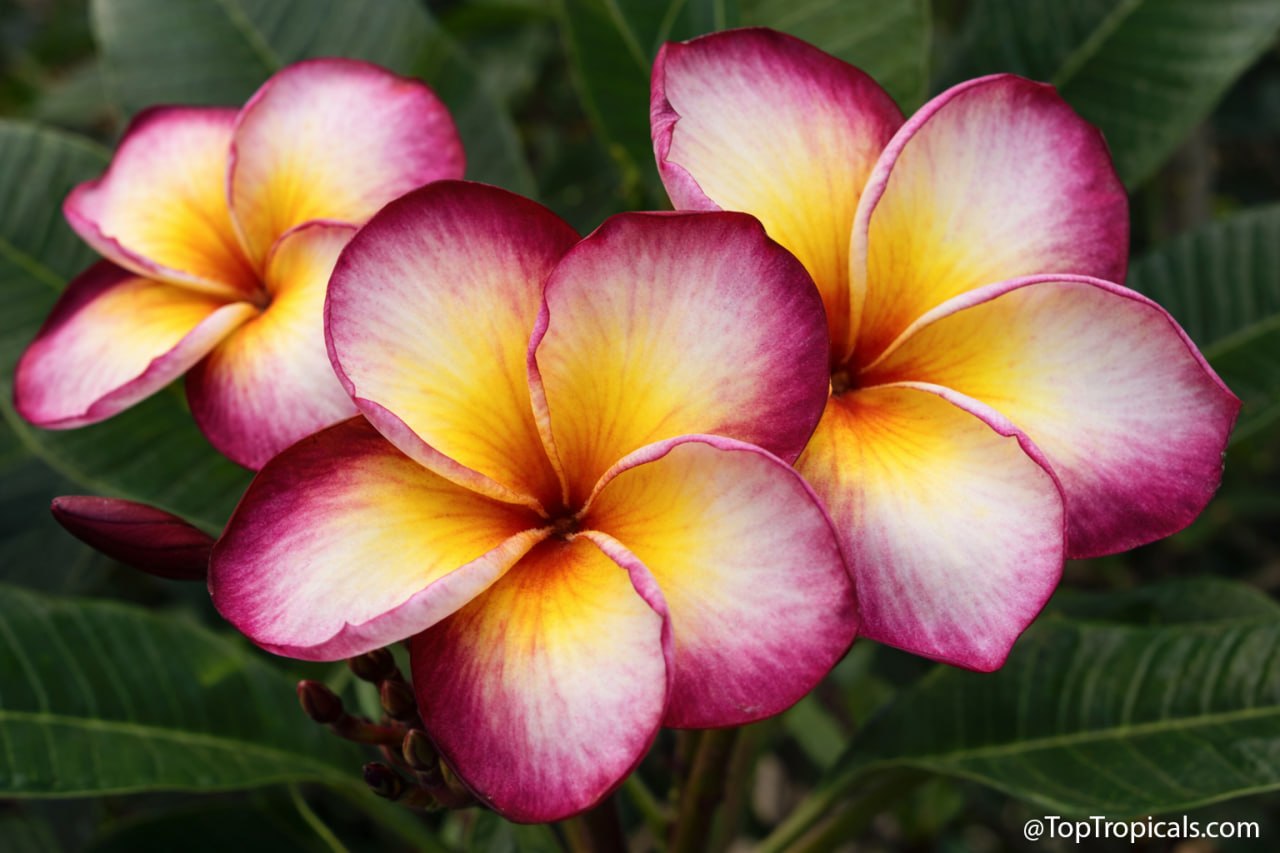
  •  ✦ Plumeria Maneerat - golden-yellow center fading into creamy tones and strong pink to red edges, creating a radiant, glowing effect. Full, layered blooms with a rich, jewel-like look.
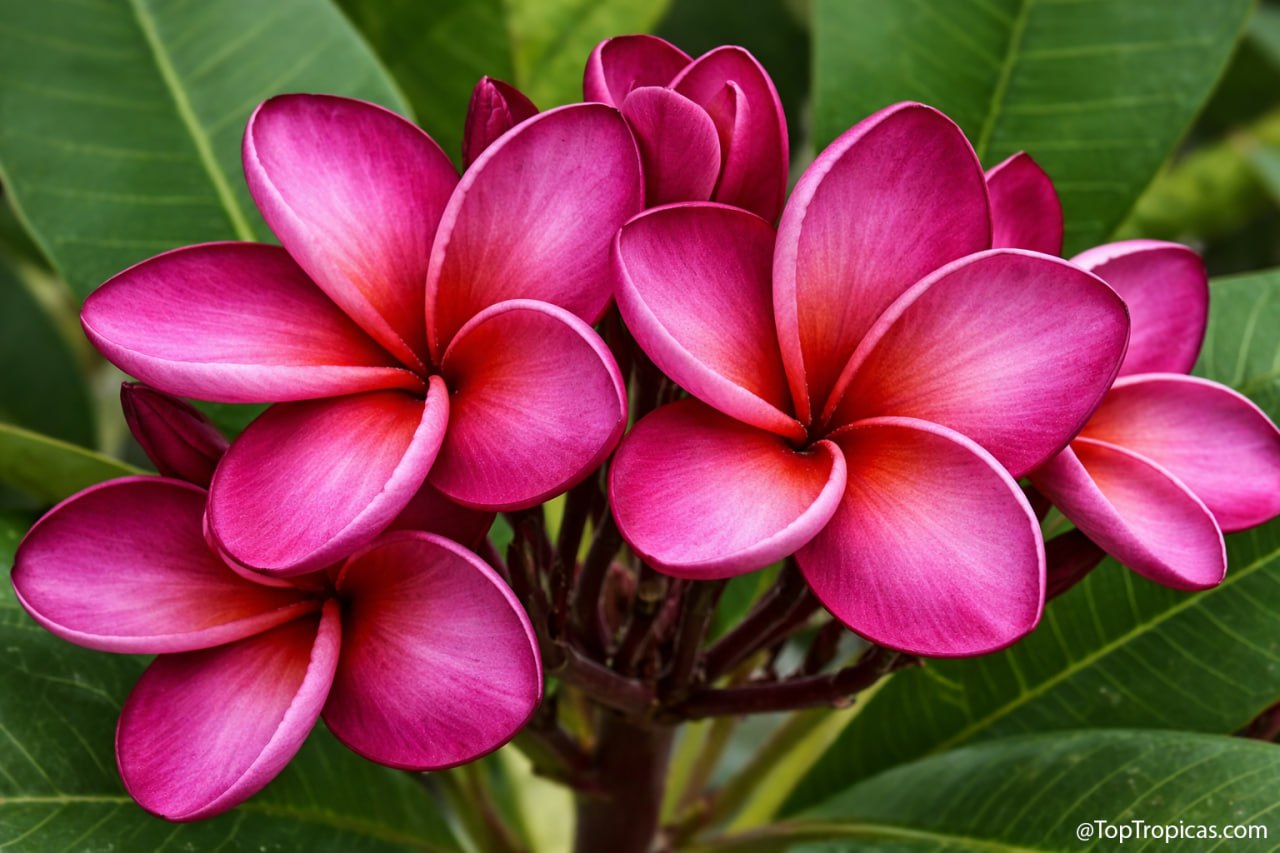
  •  ✦ Plumeria Siam Ruby - deep ruby pink petals with softer rosy highlights and a luminous center. Smooth, rounded blooms with a polished, gemstone feel.
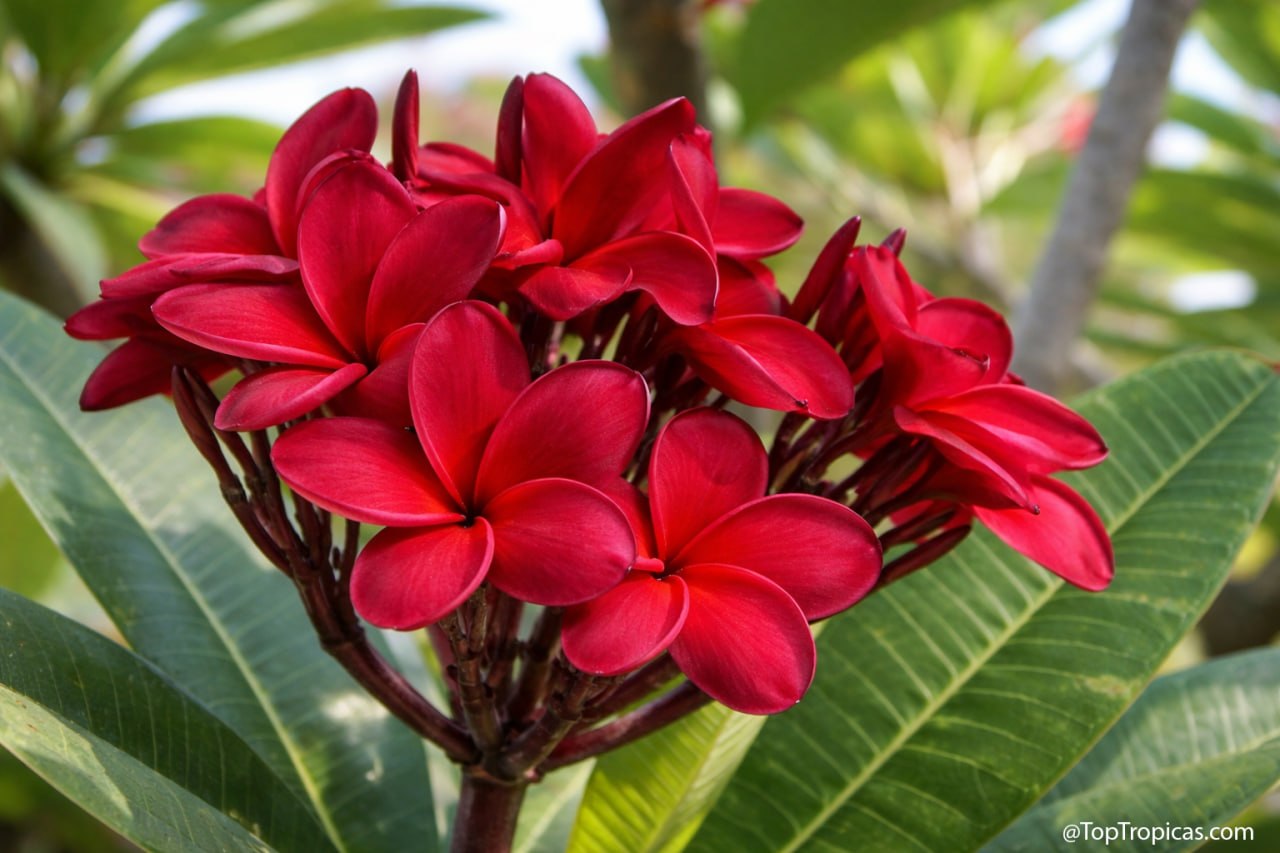
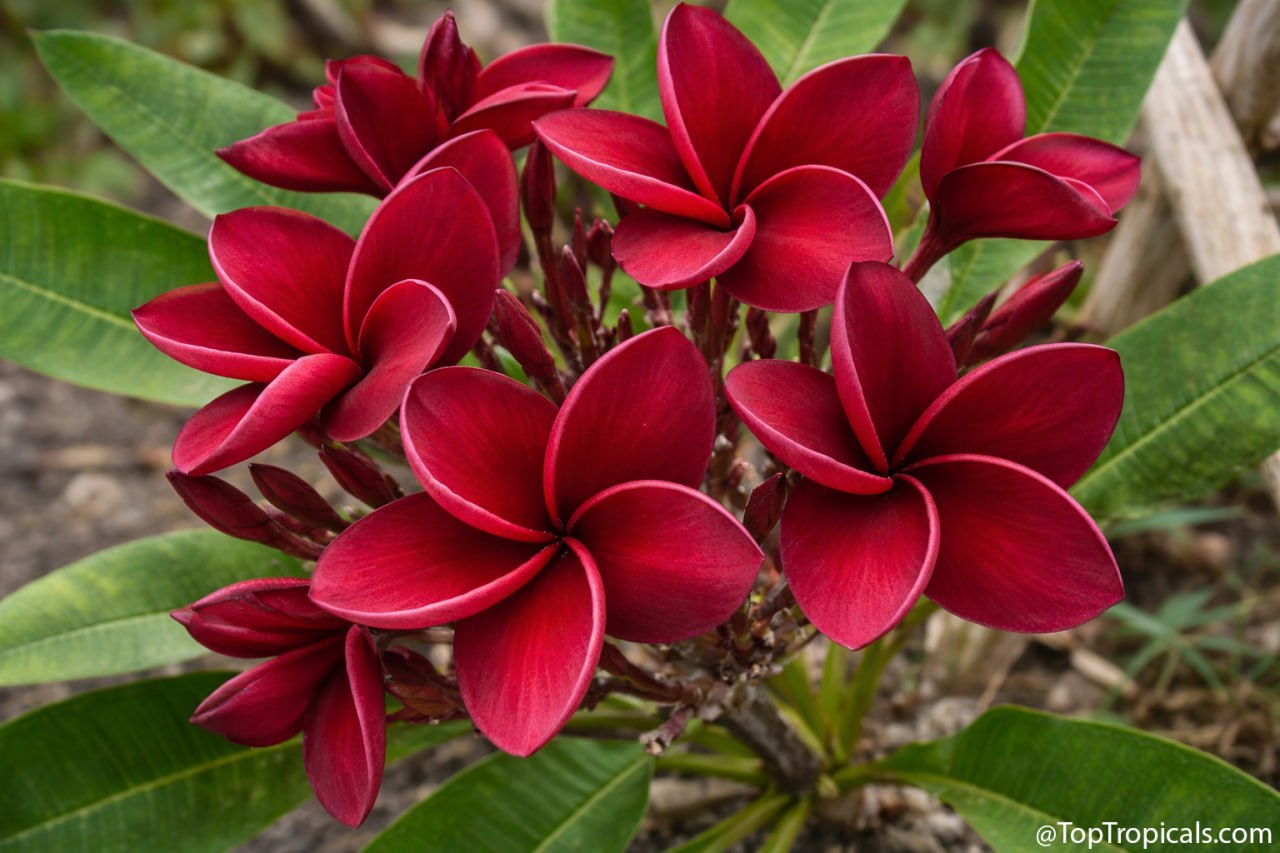
  •  ✦ Plumeria Red Siam - rich, velvety red flowers with deep, consistent color and a soft satin finish. Dense clusters create a bold, classic tropical look.
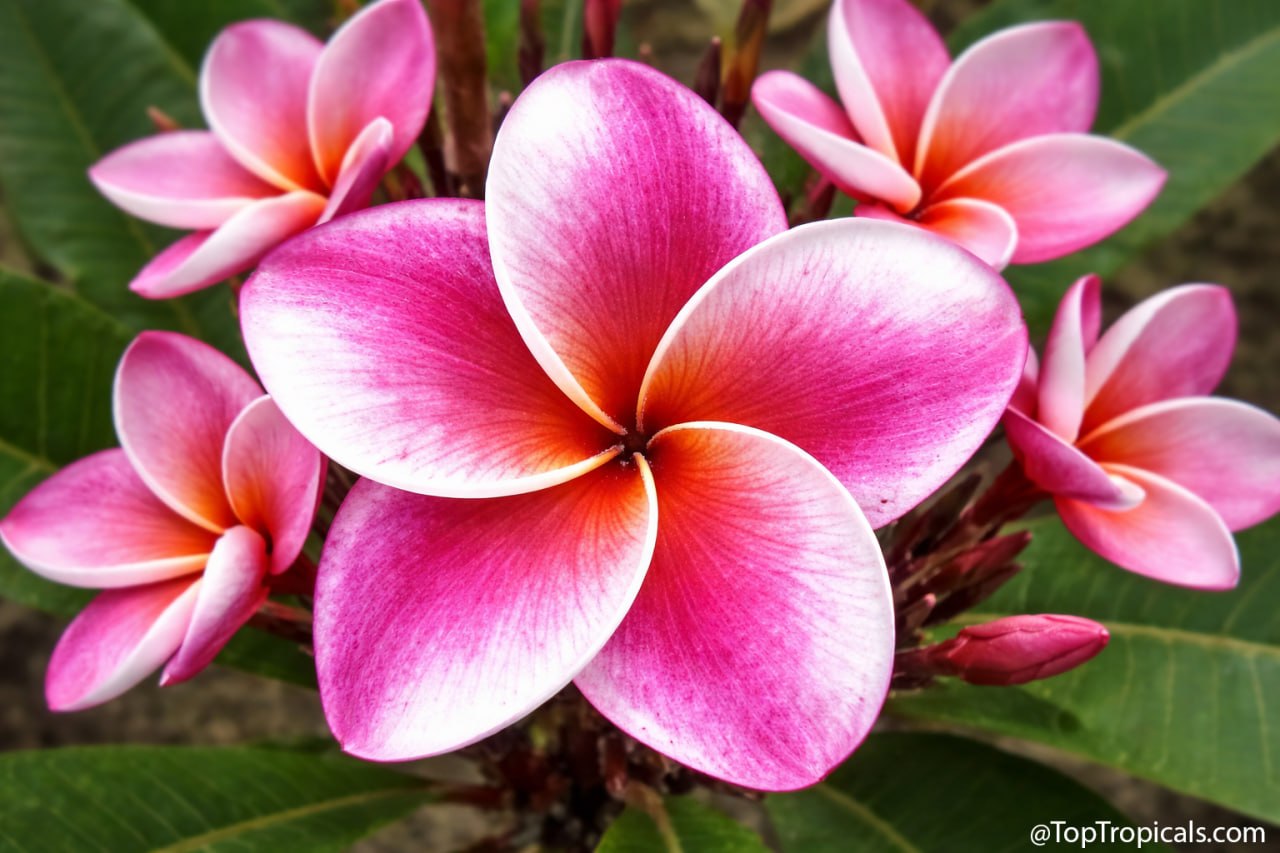
  •  ✦ Plumeria Kled Tabtim - vibrant pink petals deepening toward a warm orange-red center, outlined with a clean white edge. Bright, refined, and glowing with a ruby-like effect.


💡 Plumeria tip: feeding for flowers


Plumerias are heavy feeders, especially when actively growing.
Use a fertilizer higher in phosphorus to push blooming.
Liquid feeding like Sunshine Megaflor can be used regularly, while a controlled release like Green Magic gives steady nutrition over time.

🛒 Shop Plumeria Collection and Enjoy the fragrant blooms

📚 Learn more:
🎥 How to get endless Plumeria Blooms

#Perfume_Plants #Container_Garden #How_to #Discover #PlumeriaRainbow

Plant Facts

Plumeria alba
Dwarf Plumeria
USDA Zone: 9-11
Large shrub 5-10 ft tallSmall tree 10-20 ftFull sunModerate waterWhite, off-white flowersFragrant plant
🟢 Join 👉 TopTropicals

Date: 23 Apr 2026

Dwarf plumerias - big blooms in small spaces

Plumeria obtusa Singapore Yellow Dwarf

Plumeria obtusa Singapore Yellow Dwarf

Plumeria obtusa Singapore Pink Dwarf

Plumeria obtusa Singapore Pink Dwarf

Plumeria obtusa Alba, Singapore White, Dwarf

Plumeria obtusa Alba, Singapore White, Dwarf

Plumeria Doung Suree Dwarf -

Plumeria Doung Suree Dwarf -

Dwarf plumerias - big blooms in small spaces. Sun tip 🌈

Not every plumeria needs to grow into a large tree. These dwarf varieties stay compact, branch well, and bloom generously - making them perfect for pots, patios, and even indoor growing in cooler climates. Small size, same tropical feel.

🌸 Today's featured plumerias:

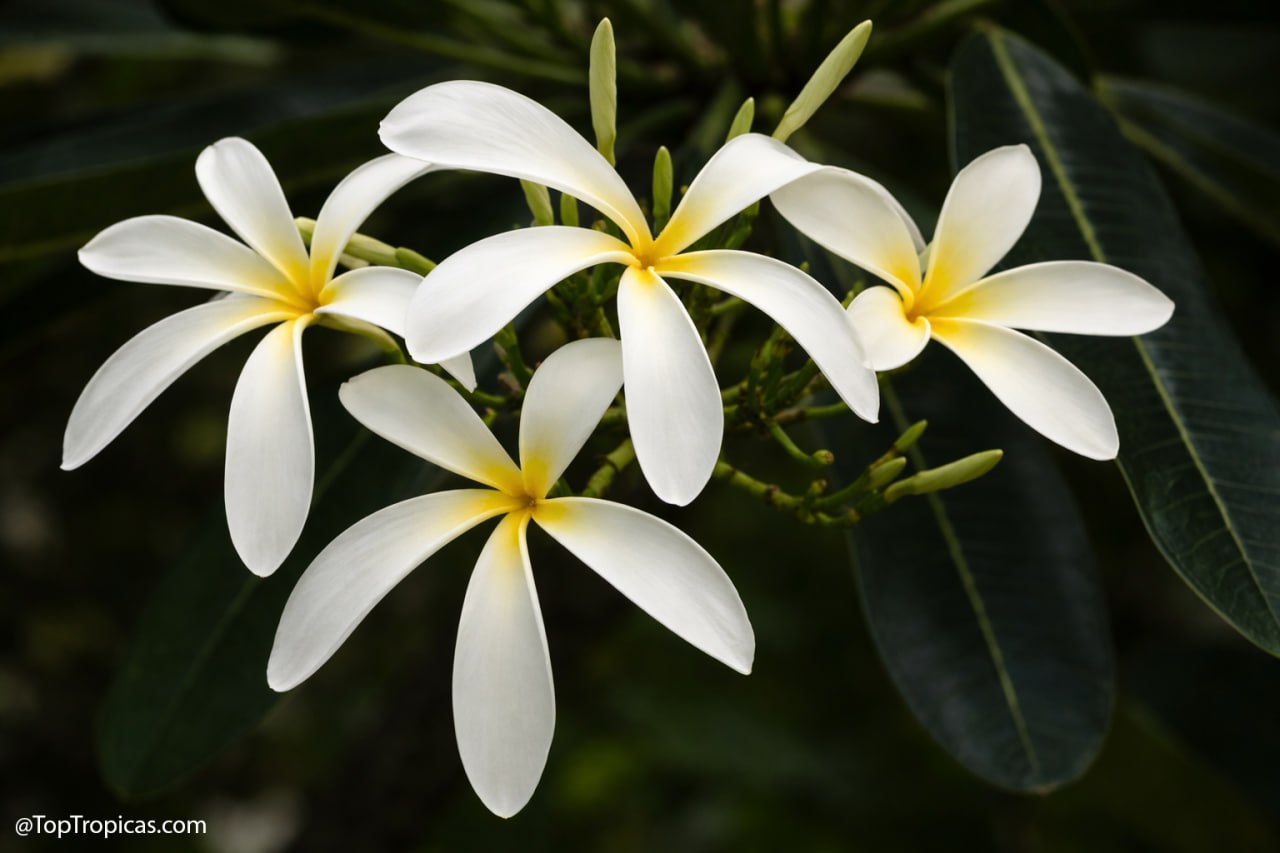
  •  ✦ Plumeria obtusa Singapore Yellow Dwarf - creamy white flowers with a soft yellow center and long, slender petals that create a light, star-like shape. Compact, glossy, and very refined.
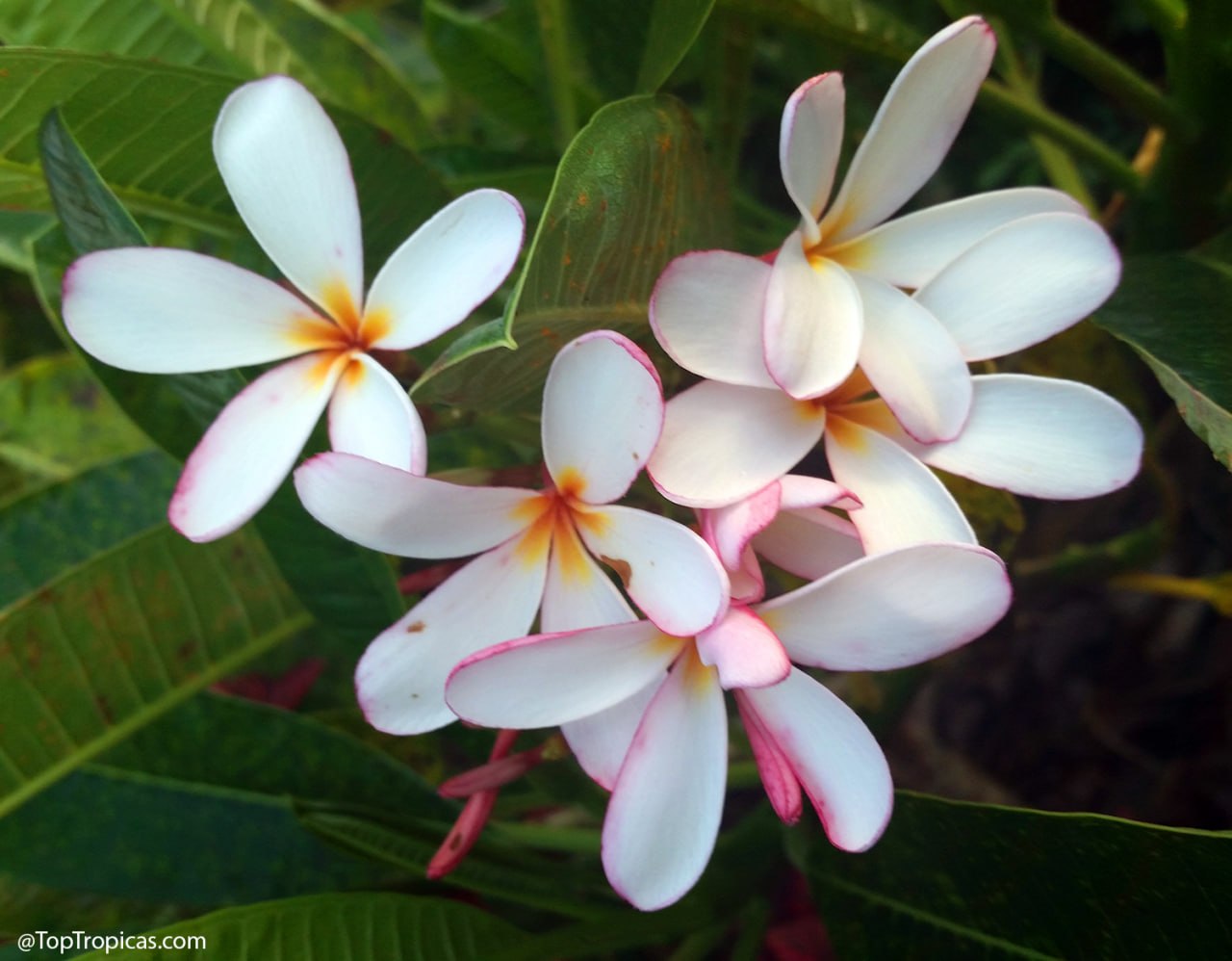
  •  ✦ Plumeria obtusa Singapore Pink Dwarf - creamy white blooms with a warm yellow center and a soft pink edge. Naturally compact, branching well and flowering heavily, ideal for containers.
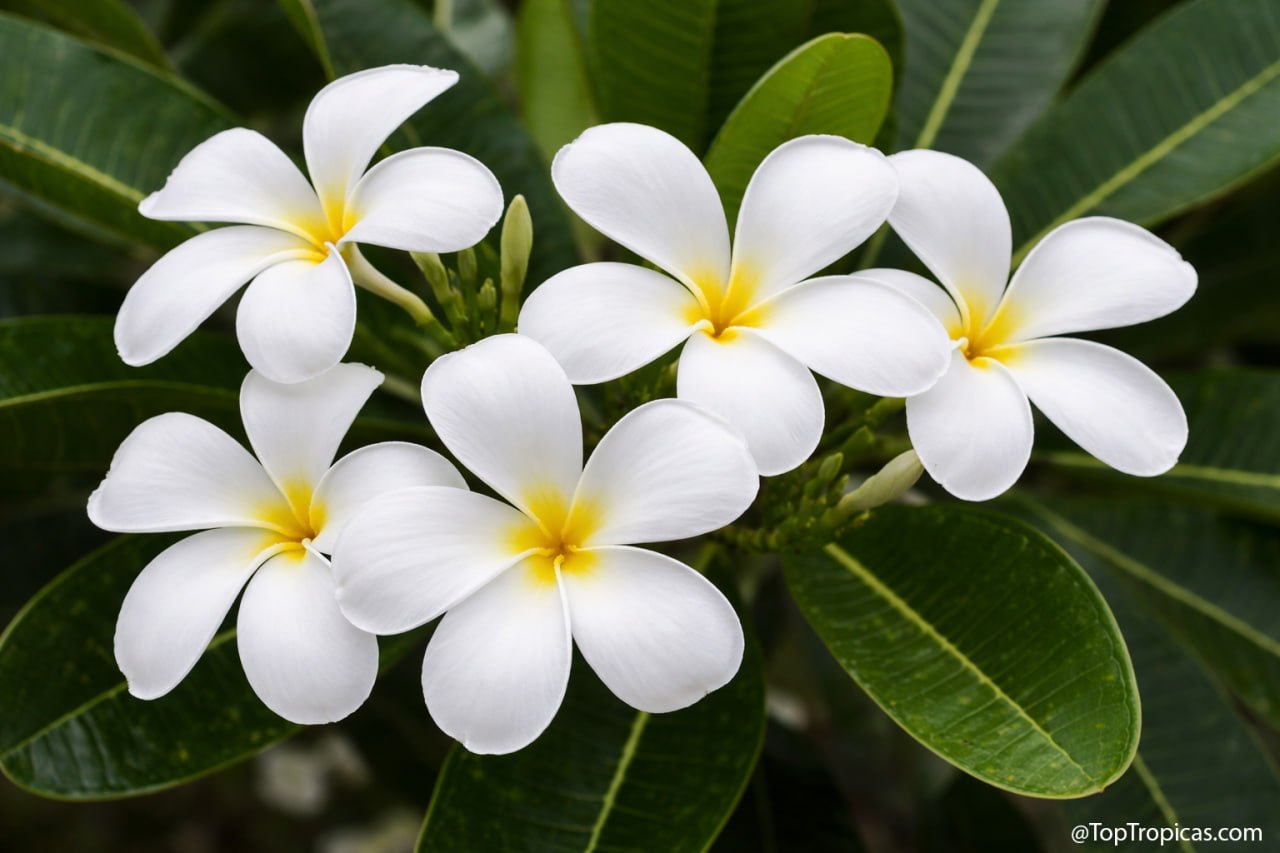
  •  ✦ Plumeria obtusa Alba, Singapore White, Dwarf - classic pure white flowers with a gentle yellow center and thick, smooth petals. Clean, polished look on a compact plant that blooms generously.
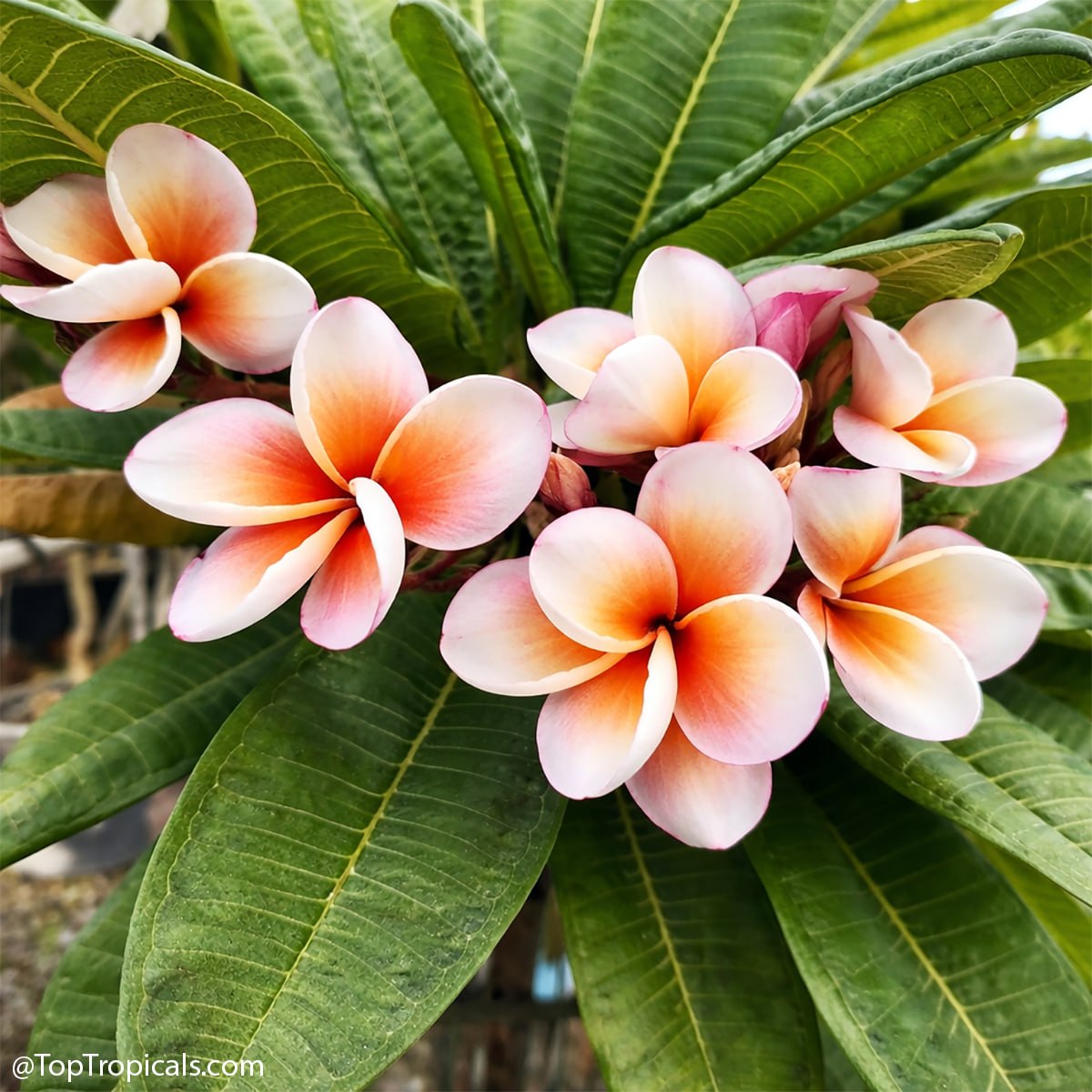
  •  ✦ Plumeria Doung Suree Dwarf - glowing orange blooms blending from golden apricot to deeper sunset tones. Compact and very floriferous, bringing strong tropical color in a small form.


💡 Plumeria tip: sun is everything


Full sun is the secret to strong growth and blooms. Outdoors is best.
If indoors, give the brightest spot you have and move it outside whenever possible. More sun = more flowers.

🛒 Shop Plumeria Collection and Enjoy the fragrant blooms

📚 Learn more:
🎥 How to get endless Plumeria Blooms

#Perfume_Plants #Container_Garden #How_to #Discover #PlumeriaRainbow

Plant Facts

Plumeria alba
Dwarf Plumeria
USDA Zone: 9-11
Large shrub 5-10 ft tallSmall tree 10-20 ftFull sunModerate waterWhite, off-white flowersFragrant plant
🟢 Join 👉 TopTropicals

Date: 22 Apr 2026

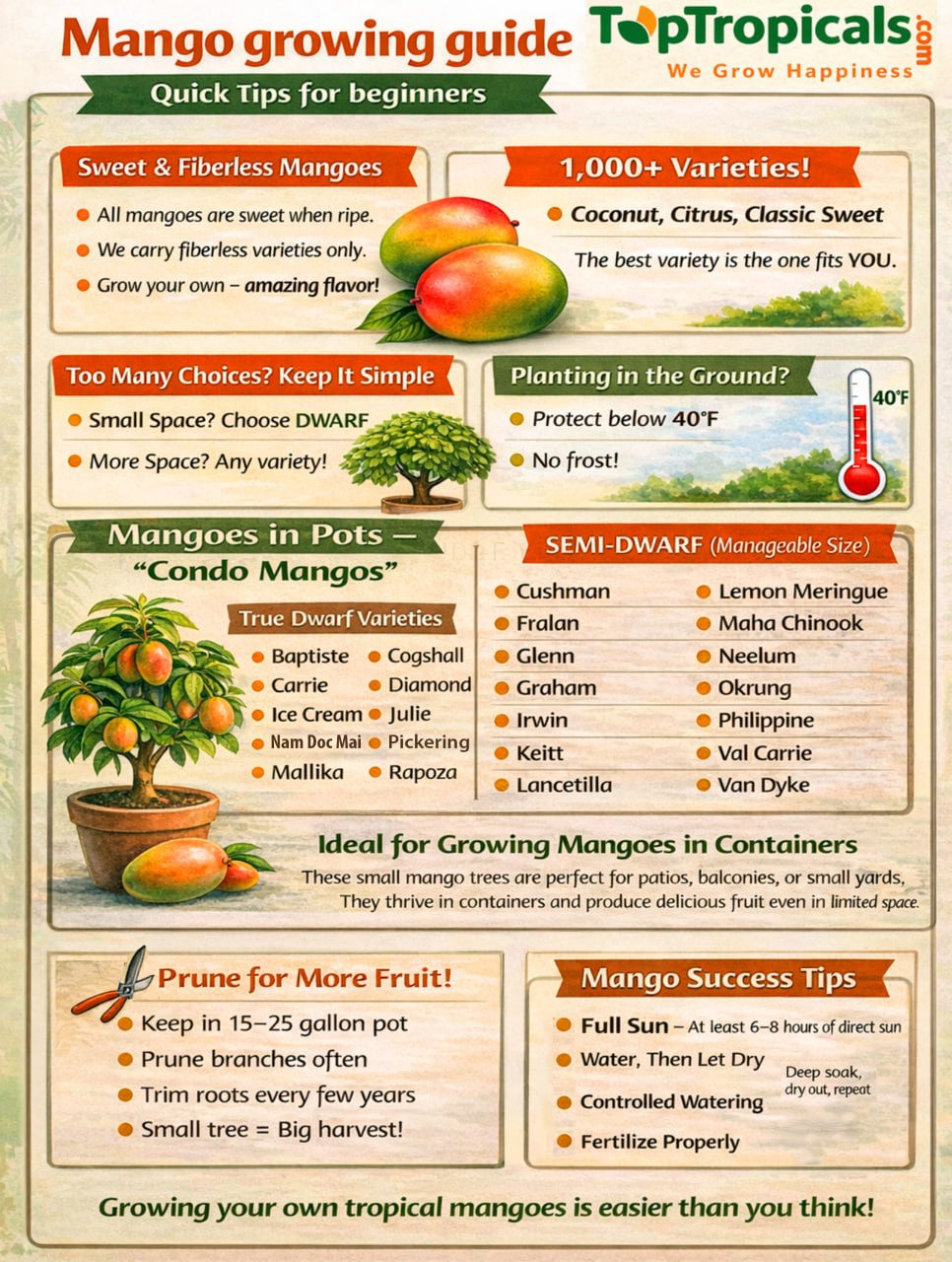
Mango Growing Guide

Mango Growing Guide

Mango Growing Guide

Mango Growing Guide 🥭

Growing mangoes at home is easier than most people think.

You don’t need a big yard. You don’t need perfect conditions.
You just need the right variety - and a few simple rules.
  • 🔻Small space? Go with condo mango varieties
  • 🔻Full sun is key
  • 🔻Water deep, then let it dry
  • 🔻Prune to keep trees compact and productive

Most store mangoes are picked early.
Homegrown fruit - completely different experience.
Sweeter, richer, and actually worth the wait.
Start with the basics, keep it simple, and your mango tree will reward you.

🛒 Explore Mango varieties

📚 Learn more:

Plant Facts

Mangifera indica
Mango
USDA Zone: 9-11
Large tree taller than 20 ftSmall tree 10-20 ftFull sunModerate waterYellow, orange flowersPink flowersEdible plantSeaside, salt tolerant plant

#Food_Forest #Mango #How_to

🟢 Join 👉 TopTropicals

Date: 21 Apr 2026

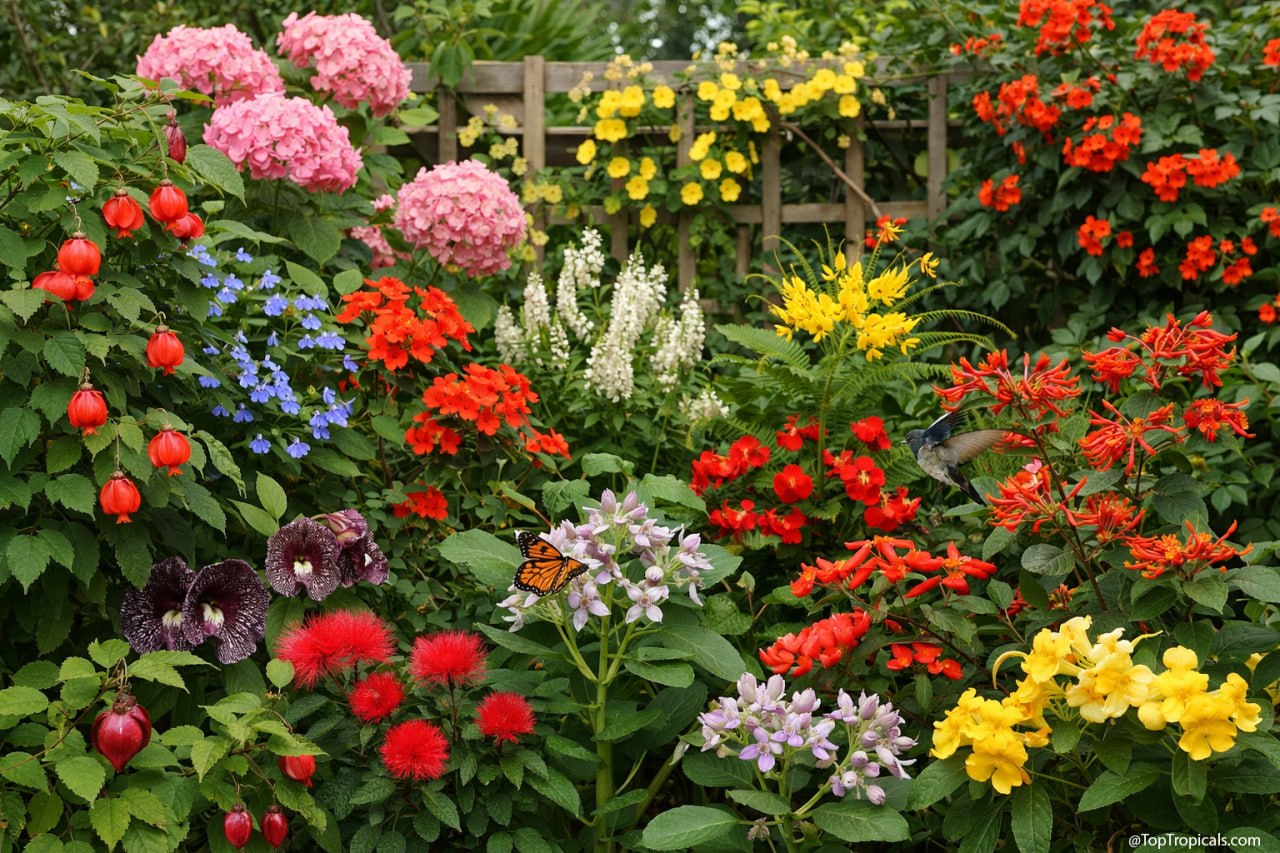
13 tropical flowers to plant in spring to attract pollinators year around

13 tropical flowers to plant in spring to attract pollinators year around: Abutilon Fireball (Abutilon darwinii x striatum), Almond Bush (Aloysia virgata), Calico Flower (Aristolochia littoralis), Pride of De Kaap (Bauhinia galpinii), Mexican Bird of Par

13 tropical flowers to plant in spring to attract pollinators year around: Abutilon Fireball (Abutilon darwinii x striatum), Almond Bush (Aloysia virgata), Calico Flower (Aristolochia littoralis), Pride of De Kaap (Bauhinia galpinii), Mexican Bird of Paradise (Caesalpinia mexicana), Red Tassel Flower (Calliandra tweedii With Love), Giant Milkweed (Calotropis gigantea), Blue Butterfly (Clerodendrum ugandense), Tropical Hydrangea (Dombeya wallichii), Fire Bush (Hamelia patens), Butterfly Orchid

13 tropical flowers to plant in spring to attract pollinators year around


Spring is when everything wakes up - and if you plant smart now, your garden can stay alive with butterflies, bees, and hummingbirds all year long. The key is mixing tropical bloomers that flower in waves, not all at once. These plants don’t just look good - they keep pollinators coming back season after season, turning your yard into a living, moving ecosystem.
  • 1. Abutilon Fireball (Abutilon darwinii x striatum)


    Bell-shaped flowers in warm red and orange tones hang like little lanterns. Very cold hardy, blooms on and off through the year, especially in mild climates. A steady nectar source for hummingbirds. More 👉
  • 2. Almond Bush (Aloysia virgata)


    Light, airy clusters of tiny white flowers with a strong almond scent. Bees absolutely cover this plant when it’s in bloom. Flowers repeatedly through warm months. More 👉
  • 3. Calico Flower (Aristolochia littoralis)


    One of the most unusual flowers you can grow - patterned like fabric. More importantly, it’s a host plant for butterflies, giving them a place to lay eggs. More 👉
  • 4. Pride of De Kaap (Bauhinia galpinii)


    Bright orange-red blooms cover this shrub for months. Tough, fast-growing, and constantly visited by butterflies and bees. More 👉
  • 5. Mexican Bird of Paradise (Caesalpinia mexicana)


    Sunny yellow flowers with a light fragrance. Handles heat, freeze, and poor soil easily. A reliable nectar plant for bees and butterflies. More 👉
  • 6. Red Tassel Flower (Calliandra tweedii With Love)


    Very showy red-flowered powderpuff, fast-growing and spacey shrub. Cold tolerant to hard freeze, making it a strong choice for subtropical gardens. Forms a dense, many-stemmed plant with fine, feathery foliage that folds at night or by touch. Large scarlet tassel flowers bloom from spring to autumn and attract pollinators nonstop. More 👉
  • 7. Giant Milkweed (Calotropis gigantea)


    A bold plant with thick leaves and waxy flowers. Important host plant for butterflies, especially monarchs. Handles heat and drought well. More 👉
  • 8. Blue Butterfly (Clerodendrum ugandense)


    Flowers really do look like little blue butterflies. Blooms frequently and attracts actual butterflies along with bees. More 👉
  • 9. Tropical Hydrangea (Dombeya wallichii)


    Large clusters of soft pink flowers appear in cooler months when little else is blooming. A major nectar source in winter. More 👉
  • 10. Fire Bush (Hamelia patens)


    One of the best all-around pollinator plants and a tough bush - takes both cold and heat. Tubular orange-red flowers attract hummingbirds nonstop, plus butterflies and bees. More 👉
  • 11. Butterfly Orchid Vine (Mascagnia macroptera)


    A climbing, cold hardy vine covered in bright yellow flowers and butterfly-like seeds. Great for fences or trellises, adding vertical color and feeding pollinators. More 👉
  • 12. Mexican Flame Vine (Senecio confusus)


    Fast-growing, hardy vine with intense red blooms. Flowers heavily and brings in butterflies quickly. More 👉
  • 13. Yellow Elder (Tecoma stans)


    Bright yellow trumpet flowers that bloom over a long season. A dependable plant for both bees and hummingbirds. More 👉


✔️ Planting a mix of these gives you something in bloom almost every month.
That’s the real trick - not just planting for spring, but building a rotation of flowers that keeps pollinators fed all year long.

🛒 Transform your yard into a Butterfly Haven with exotic plants

📚 Learn more:


#Butterfly_Plants
Butterfly Haven or a Heaven on Earth?
Top 20 plants for a Butterfly Haven
Five best butterfly attractors for a Southern garden
Top Eight irresistible vines for a hummingbird haven: Part 1 - Part 2

#Hedges_with_benefits #Butterfly_Plants #How_to #Discover

🟢 Join 👉 TopTropicals
Date: 20 Apr 2026

Plumerias that stand out: 5bold colors and clean contrasts

Plumeria Hwa Kor (Reddy Black) -

Plumeria Hwa Kor (Reddy Black) -

Plumeria Happy Vinca

Plumeria Happy Vinca

Plumeria Baby Bird

Plumeria Baby Bird

Plumeria Paramino

Plumeria Paramino

Plumerias that stand out: 5bold colors and clean contrasts. Pot size tip 🌈

This batch leans into strong color and sharp definition - from deep reds and orange to bright centers and soft whites with just a hint of pink. Each one has a distinct personality, but all of them are the kind you notice right away in the garden.

🌸 Today's featured plumerias

  •  ✦ Plumeria Hwa Kor (Reddy Black) - deep velvety red flowers with rich, saturated color and thick, sculptural petals. Blooms form tight clusters at the tips, giving it a strong, bold presence.
  •  ✦ Plumeria Happy Vinca - crisp white petals blending into soft pink with a vivid red center that pops. Bright, clean, and very eye-catching with a sharp, star-like shape.
  •  ✦ Plumeria Baby Bird - soft white petals with a warm yellow center and a gentle pink edge. Clean, balanced blooms that feel calm and refined.
  •  ✦ Plumeria Paramino - glowing dark yellow flowers deepening into orange with soft pink edges, like a tropical sunset. Bright clusters create a warm, cheerful display against green foliage.


💡 Plumeria tip: pot size matters


Keep the container close to the root ball size - oversized pots hold too much moisture and can lead to rot.
Plumerias prefer slightly snug conditions, so let the soil dry a bit between watering and keep them on the drier side.

🛒 Shop Plumeria Collection and Enjoy the fragrant blooms

📚 Learn more:
🎥 How to get endless Plumeria Blooms

#Perfume_Plants #Container_Garden #How_to #Discover #PlumeriaRainbow

Plant Facts

Plumeria alba
Dwarf Plumeria
USDA Zone: 9-11
Large shrub 5-10 ft tallSmall tree 10-20 ftFull sunModerate waterWhite, off-white flowersFragrant plant
🟢 Join 👉 TopTropicals