Garden Blog - Top Tropicals

Date: 6 Jun 2026

The easy orchid that blooms like a tropical sunrise: Epidendrum

🌅 The easy orchid that blooms like a tropical sunrise: Epidendrum


Most people think orchids are fussy plants that belong in greenhouses or on windowsills. Epidendrum radicans - also known as Orange Reed Ground Orchid or Sunrise Orchid - proves otherwise. This colorful orchid grows in the ground, tolerates heat and humidity, multiplies easily, and can bloom for months with very little care.

🔥 Not your typical orchid


Unlike many orchids that grow on trees, Epidendrum radicans is a terrestrial orchid native to Mexico, Central America, and northern South America. It naturally grows on the ground and even among rocks.

Its upright reed-like stems are topped by clusters of brilliant orange flowers with golden-yellow highlights. A single mature stem can carry dozens of blooms, and large plantings resemble patches of miniature tropical sunrises.

🔥 Easy to grow, easy to share


Epidendrum thrives in Florida's heat and humidity and performs best in bright light and well-drained soil. In warm climates it often blooms throughout the year.

One reason gardeners love it is its ability to spread. The stems naturally produce roots along their length, making division and propagation remarkably easy. A single plant can eventually develop into a large, colorful colony.

🔥 A pollinator favorite


The vivid orange flowers attract butterflies and hummingbirds and stand out brightly against green foliage. This makes Epidendrum a valuable addition to pollinator gardens and tropical landscapes.

🔥 Better than a flowering annual


Unlike annual flowers that must be replaced each season, Epidendrum returns year after year and gradually expands into larger clumps. It works well along walkways, patios, entryways, borders, and mixed tropical beds where its upright growth adds height and color.

🔥 The orchid that deserves more attention


Some plants become famous because they are difficult or rare. Epidendrum radicans deserves attention for the opposite reason.
It is colorful, dependable, beginner-friendly, and generous with flowers. Give it sunshine, good drainage, and a place to grow, and it will reward you with months of vibrant blooms that bring the warmth and energy of a tropical sunrise into your garden. 👉 More...

💡 #Fun_facts:

📌 The common name "Crucifix Orchid" comes from the tiny cross-shaped structure in the center of each flower.
📌 Unlike many orchids, it naturally produces roots along its stems, which is one reason it spreads and propagates so easily.
📌 In Florida, it's often used as a landscape orchid rather than a houseplant.

📚 Learn more:

Bamboo Orchid Plant Facts

Botanical name: Arundina graminifolia, Arundina affinis, Bletia graminifolia
Also known as: Bamboo Orchid, Bird Orchid
USDA Zone: 9 - 10
Highligths Small plant 2-5 ftSemi-shadeShadeFull sunWatering: Regular. Let topsoil dry slightlyEpiphyte plantWhite, off-white flowersPink flowers
Get personalized tips for your region

· Epidendrum in Plant Encyclopedia
· Orange Reed Ground Orchid, Sunrise
· The "Fake" Bamboo That Blooms Like a Rare Orchid Year-Round
· The prettiest flower for shade
· Ground orchids: all-summer colors
· Why do we love Ground Orchids
· Terrestrial orchids
· What orchids can be grown in the ground
🎥 Ground orchids: all-summer colors for shady gardens

🛒 Shop Ground Orchids

#Container_Garden #Shade_Garden #Discover

🟢 Join 👉 TopTropicals
Date: 5 Jun 2026

The Heart-Shaped Houseplant People Keep Giving as a Living Love Note

The Heart-Shaped Houseplant People Keep Giving as a Living Love Note

💞 The Heart-Shaped Houseplant People Keep Giving as a Living Love Note


Most houseplants are just greenery, but Hoya kerrii is different. One look at its perfectly heart-shaped leaves and you immediately understand why it’s called the Sweetheart Plant or Valentine Hoya. It looks almost unreal - thick green hearts climbing along twisting vines, as if designed specifically for a Love Gift. But unlike flowers that fade in a week, this gift keeps growing, quietly reminding someone every day that they are loved. For plant collectors, it has become one of the most charming and recognizable indoor plants in the world.

💖 Three Stunning Varieties to Obsess Over


The famous heart shape is only part of the story. Mature plants grow long, twining stems covered in succulent-like leaves that look like little green valentines hanging in every direction. It comes in three beautiful forms:

🟢 Classic Jade Green: Deep green foliage and the fastest grower of the family.
🟡 Sunshine Variegated: Bright, creamy-yellow margins that light up a room.
⚪️ Moonlight Variegated: Softer, silvery-cream internal patterns for an elegant look.

Many people first discover Hoya kerrii as a single rooted leaf sold in a tiny pot. While those cute novelty hearts make popular gifts, mature trailing plants are far more impressive.
👉 Pro-Tip: If you want cascading vines, buy a plant with a visible stem and multiple leaves. Those single novelty leaves look adorable on a desk, but without a piece of stem tissue, they never grow any larger.

💖 Surprisingly Low-Maintenance


One reason the Sweetheart Hoya exploded in popularity is simple: it is extremely forgiving and tolerates neglect better than too much attention. Because the thick leaves store water like a succulent, it easily survives weeks between waterings.

It adapts beautifully to standard home or office life:

💧Water: Low to moderate. Let the soil dry out completely between waterings.
☀️Light: Bright, indirect light is best, though it tolerates lower-light spots.
📊Environment: Thrives in average household humidity and indoor temperatures.

The single biggest mistake you can make is overwatering. When in doubt, leave it dry.

💖 The Fragrant, Wax Flowers


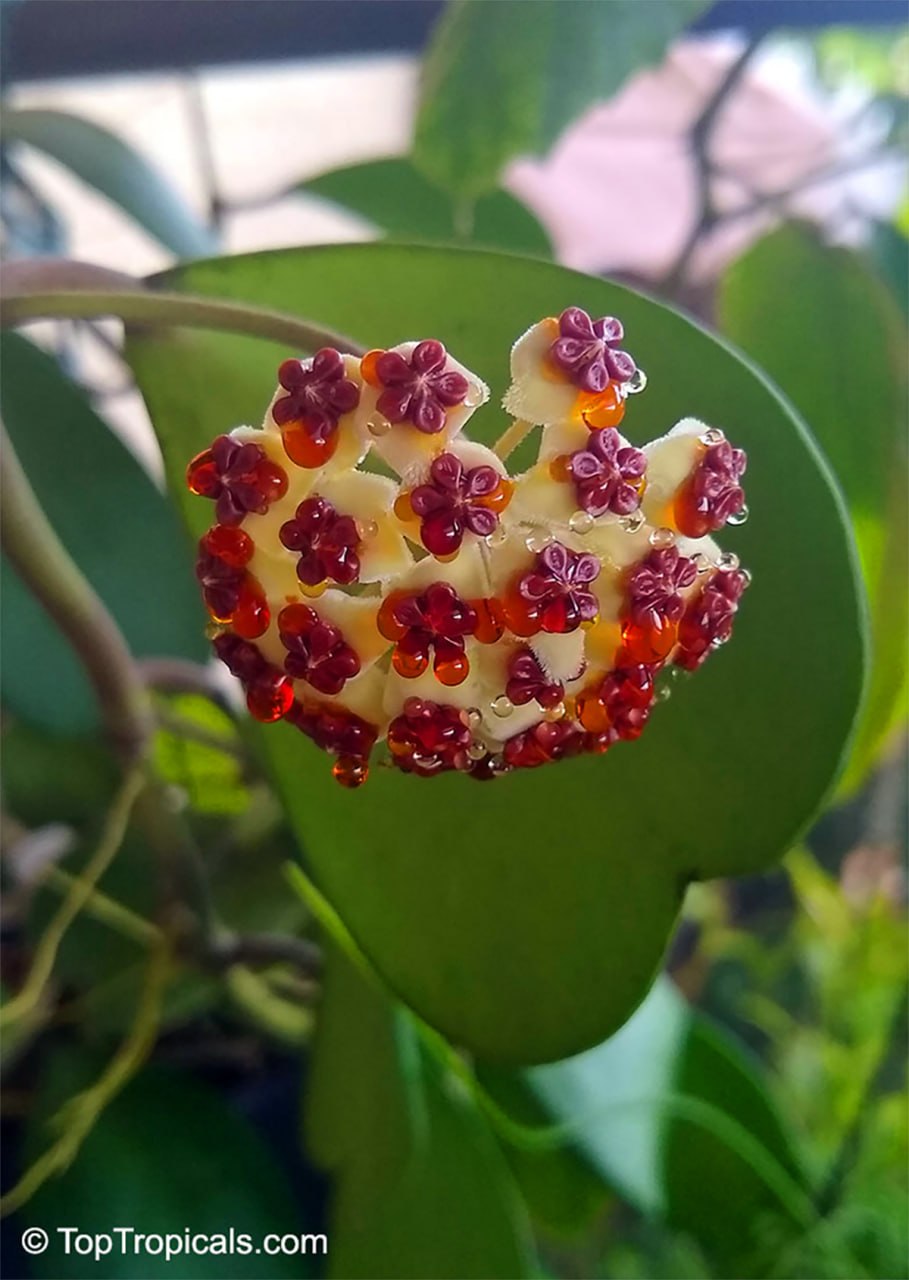
Many owners don't even realize Hoya kerrii blooms until it suddenly produces clusters of strange, waxy flowers that look almost artificial.

The blooms form in rounded, umbrella-like clusters of tiny, double-layered stars - a pale outer star topped with a rich, reddish center crown. Like most Hoyas (affectionately called "wax plants"), the blooms are remarkably long-lasting and release a sweet, rich fragrance, especially in the evening.

💖 A Plant That Tells a Story


There is something deeply thoughtful about giving a living, heart-shaped plant. Cut flowers are a temporary gesture, but a Sweetheart Hoya becomes a permanent fixture on a windowsill, a kitchen corner, or an office desk.

That is why this quirky tropical vine remains a favorite for birthdays, anniversaries, and "thinking of you" surprises. Some plants simply decorate a room; a Sweetheart Hoya quietly tells a story every time you walk past it.

🛒 Collect Sweetheart Hoyas

📚 Learn more:

Wax Hearts Plant Facts

Botanical name: Hoya kerrii
Also known as: Wax Hearts, Sweetheart Hoya, Valentine Hoya, Heart leaf
USDA Zone: 9 - 11
Highligths Groundcover and low-growing 2ft plantSemi-shadeShadeFull sunWatering: Moderate. Water when top soil feels dryOrnamental foliageWhite, off-white flowersPlant attracts butterflies, hummingbirdsFragrant plant
Get personalized tips for your region

Hoya kerrii, Sweetheart Hoya in Plant Encyclopedia
What is the best gift plant that actually lasts?
The best gift for Valentines Day
Valentines day Gift Plant Ideas
Valentine’s plants from around the world that symbolize love, connection, and appreciation
Eight favorite plants of romance, affection, and emotional connection

#Shade_Garden #Container_Garden #Discover

🟢 Join 👉 TopTropicals

Date: 4 Jun 2026

The Beginner-Friendly Houseplant With Blooms Large Enough to Be a Centerpiece

💄 The Beginner-Friendly Houseplant With Blooms Large Enough to Be a Centerpiece


While most houseplants are prized for their green foliage, Amaryllis Minerva steals the show with its enormous blooms. If you are looking for a houseplant that delivers real color, this one is hard to beat. Its flowers combine bright scarlet-red petals with a crisp white star and a striking lime-green throat. The blooms can reach an incredible 6 to 8 inches across, making them some of the largest flowers you can commonly grow indoors.

🌷 A splash of color when you need it most


Amaryllis is especially valued for blooming during the dull, cooler months when many other plants are resting.
A single bulb can produce multiple sturdy flower stalks, each carrying several impressive blooms.
Named after Minerva, the Roman goddess of wisdom and the arts, its symmetrical red-and-white flowers look almost hand-painted.

🌷Amaryllis Minerva fast facts:

· Bloom Size: 6 to 8 inches across
· Colors: Scarlet-red, crisp white star, lime-green throat
· Difficulty: Easy (Great for beginners)
· Lifespan: Perennial (Blooms year after year)

🌷 Surprisingly easy to grow


Despite its dramatic appearance, Amaryllis Minerva is one of the easiest flowering houseplants for beginners. The bulb stores a remarkable amount of energy, which is why it can produce such impressive flowers with minimal effort from the gardener.

To get started, simply:

· Place it in a spot with bright, indirect light.
· Water when the soil begins to dry out.
· Watch it grow - the bulb does most of the work.

Unlike many flowering houseplants, it does not require constant humidity, misting, or complicated care routines.

🌷 More than a one-time holiday plant


Many people treat amaryllis as a seasonal decoration, but these bulbs can live and bloom for years.

Once the flowers fade, the remaining green leaves continue gathering energy from the sun. With a little post-bloom care, the bulb matures and often produces even larger displays in future seasons.

With giant flowers, vivid contrast, and simple care, Amaryllis Minerva remains one of the most rewarding flowering plants you can grow indoors. 👉 More...

🛒 Order Amaryllis Minerva

📚 Learn more:

Netted-Veined Amaryllis Plant Facts

Botanical name: Hippeastrum reticulatum
Also known as: Netted-Veined Amaryllis, Striped-Leaved Amaryllis
USDA Zone: 9 - 10
Highligths Small plant 2-5 ftSemi-shadeWatering: Regular. Let topsoil dry slightlyOrnamental foliageWhite, off-white flowersPink flowers
Get personalized tips for your region

· Hippeastrum (Amaryllis) in Plant Encyclopedia
· What is the brightest indoor flower
· The Alien Lily: why this rare Peruvian bulb is taking over garden feeds

#Container_garden #Shade_garden #Discover

🟢 Join 👉 TopTropicals

Date: 2 Jun 2026

The Holy Grail of Medinillas: Why Collectors are Chasing the Philippine Pink

The Holy Grail of Medinillas: Why Collectors are Chasing the Philippine Pink

🎀 The Holy Grail of Medinillas: Why Collectors are Chasing the Philippine Pink


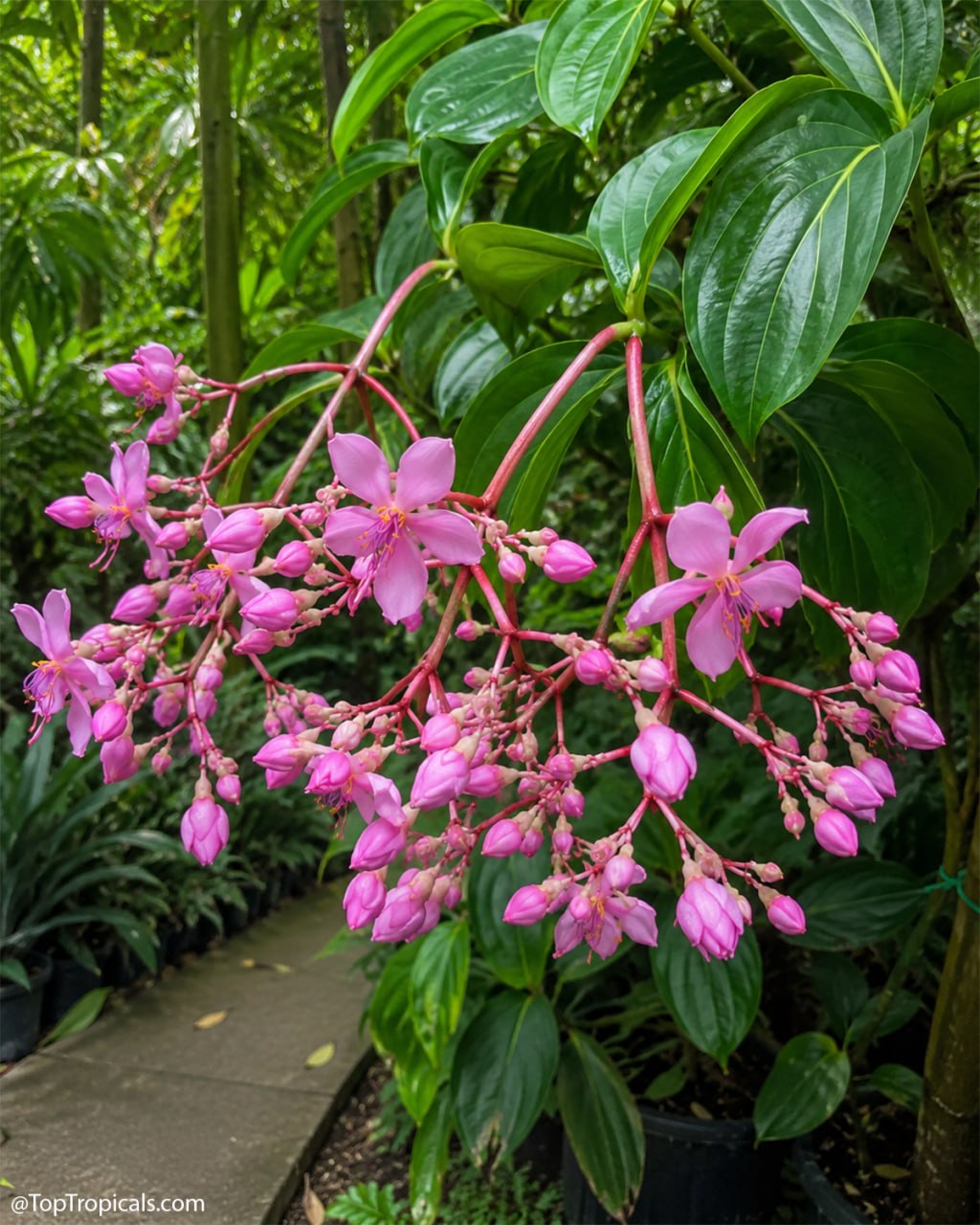
Some tropical plants are impressive because of their massive size, others capture attention with the delicate beauty of their flowers; Medinilla apoensis - popularly known as the "Philippine Pink" - stands out because it somehow does both at the same time.

🎀This rare Philippine species produces vivid, bright pink flower clusters that rise and cascade above the foliage like glowing tropical chandeliers. Unlike many Medinillas that rely mostly on oversized pink bracts for their visual show, this species gets its dramatic appearance from the flowers themselves - large, intensely colored blooms arranged in elegant, pendant clusters.
The effect is so striking that many people assume the plant is artificial the first time they see it.

🎀 A Different Kind of Medinilla


Most indoor gardeners are familiar with the famous Medinilla magnifica, often called the "Rose Grape" plant. However, Medinilla apoensis has a completely different personality.

· Architectural Foliage: The leaves are heavily veined, lush, and deeply textured, giving the plant a rich rainforest appearance even when it isn't flowering.
· Floating Blooms: When it's time to bloom, the bright pink flowers emerge on branched, hanging stems, floating above and around the leaves instead of hiding beneath them.
· Oversized Flowers: The individual flowers can reach nearly 2 inches across—unusually large for the genus—creating a fuller and far more dramatic display than its relatives.

Its graceful, cascading growth habit only adds to the effect, making mature plants look almost sculptural.

🎀 A Rare Collectors Treasure from the Cloud Forests

As the name suggests, Medinilla apoensis originates from the Philippines, a tropical region famous for its extraordinary epiphytic plants and rich rainforest biodiversity. In the wild, these plants naturally grow perched on tree branches in humid mountain forests, where constant airflow, filtered light, and mist create the ideal microclimate.

Because it remains relatively uncommon in commercial cultivation, the "Philippine Pink" has that exact combination that plant enthusiasts love: it is rare, exotic-looking, and elegantly dramatic.

🏆 The Best Part? It is surprisingly manageable to grow indoors if you can mimic its native cloud-forest habitat.

🎀 How to Help It Thrive

Despite its finicky, ultra-tropical appearance, Medinilla apoensis isn't impossible to keep happy. Like many epiphytes, its success comes down to a few key elements:

· Light: Bright, filtered or dappled sunlight (avoid direct, scorching afternoon sun).
· Climate: Warm temperatures and consistently high humidity.
· Watering: Regular moisture, but never allow the roots to sit in stagnant water.
· The Golden Rule: Avoid dense, heavy soil. In nature, their roots are exposed to constant airflow. To prevent root rot, use a chunky, fast-draining tropical mix containing orchid bark, coco coir, and perlite.

🎀 The Ultimate Showstopper

Some plants blend seamlessly into the background of a collection. Medinilla apoensis is not one of them.

Between the heavily textured foliage, the sculptural cascading habit, and those glowing pink flowers suspended like fine jewelry, this is the kind of plant that instantly becomes the center of attention in a greenhouse, patio, or bright living room.

For the dedicated plant collector, finding one of these rare treasures in full bloom feels less like routine gardening and a lot more like discovering hidden tropical treasure.

🛒 Shop Medinilla plants

📚 Learn more:

Philippine Pink Medinilla Plant Facts

Botanical name: Medinilla apoensis
Also known as: Philippine Pink Medinilla
USDA Zone: 10
Highligths Small plant 2-5 ftSemi-shadeWatering: Moderate. Water when top soil feels dryWatering: Regular. Let topsoil dry slightlyPink flowers
Get personalized tips for your region

· Medinilla apoensis in Plant Encyclopedia
· What pot is good for Medinilla?
· Is this a Plant or a Coral?
· How to add a splash of tropical flair to your plant collection
· The Drama you want in your garden: dazzling Medinilla!
· Medinilla Gregori Hambali - an Exquisite Natural Wonder
· The Rolls Royce of House Plants: Medinilla

#Shade_Garden #Container_Garden #Discover

🟢 Join 👉 TopTropicals

Date: 30 May 2026

The Fake Bamboo That Blooms Like a Rare Orchid Year-Round

The "Fake" Bamboo That Blooms Like a Rare Orchid Year-Round


Bamboo Orchid (Arundina graminifolia): Ever seen a bamboo plant sprout stunning, pinkish-purple orchid flowers? It looks like a trick of nature, but it’s actually the Bird Ground Orchid! This exotic showstopper features tall, cane-like stems and long, alternating leaves that mimic real bamboo perfectly. But instead of just growing green, these towering plants - which easily reach hip height or taller - produce delicate, 3-inch blooms that look exactly like high-maintenance Cattleya orchids.

🌸 Why it’s perfect for your yard:


Continuous blooms: The flowers open one at a time at the top of the canes, keeping the colorful show going for weeks on end.
Year-round color: While they peak in the summer, these tropical beauties can bloom almost all year long.
Low maintenance: Unlike notoriously finicky orchids, the Bamboo Orchid is a hardy, easy-to-care-for addition that thrives beautifully in shade gardens.

If you want a unique, sky-reaching plant that brings instant tropical vibes to your landscape without the hassle, this is the one to plant. 👉 More...

📚 Learn more:

Bamboo Orchid Plant Facts

Botanical name: Arundina graminifolia, Arundina affinis, Bletia graminifolia
Also known as: Bamboo Orchid, Bird Orchid
USDA Zone: 9 - 10
Highligths Small plant 2-5 ftSemi-shadeShadeFull sunWatering: Regular. Let topsoil dry slightlyEpiphyte plantWhite, off-white flowersPink flowers
Get personalized tips for your region

· Arundina graminifolia in Plant Encyclopedia
· When Bamboo blooms with orchid flowers
· The prettiest flower for shade
· Ground orchids: all-summer colors
· Why do we love Ground Orchids
· Epidendrum radicans - Orange Reed Ground Orchid, Sunrise
· Terrestrial orchids
· What orchids can be grown in the ground
🎥 Ground orchids: all-summer colors for shady gardens

🛒 Shop Ground Orchids

#Container_Garden #Shade_Garden #Discover

🟢 Join 👉 TopTropicals