Garden Blog - Top Tropicals

Date: 25 May 2026

Why Gardeners Are Secretly Obsessed With This Rare Brazilian Giant Walking Iris

Iris Regina - Neomarica caerulea

🔤 Why Gardeners Are Secretly Obsessed With This Rare Brazilian Giant Walking Iris


Meet Iris Regina - Neomarica caerulea: the rare, salt-tolerant Brazilian walking iris that blooms in under a year and thrives in shady, sandy soil where other tropicals fail.

One look at Iris Regina - and it's easy to see why tropical plant collectors quietly become obsessed with it. It pairs elegant, hand-painted blue-violet flowers with arching, sword-like leaves that instantly give your garden a lush, structural look.
But the real magic of this unusual Brazilian species isn't just its beauty - it's the fact that it thrives exactly where other tropicals fail.

The Plant That Thrives on Neglect (and Salt Air)


Originally discovered growing near the ocean in Brazil, Iris Regina naturally adapted to conditions that would frustrate most gardeners. Thriving in sandy soil, deep shade, and coastal salt spray, this plant is remarkably easygoing. While most flowering tropicals demand rich soil and perfect drainage, Iris Regina handles difficult planting zones with absolute grace.

👉 Quick Care Tip: While it loves moist, well-drained soil, overfeeding is a mistake. Too much fertilizer will give you massive leaves but fewer flowers!

Blooms in Less Than a Year


One of the most surprising traits of Iris Regina is how quickly it matures. Many rare ornamental plants test a gardener's patience for years before ever showing a bud. Fresh seedlings of this species, however, can reach blooming size in less than a year - an absolute rarity for a tropical perennial with such exotic flowers.

The blooms look like a cross between a rare orchid and a delicate iris. While individual flowers are short-lived, mature clumps continuously push out new blooms throughout the warm season, especially when kept evenly moist.

Light and Cold Tolerance: What You Need to Know


· Light: For the best foliage color and maximum blooming power, give it morning sun and afternoon shade. It can handle more sun, but only if you keep up with watering.
· Cold Hardiness: Iris Regina is comfortable down to about 30F. In warmer parts of Florida (Zones 9b-11), it performs beautifully outdoors year-round.
· Cold Climates: If you live in a freeze-prone zone, it makes an exceptional container plant. Just wheel it to safety when a freeze threatens.
Propagation: It's incredibly easy to divide, or you can grow it reliably fast from fresh seed.

25 Years of History: The Top Tropicals Connection


For us at Top Tropicals, Iris Regina isn't just another botanical listing - it carries a piece of our history. This specific variety was introduced by the legendary tropical plant collector Sid Gardino, who named it after his wife, Regina.

Sid and Regina have been longtime friends of Top Tropicals for over a quarter of a century. In fact, some of the very first plants in our nursery’s collection came from them more than 25 years ago. Plants like Iris Regina represent the early, passionate era of Florida plant collecting - treasures shared between friends long before rare plants became viral internet trends.

Today, Iris Regina still feels like a hidden gem compared to flashy orchids or massive aroids. But if you are looking for something elegant, salt-tolerant, and surprisingly easy to grow, this Brazilian walking iris might just become your favorite plant in the garden.

🛒 Get Iris Regina for a low-maintenance, always-blooming showstopper

📚 Learn more:

Walking Iris Plant Facts

Botanical name: Neomarica caerulea
Also known as: Walking Iris, Twelve apostles, Apostle Plant, Iris Regina
USDA Zone: 8 - 11
Highligths Small plant 2-5 ftSemi-shadeShadeFull sunWatering: Regular. Let topsoil dry slightlyBlue, lavender, purple flowersSubtropical plant. Mature plant cold hardy at least to 30s F for a short timeFlood tolerant plantSeaside, salt tolerant plant
Get personalized tips for your region

· Neomarica caerulea - Iris Regina in Plant Encyclopedia
· What flower is perfect for coastal gardens
· What is the best plant for a carefree flower border

#Container_Garden #Shade_Garden #How_to #Discover


🟢 Join 👉 TopTropicals
Date: 22 May 2026

Why orchids are way easier to grow than you think: 7 tips for the beginner

orchids are way easier to grow than you think

🌸 Why orchids are way easier to grow than you think: 7 tips for the beginner

Many beginners avoid orchids. Because they look exotic, it’s easy to assume they belong in a high-tech greenhouse. But the truth is surprisingly simple: most orchids die from too much love, not too little. The popular Phalaenopsis (Moth Orchid) is actually lower-maintenance than many common houseplants - once you understand how its roots work.

🌸 1. The #1 Mistake Beginners Make


Orchids are not regular potted plants. In nature, most are epiphytes, meaning they grow attached to tree bark where roots get constant airflow and dry quickly after rain. When well-meaning beginners plant them in dense soil or keep them constantly wet, the roots suffocate and rot. Ironically, orchids thrive on a little bit of neglect.

⚠️The Grocery Store Trap: Many orchids bought at supermarkets are packed tightly into decorative pots filled with dense moss. While they look beautiful, the roots are often already suffocating. This is why a seemingly healthy orchid can suddenly decline a few weeks after you bring it home.

👉 Pro tip: Aerial roots growing wildly outside the pot are a sign of a happy, healthy orchid - don't cut them off!


🌸 2. Decode Your Orchid’s Roots (The Ultimate Watering Trick)


Forget strict watering schedules. Instead, let the orchid tell you when it’s thirsty by looking at the color of its roots:

🟢❌ Bright Green Roots: The plant is still perfectly moist. Do not water.
⚪️✅ Silvery-Gray Roots: The plant is dry and ready for a drink.

When it's time to water, drench the mix thoroughly, let it drain completely out of the bottom, and don't water again until the roots turn silver.
And please, skip the ice cube trick. Orchids are tropical plants; freezing ice shocks their roots and causes long-term damage.

🌸 3. No Greenhouse? No Problem.


You don't need a tropical conservatory. Most orchids thrive in standard indoor conditions with bright, indirect light.
An east-facing windowsill is usually the sweet spot. Too much direct afternoon sun will scorch the leaves, while deep shade will prevent the plant from ever reblooming.

🌸 4. Don't Panic When the Flowers Fall


After a spectacular bloom cycle, an orchid’s flowers will drop, leaving behind a bare green spike. This does not mean your plant is dying.
Orchids naturally enter a resting period that can last for several weeks or months. They are simply conserving energy to build new leaves and roots before their next big show.

🌸 5. Master the Art of Gentle Feeding


Another common misstep is over-fertilizing. Orchids prefer a "weakly, weekly" approach rather than heavy doses of nutrients all at once.
Using a gentle, specialized formula like SUNSHINE Orchidasm works incredibly well for orchids and other delicate epiphytes. Because it focuses on steady, healthy growth rather than forcing rapid development, it provides the exact kind of mild, consistent nourishment orchids need to produce longer-lasting blooms. It is safe to use with every watering.

🌸 6. Think Beyond the Tree Bark


When we picture orchids, we usually think of the kinds that grow in airy bark. However, the orchid family is massive and includes terrestrial (ground) orchids.
Ground orchids grow directly in soil and can even be planted outdoors in warmer climates. If you are still nervous about managing the unique root systems of traditional orchids, ground orchids are a fantastic, beginner-friendly gateway into the hobby.

🌸 7. The Orchid Addiction is Real


The funniest thing about orchids is the shift in mindset. The moment a beginner successfully triggers a rebloom on their first plant, the fear completely vanishes.
And before you know it, that one single windowsill orchid quietly turns into five.

🛒
Explore Ground Orchids, Vanilla orchids, and enjoy Sunshine Orchidasm

📚 Learn more: 

Ground Orchid Plant Facts

Botanical name: Spathoglottis kimballiana
Also known as: Ground Orchid, Garden Orchid
USDA Zone: 9 - 10
Highligths Groundcover and low-growing 2ft plantSemi-shadeFull sunWatering: Regular. Let topsoil dry slightlyYellow, orange flowersBlue, lavender, purple flowersPink flowersPlant attracts butterflies, hummingbirds
Get personalized tips for your region

· Orchids in Plant Encyclopedia
· How to grow everblooming orchids like in the store?
· Orchids for Dummies
· Sunshine Orchidasm

#Fertilizers #How_to #Container_garden #Discover #Shade_Garden

🟢 Join 👉 TopTropicals

Date: 4 Apr 2026

Rare Night-Blooming Cactus that Glows and Grows Large Edible Fruit

Epiphyllum hookeri - Rare Night-Blooming Cactus with fragrant flowers and large edible fruit

Epiphyllum hookeri - Rare Night-Blooming Cactus with fragrant flowers and large edible fruit

Epiphyllum hookeri - Night-Blooming Cactus with large leaves

Epiphyllum hookeri - Night-Blooming Cactus with large leaves

Epiphyllum hookeri - Night-Blooming Cactus large flowers

Epiphyllum hookeri - Night-Blooming Cactus large flowers

Rare Night-Blooming Cactus that Glows and Grows Large Edible Fruit 🍅

Did you know this nigh blooming beauty has large edible fruit? Why the Epiphyllum hookeri is the ultimate two-for-one plant for tropical garden lovers.

Climbing Cactus Plant Facts

Botanical name: Epiphyllum hookeri, Epiphyllum strictum, Epiphyllum stenopetalum, Epiphyllum phyllanthus
Also known as: Climbing Cactus, Hooker's Orchid Cactus
USDA Zone: 9 - 11
Highligths Small plant 2-5 ftSemi-shadeWatering: Moderate. Water when top soil feels dryWhite, off-white flowers
Get personalized tips for your region


🌠 The Midnight Spectacle


Most gardeners grow the Epiphyllum hookeri for its "ghostly" white flowers. These massive, fragrant blooms wait until sunset to unfurl, reaching their peak beauty under the moonlight before fading at dawn.

🌠 The Edible Bonus


What many don’t realize is that this specific seed-grown type is a "fruiting" powerhouse. After the dramatic floral display, the plant sets smooth, elongated fruit. The flavor? Mild, sweet, and surprisingly refreshing -think of it as a garden-grown secret.

🌠 How to Grow It


Light: Filtered sun or bright shade (no harsh midday sun!).
Hydration: Regular watering in well-drained soil.
Display: It’s a natural climber/cascader—put it in a hanging basket and let it shine.

🛒 Claim your fruiting night-bloomer

Collect epiphytic jungle cacti:
· Epiphyllum hookeri - Large-Fruiting Night-Blooming Cactus
· Epiphyllum oxypetalum - Queen of the Night

Belle de Nuit Plant Facts

Botanical name: Epiphyllum oxypetalum
Also known as: Belle de Nuit, Lady of the Night, Queen of the Night, Night blooming Cereus, Dutchman's Pipe
USDA Zone: 9 - 11
Highligths Large shrub 5-10 ft tallSemi-shadeShadeWatering: Moderate. Water when top soil feels dryWatering: Regular. Let topsoil dry slightlyEpiphyte plantWhite, off-white flowersPink flowersPlant attracts butterflies, hummingbirdsFragrant plantSubtropical plant. Mature plant cold hardy at least to 30s F for a short time
Get personalized tips for your region

· Pseudorhipsalis (Wittia) amazonica - Blue Flame

Purple Rhipsalis Plant Facts

Botanical name: Pseudorhipsalis amazonica, Wittia Amazonica, Disocactus amazonicus, Wittiocactus amazonicus
Also known as: Purple Rhipsalis, Blue Flame
USDA Zone: 9 - 11
Highligths Small plant 2-5 ftSemi-shadeShadeWatering: Moderate. Water when top soil feels dryWatering: Regular. Let topsoil dry slightlyBlue, lavender, purple flowersPlant attracts butterflies, hummingbirdsSubtropical plant. Mature plant cold hardy at least to 30s F for a short time
Get personalized tips for your region

· Epiphyllum guatemalense Monstrosa - Orchid Cactus, Curly Locks
· Disocactus ackermanni - Red Orchid Jungle Cactus

📚 Learn more:


Epiphyllum species in Plant Encyclopedia
Moonlight Cactus, the Night Blooming Wonder with a mystical twist: Epiphyllum oxypetalum FAQ
Epiphyllum oxypetalum - Queen of the Night Cactus in Plant Encyclopedia
Does Queen of the Night bloom only one night out of the year?
Weird cactus looks like pasta with Dragon Fruit
This giant red stared right back at me
Red Orchid Cactus puts out the biggest bloom show
Pseudorhipsalis (Wittia) amazonica - Blue Flamу Jungle Cactus
Epiphyllum guatemalense Monstrosa - Orchid Cactus, Curly Locks

#Container_Garden #Shade_Garden #Food_Forest

🟢 Join 👉 TopTropicals

Date: 20 Mar 2026

Just in time for spring: Nun Orchid blooms for months!

Phaius tankervilleae, Chinese Ground Orchid, Nut Orchid

Phaius tankervilleae, Chinese Ground Orchid, Nut Orchid

Phaius tankervilleae, Chinese Ground Orchid, Nut Orchid

Phaius tankervilleae, Chinese Ground Orchid, Nut Orchid

Phaius tankervilleae, Chinese Ground Orchid, Nut Orchid

Phaius tankervilleae, Chinese Ground Orchid, Nut Orchid

Just in time for spring: Nun Orchid blooms for months! 🌹

🌷 What a wonderful treat after a long cold winter: Nun Orchid (Phaius tankervillea) is putting on a full show right now in the garden - and it’s been going strong since February.

🌷 These plants were already loaded with buds before our Record 25F Florida Freeze, so I moved the two pots into the garage to protect them. Totally worth it - they came through beautifully and didn’t miss a beat.

🌷 Now they’re in full bloom and should keep going well into April. This is one of those rare orchids that just keeps going.

🌷 Unlike most orchids, Nun Orchid grows in regular soil. Big lush leaves, tall flower spikes, and it’s perfectly happy in filtered light - great for patios, containers, or a shady spot in your garden.

What’s blooming in your yard today?

🛒 Plant beautiful Nun Orchid

📚 Learn more:

Chinese Ground Orchid Plant Facts

Botanical name: Phaius tankervilleae
Also known as: Chinese Ground Orchid, Nun Orchid
USDA Zone: 9 - 11
Highligths Groundcover and low-growing 2ft plantSemi-shadeFull sunWatering: Moderate. Water when top soil feels dryRed, crimson, vinous flowersWhite, off-white flowersPlant attracts butterflies, hummingbirdsFragrant plant
Get personalized tips for your region

💋 Phaius tankervilleae – Chinese Ground Orchid in Plant Encyclopedia
💋 Why is it called Nun Orchid
💋 How to grow Ground orchids
💋 When Bamboo blooms with orchid flowers
💋 The prettiest flower for shade
💋 Ground orchids: all-summer colors
💋 Why do we love Ground Orchids
💋 Epidendrum radicans - Orange Reed Ground Orchid, Sunrise
💋 Terrestrial orchids
💋 What orchids can be grown in the ground

#Container_Garden #Shade_Garden

🟢 Join 👉 TopTropicals

Date: 24 Feb 2026

5 Heart-Shaped Plants Every Gardener Needs This Spring

Aristolochia " The "alien" flower that hosts rare butterflies.

Aristolochia " The "alien" flower that hosts rare butterflies.

Dombeyaflowers on the bush

Dombeyaflowers on the bush

Hoya kerrii Sweetheart Hoya

Hoya kerrii Sweetheart Hoya

Philodendron leaves

Philodendron leaves

Piper - edible leaves

Piper - edible leaves

5 Heart-Shaped Plants Every Gardener Needs This Spring 💕

❣️ Why heart-shaped?


Heart-shaped leaves instantly soften a garden. They feel welcoming, romantic, and just a little bit playful. But if you choose wisely, you will get much more than a cute leaf shape.

Before adding a plant to your collection, look beyond the foliage. Does it flower? Does it attract pollinators? Does it offer edible or fragrant benefits? The right heart-shaped plant can bring beauty, fragrance, butterflies - even flavor - to your landscape all year long.

Here are five plants that truly give your home a little love.

💚 1. Aristolochias - bold leaves and wild flowers


If you want a conversation starter, Aristolochia is the answer. These vines don't just offer bold, oversized heart foliage and produce "alien-looking" blooms that defy garden norms.
· Garden Hack: Use it to create "living shade" on hot west-facing walls to naturally cool your home.
· Extra benefits: Many species are host plants for Pipevine Swallowtail butterflies, making them essential for pollinator gardens. They grow fast, create dense shade, and can cool down hot garden walls during summer. 👉Explore Aristolochias

💚 2. Dombeyas - winter flowers when little else blooms


Dombeyas bring heart-shaped foliage together with spectacular winter blooms. Their large clusters of pink flowers resemble hydrangeas and appear when many other plants are resting.

Extra benefits: They bloom in the cooler months, feeding bees when nectar sources are limited. These fast-growing shrubs create privacy quickly and fill the air with a light, sweet fragrance during flowering season. 👉Explore Dombeya

💚 3. Hoya kerrii - the living Valentine


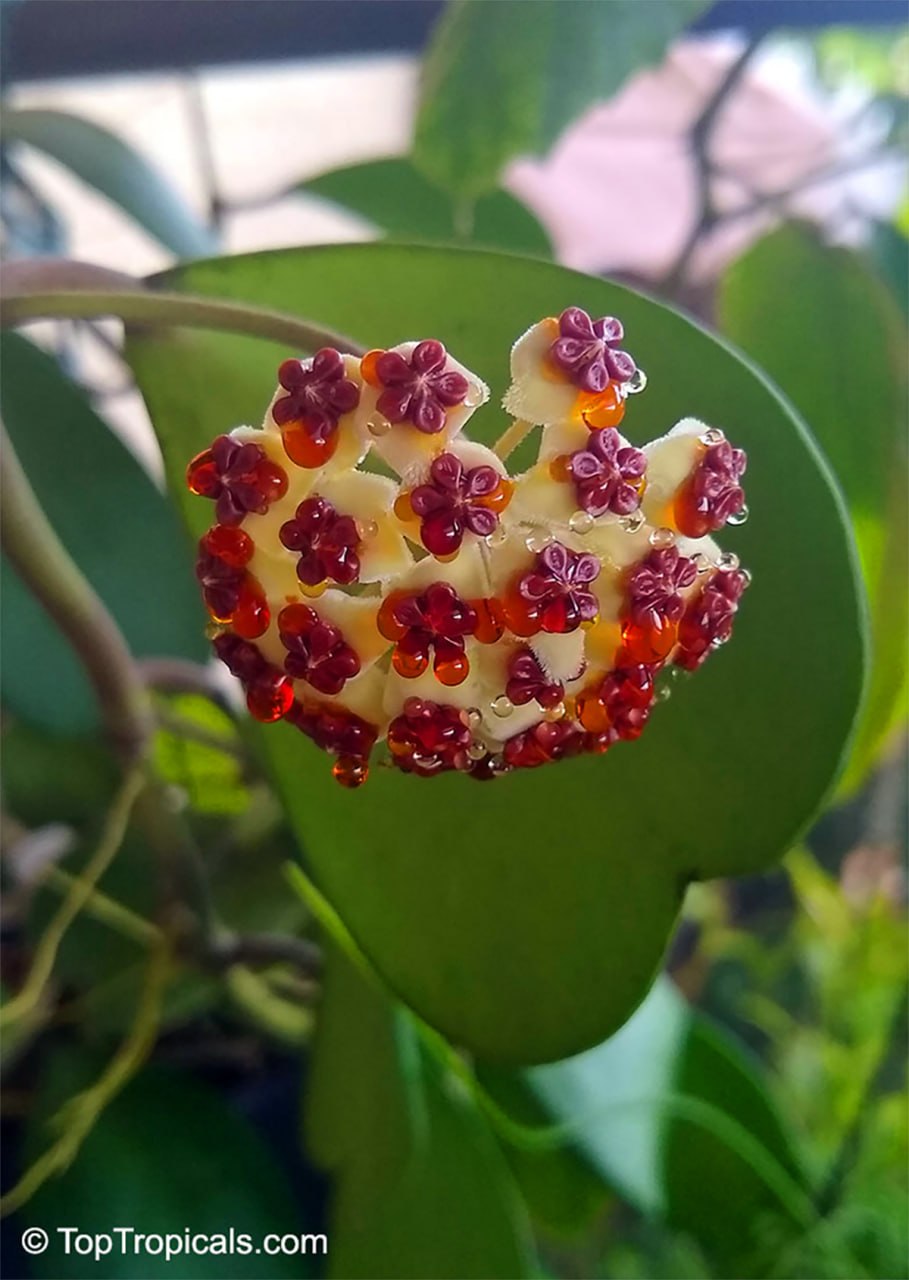
Often sold as a single heart-shaped leaf in a pot, Hoya kerrii is known as the Sweetheart plant. But when mature, it becomes a climbing or trailing vine with thick, succulent foliage.

Wax Hearts Plant Facts

Botanical name: Hoya kerrii
Also known as: Wax Hearts, Sweetheart Hoya, Valentine Hoya, Heart leaf
USDA Zone: 9 - 11
Highligths Groundcover and low-growing 2ft plantSemi-shadeShadeFull sunWatering: Moderate. Water when top soil feels dryOrnamental foliageWhite, off-white flowersPlant attracts butterflies, hummingbirdsFragrant plant
Get personalized tips for your region


Extra benefits: It is extremely low maintenance, tolerates dry indoor air, and can live for many years. When happy, it produces clusters of star-shaped, lightly fragrant flowers. It is compact enough for desks and shelves, yet long-lived enough to become a true keepsake plant. 👉Explore Heart Hoya

💚 4. Philodendron - classic hearts, endless varieties


If you picture a heart-shaped leaf, you are probably imagining a Philodendron. From deep green to bright chartreuse like Golden Goddess, there is a variety for every style.

Extra benefits: Philodendrons adapt easily to indoor or outdoor growing in warm climates. They help improve indoor air quality, tolerate lower light, and require minimal care. In the garden, they thrive in shade and add a lush tropical feel without demanding constant attention. 👉Explore Philodendrons

💚 5. Piper - beautiful and edible


Many Piper species have attractive heart-shaped leaves, but they offer more than good looks. Some are edible and culturally significant.

Extra benefits: Piper betle and Piper sarmentosum leaves are used fresh in Southeast Asian cuisine, while Piper nigrum gives you real black pepper from your own vine. These plants grow well in warm, humid climates, thrive in partial shade, and combine ornamental appeal with practical harvest. 👉Explore Pipers

💚 Ready to add some 'love' to your landscape?


Heart-shaped foliage is charming, but the real value comes from what these plants give back - flowers in winter, butterflies in spring, edible leaves in summer, or easy indoor greenery all year.

Choose plants that not only look lovely but also work hard in your garden. That way, your landscape is not just pretty - it is alive, useful, and full of personality.

🛒 Discover tropical plants with benefits

📚 Learn more:


· How to bring butterflies in your garden with Ditchmans Pipe
· Five steps to everblooming Rose Hydrangea
· The best Valentine’s Day gift that actually lasts - Sweetheart Hoya
· The Marble Queen philodendron that thrives on neglect
· How to grow your own Pepper plants. Five most valuable 'Pipers'.

#Container_Garden #Hedges_with_benefits #Discover

🟢 Join 👉 TopTropicals