Garden Blog - Top Tropicals

Date: 27 Jun 2026

This Tropical Tree Has Leaves Bigger Than Your Head
This Tropical Tree Has Leaves Bigger Than Your Head

This Tropical Tree Has Leaves Bigger Than Your Head


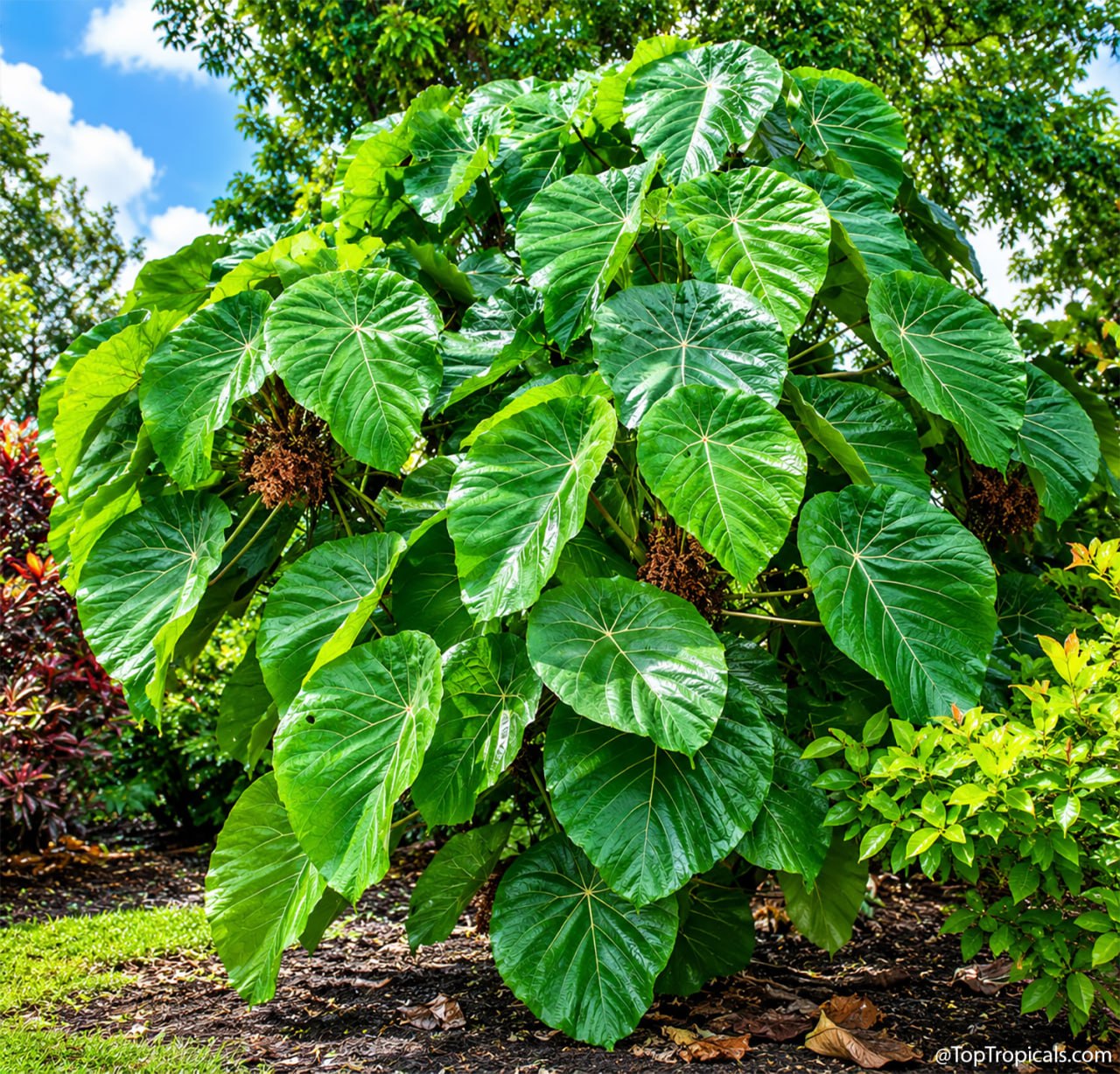
One look at Macaranga grandifolia and most gardeners have the same reaction: "What is THAT?"
Nicknamed the Elephant Ear Tree, this rare tropical beauty produces enormous, glossy leaves that can easily grow larger than a person's head. The effect is dramatic, bold, and impossible to ignore.


☂️ A Living Jungle Umbrella


Native to tropical regions of Southeast Asia and grown widely in Hawaii, Macaranga forms a small upright tree with huge rounded leaves stacked along its stems like giant green shields.

Unlike many tropical plants that rely on colorful flowers, Macaranga's foliage is the entire show. The leathery leaves create an unmistakable rainforest look that instantly transforms a garden into something exotic.

☂️ Why Gardeners Fall in Love With It


· Massive elephant-ear-shaped leaves
· Fast enough to make an impact quickly
· Rare and hard to find
· Surprisingly easy to grow
· Few serious pest or disease problems
· Excellent for creating a lush tropical effect

Even a young plant becomes a conversation piece.

☂️ Bigger Than Most Elephant Ears


Despite its nickname, the leaves often resemble real elephant ears more than many of the plants commonly sold as "elephant ears."

The tree grows upright and relatively narrow, making it useful where space is limited but a bold tropical statement is desired. Mature specimens create a striking column of giant foliage that looks almost prehistoric.

☂️ Easy Tropical Luxury


Macaranga thrives in warm, frost-free climates and appreciates rich, moist soil. It can grow in nearly full sun with adequate water, but the largest and most attractive leaves usually develop with some protection from intense afternoon sun.

It also performs well in large containers, making it an excellent choice for patios and tropical plant collectors.

☂️ The Plant Nobody Knows About


Perhaps the biggest mystery about Macaranga is why it isn't grown more often. It combines spectacular foliage, easy care, and a truly unique appearance, yet remains surprisingly uncommon in Florida gardens and nurseries.

If your goal is to create instant tropical drama, few plants deliver more impact than the Elephant Ear Tree. One glance at those gigantic leaves and you'll understand why collectors become obsessed with it.

🛒 Grow Your Own Elephant Ear Tree with Giant Leaves

📚 Learn more:
· Macaranga grandifolia in Plant Encyclopedia
· One look and you're hooked: Macaranga!
🎥 Shocking ears of Macaranga

#Nature_Wonders #Trees #Discover

Macaranga Plant Facts

Botanical name: Macaranga grandifolia, Macaranga longifolia, Macaranga mappa
Also known as: Macaranga, Nasturtium Tree, Parasol Leaf Tree, Bingabing, Sun Parasol Shrub, Elephant Ear Tree
USDA Zone: 9 - 11
Highligths Large shrub 5-10 ft tallSmall tree 10-20 ftSemi-shadeFull sunWatering: Regular. Let topsoil dry slightlyRed, crimson, vinous flowersOrnamental foliagePlant attracts butterflies, hummingbirdsEthnomedical plant.
Plants marked as ethnomedical and/or described as medicinal, are not offered as medicine but rather as ornamentals or plant collectibles.
Ethnomedical statements / products have not been evaluated by the FDA and are not intended to diagnose, treat, cure, or prevent any disease. We urge all customers to consult a physician before using any supplements, herbals or medicines advertised here or elsewhere.Subtropical plant. Mature plant cold hardy at least to 30s F for a short timeSeaside, salt tolerant plant
Get personalized tips for your region
🟢 Join 👉 TopTropicals

Date: 26 Jun 2026

How to Grow Mahoe: The Fast-Growing Shade Tree That Changes Color - Tropical Chameleon

How to Grow Mahoe: The Fast-Growing Shade Tree That Changes Color - Tropical Chameleon How to Grow Mahoe: The Fast-Growing Shade Tree That Changes Color - Tropical Chameleon How to Grow Mahoe: The Fast-Growing Shade Tree That Changes Color - Tropical Chameleon
🌳 How to Grow Mahoe: The Fast-Growing Shade Tree That Changes Color - Tropical Chameleon

Looking for a fast-growing, low-maintenance tropical tree that brings effortless shade, constant color, and a parade of pollinators to your yard - Mahoe is the one! Talipariti tiliaceum, formerly Hibiscus tiliaceus - is native to coastal pantropical regions. This sturdy evergreen is a true garden workhorse. Whether grown as a dense, 5-to-10-foot privacy shrub or trained into a beautiful, umbrella-shaped small tree reaching up to 20 feet, Mahoe delivers that lush, instant-jungle vibe in just one season.

🌳 Nature's Color-Changing Magic


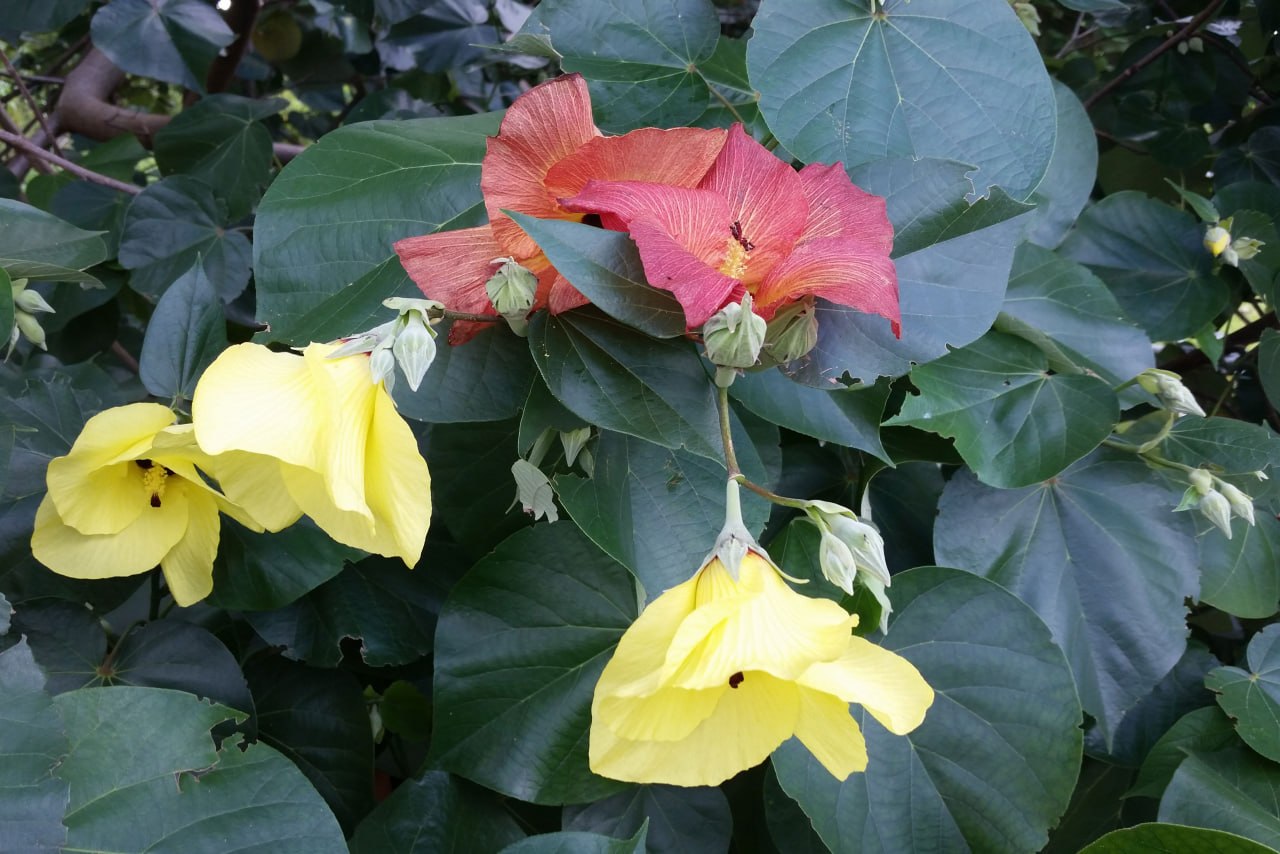
The real magic of the Mahoe lies in its blooms. Throughout the year, magnificent flowers open a bright, vibrant yellow in the morning. As the day goes on and the blooms age, they undergo a stunning transition - deepening to rich orange, crimson, and vinous red before they drop. This shifting color wheel creates a breathtaking, multi-colored display that acts as a magnet for hummingbirds and butterflies.

🌳 Landmark Shade for Warm Climate Landscapes


Mahoe thrives in full sun, loves regular water, and is exceptionally salt-tolerant, making it an absolute powerhouse for coastal and southern landscapes (USDA Zones 9b-11).

Instant Canopy: Because it grows with incredible vigor, it can transform a wide-open, sunny spot into a dense, shady retreat in just one or two seasons.

Growth Management: In the ground, it quickly matures into a substantial, wide-spreading tree. While its wild growth habit means regular, aggressive pruning is mandatory to keep it shaped and contained within typical garden bounds, it rewards that effort with unmatched privacy and a massive, tropical canopy.

🌳 The Designer Upgrade: Variegated Mahoe


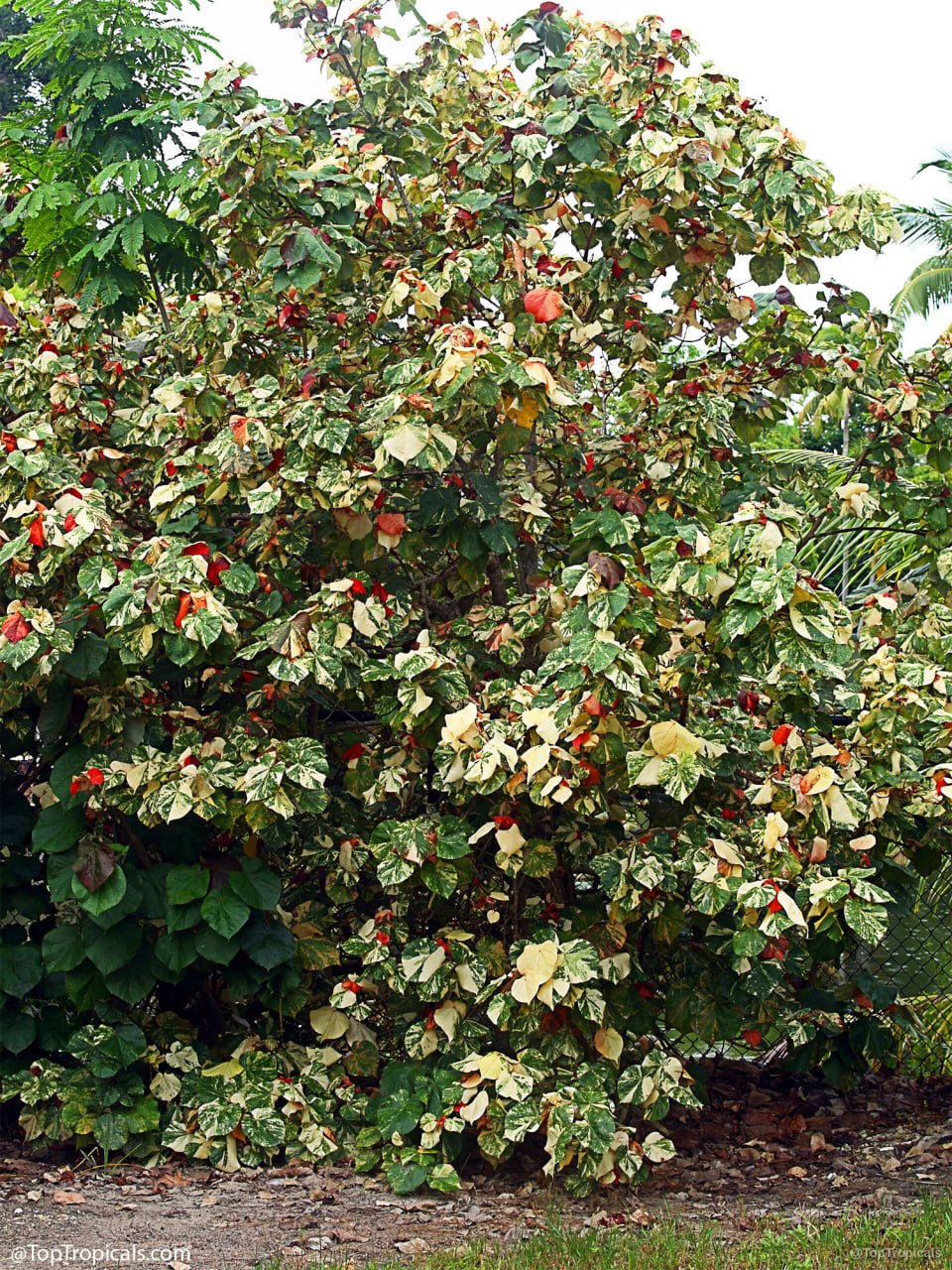
If you want all the fast-growing stamina of the standard Mahoe but want to turn the visual drama up to ten, the Variegated Mahoe (Hibiscus tiliaceus Variegatum) is the absolute must-have tree of the year.

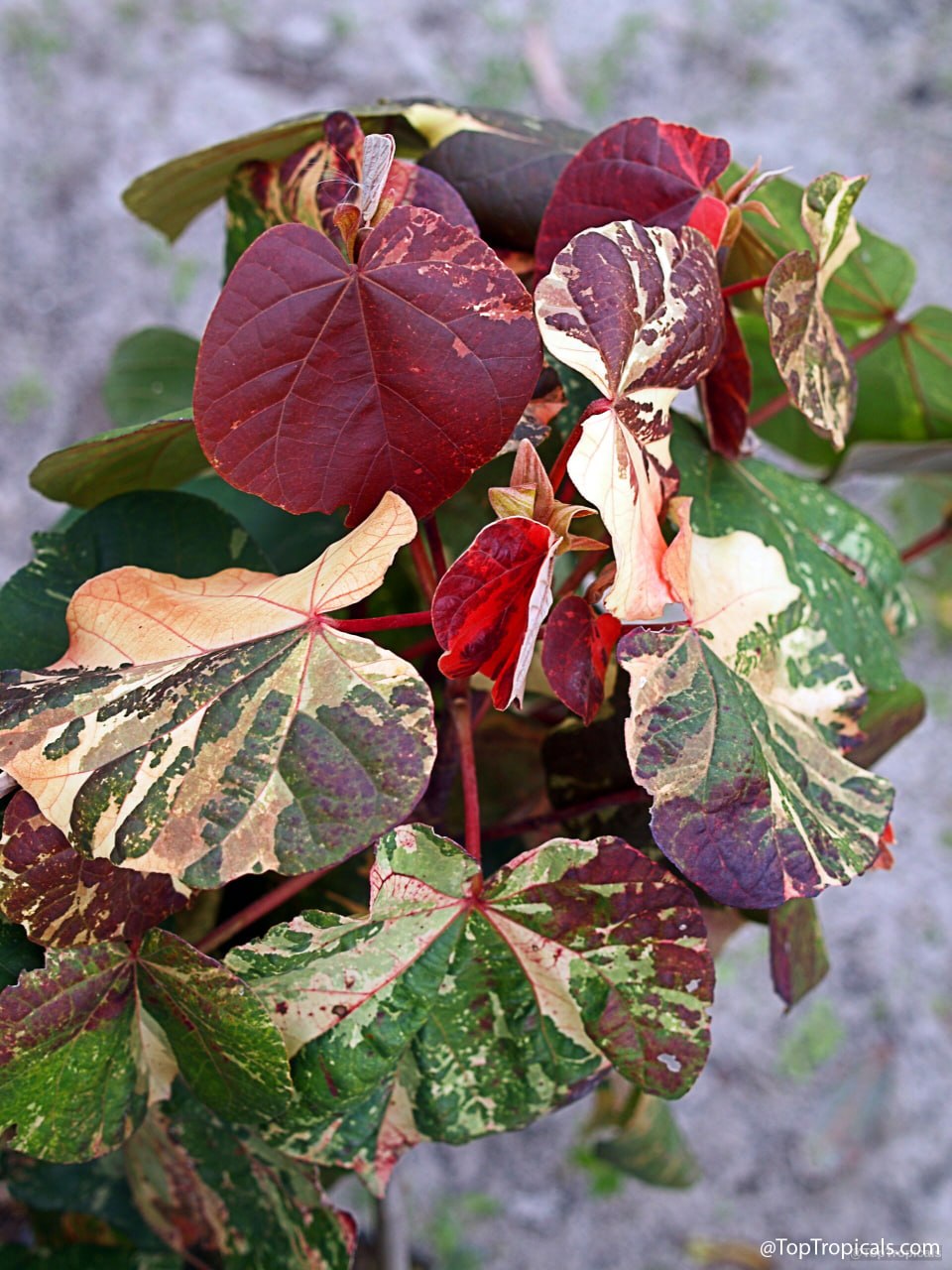
While its color-changing flowers are just as magical as the original, its foliage is a spectacular show all on its own. The large, heart-shaped leaves are a living kaleidoscope, splashed with dramatic patterns of white, cream, deep green, and even soft pink and red.

Even better for smaller yards! The variegated variety tends to naturally maintain a tighter, more compact, and symmetrical umbrella-like shape than its wild green cousin, giving you high-end landscape style with minimal effort.

Whether you choose the classic, pollinator-loving green or the eye-popping variegated cultivar, the Mahoe family is guaranteed to be the centerpiece of your garden.

🛒 Get Instant Tropical Shade - Mahoe

📚 Learn more:
· Talipariti tiliaceum (Hibiscus tiliaceus) in Plant Encyclopedia
· The Tree Everyone's Talking About: Variegated Mahoe

#Trees #Discover

Mahoe Plant Facts

Botanical name: Talipariti tiliaceum, Hibiscus tiliaceus
Also known as: Mahoe
USDA Zone: 9 - 11
Highligths Large shrub 5-10 ft tallSmall tree 10-20 ftFull sunWatering: Regular. Let topsoil dry slightlyYellow, orange flowersRed, crimson, vinous flowersPlant attracts butterflies, hummingbirds
Get personalized tips for your region
🟢 Join 👉 TopTropicals

Date: 12 Jun 2026

The Tree That Turns Streets Purple Every Spring: Why Gardeners Fall in Love with Jacaranda

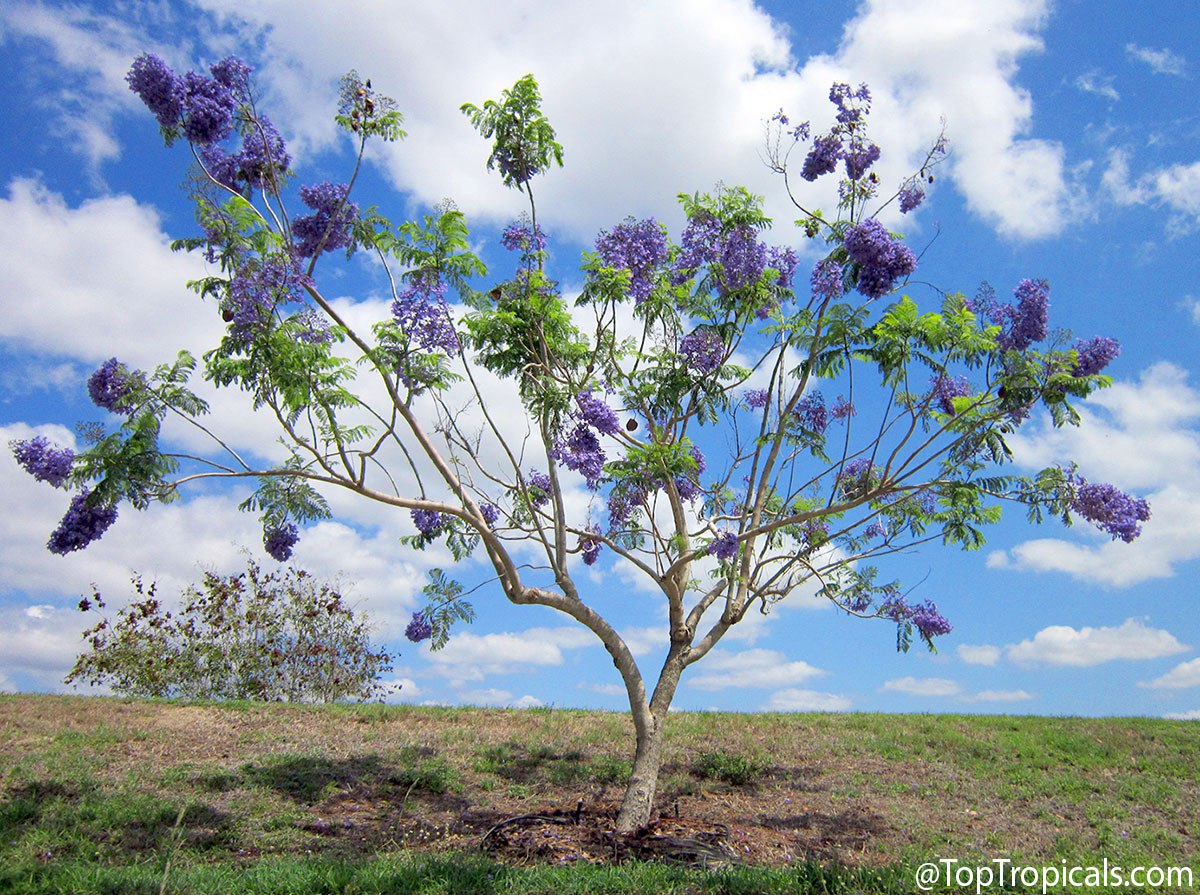
Jacaranda tree

Jacaranda tree

💜 The Tree That Turns Streets Purple Every Spring: Why Gardeners Fall in Love with Jacaranda

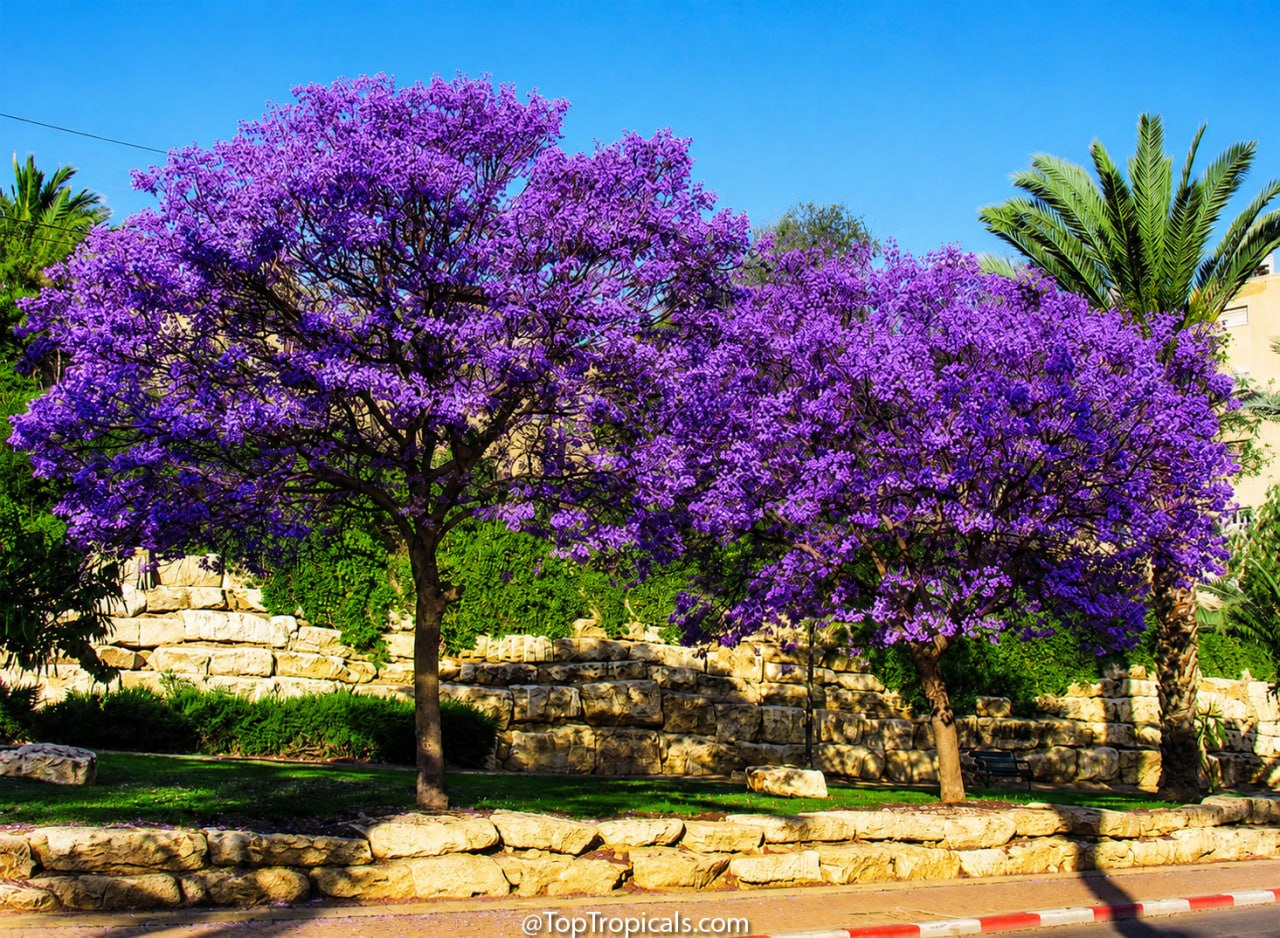
For a few magical weeks each year, a mature Jacaranda looks almost unreal. Its canopy disappears beneath thousands of lavender-blue flowers, while the ground below becomes covered in a purple carpet of fallen blooms. Native to South America, Jacaranda mimosifolia has become one of the world's most beloved flowering trees. In bloom, it transforms ordinary streets, parks, and gardens into scenes people stop to photograph.

💜 When Entire Cities Turn Purple


Few trees create such a dramatic display.

In places where Jacarandas are planted by the thousands, flowering season becomes an event. Streets, sidewalks, and lawns are blanketed with violet-blue petals, creating the impression that spring has been painted across the landscape.

The spectacle is so striking that entire cities have become famous for it. Pretoria, South Africa, is known worldwide as "The Jacaranda City" because of its thousands of flowering trees. In Australia, parts of Sydney and Brisbane attract visitors specifically during Jacaranda season, while neighborhoods in Los Angeles become social-media hotspots when the trees burst into bloom.

For a few short weeks each year, ordinary streets are transformed into unforgettable purple landscapes.

I think that's worth the extra space. It's specific, visual, and memorable, while still staying compact. In fact, this may become one of the most quoted sections of the article because readers love discovering that a tree can become famous enough to define an entire city.

💜 Beautiful Even Without Flowers


Unlike many flowering trees that are forgettable after blooming, Jacaranda remains attractive year-round.
Its finely divided, fern-like foliage gives the tree a soft, tropical appearance and casts light, filtered shade. Even without flowers, its graceful branching structure makes it a standout specimen tree.

💜 How Large Does It Get?


A mature Jacaranda typically reaches 25-30 feet tall with a broad, spreading canopy of similar width.
Because of its eventual size, it works best as a lawn tree, shade tree, or focal point where its canopy has room to develop.

💜 Growing Jacaranda Successfully


For the best flowering display, provide:

· Full sun
· Well-drained soil
· Warm subtropical or tropical conditions
· Protection from severe freezes while young

Once established, Jacaranda is fairly drought tolerant, although occasional watering during extended dry periods helps maintain vigorous growth.

💜 Cold Hardiness


Jacaranda is best suited to USDA Zones 9-11.
Established trees can tolerate brief light freezes, but young trees are more sensitive to cold. Hard freezes may cause dieback, though mature trees often recover when warm weather returns.

💜 Why Gardeners Love It


Some trees provide shade. Others provide flowers.
Jacaranda provides both.
Its fern-like foliage, elegant form, and unforgettable clouds of lavender-blue blooms make it one of the most spectacular ornamental trees for warm-climate gardens. Few trees can transform an ordinary landscape into something people stop to photograph.

🛒 Plant your own Purple Jacaranda tree

📚 Learn more:

Jacaranda Plant Facts

Botanical name: Jacaranda mimosifolia, Jacaranda acutifolia
Also known as: Jacaranda
USDA Zone: 9 - 11
Highligths Large tree taller than 20 ftSmall tree 10-20 ftFull sunWatering: Regular. Let topsoil dry slightlyBlue, lavender, purple flowersWhite, off-white flowersPlant attracts butterflies, hummingbirdsSubtropical plant. Mature plant cold hardy at least to 30s F for a short time
Get personalized tips for your region

· Jacaranda tree in Plant Encyclopedia
· Why the Purple Tango of Jacaranda is so hypnotizing
· Three top tropical trees - from the legends of Caribbean
· Awe-inspiring Jacaranda and its legends

#Trees #Discover

🟢 Join 👉 TopTropicals

Date: 9 Jun 2026

How did your Moringa trees do last winter?

How did your Moringa trees do last winter?

🌿 Updates from our customer Garden Jules:

📚 Learn more:

Horseradish tree Plant Facts

Botanical name: Moringa oleifera, Moringa pterygosperma
Also known as: Horseradish tree, Ben Oil Tree, Coatli, Drumstick tree, Bridal veil, Miracle Tree
USDA Zone: 9 - 11
Highligths Plant used for bonsaiLarge tree taller than 20 ftSmall tree 10-20 ftFull sunWatering: Moderate. Water when top soil feels dryWhite, off-white flowersEdible plantPlant attracts butterflies, hummingbirdsDeciduous plantEthnomedical plant.
Plants marked as ethnomedical and/or described as medicinal, are not offered as medicine but rather as ornamentals or plant collectibles.
Ethnomedical statements / products have not been evaluated by the FDA and are not intended to diagnose, treat, cure, or prevent any disease. We urge all customers to consult a physician before using any supplements, herbals or medicines advertised here or elsewhere.Fragrant plantSubtropical plant. Mature plant cold hardy at least to 30s F for a short time
Get personalized tips for your region

·   Moringa oleifera in Plant Encyclopedia
· Moringa leaves made simple - daily benefits and 6 easy recipes
· What tropical plants survived Florida's historic freeze without protection
·   Moringa omelet recipe
·   Moringa vs spinach: which one wins for nutrition?
·   What edible plants and herbs can reduce your blood pressure
·  Top 12 Eye-Supporting Fruit and Plants for Vitamin A - Retinol
·   Memory & Cognitive Support (Brain Boosters) Edible Plants and Herbs
·   How to grow drumsticks on a tree
·   What is the most useful tree in the world?
·   How to grow a happy Moringa Tree

#Food_Forest #Remedies #Trees

🟢 Join 👉 TopTropicals

Date: 19 May 2026

The Tree That Looks Photoshopped (But Isnt)

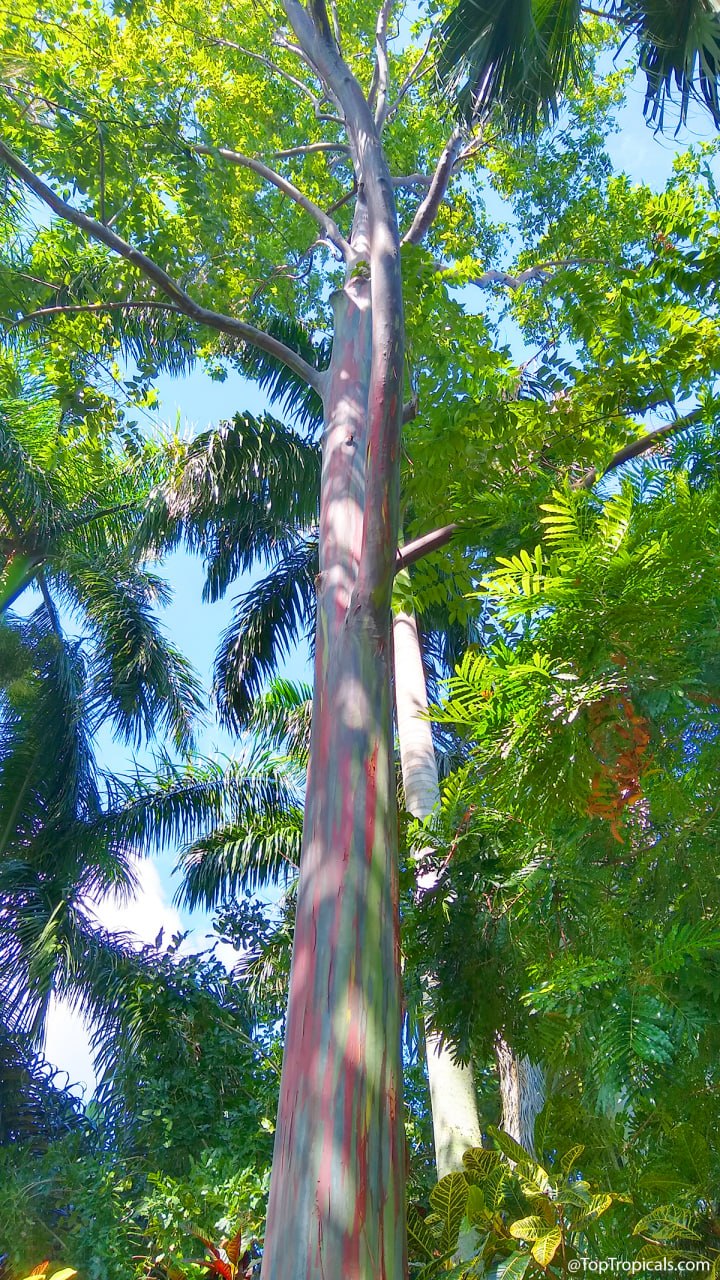
Rainbow Eucalyptus - Eucalyptus deglupta

Rainbow Eucalyptus - Eucalyptus deglupta

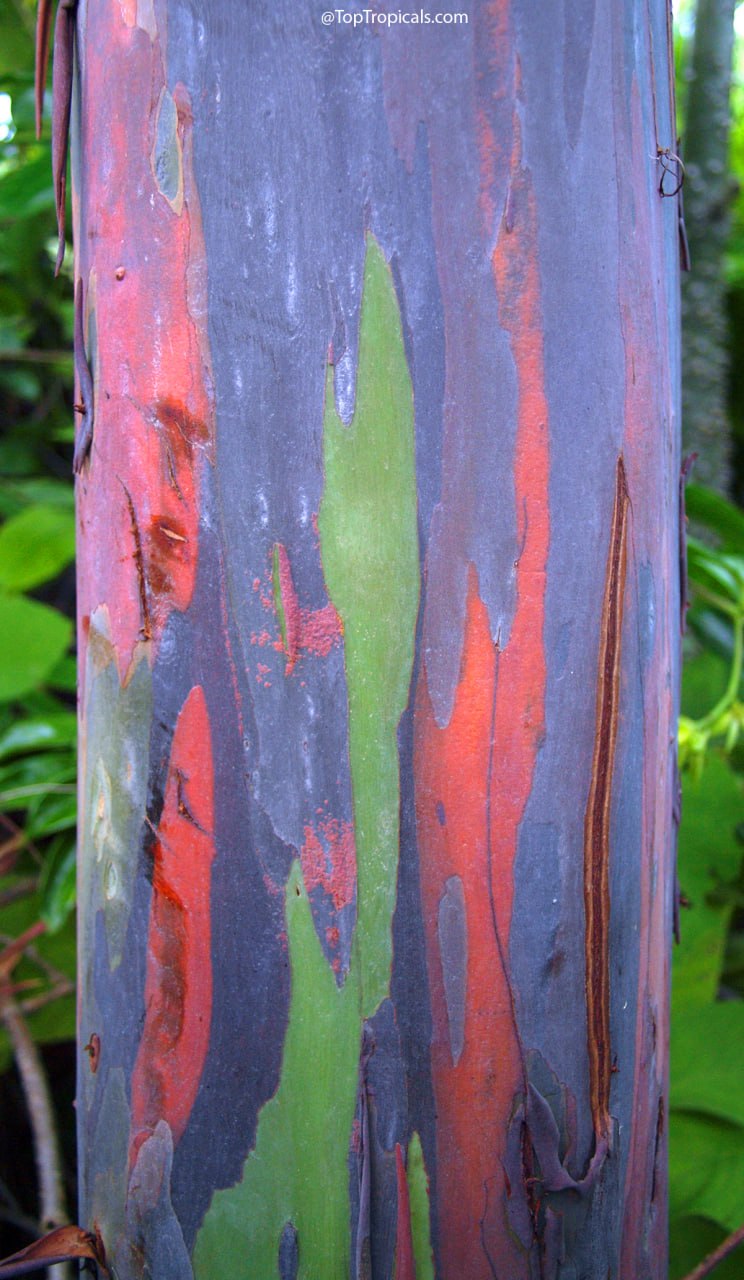
Rainbow Eucalyptus - Eucalyptus deglupta, close up bark

Rainbow Eucalyptus - Eucalyptus deglupta, close up bark

The Tree That Looks Photoshopped (But Isn't) 🌈

Most people see a photo of the Rainbow Eucalyptus and assume someone went heavy on the saturation filters. The trunk looks like an abstract artist got loose with neon greens, deep blues, purples, and burnt oranges - all on the same tree, all at once. It doesn't look real. But it is. And if you live in the right climate, you can actually grow one.

🎨 The Chemistry Behind the Watercolor Trunk


Eucalyptus deglupta does something no other tree quite pulls off at this scale: it sheds its bark in patches and strips throughout the year. While it seems entirely alien, this multi-colored, peeling bark is actually a family trait shared by many other members of the Myrtaceae (Myrtle) family - including common guava trees.

Rainbow Eucalyptus Plant Facts

Botanical name: Eucalyptus deglupta
Also known as: Rainbow Eucalyptus, Mindanao Gum, Rainbow Gum
USDA Zone: 10 - 11
Highligths Large tree taller than 20 ftFull sunWatering: Moderate. Water when top soil feels dryKeep soil moistRed, crimson, vinous flowersWhite, off-white flowersSpice or herb plantFlood tolerant plant
Get personalized tips for your region


However, the Rainbow Eucalyptus takes this family tradition to an absolute extreme. This constant shedding reveals a living, shifting canvas underneath:
The Fresh Layer: New bark starts out a shocking, vivid green because of the chlorophyll sitting just beneath the surface.
The Shift: As the bark is exposed to air, it oxidizes. Time and oxygen push the colors through a spectrum of blues, purples, and eventually into warm oranges and deep, reddish-browns.
The Living Canvas: Because different sections of the trunk shed at different times, the tree is never just one color. It looks like a living watercolor painting that's still drying.

🎨 A Rainforest Giant That Grows at Breakneck Speed


Native to the humid tropical rainforests of the Philippines, Indonesia, and Papua New Guinea, this isn't your average backyard sapling. In the wild, it can tower at nearly 200 feet tall.
While it stays a bit more manageable in residential landscapes, it remains fast-growing. If you give it full sun, rich soil, and plenty of humidity, a young tree can put on several feet of height per year.
Unlike its drought-tolerant Australian cousins, the Rainbow Eucalyptus loves water and can even handle occasional flooding. As a bonus, its leaves release a pleasant, spicy aroma when crushed, adding a sensory layer to its visual drama.

🎨 The Catch: It Hates the Cold


Before you run out to buy one, there is a major catch. While many eucalyptus species are surprisingly tough against the hard freeze, the Rainbow Eucalyptus is the tropical outlier of the family.

The Safe Zones: It thrives best in USDA Zones 10-11 (like South Florida and Southern California), where winters stay mild.
❄️ The Cold Threat: Hard freezes, frost, and biting cold winds will badly damage or kill it.

Can you grow it in colder climates? Yes, but you'll need a big container and a tall space to move it in. Many gardeners outside the tropics grow them in large pots so they can drag them indoors or into a greenhouse for the winter. It limits their ultimate size, but it keeps the theatrical effect alive.

🎨 Why It's Worth the Hype


If you are lucky enough to live in a climate where it can thrive, the Rainbow Eucalyptus makes the ultimate landscape centerpiece. Because its canopy is tall and airy rather than dense, it won't completely black out the sun for the rest of your garden. Instead, it just stands there looking impossible.

Photos actually undersell it. Standing next to the trunk in person, you find yourself looking for the trick. But there isn't one - just nature showing off.

🛒 Plant the Impossible Rainbow Eucalyptus

📚 Learn more: 


Eucalyptus deglupta - Rainbow Eucalyptus in Plant Encyclopedia

#Trees #Discover #Nature_Wonders #Fun_Facts

🟢 Join 👉 TopTropicals

Date: 10 May 2026

Why is this shrub everywhere in Southern landscapes?

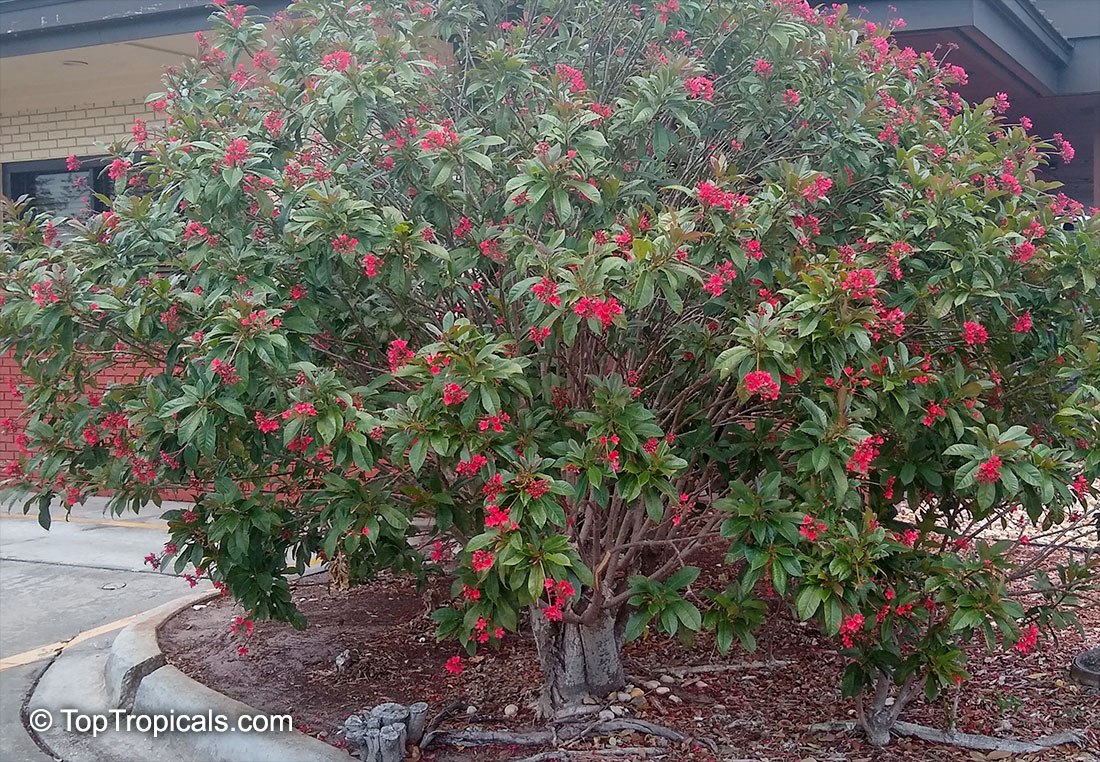
Jatropha integerrima compacta - Peregrina tree

Jatropha integerrima compacta - Peregrina tree

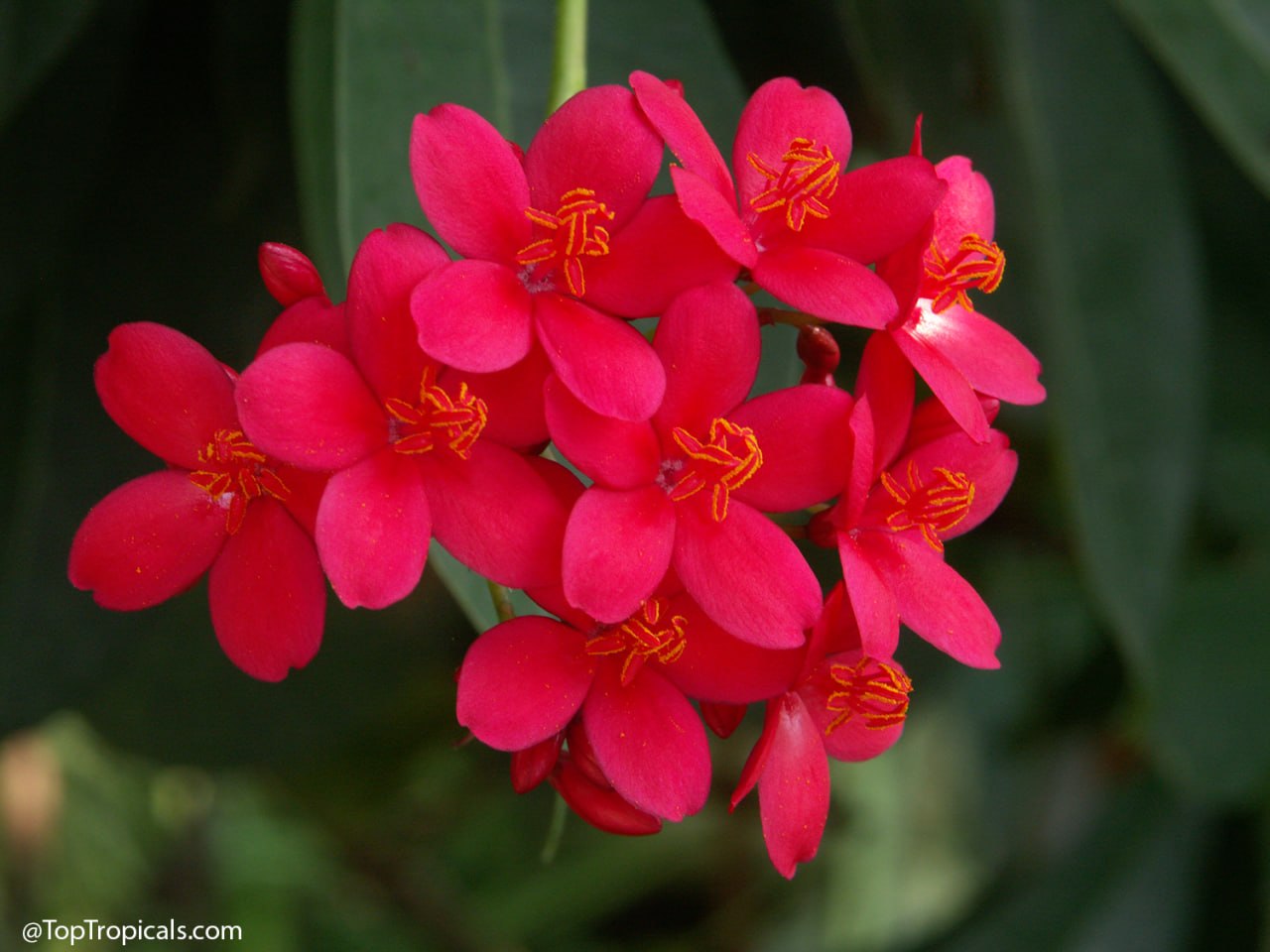
Jatropha integerrima compacta - Peregrina flower

Jatropha integerrima compacta - Peregrina flower

Jatropha integerrima compacta - Peregrina tree

Jatropha integerrima compacta - Peregrina tree

💕 Why is this shrub everywhere in Southern landscapes?

🌸 Nonstop blooms


One look at Jatropha integerrima compacta - Peregrina and the answer becomes pretty obvious. This compact tropical shrub or a dwarf tree blooms almost nonstop with clusters of bright scarlet star-shaped flowers that butterflies can't seem to resist. In warm climates, it keeps adding color when many other plants take a break.

Peregrina Plant Facts

Botanical name: Jatropha integerrima, Jatropha pandurata
Also known as: Peregrina, Spicy Jatropha, Coral Plant, Physic Nut
USDA Zone: 9 - 11
Highligths Plant used for bonsaiLarge shrub 5-10 ft tallSmall tree 10-20 ftSemi-shadeFull sunWater Requirement: Low. Allow soil to dry out between wateringsRed, crimson, vinous flowersPink flowersPlant attracts butterflies, hummingbirdsIrritating plantSubtropical plant. Mature plant cold hardy at least to 30s F for a short timeSeaside, salt tolerant plant
Get personalized tips for your region


🌸 Compact size, big impact


Compacta stays smaller and fuller than the regular Peregrina, which makes it especially popular for foundation plantings, pool areas, patios, and smaller gardens where oversized shrubs become a headache. The glossy green leaves stay attractive year round, giving it a clean, lush look even when it's between bloom cycles.

🌸 Surprisingly low maintenance


Another reason gardeners love it - this plant is surprisingly easygoing. It tolerates many soil types as long as drainage is good, handles heat well, and can be pruned almost anytime because it flowers on new growth. Want a tidy shrub? Trim it. Want a small tropical tree shape? It can do that too.

🌸 A Southern landscape favorite


For Southern gardeners looking for reliable color without constant fuss, Peregrina has quietly become one of those "plant it and enjoy it" landscape favorites.

🛒 Plant and enjoy the compact everblooming Peregrina

📚 Learn more:


Jatropha integerrima in Plant Encyclopedia
9 tough trees for hot, dry spots that actually thrive
7 best exotic dwarf trees for maximum impact in small tropical landscapes
2 most favorite flowering trees for small yards
5 small tropical trees that bloom all summer or year around

#How_to #Discover #Trees

🟢 Join 👉 TopTropicals

Date: 9 May 2026

9 tough trees for hot, dry spots that actually thrive

Tropical Almond - Terminalia catappa

Tropical Almond - Terminalia catappa

Sausage Tree - Kigelia pinnata

Sausage Tree - Kigelia pinnata

Plumeria pudica

Plumeria pudica

Pony Tail Palm - Beaucarnea recurvata

Pony Tail Palm - Beaucarnea recurvata

☀️ 9 tough trees for hot, dry spots that actually thrive


Why that one brutal spot in your yard never works? There’s always that one place - blazing sun, sandy or rocky soil, dries out fast, and everything you plant there struggles. In Florida, Arizona, and California, this isn’t rare - it’s the norm. The good news? Some trees don’t just tolerate it - they prefer it. Once established, these picks handle heat, drought, and neglect far better than typical landscape plants.
What makes these trees different? These are survivors. Many store water, have deep root systems, or evolved in dry climates. Translation - less watering, fewer losses, and a lot less frustration.


🔥 9 best trees for hot, dry spots


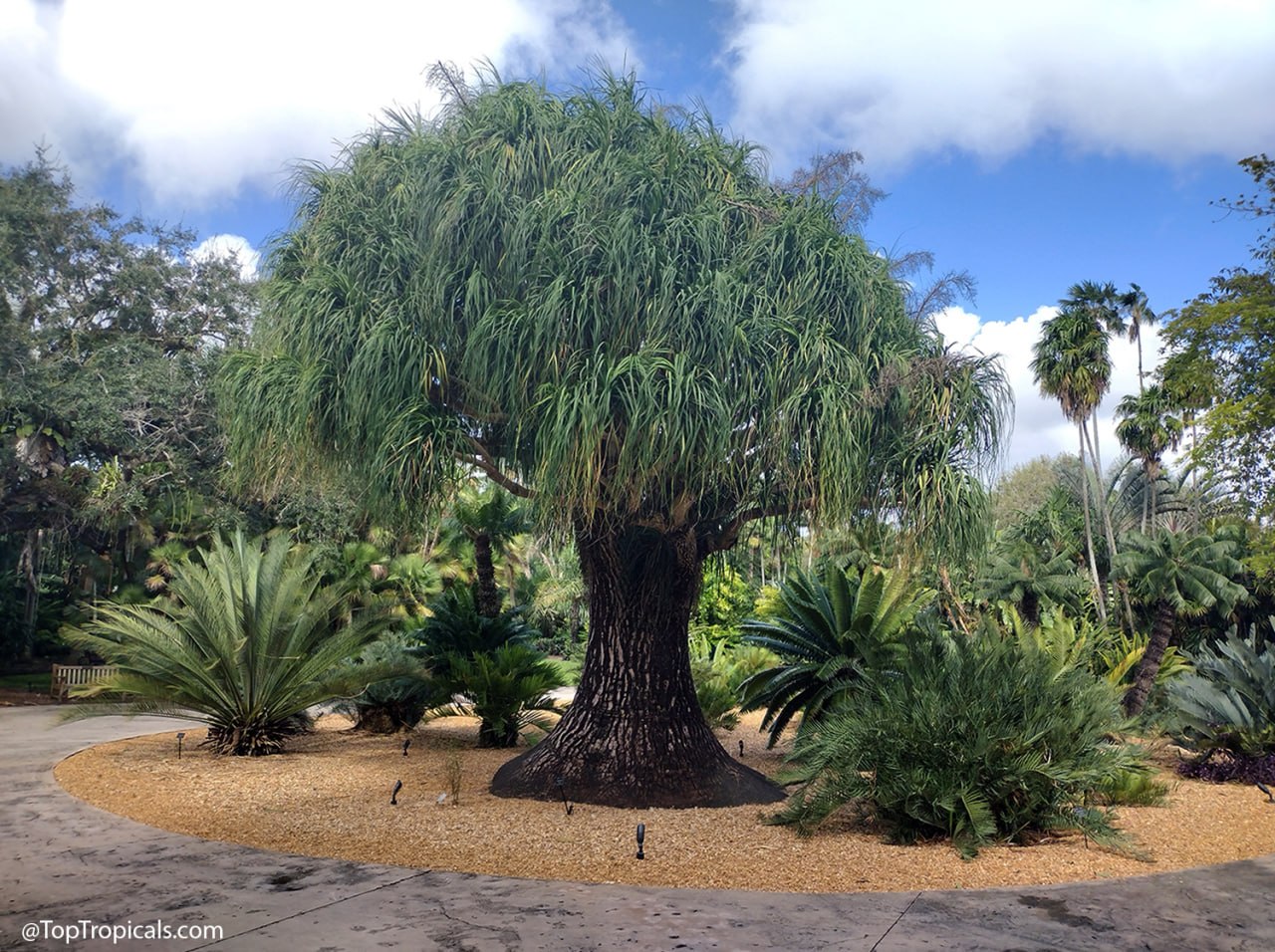
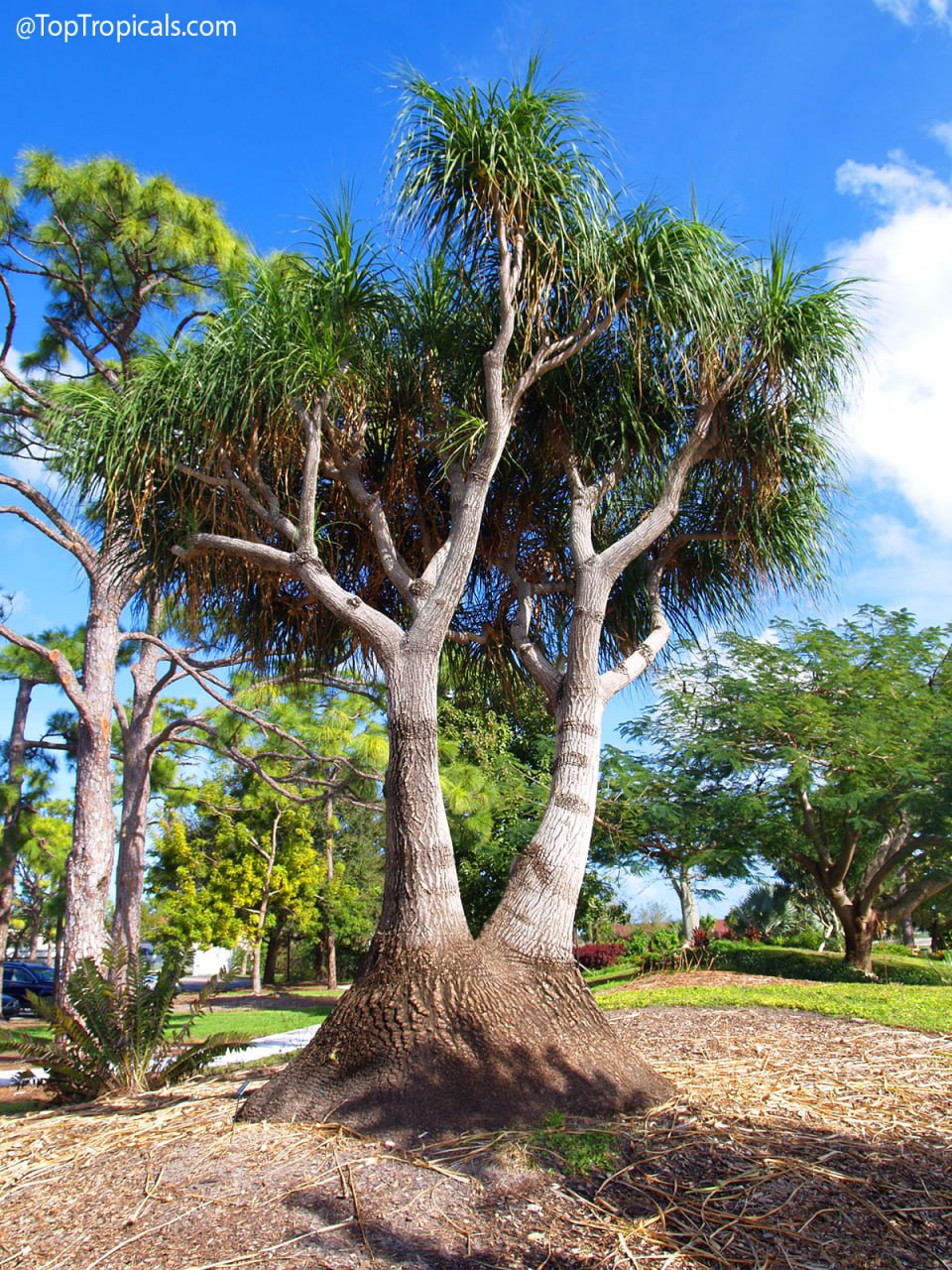
☀️ 1. Pony Tail Palm - Beaucarnea recurvata 📸
Not a true palm - it stores water in its showy, swollen trunk, making it incredibly drought tolerant and perfect for harsh, dry areas.

Ponytail Palm Plant Facts

Botanical name: Beaucarnea recurvata, Nolina recurvata
Also known as: Ponytail Palm, Pony Tail, Bottle Palm, Nolina, Elephant-foot Tree
USDA Zone: 10 - 11
Highligths Plant with caudexPlant used for bonsaiSmall tree 10-20 ftFull sunWater Requirement: Low. Allow soil to dry out between wateringsPalm or palm-like plant
Get personalized tips for your region
More details

☀️ 2. Monkey Ear Tree - Enterolobium cyclocarpum


A fast-growing shade tree with curious seed pods, surprisingly tough in heat and drought, with massive canopy benefits.

Monkey Ear Plant Facts

Botanical name: Enterolobium cyclocarpum
Also known as: Monkey Ear, Ear Pod Tree, Elephant Ear Tree, Eartree, Guanacaste Tree, Arbol de Guanacaste
USDA Zone: 9 - 11
Highligths Large tree taller than 20 ftFull sunWatering: Regular. Let topsoil dry slightlyWhite, off-white flowersDeciduous plantSubtropical plant. Mature plant cold hardy at least to 30s F for a short time
Get personalized tips for your region
More details

☀️ 3. Firebush - Hamelia patens
Technically a large shrub/small tree - thrives in heat, blooms nonstop, attracts butterflies, and handles dry conditions once rooted in.

Fire Bush Plant Facts

Botanical name: Hamelia patens
Also known as: Fire Bush, Firecracker Plant
USDA Zone: 8 - 11
Highligths Large shrub 5-10 ft tallSmall tree 10-20 ftFull sunWater Requirement: Low. Allow soil to dry out between wateringsYellow, orange flowersRed, crimson, vinous flowersPlant attracts butterflies, hummingbirdsSeaside, salt tolerant plant
Get personalized tips for your region
More details

☀️ 4. Peregrina - Jatropha integerrima compacta
Compact, colorful, and very forgiving - keeps flowering even when conditions get hot and dry.

Peregrina Plant Facts

Botanical name: Jatropha integerrima, Jatropha pandurata
Also known as: Peregrina, Spicy Jatropha, Coral Plant, Physic Nut
USDA Zone: 9 - 11
Highligths Plant used for bonsaiLarge shrub 5-10 ft tallSmall tree 10-20 ftSemi-shadeFull sunWater Requirement: Low. Allow soil to dry out between wateringsRed, crimson, vinous flowersPink flowersPlant attracts butterflies, hummingbirdsIrritating plantSubtropical plant. Mature plant cold hardy at least to 30s F for a short timeSeaside, salt tolerant plant
Get personalized tips for your region
More details

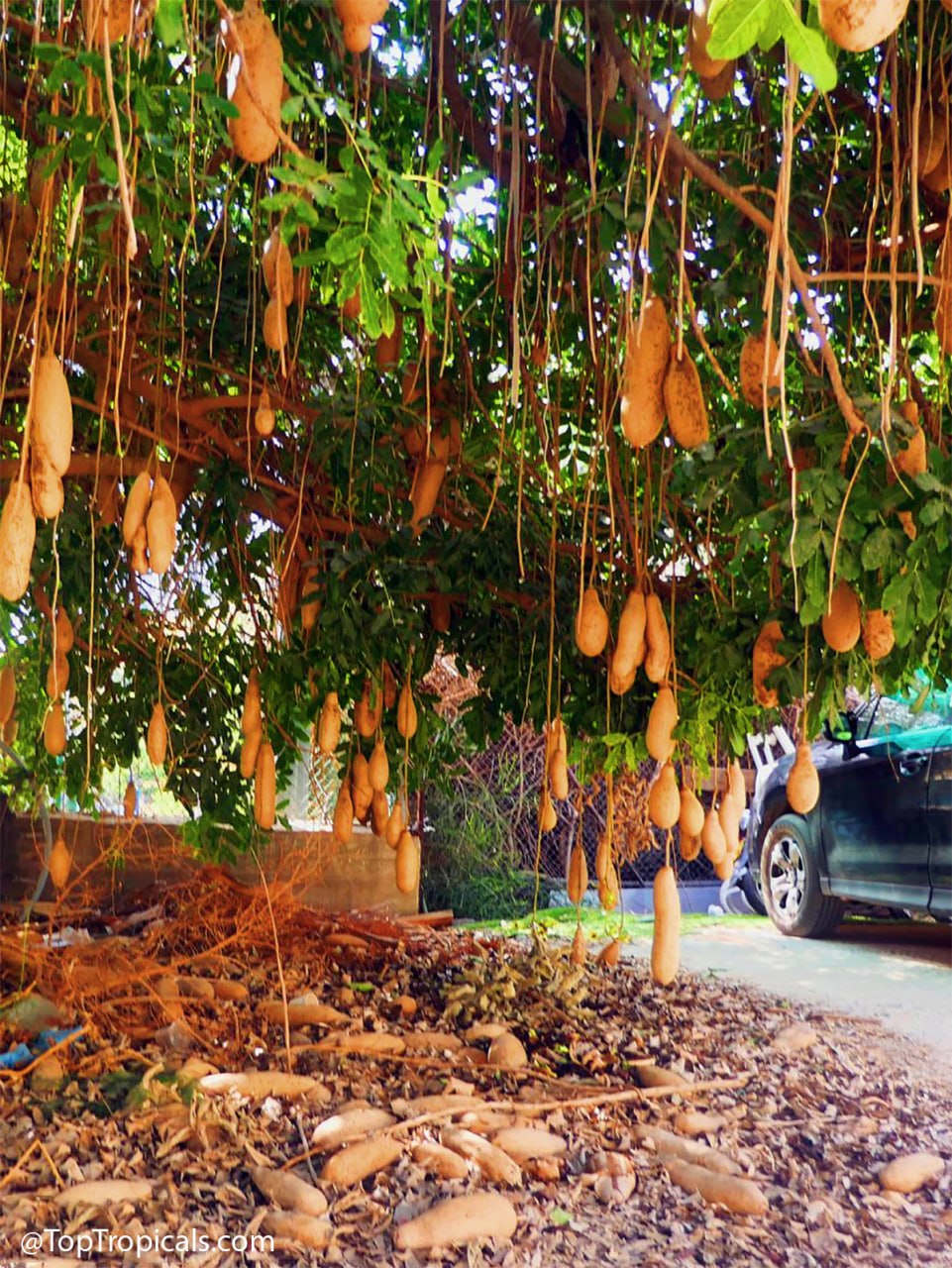
☀️ 5. Sausage Tree - Kigelia pinnata 📸
A bold tropical look with bizarre flowers and fruit, with serious heat tolerance; once established, it handles dry spells better than expected.

Sausage Tree Plant Facts

Botanical name: Kigelia pinnata, Kigelia africana
Also known as: Sausage Tree
USDA Zone: 9 - 11
Highligths Large tree taller than 20 ftSemi-shadeFull sunWatering: Moderate. Water when top soil feels dryDeciduous plantEthnomedical plant.
Plants marked as ethnomedical and/or described as medicinal, are not offered as medicine but rather as ornamentals or plant collectibles.
Ethnomedical statements / products have not been evaluated by the FDA and are not intended to diagnose, treat, cure, or prevent any disease. We urge all customers to consult a physician before using any supplements, herbals or medicines advertised here or elsewhere.Fragrant plantSubtropical plant. Mature plant cold hardy at least to 30s F for a short time
Get personalized tips for your region
More details

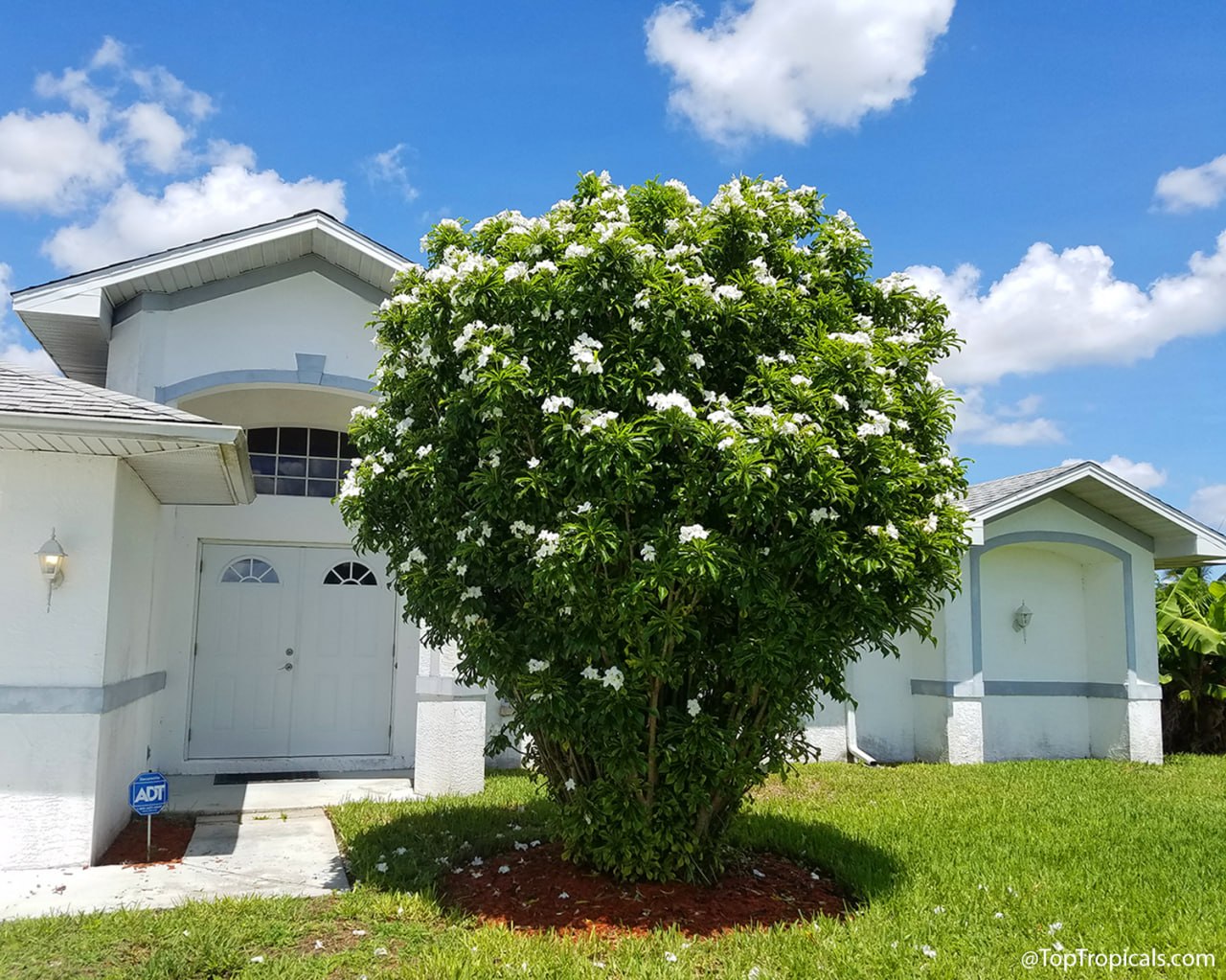
☀️ 6. Plumeria 📸
Built for sun and neglect - thrives in poor and sandy soil, needs minimal water, and rewards with fragrant blooms.

Plumeria Plant Facts

Botanical name: Plumeria sp.
Also known as: Plumeria, Frangipani
USDA Zone: 9 - 11
Highligths Large shrub 5-10 ft tallSmall tree 10-20 ftFull sunWatering: Moderate. Water when top soil feels dryYellow, orange flowersRed, crimson, vinous flowersWhite, off-white flowersPink flowersPlant attracts butterflies, hummingbirdsDeciduous plantFragrant plantSeaside, salt tolerant plant
Get personalized tips for your region
More details

☀️ 7. Pomegranate


One of the most drought-tolerant fruit trees - handles heat, poor soil, and still produces reliably.

Pomegranate Plant Facts

Botanical name: Punica granatum
Also known as: Pomegranate, Granada, Grenade, Pomegranate, Granada, Anar, Granaatappel, Pomo Granato, Romeira, Melo Grano
USDA Zone: 8 - 11
Highligths Large shrub 5-10 ft tallSmall tree 10-20 ftFull sunWatering: Moderate. Water when top soil feels dryRed, crimson, vinous flowersThorny or spinyEdible plantDeciduous plantEthnomedical plant.
Plants marked as ethnomedical and/or described as medicinal, are not offered as medicine but rather as ornamentals or plant collectibles.
Ethnomedical statements / products have not been evaluated by the FDA and are not intended to diagnose, treat, cure, or prevent any disease. We urge all customers to consult a physician before using any supplements, herbals or medicines advertised here or elsewhere.Subtropical plant. Mature plant cold hardy at least to 30s F for a short timeSeaside, salt tolerant plant
Get personalized tips for your region
More details

☀️ 8. Aster Tree / Snow Bush - Baccharis halimifolia


A tough Florida native option - thrives in sandy, dry soils and coastal conditions with no fuss.

Aster Tree Plant Facts

Botanical name: Baccharis halimifolia
Also known as: Aster Tree, White Cloud Tree, Snow Bush, Eastern Baccharis, Flannel Bush
USDA Zone: 8 - 11
Highligths Plant used for bonsaiLarge shrub 5-10 ft tallSmall tree 10-20 ftSemi-shadeFull sunWatering: Regular. Let topsoil dry slightlyWhite, off-white flowersPlant attracts butterflies, hummingbirdsSubtropical plant. Mature plant cold hardy at least to 30s F for a short timeFlood tolerant plant
Get personalized tips for your region
More details

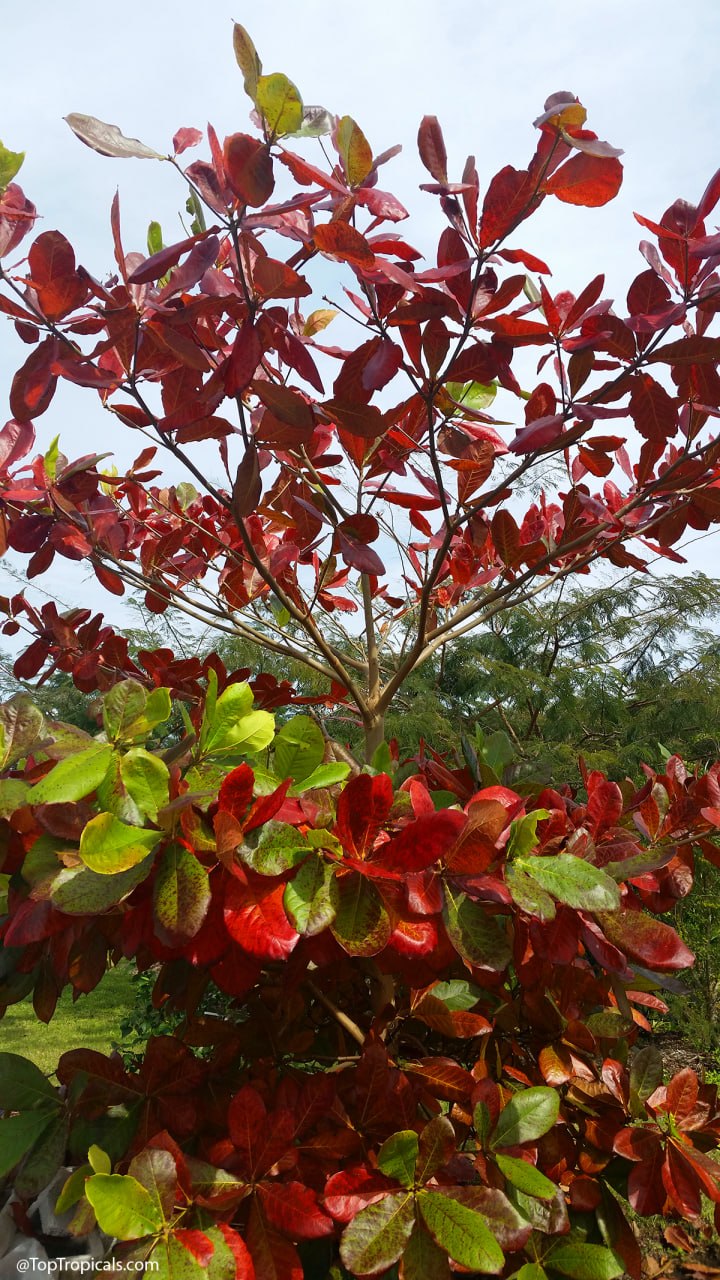
☀️ 9. Tropical Almond - Terminalia catappa 📸
A classic coastal shade tree that thrives in heat, wind, and dry sandy soil once established. Its broad, layered canopy provides excellent shade, and the large leaves turn striking shades of red and orange before dropping - a rare bonus color show for hot-climate landscapes. Plus almond nuts as extra bonus!

Tropical Almond Plant Facts

Botanical name: Terminalia catappa
Also known as: Tropical Almond, Badamier, Java Almond, Indian Almond, Malabar Almond, Singapore Almond, Ketapang, Huu Kwang, Pacific Almond
USDA Zone: 9 - 11
Highligths Large tree taller than 20 ftFull sunWatering: Moderate. Water when top soil feels dryWhite, off-white flowersEdible plantDeciduous plantEthnomedical plant.
Plants marked as ethnomedical and/or described as medicinal, are not offered as medicine but rather as ornamentals or plant collectibles.
Ethnomedical statements / products have not been evaluated by the FDA and are not intended to diagnose, treat, cure, or prevent any disease. We urge all customers to consult a physician before using any supplements, herbals or medicines advertised here or elsewhere.Subtropical plant. Mature plant cold hardy at least to 30s F for a short timeSeaside, salt tolerant plant
Get personalized tips for your region
More details

👉 These trees are just the start - stay with us as we move into shrubs and smaller plants that thrive in the same harsh conditions.

🛒 Shop drought tolerant plants - for hot and dry spots

📚
Learn more:
Pony Tail Palm - Beaucarnea recurvata in Plant Encyclopedia
15 "Bulletproof" Fruit Trees for Tough Ground
7 best exotic dwarf trees for maximum impact in small tropical landscapes
5 small tropical trees that bloom all summer or year around

#Discover #Trees #How_to

🟢 Join 👉 TopTropicals

Date: 15 Apr 2026

7 best exotic dwarf trees for maximum impact in small tropical landscapes

Dwarf Pink Princess Silk Floss Tree (Ceiba hybrid)

Dwarf Pink Princess Silk Floss Tree (Ceiba hybrid)

Dwarf Golden Tabebuia (Tabebuia chrysotricha)

Dwarf Golden Tabebuia (Tabebuia chrysotricha)

Little Gem Southern Magnolia (Magnolia grandiflora)

Little Gem Southern Magnolia (Magnolia grandiflora)

Compact Butterfly Jatropha (Jatropha integerrima Compacta)

Compact Butterfly Jatropha (Jatropha integerrima Compacta)

Lignum Vitae (Guaiacum sanctum)

Lignum Vitae (Guaiacum sanctum)

Winter Starburst (Clerodendrum quadriloculare)

Winter Starburst (Clerodendrum quadriloculare)

Enchanted Incense (Cerbera x manghas)

Enchanted Incense (Cerbera x manghas)

7 best exotic dwarf trees for maximum impact in small tropical landscapes 🏡

For a yard that feels like a tropical escape but doesn't have the space for a massive jungle, these seven selections from TopTropicals are game-changers, chosen for their compact size, high "curb appeal," and unique tropical flair.

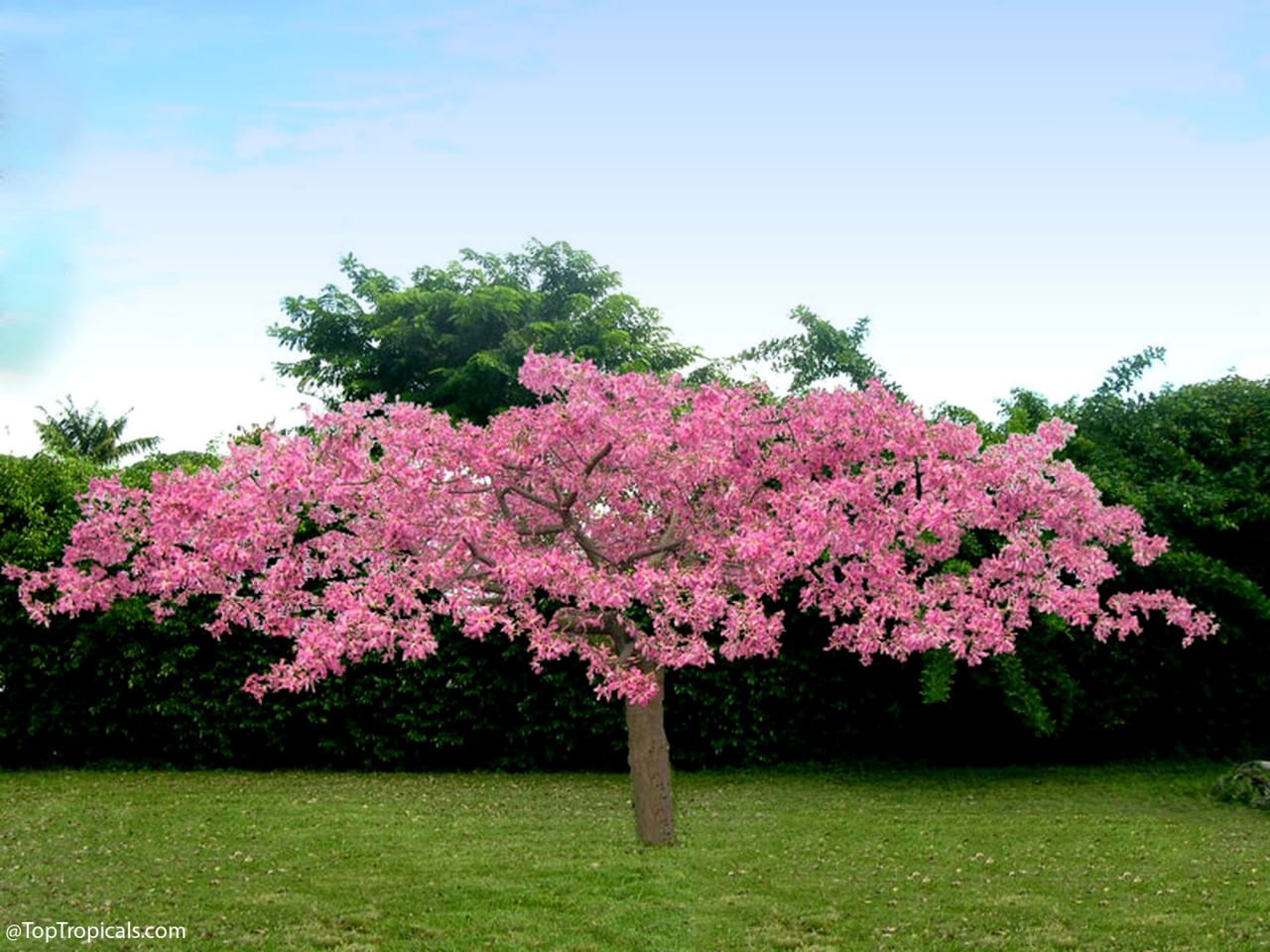
1. Dwarf Pink Princess Silk Floss Tree (Ceiba hybrid)

🌳 A spectacular grafted hybrid of the famous Silk Floss tree, but in a much smaller package: a unique, often "fat" or bottle-shaped trunk and large, showy pink flowers with white centers.
🏡 Unlike the standard Ceiba which can become a giant, the 'Pink Princess' is grafted to stay compact (usually under 10 - 12 feet), allowing you to enjoy those exotic, orchid-like blooms even in a tiny garden.

Ceiba Plant Facts

Botanical name: Ceiba sp.
Also known as: Ceiba, Floss Silk Tree, Kapok Tree
USDA Zone: 9 - 11
Highligths Large tree taller than 20 ftFull sunWatering: Moderate. Water when top soil feels dryYellow, orange flowersRed, crimson, vinous flowersWhite, off-white flowersPink flowersThorny or spinyDeciduous plant
Get personalized tips for your region

👉 more

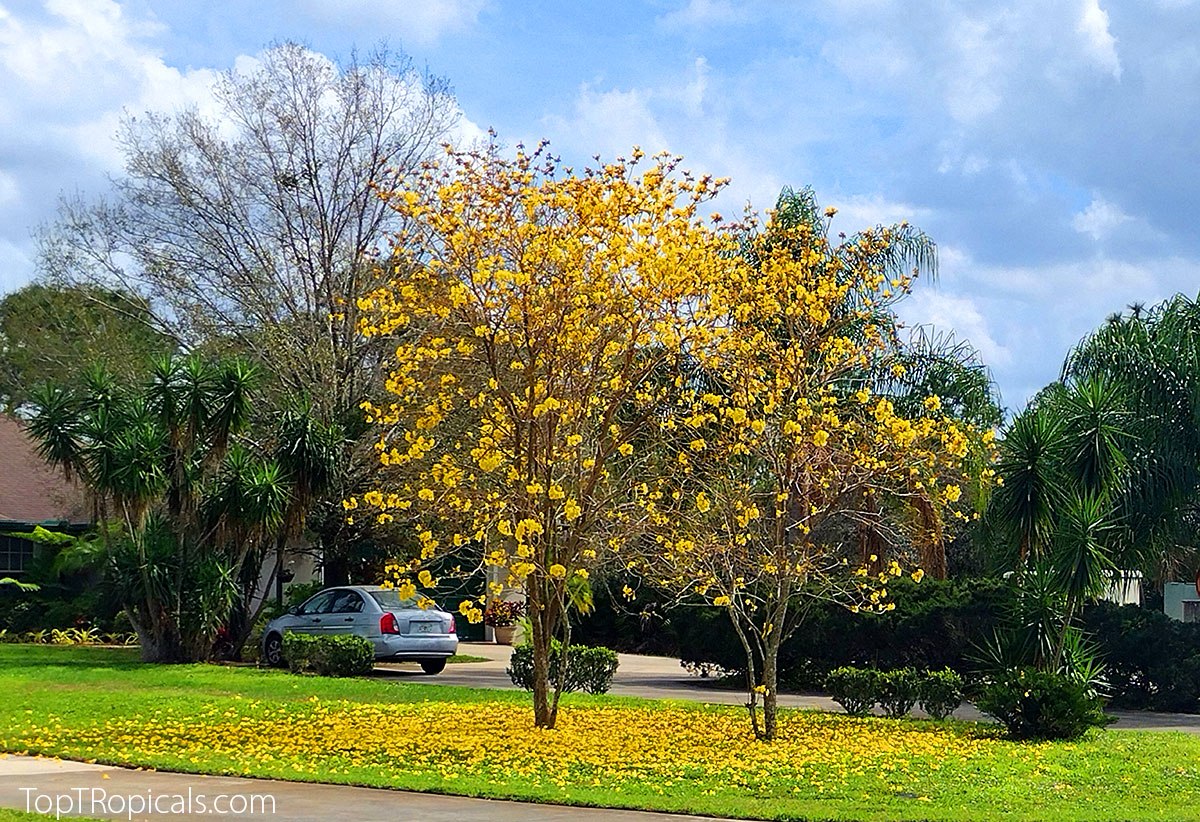
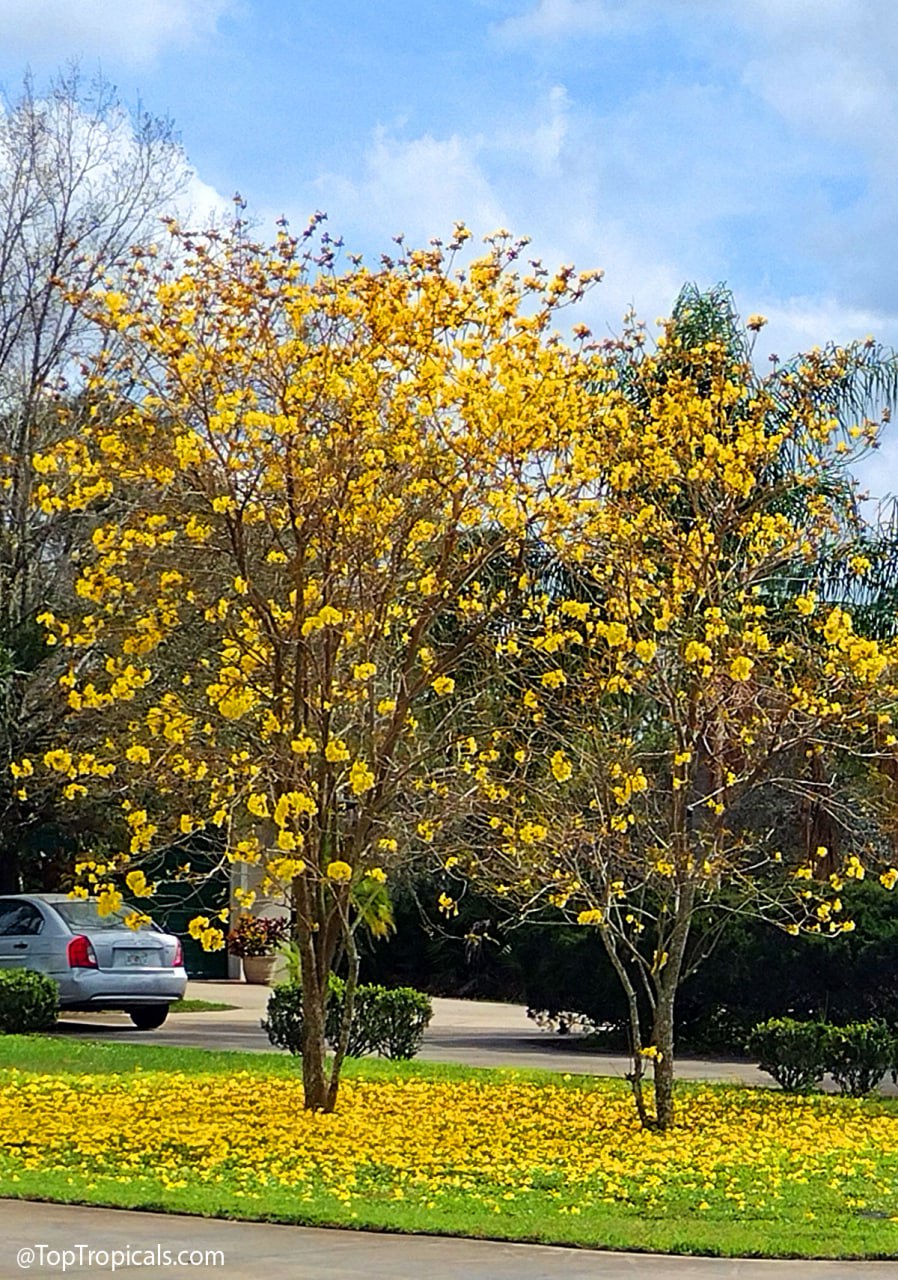
2. Dwarf Golden Tabebuia (Tabebuia chrysotricha)

🌳 Known as the "Golden Trumpet Tree," this dwarf selection puts on one of the most brilliant displays in the plant kingdom. Before the leaves emerge in spring, the entire tree is covered in bright, trumpet-shaped yellow flowers.
🏡 This specific dwarf form stays much smaller and more manageable than the standard Tabebuias seen on city streets. Its silver-green foliage and rounded canopy make it an ideal "specimen" tree that acts as a focal point for your front yard.

Dwarf Golden Tabebuia Plant Facts

Botanical name: Handroanthus chrysotrichus, Tabebuia chrysotricha, Tabebuia chrysantha
Also known as: Dwarf Golden Tabebuia
USDA Zone: 9 - 11
Highligths Small tree 10-20 ftFull sunWatering: Moderate. Water when top soil feels dryYellow, orange flowersDeciduous plantSubtropical plant. Mature plant cold hardy at least to 30s F for a short time
Get personalized tips for your region

👉 more

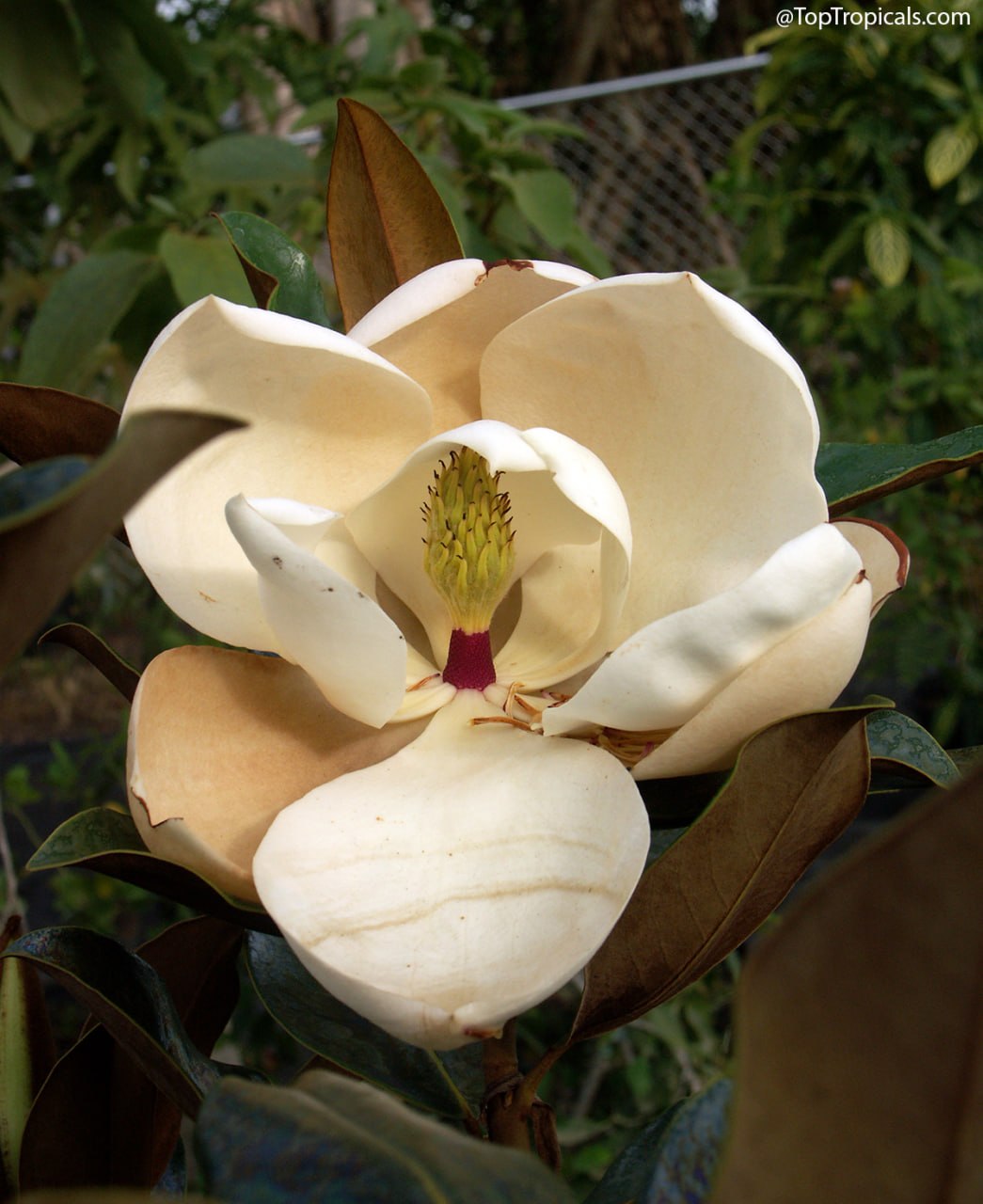
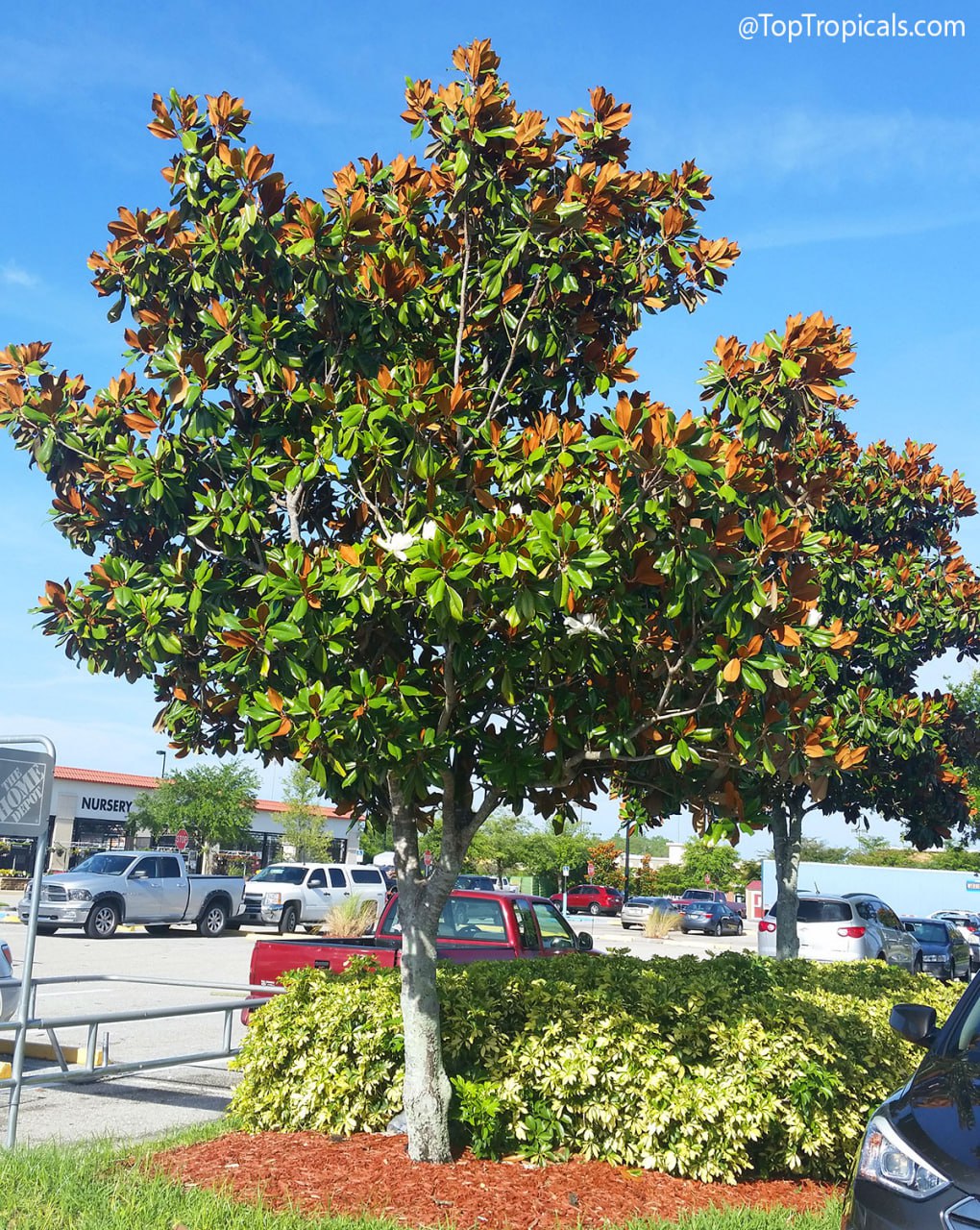
3. Little Gem Southern Magnolia (Magnolia grandiflora)

🌳 All the elegance of a classic Southern Magnolia but in a miniaturized version. It has the iconic waxy white, lemon-scented flowers and glossy leaves with fuzzy bronze undersides.
🏡 'Little Gem' is narrow and columnar, typically reaching only 15-20 feet (half the size of the standard species). It starts blooming at a very young age, so you don't have to wait years for those famous fragrant flowers.

Southern Magnolia Plant Facts

Botanical name: Magnolia grandiflora
Also known as: Southern Magnolia, Bull Bay
USDA Zone: 7 - 10
Highligths Small tree 10-20 ftFull sunWatering: Moderate. Water when top soil feels dryWhite, off-white flowersPlant attracts butterflies, hummingbirdsFragrant plantSubtropical plant. Mature plant cold hardy at least to 30s F for a short time
Get personalized tips for your region

👉 more

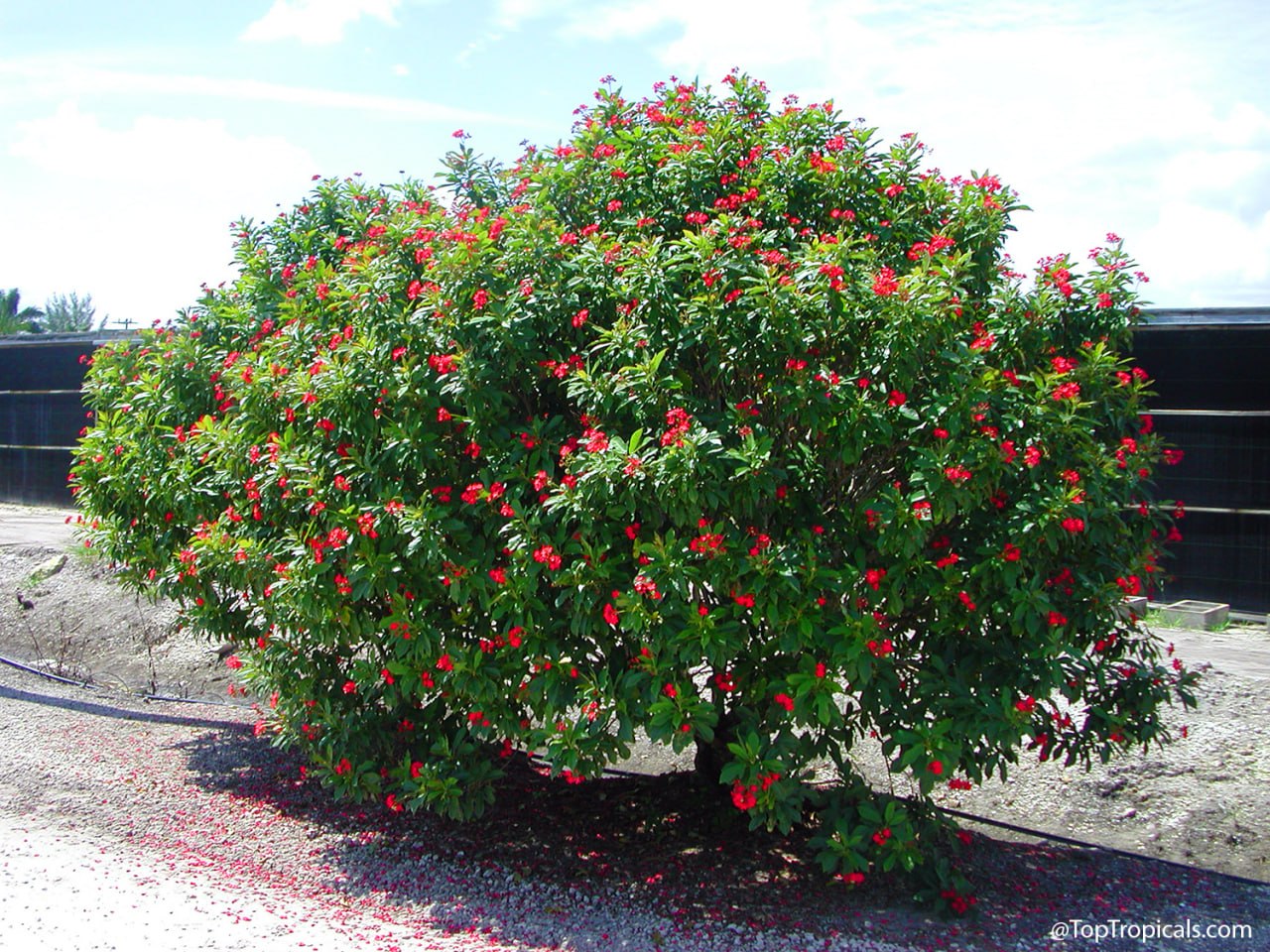
4. Compact Butterfly Jatropha (Jatropha integerrima Compacta)

🌳 This "ever-blooming" small tree is a butterfly magnet. It features clusters of bright, cherry-red star flowers against glossy, fiddle-shaped leaves.
🏡 The Compacta variety is specifically bred to stay bushy and small. It blooms almost 365 days a year in warm climates, providing a constant splash of red that draws in hummingbirds and pollinators.

Peregrina Plant Facts

Botanical name: Jatropha integerrima, Jatropha pandurata
Also known as: Peregrina, Spicy Jatropha, Coral Plant, Physic Nut
USDA Zone: 9 - 11
Highligths Plant used for bonsaiLarge shrub 5-10 ft tallSmall tree 10-20 ftSemi-shadeFull sunWater Requirement: Low. Allow soil to dry out between wateringsRed, crimson, vinous flowersPink flowersPlant attracts butterflies, hummingbirdsIrritating plantSubtropical plant. Mature plant cold hardy at least to 30s F for a short timeSeaside, salt tolerant plant
Get personalized tips for your region

👉 more

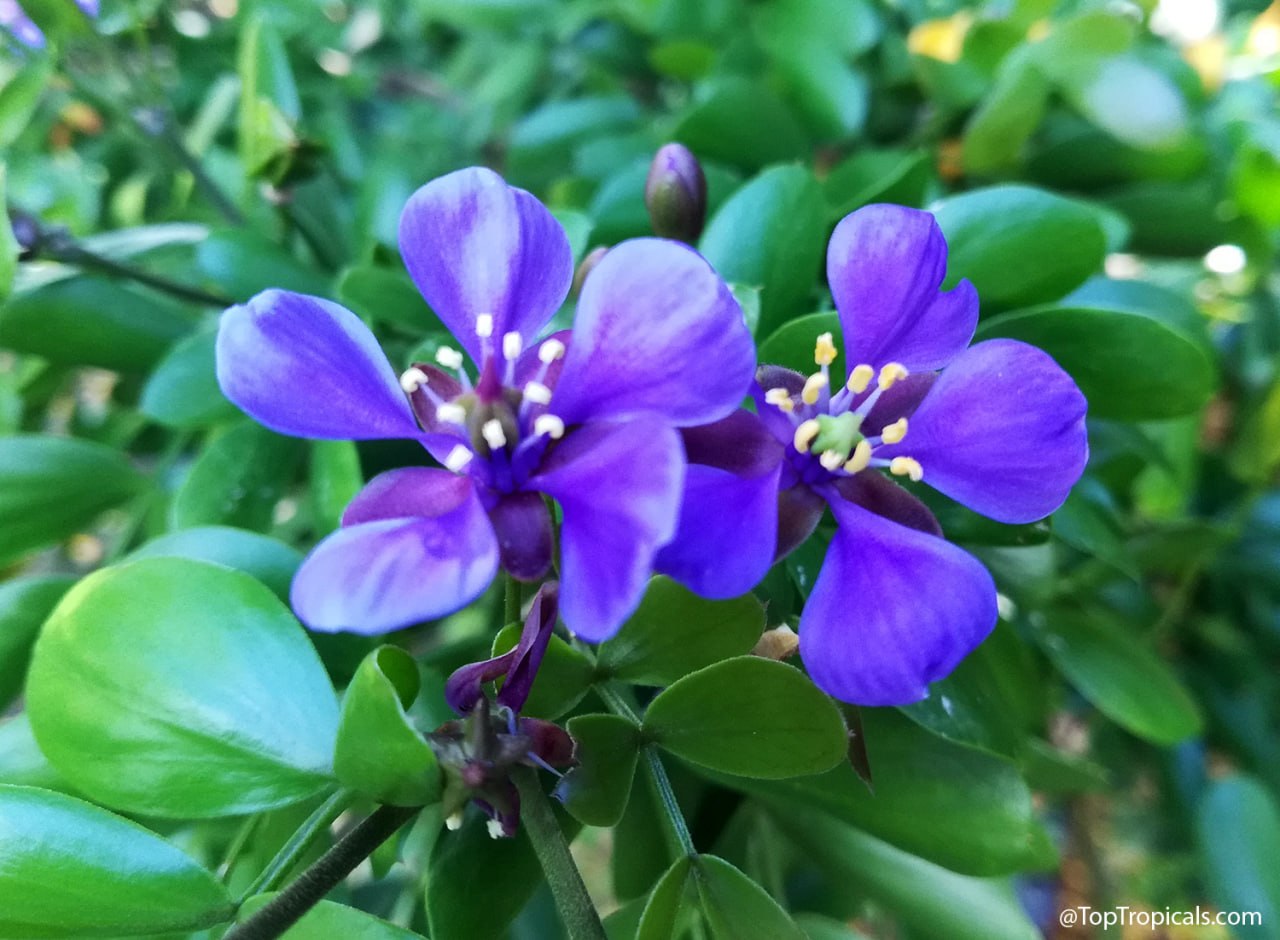
5. Lignum Vitae (Guaiacum sanctum)

🌳 Known as the "Wood of Life," this is one of the slowest-growing trees in the world. It has fine-textured, dark green foliage and produce stunning, small blue flowers that fade to white, followed by bright orange seed pods.
🏡 Because it grows so slowly, it will never outgrow its space. It is extremely hardy, salt-tolerant, and hurricane-resistant, making it a "plant it and forget it" heirloom tree for coastal or small urban lots.

Lignum Vitae Plant Facts

Botanical name: Guaiacum sanctum
Also known as: Lignum Vitae, Tree of Life, Gaiac tree
USDA Zone: 9 - 11
Highligths Plant used for bonsaiSmall tree 10-20 ftSemi-shadeFull sunWater Requirement: Low. Allow soil to dry out between wateringsWatering: Moderate. Water when top soil feels dryBlue, lavender, purple flowersEthnomedical plant.
Plants marked as ethnomedical and/or described as medicinal, are not offered as medicine but rather as ornamentals or plant collectibles.
Ethnomedical statements / products have not been evaluated by the FDA and are not intended to diagnose, treat, cure, or prevent any disease. We urge all customers to consult a physician before using any supplements, herbals or medicines advertised here or elsewhere.Subtropical plant. Mature plant cold hardy at least to 30s F for a short timeSeaside, salt tolerant plant
Get personalized tips for your region

👉 more

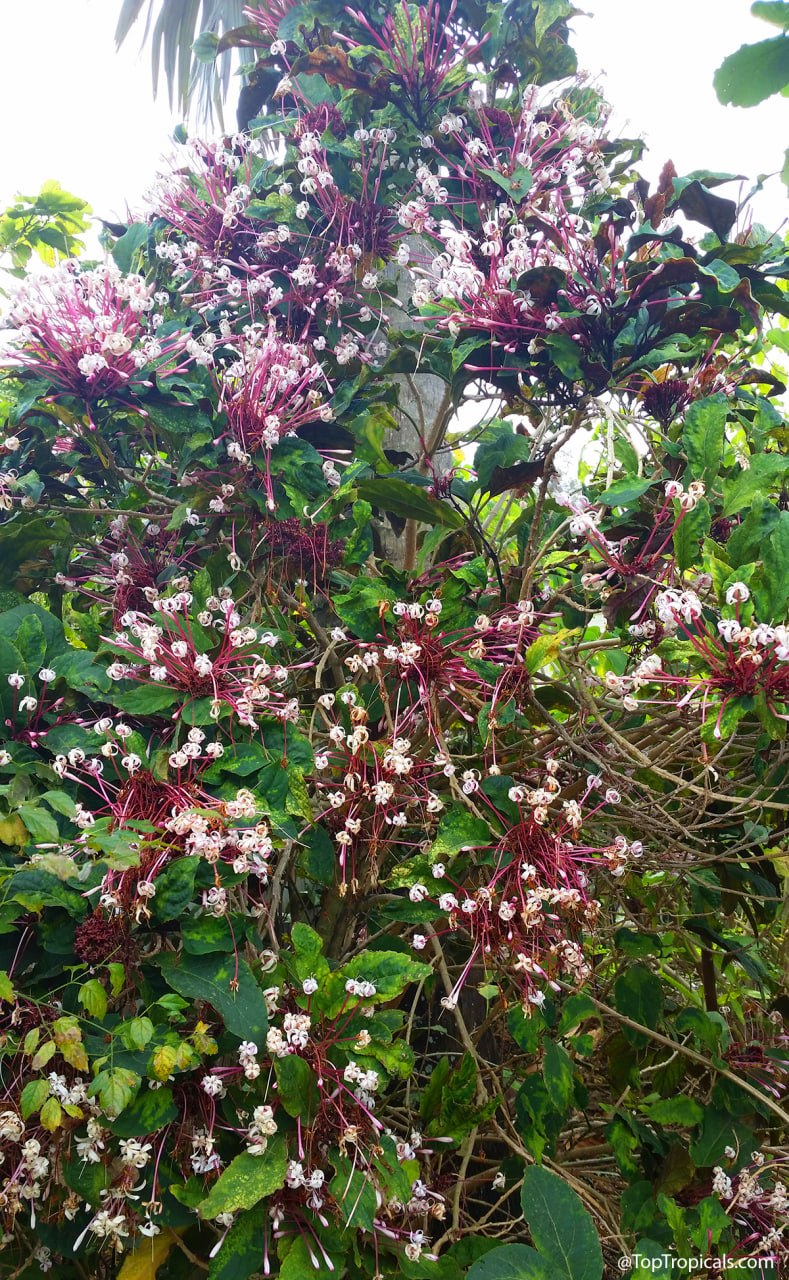
6. Winter Starburst (Clerodendrum quadriloculare)

🌳 A visual firework display. The leaves are deep green on top and rich purple underneath. In late winter, it produces massive, 8-inch wide clusters of tubular pink-and-white flowers that look like an exploding star.
🏡 It is easily pruned to a single-trunk tree form. The purple foliage provides "curb appeal" year-round, while the winter blooms provide a much-needed pop of color when other plants are dormant.

Winter Starburst Plant Facts

Botanical name: Clerodendrum quadriloculare
Also known as: Winter Starburst, Fireworks, Clerodendron
USDA Zone: 8 - 10
Highligths Large shrub 5-10 ft tallSmall tree 10-20 ftSemi-shadeShadeFull sunWatering: Moderate. Water when top soil feels dryOrnamental foliageWhite, off-white flowersPink flowersSubtropical plant. Mature plant cold hardy at least to 30s F for a short time
Get personalized tips for your region

👉 more

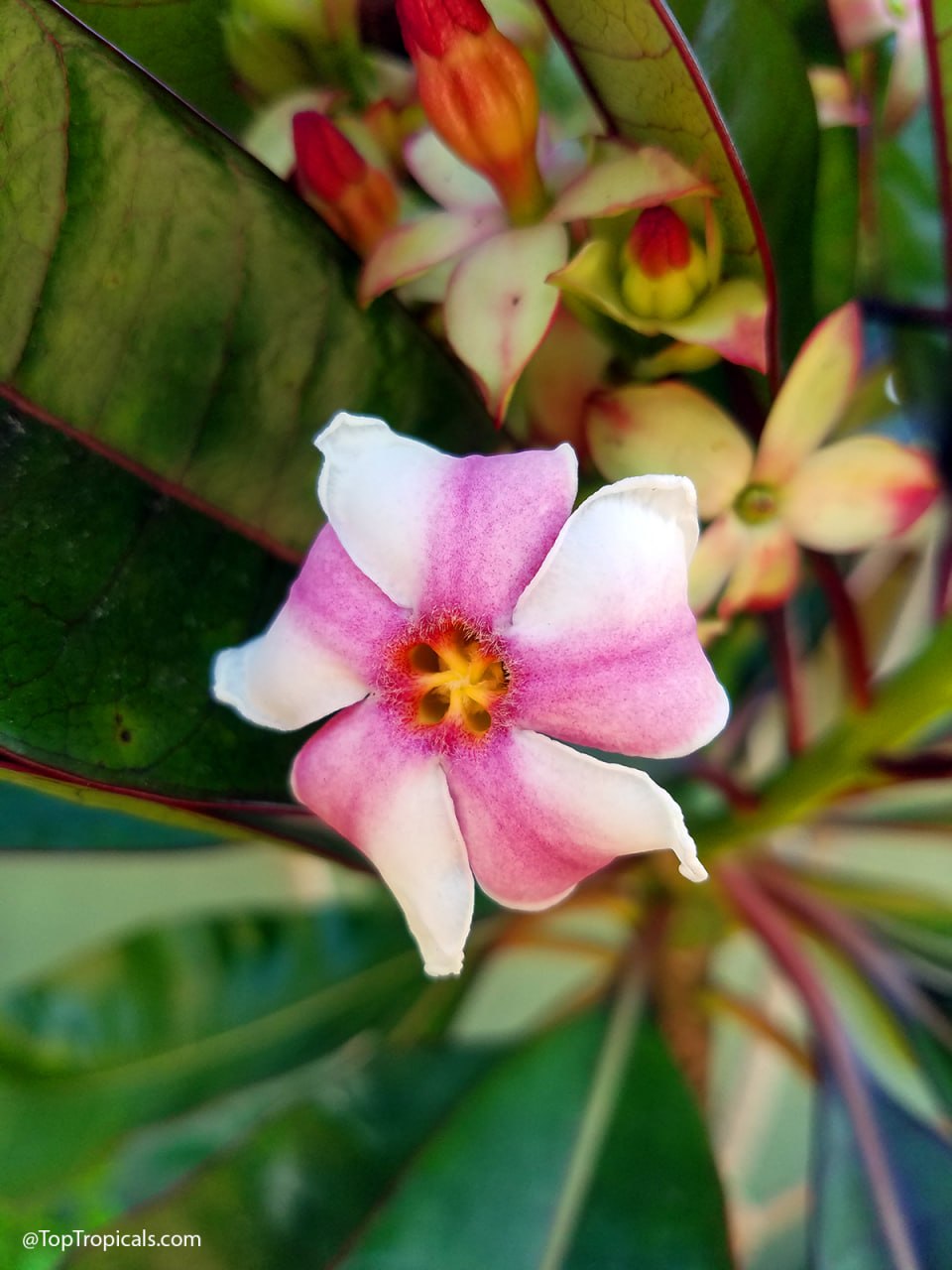
7. Enchanted Incense (Cerbera x manghas)

🌳 This is a rare, small evergreen tree with glossy, dark green leaves and clusters of highly fragrant, star-shaped white flowers with a red "eye."
🏡 It has an naturally architectural, upright habit. The fragrance is incredible - sweet and heavy - making it a perfect "sensory" tree to plant near a patio where you can enjoy the scent on summer evenings.
👉 more

🛒 Choose small trees for a small yard

📚 Learn more:


Dwarf Ceiba Princess in Plant Encyclopedia
2 most favorite flowering trees for small yards
A small tree of a pure gold
5 small tropical trees that bloom all summer or year around
Center of the world tree that stops traffic in Florida - now fits in a pot
How this breath-taking flowering tree stays so compact

#How_to #Discover #Trees

🟢 Join 👉 TopTropicals

Date: 25 Feb 2026

A Miracle in the Garden: Watching a Tiger Swallowtail Rebuild Itself on a Magnolia Champaka - Joy Perfume Tree

Tiger Swallowtail Butterfly

A Miracle in the Garden: Watching a Tiger Swallowtail Rebuild Itself on a Magnolia Champaka - Joy Perfume Tree 🐯

Tiger Swallowtail Metamorphosis: From Cocoon to Joy

🏼 Nature’s most mind-blowing magic trick happened right here on a branch of our Magnolia champaka - the Joy Perfume Tree. Did you know that when a caterpillar enters its chrysalis (cocoon), it literally dissolves its body and rebuilds it from scratch?

🏼 This Tiger Swallowtail chose the legendary Joy Perfume Tree as its nursery. It’s a match made in heaven—the "flying tiger" of North America born on a tree famous for the world’s most expensive perfume scent. While most people know the Champaka for its intensely fragrant flowers, few realize that even the leaves release a soft, sweet aroma when brushed against.

🏼 In this video, you’ll see the rare moment of eclosion - where the butterfly emerges with soft, wrinkled wings and begins the slow process of pumping life into them before its first flight.

🏼 It is a real gem in your garden - not just for fragrance lovers, but for wildlife that clearly loves it too.
Watch this Tiger Swallowtail butterfly being born on a Champaka - Joy Perfume tree!

🛒 Bring the miracle Joy to your garden - the perfume Champaka tree

📚
Everything You Need to Know About the Joy Perfume Tree:
🟡Magnolia (Michelia) champaca - Joy Perfume Tree, Champaka in Plant Encyclopedia

🟡 Growing Guide:


· How to grow Magnolia champaca and get some Joy
· What does a mature Champaka Tree look like? Practical Growing Guide
🟡The Fragrance: What does Joy Perfume flower smell like?
🟡Troubleshooting: Why is my Champaka Tree dropping leaves?

🟡 Comparison:


· Which Champaka tree is better - White or Golden?
· Golden and White Champaka side-by-side
· White Champaka
🟡More:
· When does Champaka tree start blooming?
· Why Champaka is such a popular perfume tree
· Flower of the most expensive perfume
· Article about Champaka

🎥

#Perfume_Plants #Container_Garden #Trees #Discover

Joy Perfume Tree Plant Facts

Botanical name: Magnolia champaca, Michelia champaca
Also known as: Joy Perfume Tree, Huang Yu Lan, Safa
USDA Zone: 9 - 11
Highligths Small tree 10-20 ftFull sunWatering: Regular. Let topsoil dry slightlyYellow, orange flowersPlant attracts butterflies, hummingbirdsFragrant plantSubtropical plant. Mature plant cold hardy at least to 30s F for a short time
Get personalized tips for your region
🟢 Join 👉 TopTropicals

Date: 20 Feb 2026

Top Ten Flowering Tree Winners of Florida 2026 Record Freeze

Bauhinia Orchid Tree

Bauhinia Orchid Tree

Beaucarnea recurvata - Pony Tail

Beaucarnea recurvata - Pony Tail

Caesalpinia mexicana, Mexican Bird of Paradise

Caesalpinia mexicana, Mexican Bird of Paradise

Callistemon - Bottlebrush

Callistemon - Bottlebrush

Erythrina

Erythrina

Jacaranda tree

Jacaranda tree

Magnolia figo

Magnolia figo

Magnolia Little Gem

Magnolia Little Gem

Tabebuia chrysotricha

Tabebuia chrysotricha

Tabebuia impetiginosa

Tabebuia impetiginosa

🏆 Top Ten Flowering Tree Winners of Florida 2026 Record Freeze


These flowering trees had no damage after 3 nights of hard freeze (25F) with NO PROTECTION:

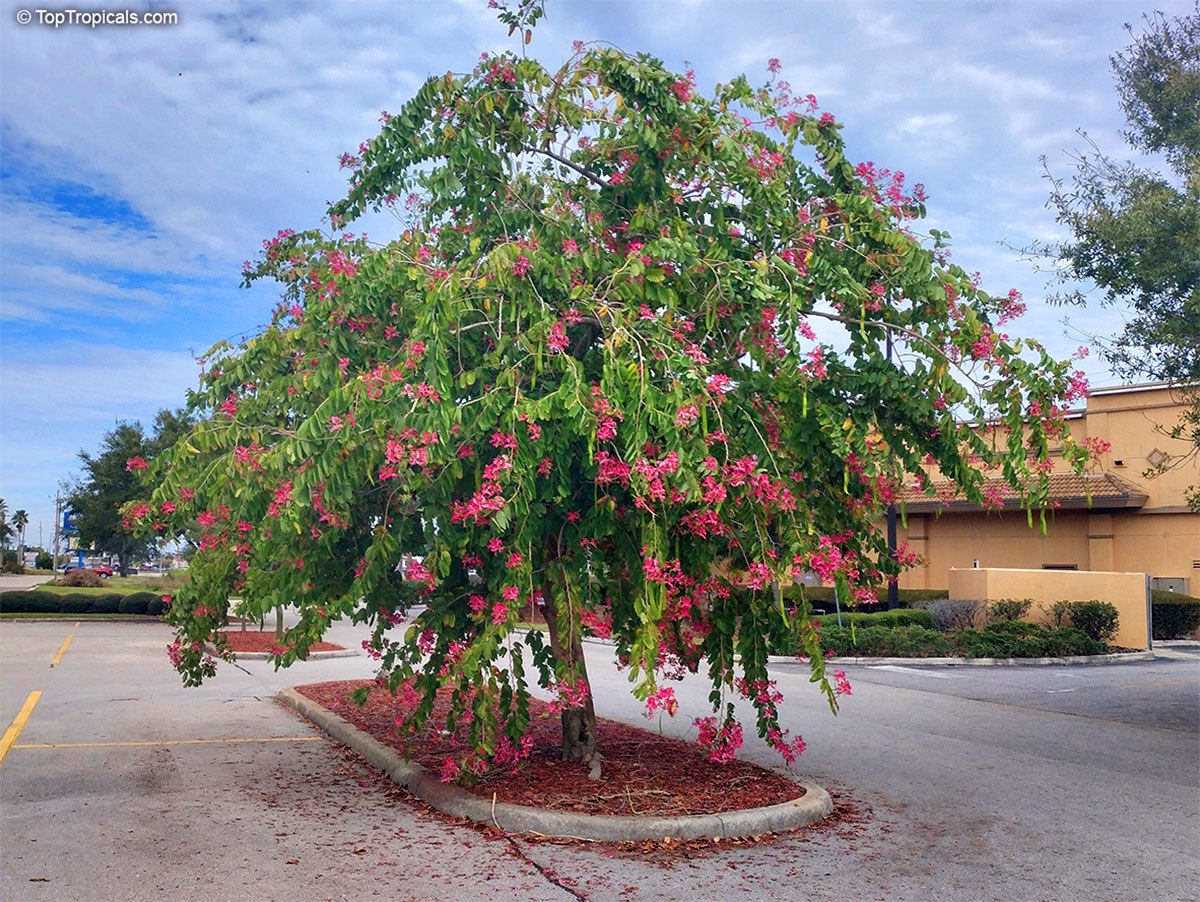
✔️ Bauhinia Orchid Trees - several species
✔️ Beaucarnea recurvata - Pony Tail

Ponytail Palm Plant Facts

Botanical name: Beaucarnea recurvata, Nolina recurvata
Also known as: Ponytail Palm, Pony Tail, Bottle Palm, Nolina, Elephant-foot Tree
USDA Zone: 10 - 11
Highligths Plant with caudexPlant used for bonsaiSmall tree 10-20 ftFull sunWater Requirement: Low. Allow soil to dry out between wateringsPalm or palm-like plant
Get personalized tips for your region

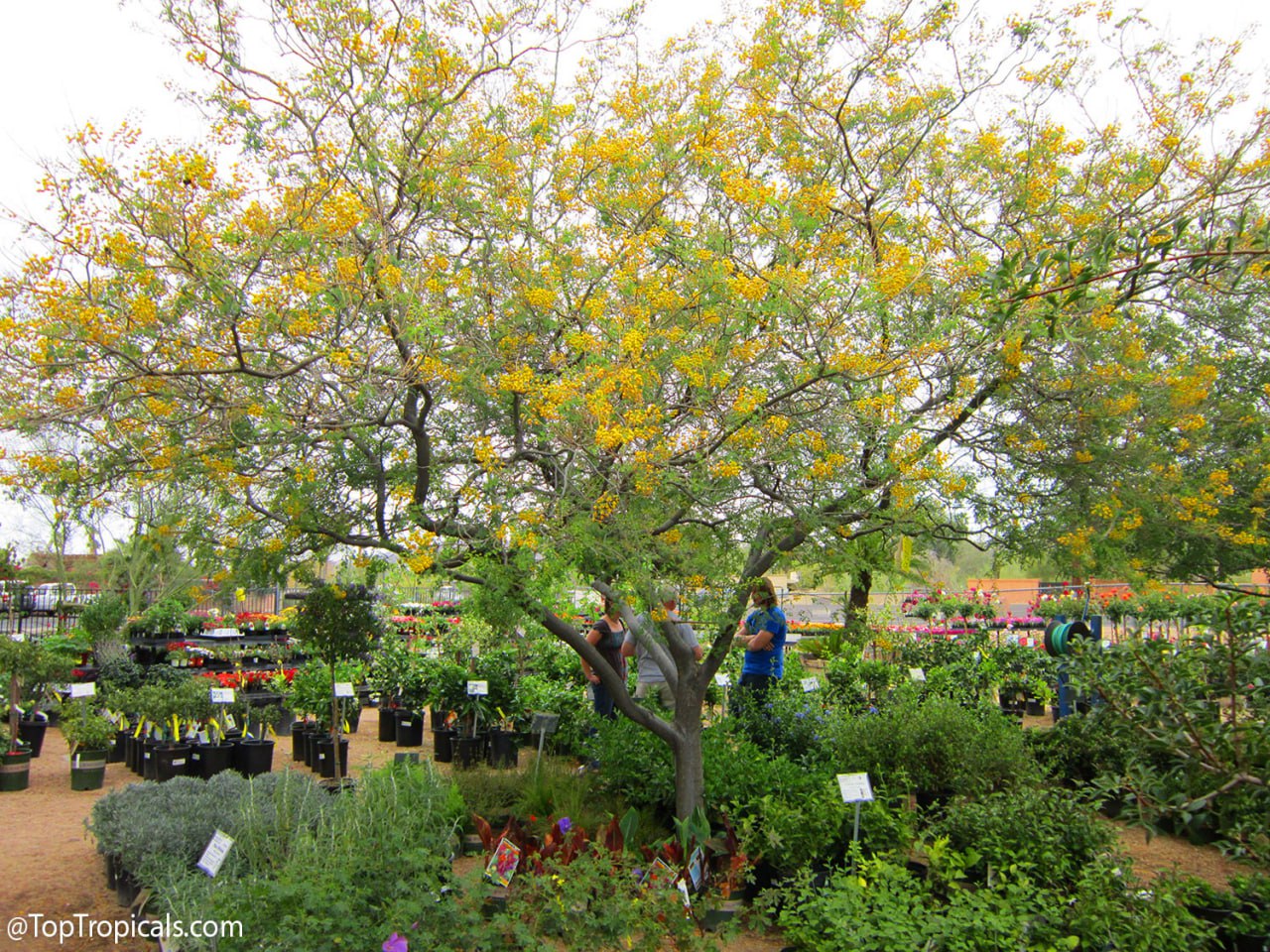
✔️ Caesalpinia mexicana, Mexican Bird of Paradise

Mexican Bird of Paradise Plant Facts

Botanical name: Caesalpinia mexicana
Also known as: Mexican Bird of Paradise, Dwarf Poinciana
USDA Zone: 9 - 11
Highligths Small tree 10-20 ftSemi-shadeFull sunWatering: Moderate. Water when top soil feels dryYellow, orange flowersIrritating plantFragrant plantSubtropical plant. Mature plant cold hardy at least to 30s F for a short timeSeaside, salt tolerant plant
Get personalized tips for your region

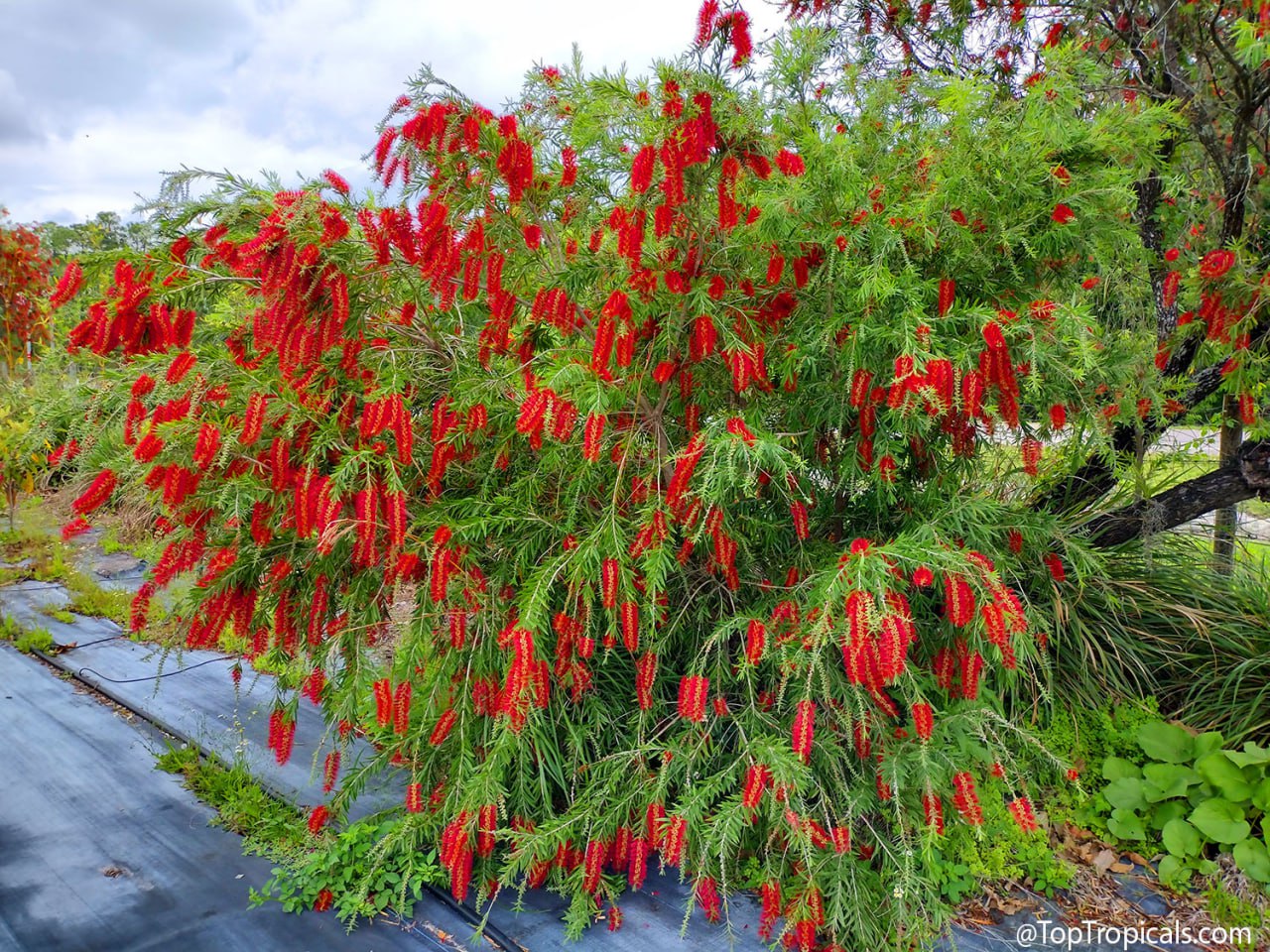
✔️ Callistemon - Bottlebrush
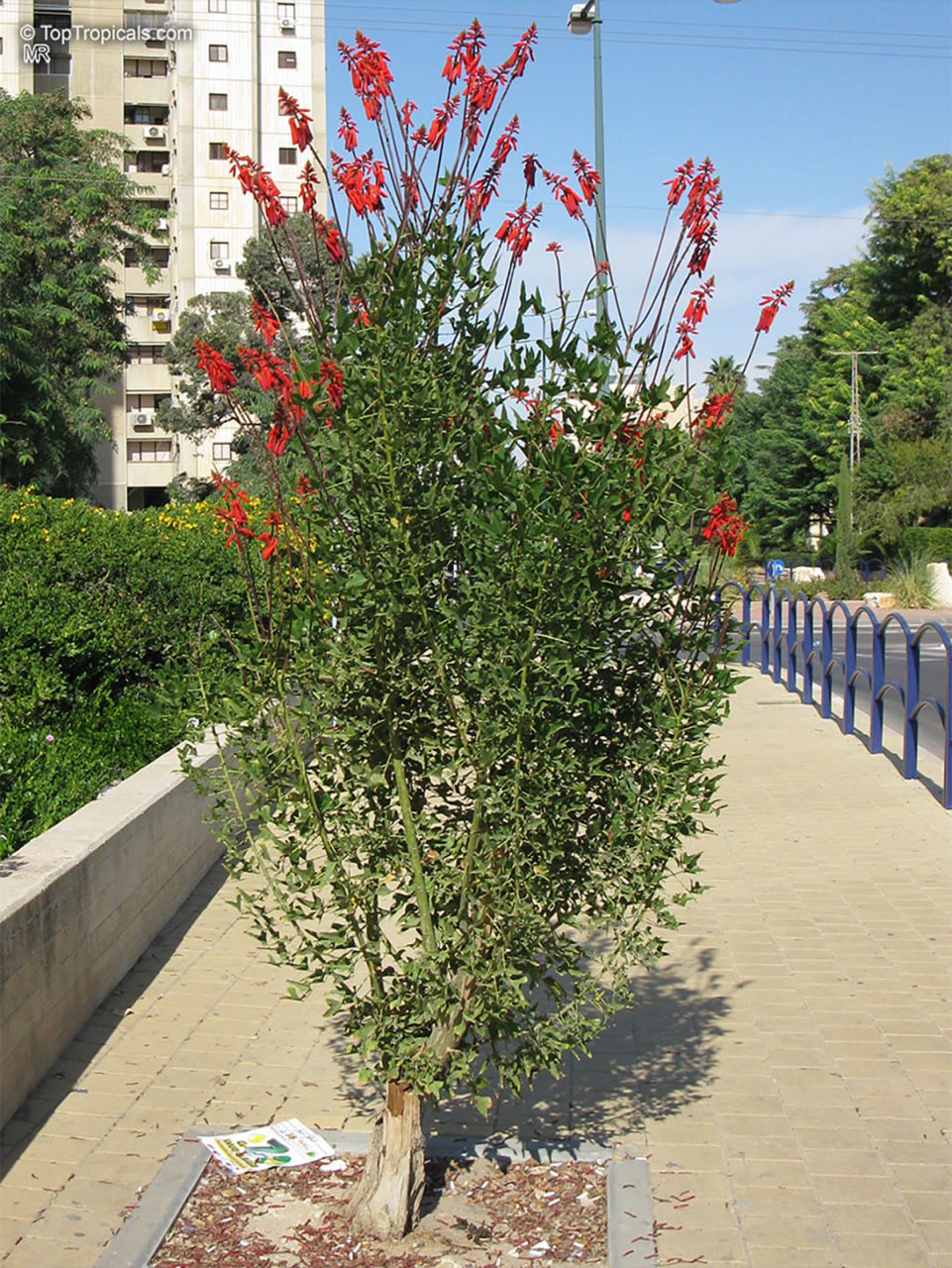
✔️ Erythrina - several species
✔️ Jacaranda tree
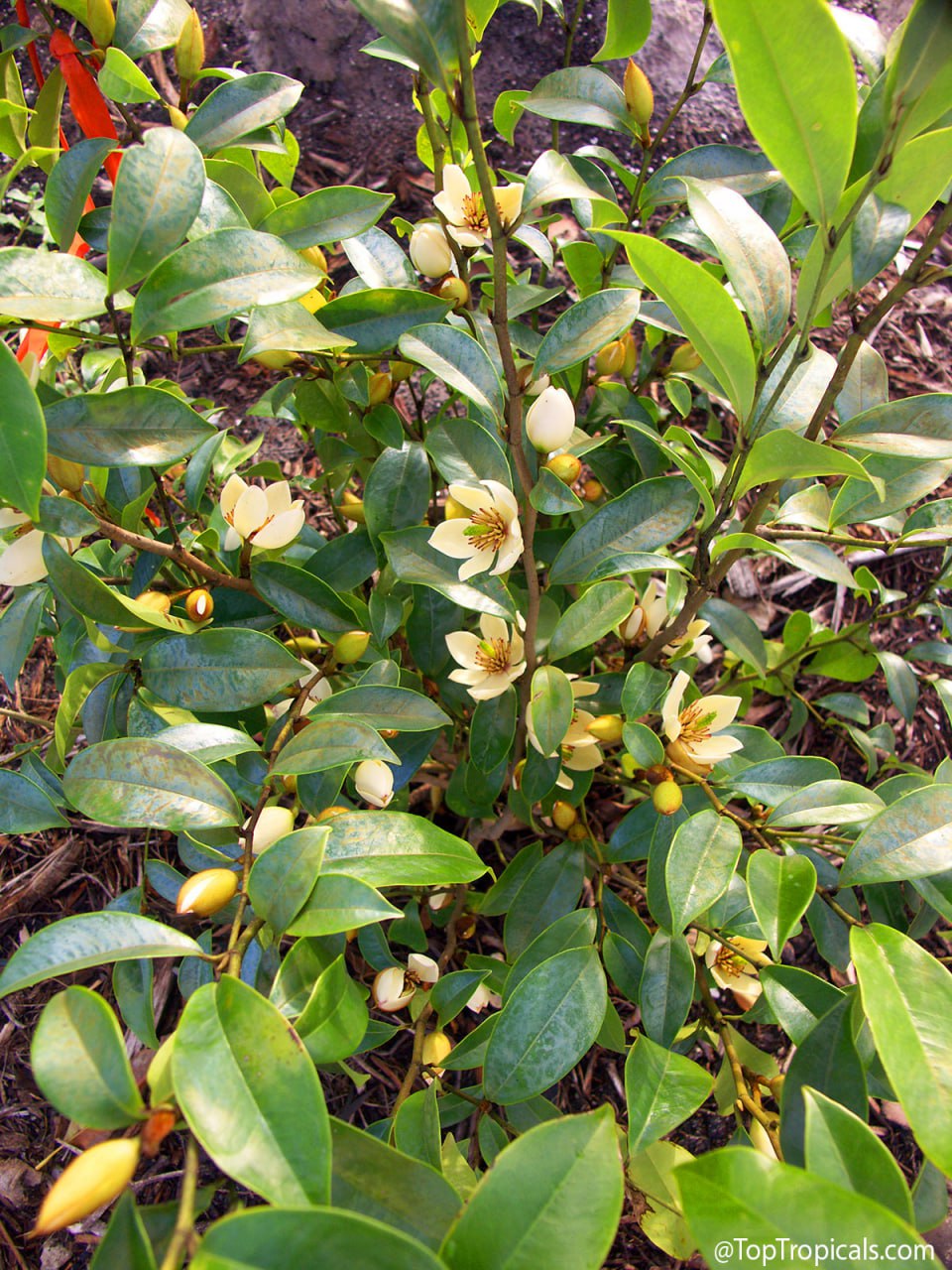
✔️ Magnolia figo

Banana Magnolia Plant Facts

Botanical name: Magnolia figo, Michelia figo, Magnolia fuscata
Also known as: Banana Magnolia, Banana Shrub, Port Wine Magnolia
USDA Zone: 7 - 10
Highligths Large shrub 5-10 ft tallSmall tree 10-20 ftSemi-shadeShadeWatering: Regular. Let topsoil dry slightlyWhite, off-white flowersFragrant plantSubtropical plant. Mature plant cold hardy at least to 30s F for a short time
Get personalized tips for your region

✔️ Magnolia Little Gem
✔️ Tabebuia chrysotricha

Dwarf Golden Tabebuia Plant Facts

Botanical name: Handroanthus chrysotrichus, Tabebuia chrysotricha, Tabebuia chrysantha
Also known as: Dwarf Golden Tabebuia
USDA Zone: 9 - 11
Highligths Small tree 10-20 ftFull sunWatering: Moderate. Water when top soil feels dryYellow, orange flowersDeciduous plantSubtropical plant. Mature plant cold hardy at least to 30s F for a short time
Get personalized tips for your region

✔️ Tabebuia impetiginosa

Pink Tabebuia Plant Facts

Botanical name: Tabebuia impetiginosa, Handroanthus heptaphyllus, Handroanthus impetiginosus, Tabebuia avellanedae
Also known as: Pink Tabebuia, Ant Wood, Pau DArco, Ipe Roxo, Lapacho, Taheebo
USDA Zone: 9 - 11
Highligths Small tree 10-20 ftFull sunWatering: Moderate. Water when top soil feels dryWatering: Regular. Let topsoil dry slightlyPink flowersPlant attracts butterflies, hummingbirdsDeciduous plantEthnomedical plant.
Plants marked as ethnomedical and/or described as medicinal, are not offered as medicine but rather as ornamentals or plant collectibles.
Ethnomedical statements / products have not been evaluated by the FDA and are not intended to diagnose, treat, cure, or prevent any disease. We urge all customers to consult a physician before using any supplements, herbals or medicines advertised here or elsewhere.Subtropical plant. Mature plant cold hardy at least to 30s F for a short time
Get personalized tips for your region

🛒 Explore cold tolerant tropical plants

🎥 What tropical plants survived Florida's historic freeze without protection
🎥 These Avocados survived 3 nights of 25F hard freeze, Florida Record Freeze

📚 Learn more:


· Top Ten Fruit Tree Winners of Florida 2026 Record Freeze
· To trim or not to trim? When and how to trim damaged plants after winter
· Cold-hardy avocado varieties - what freezing they really survive

Avocado Plant Facts

Botanical name: Persea americana, Persea gratissima
Also known as: Avocado, Alligator Pear, Aguacate, Abacate
USDA Zone: 9 - 11
Highligths Large tree taller than 20 ftSmall tree 10-20 ftFull sunWatering: Regular. Let topsoil dry slightlyEdible plantSubtropical plant. Mature plant cold hardy at least to 30s F for a short time
Get personalized tips for your region

· Cold-hardy avocado survival groups - what the numbers really mean

#Discover #How_to #Trees
🟢 Join 👉 TopTropicals