Forget the Tropics: These 5 Condo Mango Varieties Thrive in Your Living Room
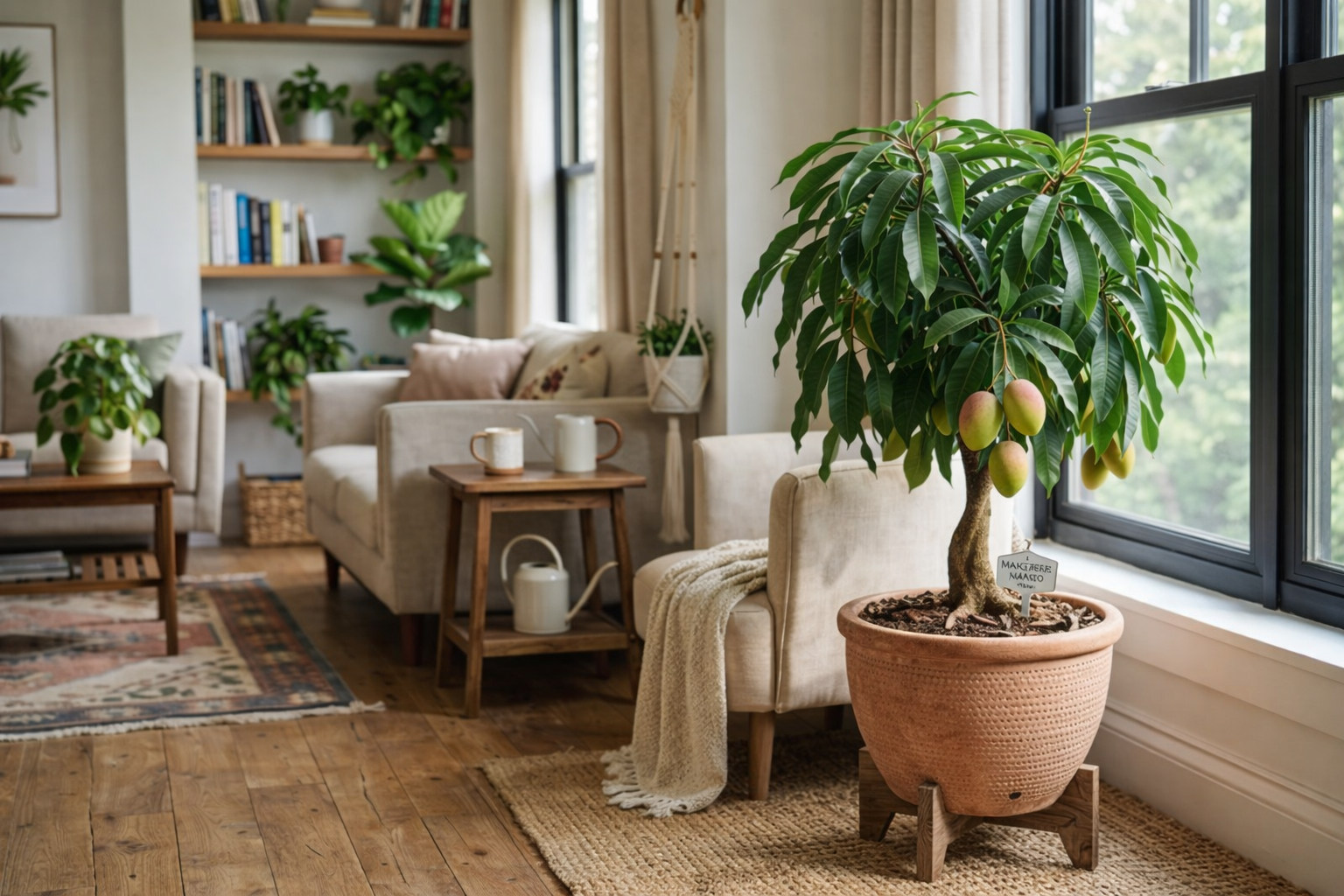
Mngo tree in a pot
Forget the Tropics: These 5 "Condo Mango" Varieties Thrive in Your Living Room 🥭
A tropical orchard in your living room? It’s more possible than you think. While wild mango trees can tower at 60 feet, "condo mango" varieties allow you to harvest juicy, sun-ripened fruit right next to your sofa.
Mango Plant Facts
Botanical name: Mangifera indica Also known as: Mango
USDA Zone: 9 - 11
Highligths
If you have a sunny window and a bit of patience, here is exactly how to grow a potted mango tree indoors.
🌳 Why "Condo Mangoes" are the Secret to Success
Most people fail because they plant a seed from a grocery store mango. Don't do that. Seeds take up to a decade to fruit and grow far too large.
Instead, look for grafted, dwarf varieties. These are bred to: • Stay compact (6–10 feet). • Fruit within 1–3 years. • Thrive in the limited root space of a container.
🌳 The 5 Best Mango Varieties for Indoor Pots
Choosing the right cultivar is 90% of the battle. These five are the gold standard for indoor growers:
• Pickering: The #1 choice for pots; naturally tiny. Rich, fiberless, and coconut-heavy. • Cogshall: Slow-growing and easy to prune. Classic, ultra-sweet tropical taste. • Ice Cream: Extremely compact; thrives in small spaces. Creamy texture, like mango sorbet. • Carrie: High disease resistance; very productive. intense, spicy-sweet aroma. • Mallika: A semi-dwarf Indian favorite. Exceptional, honey-like sweetness.
Mangoes are sun-worshippers. They need at least 8 hours of direct light daily.
The Pro Move: Place your tree in a south-facing window. If you live in a cloudy climate, a high-quality LED grow light isn't optional - it’s a necessity to prevent leaf drop and encourage flowering.
The Rule: Let the top 2 inches of soil dry completely before watering deeply.
3. Temperature & Humidity
Keep your room between 65F and 90F. If you are comfortable, the tree is likely comfortable. Avoid placing it near drafty AC vents or heaters that sap humidity.
4. The "Bee" Factor (Pollination)
Indoors, you lack wind and insects. When your tree flowers, gently shake the branches or use a small paintbrush to move pollen between blooms to ensure fruit sets.
👉 Quick Tips for a Better Harvest
• Pot Size: Start with a 15-inch wide container and "up-pot" every two years. • Pruning: Don't be afraid to snip! Pruning the tips encourages branching, and more branches mean more fruit. • Fertilizer: Use a balanced organic fertilizer with micronutrients (like magnesium and iron). We recommend Sunshine Mango Tango specifically formulated for mango trees, and a micro element supplement - Sunshine Superfood - these are safe to use with every watering.
Do Fruit Trees Increase Property Value? Tropical Plants That Pay Off
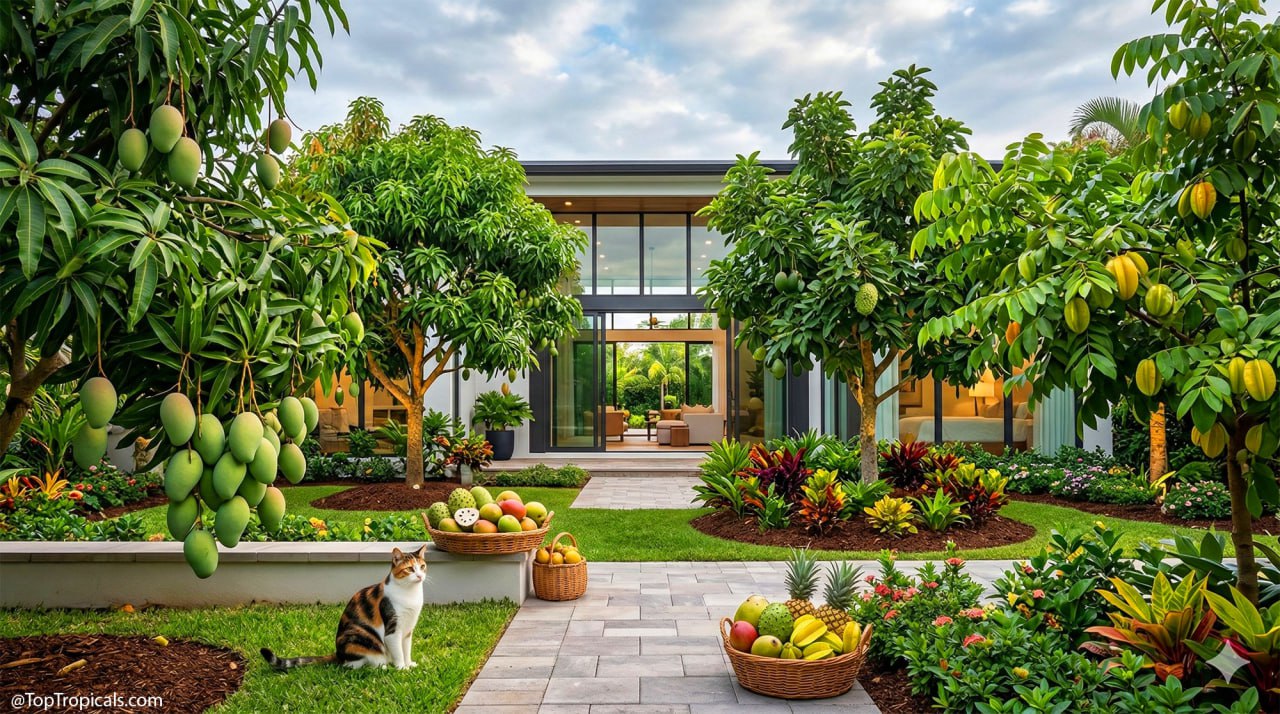
Yard with fruiting tropical trees
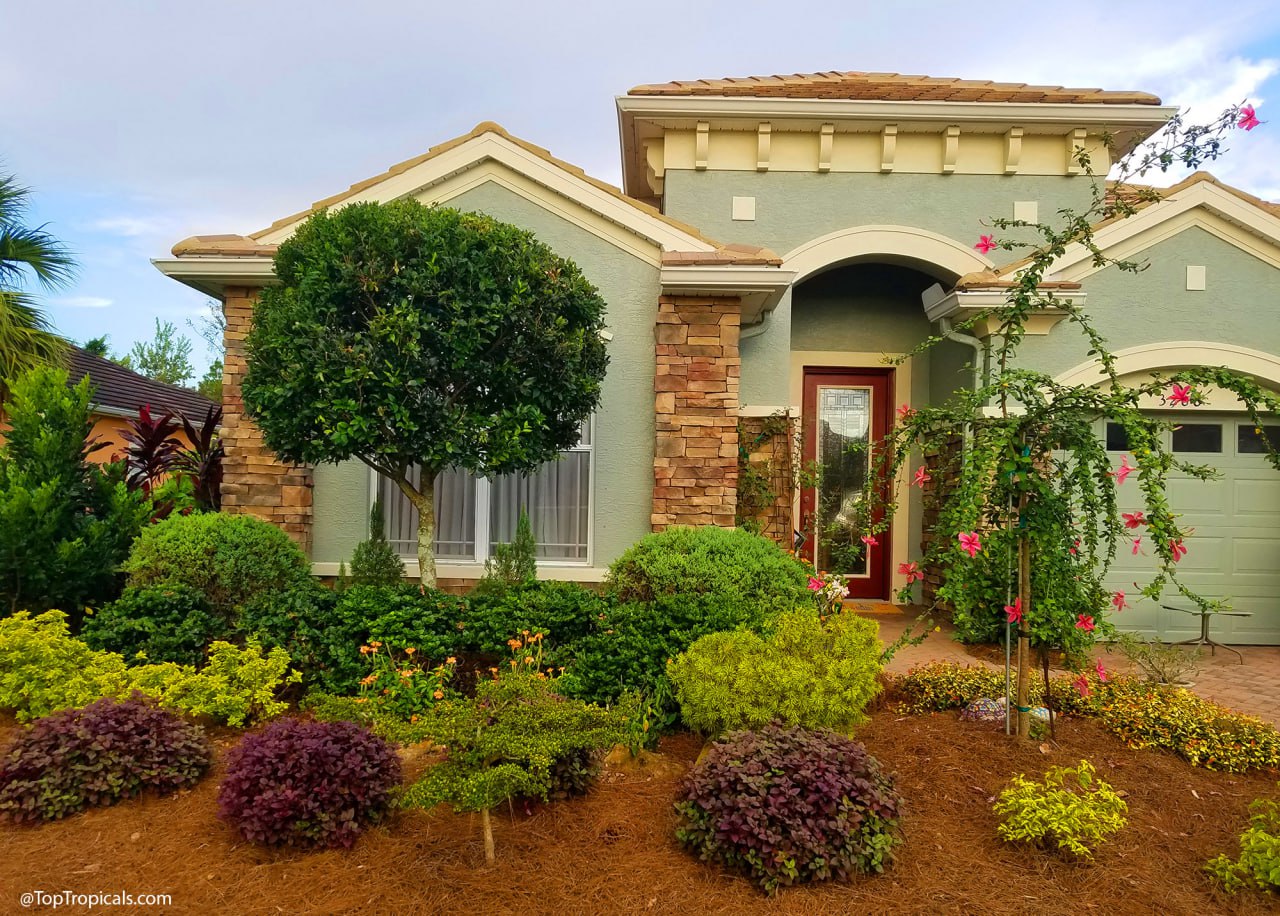
Landscaped yard in Florida
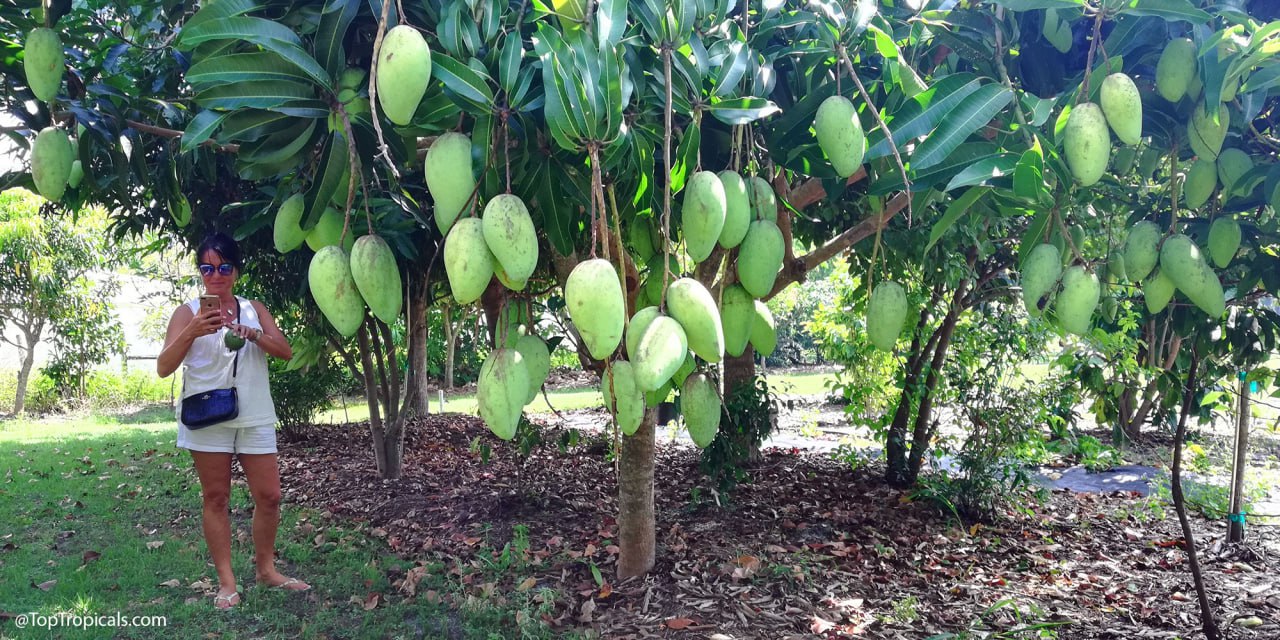
Mango tree fruiting in the garden
Do Fruit Trees Increase Property Value? Tropical Plants That Pay Off 🏡
Can your backyard pay for itself? Learn which 12 tropical fruit trees real estate experts say are the smartest investment for your landscape. Discover how tropical fruit trees like mango and avocado add "edible equity" and curb appeal to your property, making it more desirable to future buyers. Turn your yard into a private paradise that lowers grocery bills and boosts home value.
In warm climates like Florida, a mango tree isn't just landscaping - it’s a food-producing asset. Mature tropical fruit trees offer "edible equity," saving homeowners hundreds in grocery bills while creating a unique, memorable aesthetic for buyers.
Mango Plant Facts
Botanical name: Mangifera indica Also known as: Mango
USDA Zone: 9 - 11
Highligths
🥭 1. Focus on "Instant Recognition" Favorites
Trees buyers already know and love provide the strongest ROI. They signal that the yard is already productive - something new builds can’t offer.
• Top Picks: Mango, Avocado, Papaya, Banana, Guava, and Loquat.
Avocado Plant Facts
Botanical name: Persea americana, Persea gratissima Also known as: Avocado, Alligator Pear, Aguacate, Abacate
USDA Zone: 9 - 11
Highligths
• The Value: A single mature avocado or mango tree can yield hundreds of pounds of fruit annually.
🥭 2. Create a "Memorable Discovery" with Exotic Varieties
Unusual fruits turn a standard yard into a tropical orchard, acting as a conversation piece during home tours.
• The Exotic List: Jackfruit, Sugar Apple, Soursop, Sapodilla, Ice Cream Bean, and Star Fruit.
🥭 3. Strategic Placement for Energy Savings
Large-canopy trees like jackfruit or mango do more than provide food; they act as natural insulation.
• Natural Cooling: Strategic planting reduces afternoon sun exposure and lowers AC costs. • Indoor/Outdoor Flow: Use trees to frame window views, block neighbors, and create private "outdoor rooms."
🥭 4. The Power of the "Mini Orchard"
A collection of 3–5 trees creates a stronger emotional pull than a lone plant. Buyers begin to visualize a lifestyle of smoothies and harvests.
• Winning Combos: Mango + Avocado + Papaya or Guava + Star Fruit + Banana.
🥭 5. Maintenance: Health Equals Value
Fruit trees only add value if they look manageable. A neglected tree suggests a neglected home.
• Pre-Sale Prep: Prune for tidiness, mulch the base, and clear fallen fruit. • Spacing Matters: Avoid overcrowding; ensure buyers can walk comfortably through the yard without feeling "closed in."
🥭 The Long-Term Play
Unlike decorative plants that may need frequent replacement, fruit trees appreciate over time. Because a mango tree takes years to reach peak production, the best time to plant for future resale value is now. By the time you list, your yard will offer shade, privacy, and a harvest that buyers find hard to resist.