Garden Blog - Top Tropicals

Date: 22 Sep 2025

Dragon Fruit Plant Care – Tips from the Garden Expert
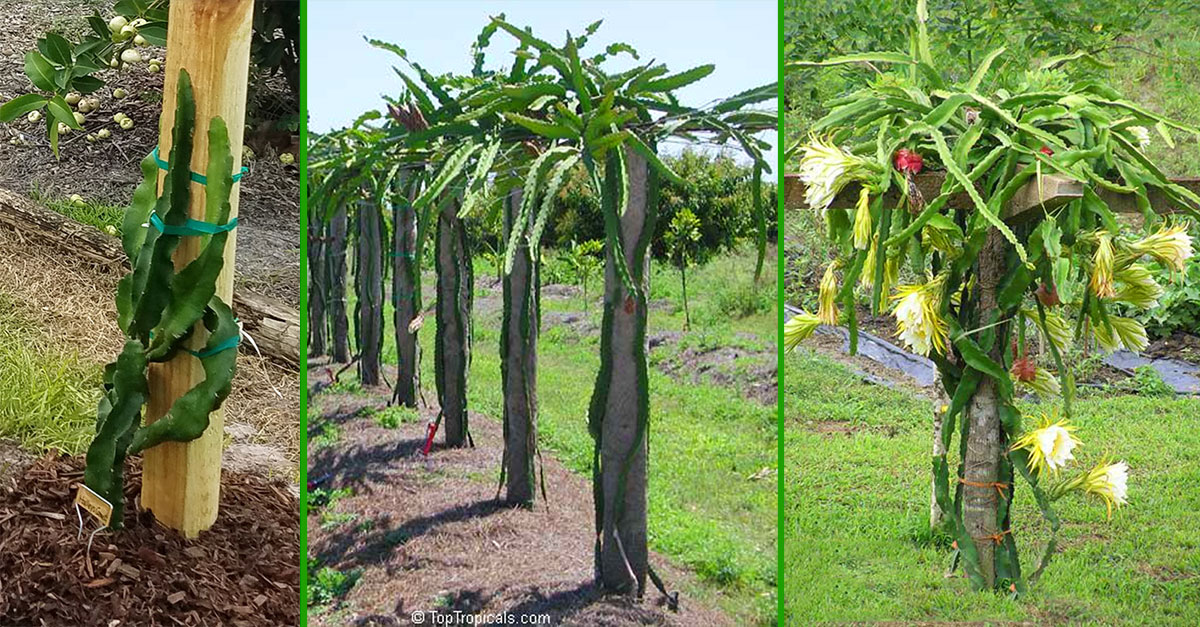
Stages  of  dragon  fruit  pitaya  plant  growth  and  trellis  support 
 system

Dragon fruit is one of those plants that look exotic but are surprisingly easy once you know the basics. Here is what works best in the garden:

  • Soil: They hate wet feet. A sandy, fast-draining soilless-mix is your friend. If water sits around the roots, rot comes fast.
  • Watering: Deep watering is better than frequent sips. Let the soil dry between waterings. In rainy season they cope well, but in pots you need to be careful.
  • Sunlight: Full sun is great, but in very hot places a touch of afternoon shade keeps them happy.
  • Support: They are natural climbers. A wooden post, concrete pole, or trellis will give them something to grab and makes harvest easier.
  • Fertilizer: Feed lightly but often. A gentle liquid like Sunshine C-Cibus liquid booster with every watering, or Green Magic controlled release fertilizer every 5-6 months. It encourages strong roots, lush growth, and lots of flowers.
  • Pruning: Trim off tangled or weak stems. This guides energy into strong branches that will flower and fruit.

Think of it as training a cactus vine into a small tree. Once it settles in, it almost takes care of itself — and pays back with fruit you can’t buy in stores.

🌱 Dragon Fruit Plant Care – Outdoors and Indoors

Outdoors: Dragon fruit thrives in USDA Zones 10–11 year-round. In warm regions like Florida, Texas, California, and Hawaii, you can grow it outside in the ground. Give it fast-draining soil, full sun with a little afternoon shade in the hottest months, and a sturdy trellis or post to climb. Deep watering with drying periods in between keeps roots healthy. A yearly pruning shapes the plant and boosts flowering.

Indoors or Patio Pots: Gardeners in cooler zones can still enjoy dragon fruit in containers. Use a large pot with sandy, well-draining mix or soilless-mix and a pole for support. Place the pot in the brightest spot — a greenhouse, sunroom, or patio that gets 6+ hours of light daily. Move pots inside when temperatures drop below 40F. Even indoors, a healthy plant can bloom and fruit if it has enough light and warmth.

❓ Dragon Fruit FAQ


How soon will a dragon fruit start producing?

Cuttings can flower and fruit in as little as 2–3 years. Seed-grown plants take longer, often 4–6 years. Large developed specimens can start flowering and fruiting within a year or even the same season.

Do I need more than one plant for pollination?

Some varieties are self-fertile, others need a second plant for cross-pollination. Even self-fertile types usually set more fruit with a partner nearby.

How big do they get?

In the ground, dragon fruit can climb 15–20 ft if you let it. With pruning and a trellis, you can keep it shaped like a small tree, 6–8 ft tall.

Can I grow it in a pot?

Yes. A large container with sandy mix or soilless-mix and a pole for climbing works well. Indoors it will need bright light or a grow lamp.

What does a dragon fruit taste like?

Sweet and juicy, like a blend of blackberry and raspberry. Varieties differ: flesh can be white, pink, deep red, or purple, wrapped in skins of red, pink, or yellow. White flesh is mild and refreshing, red flesh is sweeter, and yellow flesh is the sweetest with a honey-pineapple flavor.

What zones can I grow dragon fruit outside?

USDA Zones 10–11 are best for year-round outdoor planting. In cooler areas, grow it in containers and bring inside for winter.

How often should I water?

Deep water, then let the soil dry. Too much water causes root rot. Think “desert cactus with a taste for rain.”

Is dragon fruit easy to grow?

Yes. Pitayas grow like cactus trees on strong supports, but they are easy to care for — little water, sun or semi-shade, and they thrive.

How long do they live?

A healthy dragon fruit cactus can produce for 10 years or more with proper care.

What are the health benefits?

Dragon fruit is high in fiber, supports digestion, and is low in calories. It is rich in antioxidants and vitamin C, making it good for immunity and overall wellness. Many gardeners enjoy it as a healthy snack or in smoothies.

Explore Dragon Fruit varieties

Date: 22 Sep 2025

🐲 The taste you will never forget

Dragon  fruit  collage  -  yellow,  red,  purple,  white  varieties

If you only know dragon fruit from the grocery store, you probably think it looks pretty but tastes bland. That is because most commercial fruit is picked early, shipped far, and loses its sweetness. The truth? Homegrown dragon fruit is juicy, sweet, and full of flavor. The best of all is the yellow variety, Palora (Selenicereus megalanthus), a cactus fruit from Ecuador that bursts with tropical taste.

🌵 Pitaya or Dragon fruit – what is the difference?

Both names describe the same climbing cactus. In Latin America it is called Pitaya, while Asia and English speakers say Dragon fruit. There are three main kinds:

Some hybrids give purple or magenta flesh. All are beautiful, all are easy to grow at home.

⚡️ Do red, white, and yellow taste different?

Yes. White types are mild and refreshing. Reds are sweeter and juicier. Yellows are the sweetest of all.

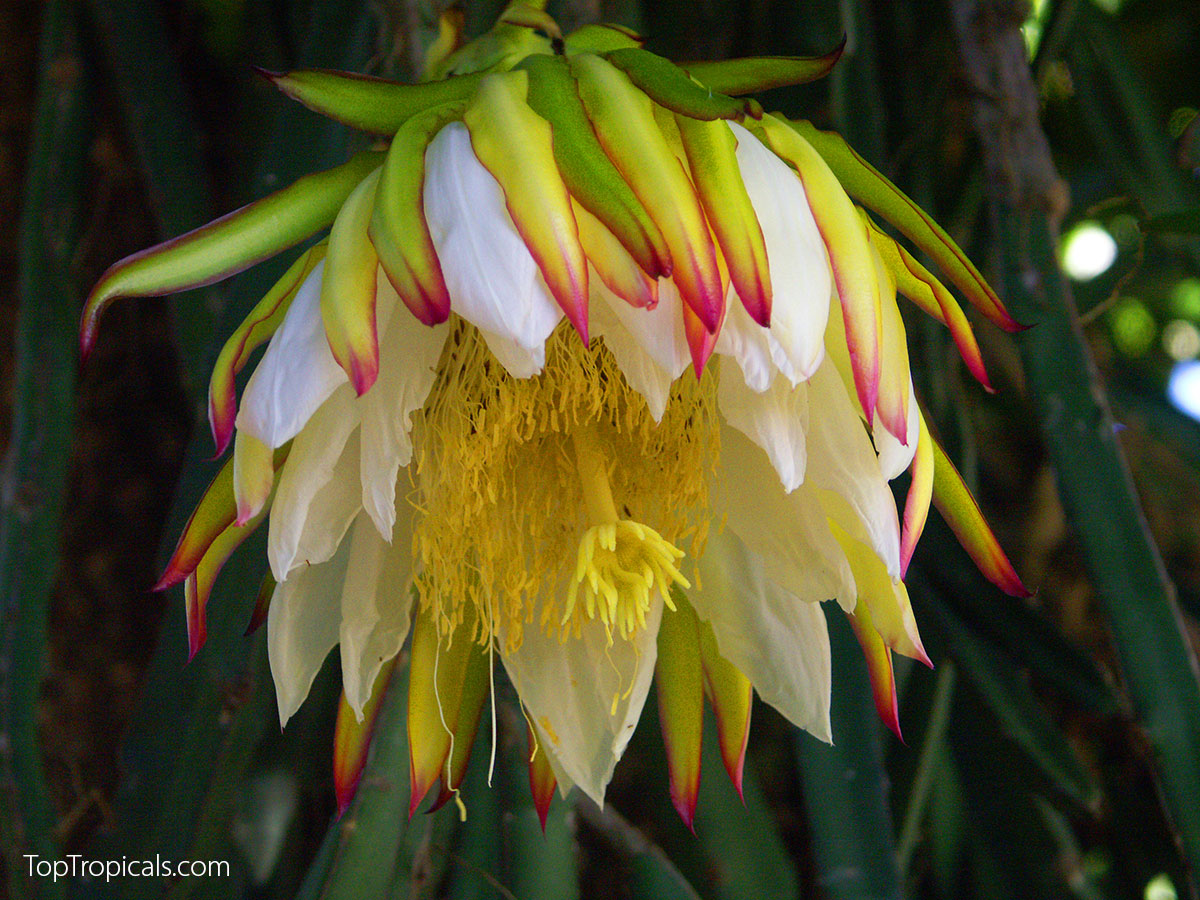
⚡️ Flowers from a fairy tale

Close-up  of  a  blooming  dragon  fruit  pitaya  flower  with  white  petals  and
   yellow 
 center

Dragon fruit flowers are among the most spectacular in the plant world. They open at night, glowing under moonlight, with pale petals and a sweet fragrance. Each flower can be a foot wide. Seeing one bloom feels like stepping into another world.

⚡️ Top Dragon Fruit Health Benefits

  • High in fiber for digestion and gut health
  • Low in calories but full of vitamins
  • Great for weight management
  • Adds color and freshness to smoothies and salads

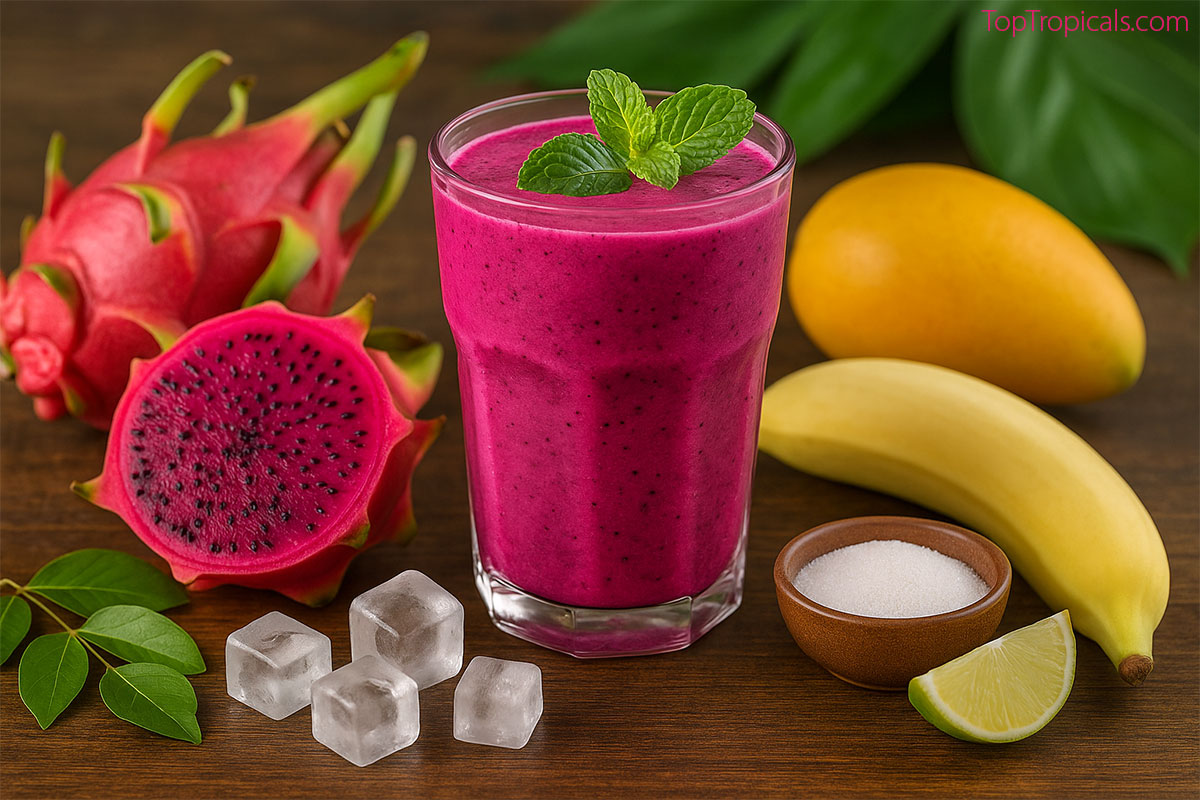
🍹 Dragon Fruit Smoothie recipe

Glass  of  dragon  fruit  pitaya  smoothie  with  fresh  dragon  fruit,  banana, 
 mango,  lime,  sugar,  and  ice 
 cubes

Blend together:

  • 2 dragon fruits, peeled
  • 1/2 cup mango pulp
  • 1 banana
  • 1 cup milk of your choice
  • 2 tbsp sugar
  • 1/2 tsp lime juice
  • Ice cubes to taste

Top with mint for a refreshing tropical treat.

Watch Dragon Fruit short videos:

Date: 10 Jun 2026

Pitaya Purple Haze: dragon fruit beyond pink and white - A Collectors Guide

Pitaya Purple Haze, dragon fruit, Hylocereus

Pitaya Purple Haze, dragon fruit, Hylocereus

🍉 Pitaya Purple Haze: dragon fruit beyond pink and white - A Collector's Guide


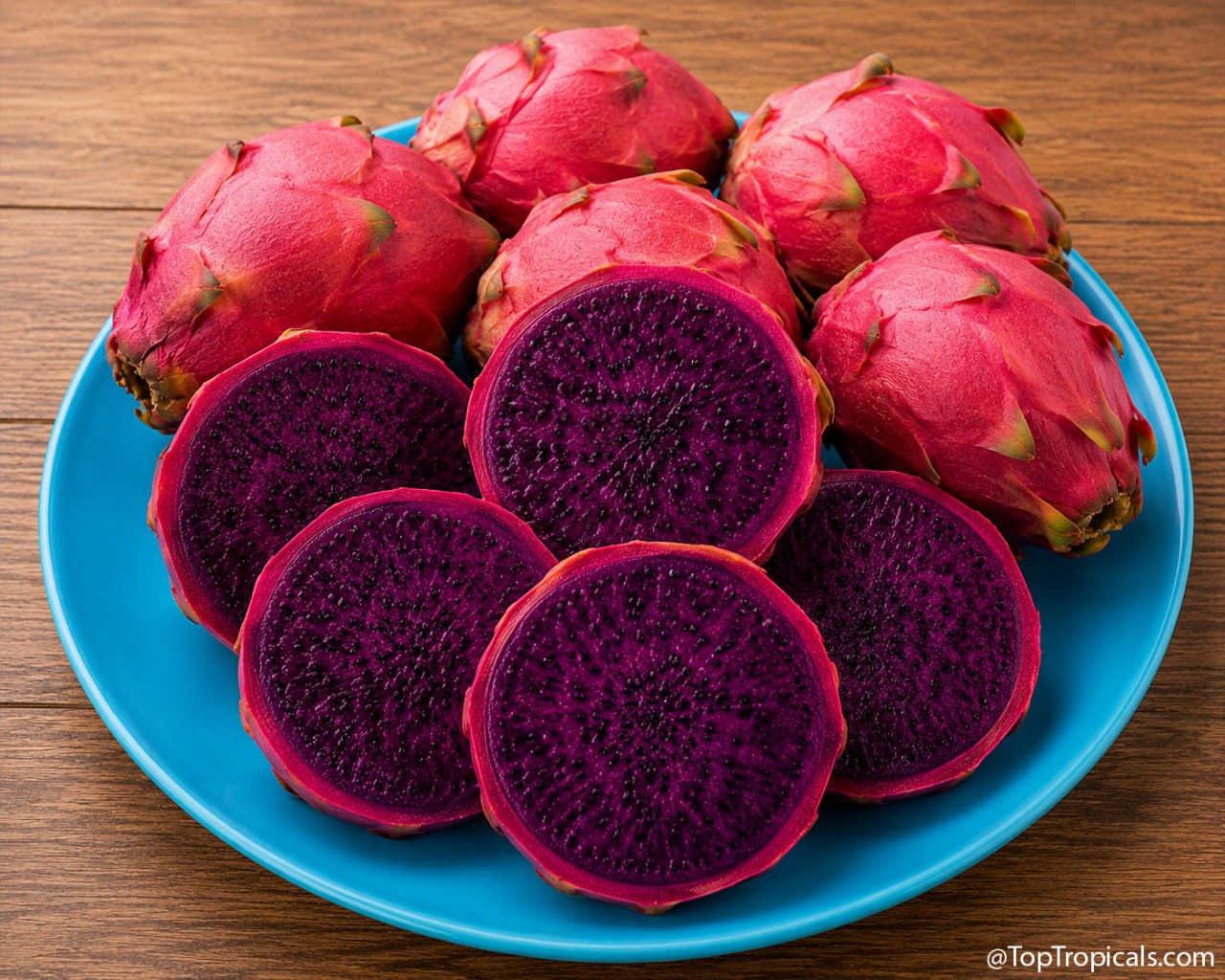
If Red Dragon Fruits are impressive, Purple Haze takes color to another level. This famous hybrid combines Hylocereus guatemalensis and Hylocereus polyrhizus to produce some of the most intensely colored fruit in the dragon fruit world. Cut one open and you'll find rich purple flesh so deeply pigmented that it rivals beetroot.

🔸 The dragon fruit that looks almost unreal


Purple Haze produces large fruit with bright pink skin, green-tipped fins, and vivid purple flesh packed with tiny edible seeds. Individual fruit commonly weigh between one and two pounds, making them among the larger dragon fruit varieties available to home gardeners.

The intense purple color comes from exceptionally high levels of betalains - the same natural pigments responsible for the color of beets. Among dragon fruits, Purple Haze is often considered one of the richest sources of these beneficial antioxidants.

🔸 A flavor that keeps people coming back


Many dragon fruits are valued for appearance. Purple Haze earns praise for both looks and flavor.

The flesh is sweet, juicy, and refreshing with a distinctive grape-like flavor that sets it apart from typical white-fleshed varieties. The small seeds add a pleasant texture without distracting from the fruit's smooth eating quality.

For many collectors, Purple Haze ranks among the best-tasting dragon fruits available.

🔸 Big crops and multiple harvests


Purple Haze is not just beautiful - it's productive.

Established plants are known for heavy yields and can produce as many as three fruiting cycles per year under favorable conditions. The variety is considered a reliable producer, making it popular with both collectors and home gardeners.

Growers seeking extra-large fruit often thin developing buds, allowing the remaining fruit to reach impressive size.

🔸 Why collectors love it


Purple Haze combines nearly everything dragon fruit enthusiasts look for - large fruit, exceptional flavor, stunning color, high productivity, and multiple harvests each year.

It is a variety that proves dragon fruit can be much more than a novelty. With its rich purple flesh and sweet grape-like flavor, Purple Haze is one of the standout stars in the colorful world of dragon fruits. 👉 More...

🛒 Explore and collect Dragon Fruit varieties

📚 Learn more:

Pitaya Plant Facts

Botanical name: Hylocereus sp.
Also known as: Pitaya, Pitahaya, Dragon Fruit, Strawberry Pear
USDA Zone: 9 - 11
Highligths Large shrub 5-10 ft tallVine or creeper plantSemi-shadeFull sunWatering: Moderate. Water when top soil feels dryWhite, off-white flowersThorny or spinyEdible plantSubtropical plant. Mature plant cold hardy at least to 30s F for a short timeSeaside, salt tolerant plant
Get personalized tips for your region

· Dragon fruit Hylocereus in Plant Encyclopedia
· Pitaya Hana: dragon fruit beyond pink and white
· Pitaya Eureka Red: dragon fruit beyond pink and white
· Pitaya David Bowie: Dragon Fruit Beyond Pink and White
· A Quick Guide to Dragon fruit varieties: Red, White, Yellow, Purple and more...
· What is the best Dragon fruit with red flesh?
· Planting your own Dragon Fruit plantation
· Do-It-Yourself Support Structure for Dragon Fruit
· Why you need to grow your own dragon fruit
· Do red, white and yellow Dragon fruit taste differently?

#Food_Forest #Dragon_Fruit #Discover

🟢 Join 👉 TopTropicals

Date: 8 Jun 2026

Pitaya Hana: dragon fruit beyond pink and white - A Collectors Guide

Pitaya Hana: white dragon fruit Hylocereus

Pitaya Hana: white dragon fruit Hylocereus

🍉 Pitaya Hana: dragon fruit beyond pink and white - A Collector's Guide


Most dragon fruit varieties are known for their colorful fruit. Hana stands out for something else - speed.
Originally discovered along Hawaii's famous Hana Highway on the island of Maui, Hana has earned a reputation as one of the fastest-growing dragon fruit varieties in cultivation. Under good conditions, the plant can grow more than six feet per year and may begin producing fruit in as little as 14 months from a cutting.


🔸 A dragon fruit with Hawaiian roots


Hana is a hybrid of Hylocereus undatus and Hylocereus monacanthus, combining vigorous growth with excellent fruit quality. The plant is easy to recognize by its relatively thin stems and unusually long thorns, giving it a different look from many modern dragon fruit varieties.

Like many Hawaiian treasures, Hana remains somewhat uncommon outside collector circles, making it a prized addition to a dragon fruit collection.

🔸 Fragrant flowers and dependable production


Hana is self-fertile, so a single plant can produce fruit without requiring another variety nearby. It is also known as an excellent pollen producer and is often used to help pollinate other dragon fruits.

Its large night-blooming flowers open after sunset, filling the air with a sweet fragrance. Unlike most dragon fruit flowers, Hana's blooms often show a delicate pink blush near the base of the petals, adding extra beauty to an already spectacular display.

🔸 Sweet flavor with a floral twist


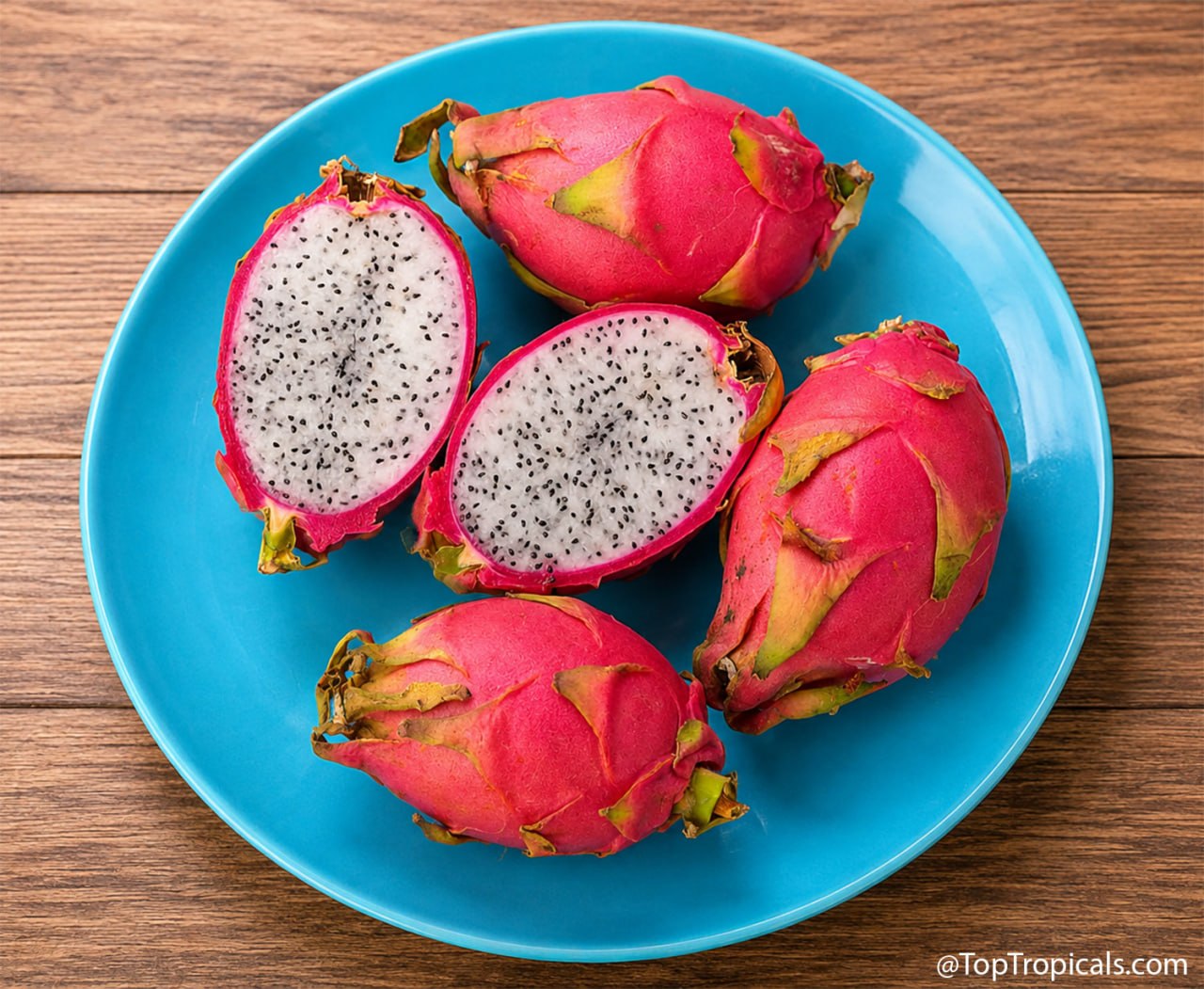
The fruit are typically small to medium-sized, though some can exceed a pound. The skin is bright pink with green-tipped scales, while the flesh is white and filled with tiny black seeds.

What makes Hana memorable is its flavor. Many growers describe it as sweet melon with subtle floral notes and a pleasant rosy aftertaste - a combination that sets it apart from ordinary white-fleshed dragon fruits.

🔸 Why collectors love it


Fast growth, early fruiting, fragrant flowers, self-fertility, and unique flavor make Hana one of the most interesting dragon fruit varieties available to home gardeners. It is proof that some of the most rewarding dragon fruits are not always the biggest or the most colorful - sometimes they are simply the ones that grow fast and taste unforgettable. 👉 More...

🛒 Explore and collect Dragon Fruit varieties

📚 Learn more:

Pitaya Plant Facts

Botanical name: Hylocereus sp.
Also known as: Pitaya, Pitahaya, Dragon Fruit, Strawberry Pear
USDA Zone: 9 - 11
Highligths Large shrub 5-10 ft tallVine or creeper plantSemi-shadeFull sunWatering: Moderate. Water when top soil feels dryWhite, off-white flowersThorny or spinyEdible plantSubtropical plant. Mature plant cold hardy at least to 30s F for a short timeSeaside, salt tolerant plant
Get personalized tips for your region

· Dragon fruit Hylocereus in Plant Encyclopedia
· Why white-flesh Dragon fruits deserve more attention
· Pitaya Eureka Red: dragon fruit beyond pink and white
· Pitaya David Bowie: Dragon Fruit Beyond Pink and White
· A Quick Guide to Dragon fruit varieties: Red, White, Yellow, Purple and more...
· What is the best Dragon fruit with red flesh?
· Planting your own Dragon Fruit plantation
· Do-It-Yourself Support Structure for Dragon Fruit
· Why you need to grow your own dragon fruit
· Do red, white and yellow Dragon fruit taste differently?

#Food_Forest #Dragon_Fruit #Discover

🟢 Join 👉 TopTropicals

Date: 15 Jun 2026

Pitaya Tricia: dragon fruit beyond pink and white - A Collectors Guide

Pitaya Tricia: dragon fruit beyond pink and white - A Collectors Guide

🍉 Pitaya Tricia: dragon fruit beyond pink and white - A Collector's Guide


Some dragon fruit varieties are known for their flavor. Others are prized for their appearance. Tricia manages to stand out for both.
Developed by California dragon fruit breeder Edgar Valdivia and named after one of his daughters, Tricia is a unique hybrid between Hylocereus polyrhizus and Hylocereus ocamponis. It combines striking ornamental qualities with excellent fruit and has become a favorite among serious dragon fruit collectors.


🔸 A plant that looks different from the start


Even before it flowers or fruits, Tricia catches attention.

The vigorous plant produces long, thick, three-sided stems with a distinctive grayish-green color. This natural gray coating helps protect the stems from intense summer sun and winter cold, giving the plant a rugged appearance unlike most dragon fruits.

The stems are heavily armed with large spines, a reminder of its wild ancestry.

🔸 Some of the most impressive flowers in the dragon fruit world


When Tricia reaches maturity, it produces spectacular summer blooms that can reach an astonishing 15 inches across.

The flowers are not only huge but also brightly colored and highly ornamental. From flower bud to bloom takes about 30 days, followed by another 30 days from flower to ripe fruit.

For many growers, the flowers alone make Tricia worth growing.

🔸 Large fruit with sweet magenta flesh

Once pollinated, Tricia produces attractive egg-shaped fruit averaging about one pound each. The fruit have numerous small fins that give them a distinctive appearance.

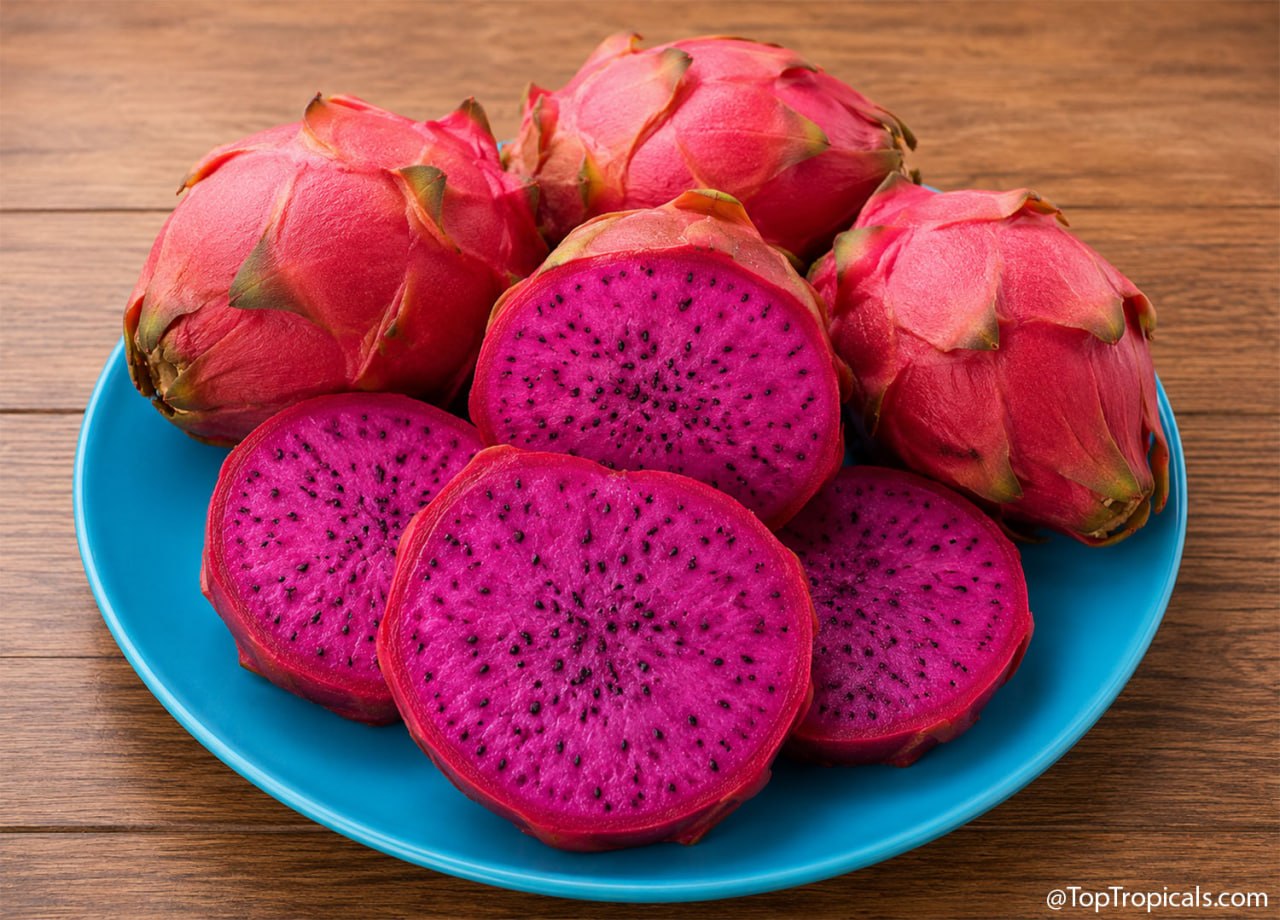
Inside is rich red flesh with a flavor that sets it apart from many dragon fruits. The fruit is sweet and flavorful, with little to no acidic aftertaste. The result is a smooth, pleasant flavor that many growers find easy to enjoy fresh out of hand.

🔸 A variety for collectors


Unlike self-fertile varieties, Tricia requires pollen from another dragon fruit variety and usually benefits from hand pollination. While this adds an extra step for growers, the reward is a unique plant with extraordinary flowers, unusual stems, and delicious fruit.

For collectors looking beyond ordinary dragon fruit varieties, Tricia offers something special at every stage of growth - from its distinctive gray stems to its giant blooms and sweet magenta-fleshed fruit. 👉 More...

🛒 Explore and collect Dragon Fruit varieties

📚 Learn more:

Pitaya Plant Facts

Botanical name: Hylocereus sp.
Also known as: Pitaya, Pitahaya, Dragon Fruit, Strawberry Pear
USDA Zone: 9 - 11
Highligths Large shrub 5-10 ft tallVine or creeper plantSemi-shadeFull sunWatering: Moderate. Water when top soil feels dryWhite, off-white flowersThorny or spinyEdible plantSubtropical plant. Mature plant cold hardy at least to 30s F for a short timeSeaside, salt tolerant plant
Get personalized tips for your region

· Dragon fruit Hylocereus in Plant Encyclopedia
· Pitaya "Sweet Red": dragon fruit beyond pink and white
· Pitaya Purple Haze: dragon fruit beyond pink and white
· Pitaya Hana: dragon fruit beyond pink and white
· Pitaya Eureka Red: dragon fruit beyond pink and white
· Pitaya David Bowie: Dragon Fruit Beyond Pink and White
· A Quick Guide to Dragon fruit varieties: Red, White, Yellow, Purple and more...
· What is the best Dragon fruit with red flesh?
· Planting your own Dragon Fruit plantation
· Do-It-Yourself Support Structure for Dragon Fruit
· Why you need to grow your own dragon fruit
· Do red, white and yellow Dragon fruit taste differently?

#Food_Forest #Dragon_Fruit #Discover

🟢 Join 👉 TopTropicals